How to Succeed in Writing IX: The Influential Writers, and Other Influences


Like any other person who has attempted to create something artistic, an artist’s appreciation of another’s work is limited and unique. An artist’s appreciation of another’s work is similar to an athlete studying game film on a future opponent. After repeated viewings, you understand their modus operandi. You are able to pinpoint what they do well, and their failings, and you’re able to learn from all of them. One author’s ability to characterize may impress another artist in one reading, and another may impress them with their particular brand of engaging dialogue. After another artist gets it, they’re usually bored with it, and they move onto another author. To use the sports analogy once again, the artist can usually spot the stitches on another’s fastball long before the casual observer can. This isn’t what artists are trying to do, it’s who they are. They would love to simply read another’s work and appreciate it in the same manner a casual reader would, but they can’t turn that portion of their brain off. An artist reading another’s work can get so hypercritical and appreciative of the little things another author does to move a story along, or characterize, that they can’t enjoy that simple, little story in total until they have thoroughly explored, and drained, whatever value they believe another’s work has for them.

Most writers will claim that their writing is now entirely free of influence once they’ve found their voice. Some might judge this self-promotion, and others would say it’s just impossible to believe. As any writer who has written a great deal knows, it’s almost impossible to escape influence. Whenever a writer turns a phrase, completes a block or dialogue, or characterizes, there was some influence there. If it wasn’t Chaucer, or Hemingway, that influenced the writer in this manner, it may have been their freshman Composition 101 teacher. If it wasn’t Stephen King, or Faulkner, who taught them how characterize, it may have been a movie or a television show that embedded that particular brand of characterizing deep in their brain. Something, somewhere influenced them in some way they may not know now that they’ve reached their twentieth year of writing, where their writing material that is so fresh, and unique, that they can’t even spot the influence anymore. They may have worked so hard, for so long to achieve a unique voice that they feel they’ve achieved it, and they may have to some degree, but there was a starting point that formed a foundation that is now so embedded in the manner in which they write that they can’t see the influence anymore.

Those who belong to the latter group believe they have reached the pinnacle of individualistic style, that contains no influence. They might dismiss this article as nothing but a point of curiosity, but the new writer wants to learn how we arrived at point D in the process, the following is a list of those influences who lubricated the slide:

10) Brevity. If “Brevity is the soul of wit” no one was funnier than Ernest Hemingway. An economist of words, Hemingway avoided complicated syntax, and it has been determined that seventy percent of his sentences were short, simple sentences.{1} Hemingway was the anti-Joyce (James Joyce) in this regard. Whereas Hemingway “KISSed” us (keeping it simple for we stupid people) with his prose, Joyce dangled complicated, multi-syllabic, and invented words before us, and he often teased us with a carrot on the stick of his words’ meaning. Whereas this may have made Joyce’s fiction wonderful, historic, and transcendent, most of us didn’t know what the hell he was talking about. Whereas most readers need translation, and transports in time via a well-written guide, and a degree in Joyceisms to understand Finnegan’s Wake, Old Man and the Sea can be enjoyed in an otherwise carefree afternoon. This isn’t to say that Hemingway’s prose is not complicated and carefully structured for meaning, but with Hemingway’s fiction, meaning is derived upon reflection and through personal interpretation. The meaning of Hemingway’s prose is established through dialogue, action, and silences —a fiction in which nothing crucial or at least very little— is stated explicitly. He purposely avoided outright symbolism in what he called “the theory of the iceberg”. This theory stated that facts float above water, but the larger, supporting structure and symbolism that build the foundation do so out of sight.

Hemingway“No good book has ever been written that has in it symbols arrived at beforehand and stuck in,” says Hemingway. “That kind of symbol sticks out like raisins in raisin bread. Raisin bread is all right, but plain bread is better.” He opens two bottles of beer and continues: “I tried to make a real old man, a real boy, a real sea and a real fish and real sharks. But if I made them good and true enough they would mean many things. The hardest thing is to make something really true and sometimes truer than true.”
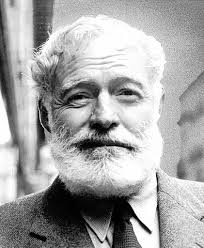
Hemingway was more of a storyteller than he was a writer. The interested reader, who doesn’t have a whole lot of time on their hands, may want to consider reading either the short book Old Man and the Sea or The Short and Happy life of Francis Macomber. The latter is a short story that captures the essence of Ernest Hemingway, and it teaches every writer the greatest principle every writer should employ in their daily activities: Story is sacred and flowery prose is largely self-indulgence.
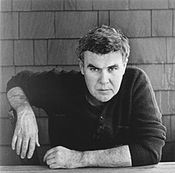
Carver9) Images. Raymond Carver was also a minimalist. Most of my favorite writers were. Carver employed evocative and provocative images to tell a story. Short stories were his forte. The short story Feathers captures the essence of Raymond Carver, better than any of his other stories in my humble opinion.

Carver’s stories, and poems, focused on misery and dirty realism. His characters were low class, beer drinking, hardworking, slobs that readers can’t help but picture in stained tank-tops. Carver claimed that he was inclined toward brevity and intensity. His writing focused on sadness, loss, and alcohol in the everyday lives of ordinary people — often lower-middle class or isolated and marginalized people.

8) Characterization. John Irving engages in the flowery prose of his mentor Charles Dickens, but he does so (for the most part) effortlessly. Irving is not a minimalist in other words. Irving’s John_Irvingworks teach us, more than any of the authors listed here, to work your tail off to hide your effort. One read through his magnum opus The World According to Garp teaches us that it shouldn’t be a chore to read through one’s work. No other authors listed here, save for maybe Hemingway, hides his brilliance better than Irving. The reader gets to know Irving’s characters in what I call a “Holy Crap!” manner. Irving doesn’t use physical characteristics to describe characters, and he doesn’t use the inner voice techniques that most of us do, yet the reader learns their characteristics in a story after story and a passage after passage manner, until we know them so completely that we say, “Holy crap, this author’s brilliant.” I realize this methodology is borne of the “show don’t tell” basic of storytelling, but in my humble opinion, no one does it better than Irving.

Irving has chapters of setting, primarily in the Northeast, and his settings can appear a bit laborious at times. Unlike all of the authors on this list, there can be large chunks of Irving’s narrative where nothing happens, as he frames you up for what’s about to happen. Irving does “a story within the story” as well as anyone in the business. As I said, though, Irving achieves his stature in the world of literature through effortless characterization.

It appears, unfortunately, that the drive to tell a story no longer drives Mr. Irving. His more recent books have become more and more political. Some could say that Mr. Irving has always been political, and if you read A Prayer for Owen Meany and Garp again, you’ll see that. If that’s true, he used to be a lot more subtle. Story used to be sacred to him, and politics used to be a secondary concern to him.

It’s almost become a cliché that writers of my generation claim Irving as a primary influence. Like most clichés though, there’s a reason claiming Irving as an influence has become so prevalent among those in my generation. It’s because he has achieved the bestseller list through almost effortless, beautiful writing, and by not conforming to current norms. Irving just does what he does, and we have all accepted this to a degree that he can do whatever he wants, and we’ll all greet him with open arms. Claim King or Koontz as an influence, and artistic writers will dismiss you with a yawn; claim John Grisham, and they’ll dismiss you with a laugh; but Irving has managed to keep a foot in both the literary and best-selling world, and he does it with rich, rewarding, and effortless characterization.

7) Asides.  Some may dismiss Chuck Palahniuk as a splatterpunk writer that engages in shocking prose that grosses out and titillates the reader. It is true that Palahniuk goes for the jugular in much of his writing, and some may say too often, but anyone that has read, or seen, Fight Club (they’re strikingly similar) knows that Palahniuk (almost) always has a story to tell amid the chaos in his works.

PalahniukPalahniuk may have some of the best, most interesting vignettes and asides in the business today. He is heavily influenced by Stephen King, as evidenced by his heavy use of refrain style use of repetition, but one should not mistake this influence as outright mimicry. Palahniuk has carved himself quite a niche in the literary world, with works like Fight Club, Choke, and Rant. Rant proved to be especially valuable to those writers on the lookout for a new way of telling a story. While the style is not unprecedented, Palahniuk used it in such a unique manner that those that have read the story considered it revolutionary.

Chuck describes his style of writing as “transgressive” fiction. Transgressive fiction, as defined by Wikipedia, “is a writing style that focuses on characters who feel confined by the norms and expectations of society and who break free of those confines in unusual and/or illicit ways.”

After the novel Lullaby, Palahniuk began writing satirical, horror stories. His work is big on unusually dark and absurd philosophical asides that are so farcical that the reader can help but think of them as true. These asides are non-fiction factoids within his fictional works that, according to the author, “Are included in order to further immerse the reader in my work”.” {2} This author hates metaphors and similes. This author loves to mess around with the traditional styles of storytelling to presumably keep it interesting for him and us. Some of the times this methodology works, as it did in Rant, and some of the times it doesn’t, as it didn’t in Pygmy and Tell All. His forays into illogical, but fun, splatterpunk writing, works in most of his books, but anytime a writer puts their stock in shock they are going to try outdo themselves every time out, until they produce a book like Snuff in which the novelty of the over-the-top shock wears thin quickly.

6) Pace and Formula. No writer, in modern fiction, displays the virtues of pace better than Dean Koontz. I challenge anyone to read the first half of his book Intensity and say that this man is not in the upper echelon of thriller writers today. Koontz knows all he needs to know about architecture, gardening, and all the other minutiae of his Southern Californian locale to make his setting interesting, but Mr. Koontz can cause a reader to flip pages on pace with any of the great suspense/thriller writers of our day. He may also be the safest writer on this list.

Dean-KoontzWhy is Koontz safe? He strives for the mainstream. His books have mass appeal to most age groups and both genders. He is a publisher’s dream in that he knows how to knock out a best-seller on an annual basis without offending anyone. If you’re a writer who seeks the formula to mass appeal, and the bestseller list, I can think of no better author to read … this side of James Patterson. That having been said, there is a formula to Koontz’s writing. How can there not be in a catalog that lists 112 titles, with twenty-eight bestsellers among them, without an inoffensive formula? A formula is good to some degree. To some degree, a formula will provide a reader a solid foundation of comfort that the author can shatter in the pages that follow. There is a formula, and a relative level of comfort that Koontz readers have come to expect, and while we should try hard not to dismiss Koontz on this basis alone, it’s difficult not to do so. All of his characters are much too safe. His female characters are incredibly and consistently intelligent, and his male characters are “safely” reliant on the female’s intelligence and ingenuity … Even his bad guys are safely bad. Then, Koontz exasperates whatever problems his works have in this regard by trying to be funny. His humor is so safe, conformist, and pedantic that it almost seems to be self-effacing, nerdy humor, until one reads enough Koontz to realize that this is this man’s sense of humor.

If you’re looking for edgy, offensive, different material that most people are uncomfortable reading, Koontz probably isn’t your guy. He does write some edgy material, but he doesn’t do so on a consistent enough basis. If one were to gauge mental health by a writer’s fiction, Koontz would likely score higher than any of the authors listed here, but that has resulted in less dangerous, less angst-ridden material. He’s mainstream, and there’s nothing wrong with that if you’re looking to write mainstream fiction. One of the other exceptions to this rule, aside from Intensity, was the novel Life Expectancy. These two books are the must reads in Koontz’s catalog for any writer seeking the edgy and different.

5) Writing fiction. What can be written about Stephen King that hasn’t already been written? If you are a writer that hasn’t read King yet, you’ll probably want to get on the train. He’ll teach you the good, the bad, and the ugly of writing. While it’s almost impossible to read everything he’s done, most writers have an extensive King library. If they don’t, they should probably have at least ten of his books.

KingKing has it all, and most honest, seasoned writers will begrudgingly admit that he has had an influence on them at one point in their process. If The Stand is too long for you, then the writing community will require you to read Misery, Gerald’s Game, It, or any of his classic, early works like The Shining. Some artistic writers may scrunch their nose at King, because he is so ubiquitous, but his influence on modern fiction cannot be denied in just about every novel written after 1990.

Some say that King invented the common man horror, but many say that almost every piece of fictional horror involves the common man. King did work the working joe into his fiction more than most however. As stated earlier, King builds horror through repetition. He usually has a nickname for his monster that gets repeated often enough that the reader feels a horrified endearment to the monster. He also may have not been the first to work music into his horror, most notably nursery rhymes, but he did it more often and with more mastery than most, and it influenced a generation of horror writers.

4) Hodge Podge. As written in the introduction of this piece, writers read other writers in a unique manner. There are so many varied ways that a writer can reach point D in the process that attempting to catalog all of the influential writers, and their influential moments in fiction, would be book length, and very few readers would be interested in all of the ways in which this writer achieved that point. So in the interest of interest, we will try to whittle these moments down to a few of the most prominent. In the area of the influentially absurd humor, there have been few that captured it as well as Robert McCammon did in Gone South, or Gary Shteyngart in his work Absurdistan a book that was heavily influenced by the monumentally influential book A Confederacy of Dunces John Kennedy O’Toole.

As for horror, there have been few, this side of King, that have been able to capture common man, suspenseful horror as adeptly as Scott Smith did in A Simple Plan and Ruins. Smith’s ability to build to horror in a casually sequential manner is almost unprecedented. The only problem with Smith is that he has only written two books in twenty years, and while there is nothing wrong with the man’s quality, his fans would love a little more quantity. Although Thomas M. Disch’s M.D. was not the greatest horror book ever written, and it ebbed and flowed more than the other books on this list, the work provided moments that have influenced this writer as much as any of the pieces described previously. Some of the imagery Thomas Harris created in the Red Dragon book, and in Phillip Roth’s Portnoy’s Complaint (not a horror but just as laden with images), have led many writers to pound the table in frustration with their attempts to duplicate their provocative imagery. For various reasons, and in various ways, all of these authors had a huge influence on this writer’s attempt to get to point D.

3) Mood. Nothing influences mood better than music. Listening to music gives the writer a certain setting from which “different” fiction can be achieved. If a writer wants to write a period piece, for example, they can select the music from that era, and attempt to achieve that mindset. This is similar to the attempts that the main character in Richard Matheson’s Somewhere in Time to achieve time travel. In this story, the main character wanted to go back to the year 1912 so badly that he attempted to hypnotize himself into the belief that he was. He surrounded himself with 1912 in his hotel room, and he wore 1912 clothes, listened to 1912 songs, and ended up believing he was in 1912. Music affects me in the same manner. I prefer non-traditional, non-linear music to shake my brain out of the patterns it might fall into in long settings, until I can convince myself that I am non-traditional and non-linear. I, of course, do not make the conscious efforts to do this in the manner Matheson’s character did, but through repetitive listening of certain music, I have been able to achieve something “different” on a number of occasions.

I listen to a wide variety of music when I write, always switching to keep it fresh, but some of my favorites are Mike Patton, John Zorn, and Trey Spruance’s Secret Chiefs. These musicians (not rock stars) create an aura I find conducive to writing edgy, “different” material. These artists, like so many of the authors described above, created something that that seemed impossible before they did it. They are truly skilled in making the listener feel different, and that anything can be accomplished in a certain setting. Miles Davis creates an aura that allows you to focus at times, but his music can be a little too aural at times, and David Bowie’s music can be a little too focused, and this causes me to be distracted when I listen to what his music is doing. The band Pavement can create some chaos in your mind and shake you out of your doldrums, but they, too, can be a little too focused at times for that atmosphere writers need to create.

Everyone’s mom told them that distraction-free silence was conducive to concentration. Yet, every mind works differently, and I have found —much too late for success in school— that I need distraction to achieve focus. It may not make sense to those blessed with normal brains, but I need a Goldilocks amount of distraction —not too hard and not to soft, and not too aural and not too structured— for me to concentrate and focus.

2) Movies.  Most of the best storytelling being done today, we have to face it, is being done in the movies. If a Quentin Tarantino were born in the late nineteenth century, he probably would’ve been a novel writer. He, like all great movie makers of this era, has the storyteller’s bug, but he doesn’t have the patience to sit behind a typewriter/keyboard and compose prose that can take months and years to produce. These storytellers of our era are taking advantage of the technology offered them and telling their stories on screen. One thing movie makers can teach aspiring writers, that reading the Russian authors won’t, is to get to the point. Their audience, our audience, and the audience doesn’t have as much patience for brilliant prose as previous generations. We have a short attention span, and with a few exceptions (David Lynch, Wes Anderson, and Tarantino of late) most movie makers whittle their scripts down to the germane.

1) My writing.  Most readers would consider it egotistical to list “my writing” as the greatest influence on my writing, but that is not the intent. It is only added, because I hold my best writing out as beacons in my career that I want to smash the next time I write something new. It is important that every writer examine what they’ve written on a consistent enough basis that they always try to write better, and different, stories every time they sit behind their keyboard.

{1}http://en.wikipedia.org/wiki/Ernest_Hemingway

{2}http://en.wikipedia.org/wiki/Chuck_Palahniuk
A President’s Day Guide Through Obscure Presidents, and Lincoln


To those, like me, who have lived their whole life in America, we take it for granted that America is the envy of the world. Some might view this as propaganda, some sort of hype, or marketing tool that America has generated on a false premise. America does have her faults, of course, for it is and always has been run by, and for flawed humans, but if you’ve ever run into a first generation American who knows how flawed humans running a country can be. They might even paraphrase Winston Churchill by saying, “America might be a horribly run country, but it’s better than anything else we’ve tried.

One thing that I think that should put naysayers, and those of us who might take America’s place in the world for granted is that it didn’t have to go this way. A couple of elections here and there might have changed the course of the country dramatically.  

There have been times, in our nation’s history when we needed a strong man who played with a bold hand at times and a soft touch in others to solve the country’s problems. Some would argue that no one did both better than Abraham Lincoln did during his tenure in office, in his quest to end the Civil War and slavery. There have been times when our nation laid in the balance, and we needed a Lincoln to come along and do what he could to preserve what George Washington, John Adams, and all The Founders envisioned. There have been other times, times far less documented in historical records, when our nation needed a humble leader who displayed restraint in times of national scandal and turmoil.

Whenever we talk about the history of America, we usually focus on Lincoln, The Founding Fathers, the Roosevelts, and the rest of the more prominent presidents who have shaped our country in profound ways, but there are many lesser-known presidents who have affected the nation in various, individual ways. If Lincoln lost his bid for president to Stephen A. Douglas our country might be very different. If Grover Cleveland lost his bid for re-election to Benjamin Harrison a second time in 1892 would our country be different? In what ways would the country be different if Calvin Coolidge lost his bid for re-election to John W. Davis? Some argue that no American legislation, and no executive orders are set in stone, and they can be righted, or sunk, by subsequent administrations. While that is true, there is the matter of precedent, and there is the question of how much damage could be done in the interim. If Lincoln lost to Douglas, and the Civil War and slavery lasted beyond 1865, how much further damage would’ve occurred in this country without the skilled Lincoln at the helm? Some of us might argue that America isnt as great as others suggest, and that it never was, but if Lincoln lost his election, it’s likely that there wouldn’t be a United States as we know it today. 

Were it not for the statesmanship restraint displayed by a Calvin Coolidge, we might be a less free nation. Quiet, obscure presidents, like Coolidge, quietly vetoed legislation and exhibited restraint throughout their tenure. Restraint, vetoing legislation, and acting in a manner to preserve individual freedoms is less sexy than winning wars, ending slavery, or passing sweeping legislation and pressing the thumb of government on the throat of individuals and businesses for the purpose of helping other people, but the imprint it left might be just as profound.

Our nation’s history is composed of the strong, Lincoln types and the quiet, Coolidge types who have shaped our country in unique ways, and on this President’s Day I thought we should all be reminded how we came to be the nation we are today, through the more obscure presidents (and Lincoln) that helped guide us to modernity.


Grover Cleveland
Grover Cleveland

1) Stephen Grover Cleveland (March 18, 1837 – June 24, 1908)

The 22nd and 24th President

Cleveland was a Democrat who served the American people from 1885–1889 and 1893–1897 in non-consecutive terms. President Grover Cleveland was the only president to do so.

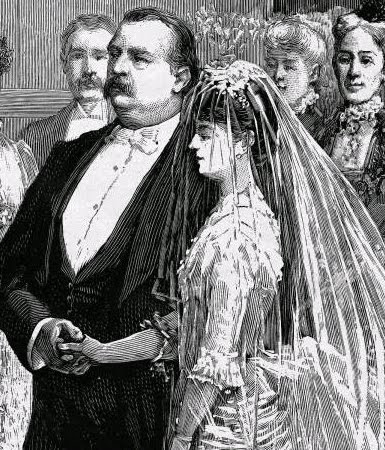
Stephen Grover Cleveland was one of three presidents (Jackson, FDR) to win popular vote for president on three different occasions, but he lost, in the second election, to Benjamin Harrison in the Electoral College tallies. He was the only Democrat to defeat a Republican for office during the period of Republican domination that dated back to Abraham Lincoln’s first electoral victory. He was the second president to marry while in office, and the only president (as depicted above) to marry at the white house. During his tenure, he and the Republican Congress, admitted North Dakota, South Dakota, Montana, Washington, Idaho, Wyoming, and later Utah to the union. His last words were “I have tried so hard to do right.”{1}

Ronald Reagan may have been the president who “tried to give the government back to the people” but some argue that Grover Cleveland was the first of two presidents of the 19th and 20th centuries –Calvin Coolidge being the other– to accomplish the feat. By the time their tenure ended, the size and scope of government was more limited than when they began their terms.

Others spoke of limiting the size of government, and the others failed. Cleveland’s first goal was to end the spoils of the political system. He did not fire the previous administration’s Republicans who were doing their job well, but he cut down the number of federal employees, and he attempted to slow the growth of what he perceived to be a bloated government. He attempted to always place appointments in positions based on merit, as opposed to the usual spoils system that dictated position holders in previous administrations. He also used his veto power far more than any other president of his day. Although Cleveland was a Democrat, he was one the few who sided with business. Cleveland opposed high tariffs, free silver, inflation, imperialism, and subsidies to business, farmers or veterans. His little battles for political reform and fiscal conservatism made him an icon for American conservatives of the era. Cleveland’s reform ideas and ideals were so strong and influential that a reform wing of the Republican Party, called the “Mugwumps”, bolted from the GOP ticket and swung to his support in 1884.

The great Abraham Lincoln

2) Abraham Lincoln

The 16th President.

Lincoln was a Republican who served the people from March 4, 1861 – April 15, 1865.

Abraham Lincoln, it could be said, is our most famous president. If one were to chart fame by the number of books written about an historical figure, Lincoln has had more books written about him than any other president. By some accounts, he has had more written about him than any historical figure alive or dead save for Jesus of Nazareth.

His fame is derived from serving as president during The Civil War, and the fight to abolish slavery. Lincoln’s fierce abolitionist views were so well known that some suggest that his election victory led the South secede. He used a heavy hand in some cases, such as the unconstitutional suspension of habeas corpus, and he used a deft hand in his attempts to end slavery. Fierce abolitionist Frederick Douglass viewed Lincoln with impatience initially. Douglass favored a firm hand. He wanted to, by whatever means necessary, quickly obliterate, on moral grounds, the Democrats who opposed ending the institution of slavery. As we discuss in another article on this specific topic, Douglass eventually saw the errors of that method. Ronald E Franklin characterizes Douglass as eventually, “Celebrating Lincoln as the perfect, God-appointed man for a task that, had the abolition of slavery been his first priority, he could not have accomplished.” This other article provides the full breadth of Douglass’ characterization of Lincoln’s political maneuvers. 

We now have a number of definitions of Lincoln’s motivations, but James Buchanan’s mismanagement of a decades-old disaster landed on President Abraham Lincoln’s desk soon after he took office. The country rested on a precipice of tearing apart. If Lincoln was too firm, he might have lost the country, and thus any sense of a mandate, if he was too soft, he might have lost The South. History will probably argue his tactics until they lay our great-grandchildren to rest, but through compromise and subtle, brilliant maneuvers, Abraham Lincoln managed to both end slavery and save the union. 

In the Washington V. Lincoln debate over who was the greatest president, the tale of the tape for both is long and mighty. In my personal opinion, Washington is given too much credit for being the first to set such and such a precedent. Washington was, indeed, a great leader of the country, but he was the first president, so I think we give him too much credit for setting precedents.   

Quick Quip: Democrat rival in the 1960 election for the President Stephen A. Douglas once called Abraham Lincoln two-faced. “If I had two faces,” Lincoln replied, “do you honestly think I would wear this one?”{2}

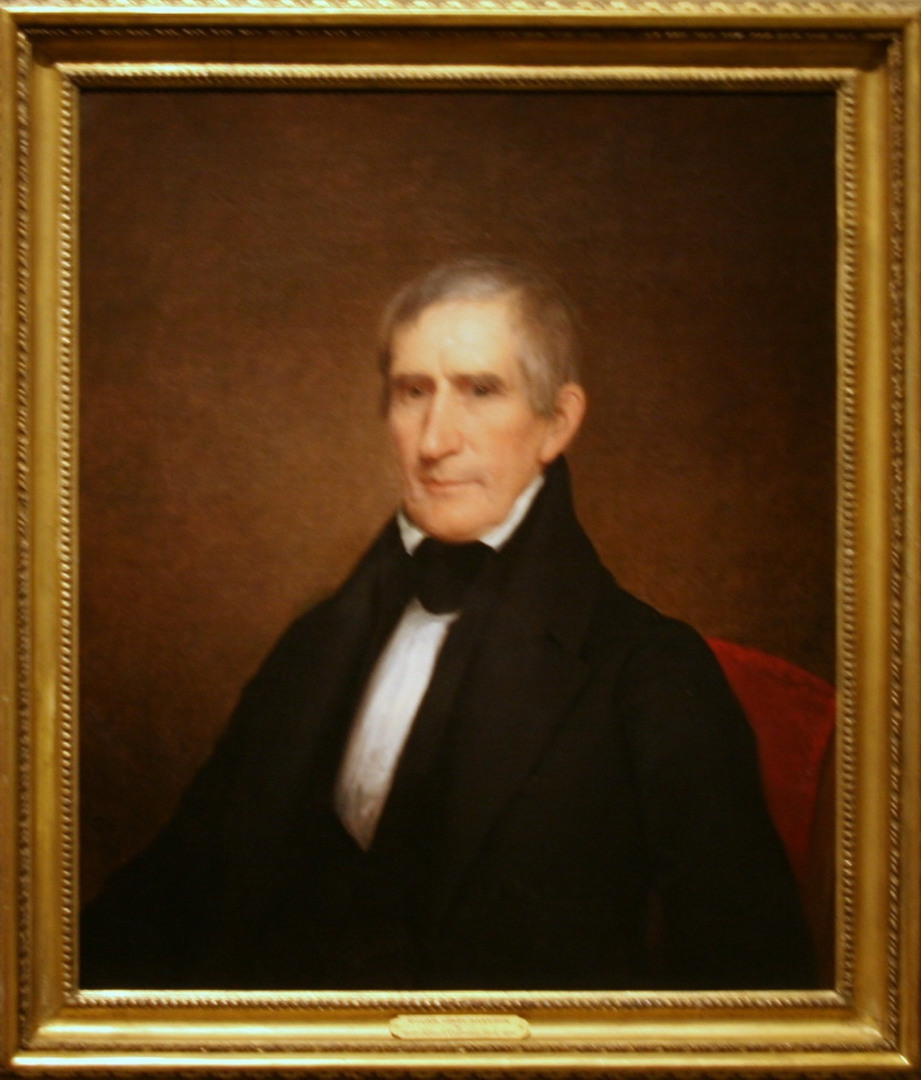
William Henry Harrison

3) William Henry Harrison

9th President

Harrison was a member of the short lived Whig party, and he served the people as president from March 4, 1841 to April 4, 1841

William Henry Harrison is most famous for dying after serving one month in office as president.  He took the oath on a cold and rainy day, and he refused to wear a coat or a hat. He also rode into the inaugural on horseback rather than in the closed carriage that had been offered to him. He then proceeded, after the oath, to deliver the longest inaugural in American history. It took him almost two hours to complete it. He then rode away from the inaugural on horseback. Some believe that this reckless regard for his health brought on the illness that his sixty-eight year old body could not recover from, but historians make note that the illness did not set in until three weeks after the inaugural. Regardless how he contracted the cold, it progressed into pneumonia and pleurisy. His last words presumed to be to his successor John Tyler were: “Sir, I wish you to understand the true principles of the government. I wish them carried out. I ask nothing more.” {3}

Quick Quip: There was some debate over whether W.H. Harrison’s 8,460 word inaugural address (the longest in history) led to his demise. Harrison refused to dress appropriate for the forecast cold rain, or follow any of advice of those concerned with his well-being. As a result of his demise, Harrison’s grandson Benjamin Harrison, made sure his own inaugural was a little over half what his grandfather’s was.

Martin Van Buren
Martin Van Buren

4) Martin Van Buren

8th President

Van Buren was a Democrat that served the people from March 4, 1837 to March 4, 1841.

Van Buren is regarded, in some quarters, as the father of the Democrat Party, even though Andrew Jackson was the first Democrat to be elected president. He was the first individual born as a U.S. citizen to be elected president. He was the first non-British, non-Irish man to serve as president. He was Dutch. He was also the first self-made man to become President: all earlier Presidents had acquired wealth through inheritance or marriage, while van Buren was born into poverty and became wealthy through his law practice. Van Buren’s presidency was marked by a depression, named the panic of 1837, that lasted throughout his presidency. As a result of this, Van Buren issued a statement that is also famous regarding his tenure as president: “As to the presidency, the two happiest days of my life were those of my entrance upon the office and my surrender of it.”{4}

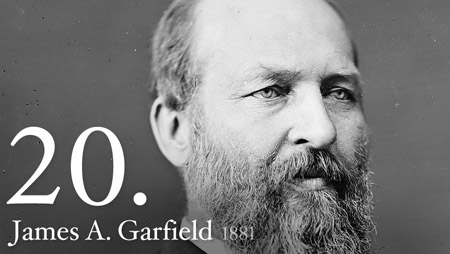
James A. Garfield
James A. Garfield

5) James A. Garfield

20th President

Garfield was a Republican that served the people from March 4, 1881 to September 19, 1881.

Garfield was another president known, in history, more for his death, than his life, or tenure as president. Garfield was taken down by an communist assassin by the name of Charles J. Guiteau. Though Garfield only had four months of health while serving the people as president, he did manage to give resurgence to the president’s authority over Senatorial courtesy in making executive appointments. He also energized naval power, he purged the corruption in the Post Office, and he appointed several African-Americans to prominent positions. During the eighty days in which Garfield suffered through the cruelty of the assassin’s bullet, he signed one, single extradition paper. Some historians have suggested that Garfield may have been one of our most talented and eloquent presidents had he lived long enough to expose this to the nation, but he was able to serve the nation in Congress having served nine consecutive terms, and he was able to do what he could in the short time that he served as president. Candice Millard’s brilliant book Destiny of The Republic captures the essence of Garfield with the quote: “Born into abject poverty, he rose to become a wunderkind scholar, a Civil War hero, a renowned congressman, and a reluctant presidential candidate who took on the nation’s corrupt political establishment.”

Knowing his death was imminent, James A. Garfield’s final words were: “My work is done.” {5}

Benjamin Harrison
Benjamin Harrison

6) Benjamin Harrison

23rd President

Harrison was a Republican that served the people from March 4, 1889 to March 4, 1893.

Harrison is most notable for being the grandson of William Henry Harrison, and the man that defeated the mighty Grover Cleveland in the Electoral College vote in 1888. Harrison’s tenure was also famous for passing the McKinley Tariff and the Sherman Antitrust Act. He was also famous for allowing federal spending to reach one billion dollars. Harrison also advocated for federal funding for education, he was unsuccessful in that regard. He also pushed for legislation that would protect the voting rights of African Americans. The latter would be the last attempts made at civil rights in the country until the 1930’s. Learning from the after effects of a long inaugural, courtesy of his Grandfather’s record long speech that some believe led to his death, Benjamin Harrison kept his inaugural address brief. Though historians tend to disregard Harrison as a prominent president, they regard his foreign policies as laying the groundwork for much that would be accomplished in the 20th century. {6}

Calvin Coolidge
Calvin Coolidge

7) Calvin Coolidge

30th President

Calvin Coolidge was a Republican that served the people from August 2, 1923 to March 4, 1929.

Coolidge would not stand a chance in today’s 24-7 news network, internet definition of politics. In the current climate of celebrity presidential candidates climbing all over one another for more air time, a better sound bite, and a better image, “Silent Cal” Calvin Coolidge would have been run over. In this age of bigger and better governments, where politicians on both sides of the aisle try to flex their legislative muscle in bill signings that are celebrated media events, Calvin Coolidge signed legislation into law in the privacy of the office. In a quote that could be attributed to the current, progression of big government, Calvin Coolidge said: “The requirements of existence have passed beyond the standard of necessity into the region of luxury.” Calvin Coolidge would be a laughing stock in our day and age, a man on the outside looking in, a statesman that would’ve faded into the woodwork of our society.

Social critic and satirist Dorothy Parker once said: “Mr. Coolidge, I’ve made a bet against a fellow who said it was impossible to get more than two words out of you.”

Coolidge’s famous reply: “You lose.”

After hearing that Coolidge passed away, four years after leaving office, Parker remarked: “How can they tell?”

Although Coolidge was known to be a skilled and effective public speaker, in private he was a man of few words and was referred to as “Silent Cal” in most quarters. On this reputation, Coolidge said:

“The words of a President have an enormous weight, and ought not to be used indiscriminately.” 

Although known as a quiet man, Coolidge participated in over five hundred press conferences during his 2000 days as president, that is an average of one press conference every four days. Coolidge took over the office of president after his predecessor’s death, amid his predecessor’s controversy, that was called the Teapot Dome Scandal. The Teapot Dome Scandal was regarded as the “greatest and most sensational scandal in the history of American politics” until the media discovered the Watergate scandal. In the wake of this scandal, Coolidge told a reporter:

“I think the American people want a solemn ass as a President, and I think I will go along with them.”

Coolidge may have been the last statesman the American people had to serve as president. He was against the Klu Klux Klan, for instance, but he didn’t make grandstanding statements against the Klan, he just didn’t appoint Klan members to positions in his administration. This may seem to be such an obvious move that it’s not worth discussion, but the KKK had a lot of influence at this time in America, and Coolidge’s move caused them to lose much of it. Coolidge tried to take this one step further, calling for anti-lynching laws, but the attempts to pass this legislation were stopped by Democrat filibusters. He attempted to make war illegal in the Kellogg-Briand act, but that law proved ineffective. Coolidge was a laissez-faire president who didn’t believe that the federal government should have a role in farm subsidies or flood relief. As much as he wanted to help these people, he wanted to avoid setting the precedent of the federal government resolving problems that he believed could better be solved, on a case-by-case basis, locally. By the end of his administration, he achieved a tax bill that had all but the top 2% paying no federal income taxes. Coolidge disdained federal regulation and appointed commissioners that followed his philosophy that believed in state’s rights, and this caused a divide in historical opinion of his administration.

Some believe that this laissez-faire approach led to “The Roaring Twenties”, others argue that it led to “The Great Depression.” As with all matters such as these, the opinions are based on where the historian lies on the ideological divide. Some historians say that “The Roaring Twenties” was built on a bubble similar to the 1990’s tech bubble in that it wasn’t built on hard assets, and when that bubble did burst, as it did in the 90’s, a recession occurred as a result. That recession, say other historians, was prolonged into a depression that lasted to the forties by the recovery measures put in place by future administrations. The latter argument has it that the economy may have experienced a dip as a result of the bubble bursting, but the extended duration of this natural, down cycle was caused by the measures put in place by future administrations to recover from what may have otherwise been a temporary dip. Arguments such as these are impossible to resolve, however, because one cannot remove some facts to prove others.

Historians from both sides of the aisle have also defined his last words in varying ways. Those who oppose Coolidge’s actions, state that his last words were a lamentable admission that his limited government policies didn’t work. Those who favor his policies state that he was lamenting the course America was on, into a country of big government policies. They state that Coolidge’s administration was, itself, a temporary blip in a progression that Theodore Roosevelt started, and they suggest that based on everything Coolidge saw during his tenure, he foresaw this.

His last words were: “I feel I no longer fit in with these times.”{7}

Some presidents affected the course of nation in profound ways, others used underappreciated subtle, deft maneuvers to change the course of the nation and the federal government, and how it governs the people. Some of the presidents were overwhelmed and some were those right place, right time presidents who used their tenure to lay the groundwork for making this country the envy of the world. To those, like me, who might take this notion for granted, it didn’t have to go this way. Some of us find it interesting to note that if the wrong man were elected at the wrong time, even those presidents who don’t make “the greatest of all time” lists, this country could be a decidedly different one.

If you’re as interested in U.S. History through relatively obscure presidents as I am, read Obscure Presidents part II


{1}http://en.wikipedia.org/wiki/Grover_Cleveland

{2}http://en.wikipedia.org/wiki/Abraham_Lincoln

{3}http://en.wikipedia.org/wiki/William_Henry_Harrison

{4}http://en.wikipedia.org/wiki/Martin_Van_Buren

{5}http://en.wikipedia.org/wiki/James_A._Garfield

{6}http://en.wikipedia.org/wiki/Benjamin_Harrison

{7}http://en.wikipedia.org/wiki/Calvin_Coolidge#cite_note-128

Presidential trivia for President’s Day


With President’s Day approaching, we thought we would compile a list of relatively obscure facts, trivia, and some interesting stories about the forty-four men that have served in the office of president for the United States’ citizens throughout our nation’s relatively young history. These are not fun trivia questions, and one of my friends informed me that people enjoy questions that they have a chance of answering correctly. For those that sit in an office, and send out trivia questions to your team members, we thought we would provide some trivia for those that want one or two questions that office workers cannot Google up as easily. (Unless they cheat and Google up this page of course.)  

10) Which president was never on a ticket that won a presidential election?

Answer: Gerald Ford. Andrew Johnson never personally won a presidential election, but he was on the 1865, winning ticket as Abraham Lincoln’s vice-president. Gerald Ford was not present on Richard M. Nixon’s 1968, winning ticket. That honor went to Spiro Agnew, originator of the famous, erudite insult “Nattering nabobs of negativism”. A third trivia question spawns from Ford’s unsuccessful run for president in 1976. The vice-president listed on his 1976 ticket was future presidential candidate Bob Dole. The victor of the 1976 election was James Earl Carter, and his vice-president was future presidential candidate Walter Mondale. Both of these vice-presidents were unsuccessful in their future runs for office. 

9) Other than President Bill Clinton, what president was successfully impeached by the House of Representatives?

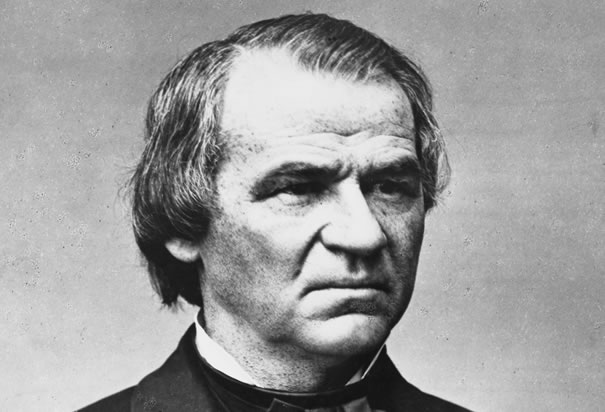
Andrew Johnson
Andrew Johnson

Answer: Andrew Johnson. Both were acquitted by the Senate, but Johnson’s presidency survived by a single vote, while Clinton’s presidency survived four separate charges of impeachment. Two of the charges passed in the House of Representatives, a vote that included five Democrats voting in favor of three of the four charges. As opposed to the House’s requirement of a simple majority to impeach, the Senate required a two-thirds majority to impeach. Both of the charges brought against Clinton failed to indict the impeached president. The obstruction of justice charge  failed by seventeen votes, and the perjury charge failed to reach the two-thirds majority requirement by twenty-two votes. Some say these votes were cast along party lines, and they were, almost exclusively, while others say that the charges themselves were partisan by nature. For those that suggest that Richard Nixon was impeached, he probably would have been, but he resigned from office before impeachment proceedings could begin.  

——————————————————————————————————————————————————————————————————————————————————-

8) Historians list President Donald J. Trump as the forty-fifth president, but he is the forty-fourth man to serve in this role. Is this a discrepancy or an error?

Grover Cleveland
Grover Cleveland

Answer: President Grover Cleveland served two terms that were non-consecutive. Thus, he is considered both the 22nd and the 24th president in U.S. History.

——————————————————————————————————————————————————————————————————————————————————————————————————————————————————————————————————————————-

7) We all use the idiom O.K. to inform others that we are doing well. “I’m O.K. How are you?” Some have stated that the idiom may have been mistakenly applied to a presidential candidate to describe his qualifications for office. What president was this?

Van BurenAnswer: President Martin Van Buren. The origins of O.K. are widely disputed, and there are many theories about its etymology. The most interesting one I’ve heard comes from the candidacy of Van Buren. He was from Old Kinderhook, New York. While in office, associates and voters began referring to him as Old Kinderhook, or O.K., as opposed to New Kinderhook, or N.K., and he continued to be referred to as O.K. in speeches and in print. O.K. clubs formed in support of Van Buren, and some began to believe that this idiom referred to his qualifications when supporters began chanting that Van Buren was “O.K.” at rallies, Voters soon began to believe that he was not as “O.K.” as they once thought when they booted him from power and refused him re-election on two other, subsequent bids for the office, but those losses did not affect the power of the idiom that some believed described his qualifications. Others state that the idiom predates Van Buren, and it only achieved national prominence through Van Buren’s successful use of it.

6) Is Abraham Lincoln related to Tom Hanks?

LincolnAnswer: Abraham Lincoln and Tom Hanks were first cousins and childhood friends. Lincoln’s Mother’s maiden name was Hanks, and there was a cousin on that side named Thomas, and the two of them were quite close. So, I cheated. The star of Forrest Gump that we know today was not the same as the one that Abe palled around, but Abe did have a first cousin named Tom Hanks. Recent genealogy tests have also revealed that the Forrest Gump actor, Tom Hanks, is a third cousin, four times removed, from Abraham Lincoln, so the question and answer works both ways for those seeking to trip their friends and colleagues up. {1}

5) Many people know that George H.W. Bush and George W. Bush were the second father-son presidents, following John Adams and John Quincy Adams, but there was one former Congressman that was the son of one president and the father of another. Who was that man?

John ScottAnswer: John Scott Harrison. Congressman John Scott was the son of President William Henry Harrison, and the father of President Benjamin Harrison. Unfortunately, William Henry did not live long enough to see his John Scott win his seat in Congress, and John Scott did not live long enough to see his son, Benjamin, win the presidency. The three of them did achieve quite a legacy in politics however, and we have to feel for all of the generations of Harrisons that followed in their attempts to continue and further such an historic legacy.

4) Which president was the most successful former president?

TaftAnswer: This is debatable, of course, but one-term President William Howard Taft was the only former president to achieve a nomination of Chief Justice of the Supreme Court. In an argument devoted solely to the positions former presidents  achieved, no former president matches Taft’s level of prestige.

3) Which president survived the first attempt at an assassination?

AndrewJackson(1)Answer: Andrew Jackson. This is primarily noteworthy, in history, because after two unsuccessful attempts to fire his pistol at Jackson, failed assassin Richard Lawrence secured his place in history as not only a failed assassin, but as a man that got beat down for his efforts by an angry old man. (It is reported that after the failed attempts at taking his life, Andrew Jackson participated in the subduing of the failed assassin by beating him down with his cane.){2}

2) Which president was the first to have an underwater car?

Answer: Lyndon Baines Johnson. This question is also included less for the mind bending quality and more for the story. History has it that LBJ loved to take unsuspecting aides and dignitaries for a ride in this submersible car to a lake. When approaching the lake, LBJ would begin screaming and hollering hysterically that the brakes were failing, only to say something along the lines of “Gentlemen, I’d like to introduce you to the world’s first submersible car” when they were all underwater together.{3} One has to imagine that the feminine shrieks these dignitaries would issue when approaching the lake would eventually give LBJ a lot of power in geopolitical negotiations.

1) Other than William Henry Harrison, which president served the shortest tenure?

GarfieldAnswer: James A. Garfield. Although Garfield technically served six months and fifteen days, he was shot four months into his tenure as president. He, then, suffered for eleven weeks following this assassination attempt, while attending doctors attempted to locate the bullet. Alexander Graham Bell was even brought in with an invention called the metal detector to try and locate the bullet. Most historians and medical experts now believe that Garfield probably would have survived had the attending doctors not placed their unsterilized fingers into the president’s wounds searching for the bullet. Some have even theorized that Garfield may have had a better chance at survival if these doctors did nothing, and that it was the anti-sepsis measures these doctors employed to locate the bullet that led to Garfield’s death.{4}

*bonus) The numbers:

  1. There have been 56 presidential elections.
  2. Five future presidents lost the popular vote and become presidents.
  3. Thirteen presidents have been reelected to office and served out that second term.
  4. The youngest president to ever take office was Theodore Roosevelt. He was not yet forty-three at the time. (The interesting note on this point is that Theodore Roosevelt stated that the one bad thing about being elected so young was that I had nowhere to go but down after that.) He was not yet fifty-years-old when he decided not to seek reelection. Roosevelt assumed office after President McKinley was assassinated, and Roosevelt ended up serving almost eight years. He considered that enough at the time, but changed his mind. This might be another mind bender, who was the last president to serve seven and a half years and decide not to seek reelection.   

{1}http://www.dailymail.co.uk/news/article-2207331/How-Tom-Hanks-related-Abraham-Lincoln-presidents-mother.html {2}http://en.wikipedia.org/wiki/Richard_Lawrence_(failed_assassin) {3}http://www.reddit.com/r/todayilearned/comments/17yg7l/til_president_lbj_owned_an_amphibious_car_the/ {4} http://en.wikipedia.org/wiki/Assassination_of_James_A._Garfield