Youth is Wasted on the Young


“Youth is wasted on the young,” a famous old person, who is now dead, once said. If they have the opportunity to see us now, I wonder if they say, “Life is wasted on the living.”

We can do just about anything and everything we want, but we don’t because everything is “SO BORING!” When we’re younger, we have the health and energy to do more, but we don’t because there is this “Is that all There Is?” mentality to doing extraordinary things. There are some exciting people to meet, places to go, and things to encounter, but most of what we experience in life could be characterized as mundane, trivial and meaningless to those with experience in such characterizations. To those who no longer have the energy of youth or the health necessary to do a number of things, they view youth as wasted on the young.  

Remember brooding in the corner, because that comically weak chin strap on your birthday hat snapped, while everyone else was running around laughing, screaming with joy, and just having a whale of a good time. Wouldn’t you love to redo that day and all of the other fun and frivolity that you missed because you thought life was “SO BORING!”   

I used to look forward to birthdays. I used to count the days until a bunch of people screamed “Happy Birthday!” to me with hats on, kazoos in their mouths, and party favors all around. I remember Batman-themed birthday parties, Scooby Doo parties, and a Shazaam! birthday party. My seventh birthday stands out, because I played my best friend, and biggest rival, in the most popular football video game of the era, and I beat him! It was such a great birthday party that it set a precedent that no future birthday could match. Every birthday after that “Sucked!” because they were “SO BORING!” Not even the “Welcome to the roads!” 16th birthday, the “Happy Bigenoughtobarday!” 21st, the dirty thirty, or the still-fun@40 birthday party could match that seventh birthday party. At some point, we all stop looking forward to birthdays, and we start to look back. No one knows what specific age this starts happening, but we lose our jubilant “This is my day!” smiles as our odometer clicks by.

The older I get, the colder I get. I’m freezing all the time now.

The older I get, the bolder I get. I used to pretend to love things they told me to love, “You don’t love The Lone Ranger?” they asked. I pretended I did, because I was a kid, and a boy, and they expected every boy to love their brand new, The Lone Ranger toys. Now that I’m old and bold, I want to go back in time and tell everyone I knew that I never loved The Lone Ranger. I was told to love it, and I was taught to like it, because every good boy does. I tried to like his horse Silver and his buddy Tonto, but everything they did was “SO BORING!” to me. I pretended to love Cheech and Chong later, because everyone expected me to love their risque, naughty brand of humor. Now that I’m old and bold, I can finally say they only had one joke that they did over and over in as many ways as they could think up, but it was one joke, and I never considered that joke that funny. Everyone expected me to love Animal House when I was in college, because laughing at that movie is what college-aged students do. Now that I’m older and bolder, I no longer have to pretend to like the guitar-smashing, the zit-popping mashed potato joke, or the uncomfortable in the blues bar joke that I’m expected to remember so fondly that I still get a tear of laughter whenever I think of it. I didn’t dare say any of that before, because everyone expected me to coat my love all over of it. I pretended that I did, because I wanted to fit in.   

One of the few joys of getting old is that we no longer have to play pretend. We don’t have to say we love things to fit in, to spare someone’s feelings, and we no longer feel that need to constantly prove ourselves. I no longer feel the need to enter into that crucial, seminal argument on the issue of the day, because I want everyone to know how well informed I am. I no longer consider it my mission in life to change minds. I now see it as pointless. “You think you’re going to change her mind today at lunch?” I ask. “You’re going to battle against thirty-five years of conditioning. She’s been dying to prove her bona fides on this issue, and so have you. You’re not going to get anywhere if you sincerely hope to change her mind.” 

They no longer expect us to love inconsequential matters now. They expect us to grumble about food portions, the cost of living, how much better things were in “my day”, and something about kids getting off my lawn. 

I never thought I’d reach an age when I cherished life, but I never expected to be this old either. I didn’t expect to die young of course, but I didn’t expect I’d get this old either. I never thought I’d actually be grateful for decent health, because I thought that’s what old people did. I never thought I’d be happy to be alive, and greet each morning with a new-day smile. I never thought I’d try to make today better than yesterday, but I never expected to be this old either. “Youth is wasted on the young,” because they have the energy to live life and love it, they just don’t. 

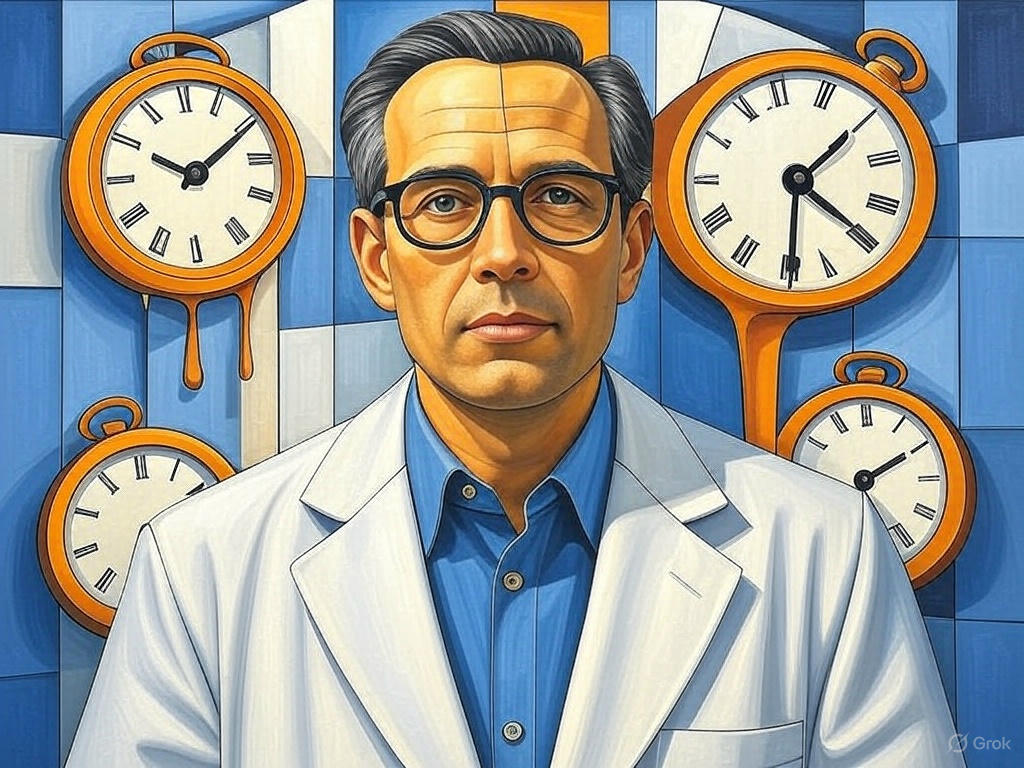
We watch clocks when we’re young, because we can’t wait to get out of one place to get to another. We watch clocks to escape the great “youth-thief” we call school, and then we watch clocks until it’s time to get off work. When we finally get out of those places, we go to other places with the same faces, because everything is overrated, overhyped, and eventually, “SO BORING!” Do clocks move slower in youth and faster in our senior years? I don’t know, but I was never happier in life than I was when complaining about it. 

I remember when an old person told me that “We should be grateful for our health.” I was polite, and I said something like, “We do take good health for granted,” but I didn’t mean it. I thought good health was “SO BORING!” Now that my body is no longer the incredible, recuperative machine it once was, I appreciate moments of good health. 

Some moronic celebrity was going on and on about a late-in-life career choice they made, and I didn’t hear most of what they said. The late-in-life characterization stuck with me though, so I looked the idiot up and learned we were the same age? I’m late-age now? I’m over-the-hill? What’s the hill? What age is the crest of that hill? My boss confessed, “My better years are behind me now, I know that.” He was 40 at the time. If my better years are behind me, why do I enjoy life now more than I ever did? Why didn’t I enjoy my better years more? You don’t. We don’t. No one does. It’s natural, human nature, and the way of life. “Youth is wasted on the young.” You can mourn the lost years, regret that you didn’t do more, or you can try to live the best life you can live now to try to make up for it. 

“Life is what you make it,” an old stranger once told me. 

“Uh huh! Now, could you move aside!” I wanted to say. “I’m not going to appreciate my life or my good health, stranded outside Walgreens like this, where the weather is suboptimal. I can’t make it better, until my dad finally picks me up, and he’s already forty-five minutes late!” When I finally get to the place where I’m supposed to be I’m probably going to say, “This is SO BORING.”

The Hearty Handshake Handbook


A stranger I’ve never seen before, and I’ll probably never see again, wouldn’t shake my hand, ‘Because COVID!’ I can only assume it was COVID, because he never said or gave me any hints that it was related. He just wouldn’t shake my hand. Fine, it meant anything to me, but what does it say about you? As Jack, the bellman, said, “COVID is over, and we have to get back to shaking hands again.” We’re men and this is what we do. I don’t like this any more than you men, but this is what we do. We look men in the eye and offer them a firm handshake, and firm does not mean that we drop them. “That’s for tough guys,” Bill, the waiter, told me one time in the break room, “and when I say tough guys, I’m talking about the rah-rah fellas in locker rooms, who don’t know nothing about what to do in the ring.” Even when I went through my most confident period in life, I wasn’t a big handshaker, and I didn’t really grasp the whole theatrical production of the hallowed first impression. First impressions, to my mind, are largely phony. I’m huge on second impressions and third impressions. I prefer to let the game come to me, and I can do some great, unforgettable when I’m immersed in the shadow of lowered expectations, but they taught me that that’s not the world men live in.  

I had my game all figured out at one point, until Ken dropped a big old, “I never trusted a man who wouldn’t shake your hand, and look you in the eyes while doing it,” on me. I’m not up to something, I wanted to tell Ken, and I never have been. I’m not shady, and I’ll prove that to you over the long haul, but you cannot say that to a man like Ken. Ken is a serious man, a man’s man if you will, and you don’t try to realign a man like Ken to suit your needs in his home. You shake Ken’s hand, and you look him in the eye, because that’s what he considers a respectful greeting from another man. To a man like Ken, handshakes build a connection between men, and as he says, it forms a level of trust that you cannot build with him in any other way in the initial greeting. A man like Ken sees through you when you don’t shake his hand and look him in the eye while doing it, and you won’t like what he sees.  

That stranger I’ll probably never meet again had his whole routine down though. Before your hand is unholstered, he flips out a quick “Hello, how are you?” and it’s very warm, polite, and standoffish at the same time. ‘I need distance,’ that quick greeting said. ‘Because COVID, because have you read the literature on communicable diseases? Even if it’s not COVID, you could have something crawling all over you that will get on me with the proximity, and touch, required in a handshake.’ Hey, I wasn’t raised to shake a man’s hand either, but I learned, stranger I’ll never see again. They taught me over time that this is just what we men do to one another, and we learned this tradition from the Ancient Greeks, it’s in their art, so it’s just too late to go back now. And I don’t care about COVID, or the literature.

Another kid’s parent shot me a condescending ‘Haven’t you read the literature?’ smile when I went to shake his hand, but my hand was already out. He wasn’t as quick as the stranger I’ll never see again. He dropped his name in that space, and my hand instinctively went out. I apologized with my hand out, and I withdrew it in the shadow of his condescending smile. “No, it’s ok,” he said putting a hand out to shake it. He didn’t look me in the eye when he did it. His handshake was fastidious and obligatory. ‘I’ll let it go,’ I wanted to say, ‘but that would not have impressed a man like Ken.’

I’ve heard about power handshakes that involve the lefthand cupping the handshake, a power move. I’ve never experienced a cupper before, but I have to imagine that that would completely 360 Ken’s notion that the cupper was up-to-something shady, and yes, I meant 360 as opposed to 180, as Ken’s suspicions would return tenfold after a cupping. I’ve heard some handshakers move that left hand up to the elbow, and one famous/infamous handshaker went all the way to the shoulder. The higher the lefthand moves up, I’ve heard, the greater the power play. I don’t know how I would address such a handshake, but I can’t imagine a situation in which I didn’t consider that unnecessarily intimate.

No, when you meet a man who is not distracted or rushing off, you press palms with them for no longer than three seconds, you look him in the eye, and you drop an interested smile on them. When you’re in another man’s home, or in some other relatively subservient position, you wait for him to extend his hand first. If he doesn’t, that’s on him. If you’re seated, you stand, and there’s no reason to get too close, because no one likes a nose-to-nose handshake. If you’re sweaty, you just coughed, or you just wiped your nose, you discreetly wipe it off before extending the hand. There are rules, laws, and by-laws in this whole handshaking world, and you learn them as you go. Even if you think some of these rules are silly, as I do, you learn them and follow them, because it’s not about you. These things mean something really important to some men, and if you refuse to take part, you’ll mean nothing to them.    

You shake a man’s hand, because it says you’re glad to be here, and you’re interested in meeting them, and you look them in the eye to say, “Yes, I mean you!” The non-shakers accidentally send a message that reads, “I kind of dismiss you.” Even if your transgression involves health-related concerns, based on literature, it still sends that message that you’ll never be able to properly address. The old saying on gifts, ‘Tis better to give than receive,’ does not apply in the handshake world, for if you do not give respect, in a respectful handshake, you’ll never receive.

The three exceptions to the rule are age, gender, and culture. If you’re in a culture in which the handshake is not the proper greeting, then you respect and follow the rules and traditions of that culture. If the person you meet is female, then you follow her lead. If she’s a hugger, you hug, but most women are big on smiles and eye contact, and some of them flash a wave. Kids aren’t big handshakers either, but I often make a production out of shaking the hand of a young male, because I deem it a sign of respect. “Welcome to the club!” my handshake says. I try to attach some element of silly to it, because I know how uncomfortable those first few steps into this world can be, but I maintain that my handshake is serious. I usually follow their lead on how much seriousness or silliness I attach to it, but I think I’m doing my part to welcome them into this world of respectful first-impressions among men.  

So, Mr. Stranger I’ll probably never see again, you ain’t Joe Cool, Mr. Snoopy with sunglasses on, and you never will be, with your COVID, learn-the-literature non-shaking hand codes of conduct, because shaking hands is just what men do. The respect you give will be the respect you receive.   

The Disappointing Rock Star Bio


One of my favorite genres in the book store/library is the rock biography. I love learning more about those rock stars and musicians I grew up with and continue to play in all of the various machines we can now play music on. My favorite chapters involve their early years in which nobody believed in them, because “Why would they?” I love the stories about how the musician we know today wouldn’t be half of what he is if he didn’t end up with the four-to-five other guys we know as their band. The four-to-five of them developed an unusual level of belief and focus that eventually helped them attract an audience of 100 people in a dive bar that is now boarded up. I also love to hear about the unending hours they spent just jamming in a parent’s garage. These are the stories most of us don’t care about, because nothing substantial happened there. They were just jamming, in the manner the basketball athlete spent so many hours/years in a gym perfecting their jump shot. I love these chapters because they demystify the notion that they were just born different, and they bolster Malcolm Gladwell’s contention that we’re all capable of great things if we devote 10,000 hours to it.

We all live with this notion that Paul McCartney, Bob Dylan, and Mick Jagger were just born with “it”, and they’ve always kind of had “it”, because they’re just different. The point of these early chapters is to illustrate that they might be different now, but that’s only because they’ve done it so often that it’s just easier for them to do now.    

Every top-notch singer-songwriter and musician we know and love had a point in their life when they strummed a guitar, played a piano, and sang some original creation from their heart, and someone they loved and cared about giggled and said, “That kind of sucked!” I love stories about that stench of failure, not based on some sense of schadenfreude, but to see what the musician did with that all of that frustration and pain. Why did they continue to create when everything they did, back then, was pretty sophomoric. They couldn’t see it then, of course, because they thought they were writing masterpieces, until someone a little heartless came along and said, “You’re not ready.” How did they maintain that belief in themselves when everyone who heard these “songs from their soul” and instructed them go back to school so they don’t end up in manual labor, until they achieved what we now know as their magnum opus?

After the “rise to stardom” chapters, most of those who write rock bios fall prey to the temptation of writing what’s called a hagiography, or a sympathetic, idealization of the subject. The hagiography term began as a description of a tome written about a person declared a saint. Thus, if a hagiography is the description of a writer anointing a man a rock god, then the opposite of a saint is a sinner, and the antonym of hagiography is synography or hamartography, meaning “in error, sinful”. There are some synographies, or hamarographies, written about rock stars that focus on drug, alcohol, and other forms of abuse, but their intent is to glorify the rock star through the lifestyle they led in their heyday.  

As much as we criticize the way the writer crafted their subject’s material, it has to be difficult to find the line between hagiography and biography when the primary reason we buy these books is that we all kind of worship the subject. Let’s face it, when we read a biography on Chris Cornell, we’re not seeking hardcore investigative journalism. We just want to know a few things about what made him tick, and how we can relate to him as a fellow human being who had huge dreams, but his just happened to come true. We don’t care if the writer tends to overdo it, and we even kind of expect that. We want to know the minutiae of how he overcame everything a teenager with nothing more than a guitar and a dream had to overcome to write and create Badmotorfinger.

The problem that would probably chase me through such an effort is how much material is there on the process and philosophy of creating a rock album. How many rock songs were inspired by “A time when I saw a chick in a red sweater and a tight, leather mini-skirt.” On the opposite side, we have the pretentious musician who tries to claim some sort of significant political, socioeconomic inspiration. There are also those obnoxious artistes who try to tell us every interpretation of their lyrics are wrong. “That’s so not what it’s about,” they say, but they never offer us the true origin of the song. This leads me to think the inspiration for the song was either relatively mundane, embarrassing, or at least not as creatively brilliant as we thought. They probably fear that anything they add to the discussion will only diminish our joy of the song, and they just prefer that we continue to regard them as misunderstood geniuses. Those who have offered a specific explanation, on the other hand, often leave me wishing they never said it. I can’t remember ever finding a songwriter’s explanation of their lyrics as an inspirational work of uncommon, creative genius, so I can understand why its sometimes better to leave it to our interpretation. 

Another disappointment I encounter when reading rock star bios occurs when the discussion of my favorite song begins. If you bought this bio, you love the band almost as much as you love man, but you can’t wait to read the discussion on your favorite song from them. Did you skip a couple chapters to get to it? Did you go to the table of contents to find the chapter that discusses it? I’ve done it, you’ve done it, because we want to get that chapter out of the way, so we can read the rest of the bio without anticipating the thorough discussion of it. How many times have you been disappointed to learn that your favorite track from an artist was a last second, “what-the-hell, let’s add another track” song? Out of everything Chris Cornell did in his relatively short life, in his brilliant Soundgarden albums, his Audioslave albums, and even his solo stuff, Temple of the Dog is, his deepest, most meaningful, and most beautiful album. Some of the tracks were written in honor of his then-recently-deceased friend and colleague Andrew Wood. At the end of their reportedly somewhat spontaneous production of this album, it reached a point of completion. The primary writer on that album, Chris Cornell, felt that nine tracks just didn’t feel complete. He wrote another song to have ten songs as opposed to nine, and that track was Hunger Strike. Hunger Strike would eventually prove to be one of Cornell’s most popular songs, but it was one of “my songs” from the moment I first heard it, and I couldn’t wait to read an in-depth discussion of it in a bio that ended up offering nothing but a short paragraph, and to be fair to the author there wasn’t much to say about Hunger Strike, other than it being a “what-the-hell, let’s add another track”.   

These artists mine their mind, heart, and souls for another song, and some of that material provides great material for the writer of their biography to explore with us, but the song everyone wants to read about? “Yeah that was a “what-the-hell, let’s add another track” song.      

The “after they made it” portion of the hagiography then talks about how “the star” always sang on stage with his shirt off, or how he once climbed atop a speaker one time and sang from there, and “It was a hell of a show.” Because he climbed up on something, or purposefully broke a guitar on stage, or purposefully jumped into a drumkit? We also read about how he climbed into the rafters of a concert hall, against the wishes of his manager and the Fire Marshall, and he swung from those rafters, which were thirty feet off the ground. I hate to be trite, but I could do all that. How is that artistic brilliance, or a brilliant interpretation of chaos? “Well, it’s better than some guy who just stands there and sings.” Okay, but I paid a lot of money to hear a man sing, and I don’t want to watch him climb on stuff the way my second-grade kid does, and I’ve also discouraged my kid from breaking his toys too, because it makes no sense. I understand that everyone is bored during guitar solos and drum solos, and the singer is just trying to maintain the audience’s interest, but I’ve never considered such antics mind-blowing or even interesting. I’ve always found them a little boring.

I honestly don’t know what I expect from a rock-star bio, but I’ve been disappointed so often that I’ve started thinking maybe rock-star bios just aren’t for me anymore.