Linda Ronstadt rejects the need for more fame: The Hall of Fame


It’s not anything I’ve ever given a second thought to,” Linda Ronstadt says of being elected to Rock and Roll’s Hall of Fame,  “I never thought of myself as a rock ‘n’ roll singer.  I’ve thought of myself as a singer who sang rock ‘n’ roll, who sang this, who sang that.

“I remember one of the guys at my record company asked me once if I would induct somebody into the Rock and Roll Hall of Fame, and I said ‘I really don’t like going to things like that.’  And he said, ‘Linda, you have to do it if you ever want to get inducted yourself!’

“I said, ‘I don’t care if I ever get inducted,’” she said. “That was a long time ago—in the ‘80s, and that was the last I ever thought of it.”
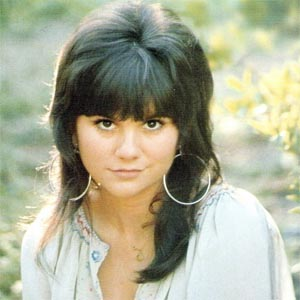
Ronstadt‘Heretic!’ the rock and roll intelligentsia is probably screaming.  ‘She’s lying!  She’s a witch!!  Get her!!!’  Some, more reasonable Americans, are probably thinking that her ambivalence toward induction has something to do with the fact that she can’t sing anymore due to her Parkinson’s disease diagnosis.  Others might think that Ronstadt fears that she won’t match up to other inductees, under this most, scrutinizing spotlight, but most are thinking that it’s just not rational that a living, breathing human being would leave any amount of fame on the doorstop before entirely fading away into obscurity.

How could you not be intoxicated by the fame a Hall of Fame induction might bring you?  Isn’t it every person’s dream to be enshrined in such a manner.  Isn’t that why you did what you did.  Doesn’t it put a punctuation mark on your career?  Are you lying when you say that you don’t spend every moment of your existence remembering your glory years?  Don’t you want to have your legacy properly placed alongside your peers?

It’s not enough, for some, to simply have their songs still played on radio, it’s not enough for them to know that they have had some form of artistic impact on millions of lives.  They want more.  What is more?  What you got?

Even though the brunt of their careers are now thirty years past, most artists still want more.  They still have agents, and public relations guys, and they are immersed in this competitive desire to have more fame, more money, more recognition, or more of ‘what you got’ than their generation’s peers. We’re so accustomed to every artist clinging to their moment in the spotlight that when one artist steps forward and basically says, “Enough.  I’m ready to move on in life,” we consider them to be either dishonest, or driven by an unseen agenda that we have to unearth to reveal them as the freaks they have to be.

I think it hurt Linda that she didn’t write (her own songs),” said one longtime Hall of Fame voter who asked not to be identified.  “Unlike (others), (Ronstadt) was viewed as a popularizer of songs, which isn’t as valued in the rock tradition as the pop tradition.  She also was more pop in some ways than country or rock or soul, even though she incorporated touches of all that in her music.”

It could have a lot to do with that, say those of us that aren’t attempting to evaluate Ronstadt’s position with an agenda.  It could have something to do with the fact that Ronstadt can’t sing anymore, and all these retrospectives and celebrations bring her feelings of pain and sorrow.  Or, it could have something to do with the fact that (hold onto your bootstraps) she no longer has a desire for unnaturally prolonged fame.

She boils her career down to ‘I sang this, I sang that.’  She said that she didn’t want to be considered the Queen of Rock, when she was declared so in the 70’s, and that she has either lost, or given away, all of the awards she has received in her life.  She then furthered her heresy, by condemning the Rolling Stone (the magazine’s) effect on music when she said: “There was a puritanical attitude about music that reeked out of Rolling Stone: The attitude that only a certain kind of music is hip, that you have to be funky.  Where does that leave Jimmy Webb or Paul Simon or Kate & Anna McGarrigle or so many other great writers whose songs have nothing to do with whether they are hip or trendy or what they’re supposed to be doing this week? People write music from the most personal point of view, and that process endlessly renews itself.”

Music, she says, “Should be about processing your feelings and helping you get through life.”{1}

Taken at face value, most music is simplistically pure, she seems to be saying, but those outside the art form (Rolling Stone critics and writers) bring so many personal agendas, and personal interpretations, and attempts at self-aggrandizement, that what is actually simple becomes complicated with all of these establishment attachments added to it.

Would the Sex Pistols have achieved any fame at all, if Rolling Stone magazine had never existed?  Anyone that was so subjected to the Rolling Stone definition of cool that they actually bought a Sex Pistols album, knows that they were actually pretty terrible, but they achieved worldwide fame on the basis of attitude, and that attitude fit perfectly with the Rolling Stone ethos.  Anyone that bought a Ramones album, based on the never-ending plaudits that every Rolling Stone writer attached to them, to gain their bona fides as a rock critic, knows how limited the range of the Ramones catalogue was.  Ask any Rolling Stone writer about Tom Petty, and they’ll say he was great.  Ask these same people about a similar artist, from a similar era (say Billy Joel) and they’ll point their thumbs down with a raspberry to follow.  Petty was traditional, and Joel was more oriented towards pop music, which Rolling Stone generally rejects as bad.  Michael Jackson, bad, Prince good; traditional rock good, arena rock bad; and punk rock good, heavy metal bad.  It’s the Rolling Stone ethos.

Taste in music is relative, of course, and I’m sure that there are some that actually preferred Jim Morrison’s voice to Freddie Mercury’s, but how much of that preference was personally decided, and how much of it was spawned by the Rolling Stone’s declarations of good and bad?  How many of us dismissed Bohemian Rhapsody as unserious bubble gum pop, that therefore shouldn’t be held in the same category as the more important song The End by The Doors.  You can like Bohemian Rhapsody, in other words, but if you put it on the same level with The End, you’re unserious, and you should be dismissed as such.

The effect this magazine, and American Idol, have had on music is unquestioned, and this is what Ronstadt rejects: “This sort of competition has nothing to do with art.  It’s so counterproductive to put everybody in some kind of category.  That’s got nothing to do with anything.  I just don’t like it. I think competition is really good for horse races.”  She was speaking of the American Idol effect with this specific quote, but the feet of Rolling Stone’s writers can be held to some of the same fires.

In our teens, many of us were confused, on a daily basis, on what we could like and what we couldn’t.  Was it okay to like Michael Jackson back then?  That depends on the mood of the cool kid of the day.  Was it okay to like Kiss?  It usually wasn’t, but there were days when you could catch the right cool kid, on the right day, and find out it was.  Was it okay to like Cindy Lauper and Phil Collins?  That all depended on the motif you were trying to create.  Did  you want to be a kitschy, retro, nerd, or were you seeking good music?  If you truly wanted to be in the know, it was probably safer to put the Lauper CD back and pick up a Patty Smith, or Aretha Franklin CD.

The cool kids that I hung around—those that refused to join the Echo and the Bunnyman, Elvis Costello, and R.E.M, inner circle of Rolling Stone magazine cool kids—faced a quandary with Ozzy Osbourne.  Was he cool, or was he a kitschy cool, cartoon character on par with Kiss?  Most of the high school students I hung out with knew nothing of Black Sabbath, or anything that preceded the bat-biting heavy metal dude.  Once we found out the man had history, transcendental history, it was cool to love Ozzy again.  I was so confused.

I don’t know if the cool kid status, is as confusing today as it was back then, but I do know that for most adulthood allows those insecurities to slip away, like a snake shedding its skin.  I do know that most people start to like the music they like, because they like the music, and they eschew all of the personal, and establishment attachments that are placed on it.  I do know that most adults are confident enough that they don’t need the constant reinforcement that it appears most aging rock stars do when they have their Rolling Stone, classic rock bona fides redefined by the Hall, and they get to feel like cool kids again, until they are so overwhelmed that they are move to tears by it.  Very few of them appear to be so confident, or comfortable, that they are able to opt out of all this foolishness and say, “Okay, that’s enough, let’s all move on.  I’m in my sixties now, and I’m simply tired of reliving all those events that occurred thirty years ago.”  Linda Ronstadt appears to be the exception to the rule, and her public proclamation appears to have reflected so poorly on the others that they need some sort of explanation for this most personal affront.

[Editorial update] Linda Ronstadt was inducted into the Hall of Fame in April 2014.  In the dignified manner Ms. Ronstadt has conducted herself throughout her career, she said:  “I don’t want to seem ungracious, but I’ve refused all comment about this.”

{1} http://www.latimes.com/entertainment/music/posts/la-et-ms-linda-ronstadt-book-parkinsons-rock-hall-fame-simple-dreams-20130927,0,5027737.story

Rilalities III: Thoughts


Posted by Muyiwa Okeola

A Thought: Anti-religious people go nuts when the religious Creationists point out that there are gaps in Charles Darwin’s attempt to explain creation. “How could there not be gaps in his Theory of Evolution?” they ask. “Darwin was dealing with mid-19th century science.” They also caution that we shouldn’t insert God, or mystical miracles, into every gap we currently have in our current explanations, based on our current levels of science. The import of this message is that we have already filled many of Darwin’s gaps with our current levels of science, and we will fill even more as science advances in the future. Yet, some of these people, who place such prominence on science, are perfectly willing to fill the gaps of our current levels of science on global warming with the explanation that man did it.

On that note, how many future generations, with their progressed levels of scientific knowledge, are going to be laughing at global warmers in the manner we currently laugh at bloodletters and flat earthers? There were even some people, see Aristotle, who believed that a slab of beef spawned maggots. Scientists warn, based on these precedents, that we shouldn’t leap to conclusions, or fill the gaps of our current scientific knowledge, with explanations that support our personal agendas, but some of them claim that all the science is in on … everything, and there’s no need for more debate on the subject, no matter how we arrive at truths through the scientific method.

B Thought: We all learn lessons in life, no matter how old we are, and no matter how many times we have already learned those lessons.

C Thought: Debate matters of substance with enough people, and you’re bound to come across extremes. Those of us who discuss matters with representatives of the extreme faction of the other side, find it enjoyable to nuke their ideas out of the park with facts. If you seek such discussions often enough, however, you’re bound to run across the extreme faction from your side. Some of these people, unfortunately, go so far out of the parameters that you may initially think that the other side may be right about their characterizations of your side. They’re not. The person in front of you is simply a characterization of the extreme faction of your side that diverts themselves away from the important matters of the day with trivial matters. I don’t know if these people strive for the trivial, because they’re not able to compete in the knowledge of important matters, or they find the trivial more entertaining, but they are inordinately intrigued by the trivial, and they exist on both sides of the aisle

D Thought: Most artists have one masterpiece in them. Everything they do after that is, in ways large and small, derivative of that one master. Those of us who get excited when we experience a masterpiece, should understand how difficult they are to create. Most of us characterize the masterpiece as brilliant, and we think the next piece should be just as brilliant, and if it isn’t, “it sucks!” An overwhelming majority of us don’t know what it takes to create a masterpiece, much less something of an artistic nature, but we enjoy giving our uninformed opinions for the mileage they gain us.

E Thought: Some watched the movie version of Fight Club and fell in love with the romanticized notion of blowing up banks to finally achieve economic justice in this unfair system. The import of this dream is that those who are burdened by debt, would be no more, and we could reset the system to finally give the poor the chance they never had to be rich. In this dream, those who inherit money, would have to start over from scratch. Those who gain money by being lucky, or being in the right place at the right time, would have to do it again. Those who accumulate money by ill-gotten means, would have to start over from scratch, and those who haven’t been afforded a chance to succeed in our unfair system, would be able to have another crack at the system.

Let’s put aside the ridiculous notion that blowing up a couple branches, or a couple banks, that house a couple computers, can accomplish anything. Let’s say, for the purpose of this argument, that some Electromagnetic Pulse (EMP) bomb were able to comprehensively wipe out all data, and all Americans were afforded a restart. How depressing would it be, to these dreamers, to realize that people are, in fact, different? How depressing would it be to them that some people are more talented, more industrious, more ambitious, more creative, and more willing to risk it all for more? How depressing would it be for these people to finally achieve hope and change, only to realize that everything would eventually cycle back? How depressing would it be when all the same millionaires are the same millionaires and billionaires ten years after the EMP bomb occurred? It’s not only possible, it’s likely. Most of those who accumulate the millions and billions they do, do not do so by birthright. Most of them knew how the system worked so well that they could manipulate it again, if called upon to do so, and they might enjoy the challenge. In this post-EMP world, these people would know how to raise capital better than we would, they would know how to form coalitions better than us, and they would be far more willing than the rest of us to risk it all on some idea that they just thought up. We, theoretical dreamers, would be living in John Lennon’s Imagine world, while they would be re-invigorated to prove themselves all over again. This event would prove to be only be more depressing to those dreamers to eventually realize that they couldn’t do it yet again.

F Thought: One of the primary arguments against the stop, question, and frisk law, used by the police in New York City, is that it violates the Fourth Amendment, and it allows for some degree of profiling. Most of those that argue against this law do not want it finessed. They want it ended. An interesting aspect of the law, that I hadn’t considered before, is that some leaders have been screaming for generations that government do something about the crime that occurs in specific neighborhoods. They’ve said, for generations, that government leaders ignore the crises that occur in some crime-ridden neighborhoods, and they’ve said that the police virtually ignore those neighborhoods. Yet, when a government, and its police force, do attempt to do something, and that something is the stop, question, and frisk law, the leaders claim that it unfairly targets some in some specific neighborhoods where crime is the highest. The answer, of course, is that those leaders, screaming the loudest about the fact that the government wouldn’t do anything to solve crime, and that most police forces won’t even go into those neighborhoods, never wanted solutions. They just enjoy the fruits of the labor involved in screaming.

G Thought: Why do serial killers in movies, and on TV shows, turn the TV off when a news report of their spree makes it to air? I understand that the screenwriter is trying to establish the fact that the killer is not doing what he’s doing for fame. “This particular killer has a more gruesome motive,” the action of turning the TV off attempts to suggest. “His malady is so much deeper than all that. This particular killer is not your typical, garden variety serial killer.” In one particular show, Netflix’s The Fall, the serial killer plays with his child while the TV broadcasts a press conference with those in charge of the investigation detailing their findings, and he appears to be only symbolically interested in the broadcast. When it’s announced, by the serial killer’s wife, that dinner is ready, he shuts the TV off, mid-press conference, and takes the daughter to the dinner table. It’s cool that he doesn’t care, and it does characterize him as something different than what we expect, but shouldn’t that killer want to know how the law’s investigation is proceeding, so he can, at least, adjust his spree accordingly?

H Thought: Anyone who argues against the idea that most Americans are ignorant when it comes to the subject of Economics, needs to watch an episode of TruTV’s Hardcore Pawn. Pick any episode, and you’ll see a customer walk in with something of relative value, and you’ll hear them assign it value. “I want $100 for this ticket to (a concert by the band) Journey!” said one particular customer, on one particular episode. When she was asked how she arrived at that dollar figure, she couldn’t do it. When she was informed that she wouldn’t be getting $100, she was outraged. “I want $100!” 

These customers don’t care that they’ve just entered a pawn shop –that is not going to give them face value, much less fair market value, for their product– they just want their $100, and they usually “don’t care” because they don’t know. They know nothing about economics, bartering, or the fact that a pawn shop is in the business of making as much profit off their products as possible. They don’t even know enough to know anything about the bartering process involved in the pawn shop world, they just want their $100. I don’t want anyone to think that I approve of what they do on the show, or in their shop, for I think they shortchange most of their sellers, but if I were to enter this, or any pawn shop, I would walk in knowing that I probably wouldn’t receive the value that I assigned to this product. My goal would be to get something more than I fear I would get. And perhaps this fear, and this knowledge of how the pawn world works, would lead me to getting far less. Regardless, I can assure you that I wouldn’t be one of these crying and screaming idiots that ends up getting tossed out on their ear, on a nationally broadcast television show, or if I were, I wouldn’t be signing the release that allowed them to air it. It would officially be the most embarrassing moment of my life. To these people, apparently, it’s just another manic Monday.

A Book Review: of Brett Martin’s Difficult Men


Difficult menBrett Martin’s book Difficult Men, is a writer’s dream, in that it finally gives credit where credit is due. It doesn’t give undue credit where so many other, lesser periodicals, give credit, to the stars. It doesn’t give undue credit to the directors of the individual episodes, the “brave” networks that eventually broadcast them, or that individual studio exec that provided the show its green light. It does give credit, finally, to those who rarely receive the amount of credit they are due in the court of public opinion, the writer. Martin is more specific in his dispersal of credit when he says it’s not just any writer that deserves credit for the success of these shows, it is the writer, the creator, the head writer, the emperor of the room, or what he calls the show runner.

“The show-runner,” writes Martin in a GQ piece, “is this era’s version of the Creative Titan.”{1}

The amount of credit currently given to star James Gandolfini, for the success of the show The Sopranos, is entirely disproportionate to the amount of credit owed show runner David Chase; Jon Hamm’s acting ability, and his rugged good looks are a reason that people tuned into Mad Men, but the overall quality of the show is primarily due to the writing, and the obsession, of show runner Matthew Weiner; and Bryan Cranston isn’t Breaking Bad as much as Vince Gilligan is. Martin does give some credit to the stars, and to some of the individual writers of individual episodes, and to some of the other behind-the-scenes players of each show, but he maintains that these shows wouldn’t have been a fraction as good as they were, if they were in less capable hands than those listed as creator, or show runner.

This isn’t to say that Martin’s book Difficult Men is as obsessed with credit dispersal as I am. He simply focuses his narrative on the history of these show runners, and the work each of them did throughout the life of the project in question. The rest of us can’t help but be obsessed with credit, especially when so many of our friends misdirect it to the stars.

James Gandolfini is the face of The Sopranos, of course, and Jon Hamm is the face of Mad Men, so most of us can’t help but associate them with the shows, and subsequently give them all the credit. Just as we can’t help but believe Basic Instinct is Sharon Stone’s movie, and her coming out vehicle, and the movie where she showed a vital organ. Very few people have even heard of Joe Eszterhas and Paul Verhoeven. Everyone knows that Christopher Reeves was Superman, but how many people know the name Mario Puzo? How many people, on that note, know what Mario Puzo’s relationship to “Marlon Brando’s” The Godfather is? How many of those who love Entertainment Tonight, and their red carpet interviews, know anything about what happens behind the scenes of their favorite movies and TV shows, and how many would care if they did?

Those of us who care, and wish the creative types received more credit in the public arena than they do, have tried to stay in tune with the creative drivers of the projects we love, and we subsequently became obsessed with knowing which party deserves the credit for each production. Martin’s book Difficult Men informs us that we have been wrong in our credit dispersal when it comes to TV.

Prior to reading this book, I assumed that in TV, like the movies, the directors rule. Those of us who love movies, for example, know that a Scorsese movie is almost always great, regardless of the star who leads it, the screenwriter who writes it (unless it’s Scorsese), or any of the behind the scenes players involved in it. Therefore, we obsessives have habitually searched through the credits of TV shows to see who the director was to determine if that show will be any good or not. Martin informs us, through a Matthew Weiner quote, that movie goers are dead wrong in their assumption that directors have the same amount of power in TV that they do in the movies.

Those of us that love books, also lived with the somewhat sanctimonious assumption that individual writers were more of an essential ingredient to TV shows, but we didn’t put enough thought to the concentration of power that had to be assumed by the head writer, or “emperor” of the writing room, to keep it all consistent.

Here’s what most of us thought. We knew that there had to be an “emperor” of the writing room, but we thought that an individual writer, of an individual episode, simply handed the finished draft to the head writer, and that head writer then either outright rejected it, or added a few notes here and there to spruce up the final product. We thought that the head writer acted in a manner similar to an editor of a freelance magazine, and he would continually reject an individual writer’s product, until it was perfect. We also knew each episode had a “writing room’s” influence on the finished product, but we had no idea—as in the case of Weiner and Mad Men—that the head writer, or the show runner, rewrote an average of eighty percent of every episode that was handed to him. We were the ones trying to dissuade our star-obsessed friends of the notion that the stars were the end all of a given product, and that it had more to do with the individual writers. Yet, we were even wrong by a matter of degrees. Martin writes that a show runner is, in general, and specific to these particular shows, the person that dreamed up the general premise of the show, wrote the show’s bible, and controlled and edited every aspect of that show.

Martin’s description of the process is as follows: The writing team meets behind closed doors, they put in an ungodly amount of hours trying to come up with ideas for each individual episode. One writer will then eventually take the lead on an episode, and he and the rest of the writing team will eventually come up with a 40-50 page script. Once they have completed this script, the show runner will walk into the room, take the script to his office, and rewrite 80% of it, on average. For most shows, the next step in the process involves a debate between the studio execs, network censors, and the show runner over what they believe will be popular and acceptable to audiences and sponsors. With these three particular shows, however, the show runners state that this part of the process rarely involved much in the way of this intrusion.

Show runner of AMC’s Mad Men, Matthew Weiner, illustrates his role as the show runner in the following description:

“Over 80 percent (of writing on TV) is rewriting, and if I’ve rewritten more than 80 percent of a writer’s script, I’m going to attach my name to it. If I keep 20 percent or more, of one of my writers’ scripts, I’ll give them a lone writing credit. Basically, it’s a question of ego. I can’t stomach the idea of someone not knowing that I was involved in it. For the well-being of my daily interaction with the people I work with, I felt it best not to have to watch somebody go up and get an award for something I had written every word of. I’m not Cyrano de Bergerac.”

The one asterisk to the process described above, for these three particular shows, is Breaking Bad, as show runner Vince Gilligan regards the process as a more democratic one than Weiner, Chase, or even Deadwood’s creator David Milch do.  It should also be mentioned, in this paragraph of asterisks, that Brett Martin’s Difficult Men covers a number of other shows in Difficult Men, including: The Wire, The Shield, Six Feet Under, and to a lesser degree Deadwood and Dexter. All of these shows, writes Martin, comprise what critics call the Third Golden Age, but I regard The Sopranos, Mad Men, and Breaking Bad as the triumvirate of it.

Another little talked about aspect of these three shows, that turned out to be essential to the show’s long term success, was the main star’s willingness to acquiesce to the show runner’s ideas of where the character should go. Most stars are not willing to concede characteristics of “their character”, because it will reflect upon them more than the show runners. Most stars are not willing to put themselves in compromising positions, and they’re not brave enough to look bad on screen with the fear that it could affect the rest of their careers. Cranston, and to some degree Gandolfini, weren’t afraid to have themselves portrayed on screen in their underpants, which Vince Gilligan says is a “pretty good physicalization of their fearlessness.” These stars had to be willing to be very “un-starlike” for these particular shows to have the kind of flawed weaknesses that eventually made them monumental.

As stated throughout Difficult Men, the egomaniacal nature of the show runners was paramount to the success of these shows. It dictated to the stars that they would acquiesce, but it also dictated to the networks that they would have to acquiesce too. Had any of these show runners sacrificed their egos, and gone with the “suggested” tweaks of the studio execs that eventually rejected these shows—just to finally get their project made—these shows surely would’ve been different, and possibly drained of most of the value they eventually brought to TV.

One cannot entirely blame those studio execs who passed on these shows, as they had their own bosses to answer to, their sponsors to satisfy, and their audiences to avoid offending. To get these particular projects made, the studio runners needed a vulnerable network that was less concerned with controversy, and ratings, and in having “some say” in how the finished product would appear.

“In TV, as nowhere else, the writer is king—none more so than those emperors of the air that control every aspect of an ambitious, ongoing cable drama,” Brett Martin writes in the GQ article.

I’m embarrassed to say that I never heard of this term “show runner”, until I read this book, but I did have an idea that there had to be an “emperor” of the writing room. I had these ideas of how a show was created, but I never really focused in on it, until HBO informed me, in their ad campaign, that I should watch Deadwood, because its creator, David Milch, used to work on The Sopranos. AMC ran a similar campaign for Mad Men, saying its creator, Matthew Weiner, wrote for The Sopranos. Other than maybe Steven Bochco, I can’t remember a creator given such prominence in a show’s ad campaign, and Bochco largely created shows that I didn’t watch. I did watch The Sopranos, however, and I was willing to watch any show attached to it in anyway, especially when the ad campaign centered around the show’s artistic creativity and not the stars. The only reason AMC used the campaign they did, writes Martin, is that they couldn’t think of another way to market a show about ad men sitting around a table talking sales.

As the title of this book suggests, the stories of these three shows involve difficult, uncompromising, and flawed males, but the real story, or the story behind the story that is not commonly talked about with these shows, involves the difficult, uncompromising, and flawed males behind the scenes that got these shows made, and finessed, until they achieved the creator’s idea of perfection.

Portions of this book are devoted to the stars of the shows, but if you are purchasing this book to learn more about them, you’re probably also going to be disappointed, especially if your perspective is that they are strictly star-driven vehicles. And you’re probably going to be just as disappointed by the limited amount of space Martin devotes to Gandolfini’s psychosis, the Tweet page devoted to showing Jon Hamm crotch shots, and Bryan Cranston’s comfort level with being shot in his underwear in various episodes of Breaking Bad. That having been said, Martin’s book Difficult Men, and his perspective, is probably not what most readers would  expect, nor—sadly—enjoy, but it’s fantastic.  No reader, who makes it to the end of this book, could mistake it for a gossip piece that focuses on the daily lives of stars. It is about the creative process. It’s about quality TV.  It is about how one show, The Sopranos, influenced some relatively vulnerable cable TV networks to pursue other, similarly “important” shows, until a Third Golden Age of television was born.