Dream Crushers


“I have so many ideas rolling around in my head, some really great ones,” a man named Kelley told me. “I just need some money to make them work, and I’ve never had any money.” Some might laugh at such a foolish notion, and some of us might say, ‘If your ideas are so great, why haven’t you done anything about them?’ 

Kelley wouldn’t tell me what his ideas were. He avoided answering me when I asked for specifics, and he quickly changed the subject when he saw that I wasn’t going to let it go. He enjoyed my general level of intrigue, because most idea guys don’t even receive that, but my guess is he didn’t want to risk damaging that interest by telling me what his ideas were. I knew why Kelley did that, because I was Kelley on so many occasions, and I saw my listeners’ faces turn to ‘that’s kind of dumb’ disappointment when I actually told them what my ideas were. I knew the vulnerability, bordering on fragility, and I also knew what happened when we accidentally gave a cynical, once-bitten hyena one of our ideas. I knew what it felt like when they took a chunk of flesh. What Kelley didn’t know, because he couldn’t, was that I was so into the plight of the idea man that I often waited for them to finish to offer them blind encouragement. Since Kelley didn’t know me, he just assumed that I was one of those who consider it their responsibility to crush idea men at the gate.

“I don’t see it as mean,” former talent judge from the show American Idol, Simon Cowell, once said regarding crushing other peoples’ dreams. “I see it as freeing them from their lifelong dream of being a singer. No one ever told them that they couldn’t sing before. When I tell them, it frees them up to pursue all these other avenues in life.” This isn’t an exact quote, but it is so close that it gives us some idea what Cowell probably dreamed up one night to presumably free himself of the guilt that caused his chronic bouts of insomnia.

All these years later, we learn that that wasn’t the real Simon Cowell. Simon Cowell, we learn, wasn’t a mean man. He had to learn how to be one. A TV executive, named Mike Darnell, states that “In all the other shows before him, everyone was polite and nice, and I knew [crushing people’s dreams in the meanest way possible] was going to be [his] thing. Simon, to his credit, was willing to do anything.” Simon Cowell had to learn how to be a mean character if he wanted American Idol to succeed, and “He was willing to do anything”, including absolutely crush the dreams of the participants on the show to achieve his own fame and fortune. Is this supposed to vindicate the guy? Not only could I not be that guy, no matter what rewards awaited me, I couldn’t even watch his show. I watched it once, because everyone told me it was so fantastic, but I couldn’t bear to watch the glimmer of hope fall out of the eyes of my fellow dreamers when Simon Cowell’s mean-spirited character laid them out.   

I don’t know if I’m the opposite of Simon Cowell, when it comes to idea men floating their dreams to me, but I approach their pitch from an ‘I don’t know what the hell I’m talking about’ mindset. This mindset was born the day Beanie Babies hit our store shelves. The idea that we had a line that stretched from our hotel entrance to the gift shop, where they were sold, set my beliefs about the American consumer back by about ten years. If I were a toy executive, listening to the Beanie Baby pitch from the idea men who brought it to me, I probably would’ve said something along the line of, “I like them, they’re well done, cute, and all that, but if we buy your product, we’re not going to devote much of our resources to their manufacturing, and we’re not going to devote much to their marketing either. We already have a certain percentage of our budget devoted to the teddy bear market, and I don’t see how these products demand anything beyond our typical financial devotion to a product.” As we all know, this is but one bit of evidence that ‘I don’t know what the hell I’m talking about’ when it comes to the desires of the typical consumer, or ideas in general.  

Simon Cowell, I suspect, also “Learned how to be mean” to establish his bona fides as man who did know what he was talking about. To establish his status as an authoritative expert, the show’s organizers front-loaded it with talent that couldn’t sing. I could see that, you could see that, and Simon Cowell could see it too, and he was so frank in his assessments that some could mistake it as cruel. “Hey, he needs to hear that, because he is bad,” audience members said while they were laughing. Simon Cowell, his handlers, and the corporate execs obviously did their research on how to create a character that fed into the American definition of an authoritative expert who knew what he was talking about. If they were correct, and the ratings show that they were, the American definition of the man who holds the keys to the kingdom is a mean man. We see this in our movies and cartoons, and it’s become an affixed image in our brains. If the American public were going to take Simon Cowell seriously, he was going to have to be theatrical when informing those who lost in first round, and he would have to remain unconcerned with their feelings, because being nice and polite is boring, and it doesn’t feed into the American definition of an authoritative expert. 

We might think that an idea man, listening to the ideas of another man, would want to avoid every trait of the Simon Cowell character. We might think that after getting ripped apart by their own hyenas and jackals that they would be more sympathetic and empathetic than the average man to the tumultuous path of the idea. We might think they would want to be the confidant, the facilitator, or the one person that the idea man can count on to be supportive. We might even think that an idea men would strive to create mutual appreciation relationships to treat the ideas of idea men the way they want theirs to be treated. In my relatively limited experience, they do the opposite. They skeptically diminish, deride, and dismiss all others’ ideas to essentially clear the deck of ideas, so theirs is the only one left standing. It’s a “My idea might be flawed, but it’s not as flawed as yours” methodology of propping their ideas up by pushing everyone else’s down.    

These clear-the-decks idea men share many characteristics with the Bigfoot experts. If you’ve ever watched an exploration of the Bigfoot universe, you’ve been inundated with the experts in this field of cryptozoology. As with idea men, the breadth of the various pitches they offer to establish their authoritative expertise on the subject often devolves to tearing down the competition. One expert, we’ll call him Tom, claims to be the Big Foot expert. Tom claims to have had numerous harrowing encounters. He provides details of those encounters (cue the actor in the hairy suit for the reenactment), and he shows us evidence of those encounters, such as the plaster cast footprint, a ripped tent, or a damaged car to show the wrath of the Bigfoot. Based on his numerous experiences, the evidence, and his particularly charismatic and convincing presentation, Tom is widely regarded as the Big Foot expert. This bothers Dick, the lesser-known but up-and-coming expert in this field. We might think Dick might try to rival Tom’s experiences with his own, but he chooses to try to poke holes in Toms’ stories, until it’s fairly obvious that he’s trying to destroy Tom’s legacy in the field. Dick claims that true cryptozoologists, with a Bigfoot focus, know Tom’s claims are “dubious to say the least.” Dick tries to establish his bona fides in the Big Foot community by scrutinizing Tom’s claims, as if they’re not rooted in the scientific method. Dick then lists some of his own credentials, his theories, and his firsthand experiences, but the breadth of his presentation focuses on bringing Tom, the widely-recognized expert in the field, down. Harry refutes Tom and Dick’s claims with a “If this is true then that would have to be true too” prosecutorial breakdown that leads the audience to believe that Tom and Dick’s presentations are basically nonsense. Thus, Harry claims to be the “real expert” by a last man standing process of elimination. In the end, no parties produce irrefutable information, because there isn’t any, and as a result the experts, like the idea men, end up dueling over the circumstantial evidence they gathered. 

Our ideas might be flawed. We might not be as funny as we think, we might not know how to sing, or we might not be able to write good(emoji), but our dreams and ideas secretly make us feel special. They’re what we think separates us from the pack. I could see this in the aforementioned Kelley’s eyes. He thought his very general pitch was a declaration that he wasn’t a low-level, blue-collar worker like me. He was (trumpet’s blare) an idea man, and the only reason he wasn’t there yet was he didn’t have any money. We all think if we just had a few thousand dollars, or the right connection to that person in the know, or that big break that the man had, everyone would know that we’re not just idea men. We’re the real deal, not like Anthony over there, who’s just a dreamer. “You have to know someone to get somewhere,” we frustrated types say when we don’t get where we need to be. “It’s all a game, and you have to know how to play it to get there.”

The idea that none of us are who you think we are, “a common blue-collar worker like you,” and we’re actually a lot more special than anyone knows, was brilliantly captured on the classic show Taxi. No one in the blue-collar dispatch area, on that show, was just a cab driver: one driver was also boxer who drove a taxi for the money, another an actor, a receptionist in an art gallery, and the last was a guy just working there to put himself through college. After each character went through their real roles in life, the character Alex Rieger declared, “It looks like I’m the only taxi driver here.” Their dreams, our dreams, are our way of getting through the rigamarole of the daily life of the worker, and the general tedium of life. They are our reason to wake up in the morning, and the reason we keep going through the routines of life, but some of the times our ideas aren’t as great as we think they are, and we’re afraid of meeting that Simon Cowell-type who will not only tell us the truth, but humiliate and emasculate us for ever dreaming in the first place. Simon Cowell-types can say that their goal is to free us from unreasonable ideas, aspirations, and dreams, but we all know that they enjoy laying out the harsh realities of life.

***

Did you ever have a dream? We all did, when we were all dumb and stupid in our twenties. Our dreams may have been delusional and a “total waste of time”, but they were all ours. Did someone come along and deliver a harsh dose of reality to you? Have you ever passed this knowledge on? Did it feel good? Okay, maybe not good in the literal sense, but how about justified? Some people, and we all know who they are, love to crush dreamers with a reality hammer, because they’re more than happy to help someone else in this regard. 

The trick is to hold onto your young dreams.” –George Meredith

Dreams are largely a refuge of the young. Talk to any kid, and you’ll hear about their dreams, all of them. If you fear that your kid might be headed down a delusional and a “total waste of time” path that you hate to see them spend one second pursuing it, wait a second, don’t say a word, wait, and be patient. They’ll have another, totally different dream tomorrow. Until someone comes along to effectively crush our dreams, we’re still in this dream-like state in our twenties. The only problem is we don’t have any money, no connections, and absolutely no path to seeing our ideas and dreams to fruition. 

If it’s true that our brains don’t fully formulate until we’re twenty-six-years-old, the twenties are our last vestiges of youth, but we’re old enough and mature enough to start seeking concrete paths for our youthful dreams. The thirties are a rough time for dreams, as the faint light at the end of the tunnel begins to fade in the decade we spend in the workplace, but we’re also not so old, yet, that we consider those dreams foolish notions. That usually happens in our forties, as we begin to whittle away at the idea pool to sort out the outlandish, never-gonna-happen dreams, and we become more realistic. Few of our dreams last into our sixties, as we begin to realize that we should’ve either focused our mind more on the more realistic dreams we had or given up on all of it sooner and focused on something that mattered so much more.

This general, and relative lifecycle of dreamers can be artificially altered and disrupted by dream crushers, and as I write, they think they’re doing a service to their fellow man. They don’t consider the idea that we all think different, and some of us can walk and chew bubble gum at the same time. When I hear a dream crusher brag about injecting a dose of reality in another’s head, and they always do with some measure of pride, I ask them, “Why would you do something like that?” When I ask that in an emotionally charged manner, I can see, in the manner in which they answer, that that was the last question they expected from us, or anyone else for that matter. You can also see that they failed to consider the other side of their advice, or that that person might just be different than them.    

“You heard their idea. It was ludicrous, and a total waste of time. Someone had to say something. I think it was for their own good that they hear that,” they say. They also add some variation of, “Better they hear it from me than someone who doesn’t care about them.”

“Okay,” I said, “but did it actually benefit them? I think we can both agree that he’s an upstanding man, good father, good husband, quality friend and employee.”

“From what we know, yeah.”

“And most of the time he “wastes” pursuing a dream “that was never going to happen,” was done with whatever free time he had left. If all that was true, and as you say from what we know it was, how did your dose of reality benefit him?”

“He was just wasting so much time and energy on it. I couldn’t bear to watch it anymore. Someone had to tell him the truth before he got his heart broken.”

“So, you broke his heart to prevent him from getting his heart broken? While you were smashing, did you ever consider the idea that some portion of the happy-go-lucky, unflappable personality that you and I know and love was based on those outlandish dreams and unrealistic goals? What if he believed you, or you made some kind of dent? What if he stops pursuing his lifelong dream, based on what you said? How would you feel if he come back to us as hopeless and cynical as you are? Would you feel vindicated, or would you realize that he’s probably not going to tell you, or anyone else, what his dreams are anymore, if he continues to pursue them. And what if he doesnt? What if he admires and respects your opinion so much that he realizes that pursuing his dream was a waste of time and energy, and he just gives up on them? It’s possible that he might come back to us a little more unhappy than he was yesterday.”  


Fix-It Man!


I barely know what I’m doing. I write those words of caution to anyone who thinks I have some level of expertise, experience, or credentials when it comes to these Fix-It Man! articles on Do-It-Yourself (DIY) projects. The garbage disposal article, the washing machine article, and this article were written from the dumb guy’s perspective of fixing various things around the home. This dumb guy’s perspective has been informed by the DIY YouTube guys and some “you’re doing it wrong” friends. The “you’re doing it wrong” friends have offered me some tips on how to fix what needs fixing, and I thought some of my fellow dumb guys might appreciate me passing those tips along. It is also written from the perspective of someone who got tired of calling in the experts who charge us for every visit, regardless if they actually do nothing more than switch something on. If you’re reading this for some level of expertise, “you’re doing it wrong”.

During my 20+ years of living in apartments, and never having to fix anything myself, I heard all the talk about how to best take care of a lawn, fix and/or replace an appliance, and all the tips on how best to renovate or modernize a home. I didn’t listen. It bored me so much that I tried to change the subject, but I wish I listened a little bit, now, because I’ve now done all of the above, and it’s embarrassing how little I know.

Heating, Ventilation, and Air-Conditioning (HVAC)

Every time we called an HVAC guy in, they checked two things. They checked the air filter inside our home, on the interior portion of our HVAC unit (furnace and air conditioner), and then they checked how dirty the outside portion of our HVAC unit (the condenser) was. One rule of thumb they taught us with the air filter is to hold it up to the light. If we can see light, it should be okay. This is far from an exact science, but it gives us a better idea how dirty our filter is. Dirty is dirty, but it’s mostly a judgment call. Most HVAC guys suggest changing the air filter quarterly (every three months), and they suggest we write the date of installation on our new filter with a Sharpie to help us keep track of how often we change it. This quarterly suggestion is relative to the size of the house, how many live in the home, if you have pets, if anyone in your home has allergies, how often you use the HVAC, and the general air quality of your home. Some HVAC specialists say the rate of changing filters is so relative to all these conditions that they suggest we, at least, check it once a month, until we get a feel for how often we need to change it. I’ve found that it often depends on the season. The Fall and Spring require changing it less often, and the Summer and Winter require changing it more frequently, obviously indicating greater usage of the heating and air-conditioner. When installing a new air filter, make sure that the arrows on the filter point in the proper direction. Each filter will come equipped with an arrow on it, make sure it’s pointed in the correct direction. Make sure that arrow is pointed toward the HVAC.

Hosing down the outside portion of the HVAC unit (the condenser) requires less frequency, but that thing can get clogged. The vent gets clogged with a mass of everything including pollen, grass clippings, and dirt. The fibers of the vent are called fins. As you will see if you touch the fins, as I’ve done on my unit, they’re very sensitive, and if you collapse them in anyway, air won’t get through. So, you shouldn’t wipe them down, as you’ll collapse the fins. (Quick note: There is a product called a fin comb that allows us to try to straighten out collapsed fins.) The condenser’s main job is to pull in air and cool it off, so when it “pulls,” it drags everything loose into the unit. The fins are positioned to keep as much as they can off the central unit, and as you can imagine this can cause them to become clogged. If you don’t want to take the time involved in using a fin comb, take a hose and wash the muck off the fins at an angle that prevents the water from getting into your unit. Avoid spraying or using any degree of force with the water to prevent fin collapse. Use a low water flow at an angle, so you don’t get water in the unit, to bring all that stuff down, and water, or finger, out the bottom where all the muck collects. 

Weed, Seed, and Feed.

“How do you keep your grass so beautiful?” neighbors ask. There’s no super-secret formula, miracle cure, or homeopathic remedy here. Everyone is looking for that no labor, quick-fix that some other guy knows. I don’t know if this is nothing more than fellas standing in a lawn, with a beer in hand, conversation, or if they’re actually asking me for tips. If you go to your lawn expert store, one of the more seasoned representatives will tell you, it’s less about that high-priced ingredient and more about consistency. They’ll tell you that the secret to a successful lawn involves four things: Seeding your lawn, Weeding it, Feeding, and watering. (Some suggest that there is no such thing as over-seeding a lawn, and that the best way to prevent weeds is to seed so much and so often that you don’t leave room for the weeds to grow, and over-seeding might actually promote healthier growth. If we over-seed, they suggest, we might be able to dispense with using the weed killers.) They suggest seeding between mid-spring and mid-Summer. As for weed killer, most experts agree that spring or fall are the best time to attack weeds, as their roots are at their weakest point during these times. 

When it comes to mowing, the age-old debate is to bag or not to bag grass clippings. Most of those who appear to know what they’re talking about suggest leaving the bag off. It is messier, but it allows the grass clippings to decompose between the blades of grass and feed the grass and the soil with the nutrients from their decomposition. The two caveats here are that non-bagging it not only spreads grass clippings, it spreads weed seeds. The non-bagger also needs to watch to make sure that the clumps that can occur when mowing high grass or wet grass doesn’t cover the grass so much that it prevents your grass from getting Sun. Clumps can also suffocate grass and result in those dreaded brown patches. When it happens, I either kick small clumps around to break them up, or if there is such a large line of excess grass I go over them with a weed eater or a leaf blower.

Another related topic is dog dung, “Doesn’t it act like a fertilizer? I mean, isn’t that what fertilizer is made of?” a friend asked when he saw me picking it up. It can act as a fertilizer, if you grind it up and put it between the grass blades, but I’m guessing you’re not going to do that. When a huge clump of dog dung sits atop the grass, it acts as a huge clump of grass, blocking the Sun and suffocating the grass, leaving brown patches. The logical conclusion to this paragraph is, the secret to a successful lawn involves a lot of hard work. If you do it, you know it’s not hard, it’s never hard. It’s just constant and repetitive maintenance and routine.

Its Clogged

Is your toilet, sink, bathtub, etc., constantly backing up on a semi-regular basis? Miracle cure here. If you attended your incredibly boring eighth-grade science fair, one of your classmates created the requisite volcano exhibit. They constructed a makeshift volcano, and to create the image of lava pouring out, they created a concoction of four parts baking soda in with two parts distilled vinegar. If they were truly ambitious, they added an orange-colored tablet to affect an orange color. This concoction, sans the orange-colored tablet, can also clear your drain. You might need a heaping amount of baking soda, four cups are often suggested, coupled with two cups of distilled vinegar. The sites also suggest topping this off with a pot of boiling water (no specific measurement). The sites usually declare this as an excellent preventative measure, but it will probably not unclog a major blockage. They suggest that a once-a-month solution might help keep everything in your drains clean and flowing.  

Drain the P-Trap

I don’t know what I’m doing, and all of this stuff is so new to me, and there’s so many things to know and learn.

Our basement flooded regularly. How regularly? We didn’t completely figure that out, until it happened four times in four weeks. As with every investigation, finding the culprit involved a process of elimination. Our washing machine was dripping inside the machine. Culprit #1. I turned off the water supply to the washer, and it flooded again. It didn’t make sense that the washing machine would flood with the water supply turned off, but it flooded again, so we changed the inlet valve. When we flooded a third time, we gave serious consideration to replacing suspected culprit #2: our 40-year-old freezer. Most of the flooding water pooled at the bottom of the freezer, but it was fully operational. It just didn’t make sense that our freezer would be fully operational and flooding that much water.

Our next guess was culprit #3: the water purification system. When our water purification system regenerates, it takes the old water out of the system and replaces it with new, filtered water. It is set to regenerate every Friday morning. The three incidents of flooding occurred every Friday morning. One plus one equals solution. The problem with that was that our purification system has spewed such water every Friday since we purchased it one year ago. Was the purification system sending out too much water? Answer: who cares, or it should not matter in this investigation. The water should still find a way out. 

Culprit #5: Our basement floor drain, otherwise known as the P-trap was not draining as fast as it should. The first solution DIY guys submit is the four-parts baking soda, two-parts distilled vinegar, followed by a big vat of boiling water. We tried the first solution of course. Big mistake, in this case. The baking soda did nothing but stop up that drain. We then compounded our mistake by pouring a half a container of Drano atop the mess sitting atop the baking soda. Big mistake #2, and that led us to our third mistake, we should’ve used the drain snake first, before using all of the other solutions.

The first course of action, at this point, was to attempt to recover from our first two mistakes. To do that, I tried several subtle, strategic methods: Nothing. None of them worked. So, I decided to try a far less glamorous method. I decided to smash the snot out of the baking soda crystals. I took a broom handle and mashed the snot out of it for about ten minutes, and the dramatic and glorious swirl down the drain began. “Some of the times, we approach matters with subtle, strategic methods, and some of the times, we just need to use brute force,” I said. We then approached the slow drain with equal amounts of brute force by snaking the drain. Snaking a drain might sound strategic and subtle, but if you do it right, your triceps and forearms should burn a little by the time you’re done. Put the snake drain wire in as far as you can until you reach a stopping point. At that point, you’ll want to keep the wire between the drain and your snake taut, so it doesn’t bend when you mash. Then turn the screw at the bottom of the snake, until it prevents more wire from coming out. Turn the handle, then jiggle and jam that snake, as you might with a handsaw. You should be turning that handle and mash it with all your might as often as it takes, until the wire between your snake and the drain goes limp. Unscrew the screw to release more wire, until you encounter another blockage and repeat the process until your drain is clear.  

I appeared to have cleared the drain. I poured about five gallons of boiling water down it, followed it up with a generous portion of dishwashing soap, and I even tried draining the water in our basement drain with a wet vac. The latter two steps would prove unnecessary, as the drain proved to be draining at a relatively pleasing rate. There was one problem, as far as I was concerned. The water drained, but some water remained atop the drain, stubbornly mocking me. I snaked for another half-hour, and the snake went in to its extent, ten feet. I pushed it in, pulled it out, and danced it all about, but the water remained. In my battles with DIY-home fixings, my pride is no longer on the line. I enter each challenge of my manhood, knowing that I am the Western Kentucky Hilltoppers stepping onto the gridiron against the Alabama Crimson Tide. So, I continued to snake, pour about five gallons of boiling water down it, followed with a generous portion of dishwashing liquid. I even tried emptying the water from the drain with a wet vac. That worked, the drain was clear, but the minute I poured water into that drain, a small amount remained at the top.  

Here’s the takeaway that I didn’t know until today, and if you take nothing out of this section, remember this. The basement floor drain, sometimes called a P-trap, is supposed to retain some water at the bottom of the trap—the same as with all other drain traps in your home. The geniuses who created the P-trap designed it to keep some water in it to prevent sewer gases from seeping into our homes. I’ll admit that I never considered the idea that there was something keeping sewer gases, sometimes explosive gases, from entering my home, because this is one of the elements of life that we just take for granted. If I told you, for example, that a man named Alexander Cumming invented the P-trap, or patented it in 1775, would you care? I know I wouldn’t care prior to today, but I now have a level of appreciation for the ingenious maneuver that I would’ve taken for granted for every day of my life until today.

Due to the design and purpose of this P-trap, you should only worry if it is dry. Doesn’t go against everything you thought you knew about plumbing prior to today?

Fear of the Hymenoptera

If you want to see friends, grown men, run for cover, nearly knock pregnant women over, and all but squeal, yell: “BEE!” I don’t know if we base our exaggerated fears on the much-talked about bee allergies, “If a bee stings me, I could die, if I don’t have an EpiPen available.” I’m sure there’s some truth to this, but I doubt it’s as prevalent as the squealers suggest. My guess is that their hysterical reaction is mostly based on some holdover from the childhood trauma of being stung for the first time. I don’t care how scared, unmoved, or fearless you are, stings and bites hurt, particularly when we’re young. It can also be scary and shocking to learn, for the first time, how bad these stings and bites hurt. It can be so shocking that it leaves a psychological mark for which some of us never fully recover. Seeing them, rally seeing those faces for the first time, in a book or magazine, does nothing to quell our fears. Their alien faces might only add to those fears. “There’s all these things flying around my lawn, trying to sting me?” It makes us feel unsafe as kids. Add to that that every kid we know is just as afraid of them as we are, and one kid has that story about how his cousin Peter got stung by a whole mess of them, and his face swelled up like a balloon, “and he almost died!” So, when we were young and got stung, we were the talk of the town in our little kid corners. It also hurt really bad, and that pain seemed to last a couple of days, until we grew to sprinting and squealing adults who almost knocked a pregnant woman down. 

I don’t fear all of the flying things that belong to the order of insects called the Hymenoptera, including the bee, the wasp, and the hornet, but I have oodles of respect for them. That respect is also on a sliding scale that can, at the upper reaches, lead to some level of fear. If a honeybee flies near me, I’ll respectfully swoosh it. In my experience, this teaches the average honeybee that I’m not a landing spot, and they respectfully fly away. I have developed a ‘you don’t bother me, and I won’t bother you’ relationship with the honeybee that has served us both well. This holds true, for the most part with the bumblebee. In my experience, honeybees and bumblebees don’t want to sting us. If we unwittingly or not, threaten them, their nest, or their people, they’ll sting, but that is not their goal in life. My friends drive the threat level to ten on anything in a black and yellow uniform, but I don’t regard their threats as uniform. Depending on the circumstances, I regard the honeybee as a level one threat, the bumblebee a three, and the wasp and hornet a level seven threat. 

Yell, “Wasp,” and I will turn and attempt to locate. I will then swipe with greater respect and a level of caution that borders on fear. That threat level does rise when scared young children and women are in the area, of course, but other than that, I swipe respectfully, move to the other side of the room, keep my eye on them throughout, and exhale when they fly away. 

If we’re being all rational, factual, and science-y, we all have to admit that neither the hornet or the wasp want to sting a human. Read an expert, and they’ll tell us that no matter what we think of them, or what experiences we’ve had, stinging us is not their raison d’etre, or their reason for being, the modus operandi, or their goal in life. Those are the facts. It just doesn’t feel that way. I know some tough and rugged men who haven’t run in years, who will break out into a tiny sprint at the sight of a wasp or hornet. We might not share much in our ways or life, or in conversation, but we both know/think that the hornet is can be an unreasonably nasty character who is out to get us. It’s not a fact, but compared to the honeybee it sure feels that way. Wasps can be ornery little beings with little fear of the human, and hornets can be downright nasty. If you yell “Wasp!” you’ll definitely get my attention, but if you yell, “Hornet!” you won’t get squealing, or nearly knocking pregnant women down, but you’ll definitely get a greater emotional (based on childhood trauma and pain) reaction out of me. It does seem to me that they are more prone to sting people for reasons we can’t figure out.    

If I find evidence of a honeybee nest on my property, I’ll do what is necessary to inform them that this is not an adequate place for their nest. Evidence, and repetitive evidence, of wasps or hornets on my property requires immediate attention. Have you ever heard the fact that the bee, the wasp, and the hornet send out distress pheromone signals to their mates? The whole idea sounds a little terrifying to me. The process plays out like this, you try to kill a wasp that is bothering you, the wife, or the child. You harm, almost kill it, or kill it in a way that causes it to die slowly. It sends out a distress signal, and all brothers, cousins, and other extended members fly in to sting you for a severe violation of the bee, wasp, or hornet code, nest, or the threat of doing damage.  

The threat of being stung, the threat of the pheromone, and the subsequent fear of being stung a lot more, led me to try to rid my lawn of a wasp nest by trying two ingenious steps. I don’t know if we should call this a home remedy, or a miracle method of ridding your property of a wasp nest, but I tried it, and it worked. Spray the nest as thoroughly as possible and run like hell. My son watched the proceedings from the comfort of our living room window. He said he didn’t know I could run that fast. I suggest spraying in the evening when they’re all sleepy and docile. The idea that they will send out a distress pheromone signal to their mates also leads me to advise that you should probably do it on a night when you have no plans to leave your home for the rest of the evening, and you might want to announce your plans to that neighbor who is tending to her garden. I might be overreacting here, or exaggerating the extent of the abilities of the wasp, but you might want to do your best to clear the entire area of any unsuspecting, potential victims who might be blamed by the wasps before spraying anything. 

The miracle cure here, if you’re against spraying pesticides, is creating a mixture of some soapy substance (some prefer Dawn dishwashing solution) with water in a spray bottle. Make sure that that spray bottle has some distance capacity too, because you don’t want to be any closer than you have to be to spray these things. I haven’t tried this method, as I prefer the leading bee, wasp, hornet killing product from Raid that can achieve great distances. The Dawn method will not kill them instantly, but they will slowly suffocate to death. They apparently breathe through their skin and Dawn prevents them from doing so, if they are coated in it sufficiently. Beware the pheromone however, as they will send it out, and you or your neighbors are in serious threat of being stung multiple times if you’re not protected by bee protective gear, or you’re still around trying to douse them. Spray and run like hell was the method I employed on the wasp nest under the handrail on my sidewalk, and according to my son, I’m apparently still pretty fast … when fear is the accelerant. 

DIY Garbage Disposal Installation: It Ain’t Easy


“I done got my ying yang broke,” I would call out to my apartment managers. “Send Scully!” 

“Why do you pay rent to an apartment complex?” my friends would ask me over the course of twenty years. “You’re just throwing money down a well.” This! This is one of the many reasons why, something breaks, call Scully. We don’t have to mow, shovel snow, or know how to fix things with Scully around the corner, and we’ll never know what we don’t know, unless we make the leap to home ownership. When I made that leap, I realized if my dad ever taught me anything about home maintenance, I forgot all of it in those twenty plus years I just called Scully.

And it’s possible that my dad did teach me some things, but I was so bored by it that I didn’t pay attention, or if I did, I forgot all about everything he said as soon as the thing was fixed. I’m still so bored by it, twelve years into the leap, that I forget everything I learn soon after fixing it. If you’re one of us, and you’re tired of paying the Scullies of the world to fix it for you, YouTube is your friend. If you don’t already know this, YouTube is loaded with Do-It-Yourselfers (DIY) who will show you how to fix everything from a leaky roof to your poopeé (as opposed to your pooper, which, to my knowledge, still requires professional consultation).

“It Ain’t Easy”

One of the reasons I recommend YouTube, is that one of the alternatives is the company’s step-by-step instruction manual. My favorite thing to do with a product’s instructional manual is to crumple it up and try to sink it in the nearest waste barrel from what I deem a three-point range. My crumpling process can garner unwanted attention, as I passionately express the bottled up rage these vague, incoherent little pamphlets have caused me over the years. I can do this now, because the Do-It-Yourselfer videos provide so much more clarity.

These DIY videos don’t just instruct us how to fix our appliances and make better homes and gardens, they show us. They show us the difference. “This is a bolt,” they say to explain that which a product’s manual assume we already know, “and this is the difference between a bolt and a washer.” If they don’t say such things, you can see the difference. They’ll hold the bolts and screws in their hands, so you can see the differences in sizes before you start screwing on and screwing up. They’ll also suggest that you might want to consider borrowing your neighbors’ tools before you start, because the “tools” the companies provide are often so basic that they’ll only make your job harder. 

One warning before you start searching for these videos, almost every DIY guy will begin their video with, “[This] is pretty easy, IF you know what you’re doing.” Okay, but if we knew what we were doing, we wouldn’t have clicked on your video. For those of us who don’t know what we’re doing, they’ll add, “And I’ll show you how in one-hundred and twelve simple steps.” My guess is that most DIY guys have either done this over hundred and thirteen times, or they had some handyman job where they did it frequently. We do want this level of expertise, of course, but some of the times their knowledge and expertise leads them to take some knowledge for granted. 

If you’re anything like me, and you’ve spent most of your life calling Scully, I’m not going to kid you, fixing most household items properly is hard, or at least they were/are for me. My apartment dwelling friends say, “Just submit your name to that ambitious, industrious kid’s weekslong wait list. It’s worth the wait, and the labor fees, to have someone else fix it properly for you.” 

Another annoying refrain from DIY guys is the “Anyone can do this from the comfort of their own home.” Anyone can change a garbage disposal? Have you ever lifted one of those things? Try it. Walk into a hardware store and lift one, just for giggles. I can lift a garbage disposal, and I could probably curl it over 100 times, average weight 13.4 lbs., but –and this is a huge but— the angle of the extremely tight kitchen cabinet, beneath my old-world kitchen sink, is such that I can’t put my shoulder into it. For me, holding a 13.4 lb. garbage disposal is all forearm, and although I didn’t have to lift it over 100 times, it felt like it, because of all the holding, positioning, and twisting the task requires.  

To connect a new garbage disposal, we need to lift one from a very difficult angle, position it perfectly, and twist it into a groove. “EASY? You think this is easy? DIYers around the world, do me a favor, drop the word E word from your vocabulary. As David Bowie once sang, It Ain’t Easy, at least not universally.” Some of you are probably laughing at me right now, because you think it is easy. All right, well, let’s gauge the relative term easy through another relative term, experience. How much experience have you had doing this? How much experience do you have doing that? Yeah, I can do that, and I’ve done that so often that I consider it easy. So, there’s that.    

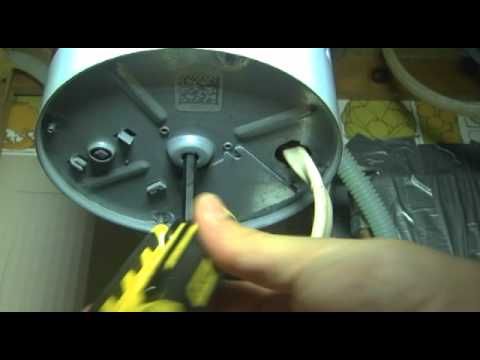
The first step, for those of us with no experience changing a garbage disposal, is to make sure your old garbage disposal is completely done. That’s right, it might not be broken, it might just be jammed. First click the overload button to reset the unit. If that doesn’t work, make sure the disposal is plugged in and the switch is working. (If you have no experience with garbage disposals, it will benefit you to run through this basic checklist before you go out and purchase a new one.) If all that checks out, find what they call an Allen wrench. Put it into the flywheel turning hole at the bottom of the garbage disposal and turn it. Turn it two to three times. If it’s a jam, you might experience a tough turn at some point. If you make it through the tough turn, and it turns with greater ease, you’ll know it was just a jam. Turn it on. If it doesn’t work initially, repeat the process (I had to do this three times on one occasion.) If that doesn’t work, your disposal might need replacing.

flywheel

Taking an old garbage disposal unit out can be accomplished by most. I’m not going to drop the E word here, but if I can do it, I have to imagine there are ten-year-olds out there, who’ve never heard the term garbage disposal, that can remove one. Follow the DIY guy’s instructions by unscrewing all of the this and thats, disconnect the tubes, and then twist the old garbage disposal out. (Note: Be careful that you don’t crack any PVC pipes.) It’s at this point, right here, when my fellow apartment dwellers say that they would just hire some ambitious, industrious kid to do the rest. I would’ve laughed hard at that ten years ago, but I nod solemnly now. “It’s probably for the best,” I now say, “because putting a new disposal on is hard. Don’t listen to the DIYers and their E words. Not everyone can do this.” 

To install a new garbage disposal, you have to position it just so, and twist. It sounds easy, but as I said that heavy thing becomes heavier through all the trial and errors. If it weren’t so heavy, it might be easy, but it’s hard to hold up there for as long as those of us who don’t know what we’re doing to slip it into the waiting groove perfectly for that final twist. If your cabinet is as tight as mine, you might try eleven to thirteen angles before you realize that there is only one angle that will work. You might look at the top of the unit, five to seven times, and try to line it up. It Ain’t Easy.

It’s frustrating, and yet it’s so frustratingly simple that it will become so frustrating that you might reach a point where you consider it impossible. If you reach that point, it’s time to take a break. If age has taught me anything it’s that it’s okay to take breaks, and in some cases, it’s almost mandatory. We’re conditioned by parents, employers, and other authority figures to think in terms of time constraints. Time constraints also define competency and mastery of a project, “I had some problems, sure, but I got it all done in under an hour.” It’s all true, but it’s also true that if you’re as frustrated as I was, you reach a point of diminishing returns. What are you going to accomplish beyond exhausting every profane word you’ve learned from high school? If you continue, trying to achieve a respectable time frame, you’re probably going to be easily satisfied with a half-ass job just to get ‘er done, then after you calm down, you’ll go back and do it correctly.

To clear the mind and approach the project from a new perspective, I suggest taking two breaks. Watch an episode of your favorite comedy in the first one. It doesn’t matter if it’s a movie, show, or podcast. You need to get yourself laughing. In the second break, one that occurs after another thirty minutes of frustration, try punching a punching bag for thirteen minutes. After thirteen minutes of picturing that DIY guy’s face on your punching bag, coupled with attaching some offensive terms to his “Easy” assessments, you should be able to approach this project with a clear mind.

If you take nothing from what I’ve written thus far, remember these two words: The Plug. All garbage disposals come with a plug. The manufacturers add a plug on every the garbage disposal, because some under-the-sink systems (sink, garbage disposal unit, and dishwasher) have the garbage disposal connect to a dishwasher. Some kitchen systems allow dishwashers to connect to the waterline independently. You will need to determine which system you have before installing the garbage disposal. Before removing the old garbage disposal take note of how your under-the-sink system is set up. If the dishwasher connects to the garbage disposal, and you didn’t know anything about the plug, your dishwasher will flood. 

The DIY guy I watched probably covered this, but some of them fellers talk so much that they remind me of my eighth grade teacher. My eyes glaze over, I miss critical information, and I dismiss some of their instructions as blather. Regardless how I missed the information, I knew nothing about the plug, so I installed the garbage disposal with it still attached. When our dishwasher began flooding, we ripped that appliance apart and cleaned every single element on it. We were so confused, until I retraced my steps and realized that all of our dishwasher problems started soon after I installed the new garbage disposal. I turned to my DIY guys, and surprise, surprise, they taught me about The Plug.

If you failed to remove The Plug the first time through, it turns out that you have to undo everything you’ve done. All that frustration that led you to the most comprehensive spiritual experience you’ve ever had, that included forsaking your creator and welcoming him back into your life, was for naught. If you forgot to remove the plug, you’ll have to take the garbage disposal off, grab a screwdriver, and hammer the (expletive deleted) plug out. That sentence was so easy to write, and it was probably just as easy to read. Take it off and put it on again, it’s easy, a trained marsupial could probably do it after they’ve already done it. The reality of removing the garbage disposal, watching the DIY video guy again, taking two breaks, punching him in the mouth for thirteen more minutes, and watching my favorite comedy was as exhausting as the first time through. 

The first thing I think, soon after I’m done, is some people love this. They love getting their hands dirty, doing it themselves, and they love it so much that they invent new projects for the ostensible purpose of updating, modernizing, and renovating. “I think my ceiling fan needs some updating.” Your old one still works. “I know, but it’s so old world.” You can see it on their face, and in the songs they sing while doing it, they love this stuff, and I just sit back shaking my head, asking myself: ‘Why? For God’s sakes why?’

I’m smart, not like everyone thinks, like dumb. I’m smart and I want respect.” I’m not as dumb as I look. I can do things, other things that other people can’t. Some of the things I do are considered hard, very hard to some, but I can accomplish them with ease. I might occasionally, and accidentally, betray some level of arrogance with a look, some sort of unintended feel, or a couple of words, but whenever I start to get all full of myself,  all I have to do is try to fix something in my home that everyone considers so easy to realize that I’m not half as smart as I thought I’d be at this age.