Fighting Coyotes


“I had a mean case of the coyotes,” Riley Frandsen said to explain his unorthodox, yet natural means of protecting his property. I didn’t need a guide or interpreter to tell me what that meant, but Riley was so stacked with anger and frustration that I felt compelled to provide him a launching point:

“What does that mean?”  

“They were going to the bathroom in my yard, all over my yard. It was so disgusting. They ripped my garbage apart and threw it everywhere, and they were scaring the hell out of Murphy,” Riley said, stressing the latter point as if it was the most important. “Murphy, here, was afraid of going out in the backyard,” he added patting his nearly 100lb. setter while holding my gaze. “I’m serious. When he left this little patio, he did so only to go to the bathroom, and then he wanted back in quick. He got to the point that he was going on the patio, because, I think, he didn’t want to leave the lighted area. He used to love the backyard, staying out for hours, running around, barking at non-existent matters, like any good dog will. Then it was, one to two minutes, and he’s scratching at the door to get back in. It’s sad is what it was.”       

I wasn’t paying too much attention. I’m normally a pretty decent listener, but a story about a man living in a relatively remote location, having problems with coyotes, didn’t captivate my attention. I had a whopper of an unrelated story all locked and loaded, and I couldn’t wait to start it. As such, I was committing the mortal sin of all good listeners: I was waiting for him to finish his story, so I could start mine. 

“What does a man do when coyotes start peeing all over his land?” Riley asked himself when I forgot to ask. “You pee right back is what you do. You reclaim your land.” If I was rudely half-listening up to that point, those lines brought me back in. My story was gone.

“You pee right back?” I asked, guessing where he was headed, but I wanted to hear him say it. “What does that mean?”

“How does a dog mark their territory?” Riley asked. “They urinate on it, right? They were marking my territory as their own, and I didn’t know where they were marking, of course, but they obviously did such a thorough job on my lawn that my buddy, Murphy, was afraid to leave the patio after a while. So, I started urinating back, around the perimeter of my land, as a way of taking my land back.

“So, anytime you have to pee, you run out here and do it on your lawn?”I asked

“I started out doing that,” he said, “but I did some research on it, and experts say that morning urine is the most concentrated and potent.” 

“I’ve also heard that beer urine is some of the most concentrated and potent,” I said. “Is that true?” 

“I wouldn’t know, because I have no control group … My morning urine has had at least some beer in it since I was fifteen. And to answer the question every one else asks, I have to do it again after every rain.” As Riley and I went silent, with a beer in hand, looking out at Riley’s backyard, I broke:

“I am sorry. I know this isn’t funny, but it kind of is.”

“Oh, I know it is,” he admitted with a smile. “I’ve taken this story into town, and they laugh just as hard as you do, because its funny, but I’ve tried everything as you can see. I put up that privacy fence, an eight-foot privacy fence, and I saw one jump it one night, scared the hell out of me. I grabbed my rifle and scared it off, and guess what he did. He jumped it again a couple nights later. They’re not scared off by gunshot, not long-term anyway. They’ve not afraid of motion detection lights, and the name brand coyote repellents don’t scare them off either, not long-term. Nothing did, until I began marking my territory. I have to protect my dog, and my property right? I see it as marking my territory in the way any other animal would. I see it as informing them that this is my land in their language, and they respond better to that message than any of the other ones I tried. I don’t know why it works so well, but I think it has something to do with their fear of humans. Our urine is also very high in ammonia, which most animals hate. I still hear them, off in the distance, but I haven’t seen them once since I started doing this. They appear to consider the smell unbearable. It is an olfactory repellent to most mid-level predators. It can also be used as a pesticide. The scent of human urine can be used to confuse and deter rabbits, squirrels, and unintelligent people.

“Not all predators are repelled by the scent of human urine however,” he continued in a matter-of-fact manner, as we sipped on his beer. “The debate on whether bears are detracted or attracted to human urine is ongoing. Some say larger bears, like grizzlies, might actually approach a camp lined with pee that campers put there to detract bears. They say that bears now so associate humans with food that any sign of humans will attract desperately hungry bears, and they know the scent of our urine. Others claim that bears are naturally curious creatures, and the smell is so foreign to them that they investigate. They’re just in our campsite to see what the smell is, in other words, but when we start screaming and running away, their other instincts and impulses cause them to do the things they do to us. 

“Reindeer, apparently, go nuts for our pee,” he continued. “And yes, I did some research on that too. I didn’t specifically search this out, but it was an offshoot of an offshoot, a rabbit hole that I followed, until I ended up learning that reindeer have a natural salt-deficiency, and our urine is high in salt, so they crave it, like we do Ruffles. The Inupiat people of Alaska found that all they have to do is pee in a reindeer trap, and they’ll have a nice meal at the end of the night. Imagine all of the trial and error that went into that finding. The Tozhu people of Tuva in Russia like to keep reindeer around for whatever reason. I assume they occasionally kill and eat them, but they’ve found that if they offer a reindeer a bowl of urine every once in a while, the reindeer will hang around their homes, waiting for the next bowl to arrive. The Tozhu say that the salt-deficient reindeer crave our urine so much that they’ve learned our patterns, and when they see a man who they think is about to pee they will all rush up on him and jockey for pole position, for lack of a better term.

“I know it’s funny,” he said. “I knew that before I told my neighbor, who was trying everything he could think up to free his home from the coyote invasion. He thought it was hilarious, and he told everyone he knows, and I know they were all laughing their heads off, but you know what happened don’t you? You know the end of this story don’t you? You can see it coming. That’s right, they kept laughing at the image of me peeing around my property line while they went through all of the prescribed fixes, and now everyone in town is peeing out their own property line. It’s funny, and it’s the only thing that works.” 

Race Potty: The 4th Stage of Potty Training


First Rule of Race Potty: Don’t talk about Race Potty. Don’t sit your son down and tell him the pros and cons of doing it. Don’t analyze it with him in anyway. Second Rule of Race Potty: Don’t talk about Race Potty. If you decide to try it, just do it. Third Rule of Race Potty: Don’t talk about Race Potty. Just announce that it’s on. Say, “Race Potty!”, jump out of your couch and race him to the bathroom.  

As with all parents, we started with The Potty Chair and all the prescriptions laid out in parent guides to help us through the 1-3 stages of potty training. His mom had some experience with potty training, but she forgot most of it over the course of decades. So, we read some books on the subject, watched some YouTube videos, and sought advice from friends, family, and his physician. Their advice progressed us to stage four, an arbitrary description we’ve developed to describe the luxury boys have of urinating in the toilet while standing up. By completing the first three stages, our son was completely potty trained, except he preferred to sit. While standing to urinate is not a mandatory stage of child development, in general, or potty training, every man wants his son to take advantage of the biological luxury of standing while peeing. As such, the focus of this article will be limited to the fourth stage of potty training procedures for males.

The three of us found ourselves so mired in this agonizingly repetitious stage that we felt helpless. Our son knew what to do, how to do it, and when, but he just couldn’t put them altogether. 

One of the best ways to teach a two-to-three-year-old anything complex is to talk to them. The more we talk to them, the more they understand. They probably won’t understand 3/4ths of what we’re saying, but it might be a tone that suggests that there are reasons for everything we do, and it might help lay the foundation with them. Regardless our approach, parents are going to make a ton of mistakes, and the best antidote to making mistakes is time. If we spend enough time with your child, and talk to them while we’re there, we’ll round off the corners of any mistakes we make. In these areas, it doesn’t hurt to try to sympathize with our child. We might try to empathize, but we can’t remember how difficult it was to learn all of this at once. If we take a step back and think about how overwhelming learning this overflow of information must be, in such a small space, it might help us relate to them better and focus our lesson plans. My lesson plan has always been to KISS (Keep It Simple and Silly) it. I probably overestimate and underestimate him, alternately, three times a day, but I don’t obsess about that near as much as other parents do. I correct myself accordingly, and I try to keep his learning grade gradual.  

We don’t need to talk about everything though. Some matters require tactical maneuvers through the maze of their limited psychology, and any discussion of such tactics only undermines whatever results they might achieve. Even when they get disappointed by losing the
Potty Race, don’t say, “I’m only doing this because we are desperate to find something to aid you in this stage of potty training.” By keeping my intentions unspoken, I might have overestimated my two-to-three-year-old, but I thought if I discussed it, he might see Race Potty as the tactic it was. 

After we successfully completed those mandatory stages, we began whooping and hollering, and plying him with the treats experts prescribe. Our enthusiasm was genuine, because it was exciting to watch the learning process. He wanted to learn, he wanted to succeed, and he showed how much it meant to him by celebrating his accomplishment with us. A problem arose in stage four. He stood once, and a microscopic amount fell out. When he was done he was done, he thought he was done. It was one of the best days of his young life, and he hadn’t heard such praise since he first learned how to talk and walk.   

“What an accomplishment, am I right?” his beaming-with-pride expression said. “I’ll be honest with you guys, I’m glad that’s over, so I can go back to the more comfortable routine of sitting down when I go.” 

If you have a child, you know this reaction well. You spend countless hours repeating the process in the hopes that you might eventually help him establish some sort of routine. You don’t expect instant success, and you learn how vital patience is in stage four, but at some point you reach the “He isn’t getting it, and I’m not sure he ever will” level of frustration. You don’t show your disappointment to him, and you don’t say it to anyone but your spouse, but you feel it. The repetition becomes second nature to him, but he has his fallbacks. Those stuck in this stage also know the shrug you get from friends, family, and physicians when their advice doesn’t work, “Every kid is different. What do you want me to say?”   

I don’t know how to potty train your child, and you don’t know how to potty train mine. No one knows. It’s a guessing game. Did my guess work, or did I use it at a time when he was finally ready to learn and anything would’ve worked at that point? I don’t know, you don’t know. So the next time an author writes a piece, such as this one, and they suggest they’ve discovered the foolproof, take it to the bank, works every time method of potty training, symbolically place it in the trash bin right next to the heaping pile of diapers you’ve accrued since you started employing their method.

Is it about stubbornness, intelligence, or some sort of behavioral issue? We don’t know, because every kid is different. Every complex, little brain full of mush tackles complex tasks in such unique, individualistic ways that one of the best methods involves learning what makes your child tick. What makes him smile with pride? My little fella showed an ambitious nature pretty early on, and to try to turn the repetition into routine, I keyed in on my son’s competitive nature. I found a trick that might only apply to my son, but it worked so well for us that my wife began dropping it at work to parents who were having their own trouble with their kids in stage four. 

Prior to Race Potty, we tried everything. We went nuts on the microscopic dribbles that fell into the water. We tried standing him in front of the toilet for an extended period of time. We tried having him watch me so often that we hoped something might click. It didn’t. A friend of ours suggested putting Froot Loops in the water and telling him to sink them. That seemed like a fantastic idea. It sounded fun. I showed him how. He cheered me on. He told me what colors he wanted me to sink. “Why don’t you try to sink a few?” I asked him. He gave me a devilish grin that led me to believe he was in on my dastardly plan. He wasn’t. Nothing worked, until I developed Race Potty.

It plays out like this. It’s potty time. You know it, and he knows it, but he doesn’t know what to do with it. “Potty time!” you yell spontaneously, the more spontaneous the better, and you race him to the bathroom. He’s running with you, but he doesn’t know why. The only thing he knows is he wants to do is win. Some parents might not want to do this, because they fear instilling or fostering a competitive nature in their son, but as I said my son was very competitive early on, and I encouraged that in every way I could. 

Race Potty is not a mean method, as you’ll read, but you do have to move past the nice stage. Being supportive and whooping and hollering work great in stages 1-3, but their effectiveness begins to wane in stage four. There are, however, some details of Potty Race that might make some parents squeamish. 

Once at the toilet, you have him whip it out with you, as we’ve done probably a hundred times before at this point. This time, however, you issue a challenge: “Let’s see who can hit the water first.” 

This is the point where some fathers might grow squeamish, for I prescribe a touchdown dance once victory is secured. The more obnoxious the better. Which touchdown dance is appropriate? For that answer, we might want to consult NFL rules. We should not get in the face of our child, for that might draw a taunting penalty, and we shouldn’t celebrate in groups. We also shouldn’t engage in a lewd dance, otherwise known as twerking. Most fathers don’t want to do a touchdown dance after beating their two-to-three-year-old son at anything. It feels weird, and you’re sure that some pointy-headed child psychologist will frown at you for doing such a thing, but there’s a reason you’re desperately stuck in stage four, and it has everything to do with that frustrating “Every kid is different” phrase. The touchdown celebration stokes the fire. 

He almost beat me on a Tuesday, but I refrained from celebrating his accomplishment. I celebrated mine instead. He was frustrated. It stoked his fire. It stoked his ire. On Wednesday, he came closer, and he was frustrated that I no longer celebrated him hitting the water.

When the pain of his disappointment hits us, our inclination is to soothe him. We might want to tell him that it’s just a game, or that you’re just joking around. My advice, change the subject. Don’t let him grow despondent, wallow in the misery of his frustration, or let him cry. Change the subject to something he beats you in. Do whatever you can to avoid negative connotations and build up his pride, but don’t give up the game, and don’t talk about Potty Race. Just do it. 

My patience and diligence paid off on Thursday, when he beat me, and it was glorious … for him. I feigned the agony of defeat. My inclination was to share the victory with him, but I refrained from doing so, knowing that I had to stoke that competitive fire to keep it bright orange. I was inconsolable in defeat, and he loved every minute of it. 

He was almost undefeated from that point forward, and whatever wounds he experienced in the early stages of Potty Race were healed. To show how healed they were, he would shout, “Potty Race!” and I would have to chase him down the hall to pointlessly try to defeat him.

He still sat to pee, particularly when I wasn’t around to race him, but the repetition of potty race eventually established the routine in ways my wife couldn’t believe.

She didn’t care for potty race when it began, of course, and she all but bit her tongue as I continued to employ it. She didn’t appreciate the philosophy behind it, the methodology, or the lack of results. She had particular disdain for the touchdown dances, as she didn’t see them as constructive. Potty Race did not work in the beginning, but what does with a two-to-three-year-old? “We’ve tried everything else,” I said. “I say we try something else.” She conceded the point, but I could tell she didn’t think my idea would ever work, until it did. She’s such a convert now that she’s spreading the gospel even though I told her you don’t talk about Potty Race. 

Jack McKinney: The Forgotten Man


“He created “Showtime!” Norm Nixon said. “That should never be forgotten. You can talk about me, Kareem, Earvin, and Pat Riley all you want. But Jack McKinney created “Showtime!”

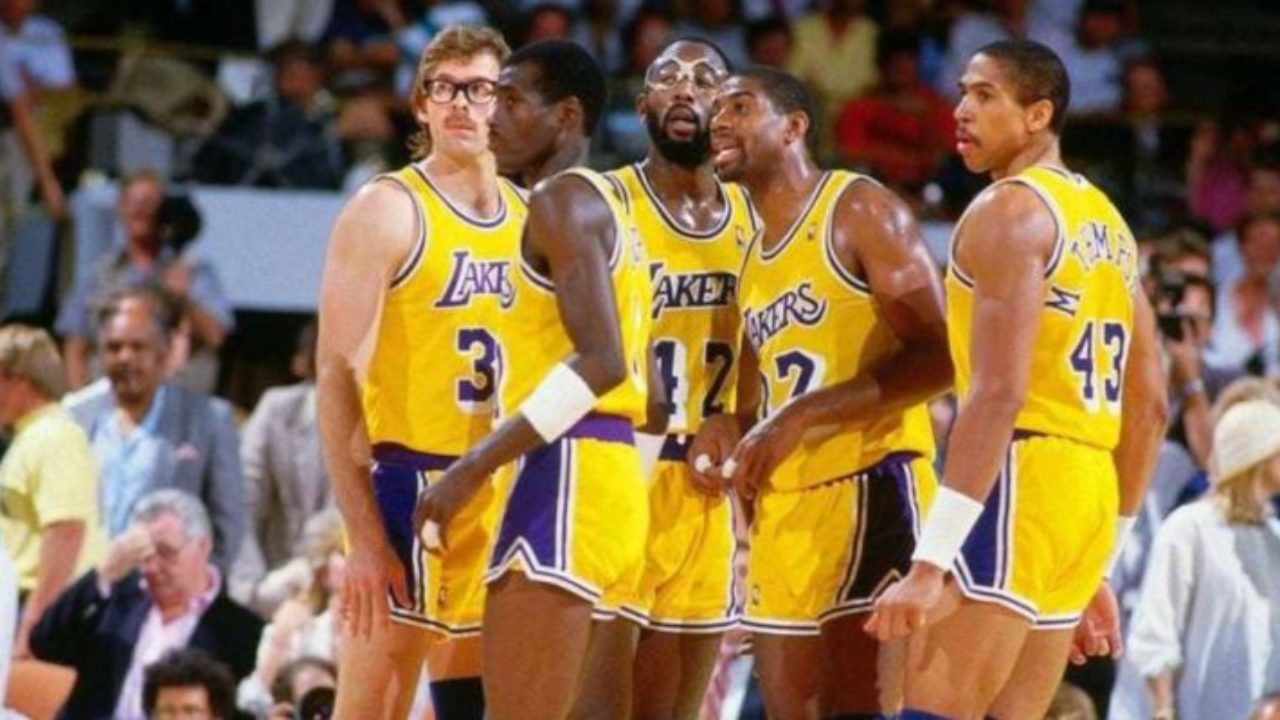
If you were paying any attention at all in the 1980’s, you knew the Lakers, Earvin “Magic” Johnson, Pat Riley, Kareem Abdul-Jabbar, and “Showtime!” A fella didn’t have to watch the NBA to know the names Magic Johnson or “Showtime!” We didn’t even have to enjoy watching sports to know these names. They were in the news, on the news, and the news. Decades later, the names “Showtime!” and Magic Johnson still resonate so well that networks like HBO and Apple+ are willing to pay top dollar for retrospective broadcasts that recall how special this era was in sports and entertainment. 

Lakers former head coach Jack McKinney on the sidelines cheering on the team from sidelines in first quarter action.

The term “Showtime!” is still so flashy that this writer feels compelled to surround it with quotes and follow it up with an exclamation point. Even though we weren’t yet teenagers, we knew the names Kareem Abdul-Jabbar, Norm Nixon, Byron Scott, Michael Cooper, Jamal Wilkes, James Worthy, Kurt Rambis, Pat Riley and Earvin “Magic” Johnson. We knew the big names, we couldn’t escape them, but as with all sports franchises, title runs, and dynasties, those names not in lights often contributed far more than we ever knew. The name almost criminally absent from this list was the architect of the “Showtime!” game plan of the run the Lakers enjoyed in the 1980’s: Jack McKinney.

Jack McKinney might be the last name we think of from this era, but the first name that comes to mind when talking about the Lakers 1980’s “Showtime!” run is Magic Johnson. He was the superstar, the smile, the face of the franchise, and a celebrity on and off the court. He was one of the few athletes of his era who lived up to such over-the-top billing. Prior to the ’79-’80 Laker season, Magic lead his college basketball team, the Michigan State Spartans to a college basketball championship, then he was the number one pick out of college. In his rookie season with the Lakers, Magic was one of the few to prove the hype machine correct when he awarded the Lakers for using a number one draft pick on him by winning an NBA Championship in his rookie season. He had some help, of course, including a man named Kareem Abdul-Jabbar, who many argue was the best basketball player of all time, and if statistics matter, Jabbar still has the most points ever scored by an individual over the course of his career.* In the 1979-1980 season, however, the 21-year-old rookie from Michigan State had every spotlight the national media owned on him, and he succeeded beyond all expectations. 

Just about every highlight of the Lakers in the 80’s contains something Magic did. Whether it was some crucial shot, powerful dunk, or one of his highlight reel passes. Magic Johnson could get anyone the ball at any time, at just about anywhere on the court.  

Was Magic the best fastbreak point guard of all time, perhaps, but we might also ask the question was Magic Johnson so great because he fit McKinney’s scheme so well, or did owner Jerry Buss hire McKinney, because he wanted the scheme, and he knew his first draft pick would flourish in it?

As Jeff Pearlman wrote in the book Showtime, the Lakers’ strategy prior to the arrival of Magic and McKinney, was “See Kareem, wait for Kareem, pass to Kareem, watch Kareem shoot and hope ball goes in.” 

Was Magic better in McKinney’s scheme than he would’ve been in Jerry Sloan’s with the Chicago Bulls? (The Bulls lost a famous coin flip for the rights to draft Magic Johnson in 1979.) Was Magic so great that he would’ve been great wher eever he played, or did the “Showtime!” game plan play to his strengths? If McKinney didn’t fall prey to the accident, and he coached a different team, with all of his facilities intact, would he have succeeded regardless? Or was the Magic/McKinney gameplan a marriage made in heaven? 

Would Joe Montana have succeeded regardless when and where he played? Was he so driven to be great that it would’ve happened no matter where he played, or did he fit the scheme the coaches implemented? We could ask this of any coach, scheme, and player marriage, but while most of the credit is given to the player, most sports nuts divide the credit more equally. How many sports nuts, the freaks of sports knowledge, know enough to know the name Jack McKinney. 

Prior to being hired by the Lakers, Jack McKinney was a basketball lifer who lived and breathed basketball. He was a college basketball assistant coach and a head coach, then he was an assistant coach for five years in the NBA. At the age of 44, he was hired to coach his first NBA team, the Los Angeles Lakers. It’s not an exaggeration to say his whole life had been leading up to that moment. How many hours, months, and years of his life did he sacrifice to one day see his dream to fruition? How many dark, quiet rooms did he sit in all alone, watching tape, learning the game, developing game plans, and correcting and perfecting it when others were out living a life? He sacrificed his life for basketball, and when all his work finally started to pay off, it was all taken away from him.

If Shakespeare were alive today, he would’ve devoured Jack McKinney’s narrative as a modern tragedy of epic proportions. He probably would’ve started his production with McKinney’s solo bike ride in which his gears locked up. Jack McKinney was thrown off the bike, and he landed in a manner that put him in a coma. The serious injuries he experienced would plague him for the rest of his life. It took him so long to recover that the Lakers named Paul Westhead coach, and then they named Pat Riley, the man credited with the Lakers fast break offense that we would eventually all call “Showtime!” This accident happened 14 games into Jack McKinney’s tenure as coach of the Lakers. He would never coach them again. 

Prior to the accident, Jack McKinney implemented his revolutionary fast break offense, and the Lakers used that game plan to win the ‘79-’80 NBA Championship, their first of that era. When McKinney’s successor Paul Westhead later tried to institute a different gameplan, it didn’t work for the talent on the court. Pat Riley took over, re-instituted McKinney’s gameplan, and the rest is history, Pat Riley’s history. The Jack McKinney story is interesting whether you are a Lakers fan or not, but it also interesting because prior to HBO’s retrospective broadcast Winning Time, based on Jeff Pearlman’s book, this sports aficionado had no idea how instrumental Jack McKinney was. The Jack McKinney story is interesting because it highlights the “forgotten man” in sports history.

“This is the guy who made my career possible,” McKinney said that Lakers’ coach Pat Riley always said when introducing McKinney, “This is the guy.”

The question author Jeff Pearlman put to Lakers’ point guard Norm Nixon decades later was, “Is Jack McKinney universally acknowledged as one of the greatest coaches in the history of the NBA?”

“I have no doubt that he would be [were it not for the accident],” Nixon said. “No doubt whatsoever.”

How many forgotten men and women, like McKinney, have changed the landscape in their world? How many little guys and girls helped the names in lights edit an otherwise flawed premise, or rescued an otherwise flawed scientific finding by disproving it so well that the genius had to go back to the drawing board to find a more perfect resolution? How many little-known advisors instructed world leaders to follow a different plan that resulted in a different outcome that defined history? We all know the names in lights, the names that sell newspapers and collect internet hits, but how many lesser-names who shunned the spotlight defined history as we know it. 

I don’t know these names, and either do you. I didn’t know the name Jack McKinney prior to this year, and unless you’re a die-hard Lakers fan, or you’ve watched the story of the Lakers in the 80’s Winning Time on HBO, you didn’t either. I heard some foggy details about a coach who started out with Magic, but I heard he died weeks into Magic’s rookie season. I didn’t know what role he played, if any, and I had no idea how instrumental he was. I just thought he was hired, and he died shortly into his tenure as coach. Jack McKinney didn’t die. He went onto coach a couple other teams, and he won coach of the year in ’80-’81 coaching for the Indiana Pacers, but after working so hard, as a coach in college and an assistant in college and the NBA, he never achieved the dream he could have with the talent Jerry West, Jerry Buss, and the rest of the Lakers’ brain trust amassed in ’79-’80, and the years that followed. McKinney is recognized by those in the know as one of the great basketball minds of his generation, but how many outside that very small world have even heard his name?     

“McKinney is not a bitter man,” Jeff Pearlman writes to close his intro on the now-deceased McKinney, “but he is human.” 

“Life isn’t always fair,” McKinney said. “I’m OK with how everything has turned out. I’m loved. But, well, it’s not always fair…”

“Jack McKinney is the man more responsible for the birth of the Showtime era of professional basketball,” Pearlman writes, “If only he could remember it.” 

If that doesn’t give you chills on how unfair life can be, then I don’t really know what I’m talking about. We talked about the scheme, player marriage earlier. Magic Johnson might not be “Magic!” today, were it not for Jack McKinney,  James Worthy might have been an all-star and nothing more, Jerry Buss might have been nothing more than an American businessman who tried and failed to resurrect the Lakers franchise, and Pat Riley might’ve ended up nothing more than a failed sports announcer. What if’s, and could’ve been, should’ve beens dot history, but the ’80’s Laker dynasty we know today, probably wouldn’t have happened were it not for one forgotten man in history, the late-great Jack McKinney.