The Hat on the Bed Hex 


“You just jinxed us!” my friend said to explain why everyone was groaning at me and making the meanest faces they could find. 

“You think this is funny?” my friend’s dad said. I did, until the whole room turned against me, and I realized this man was asking me this in a very confrontational manner. “People here depend on the income from these games,” he added. In that brief window of silent tension I continued to believe I was the butt of a joke that would end in a big old “Gotcha!” followed by uproariously laughter. As our silent stare continued, and the dad’s confrontational stance appeared to only strengthen, I realized this was not fun and games to them.  
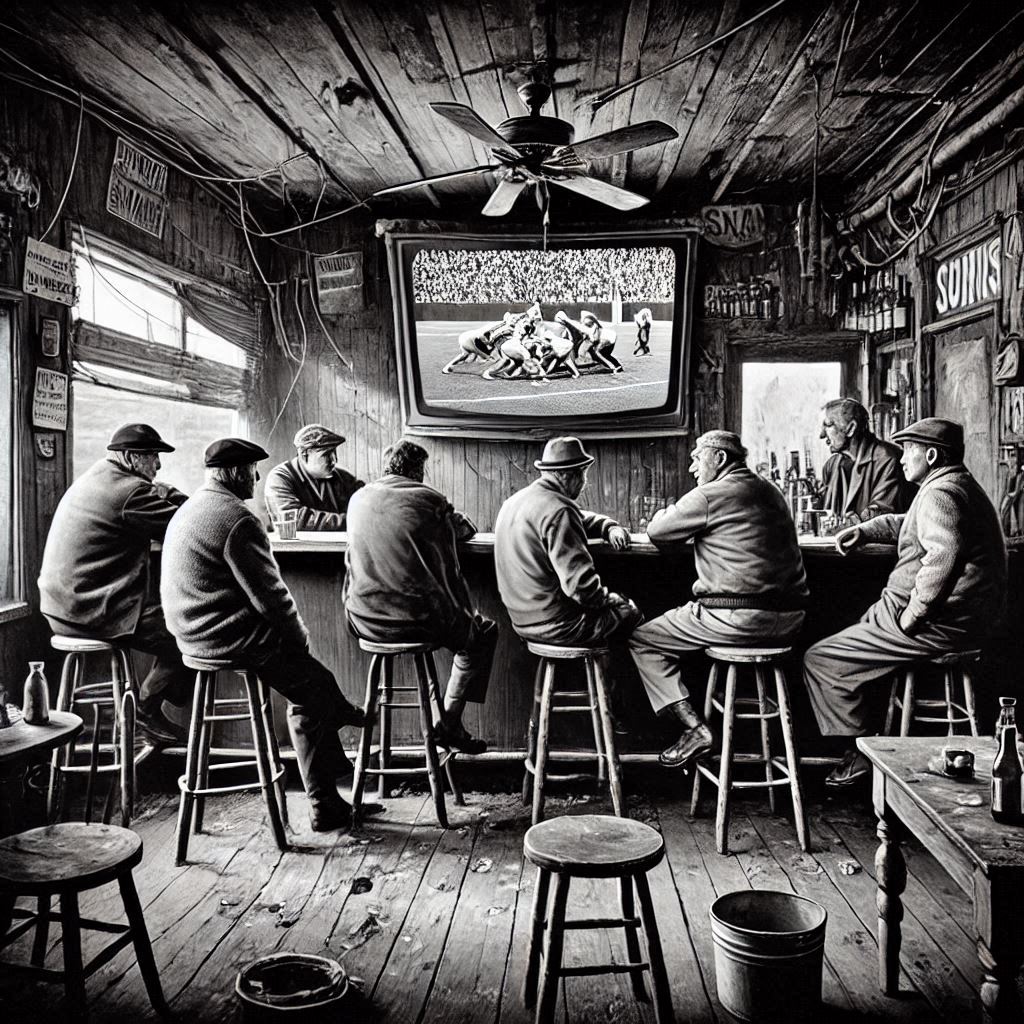
What I said to ignite this uproar, while watching an otherwise meaningless football game in my friend’s family home, was, “Well, it looks like we’re going to win here!” I violated the tenets of the jinx after our team scored a touchdown to put our team up by twenty-one points with less than two minutes left in the game. Lifelong football fans have seen some wild swings in football, but a comeback of historic proportions, but that meant nothing to them. When my friend not only joined the crowd, but led the charge, I thought he was joking, but he obviously read the room better than I did. 

The furor that line generated couldn’t have been too much worse if I went to the bathroom, stripped down naked and sat among these people as straight-faced as I could.  

In the aftermath of the silent tension between the dad and I, about five mouths around us continued to hang open. They were silently aghast at my utter stupidity. One of the attendees sat back with his hands splayed, as if to ask, “What are you doing to me here?”

Another said my comment was, “One of the dumbest things I’ve ever heard, and I’ve heard some really dumb things.”

My friend just sat there in the midst of all this shaking his head. After it was over, my friend reiterated that this football game wasn’t just a game to these people, they depended on the income from the outcome.  

I understand that anything can tip the precarious balance in sports, but I had no idea how instrumental I was in it, until they educated me. I would’ve maintained my I’m-not-falling-for-this stance if it were just my friend saying these things, as we joked about it many times before, but the adults in the room not only shared my friend’s condemnation, they taught it to him. Adults who had twenty-five-years experience on me and knew far more about the world than I did, were saying what I considered incomprehensible, and they were shaking their heads with their eyes closed, whispering my name through clenched teeth as if it were an unquestioned truth. 

You might think that I was the butt of some Jedi mind tricks, and that they would all have a good laugh later, but they wouldn’t. They genuinely believed it, all of it. They believed that sitting half-bun on a chair while watching a football game on TV, clothed in team-related regalia, while singing the team’s fight song to send a telepathic message of love and truth to our boys fighting on the gridiron would make a difference. 

After that incident, years of repetition informed me that these forty somethings were serious, “serious as a heart attack”. They also informed me, without saying these exact words, that I was to respect the ways and traditions of their home. 

My family wasn’t of sound mind. My dad was as quirky if not more than my friend’s dad, but he didn’t abide by these superstitions. I never experienced anything like this before, but I never spent time around big-time gamblers either. The adults basically informed me that I sat on the threshold of being banned from their home if that other team came back. They didn’t. Our team won, but they said, “You got lucky … this time, but don’t ever say anything like that again.”

The next time they invited me to their home to watch a game, the dad remained in the doorway for an uncomfortable amount of time, blocking it, saying, “You’re not going to say anything stupid this time, are you?” I assured him that I wouldn’t, and that I learned my lesson last time. He backed away and allowed my entrance.

The Drugstore Cowboy 

This friend and I later watched the movie Drugstore Cowboy together. In this movie, a character introduces the concept of a 30-day hex that results from leaving a hat on a bed. “Why a hat?” a side character asked. 

“Because that’s just the way it is sweetie,” the main character responded. “Never talk about dogs, and never look at the backside of a mirror, because it will affect your future, because you’re looking at yourself backwards … No, you’re looking at your inner self, and you don’t recognize it, because you’ve never seen it before. But the most important thing is the hat on a bed. The hat on a bed is the king of them all. Hell, that’s worth at least 15 years bad luck, even death, and I’d rather have death, because I couldn’t face no 15-year hex.”   

The hat-on-the-bed hex seemed so arbitrary and quirky that it was hilarious, kind of cool, and interesting. The characters in the movie were drug dealers, and we assumed that this explanation offered us some insight into their damaged brains. To prove the theory that a hat-on-a-bed could provide anywhere from 30-days to 15-years of bad luck, the movie characters’ lives fell apart, and they all realized their run of bad luck started after one of the other characters left a hat on the bed.    

That movie is decades old now, but I can still see that hat sitting on the bed. It provided a crucial turning point in that movie. The characters’ lives were progressing as well as any drug dealers could before a stupid and naïve character haphazardly left a hat sitting on a bed, as if it were nothing more than a hat resting on a bed. I remember that narrative so well because my best friend talked about it all the time, and anytime we entered his home, we were to abide by his incorporation of this rule into his life. 

“Are you serious about this?” I asked this otherwise rational human being when he introduced it to us all.

“Why would you want to risk it?” he asked. 

“Because it was a movie,” I said, “and not only that, it was a joke in the movie that the writers inserted to show how hilariously insane their characters were.” 

If he laughed and said, “I just thought it was kind of cool and funny.” I would’ve said, “Thank God, because I thought you were serious.” Unfortunate to his legacy, he told me he was serious. It should’ve been obvious to my otherwise intelligent and rational friend that the movie makers didn’t believe this superstitious nonsense any more than I did, as they arbitrarily edited the definition of looking at the backside of a mirror, and the length of the hat-on-bed hex, but my friend was born and raised in a home of very superstitious people, and he believed that a hat-on-bed could alter his life in the same manner the scene altered the trajectory of the characters in the movie. No one ever put a hat on his bed, as far as I know, but he made us all aware of the consequences of doing so on numerous occasions over the years. 

The Swanny

Propagandists say that if we repeat the same lie often enough, enough people will believe it to make it true, and my friend, his family, and their friends genuinely believed in hexes, jinxes, and superstitions. In their home, I learned that no matter how great the momentum, a few choice words from a teenage male, who doesn’t know anything about the world yet, can alter the course of a history.
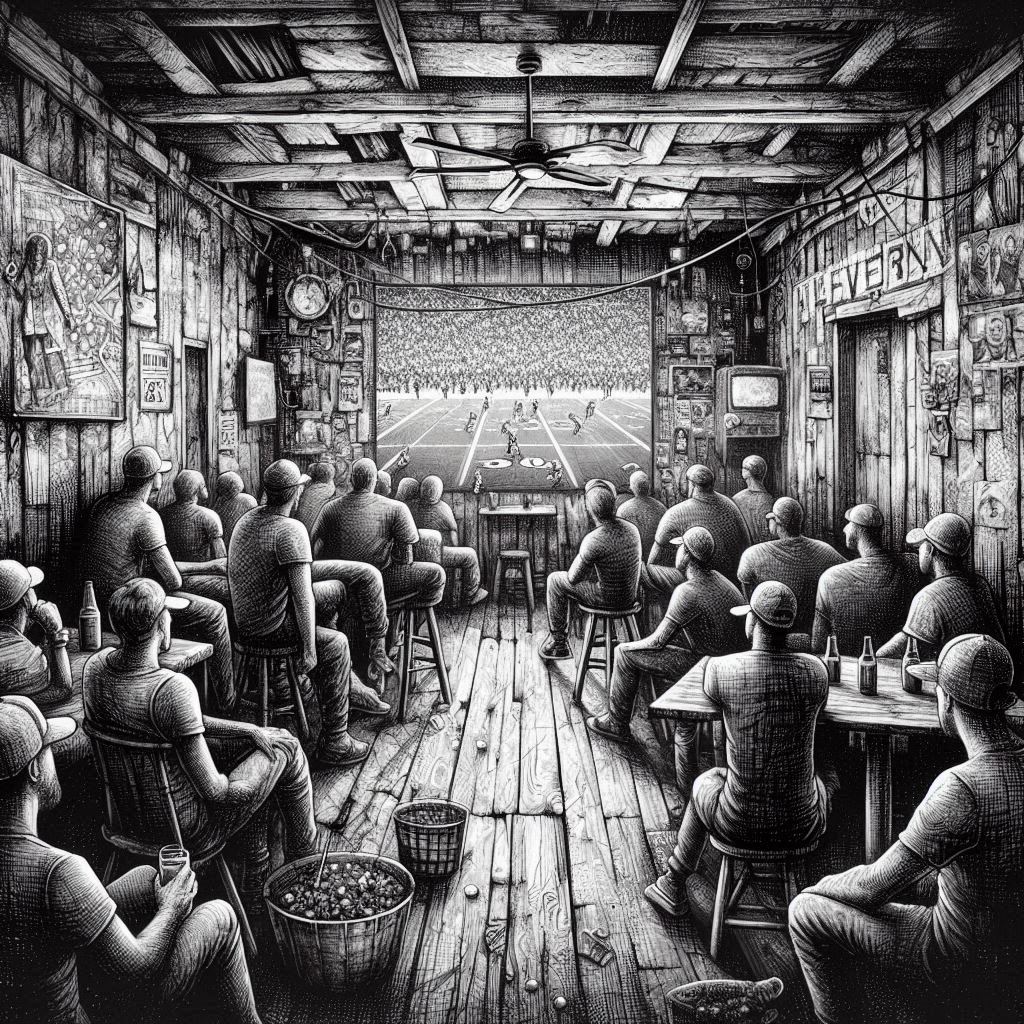
One of those who insulted me, in my friend’s home, said I committed a Swanny. A Swanny, they explained, was a term they coined after a man named Ron “Swanny” Swanson said something as dumb as I did once, and they informed me that the other team miraculously came back shortly after he said it. “It happened,” they said, and after it happened, they labeled anyone prematurely calling out a victory and thus jinxing the team “a Swanny”.

“I’m not denying that “the Swanny” happened,” I said to my friend, after the whole incident was over, “but how many times has it happened since humans started watching sports on TV? How many television spectators, hundreds of miles away from the action on the field, have prematurely called out a victory only to have the outcome flip? Don’t you see how we could view Swanny’s “Swanny” as a coincidence?”

They could not. That inexplicable loss was marked in the annals of sports’ history as far as they were concerned, because it proved their contention that when anyone says a most unfortunate thing at a most inopportune time, they can alter the course of history as we watch it play out on TV, hundreds of miles away from the action on the field.

“What would happen if Swanny committed “a Swanny” while watching a documentary on World War II?” I asked, “and three-fourths of the way through that production he mentioned that he thought it was pretty obvious that the allied powers were going to win? Would we all be speaking German now?” 

“That is so ridiculous,” my friend said with laughter. “World War II is already over. The analogy doesn’t apply.”  

“Sometimes, the best way to prove how ridiculous something is,” I said. “Is to provide an analogy that is more ridiculous.”

If I thought my friend was an unmovable moron, I wouldn’t have pleaded my case against “The Swanny”, but my friend was a logical, reasonable man who just happened to be well-educated. On the subject of hexes, superstitions, and jinxes, however, he proved an immovable object. He had a blind spot, we all have them, but this one was so confusing to me.   

I might be one of the least superstitious beings on our planet now, and I’d love to write that even as a teenager, I was immune to such ridiculousness. I watched so many football games at my friend’s house for about a decade though, with his superstitious parents and their superstitious friends. They were rabid fans, and they loved gambling. They were some of the few I met who were into these games as much as I was. Watching sports in my teen years was tantamount to life and death. They were big fans, but they had a financial stake in victory too. Though we approached watching sports from different angles, the outcome was the same, and their fervor made watching games at their home so much fun. 

After committing “the Swanny”, I learned to watch my tongue when we were watching sports on TV. As ridiculous as I considered their rules, if I had respect for my friend and his family, I had to respect the rules of their home. This respectful silence had an accumulative effect over the years, as anytime I entered their home to watch a game, I learned to never say anything premature, or joke about it, and that led me to avoid even thinking that even the most obviously decided game was decided. Little by little, game after game, their repetitive messaging progressively seeped into my brain and morphed what I once considered a joke into a new reality for me. I don’t remember ever making a conscious flip in this regard, but I eventually took their ridiculous hat-on-the-bed type superstitions home with me, and I chastised my brother for making an inopportune comment at an inopportune time when the two of us were watching a football game on television together. “You just jinxed us!” I said. 

“Seriously?” he asked. “You’re serious? Take a step away from what you’re saying, and I think you’ll realize how ridiculous that sounds.” I didn’t, I wouldn’t, until I did, and I entered into a lifelong cringe for ever somewhat, sort of, and temporarily slipping under the power of group-think and repetition. 

Ain’t Talking About Sports 


Baseball 

I used to be a baseball guy, a Major League Baseball fan, until I wasn’t. And it wasn’t the 1994-1995 strike either, as it was for so many of my friends. I was a long-suffering Atlanta Braves fan, and the Braves were in the World Series four out of six years in that era. I was then glued to the McGwire v Sosa v Maris run. I attended the 8/30/1998 game against Atlanta in which McGwire hit #55. I remember feeling torn, because he hit one off my team, but I felt a part of history. If he broke Maris’ record, I rationalized, I could always say I attended #55. No, from about 1985 to about 1998, I was a huge baseball fan. 

Something happened shortly after the strike that conspiracy theorists believe helped Major League Baseball regain popularity. Some suggest the steroid era loosely existed between the late eighties to the late 2000’s, but most baseball fans would suggest that it only became an issue requiring attention between 1997 and 2000. Some diehard baseball fans suspected that something was amiss early on. Something intangible and tangible changed about the game. It was no longer a secret, but many in my inner circle of MLB diehards chose to deny it was happening.  

I don’t remember ever considering the idea that an MLB player might take performing-enhancement drugs a moral issue in a larger sense, but during the 1997-2000 run, Major League Baseball became Sega, Nintendo, or Playstation baseball. In just about every console’s baseball game of that era, the obsessed gamer found ways to artificially edit a player’s attributes to monstrous proportions, and we believe the upper echelon either encouraged such actions in Major League Baseball, or they turned a blind eye. 

Some deniers argued that steroids can’t help a major leaguer see the ball better, and they don’t help a hitter turn his wrists quicker. Those arguments are true, but we argued that they could make an average major leaguer better, a good major leaguer can become great, and a great one can break every record on the books with steroids. The question of the era gradually shifted from why would they take steroids to why doesn’t every Major Leaguer do it? If everyone took steroids, it would level the playing field, right? Yes, until we measure their ability against past performance. The best argument against steroids I heard at the time was most barstool debates about baseball involve its storied history. Was Ty Cobb better than Babe Ruth? Was Ted Williams better than Joe DiMaggio, and has any modern star earned a mention in those debates? Other than some subtle changes involving spit balls and the height of the mound, the game largely remained consistent for over one hundred years, until the steroid era. 

The question I always asked, in debates with agnostic and apathetic friends, was are Mark McGwire, Sammy Sosa, and Roger Clemens that much better than Roger Maris, Roberto Clemente, and Sandy Koufax? Statistically, it appears as though they were, but to level the playing field Maris, Clemente, Koufax we probably would need to go into a time machine and give them some steroids. 

It was an era of “no one’s guilty, so everyone is” that stated “we all know that  Greg Maddux and Ken Griffey Jr. are on the juice. Every Major Leaguer was.” I didn’t believe that. I thought some of those big names weren’t, and I held them in high regard for avoiding that temptation. I honored them for playing the game clean, but we were never sure who was clean and who wasn’t. Plus, if everyone else was on the juice, why wouldn’t they join in, to level the playing field? This question of the morality of taking steroids was such a confusing, complicated one that baseball fans debated it ad nauseam, and it led to a level of cynicism that ruined the core of the game for some of us. 

FOOTBALL

On a separate but similar note, the NFL passing and receiving records are now an absolute joke. Whatever barstool chatter we once had, regarding the comparisons of one generation’s superstars versus another’s is so ridiculous now that I can’t imagine anyone is still having them. On the current, NFL’s all-time passing yards list, Joe Flacco and Kerry Collins surpassed a man that many, who saw him play, declare the greatest quarterback of all-time Johnny Unitas. Flacco and Collins are also ahead of Joe Montana, a quarterback who many of my generation bestow that crown. Flacco and Collins had fine careers, but those of us who saw them play never thought they would end up in the top 20, and no one imagined that they would boot Joe Cool and Johnny U out.

At one point, we can only guess, The NFL Rules Committee decided that their game is not a tradition-rich game in the vein of baseball, and they eviscerated the comparative-analysis barstool discussions for the now. With NFL ratings constantly topping previous years, it’s obvious The Rules Committee made the right choice, and the collective ‘we’ have determined that we want now too, and the who’s better now is the only discussion we can have, as it’s ridiculous now to debate the statistical merits of current players versus the past.  

Writers and broadcasters state that Tom Brady’s highly disciplined regiment and diet are the reasons that he’s been able to have such a long career. That is a huge part of it, but no one asterisks that conversation with modern rules against a defense touching a quarterback outside legally designated areas. Couple that with the updated pass interference penalties, and the defenseless receiver penalties, and you open up the game, and make every passing record nonsense when compared to previous eras. Tom Brady, Drew Brees, and Peyton Manning compiled impressive stats throughout their respective careers, but were they that much better than Joe Montana and John Elway, Terry Bradshaw and Roger Staubach, or Jonny Unitas and Sonny Jurgensen? The NFL game is so different now that you just can’t compare different eras in true side-by-side comparisons, without adding five asterisks at the very least. 

Thanks to those rule changes, Emmitt Smith and Walter Payton’s records will never be threatened, because very few teams run anymore, except to throw the defense off. Why would you run? I’ve read well-researched articles stating even running to throw the defense off is a waste of time. I disagree with those articles, but I wouldn’t say they’re ridiculous.        

Lynn Swann played in an era when cornerbacks, safeties, and linebackers could maul a player at the line and rough them up throughout their route, and no receiver who valued their career went over the middle. Due to the rules at the time, Swann could only play nine years, and his opportunities to catch the ball often occurred only on third down. To catch Shannon Sharpe at #50 on the list of most receiving yards of all time, Swann would’ve had to double his career total. The NFL rules tightened up on that during Rice’s era, but they became ridiculous during Megatron’s and Julio’s current era.               

I’m a fan of NFL teams, but for some reason individual players ruin teams for me. I loosely cheered on the Packers for much of my life, but I really enjoyed the Brett Favre era. Favre was confident/brash/arrogant, but I loved it. The same characteristics could be applied to Aaron Rodgers, but I dislike him for his play on the field, and I’ve disliked him for as long as he’s played. It has absolutely nothing to do with anything else he’s done. I loosely cheered on the Matt Hasselbeck-led Seahawks, but I can’t stand Russell Wilson or Pete Carroll. My fickle nature is not based on winning or losing either. I liked Tom Brady and Peyton Manning throughout their careers, but I couldn’t stand Terry Bradshaw or Joe Montana. I also liked Ben Rothlisberger and Steve Young, so my preferences are not team specific either. Every time I think I’m above the soap opera of the NFL, then I go about disliking some players for no clearly defined reasons.     

HOCKEY 

As hard as I’ve tried to force myself to like hockey, I just can’t. I appreciate how grueling it is, and I respect the idea of how much mastery the game requires. I respect the idea that it might be one of the toughest sports to master, and how those playing it might be some of the toughest athletes in all of sports, but I just can’t force myself to enjoy a match.    

Basketball 

Magic v Bird was my entry point into the NBA. I followed the NBA loosely before Magic Johnson and Larry Bird were drafted, but I don’t remember ever sitting down and watching a game tip to :00. I knew of Kareem Abdul-Jabbar and Dr. J before Magic v Bird, but Magic v Bird was the beginning of the NBA as far as I was concerned. I watched their regular season matches with mild amusement, but their Finals’ matches were must-see-TV for me.  

Save for some Bad Boy years, a disruptor became the game in the form of Michael Jordan. I watched Magic v Bird from the comfort of my home, but Michael Jordan in the Finals was an event that required get-togethers, on par with crucial Cornhusker games and Super Bowls. The roles reversed and the Bad Boys, the Knicks, and Magic v Bird became the disruptors, or the side show. Every male and female I knew during that era loved or hated Michael or Jordan. Few called him Michael Jordan, and no one, other than a few announcers, called him Mike. He attained the one-name status previously enjoyed only by entertainers like Cher or Madonna. Just about every male I knew wore something with his iconic image on it, or they dribbled a basketball with his name on it, while sticking their tongue out.  

After Michael left the game, I gravitated to Chris Webber and the Kings v Lakers, but it just wasn’t the same. I also held on, somewhat, to watch Tim Duncan and the Spurs team game, then Chauncey and his defensive Detroit Pistons, but the epitaph for my love of the NBA was Game 6, 2002

Klosterman’s The 90’s: A Book. A Word Salad.


“What’s historically distinctive about the [Generation] X era is the overwhelming equivocation toward its own marginalization,” Chuck Klosterman writes in his book The 90’s: A Book. We understand Klosterman’s point, but we would write it another way. We would write that the art of equivocation may have led to Generation X’s marginalization. As evidence of this, Klosterman then writes, “The things uninformed people said about who Gen Xers supposedly were often felt reductionist and flawed, but still worthy of examination and not entirely wrong.” 

No one in my inner circle said anything bold in the 90’s. There were exceptions of course. We called them the “say anything” crowd, because they’d say anything. The rest of us were either scared, or conditioned, to qualify, equivocate, or obfuscate the meaning of everything we said to try to jam our thoughts into every square hole before us. We edited our thoughts in real time, so that no one could accuse us of generalizing. I talked to other generations, and they didn’t worry about generalizing, stereotyping, or any other accusation our crowd could dream up. They said bold things, and they could back them up, some of the times. Some of their opinions were controversial, and some of them weren’t. Some of their opinions were wrong, and some of them weren’t. They didn’t care. They weren’t afraid to share. They’d say anything. How do they get away with that, we wondered.  

Someone accused me of generalizing once, as if it were the ultimate condemnation of my assessment. By that time, we were all sick of the accusation. Being so careful became tedious after a while. I turned to my accuser and said, “I am generalizing, because I find this to be generally true.” She was shocked, presumably because no one ever fought back against her charge. Had she pressed me, I would’ve added, ‘When we generalize, we say things we believe are generally true. If something is true 50.0001% of the time, it is generally true, in general, and that is a generalization.’ “There are no absolutes,” the absolutes crowd say. We might try to argue that line, but the idea they loft is because something is not 100% true 100% of the time, then we should not discuss it until we qualify it to make considerations for the 49.9999% times it might not be true. How does anyone think, talk, or formulate conversation if they’re worried that some statement doesn’t account for the 23.1% of the population to which it doesn’t apply? You don’t. You sit back, in marginalized and intimidated corners to allow the unintimidated to continue unencumbered. The fear of condemnation leads us to say things like, “reductionist and flawed, but still worthy of examination and not entirely wrong.” We enjoyed saying such things initially, as it led to some level of “intellectual status”, but we eventually discovered how discombobulating and tedious it could become.      

2) “The most compelling aspect of The Gen X Reader is not what the writers got right or wrong, but the intensity of their search for meaning,” Chuck Klosterman writes of Douglas Rushkoff’s compilation of essays Gen X Reader (an anthology devoted to dissecting Douglas Copeland’s book Generation X). 

If all theory is autobiography, and all analysis is self-analysis, Klosterman reveals his raison d’etre in that sentence. If he did this to himself, in a public park, in the state of Alabama, they would probably ring him up on at least a half-dozen misdemeanors. 

3) “[The book Gen X Reader is] a fossilized example of how understanding the present cannot be achieved until the present has become the past,” Klosterman further writes. 

What? 

He writes, “Times, change, because that’s what they do.”  

In another space, on another subject, Klosterman asks, “Now … were these assessments accurate?” He answers: (Yes.) (No.) (Sometimes.)” 

The first thing that comes to mind when reading these particular lines is, the only person who might be more exhausted in a conversation with Chuck Klosterman, other than the audience to his conversation, is Chuck Klosterman himself. Those unfamiliar with Klosterman’s style might think he is trying to add words to fluff his word count, or they might think he’s trying too hard to be inclusive or sound intelligent. Those of us who read his books, listen to his podcast, and/or watch interviews with him know this is Chuck Klosterman. It’s the way he writes, and it’s the way he talks.  

I tried to come up with an assessment of these particular elements of Klosterman’s writing. “Word Salad,” I whispered. What’s a word salad? Wikipedia defines word salad thusly: “A word salad, or schizophasia, is a “confused or unintelligible mixture of seemingly random words and phrases”, most often used to describe a symptom of a neurological or mental disorder.” This is not Chuck Klosterman in total. He is very intelligent and insightful, but he has moments.

I recommend just about every book he has authored. Klosterman’s writing is not a word salad in this sense, but some of his sentences contain iceberg lettuce. I love iceberg lettuce. I always have. I love it as much as I do Chuck Klosterman’s work. After decades of eating the leaves, I found out that iceberg lettuce has little nutritional value. It provides vitamin A and K, and some fiber, and it has a high-water count, but compared to other lettuce leaves it is very low in nutritional value. 

Many Klosterman essays have living lettuce, oak leaf lettuce, and other leaves with nutrients, but he adds black olives. “You can never have too many black olives,” his writing says. Yes, we can. Then he adds far too much cheese, a half-pound of bacon bits, and everyone knows you don’t need that many cucumbers and croutons to make a salad, but Klosterman wants to make sure readers get value for their money.     

4) One interesting insight Klosterman writes that aligns with thoughts I’ve explored is: “[Older generations] perceive the updated versions of themselves as either softer or lazier (or both). These categorizations tend to be accurate. But that’s positive. That’s progress. If a society improves, the experience of growing up in that society should be less taxing and more comfortable; if technology advances and efficiency increases, emerging generations should rationally expect to work less. If new kids aren’t soft and lazy, something has gone wrong.” 

For most of my life I wanted others to consider me weird, strange, or just plain different. Whatever I achieved in this regard, it wasn’t enough. I wanted more. I wanted it all. I never realized what an enviable position this was, and I had no idea that it was an offshoot of my dad’s ability (financially and otherwise) that led me to a varying degree of certitude that I belong. My dad grew up in a location just south of the “other side” of the tracks. He grew up, and spent the entirety of his adulthood, trying to fit in. A portion of my desire to engage the minds of the weird, so that I might become one, could have been borne through rebellion to my dad’s obsessive desire to have others consider he and his son’s normal, but I now think he laid a foundation of norms at my feet by raising me in a normal climate that I desperately tried to escape. 

5) Klosterman also has a unique gift for making seemingly irrelevant (to me anyway) events in history cultural touchstones that either influenced, changed, or revolutionized the culture. Klosterman writes that Nelson Mandela going from jail to the Nobel Peace Prize and then to the presidency of South Africa as “the most momentous global event of the nineties.” Klosterman lists the cultural influence as initiating the art of the conspiracy theory, as conspiracy theories suggested Mandela died in a prison cell. I don’t know if Klosterman ran around in different circles, or if he is attempting to rewrite his past and assign his thoughts greater significance, but I don’t know anyone, personally, who ever talked about Nelson Mandela in the 90’s.  

6) Klosterman is a few years younger than me, and we share some similarities in our background, so when he writes what he considers the cultural touchstones of the last sixty years, I’m intimately familiar with almost everything he discusses save for one: Reality Bites. I was that Blockbuster guy we now see in retrospective videos of a guy who stood in their aisles far, FAR too often, in the 90’s, trying to find something unique and entertaining, but I never selected Reality Bites. To read Klosterman, the idea that someone who paid a ton of attention to the culture, through entertainment venues, the idea that a man my age never saw this movie is his equivalent of an American never hearing the name Babe Ruth. This isn’t the first time, and I’m sure it won’t be the last he writes of this movie, as he believes it either captured the narrative of the 90’s in America, better than any other movie, or drove it. I wouldn’t know, because I never saw it.  

Regardless what I’ve said above, I respect Mr. Chuck Klosterman. I think he’s an excellent writer, and a challenging intellect. When one of his books come out, I’m one of the first in the intangible line to pick it up. If anyone thinks I’m too negative, or cynical, I am. Whenever my friends and I would walk out of a quality movie, we would dissect it, and we were always negative and cynical. We would criticize the acting, the plot, elements of the dialogue, and anything else we could think up. If the movie just sucked, we didn’t waste any more of our lives on it. We just said, “Well, that sucked!” The great ones were the ones we picked apart. Our conversations went something like this: “I hated it when he did that!” “Oh, I know it. What about that time he did this?” “Great movie though.” “Yeah, it was.”