Marlon Brando Didn’t Care


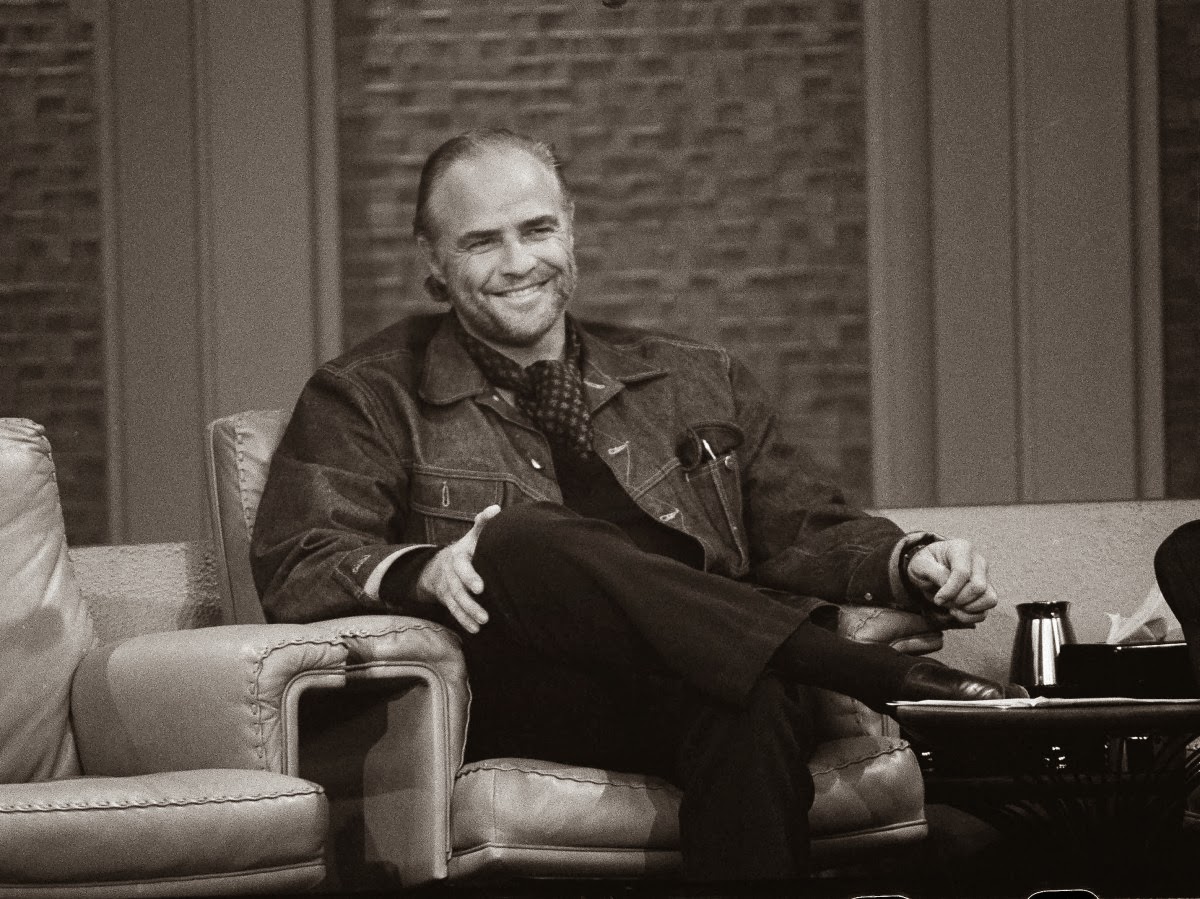
Marlon Brando was by many accounts the greatest actor who ever graced stage and screen. Peers, fans, and critics found his performances explosive, electric, and affecting. He had a way of connecting to the audience in a way that left us trying to remember the other members of the cast, and he was teamed with some of the greatest actors in the world in most of his movies. Marlon Brando was such a great actor that he changed acting at twenty-seven-years old. He captivated so many hearts and minds so early in his career that the field of acting bored him.

“[Marlon] Brando did not merely act the role, he became the part, allowing the role to seep into his pores, so that he stalked the screen like a young lion. Critics were stunned, blown away by the realism of the performance, they had simply never seen anything like him before.” —TheCinemaholic  

Brando was the first movie star, to my mind, to publicly state that he was not the least bit grateful for the roles, the career, and the life his profession offered him. Why would a person who made enough money throughout his career to purchase his own island not be grateful for everything the acting profession gave him? The answer appears multifaceted and vague, but we can speculate that the core reason was that he achieved such rarified air so early on in his career that no one could humble him. His early work influenced the biggest stars of his era to be more real and find the element of truth in their work, and we can speculate that that level of adulation stunted his growth and left him an immature narcissist.

Marlon Brando didn’t care what critics thought of his performances, and he didn’t care what movie moguls, most directors, producers, or anyone behind the scenes thought of them either. Those of us who love great art might applaud this indifference, as it basically defines the term auteur, or an individual whose style and complete control give a performance its personal and unique stamp. After doing this so often in his career, Marlon Brando earned a place in the rarified air of those who don’t have to care anymore to continue to prosper in their career. If you just stood to applaud this artistic apathy, the idea that he didn’t care what you might think either, should sit you back down.

As an incredible artist, and Marlon Brando was an incredible artist, we shouldn’t expect an artist to create art for us. As a side note, we should note that no actor creates art, but they can bring a writer’s character to life for us. They can interpret or reimagine a character in a way the writer never imagined. They can make the character their own. Does anyone know Budd Schulberg, the screenwriter of On the Waterfront? How about Tennessee Williams, the writer of A Streetcar Named Desire? He’s historically famous, as is Mario Puzo, writer of The Godfather, but most of us know those movies as Marlon Brando movies. His performances in these movies were so great that he overshadowed everyone else involved in them. Yet, we shouldn’t expect him to act in a manner that pays homage to his fans, and we shouldn’t care why anyone strives to give their best performances every time out, as long as they do.  

Having said that, there is something special about a great movie. We can lose ourselves in the time it takes to watch a movie. We can forget about our problems, and our need to get some sleep. If you’ve ever had a phone call disrupt a great movie, you know how deep into that movie you were. We develop deep connections to story the writer’s write, the manipulation of a great director, and the performance of the movie’s actors. We might develop such a deep connection to the actor that we develop a relationship with them. For some of us that relationship is all about loyalty, as we’ll see anything and everything that actor has ever done. Others expect the star to be nice to them in restaurants and other public venues to enhance that relationship. The point is, we accidentally grow to expect some level of appreciation for all that we’ve given them, even if it’s just some relatively insignificant comment they make on a talk show.  

“Acting is just making faces. It’s not a serious profession,” Marlon Brando told Lawrence Grobel in Conversations with Marlon Brando in 1989. “Acting is not a profession that I have any great respect for… It’s something I do, but it’s not something I think is particularly noble,” Brando told Edward R. Murrow in a 1955 interview. “I think it’s a silly, childish thing to do for a living… I don’t think it’s a very dignified way to make a living,” he told Dick Cavett in a 1973 interview.

I don’t know if Brando was the first movie star to go out of his way to publicly damage our illusion that they care what we think. He did open the door for actors to publicly demean and diminish the iconic roles that created their careers. If they state that they now want to move past that signature role that made them famous, we’d understand such competitive instincts, but they now say that they’re embarrassed by those roles that made them famous. (Note: I never found a quote where Brando singled out a performance that embarrassed him.) To try to be fair to those who say these things, we can sympathize with the idea that it has to be tedious to hear someone say, “Hey, aren’t you Han Solo!” eighty movies and fifty years after he gave that iconic performance. Yet, to be so ungrateful that they’re not afraid to publicly state that they’re embarrassed by a role which we all still love, and one that spawned a career that may not have happened if not for that role, just sits in my craw in a way that cannot be removed mentally, biologically or surgically.

***

Marlon Brando, a man many consider the best actor of his generation, didn’t care about acting, and he didn’t care for it. Did he say these things, because he thought it was cool not to care? Impossible, we say, that’s so high school, This man was a legendary actor who almost single-handedly changed the way actors approached their profession. Was it a marketing technique? If we read through Brando’s interviews, and the books written about him that give us insight into his thought process, Brando didn’t care about image, marketing, or any form of public relations. When we strip all that away, we’re left with the speculation that either Marlon Brando loathed himself so much that he viewed everything he did in a negative manner, or he said such things because he wanted us to think he was cool.

When our starting quarterback privately told us he didn’t care about football, soon after winning a state championship, we thought that was “so cool!” He was something of a mythic figure to us, basically telling us to not get so worked up about a silly game. That was high school though, filled with teenagers climbing all over one another to find new and different ways to be cool. Is it possible that this near-mythic figure of the acting world tried to accomplish the same thing by telling his fans to not get so worked up about something as silly as movies? We never leave high school, some social commentators say, and we never totally abandon the need to have others consider the fact that we don’t care about nothing “so cool!”

It was His Technique to Not Care

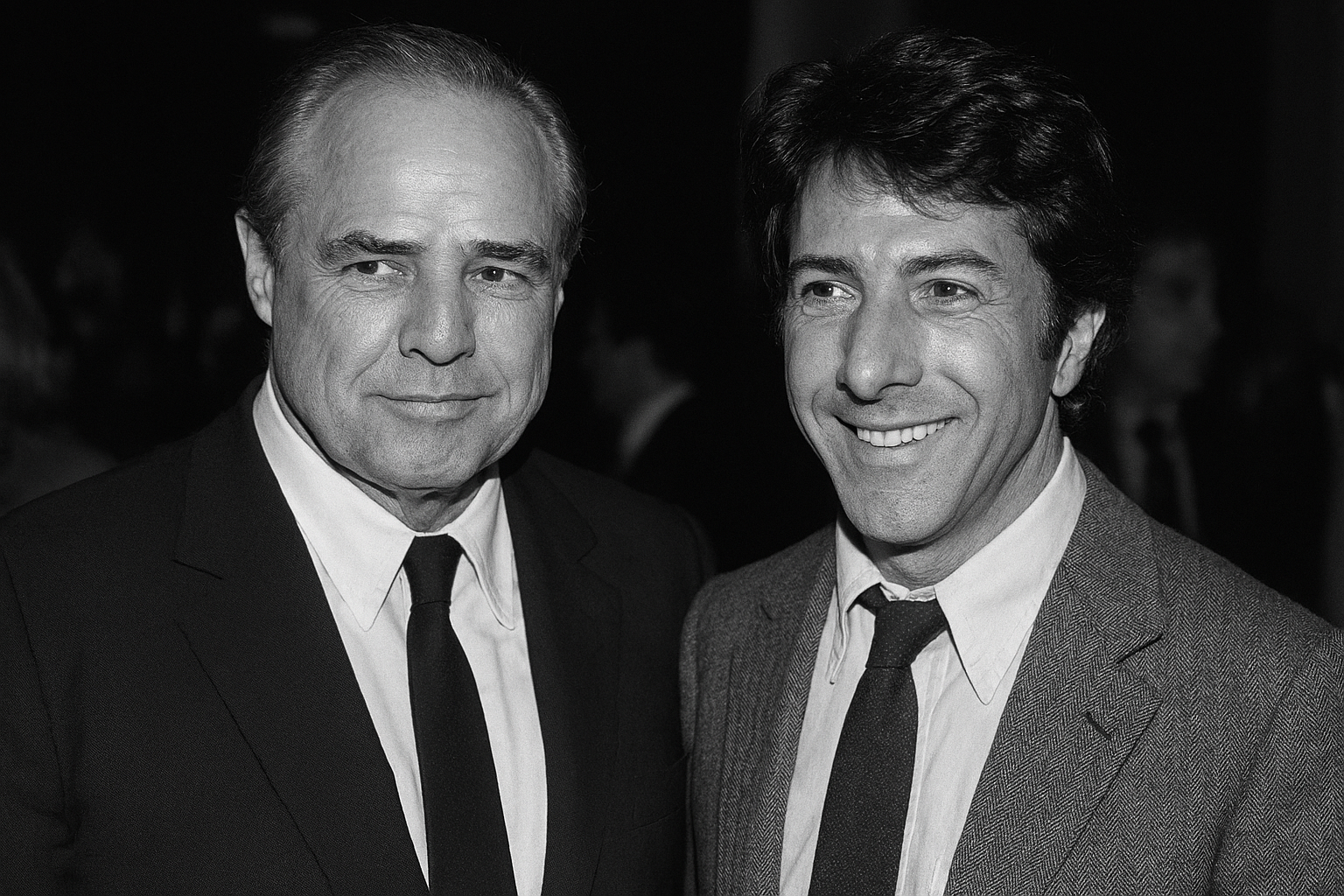
“Marlon Brando would often talk to cameramen and fellow actors about their weekend even after the director would call action. Once Brando felt he could deliver the dialogue as naturally as that conversation, he would start the dialogue.” —Dustin Hoffman in his online Masterclass. 

Hoffman’s quote suggests that Brando found a technique to help him calm his nerves, and it helped him mentally overcome the idea that he had to top his previous performances. By talking to these people the way he did, Brando helped himself find a middle ground, a place where he could not care so much. It suggests that he tried to place himself in a more natural setting, convincing himself that he didn’t care, and he did it to achieve a better performance. It’s possible, even plausible, but my guess is Hoffman is over-interpreting Brando’s casual conversations.

Even some of his fellow actors, his peers, considered him the greatest actor who ever lived, the greatest of all time, the GOAT of the acting world. Whenever we label someone the GOAT, the next chapter of the narrative involves their single-minded obsession, the drive to be the best, the sacrifices he made to be the best, and the measures he took to stay on top. “To be the best, you must beat the rest,” is some semblance of a quote these individuals drop to describe their drive to be the best. 

That is all true for most GOATs in sports, because even the most naturally gifted athletes must push themselves beyond their natural abilities to sustain continued dominance of those of equal, natural abilities. Brando’s success in the field of acting suggests this isn’t the case with acting. It doesn’t matter if you’re driven to succeed or obsessed with a level of success that continues to outshine your peers. They just need to look great on screen, deliver their lines on time, and do so in a manner suited for the role.

Yet, Brando didn’t always look great on screen, as he often showed up, on set, overweight in the latter half of his career, but his iconic status at that point was such that he didn’t have to be in shape to get roles. It was a little sad to see the man so old and out of shape in his latter movies, but it was still a treat to see him on screen. We didn’t care if he delivered his lines well, yet he often mumbled his lines, which was probably caused by his refusal to memorize them. To compensate for his refusal to memorize lines, directors had their people put placards around the setting for him to read. So, at least in the latter half of his career, he was reading lines to us.  

Anytime we criticize the great ones, we hear excuses and obfuscations. “Brando cared,” his supporters say. “He cared so much that one of his acting techniques involved getting to a place where he didn’t care anymore.” This was Marlon Brando’s technique, they argue, and we call that technique method acting, but according to the book Songs my Mother Taught Me, Brando abhorred the ideas behind method acting, as taught by Lee Strasberg.  

“After I had some success, Lee Strasberg tried to take credit for teaching me how to act. He never taught me anything. He would have claimed credit for the sun and the moon if he believed he could get away with it. He was an ambitious, selfish man who exploited the people who attended the Actors Studio and tried to project himself as an acting oracle and guru. Some people worshipped him, but I never knew why. I sometimes went to the Actors Studio on Saturday mornings because Elia Kazan was teaching, and there were usually a lot of good-looking girls, but Strasberg never taught me acting. Stella (Adler) did—and later Kazan.” 

As the “greatest actor in the world” who could command huge paychecks, because he could attract large audiences to his performances, Brando could’ve changed acting for a wide array of actors.  

In his 2015 documentary, Listen To Me Marlon, Brando said that prior to his appearance on the scene, “Actors were like breakfast cereals, meaning they were predictable. Critics would later say that this was Brando being difficult, but actors who worked opposite him said it was just all part of his technique.”

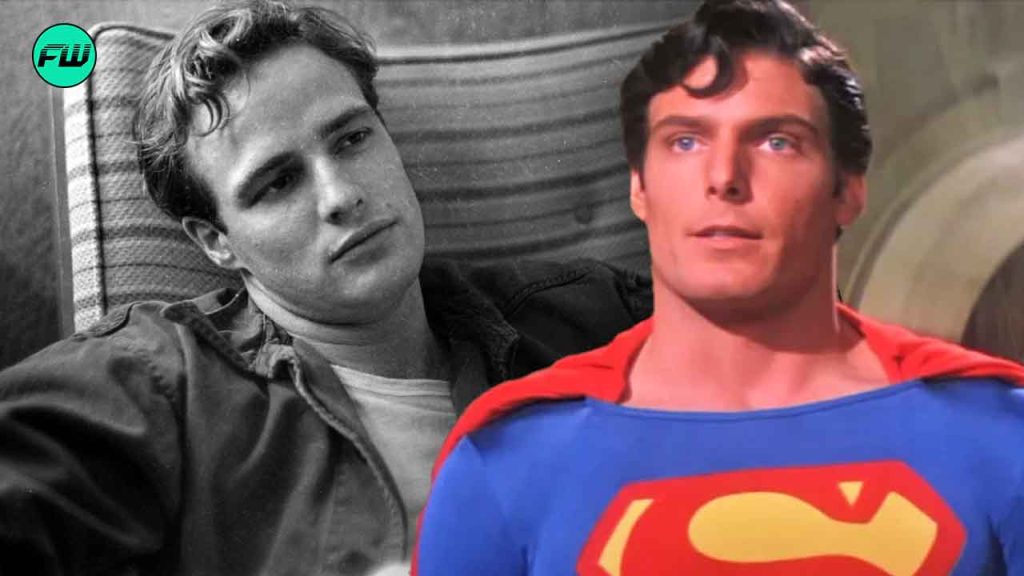
Christopher Reeves responded to these characterizations when asked about what working with the great Brando on the set of 1978’s Superman was like, “I don’t worship at the altar of Marlon Brando, because I feel that he’s copped out in a certain way. He’s no longer in the leadership position he could be. He could really be inspiring to a whole generation of actors and by continuing to work, but what happened is the press loved him whether he was good, bad, or indifferent. People thought he was this institution no matter what he did. So, he doesn’t care anymore, and I just think it would be sad to be fifty-three, or whatever he is and not give a damn. I just think it’s too bad to be forced into that kind of hostility. He could be a real leader for us.” Speaking specifically on the role Brando played in Superman, Reeves added, “He took the $2 million ($19 million with today’s inflation) and ran you know.”

If we watch that Reeves interview on Late Night with David Letterman, we can tell Reeves was all worked up about this topic, after working with Brando. Reeves acted as if he couldn’t wait for Letterman’s question, because he wanted to get his experience of working with Brando off his chest.

Tallulah Bankhead, who co-starred with Brando in his first stage performance back in 1947, also clashed with the actor before firing him. She recommended him for the part of Stanley Kowalski in A Streetcar Named Desire. “[He was] a total pig of a man without sensitivity or grace of any kind.” Even she had to admit, though, that Brando had talent. “There were a few times when he was really magnificent,” Bankhead said. “He was a great young actor when he wanted to be.” (My emphasis.)

We can leave the final word to another acting great, Jack Nicholson, who was famously intimidated by Brando’s talent while working with him. Nicholson once joked, “When Marlon dies, everyone moves up one.”

“I watched some of Brando’s dailies, nine or ten takes of this same scene. Each take was an art film in itself. I sat there stunned by the variety, the depth, the amount of silent articulation of what a scene meant. The next day I woke up completely destroyed. The full catastrophe of it hit me overnight,” Nicholson reminisced.

He also summarized neatly the ubiquitous reach of Brando’s influence throughout the world of film acting, in one short sentence: “We are all Brando’s children.” He was speaking for many an acting great, from Pacino to Hopper, Christopher Reeve, Viggo Mortensen, and too many others to mention.

Did Brando care about any of that? When he cared, he cared. When he had a script that supported a cause he believed in, he cared. He didn’t care about Superman, but he got paid so much to star in it that he probably should’ve. He had been the biggest star in the world for so long that he stopped caring about it. He didn’t appreciate his standing in the world for what it was, at the time, and he didn’t really care when it ended. He read his lines, and he did his job.

The next question, and it’s one I usually loathe when it comes to innovators, disruptors, and enterprising young minds who create. The line goes like this, “If he hadn’t invented this, someone would have eventually.” They say this when the subject of Nikola Tesla, Leonardo da Vinci, Isaac Newton or any innovators notions, products, or inventions are discussed. They say this when another suggests they were indispensable on the timeline. Was Marlon Brando, and his influence on acting indispensable? Method acting and the new brand of “realism” that Brando learned and displayed for the world may not have been as immediately accepted, applauded, or adopted if Marlon Brando never existed, but the techniques Brando used were being taught in acting schools. Some suggest that if Brando never existed, Montgomery Clift would taken those techniques to the world. As great an actor as Clift was, he wasn’t the explosive “shining star” Brando proved to be. 

When the subject of movie stars arrives, most of us make it all about “me.” We judge them based on how nice they were to “me.” “You think he wasn’t nice? He was nice to me. He even went so far as to say something nice to my son.” We also view movie stars, sport stars, and all celebrities based on our brief encounter with them, because we want to be a part of the story. “He didn’t me tip well,” “She said she doesn’t do autographs,” or “They didn’t even so much as look at me throughout our Uber.” I try very hard to avoid making it about “me.”

I met a number of celebrities in a previous life, and I found their particular demographic similar to all of the other ones. Some celebrities went out of their way to be nice to me. Some were dismissive, and others were rude, but most of them treated me the way everyone else does, and I never really cared one way or another. Most of us do. We loved their movie so much “we” bought that movie on DVD, “we” have three of their songs memorized, and “we” developed a connection to them that “we” thought they should consider special. When they didn’t reciprocate in anyway, “we” felt they diminished our special moment. When they didn’t tip us according to expectations, we went to Facebook to report them. When they refused to join us in a selfie, refused a request for an autograph, or even offer us a hearty smile or handshake, we proclaimed we’d never watch one of their movies again. We can’t help it, we judge people, places, and things from our perspective. On this particular note, I might agree with Brando’s general assessment that we all get a little silly about movies.

Thus, if I met the late, great actor, and he dismissed me as pond scum, I wouldn’t be anymore insulted by that comment than if anyone else said it. It’s the general sense of a lack of appreciation that sticks in my craw. If he ever dismissed the role of The Godfather, which he didn’t to my knowledge, as “reading lines and making faces”, I wouldn’t find it personally insulting, even though I connected with that character so much I felt a personal relationship with it. I would be angry though. I would be angry that a man who was given such an incredible opportunity in life to affect so many people didn’t appreciate it in the least, and that appears to be the case with the greatest actor who ever lived, Marlon Brando. 

Mr. Q is Quiet 


I couldn’t put my finger on it, when one of my friends threw me a beach ball, but I felt something, something deep that I needed to explore. Its texture felt so cathartic that I scrunched my fingers on it, which led to an almost inexplicable connection. The smell of it, fresh out of its package, was such a unique scent that I knew there was something more to it. I just couldn’t put my finger on it when I put my finger on it.

It also felt naughty to scrunch it, and I wasn’t sure if the sound or the feel of that scrunching drove that reaction, but I wouldn’t stop until I uncovered what caused me to do it.

“What are you doing?” my friends asked with some disdain. I couldn’t think of anything to say, but I feared that they might talk about this later. They might say something like, “You think he’s normal? I once saw him scrunch a beach ball for about two minutes straight with a look on his face that I’ll never forget. That boy ain’t right.” I saw those impressions starting to form on the faces of my good friends, and I knew I should’ve snapped out of it, but I just couldn’t stop searching for the connection.

“C’mon, throw it!” my friends finally shouted from the pool, snapping me out of it.

I probably should’ve obsessed over it for a little longer, when it was fresh in the mind, but I didn’t. I decided to return to the normal and enjoy the rest of my day at the pool. Yet, every time I played with a new beach ball, and it had to be new, because the new beach ball had that new beach ball smell, I experienced that odd, impossible to place memory. 

I don’t know how long it took me, decades at least, to remember that this unusual connection I had with that material harkened back to the days in kindergarten when I first met The Letter People.

***

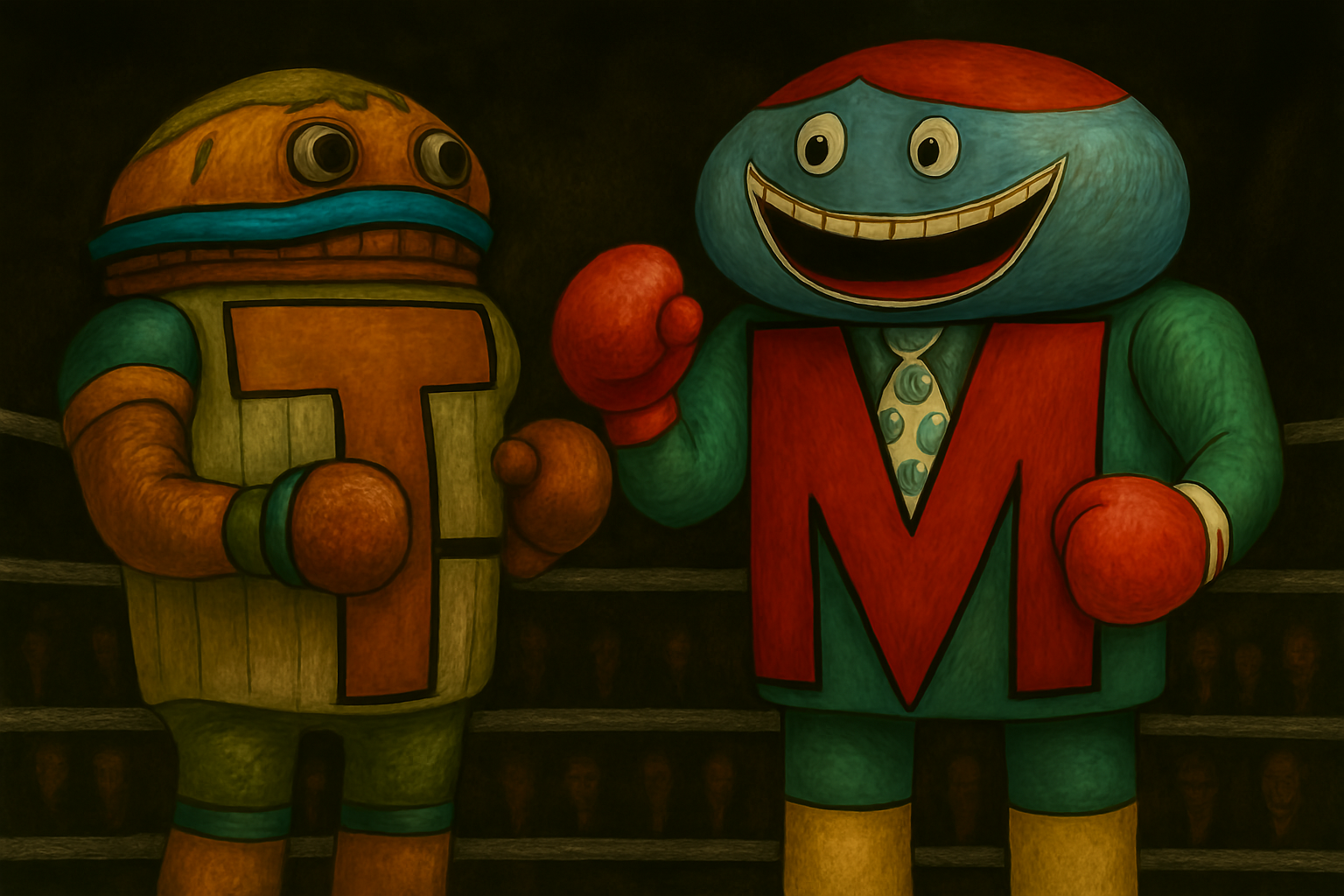
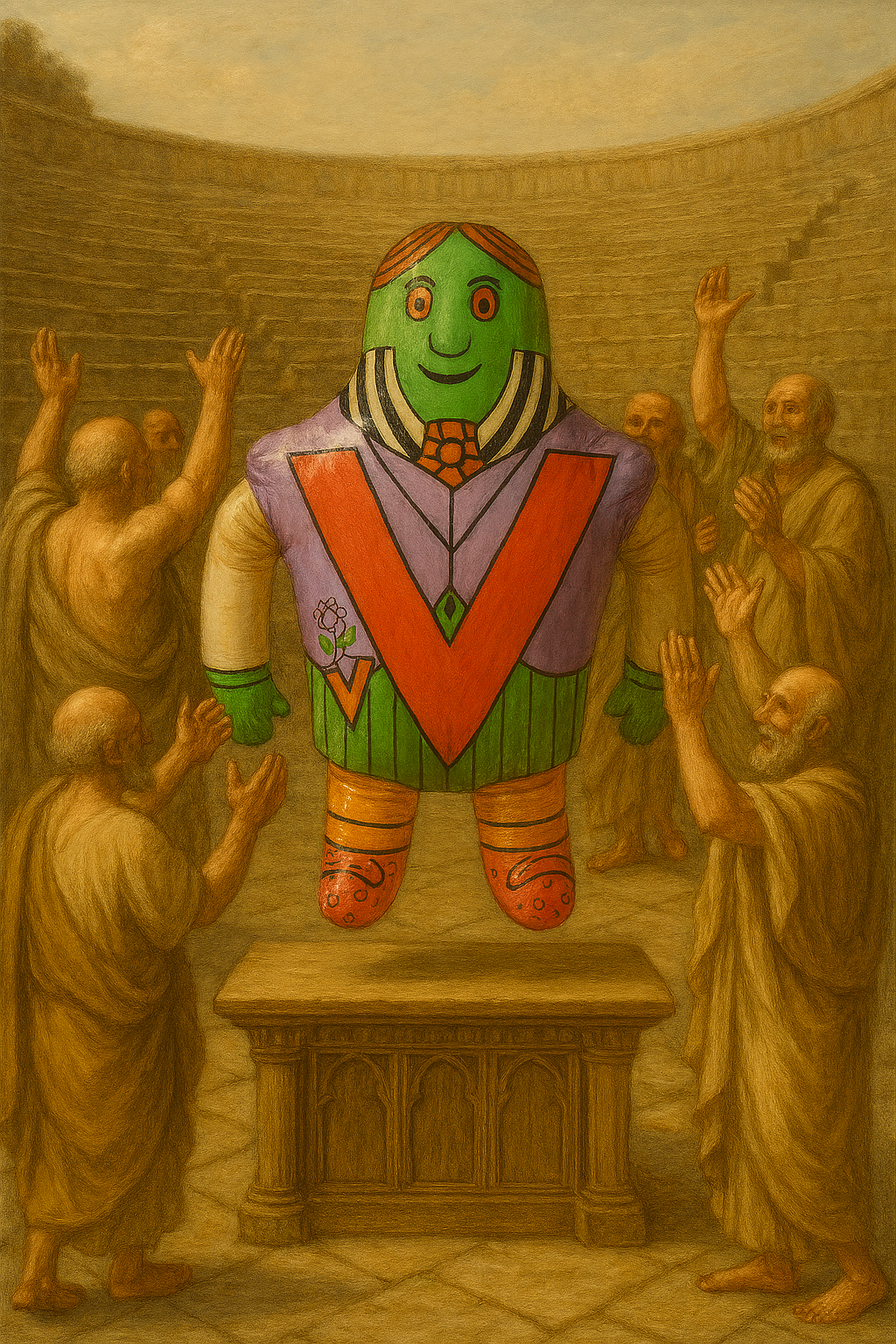
“We’re not to touch The Letter People!” our real teacher, a Mrs. Chamberlain, informed us when she introduced us to the first Letter Person we met, a Mr. M. “We’re going to learn a lot about The Letter People throughout the year, and we’re going to learn a lot from them. They will become our friends, but we are not to touch them!” I didn’t know what Mr. M had going on, or what this was all about, but I was all into it.

By the time Mrs. Chamberlain introduced us to the second character, a Mr. T, I recognized the routine she was developing. We were going to meet a new character at various intervals, once a week it turned out. The second introduction wasn’t as overwhelming as the first, but I found so much comfort in this routine that I no longer cried when my mother left me to the charge of Mrs. Chamberlain.

By the time we moved past the introductory characters, I gradually moved past the carefully constructed mystiques Mrs. Chamberlain and company manufactured for us. I began to see them as the teaching tools they were, but I also began to think The Letter People visited us from another land, a Middle Earth of sorts, similar to the land J.R.R. Tolkien created with his own level of creativity. 

Before meeting the first Letter Person, I was horrible at managing expectations and anticipation. I must have been a miserable kid in that regard for my mom, as she taught me how to make Xs on a calendar, so I wouldn’t bother as much about how many days away expected days were. When I began anticipating the day of arrival of the next Letter Person in the same miserable manner I did the other hallowed days, my mom had a word with Mrs. Chamberlain, and we found out that Mondays were the new hallowed days in my life, and I would ‘X’ my way to Mondays.

I eagerly anticipated the day of introduction for each Letter Person, but to be quite honest most of them didn’t have the star power, the it factor that Mr. M and Mr. T had. I realized, on some level, that the rest of them were just learning vehicles for kindergarten kids that needed to know the spelling system of our language, and they needed to know the rules of how letters represent sounds, and how words are spelled. I might overestimate how advanced I was in kindergarten, but my mom was such an active parent that most of what my kindergarten peers were learning for the first time was retread for me. Whatever the case was, The Letter People lost some of their magic in the routine of the months that followed, until I met Mr. Q.

I still remember the day I met Mr. Q. He stood on the opposite side of the entrance with our new substitute teacher, a Miss Landow, standing sentry, obstructing our ability to form a complete sensorial connection with him.

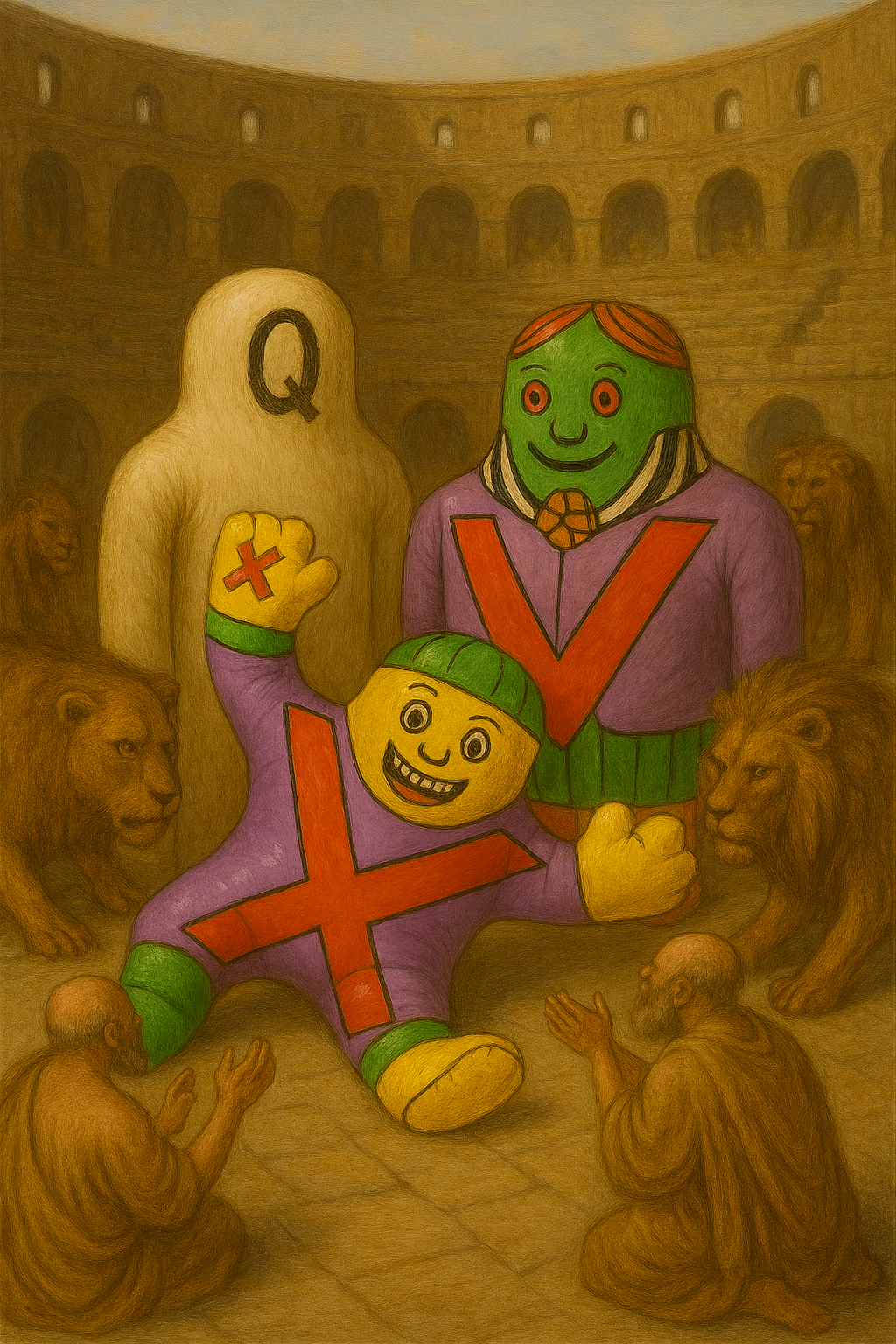
Mr. Q felt rarely used, mostly ignored, and an underdog who is often misunderstood. Mr. Q felt like an avant-garde phoneme, before I knew what avant-garde and phoneme meant. He wasn’t the last Letter Person I met, and I don’t know if I knew all this, or sensed it, but I remember feeling a special connection to Mr. Q based on the subtle idea that no one else connected to him the way they did the other Letter People

Mr. Q was quiet. His special feature/superpower was silence. As my mother could surely attest, I never thought of being quiet before, and I never met anyone who operated in silence before I met Mr. Q. The concept was so foreign to me that I decided to try it out.

“What’s wrong?” my mom asked me. “You’re so quiet.” I don’t remember if that question validated my new existence, if it emboldened me to pursue the idea of silence, or if I thought I was really onto something, but I loved the power of silence in those moments.  

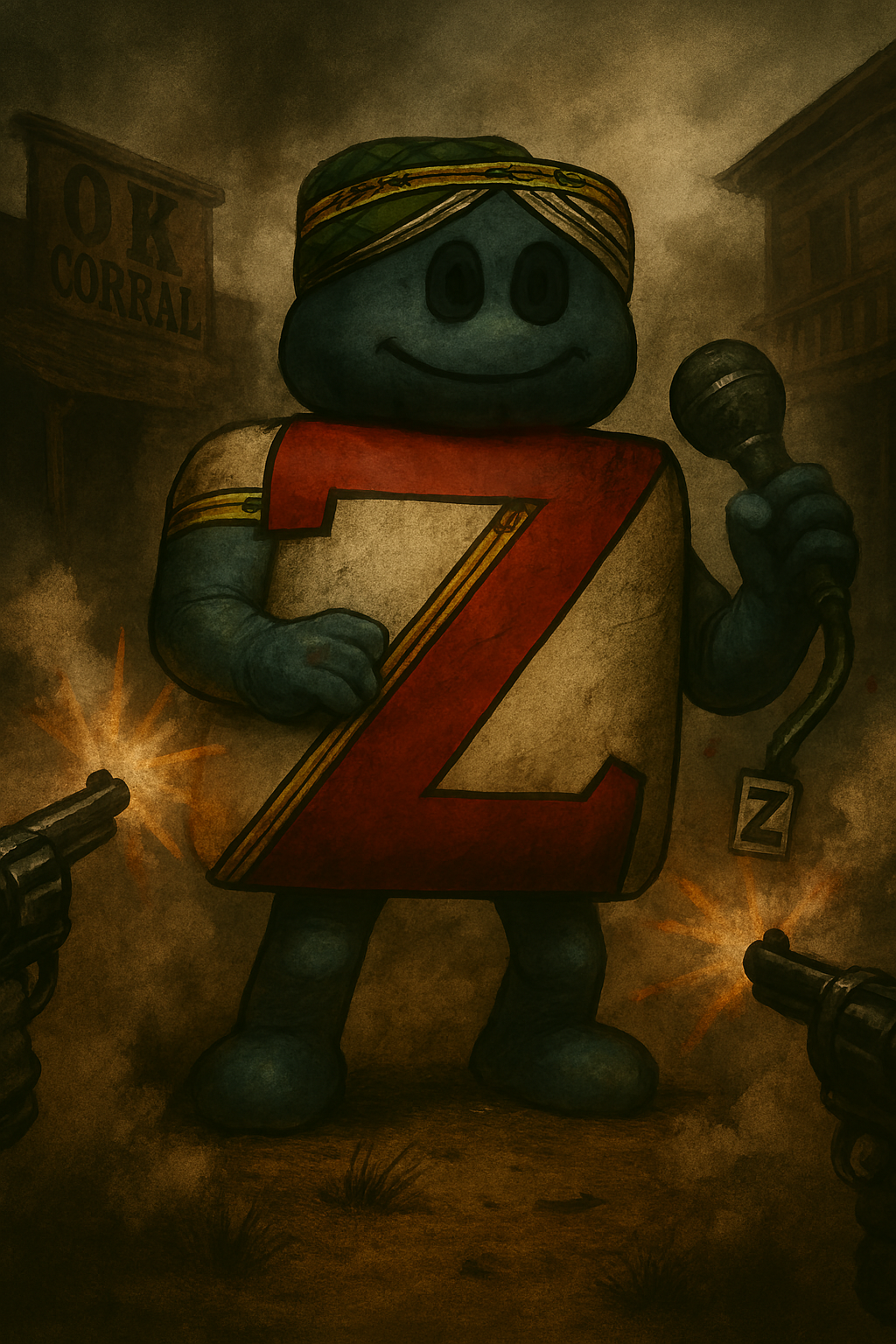
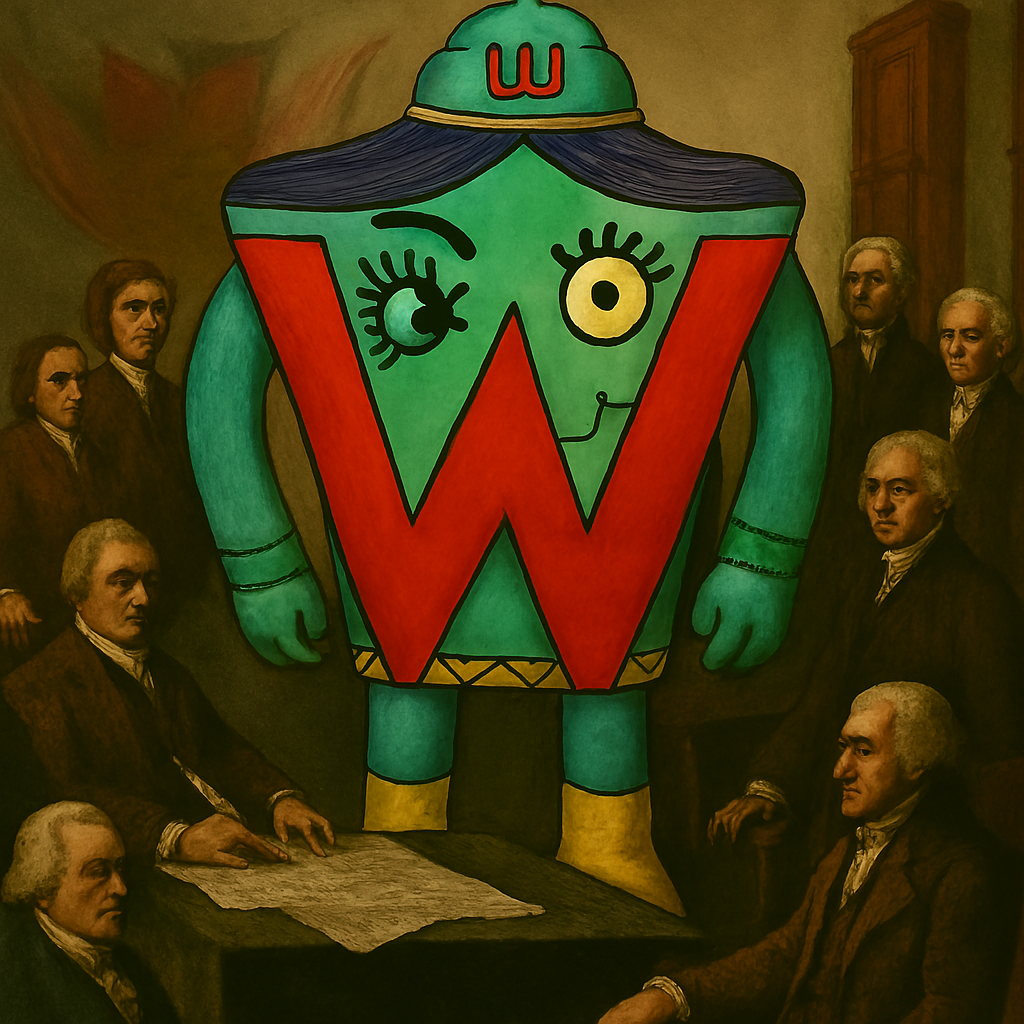
As opposed to the other Letter People, Mr. Q silently observed the people, places and things around him, and when he did eventually speak, it proved powerful. I found that concept intoxicating. I thought there was something more mysterious and cryptic about Mr. Q, than Mr. V, Mr. W, Mr. X, Mr. Y, Mr. Z and all the other, more obvious characters. Those characters arrived last, bearing cryptic gifts and challenging the orthographic orthodoxy. I found them mysterious, ironic, and possibly unstable.  

***

Other than Buggs Bunny, I don’t remember having unusual, almost spiritual attachments to cartoon characters before I met The Letter PeopleI may have been just as nutty over other things, but I don’t remember them having such a profound effect on me. I was so eager to meet these new characters that I managed to get over the idea that I could no longer spend every waking hour with my mom. I looked forward to going to school just to meet these new characters.

I tried to get to know more about them than anyone else did, just to increase my level of familiarity, but there wasn’t more to know. Knowing this made me feel so limited. There’s nothing to figure out about blowup dolls, and I know that now, but as a six-year-old kid these mysterious figures called out to me. They wanted to get to know me as much as I wanted to get to know them. Our kindergarten, class photo showed all the students and teachers saying cheese and smiling for the camera, but I was smiling at The Letter People near me.

Dogs have ways of making foreign objects talk to them. They sniff and sometimes inhale them, until they end up sneezing twelve times in a row. When their powerful sense of smell doesn’t help them understand a foreign object any better, they try eating it, urinating on it, or attempting to procreate with it. When they fail to arrive at some form of greater understanding of its purpose, they move on (Jack Russell Terriers and Beagles excepted). Their motto is “Try, try and try again, and then move on. No sense making a fool out of yourself.” I was not/am not wired that way. My obsessive brain could not let things go, for better and worse, and I obsessed over these mysterious figures called The Letter People.

When I couldn’t learn my individual definition of the essence of these Letter People from afar, I wanted to touch them and play with them to learn everything I could about them. I wanted to be their friends and spend time with them to get to know them better, but we were deprived our sense of touch.

As nice and sweet as Mrs. Chamberlain was, her, “They’re not toys, and we’re not to touch them” carried some weight with us. She either had an authoritative way about her, or her beauty and demeanor granted her authority. I write the latter in association with psychological studies that suggest kids, even as young as five and six, behave better when their teacher is young and beautiful, because they want to be her. Mrs. Chamberlain had those qualities, and she spoke in an ethereal tone that reminded us of Glenda the Good Witch. Whatever the case was, when Mrs. Chamberlain laid down the law, we listened.

My guess is that Miss Chamberlain and the school administrators probably developed their “No touching” rule based on precedent. Kids like me probably found that once they derived some sense of the essence of these characters, they couldn’t stop. They probably developed the rule to prevent us from even getting started down that road. Depriving me of the sense of touch only elevated the mystique of these characters, as I realized I would need to find other ways to learn more about them.

By the time we met Mr. F, Mrs. Chamberlain was no longer our teacher. She was pregnant, they informed us. I didn’t know what that meant, but I learned that being pregnant meant she was going to be gone for the rest of the year.

“Does that mean she’ll be gone for a while?” I asked my mom through tears.

“No, she’ll probably be gone for the rest of the year,” my mom said, and I assume she used more compassionate words to try to somehow soften the crushing blow for me.

A Miss Landow stepped in her place, and Miss Landow was a less attractive, more authoritative woman. Miss Landow informed us that Mrs. Chamberlain’s “No touching” rule for The Letter People would be upheld, and she meant that in no uncertain terms. Miss Landow, however, did not have the leadership mystique Mrs. Chamberlain did. 

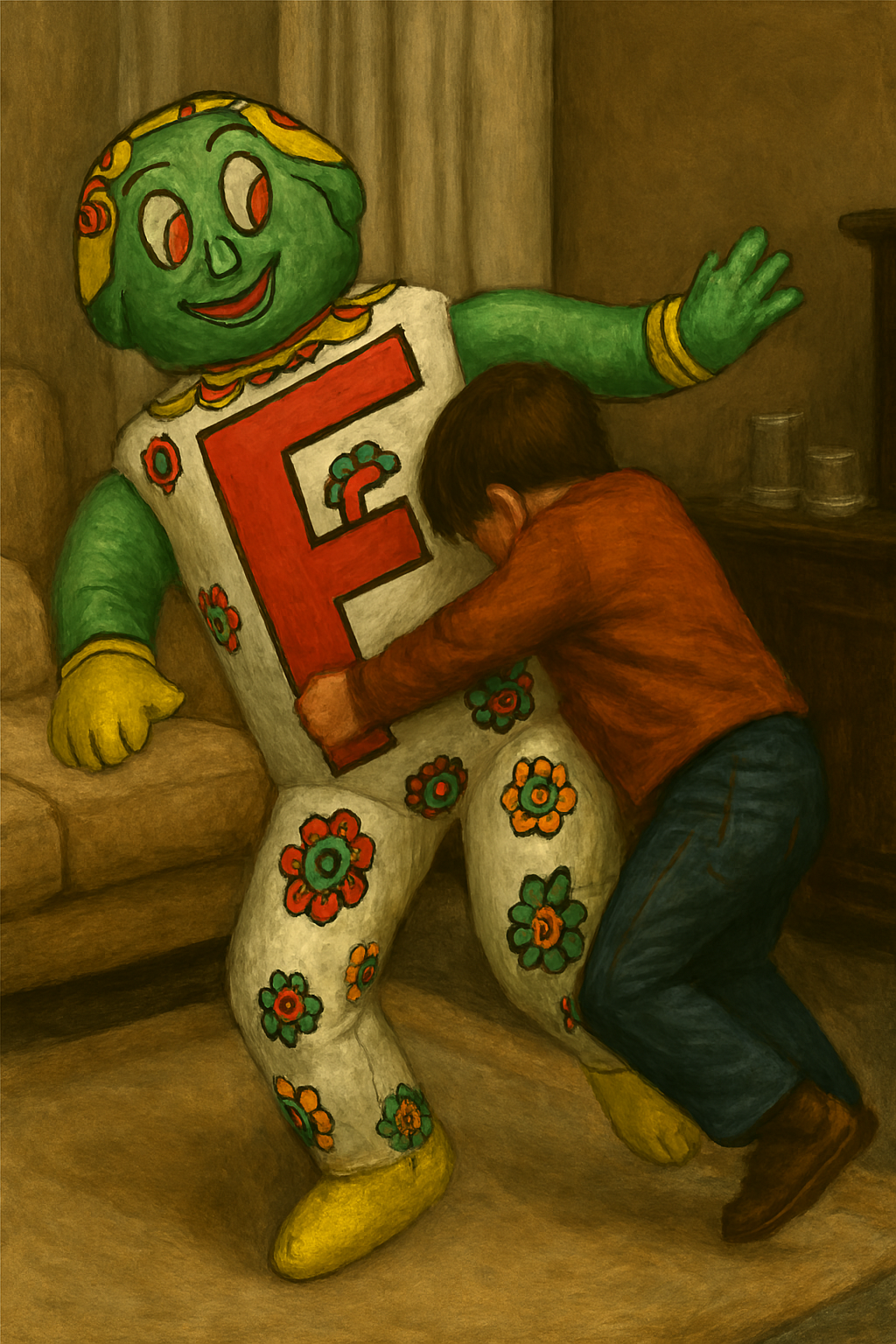
I don’t know if it was Miss Landow’s first day on the job, or first week, but Tommy Spenceri decided to challenge her authority. Either that, or he didn’t have the patience I did to work through his progressions. Whatever the case was, Tommy could no longer abide by the “no touching” policy anymore when we met Mr. F, and his floppy feet. He rushed to the front of the classroom to employ what a defensive tackle in football would call a bull rush, and he knocked Mr. F off his floppy feet. He hit Mr. F square, drove him onto his back and popped him. Nobody screamed that I remember, but I was on the verge of it. Tommy ruined Mr. F before I got to know the man, and Tommy deprived me of developing whatever relationship I might have developed with Mr. F. 

Tommy Spenceri was six, I know that now, but back then I considered his flagrant violation of protocol so horrendous that I couldn’t look at Tommy without disdain for his inability to restrain his primal impulses. When Mr. F returned, the next day, his hole was taped to help him retain air pressure, but I couldn’t look at him, because he appeared weak to me now, tainted as it were, and I had no respect for him. It’s a bit callous, I know, but how many six-year-olds know anything about the complex emotion of sympathy?

The one thing that Tommy introduced to me was the concept of moderation. I was never going to commit what I considered a flagrant violation of protocol as horrendous as he did, but with Mrs. Chamberlain gone, her leadership mystique went with her, and to my six-year-old mind, that opened a window of opportunity. I don’t remember the exact timeline involved here, but at some point I conspired with my younger brother, a heist of a Letter Person. I wasn’t sure which Letter Person I would steal, or if I would steal all of them. I had favorites, but I didn’t want to play favorites. I didn’t want to leave a man behind, so my plan broadened out to stealing two of them, to three, to however many I could grab. I was not the type of kid who stole things, and I considered the whole idea shocking, and I considered how shocked and disappointed my mom would be if I was caught. I was so in love that The Letter People that it grew into an obsessive, unhealthy love that some might characterize as stalking.

Immediately after Tommy Spenceri committed his horrendous violation, I was disappointed that Miss Landow, and the powers that be, didn’t punish Tommy as severely as I thought they should’ve. They gave him what they called a “stern talking to”. Tommy violated the sanctity of The Letter People, and their primary “no touching” rule, and all they gave him was a “stern talking to”? Tommy maintained his smug smile throughout this “stern talking to”, and I watched it all thinking that they weren’t do enough to protect The Letter People.

When I began plotting and planning this heist, my perspective on Tommy’s soft punishment changed. I now realized that if they caught me, they might give me nothing more than a “stern talking to”.

While in the planning stages, I realized that I didn’t know where The Letter People went after our week with them was over, and I decided to start watching the routines of Miss Landow in the coming week to see what she did with The Letter People when our lesson plan concluded. I don’t remember how sophisticated my plans were, but I remembered those people who stole things in movies, and I saw how often their episodes ended in gunfire with the thieves who survived eventually going to jail. As much as I wanted to spend more time with The Letter People, and become better friends with them as a result, I figured that I wasn’t ready for gun play, and I was pretty sure I wouldn’t do well in jail. I eventually chickened out, because as much as I wanted to spend the rest of my life with The Letter People, I couldn’t stand the thought of life without my mom. I tried to live a life without her once before, when I ran away from home, and she let me. Everyone considered thought it was so funny that I couldn’t get to the end of the block without her, and I found it humiliating to realize I wasn’t able to exist on my own. 

With that fantasy out of sight and out of mind, I moderated further. I developed a foolproof plan based on the patterns and behaviors I watched the various players in our school for the next couple of days. When we went to recess and played on the playground for however long it took, Miss Landow stayed with us, observing us. On the rare occasion someone had to use the restroom, she allowed them to go inside the school, unmonitored and unaccompanied, to use the facilities. Once I mustered up the courage, and that took some time, I asked to be excused from recess.

The path to the restroom and our classroom were the same, until we hit a fork in the hall, turn right and we’re headed to the open-doored classroom. Turn left, and we’re headed to the bathroom. I thought about this in the planning stages, and I followed my plan to the letter. After asking her if I could go to the restroom, I approached the fork in the hall as casually as I did any other time I went to the restroom, and I turned left to the restroom. I stood on that corner and looked back at Miss Landow. I could see her through a window in the door, talking to a fellow teacher and laughing about something. I carefully looked in every direction, and then I held my breath and crossed the hall and entered into our kindergarten classroom. 

I felt a “whoosh” of emotion when I crossed that threshold, as it was my first experience with committing something so wrong it felt right. I looked back down the hall and up the hall to see if anyone witnessed my transgression. The coast was clear. My immediate thought was to initiate plan A and steal Mr. Q, but I couldnt think of a way to conceal him well enough to sneak him out the door. Years later, I wondered why I didn’t just deflate him and hide him in my shirt, but I’m pretty sure I didn’t know Mr. Q was inflated back then.

When I finally stood before Mr. Q, I didn’t know what to do. My plan B did not include any details of what I should do when I was finally alone with him, because I didn’t think I’d make it that far. I didn’t want to tackle him, or hurt him in the brutish manner Tommy Spenceri did. I just wanted to touch him little, and I did. It felt a little naughty, but it felt cathartic and pleasing in an almost spiritual manner to run my fingers across him. Then, I touched him so much that I began squeezing him softly, and when I did it made a scrunching sound that I enjoyed. I scrunched him a little more, and then I lowered to a knee and sniffed him, and Mr. Q’s scent was so unique and pleasing that I neared him even more and inhaled that smell deeply.

For most people, memories of childhood are relative. Some remember a few snapshots from high school, some go back further, but very very few can remember anything beyond sixth grade. This moment I spent with Mr. Q felt so special that I would recall it, decades later, when I held a beach ball for far so long for my friends gave me a look that suggested I was doing something concerning. I also remember that I would continue to use the restroom excuse to visit the other Letter People we met after Mr. Q, onto the final days with Mr. Z, but my sensorial and physical relationship with Mr. Q, who I knew would remain quiet about our interaction, was the most special.

When the class photo day arrived, months after we began meeting these characters, Miss Landow brought back Mr. T and Mr. M for the photo, because they were the most popular, but I wanted to spend more time with Mr. Q and the other Letter People that weren’t as popular. We didn’t spend as much time with them, and in my opinion, we never truly got to know them or learn their essence.

Years later, my brother discovered that there was a The Letter People television show. Back then, a kid in kindergarten spent a half-day at school, and he was able to watch that show while I was in school. That destroyed me a little, because I felt my relationship with these characters, three years out, still felt incomplete. I was so bitter and angry that I could barely contain myself. I eventually saw this show, and I don’t remember if it occurred in the first episode I saw, or soon thereafter, but my interest waned quickly. I was too young to know that someone wrote and directed these episodes, and I knew nothing about voice actors, or any of the players involved in such a production, but I thought they did it wrong, all wrong.

“There’s no way Mr. T talks like that,” I, a budding critic, told my brother. I also complained about the various interactions of these characters in whatever nine-year-old verbiage and understanding of the world I had at the time. I thought almost all of the characters were wrong, or different than what I imagined. It wouldn’t be the last time a production left me feeling disillusioned, but when my brother later urged me to watch another episode with him, I told him I wouldn’t be watching it again. I didn’t know it then, but watching these characters actually interact with one another ruined all the mystiques I built up for them when I imagined who they were, what they cared about, and how they might interact with me if I ever got the chance to meet them in real life. I was obviously a kid with an overactive imagination, but when I finally recalled why the feel and smell of a beach ball was so special to me, I realized what an incredible time I had being a kid, and I had The Letter People to thank for their small role in it. 

Hoomans, Ha!men, and Humans 


Taxonomists and biological anthropologists classify modern humans as the Homo sapiens sapiens species. No, that is not a typo. The reason for the double-word is that we are a subspecies of the Homo sapiens species. Taxonomists and biological anthropologists created this distinction to separate Homo sapiens sapiens species from the Homo sapiens neanderthalensis, or Neanderthals, the Homo sapiens idaltu, or Herto man, and the debatable inclusion of the Homo sapiens denisova, or Dragon man. We’re all homos, in other words, under the genus Homo, and the biological anthropologists break us down after that.

Our Homo sapiens sapiens subspecies is characterized by advanced cognitive abilities, language, and complex social structures. We’re the most complex subspecies in this regard, but if aliens from another planet were to meet us, greet us, and play in all our reindeer games, they probably wouldn’t agree that we all belong in the same categorization.

When we talk about Alien Life Forms (ALFs) here, we’re talking about Spock, S’Chn T’Gai Spock from the original Star Trek. Spock was half-human, half Vulcan, but we’re going to characterize our ALF as a full-on Vulcan, a full-on reason and rational thinking Vulcan with no empathetic or sympathetic emotions. In this ALF’s After Earth report home, it would write, “Even Earth’s scientists refrain from proper delineations in their Homo sapiens subspecies, because the scientific community thinks that a proper breakdown of various individuals in their subspecies might hurt feelings, but there are clear delineations. Some Homo sapiens sapiens have not fully evolved to the point that they belong to that species. Others have.”

If we never meet Spock-like ALF, or fail to prove they exist, we’ll never be able to verify this characterization. Thus, we will have to turn to the closest thing we have to an Alien Life Form in our universe, one with intimate knowledge of the Homo sapiens sapiens that is dispassionate enough to provide objective analysis. I would nominate the cat. Anyone who has owned a cat knows that we share an off again relationship with them. The cats definition of our relationship might even be punctuated with a “I really don’t care that much what happens to you” exclamation point that is furthered by a “As long as I get some milk and food every once in a while, and someone or something keeps me stimulated every once in a while I’ll continue to exist near you.”

Some might say the dog has as much, if not more, knowledge of our species as the cat, but the dog is biased. Dogs love us. They are so loyal that if they were commissioned to analyze our species, they would tell us what we want to hear. There’s a reason we call them man’s best friend, and it is largely based on the idea that they accept us for who we are. They don’t analyze us in the manner a cat will, and they know nothing about our inadequacies or failures, because their sole goal in life is to make us happy. They know when we’re happy, they’re happy. Cats are almost 180-degrees different.

Instagram posters have characterized this on again, off again, “I really don’t care that much what happens to you” relationship we have with cats with a somewhat humorous, somewhat condescending term that their cats use to describe us, hoomans. Hoomans is a cutesy eye-dialect, similar to that of the “No Girlz Allowed” sign that moviemakers put outside the door of a boy’s clubhouse. The cutesy error is employed to enhance the cutesy idea that cats and young boys can’t spell. The moviemakers might even add a backwards ‘R’ to further emphasize the cuteziness of the boy’s sign.

Another intent behind the cutesy hoomans contrivance is to inform us that we’re not viewing this interaction from the customary human perspective. We’re viewing this particular interactions from a perspective we may not have considered before, the cat’s.

In that vein, the unsympathetic delineations of the cat would suggest there are Homo sapiens sapiens who fail the “advanced cognitive abilities, language, and complex social structures” standards put forth by biological anthropologists. They might suggest we introduce a Homo sapien confusocortex, or Confused Man, subspecies for those who haven’t evolved completely. 

These hoomans were born at full capacity, and their schooling years proved that they were able to achieve full functionality, but as with any muscle, the brain can deteriorate with lack of use. We’re not attempting to make fun of them, but there is a delineation between those who know how to operate at an optimum, and those who fail to make necessary connections.

In the cat-world, I’m not sure if they would characterize me as a human or a hooman. I think they might develop a separate category for those of us who measure up, but we enjoy disrupting the meticulously crafted model they’ve created for human actions and reactions. The cats view such joyful interference with their carefully designed understanding of human nature and its patterns with something beyond skepticism. They’re alarmed. If we watch cats in the wild, they study their prey carefully to gauge whether or not they’ll get hurt. If after examining us completely, they developed a full categorization, it might be ha!men. My brief experience with cats informs me that they don’t have a sense of humor, so it would be impossible for them to properly categorize ha!men without some form of condescending insults. My guess is they would spit out something like, the symbolic, or ironic inversion of their cultural input often critiques the very idea of cultural output, then twist it into recursive satire. Their social systems resemble Escher prints—technically sound, emotionally disorienting. “They are players, jokesters, and fools,” the cats would conclude, “and we say that in the most condescending way possible.”   

Ha!men know that pets and children create profiles of humans based on patterns, and I think cats are quite comfortable with the thought that hoomans were put on this planet to serve them. Hoomans are to provide the cat food, milk, a place to relieve themselves, and various forms of stimuli. It’s a tenuous relationship that suggests if hoomans fail to fulfill the expectations of their relationship the cat will simply go to another hooman who can. Those hoomans who fulfill expectations can, could, and probably should receive the reward of affection. They know adult hoomans need this every once in a while, and they don’t mind occasionally playing that role for them, as long as the bullet point, requirements are met.

They also know we arrive home at around 5:30, feed them and themselves, and sit before the glowing box for a couple hours before it’s time to go to bed. They grow accustomed to these patterns, the way we conduct ourselves, the way we make sounds at one another, and our gait pattern. When we meet their criteria, they might sleep or find some other stimuli to occupy them, as they probably find most hoomans as boring as any other superior would find the actions of their underlings.

I don’t know cats would characterize me, but I highly doubt they would consider me boring. I’ve been their sole focus more times than I can count, and there have been occasions where these rooms housed a half-dozen people. I noticed how cats study us with more intensity than any other pet at a very young age, and I found it creepy in the beginning. “What are you looking at?” I wanted to ask, as if that would help matters. I noticed, early on, that when I acted somewhat out of sorts it only intensified their study of me. After numerous interactions over the years, I found their study of me fascinating, and I began tweaking my actions to destroy their research.

Just to be clear, I never touched one of these cats. I just enjoyed playing the role of their anecdotal information, their aberration. I exaggerated my differences just to be different than any other human they’d ever met, just to see how they’d react. The minute the cat owner I was dating left the room, I would walk across the room in a decidedly different gait pattern. I might slow turn my head to them in the manner an alien would in a movie, and I’d repeatedly stick my tongue out at them. I might even take a drink coaster and throw it across the room in an erratic manner. The list of things I did just to mess with their heads is long, but those are a few examples I remember. I’ve found that all we have to do is act a few deviations away from the normal hooman actions to make their pupils expand with increased scrutiny or fear.

Do the same things to a dog, and they might raise their head for a second, their ears might even perk, or they might even bring us a toy, thinking we want to play. Whatever they do, their reactions suggest they’re either less alarmed by abnormalities among the hoomen population, more forgiving of those who suffer from them, or they’re less intelligent than the cat and thus less prepared for an eventual aberration that cats foresee. Cats immediately switch to alert status. They don’t care for these games. If they don’t run from the room to avoid what they think could happen, they watch ha!men with unblinking, rapt attention. Even when they realize it’s just an act, as evidenced by our return to normalcy when the woman-owner returns to the room, they continue to study us. “I’ve decided that I don’t like you,” is the look they give us ha!men throughout.

***

Suzy Aldermann wasn’t a ha!men, but we thought she was. When we heard what happened at a corporate boardroom, we thought Suzy’s portrayal of a ha!man might’ve been one of the most brilliant portrayals we ever heard. Prior to that meeting, she appeared to abide by so many of the tenets of human patterns that when she deviated, we thought Suzy was employing a recursive inversion technique known to all ha!men as the perfect conceptual strategy for dismantling normative frameworks from within.

Prior to her “full-fledged panic attack!” Suzy successfully presented herself as an individual of advanced cognitive abilities, language, and complex social structures. So, when she experienced this panic attack, this “full-fledged panic attack!” after she opened the door to a meeting room and saw Diana Pelzey conversating with her chum, we thought she brilliantly portrayed a ha!man to the uninformed. As the report goes, Suzy whispered to a friend that she would not be attending the meeting because Diana was present. “BRILLIANT!” we said. “Absolutely brilliant that Suzy would pick the least threatening person in the room to initiate her alleged panic attack!” We all agreed to keep Suzy’s ruse secret to see how it would play out, and we expected a lot of hilarious high-brow hi-jinx as a result. The joke, it turned out, was on us. We either overestimated Suzy or underestimated her, I’m still not sure which, but it became clear that Suzy decided to run away rather than up her game to match, and/or surpass Diana’s presentation. It was, according to Suzy, a full-fledged panic attack.

In the aftermath of our misreading, anytime we met a melodramatic hooman who was having a “full-fledged panic attack!” over a relatively insignificant issue, our instinctive response, based on our understanding of human patters is to think either she’s a ha!man who is joking, or she probably needs to experience some real problems in life to gain proper perspective.

Yet, when we’d talk to Suzy, she’d detail a relatively rough upbringing that included some eyebrow-raising experiences. Those incidents were real issues that Suzy had to manage, and she had to claw through the tumult to reach a resolution. The normal human progression, for those of us who study humans with relative intensity, is that when a human experiences a number of real problems, they become better at resolving them through experience. Suzy worked her way through all of those problems, but she never developed better problem, resolution skills.

We’ve all heard from other souls who purport to travel some tumultuous avenues. Wendi Hansen, for example, detailed for us her “rough life,” but when she was done, we couldn’t help but think that much of her self-imposed trauma was the socio-political equivalent of first-world problems. Suzy was no Wendi Hansen. Suzy’s issues were real and severe, and they were backed up by eye-witness testimony. Our natural assumption is that if she’s experienced problems far worse than a colleague purportedly interested in stealing her job, it would be nothing compared to what she’s experienced in real life.  

If we were to view the humans, the ha!men, and the hoomans from the perspective of the Alien Life Form (ALF), or the cat, without empathy or sympathy, we would conclude that some humans get stronger, better, or gain a level of perspective that allows them to see minor problems for what they are in the moment. Some hoomen, on the other hand, deploy the tactical maneuver of retreat, and they do so, so often that they never fully develop their confrontational muscles.

After experiencing so many different souls who maneuver around their tumultuous terrains differently, I now wonder if hoomans, who’ve experienced real problems in life, blow otherwise insignificant issues up into real problems, because they’re more accustomed to handling their problems at that level. Either that or they know if they retreat during the relatively insignificant phase, it might never progress into more severe phases. Whatever the case is, their experiences have taught them that they can’t handle problems, and as a result of retreating so often, they never do.

***

“It’s a lie,” Angie Foote told me, regarding something Randy Dee told the group.

“It’s not a lie,” I said. “It might be an exaggeration, a mischaracterization, or something he believes is true but is in fact false. It’s not what I would call a lie.”

“Barney, he told everyone that this is what he does, and I’ve seen how he does it. He doesn’t do it that way. He’s a durn liar is what I’m saying.”

Angie is what we in the biz call a simple truther. She sees everything in black and white. A truth is a truth, and a lie is a lie. There is no grey matter involved in her universe. I respect simple truthers in this vein, because I used to be one. I’m still one in many ways, but experiencing precedents in life can wreck the comfortable ideas we develop in our world of simple math and science. Facts are facts and truth is truth is their mantra.

Some of us hear a lie, and we know it’s a lie. When we’re telling lies, we know we’re lying, and we can’t help but view the rest of humanity from our perspective. When they’re lying, they know that one plus one equals two. I know it, you know it, and most importantly, they know it. We witnessed them doing one thing, and we heard them say they do something else, and they said it as if it was something they truly believed happened! How can they do that with a straight face?

My asterisk in the ointment, my new definition of a lie, is that a lie is something someone says that they know to be false. There are good liars who are so good at it that they can convince themselves that it’s true before they try to convince us. The other liars, the fascinating ones, fall into a greyer area. They don’t know they’re lying.

One of the most honest men I ever met, a Randy Dee, taught me the grey. Randy Dee told some whoppers. He told some untruths to me, regarding events that happened the previous night, and I was there for those events. 

He misinterpreted the truth so often that it affected how I viewed him. When I viewed him, and the way he’d lie, I’d watch him with the rapt attention a cat would when encountering a ha!man who proved an aberration to my study of human patterns. While involved in this study, I became convinced that we could put a lie detector on him, and he’d pass with flying colors. “He’s just a durn liar!” I said to myself. Yet, if you knew this guy, and I did, you’d know he’s not lying, not in the strictest sense of the word. By the standard of taking everything we know about lying and inserting that into the equation, Randy Dee never told a lie.

I knew Randy well for a long time. I knew him so well that I learned he was incapable of lying. He was a law-and-order guy who despised deception and all of the other characteristics inherent in criminality. Yet, by our loose standards of truth v. lying, the man was a big, fat liar.

He was incapable of detecting the lies others told him, because he just didn’t think that way. He was somewhat naive in that regard, and after getting to know him well, I considered it almost laughable that anyone would consider him a liar.

Randy Dee was an unprecedented experience for me, and I would have a lot to sort through before I fully understood what I was experiencing with him. If we took this to a social court with a simple truther sitting in the role of a judge, we would experience an exchange of “He’s lying.” ‘I’m telling you he’s not. You have to get to know him.’ “You’re over-thinking this.” ‘If you know the guy as well as I do, you’d know he’s incapable of lying.’ “All right, he’s an idiot then.” ‘If idiot suggests a lack of intelligence,’ I would reply, ‘You have to meet him to know he’s anything but.’

If this argument reached the point of no-return, one of us might suggest using a lie detector. If Randy Dee passed the lie-detector test, the simple truther would then suggest that there was something wrong with that mechanism, and there might be.

When lie detectors first entered the scene, their findings were considered germane to cases. Judges, lawyers, and juries not only thought their findings should be admissible in proceedings, they considered them germane to findings. 

“Did he take a lie detector test?” a judge might ask. “Yes, your honor,” the defense attorney said, “and he passed with flying colors.” Lie detectors eventually became less prominent, because they were deemed wildly inconsistent. How can a machine with no powers of empathy, sympathy, or any emotions differentiate between hoomens, ha!men, and humans to produce inconsistent findings? What progressions occurred? Were so many Ha!men and Hooman able to beat lie detectors so often that the machines lost their relevance in criminal cases?

Randy Dee, a man who was so honest that it seemed almost ridiculous to suggest otherwise taught me that the reason lie detectors are wildly inconsistent has more to do with the idea that we’re wildly inconsistent. We can convince ourselves of a lie, so thoroughly, that it’s not a lie anymore, and we can do it without ever trying to deceive anyone or anything in the case of lie detectors. Ha!men might do it just to see if they can defeat the machine, and its ability to detect different biological reactions, but hoomens might do it because they lose the ability to make those necessary connections that produce truth. The latter provides a wild ride to those of us who once viewed human nature in the ritualistic patterns cats will, and if we continue to view hoomens with the rapt attention a cat gives a Ha!man, until we find the truth, it will wreck every simplistic truth we thought we knew about lying liars and the lies they tell.