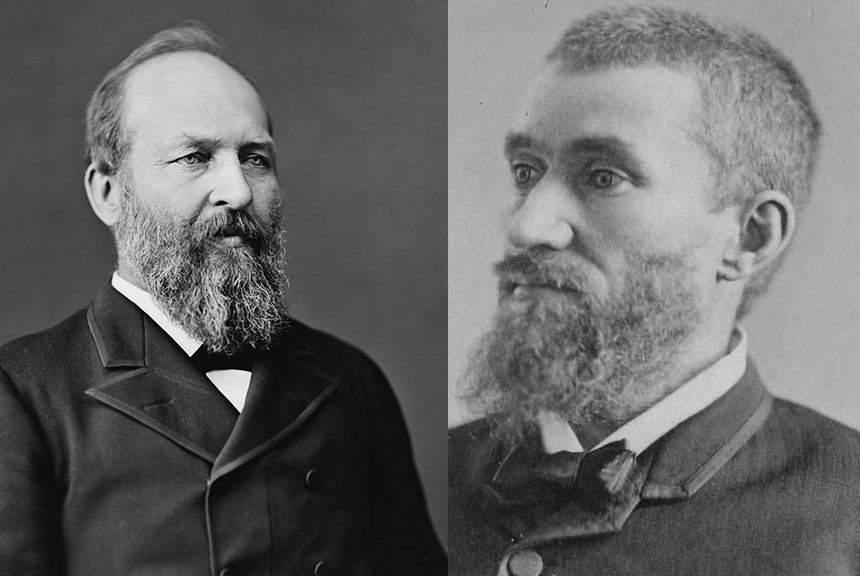
Beat The Beatles


“The Beatles are overrated,” wrote someone who probably wears black sweaters, prefers goatees, and still considers the ascot a mandatory fashion accessory. “While many find enjoyment in singing along to Hey Jude or I Want To Hold Your Hand, I find the vast majority of [The] Beatles’ lyrics insultingly simple, and [their] individual musical talent is surpassed in almost every regard.” Those who wear normal clothes don’t truly care about such accessories. To us, song is sacred. When we hear The Beatles, we might hear evidence of the critic’s complaints, but we view the songs they created as simplistic brilliance.  
It would be a fool’s errand to try to suggest that one artist’s artistic expression is superior to another, but the author draws many comparisons. She focuses most of her critique on the technical proficiency of The Beatles stating that three of the four musicians are inferior to their peers. The author conceded that George Harrison proved a gifted musician, but The Beatles restrained his abilities in most of their songs. This begs the question, does the sacred nature of the song require some level of restraint? We might enjoy hearing gifted virtuosos play their instruments, but how often does technical mastery lend itself to crafting great songs? We can all think of some songs where instruments commanded the music, but even the most gifted musicians learn to restrain their abilities for the sake of the song.     

When we attempt to examine our favorite songs dispassionately, we might acknowledge that some of the lyrics might be simple, and that a novice might be able to play them on a piano, but as Bill Murray once said, “It just doesn’t matter”. We enjoy a clever relationship between the lyrics and the music. Our favorite composers often write lyrics for the sole purpose of developing a relationship with the music.  

Most people will express awe over an eighteen-minute guitar solo at a concert. My question is do they really appreciate an eighteen-minute solo, or do they want to appreciate it? I might be alone, but I consider solos, in the midst of a rock concert, self-indulgent drivel. “Get back to the songs!” I want to yell. Unless someone wants to play guitar, and they want to learn from the masters, I don’t understand their appreciation. Unless they want to say they love it, so they can say they love it, because that’s just kind of what we do, I guess. Some of them, and I’ve met them, actually appreciate a big long solo so much that they time it. Perhaps they think a big, long solo from a guitar god gives them their money’s worth, or something, but I don’t understand it. 

***

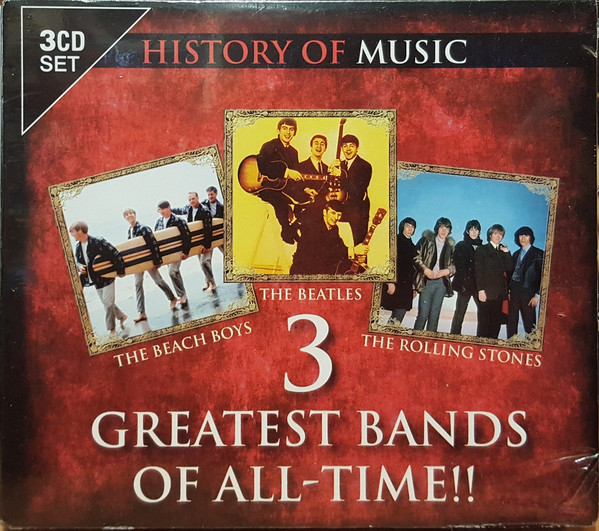
An argument put forth by Ashawnta Jackson, however, suggests that we don’t really consider bands like the Beatles, The Rolling Stones, and The Beach Boys great. By enjoying their music as much as we do, she writes, we’re just doing what we’re told. We don’t know any better. She appears to believe that the underlying reason 1965-69 bands are still part of the modern canon is a result of a multi-generational mass delusion based on an institutional, repetitive messaging. She writes that others chose this music for us, and we haven’t examined those who decided what music we are to enjoy well enough.    

The inference is that hundreds of millions of people throughout the world still love the music of these bands because everyone from the corporate types to the DJ’s constantly play them, and our parents and uncles and aunts have propagated this notion that we should continue enjoying listening to the music they enjoyed. This mass delusion is so entrenched now that listeners from all over the world, and from just about every demographic, now accept the fact that certain music “overrepresented in the 1965-69 era” is now considered so great we want to listen to it often. The cure, Jackson states, can be found “by examining the who chooses and why, the “dominant canon of the dominant” can be opened up as listeners reflect on their exclusions and “find their own ways off the beaten track.”  

Rick Moran’s piece counters that young people are falling under this spell too, as “[Media Research Center Sales data] states that “old songs” currently represent an astonishing 70% of the U.S. market.” Listening to music is often a solitary activity. Suggesting that those listed above do not influence our choices is foolish, but to suggest that it constantly influences what we stream in our cars, at our computers, and all the other times when we’re alone appears equally foolish. One might think that young people, who traditionally abhor everything their elders prefer, might be a demographic that Jackson could count on to put an end to these institutional decrees, but the data suggests they went and had their minds melded.  
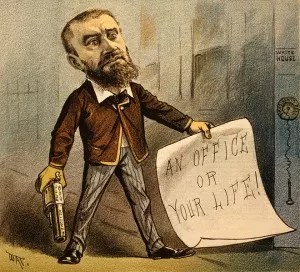
Guiteau Gets Garfield


“I am a Stalwart of the Stalwarts … Arthur is President now,” an assassin named Charles Julius Guiteau said after shooting the 20th President of the United States, James Abram Garfield in the back at the Baltimore and Potomac Railway station in Washington D.C., on July 2, 1881. (New York Herald, July 3, 1881).  

Charles Guiteau believed he played an instrumental role in the presidential election of James Garfield, and he thought the administration owed him a job. He believed he was a Stalwart, a hard working, supporter of the cause, and when the administration decided not to reward him for his efforts, he decided to shoot the president. He dressed the motive up later, saying that he was on a mission from God to save the party and the country, but the motive that drove him to borrow money for a gun, practice target shooting, and stalk the president arose because the president wouldn’t give him a job.  

There are no records of a meeting between Garfield and Guiteau, so there were no personal rejections, but Garfield’s Secretary of State told Guiteau to “Never bother me again about the Paris consulship so long as you live.” There are also no records of a direct relationship between Guiteau’s annoying persistence and the Garfield administration’s decision to end the practice of offering positions to Stalwarts, also known as the patronage or spoils system. Ending this practice, encouraged Guiteau to believe he should assassinate a president.  

Why did Charles Guiteau do it? What drove this man to want to commit such a violent? What was his motive? Inquiring rubberneckers of history want to know. We could say people just have a natural curiosity, but that would suggest that once we have our answer, we all walk away. We’re obsessed with serial killers, mass murderers, psychopaths, sociopaths, and assassins. We want to know what drives them to violence. 

Is our drive to find out what drove them all about intrigue, or do we have a motive behind wanting to know the motive? Who cares why a man kills people? Who cares why a man tries to assassinate a world leader? Some suggest that if we know the motive, we might be able to prevent future incidents of a similar nature. To do that, we need to understand the criminal mind. To do what? What if the violent perpetrator has no motive? What if he lies? What if he realizes that assassinating a president, because that president wouldn’t give him a job is a pretty stupid reason to kill a man? What if he invents a motive to assign some level of importance to what he did? What if the truth is that he always wanted to commit a random act of violence?  

Do we appreciate it when a killer provides a specific motive for his actions? Does knowing a motive provide us some level of comfort? Some accept the fact that someone shot a bunch of people, because a dog told him to do it. It’s better to believe that than it is to think that they did it because they just wanted to commit a random act of violence.   

In service to his Stalwart duties, Guiteau gave poorly attended speeches on candidate Garfield’s behalf. The audience to these speeches suggest Guiteau thought President Ulysses S. Grant was going to seek a third term. They thought he simply crossed out the name Grant and replaced it with Garfield. They said this because Guiteau accidently attributed Grant’s accomplishments to Garfield. The mentally unstable Guiteau still believed he proved instrumental in Garfield’s victory, and he wrote numerous letters to Garfield, and he visited the White House and the State Department numerous times, to argue that they should reward him for his efforts with a position in Garfield’s administration. When these efforts failed, the narcissist Guiteau decided he needed to assassinate the president to save his party and his land. 

“[S]aved my party and my land. Glory hallelujah!” Guiteau wrote in a poem he recited, as his last words before execution. “But they have murdered me for it, and that is the reason I am going to the Lordy.”  

Before the assassination attempt [Guiteau] wrote an “Address to the American People,” making the case for Garfield’s assassination. In his address, Guiteau accused Garfield of “the basest ingratitude to the Stalwarts” and said the president was on a course to “wreck the once grand old Republican party.” Assassination, Guiteau wrote, was “not murder; it is a political necessity.” He concluded, “I leave my justification to God and the American people.”  

Guiteau wrote a second justification for his planned assassination or, as he called it, “the President’s tragic death.” Guiteau, claiming himself to be “a Stalwart of the Stalwarts,” wrote that “the President … will be happier in Paradise than here.” He ended his note with the words, “I am going to jail.” 

Guiteau arrived at the station about 8:30. He felt ready for the job, having practiced his marksmanship on a riverbank on the way to his destination. Garfield entered the nearly empty station at 8:25 with Secretary Blaine and a bag-carrying servant. They walked several steps into the carpeted “ladies’ waiting room” when Guiteau fired his first shot. It grazed Garfield’s arm. Guiteau moved two steps and fired a second shot. The bullet entered Garfield’s back just above the waist. The president fell as the back of his gray summer suit filled with blood. 

After shooting the president, Guiteau tried to calm the onlookers, “It’s all right, it’s all right,” he said before the police officer on duty arrested him. 

“I did not kill the President,” Guiteau said during his trial. “The doctors did that. I merely shot him.” Though a laughable defense in a criminal proceeding, historians suggest that when used as a defense against execution in a murder in the first-degree case, it might merit some consideration. Esteemed historians, such as Candace Millard, author of the excellent Destiny of the Republic, suggests that if President James A. Garfield’s doctors did nothing, Garfield might have recovered. Her assumption is based on the idea that the doctors who attempted to locate Guiteau’s bullet were untrained in Listerian antiseptic methods that would be in widespread use a decade later. Historian, and Garfield biographer, Allan Peskin disagrees. He stated, “That medical malpractice did not contribute to Garfield’s death; the inevitable infection and blood poisoning that would ensue from a deep bullet wound resulted in damage to multiple organs and spinal bone fragmentation.” An autopsy identified the cause of death as a rupturing of an aneurysm in the splenic artery. 

In the hours after his arrest, Guiteau acted strangely. On the way to city jail with a police detective, Guiteau asked the officer if the detective was a Stalwart. When the detective replied that he was, Guiteau promised to make him chief of police. In jail, he balked at removing his shoes, complaining that if he walked barefoot over the jail’s stone floors “I’ll catch my death of cold.” When a photographer snapped his photo, he demanded a royalty payment of $25.  

Prosecutor John K. Porter demanded to know whether Guiteau was familiar with the Biblical commandment, “Thou shalt not kill.” Guiteau responded that in this case “the divine authority overcame the written law.” He insisted, “I am a man of destiny as much as the Savior, or Paul, or Martin Luther.” 

Guiteau approached his hanging with a sense of opportunity, but he eventually abandoned his plan to appear for the event dressed only in underwear (to remind spectators of Christ’s execution) after being persuaded that the immodest garb might be seen as further evidence of his insanity. 

The problem for Guiteau, as it applied to a first-degree murder case, was that he displayed the characteristics of malice and forethought. He stalked President Garfield, he practiced shooting the gun he purchased at a riverbank, and he abandoned a previous attempt to assassinate the president, because the president was with his wife at the time, and Guiteau didn’t want to upset the wife.  

The trial of Charles Julius Guiteau was what some call “the most celebrated insanity trial of the century” with many alienists (psychiatrists) debating whether Guiteau was sane. Many historians, and almost all neurologists, now agree that, by today’s standards, Guiteau was clinically insane. After Guiteau’s execution, public opinion on the issue of insanity shifted.  

Although modern and future readers, who sit in the proverbial jury room, might sympathize with some of the antiquated measures used to determine sanity in 1881, but they might also calculate some of Charles Guiteau’s premeditated calculations into the equation. Months prior to the 100-year anniversary of Guiteau’s assassination attempt (March 30, 1981), John Hinkley provided a case similar to Guiteau’s, as Hinkley premeditated his assassination attempt (on President Ronald Reagan), and he did not kill the president either (reagan would live 23 more years, but Garfield died 8 weeks after Guiteau’s attempt). We might consider a stereotypical clinically insane individual to act on impulse, but the more modern jury of his peers, declared Hinkley clinically insane, and he spent 35 years in a psychiatric institution before being released. Hinkley now uploads love songs on YouTube. 

Further Reading

Welcome to the Bruhniverse 


“It’s not bra, it’s Bruh!” Scott Greenlee said. “It has nothing to do with women’s undergarments. You have to add an ‘H’ to the end of it.” * 

Ask a Gen Z (Generation Z, born between 1997-2012) to Gen A (Generation Alpha, born after 2013) what they watch, and it’s all about YouTube. They might add Netflix with a sigh, and a few others, but YouTube is so popular among these generations that cultural observers call them the YouTube generation.  

So, if a kid you know uses some derivation of brother (bruh, brah, bro, bruvvy or bruv) you know who to blame.** 

The language some influencers (AKA hosts, talent, or content creators) use on YouTube involves an inclusive, exclusive way of truncating language to form an inclusive, exclusive path to a fraternal order. What’s the difference between these truncations of brother and man, buddy and dude? Short answer the differences are as common as the similarities, or “It is what it is bro.” 

We might consider their linguistic adaptations worrisome, as we fear no one will take them seriously, but linguists find nothing unusual about the derivations. Every generation makes subtle changes to the language to create something they can call their own. By defining how their audience should use the lingo they make language more interesting and individualistic. 

As with other generational terms of endearment, their inclusive exclusivity prohibits participation of other generations. Any attempts to participate, observe, or analyze their language results in a cringe, subsequent violations lead to derisive laughter, until they drop a “Stop saying that!” on us to try to prevent us from tainting the Bruh.

A linguistics professor at the University of Pittsburgh, Scott Kiesling, states there might be something deeper to linguistic adaptations. He suggests that the various forms of usage might also ease the transition into adulthood. “‘I’ve got [it] together,’ or ‘I’m going to get what I want and I don’t have to try too hard,’” Kiesling explains. “It’s almost like a swagger. I think about powerful men in suits, but sitting in a laid-back, relaxed way, because they don’t have to be in the job interview, sitting straight-up, right? Then this idea that I’m going to be able to just say things and they’re going to happen.   

“Basically, [using such terms is] just another way of “being in the club,” he continues, “which is most clearly indicated by knowing how to use it the right way. They’re all the kind of thing where you’re showing solidarity with a person. I kind of have a theory about how masculinity also has this valence of masculine ease. People talk about masculinity being associated with power, but it’s not just about trying to be powerful, but how easily it comes for me.” 

How hard was it for us to work our way through the complicated algorithms of youth into adulthood? What rhetorical devices did we use to form some sort of brotherhood with our peers? We weren’t concerned with overwhelming questions regarding what we were going to do for a living at that point. We just wanted friends, and to accomplish that we needed to learn how to talk like them. Making friends established a certain, unspecified level of confidence that led to a swagger that benefitted us greatly in life. If we could convince them we were confident, how far away were we from convincing ourselves?

How many successful people say, “If we can get out of our own way, we might actually become successful.” Doing something substantial in life might not be half as difficult as developing the confidence to do it, in other words, and the confidence that comes from language can be a powerful force in this regard.  

* The slang term Brah originated in Hawaii.    

** Bruv is a British truncation of their terms bruvver and bruvvy. 

Further reading on this topic can be found at: https://melmagazine.com/en-us/story/bro-brah-bruv-bruh-and-breh-meanings-explained