Everything from Z to A: How’s Life Treating You?


“Did you stop and smell the roses today?” Z asked.

“I smelled a lot of coffee,” A said.

“I ask that because I’m amazed by how many people fail to take stock of their lives,” Z said.

“I know it,” A said. “Life is a series of moments, good and bad, but how many cycle through the good in preparation for the bad? They’re onto the next moment soon after a moment.”

“Some of the times, they’re preparing for the next moment while in the moment,” Z said. “It drives me crazy. Flowers stress them out. “I need to buy a vase now that you gave me flowers. What vase would be most appropriate for this particular flower?” Did you know certain vases don’t highlight various flowers very well? I know nothing about flowers apparently. And if you don’t buy the proper pot for a plant why bother purchasing it in the first place? I have no idea about this stuff. I’m not ready for primetime. They don’t even smell the flower. They smile, and all that, to be polite, but they’re not there when they accept them. They’re in some place where this whole flower thing will somehow go horribly awry. They don’t live in moments. They worry about them.” 

“I’m guessing this is probably based on something from their past,” A said after mmm hmming Z through his description.  

“Oh it is. There are some matters from their past that lead them to constantly prepare for the future,” Z said. “The minute after they complete a project, they’re onto the next. There is no appreciation of a completed task. They’re onto the next one while they’re doing this one, and when they prepare, they over prepare. They do that because they want everyone to enjoy the moment, which is an admirable quality, but they forget to enjoy it themselves.” 

“They actually sound pretty normal,” A said, “and normal can be annoying, but it’s not as annoying as abnormal. My rule of thumb is if people don’t annoy me, they will, eventually, when I’m done digging deep enough. Your job, if you choose to accept it, is to find annoying flaws and determine if you can live with them.”  

“It’s probably a good rule of thumb,” Z said, “especially since I annoy the people around me by trying to find what might annoy me. Add to that the fact that I’m not getting better looking with age, and I probably shouldn’t be as picky as I am. Most men age well, I have not. I don’t know if I was ever attractive, but I’m pretty sure I’m not as good looking as I once was. Do you still find me attractive?”  

“I never did.” 

“Speaking of rules of attraction,” Z said. “Do you ever consider how lucky we are that our body continues to operate, at a healthy level, every day?” 

“I appreciate that more and more as I age,” A said. 

“All right, but you didn’t ask me the question I expected,” Z said with a smile. “Which is how does good health make us more attractive? Since you didn’t ask, I’ll just launch. Some people are just naturally better looking than others, but those of us in the mid-to-lower tiers look for indicators in a mate. The first, and most obvious,  are found in the skin and hair, but they’re so obvious that we make conscious decisions on who to date based on what we see in them. Our subconscious decisions focus on other, not so obvious indicators. A great set of teeth, for instance, are an unusual trait to seek, but we all do it in subconscious ways. We all love a great set of teeth, but how many people say I chose to date Amy over Teresa, because Amy has better teeth? And the indicators in her eyes and lips suggest greater hydration practices, and we all want to kiss a healthy set of moist lips, even if we don’t consciously make note of the difference, unless there are exaggerations.”

”I’ve never thought about it with that much focus,” A said, “but I’ll grant you that a person with healthy features is generally more attractive than someone who has something like frayed hair, and poor dental hygiene.“

“What about those people, and we all know one, who can eat anything, drink to excess and smoke, and they’re healthy as an ox?” Z asked. “I live with the notion that God is fair, until I meet those who watch what they eat, exercise 2.5 times a week, and then on Tuesday they come down with liver failure. “What the hell? How did that just happen?” we ask. It just does. It’s the cold water, cruel answer. We can go crazy when it’s our loved one, trying to figure out why, but the point blank, inarguable answer is that some of the times it just happens. What’s the difference? Why does it happen to some and not others? Is it all about genes and genetics, or is it some measure of luck that it doesn’t just happen to us?

“How many people do you know who’ve had their whole world upended due to some devastating malady and injury young in life?” Z continued. “It leads me to think those of us who woke up healthy today are a marvel of science. We’ve all heard the line that everything we do in our younger years catches up to us eventually, and some people abuse their body with food, alcohol, and drugs, but some don’t. Andy Kaufman claimed he didn’t have any vices in life save for chocolate ice cream, and he died of lung cancer at thirty-five. Thirty-Five! How did that happen? It just does. He said he never smoked a cigarette in his life. If that’s true, how unlucky is that? How many people die thinking it was the chocolate ice cream that caught up to them? Andy thought that. Why would he come up with such a ridiculous notion? Because he had no other explanation. He probably went crazy trying to come up with some answer to his devastating situation, and that’s what he came up with.”  

“We are lucky on the big things, the life and death issues,” A said, “but we’re also lucky with the little things. A friend of mine started getting ulcers that were so painful they affected his quality of life. He said he practiced good health before, but the ulcers made him a fanatic. How did they pop up in the first place? He and his doctor went over his diet, and they couldn’t find anything in particular. As you said, it just happens to some people. Others have earaches, toothaches, and all the other aches and pains that seem trivial until you’re the one suffering from them. You’re right though, some people abuse their body, and some don’t, but I’m inclined to think that the separation between good and poor health is something as unfair as genes. Those of us who aren’t suffering from some ailment based on genetic predispositions don’t know how lucky we are.” 

“Do we have a genetic predisposition to a chemical imbalance in the brain that results in depression?” Z asked. “I knew a guy who became depressed at fifty. As far back as anyone remembered, he was relatively normal, happy, healthy man. Then one morning, he didn’t want to get out of bed. He didn’t have a mind-shattering, life-altering moment that brought on the onset of depression. “It just sort of happened,” they said. The idea that it makes no sense to anyone, including his doctor, is frightening, because if it can happen to him why wouldn’t it happen to us? What’s the difference between him and us? How do we prevent it? Does it just happen to some of us, or are there years of neglect and abuse that lead to it? Is it based on age, a midlife crisis of sorts, diet, lack of exercise. We don’t know. They don’t know. They can’t pinpoint when the depression began, but one day, one month, or one year they find themselves either marginally or clinically depressed. If he experienced some indicators younger in life, we could use genetic predispositions to explain it, but why did the onset wait until he was fifty? 

“At one point in his decade long battle with depression, they had to switch his medication,” Z continued, “and they say that his reaction to the medication was such that he took his own life. Did the medication over balance one chemical, or fail to balance the way the first medication did? Is the whole process of balancing chemicals one that once we become more familiar with them, we’ll be able to regulate the stew better? Will further study of DNA and RNA help us understand it better? Is a high functioning liver genetic? What about the pancreas, and the lymphatic system? How do all of our systems work in harmony, day after day, to maintain good health?” 

“We have a miraculous machine no doubt,” A said, “and even though I believe the difference between good health and poor health has a lot to do with genetics, I question that too. I question it only because I’m overwhelmed by the idea of it. You mean to tell me that one of the primary reasons my friend died of lung cancer and I didn’t is based on the lungs the two of us received from our respective lineage? I’m not saying it’s wrong, but it’s difficult for me to grasp. I don’t know what I’m talking about in this area, and as I’m about as far from a geneticist as one can be. I understand how understanding our gene code better can unlock a number of these mysteries, but can it explain everything? Atheists complain that the religious use God, and His mysterious ways, to explain the current gaps in the explanations our modern science provides, but do modern scientists use the gene code in the same way? The science we have now suggests that genetics plays a major role in good health, but will we believe the same thing 100 years from now? Will future science embolden and strengthen this concept, or will future scientists laugh at our present reliance on DNA to explain gaps in our current knowledge?”   

“It’s way above my pay grade too,” Z agreed, “but what about those who do make that money? What do our current minds of medicine do to cure the body of its ailments? They prescribe pain pills to help us deal with the pain of healing. “No wait, I’m really hurting here, and all you’re giving me is a pain pill? I want you to fix my organ and get it working again.” Our best course of action, they say, is to let the body heal itself. But, I’ve seen supplements in drug stores that suggest that it can aid in restoration. “Those claims are mostly crap,” our doctors say. Our marvelous machine often heals itself better than the most brilliant minds of medicine can. They also know that it’s better for the body to heal itself. Healing hurts of course, and some of the times the best plan is to take pain pills that help us deal with that pain, and “call me in two weeks if the pain persists.” Relying on the body to heal itself doesn’t always work, of course, and when it doesn’t they go to the next course of action, but it works so often that most brilliant minds of medicine know that the best course of action is to simply sit back and wait for the miraculous powers of the human body to heal itself.” 

“We shouldn’t neglect the healing properties of water either,” A added. “My doctor asked me about water one time. “How much water are you drinking?” he asked. Now, I knew water was a good thing, and I tried to drink more of it for better health in a more general way, but he added, “It can cure what ails you.” I considered that a throw away line. I thought it was something he said so often, to so many patients that it didn’t have much meaning, but I know enough about myself to know that such lines will stick with me if I didn’t badger the doctor for more details.

“What do you mean water can cure what ails you?” I asked.”

“Well,” he said, “drinking enough water can cure muscle pain, it can make you feel better in ways that can aid in achieving better mental health, and it can balance out salt in the body.” He’s all about the word can, because he knows how much we love our absolutes and the resulting unrealistic expectations that follow.”

“Most of us have heard that cure-all stuff,” Z said, “and we all know that this simple element is the best prevention for dehydration, but how many of us sit back and think about the depth of a line like what your doctor said, it can cure what ails you. Drinking more water can promote greater wellness and prevent some of the debilitating conditions we’ve talked about today. When people talk about good health, they all go to food and exercise, you are what you eat and all that, but I drill down deeper to the fundamentals of good health, and laying at the bottom of that well is water and sleep. 

“Yeah, don’t forget about sleep.” A added. “Water and sleep. Body builders are always looking for that magic elixir to greater muscle development. They seek brightly packaged supplements that aren’t shy about selling their brand of nirvana. How many supplement stores do you have in your area? They’re everywhere. They’re like the stagecoach charlatans of yesteryear rolling into a town square to sell their miracle cures to unsuspecting customers. Are their claims entirely fraudulent, probably not, but they’re not nearly as over-the-top effective as they claim. I’ve heard some, who are not in the supplement industry, claim that you can throw most of those supplements and protein shakes out the window and get an extra hour or two of sleep for similar and sometimes better results.” 

“We would much rather buy good health than rely on fundamentals like water and sleep,” Z said. “Imon Point says, “I have a product that helps the muscles heal 30% faster after a workout.” “That’s interesting,” Mary Quite Contrary, interjects, “but did you know that my product has the capacity to also build muscle while aiding in the healing process? You simply must try my product.” I have product, do you have product? We want better health, and to get there we think we have to spend money on it, so we buy machines, products, and gym memberships.” 

“How many gym memberships are purchased and rarely if ever used?” A asked, nodding in agreement.

“It’s an incredibly profitable industry,” Z said, “because the no-shows do not put the wear and tear on machines that they would if everyone showed up. You would think that if people decided they were not going to enjoy the fruits of their membership that they would cancel their membership, but cancelation rates are extremely low.” 

“Because canceling a gym membership is like canceling your quest for good health.” 

“Exactly!” Z said. “My dad was an interesting character. He purchased a series of books on the lives of saints. They were leather bound and lined with gold flint. They were beautiful books. As a kid, I was not permitted to touch them. My dad didn’t touch them either. My mom said something shocking to him one day, “It’s not enough to own them, you have to read them.“ The fact that my dad repeated that line so often suggests that the thought never occurred to him. I think he thought to own them is to own them. I think he thought the purchase, and the careful preservation practices he employed made him more holy. My guess is he thought St. Peter would greet him at the gates with, “I saw that beautiful collection you bought on us. That must’ve set you back a couple paychecks. Come on in my friend.“ Gym members might be equally shocked to learn that purchasing a gym membership is not the key to good health. You have to use it.“  

“It is fascinating to think how much we complicate matters by trying to buy the products that promote greater health, better well-being, and some marketed form of absolute serenity,“ A said. “When if we just concentrated more on the age-old fundamentals, like drinking more water and getting more sleep, we might be able to cure more than we ever dreamed possible.”

“As with everything else in life, some of the times it’s not that simple,” Z said. “That’s the line you hear most often from complicated people who complain about complications. If you dare to propose to them that their complicated problem could could have a simple solution, they treat it like a personal insult. “It’s not that simple for me, I have an ailment that defies your age-old fundamentals. Trust me, I tried them.” Some of the times, it is more complicated, but some of the times, the solution is so simple that most people disregard it, because it can’t be that simple.”

“The complicated people who love to complain,” A said. “I know them well. I was raised by one. They might know as little about their problem as we do, but they know the wrong when they hear it. You spent your whole life complaining about various health problems, trying to make them appear more severe than they were. Now that you actually have a severe health problem, does it validate all of your complaints, or does it nullify them by comparison, and when you’re finally laid to rest, what are you going to talk about?” 

“In the absence of something to complain about,” Z said. “We will find something to complain about.” 
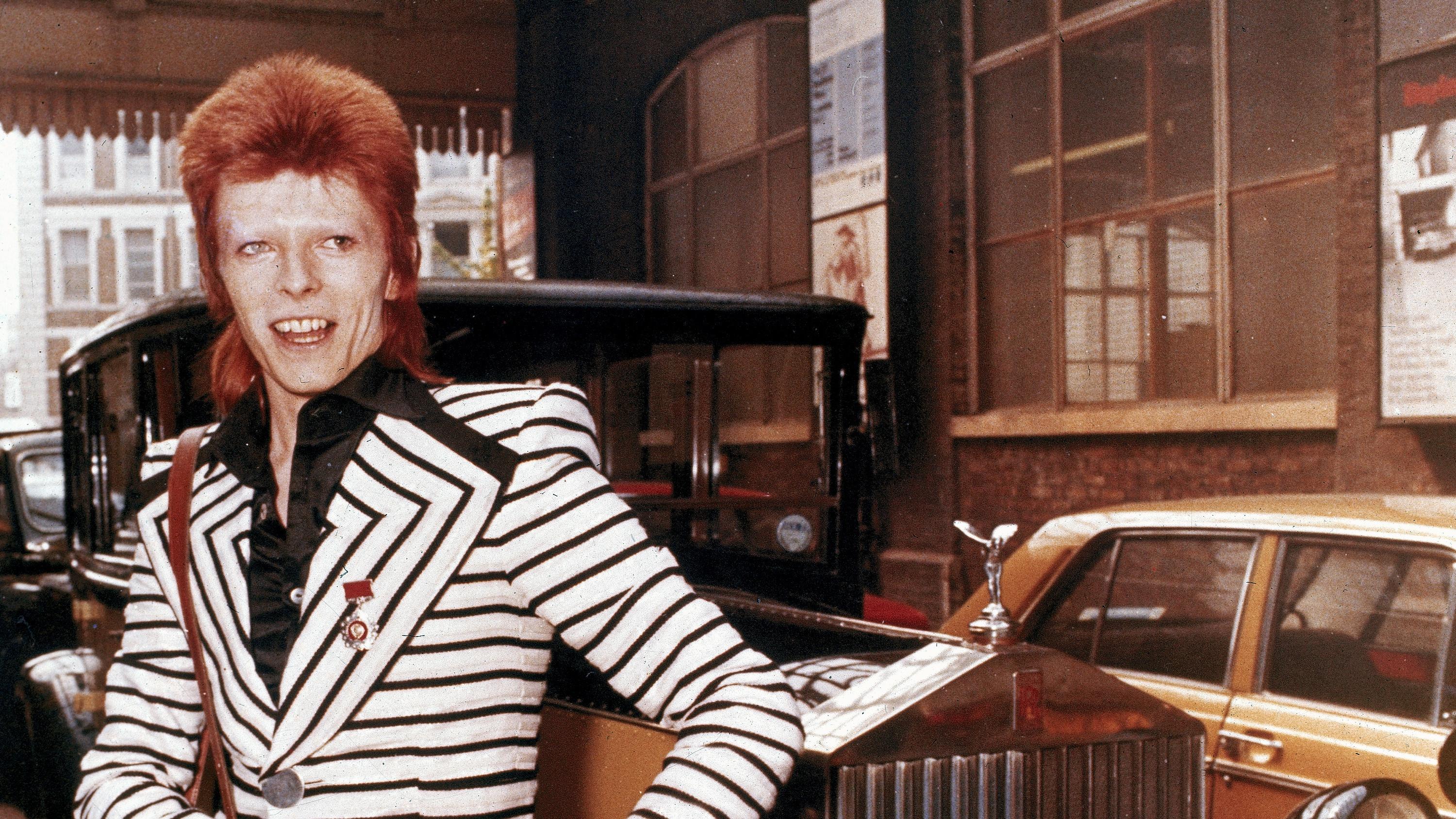
David Bowie was Just Too Weird


“He’s just so weird,” my mom said when David Bowie took the stage on a 1970s, variety show called The Midnight Special. Before the marketing teams learned how fascinating weird could be to us, being weird was not a good thing. We strove to avoid the weird, so no one would call us weird. I didn’t want my mom to think I was weird, I didn’t want my friends to think that, and I didn’t want to be seduced into thinking I could be weird if I watched him, so I shut it off. We writers love to rewrite our past to suggest that we were so hip that we were bucking the system at eleven-years-old, so we can fortify our artistic bona fides. I wasn’t. I was a normal eleven-year-old who wanted to learn how to be more normal, so other kids would like me, and my primary conduit to absolute normalcy was my mom.  So, when Bowie walk out onto the stage, I was floored by his appearance. My mom must’ve sensed how confused I was, so she quickly told me to turn the channel. I asked why, she said, “He’s just so weird,” and I turned the channel.

David Bowie was weird, there’s no point trying to argue, minimize, or qualify it. He even admitted as much, telling TV on the Radio’s Dave Sitek to, “Stay Strange.” Thanks to artists like David Bowie, we’re all a little weirder, stranger, and everything outside the mainframe. The typical narrative might depict me in front of that TV, experiencing an epiphany, with a “That’s me, mama,” explosion of excitement that she never could quell. It might just be me, but I needed to establish a solid foundation of normal before I could start exploring the weird, strange and just plain different avenues of my otherwise immature and fragile psyche. So, before we continue, let me send out a shout out to my mom for all the effort she put into giving me the most normal upbringing she could before I could explore the other side with more maturity. 

David Bowie feared he was a weird person at a very young age. He believed that he was susceptible to the schizophrenia that haunted his half-brother, Terry Burns. We can only guess that before he embraced the fears of falling prey to that mental disorder that haunted his mother’s side of the family Bowie sought the comfort of normalcy. This duality, as anyone who has worked their way through Bowie’s catalog can attest, would affect his artistic output.   

“I’m not so sure how much of it is madness,” Bowie would ruminate to Yentob. “There’s an awful lot of emotional and spiritual mutilation that goes on in my family.”

He was “too weird” for my people. He was even too weird for me when I was too young to fight that two-word condemnation. My mom told me he was “too weird”, and even if I had the moxie to fight everyone else, I couldnt fight her. I was too young to know how different I was, and even I if did, I wouldn’t acknowledge it, because I didn’t want to be weird. I wanted to have friends, and when my friends told me something was not only weird, but “too weird,” I backed away, into them, and their more comfortable groups.  

High brow, low brow, or no brow?

David Bowie shocked in an era that didn’t want to be shocked. Shock value was not commodity in Bowie’s peak years. The New York Dolls were shocking people in New York, Marc Bolan was doing it to England, and Alice Cooper and KISS were putting it to the United States, but shocking people was not yet part of an artist’s marketing package. Those guys tapped into a tongue-in-cheek definition of the weird, but it was all a part of their schtick. There was something unnerving about Bowie’s strain of strange that made it feel a bit more organic. When we saw it, we could tell he wasn’t having a laugh. It was a part of him, the alien part, and perhaps the schizophrenia part.   

Watch the shows of David Bowie on YouTube, circa 1972, and try to put yourself in that audience. It’s hard to do now, now that we’re so accustomed to performers playing around in the more customary borders of shock value now, but in 1972 Bowie had people actively avoiding him and his alien nature. 

Even after I made it past my mom’s “too weird” block, I still wasn’t attracted to him artistically. I thought he sang songs to make tons of money, become a rock and roll star, and then become a celebrity. All the power to those who do that, but it wasn’t for me. I thought he was the artistic equivalent of a beautiful person who is fun to look at, but doesn’t have much more to them. My attraction to his music is a love story, and to sum up that story, it wasnt love at first sight. It took him a long time to win me over, but I have been in a relationship with David Bowie’s music for about 30 years now.  

I already knew most of his hits by the time I discovered Bowie, so I wasn’t blown away by those songs. The genius of his deep cuts did not blow me away either, in the manner the Beatles’ deep cuts did. I don’t know how anyone else characterizes Bowie’s genius, but it wasn’t immediate for me. His subtle artistic creativity required repeated listens, until I found myself working through his constructs when I wasn’t listening to the music. 

I now liken listening to Bowie to sliding a foot into a great pair of socks. I’ve never met anyone who was absolutely blown away by a pair of socks. Slipping into a great shirt, and finding a pair of pants that fit just right can be mind blowing, but I never went nuts over a pair of socks, not when I slipped them on for the first time anyway. There are some socks that fit so well that when we put them on, they just feel like us, and we begin wearing them every day. When I began seriously listening to Bowie on a daily basis, I found philosophical artistry that fit me like a great pair of socks. Art is relative of course, and I’m sure some identify with Elvis Costello in the same ways, but I’ve heard numerous people recognize Costello for who he was in the music world for decades. Up until about the last ten years, very very few listed Bowie in their elite artists’ discussions. It didn’t affect what I thought of him, but I couldn’t understand it. The only answer I could come up with was that he was just “too weird”.

*** 

I appreciated Bowie’s reincarnation on MTV from afar, as a kid, but the Let’s Dance, China Girl songs seemed more like period pieces in the Madonna/Whitney Houston mold. Pop stars buy great songs from great songwriters, I thought, but a weird, music freak seeking deep, multi-faceted artists doesn’t dive deep into the catalog of pop stars like David Bowie. We wait until the radio stations play their singles. I thought David Bowie was just another good-looking pop star who bought great songs that were probably written by someone else. It was important to me, even back then, that an artist write their own music, because, to my mind, that was the difference between a star and an artist. I thought Bowie was just another 80s pop star who had a 70s catalog that I had no real interest in exploring, until an unusually perceptive friend of mine, named Dan, dropped this line on me.   

“This crazy, weird musical path you’re on all points to one man, David Bowie,” Dan said. 

David Bowie?” I asked with disdain. “The Let’s Dance, China Girl guy?” I couldn’t believe Dan, the guy who had a long history of introducing me to deep, powerful music, was now saying I should be listening to an 80s pop artist. I’d been on the other end of his “if you like those guys, you’ll love these guys” suggestion so many times that I always gave his recommendations a shot. Over the years, Dan proved to be one of the few people I’d ever met who knew more about music than I did, but he didn’t know “my music”. He introduced me to Miles Davis, King Crimson, and Frank Zappa in the past, and while I liked and respected those incredible artists, they didn’t reach me on that other, “my music” level.  

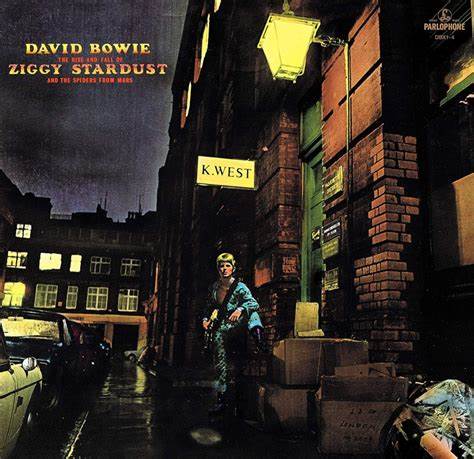
“I’m telling you,” he added, “Bowie is T. Rex, Hanoi Rocks, and Roxy Music, and that music is Bowie in a way that you won’t understand until you hear this.” He handed me a copy of a Ziggy Stardust and the Spiders from Mars (AKA Ziggy) compact disc. I’m not going to rewrite this section either and suggest that that compact disc glowed or that there was a sound equivalent to Heaven’s Gate opening when he handed it to me, but that is how I now remember it. “This is David Bowie 101, and when you start loving the alien, I’ll introduce you to other elements of the alternate universe he created.”  

I thought Ziggy was a quality album when I first heard it, but I couldn’t get passed the pop artist and “too weird” hang ups I had with Bowie. Those hang ups led me to think the single Ziggy Stardust was so immediate that it might be too immediate. After repeated spins, I started zeroing in on the other songs on the album, and I started dissecting them in the “parts are greater than the whole” mindset. Soul Love was the first song that nabbed me, and I put that song on repeat numerous times. At the end of that week, I forgot to return the disc to my friend. The music on Ziggy Stardust became “mine” in so many ways that I forgot the actual, physical disc was not. When he reminded me that I forgot to return his disc, I did and went out and bought one of my own. 

I was already a Ziggy freak by the time Dan suggested I listen to Hunky Dory and Diamond Dogs. I was hesitant, thinking Bowie might be a one-album wonder. After a couple weeks, I was hooked on everything Bowie. The “too weird” notions I had of Bowie began to fall away, and I stopped borrowing the discs from my incredibly perceptive friend. I bought them. I did something different with my Bowie-obsession than I did with every other artist to whom I became obsessed. I bought a Bowie album, and I inhaled it. I lived each album, until I knew just about every lyric and every beat of those albums. I thought there was something different to know, feel and experience on each album that I never had before with any other artist. Each album was so different that I could see what everyone was saying when they said he was too weird, but by this time, I recognized that I was a little too weird too, and I began to think David Bowie was singing about me. I listened to each album as an art enthusiast might when examining a painting, slowly ingesting every little nuance until they discovered what it meant to the artist.  

When my excitement to buy another album overrode my good sense, I moved onto the next album, only to discover I wasn’t as done with the previous one as I thought I was. Bowie, I realized, was one of the very few musicians who could have one foot planted in the pop world and another in the world of art. My peers told me the man was weird, “too weird”, and I listened. Soon after taking a deep dive, I regretted how much I missed by refusing to listen to him for so long. There are very few artists that affect me so much that I regret not listening to them sooner. I thought of all the years I wasted listening other artists when I could’ve been listening to Hunky Dory, Alladin Sane, and Diamond Dogs. I thought he could’ve changed my world just a little bit sooner back then, and I know that sounds silly, but the effect of his music on me was that profound. 

When I finally made it past the obsession, I had with what some now call the Five Years chunk of his catalog (Man Who Sold the World through Diamond Dogs), I graduated to his Berlin Trilogy; Low, Lodger, and Scary Monsters. We listen to music, albums, and artists for a variety of reasons, and I’ve had so many obsessions that I don’t have enough fingers or toes to count them, but there was something different about my obsession with David Bowie. We could label his music in all the pedantic ways, deep, meaningful, and spiritual, but that “not just weird, but too weird” characterization that influenced my refusal to listen to Bowie became the primary reason I listened to him in my adult years. 

Whereas most singers sang about love, sex, drugs, and rocking out, Bowie sang about estrangement, an alien nature, and various other themes we deem “too weird”. In places where an artist might go over the top, and be weird for the sake of being weird, Bowie displayed restraint. In places where an artist should shows restraint, Bowie went over the top. He could write a song that that would live on in the history of FM radio (Space Oddity, Changes, and Heroes), and on the same album he would leave a deep cut to cure our longing for great, weird, and offbeat music that only aficionados love (Alternative Candidate, It’s no Game (part 1), and Lady Grinning Soul). Bowie was the consummate artist who found a way to reach me as few artists could. Most music aficionados don’t intend to downplay the effects of hits, but most quality artists have some hits in their catalog. The difference between Bowie and most quality artists is that he spent as much time perfecting his deep cuts as he did his hits. He had a conventional side and an artistic side, as most of us do, but unlike the rest of us, David Bowie managed to cultivate his normal side, coupled with the “emotional and spiritual feelings of estrangement” from his mom’s side, and this duality led him to craft some excellent pop songs and some brilliant, “too weird” deep cuts. 

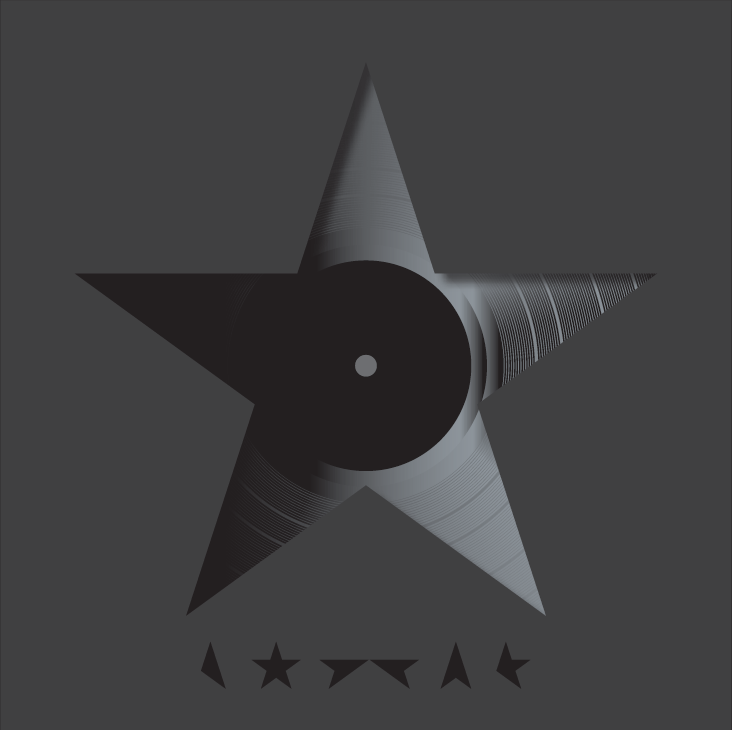
I started listening to David Bowie obsessively about 30 years ago, and I bought his new releases on the date of their release. I enjoy a majority of them, but Bowie captured magic in a bottle during the Five Years albums and the Berlin Trilogy. Hours…, Reality, and Blackstar were my favorite late Bowie albums, but they couldn’t compare to the great eight.  

Years before his death, David Bowie experienced something of a rebirth. All of a sudden, and seemingly out of nowhere, I began hearing his peers begin listing him as one of their primary influences. I heard one or two artists do this before, but not to this degree, and I was paying attention. Fans began listing Bowie just a bit outside the greatest artists of his era. They called him revolutionary, a pioneer, and all that stuff we’re accustomed to hearing now, but save for a few artists here and there, I didn’t hear the adoration society crown him in a way he richly deserved for most of my life. I’ve often wondered why, and how, this happened.

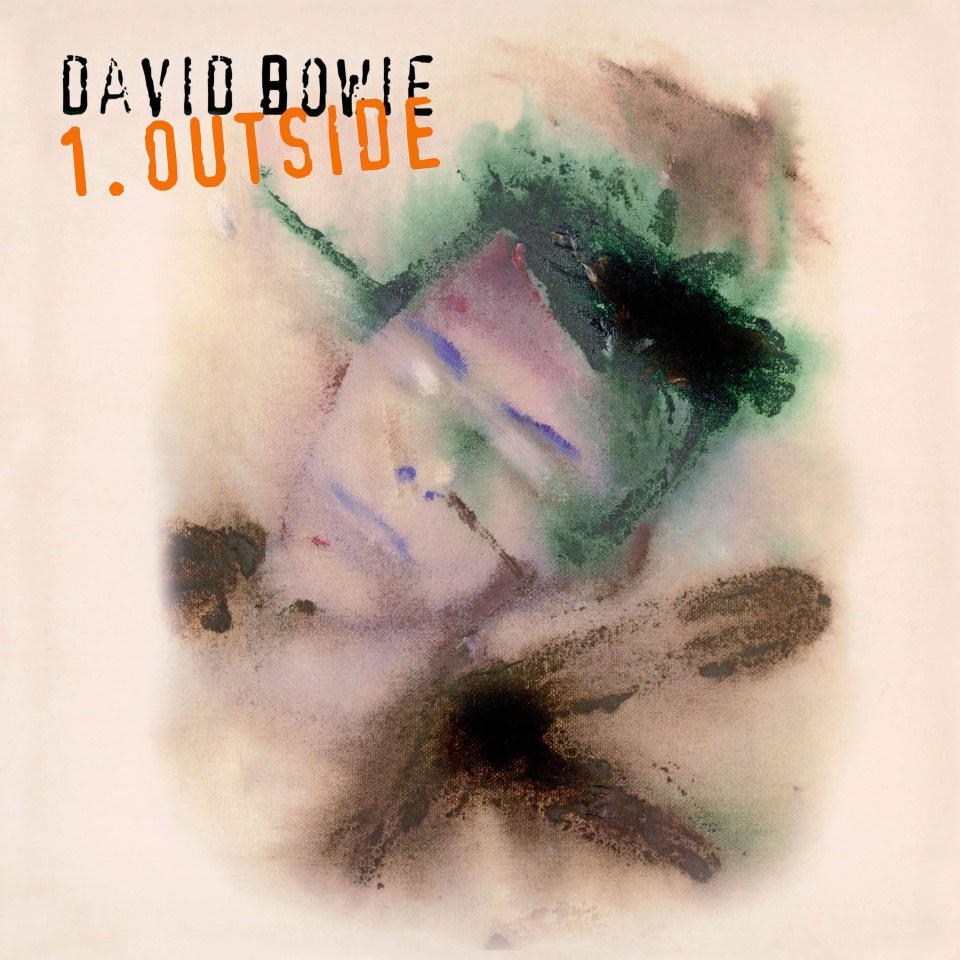
If an artist moves into the pulse of the zeitgeist after decades of being on the outer rim, we can usually pinpoint when and where this happened. The artist probably had that one song, movie, or another momentous event that put them over the top. Unless you consider Nirvana’s acoustic cover of The Man who Sold the World that momentous event, it did not happen with Bowie for most of his career. Some of the albums in the “back nine” (or in Bowie’s case the back eight– Outside to Blackstar) of his career were good, but they weren’t so great that they should’ve moved the needle on a retrospective analysis of his career. Before I get to the primary reason I think Bowie moved from just another artist putting out music to a cultural touchstone in the zeitgeist, there were years after 1980’s Scary Monsters and before 1995’s Outside when Bowie got lost in the artistic wilderness. Having said that, I don’t think Bowie moved to us as much as we moved to him in a cultural appreciation of everything he accomplished throughout his glorious career. I think we, as a culture, became more weird, or at least we embraced the weird far more in 2002 (roughly) than we did in 1972. As I wrote, I was already a Bowie fanatic by the time Heathen came out, but others were suddenly calling Heathen his best Bowie disc since Scary Monsters. I liked, and still like Heathen, but I didn’t think it was as good as Hours…. and I didn’t understand how everyone missed what I consider the Great Eight albums from Man who Sold the World and Scary Monsters.  

If you’re one who remains on the sideline for whatever reason, I suggest that you cast that cloak aside for as long as it takes to make an individual assessment of his material. My bet is that he reaches you on a level you’ve never considered before. Music, like every other art form, is so relative that his artistry might not appeal to you on the level he did me, but if you’re anything like me, you now know, as my friend Dan predicted it would for me, my definition of “my music” all goes back to Bowie.  

Other than providing me an excellent entry point to David Bowie, with Ziggy, Dan was notoriously poor at providing me an entry point to the artists he loved. To introduced me to Frank Zappa, for example, but he loaned me an advanced Zappa album that he loved as someone who had been listening to Zappa for decades. I eventually grew to love that album, but it took me a while. I needed to start at a better entry point to appreciate what Zappa did throughout his career. With that in mind, I thought about an entry point to David Bowie. I would compile the albums Hunky Dory and Ziggy into a playlist, and I would cut the songs Eight Line Poem and It Ain’t Easy (personal preference). Best of Bowie is another great place to start to learn the more normal side, as most people prefer normal pop songs, or hits, as a point of entry, and if you’re not familiar with those songs, it’s an excellent starting point. For those who know those the hits so well that they seek deep cuts, or songs beyond the hits, I’ve compiled a list of those songs that have made it onto so many of my Bowie playlists. Some of them were marginal hits in their era, but I still consider them so deep and meaningful that I had to include them.   

1) Alternative Candidate (It’s no longer on Spotify for some reason. It’s on YouTube though.) 

2) It’s no Game (Part 1) 

3) Lady Grinning Soul 

4) Sound and Vision 

5) Kooks 

6) African Night Flight 

7) Soul Love 

8) Dodo (This song is also not on Spotify. Here’s the YouTube capture.) 

9) Thursday’s Child 

10) Queen Bitch 

Everything from Z to A: Who are you? Who Who? Who Who?


“What would you say if I told you that I see you,” Z said after biting into a chicken sandwich he purchased at the food court, “and I know who you are.”  

“Oooo! Spooky intro,” A said with a laugh. “I’m going to say you don’t know me, because you don’t know the first thing about you.” 

“You’re right, of course, but what would you say if I told you I could find you without ever talking to you? If we put those you know any love through a series of tests, surveys to arrive at assessments based on observational data from a study of a sample size regarding their tendencies, patterns and routines, we might arrive at an evaluation that might surprise you.” 

“I would say that you’re so full of beans you stink!” 

“Want me to take a shot?” Z asked. 

“No, but who’s we?” A asked. “You said we. Who’s we? Wait, let me guess, Psychology major?” 

“Master’s degree.” 

“Of course.” 

“Oooo! That sounds confrontational,” Z said.  

“It is actually,” A responded. “But my confrontational response is a result of psych majors thinking they know the first thing about me. You don’t know squat. You take your textbook knowledge out to the streets to predict how we’re all going to act and react, but you don’t know the first thing about me. Psych majors think they can study tendencies, patterns and routines, and with some variance predict who I am and who I’m going to be. I just think it’s absolutely ridiculous.” 

“I view Psychology as the study of choices,” Z said, “and I’d agree with everything you say about the textbook approaches. I’m not a textbook student of the mind. I’m fascinated with creative approaches to problem solving and study. I try to avoid textbook as often as I can. I, slash, we study the choices people make, why they make them, and the rewards of consequences of them. If you don’t care for the methods we’ve devised for studying human nature, how would you do it?” 

“I wouldn’t,” A said. “I would consider it an utter waste of time. With the world population currently clocking in at just under 8 billion, and the United States at 328 billion, I wouldn’t even pretend to know anything about anyone. There are simply too many people, with too many different backgrounds and experiences in life to know any one person.”  

“Research scientists take a sample of the population, and they factor in a plus minus ratio for margin of error,” Z said. “Now, you can argue the sample size, but with that many people in the world, how can you say you’re immune to their findings?” 

“How can you say I am not immune?” 

“You see that guy over there eating a slice of pizza?” Z asked. “Did that guy sample it first? If he sampled it, was it a decent representation of the rest of the pizza?” 

“I’m not arguing methods of operation,” A said. “I’m arguing about the assumptions psych majors make.”  

“Let’s flip this around then,” Z said. “What do you think of the guy eating that pizza over there?”  

“All right, I’ll play,” A said, agreeing to this exercise after some back and forth. He turned to look at this pizza-eating man in the food court they sat in, and then he flipped completely around to examine the man.

“What are you eating, sir, and what are you eating?” A whispered loud enough for Z to hear. “I love pizza as much as the next fella, but are any of those ingredients real? Does the meat on it even merit a grade? And what are you eating? Are you eating some form of pain you could never digest properly? Did your dad tough love you into a man? Are you eating those times your mother told you that you were too old for hugs and kisses? Are you eating that time you walked up to a girl and she said, “Move along!” A guy that pale should not be wearing a bright, neon yellow T-shirt. The fella needs to contrast his skin with dark colors. Then you have the baggy khaki shorts, and the three-day growth, and you have to assume the man is a divorcee dining with his estranged kid. No wait, the child is an out-of-wedlock birth. That’s my guess, because his father obviously never had a wife influence the appearance he should present to the public. I’m guessing he gave up making discerning choices long ago, and he has issues with self-discipline.” 

“I know you’re trying to be funny here, but you just told me a lot about you,” Z said. “I have no interest in whether you’re right or wrong about the pizza-eater. I have no interest in the pizza-eater at all, except what you say about him, because it tells me something about you. Hold on, hold on, let me finish,” Z said to interrupt A’s grumbling. “This particular pursuit suggests that if I ask you direct questions about you, you’re going to give me idealized answers. You’ll either say what you think I want to hear or what you want to say about yourself. Your analysis of Mr. Pizza-Eater tells me more about you than I could ever achieve through direct Q&As. All analysis is autobiographical.”   

“And you think this is an exact science?” A asked. 

“Of course not, but why did you focus on those characteristics of the pizza guy?” Z asked. “What is he eating, and what is he eating you asked? What are you eating? What assumptions did you make about the man’s plan in life through his diet and his desire to ingest his pain? You assume this man might have a better life if he had a better diet, a wife, and if he shed the yellow shirt and baggy khakis. What does that say about you? It’s not an exact science, but it’s a lot closer to a truth than if I said, tell me about yourself. What makes A tick? What are your strengths and weaknesses?

“I was hired as a consultant some years ago,” Z continued. “I sat in on some interviews they conducted, and they asked me to determine how they could interview prospective candidates better. Most of the interview involved in-house questions, and then they asked the standard what are your greatest strengths and weaknesses question. I suggested that they flip this question around and ask the candidate to name their favorite manager and what made them a great leader? They should then ask the candidate who their least favorite manager was, and I said they should inform the candidate to avoid using names in this case. I said that demanding that the candidate avoid using names would free the candidate up to be as candid as possible in their critique of that manager. They could add a question like, “What did they do right, and what did they do wrong, and how would you do better?” I suggested that might throw the candidate off the trail of the true nature of the question, but the meat of their answer will be can be found in their analysis of their previous managers. All analysis is autobiographical.”

“That’s not exactly groundbreaking, but I’d agree with some of your analysis,” A said. “Only because your preferred form of testing gets closer to the subjects analyzing themselves, even if it’s incidental, but if I were in charge of a research group, I would go one step further. I would study group C, the interviewers, the Human Resources department, or whomever designed these questions. What questions did they design for the interview, why did they choose those questions? I would also interrogate my interviewers before they conducted the interview to see how well they know themselves. How well do any of us know ourselves? Noted psychologist Abraham Maslov suggested that around 2% of the world population practices rigorous self-reflection. In my experience, I think that number is high. Psych majors love to study others, but they’re not so great at studying themselves. How can anyone know anything about anyone else without knowing themselves first?” 

“I know myself,” Z said. “I know myself better than anyone else in the world. Why would I spend time understanding myself better? Isn’t that a little narcissistic?” 

“True reflection goes beyond narcissism,” A said. “You’ve no doubt heard people repeat the ‘You can’t handle the truth’ line? And you’ve heard people say, “They don’t want to ask me questions,” and the ‘they’ in their statement often involves an employer, or someone with some intimate knowledge of their particular brand of honesty. “They don’t want to know what I think, because they know I’m too honest. I am brutally honest.” They usually laugh after saying such things, in some self-congratulatory way, as if to say we all know how brutally honest they are. “Well, you may be brutally honest,” I say, “with others, but are you as brutally honest with yourself? Have you taken the time to sample size of your actions and reactions in the same way you do others?” 

“We all examine ourselves to some degree,” Z said. “We all think about the things we do, and we all examine ourselves.” 

“I’m talking about rigorous examination,” A said. “I’m talking about knowing what’s your fault? You’re not doing well in life, and you’re not happy. How much of that is your fault? You’re not getting along with your parents? How much of that is your fault? How many people fail to recognize their role in something as simple as a family squabble? I’ve witnessed family squabbles where my friends knew, absolutely knew, they were 100% in the right. 

When I was young and stupid, I’d ask them, “How can you not see your role in this matter?” I learned from that, let me tell you, I learned. I learned, first and foremost, never to ask that question again, because it opens a whole can of, “My parents, my Aunt Judy, or my Uncle Biff, are awful people,” they say. “Do you have any idea what they’ve done to me? Do you have any idea what they’ve done to me in the past?” I don’t do ask them this anymore, and I involve myself as little as possible now, because it’s pointless. Because when you’re intimate enough with the situation to know their role in the family squabble, you learn that most people don’t consider the role they play in it. I now know that I was around 50% responsible for just about every family squabble I was in. They don’t see it. Are they lying? No, they’ve just  completely blocked that part of the squabble out.”   

“What good does it do to dwell on our negatives?” Z asked. “Isn’t it better to move past them and forget them?” 

“How do we learn from our mistakes?” A asked. “What happens when the next family squabble arrives, and we’ve learned nothing?”  

“There is that of course,” Z said, “but we’re finding that in the debate between remembering and forgetting that Freud was just wrong. Focusing on our failed moments to the point of obsessing over them, to find some kind of truth about our current state is often more harmful than just putting the whole sordid affair behind us and moving on.”  

“I’d agree with that,” A said,  

“Thank you, Jesus.” 

“If you’re going to analyze me though,” A continued. “I expect you to thoroughly analyze yourself first. If you’re going to pretend like you know me, I ask you if you know yourself as much as you pretend to know me. I will no longer accept analysis from someone who has failed to analyze themselves properly.” 

“That’s a bold statement,” Z said. 

“Well, let me ask you this, what is a psychiatrist, psychologist, or any professional analyst?” A asked. “If we dig down to the nuts and bolts of these professions, what are they? Some of them provide technical, textbook answers, others act as our friends who guide us to therapy, but when we clear all that out, what are they? They’re listeners. The best of the professions just let their clients talk. They’re great listeners in a world where no one else listens. They teach us how to analyze ourselves and they try to teach us how to help ourselves by viewing matters more objectively. If we can learn how to achieve that level of objectivity on our own, when we analyze ourselves, we could nullify the need for analysts. I’m not saying it’s easy. It’s quite difficult to achieve objectivity when it comes to examining ourselves. Some say it’s utterly impossible, but I think they’re thinking in absolute terms. Is it possible to be objective in an absolute manner, probably not, but we can make great strides if we want it bad enough. That’s the key, Z.”     

“In one sense,” Z said. “We should all take some compliment from a research scientist’s desire to study us. People want to know who we are. They want to know what makes us tick. They’re curious-” 

“They’re not curious,” A said. “Let’s not get nuts here. I know your goal is to have a civil conversation here, but I gotta tell you that if you want us to go down this road together it will not be hand in hand.”    

“It’s obvious you’ve had some bad experiences,” Z said, “but the idea that you’re insulted by someone analyzing you in a casual way is a bit much.”  

“I’m not insulted by it,” A said. “I just consider it ridiculous. When we sit down in a research clinic and voluntarily subject ourselves to their findings and evaluations, I have no problem with it, but when psych majors think they know who we are after talking to us over our backyard fence for ten minutes, it gets a little silly. I’m talking about the people we meet on the street, in our place of employment, and at family reunions. They have degrees in psychology, and they have their little knowing smiles that suggest they have some insight into who we are.” 

“And you think they’re all wrong?” 

“Of course not,” A said, “but I think they’re wrong almost as often as they’re right, which puts them about two steps above a guess. It’s what we might call an educated guess.”   

“What is an educated guess though,” Z said. “Some are based on anecdotal experience, I will grant you that. The over-the-backyard-fence psychologists making guesses is one thing, but some educated guesses are just packed with a portfolio of data. There’s the educated guess that you’re on the insecure side, and that many of the things you’ve said today support that. That educated guess is worth about as much as the person giving it. There’s also, hold on, hold on, let me finish. There’s also the assessment that a psychologist can make, based on where you were born in your family. Where you the oldest child of your siblings? Were you an only child? If you were the oldest child, you’re more likely to exhibit certain characteristics, if you were a middle child, you often exhibit middle child, Jan Brady characteristics, and if you were the youngest, you’re likely to exhibit other characteristics. Psychologists pack those educated guesses with decades of sample data. There are too many variables to list here, and they all matter, but the characteristics of where a child was born in the family are so consistent that some psychologists suggest that it might define you for the rest of your life. That’s an educated guess based on studying patterns and tendencies that I find fascinating.”  

“It is an interesting idea,” A said, “but it’s still just a theory, and all theories are guesses, some more educated than others, but they’re still just guesses.” 

“And Einstein made some guesses too,” Z said.