The Unfunny Comedian II: Howie Mills


“That bit you did about being cut from your high school gymnastics team because your testicles weren’t big enough was something son,” Howie told Barry. “Is it true?”

“No,” Barry said. He felt a warm glow for the compliment, and he considered the backstory almost as funny. “I-”

“Shht, don’t tell me the story behind it,” Howie said, cutting Barry off. “Let me live the line.”

Was that a compliment? Barry wondered, as he sat on a windowsill next to Howie, waiting for another comedian to join them. If it was, what an odd, backhanded compliment Barry thought. Let me live the line. Barry didn’t receive too many compliments, so he soaked it in for a moment.

Barry returned the compliment by reciting some of Howie’s best lines, and Howie was somewhat receptive but mostly dismissive, saying, “I’ve been doing this a long time son.” The man called Barry son from the moment the two of them met backstage when Barry was all but fawning over the man, but the manner in which he addressed Barry didn’t feel old world. As Howie continued to do it, it began to feel more and more familiar. Let me live the line might’ve meant that Howie wanted to digest it to use it in his own act, Barry supposed, as he told Howie what he was doing, going around the country, and if that’s the case then it might be the ultimate compliment. Barry flirted with the notion of coming back to Chesapeake Bay for Howie’s the next second Tuesday of the month just to see if the man lived the line well enough to develop material around it.

Howard Mills performed in Chesapeake Bay, Maryland every second Thursday of the month. Barry caught the man’s act in the brutal cold month of February. Howard Mills wasn’t hilarious, but Barry considered the man’s act original. He wanted to know more about Howard, so he sought him out after the show. Barry rarely sought out other comedians after a show. He was the newbie so he felt awkward crossing that boundary with a more veteran comedian. He often let it happen in a more organic fashion. Barry was always one of the first acts, and he would watch every one who followed him, and wait for those who gathered after the show. After the show, the performers often gathered to eat good, inexpensive food that one of them knew.

In just about every hamlet, town, and city, the comedians and other performers, loved “after the show” conversations. Most comedians romanticized comedians like Jay Leno, Jerry Seinfeld, and Dennis Miller, and anytime those comedians gathered, they always talked about the after show conversations they had in previous eras. They would usually find some local dive someone said served something delicious. When Barry sought Howie out after the show, Barry expected the man to drop pearls of wisdom on Barry, but in that regard he was disappointed. As with most funny people Barry met, Howie was relatively quiet and somber off the stage. 

“I’ve done a number of shows now,” Barry added, as if to change the subject in his own mind while concluding the subject of their conversation, “and I’ve never seen an unsung comedian as funny as you are Mr. Mills.”

“It’s Howie, son. It’s just Howie,” he said, “and thank you. I really enjoy doing this. Preparing material for these little show keeps me on the straight and narrow.”

“What’s the straight and narrow?” Barry said. “I don’t know, but it’s better than the curvy and wide. Trust me. Been there. Done that.”

“No,” Howie said. “I appreciate the effort, but no.”   

When Angela, the other comedian Howie invited to join them, exited the bar, Howie and Barry stood up to join her at the local coffee and eggs diner. They introduced themselves, and they all complimented one another on their act, as they walked across the street to the little diner.

“If we go in there,” Howie said after Barry reached for the door for the diner, and before he could touch it. “Let’s just get coffee. I have farm fresh eggs and bacon at my house, and you’re both welcome to it.”

Angela and Barry looked at one another. Angela pumped an eyebrow at Barry, and they both looked back at Howie.

“There’s absolutely nothing wrong the eggs and bacon here,” Howie said, “but they’re not farm fresh. I can’t eat anything else now.”

“I don’t need coffee,” Angela said.

“Me neither,” Barry said.

The three of them talked about their favorite bits and routines through the years, as they worked their way through the grid of Chesapeake Bay to find the paid parking lot where Howie parked his car every second Tuesday of the month. This long walk annoyed Barry, because he was freezing. It was the middle of February, and they were on an endless trek for a car. Barry decided he made a huge mistake not going to that first diner, where it was all warm and toasty. 

Howie mentioned the comedy album he cherished when he was younger. “The Button-Down Mind of Bob Newhart,” he said. “I listened to that album so many times that I memorized it. I know the jokes so well that I even have the tones and pauses down. It’s the reason I do this,” he said. Howie then listed off other old-world comedians Angela and Barry knew who, he said, laid the groundwork for the comedians we all know and love. “He doesn’t get the credit nowadays, but there was a day when Newhart was the king of comedy.” He listed off other comedians who didn’t receive the credit they deserve, but Howie mostly spoke of unknown comedians who never made a dime outside Chesapeake Bay. 

“Sam Kuhnz was my favorite,” Angela said, “but he wasn’t a local. He was from Chicago.”

“Oh, that’s right. I knew that.”

“Sam Kuhnz strolled through our town and just ripped it apart,” she added. “That guy was so good that everyone who saw him saw it. Sam saw it too. He had a timeline all mapped out in his head. He thought an appearance on Letterman or Leno was just around the corner for him. He worked his routine out every night, kind of like you Barry, going to strange, small places around the country. He did that stream of consciousness style riffing, like you. He told us about how he just laid audiences out in Vegas, got a request for a return to NYC, and he just got done ripping Chicago apart. Then, he hit a delay in his timeline, a holding pattern. I don’t know what happened, and either did Sam. He rewrote all his best stuff over one hundred times, and he did a greatest hits package of his best routines. He took the bits and pieces that all worked, and he put some quality minutes together, but it just didn’t pan out over the course of two years. He got impatient and really depressed about it, and then Sam Kuhnz took his own life. I think about him almost every day. Still the saddest thing I’ve seen in comedy.”

“That’s what you need Barry. You need to ‘greatest hits’ your routine,” Howie said to Barry. “I love the riff thing. You’re trying to keep it fresh, I get it, but you need to keep notes on what works best and put together a greatest hits bit.”

“I have notes on what works and what doesn’t. I have just about every minute of every routine I’ve done written down,” Barry said. 

“There you go.”

When they finally arrived at Howie’s modified Charger, they found out why he paid to have his car parked. “It’s worth it to avoid some idiot door dinging it, keying it, or worse,” he said when Barry asked him about it. The Charger was immaculate, and Howie drove it faster than any senior citizen Barry ever met. The three of them attempted to speak, or Barry did anyway, but Angela and Howie couldn’t hear him over the sound of the Charger, and they found his attempts to speak over it hilarious.

The farm fresh eggs and bacon, and the fresh squeezed orange juice Howie didn’t mention were as advertised. “Maybe I was hungrier than I thought, but these were about the best eggs and bacon I’ve ever had. Thanks Howie!”

“You’re welcome son,” he said. “That must be Nebraska to be that grateful.”

“I’ve heard that.”

After they finished the meal, Howie said, “I’ll let you two clean up. I’m beat.” He then retired to his bedroom.

Barry laughed a little watching the man walk down the hallway.

“This is his home?” he whispered to Angela. “We don’t even know this guy, and he doesn’t know us. Isn’t he afraid we’ll steal something?”

“What’s he got to steal?” Angela said. “He’s a lonely old man.”

“All right, but you have to admit this is odd.”

Angela shrugged.

“Should I go remind him that he drove us over here?” Barry said. “Should we call a cab? What do we do here?” he asked with a bit of confused laughter.

“We clean up,” Angela said. She stood, walked over to the oven, and untied the apron off the handle and put it on her waist. She removed her plate and Howie’s and put them in the sink. She then moved to Barry’s plate, but he stood before she could. He grabbed the other apron on the oven handle, and he helped her wash them. 

“You do good work Barry Becker,” Angela said after he placed the final dish in the retainer to dry. When he turned to reply, she was in his comfort zone. He didn’t see that coming. He instinctually backed up a step and kicked his back heel against the oven’s aluminum bottom drawer. The hallow, aluminum clang could be heard throughout the house, Barry was quite sure. Angela didn’t laugh, and her smile was a warm one that proceeded an investigatory, small peck on Barry’s lips. Was that gratitude, Barry wondered, was that payment for a job well done? Before he could arrive at an answer, she was on him, kissing him.

The next morning, they had the more farm fresh eggs and bacon and fresh squeezed orange juice. This time Angela prepared them for Howie and Barry. They ate it on TV trays in the living room, silently watching a gymnast perform on the still rings.

“Look at the testicles on that one son,” Howie said, speaking through a mouthful of bacon.

 Son? Barry thought, Why is he still calling me son?

“That’s some huge ratings right there,” Howie said. “If you had a unit like that, you probably would’ve made the Olympic Team. Yours couldn’t even make the high school team.”

“Dad!” Barry said impulsively. The tone he used suggested he was embarrassed before Angela by his father’s comment. He figured this was some sort of improvisational act Howie was playing, and Barry didn’t mind playing along. After saying it, however, he looked over at Angela in the din of uncomfortable silence that followed. He measured her reaction, then Howie’s.

“I tried to tell you to pursue augmentation,” Howie answered, “but you had to stay natural. You think those are natural son?” he asked pointing at the gymnast on the tube.

“Barry is well-equipped to handle most situations Mr. Mills,” Angela chimed in.

“I tried to tell you to pursue the career as a jockey,” Howie said. “It’s a career more suited for a man of your … limitations, but you don’t listen to your old man. You never listen.” Howie added looked over at Barry after saying those last three words. His eyes were steely, loaded with condemnation. 

Barry laughed at that, but Angela and Howie weren’t laughing. Howie wasn’t even smiling, but Angela was. She smiled at him proudly, but offered nothing else. Howie turned back to the gymnastics broadcast, forking eggs into his mouth. Angela put a hand on Barry’s back, and she patted his back to console him, while looking at Howie with some unspoken grievance.

What is going on here, he thought, weird doesn’t even cover it. It’s an act. This whole thing is an improvisational act. Barry thought of calling this whole production out, but he didn’t know how extensive it was. He assumed Angela was the butt of the joke at first, but the climate of the room switched to the point that he thought he might be. If there is a butt, Barry thought. Is there a butt? Is this an improvised joke? Do you guys know each other? What’s going on here? Then it struck him. “Let me live the line,” Howie said back when they were sitting on the windowsill waiting for Angela. Are we living that line, the line? Am I living the line right now? I don’t get it.

“What doesn’t make sense in this life, might in another,” he thought, remembering the quote from his fellow comedian, Shell Cieslik. Whether he was ever able to make sense of this situation, he decided it would always be unreasonable. The question Barry asked himself, based on the George Bernard Shaw quote was, should I adapt myself to their unreasonable world, or should I force them to adapt to my more reasonable one, if … if all progress, as Shaw said, depends on the unreasonable man? Does the reasonable man travel around the country doing nightclubs and festivals? Is that why I was attracted to Howie? Is that why they’re attracted to me?

He thought of talking about it with them and investigating it based on the Shaw quote, when he looked at his phone.

“Holy crap! I gotta go,” he said downing the remnants of the fresh squeezed orange juice. “I’m sorry to cut this short, and thank you both for the delicious meals, but you gotta give me a ride back to my car.” As was often the case with Barry Becker, further analysis would have to wait. It was Friday, and he had to return to his hotel room, his laptop, and his job as a fraud analyst.


Embrace the Weird


Dan Elwes was a weirdo, we all were, but so was Stanford Days. We were all coming up with so many weird jokes, stories, and ideas that most of them got lost in the noise. Dan topped us all one day. He came up with an idea was so preposterous and absurd that some of us thought he might be brilliant, in a twisted, that-will-never-work, but what kind of mind comes up with such an idea, way. The reactions were varied, but the one thing we all agreed on was that no normal mind could think up such an idea. Then someone added that an abnormal mind wouldn’t come up with that idea either. “Seriously,” he said. “They might think it, but they’d never say it. They’d be afraid that the rest of us might know how abnormal they are.”

Weird-Americans have come a long way in the past couple decades. If a weirdo said something weird in the past, it could be a death sentence for them in some social circles. People would give them “that” look that would dismiss them from all future conversations. Thanks, in part, to the comedic stylings of weirdos like, Andy Kaufman, Peter Sellers, Chris Elliot, and David Letterman being weird is now more accepted. Those who used to dismiss weirdos as outcasts began to see them as creative provocateurs, but even the weirdest weirdos know that there is a difference between weird and strange and the just plain different.

Weirdos spent their high school years trying to put all of the unusual ideas, fantasies, and eccentricities of their youth behind them. We wanted people to laugh with us, not at us. We wanted them to take us serious, so they would like us. When we failed, we realized that we could only conceal who we were for so long. When we came together as adults, working for a company on the ideal shift for outcasts, the overnight shift, it didn’t take long for us to find each other and bond. Our time together didn’t last long, but we enjoyed it so much that we still talk about it.

We were a tight-knit group of the ostracized rejects who never fit into groups well, until Stanford Days joined us. When we first met him, we thought he probably should’ve signed up for the day shift. He was so normal there was no reason to notice him. He read books from the best-seller list, and his idea of good music was limited to what sold well. “You think your music is better than mine? I’ll have you know that this particular star,” he said mentioning the star’s name, “sold millions more copies with their last album than your favorite band has sold in total.” He quoted Lord of the Rings and Star Trek. He used math and science to make sense of the world. Yet, he didn’t fit in with the mathematical crowd, because he was too weird. He didn’t fit in with us, because he was not weird enough. He was an uncomfortable man, uncomfortable in his own skin, and it didn’t take a keen observer to see that he sought normalcy to quiet whatever vortex he had swirling around in his head.

The more we learned about Stanford Days, on those overnights, the more we thought the story was about him. Yet, he was a guy who was there, nothing more and nothing less than there. His path to being there ended when the management decided to shift our seating arrangement, and he ended up sitting next to Dan Elwes. 

Dan was the complete opposite of Stanford Days. Dan was the type a Stanford Days often loathes, because everything seems to come so easy to them. Dan loved to laugh, but everybody loves to laugh. Dan laughed so hard, so often, that some thought he might be simple-minded. Dan also wasn’t afraid to let his freak flag fly. He was everything Stanford wasn’t. Dan enjoyed being a freak and a weirdo in a way few do and he used to say different, weird, and strange things to pique our interest in a way that left us thinking he might be the story.

As anyone who has ever been in a corporate office, with no walls, knows your desk neighbor can become one of your best friends for as long as that particular seating arrangement exists, and when management put Dan next to Stanford, he took a shine to the man. Dan Elwes had an influence on all of us, but his most profound influence was Stanford, and Stanford found himself a member of our clique, thanks to Dan.

We had no problem with Stanford, but he didn’t seem to be a good fit for our clique. He was so normal that we suspected he studied the habits and mannerisms of the normal to convince others that there was nothing weird, strange, or just plain different about him, and we figured he probably would’ve succeeded if he didn’t get all caught up in our cliques effort to outweird one another.

Thinking back on the normal world, Stanford Days built for himself, it had to be a dilemma for the man when he started seeing us let our freak flags fly. He probably always wanted to do it, but he spent most of his life concealing that desire. We don’t know how much thought he put into it, if any, but he began saying things to fit in with our clique’s attempts to outweird one another, and he won, and he silenced the room. The things he began saying were so weird that they didn’t fit even fit in with the weirdest people you’ve ever met. When Stanford finally let his guard down, it put what Hank Hill would call “extra stress on a structure that wasn’t up to code in the first place.” 

We thought we were abnormal weirdos, but we were just having fun being unusually provocative. Stanford introduced us to the difference between the weird and the strange. To put this into a visual display, think of a dartboard with absolute normalcy being the center, bullseye of that dartboard. Stanford’s eccentricities informed us that with all the effort we put into being weird, we were actually a lot closer to the triple point layer than we knew. Dan Elwes was probably closer to the double score area, and Stanford defined for us what off the board meant.

The goal of true weirdos, who we might classify as strange and just plain different is to convince their observers that they hit the bullseye, the arbitrary and relative definition of absolute normal. When they make it over one of the borders, preventing them from progressing, we assume that they continue to have strange thoughts, but they learn not to say them. The fear of public perception keeps them desperately clinging to whatever progress they make, and they do whatever they have to do to maintain their hard-fought place on the dartboard.

To progress over a border, people like Stanford Days watch normal people, and they impersonate them. As any skilled impersonator will tell us, quality impersonation requires hitting bullet points of familiarity in your presentation, so that your audience knows the target of your impersonation. If an impersonator is imitating Johnny Carson, for example, they say things that Johnny said most often. Similarly, an abnormal person seeking to imitate a normal person focuses their presentation on the habits and mannerisms of the normal that we all know well. It’s not hard to do, of course, but the level of difficulty required in maintaining a consistent presentation corresponds with their placement on that dartboard. Some slip up, and others turn ultra-normal.

Those vying for the ultra-normal can reveal their effort in a variety of ways, but when we loaned Stanford Days some of our music, he revealed himself in cinematic fashion. It might be a fault-ridden form of measurement, but Stanford accidentally informed us that music could be used as a barometer of sanity.

We all listened to Top 40 radio in our youth, but most of us grew out of it. As we matured, our tastes in music followed. We might have become obsessed with Heavy Metal at one point in our lives, and we might’ve switch to Jazz, Punk and Classical at various points, until we worked through just about every genre of music at one time or another. Most of us stop, at some point, and listen to one genre for the rest of our lives, but some of us love music so much that we spider web outward. The weird clique, in our office, went through all of these phases and arrived at the most unusual, weirdest, and just plain different music you’ve probably ever heard.

When Dan brought Stanford Days into our clique, we thought Stanford was a like-minded music aficionado who was always on the lookout for something deliciously different. Our clique was anything but exclusive. We welcomed anyone and everyone to love our adventurous music as much as we did. We mostly loaned our music to people in our clique, but some of the times, some music excited us so much that we loaned it to outsiders. Most of them said they didn’t get it and they politely said it was just too weird for them. They often littered their rejections with humor, “You must be an odd duck if you like that.” The music we loaned them was not what we considered on the outer fringes of that particular dartboard, we reserved that stuff for the insiders. We loaned them what we considered weird music 101, just to gauge their reaction. Our MO was to stair step them to our most difficult favorites. When Stanford Days entrenched himself in our clique, we didn’t think stair stepping would be necessary. We thought he was ready for the weirdest music you’ve ever heard.

Stanford was outraged. He angrily rejected the music we loaned him, and he proceeded to tell everyone in the office to avoid listening to any of our music too. “It’s just so weird,” was the refrain of his condemnations, and his warnings to others. By going so overboard with his condemnations, Stanford accidentally revealed to us how tentative his hold on normalcy was.

“Why don’t you just say you don’t enjoy listening to our music, and that you don’t want to listen to it again?” we said. “Why do you have to make such a show of it?”

Stanford said something unmemorable and irrelevant in reply, but the gist of his answer was that he didn’t know the answer. We initially thought his display was all about his personal condemnation of us, but we learned that the show was the show. The goal of Stanford Days’ show was to inform the outside world how normal Stanford Days was by contrast. When he said the music was “just so weird” he wanted to declare to the world that that music was too weird for him, because he was just “too normal” to understand it. He never said such things, but his wild, angry display implied it. He wanted to use his hatred of our music as a platform to declare to that our music was exclusively for the abnormal, and he wanted no part of it.

We thought the unusual, so normal he was abnormal Stanford Days was the story. The more time we spent around Stanford and Dan Elwes, the more we realized that Dan Elwes was such an unusual thinker that no normal mind could come up with his unusual ideas, and no abnormal mind would either. As our mutual friend said, “[The abnormal] might think it, but they would never say it out loud. They’d be afraid that we might know how weird they are.” Most abnormal minds don’t want us to know how abnormal they are, and they don’t dare delve into their unusual thoughts either, because they don’t want to know how abnormal they are either. It takes a special mind to be so comfortable with their eccentricities that they embrace them, as Dan Elwes did just that when he heard our music. He didn’t reject it, as Stanford did, he tried to top it with his own brand of obnoxiously complicated and difficult music. We all knew that our music barometer was not a comprehensive indicator of the various levels of sanity, but Dan’s embrace of our music, and his subsequent recommendations prepared us for his personal embrace of the weird.

When One Thing Doesn’t Work, Try Another


That won’t work … Yeah, that won’t work either. I tried it,” they say when we offer them solutions to their situations. “Why do you insist on helping me? Why can’t you just listen?”

“When one of my friends has a problem,” we say, “I try to help them.”

“Why do you always think you have to help?” they ask. “Is it because there’s some part of you that needs to be right?”

“If I needed to be right, why would I propose so many, different solutions? If I have an unusual need to be right, I would only pose one solution and insist that you try that. My motto is, if one thing doesn’t work try another. If I thought I was always right, why would I write as much as I do? I’m searching for answers and solutions, and when they work for me I suggest them to my friends to see if it might work for them.”

“Well, you can go ahead and shove your solutions up your nether regions,” they say, “because none of them work.”

“Fair enough,” we say. “What solutions have you found?”

“I’ve tried everything. I have,” they say. “Nothing works.”

It’s simplistic to say that for every problem there is a solution. It’s simplistic to say if one solution doesn’t work, try another? It’s also simplistic to say that some dilemmas are complex and some are very simple. There are only so many facts, and there are only so many solutions. When we argue over truths as they apply to solutions, we think that if all parties concerned dug deep enough, we might eventually arrive at an agreed upon truth.

One agreed upon truth we think we’ve found is that we all want to be happy. Happy, how do I get happy? Happy is a big problem that requires big solutions, and it’s probably something we’ll never achieve … until we start tending to our little things. We can be so distracted by our pursuit of big things that we accidentally allow the little things to accumulate and overwhelm us, which, of course, leads to frustration.    

These little problems might have solutions, but we mere mortals cannot resolve them, because we’re susceptible to the dumb guy/smart guy dynamic. If we cannot resolve a little thing immediately, or easily, we feel dumb, because we imagined that we would be able to solve such things by now, and we feel like dumb guys looking out on the smart guy world that is able to solve their problems. The most frustrating element of this dynamic is that we know some smart guys, and they’re not really that smart. They just have this ability to adapt to variables without the fear that others might consider them dumb for not being able to solve their problems.

What is that? How do they do that? I don’t know if we’re born with preconceived notions about who we are, or if we age into them under the umbrella of idyllic images. We don’t know anything about all that, but we thought we’d be much further along than we are now. We’re not able to figure things out as well as the smart guys who really aren’t that smart. So, what’s the difference? The difference is they approach problem-solving from an ego-less perspective. They’ve been fixing their problems for so long that they know that anytime they try to fix matters there will always be variables that make them feel dumb. They also know that fixing these problems is hard, and fraught with failure. When they fail, they have the same feelings of frustration, feelings of failure, and embarrassment as everyone else. Everyone wants their first solution to work, and everyone feels like an idiot when it doesn’t. The difference between them and us is the “what now” principle. 

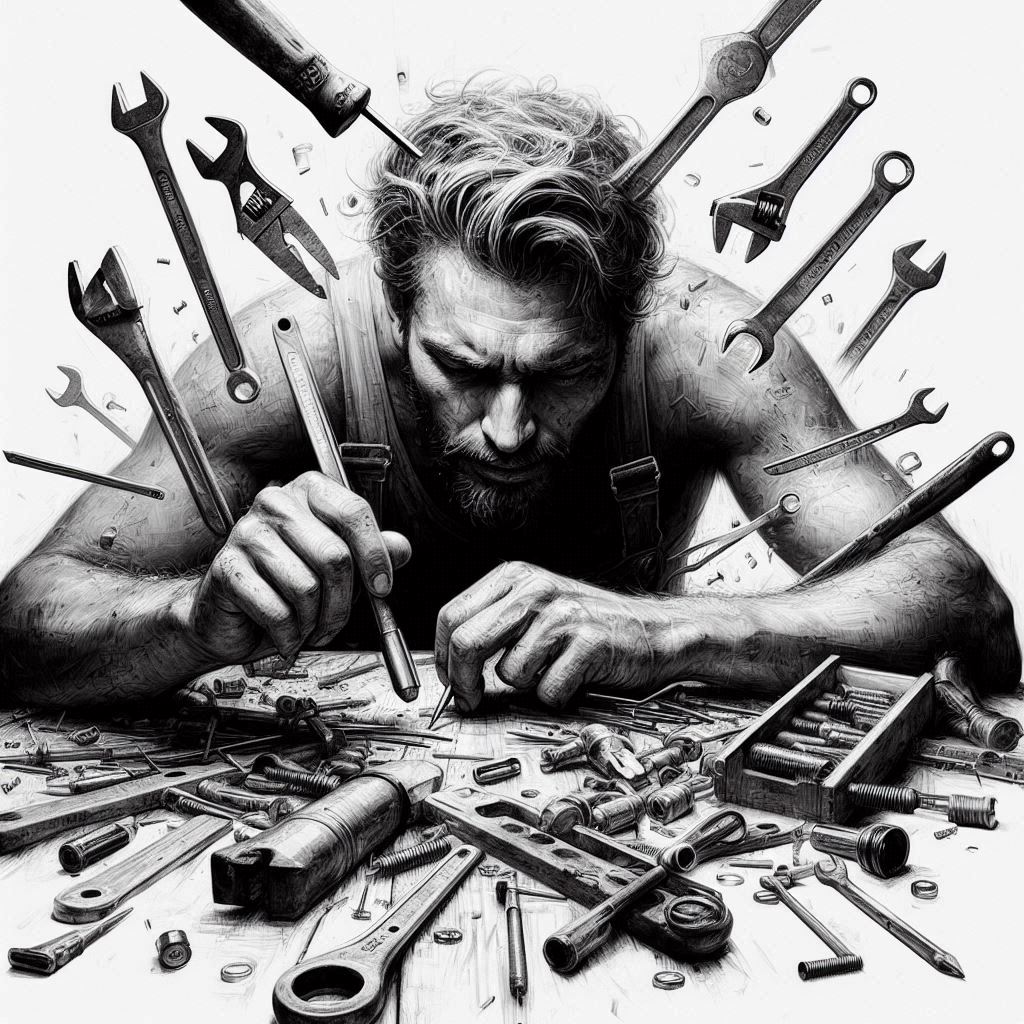
What do we do when all of our accumulated knowledge and experience don’t help us fix a problem? First, we curse the manufacturers who created everything from the tools we use as useless to the various swear words we have for product itself, “They shouldn’t have made this so … hard!” When we’re done with that, we might direct our anger at ourselves, our loved ones, and any neighbors who happen to be watching us without offering any help. The next thing we try, following the tenants of the “what now” progressions is to try something else.  

It cannot be that easy, we think as we watch others solve their problems so easily, and they do so with an ego-less approach. That’s disgusting. And we think it is both, especially when their solutions lead to better health, wealth, happiness, and peace of mind. If they don’t like themselves the way they are, and we suspect they do with jealous rage, they appear to know themselves far better than we do, and the most sickening part of it is they want us to be as happy as they are. They want to share their mentality with us and help us shed our complexities. They don’t demand we use their solution, and they’re not hurt when we don’t. Their goal is to join our quest for a solution to that which plagues us, and their solution often involves doing it differently than the way we’ve been doing it.

The problem for the problematic is that they don’t appear as concerned with finding a solution that might work for them, even internally. Their goal, presumably, is to draw attention to the complexities, so they can garner sympathy and attention, and so we all acknowledge their problem for what it is. 

When we reach the nadir of this argument, we have two choices. We can either walk away or acknowledge the severity of their complaint, and offer sympathy. Neither choice solves our problem, of course, but it becomes obvious that we don’t want to solve our problems as much as we thought, and we only want others to acknowledge the severity of our problems as we lay it out. If we perform according to their wishes, our reward is their soothed smile. 

***

I saw that smile once in the otherwise uneventful silence of a hospital’s emergency room (ER). While counting what felt like hours for an ER attendant to tend to me, I overheard another ER attendant inform a teenager that she had a condition. I can’t remember the specifics of her condition, but I remember that it was not dramatic, life-altering, life-threatening, or severely debilitating. “This will require some effort on your part to maintain a modicum of good health,” The ER attendant informed her.

The teenage patient smiled a half-smile that she couldn’t hide, when she received the diagnosis. She turned that smile off quickly as the ER attendant listed off what she would have to attend to to maintain good health. She listened with her serious face on. She didn’t intend to smile, but it happened. She turned it off, because she knew how serious the moment was, but she couldn’t keep it off for long. She turned away from them when the smile rose again. She knew she wouldn’t be able to stop smiling, and she knew it wasn’t appropriate for the situation. 

Before I speculate on what I thought sparked that twinkle in her eye, let me write that it’s entirely possible that the ER attendant’s diagnosis soothed her because it was something, and those of us who have had our body fall apart in small, confusing ways can empathize because we know that something is far better than the fear of knowing nothing. 

Some of us can spend months living in the confusing scary world of knowing nothing before we break down and schedule a visit to our doctor’s office, or worse, the emergency room. We eventually reach a point where we know we need help figuring out what’s wrong with us. We listed our symptoms on various medical websites, trying to come to up with a diagnosis of our own, and we found a whole lot of nothing. Armed with a diagnosis, we, like this young woman, can find some solace, because it puts an end to the not knowing, and a proper diagnosis can lead to specified medicinal care and proactive measures we can employ to maintain some modicum of health that could lead to better health, more energy, and a longer life. A diagnosis and a prescription, or as in this case a prescriptive course of action, are solutions to our problem that can lead to a comforted smile.

The smile I saw on her face was something different however. I saw a little spark in her smile that suggested she couldn’t help but find this a little exciting. We can’t explain such a smile, but we know that this diagnosis will add some dramatic complications to our life. Most of us live simple, boring lives, because we inherited quality genes that provided us with a finely tuned and well honed machine that rarely breaks down. We appreciate the brilliance of the design of our body, on some level, but after living with good health for as many decades as we have, it can be … a little boring at times. When our body breaks down, in small, relatively harmless and painless ways, it can be interesting and even a little exciting for reasons that we know are kind of weird and tough to understand or explain. 

I do not know what was going on in her head, of course, but I imagine that she knew that this condition would not only require attention from her, but her family, her friends, her employer, her school, and everyone else who cared about her. She probably sat in that ER room thinking that she would become the center of attention among those who cared about her. Until they could devise a plan to help her manage her day-to-day activities, she would also be a subject of sympathy from those concerned about her health. She knew she could talk to them about it, and that smile suggested she looked forward to those conversations and all of that love and attention that followed. She knew she would be able to express her concerns, and she knew they would finally listen to her, because this was a big deal. They, along with her doctor, would help her devise a plan that would include a disciplined diet that she would have to follow, and she probably figured she could violate it when she was “feeling a little naughty”, and because she had a relatively mild case, the consequences of these violations would be minimal, but her friends and family would still be concerned when she did that.

She probably also thought about her obnoxious brother, boyfriend, and everyone else who thought they knew what was wrong with her. They probably offered her a guess, and she argued with them and told them that it was far more serious than that, but they wouldn’t listen. They also offered her simplistic home remedies that promised some quick-fix solutions to what ailed her. Her smile suggested that she couldn’t wait to tell them they were all wrong, all along, and her condition was far more complex than any of them dreamed. Armed with ER attendant’s diagnosis, she realized she could now tell them all to go to hell. “You have no idea what you’re talking about. This is a big deal. You have no idea what I’m going through here. I have a condition that requires constant care and treatment.” That smile told me that she couldn’t wait to drop these lines on her obnoxiously simplistic friends and family. And if they continued to argue with her, she could drop some delicious line, such as, “Oh, so, you’re telling me that you know more about this than a doctor?”

***

What is the antonym of solutions-oriented thinking? Is there one? Thesauruses list a number of antonyms for solution, but they have no listings for an antonym of solutions-oriented. These formal sites do not list a term like problems-oriented or problem-centric. Those terms do not exist in their view, because no one is problems-oriented, at least in the sense that they use problems to achieve some happiness. Less formal sites suggest that a problems-oriented person would rather stew over their problems rather “than activate critical-thinking skills to find solutions.” Having problems makes them feel more adult, responsible, and important, and any attempt we make to try to help them arrive at a solution only minimizes their problem in their eyes.

Solutions-oriented thinkers are no smarter, healthier, or in any way better than those who appear to relish talking about their problems. Solutions-oriented thinkers are often quick to recognize patterns and devise an immediate solution, but they, too, have to face the flaws in their pattern-recognition thinking. When those humbling experiences occur, they choose a more methodical approach that includes consulting others, manuals, or another more methodical approach, and they use that information to devise another solution.

“But I thought you just said your initial solution was the answer,” their agitators say. “I thought you knew-it-all.”

“I was wrong.”

Solutions-oriented thinkers are wrong as often as everyone else is, and as we listed above they’re not smarter than us. They might try to find a solution, and they might fail. This leads their agitators to another smile, the inevitable, “See” smile, followed by, “See, you’re not so smart.” 

When I was teaching a bunch of young-uns how to shoot a basketball, I displayed the proper technique. I missed the shot when I was showing it to them them. “Why would I take advice from you?” they asked. “You missed the shot.”

“Just because I missed that particular shot doesn’t mean it isn’t the correct way to shoot the ball. If you use proper technique, your probability of making a shot increases.”

The problems-centric person does not want to listen, and for a wide variety of reasons they prefer to keep shooting the ball the way they’ve always shot it. When their shot never improves, they say, “I just suck at basketball, and the sooner I come to grips with that fact, the happier I’ll be.” The player who wants to get better might not want to take advice from a person “Who missed the shot,” but their best bet will be to try a method other than the one they have, because they will rarely make the shot the way they’re currently shooting it.     

The solutions-oriented thinker might be surprised, confused, and frustrated when their proposed solutions don’t work, and problems-oriented people might enjoy that initial failure, but the solutions-oriented person does something that shocks the problems-oriented person, they try something else. True problem solvers find arriving at a solution an ego-less approach. The recipients of their ideas often believe it is anything but.  

Some solutions-oriented thinkers in solutions-oriented positions, in a Fortune 500 company, decided to put their money where their mouth is by doing away with the traditional interview process. Through trial and error, they’ve decided to do away with the closed boardroom, “hot-seat”,  interview that challenges the potential candidate to solve a hypothetical problem. “This is the problem. Quick, what is your solution?” These Fortune 5oo companies found that this line of questioning doesn’t separate the quality, ideal candidate from the less than. These innovative companies decided to send their questions to their potential candidates’ homes, via email, before the interview, to allow them to process the question, trial and error it, and arrive at what they consider the best possible answer. The Fortune 500 companies now recognize that quick thinking candidates look and sound great in the traditional interview, but that that does nothing for their long-term. The “hot-seat” scenario questions will find the person who “thinks quick on their feet”, and it shows the candidate’s problem-solving hard-wiring. By sending the questions home, however, the companies are now suggesting that their ideal candidate does not have to think quick, and that methodical thinkers often come up with better, more creative, and sometimes more innovative solutions than those who come up with quick, bullet point solutions. The methodical thinkers are trial-and-error processors who diagnose a problem, come up with a solution, recognize the errors of their subjectivity, pose other solutions, recognize the errors of their impulsive, patterned thinking, and arrive at a final solution that the “hot-seat” thinker who “thinks quick on their feet” probably wouldn’t even consider. The take-home method might also allow the potential candidate to forecast variables and diagnose and treat them accordingly. 

The quick-on-their-feet candidate always looks and sounds better behind closed doors. They display confidence, experience, intelligence, charisma, and a number of other intangible qualities we admire in those we meet, but how many quick-thinking, well-spoken, and confident candidates turn out to be the best employees over the long haul? How many of these ideal candidates only display their ideal qualities in the interview? How many of them outperform their peers in the training room, answering every question the trainer asks. We call them hotshots, and hotshots know how to make excellent first impressions. They know how to dress for success, they memorize the answers headhunters want to hear, and they do it all with an award-winning grin. Yet, depending on the industry we’re in, we often find that these types often shine bright and burn out quickly.

Most of the best employees we work with are quiet, unassuming types who offer unique, creative, and innovative approaches to problem solving. They may not be the best employees in the training room, as they may not be the type to raise their hand to answer the trainer’s questions, and they may not be the best employee after the first two weeks. It might take them a little time to figure out the finer points of the machinations of their company, and it might take them a little more time to figure out their role in it. They aren’t the type to dazzle their employer in the early stages in the manner the ideal “hot-seat” quick thinker can, and this frustrates them because everyone wants to make a great first impression. This has haunted them since high school when the “hot-seat” quick thinkers dazzled their teachers. The methodical, slow processors often tried to keep up with them in the beginning, because that’s just what they did in high school. We often had the wrong answer in class, and we were ridiculed for it by our peers, and at times our teachers. We learned to avoid sticking our neck out. Candidates who could absorb such ridicule, and endure the lack of faith they received from teachers and bosses for initially being wrong developed the ability to simply try something else. These candidates, Fortune 500 companies are now saying, are such a rare commodity that they’re willing to upend the traditional interview process to find them. They know such thinkers do not perform well in the standardized, traditional interview format, so they tried another one to find that special candidate who tried something else when their initial, impulsive thoughts didn’t work. The Fortune 500 company doesn’t want people who are always wrong of course, but even the best candidates are going to be wrong once in a while, and some of the times those errors will be humiliating. When that happens, they’re forced to endure the “what now” questions, but due to their mode of thinking, they’re more accustomed to the what-now questions than the “hot-seat” quick thinking dazzlers. What do we do when all else fails? Decades of trial and error evidence have shown Fortune 500 companies that their ideal candidate is an ego-less thinker who already knows what it feels like to be wrong, and they know what to do about it. By changing the traditional “hot-seat” interview format, these companies were trying something else to try to find those who try something else.