Sprinting & Age


Yesterday, I realized we’re all sprinting to old age. Today, I realized that those lucky enough to make it to old age should probably refrain from sprinting. The aging process is a relative progression, as we’ve all met young sixty-year-olds and old forty-year-olds, but no matter how old we are, we occasionally receive reminders that we’re aging. The aging process rarely hits us in an “Oh, my God I’m (fill in the age here)!” one day in the mirror. Aging is often more of a gradual process that hits us in tiny, little, and seemingly insignificant hits, every day.

We fell on a Tuesday doing something we’ve done our whole lives. We tripped trying to skip a stair on a Wednesday, and we’ve skipped a stair since our legs grew long enough to do so. (Mental note, skipping stairs may no longer be in our repertoire.) On Thursday, we caught ourselves making old man sounds when we sat, but we can’t even remember when we started doing that. We admired a beautiful person on Friday, and someone informed us that we’re probably too old to continue doing that. “It’s just odd,” they said, “considering the age gap.” Someone considered it inappropriate on Saturday, and on Sunday someone found it “Absolutely disgusting” that we should admire the beauty of a 20-year-old. “Because you’re old enough to be her grandpa!” they say. The progression didn’t occur that quickly, within one week, but on some days it seems like it does.  

We all know we’re aging on a physical, superficial level, but mentally we’re not so far removed from that energetic, wildly enthusiastic 20-year-old who was afraid to talk to girls. When they add, “And you should know better than to stare at a 20-year-old woman,” we realize how far removed we now are. We do “know better” on one level, we know how old we are, but their scorn is a painful reminder of how much we’ve aged. We do the calculations in our head, and we realize they’re right. We are, in fact, that old now. The realizations that we’re that old now are not about any of one of the matters listed here. It’s about all of them. It’s about that big old snowball that’s been accumulating over the years without notice.

***

“You know you’re old when you fall and no one laughs,” a comedian once said. You know you’re old when they surround you after a fall, and they’re not there to point and laugh. They’re there, because they’re concerned. You know you’re old when their raised eyebrows suggest that you might want to refrain from such activities in the future. You know you’re old when no one laughs about it later, even behind your back. People didn’t laugh when we fell when we were very young, and somewhere along the way, it turned full circle. People aren’t laughing anymore. They’re concerned. It’s humiliating. The science of their silence involves a calculation of our age and the impact of your fall. It’s no longer funny. It’s so disturbing to some of them that they consider it alarming.

“What happened?”

“He was sprinting.”

“Ok, well, he probably shouldn’t be sprinting at his age,” they instruct one another.

You know you’re old when you’ve become the subject of group concern, and the group addresses the subject of their concern in the third person, as if to suggest that they’ll take care of this whole matter going forward, because it’s obvious that we can’t anymore. They addressed us in the third person when we were young, implying that an authority figure should’ve seen to it that that didn’t happen. Everything in between involved laughter, directed at us in the first person, because they knew we were old enough to know better but young enough to sustain the damage of our stupidity. We might feel some warmth when we realize how much these people care about us, but that fades when we realize their resolutions mirror those family members make when our loved ones reached a point when they were no longer capable of caring for themselves. They have no problem telling us when we’re too old to oggle, but no one instructs that we’ve reach a point where it’s considered ill advised to sprint until it should be obvious to everyone involved.

***

A game of ‘keep away’ developed organically. My nephew was in the middle, laughing as hard as the two adults were on opposite sides of him. He was laughing so hard, and apparently having so much fun, that another kid joined into help him defeat us. Another kid joined in a couple of throws later, then three, then four, then so much more. The game wasn’t young versus old, but it evolved into it. It started out friendly, but it evolved into a competitive definition of whatever remained of our athletic ability.

I started out tossing the ball from a stationary position. I was laughing and failing on purpose, giving the kids a chance, until one of them said a little something that I considered a provocative definition of my declining athletic ability. When it came time to catch the ball, I followed the same pattern. I went from light-hearted attempts to get open to employing quick, ankle spraining jukes. When I realized I couldn’t shake the nephew I once held as an infant, the quick movements evolved into some running. I ran every single day at one point in my life, so it was not a concern to me. I don’t know if I started losing, or if I sensed that the others were further questioning my ability, but I began sprinting to open spots to capitalize on the holes in their coverage. It dawned on me, while doing it that I haven’t done this in years. No one gave this a second thought for most of my life. Some people run, some people sprint. I didn’t see the spectators watching, but I could feel it. I even saw a couple stand with some concern. Did they see the game for what it was, or were they wondering if they should begin sprinting too? Did they stand to source the emergency that sparked my progression? I looked over to verify that they were watching me, but in that casual glance, I almost tumbled. I couldn’t look back at them. I had to be mindful of my feet. (Mental Note II, running now requires more focus.) Running was not my greatest concern. Stopping was. I had a myriad of little feet under mine, and I had to focus to avoid them.

I know I’m not as athletically inclined as I once was, but who is? I am smarter now. I know how to use my faculties much better than I did when I was younger. In the midst of these throws, my competitive juices got the best of me. I overdid it. I knew my best presentation could be found sitting on the lawn furniture with the other old people, talking about what old people talk about with lemonade in hand on a sunny day, but I didn’t decide to play this game. An impromptu game broke out and evolved into a character-defining match of my ability against theirs. I could not just quit. “Why did you quit?” I imagined one of them asking me. “Because I’m old and I can’t handle the physical requirements of such a game anymore.” Yeah, that’s not in my nature.

The nephew I once held as an infant was shutting me down in coverage at one point. I encouraged it verbally, but I also wanted to discourage it physically. I wanted to prove so dominant that he left our little game a little demoralized. To do so, I employed some of the know-how I picked up along the way, using the bag of tricks I developed in the decades I spent playing intramural football. Michael Jordan developed a fade away when his skills started to decline. I developed a few moves of my own over the years. “Youth is wasted on the young,” Winston Churchill said. What if I had this wide array of jukes when I was younger, I asked myself, would I have been better? I sprinted to the right, juked, and went further right. In doing so, my fellow old man led me well with a pass. My ability to stop on a dime and juke surprised my nephew. He went left to cover the traditional juke, and he did so right under me. To avoid taking him out, I had to adjust. (Mental note III, my ability to adjust on the fly has receded.) I tripped over his feet. (Mental Note IV: Studies show that the chances of tripping increase exponentially when we sprint.) Been there, done that. (Mental note V, watch out for ground, it hurts, but not near as much as a parked car.) I didn’t have much choice, in the stumbling and bumbling that followed. I decided to take on the car. (Mental note VI, the pain experienced from stationary objects increases when approached at top speed, and we should all try to avoid parked cars as often as possible. They can be unforgiving.) Hitting the car, and then the equally unforgiving concrete was humiliating, and I thought the people surrounding me with looks of concern was the peak of my humiliation, until my nephew called me up later that night to apologize for getting me so worked that I almost ended up impaled on a car.
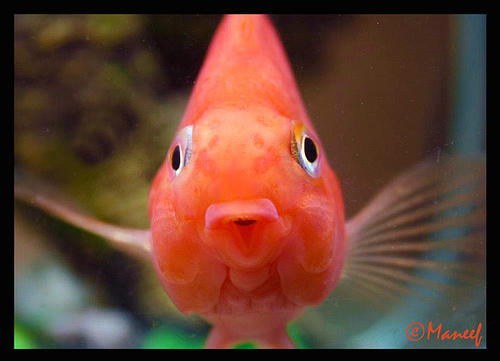
When Fish Look Back


Some of us enjoy watching fish swim around in an aquarium, because it gives us some inexplicable sense of superiority, but most of us find it one of the simplest pleasures in the world. There’s nothing to analyze about a person who enjoys the simple pleasure of watching fish swim around an aquarium, there are no social attachments to it, no cultural definitions to be found, nothing political about it, and no one can attach double entendres to it. It’s not complicated, it’s simple, and that’s why we do it. For those of us who find some way to feel guilty about just about everything, we can find some very creative ways  to feel guilty, but to my knowledge no one has been able to associate watching fish swim in an aquarium with something for which we should feel some guilt. Is this guilt-free pleasure based on our idea that most aquarium dwellers don’t appear to want more freedom. They don’t appear to love life or loathe it, as they seem to have a comparatively limited sense of their life, so is that why we feel no guilt watching them swim around in a limited space, or is it because they don’t look back?     

When we own a dog, we love watching them run free around our huge backyards, but there’s always some level of guilt we feel for fencing them in. We take them on long walks and to dog parks to allow them more freedom, but there’s always this sense that we’re depriving them of the full extent of a dog’s glorious life. There are some trade-offs of course, as we provide them food, comfort against the elements, and protection from predators, but when we compare them to their wild ancestors, we can experience some pangs of guilt. 

It might have something to do with their comparative lack of intelligence, but we experience no such guilt owning a fish. Some even find some medicinal qualities to owning a fish. Some psychology articles even suggest that watching fish swim around has medicinal qualities, as it can provide some relief to those suffering from depression. Family physicians and dentists often find purchasing an aquarium a worthy investment, because it relaxes their clientele before visits. Some homeowners find feeding them and watching them so relaxing that they want an aquarium in their home. Are these properties attained in the relative silence of an aquarium, does the order of fish in an aquarium provide some relief to chaotic minds, or does it have something to do with the fact that fish rarely look back at us? 

There are moments in life, and for some it’s more than moments, but most experience moments in life when they feel trapped. They feel trapped into high-stress, relatively confrontational jobs, but they can’t quit because they have responsibilities and obligations. Those people might enjoy seeing another being trapped by glass, because it makes us feel freer by comparison. Both parties know we are the superior being, but some fish look back, and some of those looks become stares, challenging stares.

We don’t expect fish to look back, but some of the times they do, and some of the times it’s quite cute. Sometimes, we tap on the glass to try to get one fish to give us one quick look to acknowledge us in some quick, meaningless way. They usually swim away in quick, jetting motions, but some of the times they look back. “Look at this, Myrtle, he’s looking back at me!” we say to their casual, happenstance glance they offer us. When that casual glance holds, and that cute, little look back becomes a stare, it can begin to feel unnatural. Even though it feels a little odd at the outset, we stare back. We don’t have any reason for continuing to stare back, but we do, until we achieve some inexplicable and unnerving connection. If this odd connection continues, we think that they’re testing the boundaries and borders nature inflicted upon them, regarding our respective roles in the food chain. We know it’s foolish to assign human characteristics to such a brainless creature, but the otherwise enjoyable stare can lead us to consider questions that which we’ve never asked before.

Our first instinct is to believe the fish just happens to be looking in the general direction we’re standing in, and that the stare we share is nothing more than a happenstance glance. Something about this particular stare unnerves us though. We remind ourselves that they have no eyelids. They might have a membrane to protect their eyes from water, but they have no eyelids, so they cannot blink. They have pupil, and they can move their eyes, but this particular fish doesn’t even move his pupil. It’s staring right at us and through us.

What does it think it’s seeing? Is it really looking at us, or just toward us? We make a jutting motion toward the fish to establish the fact, in our minds, that it is indeed staring at us. Another, relatively embarrassing component of that motion involves our need to establish dominance, so the fish doesn’t forget what we can do to them if driven to act. The fish will react to our jutting motion, but what happens in our interiority if after the fish flinches, it assumes its former position and resumes staring? Do we complain to the management of the pet store? What if the fish stopped staring the moment we brought the manager over to the tank and it resumed staring after the manager leaves? It looks at us, as if it thinks it knows us, and it’s unafraid. There are times when it’s okay to remind other creatures that we’re their superiors, and there are times when we consider it necessary to do so. You wouldn’t be so bold if I reached into your tank, grabbed you, and did awful things to you? we think its way. We think that hard, as if to send a telepathic message. If that message is receive, the fish remains unmoved by that threat.

We know we can’t do such things, no matter how long this thing looks at us. We know those looks the other patrons of the pet store will give us if we do. We also know what we would go through on the drive home, in bed, staring up at the ceiling, remembering what a fish drove us to do. We know no one would understand, and something about that fish’s stare suggests that it knows that too. At some point in this staring contest, it strikes us that the hundreds of thousands of years of our respective conditioning inform both parties who is superior. Yet, this means nothing to this particular fish. Its stare suggests that it is challenging that conditioning, because it knows there’s nothing we can do about it.   

Pet psychologists tell us that if we own a dog who is particularly disorderly and disobedient that one of the ways to re-establish dominance is to engage it in a staring contest. If confronted by a wild animal, they tell us, the worst thing we can do is look that animal in the eye, because both parties know, on some primal level we know nothing about, that we’re challenging their essence, and any hint of this challenge enrages such beasts.

If we try to engage in a staring contest with a lion, in the lion’s den at the zoo, most lions won’t even bother looking back at us. They have hundreds of people confidently challenging them in this way every day, and both parties know there’s nothing they can do about it. They can charge the borders of their enclosure, and if you’ve seen a gorilla do this, it can be intimidating, but both parties know, on some level, that we’ll walk away laughing at their meager attempts to challenge us. That interaction is flipped by some measure, because we’re challenging their physical superiority. We’re informing them that we’re not afraid of them, but when we’re the superior in every way, as we are with the fish, what goes through us when they stare at us so long that it starts to become uncomfortable? Is it mere happenstance, or is the fish challenging our nature? Are we so confident in our stature that we continue to stare back? How long do we participate in this staring contest, to establish our superiority, and what happens if we lose?

After such a devastating loss, what happens the next time a host asks us what we think of their brand new aquarium? More often than not, we don’t invest ourselves in situations like these, but there are days when we’re feeling particularly vulnerable. There are days when the “theys” of our lives break us down, and we feel relatively small and insignificant, so we approach that trapped fish with a smile, because we know that they are a they that is unquestionably inferior to us, but there is always one fish who won’t bow down to us. These meager, inconsequential, and perhaps coincidental challenges that we dream up can affect us so much that the next time a friend invites us to look at their fish in the fish tank they have in their home, we hesitate. We know that if we begin shrieking, the fish wins. Our reputation would not only suffer at the hands of our host, but the ten people interested in her retelling of the story. Offering our host, a simple, “No thank you,” might open a big bag of questions we don’t want to answer. Yet, acquiescing to their request might bring us right back to that day at the pet store when a fish’s stare served to undermine our confidence. When we glance over at our friend’s tank, considering her proposal, we see those probing eyes, and we remember the day when we thought we knew our place in the animal kingdom. We remember how confident we were in our respective roles in the animal kingdom before that staring contest began, and though we know we can’t put all the blame for our insecurities at the fins of that fish in the pet store, its rebellious stare unearthed something in us that we never confronted before. We know how revealing it is to have a staring fish lead us to such existential questions, but it shook our confidence down to its foundation, and we politely refused our host’s request, fearing what another loss might do to our confidence.   

Yesterday I Learned … VII


Yesterday I learned that some of us still don’t know how to perform drive-thru transactions properly. Some say the first drive-thru restaurant to open a side window happened in 1928, some say 1947, but whatever the case is, they’re been around for as long as most of us have been alive. Thus, those of us who didn’t grow up in a subculture that avoids technology know how to perform a drive-thru transaction. Yet, we read a decades-old menu of a decades old franchise as if it requires a Rosetta Stone to decipher its hieroglyphs. When we finally decide what we want, we search for the button to ignite the speaker device. For those who don’t know, restaurants in the 1970’s had buttons customers were required to use when they were ready to speak. When the time to perform arrives, we scream into the speaker as if we don’t understand the mechanizations behind the audio amplification a speaker can provide. What should take two minutes, often takes ten. Today, I realized that those of us who fall prey to the confusion this transaction provides are officially as old as the people they used to mock for being old.

Yesterday I realized that most artists spend most of their time skimming the core. Think about your favorite artists in any milieu. How many earth-shattering pieces did they create? The best artists, be they in literature, music, painting, etc., are extremely fortunate to develop four unique pieces that stand alone and above their peers’ creations. How many pieces did da Vinci create? Two? We have under twenty definitively proven da Vinci works, and only two are known throughout the world. How many pieces did Van Gogh, Picasso, James Joyce, and Andy Kaufman create? Some artists limited themselves to a few creations, and they spent most of their time perfecting those pieces, but others created hundreds of pieces, but most of them were not great, as we’re defining great here. Those of us who love music, fall in love with certain artists. How many great, epic, I-can’t-wait-to-listen-to-them-again albums did these artists create? I’m not limiting this discussion to sales figures here either. I’m talking about you-know-greatness-when-you-hear-it great. Three examples from my youth are King’s X Gretchen Goes to Nebraska, Queensyche’s Operation Mindcrime, and Metallica’s Master of Puppets. I was so in love with each of these albums that it didn’t matter how great their next album was, I was going to greet it as a normal person might greet their child into the world. I would listen to these new albums thirty times, before I began skipping through some songs, until I eventually tossed them into my personal dustbin. Each of these artists followed up what were for me magical, transcendent albums with admirable efforts, but the albums top-to-bottom didn’t have the same magic as their predecessors. The subsequent albums had some great singles, but the artists seemed to skim the core of their greatness for the rest of their careers. Now that we’ve achieved some distance, we can reflect back and evaluate our favorite artists more objectively. I think most music aficionados will now admit that their favorite artists probably had two albums that stand the test of time in them. Yet, it’s so exciting to see an artist come so close to their core that we buy their entire catalog without hearing any of the songs or reading critical reviews. Today, I realized that I love a great book, and I enjoy the occasional painting or two, but I never understood how someone could stare at a great painting for a half hour. There is something different about music, however, something that reached me when I was far too young to understand the connection, and something that, to quote the cliché, soothed my soul. Music is the universal art form that brings us together and drives us apart. I gave three examples of albums that inspired me in ways no other art form could, but I could probably list 100 off the top of my head that ‘set the sick ones free’. That list of 100 albums is so personal to me, but could it have been a time and place matter, or is a great album always a great album no matter when they come out, and how difficult are they to follow up?    

“I’ve got no imagination. I never dream. My so-called inventions already existed in the environment—I took them out. I’ve created nothing. Nobody does. There’s no such thing as an idea being brain-born. Everything comes from the outside. The industrious one coaxes it from the environment.” –Thomas Edison

Does art reflect life, or does life reflect art? How many of the most brilliant pieces of art are nothing more than interpretations of the world around the artist? Isn’t that the definition of art? Aren’t all artistic pieces “brain-born”? I understand that Edison was trying to be humble, but it doesn’t make much sense, if you consider Edison artistic in a universal sense. Artistic pieces are born through a complicated algorithm that arrow through influences, experiences, and individual interpretations. Whether it involves the creation of the lightbulb, the novel, and every other form of art, most of the artistic minutiae of a creation occur in the individual interpretation stage, but most artists could not arrive at that place without the first two.

Yesterday I considered most psychological tests a total waste of time. I don’t put much value in Rorschach tests, I don’t know what the spiral eye test does for anyone, other than being a little neat, and I think fill in the blank tests, insert letters into this b_ _t, are pointless. They’re all neat and fun, and they seem to say something fun and interesting about us, but what does it say about us if we answer boat? Today, I found an interesting nugget from Malcolm Gladwell’s book Talking to Strangers suggests that suggests I might be wrong that they are a complete waste of time. In one test, the examiners gave this fill in the blank test to a group A. They then gave the results of that test to group B, to have them help the examiners decipher the answers. Group B psychoanalyzed the answers. Unbeknownst to both groups, the examiners created the test for group B, with the theory that we say more about ourselves when we analyze others than we ever do when we analyze ourselves. I still don’t know if they’re valuable tests to determine our characteristics, but this little twist suggests they’re not a complete waste of time. 

Yesterday, I wondered if others might consider what I was writing funny and interesting. We all have people in mind when we write. Today, I realized that that is an utter waste of time. You do what you do, work your tail off, and the accolades might follow. The ‘you do what you do’ principle does not work, however, if you don’t know the rules. As most comedians know, this is always funnier than that. The ‘this’ in this equation is rhythm. Most of the time one needs to economize. Brevity is the soul of wit, and all that, but one can get away with extended punch lines if they’re gifted. There are those especially gifted few who can upend and redefine the rules, but if we enjoyed betting, we would probably say that you and your gimmick are not for long.

Yesterday, I realized I’m probably as far from a ‘betting man’ as one can get. Anytime we hear analysts address a situation, they say, “If I were a betting man …” When I watch game shows, and the contestant is allowed to double their money by answering a final question, I don’t understand how anyone could take that bet. “You mean to tell me that you survived the three strikes and you’re out portion of the game with ‘X’ amount of money, and you risked it on the double or nothing final question?” Today, I realized that I would be that guy who disappoints the audience at home by taking the money and running so far away that I might not think about the chance I didn’t take. I might think of my refusal to take a chance every once in a while, but even if I took that chance and answered the question correctly, I wouldn’t feel so much gratification by answering the final question correctly that it would be worth it. It would pale in comparison to the face slapping nights I would endure if I missed that final question.