Fear of Heights: It’s Partly Biology 


You could say I’m terrified of heights, but they’re just the delivery system. What I really fear is the rapid, involuntary reunion with the ground. 

I’ve tried multiple variations of that unfunny joke through the years, because I want something to say when the questions, the teasing, and the antagonism starts. The best thing to say in these moments is something, because I’ve tried saying nothing, and it doesn’t work. I also need answers to the internal dilemma I experience when I encounter those who fear just about everything but heights. What’s different about me? If I had an actual phobia, an acrophobia, I wouldn’t be able to climb ladders, go on roller coasters, or zipline through a forest. I found an answer that states that I’m not in the five to ten percent of those who suffer from some form of acrophobia, but I fit within a broader, non-phobic category of twenty-eight percent who suffer from something called a visual height intolerance (VHI). This isn’t the answer I was searching for, but it is an answer.  
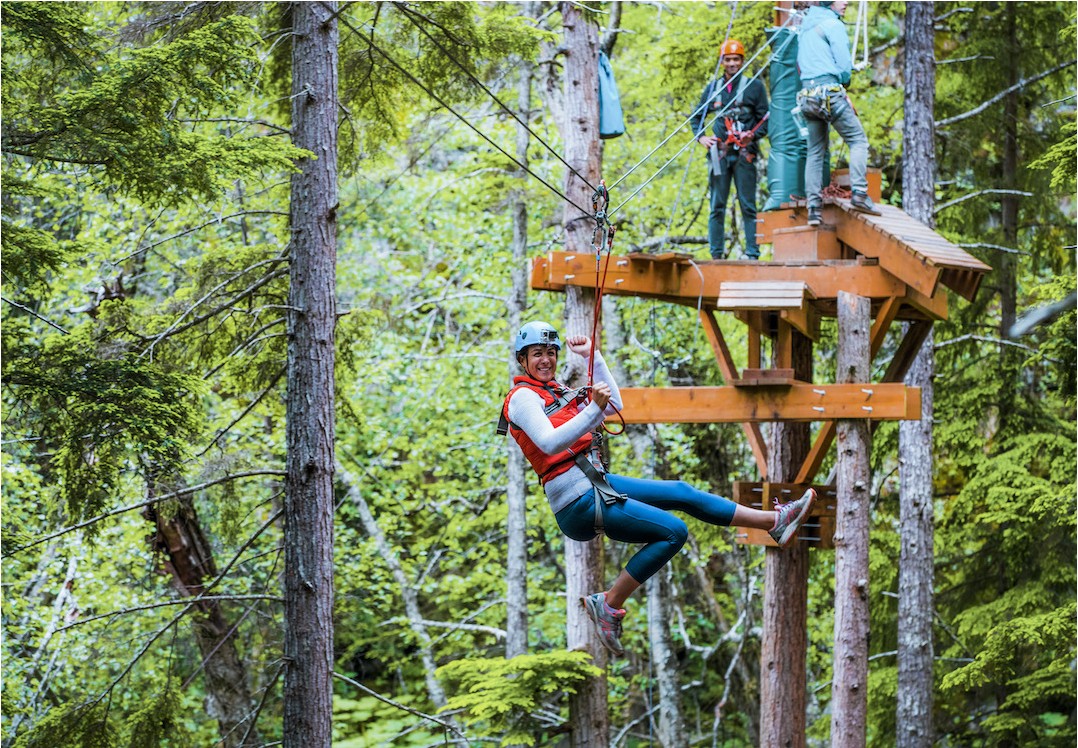
Even with that answer, those of us who suffer from VHI don’t understand why we have an irrational, emotional reaction to heights that frail, little old ladies and young teenagers don’t. It makes no sense to us that we struggle to stand atop a twenty-foot ladder and jump into a thirty-foot void tied to a zipline, and other people don’t. 

As our group of eleven made our way through the various ziplines, we got to know one another in superficial ways, and we learned that some of us are doofuses, but even our doofus demographic weren’t as scared as I was. They were having fun. I wanted to believe they were too dumb to know how much danger they were in, but when the people who were more intelligent than me screamed with glee on their turn, the only answer left for me was that I was a fraidycat.  

If you’re an awful, offensive person, you probably attract offensively awful people as friends, and if you don’t have answers for them, they’ll hit you with every mean-spirited, funny joke they know. I also have nice friends, but their sad, sympathetic looks hit deeper than my friends’ jokes, and I tell unfunny jokes to keep those looks off me. No matter which side of the fence they’re on, I suspect that most people enjoy tasting another’s vulnerability so much that they can’t hide their sympathetic, concerned smiles. I know this because that’s how I react to their vulnerabilities.  

“You didn’t like the zipline? Because I thought it was fun!” they say. It’s humbling, embarrassing, and frustrating to be this scared of something that people who make no sense enjoy. We can drop our “C’mons!” on them, but after we algorithm their answers, we find that they genuinely enjoy ziplining. I realize I have no answers for that, other than I’m just scared. I’m scared of something that frail, little old women and teenagers aren’t. The idea that the zipline experience didn’t rattle the teenagers, in particular, really got to me, because I was the one who helped them get over their irrational fears. “Monsters don’t exist,” “Most bugs aren’t as big as your fingernail,” and “You can take control of your nightmares in a way that will prevent them from being as scary.” I taught them that if they are able to rationalize the irrational, they might not fear it as much. I helped them conquer their worst fears in life, and theyre the ones now giving me sympathetic, concerned smiles

One of the answers I have for why I fear ziplining so much is that the plot of most of the nightmares I’ve had since I was a little kid involved being high up on something, looking down, then falling off (or stepping off) a platform into nothingness. We now call this ziplining.   
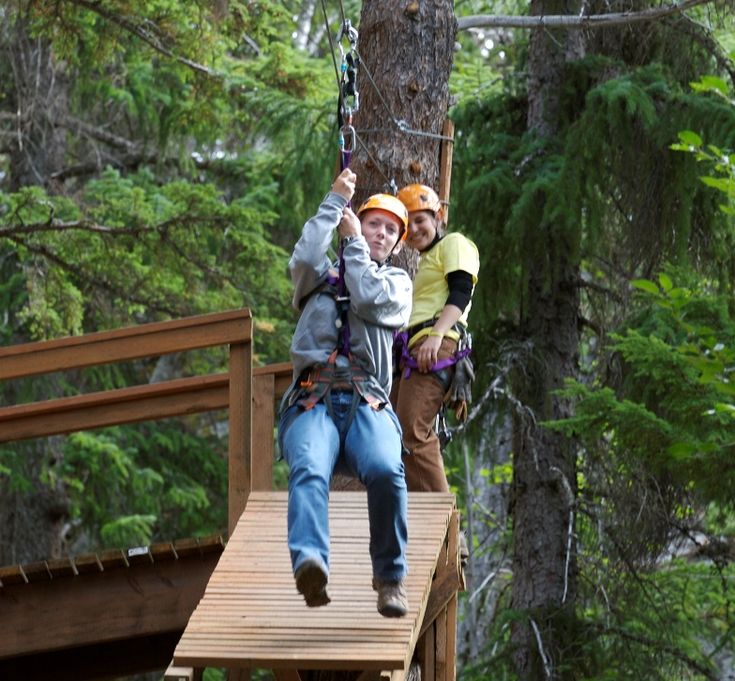
I did it though! Before we continue, I want it noted that I managed to separate myself from what researchers call a clinical case of acrophobia to one who suffers from what they call a visual height intolerance (VHI). Those with a clinical case, the roughly five to ten percent, would’ve never been able to step off that platform into nothingness secured to nothing more than a line with three reinforced nylon ropes. I did it. I braved my worst fears, and I tweaked those (to me, crippling) fears by ziplining through a forest. I jumped off five different ledges and zoomed 30 feet above the ground from tree to tree. It was one of the greatest accomplishments of my life, and that’s not hyperbole for me. I know that’s sad, but it’s sad but true.

Now, how many of my most beloved and loyal members of my friends and family do you think joined me in the celebration of my accomplishment of conquering what I considered the most terrifying experiences of my life? If you guessed zero, you are correct. I didn’t really need anyone to congratulate me, because when I finally touched ground, I experienced what Irvine Welsh wrote about in his 1993 novel Trainspotting “doing heroine [is] like having 10,000 orgasms at once”, except I would replace “doing heroine” with ziplining. I didn’t need anyone to intensify my reaction to completing the course, in other words, but when they asked me: “Are you going to do it again?” my disgust broke out: 

“Who gives a crap! Right now?” I said. “We’re not even a minute away from me conquering my greatest fear in life, and you’re asking me if I’m going to do it again? Why don’t we take a minute to celebrate what I just did.”  

I enjoy being human don’t get me wrong, and I’m not going to switch species based on one petty grievance, but why do we insist on asking someone if they have the skill, temerity, and resolve to accomplish something great, momentous, and unprecedented again? Why do we insist on doing it right after they did it? They don’t let us savor our accomplishment for one minute. When we graduate high school, which was an incredibly arduous accomplishment for me, the first question was, “So, where are you going to college?” When we receive a promotion, they ask, “Is this a stepping stone, or are you going to fly higher?” Who gives a crap about that now, right now? Right now, I think you should say, “‘Holy Larry!’ You did it!” The key to my frustration, if you haven’t guessed is the “right now” portion of this ubiquitous exercise, the present tense, as in just minutes away from our grand accomplishment. We can get around to all the other stuff when we get around to it, but for now, help me celebrate this accomplishment.   

In the history of Super Bowls, there have been a little over 3,000 NFL players who have reached the pinnacle of winning a ring. As evidenced by the idiotic and obnoxious sideline reporters, we don’t want to let those elite athletes celebrate their enormous accomplishment for five minutes, as these reporters ask the star of the game, immediately after the game, ‘Do you think you can do it again next year?’ The player responds, “I’m just going to celebrate this one for a while.” Rather than focus on the incredible athletic achievement these fifty-three players, coaches, and the team’s hierarchy just accomplished, we want to know if they think they’re going to be able to win it all again next year. I want one of these players to look at these reporters with disgust and say, “Do you want to know what it took from us to get to this point? Do you have any idea what it takes to win what might be the most difficult and prestigious trophies in our country? Do you want to know anything about the sacrifices the fifty-three players on our roster made to make this happen?” I want this NFL player to add, “All those hours you spent watching Netflix, going to parties, and sitting around watching sunsets, I was in the weight room, in dark film rooms, and in grueling two-a-days, and doing it over and over again all year, and that’s not even accounting for everything we did in past years to get to this point. We haven’t had a drop of alcohol or smoked anything all year. I haven’t had a slice of cheese in three years. And we did it all for this moment, so could you, maybe, just give me a moment to celebrate what it took me and only about 3,000 other men to accomplish in life?” 
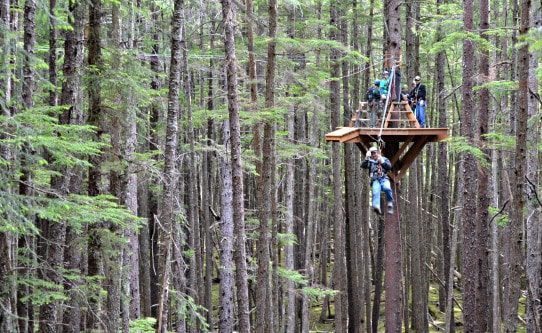
I understand that some anonymous boob ziplining 30 feet off the ground doesn’t even come close to winning a Super Bowl, but conquering my crippling fear felt just as momentous in the moment. When I reached the final platform, and it was over, truly over, I felt an adrenaline rush that informed me that I could do anything I wanted to in life. When that adrenaline washed out of my system, I softened my stance a little, because I realized that my friends and family couldn’t understand how huge that moment was for me, but I added that it would’ve been nice if they asked me to try to explain it to them before asking me if I was brave enough to do it again.    

I’ll admit that I likely won’t do what was one of the most terrifying experiences of my life ever again (insert your small smile of schadenfreude and sympathy here), but why does that matter? Correction, maybe it should matter at some point in the future, let’s say the one or two years from now when we talk about ziplining again. For now though, right now, let’s just let me celebrate my crowning achievement for a moment. Let’s just take a second and realize how hard this was for me, and let’s celebrate the fact that I did it all with a dry throat and quivering legs.  

When they ask, “Are you going to do it again?” they usually follow our ‘no!’ with, “Really? Because I didn’t think it was that big of a big deal. It was 30 feet off the ground. That’s considered a minor to low-medium elevation zipline experience.”  
Our ziplining experience was probably equivalent to a kiddie slope in skiing, and all people and companies that offer ziplining experiences know to go over the top with safety measures to make sure their customer base feels secure. This involves being secured in at three different points and various other procedures the employees require their customers to go through. Our lives were never on the line, in other words, but that’s all rational and reasonable. Those who suffer visual height intolerance (VHI) and a clinical case of acrophobia know that a fear of heights is irrational, unreasonable, emotional, and now we know that it’s partly psychological too.  

If you missed the key word of that last sentence, go back and reread it and focus on the third to last word of that last sentence partly, for therein lies an answer.  

The research states that the majority of my fear of heights is mental/ psychological, but there are physical elements involved too. That’s right, I found an answer to why some frail, little old ladies who fear things that go bump in the night, and teenagers who still have some remnants of fear of the boogieman haunting their dreams don’t experience crippling fear on a zipline’s platform, and I do. If you’re an acrophobic or one who suffers from VHI, and you don’t have an answer, you might not consider this a quality answer, but I’m okay with that, because like fear in general, the quality of answers are relative to the person.  

Research has concluded that some brains are just different. That’s not a mind-blowing revelation, I know, but it opens up the idea that some brains, be they in the little old lady or teen demographic, adjust well to heights. Others don’t, and the fear that others experience might feel psychological, but its roots are partly physical too — and those roots vary from person to person. At certain heights, an individual’s balance system, their proprioception, or equilibrium, becomes less stable.  

The sensorymotor system (vision, vestibular organs, proprioception) of the acrophobic and VHI sufferer generates stronger instability signals at heights. The brain’s balance system—its ability to sense its position, movement, and force without relying on visual input, enabling balance coordination, and precise motor control—becomes less stable at varying heights. Some brains interpret that instability as danger; others don’t. It all depends on which side of that divide you fall. When visual cues are far away, those with a condition can’t use them to stabilize posture, so sway increases. Some people’s brains treat that sway as a threat, triggering fear. Others feel the same physical shift but don’t interpret it as danger. Put simply, some brains handle visual–vestibular mismatches smoothly; others become unstable and anxious. If the acrophobic and VHI person experienced frightening experiences, or they dreamt them up, they may have incidentally linked instability with danger. Others don’t make the same associations. The individual who doesn’t fear heights isn’t braver or made of a stronger constitution, their body just doesn’t send “danger” signals at heights, and their brain won’t amplify those signals.

We do it to ourselves, in other words. Some of us may have experienced real life incidents that forever shaped our reaction to heights, but most of us train our overly creative brain to react to heights in such a manner. If we have always imagined the worst, and/or experienced decades of nightmares where heights played a main character, our trained brain will not handle vestibular mismatches smoothly, and our body won’t stabilize posture very well when visual cues are so far away. As I wrote, sufferers might not consider that answer an epiphany, and it might not prevent the pack of wolves, we call friends, from whipping out their measuring sticks to prove superiority, but it is an answer.  

It’s also an adequate answer to the question, “If you received such an adrenaline rush from tweaking your fear, why wouldn’t you want to do it again?” Adrenaline rushes are short term fixes. They’re not the answer, as we will be just as afraid next time as we were this time, because the portion of our brain that regulates proprioception, or equilibrium, when we’re high up is still going to be a little off.  

My final word to those who suffer from these varying levels of fear when they’re high up is, there is something wrong with you, but it’s not what you think. You’re not a coward, a fraidycat, or a wimp. Your brain is just a little tiny bit off, and in the grand list of physical, psychological, and mental disorders this might be the one everyone would pick if they were forced to pick one at birth.

So, the next time someone calls you chicken, a wuss, or a fraidycat, you can now say, “Well, it’s partly that, but it also has something to do with my overly active sensory-motor system cranking out premium-grade instability signals the moment I achieve altitude. My brain simply refuses to handle visual-vestibular mismatches with any dignity whatsoever.

“And yes, it’s mildly embarrassing, as I’ve never actually plummeted from anything noteworthy. After mining the scientific research put into the study of me and my 22-28% brethren, the best answer I found is that I did this to myself. My overly creative brain has changed me into a certified neural drama queen who instantly routes even ‘minor sway’ into the ‘instability equals instant doom’ shortcut anytime I achieve at least twenty feet of altitude.

“You, on the other hand, haven’t trained your brain to broadcast or amplify overly theatrical danger signals. Congratulations, you calm biological member of the majority, but you’re not necessarily braver or composed of a stronger constitution, your hardware just isn’t quite as hysterically talented as mine.”

I’m not afraid of spiders, snakes, enclosed spaces, injections, germs, thunder and lightning, dogs, flying, or flying dogs, but I do have one highly irrational and emotional fear related to my visual‑vestibular conflict. When I started my research, I wanted to find that we have some gene variant or some sort of genetic clue involving the inner ear that helps us regulate balance. I wanted to be able to say that my condition was directly related to genetics, so I could blame someone or something else. The best answer I found is that modern scientific research finds that my system is likely over‑responsive to height‑related visual‑vestibular mismatch — something that can be influenced by genetics, but also by experience, conditioning, and neural wiring. I wanted something I could drop on my family members and obnoxious friends, but there’s no conclusive, proven casual links. I wanted to find satisfying clarity, but every study kept coming back to the idea that an overwhelming majority of my problem is all my fault, and the same level of creativity I use to write on this site is the culprit fueling my greatest fear. It’s an answer, but it’s not a very satisfying one.

‘Good Boy!’


“Try saying something other than ‘Good boy’ to your dog the next time you reward them for good behavior,” said a human who claimed to know more about dogs than other humans. “Your dog gets tired of hearing the same phrases over and over again. Mix it up and keep it fresh to allow for greater stimulation of your dog’s mind.”

I am not an expert on dogs, but if this is expert advice, then I wonder how we qualify the term expert. “They spend a lot of time around dogs,” you say. Okay, but I spend a lot of time around my dogs, and I notice that they prefer that we keep it simple and consistent. This expert is basically suggesting that the best way to enhance our relationship with our dog is to complicate our relationship with them.

This expert is not talking to dogs here. He’s talking to us, trying to justify his title as an expert. If this expert said, “The next time you want to reward your dog for good behavior, say ‘Good boy!’” We would all question his title for saying what we already know. They know this, so they tweak our common knowledge in a harmless way that most of us won’t follow. If we do, we might try it once or twice and realize it doesn’tmake a difference, and we’ll all go back to saying “Good boy!” again to enjoy the simple, fun, and loving relationship we have with our dog.

My guess, if we could talk to our dogs, they’d say something along the lines of, “I’m going to be honest with you, I don’t know what you’re talking about 95% of the time, I don’t speak English, but I know tones. I’mperfectly happy with the arrangement we have right now, but if you feel the need to start messing with the five percent I understand, do what you need to do, but keep the tone the same.”  

If I could gather a group of experts to comment on this situation, I’m sure they would all condemn this expert advice, and I’m sure that their condemnation would leave me feeling temporarily validated. Yet, the other thing we know about experts is that they get their validation condemning another expert’s advice.

The Suspect 

If I walk into a public restroom, and it’s obvious that something awful happened there, you’re the primary suspect if you’re the one walking out. You’re guilty until proven innocent, and there’s really no effective defense. I thought this was pretty damned hilarious, until I realized, while conducting my affairs, that I would have to time my exit perfectly to avoid becoming someone else’s primary suspect.

The Relative Definition of Beauty 

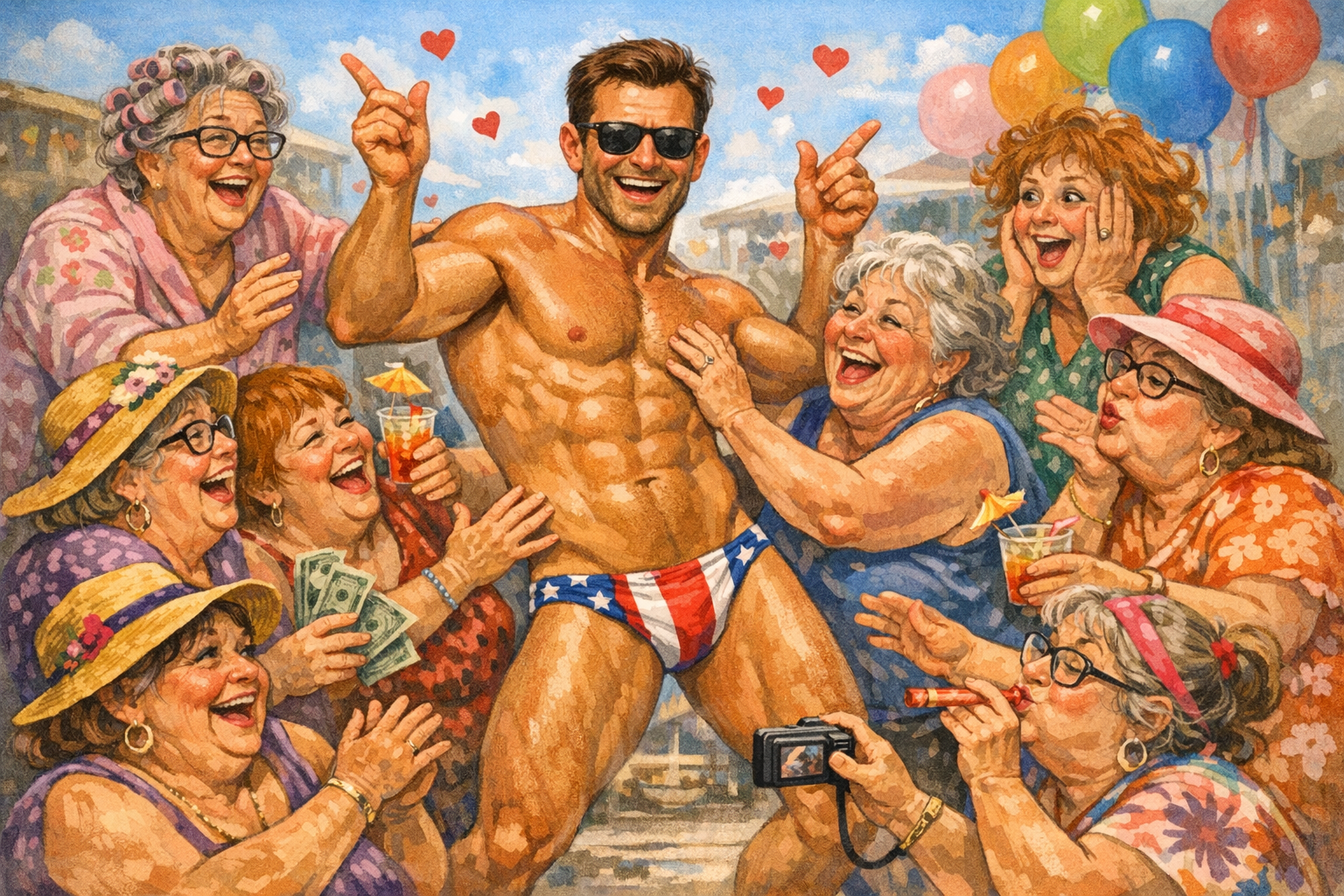
“If you’ve ever been to a male stripper’s joint,” Jane said. “You’ll see that nearly 100% of the female patrons of the joint are ugly, old, and out of shape women. There’s no way the males enjoy that?”

“Have you ever been fawned over?” I asked her. “Most women have. Most men haven’t. I’m sure gorgeous men get fawned over all the time, but most men don’t know they’re attractive, until it’s too late in life. They look back at pictures of themselves and realize that they were a lot better looking than they thought.” Women aren’t as generous with their praise. They seek to humble men. So, when a man gets fawned over by women, it doesn’t really matter to the man what the women look like.  

Everything in its Right Place 

I could never be a slob again. I’m not talking about the difference between clean and unclean as much as the difference between being organized and unorganized. Losing things bothers me more than being unclean. If I place a toothbrush on a bathroom sink, for instance, I’ll think about that toothbrush until I have a chance to put it in its proper place. If I don’t, I fear that it will somehow become lost before I need to use it.   

The History of Propaganda 

Most people have heard the phrase, “If we repeat the same thing often enough, people will believe it.” Evil historical figures have proven this is an effective tool to fool some of the people some of the times, but as Malcolm Gladwell wrote there is a tipping point to everything.

We’re all subjected to various forms of propaganda, everything from the more obvious political slogans to advertisements, but there is a moment somewhere between “I got it already” and “They’ve been pounding this drum SO often that I’m starting to think they’re up to something.” Some call this Message Fatigue and others call it the Backfire Point.

I don’t think this deduction requires a level of ingenuity or cleverness. It’s such a basic understanding of human nature that it’s kind of boring to read and write about. There’s one nugget that contributes to the survival of this myth, the stupidity of the man of yesteryear. Since most men of yesteryear lived without modern technology and conveniences, we all think they were a little dumber than we are. C’mon, admit it. We see old black and white daguerreotype photos of people, and we think hayseed, yokel types who barely knew how to read. “They fell for it,” we think, looking at them, and those of us who have iPhones, Google, and AI feel so much more advanced, even though we had nothing to do with those technological advancements, and we think we would never fall for propaganda. Or, if we did, we would have a tipping point, and they probably didn’t, because “Look at them. Look at what they wore.”

The ‘S’ 

I found a trivia question to stump the band: “What was the 18th president Ulysses S. Grant’s middle name at birth?” Answer, Ulysses. Wait a second, how did they get from Ulysses from ‘S’. Ulysses is his first name. His actual birth name was Hiram Ulysses Grant, but everybody called him Ulysses. If you had the opportunity to choose between the name Hiram and the central figure of The Odyssey, wouldn’t you choose the latter? Some sources state that the young Hiram Ulysses Grant hated his name, because his initials were HUG, but that doesn’t answer the question of how his official name went from Hiram Ulysses Grant to Ulysses S. Grant.

The confusion began after “Grant was nominated to West Point in 1839 by Ohio Congressman Thomas Hamer, who wrote Grant’s name in the application as “Ulysses S. Grant.”” Everyone called him Ulysses, so Congressman Hamer just assumed that was Hiram’s first name. Middle names weren’t as common in this era as they are today, as evidenced by the fact that Abraham Lincoln did not have one, so we can only assume that Hamer assumed Ulysses Grant didn’t have a middle name. The problem for Congressman Hamer was that the West Point application required a middle initial, and due to the fact that Hamer couldn’t just text Hiram to sort matters out, or call him, he decided to just fill the blank in that application to get it done. Congressman Hamer found out that Hiram Grant’s mother’s maiden name was Simpson, so he just added that famous ‘S’ on the application.

Aside #1 Harry S Truman middle name is ‘S’. It’s not ‘S’ period, because it’s not an abbreviation. His parents couldn’t decide whether to name him after Solomon Young, Harry’s maternal grandfather, or Anderson Shipp Truman, his paternal grandfather, so they compromised and just gave him the middle name ‘S’.

Aside #2  Grant’s fellow cadets at Westpoint noted the patriotic arrangement of Ulysses S.’ initials, and they began calling him U.S. Grant, Uncle Sam, or just Sam.

Aside #3 “In an 1844 letter to his future wife Julia Dent, Grant wrote, “You know I have an ‘S’ in my name and don’t know what it stand (sic) for.”

“Grant made several efforts to correct the mistake [Ohio Congressman Thomas Hamer made], but the name Ulysses S. Grant stuck.” So, the correct answer to the trivia question what was Grant’s middle name was Ulysses at birth, but an error by a congressman permanently changed his middle name to ‘S.,’ which was an abbreviation for his mother’s maiden name: Simpson. So, the error by a bureaucrat was compounded by a bunch of lazy, incompetent bureaucrats who didn’t want to do more paperwork? I can only imagine that when Grant attempted to correct the record, the bureaucrats   at West Point said, “Do you know how much paperwork changing a name involves? It’s incredibly tedious, and are you really going to fight for a name like Hiram?” My guess is Hiram Ulysses Grant didn’t give up easily, because he was a fighter, and the bureaucrats were talking about permanently changing his name on the record. My guess is the lazy bureaucrat pounded it home with a compelling argument along the lines of: “I think the congressman actually did you a favor by fixing the error your parents made by giving you the incredibly nerdy name of an accountant. Ulysses was the name of Homer’s warrior, and it could help you rise through the ranks of the military if you have the name of a warrior.”

Hiram Ulysses Grant did, in fact, rise through the ranks of the military, becoming General of the Army of the United States, a fourstar rank created for him in 1866. This rank made him the senior officer of the U.S. Army and the first person since George Washington to hold a comparable level of authority. Then, of course, he became the 18th president of the United States. If we could ask Abraham Lincoln how the Civil War would’ve progressed without General Grant, he probably would’ve said, “I don’t even want to think about that.” If Grant managed to correct the record and made Westpoint change his name back to Hiram Ulysses Grant, would Lincoln have trusted the fate of the nation to an accountant? I’m sure soldiers and generals offered testimonials to bolster Grant’s credentials, but Lincoln would’ve ended each reading with, “But his name is Hiram.” Some historians would suggest that the Civil War wouldn’t have ended as quickly as it did without the leadership, and some might add the utter brutality, of Ulysses Grant’s leadership, tactics, and strategies. Some suggest if it weren’t for him, the nation might not be united in the manner we know it today, and his stature might not have happened without the mistake of one bureaucrat and the probable laziness of a bunch of other ones. Now, you might say that I’m connecting and disconnecting a lot of dots to complete a story with ifs, buts, and what-ifs, but isn’t that how a number of stories of history were made and unmade?

“That’s My Name, Don’t Wear it Out!” 


“That’s my name, don’t wear it out!” was a sassy, cheeky way to respond to someone calling us out in the 1970s.

Generations who werent on planet earth when this line was in the hot space can’t believe we were so into it. When I put it in context for them and informed them that this was our playful way of saying that we did not fear confrontation, they didnt say anything. I told them it was the equivalent of, ‘Hey, I heard you the first time,’ when someone confrontationally called our name out a second time. When I told them that line could engender a “Woh!” from onlookers, they couldnt understand it. “It’s not funny, it doesn’t sound effective, and are you sure this wasn’t just a you thing?” ‘No, it was all over the movies, the TV shows, and the commercials,’ I informed them. ‘We really thought we were onto something with this line.’ I twisted and contorted this so many ways I wasn’t sure if I was trying to defend the line or pursuing the most objective response I could possibly get from the other generation, but when they said, “It just doesn’t work on any level,” the matter just closed. 

I could not be objective on this topic, because when this idiomatic expression, or saying, first hit the streets, I was in grade school, and all the cool kids were saying it. For a short time, it was the definition of a wise-cracking, cool fella making his way through the world. I tried to make it work for me to make it work for them, but I either didn’t have the level of creativity or the intellectual heft necessarily to pull it off. It was too situational, and I could never find the perfect situation. I don’t know if I needed an older brother, or a neighborhood kid to bully me into perfecting the nuances of such a situational joke, but it always sounded awkward coming out of my mouth. My struggle with this, even decades ago, left me almost incapable of providing an objective viewpoint.

Since I didn’t have anyone to teach me, when I’d hear the cool kids around me say the same thing more than once, I would ask them where they got it. How uncool is that? 

“It’s just something I say,” the cool kids responded, and I’d drop it after that. I didn’t know how to be cool, but I knew the pratfalls to avoid to appearing too uncool, and I knew it was so uncool to try too hard to figure out how or why something is cool. Cool is what it is, as they say. I knew trying to define the indefinable was not only difficult, it was self-defeating, but I’d obsess over trying to figure it out.

As usual, with someone trying to figure out something so nebulous and ever-changing, I overestimated my peers. I was always late to the party, but when I found out that the cool kids learned their favorite sayings from TV, movies, and music lyrics I couldnt help but be disillusioned by the whole process. I thought the difference between cool kids and me was their ability to organically create sayings. I wanted to be them, so I copied them, and I thought more of them. Learning that their sources were as simple as mine made it feel like all that I wasted a lot of time idolizing them. Then, when I saw one of their favorite sayings appear in a wiener commercial, and I realized I really needed to figure this out because I impulsively thought less of them, but I also realized that it said something about me too, because they were my personal inspiration for what it meant to be cool?

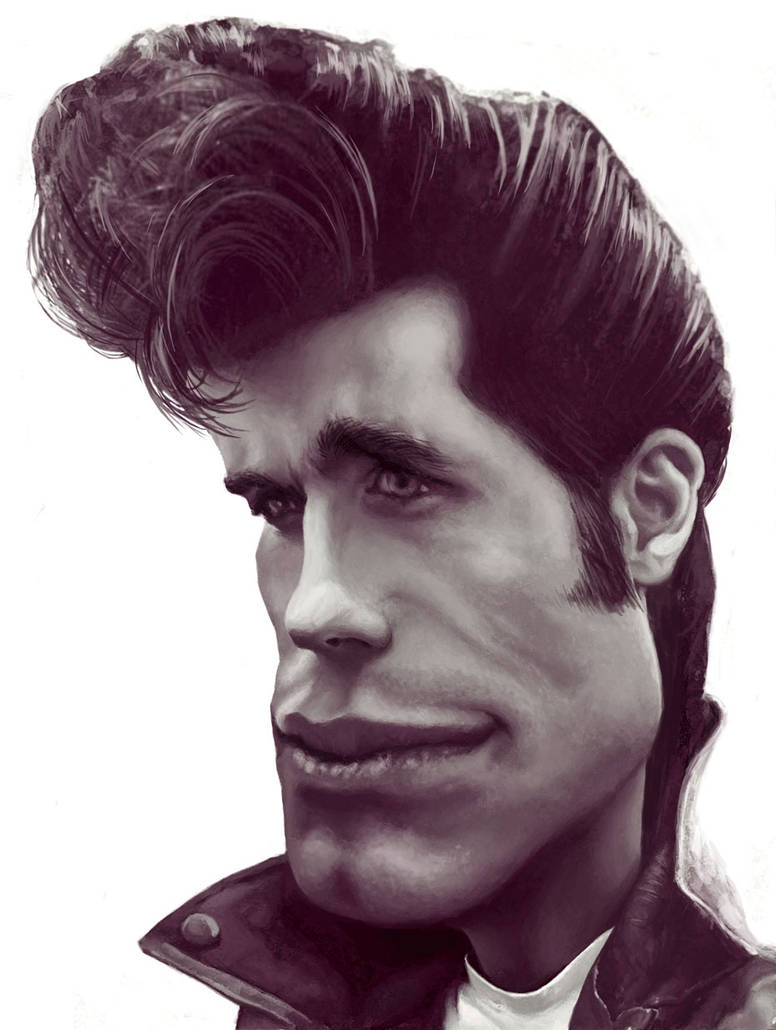
Another huge inspiration for my definition was Danny Zuko, but when I heard him say, “That’s my name, don’t wear it out!” I was so late to the party that I didn’t know that all of the cool kids got this line from that movie, because they saw Grease long before I did. I was also surprised to hear Danny Zuko say it, because I didn’t think he needed it. I thought he was so cool, so charismatic, and so everything that I wanted to be that I couldn’t believe he was saying what we were all saying to try to appear cool. It was the first time in my life that I thought someone was already so cool that they didn’t need to do anything to achieve that lofty title. I thought he was the personification of cool, and he had that it quality that the rest of us would never know. I wasn’t sure if I considered his effort redundant or overkill, but it tainted the character in a manner I couldn’t quite grasp. 

I was an eight-year-old who knew nothing about screenwriters and directors. I didn’t know that their primary job was to manipulate us into thinking their characters were cool, and I didn’t know that casting agencies were hired to hire supporting actors for the expressed purpose of further manipulating the audience into believing that Danny Zuko was cooler than we were. I didn’t even have a firm grasp on the idea that there was an actor named John Travolta playing the role of Danny Zuko who had makeup people to enhance his skin, hair stylists to fashion his hair, and wardrobe personnel to fashion him into a cool character. I knew I wasn’t seeing 90 minutes of a person’s life captured for my enjoyment, but I didn’t know how manufactured and choreographed the images on the screens were. I just thought Danny Zuko was the essence of cool, and when I envisioned what it meant to be cool, he was my prototype. 

I’d love to say I quickly processed the difference between the definition of cool and cooler than cool as effortlessly as John Travolta, and the team behind Grease did, but I didn’t. It took me a long time to grasp. The writers, directors, and supporting actors made it look so easy to be cool that I developed my personal definitions. We all did. We learned what lines to say and when to say them, but when Danny Zuko used that line we were all saying, it exposed the effort he put into it. If a Danny Zuko needed to learn the lines of the zeitgeist necessary to get in the club, in other words, then everyone did. When I later saw other screenwriters and other directors pursue the cool motif for the characters of their movies, it further exposed the effort to me. Danny Zuko and The Fonz were my prototypes for cool guys, and the rest of them were frauds chasing after that characterization.

If we could be cool by following their formula, my mind went to how do I become cooler than cool? If everyone followed that formula, what would they think of me if I refused to follow it? 

The first thing I learned is no one appreciates a dare to be different’ motif when it’s subtle and silent. We prefer the shocking and provocative definitions of that term. Quiet nonconformity doesn’t sell. It doesn’t impress people to the point that they want to be our friends. It confuses them, and they rarely seek to define that confusion. They often just back away. When we want friendships, especially in our youth, we have to offer the kids around us a comfortable place they know. I struggled with all this, until I lost my conviction, and I didn’t try to find it again for years. No one who knew me then, or now, would say I found a “cooler than cool” place, and if you asked them if I was even cool, they’d probably laugh, “I don’t think so.” They would probably also add, “But I can tell you that I’ve never met anyone quite like him.”  

That was kind of it. They knew I was different, but they couldn’t see how those differences were in service of anything, so I didn’t really see a return for my efforts. They just thought I was weird. 

Between ages eight and whatever age led to my personal age of enlightenment, I had no writers feeding me lines, and no directors giving me notes on how to project cool. I realized that I was on my own when it came to trying to figure this big mess out, because I wasn’t good-looking enough to play Danny Zuko, and my supporting cast was either not able or willing to play their roles in such a way that would manipulate our audience into thinking I was cool. The best course of action I found was “To be [my]self, because everyone else was taken.” I knew I’d run the risk of “impersonating my shadow” and I’d eventually become a shadow of my former self, but I already tried to be other people, I tried those masks on, and while I admit that it was a lot more fun than playing myself in this production, it never worked out the way I thought it would.