“Mirror mirror on the wall, who’s the fattest of them all.”
“Not you, ma lord, for you still have a rock-solid chin, and it’s normal for a man your age to have bosoms.”
 I believed him. I saw that picture I took ten years ago, and I believed my mirror when he told me that not much has changed since. Then the hair stylist spun me around to face a brand new mirror and a brand new form of reality.
“Hey, who’s the beer guzzling, Cheeto lover doing the Jabba the Hut impersonation?” The stylist pretended she didn’t hear what I said. I couldn’t tell if her delicate response was a result of her dealings with the mirror phenomenon, or if she didn’t know what to say. Whatever the case with her was, she found that the best response was to say nothing. Don’t add to the joke, don’t sympathize. Say nothing.
The little, square sunglass mirrors in department stores don’t tell us anything either. I used to think the mirrors were strategically small due to the limited space their manufacturer’s rented in department stores. If you think they want to display as many sunglasses as they can on the spinning rack, that’s what I used to think. The more I look into those mirrors, the more I think their manufacturers designed them to help us avoid seeing our double chins and everything else that a pair of sunglasses cannot fix.
***
Waste drives me batty. I’m not just talking about the more customary concerns we have about the amount of food we waste, or the amount of water we use. I’m talking about little things too. I’m talking about an obsessive quality that focuses on doing things like hanging your coat in a closet in the dark, to save electricity. I’m talking about finding something I love (as opposed to need) in a department store and putting it back to save money. My rule is if I still want it two days later money, and I think it’s worth the drive back to the department store I purchase it. I’m also talking about cleaning my plate, no matter how full I am, because I won’t waste food. Most of my obsessions, save for the latter, are quite healthy, but they also evolve some admitted obsessive traits. If I drink a bottle of water, for example, and someone else throws it away with some remnants of water sitting at the bottom, I might think about that amount of water for hours, sometime days.
 “Why don’t you drink that?” I asked a friend who was prepared to throw his bottle away with remnants of water at the bottom.
“Because I don’t want it.”
“So, you’re just going to throw that bottle away with perfectly good water sitting at the bottom?”
“Yes, yes I am,” they said before throwing it away.
***
Friends of mine who watched Buggs Bunny as often as I did know that I’ve been ripping that show off for decades. Those who haven’t find me somewhat, sort of funny in a peculiar way.
Those of us who have watched at least 4,000 monster movies know that if we have the correct worldview, savage monsters will not attack us. We also know that when it’s not convenient for the plot, they won’t attack.
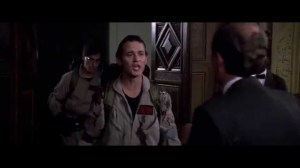 When aliens attack, I suggest that we try using bullets and any other technological artillery available to us on them. Our leaders might try to achieving some sort of peace accord with them, and our scientists might suggest a methodical approach based on reason. If the aliens are as intellectually superior as sci-fi movies suggest, however, the nature of beings suggest that they evolved into intellectual beings at the expense of their physical strength. If that’s the case, we should introduce them to brute force to see how they react. We can be sure that most of our moviegoers, and other creative minds, will insist that bullets won’t work, but what if they do? What if, in our exhaustive search for their vulnerabilities, we find that they’re just as susceptible to bullets, and all of the technical artillery, as we are. Would we pursue that? We might in the streets, as those battles would involve personal confrontations that lead to survival of the fittest, but would our world leaders follow suit? If they eventually did, and we achieved victory would it ring hollow for us? In the immediate aftermath we might celebrate our victory. We might hold parades for our heroes, and one of the heroes for a day might take to the mic and drop a Ghostbusters’ phrase on us “We came, we saw, we kicked their butts,” and we might repeat that glorious phrase for a day or two. After the glory of victory dulled, and we all returned to our daily routines, many of us will recharacterize our victory. The idea that we were able to devastate their inferior forces will leave many of us feeling disillusioned, and we will experience survivor’s guilt. They will recharacterize our victory as primal in nature, and they will suggest that, as a species, we haven’t progressed much since Genghis Khan. Some of us might even start campaigns that focus on asking the aliens to give us another chance, and the alien’s second planned assault will capitalize on that sentiment to divide and conquer us.
***
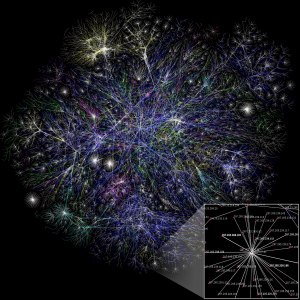 The Machine is a sci-fi flick in which a team of scientists devise a mode of communication to help us remember. They do not have the technology to develop internal mechanisms that could be inserted biologically, and even if they did, they decide that they won’t pursue it, because that might create some form of compulsory participation. These scientists are wary of anything having to do with compulsory participation that could lead us to characterize their intentions as ominous. They simply want to develop a intangible means to help us communicate in a way that we never forget.
“This might not be such a good thing,” Paul says. Paul’s team of technological scientists are devoted to the communication platform of the program. Paul’s concern addresses the programs of the remember team.
“Why,” Paul asks rhetorically to deflect any suggestion that he is jealous of what the remember team is creating, “because the power to forget is almost as vital to mental health as the power to remember. Some psychologists say that if we weren’t able to forget our worst memories, or our worst thoughts, as we grow, it might stunt mental and emotional growth in such a way that we might all become basket cases forever trying to correct the past.
“I saw a documentary that interviewed people with a memory syndrome that is the opposite of amnesia and other forms of memory disorders listed. It’s called hyperthymestic syndrome. Sufferers suggest that they remember everything that ever happened to them so well that they relive them in real-time with real-time and acute emotion. Some of them are miserable, and some of them are basket cases because of it,” Paul adds. “If our program allows people to never forget, I submit, they never will, and they will pay the cost for it in ways we cannot foresee.”
“Perhaps, we shouldn’t have bad thoughts then, Paul,” the lead scientist proposes. “Perhaps the collective can teach other people not to have bad thoughts.”
Taken aback Paul says, “With all due respect sir, I don’t think you recognize the totality of what you’re saying.”
“Let’s not forget the primary directive of [the machine],” the lead scientist deflects, mentioning its temporary name. “It’s communication. Communication in a way Alexander Graham Bell couldn’t even dream. The acute memory function of our [machine] is not its sole purpose, but I think everyone here, except Paul, will admit it will be a wonderful byproduct.”
Paul does not concede on the issue, but he agrees to shelve his concern as they devise a way to pitch it to corporate leaders. “I don’t like the name The Machine first of all,” Paul says. “We need to develop a name that suggests that The Machine can bring communities together. A grandmother can keep tabs on their grandkids without having to call their estranged children, long distance friendships can be maintained, and a number of other communications of the sort. We need to focus on that. We need to describe how people can use this utility to gather together in intangible ways that supersede the telephone.”
“I take it you have an idea for a name,” one of the other scientists says.
“I don’t,” Paul replies humbly facing down the challenge, “but I think the name should involve properties equivalent to a net or a web that brings people together.”
“A worldwide web?” the scientist asks. “That sounds a little ominous, like if you step into the web you’re trapped there.”
“I agree with Paul though. The idea of a worldwide gathering sounds compulsory,” a fourth scientist says, “it can lead one to think if they’re not interacting, they’re missing out, which has its own marketing possibilities, but it can lead, as you suggest, to a more ominous sound. How about we focus our presentation on the idea and power of two people interacting? You can interact with your grandmother in a way different than by phone. Interacting, interweb, or internet?”
***
 Why did one group of people separate from the primary group of their day and eventually start speaking an entirely different language? When one ancient tribe splintered off from the primary society of the time, their language began to deviate from the primary language. The idea that they developed different customs is not as remarkable, because they did so to adapt to the climate of their new land, but why did they develop a different language? The initial deviations were probably subtle at first, but some began to deviate so much, over the course of hundreds of years that they sounded nothing alike. English and German, for example, might have some similarities, but for the most part the sounds are so different, they almost sound like communication from different beasts. Then, we have the stark differences in sounds from the neighboring countries France and Germany. French sounds fluid and poetic, and German sounds anything but. This is to say nothing of various forms of communication heard in countries that speak Mandarin, Arabic, and any of the other guesstimated 6,909 + languages now spoken throughout the world. Were the initial transitions so gradual that the communicators found them unremarkable at first and thus not noteworthy, until they incrementally evolved into a different language?
As we spread our search our search for answers out, we eventually find ourselves back to some point of origin, or the initial, primary form of communication heard throughout the relatively small world of communicators. There are a number of theories regarding the when, where and how various languages started, including the Biblical story of the Tower of Babel, and it’s Greco-Roman parallels, but at this point in history, linguists have no definitive, documented history of transitions people made to other languages and other forms of communication. The history of languages is well documented, of course, but in my research there are no definitive answers, and I must admit I’m almost as uninformed as I am curious about the transitions in language that led to the phenomenon of so many variations people around the world have for describe the nouns around them and the verbs of their every day life.
***
 If I ever achieved some level of notoriety as an artist, I would learn to pick my battles. In the beginning, I would probably view every battle as germane, as people questioned everything from my art to my integrity, but after a while I’m sure I would learn to disregard some pot shots.
A popular artist has to deal with many battles, on many different fronts, on a daily basis. As we see in customer reviews on Amazon, and elsewhere, every piece of art is either too something or not something enough. Most artists would say, as Don Schlitz once wrote, “You got to know when to hold ’em, know when to fold ’em, know when to walk away, and know when to run.” Pick your battles, in other words. One battle I would draw up troops to fight is the ‘fake’ charge. When discussing artistic works, or artists, the ‘fake’ charge is often the last refuge of a critic who cannot express themselves well. Fake is such an arbitrary charge, and it’s subjective, but once it begins to gather moss, it’s so hard to defeat. Music aficionados probably hear this charge 100 different times about 100 different artists when discussing music. The contrarians often say fake and sellout in conjunction with one another, and most of just roll our eyes and walk away, knowing that the person actually knows little to nothing about music, but there are times when it sticks. A friend of mine said he thought the music bands Green Day and the Red Hot Chili Peppers (RHCP) were fake. I never enjoyed the music of Green Day, but I did like the RHCP at one time. I probably considered them susceptible to the charge, but after that man dropped the ‘fake’ charge on RHCP, I couldn’t listen to them without thinking how artificial they were. I didn’t consider them fake over night, of course, but with every listen I became convinced that if they were more organic in the early years, but they lost it over time, in their efforts to prolong their career. Saying that an artist is fake is so arbitrary and impossible to prove, of course, as anyone could say as much about any artist who ever created more than one piece of art, and it’s almost as impossible to disprove. I don’t know the legality involved, but if an influential critic from a major magazine levelled such a charge against me, I would probably expend all resources to challenge that assessment. I know the man’s opinion would be protected by the First Amendment, and the critic could say that it was just his opinion, but I would take that fight to the stage, in the media, and anywhere and everywhere I could to defeat that critic’s charge in the court of public opinion. My motto for this fight would be, we just can’t let this go, because once it sticks we’re done.
 “Before you purchase a ticket go smell a bus,” I said. “Ask the company if you can have a smellment inside a bus to inhale the interior. Walk around the depot and smell some of its passengers. Have you ever smelled pungent B.O. before? Now imagine that smell crawling all over you for nine hours.
 “I thought conceding might also end the cold war I was having with H-2, until I realized that when I could only smell the Gardetto’s, it only served to increase his powers,” I said. “With the advanced state of delirium I was in, I wasn’t able to tell if I was dreaming or not, but at some point in our travel together he altered into some some form of hybrid that reminded me of a Cyclops in Greek mythology. He had the same face, and the same hands were tossing Gardetto’s back to me in J-3. He fed me in such regular intervals that I came to expect them. When it took him too long to feed me, I cheeped like a baby bird, but he did not regurgitate a Gardetto into my mouth, as I feared he might. He’d just turn around and tossed one back to me.




 Rilaly