The Unfunny Comedian II: Howie Mills


“That bit you did about being cut from your high school gymnastics team because your testicles weren’t big enough was something son,” Howie told Barry. “Is it true?”

“No,” Barry said. He felt a warm glow for the compliment, and he considered the backstory almost as funny. “I-”

“Shht, don’t tell me the story behind it,” Howie said, cutting Barry off. “Let me live the line.”

Was that a compliment? Barry wondered, as he sat on a windowsill next to Howie, waiting for another comedian to join them. If it was, what an odd, backhanded compliment Barry thought. Let me live the line. Barry didn’t receive too many compliments, so he soaked it in for a moment.

Barry returned the compliment by reciting some of Howie’s best lines, and Howie was somewhat receptive but mostly dismissive, saying, “I’ve been doing this a long time son.” The man called Barry son from the moment the two of them met backstage when Barry was all but fawning over the man, but the manner in which he addressed Barry didn’t feel old world. As Howie continued to do it, it began to feel more and more familiar. Let me live the line might’ve meant that Howie wanted to digest it to use it in his own act, Barry supposed, as he told Howie what he was doing, going around the country, and if that’s the case then it might be the ultimate compliment. Barry flirted with the notion of coming back to Chesapeake Bay for Howie’s the next second Tuesday of the month just to see if the man lived the line well enough to develop material around it.

Howard Mills performed in Chesapeake Bay, Maryland every second Thursday of the month. Barry caught the man’s act in the brutal cold month of February. Howard Mills wasn’t hilarious, but Barry considered the man’s act original. He wanted to know more about Howard, so he sought him out after the show. Barry rarely sought out other comedians after a show. He was the newbie so he felt awkward crossing that boundary with a more veteran comedian. He often let it happen in a more organic fashion. Barry was always one of the first acts, and he would watch every one who followed him, and wait for those who gathered after the show. After the show, the performers often gathered to eat good, inexpensive food that one of them knew.

In just about every hamlet, town, and city, the comedians and other performers, loved “after the show” conversations. Most comedians romanticized comedians like Jay Leno, Jerry Seinfeld, and Dennis Miller, and anytime those comedians gathered, they always talked about the after show conversations they had in previous eras. They would usually find some local dive someone said served something delicious. When Barry sought Howie out after the show, Barry expected the man to drop pearls of wisdom on Barry, but in that regard he was disappointed. As with most funny people Barry met, Howie was relatively quiet and somber off the stage. 

“I’ve done a number of shows now,” Barry added, as if to change the subject in his own mind while concluding the subject of their conversation, “and I’ve never seen an unsung comedian as funny as you are Mr. Mills.”

“It’s Howie, son. It’s just Howie,” he said, “and thank you. I really enjoy doing this. Preparing material for these little show keeps me on the straight and narrow.”

“What’s the straight and narrow?” Barry said. “I don’t know, but it’s better than the curvy and wide. Trust me. Been there. Done that.”

“No,” Howie said. “I appreciate the effort, but no.”   

When Angela, the other comedian Howie invited to join them, exited the bar, Howie and Barry stood up to join her at the local coffee and eggs diner. They introduced themselves, and they all complimented one another on their act, as they walked across the street to the little diner.

“If we go in there,” Howie said after Barry reached for the door for the diner, and before he could touch it. “Let’s just get coffee. I have farm fresh eggs and bacon at my house, and you’re both welcome to it.”

Angela and Barry looked at one another. Angela pumped an eyebrow at Barry, and they both looked back at Howie.

“There’s absolutely nothing wrong the eggs and bacon here,” Howie said, “but they’re not farm fresh. I can’t eat anything else now.”

“I don’t need coffee,” Angela said.

“Me neither,” Barry said.

The three of them talked about their favorite bits and routines through the years, as they worked their way through the grid of Chesapeake Bay to find the paid parking lot where Howie parked his car every second Tuesday of the month. This long walk annoyed Barry, because he was freezing. It was the middle of February, and they were on an endless trek for a car. Barry decided he made a huge mistake not going to that first diner, where it was all warm and toasty. 

Howie mentioned the comedy album he cherished when he was younger. “The Button-Down Mind of Bob Newhart,” he said. “I listened to that album so many times that I memorized it. I know the jokes so well that I even have the tones and pauses down. It’s the reason I do this,” he said. Howie then listed off other old-world comedians Angela and Barry knew who, he said, laid the groundwork for the comedians we all know and love. “He doesn’t get the credit nowadays, but there was a day when Newhart was the king of comedy.” He listed off other comedians who didn’t receive the credit they deserve, but Howie mostly spoke of unknown comedians who never made a dime outside Chesapeake Bay. 

“Sam Kuhnz was my favorite,” Angela said, “but he wasn’t a local. He was from Chicago.”

“Oh, that’s right. I knew that.”

“Sam Kuhnz strolled through our town and just ripped it apart,” she added. “That guy was so good that everyone who saw him saw it. Sam saw it too. He had a timeline all mapped out in his head. He thought an appearance on Letterman or Leno was just around the corner for him. He worked his routine out every night, kind of like you Barry, going to strange, small places around the country. He did that stream of consciousness style riffing, like you. He told us about how he just laid audiences out in Vegas, got a request for a return to NYC, and he just got done ripping Chicago apart. Then, he hit a delay in his timeline, a holding pattern. I don’t know what happened, and either did Sam. He rewrote all his best stuff over one hundred times, and he did a greatest hits package of his best routines. He took the bits and pieces that all worked, and he put some quality minutes together, but it just didn’t pan out over the course of two years. He got impatient and really depressed about it, and then Sam Kuhnz took his own life. I think about him almost every day. Still the saddest thing I’ve seen in comedy.”

“That’s what you need Barry. You need to ‘greatest hits’ your routine,” Howie said to Barry. “I love the riff thing. You’re trying to keep it fresh, I get it, but you need to keep notes on what works best and put together a greatest hits bit.”

“I have notes on what works and what doesn’t. I have just about every minute of every routine I’ve done written down,” Barry said. 

“There you go.”

When they finally arrived at Howie’s modified Charger, they found out why he paid to have his car parked. “It’s worth it to avoid some idiot door dinging it, keying it, or worse,” he said when Barry asked him about it. The Charger was immaculate, and Howie drove it faster than any senior citizen Barry ever met. The three of them attempted to speak, or Barry did anyway, but Angela and Howie couldn’t hear him over the sound of the Charger, and they found his attempts to speak over it hilarious.

The farm fresh eggs and bacon, and the fresh squeezed orange juice Howie didn’t mention were as advertised. “Maybe I was hungrier than I thought, but these were about the best eggs and bacon I’ve ever had. Thanks Howie!”

“You’re welcome son,” he said. “That must be Nebraska to be that grateful.”

“I’ve heard that.”

After they finished the meal, Howie said, “I’ll let you two clean up. I’m beat.” He then retired to his bedroom.

Barry laughed a little watching the man walk down the hallway.

“This is his home?” he whispered to Angela. “We don’t even know this guy, and he doesn’t know us. Isn’t he afraid we’ll steal something?”

“What’s he got to steal?” Angela said. “He’s a lonely old man.”

“All right, but you have to admit this is odd.”

Angela shrugged.

“Should I go remind him that he drove us over here?” Barry said. “Should we call a cab? What do we do here?” he asked with a bit of confused laughter.

“We clean up,” Angela said. She stood, walked over to the oven, and untied the apron off the handle and put it on her waist. She removed her plate and Howie’s and put them in the sink. She then moved to Barry’s plate, but he stood before she could. He grabbed the other apron on the oven handle, and he helped her wash them. 

“You do good work Barry Becker,” Angela said after he placed the final dish in the retainer to dry. When he turned to reply, she was in his comfort zone. He didn’t see that coming. He instinctually backed up a step and kicked his back heel against the oven’s aluminum bottom drawer. The hallow, aluminum clang could be heard throughout the house, Barry was quite sure. Angela didn’t laugh, and her smile was a warm one that proceeded an investigatory, small peck on Barry’s lips. Was that gratitude, Barry wondered, was that payment for a job well done? Before he could arrive at an answer, she was on him, kissing him.

The next morning, they had the more farm fresh eggs and bacon and fresh squeezed orange juice. This time Angela prepared them for Howie and Barry. They ate it on TV trays in the living room, silently watching a gymnast perform on the still rings.

“Look at the testicles on that one son,” Howie said, speaking through a mouthful of bacon.

 Son? Barry thought, Why is he still calling me son?

“That’s some huge ratings right there,” Howie said. “If you had a unit like that, you probably would’ve made the Olympic Team. Yours couldn’t even make the high school team.”

“Dad!” Barry said impulsively. The tone he used suggested he was embarrassed before Angela by his father’s comment. He figured this was some sort of improvisational act Howie was playing, and Barry didn’t mind playing along. After saying it, however, he looked over at Angela in the din of uncomfortable silence that followed. He measured her reaction, then Howie’s.

“I tried to tell you to pursue augmentation,” Howie answered, “but you had to stay natural. You think those are natural son?” he asked pointing at the gymnast on the tube.

“Barry is well-equipped to handle most situations Mr. Mills,” Angela chimed in.

“I tried to tell you to pursue the career as a jockey,” Howie said. “It’s a career more suited for a man of your … limitations, but you don’t listen to your old man. You never listen.” Howie added looked over at Barry after saying those last three words. His eyes were steely, loaded with condemnation. 

Barry laughed at that, but Angela and Howie weren’t laughing. Howie wasn’t even smiling, but Angela was. She smiled at him proudly, but offered nothing else. Howie turned back to the gymnastics broadcast, forking eggs into his mouth. Angela put a hand on Barry’s back, and she patted his back to console him, while looking at Howie with some unspoken grievance.

What is going on here, he thought, weird doesn’t even cover it. It’s an act. This whole thing is an improvisational act. Barry thought of calling this whole production out, but he didn’t know how extensive it was. He assumed Angela was the butt of the joke at first, but the climate of the room switched to the point that he thought he might be. If there is a butt, Barry thought. Is there a butt? Is this an improvised joke? Do you guys know each other? What’s going on here? Then it struck him. “Let me live the line,” Howie said back when they were sitting on the windowsill waiting for Angela. Are we living that line, the line? Am I living the line right now? I don’t get it.

“What doesn’t make sense in this life, might in another,” he thought, remembering the quote from his fellow comedian, Shell Cieslik. Whether he was ever able to make sense of this situation, he decided it would always be unreasonable. The question Barry asked himself, based on the George Bernard Shaw quote was, should I adapt myself to their unreasonable world, or should I force them to adapt to my more reasonable one, if … if all progress, as Shaw said, depends on the unreasonable man? Does the reasonable man travel around the country doing nightclubs and festivals? Is that why I was attracted to Howie? Is that why they’re attracted to me?

He thought of talking about it with them and investigating it based on the Shaw quote, when he looked at his phone.

“Holy crap! I gotta go,” he said downing the remnants of the fresh squeezed orange juice. “I’m sorry to cut this short, and thank you both for the delicious meals, but you gotta give me a ride back to my car.” As was often the case with Barry Becker, further analysis would have to wait. It was Friday, and he had to return to his hotel room, his laptop, and his job as a fraud analyst.


The Unfunny Comedian: I Love to Eat


“I love to eat. Who here loves to eat?” Barry Becker said to open his first show in Waukee, Iowa. “How many of you live to eat? I’m talking to the people who love to eat tonight. C’mon, how many of you love to eat? Let me hear you!”

“That line never gets much applause. Most applaud politely and softly, thinking, ‘I don’t know where you’re going with this, but yeah, I enjoy eating a thing or two.’ Very few people leave their seat with, “EATING! YEAH! Sing it sista!” Yet, we have to eat food to sustain life. It’s true. Look it up. In your research, you’ll find that not only does eating food sustain life, it provides the protein and vitamins we need to maintain energy levels and strength, but that doesn’t mean that we’re going to rise up and scream at the top of our lungs to express our passion for it in an open forum like this one, because people will think we’re pigs

“Even those of you who were on a half-bun, ready to rise up and scream your heads off about the glory of eating, won’t do so on the first date. It’s just … It’s not a good look. Most prospective lovers won’t mind hearing that we enjoy eating, as long as we do so in moderation. They don’t want to hear about our plans for massive weight gain. “You like what you see here, babe, because there’s going to be a whole lot more of it soon. Once you start to love me, and make me more comfortable with myself and my physical appearance, it’s only a matter of time before this,” Barry said loosely circling his belly, “becomes a big mess of Frito’s and Skittles. That’s right, this is only the beginning. I love to eat hon’.”

“Women don’t demand skinny, most don’t anyway, but they don’t want us to be all hooting and woo hooing about it either. They do it, though. That’s right, they don’t mind talking about how much they love to eat, because they’re all thin and stuff. They’re not afraid to share it with the world. “I love to eat!” They say it all the time. Really? You love to eat? I don’t think you do. Here, here’s a rack of spare ribs. Prove it!

“Starting today! Right now! If you’re a little chubby, or planning to be, shout it with me. “I love to eat!” Shout it loud, shout it proud. I like sleeping, and sitting around and do nothing for unusually long, unhealthy stretches, but nothing compares to eating. 

“Have you ever had a friend say, “Let’s go grab something to eat, and then we can-” Wait, wait, hold on, hold on, there little doggie. For me, there is no and then. I don’t know what you plan to do after this meal, but the meal is the event for me, the night out, the fun. I’m sure your other plans will be a blast, but I’m old, and keeping these beautiful curves ain’t as easy as it used to be, so I’m not into your and then. If I’m only going to be able to eat two meals a day now, and one of them has to be a light one, and you’re going to tell me to reduce my sugar intake and cut back on all those delicious, salty snacks that are probably going to lead to a painfully slow, premature death, you better bring your A-game if you’re going to ask me to have a meal with you. Use your words. Seduce me.

“Hey, I want to live a long life as much as the next guy. I want to live so long that someone at my funeral whispers, “Good God he was old!” and I know I’m going to have to sacrifice some to get there. At some point, though, I’m going to have to sit down with a spreadsheet with one column titled, ‘How long do I really want to live?’ and the other titled ‘How much fun am I having here?’ where I add, multiply, subtract and divide the quality of my life from a desired quantity.

“Meals are the event of the day. They’re what we look forward to throughout the mind-numbing hours of inputting data into a computer. The meal is our reward for putting up with the family, home repairs, and the dog that we wanted so bad at one time. We do what we’re supposed to do. We drop the kids off at school on time, pick them up on time, and we work our tail off to crunch the numbers for Mr. Jamison to try to get one small smile out of him, and then we’re supposed to go home and eat a sensible salad with a side of broccoli? Screw that! I want meat. I want a steak. I want a big old artery clogging ribeye, with a side of mashed potatoes and a beer as my reward for putting up with all that.

“I’d love to eat all I want and be as slim and trim as you, so I don’t have to see all of my chins in photographs, but to do that they suggest that we might want to consider skipping a few meals, or at least think about mixing in a salad here and there. Have you heard this joke? This ‘Feel free to mix in a salad’ they say, or, ‘Have you ever heard of a salad?’ Yes, yes, I’ve heard of salad. Somebody, somewhere told me about how they ordered a salad instead of a steak at one of the finest steakhouses in our city, because he thought he could use a little more ruffage in his diet. He didn’t order it as an appetizer. It was his main course. He wanted to be healthy, and he thought it might help him live longer. You can eat salad with a side of broccoli all you want, to live longer, but I got news for you, brothers and sisters, you’re probably not going to outlive me as much as you think. I’m not going to live forever, I know that, we all know that, but while we’re here we should live like we’re going to die tomorrow, and a portion of that means I’m going to eat whatever the hell I want.

“If you don’t view meals as the event of the day, it’s because you’re not married. The first question the wife hits you with when the two of you arrive home from work is, “What do you want to eat tonight?” It happens so often, you should be prepared, but you’re not. “Ah, crap, I didn’t even think about it today, sorry.” It’s almost stressful. You answer, and she immediately vetoes.

“I don’t want to eat there, Henry. We ate there so recently.” Why is it so important to space out restaurants, because if we eat at the same place, in a too narrow a space in time, it will ruin the event of eating that particular meal. “Let’s try something else,” she says, “and I don’t want red meat tonight, and no more pizza, for God’s sakes Henry.” Ok, well, I don’t know where to eat then. You pick. “I picked last time.” This unlocks the dreaded ‘who picked last time?’ phase of the back-and-forth. Why is this important, because you both know your tailbone is on the line to pick the greatest place to eat every time out. She picked last time, and the two of you both know what an epic failure that was, and she can’t take the pressure of picking two times in a row, especially after that last one.

“Do you have these little, internecine battles with currents and undercurrents of tension flowing back and forth between your words? We all do, right? Eating is what we must do, and what we talk about nonstop. The what, when, where, and with whom are we going to eat tonight dominate all discussion topics. “I don’t want to eat at that place, because I hate their side items. The entrees are all right, I guess, but their sides are so ordinary and bland.”

“If you’re anything like me, you take such criticism personal. You have no stake in the success or failure of that restaurant. You don’t own any of the corporation’s stocks, but you love their food, and she knows it, and that agitates us, because she seems to reject everything, we hold dear. She doesn’t do it with that purpose in mind, and we know it, but we like that place so much that it’s kind of our place, and some weird part of us takes proprietary ownership of that place in our marriage to the point that any insults directed at it are personal. Yet, we abide her veto power, and we come up with another place. “I don’t want to eat there, either, the service sucks, and their bathrooms are dirty.” Their bathrooms are dirty? I’ve heard this more than twice. How did the cleanliness of a bathroom become a bullet point in this debate? What are you going to do in there? Exactly! You’re going to do your part to do your part to dirty it up. “Cleanliness of bathrooms, she says,” we mutter as the squabble comes to a close.

“Except, we don’t mutter that, because we know what starts out as a minor rebuttal can turn a back-and-forth discussion into a squabble, which can lead to a back and forth that can somehow escalate into an argument, and on rare occasions even a fight. A fight over where to eat? If that’s not a first world problem I don’t know what is. The larger point is that the two of you will never look back on the incremental progressions of this fight with a laugh, because it’s such a silly thing to fight over. You won’t, because you know that this is the meal, the hallowed parent’s night out meal. The parent’s night out meal is not just important, it’s an existential pivot point. It might not be that substantial, but we know that every time we have to choose that perfect place. If we want to continue to enjoy the freedom and fun that come with our Tuesday nights, and we hope to keep our marriage exciting and new, we know we have to do this night up right. We have to plan, discuss the details of that plan, and iron out any differences to one day, hopefully, look back on this night as that night. “You remember that night, right?” The ‘that night’ designation is the gold standard for all nights in romantic relationships, and those of us in such relationships fear we might never get back to them, and there’s no sense in trying to duplicate them either.

“Why don’t we just eat at home?” she says as we enter the ‘give up’ phase of our process. I do not want to eat at home Mildred, we always eat at home. “It’s healthier and cheaper.” It’s not healthier. Do people ever ask you that question? They ask me that all the time. ‘How often do you eat out?’ It doesn’t matter what we say. We could say we haven’t eaten out since the Coolidge administration, and they’d say, ‘Oh, that’s so unhealthy. You have to eat at home more.’ Screw you, I like to eat out. It’s special, and I’m paying them to treat me special. When they don’t, God help them, I’ll rage. When people say it’s healthier to eat at home, I say, “Doesn’t it depend on what you eat, no matter where you eat it? What if I chose a healthy entrée and healthy sides at a restaurant? Now, I don’t, I won’t, and we all know I won’t, but what if I did?  

“When we’re not talking about what we’re going to eat, we talk about what we ate, and where we ate it. Have you eaten there yet? No, OhmiGod, you must eat there, before they have to start feeding you through a tube, you’ve got to eat there. We argue about the best places to eat and what to eat, because we love to eat.

“You are what you eat. We’ve all heard that. I have a friend who won’t eat chicken. Chicken. I understand not eating red meat and pork, but chicken? She said she doesn’t like the texture. Every time I run into her, ‘How could you not like chicken?’ is the first and last thought in my head. I have more of a problem with her than I do vegetarians. I actually respect vegetarians and vegans. I could never be one, but you have to respect the amount of discipline it takes to go into a backyard brimming with all those gorgeous smells of red meat and pork and say, “I think I’ll take the beans, lentils and organic chia seeds on that side platter over there.” I take my hat off to the, because I could never do it.

“I respect you if you’ve managed to limit your diet to legumes, flax, and chia seeds, and you only drink water that comes from the finest springs in Demark. I respect anyone who can limit their diet in that manner, but my question is always why? Well, to be healthier, they say, and being healthier actually leads to more happiness. I would never say that consumption alone leads to happiness, but it’s definitely part of the equation. If you doubt that, try having someone try to take it away from you. I saw that firsthand. Someone very dear to me told his caretakers he would rather die than give up oral consumption. He went to the extreme of threatening a lawsuit over it, because when someone threatened to take eating away from him, he wrote: “I’d rather die! Eating is the only joy I have left in life, and I’d rather die than have that taken away from me.”

“Some of us who have no limits on our joy of oral consumption choose lentils and legumes over barbecued ribs and steak, because they think those decisions will help them outlive the rest of us. They might be right, if we take accidents and other freak occurrences out of the equation, but will they be happier? It’s a leading question, because I know they won’t. They can’t be happier. We’re talking about the quality of life here.

“Eat eggs,” they say. “Eat tons of them. They’re nature’s perfect food.” “Don’t eat eggs; they’re evil.” What? “It depends on how you prepare them.” Drink coffee, don’t drink coffee. Eat steak, don’t eat steak. Eat butter over substitutes, and everything your body recognizes in the digestion process. Everything in moderation: Eat less, play more.

“Various studies suggest that if you eat less, you will have more energy to play. It makes sense and it doesn’t. We need food to sustain energy levels, but if we eat too much, the digestion of it saps our energy. Even without the science we know what happens when we eat huge. To prove their point, the study brought on some fella who tight ropes the very lowest levels of caloric intake possible. He says he’s happier and healthier than he’s ever been. I don’t question the science, but I know what I know, and I know that if I go out to eat at a big steak house, and I choose salad with a side of broccoli, I’m not going to be happier. I might have more energy, and I might be healthier, but when I’m 105, playing pickleball and parcheesi, I’m still going to be thinking about all the steaks I passed on in life. Healthier? Yes. More energetic and playful, sure, with some asterisks. Happier? No.

***

“You see me here tonight. I could stand to lose what 10, 20 … 30 pounds?” Barry asked. He turned to an audience member with a smile. “You think I could stand to lose 40?” All right, I could stand to lose a lot of weight, but I’m not a glutton. Yet, I receive sensorial joy from eating delicious food, and I find going to a restaurant and eating their food eventful. I, like the distant kings and queens of yore, get to point at a menu selection, “I shall have your finest meal on this eve.” When the server walks out with my food, or what I think is my food, most of them understand how majestic we consider their arrival. The ones who do it up right, share a knowing smile with us, and they add a very subtle element of pageantry to their arrival. If you watch them, the best of them, they have it in their stride, both of us knowing our moment has arrived. They also have a big, glorious ‘your moment has arrived’ smile on their face.

“We all know this ‘your moment has arrived’ smile. When it’s directed at us, it’s glorious. I think, I think she just directed that smile at me. Praise the heavens, she did. When I was younger and more attractive, and young women gave me that ‘your moment has arrived’ smile, it meant something entirely different. It took me a while to deal with the fact that that’s over for me, but I’m okay with it now if it means food. I’m okay with it, because when I see that smile now, it comes after I saw all the other tables around me have had their moment arrive first, while I silently implored my server to bring my food.

That smile suggests she knows what we’ve been through. Even though were good little soldiers, silently waiting, she knows. We know she knows, because she a couple minutes ago she stopped by to say, “Don’t worry, your moment is near. I just checked with the cook. It will only be moments. I promise.” Then it happens. “Look, there she is! She has that big smile and that majestic stride. She knows. She knows, and she’s still young enough, and she hasn’t done this so often that she’s lost her enthusiasm. She loves this moment as much as we do. “Wait a second, did I see pork on her tray. I think I saw pork. No! God, no!” That smile was for someone else. If feels like, in a weird way, that’s hard to explain, that she’s cheating on us, when she gives that big, glorious ‘your moment has arrived’ smile to someone else.

“What the hell is going on here?” we say, rolling our head up to the heavens. “I’m going to say something.”

“Don’t,” the wife says.

“I’m sorry, I have to say something. This is getting ridiculous.”

Then the true moment arrives, and the server knows firsthand what this means after everything we’ve been through together. She has a majestic, almost parade-like stride to deliver our food. How many of us go to the bathroom, hoping, just hoping that our moment will arrive while we’re in there? We all do this right? We all think things up to pass the time until our moment arrives. We talk. We look around at our neighboring tables, and we whisper awful things about them just to waste time, until our moment arrives. We go to the bathroom, and some of the times it works, but most of the time it doesn’t.

“And you, you in your distant, ivory tower of health and nutrition, you want me to give all this up? To what? To live longer? You’re telling me that I shouldn’t go through the cinematic highs and lows of food arrival for nutritional and health reasons? Yeah, I’m not going to do that, and I’m not even going to cut back, even if it means I’ll only live to 65 as opposed to 105.

“The event today was this big, old beautiful ribeye. Ribeye was the word that popped into my head when I woke up today. Do you hate mornings? Everyone does. We hate waking up? Today, I sprang out of bed singing, “Good Day Sunshine, Good Day Sunshine!” and I was doing it with this smile on,” Barry said pointing to an exaggerated, toothy smile. “This is my ribeye-eating smile. Ribeye was the first thing I thought about when I woke up, and it was the only thing on my mind when people spoke to me. They all became a Simpsons’ jokes, talking ribeyes.

“It sang out to me, this ribeye, calling me like some evil siren beckoning me to my doom. I couldn’t understand the lyrics, but I can tell you that she had a beautiful, alluring falsetto voice.  

“When our moment finally happened, the server slid that big old block of meat in front of me. I love everything about that moment, the majestic arrival, the “Who had the ribeye?” question, and the, “Right here!” answer I give with pride and joy of ownership in my voice, followed by the almost cinematic sound of a plate sliding across the table. These are a few of my favorite things.

“When I finally have that big, old before me, I cut the entire thing up into small, serving portions. I no longer have a big, huge ribeye before me. I have all these little ribeyes. It makes me think I have more ribeye. I don’t and I know it, but a secret part of me thinks I can fool myself into thinking I have more. I also want to enjoy chewing each bite as much as I possibly can, and cutting them into smaller portions allows each piece an ability to do that for me. If I don’t cut up my steak before taking a bite, I’ll either cut while I’m chewing, which diminishes my enjoyment somewhat, or I’ll be thinking about my next cut while I’m chewing. Either way, I’ve calculated that I’m diminishing my enjoyment of a chew by fractional percentages by cutting while I chew or thinking about my next cut. By cutting my steak into small pieces before I take my first bite, I also get all the work out of the way, so I can sit back and enjoy those cuts of beef without having to worry about any future cuts while I’m chewing, savoring, and soaking it all in.  

“We all know it’s not healthy to eat large portions, but when that server puts that plate of ribeye before me, I don’t see plate, fixings, or side items. It’s all ribeye. I’m not going to complain. I’m not going to tell that server, “I’m sorry, that’s too much ribeye.” Have you heard people do this? “Oh, that’s too much ribeye.” Excuse me, excuse me, what the hell is too much ribeye? I ask this not to boost a joke. I’m genuinely curious. How can there be too much ribeye? The premise of this guilt makes no sense to me.

“I really shouldn’t have eaten all that,” is another way they express guilt. Yeah, you didn’t say jack when they slid all that in front of you. Some people suffer gastrointestinal issues in the aftermath, and they say that that seductive, siren song I hear is the voice of a gargling monster in their head who says, ‘Go ahead, but you’re going regret it,’ followed by maniacal laughter. Food fights back some of the times. I know that, but I think most people say it just to say it, because they feel guilty eating too much.   

“So, the question I hear in your heads is, do I feel some guilt when I have a twelve-ounce ribeye sitting before me? Some? They stress that word some as if it will unlock some false wall we have before guilt. No! No, I don’t feel guilty. Not only do I not feel guilty, I think I’ve found my purpose in life when a ribeye sits before me. I feel guilty about a lot of things, I’m Catholic, but eating a big, juicy, medium rare ribeye is not one of them. We all think we were put here with a greater purpose in mind. “What’s my purpose?” they say. “I need to find my purpose.” “It’s your job in life to find your purpose.” We all say various forms of that. Well, I found mine. You can laugh and call it stupid and simple, all you want, but when it slides across the table at me, I know I’m going to love that piece of meat so much that I will make noises eating it. “And some of them won’t be what you classify as human noises,” I warn my date.

“They listen, they nod, and do you want to know what they say, it’s so cute, they say, “Hey, I like to eat too Barry, and we all make noises.” They think they know what they’re talking about when they say noises, but they ain’t ready, as evidenced by the fact that they’re all shushing me a couple bites in.

“Hey, I told you I love to eat,” I say, “and I told you that I make noises.”

“I know, but people are staring, Barry. They’re uncomfortable. We’re all … uncomfortable.”

“Then, some busybody saunters over to the table. You know what he looks like. I don’t even need to describe him. The minute he steps up to the table, with his phone out, you just know he’s going to drop some kind of busybody crap on you, talking about how he and his family are trying to enjoy a meal, and how his kid is crying, because she’s scared. He says all that, and then he adds something about public noise ordinances. Noise ordinances? Did you just say noise ordinances? Noise ordinances are about firecrackers, sirens, and barking dogs. It’s got nothing to do with the sounds a fella makes eating a delicious ribeye. Mr. Busybody shows me his phone, saying, “Here you go,” and he conveniently has a copy of section 27 of article 4 of the city’s noise ordinances all pulled up, “And you’ll see here,” he says with professorial authority, “that subsection C of article 4 specifically addresses public eating noises in restaurants.”   

“People like this busybody, some of my friends, and the women who state they’ll never eat with me in public with me again, think these noises are a problem, a real problem. We all know I could control myself, and these noises better, but I have to tell you that I don’t consider it a pressing issue. I wish I could find some way to enjoy eating more, and I fear that if I tried to temper my noises that might diminish my enjoyment of the meal by fractional percentages, and that’s just not a risk I’m willing to take at this point in my life. Because, as great as the meal of the day is, it doesn’t last long. I eat and what seems like a minute and a half later, I’m done. It’s all over. The whole event I looked forward to all day is … over. It was so hot and juicy that I ate it too fast. I didn’t chitchat. Chitchat ends with the sound of a plate sliding across a table. I don’t even look around the room when a big, old juicy ribeye sits before me. Taking in my surroundings is over too. I even forget, sometimes, that I have someone sitting across the table from me. I hate reaching the end of a meal and having to force down the last few lukewarm bites. I want it hot! So, I eat all of those beautiful cuts of ribeye so fast that some of the times I can’t even remember how good they were. I know I just met these delicious, little morsels, but in a strange way that’s tough to describe to those of you cringing throughout my testimonial tonight, I kind of miss them. I miss them so much that, look at me, I’m salivating. I know it’s disgusting, but I can’t help myself. I loved eating them so much that I almost wish I didn’t eat them, so I could eat them again. I apologize for getting so emotional, and I know I shouldn’t get so emotional over such a stupid thing. It’s unseemly and not very professional, I know. I just love them so much that it’s hard for me to accept that they’re gone now. All of them. They’re all gone. I just loved eating them so much.

[Standup comedian Barry Becker is The Unfunny comedian, and this is one of his sets. If you enjoy this style of comedy, there’s more available at The Unfunny.] 

Platypus People


“Did you know that your friend’s dad is an infidel?” my friend’s mom whisper-shouted at me when she opened the door. She had her angry face on. Mrs. Finnegan was not quite right in her normal state, but when I saw that look on her face, I knew something was brewing in the Finnegan household. I could’ve just walked away, I see that now, but I was a good kid. When you’re a good kid, a vital definition of your being comes from other kid’s parents. I was so far down this road that the thought of walking away didn’t even cross my mind. I just considered it my lot in life to endure whatever was going on beyond that door. Even though her angry expression put me on edge, I was accustomed to the greeting. Mrs. Finnegan greeted me this way whenever she had a topic that we needed to discuss before she would permit me to hang out with her son. I called it her headline hello.  

“Hey, it’s mister cigarette smoker!” she said to introduce me to the Finnegan family discussion of another day, one that involved regarding my smoking habits. “It’s the heavy metal dude!” she said to introduce me to another discussion we were going to have about my decision to wear a denim jacket, a t-shirt of whatever band I was listening to at the time, and jeans. She called my ensemble ‘the heavy metal dude gear’ in that discussion. I was fair game for these family discussions, Mrs. Finnegan said, because I had such a huge influence on her beloved son, and the state of my home required that I receive further guidance. 

The “Your friend’s dad is an infidel” greeting informed me that the Finnegan family discussion of the day would involve her husband’s recent business trip to Las Vegas in which “he happened to get himself some [girl]”. I substitute the word ‘girl’ here for your reading pleasure, in place of the more provocative word that Mrs. Finnegan used to describe the other party in Greg Finnegan’s act of infidelity. 

Mrs. Finnegan was a religious woman who rarely ever used profanity or vulgarity. She reserved those words for moments when she needed to severely wound the subject of her scorn, with a ‘Look what you’ve made me do,’ plea in her voice to further subject the subject of her scorn to greater shame, ‘I’m using profanity now.’

I would hear Francis Finnegan use vulgar words on this afternoon, but it wasn’t as shocking to me as hearing that initial misuse of the word infidel. As a self-described word nerd, Mrs. Finnegan prided herself on proper word usage, in even the most casual conversations. I was into it too. I was so into using proper words that she informed me on another occasion, half-joking, that I was her apprentice. She enjoyed teaching me, and I was her eager student. In the beginning, I viewed her assessment of our roles in that light. As the years went by, however, I began to believe she said that to relieve whatever guilt she may have felt for correcting every other word that came out of my mouth. It could prove exhausting at times. There were times when I was almost afraid to open my mouth around her, lest she correct me, but I did enjoy our respective roles in this relationship. 

I figured that the emotional turmoil of this moment might have caused the faux pas, but her diction was so proper and refined that I didn’t consider her capable of such a slip. Even during the most tumultuous Finnegan family discussions, the woman managed to mind her rules of usage well. Thus, when she made the error of attributing the word infidel to her husband’s act of infidelity, I assumed she intended to pique the interest of the listener in the manner her sparse use of profanity and vulgarity could. Either that or she was providing herself a respite from the rules to creatively conflate the incorrect use of the word, and the correct one, with an implicit suggestion that not only had her husband violated his vows to her, but his vows to God.   

My friend James was seated on the couch, next to his father, when I entered the Finnegan home. The two of them were a portrait of shame. They sat in the manner a Beagle sits in the corner of the room after making a mess on the carpet. 

James mouthed a quick ‘Hi!’ to me, as I walked by him, and he pumped his head up to accentuate that greeting. He then resumed the shamed position of looking down at the carpet. 

“Mr. Finnegan decided to go out to Las Vegas and get him some [girl]!” Mrs. Finnegan said to open the proceedings when I entered the living room. I did not have enough time to sit when she said that. When I did, I sat as slow as the tension in the room allowed. “Tell him Greg,” she added. 

“France, I don’t think we should be airing our dirty laundry in front of outsiders,” Mr. Finnegan complained. The idea that he had been crying was obvious. His eyes were rimmed red and moist. He did not look up at Francis, or me, with his complaint. He, like James, remained fixated on the carpet. 

France was the name Mrs. Finnegan grew up with, and she hated it. Only her immediate family members addressed her with such familiarity. She had very few adult friends, but to those people she was Frances. To everyone else, she was Mrs. Finnegan. She may have permitted others to call her less formal names, but I never heard it. Mrs. Finnegan was not one to permit informalities. 

“NO!” Mrs. Finnegan yelled at her husband. That yell was so forceful that had the room contained an actual Beagle, it would have scampered from it, regardless if it were the subject of her scorn. “No, he has to learn,” she said pointing at me, while looking at her husband. “Just like your son needs to learn, just like every man needs to learn the evil of their ways.” 

A visual display followed that verbal one. It was carried into the living room by the Finnegan’s dutiful daughter. The daughter appeared as removed from this family discussion as she had the prior ones. She was more of an observer of the goings on in the Finnegan home than a participant, in my brief experiences with Finnegan family discussions. She rarely offered an opinion, unless it backed up her mother’s assessments and characterizations, and she was never the subject of her mother’s scorn. She was the dutiful daughter, and she walked into the room, carrying the display, in that vein. She carefully positioned it on the living room table and pulled out its legs, so it could stand. She then lit all of the candles in the display and sat next to her mother when it was complete. 

Mrs. Finnegan allowed the display of Greg Finnegan’s shame to rest on the living room table for a moment without comment. The display was a multi-tiered, wood framed, structure with open compartments that allowed for wallet-sized photos. The structure of the frame was a triangle, but anyone who looked around the Finnegan family home could see evidence of Mrs. Finnegan’s fondness for pyramids. Greg Finnegan purchased the triangle to feed into her obsession, but it did not have the full dimensions of a pyramid. When the daughter pulled its legs out, however, the frame rested at an angle. At that angle, the frame took on the appearance of one-fourths of a pyramid. 

Before this discussion began, Mrs. Finnegan somehow managed to secure enough photos of the “harlot, slut, home wrecker” to fill each of the open compartments in the pyramid with unique photos of woman. Each photo had a small votive candle before it to give the shrine of Greg Finnegan’s shame an almost holy vibe. 

“It’s the pyramid of shame,” Mrs. Finnegan informed me with a confrontational smile. “It was Greg’s gift to me on my birthday. Isn’t it lovely? I’m thinking of placing it in our bedroom. I’m thinking of placing it in a just such a position that if Greg is ever forced to sex me again-” Except she did not say sex. She uttered the word, the big one, the queen mother of dirty words, the “F-dash-dash-dash” word. “-he can look at those pictures while he’s [sexing] me. Do you think that will help your performance honey?” she asked her husband. 

As we sat through that uncomfortable comment, the question of how far Mrs. Finnegan might go with her characterizations of her husband’s weekend was mercifully interrupted by a knock at the door. For obvious reasons, we did not see an individual approach the door, so the knock startled us. The construction of the Finnegan duplex was such that when the drapes were open the inhabitants could see the knocker if they were facing in that direction, but we were all looking at the carpet before us. The knocker was Andy, the third participant in the adventure James and I planned for the evening. 

“Welcome to the home of Greg Finnegan, adulterer and infidel,” Mrs. Finnegan said after leaping to her feet to beat everyone to the door. No one was racing her to the door. We were scared and shamed into staring at the carpet. “Come on in,” she said stepping back to allow Andy’s entrance. 

Andy turned around, walked back down the steps, got in his car, and drove away. Just like that, Andy escaped what I felt compelled to endure. Andy didn’t respond to Mrs. Finnegan’s greeting in anyway. He didn’t go out of his way to show any signs of respect or disrespect. He just turned and left.

I didn’t know we could do that, I thought. I turned to watch him walk away, and I turned even more to see him step off the Finnegan patio. I realized he was actually leaving, and my mouth fell open. I didn’t know we could do that.

Andy left, because he knew what Mrs. Finnegan’s headline hellos entailed. He knew what he was in for, and I did too. To my mind, his departure was not only inexplicably bold, it was so unprecedented that it set a precedent for me. I didn’t know we could do that. 

“How could you do that?” I asked him later. 

“I didn’t want to go through all that all over again,” he said. 

“Well, of course,” I said. “Who would?” 

Andy further explained his reaction, but the gist of it was that he just didn’t want to have to sit through another Finnegan family discussion. His impulsive reaction was so simple that if he laid it all out before me, I would’ve countered that he never would’ve been able to pull it off. I’m sure he would’ve asked why, and I don’t know what I would’ve said, but it would’ve involved the inherent respect and fear we have of other people’s parents. Andy and I were good kids, and good kids consider it a testament to their character to maintain model status around other people’s parents, so I didn’t think Andy would be able to be so bold. When Andy did it, and Mrs. Finnegan did nothing more than close the door, I realized that I would have to do a much better job of considering my options in life. 

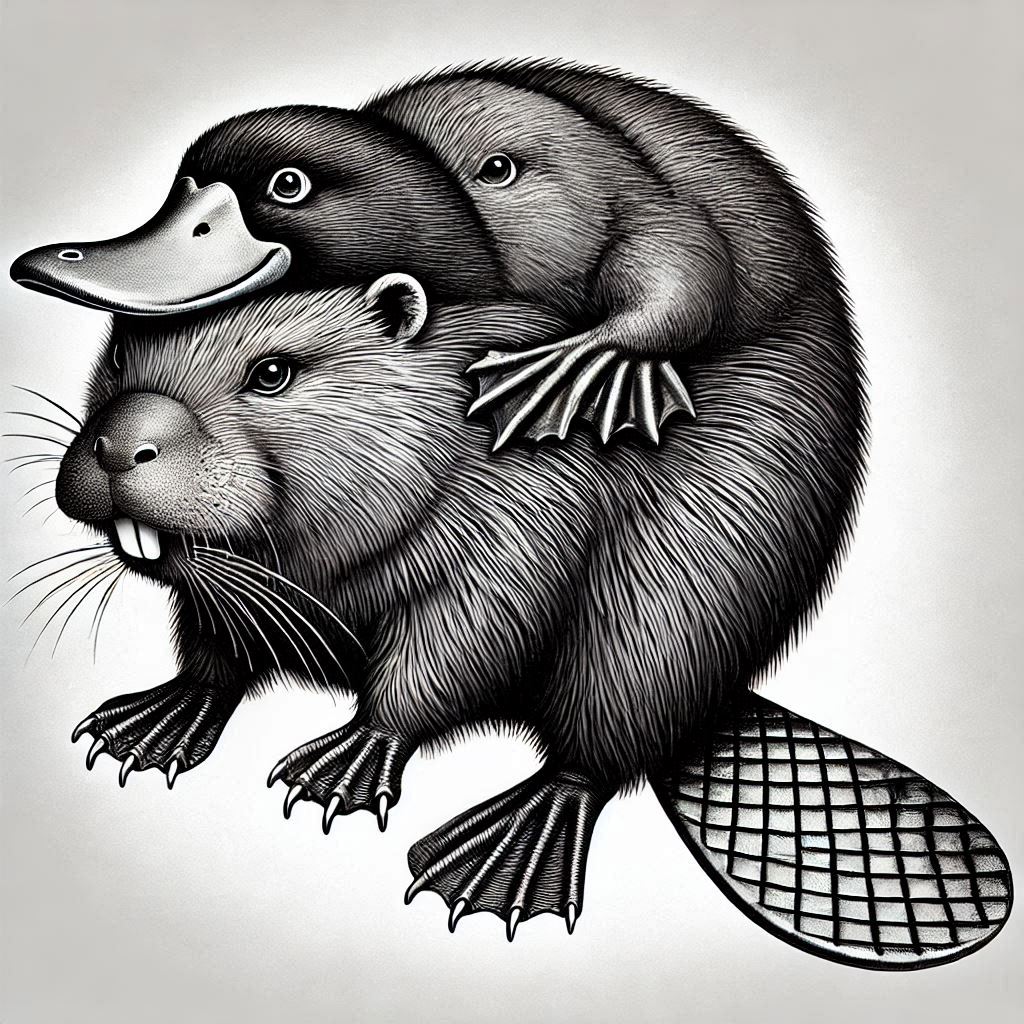
After Andy left and Mrs. Finnegan sat back down, she encouraged Mr. Finnegan to begin the confessional phase of the Finnegan family discussion, a phase that required Mr. Finnegan to provide explicit details of what he did, I wasn’t there to hear it. I was imagining that Andy impulsive reaction to Mrs. Finnegan’s headline hello so emboldened me that I just stood up and followed him to his car. Just like that. Just like he did. I imagined the two of us driving away, laughing at the lunatics we left behind. I imagined calling the Finnegans platypus people at one point in our round of jokes, and how that might end Andy’s laughter, until I said: 

“What is a platypus, but an animal that defies categorization. One study informs the world of science that they should fall into a specific category, until more exploration reveals that the duck-billed mammal does something to contradict all of their previous assessments. Comprehensive study of the animal creates more questions than answers, until even the most seasoned naturalist throws their hands up in the air in futility. “Experts in psychology might think they have a decent hold on human classifications,” I would add,“but imagine what one day in the Finnegan family home could do to them. 

“At its introduction, naturalists considered the platypus another well-played hoax on the naturalist community, I would add. “I say another well-played hoax because it happened. Some enterprising naturalists stitched together body parts of various parts of dead animals to lead the scientific community to believe that the hoaxer discovered an entirely new species. Thus, when someone introduced the platypus, the scientists who received it believed it was but another elaborate hoax of taxidermy. 

“Those who guarded themselves against falling for future hoaxes, even had a tough time believing the platypus was an actual species when they saw one live,” I would add. 

Even after this afternoon concluded, and I had all the sordid details of this Finnegan Family as Platypus People story to tell, I wondered if anyone would believe me. My penchant for stitching facts together with exaggerated details to try to weave them together for an exceptional story might come back to haunt me. They might not even believe the story if Andy stuck around to corroborate the details of it, and they might not even believe it if they saw it live, I realized while Mr. Finnegan continued to offer me explicit details of his weekend. My audience might think they’re the subjects of an elaborate hoax. 

“He already confessed all of this to his children,” Mrs. Finnegan said to interrupt Mr. Finnegan’s confession, “and he will be offering detailed confessions to the mailman, a traveling salesman, and whomever happens to darken our door this evening.”

After Mr. Finnegan’s continued confession failed to meet Mrs. Finnegan’s requirements, she interrupted him again to ask a series of questions that further explored the humiliating details of Mr. Finnegan’s weekend, details he would not reveal without prompting. When that finally concluded, she forced us to acknowledge the primary reason the Finnegans married in the first place. 

“No one would play with Mr. Finnegan’s [reproductive organ],” she said, except she didn’t say reproductive organ. 

“He was lonely,” she said with tones of derision. “Mr. eighty dollars an hour consultant fee, and Mr. professional student with eight degrees would be nothing without me, because he was nothing when he met me. He was a lonely, little man who had nothing to do but play with, except his little computer products, designs, and his little reproductive organ when no one else would.” 

“That’s enough France,” Greg said standing. He stood to bolster his claim that he’d had enough, and that he was prepared to leave, but he couldn’t and Mrs. Finnegan knew that. 

“Do you play with your reproductive organ?” Mrs. Finnegan asked me, undeterred by Greg’s pleas. “Do you masturbate? Because that’s where it all starts. It all starts with young men, and their pornographic material, imagining that someday someone will want to come along and want to play with it.” 

I had no idea how this family discussion would play out, of course, but I could see Mrs. Finnegan’s confrontational demeanor building. She was a confrontational person, and I never saw her attempt to restrain herself, but this display of resentment and hostility was unprecedented for her, as far as I was concerned. She was all but spitting these questions out between bared teeth, and her nostrils flared in a manner of disgust that suggested her hostility was directed at me. 

“You think it’s about love?” she asked me, aghast at a comment I never made. She had a huge smile on her face when she asked that question, and that smile might have been more alarming than the way she asked all those previous embarrassing questions. Seeing that smile surround those angry teeth led me to wonder if she was losing control of her facilities. 

“You think every couple has a story of dating, that hallowed first kiss, and love?” she continued. “Go watch a gawdamned love conquers all movie if you want all that and once it’s over, you come to Mrs. Finnegan with your questions, and I’ll introduce you to some reality. I’ll tell you tales of young men, grown men, who marry because they’re desperate to find someone to play with their reproductive organ. Isn’t that right Mr. Finnegan?” she called after Mr. Finnegan, as he finally mustered up the courage to begin walking away from her. When he wouldn’t answer, or even turn to acknowledge her question, Mrs. Finnegan watched him leave, she looked at me, and then she tore off after him. 

Mrs. Finnegan was a deliberate woman who appeared to consider her motions before moving as carefully as the words she used to express herself, so to see this otherwise sedate woman move so quickly was a little startling, troubling, and in retrospect foreboding. 

Pushing a grown man down a flight of stairs is not the feat of strength that some might consider it. We didn’t see it, but we figured that he must have been off balance when she did it, resulting from his refusal to turn and face her in his path to the basement. She was screaming things at him from behind, and her intensity grew with each scream until we could no longer understand the words coming out of her mouth. Mr. Finnegan continued to refuse to turn around and face her, but he should’ve suspected that his wife’s intensity would lead to a conclusion against which he should guard himself. Thus, when she pushed him, he was in no position to defend himself or lessen the impact of falling down a flight of about twenty steps. 

When we ran to the top of the stairs –after the sounds of him hitting the stairs shook the house in such a manner that all three of us instinctually put a hand on the armrests of the furniture we sat in to brace ourselves– we witnessed her haul her six-foot-five, two-hundred-pound husband upstairs by his hair, one-handed.”

Mrs. Finnegan’s final scream, that which proceeded her pushing her husband down the stairs, led us to believe that whatever frayed vestige of sanity she clung to for much of her life just snapped. I couldn’t understand what Mrs. Finnegan screamed as she pulled him up the stairs by his hair, but I wasn’t sure if that was because the screams of her children, and her husband, drowned out those shrieks. 

“France!” I heard Greg scream in pain. “France, for God’s sakes!” he screamed repeatedly. 

When I saw Mrs. Finnegan’s contorted facial expression, it transfixed me. In their attempts to either help her, or break her hold on Mr. Finnegan’s hair, her children blocked most of my view of her face. I bobbed and weaved to see more. I didn’t know why my need to see her face drove me to such embarrassing lengths, but I all but shouted at those obstructing my view of it to move out of the way. 

I’ve witnessed rage a couple of times, prior to Mrs. Finnegan’s, but I couldn’t remember seeing it so vacant before. This almost unconscious display of rage was one that those who aren’t employed in various levels of civil service might see once in a lifetime.

Her body blocked any view we might have had of Mr. Finnegan, but I assumed that he was back stepping the stairs to relieve some of the pain of having his hair pulled in such a manner. We could also guess he was putting his hand on the handrail in a manner that assisted her in pulling him up. Regardless the details of the moment, it was still an impressive display of strength fueled by a scary visage of rage. 

She was in such a state that when she was finally atop the stairs, standing in the kitchen with her children trying to calm her, she couldn’t form intelligible words. Her lips were moving but no sound was coming out, and when that initial brief spell ended, the self-described word nerd could only manage gibberish, the same gibberish that proceeded her pushing her husband down the stairs, and all moments between. She later suggested that that gibberish resulted from being overcome by spirits. Once she escaped that state, she stated that the gibberish we all heard was her speaking in tongues. She believed that divine intervention prevented her from further harming her husband, in the manner divine intervention once prevented Abraham from harming his son Isaac in the Biblical narrative. I believed it too, in the heat of the moment, but I would later learn that I just witnessed my first psychotic episode. 

I don’t know what happened in the aftermath of this incident, as I never entered their home again. I do know that the Finnegan marriage survived it, and I’m sure that Mrs. Finnegan still believes that divine intervention played a role. I’m also sure that if anyone doubted her assessment, they would be greeted at the door with a “Welcome to the home of the divine intervention!” headline hello to introduce them to that Finnegan family discussion of the day. If those future visitors were to ask me for advice on this matter, I would advise them to consider their options before entering.