The Patient Predator


Those of us from an an agricultural area have all heard the tales about a parent, usually a mother, preparing a chicken for dinner. When we city-dwellers think of the preparations necessary for a chicken dinner, we think of the five-minute drive to the local supermarket, the time it takes to select the best frozen chicken, and choosing a batter (if it’s not pre-battered). We then sit down for our chicken dinner about a half hour later. That’s been the process for so long that most generations have never heard that for farming families, past and present, there are other steps involved that they’ve never heard about when mothers prepare a chicken dinner.
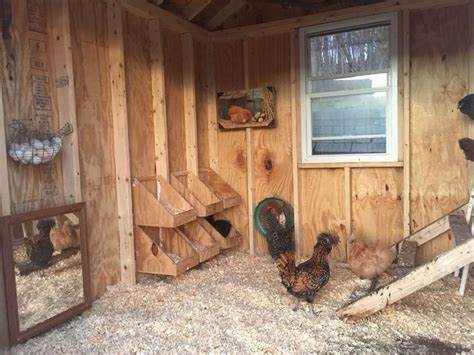
Disclaimer: Some might deem the following Not Safe for the Workplace, and if you are in anyway squeamish, I suggest you locate the ‘X’ in the upper righthand corner of this screen and exit stage right. Some might deem ‘the other steps’ violent and brutal, but they are a way of life on a farm. “It was just the way we did it,” they say. They way they did it, involved a mother entering a chicken coop to retrieve a chicken or rooster for that day’s meal. Once she catches it, she chops its head off and releases it to allow it to run around, headless, until the life runs out of the body, and it unceremoniously falls to the ground. It usually runs around, crashing and smashing into whatever is around it for about ten seconds without a head, until whatever nerves or final vestiges of their muscles finally run out of power. Some find this funny, others consider it sad, and still others find it so funny that it is kind of sad. Whatever the case is, the next time your mother says that you were “Running around like a chicken with its head cut off” you now know the origin of that phrase.

These chicken/rooster post-mortem displays prompt the question, do all animals do this? Do human bodies run around, crashing and smashing into things for ten seconds after the head gets chopped off, until the lifeforce drains out? There is no evidence that suggests human bodies run around in this manner, but there is some dubious evidence that suggests some consciousness remains in the head. The scientific data is about as far from conclusive as possible, but a researching physician in the French Revolution claimed, based on his observations, that a severed head could retain consciousness for 25 to 30 seconds.

As many times as I’ve heard these chicken preparation stories, over the decades, Ken’s version of this practice involved a twist I’ve never heard before. In his retelling, he remembers his mom stalking roosters in the coop. She would enter the chicken coop with a rooster in mind for their meal before she entered. We could write, “At one point, she caught the rooster,” but this does a disservice to the art of catching rooters, as they are notoriously difficult to catch. We could put them in the smallest of pens and coops, and they will still find ways to elude capture with exceptionally quick movements, tricky maneuvers, and some flying involved in their quest to escape. We could also write, right here, that they’re unusually crafty or surprisingly smart when it comes to eluding capture, but they’re not. They just have what athletes call quick-twitch muscles. As usual with animals at the bottom of the food chain, like the rabbit, roosters have quick-twitch muscles that allow them that first-step quickness and that quick change-of-direction speed and agility that athletes prize. These animals obviously need these abilities to avoid faster predators to sustain the species.

Ken’s mother knew this all of this course, and she knew she wasn’t fleet of foot. She knew she wasn’t quick enough to catch a rooster, because no one is. She knew her only path to success involved a patient pursuit. She could have a rooster cornered several times, in corner after corner, and she knew he would continue to successfully escape until eventually he tired out. “She never grew frustrated by her inability to catch the rooster,” Ken said. “It’s very difficult to catch a rooster, and she knew that.”

It would prove a difficult chore even if it were just she and the rooster in the coop, but what makes it even harder are all of the other eight to ten chickens in the coop running around and flying in short bursts to try to avoid their own capture. As such, Ken’s mother would have to watch her step in pursuit, to avoid stepping on any chickens. We can also imagine that with the effort she put into the pursuit, combined with the heat outside, she would sweat profusely throughout her chase, which would lead to all of the feathers flying around the coop to stick to her face. We have to imagine that this would only add to the frustration and anger of even the most seasoned rooster stalker, but she never showed it. “She never grew frustrated or overly impatient,” Ken said. “She knew all that was just part of it.” There were probably occasions when she caught the rooster fairly quickly, but for the most part she had to engage in this patient pursuit, until the rooster eventually tired out, stood in place and fell asleep. At that point, she grabbed it and twisted its neck.

This is the “Wait a second, what?” twist in story. When someone tells a story that is consistent with everything we’ve heard before, we tend to drift a little. We don’t mean to be rude, but we’ve heard this story so many times, and we all know how it ends. Every time I’d heard this story, it ended with an ax, a knife, or some other sharp instrument applied to the member of the fowl family. The entertaining part, if that’s what you want to call it, usually involves the portion of the tale that describes the rooster running around with its head cut off. So, when Ken added the following, the glaze over our eyes lifted, and we said, “Wait a second, what did you say?” to help the rest of our senses catch up. 

“She would hold the rooster over her head, by the neck, and spin it, until she felt its neck snap,” Ken said. “She then released it and allowed it to run around the coop until the life drained out of it. Then she picked it up, stripped it of its feathers, put it in water, and took it inside to continue preparing it for our meal.” 

“Wait a second, what did you say about spinning?” his open-mouthed audience asked. Ken repeated the bullet points of it. “Did she do that to be … theatrical?”

“My mom didn’t do anything to be theatrical. That was just the way she did it.” When asked if he considered her method in any way inhumane, violent, or brutal, Ken added, “Again, that was just the way she did it. My guess is that that’s probably the way her mother and her grandmother taught her to do it. If you asked her if she considered it theatrical, violent or brutal, she wouldn’t understand why you do. It was just the way it was done as far as she was concerned.

“All you need to do is give the neck a quick jerk,” Ken clarified. “Something to snap the bone. It’s really not as difficult or as violent as you might think.”

***

Flash forward, a couple years, and Ken is a teenager. Ken admits that he was a particularly naughty kid, in his youth, and he met the back of his parents’ hands “More times than I can count. My parents were never ones to spare the rod.” As a teenager, it had been a number of years since any of his punishments were physical, but he upped the ante on one particular occasion. “I can’t remember what I did, but it was above and beyond the typical teenage tests of parental patience.”

“I’m going to have to give you the switch for this one,” his mother informed him. “You have to learn your lesson.”

“That’s all well and good,” Ken said, “but I’m a teenager now mom, and I’m a lot faster than you now.”

“You do what you have to do, and I’m going to do what I have to do,” she said, “but we both know how this ends.”
“We’ll see,” Ken said, as he eluded her and sped out of the house. Out on the farm, we can imagine that Ken found so many hiding places that he had a few favorites that he couldn’t wait to use on this day. He probably heard her calling out to him from his favorite hiding place on the farm, and he probably giggled when he heard the frustration in her voice, but she eventually found him. When she did, he managed to elude capture again, and he hid in another one of his time-tested hiding spots. When she found him again, he ran away and hid again. “I don’t know how long this lasted, but it lasted a pretty long time, hours I think, until I eventually got tired of running.  

“I had it coming, and we both knew it. I didn’t fall asleep, like the rooster, but at some point, I just tired out. To be honest with you, I didn’t see the correlations between her patient pursuits of the roosters and me until much later in life, and when I did, I realized it was pretty funny. She never gave up, she was like a patient predator, and I saw it with the chickens and the roosters. She just never gave up. It was just her way.” Ken’s mother did not further Ken’s punishment by lifting him over her head and spinning him, but Ken never forgot that day with the switch. “It hurt like hell. I still remember how bad that hurt to this day, which was kind of the point. She only swatted me a couple of times, and she was done when she thought I learned my lesson.”    
The Platypus Courtship Chronicle


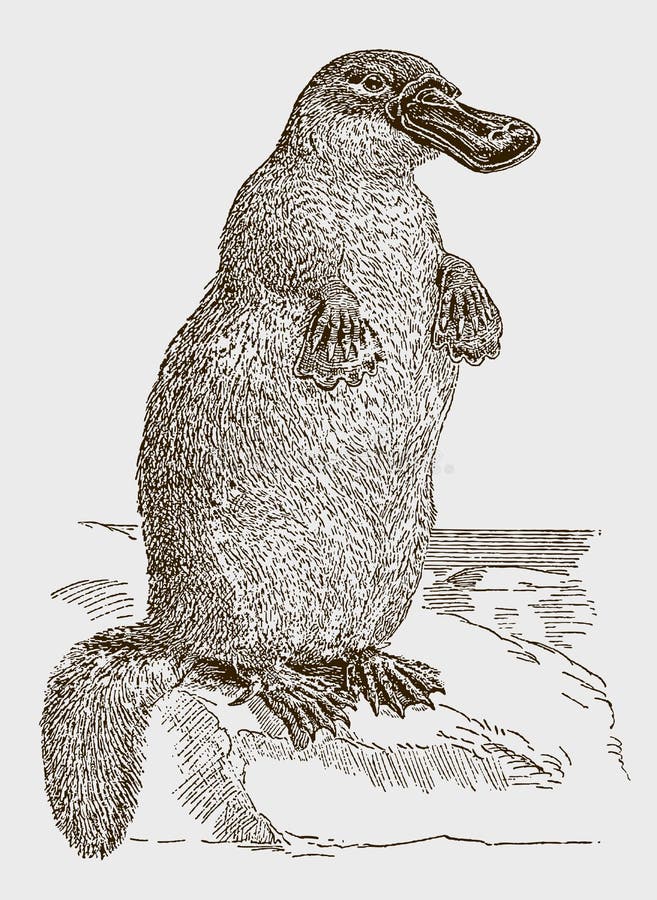
Due to its proximity to the brain, the sense of smell is the most powerful for recalling memories, but when was the last time you used your ampullary electroreceptors to locate crustaceans in deep, dark water? You probably didn’t even know you had ampullary electroreceptors, and I don’t write that to display some sort of superiority, because I don’t have any either. Knowing that, a platypus might pull a power play on us by talking about how he uses them as a sixth sense. Just dropping those two words, sixth sense, you know this platypus is going to get some attention at the pool party. When he starts in on the mechanics behind his super-sensory skin on his duck-bill and its three distinct receptor cells that help it detect electrical impulses caused by movements of objects in the water, and how he’s one of the few mammals that have this ability, you just know people are going to start gathering. He’s super-obnoxious about it too. He knows the best way to put exclamation point on all of his claims is a party trick.

He tells a short fella, wearing a yellow shirt, to throw a worm in the pool, then he instructs us to blindfold him, nose plug him, and add some noise-canceling earphones just to prove he isn’t using any of his “pedestrian senses.” And what do you know, he just happens to have all that on him. 

“What’s going on here?” a late-comer asked, and the other guy shushed him and pointed. Other than that whisperer, the rest of us were silently watching that short guy in the yellow shirt spin the platypus around three times to disorient him. Yellow shirt then led the platypus to the edge of the water and pushed him in. After about seven seconds, the platypus emerged with a worm in mouth. He allowed it to dangle at the end of his bill for a couple seconds, for effect, then he sucked it in.

“Ta-dah!” someone called out to ignite the hooting and hollering. Free-flow laughter followed, as we followed the platypus, all but yipping with excitement, to a dark corner of the grotto.

We would have even joined in on all the adulation, if we didn’t see that smile on Tiffany. Tiffany was such a friendly woman, with such a warm disposition, and we were really hitting it off, two minutes prior to the platypus putting on that show. She showed us a smile when we began talking to her, and we thought it was that smile, until we saw the smile she gave the platypus. Then, when we added what we considered a clever, little joke after the show was over, her smiled ticked over to us while we spoke, but it lessened a little when she answered us in a polite, slightly dismissive tone. When the platypus added his own stupid joke about how he was a member of the relatively exclusive species of egg-laying mammals, “Other than the echidna, otherwise known as the spiny anteater.” Tiffany laughed. She loved it. As she continued looking at the platypus, awaiting his next line, we saw that smile, the smile we wanted, return to her face. It strengthened to such a degree that we figured it wouldn’t be long before we saw our first, live platypus love donut.

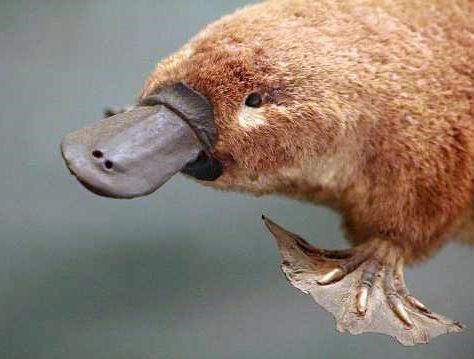
Even after Tiffany touched the soft, suede-like bill that she said she found quite pliable and fleshy around the edges, we maintained Walter Payton’s never-say-die motto. We could feel petty boiling up in our insides, but we didnt want to become petty. We tried to maintain our smile to get that smile from Tiffany on us, but the one thing we know about petty is that it’s difficult to control once it starts coursing through the veins. 

When the platypus started flapping his flat pads of hardened gum tissue about being three different animals in one, he had the room. There were people I didn’t even know who were captivated by his, “We mimic the traits of the bird here, a reptile there, and a mammal like you everywhere else.” When he said you, he was talking directly to Tiffany. He proceeded to reveal his intentions by directing the rest of his stories, clever anecdotes, and descriptions of his prowess at Tiffany, and we felt that deep in our throat.  

Tiffany was all about short-term fascination in the moment, but I started thinking about how long-term calculations influence even the shortest short-term thinking. When Tiffany began gently stroking the platypus’s fur, while the platypus talked about how “science has found his fur displays bioflourescent properties under an ultra-violet lamp, and how that reveals that his fur can absorb short UV wavelengths and then emit visible light, fluorescing green or cyan,” and how “We camouflage ourselves from other UV-sensitive nocturnal predators or prey by absorbing UV light instead of reflecting it.”

“And then what?” was the question spinning around in our head. We were then going to further that question with a “What good does that do us, how can we use that piece of information?” to play to Tiffany’s long-term calculations. We didnt ask it, because we knew how petty it sounded. If the platypus answered, it wouldn’t be a good one. If the platypus didn’t answer, we thought we might have had him, but silence can be a tricky thing. If the platypus was crafty, he would allow that silence to play out, until it came back on us and we were drowning in it.  

By the time he got around to talking about his tail, and how it isn’t just a rudder for swimming, we were no longer even smiling at the platypus. Our competitive juices were consuming us to the point that we didn’t like him when he said, “It’s like a fat storage depot, much like a camel’s. It’s almost like a secret snack drawer.” We were not immune to his charisma, and if it wasn’t for Tiffany falling under his spell, we might’ve marveled at how a platypus can captivate a room of humans so adeptly.

Even a man named Tom Fielder fell under the platypus’s spell, and Tom was one of those narcissistic types who doesn’t pay attention to anyone who cannot do anything for Tom Fielder, and yes, he spoke of himself in the third person. Even Tom “the caustic, cynic” Fielder couldn’t conceal his compliments, “You’re a delightful blend of quirkiness and evolutionary marvels—a true testament to nature’s creativity!”   

We’re not fools, we could see that we were nearing a point of no-return with Tiffany. She was about two flapping eyelashes away from enamored by this duck-billed beaver who European naturalists thought was a hoax when they first encountered one of his ancestors. The painful memories of losing out to the males of our species struck us in the moment, as we thought about how much more painful, bordering on humiliating, it would be to lose out to a male of another species. This humiliation led to the desperation of us saying whatever we could think up, at that point, to try to convince the contingent surrounding the platypus in the grotto to move into the light, so Tiffany could see that the product of her adoration didn’t have teeth. We knew that she was thinking short-term, as the platypus went on about how multifunctional his bill and fur were, but we all know that nestled within even the shortest, short time thoughts are long-term considerations. Women might be able to overcome the superficial qualities of the toothless, for example, but they have to factor in how embarrassing it might be to go out on a date at a restaurant and have the other patrons notice that her date has to use gravel as makeshift teeth to munch on his food. That just has to be consideration for her, we thought, as we continued to hint around that our conversation would be so much better in another, better lit location in the pool area.

My competitive juices were getting the best of me, but I didn’t say anything about his teeth, or lack thereof, because a friend and former co-worker of mine placed a warning sticker in my mind about letting my competitive juices getting ahead of me when it came to fighting for a woman that I’ve always tried to apply.

“Be careful when you’re competing,” he said when I was competing with another fella, and I was about to let that woman know everything she didn’t know about that man. “Be careful that it don’t get the best of you, and you say the wrong thing. You gotta be discreet, strategic, and methodical, or it’s gonna come back on you, like the boomerang. You gotta lay your scoop out organic, or as organic as you can make it, so she thinks she’s discovered it all on her own. You pointing out his vulnerabilities, blatantly, will boomerang back on you, and you’ll be the bad guy in her eyes.”  

It was great advice from a dishwasher, and we’re not cracking on him either, because he said it himself. He said, “How do I have all these women, and I’m a dishwasher? I must know what I’m talking about. I kept his advice in throughout this disastrous evening, until Tiffany started fingering the horny stinger on the heel of his back feet. That pounded home the point that her interest was so far beyond superficial and zoological that it was almost game over.

We were losing so bad that our desperation eventually reached a point where we cast our dishwasher’s advice aside and shouted out, “But aren’t you a monotreme?” That silenced the contingent, and we temporarily buckled under the weight of the lifted eyebrows around us, but we maintained our stance, because we had a point that we needed to drive home. When he proudly said yes, because he was proud his species, we pounced before he could use our classification to pivot a conversation about how proud he was of his heritage. We added, “Monotreme is Greek for one hole, so that means you only have one hole for waste removal?”

Was it a party foul? Yes, and we knew it was on so many levels that we knew it wouldn’t be met with approval by those who cultivate group thought on conversation topics and social decorum, but we also knew it could prove a depth charge that once detonated could affect Tiffany’s short-term thinking.  

The problem with this is that individual methods of waste removal are not in a woman’s, but more particularly a young woman’s, top 100 list of considerations for a potential mate. The party foul also illustrated the dishwasher’s boomerang effect in that if we made a dent in the platypuses’ chances at Tiffany it did not have a corresponding effect on our own. We could even say, judging by the raised eyebrows arcing even higher, that they viewed the comment as mean-spirited.  

When the platypus answered that with an all too thorough and descriptive answer, that effectively neutered our attempt, he concluded it with a clever redirect about how “Some stupid humans try to cutesify, as oppose to classify, the baby platypus as a puggle.” Tiffany laughed hard at that again, too hard. It was an all-in and it’s-all-over-for-you laugh that those of us who’ve lost out on so many potential dates know well.

In a last-dying gasp, we asked the platypus to do his blind-folded, worm trick again. We didn’t do this, “Because, I found that first one so inexplicable that I need to see if you can do it again.” We did it, because we wanted him to remove his swim shirt again, and when he did, we were all ready for it. We clicked the flashlight on our cell phone on for the supposed purpose of shining some light on him so he could see, but we accidentally exposed the fact that he didn’t have nipples in the process.

We considered this our strategic and methodical way of allowing Tiffany to discover this information on her own. Were our motives pure, of course not. We were ticked off, and we thought if we could help her discover the platypuses’s incongruities, it could lead her to question his commonality. While I suspect that very few people would avoid dating someone with a subtle incongruity, such as a strange set or nipples, or no nipples, I hoped all these depth charges might lead her to add them all up to a discovery that the platypus might be incongruent.  

If you’re competing with a platypus for a human female, and you’re losing, you might have other issues, but we were willing to bet that a toothless, nipple-less competitor who poops and pees out of the same hole might cause a woman to second guess who they should consider the ideal mate with whom they might eventually plan to marry and procreate. We also thought those long-term considerations would have a powerful influence on her short-term thinking. You can call us mean-spirited, or whatever you want, but we were trying to help Tiffany see beyond her short-term fascination with the platypus to weighing the long-term consideration of the traits their shared children might inherit from their father.  

You Don’t Critique Another Man’s Meat


“I love grilling,” Leonard said. “Absolutely love it. Some people do it, and some just do it, but for some of us, it’s a passion.” 

If someone said this from behind one of those sleek, compact, Three-Burner, Liquid Propane grills that feature porcelain-enameled, cast-iron cooking grates, you’d scream, I’d scream, we’d all scream for red meat. Check that, I probably wouldn’t scream, not anymore. I’ve been beat down, brothers and sisters, by all them grill-at-the-parkers hollering about how salvation is near. I’m here to testify that those Willie “the wunderkind” types who man the grill, and who, by all appearances should be the chef du jour, are false prophets.

You’ll be disappointed too, but you, the patron of the park, the family and/or friend of the chef, keep in mind that you ain’t paid a dime for that meat, the seat, or anything in between. You are to be grateful, always grateful, when someone hands you a plate, telling you to “Dig in!” on what you’ve been smelling and salivating over for the past ten minutes. You go grateful and stay grateful, because they paid for that meat, and they’ve been slaving over the fire, and you ain’t paid a dime. 

It’s that smelling that gets us, and it leads us astray, my friends. I’ve been there, you’ve been there. We believed in that smell, and our expectations went sky high. We tried to listen to Niece Maggie talking about her volleyball matches, but we don’t hear her, because of the symphony of sizzles going on behind our back.

When the moment of truth arrives, and I mean that in the most literal sense, we don’t even notice the au gratin potatoes when our plate hits that table. All we see is meat, all we hear is sizzling, and if the Promised Land smells anything like this, we might not mind going there a little sooner than expected. Then we get a taste, our first taste, finally, after all that waiting, and our sky-high expectations hit a gut-destroying, roller coaster dip.

“Is it just me or is this … bad?” we ask ourselves, and we’re all asking ourselves that question. You can see it at the table, especially on Cousin Teddy’s face. Do you have a Cousin Teddy? He can’t hide it? He has an eyebrow raised, but-I-ain’t-saying-a-word look on his face, but that face is just saying what we’re all thinking. Is the meat that bad, or are we all just that picky, and do we have a right to be picky, seeing as how this was all free? “But I had such sky high expectations. Doesn’t that warrant disappointment?”

“No, here’s what you do,” a friend of the family once informed me. “You shut your trap, and you keep it shut. That’s what you do. You open it long enough to put the food in it, then you close it to chew, and you keep closing it, until you’re headed home, whispering it to your wife on the drive home. You wanna be starting something? No, there’s nothing to be gained, at a family picnic, by critiquing another man’s meat.”

And when we talk about meat, we’re not talking about pork, brothers and sisters, because pork is tough to screw up. You know it, we know it, because we all done it, and we know it takes a whole bunch of stupidity to mess pork up. Brats, and all of the other meats that fall under the wiener umbrella, rarely knock our socks off or sadly disappoint, and we’ve had an absolutely horrible piece of chicken, what once? Twice, maybe twice. Red meat is the all-knowing meat. Red meat exposes a man’s under belly. It tells us who we are, who we really are. It tells us something about our attention to detail, the vulnerabilities of our spatula, and the frailties of our fork. Red meat does not forgive and forget, and it’s all about red meat.

Red meat is the reason we just drove thirty minutes to this park. We love our get-togethers, spending time with friends and family, and all that, but red meat is special. Can I get an amen, brothers and sisters? A soft, juicy hamburger is sublime, but a properly prepared steak is divine. I don’t care where they cut it, steak is the meat.  

I don’t keep a ledger on my disappointments in life, but when it comes to steak, I’ll throw out a whopping 95%. The fellas with the finest forks have disappointed me 95% of the time. The gas-grilled steak is edible, most of the time anyway, but it’s not Oh!-I-gotta-have-it scrumptious. It’s usually about two notches above edible.

I’ve seen them roll the most beautiful, top-of-the-line, stainless steel, propane gas machines into the park, and I’ve seen who’s ready and who ain’t. I’ve heard the grillers-in-the-park talk about those machines and how their top-of-the-lines can distribute heat so evenly across the grate, and how their four stainless steel burners can produce incredible amounts of BTUs that enhance heat retention so all that cooking “is not only more efficient, it’s convenient and quick.” And I know nothing about their world. I know nothing about all the knowledge they’ve attained from their research. But I’ve done my own research. I’ve researched what they generously produced for me with all their time and effort, between my teeth and gums, and I can’t remember eating a gas-grilled piece of red meat that’s earned those blue-ribbons. It’s quick, your propane grills with all their fixings are quick, but blue-ribbon? What are you smoking son?

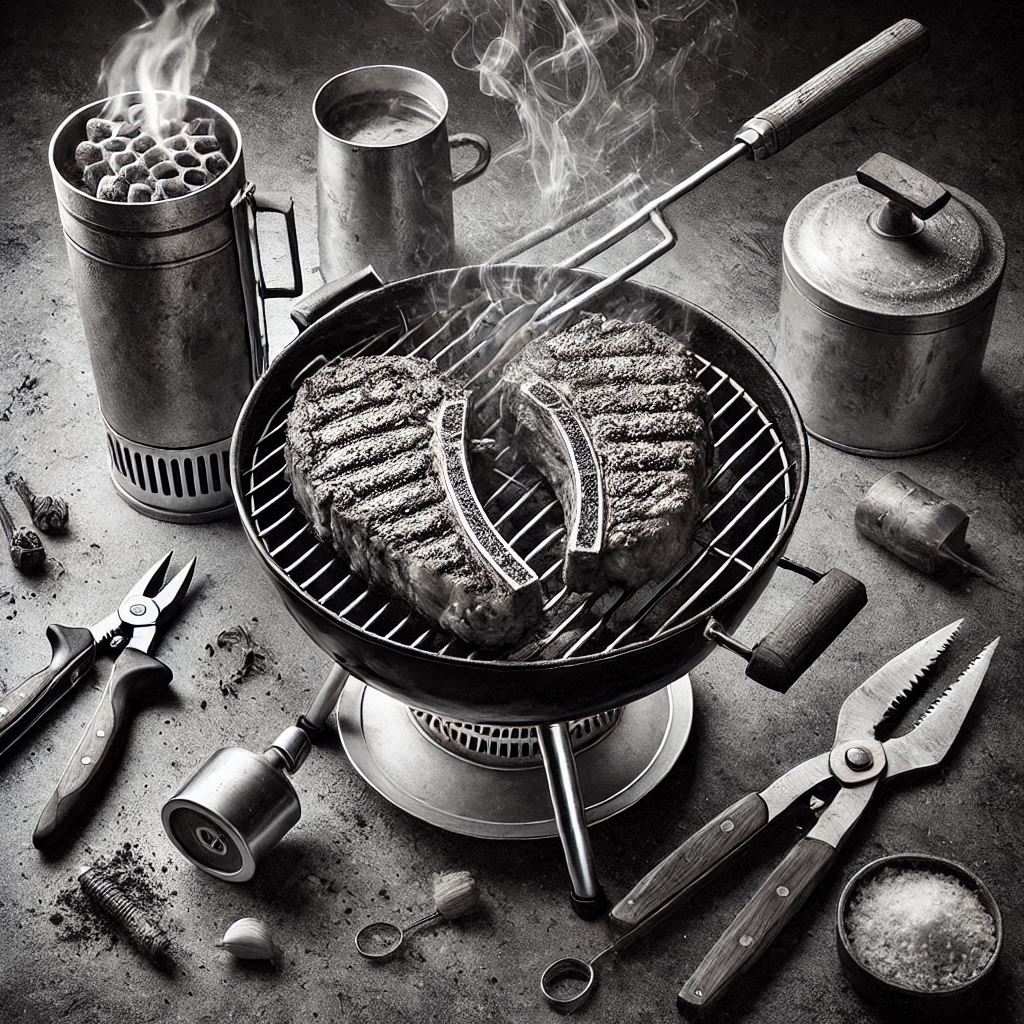
So, we all giggle when Terrance rolls in with his $89.00 charcoal grill that he says he bought on sale at Walmart. We join in the giggles with the fellas-in-the-park, with a beer in our hands, because we know that they know, because they’ve been grilling for thirty-some-odd-years, so we trust they know their ins and outs. When the unassuming Terrance reveals his charcoal chimney starter, his flipper, his forker, and some tongs, the very, very basic three-tool set, that he purchased with the grill “all for a little over a hundy,” we join their public chiding, their gentle public shining, and we even join in on their private, and less gentle, scorn.

Terrance doesn’t talk the talk or walk the walk, because he don’t know it. He lived in an apartment and worked in an office for most of his life. Terrance is the type who prefers to eat out. He prefers restaurant food, and we all whisper that while he’s cooking, and we do it in the most condescending manner you can imagine. Terrance is the “doesn’t get it, and he probably never will” type of chef, because he started grilling late in life. If we talk about grilling with him, we started the conversation, not him, and we find he’s pretty insecure about his ability to cook a meal for the entire family.

“I let you guys do it for so long, because you love it. You all love doing this far more than I do,” Terrance whispers to me. “But I got a wife, and I got a life, so I decided to what-the-hell it.” So, it was the wife who talked him into grilling for the whole family. She also told him he was pretty good at it.

“But, for the whole family?” he complained.

“You’ll be fine,” she said.

We don’t think he’ll be fine. We wonder what she was smoking. I mean, Terrance doesn’t even own an apron that says something funny about the chef on it. He’s so insecure about his abilities that he doesn’t even join the joke Aunt Pat is telling about the time “Terrance couldn’t find the anus on a trout for cleaning.” He doesn’t know what he’s doing behind a grill, so he ain’t got time for her playtime. He needs to concentrate on trying to cook a fairly decent meal for the whole family. He also doesn’t want to make anyone sick, so he keeps plugging his “Walmart temperature gauge thinger-diller” (a term he uses because he can’t remember the word thermometer!) in the meat, and upon grilling, the verbal kind, we find he isn’t “totally sure what’s the difference between a sirloin and a ribeye”.

The “Oh, boy” we give is not kind. “Oh boy, we might need to get someone else to man the grill Helen,” our brother Jerry says about halfway through. “I’m not sure if Terrance is da man,” he adds, and oh boy do we laugh.

That “Oh, boy” consensus quietly turns kind, about twenty seconds after we sink our teeth and gums into Terrance’s finished product. “Oh, boy!” we want to say, but when no one else says a word, we quietly devour this tender and soft piece of meat that quietly changes everything we thought we knew about grilling-red-meat-in-the-park.

A hint of crisp on the outside is expected, but nothing can prepare us for the soft and chewy 145 degrees of medium-cooked insides that informs us how much dopamine the brain can reward a human being for the sense of taste. Everyone has Aunt Phyllis’s green bean casserole on their plate and Aunt Donna’s au gratin potatoes, but no one has touched any of that yet. There is no talk of trout anuses, fishing trips with our recently-deceased Uncle George, or any of the other great times we’ve had at this park over the years. There’s also no talk about how Terrance and his “under a hundy” arsenal just upended thirty years of grilling research the fellas attained with their top-of-the-line materials. We just quietly devour what Terrance made on his “one healthy sneeze and that thing’s going down” piece of junk, Charcoal grill that he purchased, on sale, from Walmart ten years ago.

Now that our course has been corrected on grilling at the park, we love hearing Leonard go on about how he knows his way around a grill, and how it’s all about love and passion for him. He has all of the latest and greatest cooking utensils, coupled with his ‘Kiss the Chef!’ apron. His stainless steel, propane gas grill has a brand name with numbers behind it that Leonard spouts as if it’s a limited model Lamborghini, and the aesthetic design of it is an absolute feast for the eyes. His wife further amplifies whatever Leonard says about himself and his new grill, and you watch him to see if there’s anything you can learn from a bona fide master. Leonard has a wide variety of wood chips, and he “ain’t afraid to use them”, and he “ain’t afraid to season neither.”

“Delicate and measured,” he says. “I know it’s verboten among the smoke whisperers, but if you keep it delicate and measured, seasoning enhances as opposed to overwhelming.”

When we finally sink our teeth and gums into the finished product of Leonard’s decades of fine-tuning, through trial and error and research, we find a truth about his marvel of science and engineering. We didn’t want to find it. That’s the most important note I want to leave you with today. When Leonard started going on about his passion for grilling, we thought we were going to be rolling around in it minutes later. Our only concern was that we would love it so much that we might make noises when we eat, and some of them might not be human noises. 

We didn’t want him to be wrong. We didn’t want him revealed. We wanted a savory slab of steak between our teeth and gums. When Leonard graciously gave us one of his steaks, we were grateful, but we couldn’t help but notice that it produced a flavor so close to steak that it was edible, but compared to Terrance’s amateur production, Leonard’s steak was anything but we we call a tour-de-force.

“It was actually pretty bland,” we whisper to our wives on the ride home. We don’t say this to Leonard, however. We lie to him, as any respectful guest who just ate the product of another’s effort and generosity will. We whisper that Terrance, and his piece of crap $89.00 cooker, “Actually grilled up a better steak.” We whisper that because we don’t want anyone to know what we don’t. 

“I know,” she whispers back, “But shhh!” We’re in the privacy of our own car, and we’re whispering, and she’s shushing me to try to prevent me from carrying on to the point that someone might hear us and know that we don’t know what we’re saying. We don’t know anything. We know so little that we don’t even know what we don’t know, but we know what we know, and we know you don’t critique another man’s meat.