How The Brady Bunch Damaged Him


“The thing about being human is,” Bob Peters said to initiate a conversation with my friend Arnold Glass.

“No, I am human,” Arnold said. “I’m standing right before you, two arms, and two legs just like you.” 

That was funny, I thought, examining Arnold’s face for a break that would reveal the joke. It wasn’t award-winning funny, or even knee-slapping funny, but I considered it a fairly decent trap to set for Bob Peters for future jokes. Depending on where he took it from there, I thought he laid some pretty decent groundwork. The three of us were co-workers at a company, on break, shooting the stuff. I didn’t know Bob Peters. He was kind of a floater, who moved from person to person, group to group, but I thought I knew Arnold. We were co-workers who spent so much time around each other that I suppose I could’ve call him a best friend at work, but that just seems like such a grade school/high school designation. It just feels odd to call a grown man that I didn’t know before we started working at the same company a best friend, but we did a lot together over the years. Arnold could be funny occasion, but he was more knock-knock joke funny. This level of dada comedy, or what I thought might be intentionally irrational comedy without a base or direction was so out of character for him that I thought he might follow it up with, ‘Sorry, that just sounded like something to say. It didn’t work as well as I thought it would.’ Not only did Arnold not say something like that or give any cues that he was joking, he was all bowed up. I was almost positive that he wasn’t looking to throw down, during a 15-minute break on company grounds, over something as odd as this, but he looked so defensive. What an odd thing to say, I thought, and what a weird thing to get defensive about.

Bob Peters obviously dismissed Arnold’s comment as nothing more than an obnoxious attempt to interrupt him before continuing, “As I was saying-”

“No,” Arnold interrupted, growing uncharacteristically confrontational. “You called me out here. I’m a human being with all the same hopes and dreams as you. I’m going to need you to acknowledge that before you continue.”

“Fine, I acknowledge that you are a living, breathing human being with all the same hopes and dreams as the rest of us,” Bob Peters said. “Now, can I continue?”

***

“What was all that about?” I asked after Arnold and I finished our conversations with Bob Peters, and he walked back to the office.

“Cripes, I forgot to apologize to Bob for all that didn’t I,” Arnold Glass said. “He just happened to step on one of my land mines, but he didn’t mean anything by it did he?”

“No,” I said. “I don’t think so. I think he just thought it was a clever intro … but what do you think he meant by it?”

“I don’t know. It’s that name thing,” Arnold said. “I thought Bob was trying to be funny, but now that I think about it, I’m not sure Bob even knows my last name. I know I don’t know his. We’re not on a last name basis.”

“Peters,” I said. “Bob Peters.”

“Okay, Peters. Well, God bless him for having such a normal last name.”

“Glass? What’s wrong with Glass?” 

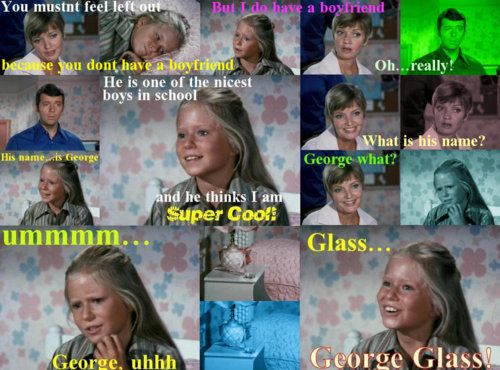
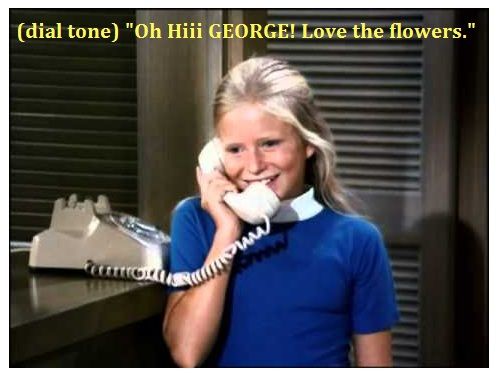
“We’ve never talked about this?” Arnold asked me with some fatigue. “You obviously didn’t grow up watching The Brady Bunch, did you?” I said I had, and the name George Glass immediately came to mind, but I feigned ignorance. “There was an episode where Jan Brady made up an imaginary boyfriend. When she was pressed for his name, she said, “George,” and then she looked around and saw a glass of water. “George Glass,” she said.”

“Okay, yeah, I remember that.” 

“I’ve had nightmares about that scene.”

“You’ve got to be joking?” I asked with suspicious but confused laughter. 

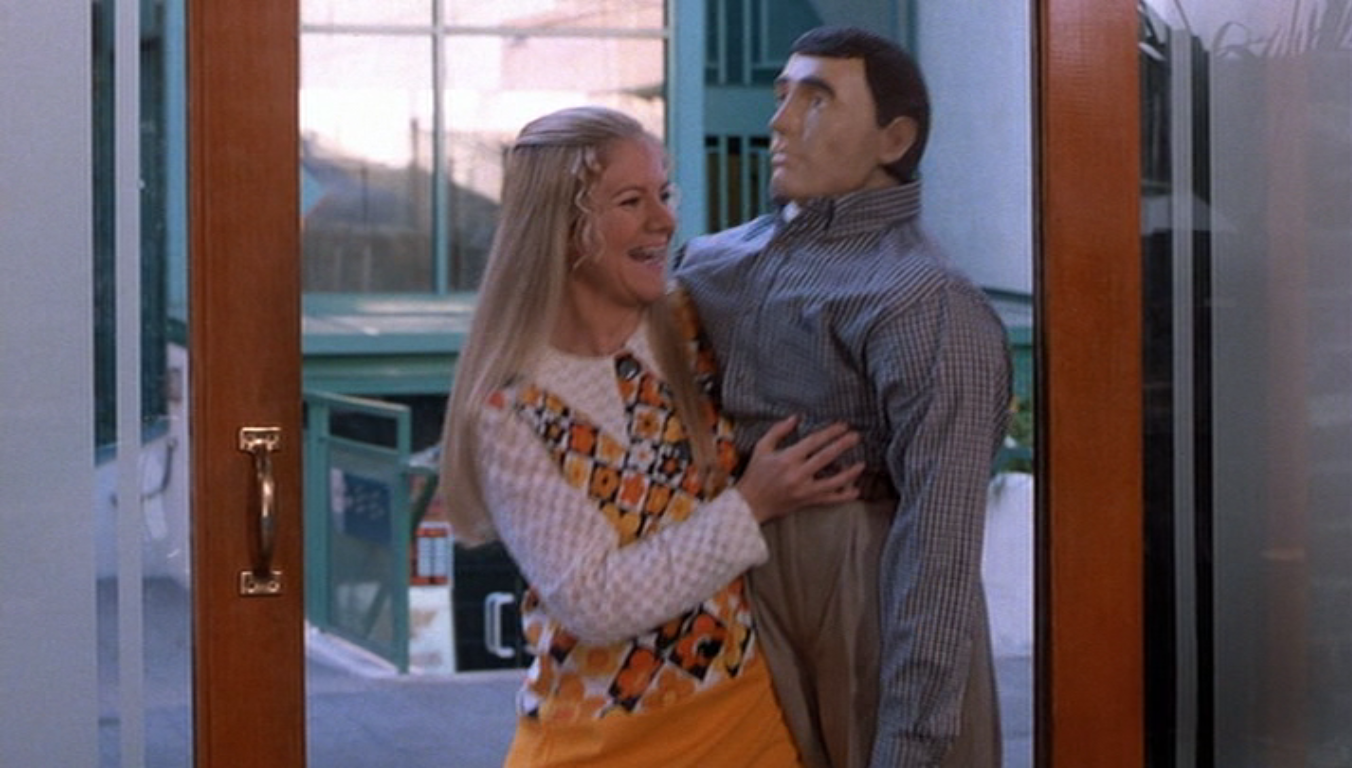
“I’m not. I’m really not,” Arnold said with a most serious face. “We were all too young to know the episode when it first came out, but, you know, reruns. I might’ve been in 2nd grade when Mary Beth Driscoll said, “Are you even real?” I didn’t get it, because I never saw the episode, so she explained it. I didn’t think it was funny, but everyone else did. Everyone else did, and they joined in on the joke. It hurt a little, but mainly because I didn’t understand it. Then, every time they reran that episode, I’d get some semblance of that joke, and I probably took way too personal, but I was young, real young, and I didn’t know how to deal with it. ‘We’re just joking, for gosh sakes Arnie’ they’d say, and that never made it any better. Things like that are stupid, insignificant, and irrelevant, until they start to gather moss. Every time you meet a friend’s mom, they ask if you’re real, or they say it’s nice to finally meet you. We thought you were fake. It sort of petered out after a while. The harmless and stupid jokes never ended, but I didn’t hear them as often for quite a while there, until the 1996 movie A Very Brady Sequel came out, and then the internet picked that whole joke up as a meme for imaginary boyfriends, girlfriends, and imaginary friends, and it started all over again.” 

I could’ve, and probably should’ve, expressed some sort of sympathy, but I couldn’t help but find it so harmless that it was cute and cute-funny. The general idea of a man being mentally badgered about anything calls for a sympathetic response, but to hear someone say that a Brady Bunch joke was the source of his pain was so unprecedented that I couldn’t help but find humor in it. I managed to keep a straight face, a solemn, sympathetic face, until he said:

“I’ve even considered changing my name more than once. I’m serious. Totally serious,” he added when I ‘C’mon’ed him’. “If my dad didn’t talk me off that ledge, talking about breaking the long, storied history of the Glasses, and their proud British heritage, I would’ve gone through with it.”

“I’m sorry,” I said when I laughed. “It’s just the words breaking the Glass got to me,” I confessed. Those words weren’t funny, but it didn’t take much to tip me into laughter, and I considered it a decent excuse for laughing.

“It’s really not funny, and it’s not a joke,” Arnold said defensively. “When I was in my teens, and I’d meet my girlfriends’ families, their sisters would jab me in the shoulder with their finger and say things like, “I just wanted to make sure you were real.” Another person, a mom, a nice, sweet maternal mom said, “We thought it was like that time Jan Brady made up a boyfriend, and she said his name was George Glass. We thought Julie did that with you. Sorry, but we thought she made you up.”

“My guess is that’s probably happened a million times,” I said after I achieved some level of control. “Nerdy girls and boys have made up boyfriends and girlfriends since, probably since the cavemen.”

“I get that,” Arnold said, “and if it happened once or twice, I’d say it’s only happened once or twice, and that’s normal, as you say, but it’s happened so often that … that you can’t help but question your identity and your existence.”

“Your existence?”

“Well, I never thought I wasn’t real, if that’s what you’re asking,” Arnold Glass said, “but these things, these little tiny, and seemingly insignificant things, can have a cumulative effect that can, regrettably, end up all over someone like Bob. Remind me to apologize to him when I see him.”   

“Example?”

“Example, let’s see,” Arnold said. “Well, there’s nothing wrong with your nose. Let me make that clear, because I’d hate to put you through what I’ve been through. I mean it’s not too long, too big, or crooked. You have a very normal nose on your face, but imagine if someone joked that there was something wrong with it. Imagine if it was nothing more than a dumb, insignificant and untrue comment on your nose. You’d tell them to shut up, or some variation thereof that allows you to swat their comment away, like a pesky mosquito. Now imagine that someone else, someone who had no relation to that first person, says the same exact thing. You might start to think there’s something to it. You might be a little paranoid about your nose, right? Maybe? Now imagine that this silly, stupid thing is the same thing your grade school peers hit you with when you were young, very young, too young to know how to deal with it properly. It has a way of chasing you into adulthood, until you’re impulsively launching on someone like Bob. Do you think it could lead to a cumulative effect equivalent to wanting to change your name, like getting a nose job or something? And the whole time, you know you have a perfectly normal nose, because everyone says there’s nothing wrong with your nose, like I had a perfectly normal name, until some writer on some stupid show decided your last name would be the perfect name for an imaginary person.

“See, what you saw was a one-time, seemingly insignificant incident,” Arnold continued. “But you didn’t see the buildup, the accumulation, and you probably just think it was bizarre, and all that, but it was the result of a cumulative effect. Have you ever heard of the Chinese Water Torture effect? They strapped a guy into a chair so tight, he couldn’t move, under a slowly dripping water faucet. Now, we can drop anywhere from one droplet of water to a million drops of water on a person’s forehead, and it won’t cause any physical damage to that forehead, but psychologically? Psychologically, it’s been documented as one of the most cruel, brutal, and inhumane forms of torture ever invented. Why? It is the accumulation of seeing the next drop of water, knowing it’s going to hit your head, and it finally hitting. It’s the same thing here, but my slow drip has occurred over the years, the decades, and it can manifest in ways you saw today with Bob Peters. Some say it can be stressful to the point of panic-inducing attacks. That’s never happened to me, those final stages, but it could. Some say it could.” 

I still couldn’t see it, and in many ways I still can’t. The whole idea of it obviously still fascinates me, but no matter how well Arnold researched what happened to him that led him to his unusual outburst, and how persuasive he was in the moment, I still couldn’t wrap my arms around the idea of what he described as a cumulative effect, even under the umbrella of Chinese Water Torture effect. It was hard to see through the bizarre, silliness of the idea, and it’s still difficult for me to wrap my mind around the idea that a person could be so damaged by a Brady Bunch joke that he’s reflexively lashing out at anyone who even hints that he might not be real, imaginary, or in this case not human. The only thing I can come up with is it’s the difference between sympathy and empathy. Sympathy is something we feel for someone experiencing something foreign to our experience. Empathy is almost a shared sentiment we have for someone who is experiencing something for which we experienced ourselves to such a degree our knowledge of it can be intimate, and the only people who can understand The Brady Bunch Glass effect are those who have experienced themselves. 

The Origins of the Pejoratives


“You, my friend, are what they call a joker,” I told Shelley Macintosh. “A real joker.”

“A joker?” Shelley asked. “What’s a joker? Did you mean a jokester? Do you mean joker, as in the playing card, or the bad guy from Batman?”

“A joker,” I said, measuring her reaction to see if she was playing with me. “A joker. A person who jokes around a lot. I don’t know. Everyone says it. It’s a common phrase everyone uses it to describe a person who jokes around a lot. Are you messing with me? You’ve never heard of the term joker before?”

After some back and forth, we established the fact that Shelley never heard the word used in that context before. As incomprehensible as I considered it that a woman who was roughly my age, who grew up in the area I did with all the same colloquialisms, and watched the same shows growing up, never heard the word, I then wondered where I did. 

Etymologists trace the historical origins of words, but their professional focus remains on more formal and serious words. There is some less serious research into the history of vulgar vocabulary, but a term that is nestled somewhere in  between, like joker, doesn’t receive much focus from either party. Joker might not be a great example of a pejorative, as it doesn’t really belittle anyone, put anyone in their place, offend anyone, or hurt their feelings, but put in a certain context, “You’re a real joker, aren’t you?” it could be confrontational. Those words could be fighting words, but we’d have to frame them up with the right face to get that done. 

We know that the Ancient Egyptians had court jesters, that could be called jokers, to entertain their pharaohs dating back to the Fifth Dynasty, and the Romans employed them to provide comic relief for their leaders, but how did the term joker weave its way through the timeline to my mouth in the 20th Century?  

How does a word, any word, travel through time? Some are fascinated by this, as evidenced by those who choose professions in various professional language specialist arenas, but to those of us who choose more common professions it’s so boring we don’t want to devote any of the precious time we have left on Earth to it. In principle, it’s interesting to wonder how a word might travel from Ancient Greece to modern English, but the research is not as fascinating as readers might think. I’ve had friends drop words and phrases I found fascinating. “Where did you hear that word?” I wondered aloud thinking that that word was exclusive to the first person I heard use it. I did my research, and I found it personally fascinating to learn that some of these words and phrases predate me by hundreds to thousands of years. Fascinating, right? Wrong, people don’t go so far as to yawn in my face, say “who cares?” or drop a playful characterization of my bookishness on me, but they don’t find the history of words nearly as fascinating as I do. 

In my research, I found that a large number of the words and phrases we use every day derive most often from various stages of Latin, English, Ancient Greece, The Bible, and Shakespeare. Look up your favorite word, and you’ll find that most of the words and phrases you use every day are derived from one of those sources, and the reason we stress derived is that as these words travel through time they modify slightly in meaning, totally transform, and on some very rare occasions remain somewhat in tact, in spelling and meaning, for thousands of years.  

Most don’t call their peers out on their word choices in the manner Shelley did, because why would we? Unless it involves a swear word, or some unique way of expressing emotions, it’s just not that interesting to us. We also don’t call each other out on the origin of the more common words and phrases we use, because we operate on a certain, unspoken and conditional quid pro quo. “I’ll tell you what, I won’t call you out on these words and phrases you use,” we say without saying, “if you don’t call me out, because I don’t know anything about their origin either.” 

One important note, before we continue, is as Etymology.com points out, “etymologies are not definitions; they’re explanations of what words mean, what they they sounded 600 or 2,000 years ago, and how they’ve traveled through time. Etymology is a science that studies the history of a word. It is a subfield of linguistics, philology, and semiotics. Etymology also studies the word’s progressions from one language to another, how it changes from one language to another, its changes in form and meaning, and some semblance of its origins.” The best and most succinct definition of etymology is that it’s the history of a word. 

If this entire article is nothing more than retread for you, and you’re not only familiar but intimately knowledgeable about the general idea of etymologies, and if you have an unusual love of language and all of the manipulative power of a clever lexicon, my bet is someone, somewhere has already called you a nerd, a nincompoop, or a total nimrod.  

Nimrod: A slightly dim-witted individual, a dolt.

Etymology: There are more professional, professorial, and well-researched theories on the etymological origin of nimrod out there, and their tracings are all over the place, but we prefer the more childish, amateurish word-of-mouth theories that appeal to those who prefer Buggs Bunny to long-since deceased authors monkeying around with a term. The idea that one of our favorite Saturday morning cartoons had some influence on the language we share is just far more entertaining. 

The etymology of nimrod begins with The Great Nimrod (a name that can, apparently, only be mentioned with computer-enhanced reverb and some form of trumpet accompaniment). The Nimrod of Biblical lore was either the great-grandson of Noah (a man who built an ark), son of Cush, or Ham (depending on the source?), and the King of Shinar. Nimrod is also reputed to be the leader of the people who built the Tower of Babel in Shinar.  

Nimrod was considered “the first on earth to be a mighty man”. He was also considered one of the great hunters of his day and “a mighty hunter before the Lord”. Nimrod was such a mighty character in the book of Genesis 10:8–12 that there are some references that declare subjects of the kingdom of Assyria called it, “The Land of Nimrod” 1 Chronicles 1:10. 

Having said all that, we could assume that most considered Nimrod, the man, the myth, the legend beyond reproach, but anyone who knows anything about Looney Tunes knows that only made him prime for a satirical representation. For them, the rich tradition and folklore surrounding Nimrod made him the perfect analogy for their fumbling, stumbling hunter, Elmer Fudd.

In a 1948 episode called What Makes Daffy Duck, the brilliant and underrated comedic actor Daffy Duck refers to Elmer Fudd as “my little Nimrod”. To show how much the writers loved the characterization, they did it again, in a 1951 episode entitled Rabbit Every Monday in which they had Buggs Bunny refer to Yosemite Sam as “The Little Nimrod”. 

A young child, who knows nothing of the King of Shinar, or the first mighty man of Earth, might hear this term and decide to use it against her brother, the next time he he does something foolish. Her erudite parents might overhear this and ask her if she realizes she’s calling her brother a mighty man. To clarify, they might tell the tale of the great Nimrod, and she might pause while soaking all this in. My guess is the next time her brother messes up, however, nimrod will be the first word out of her mouth, because there’s something uniquely satisfying about the sound of the word, and its unique power might derive from its uniqueness. Not many people place nimrod in their regular pejorative rotation, but when they do use it, it just feels deliciously degrading.

Chances are the daughter didn’t know where she heard the term nimrod, but everyone from my era knows that not only did we watch Looney Tunes a lot, but our local programmers ran the cartoon so often, showing so many reruns, that we could almost recite each short in real time, and we all know the conscious and subconscious power of repetition. 

The brilliance of these particular Looney Tunes’ shorts lies in the idea anytime a duck or a rabbit are confronted by a human, or a hunter, they should experience fear and intimidation. As animals at the the bottom of the food chain, they know that their lives are always on the line. The humor lies in their mockery of that principle, in general, and Elmer Fudd in particular, for his stature as a mighty hunter before the Lord. Thus, the writers of Looney Tunes almost single-handedly, redefined the term nimrod for an era and beyond as someone who has an unusual belief in oneself in principle, only to show he is actually so bad at it that we question his mental acuity. 

So, the next time someone attempts to belittle you with the pejorative nimrod, ask them if they’re referring to “The mighty hunter before the Lord,”, the King of Shinar, or Elmer Fudd. As much as we all loved Elmer Fudd growing up, regardless his foibles, we might not be insulted either way.

Dunce: A slow-witted or stupid person. A pejorative term that refers to one’s inability to learn. Generations ago, a student who failed to learn, or exhibited a lack of discipline was often forced to sit in a decidedly prominent corner of the room, wearing a dunce cap, or cone. Dunce was, at one time, one of the worst pejoratives one could call another.

Etymology: Once seen as one of the most brilliant philosophical theologians of his day, John Duns Scotus’ philosophies, and teachings, garnered such a substantial following that his followers called themselves Dunsmen, or Dunsers, after the theologian’s middle name. Unfortunate for the Subtle Doctor and his followers, the Renaissance happened. The Renaissance was a cultural movement that sought to render all of the ideas and achievements of classical antiquity obsolete. The Renaissance involved so many changes in so many fields that it evolved into a cultural movement that eventually rendered Scotus’ teachings obsolete by “modern” standards. Those who ascribed to the new theories of the Renaissance developed such loyalty to the “modern” ways of thinking that they derided anyone who refused to modernize. As one of the most prominent adherents to classical modes of thought, John Duns Scotus and his followers, were singled out for ridicule. As such, proponents of the Renaissance called anyone who refused to modernize to the cultural changes happening around them, Dunsers. As anyone who knows about the history of words and pejoratives knows, some words are either purposely or accidentally mispronounced or altered over time for a variety of reasons, and Dunsers became dunces.   

Nincompoop: A nincompoop is foolish, an idiot, a bonehead, or a dope. This word is decidedly out-dated, old-fashioned, and rarely used anymore. If you’ve ever had someone call you a nincompoop, chances are that person has been eligible for Social Security for at least ten years. It’s not a compliment, but in the pantheon of pejoratives, it is not a wounding insult either. If you ever decide to use the pejorative on someone, the backlash might prove greater than the intended insult. Some suggest that the more common pejorative ninny derived from nincompoop, because people felt weird saying the complete word nincompoop. Although ninny wields far more power than nincompoop, it should be used judiciously, as the backlash could be just as severe. Although most of us have never heard of these two pejoratives, and even fewer have experimented with them in a pejorative sense, we caution people who might use such terms in the hopes of achieving some sort of retro-feel, because neither of them sound right, and there’s just no way that nincompoop can achieve the desired effect.   

Etymology: Some suggest this word is derived from the Latin legal phrase non compos mentis “insane, mentally incompetent” (circa 1600). Others deny this, because the Latin phrase lacks the second “N”. They say that nincompoop was probably derived from Nicodemus, which was used in French for “a fool”. Still others, suggest that it was probably just an invented word at some point.

That’s it, the latter. There’s no solid evidence on the etymology of this one, and the only time I remember hearing nincompoop delivered as an insult is when my great-aunt dropped it on me after I did something stupid. She said it with obvious exclamation points all over her voice, and she made the meanest face she could think of, but all she got out of me was laughter. I don’t know if hearing the last syllable coupled with the mean face drained it of all effectiveness, but it obviously achieved the opposite affect.  

Dolt: 16th century, Old English. Derived from dull, or dol. Middle English word dullen, meaning “to dull, make or become dazed or stupid.”

The progression to modernity has led dolt to mean a person who lacks common sense or the intelligence necessary to make good decisions in life. A dolt is different than a fool, however, as The Content Authority points out, as a fool is often educated and/or wise enough to make quality decisions but continues to do otherwise.

Bedlam: A scene or state of wild uproar and confusion. An outbreak of crazed insanity, that is not a riot. “We went to the concert the other night. A couple fights broke out on the floor, and it evolved into absolute bedlam before the authorities to regain control.” The housing unit of the pejoratives of yesteryear.

Etymology: Bedlam is a colloquial pronunciation of Bethlehem. Bethlehem, as in the name of the Hospital of Saint Mary of Bethlehem. The hospital began as a priory, in 1247, changed to a hospital by 1402, and ultimately became a civic lunatic asylum by 1547, where it housed the insane. Most of the inmates, as they were called, were starved, shackled, and exhibited to the public in wild and frenzied states. Thus, bedlam became synonymous with frenzied, psychotic behavior. 

The proper name might be caught in transition in the title of John Davies’ 1617 publication of humorous poetry, “Wits bedlam —where is had, whipping-cheer, to cure the mad.”

The pejoratives on this list all have interesting, unusual, and noteworthy twists and turns throughout their history. Other pejoratives such as idiot, moron, imbecile and others are noteworthy not for their changes or meaning, but for their consistency through time. Some of these pejoratives existed in the B.C. (Before Christ) era. Think about that for just a second, before you yawn with fatigue, that pejorative you just called your sister was similar, if not the exact same word, a boy called his sister thousands of years ago in Ancient Greece. To my mind, the twists and turns and evolutions of words, through time, are just as interesting as the consistency of the pejoratives through thousands of years.  

Nerd is the Word


“You are a Nerd!” used to be one of the most damaging things you could say to another. They weren’t fighting words. They were more of a “You’re not one of us” charge that required a “What do you mean, I play sports, and I like girls” defense. If we left it out there, the charge stuck, and we didn’t want something like that sticking to us. The word nerd has experienced quite an evolution in its relatively short shelf life, to the point that we now profess our own nerdy, intellectual interest in the STEM fields (science, technology, engineering and math.) The word hasn’t quite made it to a-good-thing status, as we often use it in a self-deprecating fashion, but it’s no longer one of the worst things you can call another.   

If we look up the history of most words, or their etymologies, we’ll find that most of them derive from Latin, Ancient Greece, Old, Middle and Late English, The Bible, or Shakespeare. Though there is some dispute over its point of origin, the word nerd is American made. 

Some suggest nerd first appeared in Dr. Seuss’s 1950 book, If I Ran the Zoo:

And then, just to show them, I’ll sail to Ka-troo
And bring back an It-kutch, a Preep and a Proo,
A Nerkle, a Nerd, and a Seersucker, too!

Others argue that any time a word, or phrase appears in an artistic venue, it was probably in circulation long before it made that appearance, as most artists, Shakespeare included, probably heard the words they used long before they brought them to the masses. After Dr. Seuss brought the word to the masses, it apparently made the rounds, as Newsweek wrote an article that stated that in 1951 Detroit, “Someone who once would be called a drip or a square is now, regrettably, a nerd.” By the 60s the word took off, as it began popping up all over the place in print. 

Those who state that Dr. Seuss didn’t invent the word argue, “Dr. Seuss’s Nerd appears as more of a disapproving grouch than a drip or a square.” The etymologists took that note and began digging further. They found that one of Edgar Bergen’s ventriloquist dummies was named Mortimer Snerd. Modeled on a country bumpkin, “Snerd reminded listeners of a drip, someone who is tiresome or dull, and therefore—according to 1951 Newsweek—a nerd.” 

I don’t have a personal theory regarding the etymology of nerd, but I can tell you how it penetrated the zeitgeist of my generation, and made its way into my neighborhood. Those in my demographic know where I’m headed, for they know that even if the term wasn’t born on the 70s-80s sitcom Happy Days, it was raised there. The etymology suggests that nerd might predate Happy Days by twenty years, which makes sense since the era Happy Days strove to duplicate was the 1950s. 

Those of us who have attempted to pinpoint a word, or phrase, in our personal lives, know what a difficult job etymologists have. When we hear a new word, making the rounds in our inner circle, we ask our friends, “Where did you hear that?”

No one I know says, “My friend Billy says that all the time, and I thought I’d try it out.” Everyone strives to be considered the originator, or original in a more general sense. What do they say? They say, “I’ve been saying that for decades,” or, “Dude, I’ve been saying that for years.” They do not plant a flag in the term or phrase, but there is an implicit challenge to find someone who has been saying it longer than they have. Are they being dishonest? I don’t think so. I think it speaks to the nature of words and phrases, and how we absorb them into our vernacular without conscious thought. When we hear someone use terms, phrases, or sayings once, we might take notice. “Why did you say that?” we might ask. Most of us don’t ask that, because we fear the “If you have to ask…” response. By the time we hear it a fourth or fifth time, often from a wide variety of different sources, we just start saying it. Few can remember the first time they heard them, and even fewer remember the original source, so when it comes to idioms like nerd, etymologists can only source the first time it appeared in print or on the public airwaves.  

Knurds on College Campuses

Most people aren’t interested in the history of words. If you’re at a party seeking party time conversation topics, the etymology of words might get you a lifted eyebrow, and that’s if you do it right. If you deliver what I’m about to tell you with pitch-perfect cadence, and you hit the final point without sounding too nerdy or professorial, you might get nothing more than a half-interested “Huh, I’ve never heard that before,” or some other polite response before moving onto something that interests them more. I did it last weekend. I told them about what I considered one of the most fascinating theories on the origin of nerd I’ve ever heard. I didn’t stopwatch the moment, or mentally document it in anyway, but I think I might’ve received a five-second reaction before someone changed the subject. “That’s it? That’s all I get?” That’s all I got, and I’m sure that one of them probably called me a nerd later for being so interested in something so inconsequential and nerdy. Some are interested of course, some study it so often that they’ve tried to find a way to make some money at it, and some do it so often that it’s grown into some sort of obsession. For the rest of us, it’s a casual, passing interests that serves as a momentary bridge between other topics.

If you’re one of the above, chances are you’ve found numerous academic, professorial breakdowns of the history of a word. Some of these breakdowns are so precise and exact that it’s both an illustration of how much hard work some pour into researching the information and how boring that research must be.

I’ve read through some etymologies, a number of them, and I’ve found them a useful cure for a mean case of insomnia. I understand that they are a ‘just the facts man’ information resource and hiring Jay Leno or Jerry Seinfeld to write for them might confuse their visitors more than anything else. I also understand that the etymologies of words are not fodder for creative writing, but if I were to put such a project together, my mission in life would be to try to breathe some life into their world to try to make them a little entertaining.

Impossible, you say? I introduce you to knurd, or as we know it nerd. Yes, nerd is the word, but one particular outlet posited a theory on the origin of the word that feeds into my notion that just because we’re involved in a scientific study of word doesn’t mean it has to be nerdy.

Nerd is the word we know and love today, and this theory states that the word began on college campuses with college students engaged in the time-honored pursuit of most college students of finding the best way to insult one another.

Quick, other than insulting one another, what’s the most popular activity on college campuses for those who try their hardest to avoid activities that add to the population, or subtract from it? If you were on the Family Feudyour first guess, and the number one answer would be … survey says, “Drinking alcohol.” College students drinking alcohol can, of course, subtract from and add to the population, but those results are rarely the goal. The goal, now that they’re on their own for the first time in their lives, is to try to find the best way possible to disappoint their parents. Drinking massive amounts of alcohol could also be said to be one of the top two ways to do something college students have wanted to do since they were five, run away from home, and they/we think the best way to do that is by destroying the brain cells that remember their childhood.

We’re all now coached to think that drinking alcohol leads to awful things, and it can, but it’s also fun, and it can lower the restraints of our inhibitions. (*Pot might accomplish similar elements, but I wasn’t part of that world.) Alcohol also provides a reason for college students to get together, i.e. parties, and the more they drink, the more fun they have, so they drink to excess. They get drunk, they love every minute of it, and they don’t want to feel guilty about it. The Poindexters of the world, talking about being responsible and reminding them that they’re wasting their college years by drinking so much alcohol that they may not be able to remember much of what they were supposed to learn that week, are the enemy. They’re responsible young men, and the only thing college students hate more than their parents, or the other authority figures in their lives, are responsible young men.  

Responsible students see college as an institution that might be able to provide them the opportunity for a better future, and they fear that drinking too much alcohol might affect their academic performance. This drives drinkers crazy, because their goals are the exact opposite of those who go to college to learn stuff to prepare for the life beyond.

Most drinkers won’t say, “Who gives a crap about the future. I live for the now.” Most people, regardless of age, aren’t that bold, but they loathe responsible students who remind them of their failings in this regard. 

This theory suggests that the drunks on college campuses loathed responsible young men so much that they developed a pejorative to describe those who wanted to refrain from drinking alcohol. They called them knurds. Knurd, as you’ll note, is drunk spelled backwards. Knurd is spelled different than the current incarnation of the word, but all idioms, pejorative names, and terms that penetrate the zeitgeist go through a life cycle in which their meanings progress and change (Think bad, gross, and sick), and some of the times the spelling of these words change. There is no evidence to prove, or disprove, the knurd theory, but it makes so much sense that it appeals, in so many ways, to those of us who enjoyed getting drunk in college and unwittingly carried on the tradition of calling those who didn’t a knurd.  

We all know a nerd. Some of us knew so many nerds, and we liked them so much that we’ve just realized that theres probably a reason we preferred being in their company so much. We were never a knurd, but we were nerds, are nerds, and forever will be, but within the ever-elastic definition is the prototype. We might not have known the history of the pejorative, but we don’t need to read through an etymological history to know a nerd when we see one. When we hear the word now, we picture the prototype: Oily hair, parted down the middle; a short-sleeved shirt, well pressed, with a pocket protector in the pocket of the shirt, loaded with pens, pencils; horn-rimmed glasses (I wore a pair in grades 1-5, thanks Mom!), a pre-pubescent squeak to his voice (and it’s almost always a male), and an overall uncomfortableness that leads them to avoid eye-contact. We all knew someone who fit the parameters, but did we create these extreme parameters to create a little distance for ourselves?  

For all the nerds who went through its first unkind forty plus years, the last twenty have been more kind to them, as the word nerd has undergone a redefinition and a certain renaissance that cannot be denied. The pejorative has progressed from the worst thing you could call someone, to people dropping it casually to describe their unique obsessions, and onto it being a compliment used to describe the erudite and computer-oriented who know how to code and eventually used that knowledge to develop AI to change everything from our TVs, to our kitchen appliances, and our cars. Who would’ve guessed that in a classroom filled with jocks, popular and cool kids, and various incarnations of the class clown that it would be the socially awkward, painfully shy, prototype Poindexter, in the quiet back corner of the room, that we’d all grow up and want to be?