The Unwanted Heritage


“How many grown men in the audience tonight grew up wanting to be their dad? If TV is anywhere close to the truth, previous generations revered their fathers. They didnt call them their dad, they called them father. They did everything they could to impress their father. My dad often talked about how much he respected his father, and how the image he had of his father shaped his maturation. Those days are gone. They just are. We now actively work to disappoint our fathers by becoming artists, influencers on YouTube, writers and standup comedians. We don’t even mind disappointing our whole family now. Is that weird? I don’t know one guy, in his 20’s or early 30’s, who wanted to be anything like their dear old dad when they grew up. Our goal was to be everything but. I’m not just talking money, success, or anything like that. I’m talking about everything. 

“Have we changed this dynamic, or did our dads? The dads on those old fifties and sixties shows never had a hair out of place, and they wore a suit and tie at all times, even to dinner. It’s TV, idyllic images, all that. I got it, but if you talk to people from my dad’s generation, you’ll hear them talk about how different things were in their day. We all make fun of such talk now, but things were so different back then. They respected the people, places, and things around them. They respected personal property. I had no idea why our neighbor, Sam, kept yelling at me for stepping his grass. It’s grass, why do you care? They wore suits to work, to church, on airplanes, and at restaurants.

My dad, I’m not sure if he owned a pair of underwear that didn’t have at least one stain. I’m pretty sure he didn’t buy them that way. He just missed opportunities so often that he didn’t have one 100% clean pair of underwear in his wardrobe. I also think he committed every violation of decorum he could think up on an ear of corn. He’d breathe through his nose while eating it, he had to, because he’d suffocate if he didn’t. There were a couple of occasions when our eyes met, while he was doing it. It was so uncomfortable. “Take it easy on that thing Dad,” I said. “It’s not trying to get away.” Why would I strive to be that man?

“Then there were the farts. The opportunity to hear my dad fart was one of the primary reasons I had friends. They didn’t get in line to hear them, but once he started in, they didn’t want to leave our house. “This is funnier than anything on TV,” they agreed. 

“How many times can you hear a fart and still think it’s funny?” I asked them. It was an endless source of amusement to them, and my dad loved them as much as they did. He built material around his gastric releases. “I just blew her a kiss,” was his favorite. He said that once, when he accidentally let a loud one go on some innocent, unsuspecting woman in a grocery store, and my friend was laughing so hard he couldn’t walk right for minutes.

“Dad also learned what he considered an award-winning phrase, following any expulsion of gas from his intestines, “Better to let it out and bear the shame than hold it in and bear the pain.” It rhymed, so Dad thought he was doing Robert Frost or Shakespeare. It was as close as my dad ever came to citing poetry. I don’t know who came up with that phrase, but I’d have fantasies of doing vile, disgusting things to them, and I am not a violent man. I don’t view violence as a way of dealing with confrontation, but after decades of hearing that phrase, I developed some empathy for those in a desperate search to find something to end their pain. I’ve heard some talk about getting in a time machine to kill Hitler to save humanity from what he inflicted upon so many in the world at the time. I’ve thought the same about the originator of this phrase. Whenever my dad would say it, my friends would just devolve to gales of laughter, and those vile, disgusting thoughts of violence seemed like the only solution to me.

“When they’d turn to me with their laughter, I basically said, “I find him absolutely vile.” Yeah, I was the priggish old woman to my dad’s Rodney Dangerfield character in a movie. If you’ve ever seen one of those old movies, a rich, snobby old woman would say, “I find you utterly repulsive,” with her nose up in the air. Rodney would say, “It’s a party babe, loosen up.” To which the woman would punctuate her disgust with some final sound of revulsion. My dad was the Dangerfield character who stuck his thumb up the arse of the institution, and I was his institution. 

“I heard so many farts by the time I hit my teens that I could no longer find humor in the fart as a teenage boy. Does that strike you as profound, because I think about all the great jokes I missed out on, because I was so tired of the fart joke.

There was one time when our teacher, a prim and proper nun, let one go in church, and it was loud, and it was during the service. That’s funny now, right? To 99.9% of the pre-teen, male demographic that’s not just funny, it’s once-in-a-lifetime, you-had-to-be-there hilarious. Church is one of those places where every pre-teen gets the giggles over the dumbest stuff, but a nun farting in church might qualify as the most shockingly hilarious event in a pre-teen boy’s life, and to the 99.9% contingent, it is. There is a .1% of grade school-era boys who have heard so many farts in life, so many fart jokes, and so much fart laughter that our reservoir of fart laughter is so dried up that we can’t even smile at a prim and proper nun farting in church. We know each other too, we .1 percenters. We spot one another, down the pew, and we nod one of those closed-eye nods, amidst all the other students gasping for air. It’s the we-have-the-same-dads nod. We’re members of this very exclusive club we wanted no part in, so we smile and force laughter, all the while knowing that our flatulating fathers deprived us of our golden era of the fart joke. 

***

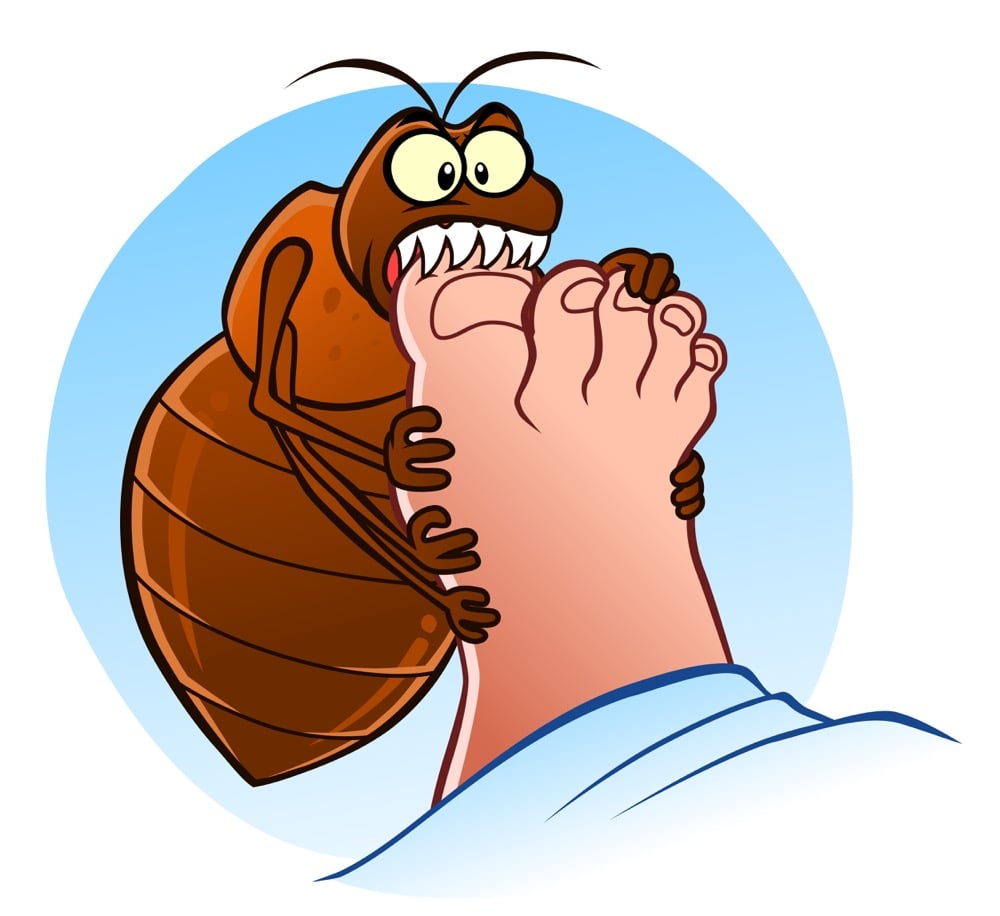
“My mom had her quirks too, and she had her own unusual sayings and traditions. The traditions she learned and passed down had nothing to do with farts, or anything as revolting as my dad’s. She was our version of a normal person, and we needed her dose of normalcy to combat everything being thrown at us. She used to read to us every night, she tucked us in, and gave us one of her sweet, motherly kisses before heading to the door. Then, right after she told us how much she loved us, and before she closed the door she’d say, “Sleep tight, and don’t let the bedbugs bite.” 

“I didn’t even know what bedbugs were back then. Are there really tiny, little bugs crawling all over my bed and my body? Is this common, and what do we have to do to prevent them from biting me? She didn’t intend to introduce this horrific thought into our already creative minds. She thought this familiar, little rhyme conveyed sentiment. I love you, and have a good night’s sleep. Oh, and don’t let the bedbugs bite. This was my mom’s idea of punctuating love. She did it so often that by the time I started thinking about what it was she was saying, it was already an accepted part of our parting ritual at the end of a night. I also think she just liked the phrase, because it rhymes, “Sleep tight, and don’t let the bedbugs bite.” 

“What you may not know, because I didn’t, is that fossils and early writings discovered that bedbugs date back to ancient Egypt and Rome and industrialization and colonization brought them here. So, when ancient Egyptians issued such warnings, they meant it. The mattresses they slept on were made of straw and feathers, and they were held up on a series of latticework ropes. The origin of the phrase sleep tight was probably made in reference to the parents warning their children to tighten their ropes to prevent sagging. Bedbugs cannot jump or fly, but they probably didn’t know that. Another theory speculates that sleep tight referred to keeping pajamas tightly wound to prevent bedbugs from getting in, but all these theories involve speculation over the origin of the phrase. The point though is that it’s possible that some form of this phrase could be hundreds to thousands of years old. 

“If we took a step back to realize what we’re saying about bedbugs, before we close the door to immerse our kids in total darkness, where their unusually creative minds spin just about everything we say into some form of horror that causes them insomnia and nightmares, we might want to give some thought to ending the tradition that suggests these nasty, little germ-ridden insects are probably going to bite us unless … unless they somehow don’t let them. That’s a question I never asked “How do I go about not letting them?” Seriously? “Are there proactive, preventative measures I should employ here, and why are you requiring me to do this alone?” Isn’t this basically what we’re saying when we say, good night, sleep tight, and don’t let the bedbugs bite? We’re saying that we’ve found proactive, preventative measures pointless, and you’re kind of on your own here. Now, good night, and don’t let them bite. Slam! We may have found the answer for why Joey always sleeps with his cute little Mattel swords and shields, he’s preparing for battle. 

“Traditions are what they are, thoughtless traditions,” Barry said, “but they are also an inner node of our family tree that we consciously, and subconsciously, use to connect us to our mothers, our grandmothers, and their definition of love. There’s also that added ingredient, in some weird and inexplicable way, that we see it as a definition of quality parenting. We don’t think about it. We just do it. It’s a set of parental instructions or system of rules written into our code and our peculiar programming language. It’s as much a part of our fabric as familial tales of our cranky old uncle swearing every time he has to stand up, the way our grandpa makes noises when he sits, and playing cars with our cousins on kitchen tile in our pajamas.   

***

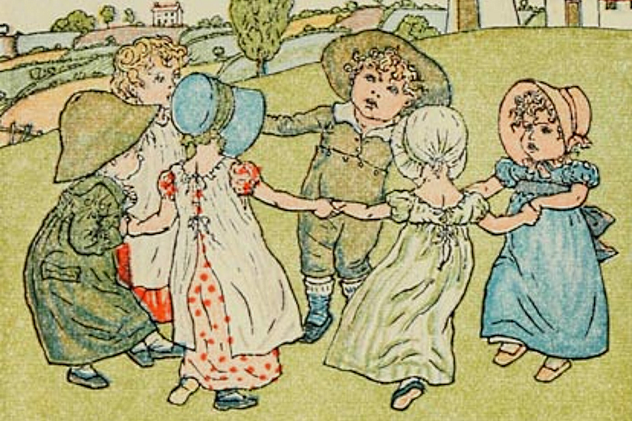
“These generations-old, odd traditions that influence and enhance who we are surfaced when I picked my kid up from school. Some kids, somewhere on the playground, began singing the borderline horrific song Ring around the Rosie. Everyone knows this singalong song, right? Why do we all know it, and who taught these kids this tradition? We did. Who taught us? We just sort of pick it up from somewhere, and no one remembers where. It’s a tradition that was, is, and probably will always be. I smiled when I heard them sing it. Ring around the Rosie, sing it with me now, pocket full of posies, ashes ashes, we all fall down. 

“Apparently, there are numerous versions of this song sung around the world, and some of you might know a different one, but that’s the one we sang in my pocket of the world. For as many versions as there are, there are nearly as many interpretations of the lyrics. As kids we sang it just to sing something while we did something else, but some folklorists suggest the lyrics ‘ring around the rosie’ might have developed as a result of kids teasing other kids when they spotted a red owie on their arm. Any owie, I assume, was subject to ridicule, and if you know a kid, you know they can get bruises, bumps, and red spots walking through an aisle at Walgreen’s. “Where did you get that bruise on your arm? Joey” “I don’t know,” and they don’t. They really don’t. It’s as much a mystery to them as it is to you.  

“When one of these 1665-era kids of London spotted an owie on one of their friends arm, they sang Ring Around the Rosie to tease him that he might want to consider the idea that he might have …. the plague. The plague! Some call it The Great Plague of London, others called it Black Death, and historical chroniclers called it last major epidemic of The Bubonic Plague in England. Some trace the origin of this little song to this Bubonic Plague that slaughtered over 100,000 Londoners at the time, and the total population of London, at the time, was around 460,000. So, it killed nearly one in four Londoners. 

“Ring around the Rosie! Yeah, we saw your little owie, Joey, and we’re pretty sure that means we’re going to be throwing your body in one of the local burning, plague pits soon. 

So many people were dying from the plague that they couldn’t keep up. If you’re from an area of the country that can be affected by wintry conditions, you know that there are times when police won’t respond to minor car accidents. They tell you to exchange information, and drive on. This is what was happening in 1665-England. If a loved one dies, just wait till nightfall and give them to a corpse carrier, who would stroll through the night with his agricultural cart, yelling out, “Bring out your dead!” Fans of Monty Python’s 1975 movie Holy Grail know this scene well. When his cart was full, the corpse carrier would take his load to a plague pit to burn and bury the corpses. 1665 England didn’t bother with funerals, ceremonies, caskets, or graves. There were just too many corpses in too short a time. So, unless you had the money to get a proper service, they threw your corpses in a plague pit, and we can only guess that little Joey probably saw a few of his cousins, aunts, and friends thrown onto the corpse carrier’s cart or into the pit. We all use various mechanisms to deal with the horror happening around us, and kids are more sensitive, thus more brutal, in trying to prevent the horror from getting inside their head, so they developed this cute, little rhyme to suggest that their friends, or that kid who sits two seats up and to the right in class, is headed for the burning corpse pit soon. Isn’t that just the cutest thing? What do you say we teach our kids to sing that for the next three hundred, plus years?

“Some folklorists suggest that the ‘pocket full of posies’ verse was used to mock those kids whose parents believed that if their Joey carried flowers in his pocket, it was a homeopathic remedy to prevent the onset of the plague. So, this portion of the song basically says, “Even though you had a pocket full of posies, you still caught the plague, Joey, SUCKER!” 

The conclusion of the song might be the most horrific, as the “Ashes, Ashes, we all fall down” lyrics suggest that Joey’s tormentors realized that they were acknowledging that they were going to get it too, we all will, and we’re all going to die en masse. One would think that in the age of COVID, we should consider ending the tradition that involves a sing-a-long about catching plagues, airborne or otherwise, that could slaughter hundreds of thousands.  

“I’ve heard that the folklore surrounding these interpretations of the lyrics might not be true, but even the most obnoxious, cellphone-checking sleuths will have to admit that there’s enough speculation among folklorists who’ve examined the lyrics of the song that we should probably stop teaching it as a sweet, pleasant “singalong” rhyming song our kids can sing on a playground. I mean, how can anyone spin “Ashes ashes we all fall down?” as anything other than a relatively disturbing dystopic image? A creative, young mind might even spin the lyrics as a warning for all participants to prepare for a nuclear winter? 

***

“Almost everyone here tonight is a complex, fully formed adult who has lived through several different, complicated eras of life, met thousands of different people, and read at least a few books,” Barry said. “Yet, we don’t know what we’re doing anymore than our parents did when it comes to parenting, and even if we did, we wouldn’t know what to do about it. I’m sure some of you are more confident in your parenting skills, have a master plan, or whatever, but most of us are just making it up as we go along. 

Have you ever had another parent look to you as a model of good parenting? It’s unnerving. You’re looking to me for some sort of guide for good parenting? What kind of dysfunctional and confused parent must you be to look to me? Good God man, I’m a mess. My model for everything I do, as a parent, is my dad, and he didn’t know what the hell he was doing. I mean, look how I turned out. I’m this big ball of the contradictions, hypocrisies, and family traditions that involve dystopic songs and nighttime warnings of bug infestations that my parents taught me. The greatest thing my dad ever taught me was independence, and there are a vast number of merits to teaching your children how to solve their own problems, play alone, and to prepare them for the reality that they’re going to spend most of their time alone, but the constant refrain of my dad’s parenting was, “You’re on your own kid.” I learned most of the strengths and weaknesses of total independence at 11. “Don’t get in trouble, keep your grades up, and don’t touch my stuff.” 

“One interesting byproduct fell out of my dad’s relatively dysfunctional definition of parenting, and that was that I learned that he didn’t care about me near as much as I thought he did. He didn’t attend my sporting events, so he wasn’t cheering me on from the stands, but he wasn’t booing either. This led me to the notion that no one’s cheering us on from the proverbial stands either. We’re on your own here. They might applaud an accomplishment of ours in the moment, but they really don’t care near as much as we think. But, and here’s the element of life it took me decades to fully comprehend, no one cares as much as you think about our failures either. It’s one thing to say people don’t care much about our success. That’s yours to love, cherish, and celebrate, but when we fail, we’re sure that everyone from our parents to that guy in the checkout line at The Supersaver knows too. The truth is, they’re not paying near as much attention as we think. This is not only a bizarre way of thinking, it’s wrong, right? 

The fact that people don’t pay as much attention as we think, or fear, is actually documented in various psychological studies. They’ve performed tests that involved a student walking in front of a huge college classroom to interrupt a professor and ask them a question. That student, in question, was wearing one of the loudest T-shirts he could find. The result, 10% of the people noticed that shirt. When a separate but similar test was done with a student wearing the finest suit known to man interrupting a class to ask the professor a question, 10% noticed that suit. We’re not paying as much attention as we think, and they aren’t either. 

Some might find it depressing to learn that we’re all alone in the world, but if you turn that study around, you might find that it frees you up to try things we otherwise wouldn’t if we thought anyone was paying attention. If you latch onto the idea that no one’s near as much attention to what you do, who you wear, or those silly jokes you tell, then just do what you do with the knowledge that no one’s really paying any attention. 

It’s Just Gross to Say it’s Gross


“You’re just gross,” Sheila said.

“I’m gross? Me?” I asked. Sheila confirmed she was talking about me, and she went through her assessment in detail, and I … I was not insulted.

“How could you not be?” How could I be? Had Sheila called me disgusting, revolting, repellent, or even stomach-churning, my shades of embarrassment might have blossomed, but gross? Gross is gone. It just is. Overuse and abuse have drained it of all value. Everything is gross now. In the ever-changing and relative world of the new and improved hygienic standards, everyone and everything is gross now, and if everyone is gross no one is.

“If you don’t do this, you’re gross.” “Doing that is just plain gross?” “And if you do that without doing this first, you could become absolutely gross.” Some of you might find it gross, but the rest of us don’t understand how all of these this and that’s not only fail the new hygienic standards but they’re gross. How is it gross? Define gross. 

“I’m glad you asked,” an arbiter of gross once responded. “If you do this without knowledge, you’re a little icky, but we’ll withhold judgment, because you might just be ignorant, and we’ll be happy to teach you. If we teach you, and you continue to do it, you’re gross my friend, and I won’t want to be around you anymore.”

Gross, thanks to the new and improved hygienic standard, is now the most used and abused word in the English language, and we’re all scrambling to develop exciting and new uses of it. One would think that someone might step up and say, ‘Okay, I understand he failed to abide by your prescribed steps to achieving hygienic excellence in a manner you’ve defined, but he’s not gross. How is he gross?’

We all thought we had a pretty firm grasp on gross, decades ago, but something happened. There are some very insightful and well-researched explanations of the word’s evolution, but I wanted to know what influenced my friends and my generation to start using and abusing this word. I don’t know if it started in the once-ubiquitous “As Seen on TV” infomercials depicting the absolutely miserable black & white, “Before” man using a traditional mop, but I think they contributed. Before the advent of cable, there used to be shows we were “forced” to watch. Check that, we were never “forced” to watch anything, but our antidote to insomnia was mindless TV, and nothing was more mindless than those 30-minute “As Seen on TV” infomercials. To enshrine their latest and greatest product in the halls of gloriousness, the marketing teams displayed for us a reasonable facsimile of us in black and white “before” videos. We knew the anguish of the traditional mop firsthand, but we had no idea that it was the bane of human existence that might, might have been have been the second worst infliction beset upon man, behind the gods subjecting Prometheus to the sentence of having a eagle eat his liver out for the rest of time. As chilling and horrific as those “before” videos were, they were not a condemnation of man, but an invitation to join the “after” woman, in her bright, colorized visage. On this woman’s face, we could see the science behind the land of milk and honey through her incredible, beaming smile. Her beaming smile didn’t intimidate us, but it led us to believe we could join her in the land the gospels promised for living a moral life.

On another note, in the same lane, government bureaucracies informed the marketing agencies trying to develop the next, great beer commercials that they could not depict the actors  actually drinking beer in their commercials, the adjustments those teams made revolutionized marketing. It may not have been the first time a marketing team sold a lifestyle over a product, but few commercials beat you over the head with this concept as often as beer commercials. The “As Seen on TV” infomercials followed suit by selling the glorious lifestyle their product could offer by resetting the base of the traditional, laborious task of mopping to gross.

Those of us who regularly worked with traditional mops, never found them gross or that laborious, but we fell for their punctuation-free pitches that only paused for applause, and after we purchased their “As Seen on TV” mops, we found that they were not that much better. They were just different, but how do you sell ‘just different’? You can’t, so you don’t, so the only tool at your disposal is to exaggerate the differences to gross to get a reaction. The marketeers decided to go so far over-the-top that it bordered on hilarious, but somewhere deep inside your psyche, you repeated their “it doesn’t have to be this way” mantra the next time you worked with a traditional mop. You pictured yourself in black and white, and no one wants to be depicted in black and white, so you dialed that 1-800 number, because you didn’t want to be gross in the manner your black and white mothers and grandmothers were. It was such a gross exaggeration of something that was ‘just different’ that we bought it, and we’ve tried to sell ever since. We might be giving these companies too much credit for influencing the culture, or too much blame, but if there were hundreds of seeds that affected this change, this was probably one that hit fertile soil and blossomed into everything else becoming so gross. 

The origin of gross began a rather solitary existence as a term we used to describe size. A friend of mine informed me that he just purchased “a gross” of our favorite fireworks. I could tell that Mark had no idea what gross meant in this context. There was just something about the way he said it that made it sound exciting and new. It was as if he couldn’t wait to start using this word in this manner, going forward.

I laughed, but my laughter was born of confusion. He saw my confusion and clarified that gross was a term used to describe big. “There’s big, big and fat, and then there’s a gross!” he explained. I didn’t know, and neither did he, that retail fireworks shops sold their products by the gross, meaning a dozen of a dozen, or 144 items.

Gross then made its way into accounting, and if an accountant called some level of our finances gross, they were talking about our take home pay before anything else was taken out. Our gross paycheck, for example, is what our employer paid us before the government reached in and took a huge chunk of it out, so they could spend our hard-earned money on what they wanted. Net, by contrast, is what we take home after taxes and various deductions.

At another point in its evolution, gross was a superlative to describe something greater than great, but not tremendous. That’s right, according to a version of the Oxford English Dictionary, gross used to be something short of a tremendous compliment. The progression of the compliment went from good >>>to great >>> to gross >>> to tremendous. So, if someone said, “You’re just gross!” at this point in its evolution, it was almost a tremendous compliment. So, how did we take this French word to describe big, large, and fat, or the Latin word grossus, which means thick, evolve to describe something that is just short of disgusting and grotesque? Based on this context, we can only guess that when someone saw someone else who was large and fat, and they called him gross, a third party probably misinterpreted that to mean he was messy, disgusting, and all the things that are now gross.

The exact timeline on the various evolutions, or devolutions, of a word like gross are almost impossible to define, as most deviations occur in casual conversations, but we can always count on hipsters to redefine a word, such as bad being good, as in “He’s a bad man!” but who did this to gross and why? If you do any research on it, you’ll find some blame directed at everyone from Shakespeare to the movie Valley Girls. Whatever the case, we all gathered together and decided to mangle, wrangle, and tangle gross to describe everything from big, and big and fat, to crude and unsavory behavior >>> to poorly cooked food >>> to what the cat leaves in the litter box >>> to the utterly unsavory man who doesn’t use a hand towel to open a bathroom door.

“He’s just gross!” 

“Oh, I know it, and he doesn’t even seem to care.”

We all use the subtle art of manipulation, or if manipulation is too harsh a term, how about coercion to influence our peers. We know certain words elicit better reactions than others. We see this most often in the teenage world. Everything is a superlative to them. Everything has at least two audio exclamation points behind it!! We know this, because we knew it in our teens. When we hit that vulnerable valley between youth and adulthood, we do everything we can to impress our peers with our opinion. We didn’t have a firm grasp on language at the point to form quality expressions, so we substitute words to colorize our attempt to master the art of persuasion. Most of us get better at that with age, and this ardent need to impress might subside, but it never dies.

The need to get reactions and impress in the teen world can overhaul everything we’ve learned about the psychology of language, or psycholinguistics. We speak, almost exclusively, in superlatives in our teens. Everything is classic, sick, lit, and the best thing to happen to humanity and the worst. These words get reactions, and we rarely turn away from them, no matter how old we are. Even though the average adult learns 40,000 words by age 24, we cling to the teen words awesome, sucks and gross for most of our lives, because they are time-tested and peer-reviewed.   

Something awful happened to gross, on its path to overuse and abuse, but at its worst, it never made it to disgusting. As we see in the progression from yesterday, bad >>>to worse >>> to awful >>> to gross >>> to disgusting, we once had a scale by which we could rein gross in, but some of us decided to render all other adjectives obsolete. Listening to this abuse, the listener might think the founders of our language didn’t provide us with any other adjectives to describe something beyond bad, or if they did, they didn’t do a very good job to it. 

If someone says, “You know what, I think my lima beans are slightly undercooked.” Our reaction would be, “Oh man, I’m sorry to hear that?” and everyone goes back to their meal. I mean, what’s the difference between a slightly undercooked lima bean and a fully cooked one? If she says that her lima beans are gross, however, what do we do? We don’t require further description, and we don’t need to interrogate the witness. We crinkle the nose. 

The crinkled nose now plays a prominent role in the conditional social compacts we share with one another, as the purveyor of gross might deem the conspicuous absence of a crinkled nose a personal insult. When someone says their lima beans are gross, we are to offer sincere, sympathetic, or empathetic, apologies followed by a crinkled nose to punctuate that apology. We offer them this to validate their complaint and offer real, material substance to their exaggeration of a slightly undercooked lima bean. Then, if she offers further description, and it can be anything, we know this requires us to go beyond the crinkled nose to some derivative of the empathetic, “Ewww!” 

We all know the laws and bylaws of our unspoken compacts that are expected of us on a certain level, but we may not ever see them for what they are, until we experience an exaggeration. 

***

“Best onion rings in the Southwest!” a restaurant submitted in their ad. In her attempts to convince us that we should go to this restaurant, Laura told us about that ad. She knew the price of onion rings, and she knew these were overpriced, but if they were the best onion rings in the Southwest, Laura was willing to pay that price for them. 

I only knew Laura on a superficial level, but dined with her often enough to know that there was no way that those onion rings would achieve the “Best onion rings in the Southwest!” in Laura’s after-bite report. The moment she ordered those onion rings, I could feel the barometric pressure in the restaurant drop, as the complaint cloud loomed over us. I correctly predicted the precipitation cycle from Laura’s first bite to the server coming over to check on us after we received our orders. I’m not a meteorologist, but I didn’t have to be to know what happens when dark, foreboding clouds begin to form. 

As if on cue, the complaints rained down on the server after Laura took her first bite. There’s nothing wrong with a complaint of course, but Laura could’ve limited her complaint to, “I paid for the best onion rings in the Southwest, and these are not that.” She could’ve sent them back and received another plate, or another item as a substitute, but Laura opted to display her standards of excellence by putting on a show. 

In her report to the server, Laura could’ve described her plate of onion rings as room temperature, but that term has no attention-grabbing exclamation points, so what did she say? She said, “These onion rings are ice cold!” to superlative her way to the crinkled nose. The onion rings were not ice cold. We could see no ice crystals hanging off them, and there was no dry ice-like smoke wafting off them. Yet, when she finished displaying her mastery of provocative adjectives, we feared touching her onion rings the way we do dry ice, because we all know the physics behind something being so cold that it could burn. 

To further bolster her characterization, and the resultant sympathy that naturally, and contractually, follows, she added that her slightly above room temperature onion rings were, “Gross!” Was it a gross exaggeration to call them gross? Yes, yes it was, but that didn’t stop her from saying it. It doesn’t stop any of us, because we want/need those reactions. No, when Laura declared her onion rings gross, we crinkled our noses and sympathetically “Ewww’ed!” her, because we wanted to form some level of solidarity with Laura and her complaints, so she would continue to be our friend. No one would dare challenge her gross assessment, because how do you challenge another person’s subjective opinion, and why would you want to interrupt a perfectly enjoyable meal with friends by saying, “They’re not gross, Laura, they’re just a little undercooked. Send them back to the line, have the chef cook them a little longer, or get some new ones, and shut your trap!” 

Another thing we know without knowing is that gross assessments carry an unspoken quid pro quo. If we offer Laura’s gross exaggerations visual and audible support, we expect her to offer her support of our complaints if they should ever come about. Most complainers, in Laura’s league, don’t. They refuse to abide by the unspoken tenets of our social compact, or our quid pro quo, because they don’t view our complaints as significant, as germane, or as informed as theirs. We all know someone like this. They say everything from an undercooked lima bean to finding a stray French fry in their pasta is gross, or absolutely gross, and we support her to fulfill our obligations in our shared compact. When we complain about something that we might later admit is relatively inconsequential, such as, let’s say, slightly undercooked red meat. They dismiss our complaint. 

“It happens when you order red meat,” a Laura-type might say. “When you’re ordering food, particularly red meat at a restaurant, you’re allowing someone else to cook it for you, and chances are,” the Lauras of the world say, emphasizing those two words sardonically, “chances are, they’re not going to cook it to your satisfaction. Just eat it, or send it back and have them cook it more and shut your trap.” The crinkled nose we give that is not a gross one, but one of insult and confusion. 

“She doesn’t see it,” we whisper to ourselves in wonderment. “She doesn’t know that she’s one of the biggest complainers in the Southwest.” Is it that, or is her dismissal fueled by the fact that if she allows us to complain and call everything gross, unimpeded, that might somehow diminish her assessments?

If you’ve ever gone this deep into the social compact we have with others, an exaggeration like this makes it apparent to us. Yet, when we recognize it, most of us sit in silent stupor and comment on it later to those close to us. Few of us would be so bold as to say, “Hey, I crinkled my nose for you when you complained about your onion rings, and I even said “Eww!” when you wouldn’t shut up about it. I think I’ve at least earned a crinkled nose from you woman.” Not only does their very public dismissal of our complaint violate our social compact and the quid pro quo we thought we had with them, but they’re totally oblivious to all of their complaining over the years. If we wonder how oblivious some of them can be, they’ll add an “I’m sorry, I just hate complainers” atop the pie, and if that don’t crack your dam, then you have far more control of your facilities than I do. 

After hearing Laura-types use and abuse the word gross for years, I briefly considered it my prime directive in life to mount a personal campaign against the power the word wields over our public discourse. I started small and polite, but at some point, I started trying everything I could think up to limit the use of the word in my social circles, for the purpose of giving it some of its power back. My modus operandi was that if we could all get together and limit the supply, it might have a corresponding effect on its demand. I didn’t do it for self-serving reasons. I did it for the word. Even though I knew that was a self-serving lie, I made some strides in my battle against the ‘ly words, literally and actually, in my social circles, and I thought my experience in this arena might translate to some success on the battlefield against the word gross. I lost. I lost so badly that … Have you ever heard of the infamous Battle of Little BigHorn? Yeah, like Lieutenant Colonel George Custer, I severely underestimated my opponents. I was bull rushed at times, and outflanked by others. It was a bloodbath. As with Custer, my troops abandoned me, all my Captains and Majors, retreated when they saw out how outnumbered we were in our initial skirmishes, and my fight proved pointless and pitiful, even among my closest friends and family.

The word is gone, I say to you now in my after-action report (AAR). I didn’t think anyone still used the musket, and when I saw that they did, I grew over-confident, but when so many use it, it leads even the best of leaders to acknowledge that some of the times even the best laid plans should, for the sanity and happiness of everyone involved, end in retreat.

I Love to Eat: Part Deux


“You don’t know how to eat,” a friend of mine said. She wasn’t talking about health and nutrition, or the staples necessary for informed eating. She was talking about the method I used to eat food. I chopped up my spaghetti strands, and this offended her Sicilian spaghetti sensibilities. 

“You’re supposed to fork twirl the strands on a spoon! Like so,” she said, showing me. “It’s so much more elegant.”

When I said, “Nah!” she hit me with another:

“You don’t know how to eat.”

“Have you heard this line? People love it. It’s sweeping the country. They have this method of eating that if you just followed it, or tried it out, it would unlock the floodgates to the glory of eating. My dad used to tell me to combine roast beef and mashed potatoes on the same fork. He considered it divine. I disagreed.

“You don’t know how to eat.”

When a friend told me about his ingenious method of combining marshmallow and chocolate on a graham cracker, that we would all later call a s’more, I said, “Nah!” Boom:

“You don’t know how to eat.”

“I don’t know if they say this to humiliate us or just break us down, but I rebelled against the whole notion of it. I kept eating the way I enjoyed eating my whole life. My dad was the exception. He was so constant, and so insistent, that it’s basically his fault that I eat the way I do,” Barry said, “and it’s his fault that I place such value on food and eating too. My mom shares some of the blame. She was a pretty decent cook, and she made some decent choices for our meals, but she decided to die, so we were stuck with my dad’s definition of a meal.

My dad was an old man when he took the reins. He lived through The Depression, he was a military man, and he spent the next twenty years a hard-working bachelor. My dad spent the majority of his life eating whatever was placed before him, and he was grateful, so grateful that he’d eat just about anything. 

“Dad didn’t understand this notion of preferences. Finicky was the ‘F’ word to him. We displayed some preferences, but in the grand scheme I’d argue that we weren’t finicky. We just preferred to avoid eating crap whenever we could. “You’d eat that,” he’d say over his schlop, “if you were starving in The Depression, or all you had to eat were C-Rations.” 

“So, if you were to put two plates before us, one with this piece of crap on it, another plate of worse crap, and nothing at all, we’d choose your plate?” we would ask. “You’re right, we’d probably choose yours, but that’s not what I’d call a brilliant marketing strategy.”  

“This isn’t to say that my dad didn’t enjoy a well-prepared and flavorful meal. He enjoyed it as much as the next guy, but in his mind, any man could eat a meal that tastes delicious. What separated the men from the boys, in my dad’s worldview, was what that man did to a meal that was less than flavorful. Based upon his internal sliding scale of characterization, eating a foul-tasting, poorly prepared meal was a tribute to his ancestors.  

“You ever see those Old West movies with characters eating pork and beans on a slice of buttered bread? That was my dad’s definition of nirvana. We all know this image of a bunch of carriages surrounding a cook, usually named Schmitty, who cooked up some beans and put it on bread. I’m not saying it didn’t happen, but I have to believe the traveling cowboys would’ve loved it if Schmitty dropped some fried chicken in their lap.

“The pièce de résistance of my dad’s personal campaign to pay homage to those who came before him, arrived in the form of a flavorless, bare bones sandwich. This hallowed sandwich consisted of one slice of the cheapest bologna mankind has been able to produce, between two slices of bread so flavorless that I doubt any competitors in the bread industry even knew this manufacturer’s name. Did he enjoy a condiment or two, well sure, but he didn’t need one. The notion of needing condiments was my dad’s definition of inherent privilege. “You mean to tell me that you can’t eat a roast beef sandwich without barbecue sauce?” 

“No, dad, but we prefer to eat it with a little barbecue sauce on it,” we said. “That makes the sandwich taste better.” He tried to break us down on the differences between need and want, and we conceded that it was all about want. He backed off a little, but he was disgusted by our preferences, because we never could’ve survived on World War II’s battlefields with our preferences.  

“Even with all that, though, it was obvious that if he had his choice, he wouldn’t eat his own schlop, and he made that apparent when an aunt informed him that she wanted to come over to our house to prepare a meal for us. 

“Your aunt has agreed to prepare a meal for us,” he mentioned to prepare us for the moment of her arrival. Nothing wrong with that, right? Like just everything else my dad did, he overdid it, “and it might just be the last decent meal we ever eat.” His intention was not to scare us, of course, but to instill in us a sense of gratitude for all of her efforts. He scared the hell out of us. I considered it possible that I might never eat another quality meal for the rest of my life after we finished The Last Supper of any quality.

“Comparing this meal to The Last Supper might sound like hyperbole, but that was my dad. He had us so amped up for the arrival of that meal that when it was placed before us, my brother leaned over to whisper something to me, I shushed him. “Shh, for God’s sake, eat. This could be the last decent meal we ever eat.” And, boy, did we laugh. My aunt laughed, my dad laughed, and we all had a whale of a time analyzing my admonition. I wasn’t laughing. I didn’t even smile. I didn’t get it. I thought it was almost a guarantee that I would end up eating schlop for the rest of my life after this meal, and I wanted to silently enjoy every last bite, as if it might be my last.

I didn’t care about the quality of the food but what kid does? If we drill a kid down to their basics, it’s all about Burger King, McDonald’s and Taco Bell for them. They’re forced to eat just about everything else. A nice, home-cooked meal is little more than a mandatory break from playtime. “Kids, it is now time to eat!” Aw, crap. You have to eat when you’re a kid. You have to take a break when it’s time to eat. You don’t care about quality. You just eat to shut your parents up, unless those who know the definition of quality food insinuate that it’s possible you never will. 

“My dad’s war on food, namely eating, and the proper procedures therein, might lead one to believe that he was a strict father. He was anything but. In every other area of life, my brother and I had total freedom, perhaps too much. By the definition of our friends, we lived an almost parent-free existence, but they didn’t have to abide by my dad’s near-militaristic meal time rules that would’ve been welcome in most penitentiaries throughout the world. 

“Much later in life, decades later, I found out my dad was actually quite proud of my eating habits. He didn’t say anything about the emotional or financial stability I achieved as an adult, and he never mentioned my ability to attain consistent employment through the years. For him, it was all about eating. “You’d eat anything,” he said to begin the greatest compliment he ever gave me. “I never had a problem with you, but I had to constantly be on your brother at the dinner table, or he’d drift off into la-la land.” My brother would chat at the table, he’d pause for a brief period of time that drove my dad crazy, and he’d drift off, or space out, as we called. My dad called it going off into la-la land. My brother didn’t do this to rebel, or to be naughty. He’d just forget to eat in the systematic keep-your-utensils-locked-and-loaded procedures my dad required. If he slipped into la-la-land, my dad would pounce, “Eat Arnie!” My brother would shake out of whatever daydream he was in and resume eating. My dad tried everything to keep my brother on task. He tried patient reminders, and he tried heavy-handed scolding. Nothing worked. His frustrations eventually drove him to develop a little ditty that we now call the Eat Arnie Eat song, and it went a little something like a this,” Barry said clearing his throat and humming out a couple chords, until he could find the right one. “Eat Arnie eat, eat Arnie eat. Eat Arnie eat, Oh, eat Arnie eat.” 

“Anyone eavesdropping on this one-off performance might have mistaken my dad’s brilliant “Oh” crescendo with a pleasing and creative bridge to the fourth stanza, but aesthetics did not motivate this tool man. Creating tools was his profession, and it defined him, outside-in and inside-out. He created tools to fill a need. His whole world was about need, not want, need, and he created that song to fulfill a need. He composed no other lyrics for the song, and once it served its purpose and my brother began eating, dad had no further use of it. He never sang the song again. He didn’t create this brilliantly simplistic song to be humorous. If you laughed, or thought it was funny in any way, that was your preference, but that wasn’t why he created his incredible Eat Arnie Eat single. If humor, or the looming threat of it, got my brother to eat then his brief foray into the world of art was worth it. Once that tool fulfilled its utilitarian purpose, my favorite single of all time could whither on the vine for all he cared. When we called for an encore at get-togethers and company functions, he shot them all down. He was not one to perform on demand, even with a couple of beers in him. 

“I wish that I could look you all in the eye tonight and say that all these exaggerated concepts and rules of food appreciation are complete nonsense. I wish I could say that I considered them such nonsense, and the minute I became an adult I laughed them all off as so over-the-top foolish that is nothing more than halfway decent material for a joke.

“I mean, who cares if we chit-chat when a meal is before us? Who cares if we look around the room when we should be eating? The big difference between my dad and I is I don’t talk about this nonsense, because I know it’s nonsense, but that super-secret part of me that no one will ever see or hear is absolutely disgusted by signs of a lack of appreciation for the food before you. I cannot stand it when you chit-chat with a perfectly good meal before you. When you take a break, I have to swallow my disgust if I want to have friends, or I want to avoid having others consider me a special freak. “Your entrée is getting cold!” I want to scream. The idea that you can’t, or won’t eat food without condiments absolutely disgusts me. I’ll talk about the need, need, that you have for mayonnaise on a ham sandwich for years. Want is fine, but need? C’mon, isn’t mayonnaise a first-world preference? Then if you dare to commit the cardinal violation of food appreciation, according to my dad, of leaving a restaurant with some food on your plate, and you don’t ask for a doggie bag? I will secretly decide, without noting it for you in any way, that I might never be able to dine with you again. Seeing it once will forever affect our relationship, but putting myself in a position to view it twice is a shame on me, in my book.”

“I still don’t understand why my dad was willing to go to war over food appreciation and eating, and I’m sure if some psychiatrist asked him why he did all that, he’d say, “Hey, I don’t get them all either.” The question I have for myself now, standing before you tonight, is why did I start doing it, why do I still do it? Why, after I spent my teens and twenties trying to do everything 180 degrees different from my dad for the expressed purpose of doing it different from him, do I now mimic all of his quirks and eccentricities? The only thing I can come up with is his great-granddad probably did it to his dad, and his dad did it to him, and he did it to us, and I now do it to you. I would love to be that fella who broke the chain and allow my friends and family to eat normally without some form of internal, critical analysis, but it’s too late for me now. It’s ingrained the way propaganda ministers once taught us that if you repeat the same line often enough, it becomes true to you. And if you insist on eating the way rational, well-adjusted people eat, I’m eventually going to implode in such a way that a “You don’t know how to eat” comment is going to rain down on you in the fallout.  

[Standup comedian Barry Becker is The Unfunny comedian, and this is one of his sets. If you enjoy this style of comedy, there’s more available at The Unfunny.]