The “Afflicted” Girls in the Salem Witch Trials


In the months between February 1692 to May 1693, nineteen citizens of Salem, Massachusetts (14 women and 5 men) were executed for the charge of being a witch. One person was tortured to death for refusing to admit he was a witch, and five people died in jail after being accused. More than 200 people were accused in what we now call the Salem Witch Trials, and five dogs. As harrowing as it is to believe that a small American village executed twenty of its citizens, Europe executed up to 80,000 between 1500 and 1660. 

History.com writes that the hysteria swirling around Salem, Massachusetts began in “January 1692, [when a] 9-year-old Elizabeth (Betty) Parris and 11-year-old Abigail Williams (the daughter and niece of Samuel Parris, minister of Salem Village) began having fits, including violent contortions and uncontrollable outbursts of screaming.” Even though the medical community knew about ergotism, the residents did not know what afflicted these girls. The Parris family called in a doctor named William Griggs. Dr. Griggs could not diagnose the girls, and he declared their fits were “beyond epileptic or natural disease”. Dr. Griggs fell prey to the very human condition that applied to their day, as much as it does to today, of filling in the blanks he couldnt by suggesting that the girls were victims of a supernatural bewitching. 

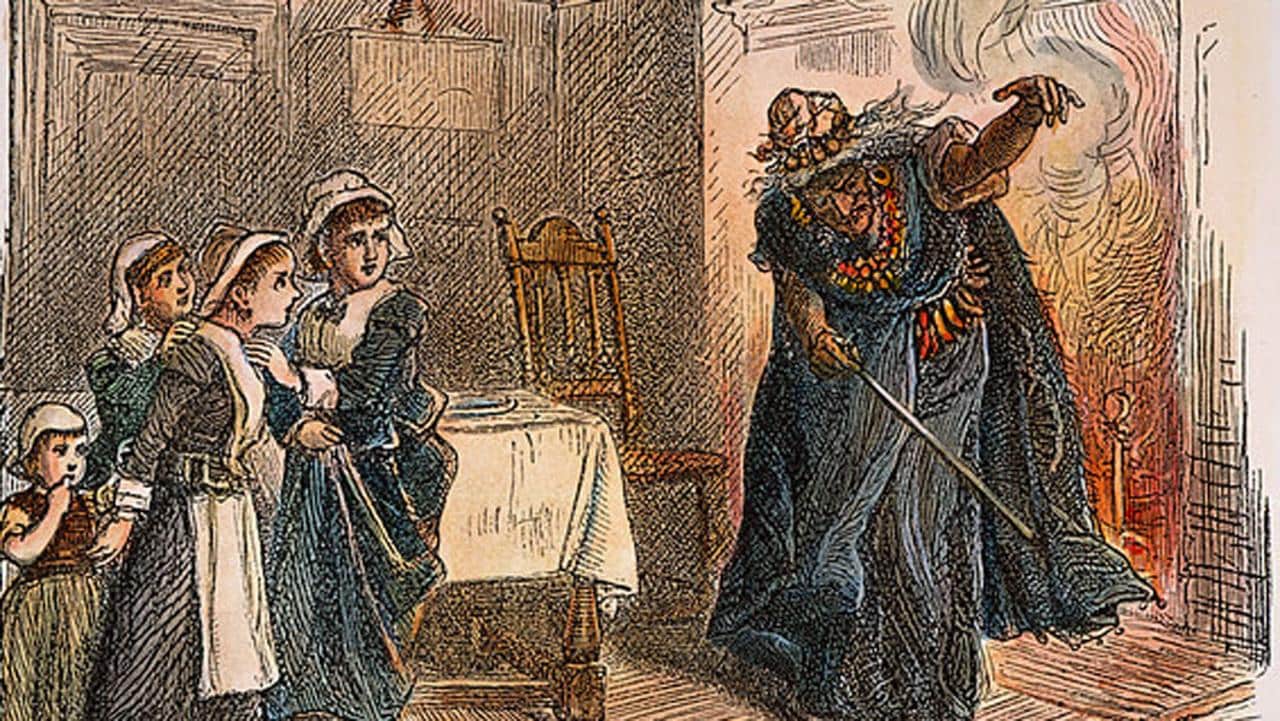
Based on that diagnosis the Parris family were distraught, and they decided to accuse three women of bewitching their girls, including a woman named Tituba. After weighing the evidence against her, and the cultural climate surrounding Salem at the time, Tituba unknowingly set a precedent for those who would be accused in the future by confessing to “the crime” of bewitching. She confessed, we can only surmise, because she knew the deck was stacked against her, and she would be convicted regardless. In her confession, Tituba implicated others by saying that they worked alongside her in the service of the devil against the Puritans. Seeing how Tituba beat the system by providing states evidence, as it were, future accused witches confessed to similar charges to avoid execution and/or imprisonment, and they, too, began assisting the state by informing on other witches. Hysteria spread throughout the Salem community, and the local justice system was soon overwhelmed.

There were a number of factors surrounding Salem at the time to add to the culture of fear, including the fear of neighboring communities, fear of attacks from Native American tribes, and what historians call “The Little Ice Age” that destroyed their economy and many elements of their daily life. To explain what they considered inexplicable, the residents of Salem turned, in fear, to the supernatural, witches, and the devil to explain why their lives were destroyed.

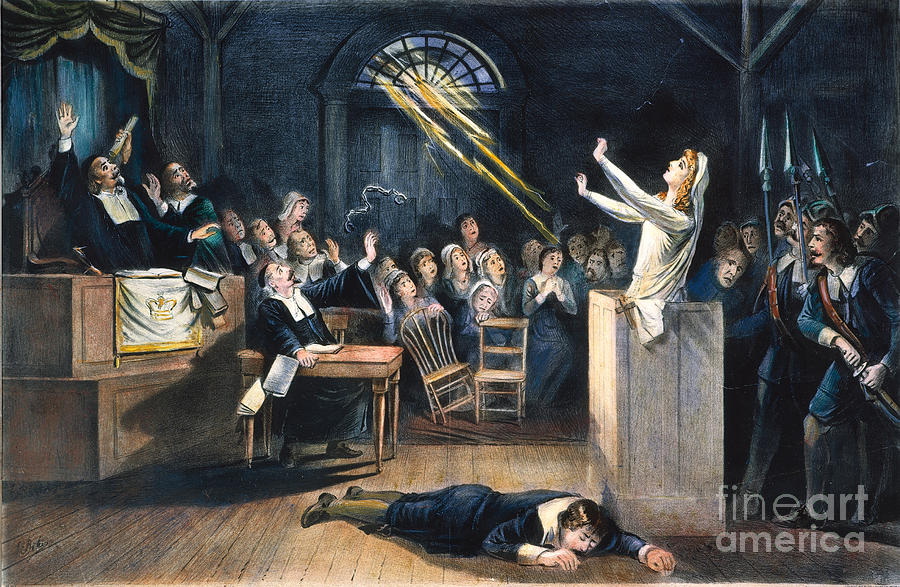
Amid this culture of fear, four other young girls, all between ages nine to twenty, began accusing their neighbors of witchcraft. The six girls were commonly referred to as the afflicted girls. The afflicted girls would accuse, testify in court, and drop to the floor in convulsions during the witch trials. There are a number of theories regarding why these six girls did what they did to lead to public executions, but the one thing we now know with absolute certainty, with no facts to bolster that certainty, is that they were not lying or faking the convulsions.

One of the most wide-spread modern theories to explain the ailment the Parris and Williams girls suffered from is ergotism. Ergotism, or ergot poisoning is a result of a long-term ingestion of ergot alkaloids, or mold, that can be found on rye, wheat, and other cereals, which were all primary components of the diet of Salem residents. In the list of symptoms of Ergotism is delusions, hallucinations, vomiting and muscle spasms that could lead to convulsions, which many say lines up with the symptoms the Parris and Williams girls experienced.

As with any theory of matters that have occurred nearly three hundred years ago, historians have debunked this theory. Historians Nicholas Spanos and Jack Gottlieb argue if the young girls were victims of ergot poisoning why weren’t there more cases in Salem, and why wasn’t the rest of their family in their homes afflicted? The two historians admit that ergotism only takes place in hosts suffering from a vitamin A deficiency, but they state that Salem was rich with cows and their milk, so they conclude that it isn’t possible for a resident of Salem to suffer a vitamin A deficiency. They do not include the possibility that these two girls did not enjoy the taste of milk, so they didn’t drink it. They also do not include the possibility that the girls suffered from underlying conditions, such as bleeding stomach ulcers or some form of malnourishment that could’ve led to a greater susceptibility to ergotism via the ergot alkaloids. Nor do they consider the general idea that funguses and mold can affect individuals in the same house, with the same genes, different, based on varying underlying conditions.

Another theory is that the four girls who followed the Parris girls may have suffered from a psychogenic illness called mass hysteria in which one exhibits symptoms and another, unconsciously, begins exhibiting the same symptoms.

“We’ll probably never know the truth of what happened to these girls,” one person, with alleged authority on the subject suggests, “but the one thing we know is they weren’t faking it.”

One quick read through the history of the Salem Witch Trials can lead the reader to some impulsive reactions and cynical, knee-jerk assumptions. Those of us who want to know the truth, try very hard not to fall prey to our own biases, so we keep reading and researching. We do find out we’re wrong, on occasion, but more often than not, we read through all the thoughts and theories on the matter, and we find a whole lot of overthinking, until we fall back on our all-too-simplistic assumption that the afflicted girls made false accusations and they faked their convulsions.

All of the theories about what caused the girls to go into convulsions are not just possible, they’re probable, but the certainty some display in the face of what happened is what draws us back to our impulsive and cynical guesses. If we can rule out ergotism and mass hysteria, with no proof, how can we rule out the idea that they were lying and faking? Especially when one of them, Mary Warren, admitted that “afflicted persons did but dissemble,” or fake their symptoms. Now we know that Ms. Warren later recanted and accused those who might have pressured her into making the admission, but she provided the only evidence for any of the primary theories.

Another crucial element that leads me to believe that the afflicted girls were faking it, was the timing of their convulsions. We weren’t there for the proceedings, of course, and we don’t have the minutes of the trial, but the historical recreations lead us to assume that the convulsions the afflicted girls experienced in the courtroom were conveniently timed to convince the judges of the accused’s guilt. When Mary Warren was asked, in court, to clarify her statement that “afflicted persons did but dissemble,” or fake their symptoms, the afflicted girls in the courtroom went into convulsions. Mary Warren responded, on the stand, by going into her own convulsions. This fits the definition of mass hysteria, provided above, but it doesn’t explain the case for ergotism, and it could be argued that it only bolsters the cynical argument that they were all faking it.    

One of the reasons, I think, that we seek to nullify the claim that they were lying and faking, is that it’s almost too horrific to imagine that anyone would purposely, and maliciously make a claim that leads to the executions of those they accuse. Cynical types, who impulsively believe the worst of humanity, often have no proof for their assertions, but those who impulsively believe everything is more complicated than all that don’t either.  

One of the causes historians list as a cause for the Salem Witch Trials is the fear of the powerful women. To say full-grown women were second class citizens in 1692-93 Salem, Massachusetts, is being generous, and whatever power women had in Salem, young women had even less. Is it possible that these young women enjoyed their brief moment in the Sun? Not possible? Too cynical?

The next point that most historians consider to bolster their claim that the patriarchy feared and loathed strong women, is that they wanted to keep them in a state of fear. This is plausible, because while the Puritans of Salem considered women equal before God, they considered them more susceptible to the wickedness of the Devil. They suggested the later based on the story of Eve falling prey to the temptation of eating the apple in the garden of Eden. These characterizations are all unfortunately true, but while the thrust of the campaign might have been engineered by men, for men, it may not have gained a foothold in the culture were it not for the accusations made by the young girls. It’s also worth noting that five men were executed, and there is a list of men who were named, accused, imprisoned, and otherwise had their names sullied.  

We’ll never know the truth, and I’m not saying I know better than anyone else, but when someone tells me that one theory is categorically false, without any evidence to back that claim up, my mind immediately invites those possibilities in.

“Think about it,” we say when someone else is so muddled in their thoughts that they can’t see straight. We might say that when someone is so blinded by simple truths that they can’t see the evidence that complicates the matter. We also say it when someone’s conclusion is so clouded by evidence that they sift and sort through it to develop speculation that complicates the matter so much they can’t see a simple truth. The simple truth of the matter is supernatural witches with supernatural powers do not exist. They might exist in a realm we don’t understand, but how often do we use otherworldly spirits to explain the gaps in our understanding of the human mind? We wonder, how can one man kill another with no feeling, he must be a monster, a vampire, a werewolf, or something else supernatural, because no normal man would kill another without reason. We can also use them to explain how a seemingly normal person can somehow fail to generate a sympathetic response to the aftermath of blind rage. It was the nature of residents of Salem, Massachusetts to blame supernatural spirits and monsters to explain what they could not explain then, it’s human nature now, and it probably always will be, because “We’ve seen things that no one can explain.”

We make fun of the people who lived over three hundred years ago for believing in such things, but my bet is that for the next three hundred years we’ll continue to believe someone, somewhere exhibits such powers. The only problem is that over the course of the last couple thousand years, we have yet to find substantial proof of it. Supernatural witches, and their Specters, a fancy term they used for spirits, ghosts, or demonic forces that the accused would allegedly sic on the victim don’t exist in the same manner that vampires, Frankenstein’s monster and Spongebob Squarepants don’t exist.   

The Exorcising


Rachael Noye added a joke to the tail end one of Tyler Drummond’s, while they walked through a Wichita, Kansas mall, hand in hand. He thought her joke was so funny that he held his stomach. He continued walking and holding his stomach, until his face turned laughter to a grimace. “I don’t feel so good!” Tyler said moments before collapsing in agony. He didn’t fall flat initially. Initially, he went to a knee, but when that didn’t gain him any relief, he slowly lowered himself to the ground. When that didn’t offer him any relief, he tried to sit up, but he couldn’t. Tyler had no idea, at this point, how much pain he would experience over the course of the next eight minutes. 

“It happened so fast,” Rachael would later say. “One minute he was laughing his tail off. The next, he’s groaning on the floor. I thought he was playing. ‘Get up,’ I said. ‘People are watching Tyler, get up’. He did things like this before, and I didn’t want to fall for it again.” 

Tyler was in such excruciating pain that he could not respond. 

After a couple seconds, Rachael knelt down next to him and placed a hand on his shoulder. She still wasnt sure if she was the product of one of his jokes, until he let out his first unintelligible yells. “Tyler was not one to bring attention to himself, and he yelled loud,” Rachael added. “That’s when I knew something was really wrong.”

“Help!” Rachael cried out when she realized how serious this was. When no one responded, she said, “Help me! Help us!” When a few people broke ranks to help, she shouted, “Someone, someone call an ambulance!” over them.  

Two different patrons did just that. Others rushed forward to help in any way they could. Two of them attempted to help Tyler sit up, but he refused their requests. He continued rolling back and forth, holding his gut. Tyler’s face was one of complete agony. 

Rather than say, “Is there a doctor in the house?” One of the onlookers, seeing Tyler Drummond writhe around on the floor in pain, making unusual, guttural sounds of anguish, said, “Is there a priest in the house?” 

A priest happened to be in the mall that day, dining in the food court. “I’m a priest,” Father Danielson said running to the man. “What’s going on?” When the throng parted to allow his entrance, the Father Danielson went to a knee before the man, “What’s wrong with you sir?” the priest said, taking one of Tyler’s hands. Tyler attempted to answer, but his voice was so strained that Father Danielson couldn’t understand him. Tyler continued holding his stomach with the other hand, sweating profusely, and shouting at the top of his lungs. Some say he was probably swearing, but no one could understand a word he was saying.

“What happened?” Father Danielson asked Rachael when Tyler proved unable to answer.

“I don’t know,” Rachael said. “One minute he was fine, laughing, all that, then he said, ‘I don’t feel so good,’ and he just collapsed.”

“What’s his name?”

“Tyler,” she said. “Tyler Drummond.”

Not knowing what else to do, Father Danielson continued to hold Tyler’s open hand and said. “You have to tell us what’s wrong, Tyler. You have to tell us how we can help you.” Father Danielson began asking Tyler more pointed questions, and Tyler either couldn’t or wouldn’t answer. The priest began silently praying for the man.

“No,” Rachael. “He needs more than prayers.”

“All right,” the priest said. He then began administering Last Rites on the man. 

“No,” Rachael said, in the throes of panic. “He doesn’t need Last Rites either. He needs an exorcism. I’m Catholic. I know the difference.”

“I don’t think-” the priest said, but Rachael cut Father Danielson off with more pleas for something more.  “I think he needs a doctor-” the priest tried to say, but the growing throng of shoppers around them cut him off this time, imploring him to follow Rachael’s instructions and do something more. At the two minute mark, some proceeded to call the priest out for not doing everything in his power to end this man’s pain, others shouted him down, and some even began screaming:

“Do something! He could die!”

Tyler quieted a little when the priest began praying over him quietly. Tyler listened to the prayers, but members of the throng later said they only made Tyler more agitated and fearful.

The ever-growing crowd around them grew as fearful and agitated as Rachael and Tyler, “What are you doing?” they shouted. “Do the exorcism, like the woman said!” Father Danielson wasn’t sure what they wanted, but they were growing so unruly that he began to fear for his own safety. He wasn’t sure if they wanted him to begin speaking Latin, which would be a problem because he didn’t know any, or what they wanted, but they appeared on the cusp of violence.

“If he dies it’s on your hands!” a man in an Ivy League hoodie shouted, three minutes into Tyler’s agony. Three minutes might not seem a long period of time, but anyone who has experienced acute pain knows three minutes can feel like an eternity.

Tyler then began screaming louder than before, as the priest made up some prayers, he thought might calm the crowd. “Do it again!” one of the women in the crowd shouted at the priest. “It’s working.” The priest continued holding Tyler’s hand throughout, but he began mumbling the prayers, so the crowd around them might think he was speaking Latin. 

“Get it out of me!” were the first words Tyler said that anyone could understand. He rolled to and fro, while retaining a tight hold on Father Danielson’s hand. “GET IT OUT Of ME!”

Tyler’s screaming, and the crowd’s urging that the priest do something more, compelled the priest to mumble faster at the five minute mark. These sounds went back and forth in dramatic waves, until Tyler’s screams began building in intensity. Sensing that, the crowd that had been pushing forward to see more of Tyler’s incident, began backing away in unison. They didn’t know what was going to happen, of course, but they all, in various ways, described how they thought this might progress into something unexpected and something unprecedented.  

When Father Danielson was unable to do anything as immediate as the man in the Ivy League hoodie instructed, the man panicked. He was one of the first spectators on the scene, and he proved one of the mot agitated throughout. His agitation with either the priest, or the situation, progressed until he couldn’t take it anymore. He had been making a sign of the cross on himself throughout the situation, but when the situation appeared to only be growing in intensity, he made one final sign of the cross, kissed his fingers and impulsively and violently pushed and shoved his way out of the throng, screaming, “It’s coming! Get out! Get out while you still can! It’s coming!” If the throng gathering around Tyler, hadn’t been so large, the hysterical man would’ve probably knocked the woman standing behind him flat, but the man behind her caught her before she could go down. The shouting man continued making the sign of the cross, some spectators later said, and he continued shouting, “It’s coming!” until he was safely in his car, peeling out of the parking lot, and driving away as fast as he could. 

Seconds after that hysterical man fled, and three others followed him, one with a small child, it began. It began six minutes after Tyler Drummond collapsed to the floor in the middle of a Wichita, Kansas mall. Some spectators described it as a hiss, a hiss more similar to the sound one might hear from air slightly escaping a balloon, as opposed to the snake’s hiss. This was followed by further evidence of Tyler’s agony, as he began to wail loud and long wails. Two more spectators exited, and the rest backed up more. 

“Anyone who tells you they werent scared,” one of the spectators said, “is lying. Straight up lying.”

“Oh, absolutely terrified,” a middle-aged woman said, “I’m a little embarrassed to admit it now, but I got into a screaming match with a woman who had her seven-year-old child with her. ‘Get her out of here!’ I shouted at the woman. I thought it was irresponsible that she kept her daughter there. I mean, we didn’t know what was going to happen.”

“It reminded me of the screams a woman will make while in the final stages of childbirth,” another said.

When the hissing sounds “Progressed from hissing sounds to flapping sounds” at the seven minute mark, four more people left the crowd that gathered around Tyler Drummond. Their departure wasn’t as violent as the man in the hoodie, but they were described as bug eyed in their departure. They ducked and weaved their way through the throng and out of the mall. Those who departed would never hear the sounds progress from the unusual flapping sounds to the more familiar sounds of flatulence, and we can only guess the stories they tell of their day at the mall that afternoon, if they didn’t seek out the news stories on what ended up happening.

Some spectators say that the flatulence lasted minutes, others say it might’ve lasted thirty seconds, but the priest said, “It might’ve lasted maybe seven seconds, but it was long and loud, very long and very loud.” It was also, according to all of the spectators there, quite foul. One of the primary reasons for its regrettable, and some say unforgettable, smell was that when Tyler began to feel some relief from his initial push, eight minutes into “the most painful gastro intestinal pain I’ve ever experienced,” he pushed harder. He pushed so hard that some diarrhea followed the flatulence.

When it was finally over, and everyone realized what happened, Tyler smiled an embarrassed smile. His smile emanated through the sweat that drenched his hair and left his face beaming with sweat. The priest also noted that the alarming redness of his face, slowly dissipated, until his normal color returned. While sitting up, Tyler actually managed a laugh. This caused others to others to laugh, until just about everyone was laughing.  

“It was a laugh of relief,” Father Danielson said later. “Euphoric laughter.” Tyler didn’t even mind that the laughter was directed at him. He took it in stride, and apologized a number of times to the crowd if he upset them in anyway, and he thanked them for their concern.

“I’ve never been so relieved to hear another man fart,” a senior citizen said before shaking Tyler’s hand.

“Oh, I know it,” Tyler said. He was laughing while shaking that man’s hand, and his face colored again, in embarrassment. “Thank you, for your concern.”

“Thank you most of all, father,” Tyler said, standing up to shake Father Danielson’s hand. “I really thought that was something far more serious. Thank you for staying with me.”

“Well you’re welcome,” the priest said. “What do you think it was?” he asked. “What caused it?”   

“I don’t know,” Tyler said still holding the priest’s hand. “I just know that I’m glad you were there for me, with me, thought all that. That was a bad one.” When Father Danielson gently pressed a little further, Tyler said. “I honestly don’t know, father, it might have had something to do with the 2-for-1 sale at Arby’s. I took advantage of the sale and downed two steakhouse garlic ribeye sandwiches. I heard someone joke one time about gastrointestinal issues, saying, some of the times food fights back. Maybe that was it.”

We’re Doomed! Long Live the Gloom!


“The planet’s not in trouble,” a comedian said onstage. “It has survived countless threats, tragedies, and catastrophes. The planet will be just fine. Human beings, however, we’re screwed.”

The End of The Road

We’re doomed, and we love it! If ratings, proceeds, and ratings mean anything, doom and gloom is big business. 

We want it in the all-too-near future, “Ten years from now…” Ten years is one of our favorite time frames. Twenty years is too far away and five years is too close. We want urgency, we need it now, but not too close. We might deem it hysterical if it’s too close, and we might not worry about it if it’s too far away, so we’ve deemed ten years the Goldilocks, sweet spot for dystopian rants. I think I can top them. I think future street corner bell ringers might want to narrow their hysterical rants for greater appeal among consumers. If you know anything about grocery store pricing, you know that consumers find round numbers too stark, too pricey, and generally unappealing. Their psychologist advisors have informed them that consumers find $9.99 more appealing than $10.00. It’s a penny right, what’s the difference? These psychologists say it’s everything to consumers, so we now see their items listed accordingly on all shelves, car salesmen do it, and everyone who wants to appeal to this mindset we all have. The chicken littles of our future might want to recalibrate accordingly and say, “Nine years and nine-nine days from now…” 

Ten years also seems like enough time for human ingenuity to develop a solution. If we’re facing a true cataclysm that will end the human population, we have to think it would become the sole focus of more than a few of our brightest stars in science, engineering, and just about every other focus we have to attempt to counter the sure-to-come devastation of life on the planet? 

How many times has human life faced extinction only to have some genius come along and devise an ingenious way of saving life? This time it’s different, of course. This time, no one can save us. We’re helpless. How exciting!

We’ve all been here before, in theoretical forecasts, but this is the future. We’re here to report that the ten years in the future that we’ve forecast for the last seventy years is now here. It is ten years in the future, and a moment, not the moment, but a moment we’ve feared for at least seventy years is here, and we don’t know what to do about it.

The reporters investigated and attempted to locate and expose a human culprit. They hopscotch between various narratives to find a bad guy before it’s too late. They join forces with the scientific community to narrow the focus of their study on human involvement. Regardless whether they’re wrong or right, they have the best intentions.

So Scary, It’s Beautiful!

There are no high-profile news agents ten years in the future. They’ve been exposed in one way or another, and relatively few read, watch, or listen to them anymore. In their wake, citizen journalists rose up on the internet and developed reputations for telling the truth in the years preceding the looming tragedy. Some of the more prominent citizen journalists provided a contrarian belief that certain scientists developed by studying the looming tragedy through various angles that focus on the math and science of the universe. These contrarian scientists eventually proved incorrect, and those with no knowledge of science rained fire upon them. 

“It’s you job to figure this out!” a reporter screamed at a contrarian scientist, as he walked to his car. This confrontation went viral and social media launched “It’s your job!” meme at scientists, and the citizen journalists who supported them.

The contrarian, non-human theories were rejected so often, and so publicly, that most become afraid to voice their concerns with their neighbors, lest they be called a denier. “There’s nothing we can do!” becomes the credo of the day. “The scientific consensus suggests there’s nothing we can do.” 

Teams of scientists hear this, of course, and they’re scared, but some of them brave the cynical firestorm to push this theory that the new, unforeseen, looming, and disastrous event involves a detailed and complicated natural occurrence that has nothing to do human beings. 

“It is,” they write, “an event that occurs throughout the universe on a relatively infrequent basis, and it is going to occur near Earth, unless we are able to do something about it.” 

Numerous scientists attempt to disprove their theory, as is their role, and most of them suggest that their findings are inconclusive. Some of those scientists who unsuccessfully attempt to disprove the theory, decide to pursue the theory in purely hypothetical mathematical and scientific forms. “If true,” they write, “then we could use an end around to avert the looming disaster.” Other scientists join in and posit theories around this new end around theory. 

“It’s time to say it, Science has failed us!” a major online news publication, that no one reads anymore, states in the title of an article they publish in a desperate attempt to remain popular. The article proves popular, of course, as a crude attempt to develop “if it bleeds, it leads” style click-bait articles that feed into the gloom and or doom themes. “As time continues to tick down,” the article states, “our most brilliant minds continue to fail to find a solution.” 

Scientists develop other theories, and other scientists disprove them. The lack of understanding of science, leads to mayhem all over the world as citizens the world over begin to panic over the delays. In the midst of that panic, as time ticks precariously closer, a scientific hypothesis emerges.

High profile scientists immediately reject the hypothesis, with no evidence, and popular sentiment follows suit. Prominent leaders of the world join the popular sentiment. With the lack of any government endorsements, and more importantly government funding, these teams of scientists desperately seek private donors to help them pursue the hypothesis that no scientist has been able to concretely disprove. The theory does not please anyone and everyone is torn, until it works. The event from the far reaches of the universe is thwarted, and the little dots in the universe, we call human beings, avoid extinction. Most of us feel weirdly disappointed when we realize that we get to live at least a little bit longer.

Science does not experience a popular upgrade in the aftermath, since so much of it failed, so often, when people were really scared. The citizen journalists do not experience more popularity, as the historical record suggests they backed the wrong horse more often than not. One citizen journalist, in defense of his record, and the record, suggests that this is the nature of science. “Most of science is as wrong, flawed, and incompetent as the humans who develop it. Scientists develop theories and other scientists disprove them, until the various teams compile a deeper knowledge of the harmony of math and science in the universe.” He continues, “Scientists are flawed human beings who aren’t large enough to qualify as a speck in the universe. Our/their knowledge and understanding of how universe the works wouldn’t qualify as a speck either. The failure of these brilliant minds only reinforces how little we are, and we can know what we know and still be wrong an overwhelming number of times, until some congealed form of human ingenuity, based entirely on observations, wrong educated guesses, and the infighting we now all know about leads, inevitably and almost accidentally, trip on a truth.” 

The politicians who said the end around theory would never work, because they wanted us to follow the theory that they supported, now attempt to embrace the end around theory as one they supported all along. The reporters and social media outlets who rejected and condemned anyone who believed in the theory move onto other, click-bait stories of the next looming disaster. 

When Tuesday rolls around, everyone forgets how close we actually came to extinction on Monday, as few appreciate a tragedy that never happens. The various teams of scientists who developed, pursued, and helped execute the end around theory are vilified by the scientific community, the politicians eventually join in the condemnation for those who saved the world, and the media seeks numerous angles to further vilify them. A major, online publication produces a series of pictures depicting the team of scientists most responsible for saving the world in mug shots. “They saved the world,” the title of the feature article says. “Why it’s not okay to like them.” 

Some of the scientists who braved the negative forces primed against them to save the world, quit their jobs, others finish out their career anonymously, because their names were never attached to the chains that led to the theories that saved the world, and one unfortunate scientist commits suicide. “Leave my family alone!” was the first sentence of his suicide note.

“He joined a team that wound end up saving the human race from annihilation,” the suicide victim’s friend said in the eulogy, “and they destroyed him for it.”

It is the future, it is the past, and it is the present. 

Mutually Assured Destruction

“He was the worst human being on the planet,” we now hear. “What he did was indefensible!” The definition of defensible involves flowcharts. Who is the alleged perpetrator? “Who are his victims?” What was the nature of his crime? “Was he well-intentioned or just awful?” It’s impossible to know, and we might never know. We base our conjecture on what team we’re on.

If we’re on his team, we qualify with excuses. We have so many excuses. Why? We don’t really know what happened, so why do we care so much about the accused that we’re willing to put our reputation on the line to see our guy go free or be penalized as little as possible? “What if he’s guilty?” What if he’s innocent? “All right, but what if?” We have no serious, vested interest. We’re just watching it on TV.

They don’t believe him. We know they’re on a certain team. If they believe him. We know they’re on the other team. The bad team. We know they’re capable of anything. We don’t know the truth, but we know if they pound the table harder than the other guy, they can sway popular opinion.

“What is the truth?” No one would openly say that the truth doesn’t matter anymore, “but someone has to be right,” and someone has to be wrong. Do we crush the importance of truth under the weight of what’s right? “I don’t know and you don’t know,” but let’s not study that subtle distinction. “Right.” We know that they’re wrong, and no one will be able to convince us otherwise. Our guys aren’t capable of wrongdoing, because like us, they come from better stock. “They would never do that.” We like our side, because they make us feel like a major component.

When we debate the other team’s proponents, we fear they might know something we don’t. We know our stuff, but we don’t have that haymaker to silence all debate. Everyone is searching for the person, place or thing that provides the haymaker. Yet, we don’t even bring it up, thinking that they might know something we don’t, or they could be offended. Saying our guy could be innocent might offend their sensibilities, and our friends might not be our friends in the aftermath.

The End of The Road

We can find the truth, as always, nestled somewhere in between. The lawyers in every industry define a truth. Not the truth. They manage information and disinformation so well that they push us further away from the truth through whatever means necessary. It’s called a quality defense, and we’re willing to pay buku bucks for it. Everyone is afraid of lawsuits, so we don’t question their version of the truth.

There are those who report a truth based on how they see it. Are they right? Who cares? We dismantle truth seekers based on past behavior to destroy them, so no one believes their version of truth. The truth seeker goes on defense, and our assumption of guilt and innocence depends on how much they defend themselves. The more they defend themselves, the guiltier they are. We think we’re onto something. As far as we know, they reported their side’s version of truth. Is their side’s version of the truth true? Who cares, destroy them before they destroy us in a pact of mutually assured destruction.

This might sound cynical, but how could anyone paying attention avoid some semblance of cynicism? Cynicism is the safe place for those seeking foolproof status. You can’t fool me, and neither can they, but while no one can call me a fool, I can’t say I know anything about the spaces in between.