[Writer’s Note: I know of no one named Daniel McVie or Shea Lynch. I changed the names of the people in this story to protect the innocent, and the presumed innocence of those we’re required to maintain regardless of conviction. Any resemblance to people named Daniel McVie or Shea Lynch is purely coincidental.]
Before he was violently and senselessly murdered, Daniel McVie developed an unusual knack for making connections. He could make kids giggle, and little, old ladies enjoyed his clever sense of humor. Daniel McVie greeted every customer who walked into his store as if he were welcoming them into his home. Those who saw him, thought he had an unusual gift for making these connections. Those who knew Daniel McVie well, considered this idea a bit of a gift a misnomer, because they knew how hard he worked at it.
If he had a gift before being promoted to assistant manager at a discount department store, his day-to-day duties enhanced it. Those who loved Daniel say that when his managers spotted Daniel’s ability to make connections with such a wide variety of people, and they trained him how to use it as a greeter for the store, they immeasurably improved his life. Whether it was a gift or not, Daniel McVie loved meeting new people, and he had an unusual ability to make each customer who stepped into his store feel special.
If Daniel had such a gift for making superficial connections, he also had an equal inability to make more complicated, deeper connections. To summarize his difficulty, based in part on a rare disease that attacks the nervous system and causes chronic dizziness, Daniel didn’t understand how Isaac Newton’s law (“For every action there is an equal and opposite reaction”) applied to human interaction. Those who knew him intimately suggest that this deficit might have played a significant role in his murder.
“It was just sad,” Daniel McVie’s cousin Julie said. Julie interrupted me to say that, and she made it quite clear that she didn’t want to discuss the matter further. When she saw my reaction to that, she softened, “I’m sorry, it’s just that things like this don’t happen to people like us, and when they do we’re curious. There’s nothing wrong with curiosity, but some of us go overboard. Some of us have a morbid curiosity about the intimidate details of what happened, as if it were part of the plot of some crime show. It’s none of your business, I want to say to them. Not you, sweetie, I’m not saying this to you, but some people just need to butt out.
“Some of the times bad things happen to good people, as a result of a sad set of circumstances that didn’t have to happen, and shouldn’t have happened,” Julie continued. “I think about it every day, and at least once a week, I’m a blubbering mess about it … What happened to Dan was just such a sad thing that didn’t have to happen.”
I felt bad when Julie added the last part, as I could see how she could misinterpret my polite interest for morbid curiosity, but all I said was, “I heard Dan was murdered. What happened?” and she insinuated the rest. When Julie snapped at me, I have to assume that by that time so many who knew Daniel, or heard the story secondhand, inundated her with questions, and her reaction to my question was the result. I could see how sensitive Julie was on the topic, however, and I felt bad for being a part of that, however incidentally, and I dropped it.
I wasn’t morbidly curious about what happened to Daniel McVie before my conversation with Julie, but I was after it. I knew I shouldn’t be, but when someone plants a “Here, there be Dragons” flag at an outpost, warning me to go no further, the only thing I want to do is go further. This might be my character flaw, but my curiosity, morbid and otherwise, does not override my general sense of social decorum.
When I arrived home, I used every resource at my disposal to find out what happened to the man. I wish I hadn’t to be honest. I wish I didn’t know what I know now, because even though I didn’t know Daniel McVie very well, I liked what I knew. He was personable and funny, and I liked being around him when I was a kid. When I found all of the details available, I discovered the whole situation, as Daniel’s cousin Julie said, involved a sad set of circumstances that shouldn’t have happened, and they didn’t have to happen.
When Daniel McVie broke out his record collection for us, when we were kids, it was it was anything but sad. His eyes lit up, and his face beamed when he started in on what his friends and family called the record collection presentation. Daniel was so proud of his collection that when he spoke about the accomplishments of the individual records in his collection, he sounded like a proud father, detailing the accomplishments of his son. He also sounded like a salesman giving a sales presentation, and we thought he was trying to sell the collection to us.
“How much do you want for it?” we asked.
“Wait. What?” he asked. “These records are not for sale my friend. This is my private collection.”
We didn’t really want to buy the records, but the pause in his presentation appeared to beg for some progression of our otherwise polite interest. When he corrected our error, we were basically asking him how much he thought they were worth, just out of curiosity. We were kids, and he was a grown man, so we thought that our question was a natural, logical progression of the conversation. He dropped the term private collection, as a wine connoisseur might. We should’ve sensed there was something different or off about the man, but we didn’t. We were kids.
“They’re rare collector’s editions,” he said. “Some of them contain outtakes, demo versions, and live songs not found on any other editions. They’re also in mint condition, as you can see. They’re still in the original cellophane.” He didn’t know how much they were worth, in other words, but he knew everything else there was to know about these albums, because he didn’t mind sharing that information.
He knew the lyrics of every song on every album he owned, but he didn’t concern himself much with the deeper meaning of the lyrics. He knew every player in every band on every album he owned, but he didn’t know enough to know if they were considered accomplished musicians in a technical sense, and he didn’t care about any of that stuff. He didn’t know anything about the intrinsic qualities of the albums, in other words, but he had an encyclopedic knowledge of their sales, how well they performed on the charts, and what he considered their subsequent historic value.
His passion for music didn’t run so deep that he ventured out into more obscure music, as most music aficionados do. Daniel’s presentation didn’t venture into the quality of the deep tracks on his albums. His focus remained squarely on the hits. How many hits did the album Escape produce for Journey? Daniel could not only tell us how many, but he knew how high they charted, and how many weeks they remained on the charts. He could provide the same details about Men at Work’s Business as Usual and Steely Dan’s Aja. He also recited for us some pull-quotes of the critical reception of Aja. He had quotes from various outlets and everything. It was information overload, at times, but it was still quite impressive.
We were kids when we knew Daniel McVie, so we didn’t know much about music, and we knew even less about collectibles and their value. His confident presentation relied on popularity, yet he knew nothing about scarcity and the influence it has on the value of collectibles. Daniel also had yet to face the harsh reality all collectors face if they ever decide to test the market, and that is that the collectibles we love so much are only worth what someone else is willing to pay for them.
The idea that he didn’t know how much these albums were worth did not hamper his presentation however, for he knew enough about what he considered their value to spark our imagination. By the time he completed his little presentation, the albums took on a glow reminiscent of the glow that appeared on John Travolta’s face in Pulp Fiction when Travolta opened the briefcase. Some think Daniel’s enthusiastic presentation, and his ability to transfer that enthusiasm to his audience might have contributed to his fate.
Daniel McVie didn’t have any kids, and he didn’t have any pets, so he directed all his love to his nieces and nephews, and to a lesser degree, on his record collection, and his blue Honda Civic. They were his pride and joy. Listening to him speak about them, we could forgive his audience for thinking he loved these items more than people. The truth was he loved people. He was, as they say, a people person. He was an extrovert who could talk to anyone on any given subject for at least twenty minutes.
He was the assistant manager of a discount department, in charge of greeting customers at the door. He did so with uncommon gusto. He loved his store, as if it was his home. He loved the people with whom he worked as if they were members of his extended family, and he treated anyone who entered his store in the same manner. He might as well have greeted people with, “Welcome to my home.” Those who knew Daniel well say that he was always a gregarious person, but his daily duties at the discount department store enhanced that element of his personality.
Daniel McVie wasn’t the type we need to see when we’re young, for all the reasons young people look up to adults, but we thought he was. At that age, we can’t see us for who we are, so we have no ability to see others for who they are. Yet for all of his flaws, he was a great listener who always seemed to be present.
Most adults vie to impress adults in the key demo, but Daniel McVie focused his attention on kids and the elderly. He made those who couldn’t do anything for him feel special, and we couldn’t help but return the favor. Yet, Daniel McVie wasn’t special in the manner we thought he was. He was a man who suffered from a rare disease that attacks the nervous system and causes chronic dizziness. He was not the extraordinary talent we thought he was, in other words, and as the years passed, we realized our deification of him was mostly uninformed. We had one occasion to watch him when he didn’t know anyone was watching, and we discovered he was almost childlike, and that his trained focus on the particulars of rock music was probably a result of his illness, but he knew more about that than anyone we ever met, and we were in awe of his knowledge.
Practice makes perfect, as they say, and Daniel practiced his record collection presentation before friends, family, and anyone who would listen. He didn’t assign specific value to it, as stated, but anyone who witnessed him take the stage felt the general value he placed on them.
“Wow!” is what we said when he was in his element.
Shea Lynch
Daniel was also an old softie. He suffered from some physical and mental difficulties, and he couldn’t stand seeing other people suffer. When he met individuals at the local shelter, he took them home and allowed them to clean his apartment for a couple bucks and a square meal. “He was always helping people like that,” his neighbor said. “We saw him welcome people into his home for a variety of reasons. That was just Dan.”
One of the men Daniel welcomed into his home was Shea Lynch. Daniel saw Shea sitting at a bus stop one day, in the middle of a torrential downpour. Without thinking twice about it, Daniel pulled over and offered the man a ride. Who does that? “You don’t know who you’re picking up?” our mothers have told us for generations. Daniel didn’t care. His Catholic upbringing informed him that when you see a man in need, you heed the teachings of the Lord. Daniel didn’t see Shea as a troubled or confused young man who was so down on his luck that he needed to sit in a torrential downpour to wait for a bus. He saw someone who needed a ride.
Daniel and Shea got along so well, on that first trip to Shea’s home, that the next time Daniel saw him sitting at the bus stop, in clear weather, he stopped to give him a ride again. Before long, they found that their work schedules matched up so well that Daniel was picking Shea up almost every day. After a couple more rides, the two of them developed a conditional friendship. They found that they both enjoyed talking about movies, so Daniel invited Shea to attend the local theater with him. When they talked about bowling, Shea informed Daniel that no one could take him. He was right. Shea smoked him.
Age is a determining factor in all relationships. The young view the old as wizened characters, who have a lot to teach in the beginning. They eventually figure their elders out, and they often find them quite boring. Daniel was different, and Shea saw that. Daniel’s age probably appealed to on some deep, subconscious search for a father figure.
Prior to meeting Daniel, Shea Lynch was suspicious of everyone he met. Some considered him so suspicious of every little thing that they thought he was a little too cynical. He knew he was cynical, “But who wouldn’t be,” he said, “if you’ve been through what I have? People beat you down. They’re always coming at you, and after a while you just say enough already. I’m going to hurt you before you hurt me.”
He was suspicious of Daniel McVie too, that first day, but it was raining like crazy. Shea would’ve accepted a ride from just about anybody that day, but Shea liked Daniel and warmed up to the man the first time he met him, and Daniel’s joke had a lot to do with it.
“You’re not a serial killer are you?” Daniel asked when Shea entered the car. Shea laughed and said no. “Let me see your teeth.” Shea was confused but he gave Daniel a toothy grin. “All right, let’s go,” Daniel said pulling the gear into reverse to leave the parking stall.
It was so confusing that Shea laughed. “What do my teeth have to do with me being a serial killer?” Shea asked.
“I was watching cartoons with my nephew one day, and I asked him how he can tell the difference between good guys and bad guys. He said, ‘look at the teeth. If they’re jagged, you know it’s a bad guy.’”
“Let me see your teeth then,” Shea said.
Daniel’s joke disarmed Shea. He didn’t trust the man yet, but the joke was so child-like that it helped Shea characterize the man as child-like. It became an ongoing joke between the two of them. On subsequent rides, Shea would enter Daniel’s car, show the man his teeth and Daniel would put the car in gear.
There was something so warm and fuzzy about Daniel. He didn’t believe these things he said, like his nephew’s analysis, but he said them so often that Shea found them endearing. The man was always joking around like this, and there were times when it was tough to know if he was really joking. Regardless, Shea enjoyed it. He considered Daniel a confused, harmless old man who was a little naïve, and almost child-like, especially when the man started in on stupid stuff, like his beloved record collection. After a number of rides, some bowling nights, and a couple of movies, Shea considered Daniel trustworthy. The only reason that the raging cynic considered this man trustworthy was that the alternative, that Daniel might be up to something, seemed so ludicrous as to be almost laughable.
“How do you know so much about these old records?” Shea asked in the midst of one of Daniel’s record collection presentations.
“What are you talking about?” Daniel asked. “These are the greatest bands of the late 70’s to the early 80’s, the greatest era of rock and roll ever. Don’t tell me you’ve never heard of Foghat. Don’t tell me that please. You’re going to make me feel old,” he said with a sly smile.
Daniel’s presentation allowed for questions and comments, but no touching. When we approached his beloved collection, Daniel scolded us. He wouldn’t allow us to handle his precious albums, and he probably wouldn’t let Shea either. Daniel insisted that anyone who handled his albums should do so with a level of care that a museum curator exhibits when handling artifacts, and he knew kids didn’t have that in them. It was a matter of respect to him. “You don’t enter a man’s home,” he told us, “and start rifling through his belongings, especially when it comes to albums like these. They’re in mint condition, and they’re quite valuable.”
Daniel knew kids and teenagers have no regard for private property, and that it was on him to protect his private property. We thought that was all Daniel was doing when he assigned special value to his personal possessions, but he wasn’t. He truly thought that these ubiquitous albums had value, because they were “rare editions”. He truly thought we should admire and cherish these albums the way he did, and he probably passed those sentiments along to Shea Lynch.
Something to Believe In
Prior to meeting Daniel McVie, Shea Lynch never had anything to believe in. Everyone he knew failed him in one regard or another. Every single one of us wants someone, or something, to believe in, but after a time the crushing weight of disappointment breaks us. Shea didn’t believe in anything or anyone, because no one believed in him. They viewed him as a thief and a bully, and no one ever tried to see the person inside.
It’s tough to pinpoint how such things start, but Shea remembered discovering the power of money one day. He went to the store that day and bought things. Shea learned the definition of a glorious term called purchasing power that day. He never heard this term before that day, and he enjoyed it. Those who wouldn’t talk to him the day before wanted to be his friend that day. Girls smiled at him. They talked about his smile, and they said they never saw it before.
“I smile,” he said.
“Not like this,” they said. “Look at you.”
They didn’t say anything about his general sense of confidence, but it was so obvious that that was the difference. He felt more confident, more alive, and he didn’t want that day to end. When that day ended, he wanted more of them, but his parents installed a new door handle with a locking mechanism on the inside of their bedroom door. They accused him of stealing money from his dad’s wallet, and they locked him out of their bedroom.
“Who does that to their own kid?” Shea asked anyone who would listen, “It’s like they’re locking me out of their lives.” When his grandmother’s jewelry went missing, they accused Shea of course, even though they could never prove it, and she began locking him out of her life too. No one knows why these things happen, but everyone remembered him as the kid who always seemed to have more money than anyone else did.
No one knows when where and how we started to lose faith in humanity, but we remember what it felt like to have our loved ones begin to lose faith in us. We remember the day our grandmother turned suspicious, and we’ll never forget when our mother began joining the chorus of those who suspected us of wrongdoing, but what’s crystallized in our memory is the day our father lost faith in us. For some reason, we think about that more than anything else, when we’re all by ourselves in the dark corner of our cell.
His father’s harsh corrections were so unrelenting, for so many years, that no matter what Shea did he knew that the minute his dad got off work, he would hear about it. It was almost like a game after a while. Shea would test his dad’s boundaries, and his dad would come out of his corner. As any skilled boxer will tell you, knockout artists make headlines, but boxers win belts. A trained boxer knows that the key to victory is to work the opponent’s body and duck their blows until the knockout artist begins wears down, and he can’t throw his punches as effectively. It worked. Shea could see the man tire, until he finally gave up. Shea initially considered that his victory and he all but danced the dance of the victor.
It felt so liberating in the beginning. He felt free to do whatever he wanted to do without guilt. He laughed at the “old man” behind his back. He said he broke him. He considered it something of an accomplishment, until he noticed the hold his friends’ dads still had on them, and how they somehow, for some reason, didn’t mind it. He tried coaxing it out of them, but they said, “Hey, I hate my dad as much as you do yours, don’t get me wrong, but I still have to live under the man’s roof, and I think somewhere down deep, he does it because he cares.” Lines like those infuriated Shea, and he mocked his friends for them, but they also illuminated the idea that Shea broke his dad down so much that the man might not have cared what happened to him. He couldn’t articulate how devastating that realization was, but he felt it over time. He felt abandoned, betrayed, and alone. He knew a special bond was broken, even if he wouldn’t acknowledge it. He tried to maintain that what he did to his dad was kind of funny, but he stopped laughing about it so often.
A wise man once spoke about how the relationship we have with our father profoundly influences our view of God. As young people, we cannot deal with the immensity of the concept of God. We also can’t deal with the abstract of an ultimate authority figure. We only know more immediate definitions. We know that if we do something wrong, our teachers and our mothers will be on us for it, but nothing strikes fear in us the way our ultimate authority figure can. Thus, for most kids, but boys in particular, a father sets the template for our definition of ultimate authority. This relationship influences our definition of all authority figures, including, but not limited to law enforcement officials, teachers, principals, and God. A son’s relationship, and view of his father can also trickle down to affect every relationship they have, and it can inordinately affect his view of himself. The theory states that we’re likely to view God as a lenient or authoritative deity based on the manner in which our father dealt with us. So, what happens when a father gets so tired of the constant barrage of misbehavior from his son that he just gives up? What happens to that son’s view of God, his view of humanity, his worldview, and his view of himself when his father gives up so completely that he agrees with the judge that their best course of action is to enter his son into the foster care system? This is the ultimate definition of a father abandoning a son in a physical and spiritual manner.
“I just can’t deal with him anymore,” his father conceded, in the judge’s private quarters. “Maybe it’s for the best.”
We’ve all met young boys in dire need of a father figure. We’ve witnessed them desperately cling to any authoritative, adult male who shows them any kind of attention. What do they seek? Some suggest that they may be looking for a role model, and while that might be true on a number of levels, those of us who witness this behavior think it goes far deeper than that. We think these young men seek some personal definition from within the constraints of consistent measures of any ultimate authority figure they encounter. Mothers try very hard to play that role in their son’s life, in the space of a father’s absence, but women, in general, have a more compassionate and understanding nature. They’re nicer people, in general, and they’re more apt to want to believe in their sons. At some point, they accidentally begin taking this belief so far that they end up believing their son’s excuses. Most men were once manipulative boys, and they have firsthand knowledge of the ways a deceptive young man can deceive the compassionate and understanding adults around them. They remember important it was to them to have an authoritative figure say, “Just cut the crap and act right!” For reasons that are tough for a young male to comprehend, this no nonsense, no excuses framework is so attractive to them. Anyone who has witnessed a situation like this cannot help but think these boys are desperately crying out for some personal definition from within the constraints of consistent measures of any ultimate authority figure they meet.
At some point, in the conditional friendship that began between Daniel McVie and Shea Lynch, Shea began to view Daniel as a surrogate father of sorts for all of those reasons, and the childless Daniel McVie enjoyed playing that role for this younger man. We can guess that one of the few things Shea learned after bouncing from foster home to foster home is that one of the key ingredients to developing a relationship is to invest his own emotions into it. He didn’t believe in any of those people, and they didn’t believe in him. He learned from that, and he hoped to apply it in this situation so Daniel might help him right some of the wrongs that occurred with his father.
After Daniel picked him up a number of times, Shea found that he actually looked forward to seeing that old Blue Honda Civic pull up to his bus stop every day. He still considered the old man a joke, but he was a harmless old man who volunteered to drive him home from work. Shea didn’t realize how much he looked forward to it, until Daniel failed to pick him up three days in a row.
“What happened last week?” Shea asked the following Monday, when Daniel picked him up again.
“I was under the weather,” Daniel admitted. “I am sorry about that, but I had no way of reaching you to tell you that I wouldn’t be able to pick you up.” When Shea expressed some doubt, Daniel said, “I’ll tell you what, you give me your phone number, and I’ll call you when I’m sick, just to let you know.”
“I don’t have a cell.”
“All right,” he said. “I’ll give you my number. You can call me throughout the day, and I’ll let you know if I am able to pick you up.” Daniel scribbled his name and number down on a piece of scratch paper and handed it to Shea. The name read Dan. “You can call me Dan,” he said with a wink and a smile, as Shea read it.
Even with that little piece of scratch paper in hand, Shea couldn’t come down. He was so angry the week before that he couldn’t find a way to forgive Daniel easily, no matter how valid the man’s excuse was. He felt so empty when those minutes clicked by, and the old Blue Honda Civic didn’t pull around the corner. He had no way of contacting Daniel to find out what was going on, when the man failed to pick him up. He just had to sit there and wait for his bus. Shea spent that week thinking Daniel abandoned him, the way his father had.
Shea Lynch wasn’t the type to reflect on his emotions in any given situation, but even if he was, he wouldn’t have been able to explain these feelings very well. He just got angry, and he left all the explaining up to the other guy. If Shea had someone to talk to, perhaps he could’ve explored his reaction better, but he didn’t tell anyone about Daniel, the rides Daniel gave him, or the little outings they had, because having a surrogate father of this sort, and all of the feelings they unearthed made him feel weird. How weird? Well, if Shea were the type to reflect on his emotions, and he confided those feelings for Daniel to another, and they were to mock him for it, Shea would knock that person out. He might not know all of the particulars behind it, even while he’s punching the guy.
The feelings Shea experienced around Daniel were so confusing that he pretended that the man meant nothing to him. He called Daniel names like “Old man,” and “that confused old fart.” He convinced himself that he was using Daniel for rides, free food, and free movies and bowling. He convinced himself that he was in charge of this situation with lines like, “Hey, if he’s willing to pay for all that, who am I to stand in his way.” He probably convinced himself of all of this, until Daniel failed to pick him up for three days straight.
When it happened, Shea felt all the old feelings of betrayal creep back up on him. He remembered the sense of abandonment he felt when his father didn’t fight the judge who ordered Shea into the foster care system. He remembered how his parents didn’t try to contact him to see how he was doing, as he bounced from foster home to foster home. It’s tough for anyone to describe the feelings a young boy goes through in such a situation, but Shea determined that he would never let anyone do that to him again. When Shea did begin to believe in someone, and that someone left him at the bus stop to rot, he seriously considered the fact that Daniel was messing with his head the same way Shea’s dad did. He thought Daniel was treating him like a dog.
When Shea threatened to avoid Daniel the next time he pulled up to Shea’s bus stop, Daniel finally opened up to Shea. Daniel did not want to do it. He wanted to keep the details of his ailment vague, so Shea wouldn’t think less of him, but Shea’s insistence that Daniel was messing with him prompted Daniel to say, “I’m not a well man Shea. I wasn’t able to pick you up last week, because well, I fell. Ok? I had to be hospitalized and I hate hospitals, but I’ve been falling a lot lately. It’s why I have to walk with a cane now. It’s why my family decided to rearrange my apartment, so I would have something to grab onto, so I wouldn’t fall so often. They wanted to check me into an old folk’s home. They said I needed round the clock care. That’s where people go to die, I told them, and I’m not ready to die yet.” When they stopped at a stoplight, Daniel turned to Shea, “I had a heart attack two years ago, and I thought I was going to die. I don’t want to die yet, not yet anyway. I told my family that if you put me in a home, I won’t be there for all my nephews and nieces, and for Shea Lynch. That’s what I told them,” he added with a smile.
That didn’t help. Shea was still angry. To try to quell his anger, Daniel continued to apologize, but it wasn’t enough. Even after Daniel offered Shea his phone number, with the assurance that it would never happen again, Shea couldn’t calm down.
We might interpret Shea’s reaction to Daniel’s detailed explanation of his ailment, as a manifestation of Shea’s inability to deal with any emotion other than anger. Anger was all he knew, and every other emotion he experienced morphed into various displays of anger to keep the rest of them at bay.
The secret ingredient to Shea’s surprising display of anger was that he cared about what happened to Daniel McVie, and he didn’t know how to express it properly. They might have been selfish emotions, but figuring out how they were selfish was so complicated that Shea couldn’t explain it. The realization that Daniel was more frail and fragile than Shea imagined had to play a role in Shea’s display however, for he did not want their relationship to end for all of these reasons, and everything Daniel was telling Shea about his condition belied the fact that their relationship could end quite quickly.
“I don’t give a fig,” Shea said when Daniel detailed his ailment, and he said it all loud and forceful to convince Daniel, and himself, that he meant it. The truth was that the concern he had for Daniel’s well-being might have been one of the other emotions he wanted to quell, because it felt so weird caring about another someone else, and it felt even weirder to be all good and decent about it.
For the purpose of self-preservation, Shea learned to turn those spigots off long ago. He hadn’t cared about what happened to anyone else, family or otherwise, for so long that he not only didn’t know how to do it, he didn’t want to do it. Even if he couldn’t or wouldn’t articulate it that way, he sensed it. Yet, it made him feel closer to whole to have someone care about him, even if it was some old, crazy dude, and he knew it felt good to care about Daniel in that same way. He would never show it, and he would beat the crud out of anyone who dared suggest it, but it was there.
Something that was so absent in Shea Lynch for so long was reborn in those little rides home in that beat up old Honda Civic that saw it’s best days ten years ago. There was something different about those days in the movie theaters and bowling alleys, and Shea didn’t know what it was, but he liked it.
He laughed one day when the bowling alley attendant asked if they were having a father-son day. Shea said, “He ain’t my dad, he’s just some crazy old dude.” It took a half a beat, but they all laughed at that, even Daniel. Daniel and Shea also laughed hard when they ran into an old man that Daniel knew, at a Cracker Barrel. The old man asked Daniel if Shea was his grandson.
“For cripes sake, I’m not that old Chet,” Daniel said.
To which Shea said, “Yeah, he is Chet. He’s old enough to be my great-grandpa.” Shea laughed so hard at that, he thought he was going to bust a gut, because it was true. “He’s almost old enough to be my great-great grandpa.”
The joke focused on Daniel’s age, but there was also an “I’ll bite” joke on Shea. Shea had a teacher in grade school who was always saying that. The teacher said it when someone would say the thrust of a joke was on him. “I’ll bite, how’s the joke on me?” that man always asked. I’ll bite, how’s the joke on me, Shea asked himself, You’re an eighteen-year-old who should be hanging out with other eighteen-year-olds. You should be dating a myriad of young women your age, and look at you. You’re hanging out with a man who is almost old enough to be your great-great grandpa. “So?” So, what are you laughing at? The joke is on you.
Another reason Shea laughed so hard and so loud was that he kind of liked it. Somewhere deep in the caverns of his untapped mines, he liked it when others thought that he was a son, hanging out with his dad, or a grandson spending an evening with his grandpa. He liked it, because it felt so good to be confused for a good son or grandson. When someone confused him for being so normal, it was funny because he couldn’t remember the last time someone confused him for being normal. He didn’t just miss these feelings, as one would if they had such memories, he never knew them. For this reason, and for all reasons described above, Shea freaked out on Daniel when the man placed a hand on Shea’s leg while they were driving down the road.
“I’m not like that,” he said shoving Daniel’s hand off his leg forcefully, “and I’m never going to roll that way Dan.”
“Okay,” Daniel said. “Okay. I’m sorry Shea.”
Daniel seemed genuinely contrite, but that didn’t stop Shea from freaking out on the man. He reached over and grabbed Daniel’s throat. He felt the old man’s tendons and muscles squirm under his fingertips while they drove down the road. When Shea strengthen his hold on Daniel’s throat, Daniel tried to break free, and they went over the median into the oncoming lane. They almost hit another driver head-on, and they almost died. Shea wouldn’t release the man, while screaming in his face, until the man began screaming with fear. “I’m never going to roll that way,” Shea repeated, after Daniel jerked the wheel to go back onto the median.
“Do you know how close that was?” Daniel asked, after he coughed and collected himself enough to speak. “Do you know how close you came to killing us all?”
“I don’t care,” Shea said. “I would rather die than go down that road with you.”
***
If they spent as much time together as has been reported, Daniel probably gave that record collection presentation to Shea, so many times that Shea grew tired of it. Daniel probably went overboard, but he couldn’t help it, he wanted to impress the young man with his knowledge of music. He probably gave it so many times that Shea could recite it, and as we all know repetition can convince a person of just about anything. The near-fateful decision that Daniel made to place his hand on Shea’s leg, surely undermined much of what Shea thought of Daniel, but Shea was in so deep at this point that he eventually decided to forgive Daniel. Even if he began questioning Daniel’s motives now, Shea felt if he stressed the point that their friendship would not include anything like that, that Daniel would realize his error and move on and be everything Shea needed him to be.
When Shea left Daniel’s shower, days later, to discover that his clothes were missing, he didn’t make the connection. He didn’t think anything of it at first. He tried to retrace his steps and remember what he did with his clothes. “Hey Dan, did you see what I did with my clothes?” he asked through the door. “Dan?” he asked opening the bathroom door. Shea was still trying to figure out what was going on, when he saw Daniel McVie standing in the limited hallway of his apartment, clothed in nothing but his undergarments.
“I told you I don’t go that way,” Shea said. Daniel looked befuddled. He said nothing. He just stood there looking at Shea’s bare chest, and his towel. “But you don’t understand how serious I am. Do you?”
To this day, Shea swears that he never intended to kill Daniel McVie. He just wanted to convince Daniel that he didn’t go that way with some finality. He thought he left that impression the first time, but Daniel obviously didn’t get the message. Shea decided he needed to use more force this time to send the message more clearly, so he took Daniel’s cane away from him and struck him over the head with it. Then, when he had his hands on Daniel’s throat again, all those feelings of abandonment and betrayal reared their ugly head. He remembered some of the looks of disappointment his father gave him, until the man just gave up on him. He remembered how badly it hurt when his grandma stopped inviting him over, and how when he stopped over for a family reunion all of her jewelry was locked up. He remembered how it felt when his parents, and his grandma stopped calling the various foster homes he was in, just to check up on him. All of these images flooded his mind, until he realized how good it felt to hurt someone else before they could hurt him, and he increased Daniel’s pain by putting a knee into the small of the man’s back. He didn’t intend to kill the man, but he could think of no other way of sending a message. When he heard something pop, he was as scared and sad as everyone else was later, because he never intended to kill Daniel McVie.
Although Daniel’s family couldn’t conceive of Daniel being the aggressor in any situation, he might have become increasingly insistent. We don’t know how insistent Daniel became, or how many incidents there were. We don’t know everything that fueled Shea Lynch’s reaction that day, but we can guess that in the midst of all of the other emotional reactions that Shea didn’t know how to express, disappointment might have been most prominent.
If we believe disappointment in Daniel was a factor in Shea Lynch’s extreme reaction, we must also concede that he must have believed in Daniel in measures that were, for him anyway, equal. This belief might have had something to do with Shea’s need, or desire, to believe in something. He might have viewed Daniel as old and fragile, and he probably assumed the man didn’t have his wits about him. Throughout the month they spent together, Shea thought he established some level of control by scaring Daniel, and he believed that that left Daniel in such a harmless state that the man was incapable of disappointing him again.
Whatever the case was, Shea believed in Daniel McVie, because he wanted to believe in him, because he wanted to believe in something in an otherwise hopeless existence that turned so hopeless that he was cynical about everything and everyone, and he viewed Daniel McVie as a beacon in the darkness.
Those who knew the man couldn’t believe Daniel McVie could ever do anything in a deceptive manner, and he probably didn’t here, but he wanted or needed something so badly that he wasn’t as forthright in this situation as he should’ve been. Shame probably drove Daniel to be a little more disingenuous that he normally was, and there was likely some level of disconnect between what he wanted and how bad it hurt Shea to witness it.
Shea was so scared after Daniel fell from his hands that he considered burning the apartment down to conceal the evidence, like they did on TV, but he chickened out. Before leaving Daniel’s apartment, he grabbed the man’s valuable record collection, and the keys to Daniel’s beloved blue Honda Civic, and he drove to the local pawnshop store to once again display the purchasing power he knew as a kid.
We can only guess that when Shea Lynch presented the record collection to the pawnshop owner, he had to haggle with the owner. We can also guess that elements of Daniel’s presentation made their way into Lynch’s. Lynch probably argued that the pawnshop owner did not know the true value of these albums. “These are rare collector’s editions,” he said, repeating the terminology Daniel often espoused when presenting his albums to the unsuspecting. Shea Lynch knew nothing about the true value of these items, because the source of his presentation didn’t either. Neither of them knew, for example, that record companies, and their artists, release these “rare collector’s editions” to try to make a couple more bucks off a decades-old product, and that by the time they’re done, the rare collector’s editions are almost as ubiquitous as the standard product, and scarcity defines value in the collector’s world. Shea also didn’t know that in the world of collecting, the true value of any item is limited to what someone else is willing to pay for it. Daniel paid a heavy price for his collection, but the pawnshop owner would not, and Shea Lynch was very surprised to learn that the life of Daniel McVie, and his beloved record collection, was worth a little over one-hundred dollars.
Aftermath
At one point in his incarceration, the state penitentiary placed Shea Lynch on suicide watch. Most suicide attempts are a cry for help, but Shea wasn’t the type to plead for help. At some point in everyone’s life, we search in vain for answers, but some of us don’t think there are any answers. We just do. There are doers and thinkers, and doers rarely reach a point where they search for answers. It’s confusing, time-consuming, and often pointless.
Shea Lynch reached such a helpless point in life that he felt he was hopeless, and hopeless people reach a point where no one can help them. Some suggest that the prospect of spending thirty to forty years behind bars could do that to the strongest among us. Most of us cannot imagine what it could do to us to have our freedom taken away at eighteen, with the prospect that we might not be able to set foot outside the penitentiary grounds until we’re at least thirty-eight, if we are lucky enough to receive parole. Others might guess that the massive amounts of solitude could drive a person crazy, especially when considering how much time they must spend reflecting on the awful thing they did to end up there. It’s almost impossible for us to imagine moving on from such an event. Some of them do, but most of them spend so much time reflecting on what they did, and what drove them to it, that they develop such a solid excuse that they believe it or they end up trying to take their own life to try avoid the only thing such solitude permits. Some of the times questions can be more maddening than the search for answers.
One of the reasons most convicts continue to plead their innocence, regardless of the evidence compiled against them, is that very few them can acknowledge that they’ve fallen that far. They might know they don’t have enough evidence to make a formal appeal, but on a personal level, they continue to plead their innocence to anyone who will listen. They were a victim of the circumstances that led them down a bad road, but they’re not bad people. Even most serial killers, who act with knowledge and forethought, will never concede that they’re bad. They’re more prone to list off the circumstances that led them to do what they did, as if they had no other choice in the matter.
Who among us haven’t stole an item here and there? That’s theft. We’re no better than they are. They just got caught. Who among us haven’t hit someone in a blind flurry of anger? That’s assault. We might list off the reasons we did what we did to separate us from them, but how different are we? Are the conditions of our upbringing so different that we’re immune to impulsive acts of violence?
The big ‘M’, however, is a lot more difficult to justify for the perpetrators know could’ve made different decisions along the way. They might talk to jailhouse counselors, and whatever few family members come to visit them, and those people might lie to them and tell them that they’re a good person inside, who made some bad choices, but both parties know that murder is almost impossible to re-characterize. Even among fellow inmates, the big ‘M’ has to be tough to justify, for it’s the ultimate taboo and the ultimate failure, and it affects what others think of them so much that it affects what they think of themselves.
These elements all played a role in Shea’s decision to attempt to take his own life, but we have to think that one of the things that tore his soul up in the long hours, months, and years he spent reflecting on what he did, also involved reflecting on how close he came to something achieving something real with Daniel.
It would’ve been a pleasant surprise if someone Shea knew showed up for his trial, but he knew better than to hope for it. He couldn’t help but look, right before he sat, hoping to see one face he knew. He probably thought at some point in his trial, one of the many friends he accumulated over the years, might be there. He probably had an uncle, aunt, cousin, or someone who showed him unwavering support through everything that happened to him in life, who he thought might make a symbolic appearance just to show their support. When no one showed, Shea didn’t show disappointment, and no one could tell how it affected him. He didn’t show it, because he expected it. Even when we expect the worst, however, we reserve a small spot in our soul for hope. We hope to be pleasantly surprised. When we’re not pleasantly surprised we revert back to the idea that we expected it, but that final disappointment probably cemented for Shea this idea that Daniel was his last chance in life to have one real, quality relationship. He probably went through everything we’ve described here, and he probably went through some feelings of remorse, but by that time he probably found some way to disassociate himself from act, because he had to, to strengthen the last vestige of sanity available to him.
He might have convinced himself that he was a victim of circumstance, based on what Daniel did to him, but he would keep all of that general. He wouldn’t admit that the reason he believed in Daniel was that he wanted something to believe in so bad that he would believe in anything. Daniel, for a relatively short time in his life, gave Shea something to believe in. He wouldn’t admit that he fell so hard for Daniel’s deception, because he wanted a surrogate father so bad that he would’ve believed anything Daniel said. Even though the man was a crazy old fool, he appeared to be one of the kindest, most genuine people Shea ever met.
Beneath all the layers of anger that Shea felt more comfortable expressing, were the sentiments Shea felt before Daniel revealed his true intentions. They spent a total of one month together, but in those thirty some odd days, the crazy old man named Daniel McVie introduced Shea Lynch to a level of hope Shea never experienced before. He was a nice man who displayed a level of genuine kindness that Shea thought he didn’t deserve. When that turned out to be fraudulent, in a relative way, Shea’s final ray of hope went with it. He never intended to kill Daniel McVie, but he was so angry that he fell for that belief that he felt like a sucker. He was also so mad at himself for needing it so bad that he put blinders on. The idea that Daniel was scamming him the whole time might have been an exaggeration, but it left Shea with the idea that nothing good in life was real, and that final dose of cynicism left him feel so devastated and hopeless that he didn’t want to live anymore.
 We naturally excuse any actions that occur before 18, because that’s when most of us were truly young and truly stupid, but neurologists write, “brain development likely persists until at least the mid-20s – possibly until the 30s.” Based on that theory, I say we personally extend that agreed upon consideration we have for one another to all actions that occur before age 26.
 When the Mental Health Daily (MHD) website cites the earlier statement from a group of neurologists, it lists a number inhibitors that further delay brain development until “possibly the 30s” including alcohol abuse, chronic stress, poor diet, relationship troubles, social isolation, and sleep problems. The 25-30 me might raise my hand to all of the above, as I don’t think I explored the advantages of maturity until I approached my 29th birthday. One other inhibitor they don’t add, but I do, is parental stress. Some of us had parents who mercilessly pounded maturity, responsibility, and overall development into our heads, and we naturally spent our teens and twenties spent rebelling against those edicts.
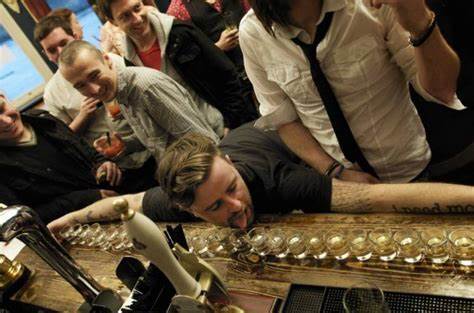 As a product of permissive parenting, I could do pretty much whatever I wanted from about 15 on, but when my friends reached the age where they could do whatever they wanted, I went into overdrive.

 Rilaly