Rilalities XIII


“80% of success is showing up,” Woody Allen once said.

“So, what you’re saying is if I want to succeed, I should show up?” you ask. To answer that question, we ask another question, how many people don’t? How many apathetic and self-destructive types didn’t show up for the opportunities-of-a-lifetime Woody Allen received? Was Allan Stewart Konigsbeg (Woody Allen) the most talented person in his troupe, or did he show up so often that he got the job, the jobs, and the career that the apathetic and self-destructive did not, because they weren’t there.

In his book I’m Dying Up Here, author Arthur Knoedelseder suggests that Woody Allen’s 1978 Annie Hall winning numerous Academy Awards that year opened up all kinds of opportunities for standup comedians, comedic actors, and writers of comedy. Most of those who would land multiple picture deals would go onto be the faces of comedic humor in the ’80’s and beyond. The question is was Woody Allen funnier than those peers, or was he in the right place and the right time in Hollywood history?  

To listen to modern screenwriters tell their tale, Woody Allen’s story isn’t the type of story we enjoy. We’d much rather hear the story about “the kid,” “the natural,” or the one everyone agreed was the most talented person in the room who finally got his big break, and in the next scene, they’re asleep or dead with a heroin needle hanging from their arm. It happens so often on screen, that it’s a trope, but is it true? We’re sure it’s happened, but has it happened so often that it’s a truth, or do we just love to cringe so much that screenwriters feel compelled to write about it.

I can only imagine that the screenwriter tries to sell his script pitching about “the kid,” “the natural”, and the potential Hollywood producers asking “Okay, but where is the arc? What does the American public love more than anything else, the rise and fall. We build him up as the kid, the natural, and then, on the cusp of him finally realizing his talent on a national, worldwide scale his dysfunctional, self-destructive traits rear their ugly head. It’s the Freddie Prinze story. People love that story. They love to cringe.”  

It can be a little scary to put all of our potential to succeed, and all of our hard work, on the line. How many of us have the potential to succeed, and how many can stand before others, relatively anonymous and proverbially naked, to showcase our potential? Are you a fraud, or are you so confident that you’re just waiting for an opportunity to show your talent? Are you the type who creates your own opportunities, or do you wait for them to happen? If you’re the latter, will you not show up, because you’re afraid you’re not ready? Even if you’re “not ready” in a relative sense you’ve defined, that might just be your opinion. If Woody Allen’s quote holds any weight, it might redound to your benefit to show up anyway to see what happens.   

Some of us cringe when we hear tales of the dysfunctional and self-destructive types, others laugh, and we all feel sorry for them, but they’re the ones we replace. We’re the ones who show up and do it so often that we might overcome whatever relative level of talent we might have.

Showing up is also starting up. How many of us think about doing something, how many of us daydream, and how many of us actually do it? Showing up suggests that you’re ready to make it happen. You’ve surpassed the dream stage, and you’re there. You’ve shown up and you’re ready to work with others to make it happen.  

Stop Letting Your Bullies Bully You

There are few things that bother me more than watching a victim of bullying make their problem worse by the manner in which they deal with a bully. When I hear, read, or see a member of an audience become so offended that they’ve become outraged at something a standup comedian says, I say, “You’re going about it wrong! You’re doing it all wrong!”

There might be some exceptions to the rule, but my bet is every standup comedian was a former class clown/bully. The essence of the craft is such that it attracts guys and girls that someone, somewhere once called a class A jerk. (A class A jerk is someone other than the class D jerk who pokes fun at others for sport and backs down if anyone informs them they’re offended in anyway.) 

When real life darkened their door, most standup comedians admitted they didn’t know what to do. They were as lost, or more, as the rest of us. “I don’t know what I would’ve done if my predecessors didn’t do what they did in this craft to make it what is it today. Not only am I not good at anything else, I didn’t particularly like doing anything else.” What is it they’re doing, on stage, every night? What is it they enjoy doing so much that it saved them from the depths of despair? If we dig through all the particulars of the craft, we find that making fun of other people is the core of standup comedy. Where do you think they discovered their talent, and how did they hone it? They did it on your back, and your delicious tears told them they might be onto something. It’s what they do. It’s who they are.

One other special ingredient that defines the difference between most great comedians and the ones who never made it to the main stage, pushing boundaries. What does that mean? We think pushing boundaries is about filmmakers teaching us what we don’t want to hear, and it is, but it’s also about standup comedians telling us what we don’t want to hear. They’re mutually exclusive, diametrically opposed, and the same. Tell a standup that they can do anything they want except this, and this will be the only thing they want to do. Tell them that they can make fun of everyone, except these people, and a joke about those people will probably make it into their intro. My problem is not with standup comedians. We all know who they are. They’re bullies. The problem is with the offended. If the standup comedian is wrong, tell them why, and do it from a position of power not weakness.

If we ever effectively find a way to diminish, deter, or defeat bullies as a whole, the one detriment might be our inability to deal with bullies. The only solution we’ve found at this point is to inform them that we’re offended by something they’ve said. Who cares if you’re offended? Some do, of course, and there are probably more now than ever before who aren’t afraid to say that they’re offended, but I can tell you one person who doesn’t care, the offender. I’ve been offended by something a comedian said, and I always think that’s just one man’s opinion, and it’s not an informed one. (I use the term offended, here, for the purpose of illustrating a point, because I can’t think of any comedian who has ever offended me.) You getting offended is exactly what the offender wants. It’s what their audience wants too. How many nice guys finish first in the world of standup? What is it .0001% The nature of the beast is such that if a comedian goes clean and tries to avoid offending anyone, the audience might chuckle politely, but the chuckle will be soft and almost internal, as they wait for that hurtful haymaker to punctuate the joke. Most good guy, clean comedians are widely regarded as too safe to be truly funny. We, as a whole, want our standup comedians risqué, we want them to push boundaries, and we want them to speak out against unsafe targets. Who are the unsafe targets though? That’s the question skippy, and that’s the point Howard. The unsafe targets have shifted from my guys to your guys, and from my issues to yours. We didn’t handle it well, claiming offense and outrage, and now you’re doing the same. 

If this is true, wow do we stop the mean-spirited comedian then? I don’t think you do. I think they love it so much there’s nothing we can do or say to stop them. You can see it on their face. They were born to do this, they love it, and they wouldn’t want it any other way. They define your offense as effective penetration. Their audience, comprised mostly of former bullies and class clowns, love it too. Do we get in their face and try to mow them down? Have you ever been bullied by a class A jerk? They’re unusually very good at what they do. They’re often unusually smart, and not only are they smart, they’re quick, and not only are they quick, they’re funny. It’s often that final nugget, funny, that just tears into our soul. They come up with material quick, and how do we defeat them? If it’s a class A jerk, we’re on their turf when we’re trying to outfunny them. The only way to defeat them is to switch the playing field to our internal home court and outdo them there. If we can convince them, there, that they’re not getting in, we’ll take all their fun out of it for them. That’s all I got, and I know it’s not great, but it’s obviously better than everything you’ve come up with thus far. You’re encouraging them and making them think they’re onto something when you declare that you’re offended. You’re making it worse.   

Crazy Joe Davola

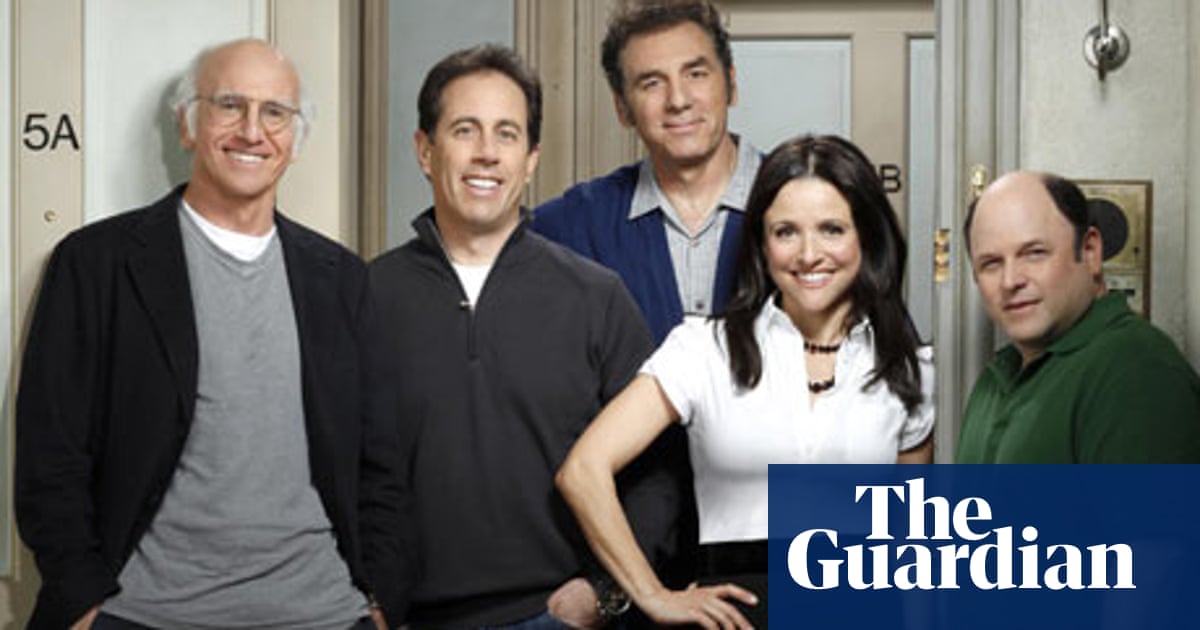
Crazy Joe Davola (actor Peter Crombie) has died, and Fox News reports that his friends suggest that even though “he was cast as a bad guy on Seinfeld, and he played numerous interesting and complicated characters, including Bernard Goetz, he was very sweet in an old-school way. When not working as an actor on stage or in front of a camera, he was genuinely humble, preferring others to talk and take main stage.  He was always helpful, giving and funny. He was one [of] the kindest, soft-spoken, loving and caring people I have ever met. A gentle giant.” It’s a fitting tribute, but it’s not funny? We might not want funny to be on site forever more, but in private, on stage, I think Peter Crombie would’ve loved it if someone, someone like Lewis Black, offered Crombie a comedic sendoff. “It wasn’t much of a challenge for Peter Crombie to play the awful characters he did, because he was awful. He was an awful human being. I remember one day he saw a kid with ice cream, and he stole it. He didn’t want their ice cream. He didn’t even like ice cream. He would pitch it in the nearest receptacle. He did it just to do it. Just so he could say he did it. He said that he liked to hear kids cry. “The younger the better,” he said.”   

Review of Self-Reliance

If there’s one thing an aspiring writer can learn from the movie Self-Reliance, it’s that your audience doesn’t want anything bad to happen to the fictional characters of your stories, until they nothing does. Leaving out all of the other particulars of the plot, the primary plot of this movie is that a bored, lonely man is offered a proposition. If you can survive for thirty days, with murderers trying to murder you, we will give you $1 million dollars if they are unsuccessful. There is a catch for the murderers, however, they cannot kill him if he’s within three feet of another person. The need to have someone near him, leads the character to realize that in his life before the contest he forgot to make real, human connections throughout his life, and he forgot to live life to the fullest. That underlying theme would’ve been engaging if, IF, it was properly balanced with the character narrowly escaping harrowing threats. The problem with this movie is that this viewer (you might be different) never feels the threats are anything more than an excellent plot device to sell the movie. There are some threats made on the character’s life throughout the movie, but they are easily, too easily, vanquished. This reveals to us that the threats on the character’s life are basically ancillary to the underlying theme. It’s as if the writer said, I want to write a post-COVID script that reminds the audience of the need for human connection and companionship. The problem is how do we go about writing about that without getting too gushy? I got it. Let’s develop a contest for the character in which he needs to have people around him. All of that would be fine, except the writer/director forgot to concentrate enough on the threat therein. 

Anyone who watches this movie will realize as much as we don’t enjoy cringing, we enjoy cringing. We want to see scenes where the character stupidly gets into harrowing situations that he can’t possibly escape, until he does, and we’re awash with relief when he does. We want to experience the ups and downs of what it must feel like to have people trying to murder you. We want to scream, “Don’t go in there!” when he approaches the wrong door. We want to see pianos fall behind him while he’s talking on the phone, comically unaware of what just happened. We want to grip the arms on our chairs when a gigantic ball comes rolling after him, as he runs through a cavernous region in which there’s no lateral escape, and we want o see a poison-tipped arrow hit a guy standing somewhat near the main character after the main character bent down to pick up a piece of garbage that some rube just threw on the ground. “Hey, it’s called littering man!” The main character shouts at the litterer, as the man with the arrow in his neck, behind him, slowly falls gurgling to the ground. There can be humor intermingled in the tension, but we want/need the tension. What we get from Self-Reliance are all of the hypotheticals a man who must survive a scenario might have to go through to insure his survival. The movies is really about the social interactions a person might not go through if there wasn’t an ever-present, or in this case never-present, threat of death. My takeaways are that the movie accomplishes two things: It teaches writers what not to do with a thriller, and it leaves you with the weird, uncomfortable feeling that you actually want bad things to happen to fictional characters. Those of us who know and enjoy so many of Jake Johnson’s projects, enjoyed this one too. He’s a funny, interesting actor, and Self-Reliance is not a bad movie in anyway, except for that lack of threat, and the ending is more of a wrap-up than an exciting conclusion. The character basically tells us what happened at the end, and he shows us some shots that visualize what he’s saying. 

Rilalities XII


Story, Harrowing Story

“Our son overdosed on Tylenol,” a mom and dad said entering a hospital’s emergency department. When they were directed to a room, they informed the nurse that the family experienced a dispute in their home. Their teenage son didn’t deal with it well. “He overdosed to teach us a lesson,” the parents informed the nurse. The argument, it turned out, was based on a huge misunderstanding. After emotions subsided, the three put the missing puzzle pieces back in place and realized what happened. (The author doesn’t know the particulars.) The parents and their son concluded their Q&A with the nurse by telling her they were in the emergency room that day to get their son’s stomach pumped.

“Okay,” the nurse said after the parents explained what happened in their home. “When did he take the Tylenol, and how much?”

“It’s been a couple days,” the mother said, “and he took almost an entire bottle.” She had the near empty bottle with her, and she informed the nurse that it was full before the incident. The mother finished that explanation with a compassionate smile directed at her son, and she mouthed, ‘It’s okay,’ to him.

The nurse made a mental note that she later shared with the doctor “that the three appeared almost happy, or maybe relieved in some odd way.”

The doctor agreed, and he said, “I think they were relieved that the heated argument was over, and they were just happy to have their son back.” 


“The treatment for an acetaminophen overdose is a drug called acetylcysteine,” the doctor informed them when he sat in the emergency room, about a half an hour after the nurse left, “but it only shows maximum effectiveness within an eight hour window of the overdose. We will use acetylcysteine, and we will also perform a gastric lavage or nasogastric tube suction, or what you call a stomach pump, but there are similar time constraints on the maximum effectiveness of those procedures too. The problem with ingesting so much acetaminophen and leaving it in the system for so long, is that it has been absorbed by the liver.”

“So, so, what does that mean?” the family asked.

“Our medical team is going to do everything at our disposal today,” the doctor said, “but my job is to make sure you are well aware of the facts of the situation here.”

“And the facts are?” the mother asked.

The doctor had sympathy for the patient and his parents inability to grasp the severity of the matter, and he tried to describe the ramifications as delicately and with as much sympathy as he could. He chose his words carefully while repeating everything he said about the effectiveness of acetylcysteine and stomach pumps after a couple of days, and he repeated what he said about the medical team at that hospital doing everything they could do to help their son, “But if your son took as much Tylenol as you’ve described here today, this is going to be as difficult a situation as you can imagine.”

We can only imagine how difficult this was for the doctor, and we can imagine that the parents put the doctor through it over and over in excruciating detail, asking questions we might regard as obtuse, but what was, in fact, a couple of parents and a son having a difficult time digesting the grim reality of the situation. We have to imagine that they interrogated the doctor, until he finally broke down and said, “In cases such as these, the normal life expectancy is around two-three-days.”

After the initial hysteria broke down, we can also imagine that the parents and their child enjoyed their final moments together. The reports suggest that this is a painful way to die, but if the son was able to manage the pain to a certain degree, we can imagine that the three of them did everything they could to celebrate his last days on earth. 

The team of medical professionals tried acetylcysteine, they performed the stomach pump, and anything and everything at their disposal. The teenage boy died two days later. 

I heard this story decades ago, and it still haunts me. It’s the da Vinci of stories. It doesn’t matter the angle, or perspective, it stares back at you as hard as you stare at it. How could the parents not know their child overdosed? For a couple of days? Was the argument so intense that they were not on speaking terms? I don’t know much about overdoses of this nature, but how was he not showing concerning symptoms, concerning to him in particular? We can only imagine that the parents have dreams where they spot something and do something sooner.

As much as the parents probably went through, and still go through, we have to imagine that no one involved in this situation will ever forget it. Everyone from the nurse, to the doctor, to anyone else involved still have nightmares about it. It’s also a harrowing reminder that no matter how bad the fight, or how profound the disagreement, get it out, get it all out, speak to the ones you love, and straighten it all out before it’s too late. 

Heart Attack

Those who were there know that I had a rocky relationship with my dad. We were two stubborn, ornery, Irish roosters butting heads. He kept me in check by threatening to kick me out of the house. I didn’t want to leave my home, and I didn’t want to be known as the kid who got kicked out of the home. My plan, once I got out on my own, was to never forgive him and never forget what he did to me. Years into the plan, my dad had a massive heart attack. His chances of survival were slim. I visited him and saw him hooked up to a variety of machines, and I realized that no matter how awful he was to me, he was the last parent I had left in life. He survived, barely.

We spent the next eleven years rectifying everything that happened during my youth. During these eleven years, I thanked him for assuming the role of step-father for me when I was two-years-old. That was so hard. It was difficult to avoid qualifying it, and placing “But you did this to me” type of asterisks. I left it as a standalone thank you. 

It was the best thing I ever did. I wish he would’ve lived for another ten to twenty years, but he didn’t. When he eventually passed away, however, I said goodbye to him with a heart free of anger, without the need for some sort of retribution, and hatred. If he died after the first heart attack, I would’ve been an absolute wreck. The moral of the story is, no matter how bad the fight between you and your loved ones is, get it out, speak to one another, and straighten it out before it’s too late.

Why I Write

Ever drive down the road and see a bumper sticker with exclamatory statements on their car? How about that guy who wears a T-shirt, in public, that says something meaningful? And what about that guy we all know who debates his friends on a variety of topics, with a palpable sense of frustration. “No one will listen to me,” he shouts. Everyone who talks to that guy feels his underlying sense of frustration, and they know how angry he is. We begin to interact with him less and less, because we know he can turn everything from a discussion on geopolitics to whether or not the snap pea is a delicious food into an uncomfortably confrontational argument. Every time I meet that guy, I’m so glad I’m not him anymore. That guy has no venue. He needs to express himself all over you. Whether you deem the material I discuss valuable or not, I found my venue. 

I always valued friendship over the temporary feelings one can derive through defeating another in an argument, but I felt a certain sense of frustration when no one would agree with me. When I expressed some anger and frustration, people would give me that extra look. If you’ve seen that look, you know it. That look follows you, and it says something uncomfortably revealing about you. It’s a double-take that precedes most rational, sane people just walking away. Others, who care about you, say, “Maybe you need some counseling.” Tried it, didn’t work for me. I wouldn’t say the counselor was stupid, or I am more intelligent, but she didn’t understand me. I didn’t understand me, until I found an outlet. I wouldn’t say I was complex, or anything extra ordinary, but there was no question that I needed to do something to get everything that was in me, out. 

“Music sets the sick ones free,” Andrew Wood, lead singer of Mother Love Bone, once wrote. That was me. I didn’t just love music, I needed it. I could drop the cliché that I needed music, like some people need oxygen, but it wasn’t that severe. I prefer to think of my need for music to help balance my mental stability as one might view a farmer living out on the prairie with little-to-no law enforcement. I needed music the way those farmers need to be armed to protect their land, their livestock, and their family. The only issue was I never wanted to be anything more than a music listener. I didn’t know how to play an instrument, and I didn’t have the patience to learn one. Yet, I was in desperate need of some form of self-expression in some sort of artistic manner. 

If “Music sets the sick ones free,” and I believe it does, writing was directed neurological therapy for me. Music was equivalent to a neurologist prescribing necessary over the counter pain medication. Writing, would prove the directed neurotherapy a neurologist might prescribe after repeated visits and extensive study of my reactions to everything prior.  

I was never ill, compromised, or depressed in any substantial manner, but I had an internal itch that ruined days. Writing felt substantial to me. I wanted it all, but when it didn’t come, I kept writing. I was no prodigy. I wrote some awful stuff, but I loved it, needed it, and I kept wanting to do it no matter what. Writing anything and everything I could think up is what has led me to the definition of sanity I now know.

No Hugging and No Learning

When I watched Seinfeld, I had no idea why it appealed to me so much. It was funny, of course, but there were dozens of situation comedies on the air at the time, and hundreds of them throughout history. Seinfeld was special to me, and I had no idea why. When I learned that the writer’s room had a “no hugging and no learning” thematic approach, I said, “That’s it” to myself.

Seinfeld was special, because it wasn’t “special”. Everyone from the creators, writers, on down to the actors made no effort to be special, nor did they add special ingredients into the mix. The special ingredients for most writers on most situation comedies involved the “very special episodes”. These episodes made special connections to the audience through special issues. A character, in their narrative, discovers that they’ve been so wrong for so long that they now question their foundation, and the audience understands, agrees, cries, hugs, and leaps to their feet in “clapture”. Clapture is a framing technique used by comedy writers to get the (Emmy!) audience to clap with laughter, or to agree with them more than laugh. I didn’t realize, until Seinfeld, how cringeworthy those special, meaningful messages were. The Seinfeld writers maintained that there would be no hugging, no learning, and if I might add, no special understandings in their show. They just tried to be funny. When we watch such shows, we always wonder if they reflect our values, or if we begin to reflect theirs. I think Seinfeld, more than any other sitcom I’ve watched, reflects my values. I prefer a good steak with very little seasoning and nothing else! Unless steak sauce is used to cover up the quality of the meat, I want nothing else on my steak. If you’re going to come at me and tell me what you really think of me, I prefer that you come bold with no qualifiers. I also prefer music that is complicated, fun, interesting, creative, relatively brilliant, unique, and utterly meaningless. Don’t tell me what you think of the domestic economy of Istanbul, the mating habits of the emu, or anything else that you wished you put in your college thesis. Just write lyrics that fit the music and be done with it. Seinfeld, in my opinion, met all of those standards.  

The Familiar Fiber


The Exorcist is the scariest movie of all time,” Gary said. 

“Really?” I said. “I didn’t think it was that scary.”

WHAT?!”

“It just didn’t reach me on that level,” I told him. “It was a really good movie. The acting, the plot believability, all that, but when it evolved to the scary scenes, I just wasn’t frightened. I expected it to scare the beans out of me, because everyone said it would, and maybe that was it. Maybe I sat there waiting for it to scare me in a way I’ve never been scared before.” 

Horror and comedy, more than any other genres, are about time and place, state of mind, and expectation. Expectations can ruin the best of the best, and if it were possible for me to watch The Exorcist without expectation, it might have terrified me. The same holds true with all genres to some extent, but expectation seems to affect comedy and horror more. 

If the author of a story, be it movie or book, is able to bring us in slowly, progressively, and strategically, they might bring us to that place, but it’s touch-and-go. Everyone from the writers to the director, to the editor, and everyone else involved might think they have a hit, but no one knows how an audience will react. 

Some audience members stubbornly resist. “This isn’t real,” they say with their arms folded, “and I’m not buying it.” Of course, it’s not real, but it’s your job as an audience member, if you want to have any fun, is to suspend your disbelief for just a moment to get in to the movie. I did not stubbornly resist The Exorcist. I wanted it to scare me. I tried to invest everything I had into that movie, but it just didn’t reach me on that level.

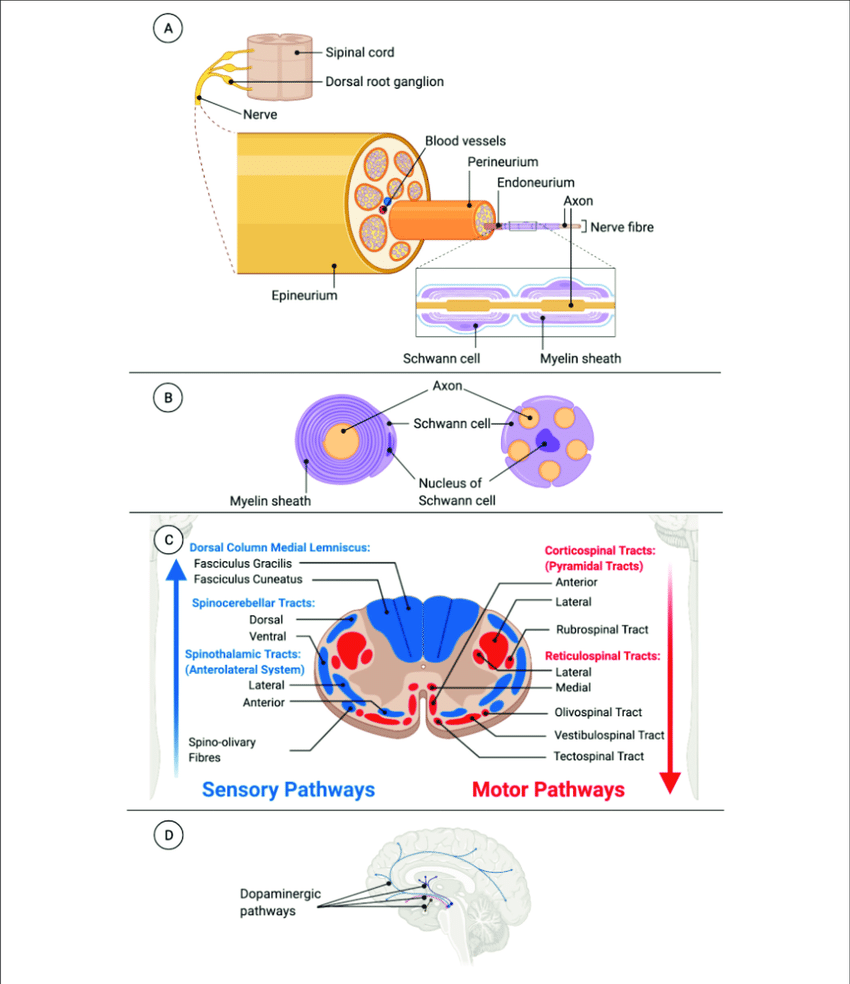
The more common description of a movie reaching us on another level is “striking a nerve”. We could also twist the term ‘striking a nerve’ to describe how a movie gets under our skin, though some reserve that term for something annoying. The point is that quality horror flicks dig past the superficial, goosebump layer of the epidermis into the nerve, and tap into the axons, the cord-like groups of fibers in the center of a nerve, that we call the familiar fibers. If we want to move the illustration further, we could say that the great horror movies reach into the neuromuscular junction, but you get the point. If we’ve always had a deep seated fear of clowns, for instance, Stephen King’s It gave us one of the most horrific experiences we’ve ever had reading the book or watching the movie. Those with a lifelong fear of dogs found Cujo one of the scariest book/movies for the same reasons. For reasons that weren’t clear to me at the time, no movie tapped into my familiar fibers better than The Blair Witch Project

“That’s the dumbest movie I’ve ever seen,” my friend said, soon after seeing it, “and your movie recommendations will forever be tainted by the fact that you suggested that I waste my time and money on that stupid, stupid movie.”

I recommended The Blair Witch Project to everyone I knew, and they all, pretty much, had the same reaction. I found their reactions inexplicable, because they shared my taste in movies, and we were always on the lookout for the next great horror. I thought I found it in The Blair Witch Project. I thought it was a masterpiece, and while I figured they probably wouldn’t love it as much as I did, I didn’t expect them to question my taste in movies forever after. After wrestling with this, I eventually came to the conclusion that time and place are everything for some movies. (Expectations, as I wrote, is another huge movie killer, and I may have done this with The Blair Witch Project, as others did for me with The Exorcist.)

The time and place element obviously made a huge impact on my opinion of the The Blair Witch Project. I was in a theater, on opening night, at the midnight hour, with a bunch of teenagers who wouldn’t shut up. When they’re chitter-chatter, and the giggles (those blasted gigglers!) lasted 20 minutes into the flick, I thought I wasted good money. I didn’t think the giggles would ever end. They did. 20 minutes into the movie, The Blair Witch Project achieved what I considered impossible at the time: it silenced over 100 teenagers. The transformation from claustrophobic noise to claustrophobic silence ended up giving that silence a little extra weight. The sudden, creepy silence heightened my senses, and managed to narrow my perspective to tunnel vision so well that I was almost spiritually immersed in the movie. 

I could smell the burning wood from the campfire. I wouldn’t say that I was ever afraid of camping, or the darkness in the trees surrounding us, but the environment always creeped me out a little. The environment, and the compulsion to speak in whispers, is probably what makes ghost stories told by campfire so creepy. My goosebumps were always out before they started their campfire stories, and they didn’t have to do much to finish the job. The makers of Blair Witch tapped into a level of familiarity for me so well that I could smell the burning wood in the middle of the movie theater. I was there with the characters of the movie, in all ways but one. 

Then, the screaming started. I don’t know if the young girls in the theater, seated over my shoulder, took classes to help them reach the registers they did, or if their talent was granted by God, but I had my hand on my heart on more than one occasion. Those teenagers couldn’t have done a much better job if they orchestrated a plan to scare the hell out of me.

Based on that experience alone, I now tell anyone interested in watching a horror movie to try to duplicate my experience. “Even if you have to pay for the admission of a bunch of screaming, teenage girls. It might run into hundreds of dollars, but if you enjoy horror as much as I do, you might just have a once-in-a-lifetime experience. Follow the steps I did, have them annoy you in the beginning, then tell them to wrap you in silence so weighted that if someone drops a straw on the ground, everyone will turn around to see what the hell just happened. Then, in those key moments, have these young, teenage girls scream as loud as they can in your ear, in a manner that rattles you to bone.” 

Another element that separated me from my arm-folding brethren when it came to The Blair Witch Project was that I walked into that theater wanting to believe it. “But supernatural witches aren’t real,” Gary said to explain why he thought the movie was such an epic waste of his time and money. 

“Hey, if you’re having problems sleeping at night, because you think witches, vampires, or werewolves are knocking at your door, I’ll tell you they’re not real,” I told Gary. “If we’re about to watch a movie about them though, I’m going to pretend that they’re real for however long that movie lasts. It’s not the moviemaker’s job to convince you that they’re real. It’s your job to pretend, so that you can have a little fun in life. When I watch a movie, I grant the artist access to my innards. It’s a frame of mind I grant the actors and the director, and it’s their job to avoid screwing it up.” 

Not only was I there, smelling the campfire, but prior to entering the theater that night, I saw the movie’s faux documentary on Syfy, and I was a frequent guest on the The Blair Witch Project webpage. It was my first experience with web marketing, and that might have added a chunk to the believability for me. I can’t remember any of the details of the website, save one. One little nugget grabbed me. It was a note that suggested someone found five cannisters of film in the woods of Burkittsville, Maryland that the characters created, and the movie makers edited it down to 90 minutes. The Blair Witch Project was also my introduction to the cinematic technique some call “found footage,” “lost footage,” or “shaky cam.”   

As a result of all of the above, I now move my listing of The Blair Witch Project as the greatest horror movie ever made to one of the best experiences, I’ve ever had watching a film. It was a time and place experience that that no film maker will ever be able to replicate for me, for whatever the opposite of baggage is, as in he brought some baggage with him into that situation, I had that, and it wasn’t just an open mind. I was supercharged for this movie, because I wanted to be scared. I wanted this movie to be true, minus the murder of course, but that desire, combined with all of the above, is what made The Blair Witch Project one of my favorite movie experiences of all time. 

I’ve yet to watch The Blair Witch Project a second time, in a more traditional setting, because knowledge and facts have a stubborn way of ruining emotional experiences, and I don’t want to ruin one of the best experiences I’ve ever had watching a movie. 

The big debate at the time was whether or not The Blair Witch Project actually happened. Most of us appreciated it as a clever marketing campaign, but others believed that it was an actual event and the actors involved actually died in the film. If you said you enjoyed The Blair Witch Project back then, you were lumped in with “the believers”. I believed The Blair Witch Project for the 81 minutes it played on the screen, just like I believed in ghosts during Poltergeist, that cars could come to life in Christine, and that aliens were abducting people in Fire in the Sky. None of these movies made a dent in my overall belief system, but I thought all of them (save Christine) were great movies. When the furor over believers vs. nonbelievers died down, 86% on of the over 250,000 fans rated The Blair Witch Project positively on Rotten Tomatoes and 81% of critics did. I don’t post these numbers to say I was right, and the naysayers were wrong. I do think it validates my argument that once we gain some distance from silly arguments, we can see a good movie for what it is. 

The citizen critic can now post reviews on everything from the best horrors and comedies to the best and worst plumbers on various websites. We can recommend others watch, don’t watch; read, don’t read; and don’t even bother calling this fence specialist. There’s nothing on the line for the citizen critic, as they don’t benefit from a positive review, and they see no ramifications from a negative one. Some of us suspect that professional critics benefit from positive reviews in ways that lead us to believe the citizen critic is more honest. We’re probably wrong in most cases, but we tend to trust citizen reviews more than professional ones for this reason. The citizen critic is not afraid to let the internet know what they really think. The problem with their reviews though, is that tastes and experiences are so relative and subjective. If someone says the subject of the movie “is not real, and anyone who thinks otherwise is a fool,” they’re going to give it one star. One person’s The Blair Witch Project is another person’s THE BLAIR WITCH PROJECT!!! Comedy is as subjective as horror, and both are relative to the person, and they’re subjective and relative to our experiences in life. One citizen critic might find the humor in Peter Seller’s humor in The Pink Panther dated, but we might find their current favorite comedy too juvenile. They might find Pulp Fiction so personally offensive that they wouldn’t recommend it to anyone, and The Godfather, Citizen Kane, and Gone with the Wind might be overrated, time pieces that haven’t aged well. The point is, we can now find negative reviews for every movie, album, and electrician, and if we read them, and heed their warning, we might never watch classic films, read classic literature, or listen to some of the greatest albums ever made. As an artist who tries to tap into those familiar neuromuscular junctions, I now empathize with anyone who tries to create art. As such, I try to keep my reviews, objective, impersonal, and constructive. 

[ If you enjoy this article, there will be more available soon at The Unfunny, and be sure to subscribe to continue to read articles from Rilaly.]