Censorship Often Proves Counterproductive


Puffin, the children’s imprint of Penguin Random House recently hired sensitivity readers to go over some of their books. These readers discovered some problematic words in the collection of author Roald Dahl’s books that relate to weight, mental health, gender and race. Puffin decided to remove the words the sensitivity readers found offensive, fearing that they might insult future readers. Was this purely a business decision? Did Puffin fear getting sued, or did they simply not want those words associated with the children’s imprint of the “family friendly” Penguin Random House name. Puffin, Penguin Random House eventually reached a compromise with those who view this action as a form of censorship. Going forward, they will publish two versions of Dahl’s classic works, an unexpurgated, “classic”, version, alongside an edited, more sensitive version of Dahl’s works.

Prior to the compromise, author Salman Rushdie wrote, “This is insane, right? [Roald Dahl] was a bigot and he never supported me, but really? We can’t say fat or female? . . . Can we take some sort of stand against this? Or … pointless?”

In reply, PEN American Chief Executive Suzanne Nossel writes of the effort, “So many of us agree on the need to build a more inclusive, equitable world, and also that that quest need not – and must not – come at the expense of free speech, truth, and reckoning with what is difficult.” 

Actor Tom Hanks, not responding directly to this exchange, said, “Let me decide what I am offended by.” It’s an excellent retort, and it leads to the question, why don’t they let us decide what is offensive for us, our children, and the world at large? 

Two of the words that Puffin sought to expunge from Dahls’ works were ‘fat’ and ‘ugly’. No reasonable and thoughtful adult wants children to hear, learn, and use mean words to describe other kids, but does removing them from books, movies, and the town square, remove them from the lexicon of young children forevermore? Will this effort create a more inclusive and equitable future? If we remove these words from books, will kids evolve to full-fledged adults without ever hearing them? Perhaps the censors wanted to remove the words from books for those moments when teachers read these books aloud to a classroom. Kids are going to laugh, of course, but they might also look around the room for examples of those words, and further ostracize them or make the other kids feel ostracized. 

My guess is that Puffin, the sensitivity readers, and the movement to censor books believe that if we can change the words kids use, in their formative years, those words might be out of sight, out of mind for the rest of their lives. We tried that, I would argue, for years, decades, and centuries. We tried to institute conformity of thought, censorship through public outrage against the use of obscenities, and we now acknowledge that that not only were those efforts ineffective, they actually proved counterproductive. 

We can take offensive words out of books, but we cannot take them out of the mouths of babes on the playground or in the households around the world. Kids may not hear obscenities or insulting descriptions of others in some households, in their formative years, but households vary a great deal around the world. Even those raised in the optimum households, will eventually hear these terms for the first time. What happens when a kid hears a derisive term, or an obscenity, for the first time? What happens when there are no adults around to soften the blow for them when they do hear them? Removing these words is not the answer, in my humble opinion. Censorship might even be counterproductive, as removing words, even temporarily, only grants the words more of a taboo nature, and kids love violating taboos.

The best way to handle derogatory words, or swear words, if we hope that our kids don’t use those words regularly, is to try to somehow drain the words of their taboo nature. The person who can do this better than any sensitivity reader, publisher, or even a teacher, is the child’s parents. Every kid is different, and every kids’ parents are different, but there are numerous ways in which a parent can influence their child in day-to-day interactions, and the primary one is through example. Therein lies the key, not some publisher dictating what a child can or cannot read.  

When I attempt to encourage friends and family to avoid swearing around my child, they’re embarrassed when they slip, but they add the line all adults do when they accidentally swear in front of a child, “He’s going to hear them anyway, and he’s eventually going to say them.” They’re right, of course, but I respond, “Well, he won’t hear them from me, one of the two most dominant influences in his life, and I would hope he doesn’t hear them from you either, because you have some influence on him too.” The question on both fronts is, again, what happens when he eventually hears these words? What happens when that child eventually hears the terms fat and ugly? He may not read them in Roald Dahl’s books, thanks to Puffin, but he will eventually. Will these “words you cannot say” efforts, prevent him from using them, or will his desire to find a way to define his independence from authority lead him to use them in a way that helps him define his maturity in the manner kids and teenagers naturally do? 

If I were sitting in on Puffin board, I would remind them about the various obscenity laws we tried to enforce, and all of the other attempts to remove obscenities from the town square. I would ask them if any of them were successful? That question might elicit some giggles. “Exactly,” I would say. “I think we can all admit after all these years, that they were actually counterproductive.” The more effort religious puritans put into attempting to control our language, the more counterproductive it turned out being. How many times was Lenny Bruce arrested for his public use of obscenities? How many fights did George Carlin get into with the FCC over the years over the use of seven dirty words? How much power did these public seals of disapproval end up granting these words? 

Some students of culture suggest that some of our most obscene words date back to the days of Geoffrey Chaucer and William Shakespeare. If that’s true, they weren’t very powerful back then. How did they amass such power over the last eighty years? I don’t know if my grandparents used such words, but I’m sure they knew of them. To my knowledge, they didn’t used them, even when I was not around. I know my parents used them, as I heard them used them to punctuate pain, frustration, and sometimes even humor, but they didn’t use them as casually as I did. I don’t think they ever heard or used these words so often that they eventually lost their taboo, as they did in my generation and beyond. Those efforts to inform us what words we cannot say were routinely mocked, ridiculed and soundly defeated. If we were to go on a timeline in which Bruce and Carlin never existed, would these words have as power as they do now, or was it an eventuality that would’ve occurred as our society grew courser? If Bruce and Carlin never existed, I think someone would’ve stepped into that vacuous hole and fueled the power of those words.    

Those who fail to know history are doomed to repeat it. If we view the Roald Dahl episode as a war on words on par with the war against obscenity, we could say that the wars are basically the same, but the combatants have flipped sides. My guess is that the sensitivity warriors would’ve been in the “Freedom of expression” wars the Bruce/Carlin camp waged in the 50’s to the 70’s, but they’ve swapped uniforms in the modern era, and they wear different nobility badges on their lapels. The powers that be, in the 50’s to the 70’s fought for a more puritanical society, and they failed miserably. The powers that be in 2023 fight for a more virtuous society, and virtuous and puritanical are synonyms.   

The effort to convince kids not to think in various terms such as ‘fat’ and ‘ugly’ is so similar to the war against obscenity that they strike me as similar to the psychologists who say don’t think pink. If they tell kids not to think pink, pink will be the only thing on their minds. 

John Coltrane is a Bad Guy


“John Coltrane is a bad guy,” they say. “He’ll be whoever you want him to be, when you talk to him, and all that, but the one thing that you should keep in the back of your mind is that he’s just a bad person.”

“I don’t think that’s true,” we say.

“If he’s not a bad guy,” they say, “Who is?”

“It’s complicated.”

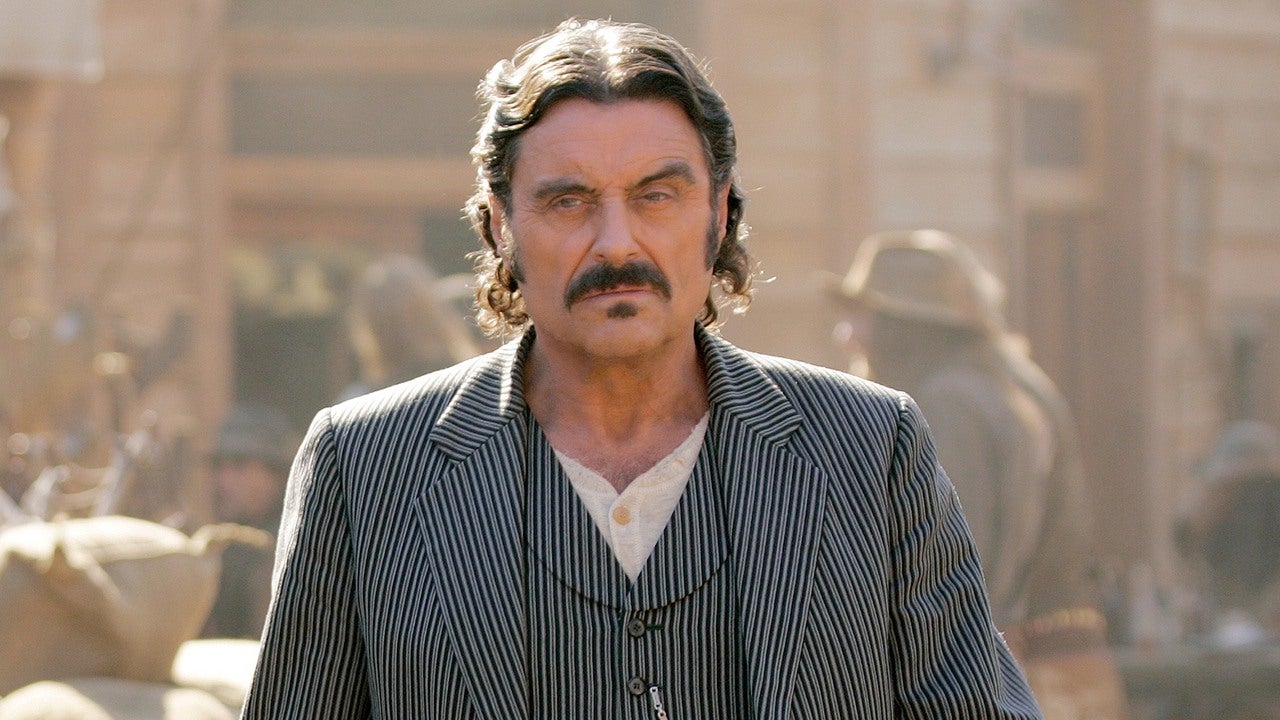
Actor Ian McShane

“It’s not complicated,” they say. “He steals money, because he wants more of it. He hurts people too. Some bad guys say they aren’t afraid to hurt anyone who stands in the way. It’s more than that for John Coltrane. He enjoys it, and he always has.”  

“John Coltrane is a victim of circumstance,” we say. “Have you heard him talk about his childhood. His upbringing makes Oliver Twist read like a day at an amusement park, “and nobody ever talks about any of that,” he says. I think he’s right.” 

“If he’s not outright lying about his circumstances,” they say. “He’s exaggerating. He’s not a victim of circumstance, unless we count the circumstances of his own making. He doesn’t steal, hurt people, and kill to support a cause, and he’s not poor or hungry, and he never has been. He’s not desperate to feed his children. He doesn’t have any. He tells us he has a son. He doesn’t have a son. He’s lying. That’s what bad guys do?”

“Why would anyone lie about something like that, something easily disproved?”

“That’s what bad guys do.”

“What does he gain?” 

“He studies us,” they say. “He studies us a culture, and us individually. He tells us the tale we most want to hear. Has he ever prodded you? He prods me all the time, going deeper and deeper into an issue. I don’t think he prods to find weaknesses. I think that’s just what he does, but he uses the weaknesses he finds later. Finding our weaknesses is a byproduct of his constant prodding. The ‘I need to provide for my kid’ narrative is a powerful one, because it garners all types of empathy and sympathy from people like you. 

“As for the more general search for truth,” they continue, “I don’t think he cares about what we call the truth, to be quite honest with you. I think he’s beyond caring about all that, or what we think the truth is. When we catch him fudging the truth, you know what he says? He says something along the lines of, “All right, all right, if it’s not that, what about this? Have you ever considered this?” How does someone do that when you catch him in a bold, irrefutable lie? He does it. He does it all the time. I’ve caught him lying so many times that I no longer believe him. Others do. They continue to believe him even though they know he’s lying to him, they have to know, but he’s so charismatic and convincing that they want to believe him, which says more about them than it does him.”

“That is fascinating,” we say. “I’m not saying I agree, because I don’t know him as well as you do, but it’s fascinating to think that even the modern bad guy learns that he has to change with the times. We all have figurative schemes of thought. When we create a vision of the future, for example, the audience expects some characteristics, flying cars, over population, and corporate monoliths constructed in a manner that makes them look creepy. We also expect some sort of corporate takeover of the planet that removes homes and anything green to feed the corporate monster. Ok, but who’s going to give the corporation money if it takes all the city blocks and drives out the innocent people, its consumer base. The answer obviously is, the corporate monster doesn’t need money in the future, and it doesn’t need people to run it anymore. It is now a self-serving monolith. This is supposed to be a horrifying view of the future, and the movie makers provide guidance for how to avoid this dystopian future, but it makes no sense to me. The same is true with the modern bad guy. The modern bad guy doesn’t do anything but sit around and be evil. He might look and act creepy, and he might promise to do evil things, but he doesn’t do any of them. Every time he appears, creepy music ensues, and we’re convinced he’s a bad guy, but he doesn’t actually do anything incredibly evil to them.      

“Similarly Our definition of the modern bad guy requires that he follow all of the societal norms as best he can. The trope is that he can’t, because he doesn’t know any better, or he won’t, because he’s a bad guy, but the character adjusts to what the audience wants from a bad guy to fulfill their figurative schemes of thought. What the audience appears to want now is a bad guy who doesn’t do anything but sit there and be spooky. I was watching a fictional horror movie in which the bad guy kidnaps a kid, but he didn’t do anything to the kid, because that would’ve been too over the top for most audiences. So, he sat in another room with a weird mask on and acted spooky. We could probably say that everything, pro and con, boils down to John Coltrane’s youth,” we say. “You say he’s a liar, thief, and worse. I’ve known liars and thieves, and they, like Coltrane, often talk about how dumb and stupid they were. Coltrane often talks about how incredibly naïve he was, and how he found it so embarrassing.”

“Weren’t we all,” they say. “Didn’t we all stand at proverbial forks in the road. Didn’t we make decisions along the way that led us to where we are today? Didn’t we all have friends and family who point and counterpointed us to death? Did you ever have that guy, some guy you worked with at a dive restaurant, who told you everything you needed to know about the world from some deeply cynical and awful pocket of the world, his world? He told you that the world you were about to enter into was one big moral equivalence? Did you believe them, or did you see him as an embittered old man who got rolled over in life? Our lives are dotted with points and counterpoints from friends and family, and embittered dishwashers. Who takes advice from a forty-year-old who isn’t cut out for anything better in life than being a dishwasher. They have it all figured out, right? Some people, like John Coltrane, romanticize their notions so much that they begin to believe them. They think they’re cool and funny, and that they’ve unlocked some truths about life they’ve never heard before. If those who cared about him gave him counterpoints to correct the path he was headed down, he either didn’t hear them, or he decided not to abide them.”

“And you think John listened to them so much that he developed a life’s philosophy around them?” we ask. 

“Philosophy is a stretch,” they say. “I don’t think John Coltrane ever developed a philosophy. I think he’s more of a code fella. Whether right or wrong, a philosophy involves a deeper understanding of complicated, almost literary grasp of the way the world works. People like John Coltrane don’t have philosophies, they have codes. It’s a fine distinction, I’ll admit, but a code might be, be nice to your mother, don’t poop where you eat, and don’t eat yellow snow. People like Coltrane prefer superficial, cinematic sophistry that everyone from your best friend to your aunt Donna says to get you to laugh. Deep, complicated, and conflicted bad guys with a philosophical understanding of human nature and the way the world works are a reflection on modern writers hoping readers see the same in them. Their bad guy chracters have vast amounts of knowledge that leads some of us to say, “If he’s so smart, why didn’t he land himself some sort of prosperous career?” No, most criminals are rejected by the greater digestive system of the world, until they fall out the rectum a professional dishwasher, or whatever job title John Coltrane gives himself.”

“I’ll admit I don’t know John Coltrane as well as you,” we say, “but he does have a deep philosophical take on life. I’ve heard it in the hours we’ve spent together. He has a good head on his shoulders, especially when it comes to self-importance. He asked me the other day, ‘who’s the most important person in your life?’ I gave him some answer I thought he wanted to hear. He said ‘Wrong, bongo, you should be the most important person in your life. Who is most affected by your decisions?’ I like that general thread, because it’s so unique in the modern era.

“Hey, you’re not going to get me to say there’s something wrong with self-importance,” they say, “but at what point does it become delusional narcissism? We were all innocent and naïve at one point, and we were chiseled by the world around us. Some of us developed strong minds that could recognize the wrong read for what it was, and some of us didn’t. Some of us corrected our errors, and some of us developed excuses for who we are, but others just lash out at the world around them.”

“It’s the latter that really gets to me,” we say. “I don’t get the lashing out at the world in general. Let’s say you see an otherwise innocent bystander walking down the street by themselves. What prompts you, a relatively sound individual to rob him to rectify what everyone did to you as a kid? How would a John Coltrane square that?”

“Coltrane’s a big guy, tall, broad-shouldered, and all that, so my bet is no one would dare ask him that question,“ they say. “If they had, he’d have an answer. That answer might be meaningless to us as it is to him. It might deal with the general idea of innocence “Nobody is innocent,” is something his type often says. Here’s the most fundamental characteristic of John Coltrane that you need to know before you get to know him. The man always has an answer. If you asked him the question you just asked me, he’d give you an answer. He might give you an answer that strikes you as profound but strikes you as gibberish later, or vice versa. That answer would also be as meaningless to him as it is to him, and it might change if you ask him it a month later, or however long it takes for him to forget the first answer he gave you. Regardless the answer, he always has an answer. There’s always a quick, off the cuff answer that leads you to believe that he’s given this a lot of thought. He hasn’t. He just answers the question. 

“The comedy comes into play when the question of morality arises,” they continue. “John Coltrane knows moral values. He has codes by which he thinks everyone should live, if they want their society and culture to advance. He might even have a long, engaging conversation with your paragon of virtue, your dad, and your dad might find him so pleasant and respectful, and right. The two of them might share so many principles and values, over that steaming bowl of soup, that a friendship could develop. The idea that he doesn’t display his own values doesn’t seem to faze him in the least. If you called him a hypocrite, he’d have an answer. He always has an answer. The most important thing to him in life is finding happiness, and he doesn’t care what he has to do to get it. He’s just a bad guy.” 

The Rise and Fall of Billy Squier


“One day, everyone I knew had Billy Squier’s record Emotions in Motion, and the next day nobody mentioned his name.” It wasn’t that immediate, but it felt that way. Billy Squier had a long, relatively prosperous career, but there was a time, circa 1980-82, when the man had trajectory. Rock critics, corporate insiders, and his peers thought William Haislip Squier was the next big thing. At one point in his career, Billy Squier said, he was outselling Sinatra. 

Emotions in Motion was one of the staple records of the era. Everyone I knew had Men at Work’s Business as Usual, Foreigner’s 4, Journey’s Escape, and Emotions in Motion. If someone didn’t have all of these albums, their collection just didn’t appear complete. All of these artists came out with other albums and had decent careers, but they would never achieve the peak of popularity they experienced during this 1981-1983 run. Our initial inclination is to feel sorry for these artists who experienced so much unimaginable success so early on in the careers when they were too young to appreciate it, but most artists never have such a run. The skilled, lucky, and timely ones do, and some have longer runs than others. Very, very few artists prove so popular that they can sustain a relatively high level of popularity throughout their career. Billy Squier’s run occurred early on in his career, but that run was so fruitful, with so many hit songs, that many predicted he would be one of the few to, at least, have a long, prosperous run. He was so huge that Andy Warhol agreed to design an album cover for him, and Jim Steinem agreed to produce one of his albums. Every run comes to an end, but the change in Billy Squier’s trajectory happened so quickly that many fans from the era still wonder what happened? “Of course I remember him,” many fans of 80’s music said, “Whatever happened to him?” 

One look at his bio suggests a very simple answer, Billy Squier stopped writing chart-topping songs. He wrote chart-topping songs for the first few years of his career, and then he didn’t. No matter what happened in 1984, if Squier continued to write chart-topping singles, he would’ve overcome “the video”. Numerous others, including Billy Squier, say, “No, it was the video.” They say that his trajectory altered dramatically after “the video”. That just seems utterly impossible to those of us on the outside looking in. How could one video bring such a high-profile artist’s career down?

Well, “the video” was a bad. Even viewed in hindsight, alongside all of the horribly embarrassing videos made in artists’ names in the era, Billy Squier’s video for Rock me Tonite stands out as the worst videos made in the era, and according to the authors of the 2011 book I Want My MTV, it was the worst video ever made. “The authors of this book interviewed over 400 people, primarily artists, managers, filmmakers, record company executives and MTV employees. They said that none [of them] could agree on the best video, but all agreed that “Rock Me Tonite” was the worst.” The authors devoted an entire chapter to describe how and why this video was so bad, and how and why it diminished one of the biggest rock stars of the era.

The counterpoint to the claim that a poorly conceived video can irreparably damage a recording artists career is Dancing in the Streets. Dancing in the Streets is arguably one of the top-five worst videos ever made with equally awkward dance moves and embarrassment for the artists involved. Yet, that equally bad, career-killing video that did little to tarnish the career and legacy of David Bowie and Mick Jagger. Those two artists, however, had stronger careers before their embarrassing video, and they created music after “their video” that they helped us forget their egregious misstep. 

Rudolph Schenker of the Scorpions said, “I liked [Billy Squier] very much … then I saw him do the video in a very terrible way, and I couldn’t take his music seriously anymore.”

***

Right around the time of Billy Squier’s Emotions in Motion, I had my own money. I had a job, and I never had a job before. I also had disposable income that was not subject to my dad’s approval, and I wanted music. I didn’t know anything about who music magazines declared “who’s hot and who’s not”. I just knew that when I heard either Everybody Wants You and Emotions in Motion, I dropped on the floor and skated at my local Skateland, and every else I knew did too. I also saw Quiet Riot’s Metal Health cassette on the store shelves, and those two albums were the only ones I knew that catered to my need for hard charging guitars. My musical tastes were based on the influence of friends, what local, Top-40 radio Disc Jockeys decided to play, and what my neighborhood Skateland decided to play to try to get me on the floor. In these arenas, Billy Squier sat atop my Mount Rushmore, but so did Quiet Riot. I had the income, and I had the need. I purchased both.

I thought the Quiet Riot singles Come on Feel the Noise and Metal Health (Bang your Head) hit all the bullet points a young man and woman had, I was wrong. In one of the first lessons I learned about the difference between genders, the reaction to those songs was divided among the boys and girls circling the no-go zone in the middle of the skating room floor. The singles Everybody Wants You and Emotions in Motion, however, put everyone on the floor. The opening guitar riff from Everybody Wants You caused girls to shriek and guys to pump their fists as they rounded the floor. The speed skating and broad smiles that resulted were infectious. Bill Squier’s musical creations were so ubiquitous that everyone who was anyone wanted his songs in their home. So, what happened?

***

Some critics suggest that Billy Squier’s move away from guitar-based rock to keyboards and synthesized rhythms, on 1984’s Signs of Life, alienated many in his fan base. Others say that while that album had some guitars, they were mostly used as an afterthought to appease his fans. The Signs of Life album appeared to be Squier’s attempt to transition from heavy, hard-charging guitar-based music to keyboards and synthesized rhythms to stay up with the times, while trying to appease his guitar-driven fan base at the same time. He tried to appease all the people all of the time, in other words. The primary critiques I found of Billy Squier is that he tried so hard to keep it going after Emotions in Motion that he probably tried too hard, and he ended up becoming a parody of himself. (We should note that Signs of Life went platinum, which kind of surprised me when I read that, because Billy Squier was persona non grata in my social circles after Emotions in Motion.) 

Anyone who studies any form of art knows that most artists are prone to become parodies of themselves at one point or another. Few artists in music, in particular, are able to reinvent themselves just about every time out, I cite David Bowie and Bob Dylan as two such exceptions to the rule. For the rest of the world, there is the Thelonius Monk quote, “A genius is the one most like himself.” 

How does an artist stay true to themselves and their fans, while trying to reach out and broaden their fan base? Billy Squier had an idea. Rock historians and critics now call it “the video”. Prior to the short shelf life the video for Rock me Tonite experienced on MTV, the 1984 album Signs of Life was flying up the charts. It charted high on Billboard’s top selling charts, but it stalled and eventually fell after the video for the song Rock me Tonite premiered on MTV. Some, including Billy Squier, say the video ruined his career.

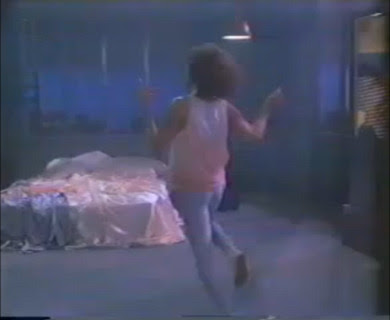
Why was it so bad? Watch it. There’s nothing anyone can say to describe how bad something is than to say, ‘just watch it for yourself.’ Wikipedia provides the most succinct description of the video, “It shows Squier waking up in a bed with satiny, pastel-colored sheets, then prancing around the bed as he gets dressed, ultimately putting on a pink tank top over a white shirt. At the conclusion he leaves the room with a pink guitar to join his band in performing the song.” The song also shows Squier putting on a shirt, then ripping it off in an apparent display of lust that just happens to reveal his “good-looking sexy chest.” There’s also the requisite sprawl on the ground in which the sexy beast pulls themselves forward on the ground to evocatively display the character’s primal lust. I don’t know which video director displayed this first, but it became a staple in 80’s videos.  

There is some debate regarding why the video was so bad. Some, including Squier, suggest he appeared too feminine in the video, but we could say that that characteristic didn’t alter David Bowie’s trajectory, Marc Bolan’s, Twisted Sister’s, or even to a lesser degree Alice Cooper’s (Cooper was more about shock value and makeup than he was femininity). Others say it was more about Billy Squier’s ill-conceived dance moves. Were the dance moves feminine? Yes, but anyone who watches “the video” knows that its problems do not begin and end with “being too feminine”. The video is just awkward, and so weird, and so out of the artist’s personae. Even those of us who didn’t know the persona he had before the video can watch it and know he probably shouldn’t be doing that in public. “But,” the defenders of Squier said, “These were the same dance moves he did in concert every night on tour.” We’ve all been to those concerts, and we’ve all cheered any dance moves the lead singer engages in. It’s almost as if we’re starved for entertainment, and a dance move here and there, regardless the quality of the moves, is met with ecstatic approval as it adds to the collective energy we can feel from the speakers. Even ill-considered, poorly choreographed dance moves seem more in context, in an auditorium, than they do from the perspective of watching them on TV. If Saturday Night Live tried to do a spoof on all of the awkward staples of 80’s videos, they couldn’t have done much better than Billy Squier did in this video. The video reminds us of the conversations the fellas had at the high school dance, seeing all the beautiful girls on the other side of the floor, wishing we could dance. “I can dance,” one of our friends said, and he showed us something he probably practiced a million times in the mirror with no objective criticism to inform him how hilariously bad his moves are. We can only imagine that Squier watched all of the hot, risqué videos of the era, from Madonna and Prince, and thought, “Hell, I can do that.”

As Squier said, “I was a good-looking sexy guy.” The video appears to be Squier’s attempt to show the world how good-looking and sexy he could be, to use his natural assets to make it to the next-level. Perhaps, he thought this video would help him make the leap from rock icon to sex symbol. We can only guess that Squier designed Rock me Tonite to elicit comments like “steamy” and “too-hot-for-TV” comments to attract the prized female demographic. The use of pink, as the predominant color in the video, reinforces that guess. 

After the fantastic success of Emotions in Motion, we can only imagine that record company executives sat Billy Squier down in a boardroom to discuss his future. In this boardroom, Public Relations advisors entered with charts and graphs detailing Billy Squier’s popularity from 1980 to 1982, with comparative lines listing his male-centric base against a projective arrow of what his numbers could be with some kind of paean to the female demo. Whether Squier saw the trends and tried to up his game, or he received some bad advice, his gambit failed miserably.

The fallout from the video was so immediate that Squier claims he went from packed stadiums before the video to half-filled auditoriums almost overnight. He fired both of his managers within a month of the video’s airing, and he tried to put all the blame the video on director Kenny Ortega.

“If anything, I tried to toughen the image he was projecting,” [Kenny Ortega] told the author of a 1986 book about the record industry. He claims he and the video’s editor had their names taken out of the credits when they got frustrated over their lack of creative input. “Let there be no doubt, ‘Rock Me Tonite’ was a Billy Squier video in every sense. If it has damaged his career, he has no one to blame but himself.”

Research shows that the video for Rock Me Tonite didn’t kill Billy Squier’s career, as the album Signs of Life went platinum, and the next two albums both sold 300,000 a piece. How many artists would kill to sell 300,000 albums? The video did appear to alter the trajectory of his career that peaked with the multi-platnium album Emotions in Motion, but it’s entirely possible that his run just ended, as most runs do. The most imperfect way to solve the dilemma that appeared to haunt Billy Squire to his dying day is what would’ve happened to Billy Squire’s career if he never made “the video”. While I understand that rappers use his samples in their songs, his legacy and overall influence just isn’t as strong as a Marc Bolan’s is. Both artists experienced massive success early in their careers, roughly ten years apart, and their sales numbers leveled off after a couple albums. Comparatively speaking, they both experienced decent runs and comparatively long careers in an otherwise unforgiving industry. Neither of them were one-hit wonders, in other words, as they both ended up having about ten chart-topping singles. At some point in their careers, they both got lost in the shuffle, and their runs somehow ended. When we write somehow, Billy Squier might correct us, if he were alive today, saying it was “the video”. Yet, if he came out with another chart-topping song or album, he could’ve put the ill-advised, poorly timed, and utterly embarrassing video behind him, but he never did.