I Give You Permission to Read This 


“We have two choices in our culture today,” the “theys” who appear on our devices tell us. “We can either feel guilty about doing what we do, or we can give ourselves permission to do them.” The only asterisk in this Faustian Dilemma is celebrital dispensation. Similar to Papal Dispensation, if a celebrity says, or more importantly wears, something on the red carpet, it gives us commoners the permission to be who we are, “who we really are.” To listen to the theys of celebrity adoration, celebrital dispensation is far more powerful than Papal Dispensation in that it doesn’t just offer a specific relaxation of rules in one particular case, it offers us a wholesale abrogation of rules of social decorum, social contracts, moral and ethical principles, and presumably constitutions and foundational documents. The theoretical extension of the rules and policies of celebrital dispensation are not clear, but from what the theys suggest, a song lyric, a line in a movie or show, and any dietary decision celebrities bestow upon us can lead us to the brink of a guilt-free life.
In order for the celebrital dispensation to have power, however, we have to violate a special tenet permission-oriented types have embedded in their personal constitution: Thou shalt not grant another power over one’s life. Aren’t we all supposed to be self-empowered? Aren’t we all supposed to say, “I’m not going to give you that power over me.” Isn’t it all about autonomy, independence and strength to achieve comfort? It depends, and it’s conditional. If the celebrity is hot, superficially and/or professionally, they don’t just wield power in Billboard or the box office, they can influence our daily lives. 

Is this all a collective wink-and-a-nod joke, I missed, or does the woman I see twerking on stage in a corseted bodysuit draped with strands of silver fabric, over-the-knee fringe boots wield as much power over her congregation as the Pope does his? How many successful albums, movies, and TV shows does a person have to have before they can start granting us permission on how to live our lives, and what happens if her next album doesn’t fare as well? Does her sway over the culture ebb and flow with sales, and do we need to keep a ledger on how much power a celebrity wields, before giving them permission to give us permission? How beautiful, handsome, funny, or serious do they have to be before they’re allowed to grant us permission to put a little cheese on our broccoli before eating it? What happens when they eventually age out of their beauty and/or handsomeness, do they grant us permission to age, or do their powers diminish? It probably depends on how gracefully they age. Is there a bottom line qualifier they must continually meet before we continue to grant them ourselves permission to grant them permission to grant us permission to do what we want to do?

***

“So, you don’t just do something or avoid doing it?” is a question I ask of those who seek and grant permission to themselves. “So, you don’t just do something or avoid doing it?” is a question I ask of those who seek and grant permission to themselves. “You add the extra step of asking yourself permission first before doing it?” If that’s the case, the logical conclusion is that there’s another part of us that grants permission. Is that other part of us ruling in a fair, objective, and unbiased manner? Are all of our rulings always reached with our best interests in mind? If you commit to a regular practice of asking yourself permission to do things, how often do you say no? Has your rejection ever surprised you? If so, how did you react? Did you disagree with the basis of your judgement so much that it frustrated you, because you thought you didn’t consider some of the mitigating factors in your request? Did you ever end up eating that piece of chocolate cake regardless of the judgment? We’ve all been subject to unfair, foul, and draconian rulings from the various authority figures in our lives, and we’ve all rebelled against them accordingly. Have you ever eaten that piece of chocolate cake regardless if permission was granted or not, and how did that affect your relationship with yourself going forward? Have you ever stopped asking yourself permission for a time and just did it, because you began to believe that you could be a bit of a tyrant at times, and do you adjust some of your behaviors in the hopes that you might notice a run of good behavior that deserved some reward? You know you’ve been good, but have you had this feeling that you didn’t notice it, and you feel that you should start rewarding yourself with some chocolate cake here and there, until you start acting up again?”  

One definition of giving yourself permission involves the practice of allowing “You to disconnect WHO you are from your opinions, ideas and practices. Instead, placing that identity in your values. As long as you are acting in line with your core values, it opens up space to be wrong about decisions in the past, and how you will choose to translate your values in the future, without losing sight of your personal integrity or ability to be 100% whole and worthy.” 

If I ever fall prey to this nonsense, I know my first series of layoffs will involve middle management, as I will know, without poring through the numbers, that I’m probably overstaffed.  

***  

“I have so earned this,” we say as we lower onto a piece of soft and juicy chocolate cake, “and I deserve a reward.” Is a piece of chocolate cake ever that rewarding? How long does that sense of reward last? Do we go for another piece to reward ourselves more when we’ve been especially good? No, because that might prove punishing. The single piece of chocolate cake represents a reward at the end of the maze of good and healthy living, and we always announce our path to it? “I’ve been good.” 

I guess I’m a stranger in a strange land, because I just eat the piece of chocolate cake, or I don’t. I make decisions without disconnecting WHO I am from my opinions, ideas and practices. There are no trumpets in my land, signaling a dietary path that has been a quality one up to this point, or one that is so bad that I don’t dare approach the bench. 

We let our trumpets blare, because we want external validation and societal validation. Somewhere along the way, we glommed onto the complicated world of self-acceptance and self-actualization, and the rise of self-help literature, social media, and mental health awareness tangled and mangled this into people talking about their personal struggles and growth journeys, until we started seeking permission and granting it to ourselves based on past and present behaviors. 

“I am refraining from eating that piece of soft and juicy chocolate, because I’m on a diet.” We say this even though no one brought it up, and some part of us knows that no one cares, one way or another, but we want someone else to validate our discipline. Even a lifted eyebrow will do. Eating that single piece of soft and juicy chocolate cake gives us a naughty violation to punctuate the streak of good and healthy living that no one cared about when it went live. These are all decisions and choices we make, and they’re all fine, but how many times have we gone a solid month without a slice of chocolate cake? “Yeah, I deserve a reward for that.” What’s the difference between deserve and earn? Who cares, let me have cake. 

When we involve ourselves in the idea of granting permission to ourselves, I think there’s a super-secret part of us that kind of misses having a controlling authority in our lives. “I can’t wait until I’m an adult,” kids often say, “because I’ll then get to finally do everything I want to do.” We all know that there is a psychological push and pull to authority in our youth, as we push back on authoritative constraints, until they’re not there. When they’re not there, we feel the need for borders and guidance in a strange way that makes us feel uncomfortable. We didn’t miss it in our 20s, because we were all about luxuriating in the newfound powers of freedom of adulthood that can feel so fresh and liberating. When we hit our 30s, the idea of freedom became more established, routine, and a little boring, and if we lived to our 40s, we became the powers that be. No one notices when the idea of unadulterated freedom begins to wear off, but we eventually start to take it for granted, and we begin to miss the rewards and punishments that flowed from authoritarian control, so we began establishing our own. 

The logical response to those who deserve a reward is do they ever punish themselves for bad living? Have you ever tried canned beets? If not, then you don’t truly know the extent of quality punishments. WebMD.com suggests that beets “Don’t just reduce inflammation, they also improve heart health. The nitrates in beets have been shown to reduce high blood pressure. Beets are also naturally low in cholesterol and fat, which makes them a good option for people concerned about heart disease or stroke.” Are beets a quality punishment we sentence we pass down for falling off track regarding good and healthy living? Why else would someone eat a beet? If someone told me that they granted themselves permission to eat a piece of chocolate cake, because “I deserve it,” I would ignore them as much as I ignore anyone who publicly grants themselves permission to do anything. If however, they added, “I just ate a whole can of those wet, slimy vegetables,” I might consider my own form of a one-time dispensation. 

“Did they have that purplish color that comes from betalain pigments?”

“Yes.”

“Today, I tell you,” I would say with a permissive wave of my hand, “that you shall enjoy paradise.”

I realize that granting ourselves permission to do what we want to do is not some kind of new-age novelty, as the research suggests this practice has gone through a long and winding road. As a young ‘un who received unprecedented freedoms, unprecedented among my peers, perhaps I went through the traditional push and pull relationship with authority prematurely, but I don’t understand the unnecessarily complicated, and very public, steps some people include in their decision-making process. I don’t understand the process of inventing an imaginary, controlling authority to adhere to, abide by, and rebel against. Perhaps, it has something to do with filling a void that nature forced me to fill so early on that I don’t understand others struggle with it. 

I also don’t understand turning to celebrities to grant us permission to do things, unless it’s an admission on our part that we don’t have the confidence necessary to fill that void, because we fear our rulings, on consequential, pressing matters, are not as objective as we previously thought. To fill that void, we turn to the uncommonly attractive types who attract fame and fortune for some kind of authority on the way to live. Yet, if we were to hold them to the same standard we hold ourselves, we’d find they’re just making it up as they go along too. They do look beautiful doing it though, and we cannot deny that, but does that give us permission to look beautiful while we’re doing it too? If that ever happens to, or for me, I hope someone will come along and explain to me what just happened.

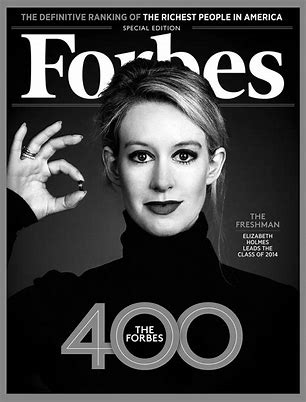
Is Elizabeth Holmes the Face of Fraud or Failure?


If Elizabeth Holmes could’ve had an idea that worked, she could’ve been a contender, she could’ve been something real, and oh, the places she could’ve gone. The idea that we’re fascinated with this woman is obvious with all of the bios, documentaries, and news segments devoted to her. There are probably hundreds of different answers as to why, but I think it has something to do with the idea that her story is not a simple ‘person perpetuates fraud’ story. 


Elizabeth Holmes was found guilty by a jury of her peers of perpetuating fraud. That’s a fact, and the glaring headline, and it might influence everything we learn about her story. Her story is just the latest in the ever-present, not-going-to-end-anytime-soon Cringe-TV. We love to laugh, cry, and scream in horror, but we also love to cringe. There’s probably something wrong with it, as we shouldn’t love it this much, but when someone gives all their money to a con artist, and then they convince their friends and family to give their money to them too, we cringe with excitement. Do we think we’re better than the victims? If we did, we wouldn’t develop crinkles (cringe wrinkles) during our obsessive binges. Our motive, when watching these shows is not to find out if the fraudsters did anything illegal, but how they did it. 


After watching all of these shows, the viewing audience should ask themselves two questions. Did the 19-year-old sophomore at Stanford drop out of college to commit fraud, and if not, what did she know and when did she know it? Did Elizabeth Holmes want to become the next Steve Jobs so bad that she was willing to do anything to make that happen? Or, did that just kind of happen in the course of her troubled venture? Even though she was eventually deceitful, the idea that Elizabeth Holmes won over some of the intellectual glitterati of our nation is a testament to her talent, intelligence, and charm. She professionally seduced George Shultz, Henry Kissinger, David Boies, James Mattis, and, of course, Theranos Chief Operating Officer Ramesh “Sunny” Balwani. She also managed to secure $700 million in funding from the likes of Larry Ellison and Tim Draper. At its peak, her company Theranos, was valued at $9 billion. 


Watching Hulu’s bio Dropout, HBO’s Inventor, the 20/20 news segment, or reading any of the web articles devoted to her story involves a battle between cringes and knee-jerk reactions. One knee jerk reaction we have is to now say Elizabeth Holmes was a con artist who engaged in fraudulent activity to secure funds from investors. We then dismiss her on that basis, but how many world leaders, politicians, and other charismatic, skilled, and deceptive people have attempted to pull the wool over the eyes of those luminaries listed above? Another knee-jerk reaction is to say that Elizabeth Holmes was a young, blonde woman who had obvious appeal to old, grey men. They might have enjoyed meeting with her. They might have enjoyed her attempts to professionally seduce them, but what happened when those meetings ended? A cadre of advisors probably sat down with the old, grey men and poured through her books, and they had a pro and con discussion with a George Shultz. He took their advice under consideration, and he ended up believing her. At one point in the story, Shultz even believed Holmes over his own grandson. How many years of experience did George Shultz, and all of the names listed above, have dealing with con artists and fraudsters? What does that say about them that they fell for Elizabeth Holmes’ deception, and what does it say about her? If she had a product that actually worked, imagine how real her success could’ve been. 


The Theranos Corporation had a machine called the Edison, so named because lightbulb inventor Thomas Edison said, “I didn’t fail 10,000 times. The lightbulb was an invention with 10,000 steps.” How many careers were built out of try, try, and try again? Thomas Edison wasn’t excusing his failures. He was saying that he had to learn from the 10,000 misfires he made. Did Holmes’ Edison machine fail 10,000 times? “Who cares?” Holmes, Balwani, and all of the engineers and scientists could’ve answered. “Who cares if it fails 100,000 times. Imagine if we keep failing, and we learn everything there is to learn from those failures? Imagine if, one day, it works. We could transform the landscape.” The central question in this fiasco, to my uninformed mind, is is it possible that the Edison would have ever worked? If not, then we have beginning-to-end, no excuses, and full-fledged fraud on our hands, but what if Walgreen’s didn’t push for its arrival in their stores? What if Holmes and Balwani hadn’t pushed the engineers to make the Edison happen to satisfy Walgreen’s? Was it ever possible? Were the talented engineers and all of the employees they had on the payroll at Theranos for the money, or did they believe in Holmes’ dream? 


The Hulu bio Dropout depicts biochemist Ian Gibbons, who served as the chief scientist of Theranos, complaining that the Edison “is just not ready” for Walgreen’s. He was the first experienced scientist Holmes hired, his name was on all of the patents, and from everything we read about Gibbons, he was more than a believer. He was one of the chief architects of Holmes’ vision. The portrayals of Gibbons on the 20/20 story, the Hulu bio, and the HBO documentary The Inventor, suggest he was never a naysayer. They suggest that he just set rigorous benchmarks for the product. He doesn’t say, at any point, that this was a fictional dream that Holmes concocted (as a Stanford professor did), that it’s a fraud perpetuated on investors and the public, or that it will never happen. With all of his experience in the field of biochemistry, Ian Gibbons believed in the product, but he said it was just not ready to meet Walgreen’s timeline. There was a certain duality to Gibbon’s pleas however. He needed a job. He was in poor health, and he needed the health insurance that Theranos provided.  


What if they waited? Could they have waited? Would the money dry up if they delayed yet again? The stories of Elizabeth Holmes depict her as someone who had a natural gift for raising money. Could she continue to raise money at such a blinding pace, or were her chickens coming home to roost?  


Now that we know Elizabeth Holmes was successfully convicted of fraud, our knee-jerk reaction is to believe that the whole venture, from beginning to end, involved a years-long series of deceitful acts. Suggesting otherwise insults our intelligence. The details of her ambition suggest this whole venture was narcissism as opposed to altruism. Now that we all know this was a fraud, we tint our rose-colored glasses with such a heavy dark tint that we can’t see anything else. Did Holmes believe in this idea, at one point, or was she so desirous of her own Steve Jobs image that she would do anything to get it? In that light, she’s rightly depicted as a narcissist, but did she wear black turtle necks and lower her voice to become the next Steve Jobs, or were these façades her attempts to have the world take a 19-year-old (or however old she was at the time) blonde seriously, so she could sell an altruistic product to the masses, to save lives?   


In a fascinating, possible explanation of Elizabeth Holmes’ motivation for continuing “the lie”, behavioral economist Dan Ariely discusses a psychological experiment using a standard, six-sided die in the HBO documentary on this story The Inventor. In this experiment, the subject of the test is encouraged to predict the number of pips that will appear when the research scientist rolls the dice. One of the twists in this experiment is that the subject gets to pick the top or the bottom of the die, after the roll is complete. They keep that prediction, whether top or bottom, in their head. They don’t say it aloud. The scientists will give them a dollar for every pip on the die that appears with a correct prediction. If the number is one, they get one dollar, two for two, and six dollars if the number appears, top or bottom. In some cases, the die displayed one pip on the top and six on the bottom. “Which one did you pick?” the scientists ask, “The top or the bottom?”  


“The bottom,” they said, when the six was on the bottom.  


“Are you sure?”  


“Yes, I picked the bottom that time.” Boom, six dollars went into the subject’s pocket. In the next stage of the experiment, they are hooked up to a lie-detector to find that they lie some of the time to get the most money they can. The third part of their experiment involved charity. “All of the proceeds from a correct guess go to charity,” they informed the subjects. The scientists found that the subjects’ lies went up dramatically when the reward for their correct guesses went to charity.  


If Elizabeth Holmes genuinely believe Theranos was an altruistic venture that would eventually help save lives, then what was the harm of a few lies here and there? We all lie, and most of us lie for narcissistic reasons. What if we genuinely believed we could revolutionize the world, and as Holmes continually suggested we could spare our proverbial brothers and sisters from having to say goodbye to the world too soon? Would we fudge the numbers, lie to investors, and treat obnoxious employee questions the way Theranos did if it could buy a little time to see our dream actually come true?  


Elizabeth Holmes was told that this will never work by one of the Stanford professors she approached with her the idea. Our knee-jerk reaction, knowing what we know now is, why didn’t she listen? How many ingenious minds are told such things at the outset? Then we learn that another esteemed Stanford professor compared her to Mozart, Beethoven, Newton, Einstein, and da Vinci. Others said she might be the next Archimedes.  


Elizabeth Holmes had a childhood fear of needles, and she thought the products she and her team created at Theranos could spare future sufferers of this fear. She also thought that she could transform the medical industry. At some point, her dream ran into reality, which begs the old Watergate question: “What did she know, and when did she know it?” When she encountered Edison’s 10,000 failures with the Edison machine, she pushed on. Why did she push on? Did she believe in this machine, and this dream, that much? Or, was she in too deep? The cringe takes hold when the main character not only continues to lie, but she doubles down. “Why would you do that?” our cringe asks. “When it’s plainly obvious that you’re trying to swim out of a sand hole.”


How much pressure was Holmes under at this point? She had 800 employees counting on her, numerous investors, and friends and family counting on her to make this happen? She appeared on the cover of Forbes, Fortune, Bloomberg, and Inc. Magazine. She appeared on CNBC a number of times, spreading her gospel. How many of us could experience this level of adulation, coupled with the pressure that it entails, and say, “All right, well, we’ve failed ten thousand times, over the course of ten some odd years, and well, it looks like this thing doesn’t work, and it never will. Everyone can go home now. There’s nothing more to see here. We’re folding up shop folks, it’s now time to go home.” 


In the midst of our knee-jerk reactions and hours-long cringes, we turn to our wives and say, “At that point, right there, I would’ve been more forthcoming.” To which, our wife should’ve said, “And then what?” And then, after you’ve cleared your name of any fraud by declaring the dream over, everything is over. Everyone you know and love realizes that you’re not the golden child they thought you were yesterday. You’ll become a punchline, as everyone you know will begin to mimic and mock your forthcoming statement, and the life you knew for ten-plus years is over as you spend the rest of your life realizing that you peaked at thirty-years-old.   


Among the top CEOs of Fortune 500 companies, there is one characteristic common among them an uncommon belief in self. If Holmes shared this enviable trait, as many suggest she did, she believed she could overcome any obstacle before her, and to do so there are times when we might have to fudge and fib a little to encourage the skeptical and skittish around to trust our unwavering vision just a little bit longer? An edited number here and there to encourage the legions of media members and employees who worshipped you will mean nothing when this product finally reaches completion. When Theranos employees on the ground floor begin to ask questions, it’s fine, as long as they don’t discourage their fellow employees and spread poor morale. As long as they don’t violate their NDAs and speak to the press or their family and friends, we’ll be fine. Plus, forcing employees to sign NDAs is a common practice in Silicon Valley and the rest of the business world. Furthermore, the best CEOs learn to lean on some level of obfuscation to sidestep deep, penetrating questions regarding initial results of products during their gestational period. Did Elizabeth Holmes have an unwavering and uncommon belief in herself or her products, in a manner those in sales will say are one and the same?


*** 


“I’m not going to fall for this,” we say when we click on the app to watch an episode of Cringe-TV. We know the perpetrator has been convicted, and we know some of the details of the case, but we want to see the suffering. We want to see the faces of the people who were duped, and we want to laugh at them when they confess the extent of the betrayal went from hundreds to hundreds of thousands, and if we’re really lucky, we’ll see the face of that poor sap who dumped millions. We might see something wrong with us for enjoying it so much, but we keep watching.  


I just can’t wrap my arms around Elizabeth Holmes being a fraudster from beginning to end. As a former fraud investigator, I know she’s been convicted of fraud by a jury of her peers, but I can’t help but think Elizabeth Holmes believed in her idea for a majority of those twelve years and presumed 10,000 failures. I know many of the facts of the case, but I would love to know what happened to her when it became obvious that her products were never going to work. Did she and her team switch to Siemans’ products, and all of the other measures she used to allegedly defraud victims, or was she desperately seeking more time. Or did she fear that “What then?” question if she was totally forthcoming at some point.    

Fraud is perpetuated throughout our country on a daily basis from Silicon Valley to Bangor, Maine. How many of these acts are committed for purely narcissistic reasons, and how many of these paths are paved with altruistic intentions? We might never know what was going on in Elizabeth’s head throughout the trials and tribulations she experienced, and our knee-jerk reaction is to shut down all discussion on the matter with the fraud conviction, but think about what an incredible person Elizabeth Holmes could’ve been if she devoted all of the energy, talent, and intelligence that impressed so many luminaries of our society into something that actually worked.   

The other side of the coin, the elephant in the room that no one wants to discuss is that Elizabeth Holmes was a woman. Going through all the interviews of her investors, and all the luminaries who invested in her company, I couldn’t get that fact out of my head. Elizabeth Holmes was obviously charismatic, she had a excellent work ethic, oodles of talent, and she had unwavering belief, but would all these people, including the financial magazines who had her image on the cover of all of their magazines, have fallen for her claims if she was a regular forty-something male CEO making substantial and exciting claims? We can only speculate, of course, but I think the idea that she was a woman relaxed some concerns. They wanted her to succeed, and they wanted to be the ones who were so open-minded that they didn’t want to be the type to speculate that her claims were just unrealistic, because that might subject them to the “Are you saying all this, because she’s a woman?” charge. We’ll never know, of course, but I have to think that a regular fella wouldn’t have received the benefit of doubt.

Yellow Stripes


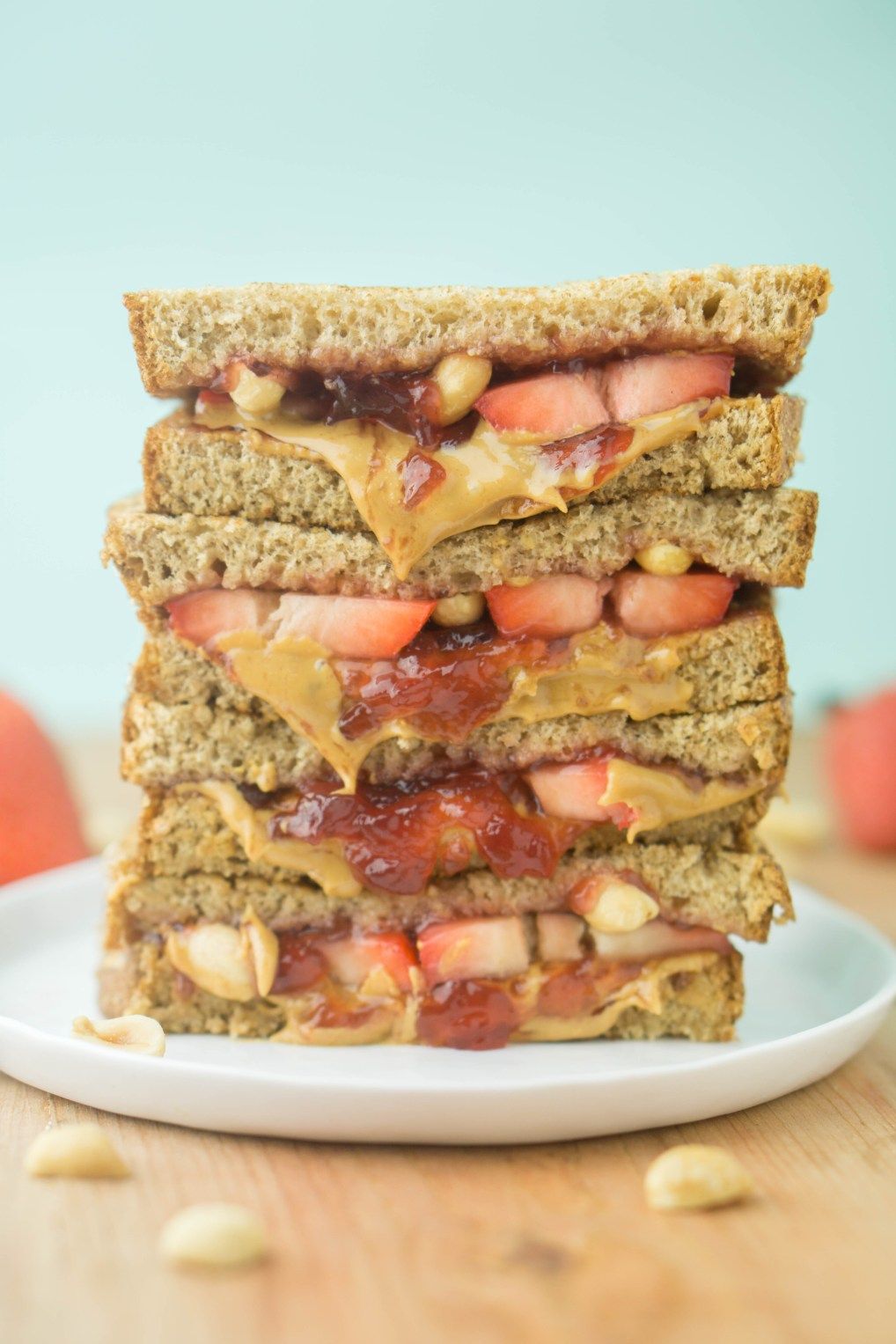
The Organic Sandwich  

“I’m burping peanut butter,” she said. 

“That’s funny, because I’m farting jelly. Now, if we could just get that guy over there in the corner, with a yellow-striped shirt on, to somehow make us some bread, we could have one hell of a sandwich.” 

“Who is he?” she asked. 

“No idea, but look at him. If anyone can make bread, my bet is it’s someone who looks like him.”  

You Should’ve Seen What I, More or Less, Saw  

Arnold knew what life had to offer when I met him. He’d been-there-done-that. He knew there was nothing more to life while on the never-ending quest for something more. “This isn’t something more,” he said anytime we shared an experience. “This is something less than what I’ve experienced already. You schlubs, who think this is something more, just haven’t lived the life I have.”  

Arnold lives his life pitying those who enjoy experiences. He’s already had them. A vacation is not as great as the one he had, a night out with a wild and crazy guy is not as fun as the one he had with a lunatic who knew how to have some fun. A weather anomaly is not as bad as the one he experienced in a different town, in a different year. “You think this is bad, you should’ve seen what I saw back when I was (whatever).” You Think This is Bad… will be the title of his biopic, if anyone has the excess cash necessary to fund such a project.  

“Stick with the Beatles,” he says when we express adoration for some new musician who attempts to create music. It’s always interesting to me when music snobs (of which I am an avowed member) suggest that because group B is not as great as group A, we shouldn’t listen to B, or any of the other letters in the alphabet. “Are you saying they’re better than the Beatles? All right then.” Case closed. Nothing to see here. Matter resolved. Now enjoy your life of listening to nothing but the Beatles, you’ll thank me later. For some of us, music is life. A new release by some otherwise unknown artist fuels us in ways that are tough to explain to someone who has already heard the best. We have an appetite for something different, not better, not just as good, different. Arnold doesn’t have that gene. Music is background noise to him.    

“It’s the Sun,” he says when we attempt to describe a Sunrise. “The Sun rises every day, and the average human being will see about 28,000 of them in their life on Earth.” All right, but how many do we look at, and how many do we see? “It’s the Sun.” For those who’ve experienced a Sunrise, appreciation suggests a level of cute and laughable naivete. 

Arnold is not a crotchety, old man, but he will be one day, and I suspect he will refuse to appreciate anything on his death bed. He might even try to been-there-done-that death, “You think this is bad, you should’ve seen my life.” Death will mean nothing to him, because he will look forward to something more. “What if this is it?” we’ve asked him. Arnold won’t hear it. He’s locked in on the idea that nothing can top what he’s already done while being unimpressed with it in the moment and looking for something more. “What if there isn’t anything more?” We’re not attempting to open a can of worms. We’re not suggesting that there isn’t always something more. We’re suggesting that he might want to stop comparing life to what was, what could be, and maybe train a little more focus on what is, because we will all, eventually, find out if there is anything more soon enough.

I love to watch things on TV.  

“Who do you think is going to win?” I asked Vito. Vito and I were watching two people get ready to play a game of pool from a neighboring table. We were so bored that I felt boring. We were absently watching a college football game between two boring teams. My question was so random that if Vito declared that he didn’t care who won at pool, and his ambivalence was convincing, I would’ve moved on without giving the matter a second thought. Vito didn’t do that, however, he tried to sidestep the question. 

“I don’t know,” Vito said. “I really don’t. I haven’t watched them, and I cannot gauge their abilities.”  

“I know you don’t know who’s going to win,” I said. “Either do I. That’s the fun of randomly picking a guy. We do that. Guys do that when we’re in a bar together. We randomly do things to have random fun. We could cheer these guys on in a way that makes them so uncomfortable that they ask us what’s going on. Then, we could tell them-”  

“I’m not in the game of making predictions,” he said, interrupting me. Yet, he was into making predictions. He did it all the time, but he only picked overwhelming favorites, so he could be right. We all enjoy being right, and Vito was no different, except by the matter of degree he cared. He cared so much that when the two combatants were somewhat evenly matched, he refused to put his reputation on the line for what amounted to a guess. He dropped that “I’m not in the game of making predictions” into those occasions so often that I considered it his character-defining line. If someone with enough excess cash on them to make a biopic on his life approached me for ideas on a title, I thought this would be an excellent one.    

“Let’s put a friendly wager on it?” I pressed. Vito squirmed. “Pick either one, and the loser buys the next pitcher.” Even though the pool balls were racked, these pool players took their time. They drank their beer slowly and chatted with another table near them. They stood astride their pool sticks, like warriors preparing for battle, while they chatted. I didn’t understand why these guys took their time. They paid by the hour for the table. Either they had too much money, or they liked being players more than they like playing.  

When Vito said, ‘I haven’t gauged their abilities’ he meant it. He thought his abilities to gauge talent was his talent. If we bet on two girls playing hopscotch, Vito might take out a slide rule to measure the muscle mass in their thighs. He might want to talk to the players before making an assessment, and he might ask them to do a couple of run-throughs before reaching an assessment worthy of a Vito declaration. Even in a pool hall, on a boring and random Friday night, he hesitated, thinking I might bring my victorious bet back to the office and thereby ruin his reputation 

“C’mon,” I said. “It’s one pitcher of beer.” 

“I’m not a gambler,” Vito said. 

“I’m not either,” I said, “but this might make this otherwise boring night a little fun. 

“Sorry,” he said.  

At this point in our article, the reader might think that the importance of Vito’s vaunted prediction record was all in his head. It wasn’t. To my dismay, I heard someone else say, “Vito predicted that” the morning after an overwhelming favorite demolished an underdog. “So, did I,” I said to interrupt the conversation this guy was having with a third party. “Everyone did. Everyone knew they would win,” I said to proverbially bite the head off the poor chap.  

That was the only time anyone validated Vito’s prediction record, but it got under my skin when he would say, “Team A will beat team B, you heard it here first folks.” I couldn’t hide my disdain, and I always said something. I couldn’t abide by this violation of the bro code silently.   

The primary driver of Vito’s need to establish a vaunted prediction record was that he wasn’t much of a sports fan. When he would predict a victory of the overwhelming favorite, I think he believed it gained him some entrée into our world.  

“What does this do for you?” I asked him without offering my opinion. “What does this prediction game do for you?”   

He said nothing.  

“I have bad news for you. No one cares. Now, if you picked an overwhelming favorite and gave the underdog twenty points, or something, we might care, maybe, but you won’t do that, because you’re not a gambler. Have you ever predicted an upset?”  

He said nothing. He just pulled his beer up to his mouth with a half-smile in a way that suggested he knew something I didn’t. That was it, I decided. That was his game, his mystique. His affectation in life was to suggest he knew something we didn’t.  

“I’ll pick. The guy with yellow stripes,” I said. “Always bet on yellow stripes.”   

“I’m not in the game of making predictions,” he said as if he never said it before.  

“You watch too much TV,” we said. “Professional prognosticators, who use that line, get paid for analysis. They also get paid for being right and fired for being wrong. No one is going to pay you wooden nickel for your predictions, and no one is going to care if you’re wrong. You watch too much TV.” 

For the record, yellow stripes won and Vito said, “I knew it,” after the match was over. I still don’t know if he meant it, or if he was being sarcastic, but that line has been a comedic mainstay in my repertoire ever since. I’ve used that line to sarcastically note that I made an impossible prediction after the fact. It’s also an ode to a scene in The Simpsons (S3, E21 The Frying Game) in which Carmen Electra dressed up as recently murdered Myrna Bellamy, and when Electra removed her costume to reveal it was Carmen Electra, Homer said, “I knew it.”