“He’s just so weird,” my mom said when David Bowie took the stage on a 1970s, variety show called The Midnight Special. Before the marketing teams learned how fascinating weird could be to us, being weird was not a good thing. We strove to avoid the weird, so no one would call us weird. I didn’t want my mom to think I was weird, I didn’t want my friends to think that, and I didn’t want to be seduced into thinking I could be weird if I watched him, so I shut it off. We writers love to rewrite our past to suggest that we were so hip that we were bucking the system at eleven-years-old, so we can fortify our artistic bona fides. I wasn’t. I was a normal eleven-year-old who wanted to learn how to be more normal, so other kids would like me, and my primary conduit to absolute normalcy was my mom. So, when Bowie walk out onto the stage, I was floored by his appearance. My mom must’ve sensed how confused I was, so she quickly told me to turn the channel. I asked why, she said, “He’s just so weird,” and I turned the channel.
David Bowie was weird, there’s no point trying to argue, minimize, or qualify it. He even admitted as much, telling TV on the Radio’s Dave Sitek to, “Stay Strange.” Thanks to artists like David Bowie, we’re all a little weirder, stranger, and everything outside the mainframe. The typical narrative might depict me in front of that TV, experiencing an epiphany, with a “That’s me, mama,” explosion of excitement that she never could quell. It might just be me, but I needed to establish a solid foundation of normal before I could start exploring the weird, strange and just plain different avenues of my otherwise immature and fragile psyche. So, before we continue, let me send out a shout out to my mom for all the effort she put into giving me the most normal upbringing she could before I could explore the other side with more maturity.
David Bowie feared he was a weird person at a very young age. He believed that he was susceptible to the schizophrenia that haunted his half-brother, Terry Burns. We can only guess that before he embraced the fears of falling prey to that mental disorder that haunted his mother’s side of the family Bowie sought the comfort of normalcy. This duality, as anyone who has worked their way through Bowie’s catalog can attest, would affect his artistic output.
“I’m not so sure how much of it is madness,” Bowie would ruminate to Yentob. “There’s an awful lot of emotional and spiritual mutilation that goes on in my family.”
He was “too weird” for my people. He was even too weird for me when I was too young to fight that two-word condemnation. My mom told me he was “too weird”, and even if I had the moxie to fight everyone else, I couldn’t fight her. I was too young to know how different I was, and even I if did, I wouldn’t acknowledge it, because I didn’t want to be weird. I wanted to have friends, and when my friends told me something was not only weird, but “too weird,” I backed away, into them, and their more comfortable groups.
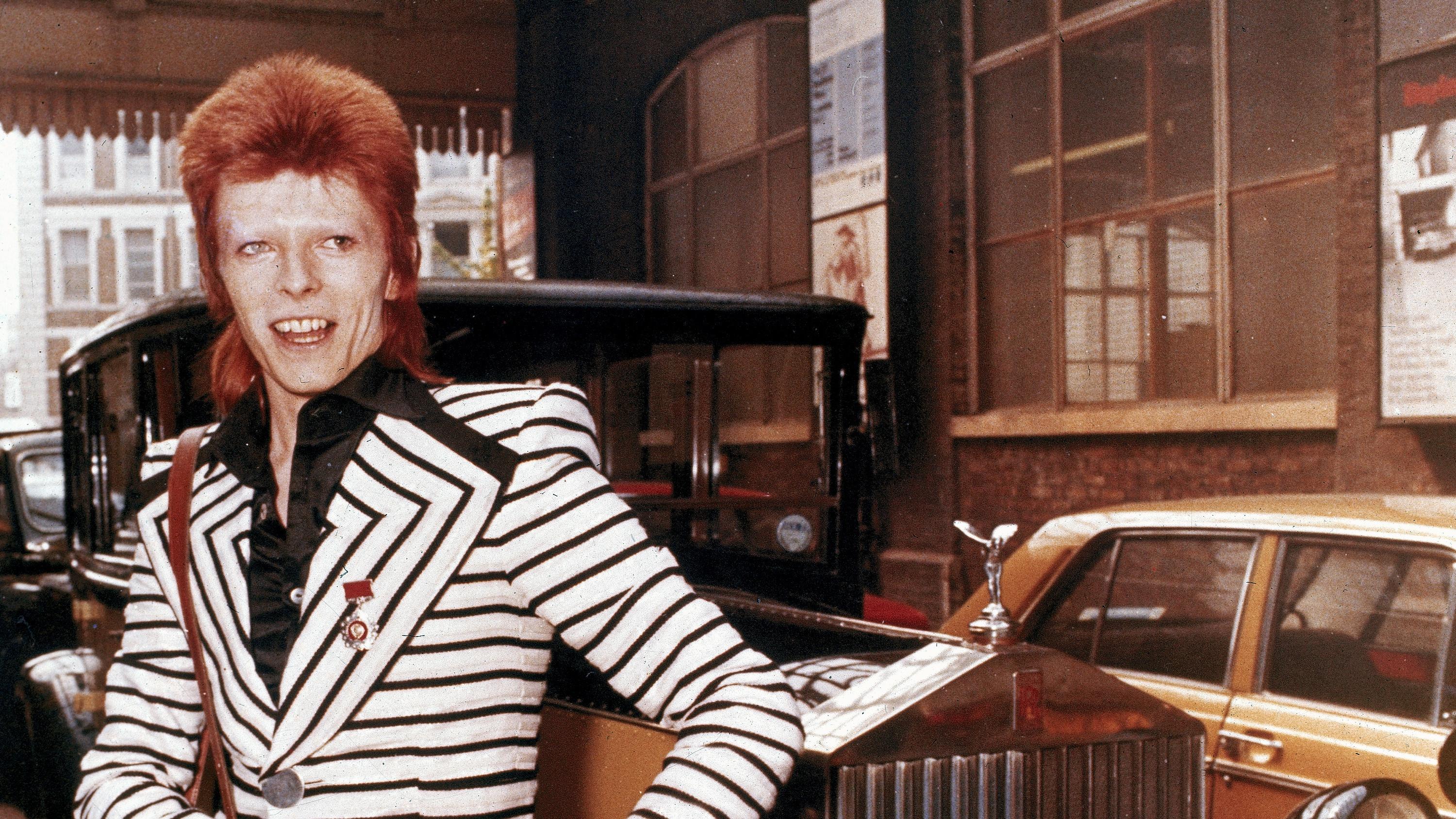
David Bowie shocked in an era that didn’t want to be shocked. Shock value was not commodity in Bowie’s peak years. The New York Dolls were shocking people in New York, Marc Bolan was doing it to England, and Alice Cooper and KISS were putting it to the United States, but shocking people was not yet part of an artist’s marketing package. Those guys tapped into a tongue-in-cheek definition of the weird, but it was all a part of their schtick. There was something unnerving about Bowie’s strain of strange that made it feel a bit more organic. When we saw it, we could tell he wasn’t having a laugh. It was a part of him, the alien part, and perhaps the schizophrenia part.
Watch the shows of David Bowie on YouTube, circa 1972, and try to put yourself in that audience. It’s hard to do now, now that we’re so accustomed to performers playing around in the more customary borders of shock value now, but in 1972 Bowie had people actively avoiding him and his alien nature.
Even after I made it past my mom’s “too weird” block, I still wasn’t attracted to him artistically. I thought he sang songs to make tons of money, become a rock and roll star, and then become a celebrity. All the power to those who do that, but it wasn’t for me. I thought he was the artistic equivalent of a beautiful person who is fun to look at, but doesn’t have much more to them. My attraction to his music is a love story, and to sum up that story, it wasn’t love at first sight. It took him a long time to win me over, but I have been in a relationship with David Bowie’s music for about 30 years now.
I already knew most of his hits by the time I discovered Bowie, so I wasn’t blown away by those songs. The genius of his deep cuts did not blow me away either, in the manner the Beatles’ deep cuts did. I don’t know how anyone else characterizes Bowie’s genius, but it wasn’t immediate for me. His subtle artistic creativity required repeated listens, until I found myself working through his constructs when I wasn’t listening to the music.
I now liken listening to Bowie to sliding a foot into a great pair of socks. I’ve never met anyone who was absolutely blown away by a pair of socks. Slipping into a great shirt, and finding a pair of pants that fit just right can be mind blowing, but I never went nuts over a pair of socks, not when I slipped them on for the first time anyway. There are some socks that fit so well that when we put them on, they just feel like us, and we begin wearing them every day. When I began seriously listening to Bowie on a daily basis, I found philosophical artistry that fit me like a great pair of socks. Art is relative of course, and I’m sure some identify with Elvis Costello in the same ways, but I’ve heard numerous people recognize Costello for who he was in the music world for decades. Up until about the last ten years, very very few listed Bowie in their elite artists’ discussions. It didn’t affect what I thought of him, but I couldn’t understand it. The only answer I could come up with was that he was just “too weird”.
***
I appreciated Bowie’s reincarnation on MTV from afar, as a kid, but the Let’s Dance, China Girl songs seemed more like period pieces in the Madonna/Whitney Houston mold. Pop stars buy great songs from great songwriters, I thought, but a weird, music freak seeking deep, multi-faceted artists doesn’t dive deep into the catalog of pop stars like David Bowie. We wait until the radio stations play their singles. I thought David Bowie was just another good-looking pop star who bought great songs that were probably written by someone else. It was important to me, even back then, that an artist write their own music, because, to my mind, that was the difference between a star and an artist. I thought Bowie was just another 80s pop star who had a 70s catalog that I had no real interest in exploring, until an unusually perceptive friend of mine, named Dan, dropped this line on me.
“This crazy, weird musical path you’re on all points to one man, David Bowie,” Dan said.
“David Bowie?” I asked with disdain. “The Let’s Dance, China Girl guy?” I couldn’t believe Dan, the guy who had a long history of introducing me to deep, powerful music, was now saying I should be listening to an 80s pop artist. I’d been on the other end of his “if you like those guys, you’ll love these guys” suggestion so many times that I always gave his recommendations a shot. Over the years, Dan proved to be one of the few people I’d ever met who knew more about music than I did, but he didn’t know “my music”. He introduced me to Miles Davis, King Crimson, and Frank Zappa in the past, and while I liked and respected those incredible artists, they didn’t reach me on that other, “my music” level.
“I’m telling you,” he added, “Bowie is T. Rex, Hanoi Rocks, and Roxy Music, and that music is Bowie in a way that you won’t understand until you hear this.” He handed me a copy of a Ziggy Stardust and the Spiders from Mars (AKA Ziggy) compact disc. I’m not going to rewrite this section either and suggest that that compact disc glowed or that there was a sound equivalent to Heaven’s Gate opening when he handed it to me, but that is how I now remember it. “This is David Bowie 101, and when you start loving the alien, I’ll introduce you to other elements of the alternate universe he created.”
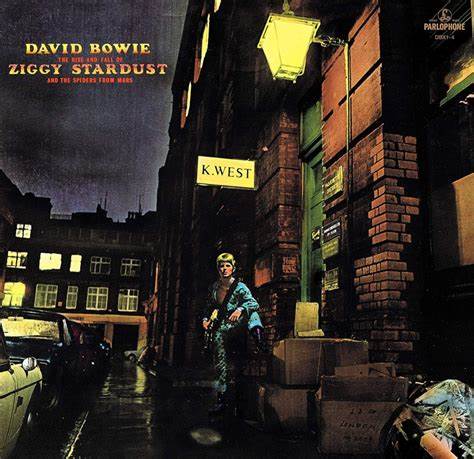 I thought Ziggy was a quality album when I first heard it, but I couldn’t get passed the pop artist and “too weird” hang ups I had with Bowie. Those hang ups led me to think the single Ziggy Stardust was so immediate that it might be too immediate. After repeated spins, I started zeroing in on the other songs on the album, and I started dissecting them in the “parts are greater than the whole” mindset. Soul Love was the first song that nabbed me, and I put that song on repeat numerous times. At the end of that week, I forgot to return the disc to my friend. The music on Ziggy Stardust became “mine” in so many ways that I forgot the actual, physical disc was not. When he reminded me that I forgot to return his disc, I did and went out and bought one of my own.
I was already a Ziggy freak by the time Dan suggested I listen to Hunky Dory and Diamond Dogs. I was hesitant, thinking Bowie might be a one-album wonder. After a couple weeks, I was hooked on everything Bowie. The “too weird” notions I had of Bowie began to fall away, and I stopped borrowing the discs from my incredibly perceptive friend. I bought them. I did something different with my Bowie-obsession than I did with every other artist to whom I became obsessed. I bought a Bowie album, and I inhaled it. I lived each album, until I knew just about every lyric and every beat of those albums. I thought there was something different to know, feel and experience on each album that I never had before with any other artist. Each album was so different that I could see what everyone was saying when they said he was too weird, but by this time, I recognized that I was a little too weird too, and I began to think David Bowie was singing about me. I listened to each album as an art enthusiast might when examining a painting, slowly ingesting every little nuance until they discovered what it meant to the artist.
 When my excitement to buy another album overrode my good sense, I moved onto the next album, only to discover I wasn’t as done with the previous one as I thought I was. Bowie, I realized, was one of the very few musicians who could have one foot planted in the pop world and another in the world of art. My peers told me the man was weird, “too weird”, and I listened. Soon after taking a deep dive, I regretted how much I missed by refusing to listen to him for so long. There are very few artists that affect me so much that I regret not listening to them sooner. I thought of all the years I wasted listening other artists when I could’ve been listening to Hunky Dory, Alladin Sane, and Diamond Dogs. I thought he could’ve changed my world just a little bit sooner back then, and I know that sounds silly, but the effect of his music on me was that profound.
When I finally made it past the obsession, I had with what some now call the Five Years chunk of his catalog (Man Who Sold the World through Diamond Dogs), I graduated to his Berlin Trilogy; Low, Lodger, and Scary Monsters. We listen to music, albums, and artists for a variety of reasons, and I’ve had so many obsessions that I don’t have enough fingers or toes to count them, but there was something different about my obsession with David Bowie. We could label his music in all the pedantic ways, deep, meaningful, and spiritual, but that “not just weird, but too weird” characterization that influenced my refusal to listen to Bowie became the primary reason I listened to him in my adult years.
 Whereas most singers sang about love, sex, drugs, and rocking out, Bowie sang about estrangement, an alien nature, and various other themes we deem “too weird”. In places where an artist might go over the top, and be weird for the sake of being weird, Bowie displayed restraint. In places where an artist should shows restraint, Bowie went over the top. He could write a song that that would live on in the history of FM radio (Space Oddity, Changes, and Heroes), and on the same album he would leave a deep cut to cure our longing for great, weird, and offbeat music that only aficionados love (Alternative Candidate, It’s no Game (part 1), and Lady Grinning Soul). Bowie was the consummate artist who found a way to reach me as few artists could. Most music aficionados don’t intend to downplay the effects of hits, but most quality artists have some hits in their catalog. The difference between Bowie and most quality artists is that he spent as much time perfecting his deep cuts as he did his hits. He had a conventional side and an artistic side, as most of us do, but unlike the rest of us, David Bowie managed to cultivate his normal side, coupled with the “emotional and spiritual feelings of estrangement” from his mom’s side, and this duality led him to craft some excellent pop songs and some brilliant, “too weird” deep cuts.
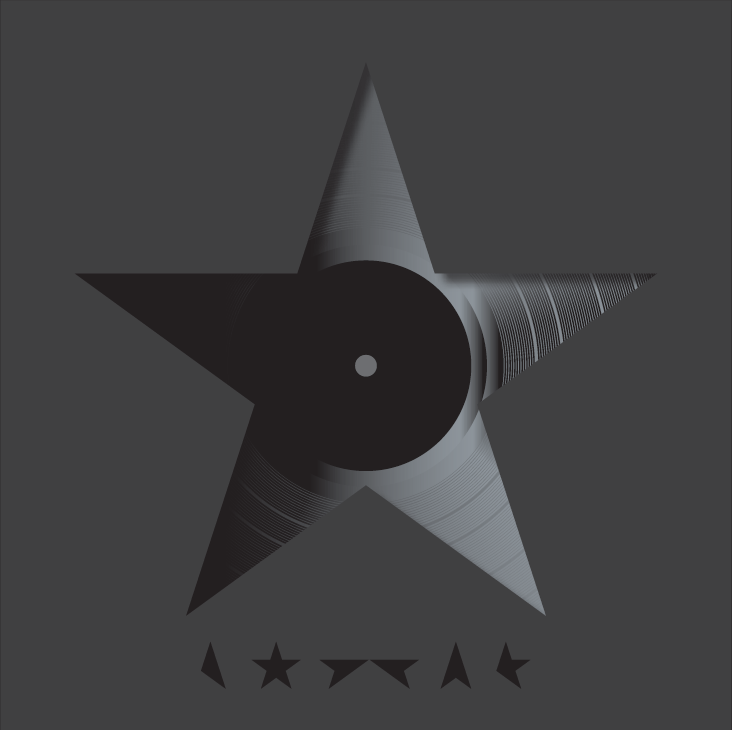
I started listening to David Bowie obsessively about 30 years ago, and I bought his new releases on the date of their release. I enjoy a majority of them, but Bowie captured magic in a bottle during the Five Years albums and the Berlin Trilogy. Hours…, Reality, and Blackstar were my favorite late Bowie albums, but they couldn’t compare to the great eight.
 Years before his death, David Bowie experienced something of a rebirth. All of a sudden, and seemingly out of nowhere, I began hearing his peers begin listing him as one of their primary influences. I heard one or two artists do this before, but not to this degree, and I was paying attention. Fans began listing Bowie just a bit outside the greatest artists of his era. They called him revolutionary, a pioneer, and all that stuff we’re accustomed to hearing now, but save for a few artists here and there, I didn’t hear the adoration society crown him in a way he richly deserved for most of my life. I’ve often wondered why, and how, this happened.
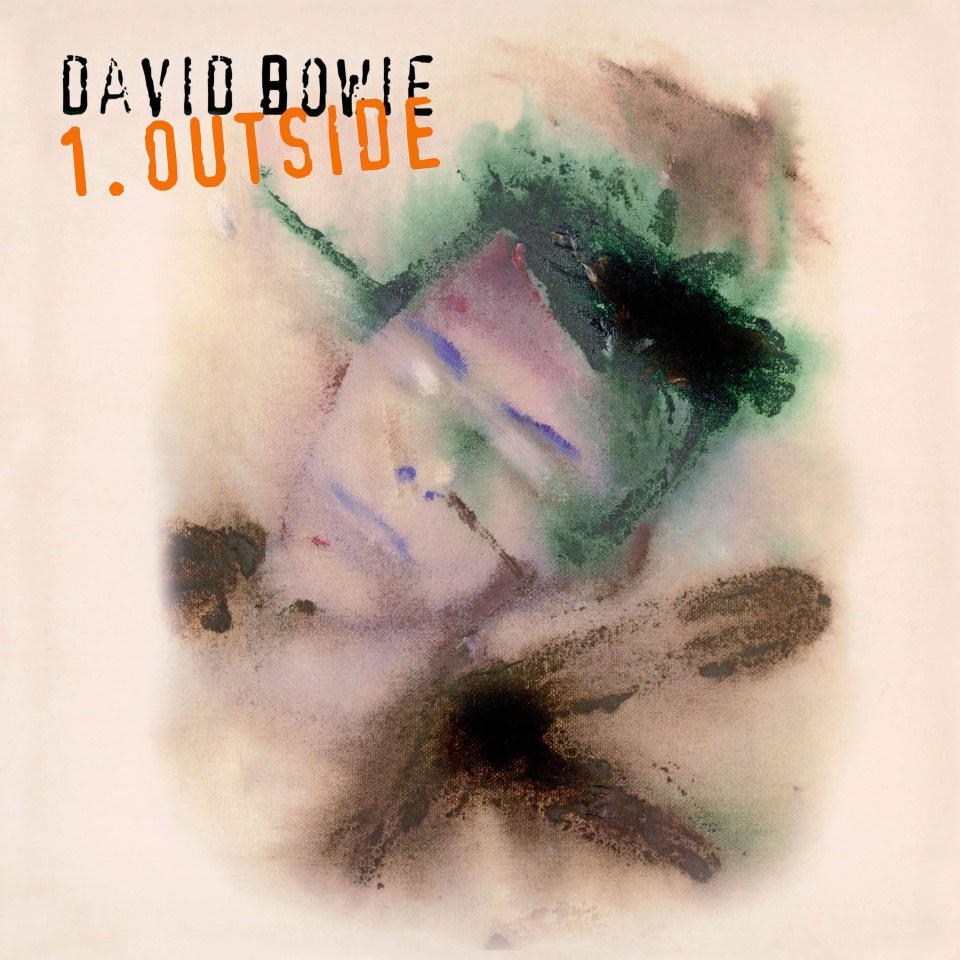
If an artist moves into the pulse of the zeitgeist after decades of being on the outer rim, we can usually pinpoint when and where this happened. The artist probably had that one song, movie, or another momentous event that put them over the top. Unless you consider Nirvana’s acoustic cover of The Man who Sold the World that momentous event, it did not happen with Bowie for most of his career. Some of the albums in the “back nine” (or in Bowie’s case the back eight– Outside to Blackstar) of his career were good, but they weren’t so great that they should’ve moved the needle on a retrospective analysis of his career. Before I get to the primary reason I think Bowie moved from just another artist putting out music to a cultural touchstone in the zeitgeist, there were years after 1980’s Scary Monsters and before 1995’s Outside when Bowie got lost in the artistic wilderness. Having said that, I don’t think Bowie moved to us as much as we moved to him in a cultural appreciation of everything he accomplished throughout his glorious career. I think we, as a culture, became more weird, or at least we embraced the weird far more in 2002 (roughly) than we did in 1972. As I wrote, I was already a Bowie fanatic by the time Heathen came out, but others were suddenly calling Heathen his best Bowie disc since Scary Monsters. I liked, and still like Heathen, but I didn’t think it was as good as Hours…. and I didn’t understand how everyone missed what I consider the Great Eight albums from Man who Sold the World and Scary Monsters.
If you’re one who remains on the sideline for whatever reason, I suggest that you cast that cloak aside for as long as it takes to make an individual assessment of his material. My bet is that he reaches you on a level you’ve never considered before. Music, like every other art form, is so relative that his artistry might not appeal to you on the level he did me, but if you’re anything like me, you now know, as my friend Dan predicted it would for me, my definition of “my music” all goes back to Bowie.
Other than providing me an excellent entry point to David Bowie, with Ziggy, Dan was notoriously poor at providing me an entry point to the artists he loved. To introduced me to Frank Zappa, for example, but he loaned me an advanced Zappa album that he loved as someone who had been listening to Zappa for decades. I eventually grew to love that album, but it took me a while. I needed to start at a better entry point to appreciate what Zappa did throughout his career. With that in mind, I thought about an entry point to David Bowie. I would compile the albums Hunky Dory and Ziggy into a playlist, and I would cut the songs Eight Line Poem and It Ain’t Easy (personal preference). Best of Bowie is another great place to start to learn the more normal side, as most people prefer normal pop songs, or hits, as a point of entry, and if you’re not familiar with those songs, it’s an excellent starting point. For those who know those the hits so well that they seek deep cuts, or songs beyond the hits, I’ve compiled a list of those songs that have made it onto so many of my Bowie playlists. Some of them were marginal hits in their era, but I still consider them so deep and meaningful that I had to include them.
1) Alternative Candidate (It’s no longer on Spotify for some reason. It’s on YouTube though.)
2) It’s no Game (Part 1)
3) Lady Grinning Soul
4) Sound and Vision
5) Kooks
6) African Night Flight
7) Soul Love
8) Dodo (This song is also not on Spotify. Here’s the YouTube capture.)
9) Thursday’s Child
10) Queen Bitch



 Rilaly