Unrealized Gains in the Music of the 90’s


Whenever a gifted artist dies, there’s always a sense that they’re irreplaceable, but there’s something different about music. There’s something special, cathartic, and spiritual about the music that uniquely gifted creative artists offer to bind us all. We can’t explain our connection to these artists, but we enjoy the beauty and craftsmanship of their art so much that when they die, we feel a sense of loss that’s almost painful. Most of us never met the artist, yet in a strange, inexplicable way, we feel we know them. Losing an ingenious comedian might be the only comparable loss, as they offer us the precious commodity of laughter. An ingenious musician might offer everything but laughter, but when they die, some unusual, inexplicable part of us dies with them. The connection is so strong and heartfelt that, in some cases, their death almost feels like the death of a family member.

Who’s your favorite musician? Are all of your favorite musicians from a certain era? Some of us go retro, some of us try to stay hip to music’s latest styles and trends, but most of us remain true to the era of music we listened to in our formative years, usually between the high school years and college years. My friends and I love music from every era, but our sweet spot occurred somewhere between ’86 and ‘99.

We all know the artists from the 60’s inspired the artists of the 70’s to try to do something somewhat similar but different and better, and the 70’s artists inspired the 80’s, and so on. Did the 70’s stable of hard rock artists do it better than the 80’s or the 90’s? It depends on whom you ask. Yet, if we were to hand out grades for the various eras hard rock, we might have to give the 60’s a (‘C’) based on the idea that most of the artists of the era focused on pop, and we might give the 70’s an (‘A’) and the 80’s a (‘B’). Due to the unrealized gains in the 90’s, however, we would have to give that decade an (‘I’) grade, as in incomplete.

Most general debates about the greatest music in rock n’ roll focus on the 60’s and the 70’s. Yet, even with the sense that the 90’s were incomplete, it was such an insanely creative period for underground and established artists that some of us consider it the most underrated era in music. We could provide a list of the incredibly diverse and creative albums produced in this era, but few would argue that it was one of the most free, most wide-ranging eras in music history. When we dig beneath the surface, and we account for the unrealized gains from this period, in a hypothetical contest with other eras, the idea that 90’s was the greatest era in rock could’ve been a fact as opposed to one man’s opinion.

Unrealized gains is a tool investors use to determine what their profit might be if they sold a stock they own today. That profit is not realized, in other words, until they sell the stock. I realize I am taking some literary license when I use this term to define how much greater the 90’s could’ve been, but if we are going to compare these eras, in an artistic sense, a tweaked definition of this term unrealized gains illustrates this thesis that the era could’ve been so much greater if so many of its young, talented artists didn’t die, and they realized their full potential.

There are a number of artists we could list in this space whose lives were cut short in the 90’s, but there are three in particular who some believe could’ve changed the landscape of music had they survived. Andrew Wood, Kurt Cobain, and Jeff Buckley were three very different artists, but when we take the creative output they achieved, and we speculate about the potential they had to create more diverse and creative songs, we arrive at substantial unrealized gains for music and the culture during this era.

Based upon the frequency with which these artists completed production on their albums in that era, usually biannually, I figure that the three of them, combined, could’ve probably released ten more albums before the close of the 90’s, and this does not account for any side projects, or solo projects, they might have pursued. How many of those ten albums would’ve been classics, and how many of them would’ve helped redefine that era and beyond? We can only imagine, unfortunately, that these artists would’ve grown bored in their genre and would’ve explored other genres and enriched us all with their creativity in so many fields of music. We can also speculate that those ten albums would’ve spawned a greater algorithm of other artists taking their influence and trying to do something different and better with it before the end of the 90’s.  

The one asterisk we must account for in this equation is that it’s possible that these three artists would’ve never made another decent album again. They may have gone solo, as all but Buckley were members of groups at the time of their demise, and they might have quit the music industry altogether, but that proposition seems improbable. They might have been nothing more than products of a system that helped them create, finesse, and complete these albums. They might not have been as creative and ingenious as we assume. They might have owed their creative output to more to other people than we’ll ever know. Their music might’ve relied on a uniquely gifted producer, a quality mixer, or a specific band member who propelled their creative output. Losing those people could’ve exposed these artists as nothing more team players, as opposed to uniquely gifted creative artists in their own right. Whatever the case is, they might not have been as talented as we assume. We can only comment on what we know, and we don’t think anyone can listen to a collection of the best material from these three artists without thinking about how much more they had to offer. All three of them were in their 20’s when they made some of their best earth-shattering songs, and they all had, at the very least, ten more years of quality songwriting ahead of them.

Andrew Wood might be the most tragic, as he died of a heroin overdose in 1990, at age 24, shortly before his band Mother Love Bone would release their first album Apple. Kurt Cobain died at 27 years of age, in 1994, and Buckley died in 1997 at age 30, but I don’t think anyone would argue that Cobain and Buckley achieved a greater narrative arc than Andrew Wood did.

Some suggest that Cobain’s group Nirvana was so groundbreaking that it killed the brand of arena rock called heavy metal, but others might argue that the death of the charismatic and creative Andrew Wood was another contributing factor to its demise. If he survived his overdose and decided to go clean, Wood might’ve kept heavy metal on life support with his creative and inventive flourishes.

The 90’s also involved the death of Shannon Hood, lead singer of Blind Melon in ’95 at 28 years-old, and the death of Sublime’s lead singer Bradley Nowell, in 1996 death at 28 years-old. We could also include Layne Staley on this list, but he died of an overdose in ’02, at 34 years-old, and the 90’s saw a great deal of his creative output fully realized. When comparing the various eras, however, the idea that the 90’s could’ve been so much richer with the potential creative output these incredibly artistic artists could’ve and should’ve produced is an almost painful thought.

We have a love/hate relationship with the idea of comparisons. Most people would caution us against comparing any artists, particularly when those comparisons involve icons. “Comparisons often have no basis, and they usually anger more than they intrigue,” some say. “My advice is to avoid doing them.” In the spirit of throwing caution to the wind, let’s get nuts. Andrew Wood wrote silly love songs, as Paul McCartney did. Kurt Cobain wrote social songs that appealed to young people on such a profound level that some call him a voice of his generation, as they did with John Lennon and Bob Dylan in the 60’s. Jeff Buckley wrote beautiful, soulful melodies that appealed to our spiritual side in the manner George Harrison did. The point in bringing these comparisons up is not to suggest that these artists could’ve been as talented as those icons, but to suggest that we cannot talk about the 60’s without mentioning Harrison, McCartney, Lennon, and Dylan. Leaving them out would not only be foolish, it would feel incomplete. Those of us who love the 90’s feel it’s almost as unfair to compare the 90’s to other generations without considering the potential of what it could’ve produced and the prospect of its unrealized gains in the vein of those artists who died during the era, with special consideration devoted to the prospect of what Wood, Cobain and Buckley could’ve produced.  
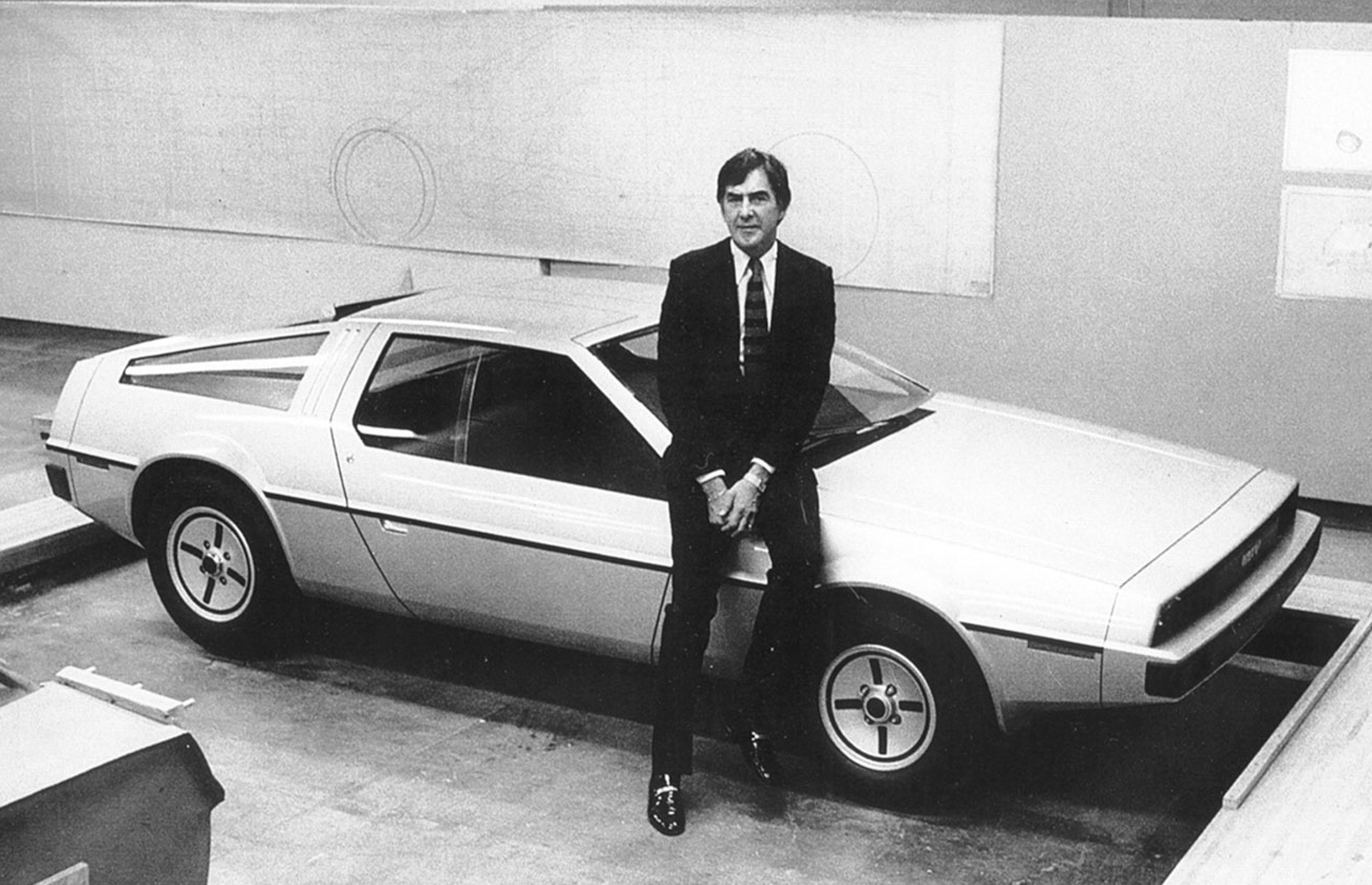
Framing DeLorean: A Review


John Zachary DeLorean’s now historic tale has three bullet points, fraud, embezzlement, and an embarrassing cocaine bust. Those of us who knew next to nothing about the story, prior to watching Framing DeLorean, knew John DeLorean built a “car of the future” that few, outside the producers of the movie Back to the Future purchased. We read those “Metoric Rise and Dramatic fall” magazine articles. We heard that story on late-night talk shows, and we repeated the jokes that dropped from it, “The DMC DeLorean looks great … from the outside. If you’re on the inside though, you’re probably not going to think that, because you might not be able to get out.” Bottom line, we thought, the main character depicted in the now historic tale of John DeLorean was a bad guy, on par with Oliver Stone’s bad guy Gordon Gecko. After watching Framing DeLorean, the viewer finds that it’s a lot more complicated than all that. We see an ambitious, talented man who got so caught up in the tent poles of glory and fame that he ended up kicking them all down to bring the tent down on himself? We find ourselves asking the questions was the DMC DeLorean a fraud perpetuated on the public, or did its engineer/CEO fear what others might think of him so much that he allegedly engaged in fraudulent activity to try to prevent others from seeing him for who he really was? Even if he wasn’t what they suspected?

No one cares, you say, because law enforcement officials believed he engaged in fraud, and they gathered enough evidence to successfully indict him on those charges. They also arrested DeLorean after a sting operation, in which they caught him, on tape, taking part in proposal to sell cocaine. A jury found him not guilty in both cases, but no one cares. The charges, alone, damaged his legacy beyond repair. He became a laughing stock, and that was the end of the story as far as we were concerned. As detailed in the documentary Framing DeLorean, the full story is so much more complicated than that. The first two-thirds of the movie, depicts an ambitious, talented man chasing an impossible dream, and the final portions detail what happened when that dream wasn’t realized as flawlessly as the genius thought it should’ve been.  

No one in the film disputes the notion that John DeLorean was an ingenious and wildly successful engineer. After succeeding beyond his dreams as an engineer at General Motors (GM), DeLorean could’ve landed just about any job he wanted in the automotive industry. He decided, instead, to leave the security of his job at GM, and employment altogether, to pursue the impossible dream of beating the Big Three in the automotive industry at their own game. He also left behind the structure that he had at GM (and by the end of the film, some viewers might say this is key), and the system of checks and balances GM exerted on his designs. The final portions of the documentary cover what happens to a dream, when a man hits a series of roadblocks, and he is not as capable as those in the foundational structure at GM, who could’ve helped him solve them.

When DeLorean left a secure job at GM, he took a team of talented, some say brilliant, minds with him. Those brilliant minds thought DeLorean was so brilliant that they left their own secure jobs to make history with him. Private investors considered him such a genius that they scrambled to gather whatever funds they could find to back whatever project John DeLorean chose to pursue. He also received $140 million, in public funds, from Great Britain for the work he proposed to do in Northern Ireland, and he had the sentiments of the entire country of Northern Ireland behind him. A majority of Northern Ireland residents still consider John DeLorean a hero for everything he did to revive the economy of their then war-torn country. The employees he hired in Northern Ireland considered working for DeLorean a “dream job”. All conditions remaining constant, those workers probably would’ve worked for DeLorean for the next twenty to thirty years. DeLorean also convinced what many considered a brilliant engineer, named Bill Collins, to follow him from GM to the DeLorean Motor Company (DMC). Collins was purported to be the kind of genius who could make all of John DeLorean’s dreams come true, and he could augment some of the particulars of DeLorean’s dreams to make the DMC DeLorean a top performer.

Even with all that behind him, we learn that the talking heads interviewed for the documentary considered DeLorean’s dream improbable. During that era, becoming a car manufacturer was near impossible, they said. The Big Three, General Motors, Ford and Chrysler controlled so much market share that everyone involved in the industry considered it laughable, even for a genius on DeLorean’s level to think he could even carve out a small niche. No person, in their right mind, would attempt to go it alone, they said. Against everyone’s advice, John DeLorean tried it, and he nearly did it. He nearly accomplished the impossible dream. 

To accomplish such an impossible dream, one has to have an unusual amount of confidence, and John DeLorean obviously did … in the beginning. When he experienced some roadblocks, and the talking heads in the documentary suggest that most of these roadblocks were manageable, DeLorean’s unusual level of confidence began to waver. Did he begin to see the impossible dream for what it was? 

How many people love to play “poke the genius” in scenarios such as these? “He’s a genius, you say? Did you know that once you close those beautiful gull-wing doors, you can’t get out?” “Did you know that critics suggest that the performance and power of the car are not as advertised? Genius you say? I say piffle.” Americans say that Americans love to build someone up only tear them down, but how many of us truly adore genius? We might use the ingenious products of Apple, for example, but we prefer to gripe about the legendary product’s few, relatively insignificant flaws.   

How many people tell us that our dreams are unrealistic? How many of us can weather those storms no matter what hurdles cross our path? How many of us truly believe we can accomplish that dream? How many of us eventually find ourselves beat down by all of the naysayers telling us that our dreams are unrealistic?

When the DeLorean DMC finally hit the market, after eight grueling years, it hit a major roadblock. People weren’t buying the car. The car hit the market during a recession, and few were buying brand new cars, and critics began slamming the car for a variety of reasons, including the idea that it didn’t test well.

“All John DeLorean had to do, at this point, was halt production of the car and fix the errors [exposed in the tests],” one of the talking heads said in the documentary.

Those words probably haunted John DeLorean for the rest of his life. For a litany of reasons that might forecast the actions of John DeLorean, he didn’t halt production. This is the pivotal part of the story, and I’m quite sure this is the point where the cynical among us began sniffing out the fraud. Why didn’t he just halt production? It might have cost him millions to do so, but those of us who know the end result know that this would prove the ultimate downfall of the DMC DeLorean car. This gap in the story line requires explanation, and when we don’t receive it, we fill it in. When we fill it in, we fill it with information we already know. We know that at the end of the story, John DeLorean will go down for fraud, so this is the first chink in the armor, and the place where the fraud begins.  

Another key point in the documentary involves the suggestion that DeLorean secured enough money from private investors to save the company. His brilliant engineer, Bill Collins, would tell us that a suspicious clause in a contract, led to him to be somewhat suspicious, but no one else saw any telltale signs of possible fraudulent activity. The talking heads in the documentary express their confusion over what DeLorean allegedly did with the investor’s money (again, a jury of his peers found him not guilty), because they suggest he had enough to save the company. The details are either a bit sketchy, or it’s difficult to follow talk of money, but it appears as though DeLorean secured the necessary funds from investors, he embezzled it, and then he agreed to take part in the sale of cocaine to replace the investor’s money he stole. (A jury found DeLorean not guilty of attempting to sell cocaine, but he was caught, on tape, in an FBI sting operation.)

One plus one equals two and a group of accountants found the missing investor money that John DeLorean hid in various accounts. We were right. This man was a fraud. The question we keep coming back to throughout Framing DeLorean is, was he fraudulent all along, or did he get too caught up in being a successful genius and a renegade who decided he was the one to take on the Big Three of the automotive industry? Did he love the fame, fortune, and the accompanying family life he enjoyed so much that his passion for the DMC DeLorean diminished by comparison? Did he love his pep rally presentations so much that he didn’t want to taint the character he created and others adored, and he didn’t want to give any “poke the genius” players material with a production delay to fix the structural errors of the car? We can guess that whole idea of structural errors and production delays are a pain in the tailbone for auto manufacturers. We can guess that testers always find something, because that’s their job, and a big-idea-genius-engineer often mischaracterizes their findings so often that he begins dismissing so many of them that he ends up dismissing all of them.  

Was John DeLorean a victim of big-idea-guy disease? Big idea guys who turn into acclaimed geniuses often have a difficult time dealing with the minutiae of their craft. Big idea guys enjoy stepping on a stage to present their big ideas to their audience. The other guys, guys like Bill Simmons, often prefer to execute their genius in the shadow of the glitz and glamor of the big guys. In DeLorean’s former world, as an engineer in the Pontiac subdivision of GM, he had a number of little guys check and balance his idea on his designs before they rolled off the assembly line. He probably took that part of the process for granted as an engineer, but when he became a CEO he couldn’t ignore that part of the process anymore, and it appears as though he did. We can guess that the star child engineer at GM grew tired of everyone questioning him and diminishing his status, and that that drove him to go it alone. At GM, he probably felt like a Rottweiler in a world of Yorkies nipping at his heels. When he opened the doors to the DeLorean Motor Company, he began building a car of the future, and when those pesky Yorkies began telling him that the car’s performance and power weren’t as advertised and the gall wing doors had a tendency to lock up and prevent exit, he considered these issues small matters in the grand scheme of things. Who cares that the car may not be as powerful as critics would prefer, we’re selling Shangri-La here. When DeLorean was an engineer at GM, he could be a big idea man, because he had a team of engineers and higher ups who would shoulder most of that mindless minutia, and he could be the big idea genius who soaked in all the accolades of the finished product.

Take everything we’ve discussed thus far and add an unbelievable dose of pressure on top. He probably placed most of the pressure on himself to maintain his star status, but we have to imagine that he felt pressure from the family to maintain the lifestyle. Add to that, the pressure of having someone like Johnny Carson as a private investor. Having Carson on board was probably a boon in the beginning, as all DeLorean had to say was, “Carson’s on board,” to entice future investors. That line alone, probably quintupled his investments. When matters go awry, as they did for DeLorean, he likely feared Carson using his late-night show to exact revenge. Coupled with all that, was the idea that Britain invested $140 million, and DeLorean had the economy of Northern Ireland counting on his success. That unbelievable amount of pressure might have played a role in John DeLorean eventually doing what he did. 

The final truth is we’ll never know why DeLorean did what he did, but the otherwise unwatchable movie Game Change served up a quote that sums John DeLorean up well. When speaking of why presidential candidate John McCain does what he does to try to have even his most ardent adversaries love him, his campaign adviser says, “If we could explain why they do the things they do, we’d probably have more of them.”

Is it possible that John Zachary DeLorean was the equivalent of an early 20th Century huckster? Of course it’s possible, but I don’t see how anyone can approach the full story of DeLorean’s career, with an open mind, and walk away thinking it’s probable that he stepped out of the offices of GM set to defraud the world.

When I watched Framing DeLorean, I did not think of Oliver Stone’s malevolent Wall Street character Gordon Gecko, and I did not think about one of the main characters of Back to the Future, the DMC DeLorean. Framing DeLorean reminded me of the Coen Brothers’ Fargo. Like Fargo character Jerry Lundegaard, John DeLorean finds himself falling prey to a series of self-inflicted ramifications based on ramifications that resulted from other ramifications from his prior actions. Like Jerry Lundegaard, if Delorean did that one thing, just one, (halt production and fix the errors) he could’ve solved most of his problems early on, changed his history and his bio, but for whatever reason (ego, he was already in too deep with investors, or he cherished his celebrity stature of his genius too much) he wouldn’t or couldn’t do it.    

A Review of the Netflix Series: Home Game


Most of us love sports, yet we never bother to ask why. The wide variety of answers for why we love sports might never be apparent to us, until we meet someone who doesn’t. We might not be able to learn why we love sports by watching the Netflix series Home Game, and it won’t curb our appetite for specific sports, but it will show the uncomplicated love some people have for their sport, and it might remind us why we love ours.

Home Game’s documentary about Florence, Italy’s sport of Calico Storico will not satisfy anyone who misses American football or rugby. The documentary about the Kyrgystan sport of Kok Boru will not satisfy anyone who misses basketball or polo, and a horseracing fanatic is probably not going to experience satisfaction watching riders pushing water buffalo through a flooded rice field, in Bali’s sport Makepung Lampit. What we will see are the staples of sport. We’ll see the passion, determination, and the temerity it takes to conquer an opponent. We also see an element of sports that we don’t talk about enough, the arduous, sometimes excruciating training it can take to become a champion. Our initial response might be to view some of the games depicted in these episodes as silly, particularly the Makepung Lampit sport that involves throwing a dead goat in a large, cement vase, but from that vantage point, all sports seem silly. In many first world countries, ten guys try to force a ball through a hoop in basketball. In the third world country of Kyrgyzstan, four guys try to force a dead goat into a large, cement vase. What’s the difference? Would the Kyrgyz or the Balinese people view the idea that first world sports involve crossing lines and putting balls and pucks in goals of various sizes silly too? What would they think of the sport that involves an athlete putting a ball in a can from a great distance, in as few attempts as possible? The point is that we can view all sports as silly on a micro level, but on a macro level they but a vehicle for displaying discipline, temerity, athletic prowess.

We can be sure the documentarians of Home Game did not choose the relatively obscure sports they did to help those sports achieve more popularity, and I doubt the sports will gain a greater following. It’s more likely that they chose the most obscure sports they did to examine the psychology of sports through an alternative lens. When we hear/read interviews of our favorite top tier athletes, they often use boilerplate language that becomes so common we don’t remember much of what they said five minutes after the interview is complete. It might have something to do with the fact that almost all of these episodes deal with sports in different countries, but they appear to give fresh insight into the art of competition, and the desire to win. English is not the native tongue of most of the competitors in the interviews, but we realize that the desire, the will, and the temerity it takes to win and eventually become a champion are a universal language. Most of the episodes require subtitles, and while that might turn some viewers off, it’s equivalent to watching sports with the volume off.

In one episode, we meet a champion named Guyga. Guyga is the champion of West Kinashasa, in the Democratic Republic of Congo’s version of WWF that they call Catch Fetiche. We see kids and teenagers triumphantly run alongside Guyga. We see him train, we hear him talk about his training, and we witness his drive to be the best. After meeting Guyga, the documentarians introduce us to other Catch Fetiche wrestlers, and they engage in similar rhetoric. It’s similar, but for reasons we can’t put our finger on, it’s different. There was something there, and we missed it, so we rewind back to the introduction of Guyga. We see the difference in his walk, this time, and we know we’ve seen that stride before. It’s Mike Tyson entering the ring in the late 80’s, it’s Tiger Woods and Michael Jordan in the 90’s. It’s a champion at his peak. It’s in his shoulders when he walks, and in his stride. When we see Guyga’s face again, we see, without knowing anything else about the sport of Catch Fetiche that Guyga is its champion. In a later shot, Guyga flexes before the camera, and his musculature is impressive, but his face is what we find captivating. He doesn’t appear as thrilled to be on camera as the rest of us are, but he doesn’t shy away from it either. His far off stare suggests he’s seen battle many times before, and he wins far more often than he loses. The Congolese who run with him make a big fuss about him, and again, he doesn’t appear to need their adulation, but he doesn’t shy away from it either. He’s accustomed to it. He’s accustomed to glory. His stride, and his demeanor, reminds us of the quarterback of our state champion high school football team, the Heisman Trophy winner in college, and the MVP in the NFL. We recognize that for all the tangibles we attain from athletic pursuit, an intangible quality reveals itself in the walk and the face of a champion.

If Guyga decided to retire from the Congolese, voodoo version of the WWF, Catch Fetiche, and he moved to America, and worked in a cubicle next to ours, we’d know there was something different about him. “What’s up with you?” we’d say. “You’re the new guy, yet you walk around the office like a rooster in a henhouse.”

“I used to be a champion in the Democratic Republic of Congo,” he’d say. “Have you ever heard of Catch Fetiche? No one around here has, I used to be the champion of it.”

“I knew it,” we’d say. “I knew there was something different about you.”

In the roller derby episode from Austin, Texas, we see some subtle contrasts between Guyga and the Mad Maxican. After witnessing the glory of an individual champion who has it dripping from every pore, we listen to the roller derby team members speak, and we play a game called spot the champion. We might know more about roller derby than we do Catch Fetiche, but we still know very little. After witnessing Guyga, we think we can spot the look of a champion from a mile away. We think we see it on the face of a key player, who calls herself Ninja Please. The meeker Mad Maxican doesn’t quite have the confident/arrogant demeanor about her that Ninja Please did. Yet, when they take the floor, the Mad Maxican thoroughly outperforms Ninja Please. Why were so wrong about the Mad Maxican? Does it have something to do with the elevated expectations we have when someone says all the right things, as the Ninja Please character did? Does it have something to do with the idea that women, in general, are more humble, and harder to read in this sense, or does it have something to do with the difference between a team player and one who achieves individual glory? Is there an unsung player on the Mad Maxican’s team, who makes her success possible? Is this unsung hero equivalent to an all-star guard on the line of an NFL team, without whom the stars on the team couldn’t achieve half the success they do? We don’t know, because the documentarians don’t delve into those particulars. Perhaps, the Mad Maxican has a quiet confidence about her that doesn’t shine through in interviews. Whatever the case is, we see the contrast of individual successes can have on a person like Guyga and the team success the Mad Maxican enjoys.  

In an episode that covers The Highland Games, in Scotland, the documentarians introduce us to a former champion training an individual who wants to become a future champion. We see the faded glory in that former champion’s face. The athletic achievements of his past instill in him an apparent lifelong confidence, but there’s something missing in his face. We see how much he misses the glory of being a champion. We see the “Youth is wasted on the young” Churchill quote personified in the man that suggests the former champion wishes he appreciated his moment in the sun more.

The episode that Netflix used to promote the series and the one that appears to be garnering most of the critical attention is the first episode in the series depicting a sport called Calico Storico (historical football in English). Calico Storico is the equivalent of rugby meets martial arts. There are linemen who fight on the front line, as in American football, and two ball carriers. The ball carriers attempt to drop a ball in a field-length net. Four teams fight to be champions of Florence, Italy. There’s no money involved, just the pride of the players. The prize for victory is a cow. They don’t slaughter the cow to triumphantly eat it. They simply just walk down the street with it, in a victory parade. Some criticize this episode as a bunch of meatheads plowing into each other, but that criticism misses the mark. Those critics don’t see the passion, the will, or the sheer determination these men put into achieving victory. They prefer to see the sport through a political lens. If the documentarians chose to focus on a woman attempting to enter into Calico Storico, these critics would enjoy the episode more, but there is very little politics in any of the documentaries of Home Game. The documentaries choose to place their focus on the simplicity of athletic competition and athletic achievement. As opposed to modern American football players, the athletes in Calico Storico love their ultra-violent sport so much that they want their children to play in it. One athlete chooses to live in a specific part of the country, so his kid would have a chance to play for the team he did. They suffer minor to severe injuries for their sport, but the prospect of such injuries doesn’t diminish their love of the game.  

The beauty of Home Game beauty is that it reminds us of the unadulterated love of sports. Their love of sports calls to mind the prima donnas of most sports who take their status as a top-tier athlete for granted. If some of their athletes depicted in these documentaries play their beloved sport for money, the documentarians do not mention it in the episodes. The conditions of the countries of most of these documentaries suggest that if the athletes make any money, it’s a relatively paltry sum and not the reason they play the game. The documentarians focus each episode on the beauty of sport without much distraction. Almost all of the sports depicted are unique to our experience, but they detail in the faces of fans and athletes alike, that the language of sports is universal.

Dissected properly, just about every episode of Home Game teaches us a different element of sports that we might not have considered before. They provide us an outsider-looking-in perspective of what it means for the athletes to compete, what it takes to win, and what it means, to them, to become a champion. We see the captivated fans in the stands celebrating goals of a game hundreds to thousands years old. As we watch their game, we see the thrill of their favorite team scoring a goal, the disappointment of seeing their team scored on, the thrills they experience after victory and the agony of defeat. We see ourselves, from their perspective, we remember vicariously enjoying and celebrating the athletic accomplishments of others, and we realize how much we miss it. We appreciate their love of sport from a distance, and it touches us in a very familiar place at the same time.