Being Little and Big in Mister Rogers’ Neighborhood


When Tom Junod’s editor commissioned him to write a 400-word bio on Fred Rogers from the wildly popular kid’s show Mister Rogers’ Neighborhood, Tom Junod thought BIG. He wanted to write a big scandal piece based on what he uncovered, or at the very least he wanted to compile a bunch of little things in an exposé that revealed the character of the main character of the show was a big old fraud. “Isn’t it my job to tell my audience that everything they love and cherish is an absolute fraud?” is the modus operandi of most modern reporters, and Junod had a history of exposing celebrities in his history of reportage. Whatever goes up must come down. “You build them up, and I’ll tear them down.”

In A Beautiful Day in the Neighborhood the actor playing reporter Tom Junod saw it as his job to expose the beloved Mister Rogers as a fraud. At this point in Junod’s career, Junod was the dictionary definition of the cynical reporter bent on uncovering unsavory characteristics about his subjects. “These people are not my friends,” the actor playing Junod says in reaction to his editor telling him that the reason she assigned him to interview Fred Rogers was that no one else would speak to Junod. At this point in his career, Junod had a bad reputation of exposing the warts of the subjects he covered. 

The nature of his defense was, “Isn’t it my job to report on these people, warts and all? If the American public doesn’t want to see the warts, they need to see them. Shouldn’t I focus on the unsavory elements of the subjects I interview? Isn’t that the modus operandi of the serious reporter?” Ton Junod, like so many cynical and broken people, want to destroy institutions one person at a time. We give them awards, we make docudramas that memorialize their plight, and we can now repeat the inconsistencies they discovered at the drop of the subject’s name. 
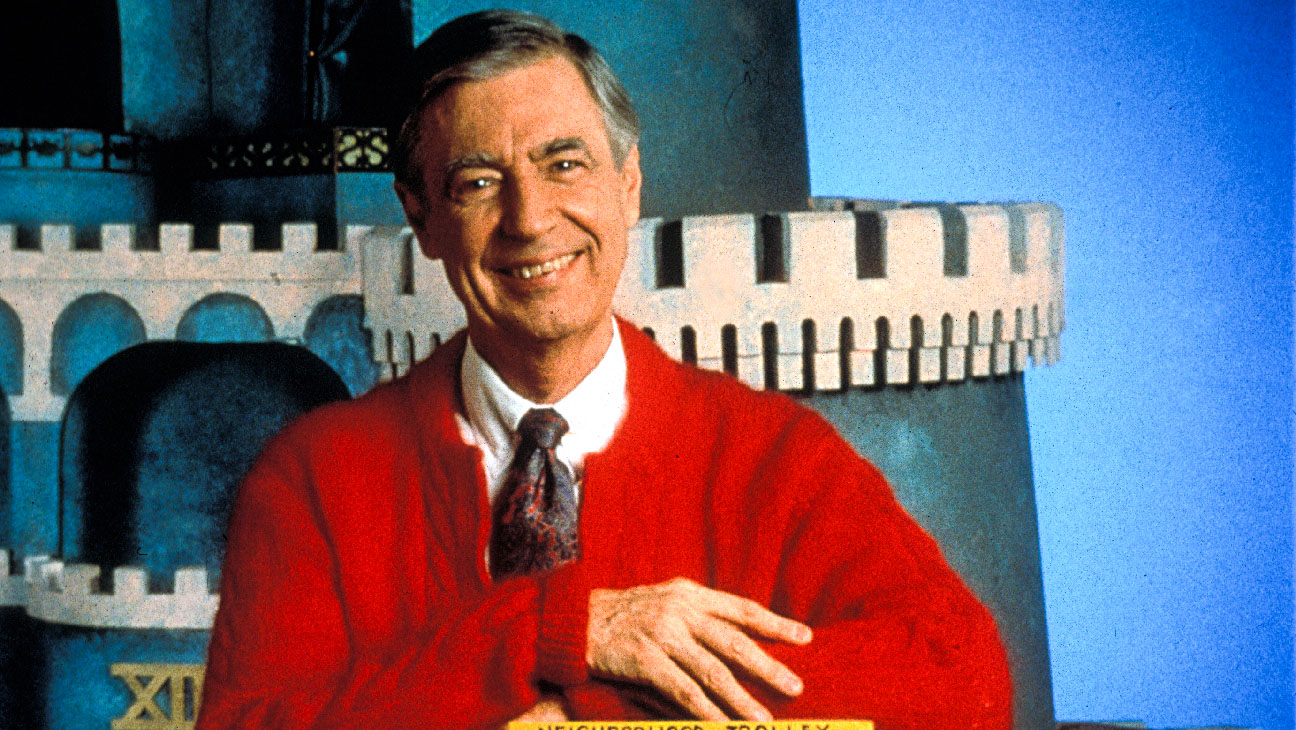
Fred Rogers from “Mister Rogers’ Neighborhood”

These themes lay the foundation for Junod’s mission to try to destroy Mister Rogers. At one point in the film, we hear Junod openly state that he thinks Mister Rogers is a fraud, and that he thinks it’s his job to expose him. After his initial interview with Mister Rogers is cut short, Junod complains that Rogers and his people aren’t giving Junod enough time to interview Rogers properly. His complaint feeds into our general suspicions that anytime a reporter seeks to interview a subject that subject, and his handlers, are going to do anything and everything to protect the reputation of the subject, particularly when their main character is on a children’s show. 

We suspect, along with Junod, that Rogers and his people, know Junod, and we suspect that they advise he give Junod short, evasive answers to prevent Rogers from slipping up and revealing everything they want/need to hide. Even though the movie doesn’t go to great lengths to portray Junod’s frustration, we suspect that Junod probably asked Rogers and his people, “What are you hiding?” In a turnabout from what Junod was probably accustomed, Fred Rogers personally creates more time for Junod. This leads to a series of interviews in which Mister Rogers begins asking Junod questions about his life.
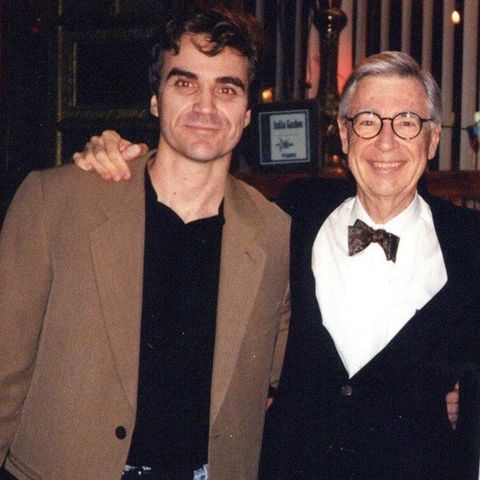
“I’m supposed to be interviewing you,” Junod says at one point. Again, Junod and the rest of us know that subjects use many rhetorical tactics to protect themselves, and this tactic sounds a lot like obfuscation. Fred Rogers answers some of Junod’s questions throughout, but we can only guess that the cynical, seasoned reporter has witnessed a wide array of rhetorical tactics subjects use to avoid answering questions, and he believes Rogers is engaging in them when Rogers continues to ask Junod questions. We can also guess that the actual interaction between the two men grew more heated than the movie portrays, as Junod attempted to expose Mister Rogers’ inconsistencies. The interesting turnabout happens when Junod realizes that Fred Rogers isn’t using rhetorical tactics, as he pokes and prods, and that the man genuinely cares about this self-described broken man named Tom Junod. The movie doesn’t involve the usual tropes that most on-screen exchanges do in which one of the two parties eventually experiences an obvious epiphany. It depicts Rogers as a somewhat naïve character who genuinely believes in what he’s saying, and he reinforces that notion with his answers. The implicit suggestion of these exchanges are that Rogers continues to ask Junod leading questions, because he genuinely cares about the broken man before him in the manner he cares about most complete strangers, and that implies that his care for children is just as genuine.

Tom Junod’s final report does not culminate in a finding that leads to scandal, and he is not able to uncover an inconsistency that reveals what is wrong with Mister Rogers. Instead, he writes a story titled Can you say Hero? that thematically asks what could be a semi-autobiographical question, what is wrong with us? Why do we want/need to see the warts? Why do we need to complicate our heroes with inconsistencies that lead us to think/know that they’re actually frauds? Is there a part of us that thinks everyone and everything is fraudulent, and do we somehow enjoy the idea that we were once so naïve that we believed in them? Some of us enjoy the ‘I got nothing to believe in’ narrative, because it suggests that we’re so knowledgeable that we simply can’t believe in anything anymore, and we pity those who do because they’re just not very informed. As such, we enjoy it when reporters strip away the glossy varnish we all know to uncover dulled, dirty facts that lead to a much more comfortable suit of cynicism. We call these details facts, and the accumulation of facts, knowledge, and knowledge is power. 

Throughout the movie, and the Junod story on which it’s based, we learn that Junod was unable to uncover the big scandal, and he discovered that there wasn’t some big exposé beneath the rubble of the Fred Rogers character. Did Junod initially believe that he didn’t do his job well enough? Did he, after conducting exhaustive interviews with everyone who knew, loved, and worked with Rogers, initially believe that the fortress around Rogers was fortified with loyal subjects who wouldn’t give up the dirt on him? We have to think this plagued Junod initially, even if the movie didn’t cover this section. In his search for something big, Junod eventually uncovered some very little things about Fred Rogers. These revelations developed over time, incrementally, through incidents. The movie portrayed these incidents as those Junod experienced firsthand, but research shows that he learned about them secondhand, through the numerous interviews Junod conducted. The consistency of these seemingly exhaustive interviews led Junod to a startling revelation: Fred Rogers and Mister Rogers might be one and the same, and they might be, could be real. Junod poked and prodded Rogers and everyone who knew him, until he came to the conclusion that Fred Rogers might be “the nicest man in the world”.

The reason I love this angle in this movie is that we all know and enjoy “the story” of the nicest man in the world, who has an “inconsistency” of some sort that evolves into a narrative we can recite at the mere mention of the man’s name. “Kids love him, and their parents love him, because of how much their kids love him, but we now know, thanks to Junod’s exposé on him that it’s all based on a lie?” We love that facts=knowledge, and knowledge is power angle, and we prefer that angle. We love reporters who remove a brick from our foundation to reveal them, us, and all of the institutions in between as absolute frauds. We grew to love and admire the various screen stars who, in some small ways, helped shape who we are today, and we all love to learn, in a bittersweet way, that it was all based on a big lie. Either that or we enjoy seeing those who portray themselves as a paragon of virtue torn down, so we don’t have to feel so inferior in that regard. As Junod’s bio on Fred Rogers details, he couldn’t find that angle that would’ve and could’ve destroyed everything Fred Rogers built. He couldn’t produce that devastating exposé to win that loyalty, love and awards from his peers for tearing down the American institution that was/is Mister Rogers. What he found instead was a man named Fred Rogers, whom he called “the nicest man in the world”. 

Tom Junod later summarized his time with Mister Rogers in a piece for the Atlantic, “In 1998, I wrote a story about Fred Rogers; in 2019, that story has turned out to be my moral lottery ticket,” Junod wrote in The Atlantic. “I’d believed that my friendship with Fred was part of my past; now I find myself in possession of a vast, unearned fortune of love and kindness at a time when love and kindness are in short supply.”

My takeaway from the legacy of Mister Rogers, or Mr. Fred Rogers, as presented by the movie A Beautiful Day in the Neighborhood, is that he was a great man. Mr. Fred Rogers also helps some of us define what a great man is. Our typical narrative is that the great man does great things, i.e. big things. The great men of the past discovered penicillin, helped eradicate hunger, or proved a decisive leader on the world stage when the world needed a powerful leader to save the world. Mr. Fred Rogers didn’t do anything that would qualify him as a great man in these terms, but he did a whole bunch of little things, every day, that when we compile them, we could call big, transformative, and even huge. The impact he made largely involved one-on-one conversations with children, and if you ever watched his show Mister Rogers’ Neighborhood, you know those conversations were one-on-one. 

For everything Fred Rogers accomplished in life, and for all of the absolute goodness he presented to children and helped spread, his greatest accomplishment may have been that he mastered the art of being present. Being present might sound like a foo foo term, because it is, but it’s also about the simple art of listening to another without distraction. It’s about making a concerted effort, often a more natural and more organic form of distraction-free listening. The next question you have is how can we put forth a concerted effort to be more natural and more organic at anything? Aren’t those basically antonyms? Yes, but when one puts forth a concerted effort to be more natural and more organic anything, they can give the impression that they are naturally gifted and more organic. 

Being present, for example, is not a gift one accrues as a gift. It’s not, as far as we know, a particular ingredient available to some in their DNA and unavailable to others. If your parents were great listeners and present, it has no bearing on your abilities or faults in this regard. It is more a learned art to momentarily forget about all the big stuff, for just a moment, to concentrate and focus on the little. When Mister Rogers talked with children, he listened to them with the same level of acuity he did with adults, and he didn’t follow the typical bullet points of adults talking to children, or the prototypical and successful formula of adult personalities on a children’s show talking to children that now appears so condescending compared to the manner in which Fred Rogers spoke to them. Fred Rogers didn’t talk to these kids as if they were cute or precocious, and he didn’t attempt to draw that cuteness out to make them cuter for the enjoyment of any adults watching. Fred Rogers spoke to them in a manner that didn’t remind any of us of the way we to talk to children. He just talked to them.

We could see how this affected the kids on Mister Rogers’ Neighborhood when Fred Rogers listened to them. It caught them off guard. Our initial reaction to their open-mouthed awe is that they’re suffering some stage fright. Not only are they on a stage, they have a mess of kids behind them, and they’re also on TV. Who wouldn’t experience some stage fright? As their conversation continues, the kids slowly meld into the Mister Rogers conversation. They’re shocked that he is listening to them, and they’re further shocked that he is giving weight to what they say. Why are they shocked? Fred Rogers acted different from every adult they’ve ever met. Kids and pets adjust to our patterns, our rituals, and our habits. When we act in a way somewhat different from that, they notice. When Fred Rogers listened to their stories, their ideas, and their complaints, it was so different that every kid in the room noticed, and they wanted to speak to him. 

Most of adults go big, and the bigger the better. We want a huge resume in life before we call it a day. More money and better status equal a better life. To achieve bigger things, we must learn to multitask. We can define the difference between a good employee and a suboptimal one on their ability to multitask. Some are better at it than others are, and depending on what they do, multitasking might be required, but how many of those tasks do we accomplish at optimum efficiency? Do the results of some tasks suffer in lieu of others when you’re multitasking, or are you just that much better at it than I am? It’s impossible to know the totality of a man from movies, books, magazine articles, and various YouTube, but from what I gathered Fred Rogers was the opposite a multitasker.   

Anybody who lived during the era of Mister Roger’s Neighborhood knew and loved the creative and elaborate intros of the various children’s shows. Some of us loved those intros so much that that was all we watched. There were explosive graphics, great music to accompany those graphics, quick screen switches, and a healthy dose of fast movement to captivate us. The intro to Mister Roger’s Neighborhood involved a man changing his shoes while singing a dumpy, simple song called Won’t you be My Neighbor? The pace of Fred Roger’s creation was as purposefully simple, disturbingly quiet, and as painfully slow as that intro, and those of us with varying levels of ADD or ADHD couldn’t watch the show even when we were Fred Rogers target audience. Everything about the show bothered us so much that when Eddie Murphy devised the Mister Robinson’s Neighborhood skit, we were laughing harder than anyone else. For most of us, Mister Rogers Neighborhood was a great premise for a joke. The movie A Beautiful Day in the Neighborhood and HBO’s Won’t you be my Neighbor reminds us of the big things that led us to tune him out and the little things that annoyed us, and they informed us of Fred Roger’s little and big theme.

Actor Tom Hanks said he watched hundreds of episodes of Mister Rogers Neighborhood to prepare for his role in the movie, before he realized Fred Rogers created the show for children. As the comedian that he is, Tom Hanks left the ironic, obvious punchline as a standalone after he received a laugh. If he continued, I think he would’ve said that every minute and ever second of Fred Rogers’ creation was devoted to children. Fred Rogers took great pride in how quiet his show was, for example, and when he spoke, his tone was so measured we could almost hear the punctuation fall into place. Linguists say that our ums and ahhs are quite useful, because they help listeners follow our sentences better. Fred Rogers didn’t um and ahh, but his tones were so carefully measured and methodical that those of us with ADD and ADHD couldn’t watch his show. We wanted him to finish his sentences quicker. When he told us he was feeding his fish, it drove us nuts. “Just feed the fish!” we screamed at our TV. There was a method to this madness. He developed this routine after a blind child wrote him to say she was worried that he wasn’t feeding his fish. He fed the fish, as part of his introduction on the show, but she didn’t know it. So, he began telling his audience that he was feeding his fish. Then, there was the silence.

Watch an adult show on cooking, making things with tools, or anything that involves a methodical process, and you’ll see them skip certain, obvious parts of the process. They will list the ingredients, inform us how to mix, slice and dice, and cover all of the methodical steps in the process, then they’ll show us the finished product. They skip the obvious and tedious parts of the process. Mister Rogers didn’t skip anything. If he brought in an expert on how to build or fix something, there were long periods of silence involved in the process. This drove some of us nuts, but it was a carefully orchestrated part of the show, designed to help children understand the methodical, quiet approach needed to build things.

Some cultural writers state that the approach of Mister Rogers Neighborhood, and Fred Rogers personal approach, suggest that he was anti-consumerism. While I don’t doubt that, I don’t think there is direct correlation to the idea that Fred Rogers was an anti-capitalist. I don’t think he was anti-capitalist or pro-capitalism. As with everything Fred Rogers did, his stance was all about children. He directed his ire at marketing, and marketing to children specifically. I don’t think he minded when an XYZ company would say that their product was better than their competition’s product, for example, in a pure marketing ploy. What bothered Mr. Rogers was this idea that some marketing ploys lead people (children in particular) to feel shame. I think he disliked this idea that some marketing ploys encourage children to think they need the latest and greatest toy, and I think he abhorred the idea that another child might feel a sense of shame for being stuck with what some marketing ploys encouraged them to believe was an “inferior” toy. I think he detested the idea that marketing arms created the need kids felt to have more products and better products than their friends, and if they didn’t, they felt incomplete. I think his concern for children was was unfettered by anti-capitalist. pro-capitalist ideals, or anything ideological. It can be difficult for a cynic like Tom Junod, this writer, or anyone else reading this to believe, but I believe Fred Rogers’ concern for children consumed him, affected his every thought and action in a way that proved apolitical.  

My favorite illustrative moment occurred when Fred Rogers saw a very young boy wearing battle gear. Adults might wear T-shirts that have strong messages to inform our peers that we’re strong on the inside, but most of us don’t wear Masters of the Universe battle gear anymore. Our natural reaction is to consider it cute when we see kids all decked out in costume battle gear. When Fred Rogers met this kid, the kid immediately showed Fred Rogers his sword. Fred examined the sword and complimented him on it. Other than that, Fred spoke to the child in the manner he spoke to all kids. This child refused to break character, as it were, no matter how nice Fred Rogers was to him. The young child refused to show any of the signs of endearment to which Mister Rogers was more accustomed from children. This bothered the kid’s mother, as she feared Rogers might perceive her child as rude. This did not bother Mister Rogers in the least. After the child’s mother failed to convince her child to say something nice to Mister Rogers, Fred Rogers leaned in on the kid and whispered something in the child’s ear. When asked what he whispered, Fred Rogers replied:

“Oh, I just knew that whenever you see a little boy carrying something like that, it means that he wants to show people that he’s strong on the outside. I just wanted to let him know that he was strong on the inside, too. Maybe it was something he needed to hear.” If you’re anything like me, you read such a line and marvel at its profundity, the big bold word profound, but I can only imagine that Fred Rogers didn’t deliver it that way, or repeat it to others in the manner the rest of us do when we’ve said something profound. I imagine that it was just a little thing Fred Rogers thought up in the moment, because he thought it was something that kid needed to hear.
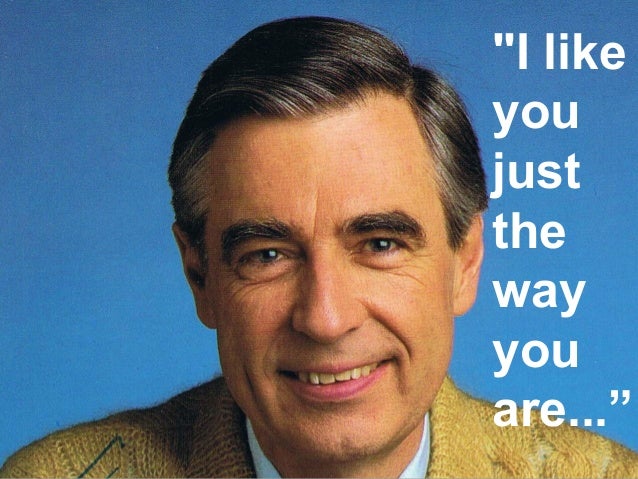
Mister Rogers Neighborhood wasn’t a big show, and A Beautiful Day in the Neighborhood wasn’t a big movie. They focused on the little things, the little things Fred Rogers did, and the little thing’s theme of Fred Rogers life. These ideas run counter to the whole idea some of us have to ‘go big or go home’. One of the many profound things Fred Rogers said was we shouldn’t get so tied up in trying to accomplish big things that we forget about the little things. “There’s nothing wrong with you, if you don’t accomplish stupendous things,” he said in various ways. “I like you just the way you are.”

How many of us like our friends and family members just the way they are? How many of us want more from those around us? How many of us like ourselves just the way we are? If someone approached us and said, “Don’t you want more from life? I really think you’re going to regret the fact that you didn’t strive for more in life.” What if we said, “I like myself just the way I am.” They would probably dismiss that comment as an excuse to be lazy, an excuse to avoid broadening ourselves onward and outward, or they would think that we’re just being obnoxious. It does sound like an obnoxious reply, unless you’re the host of child programming. I mean, who likes themselves so much that they’re just going to keep doing what they’re doing for the rest of their lives? They’re never going to strive for more? The obnoxious could reply that their interrogating friend probably doesn’t like themselves very much, and they think that striving for more, for a better definition of success, or a definition of something they think they might eventually like better.    

Most people don’t think this way at the end, according to health care workers who sit bedside as dying patients issue their last words. Most dying patients, they say, regret living the lives others told them to live. “I wish I’d lived my life the way I wanted, not how others expected me to behave.” This could be anecdotal evidence of the human experience, of course, or it could be indicative of the idea that most of us wish we had the courage to like ourselves just the way we are, and we wish we had the courage to defy others’ expectations of us and live the way we want to live. Imagine if that certain someone we like, love, and respect most said something along the lines of: “I have no problem with you striving for more, being the best you can be and all that, but before you go about doing all that, I just wanted you to know that I like you just the way you are.” Now imagine you, being on the other side of that paradigm saying that, however you want to say it, to someone else. Is it better to give such a compliment or receive? Again, I see Fred Rogers way of viewing the world as profound, but I have to imagine if I had the chance to ask Fred Rogers about it, he would downplay it saying, “It’s just a little thing I say to help children feel better about themselves.” It was a little thing he said, but if we all attended to the little things better and more often, for the rest of our lives, as we fortified our connections to the little people around us, who are just like us, I have to imagine that all those little things could roll up into something big. 

Mindhunter


“The stories and legends that have filtered down about witches and werewolves and vampires may have been a way of explaining outrages so hideous that no one in the small and close-knit towns of Europe and early America could comprehend the perversities we now take for granted. [These] Monsters had to be supernatural creatures. They couldn’t be just like us.” John Douglas and Mark Olshaker wrote in an excellent memoir titled Mindhunter to explain that serial killers are not a recent phenomenon.

What’s more scary the idea that monsters are real, or the idea that your quiet, unassuming neighbor could commit monstrous acts? Before we giggle at our predecessors for believing werewolves and vampires walked among them, we need to keep a number of things in mind. They were afraid, and they sought to find answers that might comfort them. We’re still afraid, but our fear is driven by the fact that we know that those who commit such monstrous acts are ordinary people who aren’t that much different. We might have better theories and educated guesses, thanks in part to the interviews conducted by John Douglas and Robert K. Ressler and many others, but we still don’t know enough to stop current and future monstrous acts. When we’re afraid, we want answers, and future generations might giggle at us for our “more modern, informed answers”. The answers we have, thanks to advancements in the fields of law enforcement, science, and technology inform us that we’re not surrounded by vampires, werewolves, or any kind of literal monsters, but ordinary people who are in some ways triggered to commit monstrous acts. The question is, do these answers provide us comfort, or do they make us more afraid?

Our predecessors obviously considered the latter more horrific, and they developed the idea of monsters to help create some distance between themselves and those who would commit such acts.

We could very easily say that our predecessors were less informed on such matters, but that is almost solely based on the idea that they didn’t have the science and technology we have to help them explain matters. (Anyone who thinks it’s a stone cold fact that we’re smarter now, on average, need only take an 19th century 8th grade examination to compare.) I don’t think they were less intelligent, or that most of them truly believed that men all over the world were turning into wolves and vampires. I think they wanted an explanation that might help them avoid discussions on the subject of whether the quiet, unassuming man they met in the apothecary was capable of such monstrosities.

Those of us who watch the NFL often enough begin to think we know what we’re talking about when we question our favorite team’s general manager (GM) moves. If I were a GM, I would open my press conference with eleven words, “You know nothing. Please keep that in mind throughout our Q&A.” If I led an investigation on a psychopath committing serial crimes, I would issue the same intro. Most of us know nothing about law enforcement. Most of us know nothing about the long, laborious task of collecting evidence, and the mind-numbing task of studying case files. We might think we do, because we’ve logged thousands of hours watching movies and TV shows on the subject, but we know nothing.

If we were to devote our lives to learning more, by way of TV shows, movies, and the books in the true crime section of our favorite book store, we might one day reach a point where we know next to nothing. If, that is, are engagement is studious. I knew nothing when I first picked up the book Mindhunter decades ago, and I probably know next to nothing today. I knew nothing when I proceeded to buy all the books written by Douglas and Olshaker, and all of the other books that line the true crime section of the book store, and I know next to nothing now. I do know that Mindhunter was the best of these books, and I couldn’t believe it took over two decades for someone to make a movie, or a TV show on Doulgas’ excellent memoir.

Those who have yet to watch an episode of season one of the Netflix series, based on the book, should know that the consensus is that it starts out slow and confusing. To some, each episode of the series is slow and laborious, because it does not involve FBI agents knocking down doors, taking over investigations, or engaging in gun fights. Mindhunter is not the typical profiling show of FBI agents trying to catch a serial killer before he acts again. It is the story about two FBI agents who used the information gathered during interviews with psychopaths to understand such people better for the purpose of helping law enforcement identify them sooner, apprehend them later, and then convict them. Uber fans of the book, who never understood why no one made a movie about this chapter in John Douglas’ life, and this chapter in criminal justice, realized that sometimes even fantastic books don’t play very well in visual mediums. The Mindhunter series on Netflix is largely cerebral, and if you have no interest in this subject, the pace can appear plodding in parts.

Those of us who loved the book and wanted viewers to see the genius of the book for themselves cringed through the slow start, because we know that a slow start can be the death knell for any series on a streaming device. The reason for the slow start is that a series such as this needs to establish the modus operandi (M.O.) behind the FBI agents interviewing criminal minds to understand the criminal mind better, the series also has to establish the characters involved to spark interest, and the series creators needed to add the requisite (albeit fictional) romance. The characterization and the modus operandi of the FBI agents is necessary for any show, of course, but if I were the head writer of the series, I would’ve opened with the Ed Kemper interviews and dropped the backdrop information in accordingly. I might have also attempted to integrate the M.O. into the first episode, but I would have done so after the initial Kemper interview. My cringe was not because the series was done poorly, but as a member of the short attention span generation, I cringe when a series start out at a snail’s pace, because I can hear the millions of viewers who didn’t read the book, flipping to the thousands of other options available at their fingertips. Those who are patient enough to work through the largely fictionalized characterizations, will learn of a fascinating retelling of a 1995 memoir, by the same name, written by John Douglas and Mark Olshaker.

Although Mindhunter, the book, would influence some award winning movies and TV shows, the more faithful-to-the-book Netflix series, contains little to no action scenes. The book, and the series, are more about the groundbreaking work two FBI agents did to change the procedures law enforcement officials use to investigate violent crime. This story is more about the cerebral tactics these two agents advanced to a level unseen in the FBI prior to their arrival. Previous work done in the FBI influenced their work, as did the work of local level law enforcement officials, and the occasions when law enforcement officials brought in a psychiatrist to assist them with a case. In the book Mindhunter, John Douglas also noted that his work derived some influence from literature, specifically, Sir Arthur Conan Doyle’s Sherlock Holmes, Edgar Allen Poe’s The Murders in the Rue Morgue, and a British novelist named Wilkie Collins.

The work Douglas and Robert Ressler did inspired the creation of numerous gun-toting FBI-chasing serial killer Hollywood movies, including Manhunter, The Silence of the Lambs, The X-Files and hundreds of other movies and TV shows, but John Douglas says he didn’t care for any of those portrayals.

“They don’t put across accurate portrayals, and [that] aggravates me,” he said. “I can’t look at those movies.” As for the Netflix series, Douglas says, “They’re going by the book and I am very pleased.” Watching the series, he said, “is like reliving my life all over again.”

We can guess that Douglas didn’t care for the Hollywood attempts to tell his story because they felt the need to Hollywood his story up, and I join him in this general sentiment. I loathe movies that do whatever they can to add action scenes, and a romantic angle, to involve the audience in the lives of their characters.

After watching the Netflix series, however, I now understand why various producers, directors, and all the players involved in making the Hollywood versions of his tale, felt the need to Hollywood it up in their versions of the story. If they maintained a stance that their versions would adhere to the book more faithfully, they probably wouldn’t receive funding for it. Their rejections would probably state that no one wants to watch FBI agents doing behind the scenes work.

John Douglas characterized his twenty-four year career in the FBI, as putting himself in the mind of the hunter. To do so, Douglas developed a process of interviewing and studying psychopaths for the purpose of understanding their methodological approach to choosing victims, securing their removal from the public space, and covering their trail.

On the latter, Douglas wrote, “No matter how much a criminal thinks he knows, the more he does to evade detection, or throw us off the track, the more behavioral clues he’s going to give us to work with.”

When asked how John Douglas would describe his role in these investigations, he said, “If you’re a cop and I work with you on a case, I help to develop a more proactive technique.”

Douglas also tried to clarify the role the Investigative Support Unit (which is part of the FBI’s national Center for the Analysis of Violent Crime at Quantico) played in investigations:

“We do not catch criminals. What we try to do is assist local police in focusing their investigations, then suggest some proactive techniques that might help draw a criminal out.” Douglas then writes, “We (also) try to formulate a strategy to help the prosecutor bring out the defendant’s true personality during the trial.”

My analysis of John Douglas, the work he did after the interviews in the field of profiling, and what I once considered the most brilliant books I’ve ever read on the subject, might sound like a love affair gone awry from this point forward. Like an impulsive, physical attraction to another person, I was gaga over this book, and my initial impulses resulted in me failing to view this book objectively.

Before I get into that, however, there is one chapter that no one will ever be able to make me see the light on: Everybody has a Rock. In this chapter, Douglas writes that he attained a confession from an alleged perpetrator by placing an ordinary rock in the corner of the room. It was not the rock that various law enforcement officials believed the alleged perpetrator used to inflict blunt force trauma to the head of Mary Frances Stoner. It was just a rock that Douglas found that he considered roughly the same size and shape as the one law enforcement believed a perpetrator used in Ms. Stoner’s murder, and he placed it in the corner of the interrogation room before the interview. Douglas used numerous behavioral techniques in that interview with the alleged suspect to inform him that he knew the suspect as well, if not better, than anyone who interrogated him previously. Throughout the interview, the suspect kept glancing over at the rock waiting for Douglas to broach the topic of the rock. John Douglas never did. He used it as a triggering stressor, combined with the detailed information he had on the suspect, to make him sweat. Long paragraph short, the man confessed, and Douglas concluded this by writing:

“If the triggering stressor is a legitimate, valid concern, it will have a good chance of working. [The rock] could be mine. Yours would be something else and we’d have to try to figure out in advance what that would be. But there would be something. Because everybody has a rock.”

We all have a vulnerability, in other words, a susceptibility of sorts in the case against us, and it’s law enforcement’s job, and the prosecutor’s job to find it. It’s not a ground-breaking idea, of course, but when it works, it can sound so perfect, as in this case, that it sounds like a magician revealing that he’s had a rabbit in his hat the whole time.

Most also credit John Douglas as a pioneer for a controversial art form called profiling. When I first read Mindhunter, I was an unquestioning fan. I considered John E. Douglas a flat out genius, and I thought he personified the idea that every problem is one genius away from a solution. In the decades since, I’ve read numerous naysayers state that many of the profiles Douglas and other profilers have created for unknown subjects (UNSUBs), are equivalent to Forer Effect.* I was a little shocked by the pushback for I considered profiling an art form, if not a scientific approach to help law enforcement locate and determine which type of criminal was most probable. I considered profiling on the verge of hard science. I was also shocked to learn that many law enforcement officials groan when profilers enter into an investigation, because they don’t believe profilers can help them in investigations any more than they believe psychics can.

One of my naysayer friends asked me the pointed question if I thought psychics could help law enforcement locate and determine suspects. “Of course not,” I said, “but that’s not what John Douglas does.” After a back and forth that involved the details we both knew from the book, the naysayer encouraged me to re-read page 151 of his Mindhunter book.

Page 151 of Mindhunter contains John Douglas’s description of profiling, a description I now consider tantamount to a confession:

“What I try to do with a case is take in all the evidence I have to work with –the case reports, the crime-scene photos, and descriptions, the victim statements or autopsy protocols– and then put myself mentally and emotionally in the head of the offender. I try to think as he does.” So far so good, this was the summary I provided my naysayer friend. The next part is what I presumably skimmed over in my first reading. “Exactly how this happens, I’m not sure, any more than novelists such as Thomas Harris who’ve consulted me over the years can say exactly how their characters come to life. If there is a psychic component to this, I won’t run away from it, though I regard it more in the realm of creative thinking.” {Emphasis mine.}

The next paragraph in the book details Douglas’s praise of psychics, “I’ve seen it work,” he says. Douglas does admit, however, that hundreds of psychics were brought in to help law enforcement officials solve the Atlanta child murders, and they weren’t even close in their descriptions of killers and methods.

Other naysayers who argue that the effectiveness of criminal profiling John Douglas is suspect, ask how many of his profiles were wrong? One suspects, if other naysayers are correct, and what Douglas does is equivalent to what psychics do, that he is wrong more often than he is right, but that he might say that that’s the nature of profiling. Mindhunter is John Douglas’ book, and he can include the data to support his argument, but if Douglas and others’ profiles had a praiseworthy track record, I think he would’ve proudly listed those statistics. He probably still would’ve added that profiling is an art form, and not a science, but he could’ve added something along the lines of “Our figures show that qualified profilers have been proven correct ‘X’% of the time since we developed the technique for law enforcement.”

It’s been a long time since I read the book word for word, but I can’t remember the chapter listing the success rates, and there is no statistics of listing in the index. In the end, this is a memoir of John Douglas’ life as an FBI agent, and the many successes he’s had. As I wrote, he doesn’t have to list anything he doesn’t want to list, but for those of us who want to believe in him and his techniques, these facts would’ve given us ammunition against his naysayers. Having said all that Mindhunter is a great read, and he never claims he found a scientific approach to crime solving.

As has been reported, season two of this Netflix series will focus on profiling and the Atlanta child murders, but those who might fall prey to the belief that profiling is a hard science that will result in some sort of exactitude must keep all of this in mind.

They should also keep two key facts in mind when watching the focus on the Atlanta child murders. The state was able to convict suspect Wayne Williams of killing two grown men, but they were never able to convict him of a killing a single child. As Biography.com states, “Once the trial (of the case of those two grown men) was over, law-enforcement officials declared their belief that evidence suggested that Williams was most likely linked to another 20 of the 29 deaths the task force had been investigating. DNA sequencing from hairs found on different victims revealed a match to Williams’s own hair, to 98 percent certainty. But that 2 percent doubt was enough to prevent further convictions.” (One has to imagine that the various levels of law enforcement were disgusted with the prosecuting attorney’s office for their unwillingness to pursue these charges to preserve their success record.) 

I noticed that the first season of Netflix’s Mindhunter paid little attention to the art of profiling. I cannot remember if the series used the term, unless they said something like, “we could use this information to build a profile on him”. As far as I remember, the first season didn’t use the term at all. Perhaps, that was because Douglas didn’t coin the term in the time period season one covers, or it may be that the series producers wanted to stay away from the controversial term. (If they used it, I expect fans will help me correct the record.) Regardless, I read that they will put more focus on profiling in season two.

The almost painful confession I must make in regards John Douglas, and his insight into criminal profiling, is that I believed it 100%. Even though Douglas confessed in his book that profiling was more art than science, I considered the art of profiling based on science, behavioral science, and I considered John Douglas an indisputable genius. Even though he said, if someone were to accuse him of using psychic components, “I won’t run away from it.” He then added, “I’ve seen it work.” Any rational mind would respond, “Okay, fair enough, but how often do psychics provide unequivocal assistance to law enforcement work? How often does their information lead to a suspect who is later convicted?” I’m sure there are some who might cite anecdotal evidence with a case for me that pinpoints a case in the history of law enforcement where a psychic helped solve a case, but my rational mind takes me back to that question, “If this particular psychic has a gift, and they were able to help law enforcement solve a case, how often have they been wrong throughout their career?” If there were more documented stats on the powers of even one psychic, perhaps juries and the overall court system would accept and acknowledge evidence that was obtained with a psychics insights in the courtroom. At this point in history that has not happened.

In my excitement, I failed to read his book with enough skepticism. I do this, because I enjoy falling in love. I’m a relatively intelligent person who appreciates how math and hard science can help explain most of the inner workings of the universe, but I will not apologize for the emotional, almost romantic attachments I have to ideas before the facts roll out. I continue to believe, for example, that for every problem that plagues man we are one genius away from finding a solution, but I am now more skeptical of the former FBI agent’s influential approach, techniques and procedures than I was when I first read his book. Although I was wrong, painfully wrong, I believe a book such as this one highlights the discussion of belief. When I learned that many in law enforcement do not value criminal profiling as much I thought they should, and I reread Mindhunter in a more skeptical mind frame, I was swayed that it wasn’t the hard science I assumed on initial reading. I’ll take the arrows when they come my way, but I won’t give up the optimistic beliefs that have served me well over the years.

——————————-

*The Forer Effect is the observation that individuals will give high accuracy ratings to descriptions tailored to their personality, but is in fact vague and general enough to be assigned to a wide range of people. This effect can provide a partial explanation for the widespread acceptance of some beliefs and practices, such as astrology, fortune telling, graphology, and some types of personality tests.

Falling Down Manholes


“Tragedy is when I stub my toe. Comedy is when you fall into an open manhole and die.” –Mel Brooks

I’ve never fallen down a manhole, but I have to imagine that it hurts. “Um, yeah,” Mel might say, “That’s what makes it funny.” So, to be truly funny, someone has to get hurt. “Well, you put it like that, it sounds sadistic. It’s not sadistic, it’s human nature. It’s the fuzzy line between comedy and tragedy that dates back to Aristotle and Ancient Greece.”

It might be a little humorous to see a faceless entity falling into a manhole on one of those video montages, but what if we know the guy? Does that make it funnier or more tragic, or is there a middle ground that reveals this unusual relationship between comedy and tragedy? If we find a tragic incident like that funny, what is funny, what’s tragedy, and what’s the difference?

Laughing at other people’s pain is just kind of what we do. We might not want to admit it, but in many cases it’s so funny that when someone calls us a heartless SOB, we can only laugh with acknowledgement. Is it our dark side coming out, or is it just human nature?

I’ve met the opposite, the few, the proud who don’t laugh, because they don’t think it’s funny. They don’t even smile or joke about it later. They’re not virtue-signaling either. They just don’t think it’s funny. One of the few I met was a first responder who she witnessed so much pain and sorrow that she no longer considered even trips and stumbles humorous. What’s the difference between a first responder and the rest of us, they run into a burning building, and we run away. There are very very few who would actually stand outside a burning building and laugh, but seeing another’s worst moment can be so shocking that some of the times we don’t know whether to laugh or cry, and laughter is our go-to. If we worked with tragedy as often as first responders, would it lead to a certain diminishment of this shock factor, or are those who deal with tragedy on a daily basis attracted to their professions because they are inherently more compassionate?

I’ve never seen someone fall down a manhole, but odds are against them falling clean, in the manner Yosemite Sam does, and most of them aren’t mumbling comedic swear words on the way down either. Most of them fear that they are going to damage something severely by the time they hit bottom, and that fear will probably produce blood-curdling screams. They might not have enough time to fear death, but anyone who has fallen from a decent height knows that it’s scary, and they probably aren’t going to be able to laugh about it for quite some time. The question is will we, the witnesses of the event, be laughing? If we weren’t there, and our only attachment to their incident is their harrowing retelling of the moment, will we be laughing? 

If our friend walks away from the fall with some superficial bumps and bruises, that might be funny, but what if he chipped a tooth? What if he took a nasty knock on the head, or broke an ankle? What if his injuries were so severe that he required first responders to free him? Does the severity of the moment, and the eventual injuries, align with the comedy, the tragedy, or does it brush up against our definition of the fuzzy line that we try to erect between the two to try to keep them separated?

Before you answer, think about how you might retell the story. When we tell a story, we might not always be looking for a laugh, but we want a reaction. To get the best reactions, standup comedians advise to always be closing. A great closing involves a great punchline of course. If punchline is the wrong word, how about punctuation, and what better punctuation would there be than adding that the subject of our story was forced to endure a prolonged hospital stay that involved tubes and machines to keep the victim alive? “They’re saying that the nasty knock on the head could leave him mentally impaired for the rest of his life?” That might be extreme, as few would find mental impairment funny, but where is the line or the lines of demarcation that define comedy and tragedy in this matter?

The initial sight of Jed lying at the bottom of the sewer might be funny, unless he’s screaming. What if he’s hurt? How can he not be? We laugh. We don’t mean to laugh. We don’t want to find this funny, but we can’t stop. Some of us might wait to find out if Jed’s okay before we laugh, and some of us might wait until he’s not around, so when we can retell the story of his fall and laugh with others. Most of us will laugh at some point though. It’s our natural reaction to something tragic.

Laughing, or otherwise enjoying, another person’s pain is so common, that the Germans, developed a specific term for it: schadenfreude. Is our laughter fueled by the relief that it’s not happening to us, is it human nature, or is it the result of comedies and comedians molding our definition of what’s humorous by twisting dark, tragic themes into something funny? The advent of slapstick comedy occurred long before we were alive, but I don’t think anyone would argue that comedy has grown darker and more violent over the decades. We now consider some truly brutal acts hilarious. Have comedy writers changed our definition of humor, or are they reflecting the changes in society? It’s an age-old question. Would the Abbot and Costello fan consider it hilarious if someone fell in a manhole, what would the Mel Brooks fan think, or a Will Farell fan? Are such incidents funny in a timeless manner, or have comedians upped the ante so much, and so often, that our definition has darkened with it? Whatever the case is, incidents such as these reveal the relative nature of humor, the fuzzy line between tragedy and comedy, and how we find comedy in others’ tragedies. The purposeful melding of the two even has its own genre now: tragicomedy.

Emergency: Tongue Stuck on Pole

My personal experience with the fuzzy line between comedy and tragedy, didn’t involve falling into a manhole, but licking a pole. I was in the fifth or sixth grade, old enough and smart enough to know better, but young enough and dumb enough to do it anyway on one of the coldest days in February. I wasn’t old enough, or sophisticated enough, to consider the fuzzy, philosophical line between comedy and tragedy, but I knew everyone would be laughing uproariously if they saw me stuck on that pole. I also knew an overwhelming number of my classmates would not share a “Well, at least you’re okay” sentiment when it was over. I knew this wasn’t one of those types of mistakes. I didn’t know a whole lot about human nature, but I knew how much we all crave stories of pain and humiliation, because I did. I laughed harder than anyone else when Andy walked into a pole, and he hit it with such force that the impact broke his glasses in two. I just happened to be in the perfect position to see the incremental progressions of Andy’s instinctual reactions. I saw Andy’s eyes close on impact, followed by the scrunched expression of pain. In the midst of my laughter, Andy’s face turned from pained to embarrassed as everyone else attempted to soothe and coo him back to respectability. Andy’s embarrassed expression focused on me, the only person laughing, and I couldn’t stop. When his embarrassed expression evolved to one pleading me to stop, I just walked away, because for reasons endemic to my evil nature his mental emotional pain proved more hilarious to me than the physical.   

Some might call it heartless, others might suggest that anyone who would even smile at such a thing is lacking some levels of compassion, but I think it’s just kind of who were are and what we do to one another, and we don’t always do it with malice either. Some of the times, we laugh because that’s just what we do. 

I didn’t stand there and think about all this while stuck in the moment of course. The only things I thought about were how am I going to rip myself free and how much is it going to hurt? When I thought about the physical pain, though, I knew it would pale in comparison to the emotional and mental anguish that would occur soon after someone saw me like that. I ripped my tongue off the pole. I don’t remember exactly how long my it hurt after I ended up ripping several layers of my tongue off, but it hurt so bad that I thought I should’ve given more thought to an alternative. I also thought that even if I went on to accomplish historically great things, and I came back to my grade school to meet my classmates, one of them would’ve said, “Weren’t you the guy who was stuck on a pole when we were kids?”

I’ve since read local news stories of other kids stuck on a pole, and they always include a photo or a video of the kid from The Christmas Story in it. One of these stories involved a kid notifying his teacher, and the teacher, who presumably failed to consider the idea that a warm cup of water could free the kid, ended up calling first responders to set the kid free. I still cringe when I put myself in that kid’s place, and I think of all the people standing around this kid. I cringe when I think about the teachers who would never forget this incident, and while they may have been more compassionate in the moment, they probably couldn’t help but laugh behind a hand every time they saw him. This information would’ve eventually filtered out to the students, because how many times does a big old fire engine pull up to a school, and when it does everyone would want to know why, and someone would find out. The first and last question I’d have for this kid if I ever met him is, what were you thinking?

I have to imagine that this victim was either much younger than I was at the time, or that the severity of his incident was much worse. For if all of the circumstances were even somewhat similar, then I have to ask him why he didn’t just rip themselves free? My empathy goes out to him if he feared how painful that would be, but he had to consider all the ridicule, teasing, and bullying he would endure in the aftermath. Even if he feared the pain so much that he wanted an adult to come along and find a less painful solution for them, I would love to ask him if it was worth it. 

Does getting a tongue stuck on a pole compare to falling down a manhole? It does not, when comparing the possible injuries, or other painful consequences, but I would submit that it does when it comes to the probability of embarrassment. I write that because the embarrassment of getting your tongue stuck to a pole has a storied tradition of humor, a tradition enhanced by the movie A Christmas Story. The humor is now an agreed upon universal, further enhanced by the relatively minor, but painful lessons attached to it.  

One of the first faces I pictured when I got stuck to that pole was Steve’s. I knew Steve would be waiting with bated breath for any details of my tragedy, and I knew his audience wouldn’t be able to restrain themselves from laughing at his displays of cruel and clever creativity. I didn’t know what nicknames or limericks Steve would develop, but I knew he would develop something. Steve was our class clown, and he was always developing material on someone. I considered all the excruciating pain I experienced in the aftermath of ripping off layers of my tongue off worth it for all the reasons listed above, but most of all I knew Steve wouldn’t have this material on me.

We’ve all heard talk show guests talk about how they were the class clown in their school. We all smile knowingly, picturing them as children dancing with a lampshade on their head and coming up with the perfect sarcastic responses to the teacher that even the teacher considered hilarious. When we hear this, we nod, because we figure he was the class clown, because no one gets that funny overnight. They explain that they discovered an internal need to hear laughter, by whatever means necessary, at a very young age. Those of us who knew a class clown, like Steve, saw some of this good-natured humor, but we also saw what happened when Steve ran out of good-natured and fun material. We all knew the minute Steve ran out of material, he would begin looking around for victims, and I was always one of his favorite targets. Anyone who has spent time around a class clown, or a group of class clowns, knows that their stock and trade involves insults. I didn’t spend ten seconds stuck on that pole, but picturing Steve’s mean-spirited smile, after delivering a dagger that had its tip dipped in this material was the image that consumed me and convinced me that I made the right decision later.    

We all enjoy making people laugh, but some of us have a deep psychological need to make people laugh, and they don’t care who has to get hurt in the process. Based on my experiences with class clowns, I can only guess that those who would fashion a career out of it, such that they were so successful that they ended up in a late night talk show chair talking about it, probably learned early on that no matter how you slice it, if someone falls down a manhole, or gets their tongue stuck to a pole, there’s comedy gold in there waiting to be excavated. They may be too young to know anything about the complexities inherent in the symbiotic relationship between comedy and tragedy at the time, but at some point they realized that anyone can get a laugh. To separate themselves from the pack of those vying for the title class clown, those who would use that title to future success in comedy learned that they would have to spend decades learning the intricacies and complexities of their craft, as everyone from the Ancient jesters to Mel Brooks did. They also learned that for all of the complexities involved in comedy, one simple truth they learned in fifth to sixth grade remains, if one wants to go from humorous titters to side-splitting laughter someone has to get hurt.