Leonardo’s Lips and Lines


Hyper-vigilance is not a switch an artist turns on to create. It’s less about what an artist does and more about who they are. If this is true, we could say that the final products of artists, their artistic creations, are less about some supernatural gift and more about a culmination of hyper-natural observations of the minutiae that others often miss that we call hyper-vigilance. Thus, in some cases, the final product of an artist’s vision is less about an artistic vision and more about using that product as a vehicle to reveal their findings. Did Leonardo da Vinci’s obsessions drive him to be an artist, or did he become so obsessed with the small details of life that he become an artist?

What goes on in the mind of an artist? That question has plagued us since Leonardo da Vinci, and before him. Those who don’t understand the complexities and gradations of artistic creation love to think about an “aha moment”, such as an apple falling on Isaac Newton’s head. Others think that brilliant artistic creation often requires one to mix the chemicals of their brain up with artificial enhancements, or that they ripped off the artists who preceded them. These theories combine some elements of truth with a measure of “There’s no way one man is that much more brilliant than I am” envy. As an aspiring artist, I can tell you that nothing informs the process more than failure, or trial and error. There are rarely “aha moments” that rip an artist out of a bathtub to lead them to type a passage half naked and dripping wet. What’s more common in my experience involves the search for an alternative, or a better way. Rather than intro a piece in the manner I’ve always done, maybe I should try introducing another way, maybe I should build to the conclusion a different way, and all of the gradual, almost imperceptible changes an artist makes along the road to their version of the “perfect” artistic creation. 

To the untrained eye, The Mona Lisa is a painting of a woman. The Last Supper is nothing more than a depiction of the apostles having a meal with Jesus. We have some evidence of da Vinci’s process in his notebooks, but we don’t have his early artistic pieces. Due to the idea that they probably weren’t great, either da Vinci trashed them, or they’ve been lost to history in one way or another. These pieces would be interesting if, for no other reason, than to see the progress that led him to his masterpieces. Of the few da Vinci paintings that remain, we see a progression from his first paintings to The Mona Lisa. His paintings became more informed throughout his artistic career. This begs the chicken or the egg question, what came first Leonardo da Vinci’s artistic vision or the science behind the paintings? Put another way, did he pursue his innovative ways of attaining scientific knowledge to enhance his paintings, or did he use the paintings as a vehicle to display the knowledge he attained?

On that note, anytime I read a brilliant line I often wonder if the inspiration for the line dropped in the course of the author’s effort, or if the brilliant line was the whole reason for the book. Was the book an elongated attempt to verbally shade that brilliant line, in the manner da Vinci did his subjects, to make the brilliant line more prominent?  

Whatever the case was, the few works of his we still have are vehicles for the innovative knowledge he attained of science, the mathematics of optics, architecture, chemistry, and the finite details of anatomy. Da Vinci might have started obsessively studying various elements, such as water flow, rock formations, and all of the other natural elements to better inform his art, but he became so obsessed with his initial findings that he pursued them for reasons beyond art. He pursued them for the sake of knowledge.

I don’t think I’ve ever read a book capture an artist’s artistic process as well as Walter Isaacson’s Leonard da Vinci biography has. The thesis of the book is that da Vinci’s artistic creations were not merely the work of a gifted artist, but of an obsessive genius honing in on scientific discoveries to inform the minutiae of his process. Some reviews argue that this bio focuses too much on the minutiae involved in da Vinci’s work, and there are paragraphs, pages, and in some cases entire chapters devoted to the minutiae involved in his process. In some places, I empathize with this charge that the book can be tedious, but after finishing the book, I don’t know how any future biographer on da Vinci could capture the essence of Leonardo da Vinci without the exhaustive detail about the man’s obsessive pursuit of detail. Focusing and obsessing on the finer details is who da Vinci was, and it is what separated him from all of the brilliant artists that preceded and followed him. 

Some have alluded to the idea that da Vinci just happened to capture Lisa Gherardini, or Lisa del Giocondo, in the perfect smile for his famous painting The Mona Lisa. The inference is that da Vinci asked her to do a number of poses, and that his gift was merely in working with the woman to find that perfect pose and then capture it, in the manner a photographer might. Such theories, Isaacson illustrates, shortchange the greatest work of one of history’s greatest artists. It leaves out all of these intricate and tedious details da Vinci used to bring the otherwise one-dimensional painting to life.

Isaacson also discounts the idea that da Vinci’s finished products were the result of a divine gift, and I agree in the sense that suggesting his work was a result of a gift discounts the intense and laborious research da Vinci put into informing his works. There were other artists with similar gifts in da Vinci’s time, and there have been many more since, yet da Vinci’s work maintains a rarefied level of distinction in the art world. 

As an example of Leonardo’s obsessiveness, he dissected cadavers to understand the musculature elements involved in producing a smile. Isaacson provides exhaustive details of Leonardo’s work, but writing a couple of paragraphs about such endeavors cannot properly capture how tedious this research must have been. Writing that da Vinci spent years exploring cadavers to discover all the ways the brain and spine work in conjunction to produce expression, for example, cannot capture the trials and errors da Vinci must have experienced before finding the subtle muscular formations inherent in the famous, ambiguous smile that captured the deliberate effect he was trying to achieve. (Isaacson’s description of all the variables that inform da Vinci’s process regarding The Mona Lisa’s ambiguous smile that historians suggest da Vinci used more than once, is the best paragraph in the book.) We can only guess that da Vinci spent most of his time researching for these artistic truths alone, and that even his most loyal assistants pleaded that he not put them on the insanely tedious lip detail. 

Isaacson also goes to great lengths to reveal Leonardo’s study of lights and shadows, in the sfumato technique, to provide the subjects of his paintings greater dimension and realistic and penetrating eyes. Da Vinci then spent years, sometimes decades, putting changes on his “incomplete projects”. Witnesses say that he could spend hours looking at an incomplete project only to add one little dab of paint. 

The idea that da Vinci’s works were a product of supernatural gift also implies that all an artist has to do is apply that gift to whatever canvas stands before them and that they should do it as often as possible to pay homage to that gift until they achieve a satisfactory result. As Isaacson details, this doesn’t explain what separates da Vinci from other similarly gifted artists in history. The da Vinci works we admire to this day were but a showcase of his ability, his obsessive research on matters similarly gifted artists might consider inconsequential, and the application of that knowledge he attained from the research. This, I believe, suggests da Vinci’s final products were less about anything supernatural and more about an intense obsession to achieve something hyper-natural.  

Why, for example, would one spend months, years, and decades studying the flow of water, and its connections to the flow of blood in the heart? The nature of da Vinci’s obsessive qualities belies the idea that he did it for the sole purpose of fetching a better price for his art. As Isaacson points out, da Vinci turned down more commissions than he accepted. This coupled with the idea that while he might have started an artistic creation on a commissioned basis, he often did not give the finished product to the one paying him for the finished product. As stated with some of his works, da Vinci hesitated to do this because he didn’t consider the piece finished, completed, or perfect. As anyone who experiences artistic impulses understands, the idea that an artistic piece has reached a point where it cannot be improved upon is often more difficult for the artist to achieve for the artist than starting one.

What little we know about da Vinci, suggests that he had the luxury of never having to worry about money. If that’s the case, some might suggest that achieving historical recognition drove him, but da Vinci had no problem achieving recognition in his lifetime, as most connoisseurs of art considered him one of the best painters of his era. We also know that da Vinci published little of what would’ve been revolutionary discoveries in his time, and he carried most of his artwork with him for most of his life, perfecting it, as opposed to selling it, or seeking more fame with it. Due in part to the luxuries afforded him, and the apparent early recognition of his talent, most cynical searches for his motivation do not apply. As Walter Isaacson’s biography of Leonard da Vinci implies, it’s difficult to find a motivation that drove the man to create the few works of his we now have other than the pure, passionate pursuit of artistic perfection. 

After reading through all that informed da Vinci’s process, coupled with the appreciation we have for the finished product, I believe we can now officially replace the meme that uses the Sgt. Pepper’s Lonely Hearts Club Band album to describe an artist’s artistic peak with The Mona Lisa.

Norm Macdonald Could’ve Saved the World


There was something different about Norman Gene Macdonald (Norm). He was funny, but there are a bunch of different flavors of funny. Norm was the type of funny we might only see once to thirty-four times before we die. Stick with me here for just a second, and four-thousand words. There have been a bunch of guys who tried to save the world, and we all gathered together to listen to them. We followed their prescriptions for a better world, and where did that get us? Some of them cured stuff, technologized stuff, and said some profound things to change things temporarily, but after they died we all went back to the world they lived in. So, what if we tried something so unusual that it changed us. I’m always on the lookout for something different, and why aren’t you? Nobody says they’re the same as everyone else. Everyone says they’re different, but they’re all different in the same ways. “I’m different! I don’t know listen to the man or nothing.” Who’s the man, I don’t know, but the band Anthrax says he puts you in detention. Norm had no authority, and he didn’t want it, so why should we give him the keys to the castle? Well, we’ve tried everything else, and nothing has worked so far. Why wouldn’t we try something different? Just to see if it works. I watched, read, and listened to Norm a lot, and I thought he was so different that he might just be the type who could’ve saved the world.

Norm wasn’t that guy of course. He was a type who’d much rather go boozing and gambling when he wasn’t on a stage. He had that self-destructive gene that seems imprinted in his type, but what if he wasn’t? What if he was the type who could analyze us, undress us, and leave us feeling so naked with a few words that left us laughing our socks off, and we felt so foolish in our certitude and convictions that we changed just a little bit?

In our modern geopolitical world, with all of our political ideas and ideals, we’re just certain that we’re right and they’re wrong. We’re the most advanced people in the world, because we’ve learned. What have we learned? Who are the they that were better than? Other countries, other parties, other people, or the past? We might not be better than present tense people, but we’re definitely better than the past. Ok, but didn’t they think the same thing when they were in their present? They were as certain as we are that they they were better than people from the past, and they probably were, but they didn’t account for us, the people of the future. We’re the people of the future, but we think we’re the people of the present, and we are, but are we so right on, right now, that people in our future won’t think they’re superior to us, mocking us, and deriding us for our convictions? They won’t, because we have science, and we know our science. The past had gaps in their knowledge, and we filled it. We think we’ve filled those gaps so well and so thoroughly that people of the future won’t have anything to fill. “What are you going to fill?” we ask. “It’s already full.” Norm didn’t just fill the bad gaps that ignorant people believe, he filled the gaps of the good stuff that we love, want to believe, and we need to believe for our own superiority, or if he didn’t fill those gaps, he asked us to ask ourselves if it was at all possible that we might still have gaps in our understanding that future man might come along and fill and ask us why we were so stupid that we thought there weren’t any gaps. Then, there’s that truly humiliating question everyone hates and no one wants to hear, questions that make us question everything we hold dear, what if we, the people of the present turn out to be wrong about all the this and that’s that are so decided that we don’t even consider them this and that’s anymore? 

What if we missed our chance at a real game changer, because we were looking for some charismatic type who wanted things. If you have a guy who wants things, you know him, because he’s a lot like you, because you want things too. Norm didn’t appear to want anything more than to sit around and think things. Was he lazy, and did he lack ambition? Yes. He had no material desires, he didn’t do much to foster what could’ve been a better career, and he didn’t openly wish for a happy death. He basically said once we’re all dead no one is going to remember us, “So, who cares if you do things or don’t do things.” People might be sad for a while after we die, because it will be a tragic thing, and they might bring up some of the things you did and didn’t do, but after a while your name will not come up as often as it once did, until no one remembers that you were ever here. So, enjoy your life, and do and don’t do what you want.

To illustrate Norm’s point further, I saw a picture of my great-great grandfather. I didn’t even know he existed. I sort of knew that he had to exist, because for me to exist, he had to exist, but I saw a man who very loosely reminded me of former president James Garfield. I saw another great-great grandfather on the other side, who looked like Abraham Lincoln, people apparently told him he resembled Lincoln on a daily basis (sans the beard). Other than fancying the notion that I might be a descendent of two former presidents (imagine how much better my story would be if that were the case, or how comparatively depressing), I thought about how my great-great grandchildren wouldn’t exist if I didn’t exist. “I’m responsible for your existence!” You think they’ll be grateful? If they see a picture of me, they might “huh!” me and toss me aside to look at pictures of people they do know. (If they even notice a picture of me in a cloud of millions of unlabeled iPhone pictures.*Note to self: Label your photos.)

Not a Wonderful Guy 

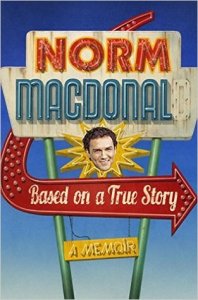
Norm didn’t write Based on a True Story: A Memoir to further his career. He wanted to write a book, and he wanted to get loads of money for it, but career advancement was about as far from a goal as it could be. What was his primary goal? What’s the primary goal of any celebrity writing a memoir? They want you to think they were one hell of a good fella or female throughout their life. 99.9% of Hollywood, political, etc, memoirs drift around various definitions of ‘wasn’t I wonderful?’ Some are direct. They’ll tell you about that time they donated to charity, interactions they had that lead you to believe they had wonderful intentions, or how comparatively awful everyone else around them was. Reading through good, old Norm’s book, we get the idea that Norm didn’t care about any of that. His closest friends, peers, and cultural commentators will tell you that the only thing Norm cared about was being funny. He didn’t care about money or fame, everyone writes that in their book, so you’ll find them wonderful, but in a strange, almost unsettling way we think Norm didn’t care about any of that. He cared about being funny. He didn’t care if you thought he was funny, as long as it was funny. Most of his friends and peers label Norm a comedian’s comedian, which in my estimation means he strove for comedic purity. How does an artist near the point of purity, at least internally? We ask those in the craft that who are pursuing the same thing. It might sound elitist, and it is, but if our goals in life revolve around making the best horseshoe known to man, we might not care what our customers, the laypeople, think, if those in our field of expertise consider those horseshoes the best they’ve ever seen.

Most artists use the memoir as a vehicle to promote their career, or their image, and the idea that while they may appear to be a little quirky to the naked eye, deep in their heart, they want you to know they are actually a very wonderful person. No matter how apathetic, somewhat cruel, and insensitive an author of such material is, the unspoken rule of such comedy is that the author breaks down the fourth wall, in some manner, to let you in on the joke and in on idea that they’re actually pretty nice and very wonderful people who care. Norm Macdonald, the character that he has created for this book, and all of the layers in between, does not seem to care that you get any of that. Most authors that approach a style similar to the book, qualify their motivations for doing what they did with follow ups that redound to the benefit of the author. Norm Macdonald does not appear to care why the reader bought his book, about their outlook on him, or if that reader feels good about themselves, and their world, when they finish the book.

Norm’s Untimely Timelessness: There are no timely elements in this book. Norm Macdonald appears to feel no need to convince us that he is actually very smart, savvy, or anything more than he is. There are no subtle approaches to timely or timeless notions that inform the audience that Norm is compassionate, empathetic, or nuanced. Norm was one of the few celebrities that did not care to tell you what he thinks about pressing or non-pressing matters of the day, and I’m not really sure he cared what he thought either.
29937870Norm was Always an Old Man

Norm was an old soul. He probably sounded old when he was very young. (How many modern books, Based on a True Story: A Memoir, invoke the word “Hoosegow”?) Norm’s dad was old when Norm entered into the world, so Norm spent most of his youth in the company of old men who knew manual labor for the majority of their lives. Norm surely went through the stages of rebellion we all go through to unshackle himself from parental influence to form an individual identity. He probably mocked his old man in various ways, and he surely rejected the old man’s ways of thinking for a time, but by the time we met him, circa aged thirty-one, he came back around to his Hoosegow talk. A more insecure comedian and cultural commentator might try to sound more hip, cutting edge, and nouveau to appeal to the audience. Norm’s voice employed an old man, old world influence that served to intrigue rather than confuse. If the reader is the type that needs some sort of qualifier, or apology, for the somewhat cruel, and insensitive scenes, takes, and reactions that occur throughout this book, it can be found somewhere in the kind, pleasing Midwestern sounding voice that Norm, and his ghost writer Charlie Manson, employed.

I knew nothing of Macdonald’s upbringing, prior to the reading of this book, and I didn’t care about it either. After reading the initial chapters of this book, however, I found myself relating to the rhythms and lexicon Norm learned from the old, hired hands he knew growing up. His dad, my dad, and their friends were old, no-nonsense men that had an old world, no-excuses, masculine structure to their being that is too often lacking in today’s culture. The locale of Macdonald’s rearing was far different than mine as it turned out, but the details of his maturation were so similar to mine that I was surprised to learn we didn’t grow up the exact same time and place. This could be as a result of Norm’s better-than-expected ability to relate to the reader, or his ghost writer’s ability to translate Norm’s thoughts into a book that I found my voice in. The ghost writer is renamed Charlie Manson for the purpose of this book (not that Charlie Manson, the other one.)

Norm on Sex

Norm enjoyed talking about sex, but he did so in a manner that is almost 180 degrees different from any cultural commentator. He talked about sex as if it were nothing more than a stage in life, as opposed to the customary way we have of referring to it as if it is life. He talked about the routine elements of sexual actions, and he talked about the routine immaturity of the act. In an online collection of his jokes, he talked about having sex in his youth, and how he grew out of it to some degree.

“I don’t care for sex. I find it an embarrassing, dull exercise. I prefer sports, where you can win.”

Even though Norm submitted his unique take on not enjoying sexual activity, he admitted to being human in this regard:

“This is the amount of time you think about sex: every once in a while. The problem becomes, when you think about it, it’s all you can think about. It encompasses your whole brain. You’re like a werewolf or something. Usually you’re a civilized human being, but then every couple of days, you’re like “Arrrgh.” Then you’ve got to close the blinds.”

As for the routine nature of it, Norm suggested that he, like all of us, tried to shake the routine of sexual activity up and try something different every once in a while:

“Sex couldn’t be simpler. I think there’s only like five things you can do in the whole thing. You ever think you invented a sixth? Then later you go, “Ah, in all humility, I guess that was pretty close to number five.”

“My wife dresses up like a nurse; then, I dress up like a nurse, also. And then, we don’t even have sex, either. We just sit behind this huge, semicircular wooden desk and get annoyed when people buzz us for juice.”

The bits above are funny, but they don’t really cut to the heart of Norm’s unique, refreshing views on sex in the manner Norm opened up about it on a transcript from a talk show:

“I find sex very repetitive and dull and kind of pointless.” Norm said he finds it a childish desire which he’s spiritually outgrown. I find sex to be a very filthy act in the sense of being shameful. Sex is an activity we don’t do in public due to its intrinsic shamefulness.” He quotes scripture saying, “When you’re a boy, you do boy things. I know most people are children for their whole life, and [sex is] a way of having fun.”

The Out-Joke

When the cavemen drained all of the comedic value out of punching each other in the face, an enterprising young caveman comedian probably tried violating his tribe’s taboo by punching women in the face. And before you say jokes like that only attract troglodytes, remember that was Mujmuj Kandar-Smith’s key demographic. Once they moved past those jokes, and the jokes about the limbs they lost in their Sabertooth Tiger hunts, they probably turned to self-effacing humor. The key to really good self-effacing humor is that it allows us to laugh at ourselves through the vulnerability of the comedian, yet most standup comedians are not of such strong constitutions that they can handle an audience laughing at them, so they cloak it in a type of humor that asks us to laugh with him, as opposed to at him. They’re letting the audience in on the joke. It’s the “aren’t I silly, aren’t we all just silly” approach that carefully approaches their foibles in a way in which we can all laugh at ourselves, so that we’re not just laughing at the comedian. Norm perfected the art of not allowing the audience in, so that the audience uncomfortably enjoys laughing at Norm. Norm didn’t invent this form of comedy, of course, as his most immediate predecessors might be David Letterman, Andy Kaufman, Chris Elliot, and perhaps Will Farrell. Yet, Norm may have even carved out his own niche in this niche in this form of comedy with his old timey lexicon that led us to believe we were laughing at our dad, our grandpa, or our predecessors. We also know that his social commentary was delivered in a tongue-in-cheek manner. In the character Norm developed, onstage and off (with this book) the reader is not so sure if it’s all good. The narrative of Based on a True Story: A Memoir leads the reader to feel sorry for the character, while laughing at his naiveté, and his inability to abide by social norms.

Norm was a Savant

Norm Macdonald didn’t do well with some basic simplicities of life. He never learned how to drive. Some, who knew him well, said that he had some difficulties with what we might consider normal human interaction, or he wasn’t gifted in this arena. When he failed to understand the consequences of his actions, some assigned motives to his actions. Others, those who knew him best, said that was just Norm. Yet, his peers suggest he might have been a comedic savant, or an individual with detailed knowledge in some specialized field. Norm was a brilliant satirist, a gifted jokester, and well-read history buff, but it appears that he was missing some ability to make links. He made a joke one time, on Adam Carolla’s podcast that he ate Count Chocula for dinner and generally had the diet of a seven-year-old child. Was it intentional, whimsical, or did he have such tunnel vision that he failed to understand some of the complexities to keep up with the rest of us. I wouldn’t say I know a truth, of course, but there is evidence of a complex understanding of the greater things in life, in the mind of Norm Macdonald, coupled with an almost child-like naïveté in matters we consider simple.

Norm was Different

Monty Python had a slogan that prefaced much of their material, “And now for something completely different.” For those of us who pine for something different, this book contains stories, reactions, and anecdotes that I have to imagine most authors, and almost all celebrities do their best to avoid. I have a sneaking suspicion that Macdonald’s public relations people asked him to include the “Based on” words to the title of his book. I have a sneaking suspicion that Norm wouldn’t mind it one bit if the reader believed this was the true story of Norm Macdonald’s life. Something tells me that his people, friends, associates, and business partners cautioned him to bolster the doubt regarding the material, because too many people might believe it’s his true story, and that this book may do some damage to his career.

Norm was a Closer

Norm’s good friend, Dennis Miller, said, “Always be closing” on a daily basis on his talk-show. As such, “Based on a True Story: A Memoir” is either building to a close throughout the various chapters, or its closing throughout. When it’s not strict to script of the respective story, hilarious anecdotes break the story up so well that one has to gather one’s self and remind themselves where the narrative was heading. The anecdotes appear to be accidental humor in other words. In the beginning of this book, I began highlighting some of the jokes believing that they would be precious jewels that I would have to remember. I do this with all provocative lines and paragraphs, but as I continued throughout the book, I gave up, knowing that when one highlights too often, the portions that are highlighted begin to lose value.

Norm Macdonald was Norm Macdonald

Norm Macdonald does whatever the hell Norm Macdonald wants. Is this a true narrative, Norm not does appear to care what the reader believes one way or another. Is this a readable narrative that involves the time-honored traditions of storytelling, Norm doesn’t appear to care. The storytelling format does have a Fear and Loathing in Las Vegas feel to it, but other than that it does not follow the rules of any celebrity memoir that I’ve ever read. He may have informed us of some true facts regarding his upbringing, and the many things that have happened to him along the way, but he doesn’t care if the readers knows the difference, or, apparently, if those distinctions could lead to some damage of his career as an entertainer. As a result, I would say that this is by far the best celebrity memoir I have ever read, but I have the feeling Norm wouldn’t care what one way or another.

Norm Macdonald Could’ve Saved the World

With all of his flaws, and according to friends, family and peers, the flaws were numerous, he probably wouldn’t have been elected a world leader, but how many world leaders are so flawed that their handlers do much of the public affairs and public relations work? He couldn’t have been elected to anything, because he wouldn’t take it serious enough. Yet, in those spare moments when the real Norm Macdonald stepped up to the plate to drop some truly profound nuggets on us, I thought this man is one of the more unusual thinkers I’ve ever heard. He was, by many accounts, the smartest guy in the room who tried to conceal his intelligence for reasons of humility, and he fell prey to the notion that smart people aren’t cool. He didn’t care about that, and he obviously did at the same time. It was so surprising to me that when I heard him talk serious, I wondered if the alternative sides of Norm Macdonald could’ve done something historic if he wasn’t so lazy and apathetic about all the things we consider so serious.

*I’ll refer to Norm Macdonald as Norm throughout this article. It’s not intended as a note of familiarity, though I do feel as if I know him as an audience member, I had no personal ties to him in anyway. I also don’t intend it as a lack of respect, as one would if they took the time to wrote his name in full, or labeled him Mr. Macdonald. I’ll refer to him as Norm throughout this article purely for readability.

It’s ‘Okay to Like’ Guilty Pleasures


“It’s okay to like your favorite shows again, even if they have no cultural value or societal significance,” a person informed my friend.  “As long as the preference for the show is characterized as a guilty pleasure.”

After receiving permission to enjoy the show my friend once so enjoyed, she began binge watching the show on Netflix. She watched this show in the manner of one catching up with an old friend, after a prolonged absence. She knew the show was a silly sitcom, and she also knew that the premise of that show –though somewhat relevant in its era– had become dated and insignificant. So, even though she had always loved the show, she stopped watching it, even in private, until that friend of hers ‘gave her permission’ to end that prolonged exile, informing her that ‘it is now okay’ to enjoy that show again.

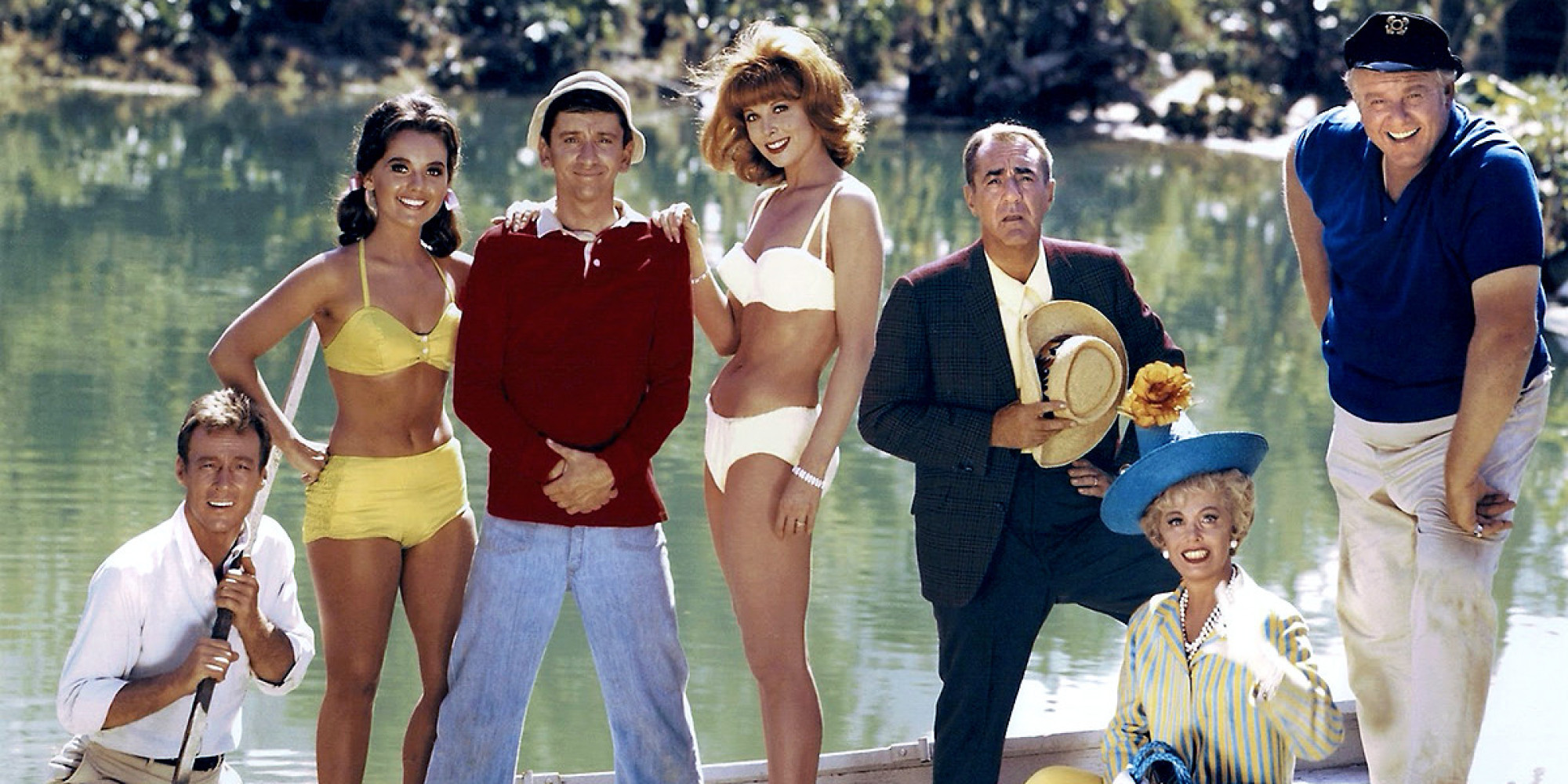
o-GILLIGAN-facebookAs with ubiquitous idioms of this sort, I heard the terms ‘given permission,’ ‘guilty pleasure,’ and ‘it’s okay to like’ before. When everyone begins saying such things, however, I’m left wondering where I was in the gestation cycle of the phrase. I didn’t think the phrases funny, when I first began hearing them, or if they were intended to be funny. I didn’t think they provided an interesting twist on the art of decision-making, and I didn’t think that I would ever be incorporating them into my decision-making process, or the explanations to others regarding my choices.

I just thought it was an odd way for one person to frame the dietary decisions she had made, and that’s where it started for me.  I’d heard people, largely women, framing dietary cheats this way. ‘I’ve been good,’ they would say before they took a bite of something they knew damaged the discipline they had exhibited to that point. They then gave themselves permission to eat what they wanted based on that established discipline, and they called those cheats guilty pleasures. At some point, these phrases made a crossover into other decisions, until people began framing all of their decisions with these qualifiers. They also began informing me that I should frame my decisions in this manner, that I should give it a spin, as it were, and that with these qualifiers, I could now make my decisions free from the guilt associated with prying eyes.

“Why wouldn’t it be okay for me to like the television shows I enjoy?” I would ask when the phrases began crossing over into entertainment choices. At this point in the gestation cycle of these phrases it was obvious that something had already happened. I didn’t know if it happened in the shows I never watch, some movie I missed, or if the phrase had been repeated in a commercial, or a number of commercials, but some vehicle had imprinted these phrases so deeply into the craniums of the people I speak with that they were using the phrases without knowing why. I’ve often found that the best way to cut to the heart of the matter is to ask a question so obvious that no one ever thought of it before.  ‘Why isn’t okay for me to like what I like?’ and ‘Why am I then required to qualify my choices in a manner that prevents you from thinking less of me?’ I began asking variations of these questions of those that posed these notions to me, and as with most idioms of this sort, no one knows why. They just hear other people framing their decisions in this manner, until they find themselves doing it.

After questioning a number of these people, I made the mistake of dismissing these phrases on the basis that no one understood why they did it, and I assumed that it would have a very short shelf life, until everyone I knew began repeating these phrases in almost the same context, and Google searches began revealing websites that were being built around the idea that ‘It’s ok to like’ this today, and ‘it’s okay to dislike’ other things. I even found a Twitter page that gave its visitors permission to like some things and to like other people that like other things. It’s difficult to determine how tongue-in-cheek these grants of permission are, or if these people enjoy being on the cutting edge of cultural trends.

Then, I hear that my friend is now binge watching her favorite show of all-time again, and she’s characterizing it as her ‘one guilty pleasure’. She drops that phrase, I could only assume, to prevent me from thinking less of her for watching such a dated, irrelevant show. She cared what I thought of her, in that instance, and I rationalized that unless we have a master plan of dropping out of the human race, we all care what others think to a point where we need to develop some kind of shield to protect our inner sanctum from prying eyes. Those that have attempted to loft the very high school era idea that they don’t care what anyone thinks of them have inevitably run into the ‘thou doth protest too much’ wall that reveals that they probably care more than anyone else. One could say that this ‘guilty pleasure’ allowance has not only ‘given us permission’ to enjoy the shows we enjoyed so much at one time, it gave rise to an industry in which cable channels like TV Land could prosper, and a Netflix was born, and the whole idea of binge watching became a permissible and acceptable guilty pleasure.

The first question I would’ve asked this ‘guilty pleasure’ friend of my friend that granted her permission to like her favorite show again is, ‘How many guilty pleasures is one person permitted, and what happens to that person that violates the excessive quantity principle of the lack of quality edict?’ One would assume that the term guilty pleasure is intended to be exclusive to one, or at least a few, products.  Are these guilty pleasures exclusive within industries? Can one have more than one television show they consider a guilty pleasure, and if so, is it specific to genre? If one has more than one ‘60’s era, silly sitcom, that they characterize as a guilty pleasure, is that a violation of guilty pleasure principle, and if the person has too many guilty pleasures will they end up spending so much time pleasuring themselves that they may find themselves walking around with burdensome guilt? Would that person be deemed unimportant, and would that lead them to being ostracized from the hip, in touch groups in a manner reminiscent of a Nathaniel Hawthorne novel?’ Who are these social architects that dictate to society what is and what isn’t okay to watch? And how did this need for the ‘guilty pleasure’ qualifier come about, so that we can watch what we want without undue scrutiny?

We’ve all been informed that The Brady Bunch and Gilligan’s Island are okay to dislike, by these people, because these shows, and all shows like them, are impossible to take seriously. They say that these shows depict a silly and foolish era that we’ve all moved beyond, and ‘good riddance!’ they often add. At some point, however, they decide there is some quaint, retro glory in these shows, and they decide that ‘it’s now okay’ to go back and like these shows again, as long as the individual qualifies those viewings as a guilty pleasure. I would not listen to these people regardless how prestigious others deem them to be, but to those that do listen, I would ask, ‘What gives them the credibility to decide for you?’ It would seem to me that they gain their bona fides solely by making the claim that they know what it is that’s ‘okay to like’ and what is not, and what should be listed as a guilty pleasure.

***

My lifelong enjoyment of Gilligan’s Island could be called a ‘guilty pleasure’, if the term is defined as: “Something, such as a movie, television program, or piece of music, that one enjoys despite feeling that it is not generally held in high regard.” I know how dumb and silly the show is. I also know that in the broad, cultural sense it has no redeemable qualities. Yet, I do not feel guilty about any association I may have had, or will continue to have with the show, and I have no problem floating back in time to that place in time when I watched Gilligan’s Island every day for years.

This leads to that silly argument of extension that suggests that anything one is not ashamed of, must be something for which they hold such a sense of pride that they should be willing and able to defend, and those that don’t do either are taking the spineless, Switzerland position of critiquing both sides while trying to avoid vulnerability on the point. I understand that complaint, but remember we are talking about television shows here, and if I were forced to mount a defense for this television show –to avoid the spineless Switzerland position– it would be made in defense of silliness.

Gilligan’s Island was silly and dumb, as I’ve said, but so was one of the most celebrated, critically acclaimed, and award winning shows of our time: Seinfeld.  If we were to break this brilliant show down to its core, we would find silliness. The keys to Seinfeld’s success, it would seem to me, lay in its creative way to turn a phrase, and its ability capture a comprehensive thought with creative brevity. The writers were also hell bent on making a story flow through an arc and return to the theme of an episode with a “no hugging and no learning” themed resolution.

Gilligan’s Island could be said to be one of the predecessors of this “no hugging and no learning” theme that would later specifically be employed Seinfeld. It could also be argued that most of the shows of that era were based on this “no hugging and no learning” theme, and that the cultural relevance brigade with their “applause ready” soundbites, “poignant, thought-provoking, and very special” plot lines, with lots of hugging, and learning, and crying came later. It could also be argued that Seinfeld, and its “no hugging and no learning” theme was a return to that era when sitcoms didn’t try to be more than they were. They just wanted to make people laugh in an era when no one felt guilty about doing just that.

If the reader knows anything about Gilligan’s Island, and a growing number of people do not, they know that Gilligan’s Island would never be confused with having anything to do with cultural relevance. The creator of the show, Sherwood Schwartz, stated as much when he said that if there was anything political about the show it existed in an intended apolitical theme. His exact quote, as listed in a Mental Floss piece on the show, was that Gilligan’s Island represented, “A metaphorical shaming of world politics in the sense that when necessary for survival, yes we can all get along.”

As a political person that has been reminded, throughout my life, how divisive politics can be, I think we could all benefit from more “no hugging and no learning” shows. The problems with such shows is that no one feels important watching them, and we all have a need to feel important. Some of us even strive so hard for importance that we claim that we watch shows we never watch, read books we have not read, and listen to important music that no one listens to. Silly shows will never make a person feel important, they will not win awards, TV critics won’t talk about them, and water cooler speakers don’t often talk about “no hugging and no learning” shows, or if they do, it’s not reported on by TV critics that consider these type of shows guilty pleasures.

Seinfeld is the exception to all of these statements, of course, but that show developed such a groundswell of popularity that it caught people by surprise. The quality of the writing on the show was never in question, but there was never a “very special” plot line that critics could wrap their arms around. Critics sought a seminal episode to explain the ethos, and the manner in which it intertwined with the culture, explained it, or rose above it. When none of that happened, they decided to ‘give us permission’ to like she show based on the ‘guilty pleasure’ of watching a show about nothing.

The problem for the other silly, non-award winning, and panned by TV critics’ shows, is that quality writers don’t want to write for them, as most formulaic shows that eschew politics in their “no hugging and no learning” apolitical themes offer little in the way of sprucing up resumes.

What’s hilarious about the world these cultural doyens draw up, with their ‘it’s okay to like’ and shows ‘it’s okay to dislike’ parameters, is that they’re often aghast when a cultural figure from the other side of the aisles decree that there are shows ‘it’s okay to like’ and shows ‘it’s okay to dislike’, based on that cultural figure’s political and psychological underpinnings. With no objective understanding of what they do, the cultural doyens chastise the cultural figures for having the temerity to suggest that they can dictate what anyone should or shouldn’t watch. These people then ask us to join them in directing a “very special” special finger at the dastardly decision makers that they believe should be granted exclusive rights to that finger. Yet, I believe if we viewed these arguments in an objective manner, we should be able find a “very special” place in our hearts to provide both sides that finger.

As Jennifer Szalai details in her The New Yorker piece, the term guilty pleasure is almost exclusive to America. She provides an example in the way of a Frenchman interviewing for a job in America, in which he was asked what his guilty pleasures were. The Frenchman was confused. He claimed that he had never heard the term, and that the best translation he could find applied to matters no one he knew talked about. If a Gilligan’s Island was popular among the cultural elites in France, in other words, no one would knew it, because they didn’t talk about it. In America, on the other hand, it’s something we enjoy talking about almost as much as we do watching the shows.

“You make sure to talk about (your guilty pleasures) –which is why the term exudes a false note, a mix of self-consciousness and self-congratulation. Aside from those actively seeking out public debasement, if you felt really, truly ashamed of it, you probably wouldn’t announce it to the world, would you? The guilt signals that you’re most comfortable in the élite precincts of high art, but you’re not so much of a snob that you can’t be at one with the people. So you confess your remorse whenever you deign to watch (a show like Gilligan’s Island) implying that the rest of your time is spent reading Proust.”