Marlon Brando Didn’t Care


Marlon Brando was by many accounts the greatest actor who ever graced stage and screen. Peers, fans, and critics found his performances explosive, electric, and affecting. He had a way of connecting to the audience in a way that left us trying to remember the other members of the cast, and he was teamed with some of the greatest actors in the world in most of his movies. Marlon Brando was such a great actor that he changed acting at twenty-seven-years old. He captivated so many hearts and minds so early in his career that the field of acting bored him.

“[Marlon] Brando did not merely act the role, he became the part, allowing the role to seep into his pores, so that he stalked the screen like a young lion. Critics were stunned, blown away by the realism of the performance, they had simply never seen anything like him before.” —TheCinemaholic  

Brando was the first movie star, to my mind, to publicly state that he was not the least bit grateful for the roles, the career, and the life his profession offered him. Why would a person who made enough money throughout his career to purchase his own island not be grateful for everything the acting profession gave him? The answer appears multifaceted and vague, but we can speculate that the core reason was that he achieved such rarified air so early on in his career that no one could humble him. His early work influenced the biggest stars of his era to be more real and find the element of truth in their work, and we can speculate that that level of adulation stunted his growth and left him an immature narcissist.

Marlon Brando didn’t care what critics thought of his performances, and he didn’t care what movie moguls, most directors, producers, or anyone behind the scenes thought of them either. Those of us who love great art might applaud this indifference, as it basically defines the term auteur, or an individual whose style and complete control give a performance its personal and unique stamp. After doing this so often in his career, Marlon Brando earned a place in the rarified air of those who don’t have to care anymore to continue to prosper in their career. If you just stood to applaud this artistic apathy, the idea that he didn’t care what you might think either, should sit you back down.

As an incredible artist, and Marlon Brando was an incredible artist, we shouldn’t expect an artist to create art for us. As a side note, we should note that no actor creates art, but they can bring a writer’s character to life for us. They can interpret or reimagine a character in a way the writer never imagined. They can make the character their own. Does anyone know Budd Schulberg, the screenwriter of On the Waterfront? How about Tennessee Williams, the writer of A Streetcar Named Desire? He’s historically famous, as is Mario Puzo, writer of The Godfather, but most of us know those movies as Marlon Brando movies. His performances in these movies were so great that he overshadowed everyone else involved in them. Yet, we shouldn’t expect him to act in a manner that pays homage to his fans, and we shouldn’t care why anyone strives to give their best performances every time out, as long as they do.  

Having said that, there is something special about a great movie. We can lose ourselves in the time it takes to watch a movie. We can forget about our problems, and our need to get some sleep. If you’ve ever had a phone call disrupt a great movie, you know how deep into that movie you were. We develop deep connections to story the writer’s write, the manipulation of a great director, and the performance of the movie’s actors. We might develop such a deep connection to the actor that we develop a relationship with them. For some of us that relationship is all about loyalty, as we’ll see anything and everything that actor has ever done. Others expect the star to be nice to them in restaurants and other public venues to enhance that relationship. The point is, we accidentally grow to expect some level of appreciation for all that we’ve given them, even if it’s just some relatively insignificant comment they make on a talk show.  

“Acting is just making faces. It’s not a serious profession,” Marlon Brando told Lawrence Grobel in Conversations with Marlon Brando in 1989. “Acting is not a profession that I have any great respect for… It’s something I do, but it’s not something I think is particularly noble,” Brando told Edward R. Murrow in a 1955 interview. “I think it’s a silly, childish thing to do for a living… I don’t think it’s a very dignified way to make a living,” he told Dick Cavett in a 1973 interview.
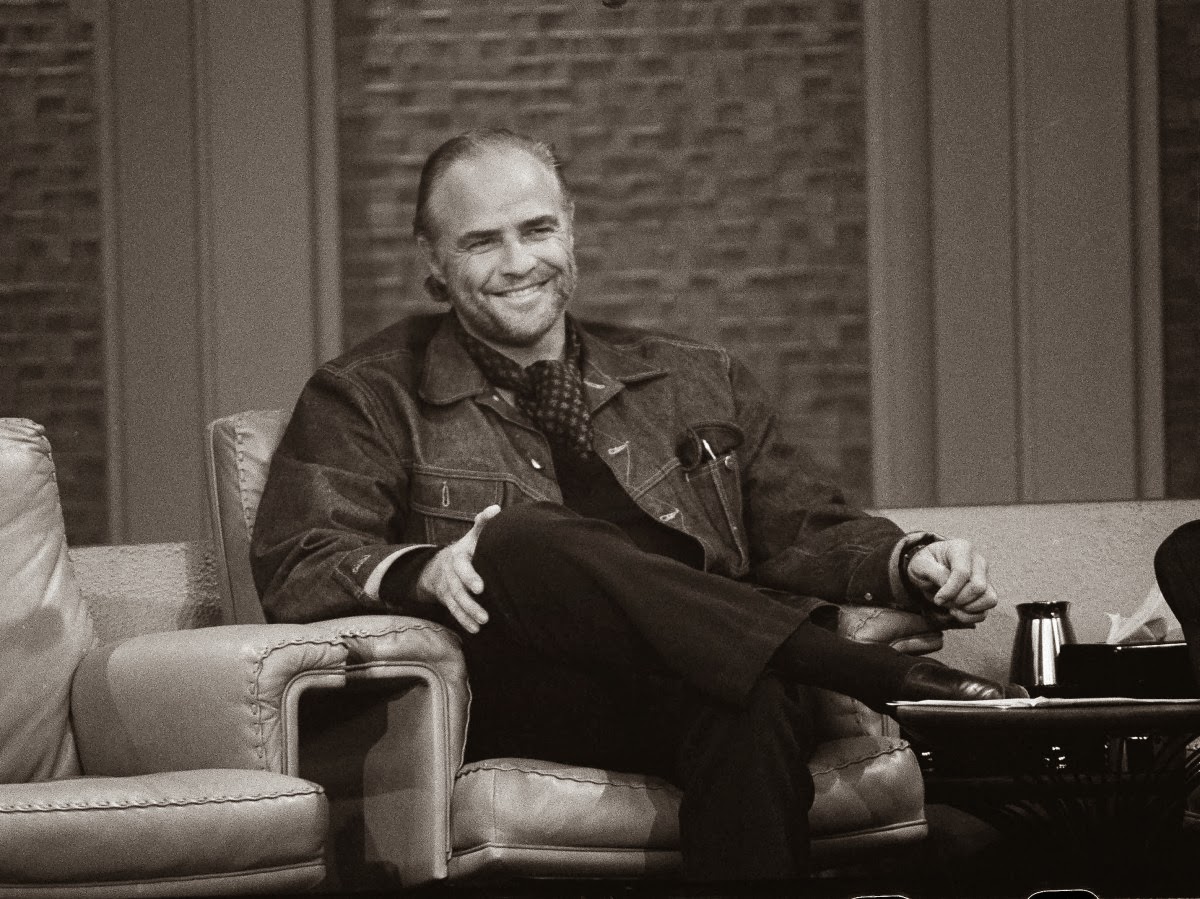
I don’t know if Brando was the first movie star to go out of his way to publicly damage our illusion that they care what we think. He did open the door for actors to publicly demean and diminish the iconic roles that created their careers. If they state that they now want to move past that signature role that made them famous, we’d understand such competitive instincts, but they now say that they’re embarrassed by those roles that made them famous. (Note: I never found a quote where Brando singled out a performance that embarrassed him.) To try to be fair to those who say these things, we can sympathize with the idea that it has to be tedious to hear someone say, “Hey, aren’t you Han Solo!” eighty movies and fifty years after he gave that iconic performance. Yet, to be so ungrateful that they’re not afraid to publicly state that they’re embarrassed by a role which we all still love, and one that spawned a career that may not have happened if not for that role, just sits in my craw in a way that cannot be removed mentally, biologically or surgically.

***

Marlon Brando, a man many consider the best actor of his generation, didn’t care about acting, and he didn’t care for it. Did he say these things, because he thought it was cool not to care? Impossible, we say, that’s so high school, This man was a legendary actor who almost single-handedly changed the way actors approached their profession. Was it a marketing technique? If we read through Brando’s interviews, and the books written about him that give us insight into his thought process, Brando didn’t care about image, marketing, or any form of public relations. When we strip all that away, we’re left with the speculation that either Marlon Brando loathed himself so much that he viewed everything he did in a negative manner, or he said such things because he wanted us to think he was cool.

When our starting quarterback privately told us he didn’t care about football, soon after winning a state championship, we thought that was “so cool!” He was something of a mythic figure to us, basically telling us to not get so worked up about a silly game. That was high school though, filled with teenagers climbing all over one another to find new and different ways to be cool. Is it possible that this near-mythic figure of the acting world tried to accomplish the same thing by telling his fans to not get so worked up about something as silly as movies? We never leave high school, some social commentators say, and we never totally abandon the need to have others consider the fact that we don’t care about nothing “so cool!”

It was His Technique to Not Care

“Marlon Brando would often talk to cameramen and fellow actors about their weekend even after the director would call action. Once Brando felt he could deliver the dialogue as naturally as that conversation, he would start the dialogue.” —Dustin Hoffman in his online Masterclass. 
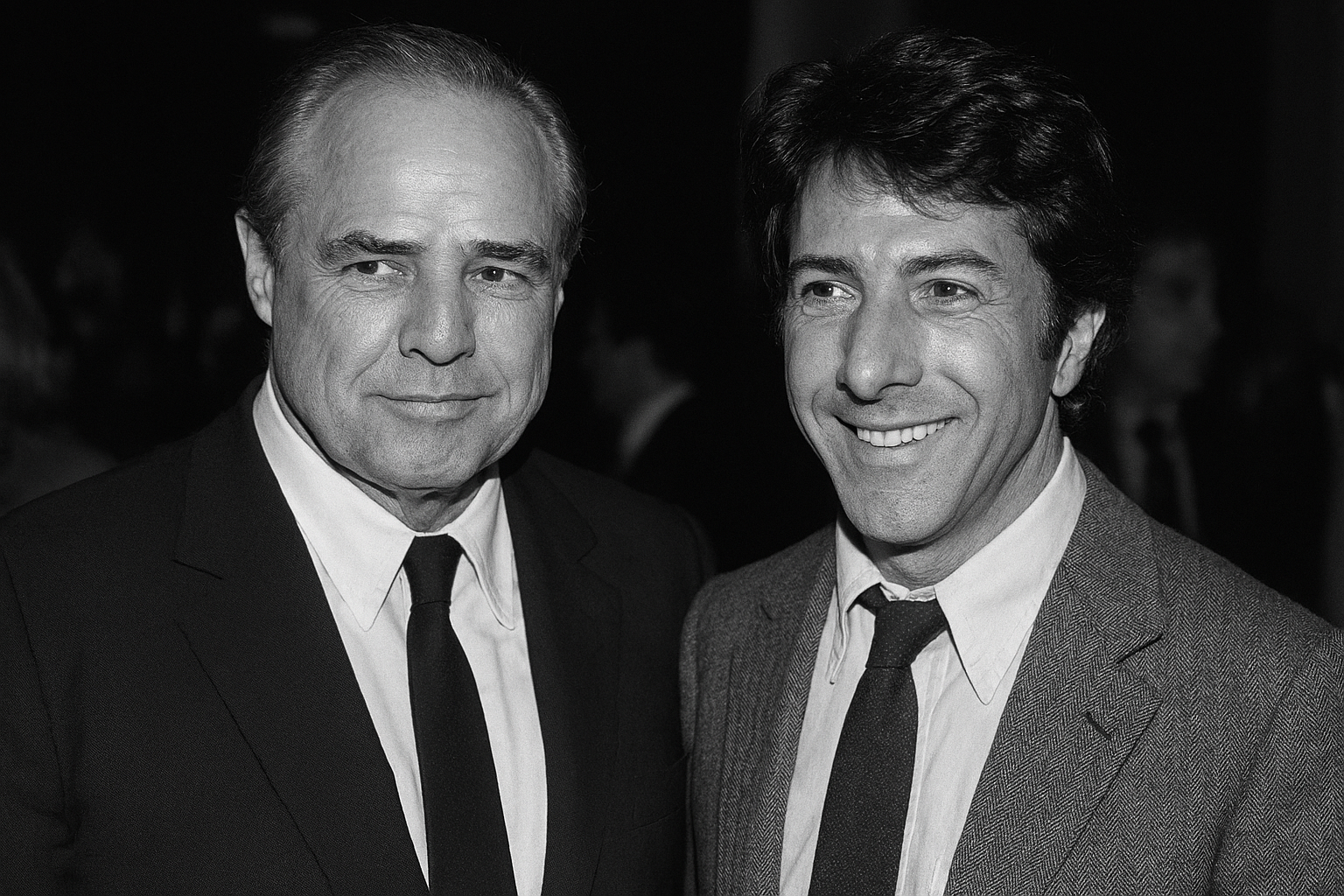
Hoffman’s quote suggests that Brando found a technique to help him calm his nerves, and it helped him mentally overcome the idea that he had to top his previous performances. By talking to these people the way he did, Brando helped himself find a middle ground, a place where he could not care so much. It suggests that he tried to place himself in a more natural setting, convincing himself that he didn’t care, and he did it to achieve a better performance. It’s possible, even plausible, but my guess is Hoffman is over-interpreting Brando’s casual conversations.

Even some of his fellow actors, his peers, considered him the greatest actor who ever lived, the greatest of all time, the GOAT of the acting world. Whenever we label someone the GOAT, the next chapter of the narrative involves their single-minded obsession, the drive to be the best, the sacrifices he made to be the best, and the measures he took to stay on top. “To be the best, you must beat the rest,” is some semblance of a quote these individuals drop to describe their drive to be the best. 

That is all true for most GOATs in sports, because even the most naturally gifted athletes must push themselves beyond their natural abilities to sustain continued dominance of those of equal, natural abilities. Brando’s success in the field of acting suggests this isn’t the case with acting. It doesn’t matter if you’re driven to succeed or obsessed with a level of success that continues to outshine your peers. They just need to look great on screen, deliver their lines on time, and do so in a manner suited for the role.

Yet, Brando didn’t always look great on screen, as he often showed up, on set, overweight in the latter half of his career, but his iconic status at that point was such that he didn’t have to be in shape to get roles. It was a little sad to see the man so old and out of shape in his latter movies, but it was still a treat to see him on screen. We didn’t care if he delivered his lines well, yet he often mumbled his lines, which was probably caused by his refusal to memorize them. To compensate for his refusal to memorize lines, directors had their people put placards around the setting for him to read. So, at least in the latter half of his career, he was reading lines to us.  

Anytime we criticize the great ones, we hear excuses and obfuscations. “Brando cared,” his supporters say. “He cared so much that one of his acting techniques involved getting to a place where he didn’t care anymore.” This was Marlon Brando’s technique, they argue, and we call that technique method acting, but according to the book Songs my Mother Taught Me, Brando abhorred the ideas behind method acting, as taught by Lee Strasberg.  

“After I had some success, Lee Strasberg tried to take credit for teaching me how to act. He never taught me anything. He would have claimed credit for the sun and the moon if he believed he could get away with it. He was an ambitious, selfish man who exploited the people who attended the Actors Studio and tried to project himself as an acting oracle and guru. Some people worshipped him, but I never knew why. I sometimes went to the Actors Studio on Saturday mornings because Elia Kazan was teaching, and there were usually a lot of good-looking girls, but Strasberg never taught me acting. Stella (Adler) did—and later Kazan.” 

As the “greatest actor in the world” who could command huge paychecks, because he could attract large audiences to his performances, Brando could’ve changed acting for a wide array of actors.  

In his 2015 documentary, Listen To Me Marlon, Brando said that prior to his appearance on the scene, “Actors were like breakfast cereals, meaning they were predictable. Critics would later say that this was Brando being difficult, but actors who worked opposite him said it was just all part of his technique.”
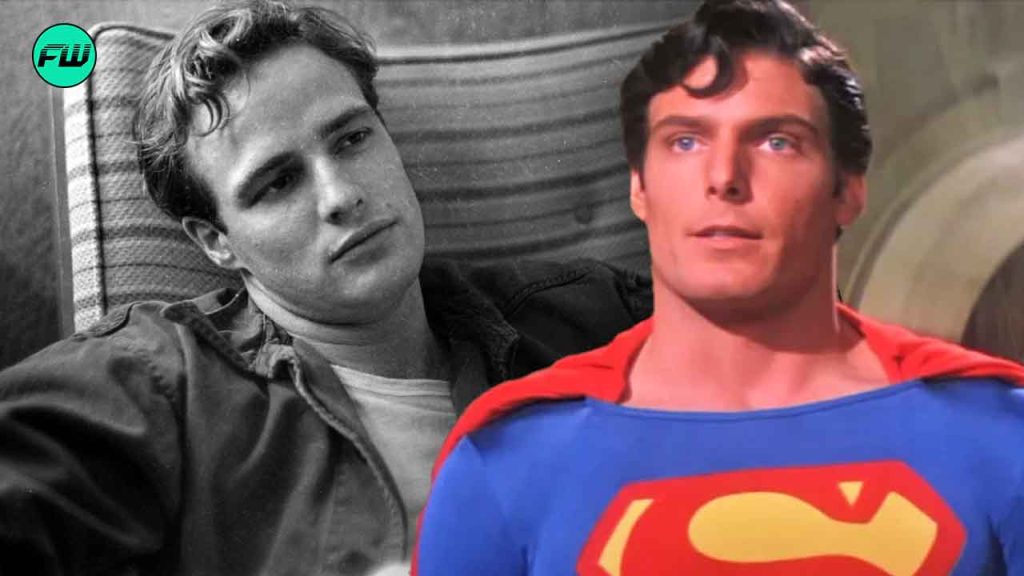
Christopher Reeves responded to these characterizations when asked about what working with the great Brando on the set of 1978’s Superman was like, “I don’t worship at the altar of Marlon Brando, because I feel that he’s copped out in a certain way. He’s no longer in the leadership position he could be. He could really be inspiring to a whole generation of actors and by continuing to work, but what happened is the press loved him whether he was good, bad, or indifferent. People thought he was this institution no matter what he did. So, he doesn’t care anymore, and I just think it would be sad to be fifty-three, or whatever he is and not give a damn. I just think it’s too bad to be forced into that kind of hostility. He could be a real leader for us.” Speaking specifically on the role Brando played in Superman, Reeves added, “He took the $2 million ($19 million with today’s inflation) and ran you know.”

If we watch that Reeves interview on Late Night with David Letterman, we can tell Reeves was all worked up about this topic, after working with Brando. Reeves acted as if he couldn’t wait for Letterman’s question, because he wanted to get his experience of working with Brando off his chest.

Tallulah Bankhead, who co-starred with Brando in his first stage performance back in 1947, also clashed with the actor before firing him. She recommended him for the part of Stanley Kowalski in A Streetcar Named Desire. “[He was] a total pig of a man without sensitivity or grace of any kind.” Even she had to admit, though, that Brando had talent. “There were a few times when he was really magnificent,” Bankhead said. “He was a great young actor when he wanted to be.” (My emphasis.)

We can leave the final word to another acting great, Jack Nicholson, who was famously intimidated by Brando’s talent while working with him. Nicholson once joked, “When Marlon dies, everyone moves up one.”

“I watched some of Brando’s dailies, nine or ten takes of this same scene. Each take was an art film in itself. I sat there stunned by the variety, the depth, the amount of silent articulation of what a scene meant. The next day I woke up completely destroyed. The full catastrophe of it hit me overnight,” Nicholson reminisced.

He also summarized neatly the ubiquitous reach of Brando’s influence throughout the world of film acting, in one short sentence: “We are all Brando’s children.” He was speaking for many an acting great, from Pacino to Hopper, Christopher Reeve, Viggo Mortensen, and too many others to mention.

Did Brando care about any of that? When he cared, he cared. When he had a script that supported a cause he believed in, he cared. He didn’t care about Superman, but he got paid so much to star in it that he probably should’ve. He had been the biggest star in the world for so long that he stopped caring about it. He didn’t appreciate his standing in the world for what it was, at the time, and he didn’t really care when it ended. He read his lines, and he did his job.

The next question, and it’s one I usually loathe when it comes to innovators, disruptors, and enterprising young minds who create. The line goes like this, “If he hadn’t invented this, someone would have eventually.” They say this when the subject of Nikola Tesla, Leonardo da Vinci, Isaac Newton or any innovators notions, products, or inventions are discussed. They say this when another suggests they were indispensable on the timeline. Was Marlon Brando, and his influence on acting indispensable? Method acting and the new brand of “realism” that Brando learned and displayed for the world may not have been as immediately accepted, applauded, or adopted if Marlon Brando never existed, but the techniques Brando used were being taught in acting schools. Some suggest that if Brando never existed, Montgomery Clift would taken those techniques to the world. As great an actor as Clift was, he wasn’t the explosive “shining star” Brando proved to be. 

When the subject of movie stars arrives, most of us make it all about “me.” We judge them based on how nice they were to “me.” “You think he wasn’t nice? He was nice to me. He even went so far as to say something nice to my son.” We also view movie stars, sport stars, and all celebrities based on our brief encounter with them, because we want to be a part of the story. “He didn’t me tip well,” “She said she doesn’t do autographs,” or “They didn’t even so much as look at me throughout our Uber.” I try very hard to avoid making it about “me.”

I met a number of celebrities in a previous life, and I found their particular demographic similar to all of the other ones. Some celebrities went out of their way to be nice to me. Some were dismissive, and others were rude, but most of them treated me the way everyone else does, and I never really cared one way or another. Most of us do. We loved their movie so much “we” bought that movie on DVD, “we” have three of their songs memorized, and “we” developed a connection to them that “we” thought they should consider special. When they didn’t reciprocate in anyway, “we” felt they diminished our special moment. When they didn’t tip us according to expectations, we went to Facebook to report them. When they refused to join us in a selfie, refused a request for an autograph, or even offer us a hearty smile or handshake, we proclaimed we’d never watch one of their movies again. We can’t help it, we judge people, places, and things from our perspective. On this particular note, I might agree with Brando’s general assessment that we all get a little silly about movies.

Thus, if I met the late, great actor, and he dismissed me as pond scum, I wouldn’t be anymore insulted by that comment than if anyone else said it. It’s the general sense of a lack of appreciation that sticks in my craw. If he ever dismissed the role of The Godfather, which he didn’t to my knowledge, as “reading lines and making faces”, I wouldn’t find it personally insulting, even though I connected with that character so much I felt a personal relationship with it. I would be angry though. I would be angry that a man who was given such an incredible opportunity in life to affect so many people didn’t appreciate it in the least, and that appears to be the case with the greatest actor who ever lived, Marlon Brando. 

Mr. Q is Quiet 


I couldn’t put my finger on it, when one of my friends threw me a beach ball, but I felt something, something deep that I needed to explore. Its texture felt so cathartic that I scrunched my fingers on it, which led to an almost inexplicable connection. The smell of it, fresh out of its package, was such a unique scent that I knew there was something more to it. I just couldn’t put my finger on it when I put my finger on it.

It also felt naughty to scrunch it, and I wasn’t sure if the sound or the feel of that scrunching drove that reaction, but I wouldn’t stop until I uncovered what caused me to do it.

“What are you doing?” my friends asked with some disdain. I couldn’t think of anything to say, but I feared that they might talk about this later. They might say something like, “You think he’s normal? I once saw him scrunch a beach ball for about two minutes straight with a look on his face that I’ll never forget. That boy ain’t right.” I saw those impressions starting to form on the faces of my good friends, and I knew I should’ve snapped out of it, but I just couldn’t stop searching for the connection.

“C’mon, throw it!” my friends finally shouted from the pool, snapping me out of it.

I probably should’ve obsessed over it for a little longer, when it was fresh in the mind, but I didn’t. I decided to return to the normal and enjoy the rest of my day at the pool. Yet, every time I played with a new beach ball, and it had to be new, because the new beach ball had that new beach ball smell, I experienced that odd, impossible to place memory. 

I don’t know how long it took me, decades at least, to remember that this unusual connection I had with that material harkened back to the days in kindergarten when I first met The Letter People.

***

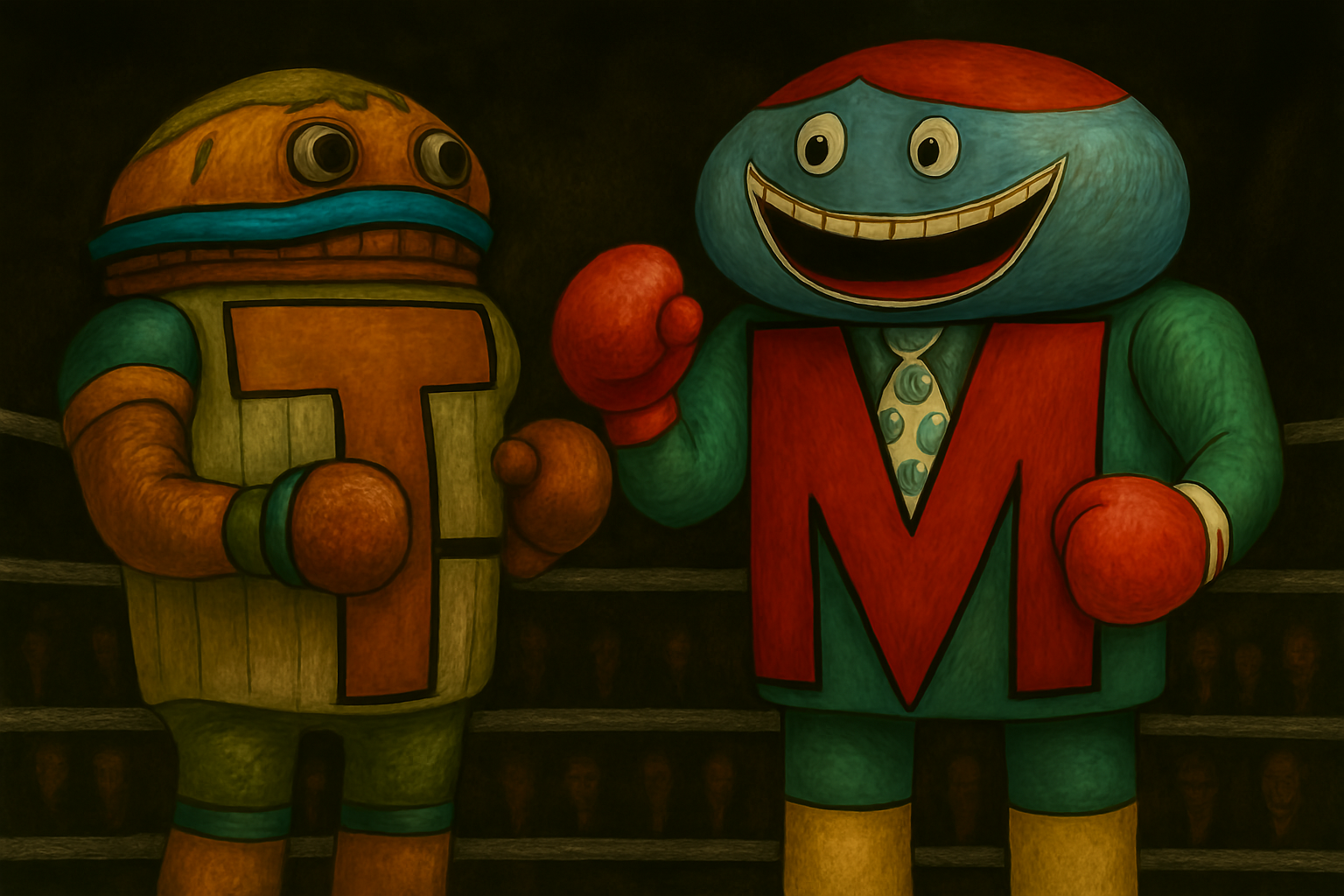
“We’re not to touch The Letter People!” our real teacher, a Mrs. Chamberlain, informed us when she introduced us to the first Letter Person we met, a Mr. M. “We’re going to learn a lot about The Letter People throughout the year, and we’re going to learn a lot from them. They will become our friends, but we are not to touch them!” I didn’t know what Mr. M had going on, or what this was all about, but I was all into it.

By the time Mrs. Chamberlain introduced us to the second character, a Mr. T, I recognized the routine she was developing. We were going to meet a new character at various intervals, once a week it turned out. The second introduction wasn’t as overwhelming as the first, but I found so much comfort in this routine that I no longer cried when my mother left me to the charge of Mrs. Chamberlain.

By the time we moved past the introductory characters, I gradually moved past the carefully constructed mystiques Mrs. Chamberlain and company manufactured for us. I began to see them as the teaching tools they were, but I also began to think The Letter People visited us from another land, a Middle Earth of sorts, similar to the land J.R.R. Tolkien created with his own level of creativity. 

Before meeting the first Letter Person, I was horrible at managing expectations and anticipation. I must have been a miserable kid in that regard for my mom, as she taught me how to make Xs on a calendar, so I wouldn’t bother as much about how many days away expected days were. When I began anticipating the day of arrival of the next Letter Person in the same miserable manner I did the other hallowed days, my mom had a word with Mrs. Chamberlain, and we found out that Mondays were the new hallowed days in my life, and I would ‘X’ my way to Mondays.

I eagerly anticipated the day of introduction for each Letter Person, but to be quite honest most of them didn’t have the star power, the it factor that Mr. M and Mr. T had. I realized, on some level, that the rest of them were just learning vehicles for kindergarten kids that needed to know the spelling system of our language, and they needed to know the rules of how letters represent sounds, and how words are spelled. I might overestimate how advanced I was in kindergarten, but my mom was such an active parent that most of what my kindergarten peers were learning for the first time was retread for me. Whatever the case was, The Letter People lost some of their magic in the routine of the months that followed, until I met Mr. Q.

I still remember the day I met Mr. Q. He stood on the opposite side of the entrance with our new substitute teacher, a Miss Landow, standing sentry, obstructing our ability to form a complete sensorial connection with him.

Mr. Q felt rarely used, mostly ignored, and an underdog who is often misunderstood. Mr. Q felt like an avant-garde phoneme, before I knew what avant-garde and phoneme meant. He wasn’t the last Letter Person I met, and I don’t know if I knew all this, or sensed it, but I remember feeling a special connection to Mr. Q based on the subtle idea that no one else connected to him the way they did the other Letter People

Mr. Q was quiet. His special feature/superpower was silence. As my mother could surely attest, I never thought of being quiet before, and I never met anyone who operated in silence before I met Mr. Q. The concept was so foreign to me that I decided to try it out.

“What’s wrong?” my mom asked me. “You’re so quiet.” I don’t remember if that question validated my new existence, if it emboldened me to pursue the idea of silence, or if I thought I was really onto something, but I loved the power of silence in those moments.  

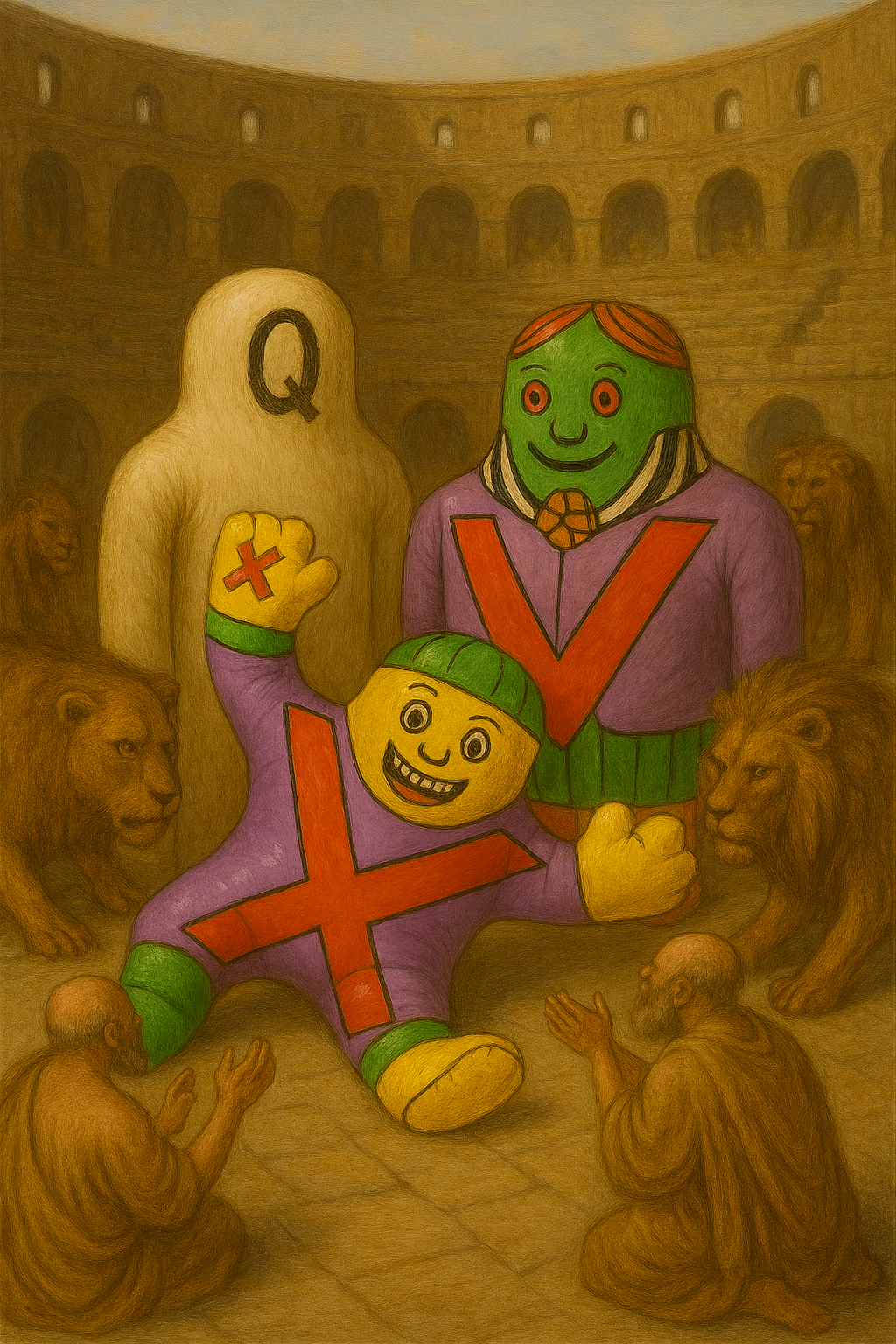
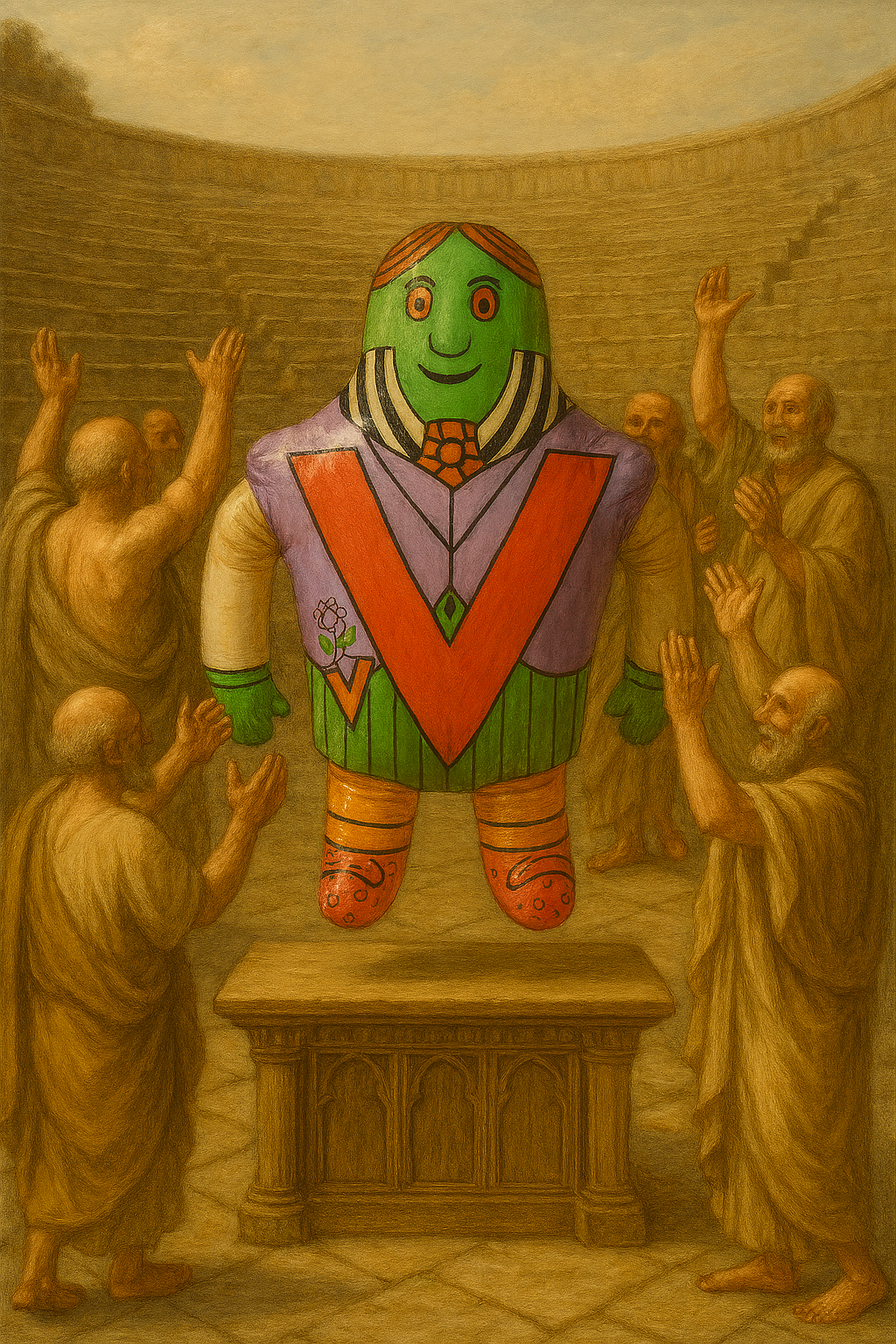
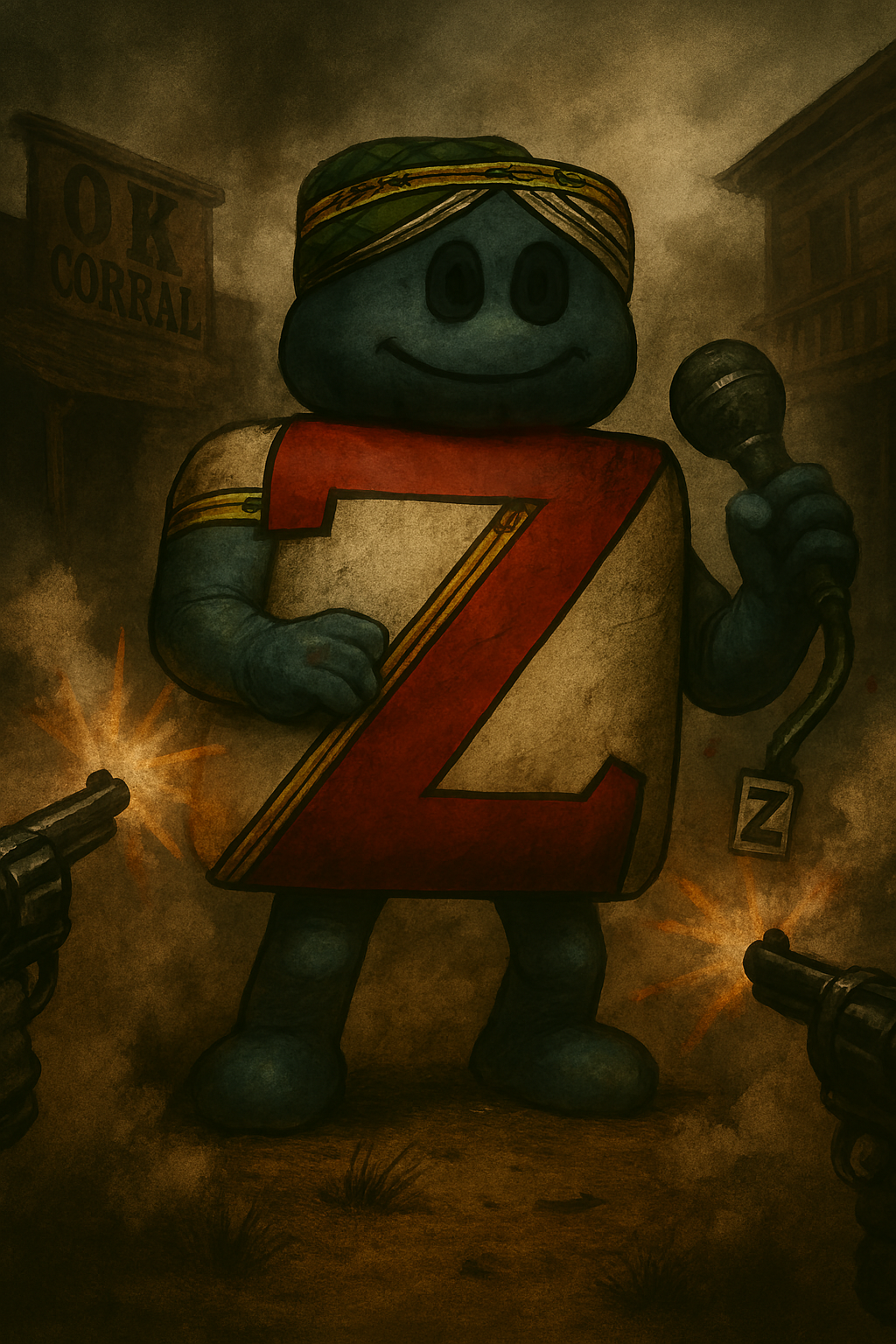
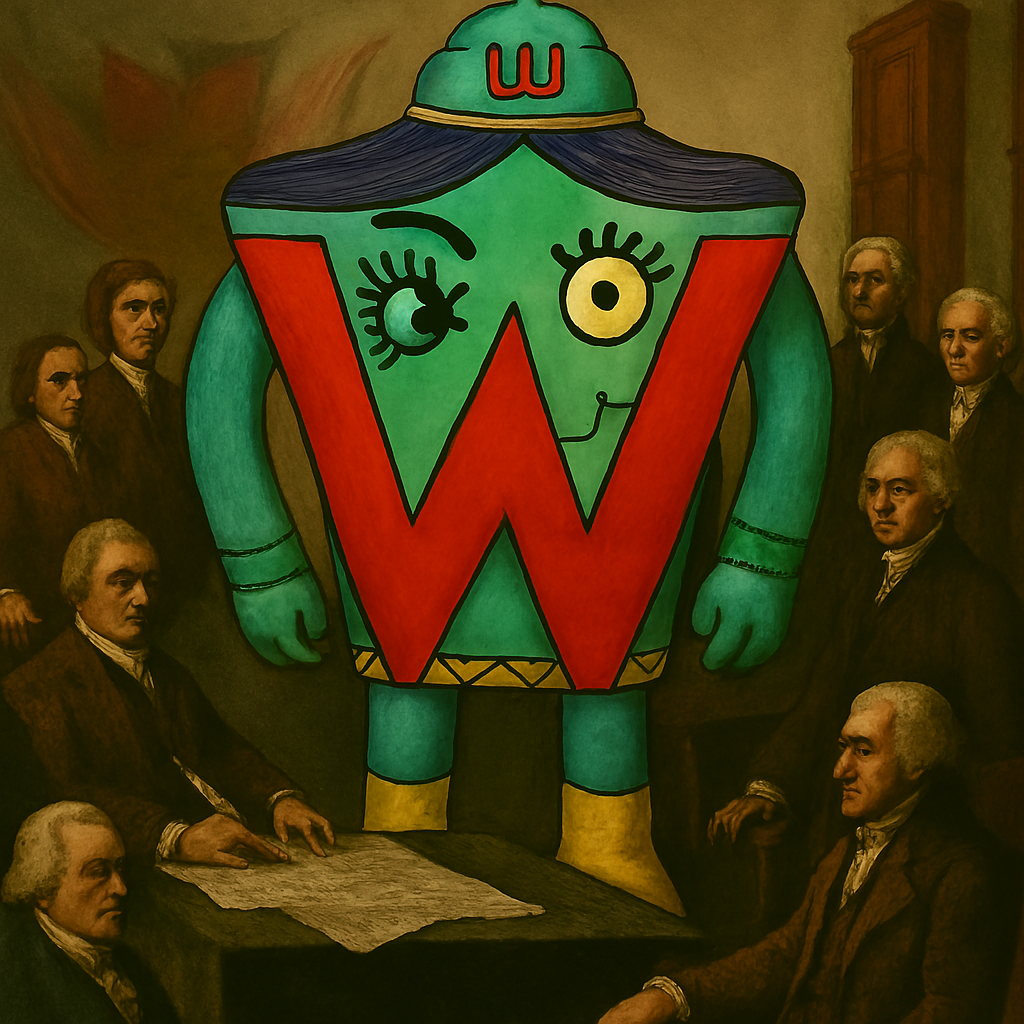
As opposed to the other Letter People, Mr. Q silently observed the people, places and things around him, and when he did eventually speak, it proved powerful. I found that concept intoxicating. I thought there was something more mysterious and cryptic about Mr. Q, than Mr. V, Mr. W, Mr. X, Mr. Y, Mr. Z and all the other, more obvious characters. Those characters arrived last, bearing cryptic gifts and challenging the orthographic orthodoxy. I found them mysterious, ironic, and possibly unstable.  

***

Other than Buggs Bunny, I don’t remember having unusual, almost spiritual attachments to cartoon characters before I met The Letter PeopleI may have been just as nutty over other things, but I don’t remember them having such a profound effect on me. I was so eager to meet these new characters that I managed to get over the idea that I could no longer spend every waking hour with my mom. I looked forward to going to school just to meet these new characters.

I tried to get to know more about them than anyone else did, just to increase my level of familiarity, but there wasn’t more to know. Knowing this made me feel so limited. There’s nothing to figure out about blowup dolls, and I know that now, but as a six-year-old kid these mysterious figures called out to me. They wanted to get to know me as much as I wanted to get to know them. Our kindergarten, class photo showed all the students and teachers saying cheese and smiling for the camera, but I was smiling at The Letter People near me.

Dogs have ways of making foreign objects talk to them. They sniff and sometimes inhale them, until they end up sneezing twelve times in a row. When their powerful sense of smell doesn’t help them understand a foreign object any better, they try eating it, urinating on it, or attempting to procreate with it. When they fail to arrive at some form of greater understanding of its purpose, they move on (Jack Russell Terriers and Beagles excepted). Their motto is “Try, try and try again, and then move on. No sense making a fool out of yourself.” I was not/am not wired that way. My obsessive brain could not let things go, for better and worse, and I obsessed over these mysterious figures called The Letter People.

When I couldn’t learn my individual definition of the essence of these Letter People from afar, I wanted to touch them and play with them to learn everything I could about them. I wanted to be their friends and spend time with them to get to know them better, but we were deprived our sense of touch.

As nice and sweet as Mrs. Chamberlain was, her, “They’re not toys, and we’re not to touch them” carried some weight with us. She either had an authoritative way about her, or her beauty and demeanor granted her authority. I write the latter in association with psychological studies that suggest kids, even as young as five and six, behave better when their teacher is young and beautiful, because they want to be her. Mrs. Chamberlain had those qualities, and she spoke in an ethereal tone that reminded us of Glenda the Good Witch. Whatever the case was, when Mrs. Chamberlain laid down the law, we listened.

My guess is that Miss Chamberlain and the school administrators probably developed their “No touching” rule based on precedent. Kids like me probably found that once they derived some sense of the essence of these characters, they couldn’t stop. They probably developed the rule to prevent us from even getting started down that road. Depriving me of the sense of touch only elevated the mystique of these characters, as I realized I would need to find other ways to learn more about them.

By the time we met Mr. F, Mrs. Chamberlain was no longer our teacher. She was pregnant, they informed us. I didn’t know what that meant, but I learned that being pregnant meant she was going to be gone for the rest of the year.

“Does that mean she’ll be gone for a while?” I asked my mom through tears.

“No, she’ll probably be gone for the rest of the year,” my mom said, and I assume she used more compassionate words to try to somehow soften the crushing blow for me.

A Miss Landow stepped in her place, and Miss Landow was a less attractive, more authoritative woman. Miss Landow informed us that Mrs. Chamberlain’s “No touching” rule for The Letter People would be upheld, and she meant that in no uncertain terms. Miss Landow, however, did not have the leadership mystique Mrs. Chamberlain did. 

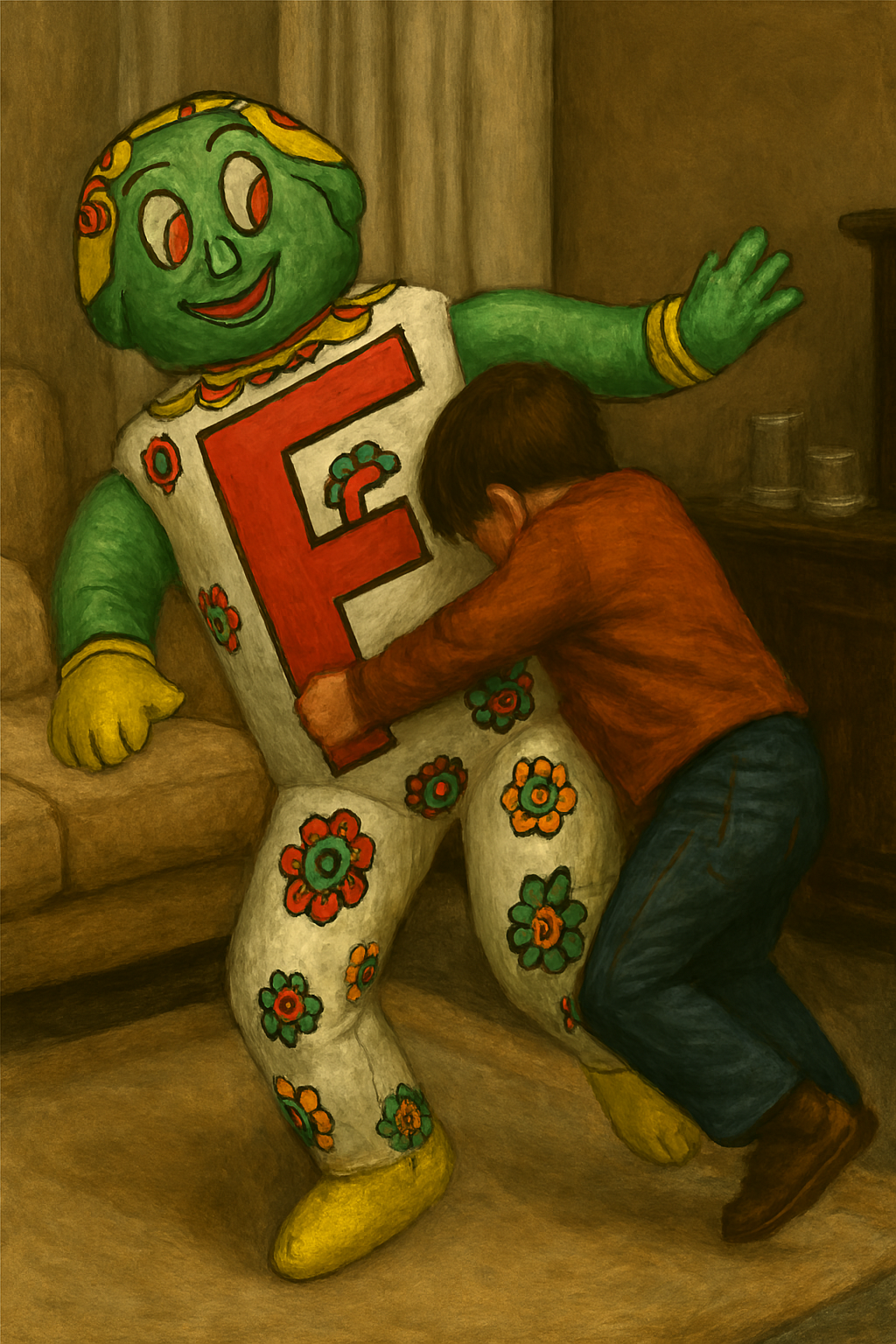
I don’t know if it was Miss Landow’s first day on the job, or first week, but Tommy Spenceri decided to challenge her authority. Either that, or he didn’t have the patience I did to work through his progressions. Whatever the case was, Tommy could no longer abide by the “no touching” policy anymore when we met Mr. F, and his floppy feet. He rushed to the front of the classroom to employ what a defensive tackle in football would call a bull rush, and he knocked Mr. F off his floppy feet. He hit Mr. F square, drove him onto his back and popped him. Nobody screamed that I remember, but I was on the verge of it. Tommy ruined Mr. F before I got to know the man, and Tommy deprived me of developing whatever relationship I might have developed with Mr. F. 

Tommy Spenceri was six, I know that now, but back then I considered his flagrant violation of protocol so horrendous that I couldn’t look at Tommy without disdain for his inability to restrain his primal impulses. When Mr. F returned, the next day, his hole was taped to help him retain air pressure, but I couldn’t look at him, because he appeared weak to me now, tainted as it were, and I had no respect for him. It’s a bit callous, I know, but how many six-year-olds know anything about the complex emotion of sympathy?

The one thing that Tommy introduced to me was the concept of moderation. I was never going to commit what I considered a flagrant violation of protocol as horrendous as he did, but with Mrs. Chamberlain gone, her leadership mystique went with her, and to my six-year-old mind, that opened a window of opportunity. I don’t remember the exact timeline involved here, but at some point I conspired with my younger brother, a heist of a Letter Person. I wasn’t sure which Letter Person I would steal, or if I would steal all of them. I had favorites, but I didn’t want to play favorites. I didn’t want to leave a man behind, so my plan broadened out to stealing two of them, to three, to however many I could grab. I was not the type of kid who stole things, and I considered the whole idea shocking, and I considered how shocked and disappointed my mom would be if I was caught. I was so in love that The Letter People that it grew into an obsessive, unhealthy love that some might characterize as stalking.

Immediately after Tommy Spenceri committed his horrendous violation, I was disappointed that Miss Landow, and the powers that be, didn’t punish Tommy as severely as I thought they should’ve. They gave him what they called a “stern talking to”. Tommy violated the sanctity of The Letter People, and their primary “no touching” rule, and all they gave him was a “stern talking to”? Tommy maintained his smug smile throughout this “stern talking to”, and I watched it all thinking that they weren’t do enough to protect The Letter People.

When I began plotting and planning this heist, my perspective on Tommy’s soft punishment changed. I now realized that if they caught me, they might give me nothing more than a “stern talking to”.

While in the planning stages, I realized that I didn’t know where The Letter People went after our week with them was over, and I decided to start watching the routines of Miss Landow in the coming week to see what she did with The Letter People when our lesson plan concluded. I don’t remember how sophisticated my plans were, but I remembered those people who stole things in movies, and I saw how often their episodes ended in gunfire with the thieves who survived eventually going to jail. As much as I wanted to spend more time with The Letter People, and become better friends with them as a result, I figured that I wasn’t ready for gun play, and I was pretty sure I wouldn’t do well in jail. I eventually chickened out, because as much as I wanted to spend the rest of my life with The Letter People, I couldn’t stand the thought of life without my mom. I tried to live a life without her once before, when I ran away from home, and she let me. Everyone considered thought it was so funny that I couldn’t get to the end of the block without her, and I found it humiliating to realize I wasn’t able to exist on my own. 

With that fantasy out of sight and out of mind, I moderated further. I developed a foolproof plan based on the patterns and behaviors I watched the various players in our school for the next couple of days. When we went to recess and played on the playground for however long it took, Miss Landow stayed with us, observing us. On the rare occasion someone had to use the restroom, she allowed them to go inside the school, unmonitored and unaccompanied, to use the facilities. Once I mustered up the courage, and that took some time, I asked to be excused from recess.

The path to the restroom and our classroom were the same, until we hit a fork in the hall, turn right and we’re headed to the open-doored classroom. Turn left, and we’re headed to the bathroom. I thought about this in the planning stages, and I followed my plan to the letter. After asking her if I could go to the restroom, I approached the fork in the hall as casually as I did any other time I went to the restroom, and I turned left to the restroom. I stood on that corner and looked back at Miss Landow. I could see her through a window in the door, talking to a fellow teacher and laughing about something. I carefully looked in every direction, and then I held my breath and crossed the hall and entered into our kindergarten classroom. 

I felt a “whoosh” of emotion when I crossed that threshold, as it was my first experience with committing something so wrong it felt right. I looked back down the hall and up the hall to see if anyone witnessed my transgression. The coast was clear. My immediate thought was to initiate plan A and steal Mr. Q, but I couldnt think of a way to conceal him well enough to sneak him out the door. Years later, I wondered why I didn’t just deflate him and hide him in my shirt, but I’m pretty sure I didn’t know Mr. Q was inflated back then.

When I finally stood before Mr. Q, I didn’t know what to do. My plan B did not include any details of what I should do when I was finally alone with him, because I didn’t think I’d make it that far. I didn’t want to tackle him, or hurt him in the brutish manner Tommy Spenceri did. I just wanted to touch him little, and I did. It felt a little naughty, but it felt cathartic and pleasing in an almost spiritual manner to run my fingers across him. Then, I touched him so much that I began squeezing him softly, and when I did it made a scrunching sound that I enjoyed. I scrunched him a little more, and then I lowered to a knee and sniffed him, and Mr. Q’s scent was so unique and pleasing that I neared him even more and inhaled that smell deeply.

For most people, memories of childhood are relative. Some remember a few snapshots from high school, some go back further, but very very few can remember anything beyond sixth grade. This moment I spent with Mr. Q felt so special that I would recall it, decades later, when I held a beach ball for far so long for my friends gave me a look that suggested I was doing something concerning. I also remember that I would continue to use the restroom excuse to visit the other Letter People we met after Mr. Q, onto the final days with Mr. Z, but my sensorial and physical relationship with Mr. Q, who I knew would remain quiet about our interaction, was the most special.

When the class photo day arrived, months after we began meeting these characters, Miss Landow brought back Mr. T and Mr. M for the photo, because they were the most popular, but I wanted to spend more time with Mr. Q and the other Letter People that weren’t as popular. We didn’t spend as much time with them, and in my opinion, we never truly got to know them or learn their essence.

Years later, my brother discovered that there was a The Letter People television show. Back then, a kid in kindergarten spent a half-day at school, and he was able to watch that show while I was in school. That destroyed me a little, because I felt my relationship with these characters, three years out, still felt incomplete. I was so bitter and angry that I could barely contain myself. I eventually saw this show, and I don’t remember if it occurred in the first episode I saw, or soon thereafter, but my interest waned quickly. I was too young to know that someone wrote and directed these episodes, and I knew nothing about voice actors, or any of the players involved in such a production, but I thought they did it wrong, all wrong.

“There’s no way Mr. T talks like that,” I, a budding critic, told my brother. I also complained about the various interactions of these characters in whatever nine-year-old verbiage and understanding of the world I had at the time. I thought almost all of the characters were wrong, or different than what I imagined. It wouldn’t be the last time a production left me feeling disillusioned, but when my brother later urged me to watch another episode with him, I told him I wouldn’t be watching it again. I didn’t know it then, but watching these characters actually interact with one another ruined all the mystiques I built up for them when I imagined who they were, what they cared about, and how they might interact with me if I ever got the chance to meet them in real life. I was obviously a kid with an overactive imagination, but when I finally recalled why the feel and smell of a beach ball was so special to me, I realized what an incredible time I had being a kid, and I had The Letter People to thank for their small role in it. 

Dead and Gone: The Rock Stars of Yesteryear 


Some of my favorite artists are dead now, and some of them are just gone. What do we do when one of our favorite artists die. When they die at twenty-nine-years-old, it’s a time for mourning, and a time to think of what they could’ve been. When they’ve already been, and they haven’t been relevant for over forty years, and we learn that they had grandchildren, and in some cases great-grandchildren, it feels a little odd to mourn their passing. They gave us some great music, and perhaps the greatest homage is to simply listen to what they did and appreciate it for what it was way back then. It’s also weird to go back to their catalog and realize they haven’t come out with new music in thirty years. When we listen to them often enough, or they manage to keep their name out there is various ways, it can seem like they were putting out music as far back as a couple years ago.

Before dying, or finally leaving the stage after their fourth or fifth reunion tour, some of them braved “the age thing” and put out a new album. We went to their concert, because we loved them so much at one time, and we knew they were going to play their new songs, because they wanted to sell their last gasp album, but we wanted to hear their classics … until we heard them, and saw them sing that song we loved so much forty years ago. The reason that song was so compelling is that it was fun, obviously immature, and a rock-your-buns off classic. After the euphoria of hearing our favorite song from them died out, we realized that the man onstage is a seventy-year-old trying to recapture what made them “special” in their twenties. 

***

Dating back to an era so long ago that I now feel so old writing about it, I played the song Toys in the Attic in my car so often that my girlfriend’s three-year-old daughter could sing the refrain. She probably had a vocabulary of less than 300 words, but she knew those lyrics from that song. I also named my first dog Tyler. Seeing as how this was between their creative peak, the Toys in the Attic and Rocks era, and their Permanent Vacation commercial peak, I might have been one of the few who had Aerosmith in his tape deck nonstop. Now that they’re done as artists, we can look back and think they should’ve been so much more. Would their creative output have doubled if they decided not to experiment with drugs? That’s impossible to know and probably unfair. Even if they stayed clean throughout, they probably would’ve experienced creative highs and lows, and how many relatively clean artists came out with five straight top-to-bottom incredible albums? I can think of two. There was a time when I thought Aerosmith might be one of them, the elite of the elite. They weren’t, but I still think they could’ve been so much better if they didn’t fall prey to chasing the dragon. Yet, that was the nature of the beast, back then.  

*** 

Was there a rock artist who did more with less than John Michael “Ozzy” Osborne? We all know the icon that Ozzy became, the charismatic frontman who could put on some theatrical shows, but when we strip those elements away, we have a relatively untalented man who ruled rock music for over 50 years. He didn’t have great vocal range. Even his most ardent fans would admit that while Ozzy could sing, and he had one of the most distinctive voices in rock, his vocal range was extremely limited. His appearance, though suited for the role of a “Prince of Darkness”, was not what anyone would call pin-up material. According to his primary lyric writer early on in his solo career, Bob Daisley, Ozzy Osborne came up with melodies, but he didn’t write lyrics. Even with all that, I had friends and family who were diehard fans, and they said, “There’s Ozzy, and then there’s everyone else.”

There was no one quite like Ozzy Osbourne before he became “Ozzy!” He basically created this character, embellished it, and built it into something that no one will ever try to do again.   

He was a one-of-a-kind, charismatic showman who could dwarf just about anyone who stood on stage with him, but if we strip away the legendary aura that surrounds him, we have a giant in the industry who wasn’t very talented.

As a young man, Ozzy met a gifted lyricist named Terence Michael Joseph “Geezer” Butler, and they invited a guitarist named Tommy Iommi to join them in a band they eventually called Black Sabbath. Tommy ended up writing the music for the band, and Geezer Butler wrote 95% of the lyrics for the Black Sabbath songs. Ozzy did, according to those who’ve worked with him, have a gift for creating melodies for the songs that others wrote, and some say these melodies were often one of the reasons the songs and albums proved so successful. He’d often hum to the music, and his writers would write accordingly. So, John Michael “Ozzy” Osborne didn’t have dynamic vocal range, he couldn’t write lyrics, and wasn’t very good looking, but he ended up playing a prominent role in music that sold over 100 million albums. He was inducted in the U.S. and UK Hall of Fame, and he was honored with stars on the Hollywood Walk of Fame, and the Birmingham Walk of Stars. No one will deny that Ozzy was charismatic and a great showman, but he and his wife Sharon’s greatest talents may have involved spotting talented individuals and collaborating with them. To this day, I look at the man, listen to him talk, and consider his oeuvre, and I still cannot believe that he succeeded to the degree he did.  

*** 

One of Ozzy Osbourne’s writers, Ian Fraser Kilmister, AKA Lemmy, would go onto form his own bands, Hawkwind and Motorhead. Lemmy Kilmister was another shouldn’t have been. As he proved with Ozzy, Lemmy could write lyrics. Other than that, he may have been further removed from pin-up boy than Ozzy. Those of us who try to figure out what women find an attractive man are often incorrect, but my guess is that few women would ever find Lemmy Kilmister an attractive man. 

The music of Motorhead had harmonies, but they would never be confused with the pleasing harmonies of The Beatles or an Air Supply. When we hear him sing, we imagine that that’s probably what zombies would sound like, if they existed. This is probably the sound that vocal cords, damaged by death, might sound like. If the listener prefers the pleasing sounds of a David Bowie or Thom Yorke harmoniously developing a relationship with the music, they probably wouldn’t understand how others could prefer Lemmy. 

He has the type of voice, similar in some ways to Tom Waits, though Waits found a way to make his gravel, growl, and guttural vocals harmonious and beautiful. We could also compare Lemmy’s gargling motor oil vocals with Captain Beefheart’s fragmented expressive vocal stylings, but Lemmy was more about brutish attitude and utter defiance than artistic technique.

“What is that?” is our reaction to hearing Lemmy sing for the first time. We might even consider it so bad as to be a joke, but Lemmy carved out an ever-expanding fanbase that put him in a relatively successful level that I doubt anyone would’ve predicted at the nascent of his career. He was also not a great interview for the softhearted types who favor artists that say wonderful and nice things.

There were no A&R guys in Lemmy’s camp early on in his career, and he had to almost do it all himself. I’m sure he had some undocumented assistance throughout his career, but by almost all accounts, Lemmy had to do it all himself. He was a self-made man. He expressed his disappointment in this regard when his career was eventually commemorated, and company men lined his audience. Lemmy did the opposite of thanking them for being there. “Where were you guys?” he asked them. We have to have some sympathy for those A&R guys though, because how could they sell this man to the public? If Lemmy wasn’t the most original and unique musical artists you’ve ever heard/seen, then you know far more about this world than I do. If Lemmy wasn’t an original, he gave new meaning to the Oscar Wilde quote, “Be yourself, everyone else is taken.” 

***

Billy Joel was Billy Joel for those of us who were young in the 70s and 80s. He was so ubiquitous that we never really considered him a man who just happened to be an artist. We’ve all heard about how many records the man sold, and we just kind of yawned. Every time he cranked out another song, we all heard too often on the radio, it was but another Billy Joel song that we loved, but it left you with a “What do you want me to do with this?” response. When we’re there, in the moment, we don’t recognize how hard it is to keep creating great songs. We all thought it was just something Billy Joel did. Some men wash dishes for a living, others prepare taxes for others, and Billy Joel writes songs that stick in your head like peanut butter.

Seeing these songs chronicled in the And So it Goes documentary on Billy Joel, as opposed to hearing it in yet another greatest hits compilation, gave us a new perspective on this man. We watched it with a “I forgot about that song” and “That’s right, he wrote that one too” reaction that struck me as if I never considered that he wrote all of those songs. Billy Joel was so prolific for about twenty-two years, at a near album a year pace, that he defined a generation.  

Billy Joel was also trapped in the 70s and 80s when we could say there were so many great artists coming out with new music nearly every year. Even in that vein, Billy Joel was one of the few pillars of commercial dominance. He is the fourth bestselling solo artist in U.S. history, his Greatest Hits I and II still ranks as one of the bestselling albums of all time, and he’s in the Rock and Roll Hall of Fame.  

The market was so stratified back then that we were all satisfied; the pop fans, rock fans, punk rockers, new wavers, etc., all had their favorite artists. It was such a prolific era that we can only appreciate in hindsight. I loved it at the time, but it also felt like it was just that way, and it always would be. At the risk of sounding like an old man, I think it’s just different now.   

Even after watching And So It Goes, I still wouldn’t put Billy Joel in my personal pantheon of greatest musical artists of all time, but the magnitude of his discography, as displayed in And So it Goes, makes a compelling argument that he was one of the best of his generation, and if you told me you thought that before I saw this documentary, I probably would’ve scoffed at you. My biggest takeaway from this documentary was that this 70s/80s era was just packed with so many great artists coming up with song after song and album after album that we thought this was just the way things would be forever. It hasn’t worked out that way, but what an incredible time it was to be a kid listening to all of that incredible music for the first time. Those artists seemed like machines, but documentaries like this one, and others, remind us that real humans did this, and that we should cherish them for what did for us back then.