Tesla’s Pigeon


“I loved that pigeon as a man loves a woman, and she loved me. As long as I had her, there was a purpose to my life.” –Nikola Tesla.

I’ll go ahead and leave the discussion of whether Nikola Tesla is the GOAT (Greatest of All Time) or a GOAT to those with far more knowledge on the subject, but if any individual embodied the spirit of a domesticated bezoar ibex, descending from the Zagros and Taurus mountains to join humanity’s ranks, it would be Nikola Tesla.

Some skeptics dismiss the reverence for Tesla, saying, “I wouldn’t call him the GOAT.” Their argument? “He was first, I’ll give you that. He discovered how to harness alternating current, enabled wireless communication, pioneered remote control, and achieved countless other feats that revolutionized humanity, but,” and here’s where they make their c’mon! faces, “don’t you think someone else would have come up with all of that eventually?”

This is where we’re at, apparently. We’ve grown so accustomed to enjoying the fruits of genius that we downplay the achievements themselves. In today’s world, the process of celebrating greatness often involves systematically dismantling it. We begin by humanizing our icons—making their lives relatable and their quirks amusing—to draw in readers. We peel back the layers of their accomplishments, not to marvel at them but to suggest that anyone else, given the chance, might have done the same. We present witty but reductive “but-did-you-knows” about their flaws, as though to bridge the gap between their brilliance and our everyday mediocrity.

We build them up just to tear them down, all to feel better about ourselves.

“See, Henrietta Bormine, my wife? That Tesla guy wasn’t so great. He had outdated ideas about [insert pet issue here]. I could have achieved what he did—anyone could’ve, really, if they put in the effort.”

This is what we do now.

The thing about these “Anyone could’ve done it” arguments is that they’re almost impossible to defeat. Perhaps, with the same dedication—those mythical 10,000 hours—someone could have achieved what Tesla, Einstein, or da Vinci did. Most discoveries, inventions, and breakthroughs lose their superhuman qualities over time. Who invented the television set? “Someone would have eventually.” Who invented the microwave? “Was there an inventor?” Who invented the toaster. “Boring.” The next question is if anyone could’ve invented these things why didn’t they? Another factor that makes these arguments almost impossible to defeat is the idea that we cannot remove the geniuses from the timeline to test their theory.

This debate also leads me to the question I have when anyone drops a GOAT on someone spectacular, what separated the genius from their competition? Was a man like Nikola Tesla simply a right time, right place type of guy? How many people, in his era, were racing to explore the lengths of man’s ability to harness and manipulate electricity for human needs and eventual usage?

When we were kids, we thought Benjamin Franklin invented electricity. I don’t know how we twisted that story in such a manner, but it wasn’t long before a representative from the nerdy brainiacs set up straight. “Think about how foolish that sounds … How does a person invent electricity? He just advanced the idea that it could be harnessed, and some even debate that notion. They suggest that numerous others were conducting similar experiments. think there were a number of people messing around with experiments and displays of harnessing electricity, but Franklin was just the most famous person to put his name to such theories, and his fame and notoriety put all of those long-standing theories on the map.”

Tesla’s name belongs on the timeline of scientific advancements in electricity, but his achievements don’t stand in isolation. His legacy is interwoven with the work of predecessors, peers, and successors whose names are far less known. And here’s the ultimate question: How many “relatively anonymous figures” from history accomplished even a fraction of what Tesla did? For the sake of argument, let’s call this unsung hero “Todd Callahan,” because it feels like the quintessential everyman name for such musings.

This fictional Todd Callahan grew up much like Nikola Tesla—a curious science enthusiast who stood out as the smartest person anyone in his area had ever known. They dubbed Todd an “uncommon genius.” While other kids spent their afternoons throwing balls in open fields, Todd was tinkering with stuff. When other boys his age played with the toys, Tesla and Todd tore theirs apart. They enjoyed destroying stuff as much as every other young boy, but this wasn’t destruction for distruction’s sake. They did it to rebuild the toys, and they destroyed these toys and rebuilt them so often that they developed an understanding for mechanics in a way that set them on the path to innovate and manipulate the natural world.

Todd’s brilliance was evident early, earning him both admiration and envy from those around him. His neighbors marveled at his genius, and perhaps some resented it. Even the tenured professor, who encountered hundreds of bright students every year and would’ve scoffed at GOAT-like superlatives, privately admitted to his colleagues that Todd Callahan was special.

How many Todd Callahans existed during Tesla’s time, and what distinguished them from each other? Was Tesla, as an adult, more daring, more imaginative, or simply more willing to embrace failure and learn from it? We could say D) all of the above, but the most vital factors in Tesla’s journey to success might have been the simplest of all: hard work, patience, and time.

Time, above all, may have been the decisive factor separating Nikola Tesla from the Todd Callahans of history. Tesla devoted his life—every ounce of energy, thought, and purpose—to science. While this now feels like a cliché description we could apply to many “almost Teslas” of history, it’s worth considering its weight. Imagine mentioning at a party, “Nikola Tesla devoted all of his energy, his time, and his thoughts to science.” The likely response? A collective yawn or polite indifference. It’s not the kind of revelation that stuns a crowd—it’s too broad, too general to feel significant.

But for Tesla, it wasn’t just a statement; it was a truth that defined his life. As Petar Ivic wrote, “Tesla’s only love, inseparable and sincere, was science.”

We probably have to add terms like ‘inseparable’ and ‘sincere’ to capture attention, because every major figure in history devoted themselves to something. The modern adjective we drop on someone so devoted to the particulars of their craft is gym rat. Judging by descriptions of Nikola Tesla’s physique, he never spent time in a gym, but the analogy holds true when we learn that he spent so much of his free time in life in labs and various other enclosed rooms that skin cancer was probably never one of Tesla’s concerns.

Even suggesting that Tesla probably spent a majority of his life in small rooms, testing various ideas and experiments probably doesn’t move the needle much, but the difference between Nikola Tesla and the various Todd Callahans of human history is that Todd Callahan was a normal man driven by normal needs, and normal wants and desires. Todd wanted to achieve as much as Tesla did in the fields of science, but as some point, the man wanted to go home. He sacrificed a lot in the name of science, but he loved to fish and hunt on weekends, and he loved playing card games with the fellas. Todd was a normal man who loved science, but he also loved women. He dated a variety of women, until he found his true love, and they settled down to have a family, a dog named Scruffy, and a white picket fence to keep Scruffy and the kids from harm.

Tesla refrained from these normal pursuits in life, fearing that they would take away, or diminish, his pursuit of steadily advancing the science of electricity. We could say that Nikola Tesla refrained from pursuing a sense of human wholeness, or a sense of completion, but we could also say that was his edge.

“I do not believe an inventor should marry,” Tesla said. “A married man is precluded from devoting himself to his work. Therefore, I have chosen to remain unmarried and to pursue my work.” Tesla believed celibacy allowed him to maintain acute focus and channel his energy entirely on his inventions, and as opposed to most science nerds, Nikola Tesla did, in fact, have list of women who were all but beating down his door.

Nikola and His Pigeons

Nikola Tesla took the “hard work, patience and time” devotion to his craft so seriously that he tried as hard as he could to void his life of distractions, physical and otherwise. The only vice, it appears he had, was an utter devotion to pigeons. He could spend hours at a time feeding them at the park. In his pursuit of fowl friendship, he occasionally encountered an injured one. When that happened, he brought them back to his hotel room to nurse them back to health. He was known to leave his hotel room window open to allow pigeons full access to his room whenever they needed. He also had a habit of asking the chef of the hotel to prepare a special mix of seeds for his pigeons to, we can only guess, gain him an unfair advantage among those seeking friendship and more from the pigeon population.

The one thing that those of us who know little about birds, and nothing of pigeons, know is that birds are not what we’d call discriminating when it comes to where they decide to relieve themselves. Bird enthusiasts suggest it is “difficult but possible to potty train a bird,” but there are no indications that Nikola Tesla, a germaphobe before being a germaphobe was cool, spent any of his precious time on Earth devoted to that cause. Thus, we can only guess that Tesla’s hotel room wouldn’t make it in a Better Homes and Garden feature article, and we have to imagine that if that list of potential suitors, mentioned above, got one look, or whiff, of his hotel room it might diminish his demand. The historical record suggests that this was also one of the reasons why some of the hotels he lived in gave him the boot.

Nikola Tesla was willing to sacrifice all of that for an afternoon spent in the company of his favorite beings on the planet, and in the midst of all that, Nikola Tesla found true love for the first time in his life. As with any person who surrounds themselves with people, places and things, we eventually whittle them down to a focus of our attention and love. Tesla found that in one of the pigeons who regularly kept company with him, a white pigeon with some grey highlights. He declared that this pigeon would find him, no matter where he was, and spend time around him. Eventually, as with all pigeons, this one fell to an illness. Tesla took her back to his room and tried to cure her illness, but this man of miracles, could not save his one true love in life. It broke his heart, as it breaks all of our hearts when a beloved pet dies, but Tesla was so broken hearted that some suggest he experienced such a feeling of hopelessness, and such a general sense of purposeless, that he died days later of a broken heart. We’ve all heard tales of an individual who dies shortly after their spouse, and that appears to be what happened here, with Tesla and his beloved pigeon.

Before he died, Tesla informed others that his beloved pigeon visited him on the day of her demise, and “a white light shone from her eyes, brighter that anything I’ve generated with electrical machinery.” Shortly after her death, Tesla told friends that his life’s work was finished.

This story is used by some outlets to diminish Nikola Tesla, and the Tesla quote they use is that he loved a “pigeon as a man loves a woman, and she loved me.” The intent is to suggest he was such a wacky scientist that couldn’t properly manage human relations, so he devoted his passion to this rat with wings. It’s funny on the face of it, but how many of us “love” a dog so completely that when the little fella gets run over by a car, we’re broken hearted? As Jules, from Pulp Fiction would argue, “But, dog’s got personality, [and] personality goes a long way.” It’s true, but when they die, we cry and make damn fools out of ourselves in a way that those who witness it will never forget or forgive. “I’m sorry, but it’s a dumb dog,” they say with derision. How many have the same passionate love for a cat, who in many ways fails to return love in the demonstrable ways a dog can. Some love a pig, a rat, and a snake in much the same way, even though we can’t understand how anyone could develop a quid pro quo relationship with such animals.

Is it a little quirky any time a grown man develops such passionate feelings for a bird, but this happened late in Tesla’s life when we can only imagine he lost much of his drive, passion, and that almost unquenchable thirst for accomplishment was probably quenched, and that probably created a void in which he began to focus on how lonely he was in life. Some part of him may have also regretted not seeking human companionship more in life, but he may have felt that he waited too long, and that the time for all that had long-since past. As such, he may have sought an unconditional friendship that allowed these pigeons to become repositories for his love. Anyone who has read about Nikola Tesla knows he was a passionate man, and when he reached a point where he felt he accomplished everything he wanted to in life, he looked for more tangible ways to express his sense of love. I doubt Nikola Tesla went to the park bench, looking for the type of love only a pigeon can provide. I’m sure it just happened, and we can’t control who we fall in love with.

It’s Special


“Watch Alien: Romulus,” a friend of mine said. “It’s special.” 

I loved that characterization. It was so simple that I wish I thought of it first. To set up the backdrop to this characterization, my friend and I have a long history of spoiling movies for one another by overhyping them. “The greatest movie ever!” we said a couple times. “Top ten in the genre,” we said, specifically listing the genre. By saying the movie was special, I think my friend was hoping I would see the movie, but he wanted me to see it, and judge it, even, or without hype. I’ve been on both ends of this. I am superlative man! I’ve ruined more than a few movies for others by going so far over the top that the recipients of my superlatives couldn’t help but consider it “Good, don’t get me wrong, but you were going so ape-stuff over it that I watched it thinking it would be the greatest movie ever made.” I’ve been on the other end of that too, and I’ve watched movies others hyped up for me, eager for that movie to absolutely blow my mind. What do we do? We “meh” our way through it, and then, we return to our friend the next day and say, “It was good, don’t get me wrong, but top-10? I don’t think so.” It’s entirely possible that if we didn’t plant these GOAT eggs on one another, we might’ve considered the movie in question as great as they did. As we all know, distinguishing good, bad, great, and awful can often be all about the mindset we have walking into the theater. So, from this point forward, I am going to adopt my friend’s “special” characterization for any movies, books, or music I hear, and I’m going officially declare to anyone reading the following list of all of my superlatives, regarding the “greatest works of art of all time!” that with the powers vested in me, as the writer of this article, it’s special.

Merriam-Webster defines special as “Distinguished by some unusual qualities.” Other resources list it as, “Better, greater, or otherwise different from what is usual.” My personal definition of special is different, as in a different kind of genius. Some label special geniuses, disruptors, because they dare to be different. They dare to tackle their projects in a way that either no one ever considered before, or they thought it violated some tenet of their definition of art. I choose to dismiss the “better and greater” definition of special, because unusual and different often get lost in debates of quality. Debates over quality often invite technical qualities I know nothing about. I often expose my ignorance in technical quality debates, because I view most technical qualities as trivial. I know special though, and that characterization often leads to ‘Ok, what do you know?’ questions. “I don’t know,” I say paraphrasing a Supreme Court Justice, “but I know it when I see it.”

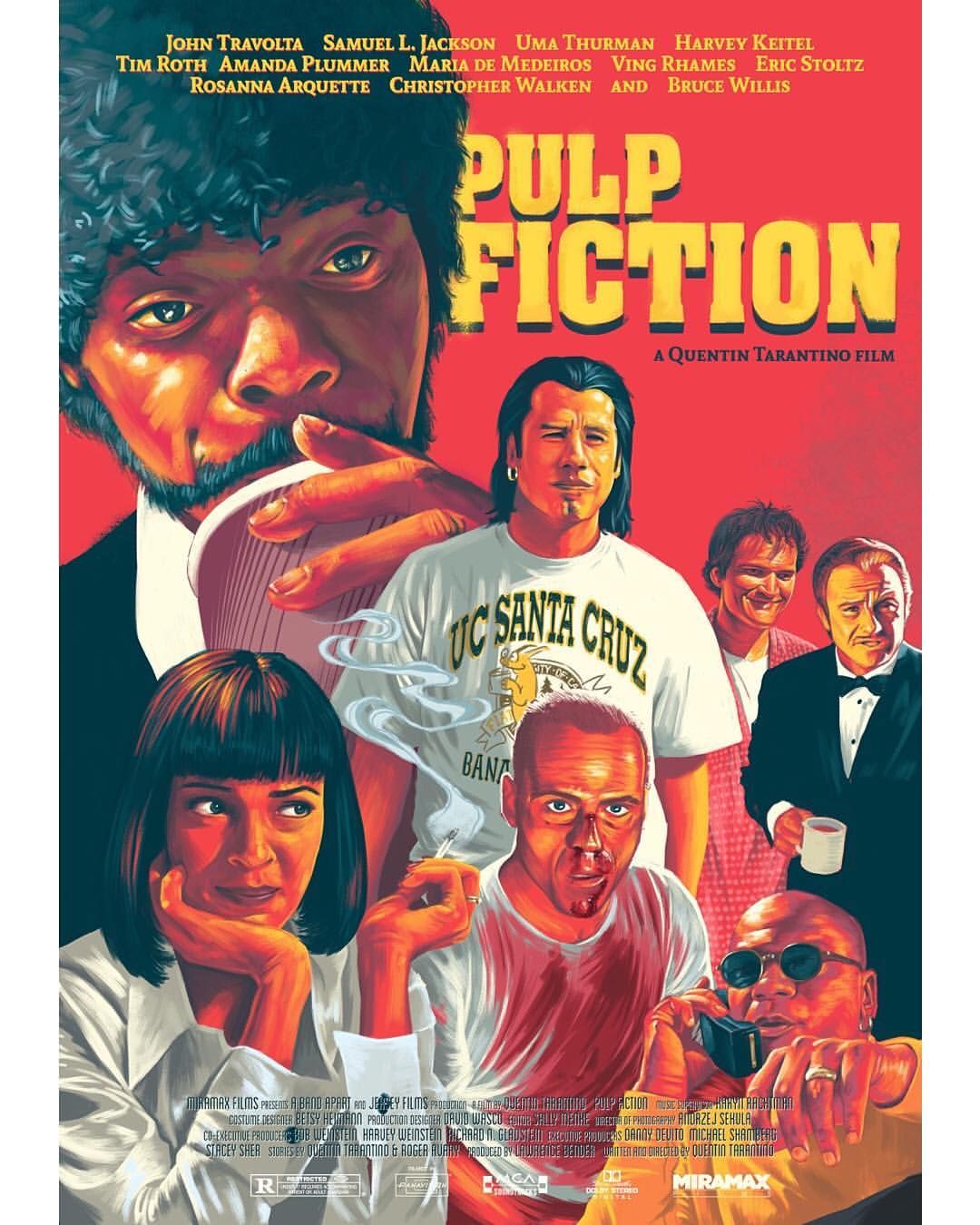
If Quentin Tarantino died shortly after making Pulp Fiction, he would still go down as a special genius. Some of my friends didn’t enjoy the movie for a variety of reasons, but they still saw it. Just about every single one of them admitted that it had special qualities. If I attempted to dissect the technical qualities of this film, I would display my ignorance on the subject, but suffice it to say that among all of the reasons this movie was special, the primary one was dialog. Some suggest Tarantino worked for ten years to perfect the dialog, and it shows. Bruce Willis claimed it was the only movie he ever worked on that didn’t have one single rewrite. There were so many incredible and unforgettable scenes in the movie Pulp Fiction that we could bog this entire article down with a play-by-play dissection of each scene, but we’ll focus on three of the highlights. The dialog between Vincent and Jules in the introductory scenes was special, because the careful word choices defined the characters with such immediacy, and the action scenes in the apartment were so over the top that they were funny, horrific, and funny/horrific. The countering scene, later in the movie, between Butch and Fabienne, was just as special for its delicate and deft subtlety. The scenes between Vincent and Mia had special, influential and transcendental dialog, and the scene in the restaurant—sans the overrated dance scene—was unforgettable. Even while watching the movie for the first time, in a dingy, old theater long since closed, I experienced a tingle that suggested I might be watching the most special movie I’ve ever seen. I didn’t need to unearth its special qualities in the conversation I had leaving the theater, or read critical reviews to enhance those beliefs, I knew Pulp Fiction was special while sitting in the theater watching it for the first time, and it might be the single most enjoyable experience I ever had in the ever-dwindling experiences I’ve had in a theater.

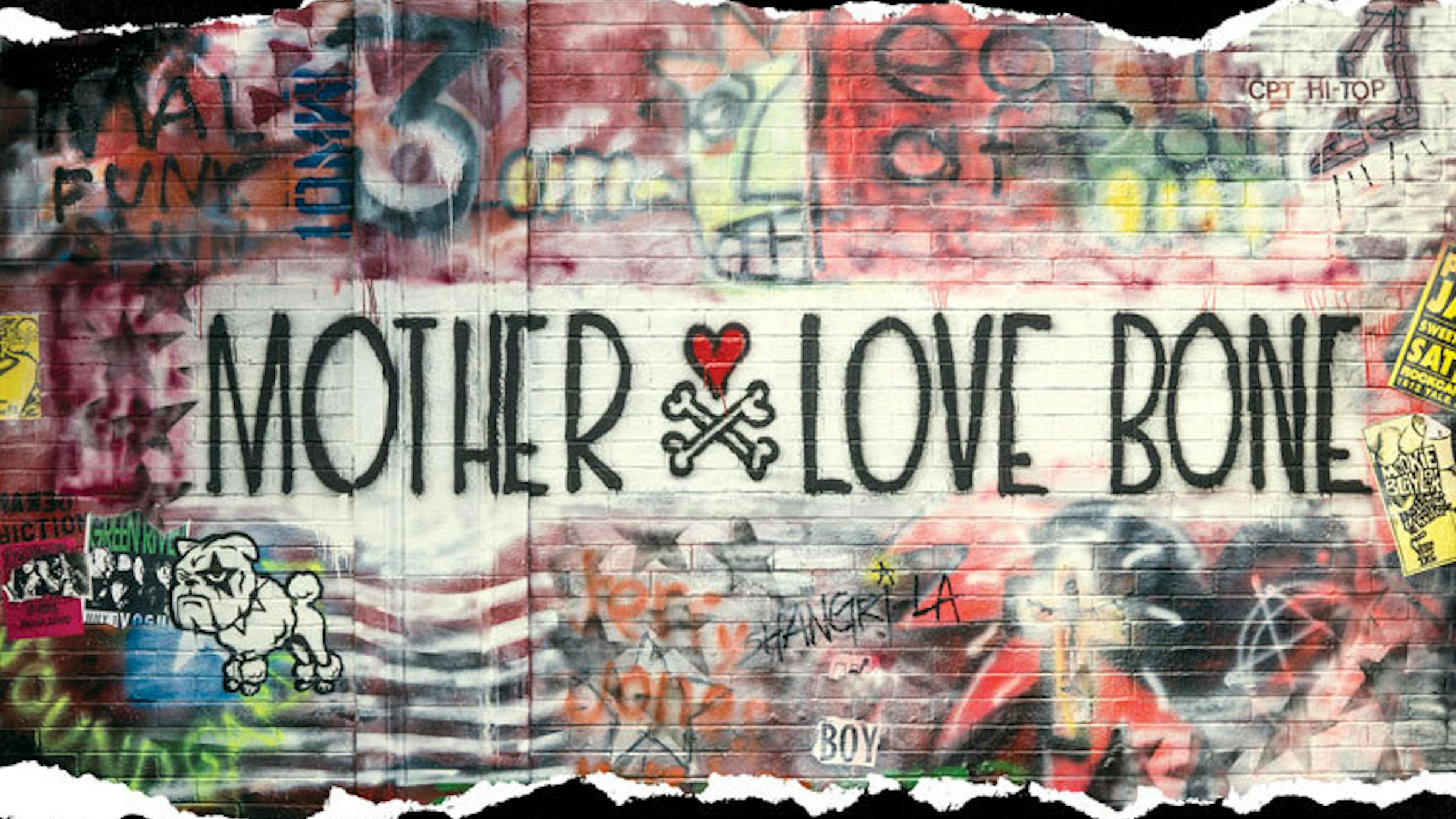
Mother Love Bone’s Apple was special. I’ve had debates with musicians and other music freaks who know far more about music than I do, and they suggest that the lyrics on Apple were campy, silly, sophomoric, and hippy-trippy lyrics that haven’t aged well. It might suggest that I’m a campy, silly, sophomoric person who hasn’t aged well, because no matter how often I’ve heard and read those complaints, I still don’t see it. To my mind, Andrew Wood was an unusual genius when it came to writing lyrics. After lead singer his premature death, some of the band members reformed with a new lead singer, and formed Pearl Jam. “Ten was superior to Apple in every way, shape, and form,” my musician friend informed me, “and Eddie Vedder was a better lyricist, and he had a better voice.” My goal here is not to criticize Ten, Pearl Jam, or Eddie Vedder, as I enjoyed them for what they were, but they weren’t special to me. I rarely paid attention to lyrics before Apple, and I rarely have since, but Andrew Wood’s lyrics, his Andy-isms, as his bandmates called them, were special. They were funny, campy, sophomoric, and hippy-trippy, but they exhibited an unusual quality I still call “special” thirty-plus-years later. 

You are Not so Smart by David McRaney. “It is far easier to entertain than it is to educate,” someone once said. If that’s true, it takes a special kind of genius to do both at the same time. Some pop psychology books focus on being entertaining, but they are so base, negative, and shocking. Others are so serious that they sound professorial. It takes a special author to combine a special talent for dry humor and wit with professorial scholarship on a subject, and McRaney accomplished that with gusto. What this author did, more than any other, was teach this writer how to tackle serious subjects in an entertaining fashion. He also laid a blueprint for me to understand how to apply everyday situations to larger concepts, a blueprint I’ve pursued ever since. To my mind, You are Not so Smart would be an excellent companion piece for Psych 101 classes, because I think students, who get the dreaded dry eyeball ten sentences into their gargantuan, dry textbooks, would love the learning while laughing arsenal Mr. McRaney employed while writing this book.  

Whereas Pulp Fiction is in-your-face brilliant with quick, hip dialog, quick scene switches, and unforgettable music, the Coen Brothers invoke a more deliberate pace with quiet, casual dialog and more traditional music. I might be different from most Coen Brothers’ freaks, because I don’t think I ever “Wow!”-ed my way out of the theater with whomever I watched it. When I gathered with my friends later, and we remembered our favorite scenes, themes, and chunks of dialog together, I realize how brilliant that movie was. With all that in mind, I watched it again. It might be the way my mind works, but I think appreciation of the full breadth of the brilliance of a Coen brothers movie often requires a gathering storm of adoration. Fargo may have been the only one of their movies that hit me over the head with its brilliance, but I still had to talk about it and view it again to reach that “Wow!” factor. The Big LebowskiOh Brother Where Art Thou?, and Barton Fink all required some seasoning before I recognized how special they were.   

Our follow-up question to the Truman Capote quote, “You only need to write one great book” is, “What are you talking about?” In our ‘What have you done for me lately?’ society, we all love to say, “You think that guy’s a special genius, because I thought his last movie [album or book] sucked!” We love to say that about our special artists, because we all know they’re special, and we love to tear down facades. What I think Capote was saying is the author only needs one great book, album, or movie for the rest of us to know their author is special. If he comes out with 20 more works of art, we’ll probably buy ten of his other works before we realize he only had one in him. We’ll probably keep tabs on him too, “Did you read his latest? Is it any good?” We do this, because he really moved us once. His clever arrangement of words, reached us in a way so few do, and they really only have to do this once to start our love affair.  

It’s often difficult to express the special nature of watching a movie in a movie theater for the first time to younger people who now watch an overwhelming majority of the movies they watch on streaming platforms. All of the hype and planning behind trying to get someone to watch it with us was a production in its own right. When we found someone who was as excited as we were to watch the special director’s next movie, we said, “Let’s do it,” and when that movie premiered that Friday, we got together and experienced it together, with a room full of strangers and friend, with popcorn and soda in our lap. It was an “event”. I know some young people still do it, and I stream movies as much as anyone else now, but I think we all miss the event status of what it once was. 

There was also something special about holding a physical album, cassette, or compact disc in your hands, before sliding it into a player and cracking the binding of our brand new book. As a hyper kid who only wanted to do physical things, I became an avid book lover as I aged into adulthood. I loved reading a book in public. I felt like I was finally a part of a club, and I enjoyed  holding a physical copy of that book in my hands while flipping the pages. That’s almost entirely gone, and there’s something about the waiting that is gone too. Again, I could be overhyping the individual’s experiences, but I don’t think anyone eagerly anticipates the arrival of a new movie, book, album, or TV show. I had a hate/love relationship with waiting, similar to a child hating and loving the days until Christmas. We used to ‘X’ off the days on the calendar, until our favorite product would finally make it to store shelves, we’d talk to fellow fans, and build ourselves into a lather until it finally arrived. I could be exaggerating in this regard, but these products just seem to appear now, and we click on it. We might “know” that our favorite author is going to deliver a product to a streaming service sometime in the near future, but do we still eagerly anticipate its arrival? I know I don’t. It’s just there one day, and I click on it.

“In the grand scheme of things, what’s the difference between clicking on something and watching, listening and reading it? Once we’re halfway through it, if it’s great it’s great, and it can still achieve the same special status if it’s that good.” That is all true, but holding a physical copy of the product, even if momentarily renting it from Blockbuster, used to give the consumer of the product some level of ownership that created a “special” relationship with its creator that streaming cannot replicate. Some of us dreamed of this day, and when Napster first appeared, then iTunes, it felt like a realization of that dream, and we loved creating playlists to ‘X’ out some of the more boring deep cuts, but now that it’s all here, and we’re a couple decades into being used to it, some of the “special” event status of it is gone.

I still remember some of the “special” theatrical experiences I had. I remember where I saw this movie, and I still remember watching that movie with a group of friends and strangers, who enhanced my theatrical experience in a way only a group can. One of the movies I watched in a theater was not even that good, it was too long, and it tried too hard, but the theatrical experience I had that day was so “special” that I still remember it fondly, almost romantically. I remember the car I owned, and the street corner I passed in that car, the first time I realized the music I was listening to was the work of an unusual and special genius. I also remember the chair I sat in, the breakroom I read in, and the bathtub I laid in reading the works of genius, because, for me, to quote the group Climax, featuring Sonny Geraci, “Precious and few are the moments we two can share.” 

{Editor’s note, we did eventually see Alien: Romulus, and it was special, but we think we might have ruined the total experience that makes such movies special by watching it via a streaming service. Watching a comedy, or a more typical drama, can be appreciated in either format, but a great horror, sci-fi, or those rare masterpieces needs to be viewed in groups, in a dark theater, with popcorn and soda in your lap or drink holder.}

Hi, I’m Larry, this is my brother Darryl, and this is my other brother Darryl


“Hi, I’m Larry, this is my brother Darryl, and this is my other brother Darryl,” the actor William Sanderson, playing Larry, would say to introduce he and brothers Darryl played by Tony Papenfuss and John Voldstad on the Newhart show. With the passing of the actor Bob Newhart, and all of these retrospectives on his career, one would think someone, somewhere would break ranks and tell the story behind one of the most iconic and oddest running gags in television history. So far, nothing, silence, crickets!

It feels a little odd to call this line a catchphrase, because it’s not a phrase, and it’s not catchy, but it was repeated so often that we could at least call it a running gag of one of the most popular shows of its era. It was such an odd part of the show that one would think that everyone from the studio execs to the cast members themselves would demand some sort of explanation, backstory, or point of origin for the audience. (To my knowledge, there was never an in-show explanation.) We also wonder why, thirty-years since the show last aired, no one has ever taken credit for the line, told the insider story on how many hurdles it surely had to cross to before making it on air, and how it evolved from a simple introduction to a cultural staple. (My guess is it was a throwaway line someone threw in as a lark, and test audiences reacted so well to it that they decided to keep it in.) 

Newhart aired from 1982-1990, so it came about in an era where the demand for catchphrases, from sitcoms, was just starting to wane a little. This isn’t to say that the catchphrase died, because it probably never will, but prior to Newhart, every sitcom was almost required to have a catchphrase, but this was no longer the case when Newhart aired. My assumption is that the writers never intended for this to be the show’s catchphrase, and my guess is they probably didn’t want a catchphrase at all, but if you even mentioned the show Newhart to a bunch of people, during this era, someone said, “I love Larry, his brother Darryl, and his other brother Darryl.” The intro to the eccentric woodsmen caught fire, and before I knew it, everyone I knew was saying it in one way or another. 

Most shows from the 70s to the early 80s developed catchphrases to help audiences quickly identify with the characters on their show. Just about every popular show from this era had a catchphrase, and rather than try to list them all, we suggest you go to Flashbak.com for a top 25 list of the best catchphrases from the 70s, or you can go to Ranker.com for a list of the top 80s catchphrases. Characterization can be difficult and time-consuming of course, depending on the character, but screenwriters of TV shows needed something more immediate to help audiences identify quickly. Some of the times, networks only bought four-to-six episodes after the pilot to see if these shows could establish themselves, so the writers, the cast, and all of the others involved in the production knew they had to develop and characterize quickly, thus they created a word or phrase to help audiences relate to their characters quickly.  

They also had to use these words and phrases to accomplish a wide variety of things, other than characterization, quickly. They had to sum up everything about the character, they needed it to be fun and silly, and the phrase had to be a malleable word or phase that the writers and actors could use to match a wide variety of situations.

We all attached these shows to their catchphrases, and we all repeated them, because we all watched the same shows back then. Even if we didn’t watch the shows, we knew the phrases, because everyone we knew said them. The actors responsible for reading these lines said they couldn’t go anywhere in the United States without someone dropping the catchphrase on them, and some of them have tales of traveling to remote, third world locations where the locals would drop an ‘Aayyy’ or a ‘Kiss my grits’ on them.

If someone dropped the phrase on you, and you never heard it before, their response was usually laced with ridicule, “How could you have never heard this phrase before? Do you not watch TV, leave your home, or talk to other people?” We had three channels back then, and if we wanted to know what other people were talking about, or have friends of any kind, we knew we had to watch these shows.

For those who weren’t around during the 1982-1990 era, we all tried to come up with our own variations of “Hi, I’m Larry, this is my brother Darryl, and this is my other brother Darryl”. I had three friends named Adanna, Madonna and Lisa. When they hung out together, they decided to mess with the strange fellas they would meet in bars by introducing themselves, “Hi, I’m Adanna, and this is my friend Madonna, and my other friend Donna.” It was funny at the time, but it was probably funny because I was there, and I knew them. It might be one of those ‘you had to be there’ jokes for which you had to be there, but the point of retelling this is that this ‘Hi, I’m Larry, this is my brother Darryl, and this is my other brother Darryl’ joke was everywhere for a time.

With the passing of Bob Newhart, we might read writers of various publications attempt to eulogize him by placing his shows The Bob Newhart Show and Newhart in the upper echelons of quality programming. They weren’t, in my opinion. They were occasionally funny shows that weren’t extremely influential. Bob Newhart played the straight man to the silliness around him, and silly and funny gags and lines developed around this premise, but neither show was groundbreaking in situational comedy, and neither of them were headline stopping influencers. They were just occasionally funny sitcoms.

‘Hi, I’m Larry, this is my brother Darry, and this is my other brother Darryl’ also managed to have an insider/outsider quality attached to it. We all repeated the joke, and tried to develop clever ways of twisting it to those who would ‘get it’, and those who ‘got it’ were insiders, but the show was so popular for a time that everyone got it. We considered it a slightly quirky, clever way of describing salt of the earth type characters that added some backwater qualities to those who exhibited some physical characteristics that matched the three brothers. The question we never asked back then is who came up with this line, and what was their thinking? Was there an origin story, or some kind of backstory behind it? Was it a result of success, failure, or success through failure?

Was the joke a result of some typo in the original bible the head writer wrote for the show? We don’t know. Was there an original third brother, who had a name like Elmer, but the two actors were both mistakenly cast as the character Darryl, which led to an argument between the actors? Did one of the writers note the confusion and decide to pacify both actors by calling them both Darryl, and it turned into an inside joke that eventually leaked into the script? We don’t know. Did an original writer come up with an equally banal name, like Elmer, and the writers decided that name might be too on-the-nose for a backwoods hillbilly? Did the writers want a different, subtle, and unstated characterization of the brothers’ parents that illustrated the family’s backwoods nature by giving the same name to two different sons? Or, did some ingenious writer just spontaneously shout out, “Let’s just name the other brother Darryl too?”

“That is the ultimate taboo,” I imagine the head writer saying. “You can’t have two characters have the same name in a production. It will prove too confusing to the audience. We’re not even supposed to have characters names start with the same letter, much less the same name. What if we have one Darryl do something one week and the other do something else next week? How will people refer to them at the watercooler at work the next day, and how do we have the other characters refer to them? Do we label one Darryl one and the other Darryl two, or do we eventually call them one and two in some subtle homage to Dr. Suess? If we don’t do something like this, it will prove too confusing for the audience.”

“We keep the actors on the show for the sole purpose of this one joke,” one of the writers responded. “They don’t do anything themselves. They’re a trio, and Larry does all the talking for them, and he answers any and all questions for them.”  

“It is kind of funny, in a taboo breaking, offbeat, and weird sort of way,” the head writer would respond, “but no family gives two of their sons the exact same name?” (George Foreman would later name all five of his sons George.)

“Like everything else, it could be funny,” another writer adds, “through repetition.”

In any song, TV show, or movie, we eventually learn the long-held secret behind lyrics, lines, and why things in the production were the way things were, but to my knowledge, based on some research, no one has broken ranks to tell the tale behind ‘Hi, I’m Larry, this is my brother Darry, and this is my other brother Darryl’. The best explanation I’ve found is it just “became a recurring gag throughout the series”. The first time it happens, we’re kind of, ‘What did he just say? That’s odd.’ The second time through, we remember it from the first time, and then it builds and builds until it eventually catches on.  

We can only imagine that ‘Hi, I’m Larry, this is my brother Darry, and this is my other brother Darryl’ was a tough sell in the beginning. We have to imagine that it was not part of the original pitch of the show, and that it had to be a tough sell in subsequent production meetings. “We think it will be funny, eventually,” one of the writers probably said, early on, “and who knows how or why these things catch on, but we think this will eventually catch on.” We have to think that such a line required some big-time backing, “Besides, Bob [Newhart] loves it, and he wants it kept in.” We have to think it was not the make-or-break hill anyone on the production team were willing to die on. “We like it a lot, but we’re not married to the idea.” This is all speculation, of course, but the staff obviously did whatever they had to do to get the green light from the network. 

Now imagine how shocked everyone involved in the early stages of the production was when this line eventually caught on. Imagine how shocked they are now, when these retrospective articles come out and this line, and the final episode, are the two things most people remember about their beloved series, thirty-plus-years later. The cast had to be shocked that it proved so popular, the writer who wrote the line was probably stunned, and the studio execs who surely offered notes that it was a dumb joke that would have to be clarified, were probably the most stunned of all. I was not a huge Newhart fan, but I watched it a lot. If there was ever an in-show explanation of the parents naming the two siblings Darryl, I never heard it, and if anyone on the production offered an explanation for this catchphrase, after the fact, I haven’t heard that either. My current searches, through all the venues offered today, turned up no explanation.

Whatever the case was, everyone I knew repeated this line, tried to use it in their own context, and they tried to further it in some sense, but even though we all greeted these references with a giggle, they never worked as well as it did on that show.

In the age of the internet, talk shows, podcasts, and DVDs with commentary added, we’ve grown accustomed to answers to every question we could possibly have. If Newhart were more popular, we might have that answer by now. If it carved out a niche in the zeitgeist, similar to Seinfeld, Frasier, or Friends we have to imagine that fans would badger the stars, creators, or writers for some kind of answer. There might be five-to-ten people who know the origin story, or some sort of backstory, but no one has badgered them for it. My best guess is if the story behind the recurring gag was half as funny as the line, somewhat interesting, or it hinted at the creativity of the originator, we’d all know it by now. The backstory is probably one of the best examples of how the explanation of a joke is almost never as funny as the actual joke, so you take a step back and leave it as a standalone.

The actual explanation probably involves the fact that one of the writers knew a family that gave two brothers the exact same name, a family name that was given to the siblings as an homage to another family member, but to avoid confusion they addressed ‘the other brother’ with a nickname. Whatever the case is, the writers probably considered the origin story so unfunny that it undercut the perceived brilliance of the idea so much that they decided to never tell it. I searched through search engines, Bing’s Co-Pilot, and I even left the open-ended question on a chat platform for anyone who might know how this recurring gag was born. I expected some internet searchers, or some huge fan who saw the commentary edition of the series to offer up some explanation they heard. So far, no takers. I was a little surprised to learn that it doesn’t matter how much research we do, in the Information Age, some of the times the truth is not out there, because some of the times, the arbiters of truth won’t give it up.