Bill Murray is Funny


“It can’t be that easy for him,” Steve Martin is reported to have said about friend and fellow actor Bill Murray. “It just can’t.”
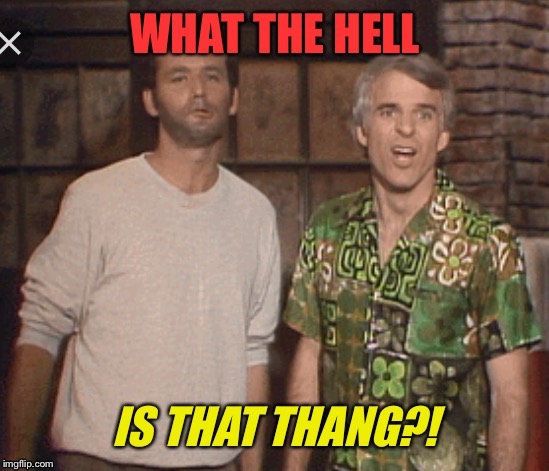
Some guys are just funny. We hated them in high school, because they could effortlessly do, what the rest of us worked so hard to do: Make people laugh. Was there a super-secret formula to their success? Not that we could see. They could just lift an eyebrow in a particular situation, or smirk in a somewhat sarcastic, somewhat serious way, and put everyone on the floor. It was frustrating to those of us who’ve had to work our way through the dark and mysterious halls of funny to find that which they just had sort of attached to them at birth. Everyone wanted to be around them to hear what they might say next, and they hoped that he liked them half as much as they liked him. Why? Because he was funny, naturally and effortlessly, funny. “Some guys just are,” we might tell our kids facing similar circumstances, “and there’s nothing you can really do about it.”

Bill Murray, I have to imagine, was one of those guys we all hated in high school. He was the fifth of nine kids in the Murray family, and we can imagine that some of his comedy came from striving for some attention in such a crowded home, but we also have to imagine that comedy was a way of life in that Irish, Catholic home. Regardless how it came about, Bill Murray became one of the best comedic actors of his generation, and as his stint on Saturday Night Live shows displayed, he had great improvisational skills too, but I’m sure if we saw him attempt to do standup, we might see through his otherwise bullet-proof veneer. We’ve heard man-on-the-street stories of him engaging in improvisational acts that prove hilarious, but those are based on his good guy graciousness as a well-known celebrity. If we could somehow remove his status, and read through these stories, would he still be funny? Impossible to know, because they’re built on his iconography, as well as adding to it. Bill Murray movies, however, are almost all funny, some hilarious, and others are enshrined in our personal hall of fame of funny. 

What is the super-secret formula to Bill Murray’s success? My guess is that there isn’t one, and that might be his secret. Bill Murray does have an undeniable everyman appeal in that he’s not gorgeous, he doesn’t have great skin or hair, and while he’s not fat, no one would say he’s fit and trim. He is just a funny man. He is the embodiment of the annoying “It is what is” principle. I go to see his movies, because he’s funny. Why is he just as funny, or funnier, than his peers? “I don’t know, he just is.” 

Anytime we discuss the merits of one actor over another, there is always the question of presentation. Everyone from the lighting guy to the director and the editor plays some role in the way Bill Murray is presented to the audience. Murray, as has been reported, can be difficult to work, because he doesn’t feel like certain people know how to do their jobs. Does this have anything to do with the idea that Bill knows how all the players need to work together to form this presentation, because he’s seen quality players do it? If that’s the source of his reported obnoxiousness, then he obviously knows how to cultivate and foster his presentation, which is more effort than that which we accredited to him.

To everyone from the frustrated peer to the casual fan, it appears as though Bill Murray just coasts through his movies, and he isn’t even trying to be funny or dramatic, depending on the role he’s playing in a movie. He’s just Bill Murray in the way Tom Cruise is just Tom Cruise and Clint Eastwood is just Clint Eastwood. Bill Murray is also so consistently Bill Murray that we know what to expect from the productions he participates in, in the same manner we know what to expect in a Starbucks franchise or an AC/DC song. 

Now we have Steve Matin, one of Murray’s peers and colleagues, a man who began around the same time, has attempted to do as almost as many comedic and dramatic movies, and TV shows saying he basically agrees that it doesn’t appear as though Bill Murray is even trying. Regardless the actual number of movies, or the debate over comedic quality, the two can be viewed as colleagues in many ways, and he views Murray’s career as so effortless that it’s almost frustrating to him. 

It’s not our intention to belittle Steve Martin’s brilliant and influential career, as we think it speaks for itself, but he’s obviously worked very hard to achieve everything he has. Bill Murray, on the other hand, has achieved similar heights without seeming to try near as hard. We’re sure that Murray does his due diligence, research, mental preparation, and everything else it takes to make a quality production, but it doesn’t appear that way. In terms of perception alone, it appears as though Bill Murray rolls out of a hammock shortly after someone yells, “Action!” delivers his lines, and goes back to his hammock funnier than the rest of us will ever be no matter how much work and effort we put into it. 

If you have to try that hard, you’re probably not very funny, you might counter, and you’d be right, but we have all had to learn how to be funny. Learning the beats, rhythms, and everything else it takes to be funny is often done by osmosis. We don’t learn how to be funny in the same way we learn math, how to play baseball, or how to be an electrician. We pick up various elements of our presentation from our peers, that crazy-funny uncle, and our TV shows and movies. If you were around during the Seinfeld/Friends era, you saw how they influenced what it takes to be funny, and you picked up some tips and copied the actors’ mannerisms, their tones, and sometimes we stole the lines their writers wrote for them. They, and numerous others of course, defined funny in our era. Other eras had Abbot and Costello, The Honeymooners, and The Lucille Ball Show define funny. We’ve also had others tell us “That’s not funny!” and we adapted and adjusted to the current cultural norms of funny, and in some ways, it took some definition of work to do so. Others, it seemed, didn’t have to go through all those trials and errors. They just seemed to fall into funny, because that’s who they were.     

These funny people weren’t great looking either. Bill Murray, for example, does not have what we consider “leading man” looks. I’m not trying to diss the man, as he’s probably better looking than I am, but if we were to take headshots and show them to citizens of another culture, with the headshots of a couple of great looking character actors and ask them to, “Pick out the leading man in movies in our country,” Bill Murray might be the last chosen. I don’t know if he’s ugly, but he has an unmade bed look about him. He doesn’t have great skin, and he barely has any hair left, and he rarely changes facial expressions in the course of his movies, but movie directors flood his 1-800 number to try to get him to lead, or at least appear, in their movie.   

Most of us worked hard to be funny, shortly after we realized we didn’t have anything else going for us, and it was so frustrating for us to see someone roll out of bed funny. We can all identify with Steve Martin’s complaints, because we all know someone who achieves what we worked so hard for with such apparent effortlessness. If you’ve ever watched camp counselors, teenagers, try to MC an event, you’ve seen them try to work the audience (of camp goers and their parents), you’ve seen them try to act crazy, nuts, and fun, and you’ve walked away thinking, they could really use a natural speaker with some unusual levels of charisma, a Tripper (Bill Murray’s character in Meatballs). If you’ve ever seen a grown man sing with a full stage show, with dancers, pyrotechnics, and anything and everything to entertain an audience, you know that there are just some men and women who, armed with nothing but a microphone, can sing a song called Star Wars, and produce one of the funniest things ever seen. How does he do it? No one, not even one of the other funniest men of his generation, knows. He just does. When we watch it, we send out Steve Martin’s “It can’t be that easy!” complaint sent out to the unfairness of the universe.   

The Wars of the Wonderful


“The test of a first-rate intelligence is the ability to hold two opposed ideas in the mind at the same time, and still retain the ability to function. One should, for example, be able to see that things are hopeless and yet be determined to make them otherwise.” –F. Scott Fitzgerald an excerpt from The Crack Up.

Author Francis Scott Key Fitzgerald’s (AKA F. Scott Fitzgerald) quote isn’t just wonderful, it’s the product of multiplying wonderful sentiments. Wonderful writers don’t write these things to us. It’s a competition among their peers to be crowned “Most wonderful”.

We saw this in high school, during the “Mr. Wonderful” pageants, that the rest of us called drinking parties, in which the jocks would try to impress upon the available women at the party the idea that not your typical dumb jock. Their comments are just as general, and just as uninformed, but everyone who hears them considers them brave for saying, “What everyone else is afraid to say.” They praise them for their “ability to hold two opposed ideas in the mind at the same time, because … at least they had the courage to say it.” Say what, we ask. No one knows, and no ones cares. It’s more important that they said it than what they actually said. 

In one of these pageants, a 2016 awards show, a star declared, “The world is B.S.!” If one definition of B.S. is nonsense and the other is a more direct definition of fraudulent, or inept behavior, I wondered if the star was attempting to pit these definitions against each other. Her argument was either the most ingenious I’ve ever heard or the dumbest. We’ve all heard stars say things about the treatment of people at awards shows, and it might be unfair to pick on this one, but was she more informed and determined to make them otherwise, or was she just saying it to say something important. Even though stars are generally as uninformed as everyone else, they’re usually more pointed and specific with their concerns. This star proclaimed that our entire planet is not doing things the way she would proscribe for it to “un-B.S.” itself. To be clear, she didn’t say B.S., she used the humdinger, one of the real naughty words, to provocatively say that inhabitants of earth aren’t doing things right. 

Some reviewers viewed her statement as “a controversial one from a strong woman,” “valuable,” and “it still resonates!” Reviewers then interpreted her open-ended comment in long form. “What she was trying to say was …” which often leads to them clarifying her comments in a way that says more about the clarifier than the actual author of the quote. If someone said that the inhabitants of the world are BS, we can assume that it bothered everyone from her intended targets to the ones with whom she presumably pledges allegiance, but the old adage applies here. If she offended everyone with her statement, she offended no one, because we all know she was talking about some other side. If she was talking about the planet, we also have to wonder how many species, plant or animal, she offended. 

“Are you talking about us?” the Jade Plant, otherwise known as the Crassula Ovate, probably asked. She may have even offended the macaw, who were in the process of making some really powerful changes in their infrastructure to provide a better world for their fledglings. Like most Hollywood stars, macaws don’t offer a solution, because they don’t have any. They just repeat what they’ve told.

If I wrote, “The world is hopeless,” or “The world sucks!” and “We should try to fix it” right here, how would you reply?  

“What did you just say? We should try to…what were the words you used again, fix it? Has anyone ever considered that before?” 

If the world is broken, and we imply that someone fix it, in the most general way possible, shouldn’t we try to figure out who broke it first and how? If we don’t, what good are the fixes? The problem with attempting to properly source a problem is that proper investigations can end up demonizing the wrong people, the people who had the best intentions, and the methods they used that ended up leading to greater corruption and devastation. It’s best to keep our complaints general to keep the focus on those complaining, because complaining is provocative and beneficial. The nature of proposing solutions, however, can prove messy and loaded with unintended casualties through friendly fire. Proposing generic solutions can also make us feel better, but does it do anybody any good, and will our solutions eventually prove worse than the problems? The big problem with most proposed solutions is they don’t try to source the problem first, and they often make none of the people happy none of the times. 

Sending money, blindly, is the best way we’ve found to mollify all parties concerned. Money does not blame, it only helps, unless that money is stolen by the bad guys who tend to use all that well-meaning to further their goals. 

The peacocks and penguins hold charities, galas, and other fundraisers, and when the banquet employees begin tearing the façades down, everyone knows who gave what. Donations have a bad tendency to leak, to clarify the line between charity and publicity. Wonderful people don’t talk about the source of the problem, because no one really knows what it is. If we do find out, and we openly address it, we unwittingly reveal some vulnerabilities in our character. Then when we send money to fix the problem, and the problem gets worse, the recipients of our charity direct their ire at those who report that the problem is now worse. 

I’m not going to pretend that I know how to fix the world’s problems, who would? Answer, those who play dress up and pretend. “But they’re using their platform to bring attention to a cause.” True, but let’s go back to the wonderful people in the jock world. They want to prove that they’re not as dumb as everyone thinks. They have important ideas they learned at a cocktail party, and they’re not afraid to share it in a “something meaningful, important and controversial” college party where everyone is drunk, because it does wonders for their public relations scores. So, they play dress up and use their platform to address problems of the world, of which they know little-to-nothing. They just provide such in-depth analysis as “The world is B.S.!” or “One should be able to see that things are hopeless and yet be determined to make them otherwise.”

Other pretend people, leaders of local, special interest groups, then tell us that wonderful people shouldn’t try to solve their problems. It does no good, they say, to involve ourselves in their problems, because we don’t understand all the complexities involved. They then mock those who do try by saying that they’re trying to save people, and they say that word in the most condescending manner possible.

I don’t know when genuinely trying to save other people in anyway we can became a bad thing. They talk about it as a savior’s mentality, and I can discern some meaning when it comes to movies, books, or other entertainment venues, but when an individual does whatever they can to help another person, why is that a bad thing? I’m not sure if this new method of assassinating another’s motives and character is to further promote guilt, or if they want to encourage blind giving, but the driving force for criticizing those who try to help others genuinely confuses me. 

They say that not only do they not want us to save them, but they don’t need it. I have no problem with someone saying, ‘you don’t know what you’re talking about,’ because I don’t, but if someone tells me to send money, back away, and shut up, and let me handle it, I can’t help but think they’re suggesting we avoid investigating their results or holding them accountable for their actions. I also have no problem with someone saying, “I’m on the ground. You’re not. You don’t understand the depth of the problem as well as I do.” Because, again, I have no idea what I’m talking about, but I guess you’re going to have to define involvement for me. At some point they’ll drop an “It’s complicated” on us. It’s not complicated, if you sincerely don’t want us to help you, and you just want us to blindly give, you do what you do to help your fellow man, and we’ll monitor, investigate, and we’ll hold you accountable if you can’t or won’t fix the problem. “Ok, but be forewarned, you could make matters worse.”

Most wonderful people have the typical bad guys in mind when they talk about the problems of the world. If they dug deep, they might find that some of their guys are the source of the problem, so they don’t dig. They just proclaim that the world is full of problems, and we fawn. They don’t want to play the blame game, because, at this point (the point of obfuscation and diversion), who cares who caused the problem, let’s just fix it. Let’s not fight and argue, let’s fix the problem. Ok, but if we don’t properly source a problem, from A to Z and back to B, we’ll just be papering over the problem with duct tape and chicken wire, so we can plant a “fixed” flag in it that will probably blow over if a wind over 20 mph hits it. Even if we can pinpoint the exact problem, and the solution is surprisingly simple, everyone tells us it’s so much more complicated than all that, and no matter how much money we send, it never gets fixed, and that might be one of the reasons why the world is B.S.  

The Primal Instincts of Dog and Man


We love our kids unconditionally, and we would love to love our dogs just as unconditionally, except for one nagging asterisk, the dog-eat-poop thing. “Why does he do it? How do I get her to stop?” It’s so gross that it’s tough to watch, tough to stomach, and even tougher to get over when it’s over, and we smell it on his breath. We’ve tried shaming them, using our words and those tones, and we’ve even reached the last resort of inflicting pain as punishment. No one I know wants to strike their pet, but it’s so gross that we’re desperate. Two minutes after we do that, we know that wasn’t the solution, but what is? The answers for why they do it are so wide-ranging that it’s safe to say no expert has a definitive answer, nor is there a definitive answer on how we can stop it. The best answer I’ve heard for why they do it is that their wild ancestors ate their puppy’s poo to prevent predators from knowing where they were, and if that’s the answer then the answer to the second question is that it’s almost impossible to get them to stop. It’s bred into them by their ancestors to protect their young. 

Even if we had one definitive answer everyone agreed on, and we knew how to train them to stop doing it, it wouldn’t change the fact that it’s just gross. When long-time dog handlers are asked what’s the one drawback to their job, they’ll almost immediately go to the dog-eat-poop thing. They might go on to list other matters that are just as difficult and more challenging, but most of them will say that the poop-eating thing is still, after decades of working with dogs, something they cannot get passed. 

“The grosser the better,” does seem to be the answer for the general practice of dogs sniffing material on the ground. If they spot an old, white and mostly crumbly piece of excrement in the grass, they might give it a whiff and move on, but a fresh, steaming pile flips some sort of an ignition switch in the need-to-know aisle of their brain. Their desire to learn every little nugget of information possible about that turd can require a muscular tug on the leash to get them away from it. Depending on the size of our dog, it might alter our preferred ninety-degree angle with the earth when they find a rotting, maggot-infested opossum corpse nearby. Our beloved little beasts can’t help it, it’s the way they were wired, but our hard wiring leads us to find the act of sniffing, sometimes licking, and even eating excrement so repulsive that it can temporarily alter our perception of them.

The Scene of a Car Accident

Most of us won’t sniff, lick, or eat the steaming carcass of a car accident victim, but we will slow our roll by the scene of the most horrific car accidents to satisfy our sense of sight and curiosity. Coming to a complete stop is beyond the pale for most of us, but how slow do we roll by, hoping to catch a little glimpse of something awful? The grosser the better.

To curb our enthusiasm, first responders assign some of their personnel to traffic control. They have to to prevent oblivious drivers from hitting the personnel on the scene, of course, but they also know that our desire to see something awful will cause traffic jams and accidents.

“I could put together a book of some of the things I’ve seen drivers do, some of the dumbest things, to see the horrors of a car accident,” a friend of mine, often assigned to traffic control, said. “I’m not talking about a top ten list either. I’m talking about a multi-layered, illustrative, instructional, and sad-but-true comprehensive book on the things I’ve seen.”

I realize that 20-30 minutes is a relatively minor traffic jam, compared to most cities, but the reason some of us live in big towns and small cities is to avoid the perils of over population. So, when we incrementally creep up on the scene of an accident, and we see no other obstructions in our lane, or the other three to our right, we realize that the sole reason we’re going to be twenty-to-thirty minutes late is that every other driver ahead of us had to slow roll their way by the scene to see if they could see something awful.

We get so frustrated with all the drivers driving so slow that it’s obvious that they hope we misconstrue their slow roll with a respectfully cautious approach to an accident. They just want to see something, and they hope they time it just right to see the first responders pull the bloody and screaming from the wreckage. 

As with the quick sniff in passing that dogs give a hard, mostly white and crumbly piece of excrement in the grass, we might give a “Nothing to see here folks, everyone’s fine” fender bender a glance, but we won’t even slow to survey for carnage. We won’t, because in our drive up to the accident, we saw no evidence of twisted metal, plastic shrapnel on the street, and no spider glass. We pass by without slowing, knowing that it’s not worth our time.  

When we see evidence of a catastrophic accident, we become what my great-aunt used to call lookie-loos. Lookie-loos feed this morbid curiosity so often, that we’ve developed a term for it, rubbernecking. Rubbernecking, the term, was developed in America, and the strictest definition of the term involves the straining of the neck to feed a compulsive need to see more of the aftermath of an incident.

A 2003 study in the U.S., suggested that lookie-loos rubbernecking was the cause of 16% of distraction-related traffic accidents. If you’ve ever been involved in a major accident, you know the scene attracts a wide variety of lookie-loos. Some of them do everything they can to assist, but most pull to the side of the road just to look, just to see. They, in their own strange way, want to be a part of the worst day of somebody else’s life. If you’ve ever witnessed this, you’ve seen some similarities between them and the information-gathering dog sniffing poo on a neighbor’s lawn.

I’m going to go out on a limb and say almost no one wakes up in the morning, hoping to see something awful, and we don’t purposely put ourselves in position to block emergency vehicles, or get so close to an incident that we run the risk of being a part of the carnage if the fire hits a gas line. We just sort of drift into a position for the best view of something tragic. These moments help us feel fortunate, because it isn’t happening to us, and how often do we have the opportunity to feel grateful and fortunate? 

Intra-Office Drama

On a much lower scale is the “Did you hear what Jane did to Jim last night?” intra-office drama. Until I saw the damage this gratuitous grapevine could cause, I must confess that I was a conduit of such salacious information. I heard it, I lifted an eyebrow, and some element of my storytelling nature couldn’t wait to pass it along. It’s embarrassing to admit now, but we’re all tempted by the siren of salacious information that someone doesn’t know, and we strive to have others view us as as a font of fun and interesting info. We have all heard people say, “I’m not one for the drama.” Yet, they’re often the first ones to pass these stories on. I love it, you do, and we all love a little drama in our lives. It’s sort of like our own little reality show in which we intimately know all of the players involved.

Then it hits us. We have to work with these people. We have to see, hear, and feel the aftermath of spreading this information, and the drama we so enjoyed yesterday can make the next forty hour work week so uncomfortable it’s almost painful. They can’t look us in the eye, and we have to live with the fact that we played a role in damaging their reputation. We realize that we inadvertently diminished our work space to feed into this need to know too much information about our peers.      

The Need to See

We also “need to see” videos of others doing awful things to others. As with the dog that is innately attracted to the steaming pile, we want grosser-the-better videos. Even our most respected journalists, in major and minor broadcast fields, feed the need, and they know they have to, but they dress it up with “a need to see it.” Why do we need to see it? “We’ve deemed it important to keep you informed,” they say. I read the article, I got the gist of it, someone did something awful to someone. I get it. “But it’s news, and it’s important.” This is a complete crock, I say as a person who has never worked in a news room. My guess is that they go behind closed doors to discuss the video of an atrocity. They weigh the business need to feed our desire to sniff the steaming pile of humanity against the journalistic code to not stoop so low as to air something just to get clicks or ratings, and the compromise they reach is to dress it up with a “need to see” tagline. Nobody is saying we should try to put the genie back in the bottle on this unfortunate side of humanity, but how about the broadcasters and podcasters be a little more honest. “Tonight, in our Feed the Need segment, we have the latest stranger doing awful things to other strangers video.”

Those of us who enjoy being happy, content, and feeling some semblance of safety don’t understand the “need” we all have to sniff the steaming pile of humanity. We understand that some of the times ignorance is bliss, but most of the time we don’t need to whiff of the worst of humanity to know it exists. Yet, I will concede that there are some who need to see it because they say, “It didn’t happen the way. Not the way they say it did.”

The dog can be a surprisingly complex animal, both intellectually and emotionally, we’ve all witnessed some inspiring feats in both regards, but they still have that primal wiring and structuring that define their needs. The human might be the most complex and intelligent animal in the animal kingdom, but we’re still animals. We have complex needs, desires, and thoughts, but no matter how much we’ve evolved, modernized, and advanced, we still have some primal needs and wants that we’ll never be able to rid ourselves of no matter how advanced we become. Some humans have achieved some incredible things over the course of human history, but one has to imagine that if a genius the likes of Leonardo da Vinci were alive today, he would be a lookie-loo if he saw a horrific, yet visually appealing car accident, and he would probably rubberneck the scene to the point that he delayed all of the drivers behind him. We can be the greatest species ever created, but in other ways, we’re no better than the chimpanzee, the dolphin, or the dog.