It was the Best of Times … In Entertainment


“It was the best of times, it was the worst of times, it was the age of wisdom, it was the age of foolishness.” –Charles Dickens’ A Tale of Two Cities 

It’s the human condition to believe we live in the best of times and the worst. Psychologists have terms for various strains of bias that inform our opinions, and Dickens’ famous line encompasses them all. I’m biased, you’re biased, and the whole damned system is biased, but this particular article focuses most on what could be called a generational bias, or nostalgia bias. Our generational bias leads us to believe that everything was funnier, more intellectual, and more stimulating than anything before or since. While I admit that the bias is strong in me, I challenge anyone to defeat the opinions in this article. 

“I am biased.” There, I wrote it, and I’ll write it again to satisfy anyone who challenges the biased nature of this article. The one thing I’ve found is that we can write this over and over again, but there will always be someone who stands up and says, “Yeah, but aren’t you biased?” and they say it with one of those grins that suggest they caught you. 

“Ok, you caught me,” I confess, “but I wrote a whole paragraph about it at the beginning, I added it in the middle, and I concluded with it. Check the minutes of your transcript of our little conversation in this intangible bistro.” So, rather than try to qualify every single nugget of what I’m about to write, go ahead and place a parenthetical (back to top) at the end of each statement if that’s what you need to do to assure yourself that I admit to having a mean case of generational bias, which might be nostalgia bias, considering that the time frame stretches from 1975 to 2001.

If you’re going to challenge my recency bias, however, I ask you to name an era of entertainment that matches the total output from the 1975 to 2001. We’re talking top-notch, quantity and quality, from the era of your argument to mine. Everyone has their opinion, of course, and some say that some of the artists listed in those productions were overhyped by the marketing teams spending huge dollars to see to it that their artist made it to the A-List. This happened frequently during this twenty-six-year chunk of time, as the individual eras therein were chock full of money to be spent in all avenues of entertainment, but with the advantage of hindsight, we can weed through the A-List to ferret out the true artists from the pretenders. Even after doing this, the A-List from this twenty-six-year era is still daunting. 

We can all go through this twenty-six-year era and parse out which was better than the other, but taken together as a whole, I believe the total number of good-to-great movies, the sheer breadth of music, and comedy from the era between 1975 and 2001, will not only go down as the greatest era of entertainment in the United States, but most future eras won’t even try to compete. They’ll just go retro, and try to buy the back-catalogs of the artists from the era, from whomever owns it “now”, to pursue ways to use it and re-use it, market it, and merchandise it in the future. Some might include the 1960’s in some of those entertainment venues, and others will include the 2000 to 2010 era, but after watching, reading, and listening to just about everything from those eras, everything in the 60s now seems to prelude this thirty-year peak, in retrospect, and just about everything that followed seemed to be trailing off.
There are exceptions to the rule, of course, as there are always going to be exceptions to every rule. There will always be a couple great movies in any given year, a few great albums here and there, and future comedians who deliver exceptional material in the future. If you lived through this era though, you knew to expect that an exceptional artist would deliver something exceptional in any given month. It was also “an event” when an actor, director, musician or band, and this author came out with something new. Tuesday used to be “the day” when new albums came out, Friday was “the day” when new movies came out, and I when one of my favorite artists was coming out with something new, I knew months in advance. I realize I’m old now, and no longer on the cutting edge, but does anyone look forward to such things anymore? The new music is downloaded on your music subscription service on Friday now, and your new movies are downloaded into your streaming service. There’s still theaters, in the present tense of this article, but most people are willing to wait, the on average 30 days for it to appear on a streaming service. Do modern artist still have “event” status with their new releases? 

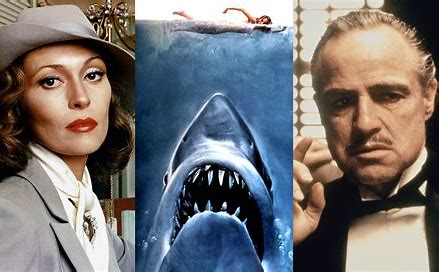
While reading this, I’m sure you thought of some exceptions to the 1975 to 2001 timeframe, The Beatles, The Godfather I and II to name but a few of the exceptions you probably considered. The point of this article is not to quibble over the merits of some critical greats that happened before or after but the general whole. 

My biases came into play in the 90s, because that was the first era when I had real disposable income of my own, and I almost went broke numerous times, trying to rent every movie that had ever been made, listen to every album of music ever created, and I stayed up late to listen to every comedian the late-night talk shows invited on. The reader might consider it a bold statement to say I know everything vital and important to come from this thirty-year peak, or they might consider it a little sad that I devoted so much of my free time and disposable income to this pursuit, but few who know me would challenge my reference base of the mostly inconsequential information from the field of entertainment that occurred during this era. 

I don’t view this cast knowledge of movies, music and books a brag, because other than winning some Trivial Pursuit games and winning some trivia games in bars, I haven’t profited from my mastery of useless knowledge in any way. It’s useless, inconsequential information that doesn’t serve a purpose. Yet, from 1975-2001, I was entertained. The movies, music and books filled my free time. 

Another area to which I devoted too much free time and disposable income was in the area of others writing about the music, movies and books from this era. Some devoted too many calories to framing artistic creations in political orientation. These sophisticated sophists declared some chunks of time “the dark ages,” if that artistic creation occurred during an era in which the office of the president was of a political orientation different from theirs. It was so over the top at times, that it was almost funny. As one who lived through it, and now looks back with a wistful eye at the glorious times these decades were, that’s a big ball of nonsense. It’s a feeble attempt to rewrite history through a politically biased lens, and I write that asking the reader to consider that when one goes down the list of parties in that powerful seat, over the course of this thirty-year chunk of time, it’s mostly even.    

Unless you consider The Cold War with Russia an actual war, the 70s were the first era that was largely free of war. The Vietnam War ended in 1975, and that was preceded by the Korean War, and WWII. Except for a few skirmishes here and there, the era between 1975 and 09/11/2001 was largely free of war. Except for a few moments here and there, America experienced such a great era of stability and prosperity for thirty years that we had too much free time on our hands. In order to keep ourselves intrigued, we invented scandals, controversies, and we spent most of our free time worrying about what could happen if things weren’t this great. The best thing politicians could think of, to keep us mired in fear was, “Things are great, now, sure, but they could be worse, and if elect that other guy, they will.” Our movies needed to invent possible tragedies and catastrophes just to remind us that tragedies and catastrophes could happen. Now that we’re through that era how many of us wish we could go back and realize how many calories we wasted worrying about stupid stuff that never happened. How much would you give to go back in time right now and tell yourself to avoid worrying about that, “because that won’t happen, because it didn’t happen, and it probably never will.” It worked back then, of course, as we all worried about it, and the politicians and the groups all benefitted from the fear, because we all agreed that it was such a scary prospect that we agreed to devote billions of dollars to try to stop something that would never happen. As much as we hate to admit it now, in a historical perspective, we lived and still live, in the best of times. 

There were so many factions and fractions in movies, music, TV, and books for the average consumer to consider, and yet we all agreed on most topics. A walk through the A-List contributors in the early 70s, in music and the movies, is so daunting that I won’t even try to list them. The list in the 80s and 90s not only continued this legacy, but these eras may have topped the 70s by sheer volume. Before we move on, think about that A-List for just a second. How many different, varied, and talented artists littered that A-List compendium. We usually try to shorten that list a little, just for sake of conversation, but the A-List of that era is so long that we feel a need to limit entrants just so we can have a decent conversation on that topic without putting people to sleep when we try to avoid missing someone. Think about all of the great directors, and how many movies they released during this twenty-year chunk of time. Think about all of the various musicians, and all of their various templates. We could devote this entire article to the Billboard Top 100, the Top of the Pops, or any of the other publications and venues that tried to top one another with the A-list artists they featured. Now, think of the magazines, both mass market and the niche ones, that tried to cover the A-Lists of music, the movies, books, and entertainment in general.

As one who wasn’t exclusively enamored by A-list celebrities, and rock stars, I often found myself enjoying the entertainment put out by those others might call the B-List artists, C-Lists, and D-lists, but I only did so, because I exhausted myself trying to watch, listen to, and read everything at the top of those lists in the first half of the era. At some point, also, the influenced began to appear to parody the influencers. I almost went broke numerous times trying to keep up, stay hip, and know every reference point, joke, and conversation topic people were having. Some call these conversations “water cooler” conversations, the coffee shop, or the break area. Whatever the case was, I was one of those who had to know everything, and there were so many movies, so much music, and so many great books and comedians to know about, for someone who had to know, that no past era compares when it comes to pure output and I dare say no future era will even try to compete. If you love music, movies, books, and comedy it was the greatest era in human existence to be alive.  

My nephews, some thirty years my junior, insist that the 80s were greatest musical era ever created, and they don’t even bother trying to defend “their” era. They have no allegiance to it in anyway. They state that the 80s were the greatest era of music as if it’s not only a fact, but such an obvious fact that it’s not even worth discussing. They don’t list one particular artist as the game-changing artist, as many of us will, but they do try to compile a list of influential artists that I considered quite daunting, and they insist no other era can compete. Even though I had nothing to do with creating the music in this era in anyway, I took some pride looking back and hearing an outsider consider this era I lived through the greatest era ever. Due probably to my age, more than anything else, I’m more of a 90s guy, and being a 90s guy, I always considered the 80s a silly era of music, until my nephews put their spin on it. I also write all of this with the asterisk pointed to the notion that proponents of any era between the 60s and the 00s have valid arguments for “their” era.

My rhetorical question, sent out to the ether, is will future inhabitants in the United States be having arguments over the specific eras of this thirty-year chunk of time for the next 60 to 70 years? Will there be a “rock revival” in 2050 that puts the 80s music to shame? Will there be a return-to-roots revival in the movie industry that puts the quality and quantity of the movies from the 70s in the dustbin? 

Some argue that with the proliferation of streaming services and the various outlets on the internet, Americans will never collectively agree on great artistic outputs ever again. They argue that there’s just so much to choose from that it inhibits the idea of a Michael Jackson, a Star Wars, or even a more recent release like the book The Da Vinci Code from ever rocking our world in quite the same manner. These arguments discount the genius effect, of course, as every era has their own geniuses. The question I have, and it seeks to be as objective as possible for someone obviously imbued with a whole bunch of biases, is will those future geniuses ever be able to take future generations to the point that they can finally put 1970 to 1999 to rest, or will 2070 America still be arguing the relative merits of Michael Jackson vs. Madonna; Spielberg vs. Lucas vs. Coppola; Seinfeld vs. Leno; and Chevy Chase vs. Steve Martin vs. Bill Murray?   

One of the primary reasons there might never be an era that tops this era is the topic no common fan wants to talk about but they are know: money. There was so much money to be made in movies and music that the executives and their boardrooms didn’t mind pouring money into projects, because they knew they’d make it back eventually. They had money makers and artistic projects, and they devoted huge chunks of money and resources to both, because at the end of the year, they knew they would always be in the black. 

How many guys with nothing but a guitar strapped to their back receive the kind of funding and support they may have made twenty years ago? How many “good looking waiters who can act” is a movie studio going to bank on if a majority of the money they see is from the comparatively flat streaming services? The amount of money that man may have made for himself and those who supported his rise, just isn’t there anymore, not like it was between 1975 and 2001.

My unusual hunger to know everything about everything was born watching Johnny Carson and David Letterman. I paid hard money and devoted way too much time trying “to get” every reference they included in their jokes, so I tried to watch every movie ever made, listen to every song, and read every book. And I didn’t just want to get the references to movies, songs and books from my generation, I wanted to get the jokes and references to their generation and the generation before that. This was nearly impossible, of course, but I did try. When I couldn’t understand their jokes in the moment, I faked it, but I was so embarrassed I didn’t get that particular joke that I researched it, so I would get it next time. It was that important to me. I don’t know if the younger generation is intimidated by the qualitative and quantitative output of that era, but they don’t care about this near as much as I did. 

They basically ignore most of my reference jokes, and when I ask them if they get it, they say no. “You don’t get it, because you haven’t seen one of the greatest movies ever made,” I say. (I’ve said this about various books and music too.) Again, if someone of a prior generation said this to me, I probably would’ve experienced such a powerful FOMO that I might have watched it, read it, or listened to it that night. If I drop such a reference on them, they immediately dismiss it as “Old man,” stuff. 

“It’s probably an old man humor,” they say, if I tell them a show or movie is must see. It’s funny when they insult me in this manner, don’t get me wrong, but it amazes me that there’s no curiosity on their part to “to get” my well known references from the best of … lists. When I’ve survived the insult of my vicarious ownership of such productions and insisted that they watch that essential show or movie to up their reference base, they’ve watched some of them and returned with: “It’s old man humor.”

If the younger people who surround me are endemic of their generation, this article is the equivalent of screaming into a well. Yet, I maintain that the sheer output from so many different, varied artists, from so many different corners of the country, that occurred in these thirty years, will probably never be matched in my humble opinion, an opinion obviously derived from generational, or nostalgic, bias.    
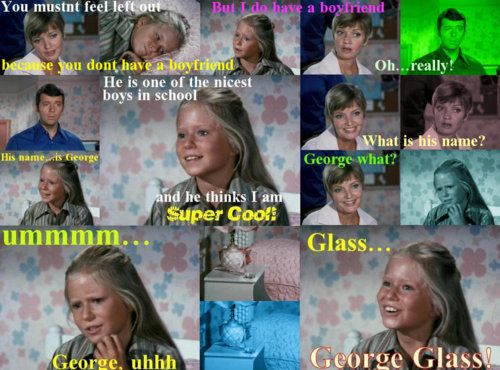
How The Brady Bunch Damaged Him


“The thing about being human is,” Bob Peters said to initiate a conversation with my friend Arnold Glass.

“No, I am human,” Arnold said. “I’m standing right before you, two arms, and two legs just like you.” 

That was funny, I thought, examining Arnold’s face for a break that would reveal the joke. It wasn’t award-winning funny, or even knee-slapping funny, but I considered it a fairly decent trap to set for Bob Peters for future jokes. Depending on where he took it from there, I thought he laid some pretty decent groundwork. The three of us were co-workers at a company, on break, shooting the stuff. I didn’t know Bob Peters. He was kind of a floater, who moved from person to person, group to group, but I thought I knew Arnold. We were co-workers who spent so much time around each other that I suppose I could’ve call him a best friend at work, but that just seems like such a grade school/high school designation. It just feels odd to call a grown man that I didn’t know before we started working at the same company a best friend, but we did a lot together over the years. Arnold could be funny occasion, but he was more knock-knock joke funny. This level of dada comedy, or what I thought might be intentionally irrational comedy without a base or direction was so out of character for him that I thought he might follow it up with, ‘Sorry, that just sounded like something to say. It didn’t work as well as I thought it would.’ Not only did Arnold not say something like that or give any cues that he was joking, he was all bowed up. I was almost positive that he wasn’t looking to throw down, during a 15-minute break on company grounds, over something as odd as this, but he looked so defensive. What an odd thing to say, I thought, and what a weird thing to get defensive about.

Bob Peters obviously dismissed Arnold’s comment as nothing more than an obnoxious attempt to interrupt him before continuing, “As I was saying-”

“No,” Arnold interrupted, growing uncharacteristically confrontational. “You called me out here. I’m a human being with all the same hopes and dreams as you. I’m going to need you to acknowledge that before you continue.”

“Fine, I acknowledge that you are a living, breathing human being with all the same hopes and dreams as the rest of us,” Bob Peters said. “Now, can I continue?”

***

“What was all that about?” I asked after Arnold and I finished our conversations with Bob Peters, and he walked back to the office.

“Cripes, I forgot to apologize to Bob for all that didn’t I,” Arnold Glass said. “He just happened to step on one of my land mines, but he didn’t mean anything by it did he?”

“No,” I said. “I don’t think so. I think he just thought it was a clever intro … but what do you think he meant by it?”

“I don’t know. It’s that name thing,” Arnold said. “I thought Bob was trying to be funny, but now that I think about it, I’m not sure Bob even knows my last name. I know I don’t know his. We’re not on a last name basis.”

“Peters,” I said. “Bob Peters.”

“Okay, Peters. Well, God bless him for having such a normal last name.”

“Glass? What’s wrong with Glass?” 

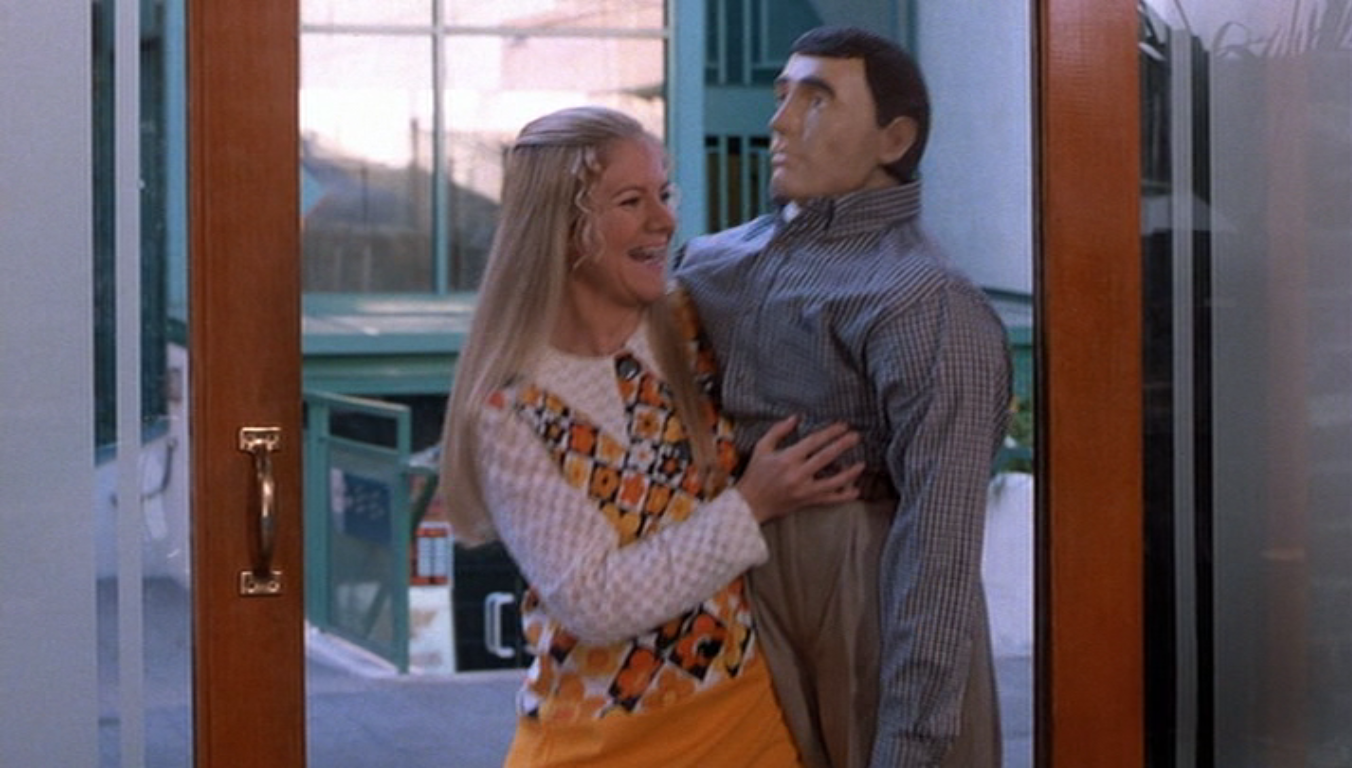
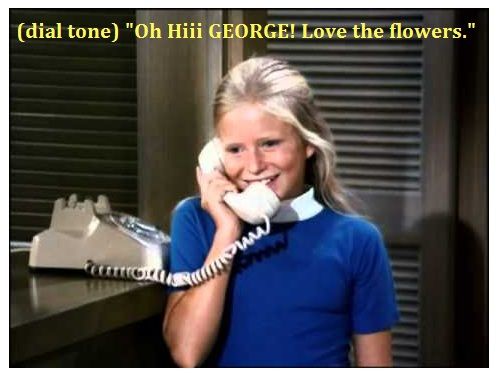
“We’ve never talked about this?” Arnold asked me with some fatigue. “You obviously didn’t grow up watching The Brady Bunch, did you?” I said I had, and the name George Glass immediately came to mind, but I feigned ignorance. “There was an episode where Jan Brady made up an imaginary boyfriend. When she was pressed for his name, she said, “George,” and then she looked around and saw a glass of water. “George Glass,” she said.”

“Okay, yeah, I remember that.” 

“I’ve had nightmares about that scene.”

“You’ve got to be joking?” I asked with suspicious but confused laughter. 

“I’m not. I’m really not,” Arnold said with a most serious face. “We were all too young to know the episode when it first came out, but, you know, reruns. I might’ve been in 2nd grade when Mary Beth Driscoll said, “Are you even real?” I didn’t get it, because I never saw the episode, so she explained it. I didn’t think it was funny, but everyone else did. Everyone else did, and they joined in on the joke. It hurt a little, but mainly because I didn’t understand it. Then, every time they reran that episode, I’d get some semblance of that joke, and I probably took way too personal, but I was young, real young, and I didn’t know how to deal with it. ‘We’re just joking, for gosh sakes Arnie’ they’d say, and that never made it any better. Things like that are stupid, insignificant, and irrelevant, until they start to gather moss. Every time you meet a friend’s mom, they ask if you’re real, or they say it’s nice to finally meet you. We thought you were fake. It sort of petered out after a while. The harmless and stupid jokes never ended, but I didn’t hear them as often for quite a while there, until the 1996 movie A Very Brady Sequel came out, and then the internet picked that whole joke up as a meme for imaginary boyfriends, girlfriends, and imaginary friends, and it started all over again.” 

I could’ve, and probably should’ve, expressed some sort of sympathy, but I couldn’t help but find it so harmless that it was cute and cute-funny. The general idea of a man being mentally badgered about anything calls for a sympathetic response, but to hear someone say that a Brady Bunch joke was the source of his pain was so unprecedented that I couldn’t help but find humor in it. I managed to keep a straight face, a solemn, sympathetic face, until he said:

“I’ve even considered changing my name more than once. I’m serious. Totally serious,” he added when I ‘C’mon’ed him’. “If my dad didn’t talk me off that ledge, talking about breaking the long, storied history of the Glasses, and their proud British heritage, I would’ve gone through with it.”

“I’m sorry,” I said when I laughed. “It’s just the words breaking the Glass got to me,” I confessed. Those words weren’t funny, but it didn’t take much to tip me into laughter, and I considered it a decent excuse for laughing.

“It’s really not funny, and it’s not a joke,” Arnold said defensively. “When I was in my teens, and I’d meet my girlfriends’ families, their sisters would jab me in the shoulder with their finger and say things like, “I just wanted to make sure you were real.” Another person, a mom, a nice, sweet maternal mom said, “We thought it was like that time Jan Brady made up a boyfriend, and she said his name was George Glass. We thought Julie did that with you. Sorry, but we thought she made you up.”

“My guess is that’s probably happened a million times,” I said after I achieved some level of control. “Nerdy girls and boys have made up boyfriends and girlfriends since, probably since the cavemen.”

“I get that,” Arnold said, “and if it happened once or twice, I’d say it’s only happened once or twice, and that’s normal, as you say, but it’s happened so often that … that you can’t help but question your identity and your existence.”

“Your existence?”

“Well, I never thought I wasn’t real, if that’s what you’re asking,” Arnold Glass said, “but these things, these little tiny, and seemingly insignificant things, can have a cumulative effect that can, regrettably, end up all over someone like Bob. Remind me to apologize to him when I see him.”   

“Example?”

“Example, let’s see,” Arnold said. “Well, there’s nothing wrong with your nose. Let me make that clear, because I’d hate to put you through what I’ve been through. I mean it’s not too long, too big, or crooked. You have a very normal nose on your face, but imagine if someone joked that there was something wrong with it. Imagine if it was nothing more than a dumb, insignificant and untrue comment on your nose. You’d tell them to shut up, or some variation thereof that allows you to swat their comment away, like a pesky mosquito. Now imagine that someone else, someone who had no relation to that first person, says the same exact thing. You might start to think there’s something to it. You might be a little paranoid about your nose, right? Maybe? Now imagine that this silly, stupid thing is the same thing your grade school peers hit you with when you were young, very young, too young to know how to deal with it properly. It has a way of chasing you into adulthood, until you’re impulsively launching on someone like Bob. Do you think it could lead to a cumulative effect equivalent to wanting to change your name, like getting a nose job or something? And the whole time, you know you have a perfectly normal nose, because everyone says there’s nothing wrong with your nose, like I had a perfectly normal name, until some writer on some stupid show decided your last name would be the perfect name for an imaginary person.

“See, what you saw was a one-time, seemingly insignificant incident,” Arnold continued. “But you didn’t see the buildup, the accumulation, and you probably just think it was bizarre, and all that, but it was the result of a cumulative effect. Have you ever heard of the Chinese Water Torture effect? They strapped a guy into a chair so tight, he couldn’t move, under a slowly dripping water faucet. Now, we can drop anywhere from one droplet of water to a million drops of water on a person’s forehead, and it won’t cause any physical damage to that forehead, but psychologically? Psychologically, it’s been documented as one of the most cruel, brutal, and inhumane forms of torture ever invented. Why? It is the accumulation of seeing the next drop of water, knowing it’s going to hit your head, and it finally hitting. It’s the same thing here, but my slow drip has occurred over the years, the decades, and it can manifest in ways you saw today with Bob Peters. Some say it can be stressful to the point of panic-inducing attacks. That’s never happened to me, those final stages, but it could. Some say it could.” 

I still couldn’t see it, and in many ways I still can’t. The whole idea of it obviously still fascinates me, but no matter how well Arnold researched what happened to him that led him to his unusual outburst, and how persuasive he was in the moment, I still couldn’t wrap my arms around the idea of what he described as a cumulative effect, even under the umbrella of Chinese Water Torture effect. It was hard to see through the bizarre, silliness of the idea, and it’s still difficult for me to wrap my mind around the idea that a person could be so damaged by a Brady Bunch joke that he’s reflexively lashing out at anyone who even hints that he might not be real, imaginary, or in this case not human. The only thing I can come up with is it’s the difference between sympathy and empathy. Sympathy is something we feel for someone experiencing something foreign to our experience. Empathy is almost a shared sentiment we have for someone who is experiencing something for which we experienced ourselves to such a degree our knowledge of it can be intimate, and the only people who can understand The Brady Bunch Glass effect are those who have experienced themselves. 

At the Movies


No matter how hard they try to wreck movies, I still love them. I love a great book, a fantastic album, and even a mind-blowing painting, but nothing beats spending ninety minutes in the hands of a master movie maker. Thanks to the VHS, and every medium before and since, I’ve watched more movies than just about anyone I’ve ever met. I write “just about”, because I had a “Who’s watched more movies” showdown with a fellow movie freak who cut the debate short by asking, “Do you watch porn?” I said I didn’t. He said, “I win!” 

Nobody ever died wishing they watched more movies, and it’s not something we normally lord over someone to a point of superiority. When comedians start dropping references from movies, however, movie freaks enjoy getting those jokes that the others –who didn’t waste so much of their life watching movies–don’t.  

“Before we go to a movie, we have to get to the movie theater, and is there a better way of getting there, or anywhere, than in a Jeep Wrangler? (Cue the video backdrop of a Wrangler managing various rough roads, icy snow, and large rock terrains.) “Hi! I’m somebody famous, but I have a moderately-dressed family (cue the entrance of the wife and kids and remind the paid spokesman to put his arm around his daughter’s shoulder), who need a reliable automobile to get them places. We put some serious consideration into purchasing a sensible family sedan, and then the snowstorm hit.   

“When hazardous conditions hit, the 4-wheel drive (4WD) drivetrain of the Jeep Wrangler will go from a luxury to a necessity. We don’t always need it, of course, but hazardous conditions strike, we can push, pull, or otherwise engage the 4WD to the supermarket, the drugstore, or the movie theater with comfort. The comfort 4WD owners know can be so great we might consider it a little weird. Most of us don’t care if others have a faster car than we do, and we don’t care if they think have a better car, and we never have. We’re not car guys. When that snowstorm hits, however, and it brings ice and everything else that defines hazardous conditions, there is something embarrassingly unusual that happens to us when we’re not only able to manage hazardous conditions but dominate them. 

“We all learned how to drive in the snow and ice in other cars, and those cars taught us to be cautious and never over-confident in hazardous conditions, no matter what we drive, but how often have you felt so intimidated by the “here/there be dragons” roads that you decided not to leave home. If this was you, the makers of Jeep have the antidote. The 4WD Jeep Wrangler not only provides the piece of mind that comes from making a decision that protects your family, but it can lead to some feelings of masculine machismo as you conquer nature. (Cue the son’s growl.) And now back to the show.”  

The Action Movie

“Jason Statham is our new action hero!” they say with all sorts of exclamation points. I yawn. Action movies? Does anyone still lust after a great action flick? I have nothing but compliments for Jason Statham. He’s a quality actor who picks some quality movies to star in, the Crank movies stand out as his best so far, but action movies as a whole are just dead to me? We all loved what Stallone and Schwarzenegger did to and for the genre, in the 80’s and 90’s, but didn’t the whole action movie format kind of peak in that era? How many twists on the genre can we put on this otherwise tired genre? The John Wick movies supposedly proved I am wrong. People were a buzz about them. “You have to see this next one. Do you want to see it? Do you want to see it with me? If this one is anywhere close to the first one, it’s a must-see.” So, I saw it, and as action movies go, it was really good, but I couldn’t have been more bored. Maybe there was a time when I found choreographed fight scenes exciting, but I can’t remember it. All scenes in movies require some suspension of disbelief, but we all know they’re going to win the fight. They are all so formulaic. 

To introduce his guest action-hero Steven Seagal to his show, Arsenio Hall had a great line, “This man could probably whip your tail with a french fry.” I’m sure Steven Seagal could probably beat me up, and I kind of don’t care,, but we’re talking about a man who played a character in a movie, and most of his physical exploits were choreographed with players executing moves that allowed him to punch them or kick in pre-planned moves. Does that mean he could beat me up with a french fry in real life? We all know they’re not fighting for real, of course, but we suspend our disbelief long enough to enjoy the choreography involved. If it’s not real, and all the moves by the main character and his adversaries are choreographed, aren’t we basically watching a ballet with some punching, kicking, and bullets thrown in? “But you’re male, and every male has just been intoxicated with fight scenes since about Bruce Lee. Why, because we’re males. It’s as every bit apart of us as our ring-a-ding-ding.” Well, then, I’m obviously not as male as you, because I’d prefer the verbal, cerebral exchanges we can hear in even the most average Woody Allen film over the finest choreographed fight scenes of the best Van Damme flick. 

The Car Chase   

Some say that the greatest car chase scene that ever took place in the history of cinema occurred in 1971’s French Connection. People still talk about this scene as if it’s one of the greatest scenes in movie history. They talk about how dangerous it was, and Screenrant.com writes that director “William Friedkin had no permission to film the car chase the way it was done, which is why The French Connection could never be made today.” They also drop a note about how the car accident in the scene was real, and Friedkin kept it in the movie to add to the scene’s gritty realism. I drop a big “who give a crud” thud. When I saw that that scene for the first time, before I knew anything about the hoopla and the hollering, I thought the scene ran too long. After hearing people gush about the scene in the decades since, I watched it again with a renewed sense, and I thought it ran too long. That scene, one car chase scene, runs approximately six minutes. About five minutes too long. “But you have to understand how difficult the logistics of the scene were,” they say. “You have to sink yourself into the drama of the moment, and how well it was edited to a perfect pulse pounding pace.” No, I don’t. I don’t care about the particulars of the artistry of the film-making, I just want to sit down and enjoy watching a movie. I also don’t plan on ever shooting a car chase scene, so why would I be influenced by anything involved in the shooting of it? I watch a movie to be entertained, and when a chase scene, or a fight scene, interrupts the pace of that movie, “because that’s what we love”, I now have the luxury of fast forwarding through it to see what happened.

The Bad Guy

Our familiarity with portrayals of bad guys began in preschool when our teacher put on a puppet show and introduced the bad guy, “And here’s comes mean Mr. Johnson,” “BOO!” we all shouted in unison. “All I care about is money!” she has mean Mr. Johnson say in her mean guy voice, as our throng of boos strengthened. It was fun and funny back then, but we fully grown, mature and responsible adults are still doing that today. When the bad guy enters our adult productions today, the writers will introduce him by having him kick a cute, little puppy down a flight of stairs, light a physically-impaired individual’s house on fire, or do some other equally heinous act such as declaring there are some virtues to profit. At some point in the production, he will declare that a side character isn’t pulling their weight in the company, and he will do it in such an over the top, mean, bad and dastardly way that it’s almost embarrassingly cheesy to watch. Enter our good guy, “C’mon man, that’s no way to talk to a person.” We all but cheer our good guy for saying what needed to be said, but doesn’t anyone else see this as the movie’s obnoxiously obvious way of endearing the main character to the audience?

I would submit that the characterizations of bad guys haven’t progressed much beyond that preschool puppet show portrayal of the mean Mr. Johnson bad guys. “Hey, if you don’t think money is important, I’d like to see you get along without it!” mean Mr. Johnsons say in modern, adult movies. “Boo!” we shout in unison. Most adults don’t openly boo in theaters, but do we avoid openly booing because we’ve matured past that impulse, or does decades of movie going let us know that the writers and directors of our beloved productions are going to make something awful to him? That’s what separates us from preschoolers, we know the movie makers are going to expose him as the bad guy he is, and we know he’s going to get his comeuppance. We’re not talking about comedies either, where it’s more acceptable to have exaggerated characters for comedic purposes. We’re talking about otherwise complex dramas that basically write Scooby-Doo bad guys as actual characters. “He’s going to get his comeuppance,” someone in the audience says, as if they’re watching a sporting event. He’s one of those “I told you,” guys who love to say they knew what was coming, even though it is as obvious as it was in our preschool puppet plays. As I wrote I don’t need, or even want, a complex, deep narrative on par with a Dostoyevsky novel, but I wouldn’t mind seeing some writers shake up these tedious, bullet point tropes that adhere to the 80’s cookie cutter characters that Scooby Doo made famous.    

My favorite illustration of this point comes from Quentin Tarantino

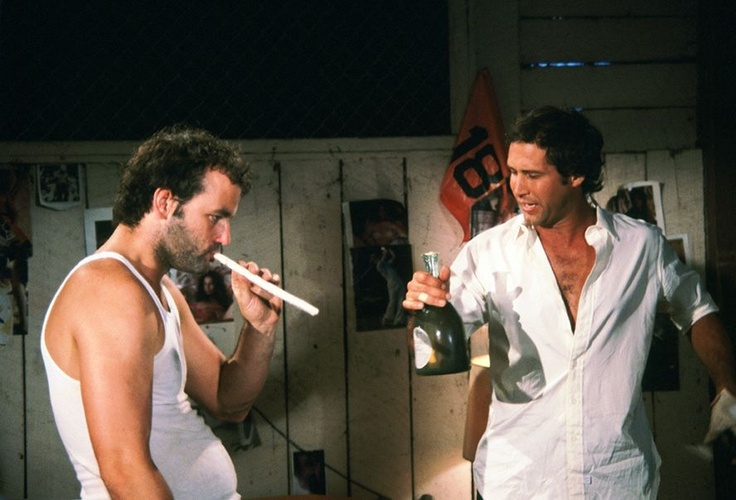
“Critics always really preferred Bill Murray movies to Chevy Chase movies,” Tarantino said. “However, it does seem as if the point of all the Bill Murray movies is that he’s this kind of hip, cool, curmudgeon, smartass guy, who in the last 20 minutes gets a transformation and becomes this nice guy. And almost apologizes for who he was the entire movie before that happened.” 

Tarantino continued with examples: “StripesGroundhog DayScrooged. The whole thing. For instance, Stripes. How does he go from where Warren Oates kicks his ass, deservedly kicks his ass…to where now he’s rallying the troops? Now, he’s getting their army on during the parade and now he’s leading a secret mission. Same thing with Groundhog Day. I mean, does anybody really think a less sarcastic Bill Murray is a better Bill Murray? Maybe it’s better for Andie MacDowell, but not for us as the viewer.”

“Yet, Chevy Chase movies don’t play that s***,” Tarantino said. “Chevy Chase is the same supercilious a**hole at the end of the movie that he is at the beginning. He never changes in his stuff…I mean, unless they have him playing a dope like he is in the Vacation movies. But when he’s playing like a Chevy character, he never apologizes for who he is, stays the same way through the whole film, and even if there’s a slight change, that’s not the whole point of the movie, like changing him into a nice, cuddly guy.”

Information Age and Movies

Another huge component of watching modern movies is all of the insider information we have at our disposal. Thanks to news aggregators, the internet in general, and the other chairs on late-night talk shows, we now know so much about movies that we crossed a tipping point of too much information about the production of a simple 90-minute movie. I used to find the information actors, directors, and everyone else involved in the production provided in the other chairs on late-night talk shows somewhat fascinating, but somewhere along the line I realized it’s all just self-imposed deification, and their sign to them that they made it. For some reason, we all want to know everything we can find about our definition of our royalty, and the roles they play in movies, and we can never get enough. I did. When the actor told me that they put weight on to play the role, I didn’t really care, but I considered it a worthwhile dedication to the role. When the host began to ask questions about the diet they used to add weight, I turned the channel. When the person in the other chair informed us that she didn’t wear make-up for their role, I didn’t care. When the host said, “You are very brave,” and he appeared to mean it, I turned the channel. When it was revealed in an aggregator, that this actor didn’t get along with that actor, their onscreen lover, we all learned that many considered working with that actor difficult. When we learned that the actor became so immersed in his method acting that he demanded everyone on set call him Weasel, because he’s playing Weasel, I found that fascinating at first. Then, when everyone copied that immersion technique, I found it trite, redundant, and a little pathetic and dumb. We learn that some actors aren’t nice, but others are. “It’s true. I know he’s a good guy, because he asked me my name when giving me an autograph, and he called me Harley from then on, and he even winked at my kid.” That director used this technique, this setting, those cameras, that soundtrack, and the movie studio budgeted it at such and such an amount, but as usual the artistically demanding director burned through that the first week. We still care about the quality of a movie, of course, but all these other late-night talk show talking points enhance the movie experience for us. Why? I honestly don’t understand how any of this information enhances your cinematic experience. You like a movie better, because you found out she’s nice, and you won’t go to see another movie, because you heard a report about how one time that star didn’t hold an elevator for an old lady carrying groceries? You might be a victim of too much information. 

Even with all that, I still love movies. I find a trip to the theater, a night at home with Netflix, Prime, etc., and a quality movie, a great evening. No matter how hard they try, they can never take that away from me.