Abraham Lincoln is No Longer The Great Emancipator?


Some no longer view Abraham Lincoln as The Great Emancipator, because they’ve read some quotes, and learned some facts about the man that suggest the man he was a bit more equivocal about ending slavery than originally believed. Yet, anyone that has read a book on Lincoln, perused his letters, or listened to documentarians speak on him, know that ending slavery was one of the primary drivers of his life.

As a kid, Abraham Lincoln used to watch slaves parade past his backyard, and he wrote of the inhumanity he saw in their treatment.

“That sight was a continued torment to me; and I see something like it every time I touch the Ohio (River), or any other slave-border.”

The great Abraham Lincoln
The Great Abraham Lincoln

The fact that we now learn that Lincoln exhibited some restraint in his beliefs on slavery has many of us believing that he was not as adamant about ending slavery as we all believed.

“You know I dislike slavery. I confess I hate to see the poor creatures hunted down, and caught, and carried back to their stripes, and unrewarded toils; but I bite my lip and keep quiet.”{1}

“Why would he keep quiet?” we ask. “Why would he bite his lip? He was the President of the United States. He could’ve used his bully pulpit to bring about more immediate change, and if he felt more passionate about the topic he would’ve.” First of all, a review of the history of America in the 1860’s reveals that the states weren’t exactly a united front in this regard. Second, he viewed The Constitution, and its limits on his power, with more reverence than modern presidents do today, and he also, as described below, wanted to persuade the nation to his point of view. The best way to change minds on a substantial subject, so that the change survives in a manner an executive order might not, is to methodically persuade the public, so they call upon their state legislators, congressman, mayors, governors, et al. to change the way they vote. An executive order will work in the short term, but if the voters disagree, they can just vote in another president to nullify the prior executive order.    

There was also an event that occurred six weeks after Abraham Lincoln became as president. This event is historically called The Civil War in which half of the country disagreed with Abraham Lincoln’s personal opinions on slavery. Between his election and his first day in office those who presumably assumed Lincoln would abolish slavery left the Union. The reason that Lincoln used restraint, and bit his lip, and kept quiet is that he wanted to try to do whatever he could to preserve this Union that we call the United States today, and in doing so he believed slavery would eventually end.

Abraham Lincoln hated slavery. He claimed in an 1858 speech at Chicago to hate it “as much as any Abolitionist.”{2}

Yet Lincoln was no abolitionist. He wanted slavery to end, but that was never his first priority. Here’s how he explained his position in an 1864 letter to Albert G. Hodges, a Kentucky newspaper editor:

“I am naturally anti-slavery. If slavery is not wrong, nothing is wrong. I cannot remember when I did not so think, and feel. And yet I have never understood that the Presidency conferred upon me an unrestricted right to act officially upon this judgment and feeling. It was in the oath I took that I would, to the best of my ability, preserve, protect, and defend the Constitution of the United States.”

Lincoln, in essence, was torn between ending the bondage of the institution of slavery and abiding by the Constitution, and saving the nation. With the latter, we repeat, eventually bringing about the end of the horrible institution. 

“Lincoln said during the Civil War that he had always seen slavery as unjust. He said he couldn’t remember when he didn’t think that way,” explains historian Eric Foner. “The problem arises with the next question: What do you do with slavery, given that it’s unjust? Lincoln took a very long time to try to figure out exactly what steps ought to be taken.”

In a letter to the editor of the New York Tribune, Abraham Lincoln responded to the editor’s charge that Lincoln’s administration lacked direction and resolve. 

“If there be those who would not save the Union, unless they could at the same time save slavery, I do not agree with them,” wrote Lincoln. “If there be those who would not save the Union unless they could at the same time destroy slavery, I do not agree with them. My paramount object in this struggle is to save the Union, and is not either to save or to destroy slavery. If I could save the Union without freeing any slave I would do it, and if I could save it by freeing all the slaves I would do it; and if I could save it by freeing some and leaving others alone I would also do that. What I do about slavery, and the colored race, I do because I believe it helps to save the Union; and what I forbear, I forbear because I do not believe it would help to save the Union. I shall do less whenever I shall believe what I am doing hurts the cause, and I shall do more whenever I shall believe doing more will help the cause. I shall try to correct errors when shown to be errors; and I shall adopt new views so fast as they shall appear to be true views. I have here stated my purpose according to my view of official duty; and I intend no modification of my oft-expressed personal wish that all men everywhere could be free.”

Prior to taking office, Lincoln switched from the political party called The Whigs to the Republican Party, and this move was based on the fact that that Whig party sought a softer stance on slavery so as to win elections in an otherwise volatile nation with volatile passions on both sides of the fence. Lincoln chose to align himself with those people in the Republican Party, who weren’t afraid to lose elections based on the fact that they had a volatile passion for ending slavery. Based on this fact, it should not enter the discussion that Lincoln did not lead the North’s fight in The Civil War against the South, and continue to fight against overwhelming forces, for the sole purpose of ending slavery.

We can continue to list Lincoln quotes, and we can find some that reveal his thoughts on the African-American. The latter do not paint him in a favorable light historically. We can argue over the merits and demerits of his character in this light, but what we cannot do is place ourselves in Lincoln’s time period, and in his time period some Southern states decided to secede from the Union after Lincoln’s election and the Civil War broke out six weeks after he assumed office. At the very least, we could say that the South’s actions, should suggest to all parties involved what Abraham Lincoln represented to those who elected him to office. 

Another complaint specifies that Lincoln’s Emancipation Proclamation did not call for an immediate end to all slavery in the South, but only to those who had already escaped the South. Again, we must say he was focused on preserving the Union of the North and the South, and he didn’t want to further the anger the South felt in losing the Civil War by bringing an abrupt end to slavery, but he believed that the individualistic nature of the country would bring about the eventuality of freedom of all men. And again, The South saw this eventuality as well, or they wouldn’t have seceded in the first place. In other words, Lincoln saw it as his duty to preserve the nation first and foremost, and put his personal views on matters such as slavery on the back burner, until the former was achieved.

Another myth perpetuated against Republicans of the day in general, and Abraham Lincoln in particular, was that Republicans wanted slaves counted as 3/5ths a person in the Three Fifths Compromise. This charge is levied to counterpoint everything Republicans of the day did to free the slaves. The counterpoint suggests that if Republicans wanted to free the slaves, they wanted to do so in a manner that left African-American slaves as partial human beings forever more. First of all, Lincoln and the Republicans of the era, did not enact this compromise. This compromise was achieved during the 1787 Philadelphia convention, seventy-four years before Lincoln took office. Second, the compromise was reached with the long-term goal of lessening the power of the pro-slavery Democrats in the South in the House of Representatives and in the Electoral College. If the Northern Republicans lost this compromise, and the slaves were counted as full people, the Southern Democrats would’ve have had overwhelming representation in the House of Representatives and the Electoral College. Gouverner Morris also believed that counting slaves as full people might further encourage slave trade by the Southern states to increase their representation on Congress. Some could say that the Three Fifths Compromise was a cynical ploy by the Northern states to level the playing field of representation, but it could also be said that if they had not achieved victory in this cynical ploy, slavery would not have been ended as early as it did.

Frederick Douglass

Frederick Douglass was an immediate abolitionist. To attribute a modern adage to Frederick Douglass’ motivations, he wanted slavery to end yesterday. As a result, Douglass despised President Abraham Lincoln in the beginning. As a former slave, Douglass considered Lincoln approach to ending slavery too methodical. He said slavery, “Was simply evil, an offense against God and all decency.” 

Frederick Douglass’ feelings about Abraham Lincoln did not waver in the beginning, as he declared Lincoln’s refusal to mount a full and furious campaign against human bondage was “nothing less than craven capitulation to the slave states for the sake of trying to hold them in the Union.” These early Douglass writings, and the many others linked to in the page below, likely propel the modern characterizations Lincoln’s actions as something less than a warrior in this fight, and many of Lincoln’s letters, interviews, and statements admittedly suggest that he was not the single-minded warrior Douglass was. Yet, that is only half of the story. 

The other half occurred 12 years after the assassination of Lincoln, at the unveiling of The Freedmen’s Monument in Washington, D. C. on April 14, 1876, Douglass gave a speech that writer Ronald E Franklin characterizes as, “celebrating Lincoln as the perfect, God-appointed man for a task that, had the abolition of slavery been his first priority, he could not have accomplished.”

“[Lincoln’s] great mission was to accomplish two things: first, to save his country from dismemberment and ruin; and, second, to free his country from the great crime of slavery. To do one or the other, or both, he must have the earnest sympathy and the powerful cooperation of his loyal fellow-countrymen. Without this primary and essential condition to success his efforts must have been vain and utterly fruitless. Had he put the abolition of slavery before the salvation of the Union, he would have inevitably driven from him a powerful class of the American people and rendered resistance to rebellion impossible.”

My more modern translation: If Lincoln wasn’t able to save the Union, slavery in the North and South of this land may have continued unimpeded. Lincoln had to do what he did to keep his approval ratings up, so that he had a mandate from the people to encourage lawmakers to follow suit. If he put the abolition of slavery before the salvation of the Union, his approval ratings would’ve allowed lawmakers to avoid Lincoln’s attempts to set the agenda for this country, and they would’ve felt free to continue to ignore abolitionists. 

Douglass continued: “Viewed from the genuine abolition ground, Mr. Lincoln seemed tardy, cold, dull, and indifferent; but measuring him by the sentiment of his country, a sentiment he was bound as a statesman to consult, he was swift, zealous, radical, and determined…

“Taking him for all in all, measuring the tremendous magnitude of the work before him, considering the necessary means to ends, and surveying the end from the beginning, infinite wisdom has seldom sent any man into the world better fitted for his mission than Abraham Lincoln.”

Writer Ronald E Franklin concludes a piece he wrote Why Frederick Douglas Despised, then Loved Abraham Lincoln writing:

“In the end, the impatient firebrand who would settle for nothing less than “abolition now!” realized that had Abraham Lincoln been the anti-slavery zealot activists wanted him to be, he would have failed in his mission. Frederick Douglass came to value the wisdom, skill, and necessary caution that allowed Abraham Lincoln to deftly navigate through extremely turbulent political waters to both save the Union and end slavery.

“Like Frederick Douglass, I believe no other man of that time, or perhaps of any time, could have done better.”

Imagine for a second if Lincoln ceded to Douglass’ request that he use a heavy hand in a manner that history now requires. Imagine, as I wrote, how many powerful people he would’ve lost. Slavery, we can only guess would’ve eventually imploded, but slaves and the African-American community in general, might have viewed Abraham Lincoln as their last, best hope. Violence and mayhem would’ve surely followed and perhaps a second Civil War pitting African-Americans, freemen and slaves, against The South. The incidents and conflict are unimaginable, and they were avoided by the strategies and persuasions put forth by Republicans, the Lincoln administration, and Abraham Lincoln. So quibble with the mindset and the attitudes of the era, but recognize in the end what these people accomplished.  

If you do extensive research on Lincoln, and his views on slavery, you will find some letters and statements made by Lincoln that suggest he wasn’t as hard-lined on slavery as others, and that he sought to save the Union above all else. You will find that Lincoln wanted to compensate slave owners for their loss of product (slaves), and you may find that Lincoln treated African-Americans as pawn pieces in legislation, commands to his generals, and in personal letters to friends, but you will also find an overarching theme that suggests that Lincoln thought that preservation of the Union meant that the abolition of slavery would eventually occur under the weight of the individualism banner of the Constitution, and the will of the people in the United States of the day.

You may also find writings that suggest that Lincoln believed white men to be superior to black men, and that he wasn’t an advocate for black voting rights, or blacks abilities to sit on juries, and that Lincoln believed that the freed black men should be forced out of America to colonize a different colony based on the fact that blacks and whites could not live in harmony in those post-Civil War United States. This has been listed by historians as controversial, based on a limited amount of personal writings in Lincoln’s second term as president. Regardless the finer points found in Lincoln’s positions, the theme remains that Lincoln did not think that a civil union could be maintained with the worm of slavery eating away at her core.

Abraham Lincoln was a politician, a president, and a man who dealt with some of the most combustible forces any president has. He had Constitutional limits on his power, and an overwhelming desire to save the union we now call The United States of America. As such, there were moments in his presidency when he had to capitulate to opponents and soften the blow of the The Civil victory over The South to welcome them back to the union without the harsh feelings that might have led to something like a Civil War II, or some other horrible inevitability. 

When we look at the actions of Lincoln, and the Republicans of the day, we do so from the vantage point of hindsight.  We know that the North won The Civil War, and we wonder why Lincoln didn’t pursue the spoils of victory more. We think that if Lincoln was the crusader against slavery that history tells us he was, he would’ve gone hard line with the South, but again Lincoln wanted to preserve the Union, and he believed that welcoming the South back into the Union was more conducive to maintaining the Union long-term than forcing them to immediately comply 100% to the North’s ways. We believe Lincoln should’ve backhanded the South at the conclusion of the Civil War for committing such a sin against humanity, but we do so without realizing the rage the South had at the conclusion of the Civil War. We don’t celebrate Lincoln’s restraint and patience in this regard, based on our own rage over the horrors that occurred in our beloved country. We live in an immediate satisfaction society that lists those who might slightly disagree with our current views on race and our current ways of dealing with matters as haters, but those of us who criticize the manner in which Lincoln achieved victory over the South, preserved the Union, and abolished the institution of slavery haven’t achieved 1/100th of what Lincoln did over the course of four years. It took a very steady hand, and a man who was willing to patiently accept the fact that he couldn’t exert his own opinion and will on a people immediately to accomplish what he did. As Ronald E Franklin writes of Lincoln, “No other man of that time, or perhaps of any time, could have done better.” If Lincoln was too firm, or too weak, in regards to his actions to save the union, follow the Constitution, and eventually end slavery, there would’ve been grave ramifications to his actions. To those who want more immediate statements from Lincoln about race, and a firmer hand in regards to the abhorrent institution that was slavery, the question that we should ask ourselves how many countries have they saved?

The Usage War


When I first heard the name Noam Chomsky, I learned that some regarded him as the father of modern linguistics, and I learned that he was considered a powerful force in America. How a man whose sole concern was language could have power outside the halls of academe confused me shortly after I dismissed him. The subject of linguistics seemed a narrow conceit with a narrow appeal. As my knowledge of political science grew, and I learned of the power of language, I learned of the power of this seemingly inconsequential subject, and how it has led to the least talked about “war” of our times.

The late author, David Foster Wallace, called it a usage war and he stated that it has been occurring since the late 60’s. Wallace’s primary concern was not the narrow definition of politics. Rather, he was concerned with the use of language, and the interpretation of it. This usage war is a war between two factions that the editor-in-chief of the controversial Webster’s Third New International Dictionary, named Philip Babcock Gove, {1} described as a battle between descriptivists and prescriptivists.

“The descriptivists,” Grove writes, “are concerned with the description of how language is used, and the prescriptivists are concerned with how the language should be used.”

“The late lexicographer Robert Burchfield furthered this description thusly: “A prescriptivist by and large regards (any) changes in the language as dangerous and resistible, and a descriptivist identifies new linguistic habits and records these changes in dictionaries and grammars with no indication that they might be unwelcome or at any rate debatable.” {2}

The descriptivists say that language is elastic, and it should bend to individual interpretations. Language, they say, should largely be without rules.

“Virtually all English language dictionaries today are descriptive. The editors will usually say that they are simply recording the language and how its words are used and spelled. Most Merriam-Webster dictionaries will note if certain words are deemed nonstandard or offensive by most users; however, the words are still included. Of modern dictionaries, only the Funk and Wagnall’s contains a certain amount of prescriptive advice. All the major dictionary publishers – Merriam-Webster, Times-Mirror, World Book, and Funk and Wagnall’s – will tell you that they are primarily descriptive.”{3}

If we were going to succeed in school, we learned that we would have to perfect our spelling and grammar. The successful carried this knowledge onto the real world. Some of us did not. When we entered into the workforce, our skills were such that no high-level employer would consider us for a gig. We had to work our way up. Along the way, we forgot many of the rules of school. We had to re-learn, the rules of grammar. 

We can guess that nearly everyone has learned, at some point in time, the relative machinations of acceptable discourse. We can guess that anyone who has spoken, or written, on a professional level, has learned of the perceptive gains one can accumulate and lose with the use, and misuse, of language. We can also guess that most realize how others manipulate their audience through language. The latter may be the key to the descriptivist movement in linguistics today.

Our introduction to manipulated perceptions often occurs when we enter the workforce. We may see these perceptions parlayed in movies and television, but we don’t experience them firsthand until we enter the workplace and they directly affect us. At that point, it becomes clear how others use language to shift the power of daily life.

If this form of manipulation were limited to the workplace, that would be one thing. It would be powerful, but that power would be limited to that particular environment. As we have all witnessed when one successfully manipulates language, it doesn’t end when we clock out for the day. We accidentally, or incidentally, take these rules of usage, or speech codes, out of the workplace and into our everyday lives. David Foster Wallace catalogued these incremental actions and reactions in the book Consider the Lobster. It details the fact that lexicographers, like Phillip Babcock Gove, have used dictionaries, and other methods, as a foundation for a usage war that has been occurring in America since the late 60’s.

How many of us have used incorrect terminology that violates the current rules of usage? How many of us have used the words “reverse discrimination” as opposed to the more politically correct term “affirmative action”? How many of us have called an illegal immigrant an illegal immigrant, only to be corrected with the term “undocumented worker?” How many of us have had a boss, or members of the Human Resources department tell us, “I understand you have personal beliefs on this topic, but I hope you can see that it has no place in the workplace,” they say in so many words. “You don’t want to offend anyone, I know that. You’re a nice guy.” 

Most of us are nice people, and we don’t seek to offend the people we work with, our neighbors, or anyone else for that matter. To do this, we follow the speech codes handed down from the Human Resources department to help us get along with other people. We then, unconsciously, take those speech codes to the bar, to family functions, and to our home, until we find ourselves assimilated to the point that we’re correcting our friends.

“It’s a peccadillo,” they say, “a very slight sin, or offense, it’s not sexual relations with an intern. It’s a fib,” they say. “It’s not perjury before a grand jury. It’s “environmentalist” not “anti-corporate socialist”. It’s a “feminist” not a “man hating female who can find no other way to succeed”, “multiculturalist” not “racial quota advocate”, “rainforest” not “gathering of trees”, “sexually active” not “promiscuous”, “economic justice” not “socialism”, “fairness” not “socialism”. It’s “giving back” not “class envy”, and it’s “community organizer” not “radical agitator”. This is the war, and these are the little battles within that war that the descriptivists and the liberals have been waging against the “normal” prescriptive America lexicon for generations and they have succeeded beyond their wildest dreams.

This desire to be nice to other people, and understand other cultures, is one of the advantages the descriptivists/liberals have in manipulating the language, and winning the usage wars. When we find a person that may be different from us in some manner, we want to know how best to get along with them. We want to know their sensitivities, in other words, so we do not accidentally violate them. The question that we should bring to the debate more often is how do people learn the sensitivities of others? Are these sensitivities internal, or are they taught to us through repeated messaging? Most people are insecure, and they don’t know how to demand satisfactory treatment, but they can learn. An individual can learn that something is offensive, and they can learn how to communicate that offense.

“What’s wrong with that,” is a common reply to this notion. “What’s wrong with teaching people how they should be treated? We all just want to get along with one another?”        

Prescriptivists would tell you that buried beneath all this “well-intentioned” manipulation of usage is the general loss of language authority. Prescriptivists ache over the inconsistencies brought to our language through slang, dialect, and other purposeful displays of ignorance regarding how the language works. They labor over the loss of standardized language, such as that in the classical works of a Geoffrey Chaucer. Most of them do not necessarily call for a return to Chaucer-era usage, but they are offended when we go to the opposite pole and allow words like “height” and “irregardless” into modern dictionaries. They also grow apoplectic when terms, such as “you is” and “she be” become more acceptable in our descriptivist lexicon. And They hide in a hole when standards of modernity allow sentences to begin with a conjunction, such as “and”, and they weep for the soul of language when casual conversation permits a sentence to end with an infinitive such as to.

Language provides cohesion in a society, and it provides rules that provide like-mindedness to a people that want to get along. It’s fine to celebrate individuality, and some differences inherent in a melting pot as large as America’s, but if you have nothing to bind people together the result can only be a degree of chaos.

A member of the descriptivism movement, on the other hand, celebrates the evolution of language:

“Frank Palmer wrote in Grammar: “What is correct and what is not correct is ultimately only a matter of what is accepted by society, for language is a matter of conventions within society.”

“John Lyons echoed this sentiment in Language and Linguistics: “There are no absolute standards of correctness in language.”

“Henry Sweet said of language that it is “partly rational, partly irrational and arbitrary.”

It may be arbitrary in Sweet’s theoretical world of linguists seeking to either ideologically change the culture, or update it to allow for vernaculars in the current social mores, but in the real world of America today are we doing our students, our language, or our culture any favors by constantly redefining usage? If our primary motivation for teaching arbitrary methods of usage is sensitivity to intellectual capacity, different cultures, and self-esteem is the culture as a whole made better in the long run?

On the ideological front, the descriptivism movement has successfully implemented a requirement that all writers now use the pronouns “they” and “he or she” if that writer is seeking a general description of what a general person may do, or think. Repeated use of the general pronoun “he” without qualifying it with the balanced usage of “she”, “they”, or “he or she” is not only seen as antiquated, but sexist, and incorrect. The reason it is antiquated, those of the descriptivism movement say, is that it harkens back to a patriarchal, White Anglo-Saxon Protestant (WASP) society.

If you work in an office, and you send out any form of communication to a team of people, you know how successful the descriptivism movement has been in infiltrating our language in this regard. Yet, there was a point in our history, a point in the not-so-distant past when no one knew enough to be offended by the repeated use of “he” as a general pronoun. No one that I know of regarded this as improper, much less incorrect. Years of repeated messaging have created ‘gender neutral’ solutions to the point that schools, workplaces, and friends in our daily lives suggest that using “he” as a general pronoun is not just sexist it is incorrect usage. Yet, they deem using the pronoun “she” as an acceptable alternative. If this complaint were limited to the narrow prism of politics, one could dismiss it as a member of the losing team’s hysteria, but we’re talking about the politics of language usage.

A political science professor once told our class that, in his opinion, law breaking became a little more acceptable when the federal government lowered the speed limit to fifty-five in 1974. His theory was that the fifty-five mile per hour speed limit seemed arbitrarily low to most people, and they considered it unreasonable. His theory was that most people were generally more law-abiding in the 50’s, and  –“regardless what you’ve read”– in the 60’s, but in the 70’s more people found the general idea of breaking the law more acceptable, and he deemed this 1974 unreasonable limit on speed to be the antecedent. His theory was that no one person, no matter how powerful their voice is in a society as large as ours, could successfully encourage more people to break the law, and that only the society could do this by creating a law that was seen as not only unreasonable, but a little foolish.

Whether or not his theory is correct, it illustrates the idea that seemingly insignificant issues can change minds en masse. Could one person, no matter how powerful they may be in a society, teach people to be offended more often for more power in that society? Can political linguists dictate a certain form of usage by suggesting that anyone that doesn’t assimilate does so with ulterior motives? Could it be said that Human Resource videos –that anyone that has been employed has spent countless hours watching– are not only being used to teach people how to get along with people different than them, but how those different people should be offended?

“Why does that person continues to use general pronoun “he” instead of “he or she” or “they” continue to do that? Are they trying to offend all the “shes” in the room?” 

Everything stated thus far is common knowledge to those of us who operate in public forums in which we interact with a wide variety of people. What some may not know is that this “usage war” for the hearts and minds of all language users extends to the production of dictionaries.

If this is true, how can a dictionary be ideological? There are prescriptivist dictionaries that call for “proper” interpretations and use of language, and there are descriptivist dictionaries that evolve with common use. “Usage experts”, such as David Foster Wallace, consider the creation of these two decidedly different dictionaries salvos in the Usage Wars “that have been under way ever since an editor named Phillip Babcock Gove first sought to apply the value-neutral principles of structural linguistics to lexicography in the 1971 Webster’s Third New International Dictionary of the English Language.”

“Gove’s response to the outrage expressed by those prescriptivist conservatives who howled at Gove’s inclusion of “OK” and “Ain’t” in his Third Edition of Webster’s Dictionary was: “A dictionary should have no truck with artificial notions of correctness or superiority. It should be descriptive and not prescriptive.” {4}

One of the other reasons that descriptivism eventually took hold is that it allowed for more “free form” writing. Descriptivism allows a writer to get their words down on paper without an overriding concern for proper communication. Descriptivism allows for expression without concern for proper grammar or a more formal, proper lexicon. It allowed a writer to brainstorm, free form, and journal without a “fussbudget” teacher correcting these thoughts into proper usage.

This was a relief to those that enjoyed expression without having to answer to a teacher that informed us we weren’t expressing correctly. How can one “express correctly” those of us that enjoyed expression asked. Without too much fear of refutation, I think we can say that the descriptivism movement won this argument for the reasons those that enjoyed creative expression brought forth. When one of my professors told me to get the expression down, and we’ll correct your spelling and grammar later, I considered myself liberated from what I considered the tyrannical barrier of grammatical dictates. It wasn’t too many professors later that I discovered teachers that went beyond the “correcting the spelling and grammar later” to the belief that the self-esteem of the writer was paramount. If the student doesn’t get discouraged, this theory on usage suggested, they are more apt to express themselves more often. They are more inclined to sign up for a class that doesn’t “badger” a student with constant concerns of systematic grammar, usage, semantics, rhetoric, and etymology. One argument states that colleges based this lowering of standards on economics, as much of what they did encouraged the student. Personal experience with this, along with the other examples listed above, paved the way for the descriptivism movement to move the language, and the culture, away from the prescriptivist rules of usage.

Some have said that the motivation for those in the descriptivism movement is not nearly as nefarious as those in the prescriptivism movement would have one believe. Descriptivists would have one believe that their goal was more an egalitarian attempt at inclusion and assimilation. They would have them believe that the prescriptivists’ grammar requirements, and lexicography, are exclusionary and elitist, but can we take these descriptivist interpretations and nuances into a job interview, a public speech, a formal letter, or even into a conversation among peers that we hope to impress? Can we succeed in the current climate of America today with language usage that is wide-open to a variety of interpretations?

An English as a Second Language (ESL) teacher once informed me that the “impossibly high standards” President George W. Bush, and his librarian wife, placed on her students, made her job more difficult. I conceded the fact that I was an outside looking in, listening to her complaints, and that I didn’t know the standards she had to deal with them on a daily basis. “But I said, “If we’re looking at the intention behind these impossibly high standards, could we say that they were put in place to assist these non-English speakers into learning the language at a level high enough for them to succeed in America?” This ESL teacher then complained that the standards didn’t take into account the varying cultures represented in her classroom. I again conceded to her knowledge of the particulars of these standards, but I added, “You’re theoretical recognition of other cultures is wonderful, and it has its place in our large multi-cultural society, but when one of your students sit for a job interview what chance do they have when competing against someone like the two of us that are well-versed in the “impossibly high prescriptivist, standard white English, and WASP” grammar and usage standards we were forced to learn in our class?”

{1} http://en.wikipedia.org/wiki/Philip_Babcock_Gove

{2}   http://stancarey.wordpress.com/2010/02/16/descriptivism-vs-prescriptivism-war-is-over-if-you-want-it/

{3} http://englishplus.com/news/news1100.htm

{4} Wallace, David Foster. Consider the Lobster. New York, NY. Little Brown and Company, a Hachett Book Group. 2005. eBook.


How to Succeed in Writing part I: Answering Leonardo Da Vinci’s Questions


I would love to tell you that you have a lot to learn from me if you want to be a successful writer in one regard: I’ve never quit. I would love to tell you that my passion for all forms of writing has overwhelmed all of the potholes I’ve run across in the road, and that I’ve always stood strong in the face of those negatives in order that I would one day become a successful writer.

I would love to have you picture me in a Gatorade commercial that depicts me writing with colored beads of sweat pouring down my face as a voiceover says: “Rilaly says never say die!” I look to the camera at that point. I look mean, I look mad, and I look driven. “Quit? The word is not even in my vocabulary!” I say with a look of disgust for having to answer the question you haven’t asked, “I haven’t even quit smoking!” I would love to present that image to you, but it’s not true. I have quit. I’ve quit more times than I care to discuss.Robert Hayes sweating in Airplane

I’ve grown tired of writing fiction, and I’ve felt more dejected trying to succeed in this field than I have in any other areas of my life, including my dating life. I’ve gone through bouts of insecurity that double those I’ve endured in any other areas of my life, and I’ve worked in numerous fast-paced, hyper-critical jobs. If you ever met me, you would know that I’m a relatively confident guy, and I love my life. Writing novels, short fiction, creative non-fiction, political blogs, and little entertaining, philosophical vignettes has made me happier, more miserable, more disgusted, more vulnerable to the smallest criticism, and more proud of myself than anything else I’ve tried in my life thus far.

If that’s the case you say, then why should I try it? Why do I need the headache or heartache? Why would I even entertain the idea of writing a novel? How do I know if I’m good enough to even start? I’ve never done anything like this before. The very prospect of starting down such a road is a little scary to me. Scary, you say, and a little exciting at the same time.

writing is hardWriting a novel is hard, don’t let anyone kid you. I’ve written four novels, and three short story collections, and just about every one of them has been difficult to complete. Very few of them have flowed so well that I thought I made it look easy. George Kennedy star of Naked Gun, Cool Hand Luke, and over 200 films and television productions, wrote one book in 1983. After writing this novel, called “Murder on Location”, Kennedy said it was the hardest thing he ever did. “I do not envy those people who do it for a living,” he said. “It’s the most trying thing I’ve ever done.”

Just because it’s hard, and just because it may be one of the most trying accomplishments you’ve ever attempted, does not mean it can’t be done. The rewards for completion are satisfying, enriching, and in many ways therapeutic. With that said, only you can know if this is the field for you. Only you!  Only you can answer the mandatory questions that need to be asked in a manner that lets you know that you are a writer.

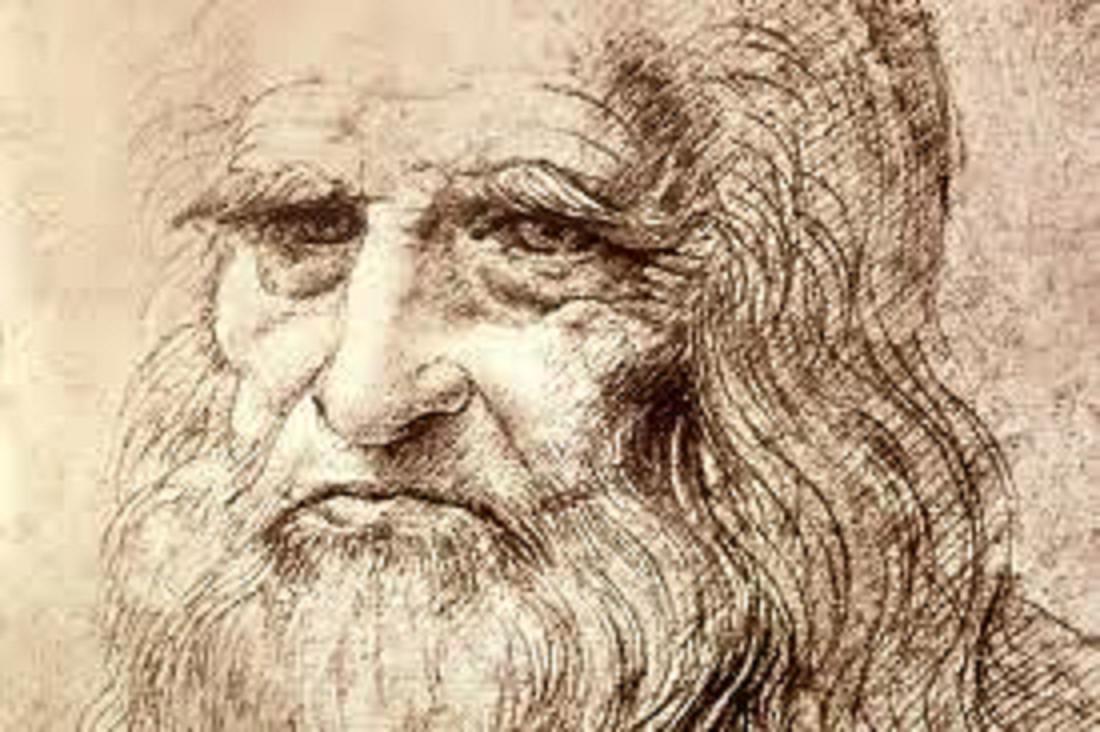
Leonardo da Vinci had a belief that the only method through which one could answer a question was by asking questions. Da Vinci did not even say you have to ask the right questions for even an incorrect question might lead to some answers that could lead to other questions and other answers. That may seem so obvious it’s laughable, but he asked himself hundreds of little questions about every project he pursued. His goal was objectivity. He wanted to look at every project from every angle he could imagine to see if he could enhance his view of the project or find it pointless to pursue. Some of these questions were harsh, some were leading, and others seemed to have no pertinence at all, until he asked them and tried to answer them. You cannot worry about hurting your feelings when you ask yourself these questions. You cannot worry if these questions change your opinion of yourself one hundred and eighty degrees. The questions must be asked.

Most of us ask ourselves questions all the time, but how probing are these questions? Most of these questions reveal that we have little objectivity about ourselves. Most of the questions we ask ourselves are leading questions. Most of us ask ourselves the questions we enjoy answering. “Do I really need to eat another piece of pie?” Why, yes I do. I need those endorphins racing around in my brain like they did on the first slice. That was nirvana! “I deserve a second slice. I’ve been good!” Then we eat that piece and realize it wasn’t nearly as rewarding as we thought it would be, and we pay the price in sluggishness from the sugar lows, in weight gain and its subsequent effect on our appearance, and we’re a little frustrated that we didn’t display more will power. We know now that we obviously didn’t ask ourselves the right questions.

In the coming weeks, we will be asking you the questions about yourself that you may not want to ask about becoming a writer. These questions may be a little harsh. We may ask you to ask yourself some questions you don’t want to answer. If you really want to become a writer, however, you will need to ask them.