Annie Cook III: What Drove Her?


In one specific retelling, Joe (Martin) Cook, recounts a sit down he had with Frank after Annie brutally whipped him with a stick “Why is Annie the way she is?” stepson Joe (Martin) Cook asked Frank after Joe endured one of Annie’s brutal beatings. 

“I don’t know,” Frank said after a long pause. “When we were first married, she was a good wife. She worked hard and was never mean. Then she got sick and went down to Omaha to see a doctor. She was gone quite a while, and when she came back, she was –different. She went back to Omaha a few more times when she didn’t feel well, and every time she came home more –spiteful, meaner.

Joe (Martin) Cook

“You see,” Frank explained. “Annie isn’t happy, hasn’t been for a long time, and she doesn’t want anybody around her to be happy. All she’s thought of, or cared for, for years, Joe, is money. Money and the power over people to make them do what she wants them to do. It’s a sickness, boy, a sickness of the mind. I guess we should feel sorry for her, Joe. It is a terrible thing to be sick in your mind.”

There’s no question that Annie Cook had some sort of mental illness, but what drove that? In Evil Obsession, author Nellie Snyder Yost provides some informed speculation, based on Frank’s characterization, but she abides by Frank’s characterization that it was all about greed, lust for power, and blind ambition. I don’t question that that was Annie Cook’s primary driver, but it does seem a little too surface. It doesn’t explain why she enjoyed hurting members of her own family so much. It doesn’t provide answers for why she progressed from someone who worked hard, to a micromanaging superintendent that could be a little mean at times, to a woman who could be cruel, sadistic, and have no regard for the sanctity of human life. 

If the reader suggests that Annie may have done so to manipulate her workers and family members, and keep them submissive, I understand that, but a controlling, micromanager could’ve accomplished that. Even a mean person could’ve found numerous other ways to achieve that. Only an unusually awful would do such things, the way she did them, because she clearly enjoyed humiliating and hurting those she considered her possessions. This, in my opinion, requires a deeper answer to Joe’s question, beyond the “greed and lust for power” answer.

Actor Portraying Annie Cook

Ms. Yost might say that it’s not the job of a nonfiction writer to provide answers through psychoanalysis and speculation. The quality nonfiction writer provides the evidence to allow their readers to draw their own conclusions. We all respect that answer, and most of us will agree, but there’s nothing wrong with providing some insight based on research. 

If we take some of the bullet points of Annie Cook’s life and draw lines from her past to her present, we could speculate that spending an overwhelming amount of her life on farms may have influenced Annie’s views on the animals vital to a productive and profitable farm. That insight could lead an author to suggest that Annie Cook may have regarded the guests of her Cook Poor Farm as nothing more than another type of animal working on her farm.     

Before we continue, I think it’s important to note that an overwhelming majority of farmers and their family and friends, are upstanding members of their community. I was going to write that the percentage of good people versus bad in farming communities is equal to members of every other demographic, but I knew some farm kids growing up, and I know some adults who spent their entire lives on farms. In my experience, most farming families don’t just turn out quality individuals on par with other families. They often turn out better people than most. There are numerous reasons why farm kids turn out to be better adults, but the first and most obvious reason is that most farmers work such long hours that most of them don’t have the free time the rest of us do, and as the old proverb states, “Idle hands are the devil’s workshop.”

As with most farm kids, Annie started out with a child’s innocent love of animals, but the harsh realities of farm life—harsh to an innocent, naive child anyway—hardened her. She probably fed and tended to the farm’s chickens, pigs, and other livestock so often that she developed a fondness for some of them. Their eventual deaths probably hit her hard, but she learned, as all farm kids do, that livestock not only provides food for the family but financial gain when they’re sold to the local butcher. It’s a way of life on a farm, that farm kids learn, but we can imagine that they had a tough time adjusting to that early on. 

Everything that lives dies, and farm kids learn that earlier than most kids but they must also come to grips with the harsh reality that some animals live so long that they overstay their usefulness. Farmers must measure their livestock with a Feed Conversion Ratio (FCR). The FCR is a measure that farmers use to determine how much it costs to feed an animal versus their level of productivity and overall sense of usefulness. Thus, if Annie’s favorite chicken, pig, or whatever livestock she loved most on a farm failed to produce enough to outweigh what it cost to feed them, she knew they were not for long.

Most farm kids also have more pets than most kids, as farms need cats to keep the rodent population manageable, and they need dogs to protect their territory in other ways. They learn, as all kids do, that very few animals live as long as humans. Farm kids experience so much death on a farm that, for lack of a better term, they just get used to it. 

After spending a lifetime on farms, experiencing and learning everything it takes to run a profitable farm, how much of a reach is it to ask if an unusually awful person, with a twisted perspective that could be the result of a mental illness, could view human beings as nothing more than a cog in the machine of farm production? How much of a reach is it to suggest that Annie viewed the humans on her property as her property, or something she owned in the same manner we own cats and dogs, goldfish and parakeets, and livestock. Every state now has their own variation of cruelty to animal laws now, but the laws of the 1930s were relatively limited in scope compared to modern standards. The 1930s citizen could do whatever they wanted to their pet parakeet back then, because they were the owner. How much of a reach would it be for an unusually awful person to suggest they own the guests of the Cook Poor Farm in the same manner, and they can do what they want to them using the Feed Conversion Ratio (FCR) to determine how much it costs to feed them versus their level of productivity, or if they’ve overstayed their usefulness in harsh, stark, and unusually awful determinations of the profitability of the farm.

Humans are easier to train but harder to maintain. Humans are able to do the more complex work animals can’t, and most of them can outwork other animals, but unlike other animals, humans tend to stubbornly seek freedom, fun, and trying to get the most out of life. They also have a way of overstaying their usefulness that just doesn’t make sense financially. The first inclination we might have is to fire the personnel who don’t help turn the farm profitable, but Annie wasn’t paying her farm hands. They were either poor or indigent wards of the state, or family members working for free. The next logical next step, for the farm owner is to find a way to encourage them to work harder, and fear can be a great motivator. Annie believed that mental and physical torture helped keep her staff productive. If that failed to produce results, how hard is it to convince an unusually awful person that those farm hands are overstaying their usefulness?

Anytime we read a true crime book, like Evil Obsession, our goal is to derive motive and motivation of its monsters. As hard as it is for us to imagine how someone could be so callous, malicious and sadistic, it has to be much more difficult for them. “Well, I don’t think a monster like Annie spent one second reflecting on what she did,” you might say. I wouldn’t dispute that, except to say that you might be talking about moral justification. I don’t think Annie Cook spent a second trying to morally justify her actions, but she surely had some “I’m not a monster” moments before a mirror. I base that on my experiences with Beryl Carnelia, who she never tried to morally justify her actions, but she did try to square it in a way that made sense to her and those she respected.

Beryl Carnelia

I never met Annie Cook, or anyone who knew her personally, but I knew Beryl Carnelia, a woman so similar to Annie that reading Evil Obsession felt intimately and eerily familiar. Beryl ran a prostitution ring from her bar, and she exclusively hired less fortunate workers to do the manual labor chores that needed to be done at the bar and in and around her home. The less than fortunate workers didn’t require much money for their services, or respect, and she didn’t give them either. She beat them down mentally as opposed to the physical torture Annie would with her less than fortunate staff, but Beryl’s staff feared her in a manner somewhat similar to the manner in which the staff at the Cook Poor Farm feared Annie. No one feared Beryl ever putting them in an abandoned wagon box to fry in the sun and eventually starve to death, I should clarify, but they feared her abusive tongue. The portrait of Annie Cook that Ms. Yost paints reminds me of Beryl Carnelia most in the sense that they were colorless individuals who were fundamentally unhappy.  

Those who had the opportunity to talk to Beryl learned that this woman had a rock solid personal constitution built on a foundation of solid moral values. Beryl followed the golden rule of treating others the way she wanted to be treated, as long as they were as respectable as she was. She knew the difference between right and wrong, in a philosophical sense, and she would drop the great declaration of human equity and universal rights that “all men and women are created equal.” Watching how Beryl treated the less fortunate, led some of us to think that if she ever read anything, she really would’ve enjoyed author George Orwell’s “but some are more equal than others” asterisk to that great declaration.

She would say things like, “Yeah, but I did that to John Wissam,” when we called her out on the inconsistencies of her philosophy when it came to the way she treated the less fortunate. “He’s an idiot.” She said that as if we should join her in recognizing the clear distinction between an upstanding man, one who may have experienced some rough times, and a total idiot like John Wissam. Anyone reading the characterizations Ms. Yost gathered of Annie Cook can see that she drew the same distinctions. 

Beryl, like Annie, could not stand to see certain people happy. It just rubbed them the wrong way to see select people laughing, enjoying life, and acting the fool. As Annie’s husband Frank said, “Annie isn’t happy, hasn’t been for a long time, and she doesn’t want anybody around her to be happy [either].” Those who are miserable in their own skin are just like this, and they don’t even know they’re doing it. If we were to call them out on it, in the moment, they would deny it, or they would drop the line, “It’s John Wissam. He’s an idiot.” And we let it go, because John Wissam has adapted to this part of his existence, and we know it’s just a part of their relationship. When she does it to us, however, we realize that Beryl Carnelia just can’t stand seeing other people laughing, acting the fool, and enjoying life. 

There’s a tale told in Evil Obsession of Annie’s daughter Clara purchasing a brand new paid of overalls for Joe (Martin) Cook. The two of them enjoyed the new overalls for what they signified and symbolized for a spell, until Annie ordered Joe to remove the overalls. She took the overalls and destroyed them. Another tale speaks of Mary proudly displaying a certificate of achievement from school, Annie took it from her and destroyed it. Another incident involving Mary, spoke of how Annie criticized her for spending too much time in front of a mirror. She cut the girl’s hair off at the ponytail.

“That’s too much,” her daughter Clara complained. ‘That’s too much?’ the reader asks. ‘Annie scarred Mary for life with a hot poker to the face, nearly burned her feet to frostbite when she was a five-year-old, and physically beat Mary with a buggy whip almost every say for sixteen years, and she mentally abused the young girl for sixteen years to essentially damage-to-ruin her entire life, and cutting her hair off at the ponytail is too much for Clara?

To despise others’ happiness that much, it has to be ingrained, right? The dark, colorless nature has to come from somewhere, and our first suspect is the family. Evil Obsession does not provide a thorough analysis of Annie Cook’s family, but we assume that they had to be a dark and colorless family, and Annie absorbed that darkness. As Frank characterized Annie, Beryl appeared to be a good person at one time. We never knew that to be fact, but we often caught glimpses of a kind, loving character, who was full of fun and frivolity. We knew that Beryl Carnelia was spared, or saved, in the past, but we never knew the specifics of what she endured in her youth, because she never talked about her past. Thus, we could only guess that she had whatever color she had taken from her, or stolen from her, through circumstances she couldn’t control.

What is a colorful character? We all define that term differently, depending on the character, but I have my own definition of a colorful character by way of contrasting it to the Annie Cooks and Beryl Carnelias of the world. Beryl laughed at times, we saw it, but it made us feel uneasy when she did, because we knew she wanted our jokes dark. “I have a very dark sense of humor,” she confessed, but we all say that. We all enjoy hearing stories about human foibles, but some like Beryl, and presumably Annie, need something more if they are going to be entertained. There are simple stories of degradations and humiliations, and we’ve all heard those so often that they’re just not as impactful or personal. Beryl types, Annie types, and the type of person we could call unusually awful consider those stories equivalent to cute and clever knock-knock jokes that might not even get a smile out of them. They want stories about human degradation and humiliation. They want pain, be it emotional or physical, in their punchlines. They want to hear a story that if repeated to the subject might cause a tear in their eye.  

Beryl saw the world in black and white so often, and in so many situations that when we talk to her, we can see that she’s had the color drained out of her. She became black and white, colorless, vague, unmemorable and miserable. She became so consumed by bitterness that we can feel it shortly after we say, “Hey, how you doing?” and she responds with some witty, dark retort that she’s learned along the way. Again, we all do this to some degree, but something about the dark trail that followed Beryl’s response told us that somewhere along the way, darkness consumed her.

Final Days 

“Evil always get theirs, in the end,” social commentators tell us. “It might take a while, but it always comes back, one way or another.” And it does …in the movies, and other fictional tales that are built to satisfy our need for substantial forms of retribution. We could say that the darkness so consumes souls, like Beryl and Annie, that we say, “Imagine having to live with them. Imagine being them.” That is its own form of intangible justice, but it’s not enough for us. We want real, tangible justice for the victims who suffered at their hands, and that does not always “come back, one way or another.” Sometimes, evil doers get away with it all, and they never pay a price.

When we immerse ourselves in the tale of an unusually awful person like Annie Cook, the reason it makes us feel so uncomfortable is based on the idea that they disrupt the moral architecture of our world, and we seek some form of retribution to provide a scaffolding that repairs it. We crave resolution not just for the victim, but for the symbolic universe their tormentors fractured. Annie never did time, she was never subjected to an official investigation of any sort during her life, and she never suffered in anyway that would satisfy those seeking some form of karmic justice.

As she laid on her deathbed, however, Mrs. Cook had very few visitors, the only documented one being Joe (Martin) Cook. The officials who befriended her in life were surely relieved that their secrets died with her, and they probably didn’t want their name associated with her legacy in a way that a hospital visit might invite. Her family and various other associates may have been just as glad to see her go for their own reasons. That latter line might straddle the line of speculation, but it’s based, in part, on those witnesses of Annie Cook’s life that Nellie Snyder Yost interviewed after Ms. Cook’s death. Thus, the only form of subtle retribution her victims and other observers felt at the end was that Annie Cook managed to estrange so many she spent her final days on her deathbed, friendless, alone, and unloved. 

If we, somehow, found out that we would die alone and unloved, it might reshape how we live our lives going forward. Would it affect someone like Annie Cook? I can tell you that it didn’t affect Beryl Carnelia. What affected Annie, the woman who killed her daughter, and estranged the husband who once loved her with a malicious, unfounded charge of incest was the idea that she might lose her money. “Oh gawd, help me take care of my money, Oh Gawd help me take care of my money, Oh gawd…” Annie bawled over and over in an irrational state.

When Joe (Martin) Cook, her foster son, and her only documented visitor, heard her shout this, he probably thought about what Frank had said about Annie, “All she’s thought of, cared for, for years, Joe, is money. Money and the power over people to make them do what she wants them to do. It’s a sickness, boy, a  sickness of the mind. I guess we should feel sorry for her, Joe. It is a terrible thing to be sick in your mind.” Poor old woman, he thought after leaving what they assumed her deathbed, all she had to show for eighty years of living was her farm, a little money, and the questionable loyalty of a dozen people she “bought”. Not a friend in the lot. Not a friend anywhere.

Dying without a loved one crying at your bedside, or even a friend visiting her in her final days is probably not what readers would call a very satisfying form of retribution, but when her final tears were cast for her money, the only thing that provided her life meaning and comfort, it does feel fitting and emblematic of her empty and meaningless existence. 

“Evil always get theirs, in the end,” social commentators tell us. “It might take a while, but it always comes back, one way or another.”

The last vestige of hope readers cling to when we hear that “Evil always get theirs, in the end,” was did Annie Cook have a deathbed revelation? Did she find some way, even in an Annie Cook way, to seek some sort of redemption of some kind or ask us for forgiveness in a spiritual or more general way?

One of the former North Platters telling me this story knew a deathbed nurse who tended to Annie Cook at the end, and the nurse informed her that Annie Cook was unreasonably awful to and demanding of those who tried to offer her some relief from whatever pain she experienced in her final days. (Ms. Yost also alluded to this on page 255 of Evil Obsession.) We can also be sure that Annie did not link the pain she experienced with the physical and mental torture she inflicted on others. To her, it was probably just pain, black and white, and colorless pain, and all she had to do was call the nurse for more pain reliever. If the reader of Evil Obsession read furiously to the end to find her comeuppance, some form of retribution of any kind, they either have never known someone even close to Annie Cook, or they didn’t read carefully enough. Annie Cook, like Beryl, died quietly, unceremoniously, and without any hint of regret or remorse, because she never thought she did anything wrong.  

The Unusually Awful Annie Cook 

Annie Cook II: The Horror is in the Details 

Marlon Brando Didn’t Care


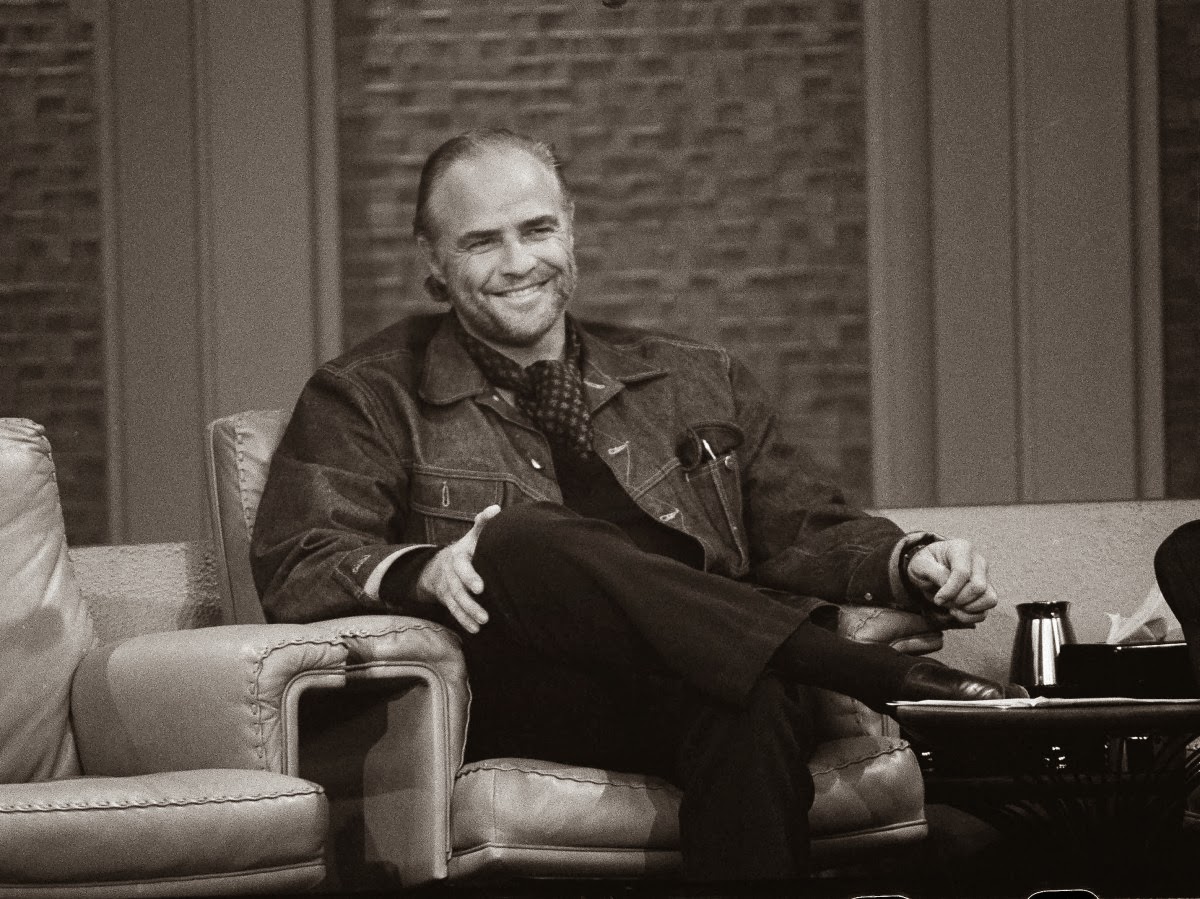
Marlon Brando was by many accounts the greatest actor who ever graced stage and screen. Peers, fans, and critics found his performances explosive, electric, and affecting. He had a way of connecting to the audience in a way that left us trying to remember the other members of the cast, and he was teamed with some of the greatest actors in the world in most of his movies. Marlon Brando was such a great actor that he changed acting at twenty-seven-years old. He captivated so many hearts and minds so early in his career that the field of acting bored him.

“[Marlon] Brando did not merely act the role, he became the part, allowing the role to seep into his pores, so that he stalked the screen like a young lion. Critics were stunned, blown away by the realism of the performance, they had simply never seen anything like him before.” —TheCinemaholic  

Brando was the first movie star, to my mind, to publicly state that he was not the least bit grateful for the roles, the career, and the life his profession offered him. Why would a person who made enough money throughout his career to purchase his own island not be grateful for everything the acting profession gave him? The answer appears multifaceted and vague, but we can speculate that the core reason was that he achieved such rarified air so early on in his career that no one could humble him. His early work influenced the biggest stars of his era to be more real and find the element of truth in their work, and we can speculate that that level of adulation stunted his growth and left him an immature narcissist.

Marlon Brando didn’t care what critics thought of his performances, and he didn’t care what movie moguls, most directors, producers, or anyone behind the scenes thought of them either. Those of us who love great art might applaud this indifference, as it basically defines the term auteur, or an individual whose style and complete control give a performance its personal and unique stamp. After doing this so often in his career, Marlon Brando earned a place in the rarified air of those who don’t have to care anymore to continue to prosper in their career. If you just stood to applaud this artistic apathy, the idea that he didn’t care what you might think either, should sit you back down.

As an incredible artist, and Marlon Brando was an incredible artist, we shouldn’t expect an artist to create art for us. As a side note, we should note that no actor creates art, but they can bring a writer’s character to life for us. They can interpret or reimagine a character in a way the writer never imagined. They can make the character their own. Does anyone know Budd Schulberg, the screenwriter of On the Waterfront? How about Tennessee Williams, the writer of A Streetcar Named Desire? He’s historically famous, as is Mario Puzo, writer of The Godfather, but most of us know those movies as Marlon Brando movies. His performances in these movies were so great that he overshadowed everyone else involved in them. Yet, we shouldn’t expect him to act in a manner that pays homage to his fans, and we shouldn’t care why anyone strives to give their best performances every time out, as long as they do.  

Having said that, there is something special about a great movie. We can lose ourselves in the time it takes to watch a movie. We can forget about our problems, and our need to get some sleep. If you’ve ever had a phone call disrupt a great movie, you know how deep into that movie you were. We develop deep connections to story the writer’s write, the manipulation of a great director, and the performance of the movie’s actors. We might develop such a deep connection to the actor that we develop a relationship with them. For some of us that relationship is all about loyalty, as we’ll see anything and everything that actor has ever done. Others expect the star to be nice to them in restaurants and other public venues to enhance that relationship. The point is, we accidentally grow to expect some level of appreciation for all that we’ve given them, even if it’s just some relatively insignificant comment they make on a talk show.  

“Acting is just making faces. It’s not a serious profession,” Marlon Brando told Lawrence Grobel in Conversations with Marlon Brando in 1989. “Acting is not a profession that I have any great respect for… It’s something I do, but it’s not something I think is particularly noble,” Brando told Edward R. Murrow in a 1955 interview. “I think it’s a silly, childish thing to do for a living… I don’t think it’s a very dignified way to make a living,” he told Dick Cavett in a 1973 interview.

I don’t know if Brando was the first movie star to go out of his way to publicly damage our illusion that they care what we think. He did open the door for actors to publicly demean and diminish the iconic roles that created their careers. If they state that they now want to move past that signature role that made them famous, we’d understand such competitive instincts, but they now say that they’re embarrassed by those roles that made them famous. (Note: I never found a quote where Brando singled out a performance that embarrassed him.) To try to be fair to those who say these things, we can sympathize with the idea that it has to be tedious to hear someone say, “Hey, aren’t you Han Solo!” eighty movies and fifty years after he gave that iconic performance. Yet, to be so ungrateful that they’re not afraid to publicly state that they’re embarrassed by a role which we all still love, and one that spawned a career that may not have happened if not for that role, just sits in my craw in a way that cannot be removed mentally, biologically or surgically.

***

Marlon Brando, a man many consider the best actor of his generation, didn’t care about acting, and he didn’t care for it. Did he say these things, because he thought it was cool not to care? Impossible, we say, that’s so high school, This man was a legendary actor who almost single-handedly changed the way actors approached their profession. Was it a marketing technique? If we read through Brando’s interviews, and the books written about him that give us insight into his thought process, Brando didn’t care about image, marketing, or any form of public relations. When we strip all that away, we’re left with the speculation that either Marlon Brando loathed himself so much that he viewed everything he did in a negative manner, or he said such things because he wanted us to think he was cool.

When our starting quarterback privately told us he didn’t care about football, soon after winning a state championship, we thought that was “so cool!” He was something of a mythic figure to us, basically telling us to not get so worked up about a silly game. That was high school though, filled with teenagers climbing all over one another to find new and different ways to be cool. Is it possible that this near-mythic figure of the acting world tried to accomplish the same thing by telling his fans to not get so worked up about something as silly as movies? We never leave high school, some social commentators say, and we never totally abandon the need to have others consider the fact that we don’t care about nothing “so cool!”

It was His Technique to Not Care

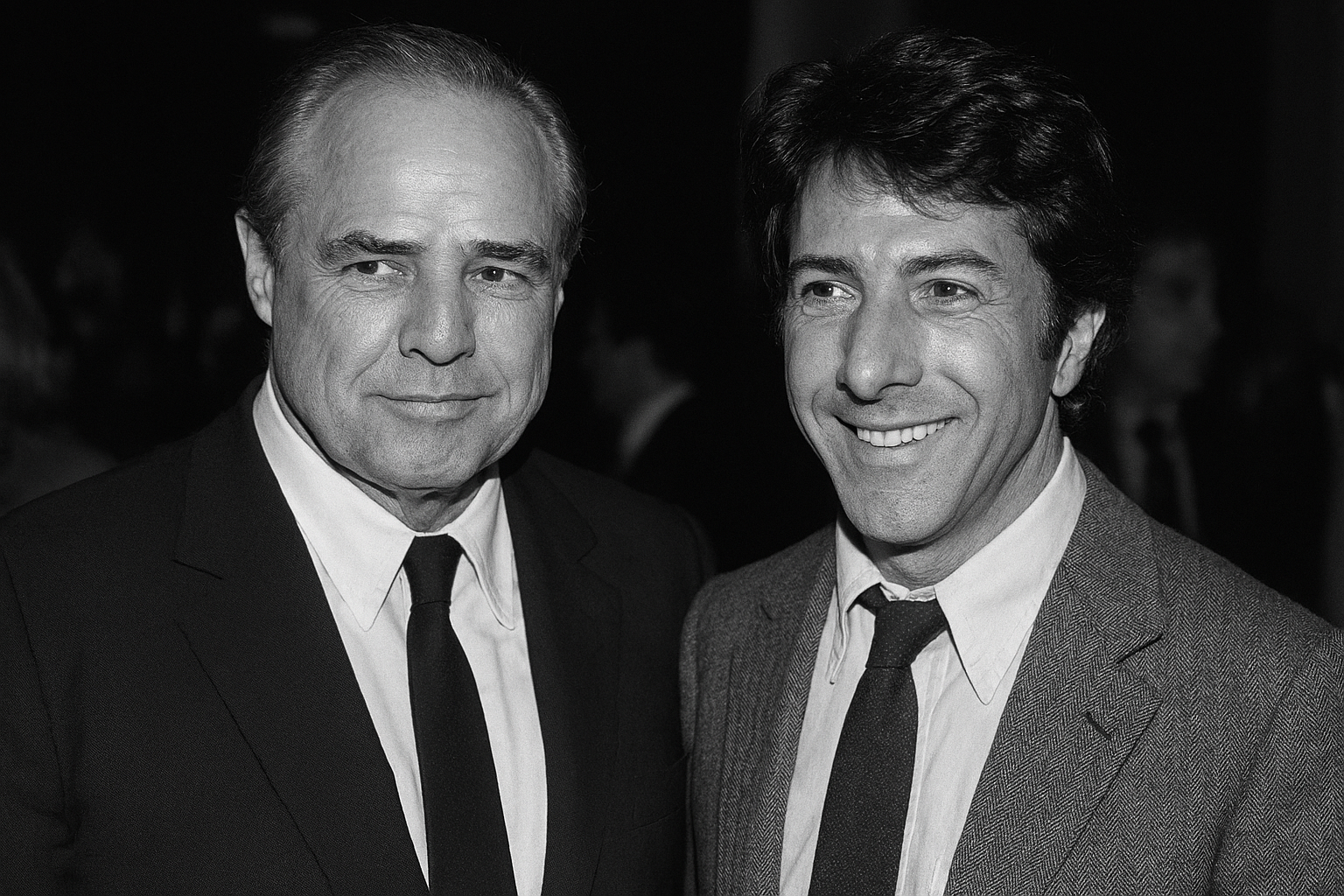
“Marlon Brando would often talk to cameramen and fellow actors about their weekend even after the director would call action. Once Brando felt he could deliver the dialogue as naturally as that conversation, he would start the dialogue.” —Dustin Hoffman in his online Masterclass. 

Hoffman’s quote suggests that Brando found a technique to help him calm his nerves, and it helped him mentally overcome the idea that he had to top his previous performances. By talking to these people the way he did, Brando helped himself find a middle ground, a place where he could not care so much. It suggests that he tried to place himself in a more natural setting, convincing himself that he didn’t care, and he did it to achieve a better performance. It’s possible, even plausible, but my guess is Hoffman is over-interpreting Brando’s casual conversations.

Even some of his fellow actors, his peers, considered him the greatest actor who ever lived, the greatest of all time, the GOAT of the acting world. Whenever we label someone the GOAT, the next chapter of the narrative involves their single-minded obsession, the drive to be the best, the sacrifices he made to be the best, and the measures he took to stay on top. “To be the best, you must beat the rest,” is some semblance of a quote these individuals drop to describe their drive to be the best. 

That is all true for most GOATs in sports, because even the most naturally gifted athletes must push themselves beyond their natural abilities to sustain continued dominance of those of equal, natural abilities. Brando’s success in the field of acting suggests this isn’t the case with acting. It doesn’t matter if you’re driven to succeed or obsessed with a level of success that continues to outshine your peers. They just need to look great on screen, deliver their lines on time, and do so in a manner suited for the role.

Yet, Brando didn’t always look great on screen, as he often showed up, on set, overweight in the latter half of his career, but his iconic status at that point was such that he didn’t have to be in shape to get roles. It was a little sad to see the man so old and out of shape in his latter movies, but it was still a treat to see him on screen. We didn’t care if he delivered his lines well, yet he often mumbled his lines, which was probably caused by his refusal to memorize them. To compensate for his refusal to memorize lines, directors had their people put placards around the setting for him to read. So, at least in the latter half of his career, he was reading lines to us.  

Anytime we criticize the great ones, we hear excuses and obfuscations. “Brando cared,” his supporters say. “He cared so much that one of his acting techniques involved getting to a place where he didn’t care anymore.” This was Marlon Brando’s technique, they argue, and we call that technique method acting, but according to the book Songs my Mother Taught Me, Brando abhorred the ideas behind method acting, as taught by Lee Strasberg.  

“After I had some success, Lee Strasberg tried to take credit for teaching me how to act. He never taught me anything. He would have claimed credit for the sun and the moon if he believed he could get away with it. He was an ambitious, selfish man who exploited the people who attended the Actors Studio and tried to project himself as an acting oracle and guru. Some people worshipped him, but I never knew why. I sometimes went to the Actors Studio on Saturday mornings because Elia Kazan was teaching, and there were usually a lot of good-looking girls, but Strasberg never taught me acting. Stella (Adler) did—and later Kazan.” 

As the “greatest actor in the world” who could command huge paychecks, because he could attract large audiences to his performances, Brando could’ve changed acting for a wide array of actors.  

In his 2015 documentary, Listen To Me Marlon, Brando said that prior to his appearance on the scene, “Actors were like breakfast cereals, meaning they were predictable. Critics would later say that this was Brando being difficult, but actors who worked opposite him said it was just all part of his technique.”

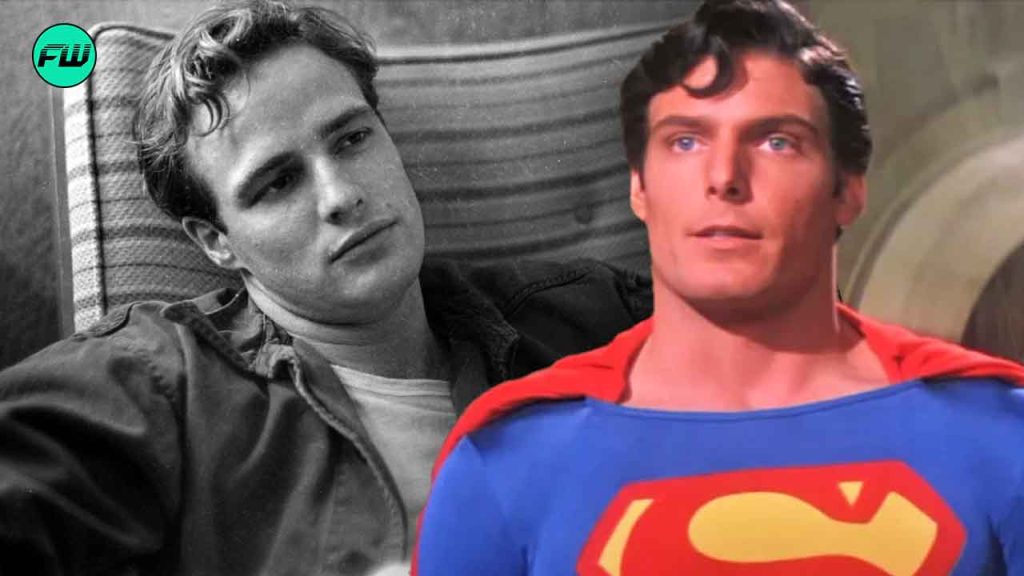
Christopher Reeves responded to these characterizations when asked about what working with the great Brando on the set of 1978’s Superman was like, “I don’t worship at the altar of Marlon Brando, because I feel that he’s copped out in a certain way. He’s no longer in the leadership position he could be. He could really be inspiring to a whole generation of actors and by continuing to work, but what happened is the press loved him whether he was good, bad, or indifferent. People thought he was this institution no matter what he did. So, he doesn’t care anymore, and I just think it would be sad to be fifty-three, or whatever he is and not give a damn. I just think it’s too bad to be forced into that kind of hostility. He could be a real leader for us.” Speaking specifically on the role Brando played in Superman, Reeves added, “He took the $2 million ($19 million with today’s inflation) and ran you know.”

If we watch that Reeves interview on Late Night with David Letterman, we can tell Reeves was all worked up about this topic, after working with Brando. Reeves acted as if he couldn’t wait for Letterman’s question, because he wanted to get his experience of working with Brando off his chest.

Tallulah Bankhead, who co-starred with Brando in his first stage performance back in 1947, also clashed with the actor before firing him. She recommended him for the part of Stanley Kowalski in A Streetcar Named Desire. “[He was] a total pig of a man without sensitivity or grace of any kind.” Even she had to admit, though, that Brando had talent. “There were a few times when he was really magnificent,” Bankhead said. “He was a great young actor when he wanted to be.” (My emphasis.)

We can leave the final word to another acting great, Jack Nicholson, who was famously intimidated by Brando’s talent while working with him. Nicholson once joked, “When Marlon dies, everyone moves up one.”

“I watched some of Brando’s dailies, nine or ten takes of this same scene. Each take was an art film in itself. I sat there stunned by the variety, the depth, the amount of silent articulation of what a scene meant. The next day I woke up completely destroyed. The full catastrophe of it hit me overnight,” Nicholson reminisced.

He also summarized neatly the ubiquitous reach of Brando’s influence throughout the world of film acting, in one short sentence: “We are all Brando’s children.” He was speaking for many an acting great, from Pacino to Hopper, Christopher Reeve, Viggo Mortensen, and too many others to mention.

Did Brando care about any of that? When he cared, he cared. When he had a script that supported a cause he believed in, he cared. He didn’t care about Superman, but he got paid so much to star in it that he probably should’ve. He had been the biggest star in the world for so long that he stopped caring about it. He didn’t appreciate his standing in the world for what it was, at the time, and he didn’t really care when it ended. He read his lines, and he did his job.

The next question, and it’s one I usually loathe when it comes to innovators, disruptors, and enterprising young minds who create. The line goes like this, “If he hadn’t invented this, someone would have eventually.” They say this when the subject of Nikola Tesla, Leonardo da Vinci, Isaac Newton or any innovators notions, products, or inventions are discussed. They say this when another suggests they were indispensable on the timeline. Was Marlon Brando, and his influence on acting indispensable? Method acting and the new brand of “realism” that Brando learned and displayed for the world may not have been as immediately accepted, applauded, or adopted if Marlon Brando never existed, but the techniques Brando used were being taught in acting schools. Some suggest that if Brando never existed, Montgomery Clift would taken those techniques to the world. As great an actor as Clift was, he wasn’t the explosive “shining star” Brando proved to be. 

When the subject of movie stars arrives, most of us make it all about “me.” We judge them based on how nice they were to “me.” “You think he wasn’t nice? He was nice to me. He even went so far as to say something nice to my son.” We also view movie stars, sport stars, and all celebrities based on our brief encounter with them, because we want to be a part of the story. “He didn’t me tip well,” “She said she doesn’t do autographs,” or “They didn’t even so much as look at me throughout our Uber.” I try very hard to avoid making it about “me.”

I met a number of celebrities in a previous life, and I found their particular demographic similar to all of the other ones. Some celebrities went out of their way to be nice to me. Some were dismissive, and others were rude, but most of them treated me the way everyone else does, and I never really cared one way or another. Most of us do. We loved their movie so much “we” bought that movie on DVD, “we” have three of their songs memorized, and “we” developed a connection to them that “we” thought they should consider special. When they didn’t reciprocate in anyway, “we” felt they diminished our special moment. When they didn’t tip us according to expectations, we went to Facebook to report them. When they refused to join us in a selfie, refused a request for an autograph, or even offer us a hearty smile or handshake, we proclaimed we’d never watch one of their movies again. We can’t help it, we judge people, places, and things from our perspective. On this particular note, I might agree with Brando’s general assessment that we all get a little silly about movies.

Thus, if I met the late, great actor, and he dismissed me as pond scum, I wouldn’t be anymore insulted by that comment than if anyone else said it. It’s the general sense of a lack of appreciation that sticks in my craw. If he ever dismissed the role of The Godfather, which he didn’t to my knowledge, as “reading lines and making faces”, I wouldn’t find it personally insulting, even though I connected with that character so much I felt a personal relationship with it. I would be angry though. I would be angry that a man who was given such an incredible opportunity in life to affect so many people didn’t appreciate it in the least, and that appears to be the case with the greatest actor who ever lived, Marlon Brando. 

Tesla’s Pigeon


“I loved that pigeon as a man loves a woman, and she loved me. As long as I had her, there was a purpose to my life.” –Nikola Tesla.

I’ll go ahead and leave the discussion of whether Nikola Tesla is the GOAT (Greatest of All Time) or a GOAT to those with far more knowledge on the subject, but if any individual embodied the spirit of a domesticated bezoar ibex, descending from the Zagros and Taurus mountains to join humanity’s ranks, it would be Nikola Tesla.

Some skeptics dismiss the reverence for Tesla, saying, “I wouldn’t call him the GOAT.” Their argument? “He was first, I’ll give you that. He discovered how to harness alternating current, enabled wireless communication, pioneered remote control, and achieved countless other feats that revolutionized humanity, but,” and here’s where they make their c’mon! faces, “don’t you think someone else would have come up with all of that eventually?”

This is where we’re at, apparently. We’ve grown so accustomed to enjoying the fruits of genius that we downplay the achievements themselves. In today’s world, the process of celebrating greatness often involves systematically dismantling it. We begin by humanizing our icons—making their lives relatable and their quirks amusing—to draw in readers. We peel back the layers of their accomplishments, not to marvel at them but to suggest that anyone else, given the chance, might have done the same. We present witty but reductive “but-did-you-knows” about their flaws, as though to bridge the gap between their brilliance and our everyday mediocrity.

We build them up just to tear them down, all to feel better about ourselves.

“See, Henrietta Bormine, my wife? That Tesla guy wasn’t so great. He had outdated ideas about [insert pet issue here]. I could have achieved what he did—anyone could’ve, really, if they put in the effort.”

This is what we do now.

The thing about these “Anyone could’ve done it” arguments is that they’re almost impossible to defeat. Perhaps, with the same dedication—those mythical 10,000 hours—someone could have achieved what Tesla, Einstein, or da Vinci did. Most discoveries, inventions, and breakthroughs lose their superhuman qualities over time. Who invented the television set? “Someone would have eventually.” Who invented the microwave? “Was there an inventor?” Who invented the toaster. “Boring.” The next question is if anyone could’ve invented these things why didn’t they? Another factor that makes these arguments almost impossible to defeat is the idea that we cannot remove the geniuses from the timeline to test their theory.

This debate also leads me to the question I have when anyone drops a GOAT on someone spectacular, what separated the genius from their competition? Was a man like Nikola Tesla simply a right time, right place type of guy? How many people, in his era, were racing to explore the lengths of man’s ability to harness and manipulate electricity for human needs and eventual usage?

When we were kids, we thought Benjamin Franklin invented electricity. I don’t know how we twisted that story in such a manner, but it wasn’t long before a representative from the nerdy brainiacs set up straight. “Think about how foolish that sounds … How does a person invent electricity? He just advanced the idea that it could be harnessed, and some even debate that notion. They suggest that numerous others were conducting similar experiments. think there were a number of people messing around with experiments and displays of harnessing electricity, but Franklin was just the most famous person to put his name to such theories, and his fame and notoriety put all of those long-standing theories on the map.”

Tesla’s name belongs on the timeline of scientific advancements in electricity, but his achievements don’t stand in isolation. His legacy is interwoven with the work of predecessors, peers, and successors whose names are far less known. And here’s the ultimate question: How many “relatively anonymous figures” from history accomplished even a fraction of what Tesla did? For the sake of argument, let’s call this unsung hero “Todd Callahan,” because it feels like the quintessential everyman name for such musings.

This fictional Todd Callahan grew up much like Nikola Tesla—a curious science enthusiast who stood out as the smartest person anyone in his area had ever known. They dubbed Todd an “uncommon genius.” While other kids spent their afternoons throwing balls in open fields, Todd was tinkering with stuff. When other boys his age played with the toys, Tesla and Todd tore theirs apart. They enjoyed destroying stuff as much as every other young boy, but this wasn’t destruction for distruction’s sake. They did it to rebuild the toys, and they destroyed these toys and rebuilt them so often that they developed an understanding for mechanics in a way that set them on the path to innovate and manipulate the natural world.

Todd’s brilliance was evident early, earning him both admiration and envy from those around him. His neighbors marveled at his genius, and perhaps some resented it. Even the tenured professor, who encountered hundreds of bright students every year and would’ve scoffed at GOAT-like superlatives, privately admitted to his colleagues that Todd Callahan was special.

How many Todd Callahans existed during Tesla’s time, and what distinguished them from each other? Was Tesla, as an adult, more daring, more imaginative, or simply more willing to embrace failure and learn from it? We could say D) all of the above, but the most vital factors in Tesla’s journey to success might have been the simplest of all: hard work, patience, and time.

Time, above all, may have been the decisive factor separating Nikola Tesla from the Todd Callahans of history. Tesla devoted his life—every ounce of energy, thought, and purpose—to science. While this now feels like a cliché description we could apply to many “almost Teslas” of history, it’s worth considering its weight. Imagine mentioning at a party, “Nikola Tesla devoted all of his energy, his time, and his thoughts to science.” The likely response? A collective yawn or polite indifference. It’s not the kind of revelation that stuns a crowd—it’s too broad, too general to feel significant.

But for Tesla, it wasn’t just a statement; it was a truth that defined his life. As Petar Ivic wrote, “Tesla’s only love, inseparable and sincere, was science.”

We probably have to add terms like ‘inseparable’ and ‘sincere’ to capture attention, because every major figure in history devoted themselves to something. The modern adjective we drop on someone so devoted to the particulars of their craft is gym rat. Judging by descriptions of Nikola Tesla’s physique, he never spent time in a gym, but the analogy holds true when we learn that he spent so much of his free time in life in labs and various other enclosed rooms that skin cancer was probably never one of Tesla’s concerns.

Even suggesting that Tesla probably spent a majority of his life in small rooms, testing various ideas and experiments probably doesn’t move the needle much, but the difference between Nikola Tesla and the various Todd Callahans of human history is that Todd Callahan was a normal man driven by normal needs, and normal wants and desires. Todd wanted to achieve as much as Tesla did in the fields of science, but as some point, the man wanted to go home. He sacrificed a lot in the name of science, but he loved to fish and hunt on weekends, and he loved playing card games with the fellas. Todd was a normal man who loved science, but he also loved women. He dated a variety of women, until he found his true love, and they settled down to have a family, a dog named Scruffy, and a white picket fence to keep Scruffy and the kids from harm.

Tesla refrained from these normal pursuits in life, fearing that they would take away, or diminish, his pursuit of steadily advancing the science of electricity. We could say that Nikola Tesla refrained from pursuing a sense of human wholeness, or a sense of completion, but we could also say that was his edge.

“I do not believe an inventor should marry,” Tesla said. “A married man is precluded from devoting himself to his work. Therefore, I have chosen to remain unmarried and to pursue my work.” Tesla believed celibacy allowed him to maintain acute focus and channel his energy entirely on his inventions, and as opposed to most science nerds, Nikola Tesla did, in fact, have list of women who were all but beating down his door.

Nikola and His Pigeons

Nikola Tesla took the “hard work, patience and time” devotion to his craft so seriously that he tried as hard as he could to void his life of distractions, physical and otherwise. The only vice, it appears he had, was an utter devotion to pigeons. He could spend hours at a time feeding them at the park. In his pursuit of fowl friendship, he occasionally encountered an injured one. When that happened, he brought them back to his hotel room to nurse them back to health. He was known to leave his hotel room window open to allow pigeons full access to his room whenever they needed. He also had a habit of asking the chef of the hotel to prepare a special mix of seeds for his pigeons to, we can only guess, gain him an unfair advantage among those seeking friendship and more from the pigeon population.

The one thing that those of us who know little about birds, and nothing of pigeons, know is that birds are not what we’d call discriminating when it comes to where they decide to relieve themselves. Bird enthusiasts suggest it is “difficult but possible to potty train a bird,” but there are no indications that Nikola Tesla, a germaphobe before being a germaphobe was cool, spent any of his precious time on Earth devoted to that cause. Thus, we can only guess that Tesla’s hotel room wouldn’t make it in a Better Homes and Garden feature article, and we have to imagine that if that list of potential suitors, mentioned above, got one look, or whiff, of his hotel room it might diminish his demand. The historical record suggests that this was also one of the reasons why some of the hotels he lived in gave him the boot.

Nikola Tesla was willing to sacrifice all of that for an afternoon spent in the company of his favorite beings on the planet, and in the midst of all that, Nikola Tesla found true love for the first time in his life. As with any person who surrounds themselves with people, places and things, we eventually whittle them down to a focus of our attention and love. Tesla found that in one of the pigeons who regularly kept company with him, a white pigeon with some grey highlights. He declared that this pigeon would find him, no matter where he was, and spend time around him. Eventually, as with all pigeons, this one fell to an illness. Tesla took her back to his room and tried to cure her illness, but this man of miracles, could not save his one true love in life. It broke his heart, as it breaks all of our hearts when a beloved pet dies, but Tesla was so broken hearted that some suggest he experienced such a feeling of hopelessness, and such a general sense of purposeless, that he died days later of a broken heart. We’ve all heard tales of an individual who dies shortly after their spouse, and that appears to be what happened here, with Tesla and his beloved pigeon.

Before he died, Tesla informed others that his beloved pigeon visited him on the day of her demise, and “a white light shone from her eyes, brighter that anything I’ve generated with electrical machinery.” Shortly after her death, Tesla told friends that his life’s work was finished.

This story is used by some outlets to diminish Nikola Tesla, and the Tesla quote they use is that he loved a “pigeon as a man loves a woman, and she loved me.” The intent is to suggest he was such a wacky scientist that couldn’t properly manage human relations, so he devoted his passion to this rat with wings. It’s funny on the face of it, but how many of us “love” a dog so completely that when the little fella gets run over by a car, we’re broken hearted? As Jules, from Pulp Fiction would argue, “But, dog’s got personality, [and] personality goes a long way.” It’s true, but when they die, we cry and make damn fools out of ourselves in a way that those who witness it will never forget or forgive. “I’m sorry, but it’s a dumb dog,” they say with derision. How many have the same passionate love for a cat, who in many ways fails to return love in the demonstrable ways a dog can. Some love a pig, a rat, and a snake in much the same way, even though we can’t understand how anyone could develop a quid pro quo relationship with such animals.

Is it a little quirky any time a grown man develops such passionate feelings for a bird, but this happened late in Tesla’s life when we can only imagine he lost much of his drive, passion, and that almost unquenchable thirst for accomplishment was probably quenched, and that probably created a void in which he began to focus on how lonely he was in life. Some part of him may have also regretted not seeking human companionship more in life, but he may have felt that he waited too long, and that the time for all that had long-since past. As such, he may have sought an unconditional friendship that allowed these pigeons to become repositories for his love. Anyone who has read about Nikola Tesla knows he was a passionate man, and when he reached a point where he felt he accomplished everything he wanted to in life, he looked for more tangible ways to express his sense of love. I doubt Nikola Tesla went to the park bench, looking for the type of love only a pigeon can provide. I’m sure it just happened, and we can’t control who we fall in love with.