The “Afflicted” Girls in the Salem Witch Trials


In the months between February 1692 to May 1693, nineteen citizens of Salem, Massachusetts (14 women and 5 men) were executed for the charge of being a witch. One person was tortured to death for refusing to admit he was a witch, and five people died in jail after being accused. More than 200 people were accused in what we now call the Salem Witch Trials, and five dogs. As harrowing as it is to believe that a small American village executed twenty of its citizens, Europe executed up to 80,000 between 1500 and 1660. 

History.com writes that the hysteria swirling around Salem, Massachusetts began in “January 1692, [when a] 9-year-old Elizabeth (Betty) Parris and 11-year-old Abigail Williams (the daughter and niece of Samuel Parris, minister of Salem Village) began having fits, including violent contortions and uncontrollable outbursts of screaming.” Even though the medical community knew about ergotism, the residents did not know what afflicted these girls. The Parris family called in a doctor named William Griggs. Dr. Griggs could not diagnose the girls, and he declared their fits were “beyond epileptic or natural disease”. Dr. Griggs fell prey to the very human condition that applied to their day, as much as it does to today, of filling in the blanks he couldnt by suggesting that the girls were victims of a supernatural bewitching. 
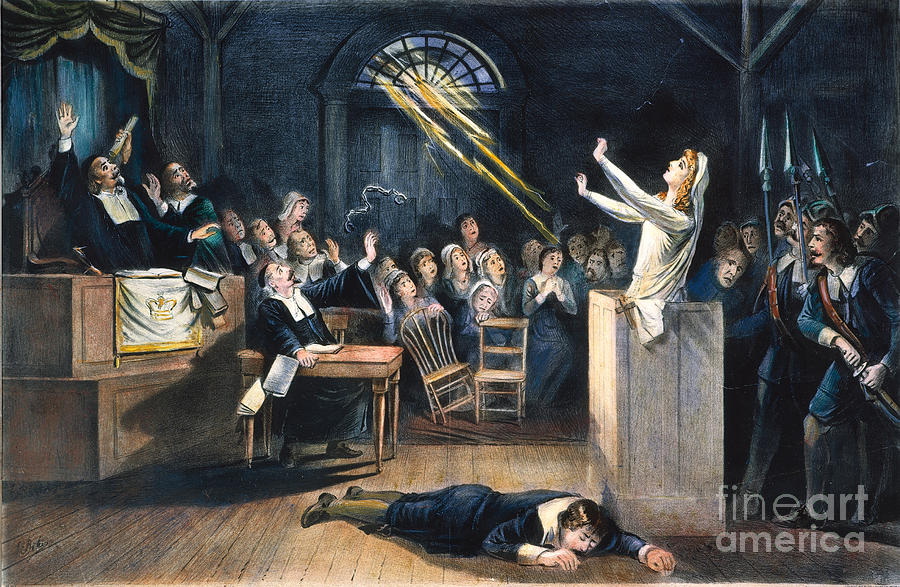
Based on that diagnosis the Parris family were distraught, and they decided to accuse three women of bewitching their girls, including a woman named Tituba. After weighing the evidence against her, and the cultural climate surrounding Salem at the time, Tituba unknowingly set a precedent for those who would be accused in the future by confessing to “the crime” of bewitching. She confessed, we can only surmise, because she knew the deck was stacked against her, and she would be convicted regardless. In her confession, Tituba implicated others by saying that they worked alongside her in the service of the devil against the Puritans. Seeing how Tituba beat the system by providing states evidence, as it were, future accused witches confessed to similar charges to avoid execution and/or imprisonment, and they, too, began assisting the state by informing on other witches. Hysteria spread throughout the Salem community, and the local justice system was soon overwhelmed.

There were a number of factors surrounding Salem at the time to add to the culture of fear, including the fear of neighboring communities, fear of attacks from Native American tribes, and what historians call “The Little Ice Age” that destroyed their economy and many elements of their daily life. To explain what they considered inexplicable, the residents of Salem turned, in fear, to the supernatural, witches, and the devil to explain why their lives were destroyed.

Amid this culture of fear, four other young girls, all between ages nine to twenty, began accusing their neighbors of witchcraft. The six girls were commonly referred to as the afflicted girls. The afflicted girls would accuse, testify in court, and drop to the floor in convulsions during the witch trials. There are a number of theories regarding why these six girls did what they did to lead to public executions, but the one thing we now know with absolute certainty, with no facts to bolster that certainty, is that they were not lying or faking the convulsions.
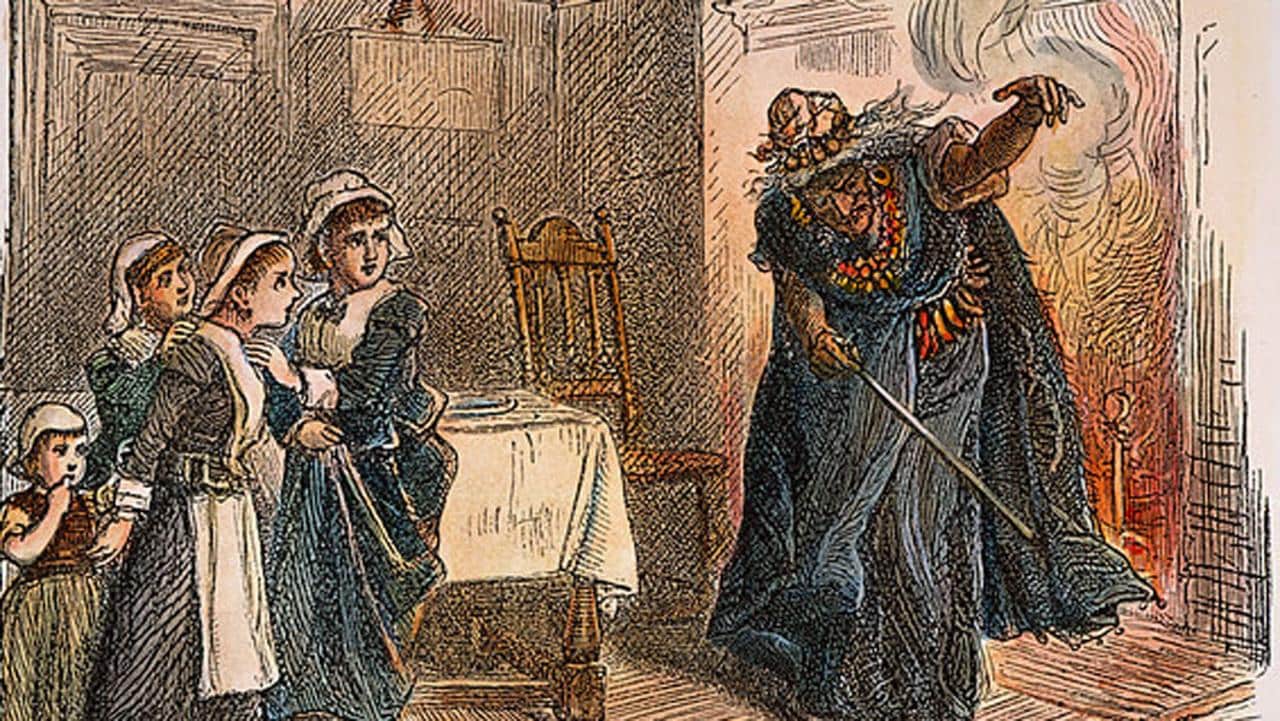
One of the most wide-spread modern theories to explain the ailment the Parris and Williams girls suffered from is ergotism. Ergotism, or ergot poisoning is a result of a long-term ingestion of ergot alkaloids, or mold, that can be found on rye, wheat, and other cereals, which were all primary components of the diet of Salem residents. In the list of symptoms of Ergotism is delusions, hallucinations, vomiting and muscle spasms that could lead to convulsions, which many say lines up with the symptoms the Parris and Williams girls experienced.

As with any theory of matters that have occurred nearly three hundred years ago, historians have debunked this theory. Historians Nicholas Spanos and Jack Gottlieb argue if the young girls were victims of ergot poisoning why weren’t there more cases in Salem, and why wasn’t the rest of their family in their homes afflicted? The two historians admit that ergotism only takes place in hosts suffering from a vitamin A deficiency, but they state that Salem was rich with cows and their milk, so they conclude that it isn’t possible for a resident of Salem to suffer a vitamin A deficiency. They do not include the possibility that these two girls did not enjoy the taste of milk, so they didn’t drink it. They also do not include the possibility that the girls suffered from underlying conditions, such as bleeding stomach ulcers or some form of malnourishment that could’ve led to a greater susceptibility to ergotism via the ergot alkaloids. Nor do they consider the general idea that funguses and mold can affect individuals in the same house, with the same genes, different, based on varying underlying conditions.

Another theory is that the four girls who followed the Parris girls may have suffered from a psychogenic illness called mass hysteria in which one exhibits symptoms and another, unconsciously, begins exhibiting the same symptoms.

“We’ll probably never know the truth of what happened to these girls,” one person, with alleged authority on the subject suggests, “but the one thing we know is they weren’t faking it.”

One quick read through the history of the Salem Witch Trials can lead the reader to some impulsive reactions and cynical, knee-jerk assumptions. Those of us who want to know the truth, try very hard not to fall prey to our own biases, so we keep reading and researching. We do find out we’re wrong, on occasion, but more often than not, we read through all the thoughts and theories on the matter, and we find a whole lot of overthinking, until we fall back on our all-too-simplistic assumption that the afflicted girls made false accusations and they faked their convulsions.

All of the theories about what caused the girls to go into convulsions are not just possible, they’re probable, but the certainty some display in the face of what happened is what draws us back to our impulsive and cynical guesses. If we can rule out ergotism and mass hysteria, with no proof, how can we rule out the idea that they were lying and faking? Especially when one of them, Mary Warren, admitted that “afflicted persons did but dissemble,” or fake their symptoms. Now we know that Ms. Warren later recanted and accused those who might have pressured her into making the admission, but she provided the only evidence for any of the primary theories.

Another crucial element that leads me to believe that the afflicted girls were faking it, was the timing of their convulsions. We weren’t there for the proceedings, of course, and we don’t have the minutes of the trial, but the historical recreations lead us to assume that the convulsions the afflicted girls experienced in the courtroom were conveniently timed to convince the judges of the accused’s guilt. When Mary Warren was asked, in court, to clarify her statement that “afflicted persons did but dissemble,” or fake their symptoms, the afflicted girls in the courtroom went into convulsions. Mary Warren responded, on the stand, by going into her own convulsions. This fits the definition of mass hysteria, provided above, but it doesn’t explain the case for ergotism, and it could be argued that it only bolsters the cynical argument that they were all faking it.    

One of the reasons, I think, that we seek to nullify the claim that they were lying and faking, is that it’s almost too horrific to imagine that anyone would purposely, and maliciously make a claim that leads to the executions of those they accuse. Cynical types, who impulsively believe the worst of humanity, often have no proof for their assertions, but those who impulsively believe everything is more complicated than all that don’t either.  

One of the causes historians list as a cause for the Salem Witch Trials is the fear of the powerful women. To say full-grown women were second class citizens in 1692-93 Salem, Massachusetts, is being generous, and whatever power women had in Salem, young women had even less. Is it possible that these young women enjoyed their brief moment in the Sun? Not possible? Too cynical?

The next point that most historians consider to bolster their claim that the patriarchy feared and loathed strong women, is that they wanted to keep them in a state of fear. This is plausible, because while the Puritans of Salem considered women equal before God, they considered them more susceptible to the wickedness of the Devil. They suggested the later based on the story of Eve falling prey to the temptation of eating the apple in the garden of Eden. These characterizations are all unfortunately true, but while the thrust of the campaign might have been engineered by men, for men, it may not have gained a foothold in the culture were it not for the accusations made by the young girls. It’s also worth noting that five men were executed, and there is a list of men who were named, accused, imprisoned, and otherwise had their names sullied.  

We’ll never know the truth, and I’m not saying I know better than anyone else, but when someone tells me that one theory is categorically false, without any evidence to back that claim up, my mind immediately invites those possibilities in.

“Think about it,” we say when someone else is so muddled in their thoughts that they can’t see straight. We might say that when someone is so blinded by simple truths that they can’t see the evidence that complicates the matter. We also say it when someone’s conclusion is so clouded by evidence that they sift and sort through it to develop speculation that complicates the matter so much they can’t see a simple truth. The simple truth of the matter is supernatural witches with supernatural powers do not exist. They might exist in a realm we don’t understand, but how often do we use otherworldly spirits to explain the gaps in our understanding of the human mind? We wonder, how can one man kill another with no feeling, he must be a monster, a vampire, a werewolf, or something else supernatural, because no normal man would kill another without reason. We can also use them to explain how a seemingly normal person can somehow fail to generate a sympathetic response to the aftermath of blind rage. It was the nature of residents of Salem, Massachusetts to blame supernatural spirits and monsters to explain what they could not explain then, it’s human nature now, and it probably always will be, because “We’ve seen things that no one can explain.”

We make fun of the people who lived over three hundred years ago for believing in such things, but my bet is that for the next three hundred years we’ll continue to believe someone, somewhere exhibits such powers. The only problem is that over the course of the last couple thousand years, we have yet to find substantial proof of it. Supernatural witches, and their Specters, a fancy term they used for spirits, ghosts, or demonic forces that the accused would allegedly sic on the victim don’t exist in the same manner that vampires, Frankenstein’s monster and Spongebob Squarepants don’t exist.   
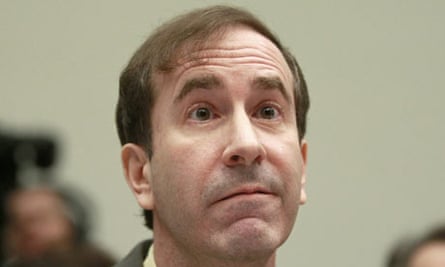
Harry Markopolos Tried to Take Down the Madoff Monster


Investment advisors suggest that if we only worked half as hard trying to figure out how and where to invest our money as we did to earn it, we would be better off. It’s sound advice, but how much quality homework can we do when our resources in the media and watchdogs in the government are either inept or in awe of financial “genius”? Some reports suggest that the SEC sent second rate investigators to examine the books of books of Bernie Madoff, and that they may have accepted Madoff’s excuse that his trading strategies involved “proprietary information”. As we all know now, his proprietary strategies involved not making trades. How could anyone in the media, or the SEC, know that? Well, as the man who “discovered” the fraud, Harry Markopolos said, “They could’ve called people. They could’ve called the people in banks and the traders Bernie claimed to have trading relationships.” Why didn’t they make a few calls? As Shortform.com suggests, concerned parties defaulted to the truth when they examined Madoff, and the truth suggested that a fund worth around $3-$7 billion just couldn’t be fraudulent. 

Madoff also sold educated insiders responsible for money in charities, pension funds, and hedge funds digging through his numbers and asking numerous questions, saying, “If you have to ask, maybe this isn’t for you,” which surely elicited a “Hold on, hold on, we’re just trying to do our due diligence for out customers here. Please, get insulted” type response. This pitch appealed to numerous banks and financial firms including, The Fairfield Greenwich investment Group, Sonja Kohn, Thierry Magon de La Villehuchet, and many other esteemed luminaries in their field. These pitches led to a mysterious enigma that gained Madoff a reputation as a guru of Wall Street, and he used it to intimidate the referees in the SEC to avoid investigating him, and when they eventually did investigate him, they did so with the same truth-default. The only person who wasn’t duped, and tried to get the SEC to shut it all down was the could’ve been, should’ve been hero of this tale, Harry Markopolos, who “discovered” the Madoff swindle nearly a decade before Madoff’s Ponzi scheme folded under its own weight.

Harry Markopolos was an expert at analyzing and managing quantitative data (a quant), a math nerd, an obscure financial analyst, and a fraud investigator who worked for Rampart Trading Management, one of Bernie Madoff’s competitors. His entry into the unfolding drama began when his Rampant boss, Frank Casey, learned that one of their firm’s biggest investors, Access International Advisors (AIA) was pulling their money out of Rampart and putting it all into a hedge fund headed up by respected financial guru Bernie Madoff. AIA CEO Thierry Magon de La Villehuchet informed Casey that he was doing so based on the incredible returns Madoff’s fund was producing. Upset that he couldn’t prevent Villehuchet from leaving, Casey instructed Markopolos to reverse-engineer Madoff’s trading strategy and revenue streams so Rampart could duplicate his results.

“It took me five minutes to know that [Madoff’s hedge fund] was a fraud,” Harry Markopolos said, after conducting his own investigation. “It took me another almost four hours of mathematical modeling to prove that it was a fraud.” 

Markopolos wasn’t the first to “discover” Madoff’s fraud, but he pursued the SEC for an investigation when no one else could? The question is why? If you watch the YouTube video of Markopolos “Assessing the Madoff Ponzi Scheme and Regulatory Failures”, it will take you about five minutes to know Harry Markopolos is a nerd. We can probably all beat a nerd to the women, and we might be able to make them look foolish in sports, but don’t try to beat a nerd at math. Markopolos has confessed many times, in roundabout ways, that when he set about trying to reverse-engineer Madoff’s incredibly consistent returns, he took it personal.

“[Madoff] was stealing from me, he was stealing customers from me, and if you steal from a Greek, we will come after you,” Markopolos said in an interview. He didn’t say geek, he said Greek, but the rule still applies: “If you try to beat a geek, at their geeky games, they’ll come after you.”

Some might view this characterization of Harry Markopolos as disparaging, but it’s not intended that way. A true math nerd doesn’t care about success, wealth, imperiousness, a reclusive nature, or any of the mysterious characteristics that the rest of find so alluring. The rest of us can be duped by narratives, sex appeal, and charisma, but to a math nerd the universe doesn’t make sense, until we insert numbers and mathematical equations. If someone in the media, and the SEC, was brave enough to heed Markopolos’ detailed findings, 37,000 individuals from 136 different countries they could’ve spared a lot of pain and suffering in the world.   

“I’ve taken all the calculus courses, from integral calculus through differential calculus, as well as linear algebra. And statistics, both normal and non-normal,” Markopolos said. Madoff didn’t care for Harry Markopolos-types poking around in his “proprietary” investment strategy, “and look at the results the man produces,” the uninformed probably argued, “you can’t argue with results.” Harry Markopolos could, in his numbers world, and in that world, Madoff’s success in the options trading market made no sense to him. 

“As we know, markets go up and down, and his only went up. He had very few down months. Only four percent of the months were down months. And that would be equivalent to a baseball player in the major leagues batting .960 for a year. Clearly impossible. You would suspect cheating immediately.”

“Maybe he was just good,” CBS’ Steve Kroft remarked in a 60 Minutes interview.

“No one’s that good,” Markopolos said.

In his opening statement before a Subcommittee on Capital Markets, Insurance, and Government Sponsored Enterprises, Harry Markopolos assessed the Madoff Ponzi scheme and the regulatory failures by the SEC that contributed to the Madoff scheme amassing more than $43 billion dollars of innocent victims’ money between his first report to the SEC and the scheme eventually falling due to the 2008 financial crisis. 

Markopolos also stated that if the SEC followed through on his report on Madoff’s scheme in May of 2000 with a thorough investigation, the SEC would’ve found fraudulent activity in the range of $3-$7 billion dollars of investors’ money. He submitted another report to the SEC in October 2001, when the damage to investors would’ve been in the $12-$20 billion dollar range, and in 2005 he submitted a report with a detailed listing of 29 red flags that occurred when the Madoff fund was worth $30 billion. He submitted two more reports in 2007 and 2008. Markopolos concludes this portion of his opening statement, saying, “A fraud that should’ve been stopped at in May 2000 at under $7 Billion has now grown to $50 billion.” (Some have since listed the fraud as high as $65 billion.) 

“In your first letter to the S.E.C. back in 2000, you’re a little tentative. You say, ‘Look, I have no hard evidence, no smoking gun,’” CBS News Steve Kroft observed in the 60 Minutes interview. 

“In 2000, it was more theoretical. In 2001, it was a little bit more real. By 2005, I had 29 red flags that you just couldn’t miss on. By 2005, the degree of certainty was approaching 100 percent,” Markopolos explained.

As the 60 Minutes interview between Steve Kroft and Markopolos further reveals there were a lot more insiders who knew, or suspected, Madoff was not completely on the level. As the CBS News article states, “Over time and with some simple math calculations, Markopolos concluded that for Madoff to execute the trading strategy he said he was using he would have had to buy more options on the Chicago Board Options Exchange than actually existed, yet he says no one he spoke to there remembered making a single trade with Bernard Madoff’s fund.” 

“I would talk to the people I had trading relationships with and ask, ‘Did you have a trading relationship with Mr. Bernard Madoff?’ And they all said, ‘No. We don’t think he’s for real,’” Markopolos said.

“Markopolos said he found no one who ever had traded with Madoff. “And I traded with some of the largest equity derivatives firms in the world.” 

“And that’s because Madoff’s investment fund never actually made any trades, at least going back to 1993, and probably further – a fact confirmed at a meeting of Madoff investors by the trustee charged with liquidating Madoff’s assets. No one knew the depth of the fraud but a lot of people had questions.”

“Who else figured this out besides you?” Kroft asked.

“I would say that hundreds of people suspected something was amiss with the Madoff operation. If you look at who the victims were not, you’ll notice that the major firms on Wall Street had no money with Mr. Madoff,” Markopolos said. 

“I’m quoting from the letter to the Securities and Exchange Commission, red flag number 20. ‘Madoff is suspected of being a fraud by some of the world’s largest, most sophisticated financial services firms.’ And then you list some of the firms,” Kroft said. “The biggest firms on Wall Street. And conversations with people high up in those firms.”

“That is correct. And the SEC ignored that,” Markopolos said. “All the SEC had to do was pick up the phone. They never did.”

“If you had executives at the biggest investment houses on Wall Street that knew something was wrong, why do you think they didn’t go to the SEC?” Kroft asked.

“Because people in glass houses don’t throw stones. And self-regulation on Wall Street doesn’t work,” Markopolos said.

In January 2006 the New York office of the Securities and Exchange Commission finally opened a case file to look into Markopolos’ allegations about Bernie Madoff. Despite uncovering evidence that Madoff had mislead them about his investment activities, the SEC closed the case 11 months later without ever opening a formal investigation. The staff said there was “no evidence of fraud.” 

“What I found out from my dealings with the SEC over eight and a half years is that their people are totally untrained in finance; they’re unschooled; they’re un-credentialed. Most of them are just merely lawyers without any financial industry experience,” Markopolos said.

“Well, if the people there aren’t trained in securities work, what are they trained in?” Kroft asked.

“How to look at pieces of paper that the securities laws require. They can check every piece of paper perfectly and find misdemeanors, and they’ll miss all the financial felonies that are occurring because they never look there,” Markopolos replied. “Even when pointed to fraud, they’re incapable of finding fraud.”

No one at the SEC would talk to 60 Minutes on the record about Markopolos’ allegations. But one person who seemed to have had a high opinion of the agency was Bernie Madoff.

“I’m very close with the regulators so I’m not trying to say that what they do is bad. As a matter of fact, my niece just married one,” Madoff said in 2007.

Besides his niece’s husband, who left the SEC last year, Madoff had longstanding ties to agency and was called upon to give advice. At a 2007 meeting of a non-profit group called The Philoctetes Center, he seemed to think the SEC was doing a great job. 

“In today’s regulatory environment, it’s virtually impossible to violate rules. This is something that the public really doesn’t understand. But it’s impossible for a violation to go undetected, certainly not for a considerable period of time,” Madoff said.

No one other than Bernie Madoff and some members of his executive staff, should be blamed in the beginning. In the beginning of his fraudulent activity, which Madoff stated began in the 1990’s, we can forgive the media and the SEC for not investigating his activity, but at some point the truth-default should’ve faltered. At some point, and go ahead and take Harry Markopolos and all of his detailed reports out for a moment, those suspicious of Madoff’s documented 20-year history of nonstop gains should’ve prompted reverse-engineer inspections from members of the media, the financial community, and our employees in the SEC should’ve dropped their views of the Chairman of the Nasdaq and investigated him properly. We can only guess that when competitors and regulators went through Bernie Madoff’s books, they kept looking up at the name on the masthead. We can also guess that if any of their underlings spotted some level of chicanery, the higher ups in the office decided against risking their reputations on uncovering a man considered the genius of Wall Street. For varying reasons, including the competitive nature of losing one of their most profitable and most loyal clients, the higher ups at Rampart Investment Management decided to let Markopolos go to the SEC with his findings. As we’ve witnessed with what happened at FTX, a certain level of financial chicanery keeps happening in this country, and the media and government agencies are constantly caught with their pants down. 

The Obscure Presidents of the U.S.: Part II


Joggers and those who take regular walks know that they’ll step in something sooner or later. I see historical nuggets in much the same way. When we read and research matters of history, some of it will find its way into the grooves in our shoes and stick and some of it is so old or cold that it just falls off. That being said, I don’t think a display of nugget knowledge is a display of intelligence, but a byproduct of interest. Those who are fans of the show Friends, or Jennifer Aniston, could probably tell me a number of interesting little nuggets that might shock me. I happen to be interested in the history of the United States through its presidents, and the following is a list of the nuggets that have stuck through the years. I’ve known these little nuggets for so long that I assume everyone knows them, but when I provide the big reveal, the reactions. They either think I’m a huge nerd, a vat of useless knowledge, or an interesting conversationalist. I add the latter as a narcissistic possibility, but I’ve rarely seen evidence of it on my audience’s faces. They usually pause politely and carry on the conversation I interrupted as if I didn’t say anything.

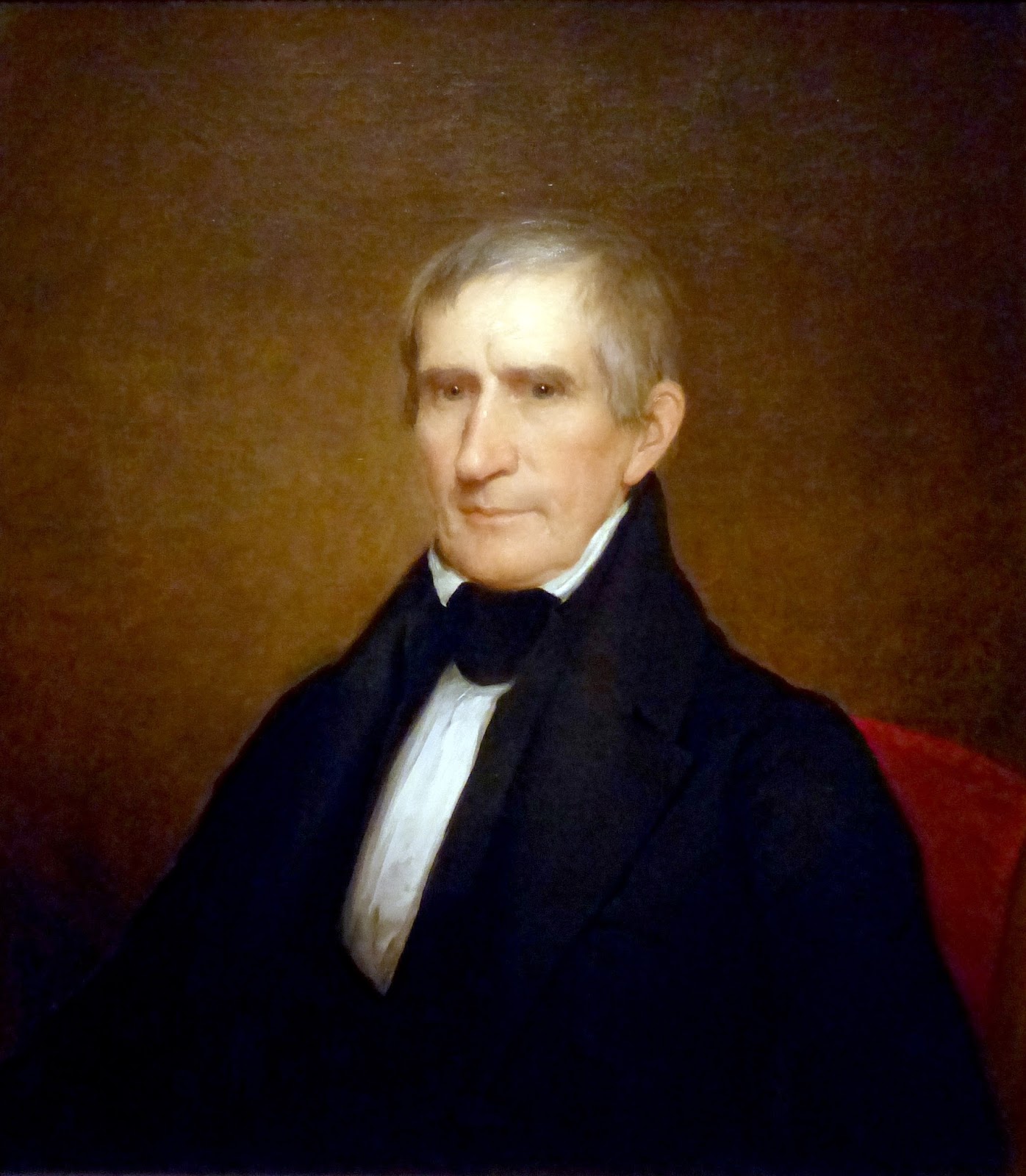
William Henry Harrison

“Tippy canoe and Tyler too,” my great-aunt sang for no reason. 

What is that?” I asked her.

“It’s a saying,” she said. “I don’t know where it came from, and I don’t think anyone does. It’s just something to hum.”

My great-aunt was old when she sang that, and I was accustomed to old people knowing everything about everything, but she didn’t know the origin of a song she sang all the time. 

Decades later, I learned that Tippy Canoe and Tyler too was a song used to influence the 1840 presidential campaign of William Henry Harrison and vice-presidential candidate John Tyler. They nicknamed William Henry Harrison Tippecanoe, because he led the forces that defeated Tecumseh on the Tippecanoe River, and John Tyler was the other guy on the ticket, the candidate for vice-president, or the “too”. 

James K. Polk

Though one of the country’s shortest presidents at 5’8″, Polk accomplished the “no small feat” of annexing Texas, New Mexico, Oregon, and California. Polk was instrumental in acquiring more than 800,000 square miles and expanding the country by roughly one-third. 

Presidential candidate Polk won his election by pledging to reduce tariffs, reform the national banking system, expand the country, and that he would accomplish all that in four years. He pledged he would not run for reelection. 

Polk was one of the few presidents to accomplish all of his core pledges while in office, and he accomplished the latter after his term ended, and he did not submit for reelection. While in office, Polk was well-known as a workaholic, working to accomplish all of his campaign pledges. Some suggest that he worked so hard, and for so many hours, that his four years in the White House wore him out. He died months after leaving office of cholera on 15 June 1849 at the young age of fifty-three.

James Knox Polk is rarely listed among the great presidents by non-historians. Historians often list him in the upper half, some list him in the upper third. He gets high marks for crisis leadership and administrative skills, but he fails in other areas, according to historians. Yet, he often gets lumped in with the relatively forgettable presidents that took office after Andrew Jackson and before Abraham Lincoln. 

Theodore Roosevelt

Needless to say, campaign speeches are vital to every presidential campaign. With modern technology, a presidential candidate can deliver speeches in his basement, but candidates did not have such luxuries in 1912. The only way, save for print, for a candidate to deliver his message, display his charisma, and woo prospective voters, was to take a train, or whatever lesser mode of transportation they could find, to stop in various locales and speak directly to voters. The various campaign speeches a candidate delivered across large and small pockets of the nation were sink or swim for him. 

That said, we can bet that candidates toughed it out through a case of a sore throat, a flu, and other, more severe illnesses or minor broken bones to speak to the public. As tough as those candidates needed to be, I don’t think voters was prepared for: 

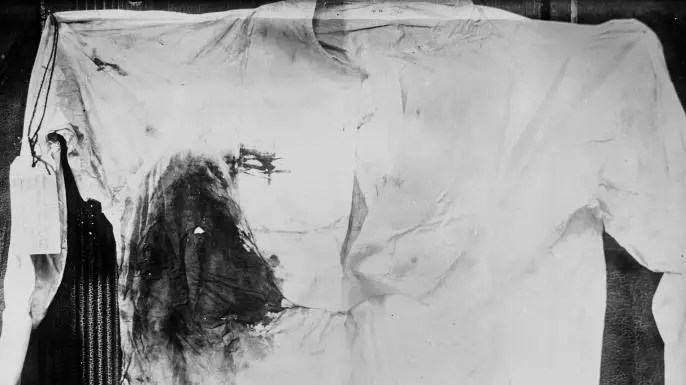
“I don’t know whether you fully understand that I have just been shot,” Theodore Roosevelt informed an audience in Milwaukee, after asking for silence. To confirm what he was saying, Roosevelt unbuttoned his vest to reveal his bloodstained shirt. “But it takes more than that to kill a bull moose.”

To reassure them that he was able to deliver the speech, he said, “Fortunately I had my [50 page] manuscript, so you see I was going to make a long speech, and there is a bullet—there is where the bullet went through—and it probably saved me from it going into my heart. The bullet is in me now, so I cannot make a very long speech, but I will try my best.”

As History.com furthers, the projectile had been slowed by his dense overcoat, steel-reinforced eyeglass case and the hefty speech squeezed into his inner right jacket pocket.

The unsuccessful assassin, “John Schrank, [was] an unemployed New York City saloonkeeper who had stalked [Roosevelt] around the country for weeks. A handwritten screed found in his pockets reflected the troubled thoughts of a paranoid schizophrenic. “To the people of the United States,” Schrank [wrote]. “In a dream, I saw President McKinley sit up in his coffin pointing at a man in a monk’s attire in whom I recognized Theodore Roosevelt. The dead president said—This is my murderer—avenge my death.” Schrank also claimed he acted to defend the two-term tradition of American presidents. “I did not intend to kill the citizen Roosevelt,” the shooter said at his trial. “I intended to kill Theodore

Bullet Holes in Speech

Roosevelt, the third termer.” Schrank pled guilty, was determined to be insane and was confined for life in a Wisconsin state asylum.

Roosevelt tried to use the story of the assassination attempt to secure a third term as president. He did so as a third-party Progressive candidate that they nicknamed “The Bull Moose Party”. He was successful in splitting the Republican vote, squashing his frenemy, William Howard Taft’s reelection bid, but all his efforts did, in reality, was allow one of the worst presidents to ever sit in Washington D.C. to take office Woodrow Wilson. 

James Garfield

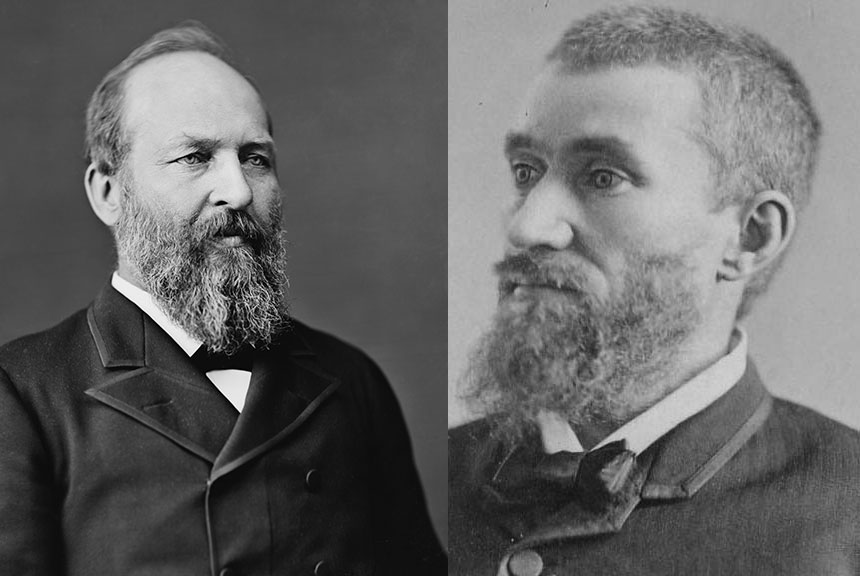
Garfield and Guiteau

As with presidents William Henry Harrison, Warren Harding, and to a lesser degree John Kennedy and Abraham Lincoln, Garfield’s tenure as president is better known for his death than his tenure in office, as he was assassinated while in office. Some historians say that this is one of the biggest tragedies in U.S. History, because Garfield’s potential to be one of the presidents on the Mt. Rushmore creation (that occurred much later), is high. Due to the assassin’s bullet, and his doctors historical ineptitude, James Garfield served a mere six months in office, and historians say he was only in peak form for three-to-four of those six months. 

A self-avowed communist named Charles Guiteau shot President Garfield, claiming “I am a Stalwart and [Vice-president Chester A.] Arthur is president now!” 

History.com notes, “Doctors were unable to locate the bullet in [Garfield’s] back. Even inventor Alexander Graham Bell (1847-1922) tried–unsuccessfully–to find the bullet with a metal detector he designed.” Medical professionals would later say that if Garfield’s doctors simply left the bullet in Garfield’s body, as they later would with Theodore Roosevelt, Garfield’s chances of survival would’ve greatly increased. On September 19, 1881 — 79 days after the shooting — President Garfield died of a ruptured splenic artery aneurysm due to sepsis and pneumonia. It is believed that Garfield probably would have survived his wounds had he been treated properly.

This was well-known at the time, as evidenced by Charles Guiteau’s attempts to avoid a death sentence, saying, “I did not kill Garfield after all, his doctors did. I just shot him.” As the Crime Museum notes, Guiteau’s bid was unsuccessful, and he was executed on June 30, 1882, less than a year after the shooting. This defeat did not depress Guiteau however, as he danced to the gallows and recited a poem, before waving to the crowd, and shaking hands with the executioner.

***

Charles Dickens provided the best line to describe the present state of the human being, “It was the best of times. It was the worst of times.” How can both exist at the same time? It can’t, but it does, in the present. In the present, you might sing “I got to admit it’s getting better, a little better all the time,” but you can always find someone who sings the, “It can’t get no worse,” part of the refrain. 

If you’ve ever discussed the issues of the day with your grandpa, you’ve heard him say something along the lines of, “That’s exactly what we were obsessed with when I was younger. Let me guess, fall of the Republic? Most divisive issue of our day? Yep, yep, that’s exactly what we said.” If you’ve ever discussed the wonderful advancements your generation has made with him, he’s probably said something along the lines of, “Well, when you don’t know the difference, you find a way.” You walk away thinking the good times and the bad times are probably a bunch of hype that you bought into. 

Pick the issue, and you’ll hear people take conflicting opinions sometimes in the same sentence, “The technological advancements we’ve made in the present are greater, by leaps and bounds, but I worry about AI.” The same conflicting opinions revolving around the nature of presidential elections we’ve had, occurred some 200 years prior in 1825. Our present suggests it couldn’t get much worse, and that the Founders messed up presidential elections by creating this device called the Electoral College. The 1825 presidential election between Jackson and Adams occurred while most of them were still alive, thirty-seven years after The Constitution was verified, and other than a brief entry by Alexander Hamilton in Federalist 68, that discusses the virtues of popular will, I find no letters that state anything specific about the errors of the Electoral College. They probably didn’t love the idea, but they compromised to make sure smaller states felt greater representation in the decision of their leader. Remember, the Founders were overly sensitive to cries of lack of representation after they were denied it by the monarchy. This lack of representation and the mess that followed in the Jackson v Adams presidential election of 1825 happened in their lifetime, and they probably saw the elements of their Constitutional solutions as the lesser of two evils. 

Andrew Jackson V. John Quincy Adams

In 1824, the nation was just coming out of the “Era of Good Feelings” after James Monroe (1817-1825) led an era of peace in the aftermath of War of 1812, and he led the country to a period of true strength, unity of purpose, and one-party government, after the death of Alexander Hamilton and his ideas of Federalism.    

Those good feelings of unity ended quickly in the ensuing 1825 election race between John Quincy Adams and Andrew Jackson. The country appeared as divided as its ever been with Andrew Jackson winning a plurality, but not a majority, of either the popular and the electoral votes. This election pushed the country into its first dispute between the Electoral College and the popular vote, as neither Jackson nor Quincy Adams accumulated the plurality of votes needed to secure the 1825 presidential election. As Tara Ross reports, this election was between Secretary of State John Quincy Adams, Secretary of the Treasury William Harris Crawford, Speaker of the House Henry Clay, and Tennessee Senator Andrew Jackson. This conflict resulted in the first time in the young Republic’s history that no presidential candidate secured enough Electoral votes, so, as the 12th Amendment dictated, it was on the House of Representatives to elect the president. 

The House of Representatives were given three options: Adams, Jackson, or Crawford. The Constitutional provision did not allow Henry Clay to be considered because he placed fourth. 

The latter note proved crucial to the final outcome allegedly, because knowing that he had no avenue for victory, Henry Clay, the Speaker of the House, allegedly entered into a “corrupt bargain” with John Quincy Adams. The “corrupt bargain”, as Jackson supporters theorized, was that Clay met privately a month before the House vote. In that private meeting, Jackson and his supporters allege that Clay informed Adams that he would throw his powerful support, as Speaker of the House to Adams if Adams would use the victory to later nominate Clay to a cabinet position. Adams, for his part, denied the allegation, but Clay’s support gave Adams the 13 House votes Adams needed to secure the presidential election. 

Jackson conceded to the peaceful transition initially, until Clay was nominated to arguably the most prestigious position in the cabinet, Secretary of State, three days later. Jackson, and his supporters viewed that appointment as proof that a “corrupt bargain” had been made.

Adding fuel to the fire, reports later emerged that Clay initially tried to strike a deal with Jackson, but Jackson refused to “go to that chair” except “with clean hands.” Had Adams taken a deal when Jackson would not? As with modern politics, Adams never admitted to anything, and no reporters in the era ever uncovered a truth or any evidence that would incriminate or absolve Adams. Hence, even with 200 years of hindsight, “We shall probably never know whether there was a ‘corrupt bargain,’” historian Paul Johnson concludes. “Most likely not. But most Americans thought so. And the phrase made a superb slogan [in the 1828 Jackson v Adams rematch].”

Some allege that this idea of a “corrupt bargain” not only cost Quincy Adams his reelection in the 1828 rematch with Andrew Jackson, but it severely damaged the future political career of Henry Clay too. In this era, the Secretary of State was viewed as a natural stepping stone for the presidency, as four of the seven previous Secretaries eventually sat in the highest office in the land. Clay’s resume not only listed House Speaker and Secretary of State, he was a Congressman, and a Senator before rising to prominence. He helped found both the National Republican Party and the Whig Party. He was well-known as the “Great Compromiser” and was part of the “Great Triumvirate” of Congressmen. He also received Electoral votes for president before the 1825 election. On his resume alone, Clay was a could’ve been should’ve been who never was president. He would rue the day he accepted the Adam’s appointment, because whether it was true or not, the charge of the “corrupt bargain” stuck to him throughout his political career.  

If you’re as interested in U.S. History through relatively obscure presidents as I am, read Obscure Presidents part I