Like any other person who has attempted to create something artistic, an artist’s appreciation of another’s work is limited and unique. An artist’s appreciation of another’s work is similar to an athlete studying game film on a future opponent. After repeated viewings, you understand their modus operandi. You are able to pinpoint what they do well, and their failings, and you’re able to learn from all of them. One author’s ability to characterize may impress another artist in one reading, and another may impress them with their particular brand of engaging dialogue. After another artist gets it, they’re usually bored with it, and they move onto another author. To use the sports analogy once again, the artist can usually spot the stitches on another’s fastball long before the casual observer can. This isn’t what artists are trying to do, it’s who they are. They would love to simply read another’s work and appreciate it in the same manner a casual reader would, but they can’t turn that portion of their brain off. An artist reading another’s work can get so hypercritical and appreciative of the little things another author does to move a story along, or characterize, that they can’t enjoy that simple, little story in total until they have thoroughly explored, and drained, whatever value they believe another’s work has for them.
Most writers will claim that their writing is now entirely free of influence once they’ve found their voice. Some might judge this self-promotion, and others would say it’s just impossible to believe. As any writer who has written a great deal knows, it’s almost impossible to escape influence. Whenever a writer turns a phrase, completes a block or dialogue, or characterizes, there was some influence there. If it wasn’t Chaucer, or Hemingway, that influenced the writer in this manner, it may have been their freshman Composition 101 teacher. If it wasn’t Stephen King, or Faulkner, who taught them how characterize, it may have been a movie or a television show that embedded that particular brand of characterizing deep in their brain. Something, somewhere influenced them in some way they may not know now that they’ve reached their twentieth year of writing, where their writing material that is so fresh, and unique, that they can’t even spot the influence anymore. They may have worked so hard, for so long to achieve a unique voice that they feel they’ve achieved it, and they may have to some degree, but there was a starting point that formed a foundation that is now so embedded in the manner in which they write that they can’t see the influence anymore.
Those who belong to the latter group believe they have reached the pinnacle of individualistic style, that contains no influence. They might dismiss this article as nothing but a point of curiosity, but the new writer wants to learn how we arrived at point D in the process, the following is a list of those influences who lubricated the slide:
10) Brevity. If “Brevity is the soul of wit” no one was funnier than Ernest Hemingway. An economist of words, Hemingway avoided complicated syntax, and it has been determined that seventy percent of his sentences were short, simple sentences.{1} Hemingway was the anti-Joyce (James Joyce) in this regard. Whereas Hemingway “KISSed” us (keeping it simple for we stupid people) with his prose, Joyce dangled complicated, multi-syllabic, and invented words before us, and he often teased us with a carrot on the stick of his words’ meaning. Whereas this may have made Joyce’s fiction wonderful, historic, and transcendent, most of us didn’t know what the hell he was talking about. Whereas most readers need translation, and transports in time via a well-written guide, and a degree in Joyceisms to understand Finnegan’s Wake, Old Man and the Sea can be enjoyed in an otherwise carefree afternoon. This isn’t to say that Hemingway’s prose is not complicated and carefully structured for meaning, but with Hemingway’s fiction, meaning is derived upon reflection and through personal interpretation. The meaning of Hemingway’s prose is established through dialogue, action, and silences —a fiction in which nothing crucial or at least very little— is stated explicitly. He purposely avoided outright symbolism in what he called “the theory of the iceberg”. This theory stated that facts float above water, but the larger, supporting structure and symbolism that build the foundation do so out of sight.
“No good book has ever been written that has in it symbols arrived at beforehand and stuck in,” says Hemingway. “That kind of symbol sticks out like raisins in raisin bread. Raisin bread is all right, but plain bread is better.” He opens two bottles of beer and continues: “I tried to make a real old man, a real boy, a real sea and a real fish and real sharks. But if I made them good and true enough they would mean many things. The hardest thing is to make something really true and sometimes truer than true.”
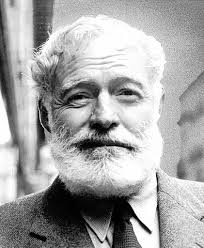
Hemingway was more of a storyteller than he was a writer. The interested reader, who doesn’t have a whole lot of time on their hands, may want to consider reading either the short book Old Man and the Sea or The Short and Happy life of Francis Macomber. The latter is a short story that captures the essence of Ernest Hemingway, and it teaches every writer the greatest principle every writer should employ in their daily activities: Story is sacred and flowery prose is largely self-indulgence.
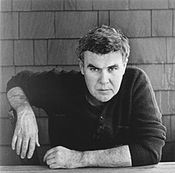 9) Images. Raymond Carver was also a minimalist. Most of my favorite writers were. Carver employed evocative and provocative images to tell a story. Short stories were his forte. The short story Feathers captures the essence of Raymond Carver, better than any of his other stories in my humble opinion.
Carver’s stories, and poems, focused on misery and dirty realism. His characters were low class, beer drinking, hardworking, slobs that readers can’t help but picture in stained tank-tops. Carver claimed that he was inclined toward brevity and intensity. His writing focused on sadness, loss, and alcohol in the everyday lives of ordinary people — often lower-middle class or isolated and marginalized people.
8) Characterization. John Irving engages in the flowery prose of his mentor Charles Dickens, but he does so (for the most part) effortlessly. Irving is not a minimalist in other words. Irving’s  works teach us, more than any of the authors listed here, to work your tail off to hide your effort. One read through his magnum opus The World According to Garp teaches us that it shouldn’t be a chore to read through one’s work. No other authors listed here, save for maybe Hemingway, hides his brilliance better than Irving. The reader gets to know Irving’s characters in what I call a “Holy Crap!” manner. Irving doesn’t use physical characteristics to describe characters, and he doesn’t use the inner voice techniques that most of us do, yet the reader learns their characteristics in a story after story and a passage after passage manner, until we know them so completely that we say, “Holy crap, this author’s brilliant.” I realize this methodology is borne of the “show don’t tell” basic of storytelling, but in my humble opinion, no one does it better than Irving.
Irving has chapters of setting, primarily in the Northeast, and his settings can appear a bit laborious at times. Unlike all of the authors on this list, there can be large chunks of Irving’s narrative where nothing happens, as he frames you up for what’s about to happen. Irving does “a story within the story” as well as anyone in the business. As I said, though, Irving achieves his stature in the world of literature through effortless characterization.
It appears, unfortunately, that the drive to tell a story no longer drives Mr. Irving. His more recent books have become more and more political. Some could say that Mr. Irving has always been political, and if you read A Prayer for Owen Meany and Garp again, you’ll see that. If that’s true, he used to be a lot more subtle. Story used to be sacred to him, and politics used to be a secondary concern to him.
It’s almost become a cliché that writers of my generation claim Irving as a primary influence. Like most clichés though, there’s a reason claiming Irving as an influence has become so prevalent among those in my generation. It’s because he has achieved the bestseller list through almost effortless, beautiful writing, and by not conforming to current norms. Irving just does what he does, and we have all accepted this to a degree that he can do whatever he wants, and we’ll all greet him with open arms. Claim King or Koontz as an influence, and artistic writers will dismiss you with a yawn; claim John Grisham, and they’ll dismiss you with a laugh; but Irving has managed to keep a foot in both the literary and best-selling world, and he does it with rich, rewarding, and effortless characterization.
7) Asides. Some may dismiss Chuck Palahniuk as a splatterpunk writer that engages in shocking prose that grosses out and titillates the reader. It is true that Palahniuk goes for the jugular in much of his writing, and some may say too often, but anyone that has read, or seen, Fight Club (they’re strikingly similar) knows that Palahniuk (almost) always has a story to tell amid the chaos in his works.
 Palahniuk may have some of the best, most interesting vignettes and asides in the business today. He is heavily influenced by Stephen King, as evidenced by his heavy use of refrain style use of repetition, but one should not mistake this influence as outright mimicry. Palahniuk has carved himself quite a niche in the literary world, with works like Fight Club, Choke, and Rant. Rant proved to be especially valuable to those writers on the lookout for a new way of telling a story. While the style is not unprecedented, Palahniuk used it in such a unique manner that those that have read the story considered it revolutionary.
Chuck describes his style of writing as “transgressive” fiction. Transgressive fiction, as defined by Wikipedia, “is a writing style that focuses on characters who feel confined by the norms and expectations of society and who break free of those confines in unusual and/or illicit ways.”
After the novel Lullaby, Palahniuk began writing satirical, horror stories. His work is big on unusually dark and absurd philosophical asides that are so farcical that the reader can help but think of them as true. These asides are non-fiction factoids within his fictional works that, according to the author, “Are included in order to further immerse the reader in my work”.” {2} This author hates metaphors and similes. This author loves to mess around with the traditional styles of storytelling to presumably keep it interesting for him and us. Some of the times this methodology works, as it did in Rant, and some of the times it doesn’t, as it didn’t in Pygmy and Tell All. His forays into illogical, but fun, splatterpunk writing, works in most of his books, but anytime a writer puts their stock in shock they are going to try outdo themselves every time out, until they produce a book like Snuff in which the novelty of the over-the-top shock wears thin quickly.
6) Pace and Formula. No writer, in modern fiction, displays the virtues of pace better than Dean Koontz. I challenge anyone to read the first half of his book Intensity and say that this man is not in the upper echelon of thriller writers today. Koontz knows all he needs to know about architecture, gardening, and all the other minutiae of his Southern Californian locale to make his setting interesting, but Mr. Koontz can cause a reader to flip pages on pace with any of the great suspense/thriller writers of our day. He may also be the safest writer on this list.
 Why is Koontz safe? He strives for the mainstream. His books have mass appeal to most age groups and both genders. He is a publisher’s dream in that he knows how to knock out a best-seller on an annual basis without offending anyone. If you’re a writer who seeks the formula to mass appeal, and the bestseller list, I can think of no better author to read … this side of James Patterson. That having been said, there is a formula to Koontz’s writing. How can there not be in a catalog that lists 112 titles, with twenty-eight bestsellers among them, without an inoffensive formula? A formula is good to some degree. To some degree, a formula will provide a reader a solid foundation of comfort that the author can shatter in the pages that follow. There is a formula, and a relative level of comfort that Koontz readers have come to expect, and while we should try hard not to dismiss Koontz on this basis alone, it’s difficult not to do so. All of his characters are much too safe. His female characters are incredibly and consistently intelligent, and his male characters are “safely” reliant on the female’s intelligence and ingenuity … Even his bad guys are safely bad. Then, Koontz exasperates whatever problems his works have in this regard by trying to be funny. His humor is so safe, conformist, and pedantic that it almost seems to be self-effacing, nerdy humor, until one reads enough Koontz to realize that this is this man’s sense of humor.
If you’re looking for edgy, offensive, different material that most people are uncomfortable reading, Koontz probably isn’t your guy. He does write some edgy material, but he doesn’t do so on a consistent enough basis. If one were to gauge mental health by a writer’s fiction, Koontz would likely score higher than any of the authors listed here, but that has resulted in less dangerous, less angst-ridden material. He’s mainstream, and there’s nothing wrong with that if you’re looking to write mainstream fiction. One of the other exceptions to this rule, aside from Intensity, was the novel Life Expectancy. These two books are the must reads in Koontz’s catalog for any writer seeking the edgy and different.
5) Writing fiction. What can be written about Stephen King that hasn’t already been written? If you are a writer that hasn’t read King yet, you’ll probably want to get on the train. He’ll teach you the good, the bad, and the ugly of writing. While it’s almost impossible to read everything he’s done, most writers have an extensive King library. If they don’t, they should probably have at least ten of his books.
 King has it all, and most honest, seasoned writers will begrudgingly admit that he has had an influence on them at one point in their process. If The Stand is too long for you, then the writing community will require you to read Misery, Gerald’s Game, It, or any of his classic, early works like The Shining. Some artistic writers may scrunch their nose at King, because he is so ubiquitous, but his influence on modern fiction cannot be denied in just about every novel written after 1990.
Some say that King invented the common man horror, but many say that almost every piece of fictional horror involves the common man. King did work the working joe into his fiction more than most however. As stated earlier, King builds horror through repetition. He usually has a nickname for his monster that gets repeated often enough that the reader feels a horrified endearment to the monster. He also may have not been the first to work music into his horror, most notably nursery rhymes, but he did it more often and with more mastery than most, and it influenced a generation of horror writers.
4) Hodge Podge. As written in the introduction of this piece, writers read other writers in a unique manner. There are so many varied ways that a writer can reach point D in the process that attempting to catalog all of the influential writers, and their influential moments in fiction, would be book length, and very few readers would be interested in all of the ways in which this writer achieved that point. So in the interest of interest, we will try to whittle these moments down to a few of the most prominent. In the area of the influentially absurd humor, there have been few that captured it as well as Robert McCammon did in Gone South, or Gary Shteyngart in his work Absurdistan a book that was heavily influenced by the monumentally influential book A Confederacy of Dunces John Kennedy O’Toole.
As for horror, there have been few, this side of King, that have been able to capture common man, suspenseful horror as adeptly as Scott Smith did in A Simple Plan and Ruins. Smith’s ability to build to horror in a casually sequential manner is almost unprecedented. The only problem with Smith is that he has only written two books in twenty years, and while there is nothing wrong with the man’s quality, his fans would love a little more quantity. Although Thomas M. Disch’s M.D. was not the greatest horror book ever written, and it ebbed and flowed more than the other books on this list, the work provided moments that have influenced this writer as much as any of the pieces described previously. Some of the imagery Thomas Harris created in the Red Dragon book, and in Phillip Roth’s Portnoy’s Complaint (not a horror but just as laden with images), have led many writers to pound the table in frustration with their attempts to duplicate their provocative imagery. For various reasons, and in various ways, all of these authors had a huge influence on this writer’s attempt to get to point D.
3) Mood. Nothing influences mood better than music. Listening to music gives the writer a certain setting from which “different” fiction can be achieved. If a writer wants to write a period piece, for example, they can select the music from that era, and attempt to achieve that mindset. This is similar to the attempts that the main character in Richard Matheson’s Somewhere in Time to achieve time travel. In this story, the main character wanted to go back to the year 1912 so badly that he attempted to hypnotize himself into the belief that he was. He surrounded himself with 1912 in his hotel room, and he wore 1912 clothes, listened to 1912 songs, and ended up believing he was in 1912. Music affects me in the same manner. I prefer non-traditional, non-linear music to shake my brain out of the patterns it might fall into in long settings, until I can convince myself that I am non-traditional and non-linear. I, of course, do not make the conscious efforts to do this in the manner Matheson’s character did, but through repetitive listening of certain music, I have been able to achieve something “different” on a number of occasions.
I listen to a wide variety of music when I write, always switching to keep it fresh, but some of my favorites are Mike Patton, John Zorn, and Trey Spruance’s Secret Chiefs. These musicians (not rock stars) create an aura I find conducive to writing edgy, “different” material. These artists, like so many of the authors described above, created something that that seemed impossible before they did it. They are truly skilled in making the listener feel different, and that anything can be accomplished in a certain setting. Miles Davis creates an aura that allows you to focus at times, but his music can be a little too aural at times, and David Bowie’s music can be a little too focused, and this causes me to be distracted when I listen to what his music is doing. The band Pavement can create some chaos in your mind and shake you out of your doldrums, but they, too, can be a little too focused at times for that atmosphere writers need to create.
Everyone’s mom told them that distraction-free silence was conducive to concentration. Yet, every mind works differently, and I have found —much too late for success in school— that I need distraction to achieve focus. It may not make sense to those blessed with normal brains, but I need a Goldilocks amount of distraction —not too hard and not to soft, and not too aural and not too structured— for me to concentrate and focus.
2) Movies. Most of the best storytelling being done today, we have to face it, is being done in the movies. If a Quentin Tarantino were born in the late nineteenth century, he probably would’ve been a novel writer. He, like all great movie makers of this era, has the storyteller’s bug, but he doesn’t have the patience to sit behind a typewriter/keyboard and compose prose that can take months and years to produce. These storytellers of our era are taking advantage of the technology offered them and telling their stories on screen. One thing movie makers can teach aspiring writers, that reading the Russian authors won’t, is to get to the point. Their audience, our audience, and the audience doesn’t have as much patience for brilliant prose as previous generations. We have a short attention span, and with a few exceptions (David Lynch, Wes Anderson, and Tarantino of late) most movie makers whittle their scripts down to the germane.
1) My writing. Most readers would consider it egotistical to list “my writing” as the greatest influence on my writing, but that is not the intent. It is only added, because I hold my best writing out as beacons in my career that I want to smash the next time I write something new. It is important that every writer examine what they’ve written on a consistent enough basis that they always try to write better, and different, stories every time they sit behind their keyboard.
{1}http://en.wikipedia.org/wiki/Ernest_Hemingway
{2}http://en.wikipedia.org/wiki/Chuck_Palahniuk


 Rilaly