How to Succeed in Writing III: Are you Intelligent Enough to Write a Novel?


I write one page of masterpiece to ninety-one pages of (poor fiction),” –Hemingway confided to F. Scott Fitzgerald in 1934. “I try to put the (poor fiction) in the wastebasket.”

The key to writing great fiction is streamlining your story. Cut the fat! Some of the greatest authors of all time have admitted that the best additions they made to their novel were the parts they deleted. Somewhere along the line, in their writing career, they achieved objectivity. Somewhere along the line, they arrived at the idea that not all of their words were golden. Somewhere along the line, they realized that some of their words, sentences, paragraphs, and even some of their chapters were quite simply self-indulgent, wastebasket material. These self-indulgent portions, or the “ninety-one pages of (poor fiction),” of any novel are usually found in the asides.

There are asides, and then there are asides. Some asides are what we enjoy in a novel. Some provide setting, pace, and drama. Some also build suspense by taking us away from the train barreling down on the main character to form a cliff hanger. Some fortify the characteristics of a character, and kill a novel. Most asides are unnecessary in the grand scheme of things. As anyone who has read a novel can attest, most novels could be written in forty pages, but that’s a short story, and short stories don’t sell as well as novels. They don’t sell as well, because readers want involvement. Readers don’t fall in love with snapshot stories. They want a world. They not only want to know the humans that they are reading about, they want to be involved with them. They want to see them breathe, they want to hear them talk to an employee at a Kwik Shop, and they want to feel the steps these characters take from place to place. They want to know these people, so when something happens to them, they can care about them. They want to know the minutiae of the human they’re reading about, but they don’t want to get so caught up in the minutiae that they’re taken off pace, and they don’t want to read a self-absorbed writer who thinks it’s all about them. Cut the fat! Get to the point already!

“I’ve met a number of intelligent people throughout my life, and I’ve met a number of people I consider brilliant. I’ve met very few that were able to combine the two.” –Unknown.

One such aside involved the author trying to prove how intelligent they are. The desire to be perceived as intelligent is a strong, driving force in all of us. How many stupid and overly analytical things do we say in one day to try to get one person to think that we’re not a total idiot? This desire to prove intelligence is right up there with the drive to be perceived as beautiful and likeable. It’s right up there with the desire to be seen as strong, athletic, independent, and mechanically inclined. We spend our whole lives trying to impress people. Even those who say that they don’t care what others think are trying to impress us with the fact that they don’t care.

In my first era of writing, I wrote a lot of these self-indulgent asides that contributed little to the story. I was a new student to the world of politics, and I was anxious to prove to the world that I was one smart cookie. I also wanted to show that half of the world that disagreed with my politics how wrong they were. So, I put my main character through an incident, and he came out of it enlightened by a political philosophy that agreed with mine. In various other pieces, I wanted to inform the world of all of this great underground music I was experiencing. My thought process at the time was: “Hey, if Stephen King can get away with telling us about tired rockers that we’ve all heard a thousand times. Why can’t I tell a few readers about a group they’ve never heard before?” Copy the masters right? I wanted the world to know both sides of my brain in the same artistic piece. After taking a step back, I reread the novel, and I achieved enough objectivity to realize that it was all a big ball of mess.

If I was going to clean this mess up and start writing decent stories, I was going to have to divide my desires up. I was going to have to cut the fat. I was going to have to discipline myself to the creed that should be recited nightly by all aspiring storytellers: Story is sacred. I was going to have to learn to channel my desire to be perceived as smart into political and philosophical blogs. I was going to have to channel my desires to have people listen to my “discovered” music into Amazon.com reviews, and my stories, my novels, and my short stories would be left pure, untarnished stories with no agendas. By dividing these desires up, I would be able to proselytize on the role of the Puggle in our society today, and the absolute beauty of Mr. Bungle’s music, without damaging my stories or boring the readers of my stories. I learned the principle the esteemed rock band Offspring tried to teach the world when they sang: “You gotta keep ‘em separated.”

There’s one writer, he-who-must-not-be-named, who never learned this principle. This author presumably got tired of being viewed as nothing more than a storyteller. This author knew he was intelligent, and all of his friends and family knew he was intelligent, but the world didn’t know. The world only knew that he was a gifted storyteller, and they proved this by purchasing his books by the millions, but they didn’t know that he was so much more. This author achieved as much in the industry, if not more, as any other writer alive or dead (It’s Not King!), but he remained unsatisfied with that status. He needed the world to know that he wasn’t just a master of fiction. He needed the world to know he was as intelligent as he was brilliant, and he wrote the book that he hoped would prove it. It resulted in him ticking off 50% of his audience. 50% of his audience disagreed with him, and his politics, and they (we!) vowed to never read another one of his novels again. This is the risk you run when you seek to be perceived as intelligent and brilliant in the same work.

thomas-mannBut politics makes for such great filler, and to quote the great Thomas Mann: “Everything is political.” Well, there’s politics, and then there’s politics. If you’re one of those who doesn’t know the difference, and you don’t think your politics is politics, you should probably be writing something political. If you’re one of those who wants to write politics into your novel simply because it makes for such great filler, however, then you should try to avoid the self-indulgent conceit that ticks off that half of the population that disagrees with your politics. You’ll anger some with this, you’ll bore others, and the rest of us won’t care that you think it’s vital that your main character expresses something in some way that validates your way of thinking. We will just think it’s boring proselytizing from an insecure writer who needs validation from their peers. Stick to the story, we will scream, as we skip those passages or put your book down to never read anything you’ve ever written again.

You will need to be somewhat intelligent though. You’ll need enough to know your punctuation and grammar rules, you will need to know when and where to make paragraph breaks, and you will need to know how to edit your story for pace, but these aspects of storytelling can be learned.
“I am not adept at using punctuation and/or grammar in general…” A caller to a radio show once informed author Clive Barker. She said that she enjoyed writing, but it was the mechanics of writing that prevented her from delving into it whole hog. “Are you a clever story teller?” Clive asked her. “Do you enjoy telling stories, and do you entertain your friends with your tales?” The woman said yes to all of the above. “Well, you can learn the mechanics, and I strongly encourage you to do so, but you cannot learn the art of storytelling. This ability to tell a story is, largely, a gift. Either you have it or you don’t.”

Be brilliant first, in other words, and if you can achieve brilliance, you can learn the rest. You can gain the intelligence necessary to get a thumbs up from a publisher, an agent, and eventually a reader, but you cannot learn brilliance. You cannot gain artistic creativity, and it’s hard enough to prove artistic brilliance. Why would you want to further burden yourself by going overboard in trying to also prove intelligence, and thus be everything to all people?

Let the people see how brilliant you are first! Gain a following. Once you have achieved that pied piper Wildeplateau, you can then attend to the self-indulgent effort of proving your intelligence. I don’t understand why that is so important to those who achieve artistic brilliance, but if I could understand their mindset better, I would probably be one of them. The preferred method of achieving all of your goals is to ‘keep ‘em separated’, but there are always going to be some who need to prove their intelligence and brilliance in the same Great American Novel. Those people are going to say Stephen King is a much better example to follow to the best-seller list than I am, and he achieved his plateau with a little bit of this and a little bit of that sprinkled in his prose. The question you have to ask yourself is, is he the rule or the exception to the rule? If Stephen King’s model is your preferred model, and these political and music parts are so germane, so golden, and so uniquely special to your story, keep them in. As Oscar Wilde once said, “You might as well be yourself, everyone else is taken.”

How to Succeed in Writing Part II: The Search for the Great Story


Being Entertaining is More Important Than Being Honest

Do you have a great story to tell? Is it good? Is it great? Do your friends find your stories mildly amusing, somewhat clever, a little sad, and really good in parts, or do they find them great? Most aspiring writers don’t write great stories right out of the gate, and aspiring writers are a dime a dozen. Great stories litter our libraries and bookstores. Do you have a great story to tell? Most people do. There’s nothing special about you, or your “great American” story, not yet.

“I hear you want to be a writer,” a friend of mine said. “One thing about young writers (which I was at the time) is that they have not accumulated interesting stories. I don’t mean to be insulting, but at your age you just haven’t lived enough life to have interesting stories.” After a back and forth in which he asked me to tell him one of my stories, he offered me his own. His story was “part John Grisham and part Ludlum”. The story was not as great as he thought, but the two points he made about material stuck with me.  

The first was his point that the continental divide between great writers and great storytellers is entertaining material. A writer can craft a fine tale, but if it’s not entertaining, it may not make it past the sites that adore a great story. The second point he made, perhaps incidentally, was that there’s nothing wrong with embellishing, if it makes the story better.

But you are a great writer with excellent material. Your Aunt Clara told you so. You have a gift for storytelling that crushes those around you. You get reactions and laughter that others don’t and amazement is directed at your storytelling aptitude. The only problem is you may have enough material to entertain your Aunt Clara, because she knows you and she knows the characters in your life, but you don’t have the type of material that will entertain a wider audience. That’s a problem, but it’s a problem that has haunted storytellers all across the spectrum from the aspiring storyteller to the legend.

It is a fact of life though that some of us are just better at telling stories than others. It’s a fact of life similar to the fact that some people have natural gifts that lead them to be better at basketball and football than others. Some would say that the ability to tell a story is a gift, but I’m more inclined to believe that some people just enjoy it more, and when one enjoys something more, they work harder at it. The fascinated storyteller studies it, finesses it, and learns from those around them who do it better. Even in its most primitive form, such as the sharing of memories with friends and relatives, some of us learn how to tell a story better than others, because we want to tell a story better. We mimic those that tell stories better than us, and we correct the mistakes we see in others’ attempts.

One thing I learned, through the course of my life, was to trim the fat. I used to believe that my audience needed all of the details to appreciate a story. I then learned that all of those details harmed the most crucial element of storytelling, pace. Pace is crucial for we must treat our audience as if they have a five-year-old’s attention span. Storytellers then learn, through trial and error, that if we focus on pace too much, we leave crucial nuggets out. Achieving the hybrid involved a never-ending learning process.

Before entering into these stories we tell our relatives and friends, however, we must make time for the obligatory kid and pet stories. It never ceases to amaze me that when a room full of highly-evolved, well-educated adults gather they spend so much time obsessing over pets and children. When we’re done obsessing over our kids and pets, we share memories. It’s in these moments that a true storyteller is separated from those who struggle with  details, timing, the proper emphasis, and the number of syllables to use to  punctuate a punch line. It’s in these moments that we learn the art of presentation.

Lan 1283On the art of presentation, comedian Steve Martin once compared comedy to  music: “There is a harmony to comedy,” he said, “in that three beats are always funnier than two and four beats is a bit too much.” Only someone that gets off on telling stories, and trying to make people laugh, would focus on the minutiae of presentation so much that he focuses on beats. I cannot tell you how many times I’ve changed a word, a phrase, or a paragraph to get the rhythm right, or the beat down. I can’t tell you how often I’ve changed an infinitive in a sentence because the alternative just didn’t feel right to the harmony of a paragraph. It’s that attention to detail, that Martin alluded to, that makes storytelling an art form we all enjoy so much.

Once we gain a feel for presentation, and all of the related and inter-related minutiae, the next question is how do we come up with that material that reaches that wider audience and eventually lands you on the best-seller list? Having never achieved the best-seller list, I must admit I have only one super secret, decoder ring answer to all that: hard work. Unless you find a genie in a bottle, or steal an idea from someone else, I can think of no better way to give birth to an idea than through writing a ton of material.

Creative Writing teachers say, “write what you know”, and that is an essential activity in getting us to point A. How many of us have written those “What I did on my summer vacation” stories for our English Composition teachers? How many of those of us who wanted to write the next Crime and Punishment considered these exercises pointless? “Get me to the meat!” we mentally scream. I want it all, and I want it now! Those exercises weren’t entirely pointless, however, they got us thinking, writing, and spring boarding to that something something we considered magic.

That springboard launched those of us that wanted it to take that pointless exercise to the idea that we could write something fantastic … if we honed that artistic muscle in our brain. If we wanted that something fantastic, we learned that the best way to springboard to it was to read some of the masters that sprang from their own springboards. If we wanted it bad enough, we learned that the best way to achieve it was to launch ourselves into more writing and reading, and even more writing and more reading, until we eventually and accidentally landed upon an idea. Some of us took that little springboard to greater heights and more material, and others considered it a pointless exercise required by a teacher who knew as much about achieving the best-seller list that we did.

This leads us to one of the most vital questions all fiction writers must ask themselves: “Will anyone care what I write?” The immediate answer to this question is no. Unless you’re already famous, people won’t care what you think, what happened in your daily life, or if you have a propensity for catching colds that your mom says is epic in proportions.

BullFrom  Ron Shelton’s script for Bull Durham:

“Your  shower shoes have fungus on them. You’ll never make it to the bigs (major  leagues in baseball) with fungus on your shower shoes. Think classy, you’ll be classy. Win 20 in the show, you can let the fungus grow back and the press’ll think you’re colorful. Until you win 20 in the show, however, it only means you are a slob.”

Until you get famous, and those who care about celebrities care about you, you’ll be a slob, until then you’ll need to write something that someone cares about. Nobody cares that your friend has a propensity for lying, for example, unless that characteristic can be added to one of your characters to make them more colorful. Nobody cares that your aunt is ultra-sensitive, even though everything she has in life has been given to her on a silver platter, unless you can infuse that characteristic into a character in a manner that is entertaining to a greater audience. Nobody cares, unless you can translate these characteristics in such a manner that reminds us of our lying friend, or our hyper-sensitive  aunt. Or, if you can’t make this crossover, then you must make that character so damned entertaining that we won’t care when we can’t relate.

SOLZHENITSYN“The key to convincing another person of your point of view,” Philosopher Aleksandr Solzhenitsyn once said. “Is to make them believe that they arrived at that answer themselves.”

Convincing someone that they’ve reached your point before you do, is called manipulation in the writer’s lexicon. When most people see the word manipulation, they think evil. They think of a totalitarian leader manipulating their citizens to think a certain way, but a writer can use their powers of manipulation for good, if they do it right.

How many of us have laughed at a funny book, cried during a dramatic one, or were scared by a horrific story? When a reader experiences emotions, after reading a series of words on a page, they were manipulated by the author. If a reader prefers to think of it in other terms, that is their option, but the vein remains the same. The reader was made to care about the central character in ways they considered endemic to the reader, when in all actuality it was the author’s skill to be universal that led them to that point. The author carefully crafted a visual portrait picture that trapped the reader into caring.

It’s the job of the writer to manipulate the reader into believing that they care. It’s the writer’s job to create an environment through which a reader is willing to suspend disbelief.

“If a writer can infuse a human interest and a semblance of truth into a fantastic tale,” Samuel Taylor Coleridge suggested. “The reader would suspend judgment concerning the implausibility of the narrative.”

In other words, an author could be the oddest, smartest, most sensitive storyteller that their friends have ever seen, but the reader don’t know them, and the reader won’t care about the author, or their wacky takes on life, until the reader can relate to the wacky world the author is in charge of creating.

This leads us to the next question: What kind of liar are you? When you were younger did your relatives and friends constantly accuse you of fudging the truth? If that’s the case, you may be a writer. Did they question everything you said, based upon your history of exaggeration and fabrication? If they did, you may be a writer. Were you so good at lying that they were willing to suspend disbelief for a moment, because some part of them wanted to believe your story? If that happened to you, you may be a writer. If you’re a born liar that needs some venue for channeling that inclination to exaggerate your truth to entertain those around you, welcome to the world of words. You can let your freak flag fly here, and we’ll welcome you with open arms. You can be crafty in our world. You can lie, embellish, and exaggerate to entertain. In the world of storytelling, story is sacred, as is the art of being true, even if the writer is being truer than true.

“The hardest thing is to make something really true and sometimes truer than true.” –Ernest Hemingway on symbolism.

“All good books are alike in that they are truer than if they had really happened and after you are finished reading one you will feel that all that happened to you and afterwards it all belongs to you; the good and the bad, the ecstasy, the remorse and sorrow, the people and the places and how the weather was.” 

When writing nonfiction, we hover over a fault line of true versus truer than true, and we should always side with true. For in most cases, nonfiction is far more entertaining than fiction. It’s a feel that the author shares with the reader, a seam that will tear with wild exaggeration. We need to be careful, in other words, to avoid some exaggerations we find entertaining, because the definition is entertainment is subjective. This is where the manipulative skill of the writer comes into play, for if the author can help the reader define subjectivity, they can both enjoy some exaggerations that prove truer than true for the purpose of entertainment.      

It takes a very steady hand, but those who have written as many stories as I have know what I’m talking about. The art of being true, without necessarily telling the truth, can be found in the art of creating creative non-fiction. If the author is true to the character, the pace, the layout, etc., a fudging of the details will be forgiven if, and I want that word italicized and emboldened, if the story is entertaining.

Being entertaining is far more important than being honest in our world. An author might have interesting stories that have occurred in their life, and they may be worth telling, but they may not be great without some lies, exaggeration, and embellishment. And we won’t care about any of that as long as the author doesn’t swear all the details are 100% true, because we want a great story, and we want to be entertained.

This search for the great and entertaining story has even plagued the masters. The young Ernest Hemingway couldn’t come up with a decent story for his first novel, so he decided to document his life in Paris, in his first novel The Sun Also Rises. How much of that book was actually based on fact is difficult to know. Was he merely documenting what took place, or was he engaged in creative non-fiction. Whatever the case was, he used it as a springboard for a career that many would say contained some of our finest novels. Hemingway would eventually reach a point where he could no longer come up with great stories, and some have suggested that this search was one of the contributing factors in his decision to take his own life. Before this tragic event occurred though, Hemingway said: “Everyone has one great story in them.  The trick is to have two.” An aspiring author can find that one great story that they have in them, but it’s going to take a lot of writing, and a lot of reading to eventually and accidentally make it happen.

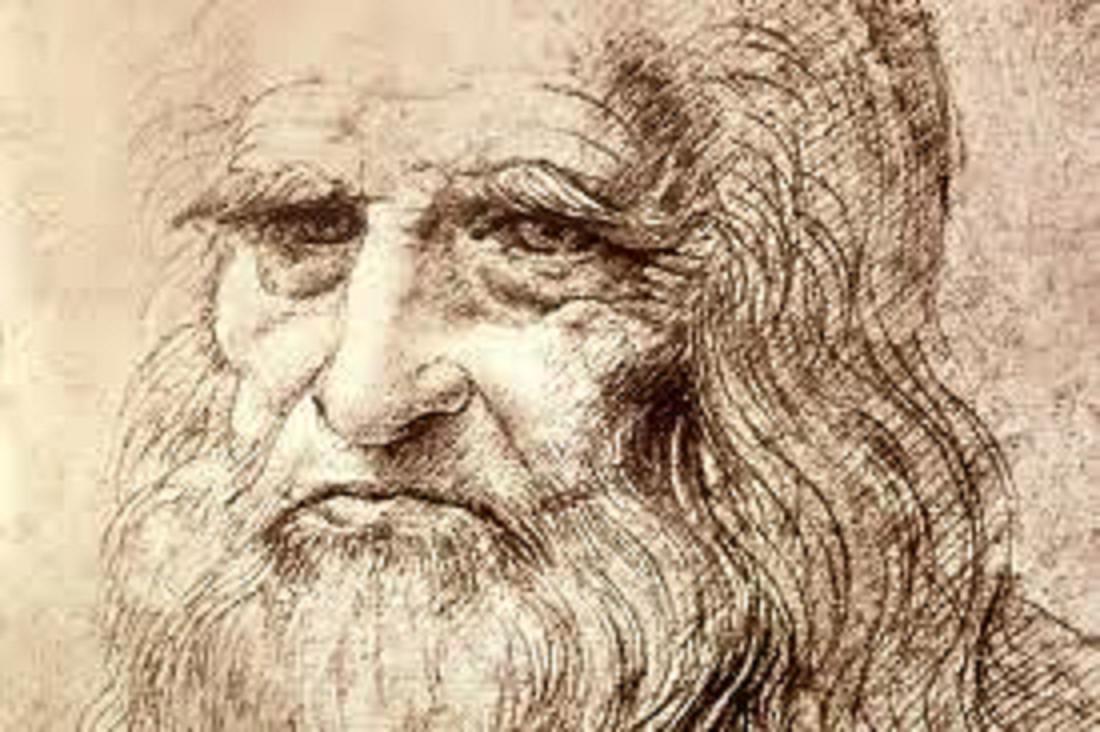
How to Succeed in Writing part I: Answering Leonardo Da Vinci’s Questions


I would love to tell you that you have a lot to learn from me if you want to be a successful writer in one regard: I’ve never quit. I would love to tell you that my passion for all forms of writing has overwhelmed all of the potholes I’ve run across in the road, and that I’ve always stood strong in the face of those negatives in order that I would one day become a successful writer.

I would love to have you picture me in a Gatorade commercial that depicts me writing with colored beads of sweat pouring down my face as a voiceover says: “Rilaly says never say die!” I look to the camera at that point. I look mean, I look mad, and I look driven. “Quit? The word is not even in my vocabulary!” I say with a look of disgust for having to answer the question you haven’t asked, “I haven’t even quit smoking!” I would love to present that image to you, but it’s not true. I have quit. I’ve quit more times than I care to discuss.Robert Hayes sweating in Airplane

I’ve grown tired of writing fiction, and I’ve felt more dejected trying to succeed in this field than I have in any other areas of my life, including my dating life. I’ve gone through bouts of insecurity that double those I’ve endured in any other areas of my life, and I’ve worked in numerous fast-paced, hyper-critical jobs. If you ever met me, you would know that I’m a relatively confident guy, and I love my life. Writing novels, short fiction, creative non-fiction, political blogs, and little entertaining, philosophical vignettes has made me happier, more miserable, more disgusted, more vulnerable to the smallest criticism, and more proud of myself than anything else I’ve tried in my life thus far.

If that’s the case you say, then why should I try it? Why do I need the headache or heartache? Why would I even entertain the idea of writing a novel? How do I know if I’m good enough to even start? I’ve never done anything like this before. The very prospect of starting down such a road is a little scary to me. Scary, you say, and a little exciting at the same time.

writing is hardWriting a novel is hard, don’t let anyone kid you. I’ve written four novels, and three short story collections, and just about every one of them has been difficult to complete. Very few of them have flowed so well that I thought I made it look easy. George Kennedy star of Naked Gun, Cool Hand Luke, and over 200 films and television productions, wrote one book in 1983. After writing this novel, called “Murder on Location”, Kennedy said it was the hardest thing he ever did. “I do not envy those people who do it for a living,” he said. “It’s the most trying thing I’ve ever done.”

Just because it’s hard, and just because it may be one of the most trying accomplishments you’ve ever attempted, does not mean it can’t be done. The rewards for completion are satisfying, enriching, and in many ways therapeutic. With that said, only you can know if this is the field for you. Only you!  Only you can answer the mandatory questions that need to be asked in a manner that lets you know that you are a writer.

Leonardo da Vinci had a belief that the only method through which one could answer a question was by asking questions. Da Vinci did not even say you have to ask the right questions for even an incorrect question might lead to some answers that could lead to other questions and other answers. That may seem so obvious it’s laughable, but he asked himself hundreds of little questions about every project he pursued. His goal was objectivity. He wanted to look at every project from every angle he could imagine to see if he could enhance his view of the project or find it pointless to pursue. Some of these questions were harsh, some were leading, and others seemed to have no pertinence at all, until he asked them and tried to answer them. You cannot worry about hurting your feelings when you ask yourself these questions. You cannot worry if these questions change your opinion of yourself one hundred and eighty degrees. The questions must be asked.

Most of us ask ourselves questions all the time, but how probing are these questions? Most of these questions reveal that we have little objectivity about ourselves. Most of the questions we ask ourselves are leading questions. Most of us ask ourselves the questions we enjoy answering. “Do I really need to eat another piece of pie?” Why, yes I do. I need those endorphins racing around in my brain like they did on the first slice. That was nirvana! “I deserve a second slice. I’ve been good!” Then we eat that piece and realize it wasn’t nearly as rewarding as we thought it would be, and we pay the price in sluggishness from the sugar lows, in weight gain and its subsequent effect on our appearance, and we’re a little frustrated that we didn’t display more will power. We know now that we obviously didn’t ask ourselves the right questions.

In the coming weeks, we will be asking you the questions about yourself that you may not want to ask about becoming a writer. These questions may be a little harsh. We may ask you to ask yourself some questions you don’t want to answer. If you really want to become a writer, however, you will need to ask them.