Platypus People Need to Watch TV


When my best friend’s mother pushed her husband down the stairs that wasn’t the only strange event I saw over the course of the years I spent in their household, but it was the exclamation point I needed to develop a new species to describe them. I called them Platypus People. They weren’t just weird, strange, and just plain different people. To my mind, they defied scientific categorization in the same manner the duck-billed, amphibious Australian mammal does. They were a housefire of strange, and I was the fireman, running into what everyone else fled. Yet, as with any veteran fireman who has run into so many fires that they become commonplace, I didn’t see their aberrant behavior for what it was back then.

When Ellis Reddick entered the room wearing his wife’s tattered, old wig and a pair of vampire teeth, I didn’t understand why it was so important to him to terrify us. He would walk slow, real slow to punctuate the terror. As a likely result, my favorite horror movies involve slow, subtle psychological terror that allows the viewer to fill in the blanks. 

His daughter, someone who knew him as well as anyone, was terrified too. If he did this on occasion, say on Halloween or something, that might make it funny, but he did this to us almost every weekend. When we grew too old to be terrified, he turned the show on my brother. We knew my brother was terrified, because he didn’t know what was going on, and that made it funny somehow, sort of, and in a roundabout way. We knew Ellis better than my brother did, but for reasons endemic to Ellis’ character, we were still a little scared. I don’t know what was going on in his daughter’s mind, but I always wondered how close he was to hurting us all. We would laugh when this was directed at my brother, as I said, but there were moments between the giggles when my mouth would freeze in a worried smile. I would look over at his daughter, with this look on my face, and she would have the same concern on her otherwise laughing face. We would take everything we knew about Ellis Reddick and put those facts and concerns in a hypothetical puzzle, and we would wonder how much truth there was in the in the otherwise comical horror we were witnessing. The pièce de résistance occurred soon after his daughter and I found his hiding place for the wig and the vampire teeth, and we tried to use them to scare my brother. He was so disappointed that he was angry. He chastised both of us, because he knew, kids being kids, we would overdo it and ruin the joy he experienced terrifying  us every weekend. 

The Carnelias were another strange brew. I met low-lifes before the Carnelias, but I never knew anyone who whole-hogged it. The philosophy of most of the low-lifes I knew was equivalent to that of cryptozoologists and conspiracy theorists. They believe some of what they say, but they form most of their ideology around the idea that the other guy is wrong. They define their rightful place in the mainstream by exposing their peers to try to push them outside the fringe. The Carnelias didn’t waste their time with individuals, they were out to get the world. I also met angry, bitter, and resentful people before, but I never met anyone who enjoyed pain so much. Painful mistakes exposed the fraudulent nature, and they delighted in it like no people I’ve met before. The Germans invented the word schadenfreude to describe the act of enjoying another’s pain but the Carnelias personified it. Most of us know about the fuzzy line between comedy and tragedy, but there was never a fuzzy line for the Carnelias. They considered all tragedy comedic. I never saw them happier than when someone else was falling, temporarily confused, stupid, and in pain. It was their reason for living, or as the French would say, their joie de vivre. 

“Your family is just plain weird my friend,” I told Matt after he apologized for an incident I witnessed in his home the day before.

“Oh, and your dad is normal,” Matt said. He was defensive. Why wouldn’t he be? I was insulting his family, and in some ways him, because some part of him knew that the peculiarities of his family would one day become his. The struggle to avoid familial institutions was best captured by the Alice in Chains lyric, “All this time I swore I’d never be like my old man, but what the hey it’s time to face, exactly what I am.”

“At least my dad knows he’s weird,” I said, “and he’s been fighting it his whole life. Your family doesn’t even see it.”

It was a harsh condemnation, and it was true. Matt’s family institutionalized their peculiarities in an inclusive manner that Matt would never be able to see without comparative analysis. Institutionalized peculiarities are as difficult for an insider to see as an accent for a native speaker.

“Everyone has an accent down here,” my very young brother innocently commented when we took a trip to see extended family members in Tennessee.

“Son, down here, you’re the one with the accent,” our cousin said.

Everyone laughed uproariously, until I innocently added, “No, you still have the accent. Don’t you watch TV? Everyone talks like us.” I don’t know what I expected them to say, but I wanted pushback. I didn’t mean it as an insult. I sincerely wanted someone to say, “Oh, and you think you speak without an accent? Just because you were born and raised in a certain locale, where everyone sounds alike, doesn’t mean you don’t an accent?” I wanted one of them to explain to me how they could think we have an accent.

They didn’t say anything.

An internet rambler said, “Middle Americans always try to say they have no accent, but …” After that but, they provided some anecdotal evidence that proved otherwise. It’s a natural inclination of ours to counter a generalized statement with extremes. If I say I don’t have an accent, you naturally point out some words or sounds to suggest I do in some cases. That’s fine and all, but I don’t think the argument is do Middle Americans speak without accents, but do they have the least? Is their language the most neutral, the most homogenous, and perhaps the most boring? An article I found, some years back, stated that actors who strive to appear in American movies and on American TV shows are taught to speak as Middle Americans, from a section of the country that stretches across Eastern Nebraska, Iowa, and Western Illinois. Most producers and directors want as little accent as possible in their productions to try to achieve mass appeal, so this is the most neutral form of speech they’ve found.

“You go around saying that everyone else is weird, but I could probably come up with about 100 people who think you’re weird.” Again, I wouldn’t say I’m not weird, but between the two of us, I would say I’m less weird. If you’re from areas of the country, such as Boston, Fargo, and Nashville, you might think you don’t have an accent, because everyone you know and love speaks the same way. There’s a certain inclusivity that prevents comparative analysis. As the old analogy suggests, they can’t see the forest for the trees. My innocent and naïve question asked our cousins if Tennesseans truly fail to recognize that they’re the ones with the accent? If they do fail in this regard, have they ever watched TV? I had a similar, unspoken query for the weird families I spent so much time around in my youth regarding their peculiarities.

I spent so much time around the Finnegans, the Reddicks, and the Carnelias that I recognized their familial peculiarities. They were some weird people. I can write that now, because I have decades of comparative analysis to back up that statement. At the time, however, I grew so close to them that I absorbed their peculiarities and developed my own lack of objectivity, until that conversation with Matt. When he pushed back with, “Oh, and your dad is normal.” I probably should’ve introduced him to the elusive baseline.

How do we compare one individual to another to derive a relative definition of weird. How do we compare A to B? Who’s the weirder of the two, and who’s closer to normal. We might take our question out to a third party, who establishes themselves as an agreed upon, baseline level of normal or relatively normal, on a day-to-day basis. Every region of the United States has some accent in their speech, indigenous to the area and the most common nationality of the settlers of the area, and everyone has quirks, but what person, or group of people, have the fewest quirks in the group we know, so we can establish an agreed upon baseline? We might say that B is definitely closer to C’s definition of normal than A is, and the best third-party, baseline barometer we have is TV.

I could see how someone might adopt a certain way of thinking, if that’s the way their parents and everyone else they knew thought, but at some point, they should’ve developed their own baseline and said, “Our whole way of thinking just isn’t right. I’ve seen the truth, and this ain’t it.”

These three families were weird, and they often failed to note anything unusual about their thought process, such that it leads to a philosophy, or their way of life. They couldn’t see it for what it is, because they were too close, and because their thought patterns were so institutionalized in their families they were  ancestral. I saw their weird, strange, and just plain different behavior at the time, so often I compartmentalized it and incorporated their reality into who they were. The Finnegans just did things like that, because they were the Finnegans. It’s just what they did, same with Carnelias, Reddicks, and my family. We all did what we did, and our actions and philosophies were reinforced by cousins, uncles, aunts, and our grandparents. I threw our big, old world soup recipes into a pot and arrived at what I thought explained the world.

My broken home was just as dysfunctional as theirs, but we had a big asterisk in our favor: my dad. Though he never said such things, and he abhorred analysis of any form, it was obvious to those of us who knew him intimately that he knew he was something of an oddball. If we sat him down and asked him piercing psychological questions about his mental DNA, we wouldn’t find it, because he would tell us everything we wanted to say and what he wanted us to hear. His oddball philosophies and psychology could only be found when he thought no one else was looking, and in the effort he made to appear normal.  

I went to receive Holy Communion one time, and my dad dressed me down psychologically for appearing in that line without a coat on, “Everyone else had their coats on, why didn’t you put a coat on?” That’s but a snapshot that I found quite humorous.

What difference does that make?

“You stood out like an oddball,” he said.

Thats but a humorous snapshot that provides some insight into the daily travails of my dad trying to fit in and be normal. I laughed about it then, and I laugh about it now, but I find myself examining the apparel of my peers before going out now. “All this time I swore I’d never be like my old man, but what the hey it’s time to face, exactly what I am.”

How many of us are able to objectively examine our way of thinking only to realize that we’re a bit off the track? How many of us can examine the way we’ve thought our whole lives and realize that we have some weird, strange, or just plain different ideas about the world? Due to the fact that just plain different people fascinate me, I’ve known more than my share in an intimate manner, and I can tell you that it’s rare for anyone to have substantive objectivity on these ideas and philosophies, because they’re often familial institutions. It often takes a number of people, a number so overwhelming that it becomes impossible to deny, from people we respect, to realize our thoughts are just plain different. By the time I was old enough to examine my dad with some perspective, it was obvious so many people told him “That ain’t what people think” that he knew he was an oddball. 

I didn’t think my dad had perspective when I was growing up, but I knew that term just crushed him. I don’t know if so many people he loved and respected called him an oddball, but we were raised to believe it was one of the the worst things we could call someone else. Most of us say, “You’re such an oddball” with a cringy smile, but my dad said it with the meanest face he could find. He also said, “That ain’t the way,” whenever I approached him with a relatively original thought. “That ain’t what people think.” He developed an unwavering trust of experts, and he repeated their lines word for word. By doing so, he probably hoped to mirror their baseline normalcy.

Original thoughts were outside his gameplan. He didn’t trust them, and he didn’t want to have them. Again, this reaction might have resulted from the pain he experienced whenever he tried one out and others told him that was oddball thinking. My guess is he lost those battles so often that he feared there was no hope for him, but he didn’t want his sons to have to go through what he did. He never said why it was so important to him that we fit in, and be normal, but he might have thought if his sons could turn out relatively normal, perhaps he could enjoy a legacy of normalcy posthumously. It’s possible, even probable, that his fears of others considering his sons oddballs altered the trajectory of his lineage.

The Finnegans, the Carnelias or the Reddicks obviously never had such fears, for they not only continued their institutionalized, familiar philosophies, they propagated them as the way, the truth, and the light. 

I had so many stories of these families lost to history, because I didn’t consider them noteworthy at the time. “Do you remember the time when the Reddicks did this?” I asked my brother decades later. He was there for much of it, as the Reddicks babysat us on weekends, and he remembered the stories. He spent time around the Carnelias too, and we both forgot more than we remembered about these people, but we both criticized each other for accepting their ways as commonplace.    

I didn’t tell the stories of the Finnegans, the Carnelias or the Reddicks the way I do now, because I didn’t see them the way I do now. Decades helped me remove myself from the limited perspective of seeing it so often that it felt somewhat normal to do them.

“I’m sorry you had to see that,” my friends would say the next day, following an eventful evening in which his family exhibited exaggerations of their weird, strange, and strange behavior.

“See what?” I would ask. They would explain what they meant. “Oh yeah, that’s fine. So … what are we going to do tonight?”

Kids accept, adapt, and absorb most realities they’re forced to endure, and as my brother and I learned, they can easily forget most drama and trauma. I don’t know how my friends, the children who were forced to accept these realities on a daily basis, turned out. We’ve only had brief get-togethers since, but my guess is they were unable to correct the weird, strange, and just plain different course their parents put them on. My guess is that they didn’t see the odd thought patterns, strange philosophies, and just plain different ways of viewing the world, because their parents didn’t see it when their parents taught it to them, until it became institutionalized in the family tree. I could see how children born in ancient eras, Biblical eras, or even the William McKinley-era might fall prey to believing they don’t have an accent, or act in institutionalized, familial ways, as most of them didn’t travel more than thirty minutes from their home, but we have easily-accessed modes of transportation now, mass communication, and TV and movies to provide a baseline normalcy and comparative analysis for our family’s ways of thinking. I understand that parents provide the greatest influence on a kid, and how extended family members might reinforce that influence, but how can you still try to maintain that your family is normal? Don’t you watch TV?
The Hat on the Bed Hex 


“You just jinxed us!” my friend said to explain why everyone was groaning at me and making the meanest faces they could find. 

“You think this is funny?” my friend’s dad said. I did, until the whole room turned against me, and I realized this man was asking me this in a very confrontational manner. “People here depend on the income from these games,” he added. In that brief window of silent tension I continued to believe I was the butt of a joke that would end in a big old “Gotcha!” followed by uproariously laughter. As our silent stare continued, and the dad’s confrontational stance appeared to only strengthen, I realized this was not fun and games to them.  

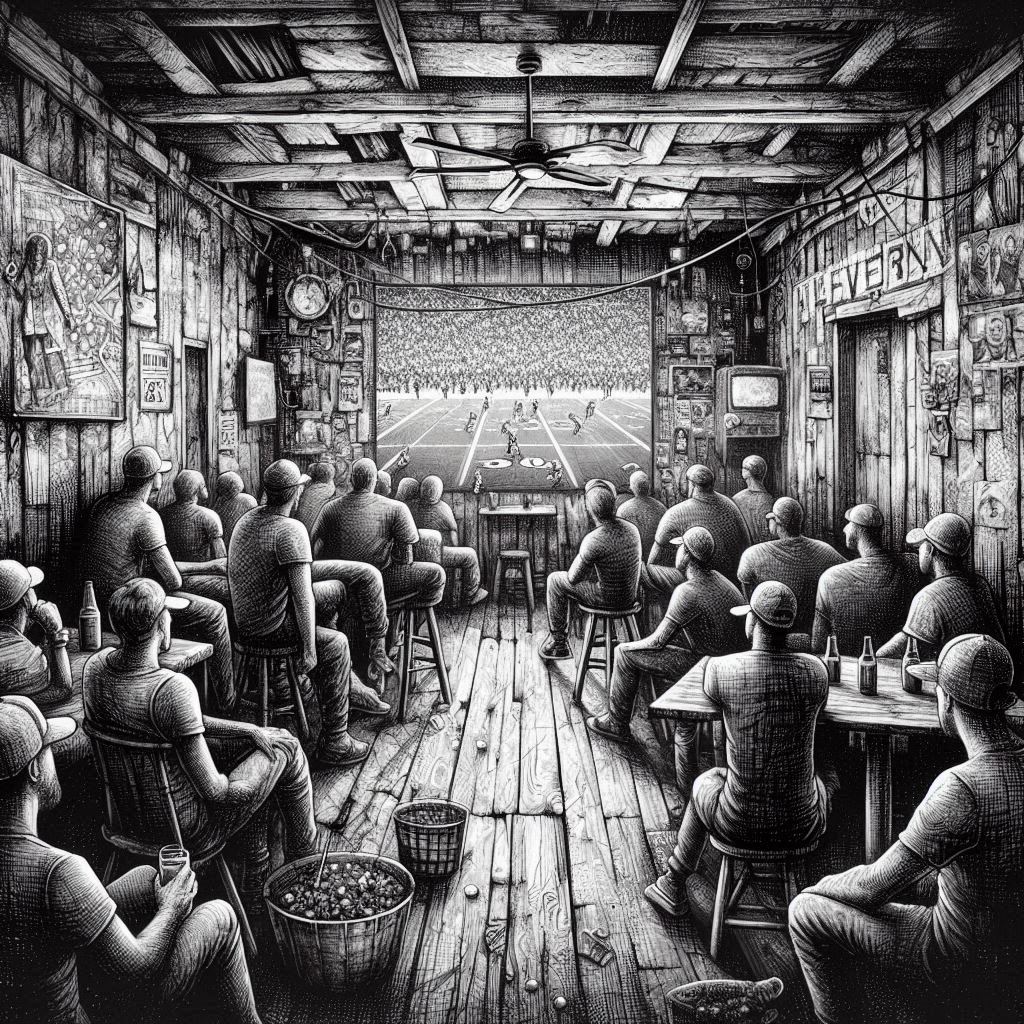
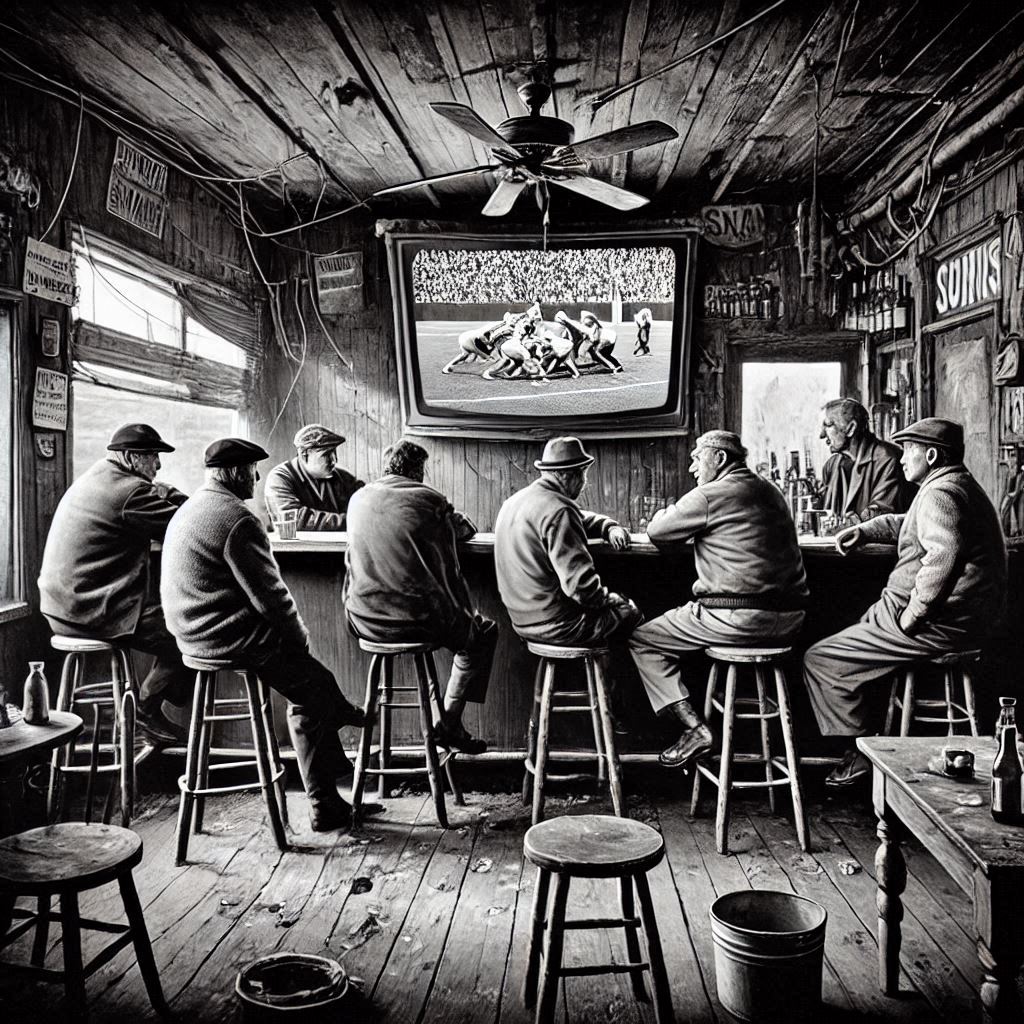
What I said to ignite this uproar, while watching an otherwise meaningless football game in my friend’s family home, was, “Well, it looks like we’re going to win here!” I violated the tenets of the jinx after our team scored a touchdown to put our team up by twenty-one points with less than two minutes left in the game. Lifelong football fans have seen some wild swings in football, but a comeback of historic proportions, but that meant nothing to them. When my friend not only joined the crowd, but led the charge, I thought he was joking, but he obviously read the room better than I did. 

The furor that line generated couldn’t have been too much worse if I went to the bathroom, stripped down naked and sat among these people as straight-faced as I could.  

In the aftermath of the silent tension between the dad and I, about five mouths around us continued to hang open. They were silently aghast at my utter stupidity. One of the attendees sat back with his hands splayed, as if to ask, “What are you doing to me here?”

Another said my comment was, “One of the dumbest things I’ve ever heard, and I’ve heard some really dumb things.”

My friend just sat there in the midst of all this shaking his head. After it was over, my friend reiterated that this football game wasn’t just a game to these people, they depended on the income from the outcome.  

I understand that anything can tip the precarious balance in sports, but I had no idea how instrumental I was in it, until they educated me. I would’ve maintained my I’m-not-falling-for-this stance if it were just my friend saying these things, as we joked about it many times before, but the adults in the room not only shared my friend’s condemnation, they taught it to him. Adults who had twenty-five-years experience on me and knew far more about the world than I did, were saying what I considered incomprehensible, and they were shaking their heads with their eyes closed, whispering my name through clenched teeth as if it were an unquestioned truth. 

You might think that I was the butt of some Jedi mind tricks, and that they would all have a good laugh later, but they wouldn’t. They genuinely believed it, all of it. They believed that sitting half-bun on a chair while watching a football game on TV, clothed in team-related regalia, while singing the team’s fight song to send a telepathic message of love and truth to our boys fighting on the gridiron would make a difference. 

After that incident, years of repetition informed me that these forty somethings were serious, “serious as a heart attack”. They also informed me, without saying these exact words, that I was to respect the ways and traditions of their home. 

My family wasn’t of sound mind. My dad was as quirky if not more than my friend’s dad, but he didn’t abide by these superstitions. I never experienced anything like this before, but I never spent time around big-time gamblers either. The adults basically informed me that I sat on the threshold of being banned from their home if that other team came back. They didn’t. Our team won, but they said, “You got lucky … this time, but don’t ever say anything like that again.”

The next time they invited me to their home to watch a game, the dad remained in the doorway for an uncomfortable amount of time, blocking it, saying, “You’re not going to say anything stupid this time, are you?” I assured him that I wouldn’t, and that I learned my lesson last time. He backed away and allowed my entrance.

The Drugstore Cowboy 

This friend and I later watched the movie Drugstore Cowboy together. In this movie, a character introduces the concept of a 30-day hex that results from leaving a hat on a bed. “Why a hat?” a side character asked. 

“Because that’s just the way it is sweetie,” the main character responded. “Never talk about dogs, and never look at the backside of a mirror, because it will affect your future, because you’re looking at yourself backwards … No, you’re looking at your inner self, and you don’t recognize it, because you’ve never seen it before. But the most important thing is the hat on a bed. The hat on a bed is the king of them all. Hell, that’s worth at least 15 years bad luck, even death, and I’d rather have death, because I couldn’t face no 15-year hex.”   

The hat-on-the-bed hex seemed so arbitrary and quirky that it was hilarious, kind of cool, and interesting. The characters in the movie were drug dealers, and we assumed that this explanation offered us some insight into their damaged brains. To prove the theory that a hat-on-a-bed could provide anywhere from 30-days to 15-years of bad luck, the movie characters’ lives fell apart, and they all realized their run of bad luck started after one of the other characters left a hat on the bed.    

That movie is decades old now, but I can still see that hat sitting on the bed. It provided a crucial turning point in that movie. The characters’ lives were progressing as well as any drug dealers could before a stupid and naïve character haphazardly left a hat sitting on a bed, as if it were nothing more than a hat resting on a bed. I remember that narrative so well because my best friend talked about it all the time, and anytime we entered his home, we were to abide by his incorporation of this rule into his life. 

“Are you serious about this?” I asked this otherwise rational human being when he introduced it to us all.

“Why would you want to risk it?” he asked. 

“Because it was a movie,” I said, “and not only that, it was a joke in the movie that the writers inserted to show how hilariously insane their characters were.” 

If he laughed and said, “I just thought it was kind of cool and funny.” I would’ve said, “Thank God, because I thought you were serious.” Unfortunate to his legacy, he told me he was serious. It should’ve been obvious to my otherwise intelligent and rational friend that the movie makers didn’t believe this superstitious nonsense any more than I did, as they arbitrarily edited the definition of looking at the backside of a mirror, and the length of the hat-on-bed hex, but my friend was born and raised in a home of very superstitious people, and he believed that a hat-on-bed could alter his life in the same manner the scene altered the trajectory of the characters in the movie. No one ever put a hat on his bed, as far as I know, but he made us all aware of the consequences of doing so on numerous occasions over the years. 

The Swanny

Propagandists say that if we repeat the same lie often enough, enough people will believe it to make it true, and my friend, his family, and their friends genuinely believed in hexes, jinxes, and superstitions. In their home, I learned that no matter how great the momentum, a few choice words from a teenage male, who doesn’t know anything about the world yet, can alter the course of a history.

One of those who insulted me, in my friend’s home, said I committed a Swanny. A Swanny, they explained, was a term they coined after a man named Ron “Swanny” Swanson said something as dumb as I did once, and they informed me that the other team miraculously came back shortly after he said it. “It happened,” they said, and after it happened, they labeled anyone prematurely calling out a victory and thus jinxing the team “a Swanny”.

“I’m not denying that “the Swanny” happened,” I said to my friend, after the whole incident was over, “but how many times has it happened since humans started watching sports on TV? How many television spectators, hundreds of miles away from the action on the field, have prematurely called out a victory only to have the outcome flip? Don’t you see how we could view Swanny’s “Swanny” as a coincidence?”

They could not. That inexplicable loss was marked in the annals of sports’ history as far as they were concerned, because it proved their contention that when anyone says a most unfortunate thing at a most inopportune time, they can alter the course of history as we watch it play out on TV, hundreds of miles away from the action on the field.

“What would happen if Swanny committed “a Swanny” while watching a documentary on World War II?” I asked, “and three-fourths of the way through that production he mentioned that he thought it was pretty obvious that the allied powers were going to win? Would we all be speaking German now?” 

“That is so ridiculous,” my friend said with laughter. “World War II is already over. The analogy doesn’t apply.”  

“Sometimes, the best way to prove how ridiculous something is,” I said. “Is to provide an analogy that is more ridiculous.”

If I thought my friend was an unmovable moron, I wouldn’t have pleaded my case against “The Swanny”, but my friend was a logical, reasonable man who just happened to be well-educated. On the subject of hexes, superstitions, and jinxes, however, he proved an immovable object. He had a blind spot, we all have them, but this one was so confusing to me.   

I might be one of the least superstitious beings on our planet now, and I’d love to write that even as a teenager, I was immune to such ridiculousness. I watched so many football games at my friend’s house for about a decade though, with his superstitious parents and their superstitious friends. They were rabid fans, and they loved gambling. They were some of the few I met who were into these games as much as I was. Watching sports in my teen years was tantamount to life and death. They were big fans, but they had a financial stake in victory too. Though we approached watching sports from different angles, the outcome was the same, and their fervor made watching games at their home so much fun. 

After committing “the Swanny”, I learned to watch my tongue when we were watching sports on TV. As ridiculous as I considered their rules, if I had respect for my friend and his family, I had to respect the rules of their home. This respectful silence had an accumulative effect over the years, as anytime I entered their home to watch a game, I learned to never say anything premature, or joke about it, and that led me to avoid even thinking that even the most obviously decided game was decided. Little by little, game after game, their repetitive messaging progressively seeped into my brain and morphed what I once considered a joke into a new reality for me. I don’t remember ever making a conscious flip in this regard, but I eventually took their ridiculous hat-on-the-bed type superstitions home with me, and I chastised my brother for making an inopportune comment at an inopportune time when the two of us were watching a football game on television together. “You just jinxed us!” I said. 

“Seriously?” he asked. “You’re serious? Take a step away from what you’re saying, and I think you’ll realize how ridiculous that sounds.” I didn’t, I wouldn’t, until I did, and I entered into a lifelong cringe for ever somewhat, sort of, and temporarily slipping under the power of group-think and repetition. 

Klosterman’s The 90’s: A Book. A Word Salad.


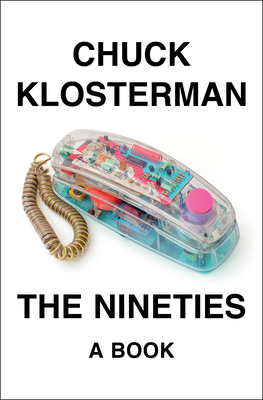
“What’s historically distinctive about the [Generation] X era is the overwhelming equivocation toward its own marginalization,” Chuck Klosterman writes in his book The 90’s: A Book. We understand Klosterman’s point, but we would write it another way. We would write that the art of equivocation may have led to Generation X’s marginalization. As evidence of this, Klosterman then writes, “The things uninformed people said about who Gen Xers supposedly were often felt reductionist and flawed, but still worthy of examination and not entirely wrong.” 

No one in my inner circle said anything bold in the 90’s. There were exceptions of course. We called them the “say anything” crowd, because they’d say anything. The rest of us were either scared, or conditioned, to qualify, equivocate, or obfuscate the meaning of everything we said to try to jam our thoughts into every square hole before us. We edited our thoughts in real time, so that no one could accuse us of generalizing. I talked to other generations, and they didn’t worry about generalizing, stereotyping, or any other accusation our crowd could dream up. They said bold things, and they could back them up, some of the times. Some of their opinions were controversial, and some of them weren’t. Some of their opinions were wrong, and some of them weren’t. They didn’t care. They weren’t afraid to share. They’d say anything. How do they get away with that, we wondered.  

Someone accused me of generalizing once, as if it were the ultimate condemnation of my assessment. By that time, we were all sick of the accusation. Being so careful became tedious after a while. I turned to my accuser and said, “I am generalizing, because I find this to be generally true.” She was shocked, presumably because no one ever fought back against her charge. Had she pressed me, I would’ve added, ‘When we generalize, we say things we believe are generally true. If something is true 50.0001% of the time, it is generally true, in general, and that is a generalization.’ “There are no absolutes,” the absolutes crowd say. We might try to argue that line, but the idea they loft is because something is not 100% true 100% of the time, then we should not discuss it until we qualify it to make considerations for the 49.9999% times it might not be true. How does anyone think, talk, or formulate conversation if they’re worried that some statement doesn’t account for the 23.1% of the population to which it doesn’t apply? You don’t. You sit back, in marginalized and intimidated corners to allow the unintimidated to continue unencumbered. The fear of condemnation leads us to say things like, “reductionist and flawed, but still worthy of examination and not entirely wrong.” We enjoyed saying such things initially, as it led to some level of “intellectual status”, but we eventually discovered how discombobulating and tedious it could become.      

2) “The most compelling aspect of The Gen X Reader is not what the writers got right or wrong, but the intensity of their search for meaning,” Chuck Klosterman writes of Douglas Rushkoff’s compilation of essays Gen X Reader (an anthology devoted to dissecting Douglas Copeland’s book Generation X). 

If all theory is autobiography, and all analysis is self-analysis, Klosterman reveals his raison d’etre in that sentence. If he did this to himself, in a public park, in the state of Alabama, they would probably ring him up on at least a half-dozen misdemeanors. 

3) “[The book Gen X Reader is] a fossilized example of how understanding the present cannot be achieved until the present has become the past,” Klosterman further writes. 

What? 

He writes, “Times, change, because that’s what they do.”  

In another space, on another subject, Klosterman asks, “Now … were these assessments accurate?” He answers: (Yes.) (No.) (Sometimes.)” 

The first thing that comes to mind when reading these particular lines is, the only person who might be more exhausted in a conversation with Chuck Klosterman, other than the audience to his conversation, is Chuck Klosterman himself. Those unfamiliar with Klosterman’s style might think he is trying to add words to fluff his word count, or they might think he’s trying too hard to be inclusive or sound intelligent. Those of us who read his books, listen to his podcast, and/or watch interviews with him know this is Chuck Klosterman. It’s the way he writes, and it’s the way he talks.  

I tried to come up with an assessment of these particular elements of Klosterman’s writing. “Word Salad,” I whispered. What’s a word salad? Wikipedia defines word salad thusly: “A word salad, or schizophasia, is a “confused or unintelligible mixture of seemingly random words and phrases”, most often used to describe a symptom of a neurological or mental disorder.” This is not Chuck Klosterman in total. He is very intelligent and insightful, but he has moments.

I recommend just about every book he has authored. Klosterman’s writing is not a word salad in this sense, but some of his sentences contain iceberg lettuce. I love iceberg lettuce. I always have. I love it as much as I do Chuck Klosterman’s work. After decades of eating the leaves, I found out that iceberg lettuce has little nutritional value. It provides vitamin A and K, and some fiber, and it has a high-water count, but compared to other lettuce leaves it is very low in nutritional value. 

Many Klosterman essays have living lettuce, oak leaf lettuce, and other leaves with nutrients, but he adds black olives. “You can never have too many black olives,” his writing says. Yes, we can. Then he adds far too much cheese, a half-pound of bacon bits, and everyone knows you don’t need that many cucumbers and croutons to make a salad, but Klosterman wants to make sure readers get value for their money.     

4) One interesting insight Klosterman writes that aligns with thoughts I’ve explored is: “[Older generations] perceive the updated versions of themselves as either softer or lazier (or both). These categorizations tend to be accurate. But that’s positive. That’s progress. If a society improves, the experience of growing up in that society should be less taxing and more comfortable; if technology advances and efficiency increases, emerging generations should rationally expect to work less. If new kids aren’t soft and lazy, something has gone wrong.” 

For most of my life I wanted others to consider me weird, strange, or just plain different. Whatever I achieved in this regard, it wasn’t enough. I wanted more. I wanted it all. I never realized what an enviable position this was, and I had no idea that it was an offshoot of my dad’s ability (financially and otherwise) that led me to a varying degree of certitude that I belong. My dad grew up in a location just south of the “other side” of the tracks. He grew up, and spent the entirety of his adulthood, trying to fit in. A portion of my desire to engage the minds of the weird, so that I might become one, could have been borne through rebellion to my dad’s obsessive desire to have others consider he and his son’s normal, but I now think he laid a foundation of norms at my feet by raising me in a normal climate that I desperately tried to escape. 

5) Klosterman also has a unique gift for making seemingly irrelevant (to me anyway) events in history cultural touchstones that either influenced, changed, or revolutionized the culture. Klosterman writes that Nelson Mandela going from jail to the Nobel Peace Prize and then to the presidency of South Africa as “the most momentous global event of the nineties.” Klosterman lists the cultural influence as initiating the art of the conspiracy theory, as conspiracy theories suggested Mandela died in a prison cell. I don’t know if Klosterman ran around in different circles, or if he is attempting to rewrite his past and assign his thoughts greater significance, but I don’t know anyone, personally, who ever talked about Nelson Mandela in the 90’s.  

6) Klosterman is a few years younger than me, and we share some similarities in our background, so when he writes what he considers the cultural touchstones of the last sixty years, I’m intimately familiar with almost everything he discusses save for one: Reality Bites. I was that Blockbuster guy we now see in retrospective videos of a guy who stood in their aisles far, FAR too often, in the 90’s, trying to find something unique and entertaining, but I never selected Reality Bites. To read Klosterman, the idea that someone who paid a ton of attention to the culture, through entertainment venues, the idea that a man my age never saw this movie is his equivalent of an American never hearing the name Babe Ruth. This isn’t the first time, and I’m sure it won’t be the last he writes of this movie, as he believes it either captured the narrative of the 90’s in America, better than any other movie, or drove it. I wouldn’t know, because I never saw it.  

Regardless what I’ve said above, I respect Mr. Chuck Klosterman. I think he’s an excellent writer, and a challenging intellect. When one of his books come out, I’m one of the first in the intangible line to pick it up. If anyone thinks I’m too negative, or cynical, I am. Whenever my friends and I would walk out of a quality movie, we would dissect it, and we were always negative and cynical. We would criticize the acting, the plot, elements of the dialogue, and anything else we could think up. If the movie just sucked, we didn’t waste any more of our lives on it. We just said, “Well, that sucked!” The great ones were the ones we picked apart. Our conversations went something like this: “I hated it when he did that!” “Oh, I know it. What about that time he did this?” “Great movie though.” “Yeah, it was.”