Rilalities V: Challenges and Insecurities


The 6’5” Guy

“I’m six foot five,” a man named Joe said when I met him. He did not work this into his greeting, and he did not say it in the early minutes of our introduction but it hung over his sizable head until he acknowledged it.

Those fortunate enough to meet Joe will discover the reason we learn about his height soon after learning his first name. The natural inclination of most is to drop their last name soon after saying their first name. Some drop their last name soon after mentioning their first name as a matter of habit, and some do it because they’re so proud of their family and heritage. Others might mention their occupation soon after mentioning their first name. I didn’t learn any of that from Joe in the brief moments Joe and I spoke. I learned that Joe was 6’5”. Joe was more 6’5” than he was Joe, and those fortunate enough to have a conversation with him that extends beyond superficial pleasantries will learn how 6’5” he is. If the conversation we share with Joe evolves into a minutes-long discussion, and the listener doesn’t acknowledge his height in anyway, he’ll break the news to them:

“I’m six foot five!”

Although Joe and I spoke for a total of about three minutes, I had the impression that the man could’ve written a bestseller, won the Heisman Trophy, saved children from a fire, or discovered the cure for cancer, and his height would still be his greatest and worst attribute. No matter what happens to him in life, I think Joe will prefer to have “Here lies Joe. He was 6’5” chiseled into his gravestone.

Joe was an interesting guy. He appeared to be conversant on a wide range of topics, and he managed to tell some stories from his life in an impressively timely manner, but everything he spoke of kept coming back to that refrain of his life.

His height was the reason he had trouble finding chairs to sit in with comfort, the reason his 5’3” mother was always on him about stuff, and the reason he couldn’t be as particular as he wanted to be about the clothing he wore:

“You can’t be finicky about clothes when you’re 6’5” and built like me.”

Joe, we should also note, was broad-shouldered. This attribute, coupled with the idea that he was 6’5” was the reason he had trouble going door-to-door to talk to people.

“Would you be comfortable discussing politics, if a man my size came-a-knocking on your door?”

His height was also the reason, he informed me, that he had such trouble finding a decent woman. That subject matter may have shocked most people, or at least made them somewhat uncomfortable, as most people would deem such a discussion inordinately intimate for a conversation between two people meeting for the first time. I had a best friend in high school who was 6’7” however, so I was well versed in the travails of being an abnormally tall male in America today, and I was used to my friend going into such intimate details with people he just met. Joe and I did try, at various intervals, to move on to other topics, but he was unable to let the fact that he was 6’5” go as easily as I was.

What struck me as odd was that I never mentioned his height, and I don’t think I provided any verbal or physical cues that called attention to it. Was that the point though? I later wondered. Was my refusal to acknowledge his height such an aberration to his experience that until I acknowledged it in some way, he would not be able to move on until one of us did?

Being a tall man has numerous advantages, but it has almost as many disadvantages. As I wrote, I was well versed in the travails of being an abnormally tall man in America. I knew, for example, that a person’s height is the first thing people notice when another is taller than 6’3”, and the thing they talk about after the person leaves. “How would you like it if no matter what you said, ’Man he is a big fella ain’t he?’ is the only thing they have to say about you after you leave?” When you’re 6’5” people pester another about in malls. It’s the reason some guys won’t mess with you and the reason others do. It’s also the reason some women want to date you and others don’t. A 6’5” man could be the most charming person in the world, in other words, and most people will have preconceived notions about them based on their height.

With that in mind, one would think that an abnormally tall male, or a woman with abnormally large breasts, would find it refreshing when they’ve finally encountered someone who seems to be genuinely unconcerned with their attribute(s). One would think that they might find it refreshing when they’ve finally found a person who is willing to talk geopolitics with them without looking down their shirt, or saying, “How’s the weather up there?” One would think that someone who broke those patterns of human interaction would receive a bright smile as a reward, and maybe even something along the lines of, “Thank you. You may not even know why I’m thanking you, but thank you!” Yet, tall men and large-breasted women, just like all humans with exaggerated attributes, become so accustomed to these patterns of interaction that they feel compelled to draw your attention to them just to complete a line of dialogue comfortably.

Most people try to avoid talking about a trait they generally considered a negative, and they will do everything they can to avoid noticing it. When they consider that person’s attribute a positive, most people think you should feel privileged to have it, so they don’t mind drawing attention to it. “You’re tall Joe!” they will say, or “I wish I had those,” and they will add something along the lines of, “You should feel privileged.”

As my conversation with Joe continued, and he began to belabor the point of his height, I thought he was trying to assert some sort of dominance. I may have been wrong on that note, and it might have had more to do with everything I thought later, but I began to rebel against his theme by making a concerted effort to avoid the topic of his height. Our conversation ended soon thereafter, and we moved onto other people at the gathering.

“What did you say to Joe?” our mutual friend later asked. She thought Joe and I would have so much in common that we would hit it off.

“Why?” I asked.

“He says he doesn’t think you two hit it off.” When I asked her for more details, our mutual friend said, “He said he can’t put a finger on it, but he doesn’t like you as much as I thought he would.”

Without going into what I deem to be the unnecessary details of our otherwise innocuous conversation, I can tell you that the conversation I had with Joe involved no disagreements. To my mind, there were not even moments of subtle tension, and there certainly were no overt ones, but he didn’t like me. Now, I’m not one of those people who thinks every person has to like me, and if they don’t I think there has to be something wrong with them, but to my mind this conversation I had with Joe proved to be amicable if not pleasant. Joe and I also proved to be as like-minded on certain topics as our mutual friend thought we would be. The only thing I did, and that which I presume led Joe to state that I didn’t live up to the characteristics our mutual friend detailed for him, was refuse to acknowledge he was 6’5” in anyway, and I think he thought that if I was’t going to do that, I was probably a phony.

Going Clear—

Anytime I finish a book as fantastic as Lawrence Wright’s Going Clear, I wonder what I am going to do with my free time?  The book gives credence to Phillip Roth’s line about non-fiction being stranger than fiction.  A complaint that an Amazon.com reviewer posed was: “If everything Wright writes is factual, why would anyone want to join the Scientology religion?”  This reviewer stated that this was the only point, and a central point, that they found lacking in the book.  If I were this Amazon.com reviewer’s teacher, and I lived by the credo, there’s no such thing as a stupid question, I would simply require that student reread the book.

Kiss in Rolling Stone—

Anyone that thinks that being “king of the hill, top of the heap, and ‘A’ number one” means that you will be able control your press, should read the March 28, 2014, issue of Rolling Stone magazine.  Kiss may no longer be the band that sells platinum records every year, and they may be more about marketing than music at this point in their career, but this Rolling Stone article was supposed to be about their soon-to-occur induction into the Rock and Roll Hall of Fame.  To read this piece in the Rolling Stone, however, that fact means little-to-nothing.

This piece of rock journalism was so shockingly brutal that one has to imagine that Gene Simmons is still throwing some of his much detailed Kiss memorabilia at the wall when he thinks about it.  All four members of the band Kiss came under attack from the author of the piece, but the author reserved most of his unprofessional brutality for Gene.  This writer’s attacks were so petty and snarky that a regular reader of Rolling Stone would suspect that Gene was a Republican candidate running for office.  Yet, Gene’s not even a Republican voter, as he has made it public that he voted for both Barack Obama and Bill Clinton twice.

This article would also be an excellent read for journalism students seeking answers on what not to do with subjects they’re covering in an article.  Having never taken a journalism course, I would have to imagine that one of the primary rules discussed in a Journalism 101 class is: “The articles that you write are not about you.  No one will be reading your article to learn what you think, unless you’re writing an opinion piece.  If you’re covering a subject in a journalistic manner, however, remember that your readers are only reading your article to learn more about the subject.  It’s not about you.  Your readers won’t care about your opinion, your preferences, or what you think about the subject you’re covering, so be careful how you frame their answers.  If your subject says something stupid, infantile, or in any way revealing of their character, put that statement on the record, but do not comment, or frame, that quote in anyway.  That’s not your job.”  Judging by the course journalism has followed in the last generation, I’m quite sure that most journalism schools now include an asterisk with each of these rules that states: “Unless your subject is a Republican politician.”  As I wrote, however, Gene Simmons is not a Republican voter.

Inspiration—

“This guy sounds like a complete fraud,” a writer said of a fellow writer I was describing.  I wasn’t even done with my description of this fellow writer, when this writer interrupted me with her blunt characterization.  I wasn’t shocked by her assessment of this fellow writer.  She had said as much of other, more established writers, but it was apparent to me that this woman believed that by diminishing all other writers around her, her stature as a writer would somehow be fortified.  Had this been the first time I heard any writer say such a thing, I would’ve passed her comments off as flaws in her character, but I’ve heard a number of novices, and well-established writers, engage in the this practice.  If you’ve ever heard a U.F.O. chaser, a ghost hunter, or some fortune teller attempt to establish their bona fides by telling you that every other person engaged in their craft are fraudulent, then you have some idea what I’m detailing here.

Knowing how hard it is to come up with ideas, and execute those ideas to the point of proper completion, one would think that a writer would bend over backwards to extend professional courtesies to anyone trying to do the same.  If you think that, you’ve never sat down with a group of writers.

“You can say he’s a poor writer,” I said, “But are you saying he’s not a writer?”

“I’m saying he’s probably a hack,” she responded.  She didn’t arc her nose upward after saying that, but that’s how I now remember it.  It seemed like such a violation of the code, on so many levels, that it was hard to comprehend how she could be so brutal.

She cut me off before I could ask her what she meant by “hack”.  I know the general term applies to writers that write just to write, and churn out poor quality submissions for financial gain, but she had never read this person’s material.  She had never even met the man.  Yet, he was a hack in a manner that made her appear adept at using the word.

One essential component to avoid being called a hack, apparently, is to write so little that everything you write can be perceived as enlightened, or divine in nature.  If you want to avoid being a hack, you should never write what others might consider mundane.  Yet, those of us that truly love the minutiae involved in writing, believe that it’s only through exploring the mundane that moments of inspiration can be discovered.    

One key component to being in a position to level such a charge, and have that charge stick –I now know after reading her material— is to never allow those that hear you level it, read your material.  Your charge should remain an indefinable accusation that leaves you with the dignified, nose-in-the-air air about you.

Her material brought to mind the one key component of storytelling that every writer should focus on —be they a writer of vital, substantial material, or a hack— make sure it’s interesting.  Translation: You can be the most gifted writer the world has ever read, but if your material is not interesting, no one will care. 

In the face of the constructive comments (see negative) this woman received from our group, she said, “Perhaps, I’m a better editor, than I am a writer.”  Translation: I have little in the way of creative talent, but I am, indeed, gifted in the art of telling others how little they have. 

The Best Piece of Advice I’ve Ever Heard


“You’ll figure it out,” Rodney Dangerfield informed a young, aspiring standup comedian who sought his counsel on “something in comedy.”[1]

Prior to this aspiring comedian approaching Rodney Dangerfield, we can guess that just about every comedian sought career advice from him. Not only was he one of the most successful standup comedians of his era, but he failed so miserably that he quit, and he didn’t just quit, regather, and form a comeback. He quit show business for ten years.

“To give you an idea of how well I was doing at the time I quit,” he recalled later, “I was the only one who knew I quit.”

Every comedian but they didn’t know what he figured out in his eventual comeback. They might have wanted to know what he figured out, how they could apply it to their act, or they might have wondered if he thought they should just quit too. The latter might have been the underlying question that no one asks aloud. “Now that you’ve seen my act, what do you think? How can I fix it, is it fixable, or “Should I just quit?”

The unknown, aspiring comedian who approached Dangerfield in this particular scenario was Jerry Seinfeld. We can guess that Dangerfield was probably trying to dismiss Seinfeld, hoping that yet another comedian would just leave him alone with their career-defining questions, or he found the answer to that question to be so loaded with variables, and so time consuming, that he didn’t want to go down that road with yet another aspiring comedian. Whatever the case, we can surmise that Seinfeld was disappointed by Dangerfield’s response, but Rodney probably thought it was the best piece of advice to hand out to anyone aspiring to be anything. We can probably translate his advice to “Hey, I had to figure this thing out for myself, and you do too. If you don’t want to, then you’ll have your answer.”

For all we know, Rodney sat in the audience during that Seinfeld’s act and decided that he didn’t know how to perfect it, fix it, or help Seinfeld personalize it better. We can guess that he didn’t think it was so bad that he didn’t know how to fix it, but that Seinfeld’s act was so unique and different from Rodney’s that that might have been the reason Rodney didn’t know how to fix it. Rodney might have even loved the Seinfeld’s act so much that he couldn’t wait to see how the comedian would fix all of the intricacies of the act. Perhaps he was a fan, and he didn’t want to meddle with another man’s act. Whatever the case actually was, “You’ll figure it out” seems dismissive, but as with all good advice and all perfect strawberries, it becomes tastier the more you chew on it.

Some advice is more immediate and usable. Former Major League pitcher Randy Johnson once talked about the advice fellow pitcher Nolan Ryan gave him. After watching “The Big Unit” pitch, Nolan informed him that the finishing step of his pitching motion should end approximately one inch further to the left. Randy said that that seemingly trivial piece of advice changed his whole career. He stated that he wouldn’t have accomplished half of what he did without it. He even went so far as to say he owed Nolan Ryan a lifelong debt for that career-changing advice. Some of us have received such advice, but for most of us, advice is more oblique and requires personal interpretation.

The best piece of advice I’ve ever heard combines an acknowledgment of the struggle to succeed with a notice that the recipients of such advice must find a unique, individualistic method of applying it. The best advice I’ve ever heard does not involve miracle cures, quick fixes, or the elusive true path to instant success “That can be yours for one low installment of $9.99!” Most of the best nuggets of information I’ve heard, such as “You’ll figure it out,” are so obvious that the recipient thinks they’ve wasted everyone’s time by asking the question.

The underpinning of “You’ll figure it out” suggests that there are no universal methods to achieving true individual success, especially in the arts. A struggling individual can watch a how-to video or read a training manual. They can study the various expert techniques and the experts’ interpretations of those techniques. They can internalize the advice offered by everyone and their brother, but at some point, individuals who hope to achieve true success eventually have to figure it all out for themselves.

Instant success is as rare in the arts as it is in every walk of life, but if an individual is lucky enough to avoid having to figure it out, they’re apt to find the level of success they achieve meaningless when compared to those who experience failure, adjust accordingly, and struggle to carve out their own niche.

In the course of my career in low-paying jobs, I worked with a number of flash-in-the-pan employees who didn’t think they needed to to figure anything out. They considered themselves Tom-Cruise-in-shades naturals. They were the high-energy, fast-talking, glamour types who focus so much energy on their new job that they burst out of the gate to thunderous applause. Trainers and bosses love them. “Look at Bret!” they say, high-fiving Bret in the hall, hoping to inspire everyone within earshot to be more like Bret. The one thing the powers-that-be do not see, or don’t know, is that these high-energy, fast-talking, glamorous, flash-in-the-pan types often burn out after reaching the immediate goals that define them as successful.

Those who experience a measure of instant success are often the darlings and studs of the training class. They can answer every question, and they often enter the training seminar with quotes on success from the famous and successful. They treat training classes as a competition, as one would an athletic event, and they’re not afraid to do touchdown dances soon after the release of the initial productivity numbers. They wear the clothes and drive the cars to foster the image. They may even go so far as to have someone in authority catch them reading a personal success guide that one of them may read to chapter two. Most of them won’t read that far, however, because most of them aren’t in it for the long-haul.

Bullet-point, large idea minds have no patience for the time it takes to figure out the minutiae the rest of us will pine over in the agonizing trial-and-error process. The instantly successful don’t heed Rodney Dangerfield’s advice to “figure it out,” because they already have it all figured out. Either that or they’ve done so much to foster the image of one who already has that they don’t want to stain that image with new knowledge. They seek the quick-learner perception, and most of what they attain after the flurry-to-impress stage lies in either the knowledge they dismiss as something they already knew or inconsequential minutiae. They just know what they know, and that’s enough for the show.

They are also not good at taking criticism, as most constructive criticism calls for a restart, and they’re much too smart for a restart. To be fair, some of this criticism is bestowed on quick learners by jealous types who enjoy feeling they have greater authority on the subject, but some of that criticism is constructive. It falls upon all of us to figure out whether we are receiving helpful criticisms or competitive insults. Some criticism should make us wonder if we’re deluding ourselves with the belief that we’re as accomplished as we think. Some suggests that to find success in our craft, we should humbly consider doing it like someone else. In some cases, the criticism is correct, for there’s nothing wrong with following a proven path to success. That advice can be right or wrong for us, but that is just something else we have to figure out.

✽✽✽

“Do you have any tips on how to keep writing?” a fellow writer once asked me. My first inclination was to tell him about a book I knew that covers this very topic. I empathized with the idea that writing has few immediate rewards, and I enjoyed the perception of being a writer who knows what he is talking about when it comes to writing. I never read that book about writing, but I was sure it was loaded with all the usual ideas: “Keep Post-it notes on hand, so you don’t miss out on those little inspirations that could turn into great ideas.” Another solid idea they offer is, “Write a story that occurred in your life, for your life is an excellent cavern that can be mined for constant gems.” Then there is the ever-present, “Read, read, and read some more.” I could’ve told that writer about that book I never read, but even if I did take the time to read it and I found it invaluable to me, my recommendation would have been half-hearted. Experience has taught me that true success in writing requires nuanced ingenuity and creativity, and the writer has to figure these elements of the process out for themselves. If they don’t want to go through that time-consuming and laborious process, they should go do something else. That idea would form my addendum to Dangerfield’s quote: “You’ll [either] figure it out … or you won’t, and if you don’t, you might want to consider doing something else, and you’ll need to figure that out too.”

✽✽✽

I’m quite sure Jerry Seinfeld, sought Rodney’s advice, because he knew all about Rodney’s well-documented failures. Seinfeld likely knew that Rodney was so frustrated with his inability to achieve anything in the field of comedy that he just quit, and he didn’t try again for almost ten years. Seinfeld probably thought Dangerfield could give him a shortcut out of his personal cocoon and transform into a bona fide star. “You’ll figure it out!” the answer Rodney Dangerfield offered to the young Seinfeld, alluded to that struggle a butterfly goes through in its efforts to escape its cocoon. Yet, as any nature lover knows, if an outside influence cuts the butterfly’s struggle short, it will not gain the strength necessary to survive in the wild.

On that note, some critics grow frustrated with the amount of self-help charlatans moving from town to town in their Miracle Cure stagecoaches, who promise placebo elixirs to those seeking advice. They should direct these frustrations, instead, at those seeking shortcut exits from personal cocoons. When Seinfeld approached Dangerfield, and the aspiring writer approached me, they sought an alternative to learning from experience and failure, but Rodney’s advice suggests that he never found one. “You’ll figure it out,” might sound dismissive, but it also speaks to learning from experience and failure, and the resultant, almost imperceptible adjustments a craftsman must make to separate their final product from all of the others. The final answer for those seeking a quick fix is that there is no perfect piece of advice that we can give another who is unable or unwilling to display the temerity necessary to endure the necessary elements of failing, learning from that failure, and making all of the frustrating, time-consuming, and tedious little adjustments that must be made along the way. The final answer will be the answer you find. The final answer is that the struggle provides answers. The struggle informs the craftsman whether or not they are capable of fixing what is wrong with their presentation, and if they are desperate enough to do what is necessary to carve out some individual definition of success in their craft, and if they aren’t, they’ll figure that out too.

When Geese Attack!


What happens when animals attack? Those of us who watch Shark Week or any of the all-too-numerous, reality clips that appear on just about every network and YouTube know what happens when animals attack. We know the formula for these shows. We know victims will discover the one consistent truth about nature: There are no consistent truths. We expect to hear those more accustomed to handling animals relay proper safety protocols to the audience to lessen the risk, but even the most experienced handlers admit that there are no steadfast rules when it comes to predicting or preventing animal aggression. Those of us who pay attention to this formula, also now expect lucky survivors to state that they have no hard feelings for their attackers. At the end of the clip, they say something about how they know it’s just the nature of the beast:

“I don’t blame the animal and I hold no ill will towards it,” they say. “I was in its domain. It just did what comes naturally to it, and I deserve at least some of the blame for being there in the first place.”

Before we regular viewers became aware of this formula, some of us just stared at our screens in silent awe when we heard these unemotional reactions. We thought these survivors were either wonderful, forgiving people, or they were just plain stupid. They could’ve had limbs torn from their bodies, yet they maintained that they were not bitter. Some of us found this reaction so incomprehensible that we began to wonder if there wasn’t a bit of gamesmanship going on. We wondered if the networks test-market victims’ reactions to these clips. We wondered if they discovered that audiences might find such violent clips a little less horrific, and more entertaining, if survivors come out on the other side of the clip with wonderful, forgiving sentiments, granting their attackers a full pardon.

We’ve all had friends who enjoy hearing cruel jokes about friends and coworkers, but they refuse to laugh until they add a qualifier to relieve themselves of the guilt of finding the joke funny. “What an awful thing to say,” they say to distance themselves from the mean-spirited nature of the joke. On that note, it’s difficult for most individuals to admit that they enjoy watching an alligator tear a human apart, without some sort of qualifier that suggests that the video is nothing more than a tutorial on the brutal realities of nature. Neither party truly believes this. We know we experience some schadenfreude watching fellow humans suffer, but we need to have a wink and a nod agreement with the producers of such content. This helps absolve us of our voyeuristic need for carnage with a qualifier that suggests that viewers are not awful for enjoying other people’s trauma. If this isn’t the case, why do almost all victims appear to react in such a formulaic manner, as if they’re reading from a script? If they’re not reading from a script, we can speculate, the producers don’t air the disgruntled, bitter testimonials that go off the proverbial script.

Here in the Land of Hysterical Emotional Reactions, we know it is perfectly reasonable for victims to state that a bear is “Just doing what comes naturally to them,” when it rips a person apart for the delicious treats they happen to have in their backpack while in the bear’s domain. We know that inherent within the victim testimonials is the attempt to avoid appearing foolish, as they would if they tried to suggest that they had no idea that a bear might attack might occur after they walked into a bear preserve. Even those of who are skeptical of this whole practice must admit that we might consider such a person foolish, or at least more foolish than a guy who expressed surprise at a bear attacking them in a Schlotzky’s deli in Omaha, Nebraska.

We also understand that it’s the goal of the testifiers to appear reasonable when they say, “It was just a bear doing what a bear does” when she clenched her jaw on their face and left them looking like the elephant man. As informed people, we understand that to suggest that the attack was, in anyway, vindictive or personal or that the bear acted in any manner other than instinctual would make the victim appear foolish. We know wildlife doesn’t single people out for attack, and they prefer to avoid humans, unless conditions dictate otherwise. All of this is perfectly reasonable, even to those of us in the Land of Hysterical Emotional Reactions, but that logic and reasonability discounts the emotional, hysterical reactions one should have if a bear removes a limb, or leaves a face in a condition that now causes small children to run screaming in a mall.

I do not think I’m alone when I say that if a bear ripped me apart and left me on life support, in a coma, or clinging to life for months, I would spend the rest of my hysterically emotional life cheering bear hunters on. Would it be reasonable, seeing as how I was in a bear preserve when the bear attack occurred? It would not be, but most survivors of bear attacks should not be so reasonable that they are able to hide their new, lifelong, irrational fear (see hatred) of bears in the aftermath.

***

If there is one person we might excuse for being bitter and hateful, it is Charla Nash, the victim of a shocking 2009 chimpanzee attack. That 200-pound chimpanzee, affectionately known as Harold, lived with his owner in a suburban neighborhood. Harold not only blinded Charla, he severed her nose, ears, and hands, and she received severe lacerations on her face. Her life was as ruined as any who have survived an animal attack, but Ms. Nash somehow managed to forgive Harold and his owner. She wasn’t as forgiving as those who offer statements based on what I believe are a reaction to a “Do you want to be on camera? Then say this …” stated or unstated ultimatum. Charla Nash does appear to be forgiving, and that forgiveness appeared genuine.

Charla Nash

“I’ve gotten angry at times,” she told The Today Show, “but you can’t hold anger. It’s unhealthy. It goes through you. You’ve got to enjoy what you have.”

Ms. Nash’s response to her horrific moment in life provides a philosophical outlook on life that those of us who have lived without such a horrific moment occurring in our lives can use as inspiration in dealing with our comparative trivialities. Her reaction to such a vicious attack is nothing short of admirable. It’s a little incomprehensible to most of us, but we still respect Charla Nash for maintaining what appears to be genuine optimism about life after such an attack. The main character of this story, affectionately known as the goose guy, is not Charla Nash, however, and he should not be afforded the same admirable plaudits Nash is due.

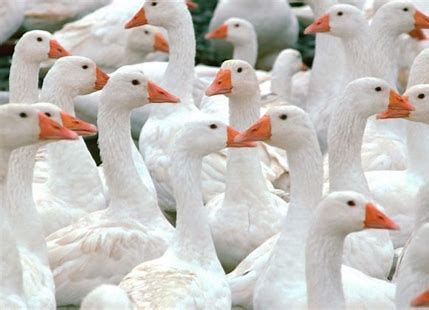
As we see in this video, pro kayak angler Drew Gregory was fishing in a lake one day when a couple geese began swimming near him. Mr. Gregory decided to feed them some of the contents from his backpack. One goose, decided the best way to beat his competition to the food was to go directly to the source. Then, doing what geese do, this goose attempted to empty Gregory’s backpack. In the process, the goose sent Mr. Gregory overboard. If the sounds that followed Mr. Gregory’s splash were not the goose’s laughter, even the least competitive man could have confused them with some expression of dominance.

In the era of selfies, and YouTube videos of the most mundane activities one can imagine, it’s not shocking that a man would film himself fishing. People also filmed themselves fishing for TV shows long before the internet, and before most of us were born. When we were kids, we knew there were fishing shows on the other channels. We grew up with it, and we learned to accept the idea that other people must enjoy watching the people on these shows fish. Why would it continue to be on the air if people didn’t enjoy it? I don’t enjoy fishing, so I don’t understand why people do it, but I’ve had friends and family convince me that it has some virtues. I’ve yet to meet anyone who can convince me that watching another man fish has one redeeming quality that I might consider. I don’t understand the industry, but I don’t begrudge anyone who creates such a video and attempts to make a buck on it. All the power to you, but how does it help a star of one these shows to distribute an episode in which they were dominated by a goose? Why didn’t Dick Gregory hit the delete button soon after it happened? One could say, depending on what the video contains, that such a video might show that a person like Dick Gregory has a very healthy ability to laugh at himself. If that’s the case, he’s healthier than I am, for if I was the victim of a goose attack, no one but the geese would ever know about it. I would never watch this video again, my pride couldn’t take the hit, and I would avoid watching it with the hope that I might eventually be able to forget it ever happened.

Some have suggested that we are now at a point in human history when human beings will do whatever is necessary for fifteen minutes of fame. If Andy Warhol, the originator of this quote, lived to see this video and learned that the victim, Drew Gregory distributed it himself, and made himself available for aftermath commentary on a TruTV airing, I can only guess Warhol would smile and say, “Told you!”

“It’s just a goose,” many readers might say, “and what are the chances that an animal that averages seven to eight pounds could end a human life?” We can all agree that the chances are remote, but what are the chances that the same animal could do irreparable damage to an eyeball or an ear? What are the chances that a goose could land its victim in the hospital? I can tell you one thing. I would bother calculating odds or possibilities in the moment. I’m guessing that some primal, self-preservation tactics would rise, and I would do whatever was necessary to fight my attacker off.

I also guarantee that the networks that run such video clips would deem my video unusable, as I’m sure that videos of goose beheadings don’t test well in the market research that the networks conduct.

I am also confident I would not be the amiable dunce who would find a way to laugh about it later. I would not view such a moment as entertaining in anyway, nor would I qualify it by saying I was in goose’s environment, and I deserved everything that happened to me. I would view such a moment as one of those survival-of-the-fittest moments. In the moment, I wouldn’t think about all these video clips I’ve watched, and I wouldn’t recall the idea that the one thing we do know about nature is that it’s unpredictable. My impulses would override all that, and I would act. I would grab the thing by its throat, whisper some Hannibal Lecter lines to it, and separate its head from its body. If that bird managed to escape all retribution and I still had some angle on it, I would use my kayak oar like a Callaway I-MIX FT-5 and drive the bird in a manner that would make fellow lefty golfer Phil Mickelson proud. I imagine that drive would be fueled by the type of stress and fear that propels little old ladies to lift cars off their grandchildren, and in that light I don’t see Mickelson’s average 315.3 yard drive as an unreasonable distance.

If the goose managed to elude that, you can bet I wouldn’t be smiling and forgiving in the interview that followed. My, edited for television, version would go something like this:

“I don’t know how your network attained this video, but it has ruined my life. Everyone I know now calls me the ‘goose guy.’ If I get a hold of that goose, I will find the slowest, most agonizing death possible for it. I’ve already slaughtered twelve geese in this area, thinking that it might be that one that ruined my life, and I’m not sure if I’ve killed this particular goose yet, or not, but I’ll probably end up killing a dozen more before I rest.”

After witnessing a Rottweiler attack firsthand, I find myself relegated to the Land of Hysterical Emotional Reactions whenever an average, full-grown Rottweiler walks into a room. I strive to avoid irrational and emotional overreactions to all situations in life. When I encounter dogs with a particularly long history of vicious attacks, however, my reactions to them are now a part of me I can no longer control. I’ve lost arguments with those who state that no dog, be it Rottweiler, Pit bull, or otherwise is evil by nature. They cite science, and I cite hysterical emotions based on experience. I lose. Even as I’m losing these arguments, however, I know I’m not alone with such fears. Those who laugh at me or form opinions about my inferiority on this subject inform me that I am in the minority, and I may be, but I am sure that more people would join our screaming minority if they witnessed such vicious attacks firsthand. I’m also quite sure that most of what I consider a victim’s normal reactions to vicious, life-altering attacks by wild animals ends up on the cutting room floor of the ubiquitous clip shows. I know this because those who need to feel better about their enjoyment of such shows would not appreciate what people like me will do, and then say in the aftermath of such an attack.

If you enjoyed this piece, you might enjoy the other members of the seven strong:

The Thief’s Mentality

He Used to Have a Mohawk

That’s Me In the Corner (This is not a sequel to Mohawk, but it is another story that occurred in the same wedding.)

A Simplicity Trapped in a Complex Mind

You Don’t Bring me Flowers Anymore!

… And Then There’s Todd