Mr. Q is Quiet 


I couldn’t put my finger on it, when one of my friends threw me a beach ball, but I felt something, something deep that I needed to explore. Its texture felt so cathartic that I scrunched my fingers on it, which led to an almost inexplicable connection. The smell of it, fresh out of its package, was such a unique scent that I knew there was something more to it. I just couldn’t put my finger on it when I put my finger on it.

It also felt naughty to scrunch it, and I wasn’t sure if the sound or the feel of that scrunching drove that reaction, but I wouldn’t stop until I uncovered what caused me to do it.

“What are you doing?” my friends asked with some disdain. I couldn’t think of anything to say, but I feared that they might talk about this later. They might say something like, “You think he’s normal? I once saw him scrunch a beach ball for about two minutes straight with a look on his face that I’ll never forget. That boy ain’t right.” I saw those impressions starting to form on the faces of my good friends, and I knew I should’ve snapped out of it, but I just couldn’t stop searching for the connection.

“C’mon, throw it!” my friends finally shouted from the pool, snapping me out of it.

I probably should’ve obsessed over it for a little longer, when it was fresh in the mind, but I didn’t. I decided to return to the normal and enjoy the rest of my day at the pool. Yet, every time I played with a new beach ball, and it had to be new, because the new beach ball had that new beach ball smell, I experienced that odd, impossible to place memory. 

I don’t know how long it took me, decades at least, to remember that this unusual connection I had with that material harkened back to the days in kindergarten when I first met The Letter People.

***

“We’re not to touch The Letter People!” our real teacher, a Mrs. Chamberlain, informed us when she introduced us to the first Letter Person we met, a Mr. M. “We’re going to learn a lot about The Letter People throughout the year, and we’re going to learn a lot from them. They will become our friends, but we are not to touch them!” I didn’t know what Mr. M had going on, or what this was all about, but I was all into it.

By the time Mrs. Chamberlain introduced us to the second character, a Mr. T, I recognized the routine she was developing. We were going to meet a new character at various intervals, once a week it turned out. The second introduction wasn’t as overwhelming as the first, but I found so much comfort in this routine that I no longer cried when my mother left me to the charge of Mrs. Chamberlain.

By the time we moved past the introductory characters, I gradually moved past the carefully constructed mystiques Mrs. Chamberlain and company manufactured for us. I began to see them as the teaching tools they were, but I also began to think The Letter People visited us from another land, a Middle Earth of sorts, similar to the land J.R.R. Tolkien created with his own level of creativity. 

Before meeting the first Letter Person, I was horrible at managing expectations and anticipation. I must have been a miserable kid in that regard for my mom, as she taught me how to make Xs on a calendar, so I wouldn’t bother as much about how many days away expected days were. When I began anticipating the day of arrival of the next Letter Person in the same miserable manner I did the other hallowed days, my mom had a word with Mrs. Chamberlain, and we found out that Mondays were the new hallowed days in my life, and I would ‘X’ my way to Mondays.

I eagerly anticipated the day of introduction for each Letter Person, but to be quite honest most of them didn’t have the star power, the it factor that Mr. M and Mr. T had. I realized, on some level, that the rest of them were just learning vehicles for kindergarten kids that needed to know the spelling system of our language, and they needed to know the rules of how letters represent sounds, and how words are spelled. I might overestimate how advanced I was in kindergarten, but my mom was such an active parent that most of what my kindergarten peers were learning for the first time was retread for me. Whatever the case was, The Letter People lost some of their magic in the routine of the months that followed, until I met Mr. Q.

I still remember the day I met Mr. Q. He stood on the opposite side of the entrance with our new substitute teacher, a Miss Landow, standing sentry, obstructing our ability to form a complete sensorial connection with him.

Mr. Q felt rarely used, mostly ignored, and an underdog who is often misunderstood. Mr. Q felt like an avant-garde phoneme, before I knew what avant-garde and phoneme meant. He wasn’t the last Letter Person I met, and I don’t know if I knew all this, or sensed it, but I remember feeling a special connection to Mr. Q based on the subtle idea that no one else connected to him the way they did the other Letter People

Mr. Q was quiet. His special feature/superpower was silence. As my mother could surely attest, I never thought of being quiet before, and I never met anyone who operated in silence before I met Mr. Q. The concept was so foreign to me that I decided to try it out.

“What’s wrong?” my mom asked me. “You’re so quiet.” I don’t remember if that question validated my new existence, if it emboldened me to pursue the idea of silence, or if I thought I was really onto something, but I loved the power of silence in those moments.  

As opposed to the other Letter People, Mr. Q silently observed the people, places and things around him, and when he did eventually speak, it proved powerful. I found that concept intoxicating. I thought there was something more mysterious and cryptic about Mr. Q, than Mr. V, Mr. W, Mr. X, Mr. Y, Mr. Z and all the other, more obvious characters. Those characters arrived last, bearing cryptic gifts and challenging the orthographic orthodoxy. I found them mysterious, ironic, and possibly unstable.  

***

Other than Buggs Bunny, I don’t remember having unusual, almost spiritual attachments to cartoon characters before I met The Letter PeopleI may have been just as nutty over other things, but I don’t remember them having such a profound effect on me. I was so eager to meet these new characters that I managed to get over the idea that I could no longer spend every waking hour with my mom. I looked forward to going to school just to meet these new characters.

I tried to get to know more about them than anyone else did, just to increase my level of familiarity, but there wasn’t more to know. Knowing this made me feel so limited. There’s nothing to figure out about blowup dolls, and I know that now, but as a six-year-old kid these mysterious figures called out to me. They wanted to get to know me as much as I wanted to get to know them. Our kindergarten, class photo showed all the students and teachers saying cheese and smiling for the camera, but I was smiling at The Letter People near me.

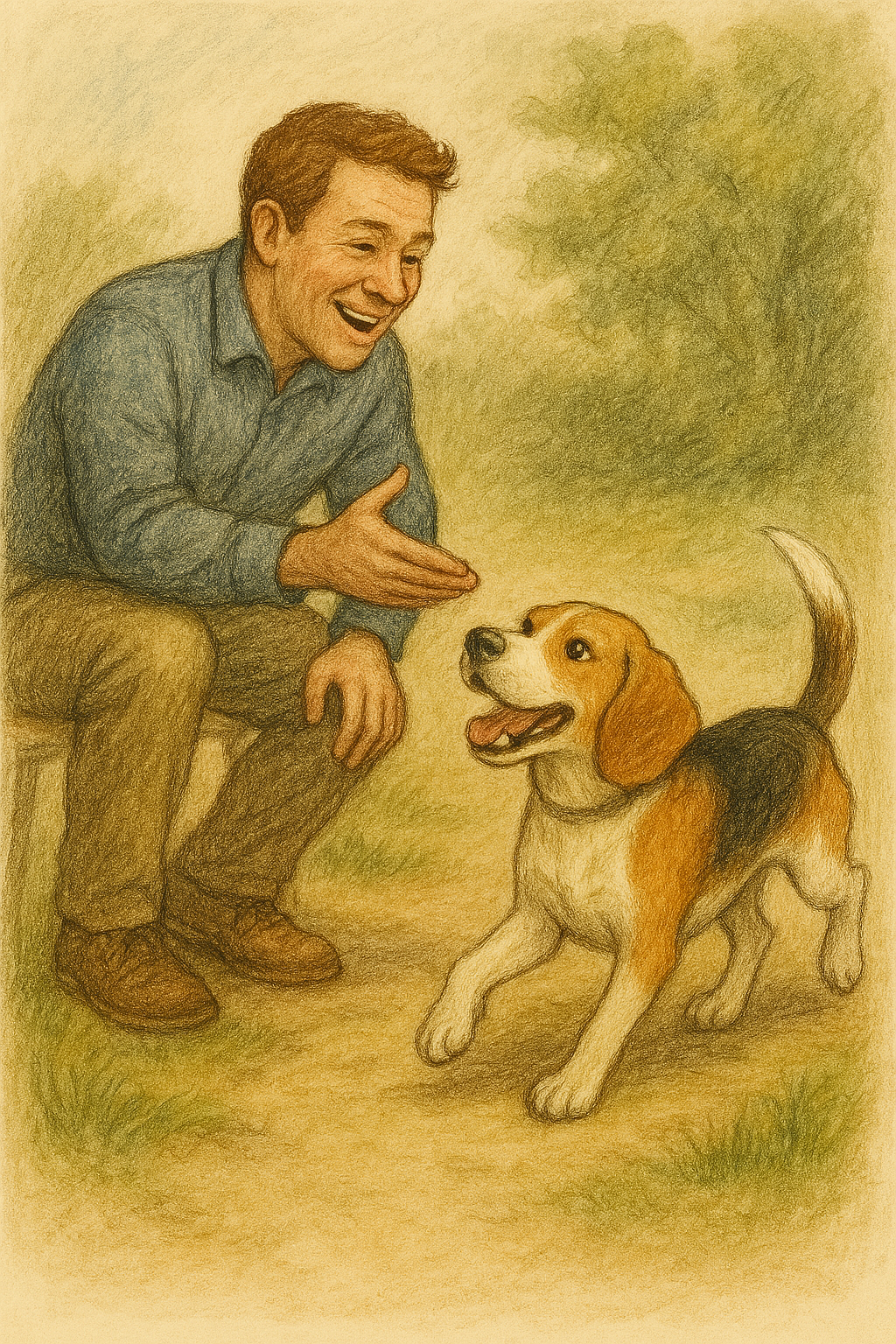
Dogs have ways of making foreign objects talk to them. They sniff and sometimes inhale them, until they end up sneezing twelve times in a row. When their powerful sense of smell doesn’t help them understand a foreign object any better, they try eating it, urinating on it, or attempting to procreate with it. When they fail to arrive at some form of greater understanding of its purpose, they move on (Jack Russell Terriers and Beagles excepted). Their motto is “Try, try and try again, and then move on. No sense making a fool out of yourself.” I was not/am not wired that way. My obsessive brain could not let things go, for better and worse, and I obsessed over these mysterious figures called The Letter People.

When I couldn’t learn my individual definition of the essence of these Letter People from afar, I wanted to touch them and play with them to learn everything I could about them. I wanted to be their friends and spend time with them to get to know them better, but we were deprived our sense of touch.

As nice and sweet as Mrs. Chamberlain was, her, “They’re not toys, and we’re not to touch them” carried some weight with us. She either had an authoritative way about her, or her beauty and demeanor granted her authority. I write the latter in association with psychological studies that suggest kids, even as young as five and six, behave better when their teacher is young and beautiful, because they want to be her. Mrs. Chamberlain had those qualities, and she spoke in an ethereal tone that reminded us of Glenda the Good Witch. Whatever the case was, when Mrs. Chamberlain laid down the law, we listened.

My guess is that Miss Chamberlain and the school administrators probably developed their “No touching” rule based on precedent. Kids like me probably found that once they derived some sense of the essence of these characters, they couldn’t stop. They probably developed the rule to prevent us from even getting started down that road. Depriving me of the sense of touch only elevated the mystique of these characters, as I realized I would need to find other ways to learn more about them.

By the time we met Mr. F, Mrs. Chamberlain was no longer our teacher. She was pregnant, they informed us. I didn’t know what that meant, but I learned that being pregnant meant she was going to be gone for the rest of the year.

“Does that mean she’ll be gone for a while?” I asked my mom through tears.

“No, she’ll probably be gone for the rest of the year,” my mom said, and I assume she used more compassionate words to try to somehow soften the crushing blow for me.

A Miss Landow stepped in her place, and Miss Landow was a less attractive, more authoritative woman. Miss Landow informed us that Mrs. Chamberlain’s “No touching” rule for The Letter People would be upheld, and she meant that in no uncertain terms. Miss Landow, however, did not have the leadership mystique Mrs. Chamberlain did. 

I don’t know if it was Miss Landow’s first day on the job, or first week, but Tommy Spenceri decided to challenge her authority. Either that, or he didn’t have the patience I did to work through his progressions. Whatever the case was, Tommy could no longer abide by the “no touching” policy anymore when we met Mr. F, and his floppy feet. He rushed to the front of the classroom to employ what a defensive tackle in football would call a bull rush, and he knocked Mr. F off his floppy feet. He hit Mr. F square, drove him onto his back and popped him. Nobody screamed that I remember, but I was on the verge of it. Tommy ruined Mr. F before I got to know the man, and Tommy deprived me of developing whatever relationship I might have developed with Mr. F. 

Tommy Spenceri was six, I know that now, but back then I considered his flagrant violation of protocol so horrendous that I couldn’t look at Tommy without disdain for his inability to restrain his primal impulses. When Mr. F returned, the next day, his hole was taped to help him retain air pressure, but I couldn’t look at him, because he appeared weak to me now, tainted as it were, and I had no respect for him. It’s a bit callous, I know, but how many six-year-olds know anything about the complex emotion of sympathy?

The one thing that Tommy introduced to me was the concept of moderation. I was never going to commit what I considered a flagrant violation of protocol as horrendous as he did, but with Mrs. Chamberlain gone, her leadership mystique went with her, and to my six-year-old mind, that opened a window of opportunity. I don’t remember the exact timeline involved here, but at some point I conspired with my younger brother, a heist of a Letter Person. I wasn’t sure which Letter Person I would steal, or if I would steal all of them. I had favorites, but I didn’t want to play favorites. I didn’t want to leave a man behind, so my plan broadened out to stealing two of them, to three, to however many I could grab. I was not the type of kid who stole things, and I considered the whole idea shocking, and I considered how shocked and disappointed my mom would be if I was caught. I was so in love that The Letter People that it grew into an obsessive, unhealthy love that some might characterize as stalking.

Immediately after Tommy Spenceri committed his horrendous violation, I was disappointed that Miss Landow, and the powers that be, didn’t punish Tommy as severely as I thought they should’ve. They gave him what they called a “stern talking to”. Tommy violated the sanctity of The Letter People, and their primary “no touching” rule, and all they gave him was a “stern talking to”? Tommy maintained his smug smile throughout this “stern talking to”, and I watched it all thinking that they weren’t do enough to protect The Letter People.

When I began plotting and planning this heist, my perspective on Tommy’s soft punishment changed. I now realized that if they caught me, they might give me nothing more than a “stern talking to”.

While in the planning stages, I realized that I didn’t know where The Letter People went after our week with them was over, and I decided to start watching the routines of Miss Landow in the coming week to see what she did with The Letter People when our lesson plan concluded. I don’t remember how sophisticated my plans were, but I remembered those people who stole things in movies, and I saw how often their episodes ended in gunfire with the thieves who survived eventually going to jail. As much as I wanted to spend more time with The Letter People, and become better friends with them as a result, I figured that I wasn’t ready for gun play, and I was pretty sure I wouldn’t do well in jail. I eventually chickened out, because as much as I wanted to spend the rest of my life with The Letter People, I couldn’t stand the thought of life without my mom. I tried to live a life without her once before, when I ran away from home, and she let me. Everyone considered thought it was so funny that I couldn’t get to the end of the block without her, and I found it humiliating to realize I wasn’t able to exist on my own. 

With that fantasy out of sight and out of mind, I moderated further. I developed a foolproof plan based on the patterns and behaviors I watched the various players in our school for the next couple of days. When we went to recess and played on the playground for however long it took, Miss Landow stayed with us, observing us. On the rare occasion someone had to use the restroom, she allowed them to go inside the school, unmonitored and unaccompanied, to use the facilities. Once I mustered up the courage, and that took some time, I asked to be excused from recess.

The path to the restroom and our classroom were the same, until we hit a fork in the hall, turn right and we’re headed to the open-doored classroom. Turn left, and we’re headed to the bathroom. I thought about this in the planning stages, and I followed my plan to the letter. After asking her if I could go to the restroom, I approached the fork in the hall as casually as I did any other time I went to the restroom, and I turned left to the restroom. I stood on that corner and looked back at Miss Landow. I could see her through a window in the door, talking to a fellow teacher and laughing about something. I carefully looked in every direction, and then I held my breath and crossed the hall and entered into our kindergarten classroom. 

I felt a “whoosh” of emotion when I crossed that threshold, as it was my first experience with committing something so wrong it felt right. I looked back down the hall and up the hall to see if anyone witnessed my transgression. The coast was clear. My immediate thought was to initiate plan A and steal Mr. Q, but I couldnt think of a way to conceal him well enough to sneak him out the door. Years later, I wondered why I didn’t just deflate him and hide him in my shirt, but I’m pretty sure I didn’t know Mr. Q was inflated back then.

When I finally stood before Mr. Q, I didn’t know what to do. My plan B did not include any details of what I should do when I was finally alone with him, because I didn’t think I’d make it that far. I didn’t want to tackle him, or hurt him in the brutish manner Tommy Spenceri did. I just wanted to touch him little, and I did. It felt a little naughty, but it felt cathartic and pleasing in an almost spiritual manner to run my fingers across him. Then, I touched him so much that I began squeezing him softly, and when I did it made a scrunching sound that I enjoyed. I scrunched him a little more, and then I lowered to a knee and sniffed him, and Mr. Q’s scent was so unique and pleasing that I neared him even more and inhaled that smell deeply.

For most people, memories of childhood are relative. Some remember a few snapshots from high school, some go back further, but very very few can remember anything beyond sixth grade. This moment I spent with Mr. Q felt so special that I would recall it, decades later, when I held a beach ball for far so long for my friends gave me a look that suggested I was doing something concerning. I also remember that I would continue to use the restroom excuse to visit the other Letter People we met after Mr. Q, onto the final days with Mr. Z, but my sensorial and physical relationship with Mr. Q, who I knew would remain quiet about our interaction, was the most special.

When the class photo day arrived, months after we began meeting these characters, Miss Landow brought back Mr. T and Mr. M for the photo, because they were the most popular, but I wanted to spend more time with Mr. Q and the other Letter People that weren’t as popular. We didn’t spend as much time with them, and in my opinion, we never truly got to know them or learn their essence.

Years later, my brother discovered that there was a The Letter People television show. Back then, a kid in kindergarten spent a half-day at school, and he was able to watch that show while I was in school. That destroyed me a little, because I felt my relationship with these characters, three years out, still felt incomplete. I was so bitter and angry that I could barely contain myself. I eventually saw this show, and I don’t remember if it occurred in the first episode I saw, or soon thereafter, but my interest waned quickly. I was too young to know that someone wrote and directed these episodes, and I knew nothing about voice actors, or any of the players involved in such a production, but I thought they did it wrong, all wrong.

“There’s no way Mr. T talks like that,” I, a budding critic, told my brother. I also complained about the various interactions of these characters in whatever nine-year-old verbiage and understanding of the world I had at the time. I thought almost all of the characters were wrong, or different than what I imagined. It wouldn’t be the last time a production left me feeling disillusioned, but when my brother later urged me to watch another episode with him, I told him I wouldn’t be watching it again. I didn’t know it then, but watching these characters actually interact with one another ruined all the mystiques I built up for them when I imagined who they were, what they cared about, and how they might interact with me if I ever got the chance to meet them in real life. I was obviously a kid with an overactive imagination, but when I finally recalled why the feel and smell of a beach ball was so special to me, I realized what an incredible time I had being a kid, and I had The Letter People to thank for their small role in it. 

Figurative Schemes of Thought


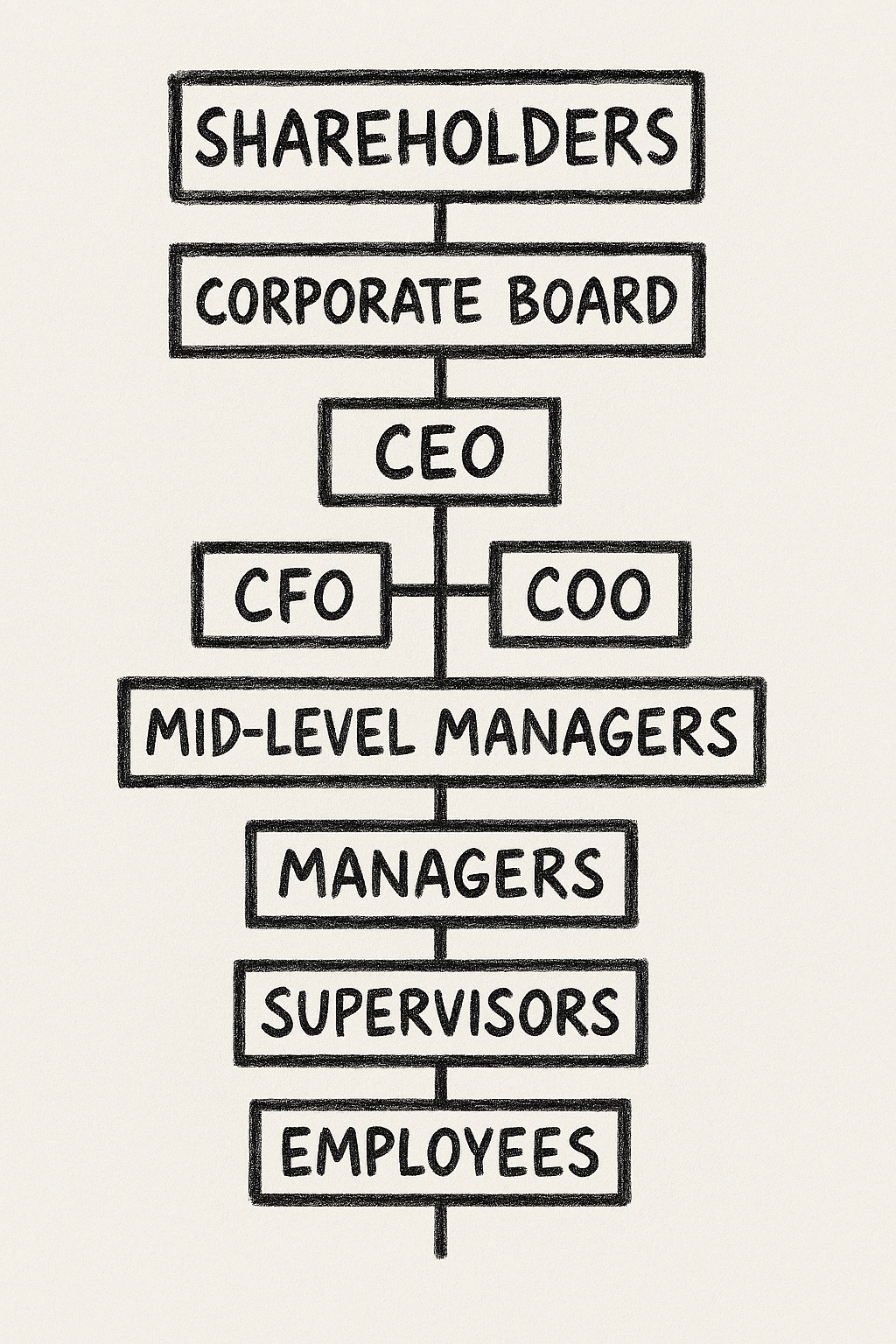
“Teachers teach to the dumbest kids in class,” a former student said to try to explain why we all found school so boring. It felt like truth when I read that, unvarnished, “the stuff they don’t want you to know” truth, because it explained so much. Some of my teachers were so slow and boring. I used to be a quick thinker, which shouldn’t be confused with a quality thinker. My brain operated in hyper-drive, both literally and figuratively, and I often had trouble slowing it down long enough to soak in details. Details drove me nuts, they still do, and when you ask me to slow it down to make sure I get all the details, I shut down. When storytellers focus too much of their presentation on detail, I want to yell, “Just go to it! Get to the point!” When I read what this former student wrote, I wanted to believe it because I thought it explained why my teachers talked so slow, repeated themselves so often, and why they focused so much on inane and insipid details. That truth, it turns out, has no basis in fact. It’s much closer to a myth that we all want to believe.

When I read that truth, I should’ve reminded myself of the line I gave my conspiracy theory friend, “Just because it’s the most negative and cynical idea you can find, and it sounds like something the status quo doesn’t want you to know, doesn’t mean it’s true.”

My guess is that if we polled 1,000 teachers, 950 of them would say that that snarky assessment is false at best or an excuse poor students develop to explain why they did so poorly. They would probably add that while a quality teacher would never abandon a struggling student, it doesn’t mean they would slow the lesson plan down so much that they fail to cover the material they are required to cover in a semester. Schools provide teachers so many different avenues to explore with struggling students that there would be no need to slow the lesson plan down. That makes sense and all that, but the idea that the teachers I had were so boring, because they were trying to slow it down for Wally just explains so much to me. After sorting through various teachers I’ve had, I dismissed this idea as not only unprovable but inconsequential.

The more I tossed the idea of this assessment around, the more I thought every subject, every lesson plan, and every presentation is one quality teacher away from being interesting. I experienced that when a teacher made Economics so interesting to me that I entered college an Economics major, until I took some classes with poor teachers, and I realized how boring the subject was. I even had a teacher who could make Shakespeare fascinating, another who made World History exciting, and I have to imagine there’s an individual out there who could make Anthropology interesting, hard to believe, but I have to imagine that it’s possible. 

Most of my teachers weren’t the type of people we would follow into a fire to save people. They slogged through the material as much as we did. We shared the idea that they probably chose the wrong profession with them. We knew this because we had those charismatic types who could make a lecture about the Sumerians interesting.

For most of the teachers I had there was obviously no prerequisite placed on the ability to craft a quality presentation to attract an audience. There is, however, for  politicians, podcasters, and other entertainers. They have to craft a presentation that appeals to a wide-ranging audience. The same holds true for an advertising agency that hope to sell their presentation to a corporation.

“If you want to know anything about a culture,” someone once said. “Watch its commercials.” There might not be an institution that pays more attention to the cultural mores of society than the average advertising agency. They spend millions studying the culture through sociological and psychological research, and they market test all of their commercials before airing them to understand us better. They pay for this, because they know if they’re going to be able to convince a corporation to give them money, they need to prove that they know us better than we know ourselves. The one obvious fact they know is funny sells, but funny has all sorts of constraints around it, so they pack their commercials with the most common, least offensive jokes they can find to appeal to the lowest common denominator. I appreciate all the time and money they devote to crafting the perfect pitch for a product, but when one of these insults to my intelligence runs through my home I realize there is hatred in my heart, and if the Catholic Church is right about the progressions involved in Judgment Day, I could face obstacles. 

“It says here that you do had hatred in your heart,” St. Peter might say with the pearly gates in his backdrop.

“That is absolutely not true,” I would protest.

“It says you hate beets, the Dallas Cowboys, and commercials.”

“Commercials?” I would say. “How can a hatred of commercials affect my standing in the afterlife?”

“Hatred in the heart is hatred in the heart,” he might say while thumbing through my life.

“I’m sorry, but that just doesn’t seem fair,” I would protest. “Commercials are a non-entity. I didn’t hate the players involved in making commercials. I know they have a job to do and all that, but I just found them such an insult to my intelligence and my sense of creativity, and the repetitive nature of them drove me mad, but you’re telling me that I face eternal damnation because I hated commercials?”

“What? No, you’re probably looking at three-to-five in purgatory for the general sense of hatred in your heart, but you’ll probably get out in eighteen months with good behavior.”

MacPhail’s MacGuffin

If entertainers and statesmen fashion their presentation to try to appeal to the lowest common denominator, and commercials employ dumb guy jokes, how do movie makers and TV show producers craft their projects for greater appeal? 

Have you ever watched a movie with an excessively complex plot? We’re not dumb, and we’ve probably watched a million movies, but some screenwriters and directors fall in love with complexities that involve weaving tangled webs of intricacies with various twists and turns. I might be a lot dumber than I think, but I prefer to think that I never cared about a character, or a plot, so much that I’m going to follow them through the laborious labyrinths that “brilliant” screenwriter create.

A screenwriter named Angus MacPhail (apparently a real person and not a pseudonym) developed a device for dumb people like me who don’t care as much about complex plots as much as “brilliant” writers think. He called it: The MacGuffin. MacPhail and Alfred Hitchcock teamed up on several MacGuffin projects. The very basic definition of the MacGuffin concept is that it doesn’t really matter to an audience what the characters of a story are after as long as the chase is compelling.

The most interesting element of this MacGuffin concept is how true it is, even to a movie buff like me. After watching several MacGuffin movies, I realized that I could watch such a movie, thoroughly enjoy that movie, and love it so much that I memorize certain chunks of dialog from that movie without ever thinking about what the movie was really all about. I’ve read some Reddit discussions about what the characters in the movie Pulp Fiction were after. I loved that movie, and I consider it one of the most memorable movies ever made, but when they broke the movie down, I realized that I didn’t devote a thought to what the characters were actually after in that movie. Pulp Fiction is a movie that many movie freaks consider one of the best examples of a MacGuffin, because it never explains what the characters are actually after. When the Redditors explained their theories, I found them fascinating, and I realized that not only were their theories better than mine, I never even developed a theory, and I LOVED that movie so much that I saw it numerous times, something I rarely do.

The next question I ask those who employ the MacGuffin device is, is it an attempt to dumb the movie down for the dumbest kids in the class? The answer to that question might involve the overly complex and condescending, “Yes and no.” Yes, in the sense that we dumb guys can’t or won’t follow all of the complexities, and no, in the sense that the MacGuffin device helped moviemakers in their negotiations with producers. 

The primary reason moviemakers “dumb-down” their beloved productions is to appease investors. The primary investors are called executive producers, because they often either fund the movie themselves, or they play a major role in securing funds for that movie. Some producers are so involved in the process of making movies that they offer notes: “This particular concept requires too much explanation, and that other idea needs more explanation.” Moviemakers mostly hate these notes, but they know that if they are going to make a multimillion-dollar production, they need to follow their producers’ notes. Hitchcock and MacPhail believed that using the MacGuffin device satisfied both parties by offering no explanations at all. They believed that if the chase was good enough, the audience wouldn’t care what the characters were actually chasing. We have to imagine that they experienced pushback, as the producers surely dropped a note that read, “We need some explanation, or the audience will feel lost.” Hitchcock and MacPhail were right.

“I’m From the Future. How is ya’?”

One note producers drop probably drop on moviemakers during productions that involve speculative themes is how to introduce foreign concepts in a more seamless fashion that appeals to all moviegoers without confusing them or belaboring the point with too much exposition. “How do I follow your notes without ruining my production?” is probably the reply most moviemakers send back.

The 1927, German film called Metropolis provided an example that movie makers now use to resolve the tricky dilemma of introducing characters from the future. The moviemakers could’ve simply had one of the actors say, “Maria is a robot from the future.” They could’ve also had the year of Maria’s introduction on screen, or on set somewhere (and they may have at some point.) The producers and moviemakers ended up creating a figurative scheme of thought by suggesting that everything in the future will be silver-metallic. Robots, like Maria, will be silver-metallic in the future, and the rest of us will follow suit by wearing silver-metallic clothing. Metropolis was so influential, in this regard, that for the next fifty-some odd years, movie makers forced actors, playing characters from the future, to wear silver-metallic costumes to symbolically represent their tense. Did any of them think we’d all be wearing silver-metallic clothing in the future, no, but they did this to conform to the figurative scheme of thought Metropolis developed. 

Why did they choose silver-metallic? I think we can all agree that silver-metallic just looks futuristic. Either that, or this image might be so ingrained that that’s just the way we see it now, but my guess even if Metropolis was never made, some futuristic, speculative movie would’ve come up with the idea. The colors silver-metallic and the color white, are those we most closely associate with space and time travel, and most people in the present and past rarely wear/wore silver-metallic clothing. 

My guess is, more than anything else, the silver metallic clothing solved the movie maker’s tricky dilemma of how to introduce a man from the future? Again, they could’ve simply had the character say, “Hi, I’m Arnie, and I’m from the future. How is ya’?” And that line might work in a quirky Wes Anderson movie, but it would prove awkward and stilted in others. How many of us introduce ourselves by saying, “I’m Arnie, and I’m from the present.” Even if we traveled back to the past, we would still regard our tense as the present tense, as in we’re presently in the past. Thus, the movie making world decided the best way to inform the audience that their character was a man from the future was to present him in an outfit no one from the present would wear. Once this symbolic representation was established by Maria, we either began thinking everyone in the future will wear silver metallic clothing, or the movie makers engrained the image in our head through repetition. 

This symbolic image is so ingrained now that if we went into a supermarket with a silver-metallic outfit on, people might begin hounding us for Lotto numbers, sports predictions, prognostications on world affairs, or stock tips. If silver-metallic suits are becoming more common, we probably wouldn’t immediately assume that their silver-metallic clothing means they’re from the future, but what if they spoke in an emotionless monotone? 

Speculative movies have long speculated that human emotions will no longer drive us in the future, on our next evolutionary plane, a concept most notably explored by Star Trek. They imply that we will no longer be as sad, angry, or happy in the future, and their implicit suggestion is that that will be a result of taking us all off the money standard. 

Taking humans off the money standard is, at the very least, an interesting thought experiment. Some suggest that if we did away with the cultural, social, and worldwide reliance on money, it could diminish sadness, feelings of hopelessness, anger, jealousy, and it could eliminate most of the crimes those emotions inspire. That’s possible, but it’s also possible that we might not aspire to be better today than we were yesterday without some kind of reward. The pursuit of money is widely regarded as a soul-less venture, and we’ve all heard the line money is the root of all evil. Yet, depending on how we earn it, money is also the best reward we’ve developed for hard work. If money is the root of all evil, it’s also at the root of some feelings of purpose, a sense of fulfillment, and it can promote feelings of definition and identity. Money has tangible qualities, of course, but so many of its complex intangibles make us who we are today, and the unforeseen consequences of doing away with money could be an article unto its own.

The Aliens are Turning

Movie characters from the future no longer wear silver, metallic outfits, as we’re all past that silliness now, but we still have numerous figurative schemes of thought in our movies that we fail to see them, because they’re so ingrained.  

‘Who is the alien?’ we ask while in the audience of one of those aliens from another planet movies. “I don’t know. We’ll have to wait until one of them turns their head,” they say. ‘What?’ “Just watch.” Most movie aliens either have a different musculature structure, or they haven’t learned the mechanics behind a full shoulder/torso turn well enough to mimic a full human turn properly. In the 1978 version of The Body Snatchers, a movie I believe set the symbolic representation, the aliens only turn their head, and they fail to incorporate the shoulders and torso in that turn. The turn is also so slow that it appears eerily mechanical and menacing. Their stiff, unnatural motions, dictate their inhuman nature to us. “He’s the alien!” we all scream. The sudden switch in music helps, but only to accompany the visual. 

If we’re trying to locate movie aliens in other social situation, we should note that if these movies are correct, the evolution of most aliens from another planet also failed to provide them casual conversation sounds, as they tend to communicate in a lexicon of roars, high-pitched squeals, or creepy, slither sounds that humans find unnerving. If movies are correct, aliens from another planet do not have mundane interactions. If we were to witness one of them in a transaction at a Walmart franchise, from their home planet, it would probably involve a series of various roars and slithering sounds that we would find so unpleasant we wouldn’t shop at that location. 

Monsters Only Eat Non-Believers

If we find ourselves a character in a monster movie, we should also know that believing the raving lunatic in our production could save our lives, as movie monsters, humanoid and otherwise, have a particular, dietary preference for non-believers. If we survive that first round, we should then avoid thinking that they’re mindless, bloodthirsty beasts, yet we cannot doubt their ferocity either. Failure to do any of the above will lead the monster to zero in on us to prove us wrong. “Why does a monster of blind bloodlust care if we doubt its existence?” we might ask. ‘They just do,’ the raving lunatic will inform us with dramatic repetition. ‘They do just do.’

When we first witness the monster, we see it in its more natural setting. In the second scene, we hear the roar, and just about every roar suspiciously mimics the ferocious roar of the lion. They roar in a projectile manner with their spines bent in an S-shape formation, and they do it in a manner that shows us nearly all of their teeth. We might even notice that their saliva is thick and gelatinous. Even some individual species of sharks have evolved a lion’s roar, and we don’t question that, because we know that that means they’re just that ferocious. 

Another sync-up we have with modern moviemakers is our fascination with motive. Why does a killer kill? Why does a monster kill? Nonbelievers suggest that it/he just has a blind bloodlust. Believers know better. They know that it’s too simplistic to believe that anyone, or anything, has a primal lust for killing. They know it’s complicated, and figuring out its primary motive is the best method to finding a way to eventually pacify it. 

In early movies, monsters had no motive, they were built on blind, bloodlust and destruction, but modern moviemakers know that their monsters/aliens don’t necessarily need a motive, but we do, and it’s usually political. Modern audiences require complex motives that call for scientific research. It’s just too simplistic for us to believe that a beast would harm or kill another being, because the idea that any beast acting in an instinctive manner when encountering something foreign is reductive. It’s also reductive and simplistic to explore the idea that a foreign entity might act in a reflexively defensive manner, or that they might view humans as a source of food. These speculations suggest that foreign entities are relatively primal, and as we all know, suspect, or fear, foreign entities have an intelligence that we cannot comprehend.

Even some slasher flicks, with human monsters, now feed into our need to know what motivates someone, or something, to kill us. “If they were just nicer to it, perhaps it wouldn’t feel the need to kill them all,” we now whisper in theaters. “They just need to understand it better.” Thus, scientists and reporters are often the sole survivors of the monsters, because the monsters appreciate their desire to understand them better. 

Indicators of an Infernal Influence

Most of us don’t pay attention to these figurative indicators, but thanks to the image provided by The Exorcist, we now know that one of the ramifications of undergoing a possession is that it will damage our daughter’s complexion. In its place will be the ruddy complexion of the meth head, that is accompanied by a creepy green hue. It also won’t matter if we instructed her to use conditioner that day, because her hair will go instantly scraggly and oily when the demon infiltrates. Possession movies teach us that demons know how to manipulate our vocal cords in such a way that it doesn’t matter if we’re a young woman during a possession, all victims of a possession will assume a deep, rich demonic voice. What is a demonic voice, we don’t know, but if our child is possessed and her new, demonic voice reminds everyone of Bob, the electronics department employee at Best Buy, we’re probably going to have a tough time convincing anyone to help us exorcise that demon from her system. That’s because everyone knows that demons come out growling and speaking some antiquated language in a hissing whisper that is punctuated by a lion’s roar.

“I know she sounds like Bob from Best Buy, but I’m telling you that my daughter is possessed by a demon named Gerty, which I know makes no sense either, because Satan usually gives his minions more creative, multi-syllabic names, but this is an actual possession Larry. We either need to run or find a Bible written in a language other than English, like Latin or Aramaic.” 

There comes a point in everyone’s existence when they’ve read too many books, listened to too much music, and watched too many movies. When we reach that point, it becomes difficult to avoid spotting the indicators that moviemakers use to abide by our figurative schemes of thought. They can insert a wide variety of creative inserts to their production, but there are certain touchstones that the audience needs to follow along without confusion. When we witness the agreed upon touchstones, we know exactly what they mean, and we know that the producer forced the moviemakers to incorporate agreed upon symbolic representations to get the audience from point A to point D. 

Most of these touchstones are so ingrained and expected now that we don’t even see them for what they are. If you’ve ever watched a movie with a child who hasn’t watched the hundreds of thousands of movies you have, you’ve probably heard, “How did you know that guy was from the future?” If you recognized that it was all about the silver-metallic suit, you probably opened up a can of worms that you couldn’t answer until you began thinking about these figurative schemes of thought that you didn’t even know you absorbed until they asked you about them. Once these touchstones enter our mind’s eye, it’s difficult to separate them from the mostly fallacious theme that teachers teach to the dumbest kids in the class. 

“We need to rewrite this scene, so the dumbest kids in the class can get it,” the producer’s note says, and the creative types probably argue with their proposals, saying we want to introduce a new way to introduce a man from the future, an alien, a monster’s mindset, or a product of a demonic possession. “Too much exposition,” the producer might reply, or “the characterization is too complicated, just give them meth face, have them make a head-only turn, or put them in a silver-metallic suit. Even the dumbest kids in the class will get that.” The moviemaker might fight back with righteous indignation regarding their creative interpretation, but they know most ideas won’t get off the ground without the producer’s check.

“Fortune favors the brave and the bold,” is a phrase we’ve learned through the years, and we all want to be the renegade, the maverick who bucks the trends set by others. We don’t want to follow the rules, we want to be the exception to the rule, but if we’re going to attract a wide audience, we learn that no one appreciates the exception until they become successful. We also learn that the irreplaceable become the replaceable when they refuse to follow the rules.

Comfortably Vague 


“If you want to be hilarious, someone has to get hurt,” is something I used to say. “You can be slightly humorous with a knock-knock joke, and quick comebacks might earn you the title clever, but if you want to be truly hilarious, your goal should be offending people and grossing them out.” I used to think that, believe it, and say it all the time, because I thought it was provocative and so true, until I saw someone go after another. They were so savage that I realized causing someone actual pain was not as funny as the theoretical idea of it. I amended my theory by adding, “As long as you’re the victim, because there’s nothing better than a well-timed mean-spirited, self-deprecating joke.”

“And the comedy is in details,” I would add when I heard people keep their stories comfortably vague. “Why would you even tell me this great story about an embarrassing part of your life and leave out the details? That’s like going out to a restaurant and ordering potatoes with a side of broccoli. I like broccoli as much as the next guy, but what’s the difference between broccoli at a restaurant and broccoli at home? No one I know goes out on the town for a head of broccoli. We want the meat.”

When I say stories, I’m talking about those casual, fun stories that two fellas share while sitting in the stands at a baseball game. I’m talking about those tales that are so embarrassing that you may not know the comedic value of them until you say them out loud. They’re the funny ones that get the other fella laughing. Some of us leave out the details of those stories, because they reveal our vulnerabilities. Once we lay those tails out, and the other guy starts laughing his tail off, it can be strangely liberating. The two of us are there, mentally, picturing you in the moment while you remember all of the finer details of your truly embarrassing moment in life, and if you deprive us of those details, it’s the literary equivalent of slamming the door on the best room of your house as you give us a tour.

If you’re anything like me, and you’re in the midst of hearing one of these stories, we don’t want it to end, so we ask them leading questions. Not only do we want to be with them, in the moment, but we want to help them help us find their story entertaining. So, we ask leading questions, such as, “Really? What did you think of that?” or “How did that affect you?”

We ask specific, situational questions that specifically pertain to the other’s story, and some of us have asked these questions for so long that that’s just kind of who we are. We ask active listening questions that some might confuse with those from a psychotherapist, an investigator, or that incredibly annoying person who can’t let someone finish a story without asking five-to-ten questions while they’re trying to tell it. Unlike most quality professionals, however, we only ask such questions to serve the comedy of the story, as opposed to anything that serves a purpose. Were not tracking our subjects through the trials and tribulations of their life to help them find their core, so they might find their way back to greater mental health. We just want the funny.

If you’re anything like me, you crave funny tales about foibles and failures, because there’s something so interesting about a person who is not afraid to let their guard down and tell you who he really is. We do have to be careful, or if careful isn’t the right word, and it usually isn’t when it’s just two fellas telling each other what a foible he is, how about strategic. We need to qualify such questions by saying, “We’ve all done stupid stuff. Trust me, we’ve all done what it takes to go from idiot to a total idiot.” When we drop a line like that, and we mean it, we develop a temporary bond that can lead our storyteller to test the parameters of that line. 

The only thing I love better than a story full of failure and foibles, is an in-depth exploration of those failure and foibles, and if you’ve read any other articles on this site, you know that I’m not the type to just sit there and feed on another’s carcass. I lead the charge and set the template. In doing so, I make the other person feel more comfortable talking about their own failures and foibles.

Once the two of us lay the groundwork of our hilarious misadventures, we spend the rest of the evening trying to top the stories we’ve both told thus far, and neither party cares why we’re trying to do that as long as they’re funny. This builds until somewhere around the second inning, we start to make a thematic connection. Then, somewhere around the fourth inning, after the second beer is partially consumed, the stories become a little more personal as we become a little more vulnerable, and we achieve the next plane of funny together. Shortly after that second round, we’ve also established the idea that we’re not just good listeners, we’re actively engaged in the other’s stories. The two of us become so good at it that we breed a level of trust and confidence in one another, until the competitive desires set in, and we try to make the other guy laugh harder than we did before. We don’t care if the details prove somewhat embarrassing at this point, so we dig deep into our story bank to find the most entertaining nuggets of our life so far. When they laugh, we know we’re really onto something. Neither of us knows what that something is, but we know it’s something worth exploring.

As much fun as these baseball nights can be, age and experience has taught me levels of restraint. I offer some of the details that I require of others, but I refrain from offering details that could prove so embarrassing that the next day at work is a little uncomfortable, and I expect them to do the same. I get as caught up as anyone else in these moments, but experience has taught me that there are details and there are details. Details are funny, as I’ve written, and they’re crucial to the quality story, but some details provide irreversible images that our audience will remember the next time they see us.

I’ve also learned firsthand, the hard way, to avoid too much poking and prodding, because once we convince a fella how entertaining he can be, some of us have trouble stopping. They’re not accustomed to someone finding them so interesting and entertaining, and their competitive desire to top their last story, or ours, can lead them to taking a step off that comfortably vague cloud and accidentally imprint an irreversible image in our brains.

When I’m in one of those conversations with a fella, and he’s dropping details of his failures and foibles on me, I’m so engaged that great plays and key moments in the baseball game we’re attending only serve to interrupt our fascinating discussion.

Roy and I talked about personal details from our lives, but we kept our details comfortably vague, because that’s just what fellas do at a baseball game. No one wants to lay out detail-oriented, personal problems at a baseball game, because we know no one wants to hear about all that at a baseball game. No one wants to go so deep that they end up with tears in their eyes at a baseball game, because as Tom Hanks said, “There’s no crying in baseball.”

Yet, most people can’t stop themselves. They have no governors on content, in the manner automobiles have governors on speed to prevent the vehicle from accelerating faster than programmed thresholds. They dig for more provocative details, because provocative details aren’t just funny, they’re hilarious, and what’s more provocative, embarrassing, and hilarious than misadventures in the bathroom?

Some people just love a great story about what happened to them during the waste removal process. The moment I start to hear them go down this road, my stop sign reflexively pops us, in the manner a stop sign automatically pops us when a train bypasses an indicator in its destination. I instinctively stop poking and prodding, and I try to change the subject, because I’ve learned that some men have no problem discussing their gastrointestinal issues (GI), as long as they’re funny, and they’re always funny to some. “Oh, c’mon, it’s nature!” they say. “Deer poop, dogs poop, even your beloved octopus has to excrete what its body can’t use.”

“That’s true, undeniably true, but for most of us their byproducts are not the reason we hike through nature preserves and swim in oceans,” I return. I say most of us, because I’ve met the exceptions on more than one occasion. I don’t know if it’s a talent, skill, or a preoccupation, but some men are wired in such a way that they can take any topic and turn it into a discussion of misadventures with waste removal.

Tommy Spenceri proved to me how pervasive his talent in this arena was when he told me about the highlight of a relatively expensive whale spotting cruise he attended. These cruises have become so popular that they’ve become an industry in some locales, generating over $100 million a year, and creating thousands of jobs for locals. Some of these tourists are almost spiritually moved at the very sight of the beast, others find the geyser of misty spray bursting skyward from its blowhole an almost religious experience, but Tommy’s wiring led him to find the size of the whale’s excrement the most memorable experience of that vacation. “You should’ve seen it, it was larger than my whole body,” he said with restrained excitement. “I’m serious, I could’ve dove into it Vitruvian Man and still not touched its outer rims.”

As the son of a man with such wiring, Tommy and Roy’s unusually obsessive preoccupation with the products of our biological functions was not new to me, but that didn’t mean I wanted to hear about it. So, the moment these discussions pop up, my stop sign follows suit. I switch my active listening skills into the off position, and I put the picks and shovels of my poking and prodding away. 

I’ve been relatively successful in this endeavor over the years, unless I’m at a baseball game drinking beer, and when I talk about beer I’m not talking about the standard beer that everyone drinks just to tie a buzz on. I’m talking about the delicious craft beer designed by master craftsmen who are so good at what they do that the results of their brainstorming, testing, and hard work go down so smooth that we miss all of the indicators that tell us to stop.  

I wasn’t drunk when the generally unappealing discussion of food poisoning began, but those delicious craft beers dulled my senses just enough that I accidentally ushered him on with my laughter. In a completely sober state, I know that the food poisoning discussion is a war story. It spawns the competitive, “You think you had it bad? Well, get a load of what happened to me,” as the two of us try to top one another with our experiences. Two beers in, and a discussion of food poisoning becomes a part of the funny conversations two fellas have at a baseball game. In that moment, Roy introduced the food poisoning discussion with an innocuous, comfortably vague version of his worst case, but I made the mistake of topping him with my story of an eighteen-year-old, living on his own for the first time.

“I was on my own for the first time, and I knew nothing about the proper ways to preserve meat.” I said. “No one effectively warned me that meat is basically poison when you leave it uncovered in a fridge for a couple days. The meat had little white spots on it, but I thought that the gallon of milk I had a shelf higher sprung a leak again. That happened about a week earlier, with a different gallon, and I just thought it happened again. I basically poisoned myself. The pain I felt from that bout of food poisoning was something I never experienced before or since. Not only did I question whether I was going to live through this, I kind of questioned if I really wanted to.”

That was it from my end, comfortably vague. I could’ve gone into detail, embarrassingly specific detail, but I didn’t want to go down that road. I didn’t want to go down that road, because that’s not what you do when you’re talking to a fella, over beers, at a baseball game, during an otherwise beautiful Friday evening.

Roy saw my move, and he decided to checkmate me with his “You think you had it bad …?” plank. My guess is Roy thought that the best way to top a relatively entertaining story that remained comfortably vague was to go into detail. The humor, Roy must’ve thought, is in the details. Roy must’ve thought that my story was the culinary equivalent of a potato with a side of broccoli, and to top mine, he brought the meat.

“Mine was coming out both ends, you know what I’m saying?” he began. I knew what he was saying, and while the image I had in my head was cringe-worthy, it wasn’t completely irreversible. I don’t know if Roy was feeling ultra-competitive in the war story arena, but he decided that he needed to put an exclamation point on his story by adding one final, irreversibly disturbing nugget, “You know that point where you have to change your underpants three times in a day …”

I’m all for my storytellers telling me about their epic fails, but when this grown man told the tale of his inability to make it to a facility on time, I wasn’t sure how I could help him restore his credibility. To my mind, unless you’re medically declared incapable of doing so, failure to make it to the facility on time might be the most humiliating and embarrassing moment in a grown adult’s life. The one proviso is that if it happens, it happens behind a closed, locked door, and with some diligent effort devoted to the cause, we can destroy any and all evidence until no one will ever find out that our streak of not soiling ourselves since that embarrassing moment in second grade is now over. The only thing that can make that ultimately embarrassing and humiliating moment in life the second most humiliating moment in life is by going public with it.  

My new rule: if we’re having such a discussion, and we’re both grown adult males, at a BASEBALL GAME, keep it vague. I know that goes against everything I wrote earlier, and it goes against my personal constitution to say that, but everything is relative and situational. When we’re sitting at a baseball game, I don’t want to hear excruciating details about an emotional moment from your life that leaves tears rimming your eyes, and I don’t want to picture you, my adult, male friend, with dirty underpants around your ankles, and a look of shame and disgust on your face, as you bear witness to the consequences of your inability to make it to the facility on time. 

As a storyteller who values “The Funny” so much that I don’t care who gets hurt, as long as it’s me, I understand that it’s all about our vulnerabilities, and I understand that comedy is confessional, but we’re smashing some valuable signposts that warn us against going further. We do this, because our standup comedians, podcasters, and our Facebook friends are now saying some of the most awful, embarrassing and incriminating things about themselves. We laugh at/with these boundary smashing and taboo tweaking comedians, because they’re brand of funny feels so new that it feels transcendent, and  we all want to be the guy who tops the other guy and breaks on through to the other side of conventional storytelling and conventional comedy. Before we break through, though, I think we should all ask ourselves what we will look like on the other side? I might be an endangered species now for overthinking such matters, but Roy, Tommy, and my dad taught me that garnering intrigue, eliciting sympathy, and getting the laugh isn’t a gumbo that means so much to me that I’m going reveal an ultimate humiliation that contains irreversible imagery around my ankles. They’ve taught me that there’s nothing wrong with keeping it comfortably vague.