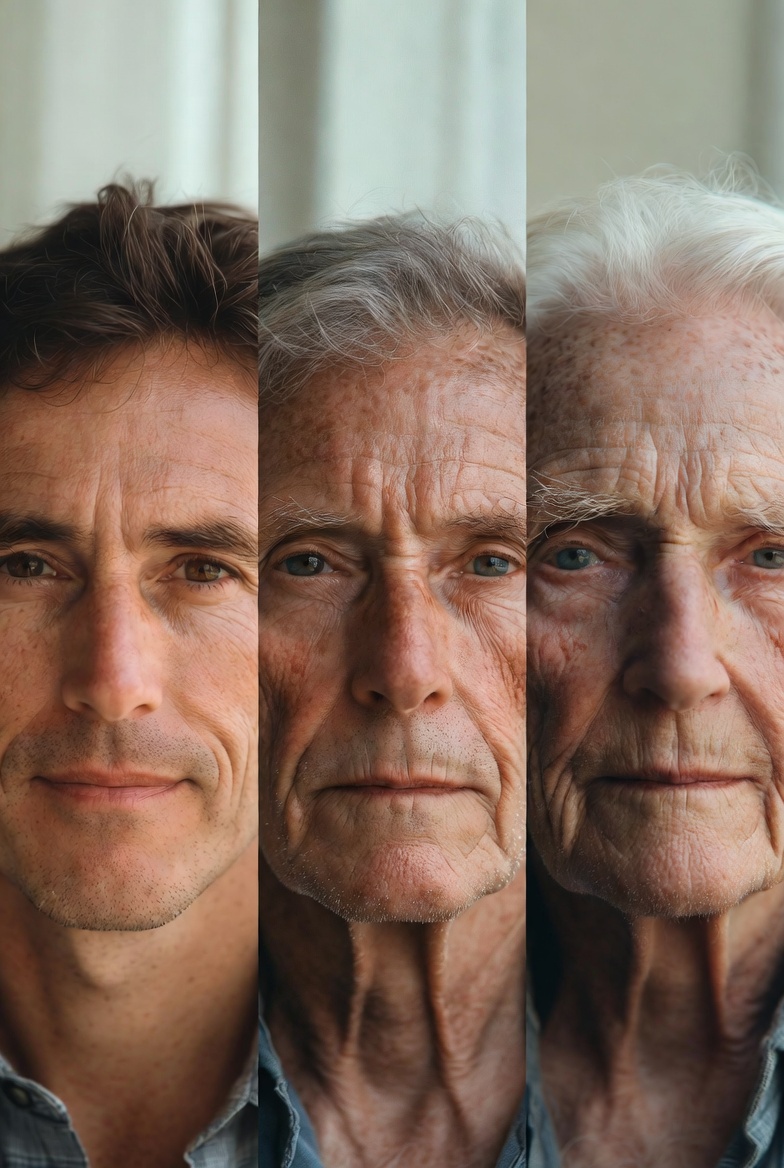
Getting Older, Older, Old!


“Now that you’ve seen the whole package,” standup comedian Eddie Pepitone said shortly after walking on stage, “I want to answer the question that you’re all thinking, and the answer is yes, I have had a lot of work done. I’ve had my hair removed and my belly let out, because I was too pretty.” –Eddie Pepitone.  

“Age is a relative concept,” is a phrase we hear a lot, but what’s the difference between old and old. Ruth was seventy-eight years young, and I don’t write it that way to sound culturally sensitive. Ruth was happy, and she loved being alive in a way most seventy-eight-year-olds like Jack don’t. Jack was tired and withdrawn by the time he reached seventy-eight. He was the type of guy who probably would’ve been much happier if he died sooner. Some, like Ruth, have a way of defying age in a beautiful way, and others linger long after they stopped mattering or caring about matters. 

We don’t know where we’ll be at age seventy-eight, but we experience indicators along the way. We don’t think about age now, but Jack might say that’s because we’re not seventy-eight, broken down, and just tired. I’ve never tried to act or look younger than I am, and I’ve never lied about my age. I just am who I am, a little older and wiser, but I never really thought about age, until my long-time friend walked into the bar and grille wearing a pair of Crocs. 

Tony Mancuso was all about girls when he was young. He loved them big, tall, short, and small. He was so girl crazy that everything he did in life was to get more girls looking at him. We all did that to some degree, but Tony went further than anyone I knew at the time. Another girl crazy friend, an Aaron, started Tony down this road when he said, “You have it all, great hair, a great personality, and a decent fashion sense. The only thing holding you back,” Aaron said, “is your skin.”  

“What’s a fella supposed to do about their skin?” I asked. “We can grow our hair out, cut it short, buy new clothes, all that, but we can’t do anything about our skin.” I said that with empathy, because I, like Tony had bad skin. We both had acne pockmarks and scars, holdovers from the severe case we had as teens. 

“Some of the times a fella needs to hear what he needs to hear,” Tony replied.  

“That’s true,” I said, “but what can you do about it?” He shrugged, I shrugged, and the matter sort of devolved into nothingness.  

About a week later, Aaron and Tony found an answer to what I considered an unnecessarily harsh insult, and Tony was willing to sacrifice his good standing in our ultra-male community by applying a little bit of Aaron’s Max Factor Pan-Cake foundation makeup to help cover those unsightly pockmarks and scars. Then, when a little dab didn’t do him, he overdid it. He had a line under his chin he didn’t blend, because he didn’t know he was supposed to blend, so his little sister had to teach him. It didn’t embarrass Tony, because he thought it would all be worth it in the end. Aaron and Tony then began turning their collars up, they stopped wearing hats, and Tony began shaving more often and brushing his teeth on a daily basis, because he knew girls like that. He was all about marketability and increasing his market share in our teenage dating market. Tony eventually escaped the raging insecurities that drove him to do such things, but seeing him again, after years of separation, in a pair of Crocs, led me to the inescapable conclusion that we were both old now.

We have an idealized image of ourselves that we see when we’re talking to others, and mirrors don’t reveal the incremental progressions from those delusions. We’re in front of a mirror every day, so we don’t see the aging process, how much weight we’re putting on, or how much hair we’re losing in them. Pictures used to tell those tales, as we could compare them to pictures of us from our past. When we started using our cell phones to take selfies every day, they failed to tell the tale of monthly and yearly progressions. In the age of technological advances, we can live in total denial, until we run into big, glaring signposts that reveal irrefutable facts to us. 

Tony didn’t show up for our reunion dressed in one of those Hawaiian shirts that appear to be issued at the Florida state border, and he wasn’t wearing khaki shorts. No, the man who almost appeared to have a fashion consultant in our previous life together, rocked my whole world by walking up to the table of the bar and grill in a pair of Crocs. 

“Are those Crocs?” I asked him with a level of disdain that I didn’t conceal very well. 

“They’re comfortable,” Tony said.  

‘Holy Crud, we’re old!’ I thought when I realized Tony Mancuso was now choosing comfort over fashion. It had been probably ten years since I saw him last, maybe more, and the transformation between the man I basically grew up around and the man standing before me now were nearly 180 degrees different. If I wore something for comfort, back in the day, he would’ve said, “That’s fine, but you look like an idiot.” If we saw a grown man in a pair of sandals, he would’ve dropped his pat response on the man, “The last man to look cool in a pair of sandals was Jesus of Nazareth.” Now the man, whose whole life was based on what women might think of him, was basically wearing a pair of them.  

When we’re happily married for as long as Tony and I were, the idea of dating someone else is as far from our purview as free solo rock climbing. When we’re happily married, we usually hang around other happily married people who haven’t talked about dating for over a decade, and when we don’t talk about such things, we don’t notice their windows closing. We know it in the larger sense, but it feels like the present tense, closing as opposed to closed as opposed to slammed shut forevermore. 

When we’re happily married, the idea that our waitress, barista, or whatever service industry employee stands behind the counter, is cute, beautiful, or incredibly attractive, catches our eye. “That never leaves a fella,” my eightysomething uncle once told me. “I don’t care how old you are, or how married you are, it never leaves.” Yet, there is a huge difference between someone catching our eye and rocking our world.  

I choose to think of the act of viewing a beautiful woman as equivalent to admiring an artistic masterpiece, the only difference is God and/or mother nature is Creator and/or creator. My examination of her features is an appreciation of the result of features that have emerged from thousands of genetic variants interacting with each other and the environment. If I walk through an art gallery, and I see a beautiful work of art, I’m going to stop and look, and I might admire it for a spell, but that doesn’t mean I’m going to make any commitments to buying it.  

I don’t know if the waitress who stepped up to take our drink orders that day was that artistic masterpiece, or if I had the effects of Tony’s Crocs swimming around in my head, coupled with the idea that those shoes meant our dating lives were “so over” that the whole situation enhanced her beauty to me. Whatever the case was, I accidentally, incidentally, or situationally leered at her.  

And she didn’t care. She didn’t appear the least bit complimented or disgusted by my faux pas. She appeared so unmoved by it that I felt smaller and more insignificant than I would have if she called me out on it.  

Yet, that leer wasn’t the desperate cry from a lonely well it was when I was younger. When this young, beautiful, and muscularly athletic woman whose features emerged from thousands of genetic variants interacting with each other and the environment generated an almost automatic hedonic and motivational response in me, I think I just wanted just enough attention from her to drown out the whispers I was hearing from Tony’s Crocs.   

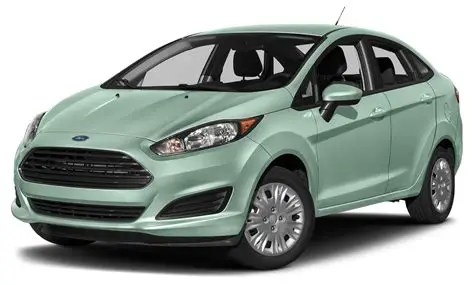
When we left the bar and grille that night, Tony stood, key in hand, next to a 2019 Ford Fiesta, while we talked. He almost acted as if he was going to get in the Fiesta, and I grew distracted by the joke I knew was coming as he neared the car. The joke involved him nearing the car, as we spoke of other matters, and at the last second, just before we parted, he would pull that key backand say “Gotcha!” He’d then walk over to his 1970 Plymouth Hemi ‘Cuda. I still had that expectant smile on my face when he said, “All right, I gotta get going,” and he fobbed his Fiesta.   

“Is that yours?” I asked. He said it was. “Is it a rental?” I wondered, thinking maybe he got into a car accident or something.  

“No, it’s mine,” he said. Again, Tony’s whole life, or the life I knew him in, was all about ‘what will the ladies think?’ Now, he’s pitching a car to me based on the idea that “It gets excellent gas mileage” and “The 2019 Ford Fiesta was deemed one of the most reliable and durable cars of the year, with excellent points in terms of drivability.” I didn’t question his research, because my yeah-buts were all about how a man who used to drive late 70s gas hogs that fired up and appeared to run on testosterone and sensitive androgen receptors could now be driving a sensible sedan that puttered when he turned the key in the ignition. 

Seeing pictures of myself told me some undeniable truths, playing sports against teenagers told me something else, but that day at the bar and grill was so illustrative that I found it slightly and temporarily depressing. Tony Mancuso was the last person I expected to age gracefully or accept the facts of the aging process. I expected to suffix his age with years young, as opposed to years old. I expected him to dress like a man on the make, even though he was a happily married man who no longer needed to appear attractive. Seeing that this man who is six months younger than me, either give up entirely or display how comfortable and happy he was in life, caused me a couple sleepless nights.  

‘Nobody is looking at us anymore,’ was my takeaway, ‘and Tony realized this before I did.’ When we were teens, Tony would ask me if his hair looked right, and “What do you think of this shirt?” My pat response to him was fewer people were looking than he imagined. Seeing him in a pair of Crocs while driving off in a Ford Fiesta led me to the depressing conclusion that he finally accepted the fact that I was right.   

I never expected to write anything about age insecurity, because I’m more at peace with myself than I’ve ever been. I answer that age old question, “Would you like to go back and do it all over again?” with an asterisk, “If I could go back with my current mindset and everything else as is, I’d love to go back and edit and totally rewrite elements of my life, but I wouldn’t want to go through everything that accompanies youth again. I wouldn’t want to undo all of the psychological and philosophical progress I’ve made just to physically relive my past.  

I’ve also found most of the elements of aging quite pleasing. We’re all insecure to some degree, but insecurities were such a vital component of who I was when I was younger that I’m glad most of that is over. I love being a husband, father, and family man so much that I rarely, if ever, think about other things, until they smack me in the face like a signpost.

Camping or Vamping?


“There are no words that can tell the hidden spirit of the wilderness, that can reveal its mystery, its melancholy, and its charm.” –Theodore Roosevelt African Game Trails, 1910  

I came up with a word: boring.

When we say something like that, adventure-seekers and wildlife enthusiasts have two words to describe us: city slickers. That’s not good-natured ribbing either. It’s a harsh condemnation as far as they’re concerned, and we can feel their intent soon after they say it. We could try to defend ourselves, but what’s the point? It’s true. We are city slickers who prefer the creature comforts of city-life and technology, and we know it has probably made us all soft and gooey from the inside and out, but we can’t admit that. We have to pretend we’re strong, rugged individualists who could survive in the wild with nothing but a blade and a canteen, because we feel guilty for living the easy life, and we’re a little jealous of the experiences that hardened these outdoorsmen. Are they true survivalists though? Do they know enough to know what they’re supposed to know, or are they just making it up as they go along? Could they compete with a Theodore Roosevelt in the wild, in the harsh conditions he probably experienced, or are they a hybrid between those who are accustomed to modern conveniences and technology combined with our modern definition of the rustic, rugged life? Are they experienced campers or vampers? 

We all heed the call of the wild, and the need to step away from convenience and comfort to escape civilization and embrace our untamed/wild instincts to let our primal nature hang out for all to see. We know it’s just good for the soul to have experiences that teach us more about ourselves. “You’ll never know who you are, who you truly are, until you’re backed into a corner.” And that sounds so romantic that if we brought it up in front of a group, almost all hands would go flying up from those who want to join us on our planned expedition. Some hands will even turn into fists, as they shout, “Yeah, gimme some a that!” But the minute we start darkening spots on a calendar, those hands, smiles, and eyebrows all go down. “Something tells me I’m going to be busy.” 

The concepts behind achieving a true Theodore Roosevelt spirit, seeking adventure and meaning in nature is such a romantic notion that city-slickers can’t but help but want some of that for themselves for at least one weekend, but we always fail. “It doesn’t matter that you fail, because everyone fails at something or another in life. It’s what you do after failure that defines you.” We love that, all of it, but if we’re going to be honest with ourselves, our failure to become this generation’s Theodore Roosevelt will never bother us so much that we’re going to do whatever it takes to make it happen. 

Da Mudder Humper

We know mudder nature offers great solitude and beauty to the unsuspecting and suspecting, but how long how long we’re supposed to stand at the bottom of a mountain before it happens? How long does one quietly stand at the bottom of a mountain before we make a connection to its height and vastnessnot just physically, but emotionally and spiritually? I’ve tried to experience it, but someone always interrupts me with, “Ok, are you ready?”  

“No, I’m not ready.” I say with indignation. “Hold on for a second.” This interrupter wanted to checkout prematurely, or what we considered a premature checkout, and we weren’t even halfway done, because we thought were close. “We drove all this way to see this mudder humper. Why don’t you go ahead and give me a second to appreciate her.” And we said that with solid conviction, but we didn’t really know how long we needed to convince them, or ourselves, that the very large mound of dirt and rocks inspired feelings of grandeur and timelessness within us to the point that we made that connection.

We don’t want to be a modern who looks at a mountain of breath-taking glory for twenty-two seconds and checks out and moved on. We want to feel, just for a moment, what our forebears must have experienced when they looked upon this mountain. We all think that the man of yesteryear was more in touch with nature than we are, because we’ve been too modernized. There is truth to that, of course, but did they appreciate the wonder of natural landmarks as much or more than we did? My guess is they didn’t view a mountain range as a breathtaking wonder in the manner we do, but as a pain in the ass that they were either going to cross or navigate around on foot or by horse-drawn carriage. 

***

Spotting nature’s finest critters in their environment, doing what they do, can also be awe-inspiring, but how often do we actually see them in the wild? “The one thing we know about nature with absolute certainty is that it’s unpredictable and unreliable,” a tour guide informed us when we didn’t see a single creature on our tour. If we’re lucky enough to actually see a wild animal in their environs, doing what they do, how many of those moments are inspiring or exciting. Most creatures of wild seem to spend about 75% of their time sleeping, 10% hiding from predators, and the rest of their time actively searching for food, eating that food, and sitting on their can doing nothing. If you’re lucky enough to see them during the percentage of the 15% of their time actively searching then you’re one of the lucky few. I’ve never been that lucky. 

When we see these incredible beasts in a zoo, we immediately think about how awful it is that they have to spend their existence in a caged environment, but if you’ve ever actually seen one of them in the wild, you know caged animals really aren’t missing that much. The wild ones live lives a lot more boring than most of us know. Their whole lives are about eating whatever they can find, sleeping about 15-20 hours a day, and occasionally finding someone to procreate with to extend the species. The caged animal not only sleeps the same amount of time, but they get free, non-taxing delivery of food, and they also have procreation partners delivered to them. The two things zoo patrons might characterize as the primary deprivations of the wild animal is mental engagement and physical exercise, which I think most wild animals would characterize as overrated. Our tour guide basically bolstered my characterizations when she informed us that one of the only ways they can get the wild animals out of their homes is by providing them salt licks, and they conveniently put them in areas where tourists can spot them. Yet, this only increases the chance that an animal will leave their home. It guarantees nothing. 

As a person who is more accustomed to seeing wild animals in action, it’s disappointing to see them do nothing but pant in bask of a sunrise. It’s a pretty decent picture, don’t get me wrong, but at some point you wouldn’t mind seeing what happens after a park ranger sets a mechanical rabbit loose, like they do at the dog tracks to set them in motion. If we got lucky enough to see them hunt or a fight LIVE! and IN ACTION!, and we see them ripping each other apart, we probably wouldn’t want to stick around long enough to see the unsanitary ways they rip entrails out of the loser’s anatomy. We prefer the packages our nature shows put together with their motion-sensitive cameras in the wild, and most of us can’t even last a full show, so we go to YouTube to watch the highlight reels. “It’s not the same,” the nature enthusiast will counter.

“It’s not,” we admit, “but I’ve spent some time in the wild, and I’ve seen these creatures in their habitat, doing what they do, and they’re so boring for such long stretches of time that my embarrassing reflex is to reach for the remote.”  

*** 

I don’t know if I loved camping in the outdoors (on a protected reserve) when I was a kid, or if I just remember my own highlight package, but I had a love/hate relationship with the wild. Back then, I feared, hated, and loved her dark, wooded regions. The creatures I imagined therein were not all earthly either. I had a vivid imagination, and I imagined that everything outside the campfire light was mysterious, had hidden spirits, and its own relative charm. Now that my imagination has lost some of its vividness, I know I likely would’ve found nothing if I dared venture beyond the campfire light into those dark, foreboding regions. And if I ever had the misfortune of running into one of the most fearsome beasts imaginable in that darkness, my guess is that they’d probably be more scared of me than I am of them, or asleep. I would never tell younger me any of that though, because I know those fears added to the charm of those camping trips, and I still feel that every time I smell burning wood.

When we get older, but not so old that we lose our imagination, we try to recapture the magical charm camping once held for us. The problem is that our parents handled most of the particulars of camping when we were very young, so we needed to find a friend who was a more experienced camper. We searched for that fella or female who knew how to help us, and when we finally found him, we found that the biggest difference between an experienced camper and an inexperienced one is mostly about the tent. Our experienced camper put up quite a few tents in his day, but he wouldn’t put our tent up for us. He didn’t want to deprive us of the sacred rite of passage involved in putting up a first tent, which was the whole reason we invited him to our camping expedition. When we were done, he laughed at us, and he pulled the stakes out another half-inch. “That’s it,” we asked ourselves. “That’s the difference between an experienced camper and an inexperienced one?”

No, that’s not it, he brought a flashlight. “You forgot a flashlight?” he asked with disgust. “You, my friends, are inexperienced campers,” he said. We felt insecure about our lack of knowledge, and we felt some shame for being so unprepared. Feelings of shame are usually followed by some form of rebellion, and we felt that bubbling to the surface, but our experienced camper was not very attractive, he was out of shape, and he was a subpar employee in our company who didn’t have many friends, so we let him wallow in his camping superiorities.

Once we managed to get past the tent and supplies portion of the camping routine, we all decided to go fish. Our experienced camper was also an experienced fisherman, and he did not appreciate us doing the only thing inexperienced fisherman love about fishing: casting. We were casting for distance, and we were casting to break up the boredom of fishing. We also reasoned that because the lake was full of moss and weedy, frequent casting kept it more debris-free. Plus, we didn’t want the fish nibbling our nightcrawler off the line. “What are you doing?” he whispered at us in disgust. “You should be recasting 5-7 minutes apart at the very least.” When we asked him why, our question was a respectful one that ceded to his authority. He explained his rationale, and it was a rather generic answer that involved the frequency of the recast depending on the bait type, water conditions, and target species. When we attempted to explore with more specifics, he tried to answer, but his answers didn’t satisfy us, so we kept asking. “Stop talking,” he spat in whisper, “you’re scaring the fish away.” We respectfully waited beyond reason to speak again, and when we did, he repeated: “Stop talking, you’re scaring the fish away.” We tried to display respect, through more silence, but when we got too bored and tried whispering things to him, he moved to the other side of the lake. Our takeaway was that while camping is boring, but fishing is mind-numbing.

When we extinguished our campfire at the end of the night, our experienced camper brought out an inflatable mattress, which we considered a cardinal sin of the camping world, until he followed that with a Flextailgear Max Pump Three that promised to “inflate the standard inflatable mattress in under two minutes with a 5,000 Pascal pressure rating and a built-in camping light.” We read that off the box to our experienced camper and asked him what his patron saint of outdoorsiness, Theodore Roosevelt, would think of an inflatable mattress with a Flextailgear Max Pump Three. 

“I don’t care,” he said. “There’s no way I’m sleeping on that cold hard ground.”

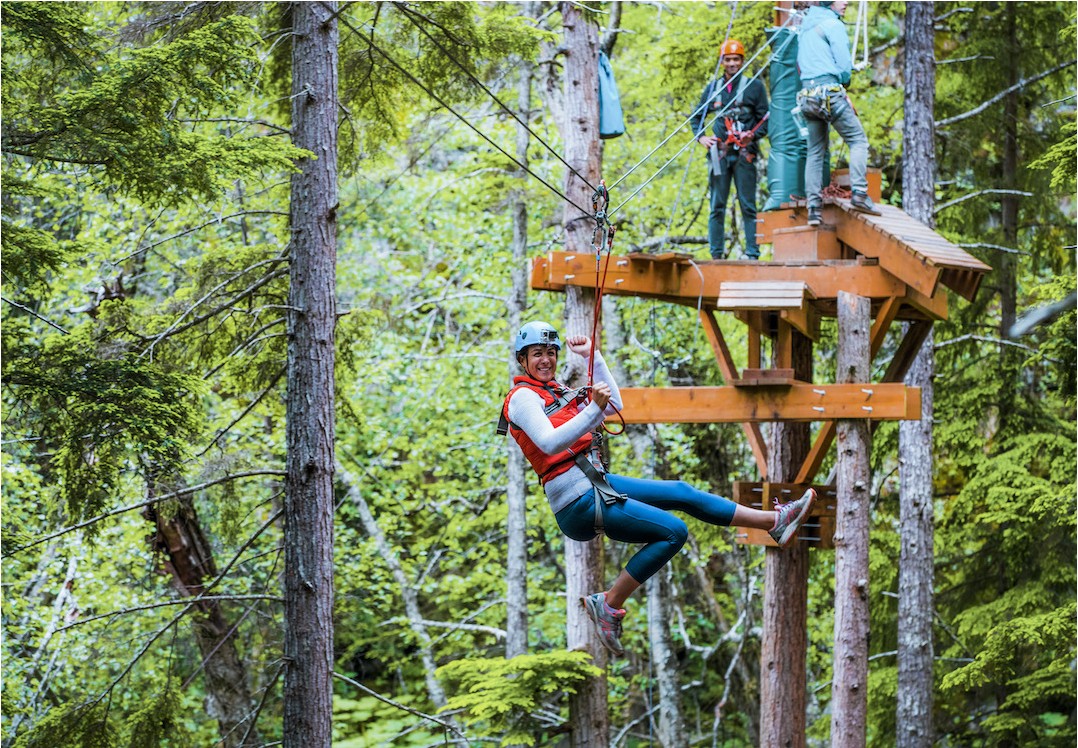
It’s not for me, but I respect anyone and everyone who tries to “ruff it” in the wild, but what does “ruffing it” mean? It’s relative to the person of course, but we all know that minor level of sensory deprivation nature provides can yield a certain sense of peacefulness, as we attempt to connect with nature and ourselves. It’s a momentary escape from the distractions we so enjoy. Once we’re done with that relatively quiet walk through a trail in a wooded region, we ask ourselves what’s the difference between a true outdoorsman, an adventure seeker, an experienced camper, and someone who never travels outside the city? Our guide, teacher, experienced camper or vamper, knew his stuff, but how much stuff is there to know when we go out camping? He improved the taughtness of our tent by moving it about a half-inch, he remembered a flashlight, and he knew enough not to talk while fishing, but he also brought modern conveniences that would’ve made the experienced outdoorsman of yesteryear groan. He didn’t help us renew our appreciation of anything, unless we’re talking about our renewed appreciation for the controlled climate an HVAC can provide, the appliances that provide convenience and comfort, and our devices. When we’re nestled back in our comfortable homes, we appreciate not being smashed into by bugs, as when they see a campfire light, they think it’s a moon, they fly kamikaze-style into it. The june bugs, in particular, don’t seem to care that something as big as a human face stands between them and the light. When we’re in the comfy confines of our home, we also know that nothing is going to stick its disgusting, grimy little proboscis in us to suck blood out of our system. More than anything else, our camping trip gave us a renewed appreciation of our sense of home. Theodore Roosevelt would not have approved of any of this, but the only word we could find to describe “hidden spirit of the wilderness, that can reveal its mystery, its melancholy, and its charm” was boring, and hot and sticky, oh! and the two words ‘never again,’ sorry, Teddy.

Shouting at Smart Systems


“It’s not an unquestionable and indisputable fact that Jim Brown was the greatest running back of all time,” I shouted at the people in my Smart TV.  “I think it was Walter Payton, but at least I recognize that’s an opinion. You only think Jim Brown was better, because he was the first greatest running back of all time, and we all bow to the tyranny of firsts, and most of the time we do so because we don’t know any better.”

If we compare George Washington to any president who followed, GW almost always wins, because he set a whole bunch of templates and precedents that most of the presidents who followed, followed. But he had an unfair advantage of setting precedents and precedents, because there were no official U.S. presidents before him. By that logic, if either James Buchanan or Chester A. Arthur were the first U.S. president, they would be considered the best president of all time.

Similarly, those who saw Jim Brown play saw the first great running back of all time, and there was no one to compare him to for about a decade. He set the template for great running backs, and he set all the precedents. Yet, the difference between Jim Brown and the next great running back narrowed over time. I never saw Jim Brown play live –so go ahead and dismiss me from this argument if that is required– but from what few highlights I’ve seen of Jim Brown’s runs, he was one of the greatest running backs who ever played the game, but he was mostly a bruising back in the mold of the great 70s back Earl Campbell. Both of them were historical anomalies and dominant in their respective eras, but were they that much better at gaining yards and scoring touchdowns from the running back position than Eric Dickerson, Tony Dorsett, Marshall Faulk, Barry Sanders, or Emmit Smith? Of course it’s impossible to compare men from their eras, and we can never remove them from their era and place them in another for a solid debate, but I believe the one man who could match all five of those men and outdo them in their respective primes was Walter Payton.

“Okay,” my TV shouted back at me, “but is your argument based on objective reasoning, or was Walter Payton the first, great running back you saw?

I said, “Huh?” and I hate to say huh in any setting, because I think it makes us sound unintelligent, but even though I knew my new TV was a Smart TV, I was not prepared for it to shout back at me.

“You were too young to witness the great Jim Brown in his prime,” my Smart TV explained. “So, Walter Payton was essentially your first entrant into the greatest running back of all time argument for you, which nullifies your argument by making you as guilty of bowing to the tyranny of firsts from your own perspective.”

“I never thought of that before,” I said. I didn’t want a Smart TV, and I told my dog that. I just wanted a television set to watch programs on. Now that it is in my living room, reminding me how intellectually inconsistent I can be, I resent it. I got used to the neighborhood kids outsmarting me, and then the raccoons and squirrels, but I never considered how humiliating it would be when one of my appliances began outsmarting me.

*** 

They call it a Smart TV, but its intelligent design does not respond to the initial physical commands I give it from its remote control. I push those buttons and nothing happens. The message between the button and the primary mechanism fails in a way that obnoxiously requires me to push that button again. The tyranny of firsts applies here too, as the relative and relatively arbitrary definition of intelligence between humans is usually reserved for the guy who gets the answer first. Those of us who need to process a question, and often come up with a better, more creative answer than the first guy, usually get left in the dust. We’re forced to live in this land of unrealistic expectations for smart, but Smart TVs apparently are not. They require a second level of processing that requires a second push of a button to process the commands we initiate on our remote controls. It’s not limited to TVs either, Smart ovens, fridges, and cars all have buttons, and they never execute their functions on the first push of a button.

“It’s not us,” my Smart Oven replied. “You’re just a two-push-button guy.”

I had no idea what that meant, until I began to see how our world has progressed from switches to buttons, and I found myself “two-pushing” every button around me. I never chose to be this way, and when I see people one-pushing their way into a room, I’m like, “What the hell is going on here?” I’m guessing my two-push relationship with buttons was set upon me as a result of who I was, or what I did, in a former life. I don’t know if I was so successful pushing buttons the first time through, in that former life, that I obnoxiously held it over everyone’s head in an arrogant manner that defined my existence, and the forces that be exacted existential retribution on my current life. I say life, because I’ve never been a one button pusher, and this isn’t something that we wake up in the morning with. It takes an outside force, be it a family member or Smart appliance to recognize.

If it happened sooner, and a friend told me that I was probably doomed to pushing a button twice my whole life, I would’ve called them foolish. “I’ll only have to push buttons once when I get older. I’ll eventually get this all figured out.” It hasn’t happened yet. If you told me this when I was younger, I probably would’ve assumed that it was the quick-twitch of youth that led me to carelessly miss the button in some way, and as I grew older, I’d slow down enough to push that button more carefully that first time through. It hasn’t happened yet, and I have to say that kind of shocks me, figuratively. So, either I haven’t slowed down, or I’m just going to have to get used to pushing every button twice now, because someone monkeyed with my soul somewhere along the line.

***

I know I should be using Smart tags at this point in history, but I just can’t pull the trigger on that purchase yet. I already have enough Smart things in my life, and I can’t imagine having one on my keys, on my wallet, or in my pocket in anyway. Until I’m brave enough to put Smart things in close proximity to my precious things, I’m going to lose things that are precious to me.

When we lost things, some say, “They’re always in the last place you look.” To which, the more clever say, “Of course they’re always the last place you look, because once you find it, you’re not going to look in any other places.” I’ve lived the former line so often that I appreciate the humor of the latter line, but my question is “How come they’re never in the first place I look?” The tyranny of firsts does not apply here, as the items I lose are never, and I do mean NEVER, in the first place I look? They’re never in the car, which is the first place I look, and they’re not in the bathroom, the first place I went when I returned home, and they’re never in the first pocket I check in my ensemble? Now, I know what you’re going to say. You’re going to say something about circumstance, chance, and whatever rationale you point to that suggests it’s not a product of some otherworldly design. All I can say is, “You aren’t there. You don’t see how it has to be someone, something, or some otherworldly force messing with my mind.” I can’t hear these Smart devices laughing when you tell me it’s not logical to blame intangible forces, but I know they enjoy watching my struggle.