Getting the “REACTION!”


Why did I wiggle and shake the book rack of my fellow high school student in front of me, because it was annoying. I didn’t just want to be annoying I didn’t just want to annoy them either, I wanted to hit something deep in their psyche to find that deposit of anger they had buried for so long that it gushed out of them like a pressurized oil deposit being struck for the first time. There was something wrong with me back then, but here’s the concerning thing, I still consider those shimmy shakes hilarious. Except my enjoyment now comes from the idea that most people think I should feel bad, apologetic, or some level of guilt for doing all that. I don’t. I still think it’s hilarious.

*** 

“I need to pay attention in this class, I need the grade,” Willie said when I ignored his initial, very polite pleas to stop shaking his book rack. “I’m trying to get into Georgetown.” He was trying to get into Georgetown by paying attention, and presumably getting an ‘A’ in an elective class that Georgetown probably would’ve dismissed either way. Yet, he did it. He got into that prestigious school with a full-ride scholarship. He did it by paying attention to the little details that I didn’t, and he probably went on to lead a prosperous, happy life, but I got the giggles watching the otherwise placid expression he wore on his face 24-7 turn from pleas, to frustration, and then anger. My peers were shocked. Not only had they never heard Willie speak, they didn’t even know who he was. When they found out who he was, and that I drove him so crazy that he eventually started screaming at me, they were astounded. It was my biggest accomplishment in life at that point, and I considered it on par with his full ride to Georgetown. 

*** 

“You might want to stop doing that to Max,” a kid named Joe warned me in a different year. “I know him, and he’s nuts. I’m not talking a little off. I’m saying, I went over to his house a couple months ago, and he had what looked like a science exhibit in his room. He had this cord laid out on his bedroom floor, a cord that he cut open on one of those little, oscillating fans in his bedroom, and he pinned that cord back to expose the wires within, and then he plugged it in. ‘What is that?’ I asked him. “My sister keeps coming in my room when I’m not here,” he said. “I want to give her the shock of her life.” That’s what he said, the shock of her life.”

“That’s funny,” I said, “but what does it mean to me?”

“Well, I find it hilarious when you wiggle his chair,” Joe said, “but you might want to be careful doing it to him, because if he’s going to do that to his own sister, what is he going to do to you?”

In my twisted sense of reality, I considered this a challenge to continue, until I saw how much Joe enjoyed it. “Do it again!” Joe whispered between giggles. That whisper ruined the whole aesthetic value this act had for me. I didn’t do it to entertain others, as your garden variety bully might. I did this for my own personal amusement. 

In my non-scientific studies to understand the fragility of the human psyche, my subjects pleaded with me to stop. When that didn’t work, they would resort to some display of frustration that would often evolve to uncontrollable rage. “Stop wiggling my chair!” one fella shouted loud enough for the teacher to hear. After the teacher admonished me, I stopped … for the day. The next day, I was at it again with a vengeance. Another guy tried punching me in the chest. I laughed, but I stopped … for the day. The next day he shouted, “You might be the most annoying person I’ve ever met,” between clenched teeth, and I stopped wiggling his chair or anyone else’s for that matter. His level of rage was one I’ve never seen without a physical followup. We both stared at each other in silence, waiting for a progression, and when it didn’t happen, we went on with our day. Seeing that level of rage gave me an unusual feeling of satisfaction, coupled with this idea that he basically handed me a crown of being the best/worst there ever was at something satisfied a number of needs I never considered before.

Every subject is one great teacher away from being interesting

As I scour my brain to understand who I was, and why I did all that, the best answer I can come up with is that I considered it an antidote to boredom. The structured learning they employ in school wasn’t just boring to me, it was a violation of my constitution. We were all bored in school, of course, but my boredom went beyond an itch to do something, anything else to something that bordered on a hostile rebellion. I considered forcing me, a bubbling cauldron of energy and testosterone, to sit and learn for eight hours a day a violation of nature. It’s okay to do that on a blah day, when you’re not feeling it, but there are days when we’re just on. When you’re having one of those glorious days, it almost feels like a waste to spend them sitting in a classroom, listening to a lecture from a teacher who doesn’t want to be there any more than we did. 

I considered school a prison of the mind that I needed to escape, even if just for a moment. I didn’t have an alternative, of course, but I didn’t want to do that. The prison guards held my aimless aspirations in check with attendance records, “Fail to attend and there will be consequences!” I attended class, but one revelation led to another. The first revelation I had was that I was a poor student, but that didn’t move anything, as my grades proved that. The earth-shattering revelation that changed everything for me occurred when someone said, “Did you ever consider the idea that we just didn’t have quality teachers!” This didn’t nullify the idea that I was a poor student, because I could’ve and should’ve found a way to overcome that, but it did relieve me of some of the guilt and embarrassment I felt for getting such poor grades in school. It wasn’t all my fault, in other words, that I was so bored, easily distracted, and anxious that I ended up wiggling the bookracks in front of me.    

I know we’re supposed to praise teachers for the sacrifices they make to teach young minds how to be well-informed, responsible adults, but most teachers, like most people, lack the energy, passion, and charisma necessary to reach students. School administrators know this, of course, so they try to make their teacher’s job easier by providing them a lesson plan and a structure for their lectures. Even with that, most of them cannot avoid speaking in monotone. Most teachers, like most people, also cannot take a step outside the box to provide a brief, interesting vignette from their lives, or the stories they’ve heard, to prove a point or make a lesson plan more interesting. 

I feel for teachers in one respect, I cannot imagine teaching the exact same thing over the course of five to thirty years. I also understand now that part of their job is to teach to the slowest learners in the class. If I was fresh out of college, and someone hired me to teach something as boring as Economics or Anthropology, I have to imagine that I would struggle to come up with an interesting presentation. I would also find it difficult to muster up some passion for the topic. If I did it, it might take me a year or two to develop a level of confidence that could lead to a passionate presentation of the facts. If I were able to accomplish all that, and I understand that’s a big if, I have to imagine that my passion would begin to wane by about year five or six. “You’ve been teaching the same subject for thirty-five years? Congratulations, and I feel sorry for your students.” 

The Glorious Mr. Schenk

When Mr. Schenk entered the classroom, he did not excite that passion. He was not a person who anyone would confuse with an imposing character. He was short, soft-spoken, and mousy. He wore stereotypical school teacher sweaters, and he wasn’t one to look people in the eye. Mr. Schenk was also not a passionate, charismatic speaker, but the difference between Mr. Schenk and all of the other teachers we had prior to Mr. Schenk, was he knew it. He appeared to know that he couldn’t keep students awake during lectures, so he decided to forego the traditional lecture format. 

“Just write!” he said that first day. “Write, write, write!” Just write became his mantra throughout the semester, and just write we did. Anytime we hit a brick wall, he instructed us to “Write your way through it. I’ll correct it, then we’ll correct, and you’ll learn from it.” I can’t remember how many different pieces we wrote, but there were a plethora of them. Mr. Schenk’s modus operandi was that you can’t teach writing. It’s just what you do. It involves something we call kinesthetic learning, or doing it so often that you learn. 

“You should learn how to spell, how to conjugate a verb properly, and you should know the fundamental rules of grammar,” Mr. Schenk said on day one, “but that’s something for other teachers in other classes. For us, it will be about learning everything you can outside this classroom, learning from our mistakes, and learning from others. We’ll spend a majority of our classes dissecting and critiquing what we’ve all written in the prior week.” 

Creative writing was not a subject I found particularly thrilling when I walked into Mr. Schenk’s class, but I might’ve tried to run through walls for him at the end, without questioning why we consider this such a great analogy for loyalty. Mr. Schenk encouraged us to seek out alternative sources for knowledge on the subjects we would cover. He provided a list of suggestions, but “These are just suggestions. As you work your way through our ‘just write’ format, I think you’ll find that the more alternative, the better. We’re seeking creativity here.”

I excelled in that class. The method of seeking alternative sources for knowledge fit into my wheelhouse. I learned more from those dynamics than I did any other class I ever took. Mr. Schenk’s class is one of the primary reasons I’m writing this article today. Mr. Schenk assigned one paper exclusively focused on storytelling, another on style, and one specifically devoted to pace. There were so many more themes that I can’t remember most of them, but Mr. Schenk encouraged us to seek outside sources to understand these disciplines better. The day after would involve a “What did we learn from our studies?” intro. “Drop the hads!” one student who had understood the assignment would say. “No more you-yous,” you might add, and “You must try to avoid using the word that too often,” and that student would continue to try to avoid that which avoided referring to that too often.  

I wanted Mr. Schenk’s undisciplined, chaotic style of teaching to succeed so much that I chose to succeed within it. I understand that this teacher was a community college teacher, teaching an elective, but I wanted him to trumpet this idea that one of the laziest, most ADHD students who ever sat behind a desk actually excelled in his idea of a lesson plan. I wanted him to spread the word among his colleagues that this might be the key to unlocking the minds of poor students and prevent them from being so bored that they distracted their fellow students by wiggling their book racks.

It probably wouldn’t work, seeing as how lazy and undisciplined young people are, myself included of course, but I thought his teaching style of offering a subject and then allowing the students to learn it on their own, from alternative sources, could succeed in the internet world of charismatic influencers on YouTube. Teachers have some performance reviews, especially in college, but how many teachers are actually fired based on the idea that their lectures are boring and tedious? In the capitalistic struggle for hits and subscriptions, a YouTube influencer needs to find unique ways to maintain an audience, and their struggle involves spending money on graphics and clips that make their presentations interesting and fun. The teacher could say, “This week’s assignment is King Henry VII, go learn everything you can about him, and we’ll discuss it next Tuesday.”  

It’s too late for me now, of course, but this idea goes out to poor students who think different. We all know how individualistic the human brain is. I’m not informed on the science behind it, but for some reason we all learn in different ways. Some are audio learners, visual, and kinesthetic. Minds like mine will never succeed under the current format, but I don’t write that to suggest that I was a misunderstood genius or a prodigy. I may have been such an anxious kid with so much nervous energy that I may not have succeeded regardless the format, but I had teachers who hit me where I lived. Mr. Schenk, Mr. Reardon, and that one woman who interpreted and defined Hamlet for me. So, some teachers woke me up, and they reached me on a level that should’ve defined for me sooner that I wasn’t the horrible student I thought I was. Were they more energetic, I don’t consider that debatable. Were they more passionate and informed, again, not debatable, but they reached me on a level that I still remember with a large asterisk in my life.

To escape what I considered the life-draining minutes of structured learning, I wiggled and shook the book racks of the students in front of me to get some kind of “REACTION!” from them. That was really what it was all about for me, the reaction. The more frustrated and angrier, the better. I thought it was funny most of the times, but I did it so often that it began to lose its edge. I continued to do it, because that’s just the type of (fill in the blank with your favorite invective) I was, am, and forever will be. The difference between then and now is that I’ve learned how to channel all that nervous energy.  

Those Funny, Funny Faces of Death


Do you crave a story so side-splitting, funny and unbelievably wild that it doesn’t matter if it’s true? We all do. We’ve all been there, laughing hysterically until someone chimes in with, “That story you’ve been telling,” they whisper to us in confidence. “Yeah, it’s been thoroughly debunked.” We all probably know at least one debunker. They might spare us the embarrassment of debunking us in public, but that doesn’t change the fact that they love debunking us. They study our face and smile at us with compassion that borders on condescending glee. I don’t know if it’s jealousy, but they obviously cannot stand the laughter we receive telling a side-splitting tale that is so wild and funny that it almost doesn’t matter if it’s true. Yet, the storyteller and the debunker both know that it does matter in the sense that the difference between true and it kind of doesn’t matter if it’s true is the difference between hilarious and “It’s still funny, regardless,” and the debunker enjoys dragging our side-splitting story into the latter category.

It’s our fault, we should fact check these stories to see if they’re true, but when a storyteller gets ahold of a great, side-splitting story, we get all jacked up, and we can’t wait to share them. It’s in our blood, and it’s such a part of our identity that we end up laughing harder than anyone else, because it appeals to our storytelling nature.

Most of these stories, just to be clear, are so dumb and inconsequential that we don’t really care if they’re true, and they’re so funny that a part of us doesn’t want to check, because we hope that they’re true. That’s when the “truth trolls” come marching in to destroy our story’s comedic value. Why do they do it, they probably don’t even know the finer, psychological motivations behind it. It’s just something they’ve done for so long that it’s just kind of what they do.

Fact-checkers love to tell us that these fun stories just happen to be false, debunked, or an urban legend. If this is you, you might just want to consider moving along, because we find you exhausting. About three beats after we unleash our side-splitting yarns, their faces get hued by smartphones. “Umm, not true,” they say when they manage to become unhued, “according to (fill in the blank.com) that story has been debunked as an urban legend.” To put an exclamation point on their attempts to suck the fun out of our story, they show us their phone.

Some of us enjoy hearing, and reading, a great story almost as much as we enjoy telling them and writing them, and it’s not a gift given at birth. It’s a methodical process fraught with failure, but those who love it, learn it, and learn to love it. It’s not something that we learn so well that we never make mistakes either. It’s an ongoing process. As much as we storytellers enjoy that process, fact-checkers enjoy their end of it almost as much, as they’ve found it to be an excellent way to discredit, delegitimize, and unfunny, storytellers they just don’t like.

“I just get so tired of their BS,” they add after sucking the smiles off everyone’s face. 

Feature Story #1

A zoo keeper grows concerned with how constipated his beloved elephant is. He and his fellow zoo keepers, management, and the zoo community try everything to provide her some relief. In total desperation, the man learns of an effective, all-natural cure of herbs and oils. He places it on a wire brush and inserts it, and it works. It works so well that the elephant unloads on the zoo keeper. The zoo keeper is hit by the violent discharge so perfectly that it knocks him down, and he hits his head so hard that he unfortunately experiences a temporary and fatal moment of unconsciousness, as two hundred pounds of dung suffocates him.

What we’re talking about here are silly, inconsequential stories that we share in employee cafeteria. We’re talking about those stupid stories that no one will remember thirty seconds after they’re told. We’re talking about telling stories that might cause some to smile, others laugh, and still others to roll around with hysterical laughter, and the minute the truth trollers pull out their phones, everyone groans. The truth trolls cannot abide by all that laughter. They need to thoroughly vet a story before they can even smile, and they won’t even smile if they happen to find out it’s actually true. “Well, it turns out that one is true,” they say with same look they have when eating a sandwich. If they find out one of your stories doesn’t pass the test, they have a smug, “I’m just calling you out on your BS!” look on their face. That appears to be the only source of satisfaction they gain from their otherwise joyless existence. 

Feature Story #2

A man in Oklahoma, enters the highway, and after a couple of miles, he clicks his Recreation Vehicle (RV) into cruise control. Nothing different than anything any of us have done over a hundred times. Except, this driver, allegedly unaware of the full functionality of the cruise control feature on his RV, walks into the kitchen area of his RV to make himself a sandwich. We have to imagine that the man didn’t have enough time to get the meat between the slices of bread when all hell broke loose, as the RV drove off the road and into the ditch. Some versions of this story suggest that the man died as a result of the ensuing accident. Others claim that he not only survived, but he won a settlement with the manufacturer $1,750,000 and a new RV, because the manufacturer did not specifically document for him the full functionality of the RV’s cruise control. This story isn’t half as funny as it once was, based on the current technology that allows some cars self-driving functionality, but back when I first heard this tale, it seemed impossibly hilarious that a grown man (or woman, depending on the version of the story) could think that they could make a sandwich (or cup of coffee) in the back while the car was in cruise control. 

Some great stories combine fiction and non in a manner we call creative non-fiction. I remember mentally toying around with the concept of the total capacity of cruise control, soon after I bought a car that had a working one. I thought the possibilities of a fella over-estimating its capacity could be funny, and I’ll be damned if someone didn’t consider the same plotline, either fictionally or in non-fiction. Is this story 100% true, tough to know 100%, but does it have enough truth in it to be funny? At some point, I think we should all hit that “off” switch in our cranium that analyzes, deconstructs, and refutes such stories. Just laugh or don’t laugh, but they can’t. They love pretending that they’re a reporter, and that they’re taking a story, or its storyteller, down. 

Feature Story #3

Elvis Painting in Cheese

Elvis Presley had a soft spot for cheese. His favorite sandwich, according to sources, was the grilled cheese sandwich. Elvis was from the deep south, and the home he grew up in an environment that was anything but rich. After achieving a level of fame and fortune those who were never a Beatle or the primary singer on the album Thriller would never understand, he probably enjoyed the finest delicacies in the world, but he couldn’t kick his love for the grilled cheese sandwich. Elvis ingested so many drugs, and so many different kinds of drugs, that we cannot dismiss them as a contributor to his eventual demise, but what does cheese do? It stops us up, and among the numerous other things Elvis poured into his body was a truckload of cheese. As Dan Warlick, chief investigator for the Tennessee Office of the State Chief Medical Examiner, stated, Elvis’s death was brought on by something called the Valsalva’s maneuver. “Put simply, the strain of attempting to defecate compressed the singer’s abdominal aorta, shutting down his heart.” The coroners found that Elvis had “Compacted stool that was four months old sitting in his bowels.”

Did cheese take The King down? These stories are snowball stories. As they roll from one storyteller to another they gather facts, details, jokes, and out and out fabrications, until they arrive at some finished form of funny. I don’t want to know most of the time, because most of these stories are so dumb that I honestly don’t care, and the primary reason I’m writing this article is that I don’t understand why those with a dreaded and incurable hued nose disease do.  

I just want to laugh, but I’ve been fact-checked me so often that I now wonder if what I’m being told is 100% true. I want to laugh, but more than that, when I hear a great story, I want to repeat that story so often that it becomes mine. If it’s going to be mine now, I have this newfound urge to fact-check it, so I don’t get fact-checked, and I so want to go back to “Who cares, as long as it’s funny!” mindset.

“The idea that you loathe fact-checkers so much only makes them seem a little more legitimate to me,” third parties say when we complain about truth trolls checking our stories.

I don’t know if it has anything to do with the fact that I’m Irish, but there are few things I enjoy more than sitting in a circle of friends, all with beer in hand, telling a story that has but one agenda, to make them laugh. “There’s no way that’s true,” they say between laughs, and I have no problem with that because I know that for most people that line gives them license to be free from naiveté, and it also frees them to laugh harder. We all know that that story is so sensational that it can’t be true, but we don’t care in that small space in time where all we can do is laugh about it. “That guy is so full of crap, it’s not even funny,” we might say to a third party after the storyteller leaves the room, but the next time he enters, we’ll be all over it when he tells us he has another story to tell. 

Truth trolls won’t go through any of this with us. They might want to, but they can’t. They have some odd belief, probably born of some childhood experience that left them vulnerable to the charge of naiveté, that if they believe that, they’ll believe anything. They believe that if they believe our silly, stupid story, their credibility is on the line. Their noses contract a blue hue, and they come out, “Not true!” Now I will grant you that if a story is 100% true, it might slide it a little higher on the funny scale, but by how much? Does it lift such a story from funny to knee-slapping hilarious? If we add, “It’s true, all the fact-checkers checked it and sourced it out, and they found that it’s 100% factual.” How much does that truly add to the entertainment value? If you’re a hue-faced truth troller who has neck problems, because your head is permanently fixed in the 45-degree position, will you go back to 90-degrees with an “It’s true” and laugh? No, and you might even be a little disappointed by your findings, right? Yeah, I’m looking at you. 

Feature Story #4

A raging alcoholic was informed by his doctor that he had a form of throat cancer that would end his life quickly if he chose to continue to drink alcohol. The alcoholic peppered the doctor with questions, “Cut back, wean myself off of it over time?” 

“I don’t think you understand the severity of this,” the doctor said going over the biopsy and the image test results with the alcoholic. “This is what we call stage four cancer, and if you quit now, cold turkey, you have a chance, about a 39.1 percent chance to live five years. Keep drinking, even a little amount, and you’re likely dead in months.”

This scared the alcoholic. He did not want to die, but he couldn’t imagine going weeks and months without a small swig of alcohol here and there. In some respects, it was psychological torture to him to see everyone around him drink so casually, and have so much fun, but he kept coming back to the idea that he didn’t want to die.

It hurt to drink alcohol too, and that was really one of saddest things in this alcoholic’s life. It was the only reason he went to see that doctor. Once the doctor took alcohol away from him, he realized that he never learned how to live. He didn’t have any hobbies, friends, and he didn’t know how to fix things. He had family, but they distanced themselves from him a long time ago. He was a man who worked his tail off and came home to drink alcohol with his beloved wife while the two of them watched TV together, and he couldn’t even enjoy that. In short order, this man became depressed and desperate to live the only life he knew. He did some research on his computer and discovered something called butt-chugging, or boofing.

“We’ll be using this device,” he informed his wife, “to deliver alcohol to my system by enema. It won’t touch my throat and exacerbate my condition.” His wife was hesitant, but the alcoholic broke her down. “What most people don’t know is we all have enzymes in our stomach and liver that break alcohol down and dilute it. Regular butt-chuggers say that it stings a little, initially, but after a while some say that they start to enjoy the sensation. They even have a term for those people. They’re called klismaphiliacs. Due to the fact that you’re essentially bypassing all of the biological protections our body has in place by going the enema route, they say there’s no hangovers and no puking involved.”  

Some dispute whether or not the wife obliged the alcoholic, but she was charged with negligent homicide for delivering what turned out to be a lethal and fatal dose of two 1.5-liter bottles of sherry into her husband’s system. In her defense, the wife claimed innocence by declaring that he did it himself. “He did it all the time,” she pled. “He was always giving himself enemas. Coffee enemas, alcohol enemas, and even soap enemas. He even had enema recipes.” The case against the wife was dropped due to insufficient evidence. 

One of the primary lessons this alcoholic-turned-butt-chugger didn’t consider is that puking, while uncomfortable, disgusting, and painful, it serves a biological purpose as important as coughing, sneezing, and bumps on our arms. It is the body attempting to push what it cannot dilute, absorb, or handle out. While we’re puking, it’s difficult to consider that this is probably our body protecting us from the damage of what we do to it, and that it’s actually a good thing that our body knows how to protect us from the debilitating and at times, fatal things we do it.    

I am not a regular patron of the sites and shows that feast on the misfortunes of others in this manner, but I used to occasionally enjoy an episode of Thousand Ways to Die, and The Darwin Awards email lists we used to pass around the office. Their entertainment value, while short and limited, can produce a guilty smile or a laugh behind a hand. There’s really no sense in trying to deny that we love stories involving the misfortune of others, “You mean he died?” we say with an oh-my-gosh face on, and we experience a hybrid of laughter and horror. It’s a part of us.

In researching some of the new ‘believe it or not’ sites for this article, I found some new sites I never heard of that preyed on our misfortunate few, and they had “100 percent true” stamps all over them, as if that’s the primary purpose of their existence. The administrators, and authors, of the stories on these sites are careful to properly source each story with links, footnotes, and various other forms of attributions to perpetuate this idea that they’ve learned from those past publications we all enjoyed that focused on sensational stories that had little-to-no foundation of truth in them. Thus, we can gather that the older sites and publications probably got fact-checked to irrelevance, which, in essence, opened up a niche for these new guys to prosper, but the problem is their stories, while guaranteed and certified to be 100% true, are actually kind of blah and mundane. Their stories amount to, “There was this one guy, from some town in a state who made an unwise decision,” and we un huh them with some excitement as we read on, “and well, no one was hurt or anything, and no one died, but wasn’t that a foolish decision?” Well, yeah, it was, but I was kind of looking for some entertainment here. These sites learned from the past, and they decided to forego the sensational for the factual. As much as it pains me to see this need to have certified 100% guarantees, I understand it’s now the price of doing business in this arena, because in this incarnation of the Information Age, everyone has a phone, and everyone has a site to help them bunk, debunk, or take the bunk out of things, and in this case, it’s better to give than receive, because it can be embarrassing and even a little intimidating at times when fact-checkers discredit, delegitimize, and unfunny every stupid, silly, and inconsequential story we tell, but that’s just what they do, they’re fact-checkers.

The Curious Case of the Commonplace     


“It is the time you have wasted for your rose that makes your rose so important.” — Antoine de Saint-Exupéry in The Little Prince

“I know one guy we’ll be able to find in the dark,” some anonymous kid whispered loudly in the halls of our school.

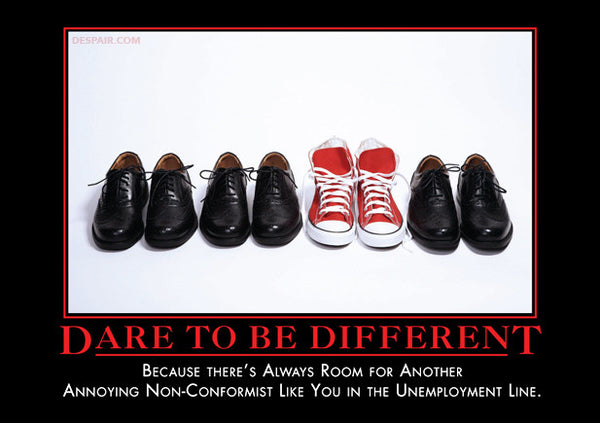
And it wasn’t just him. I was getting it from all corners, and they were pounding me and hounding me for wearing a pair of bright, baby blue shoes to school. I thought of saying things. I could’ve said, “They’re shoes for God’s sakes. They’re just shoes,” but I’m sure victims of public executions screamed similar things to those calling for blood. I thought of telling them that my dad picked these shoes out and a number of other lies, but I was overwhelmed, and they were in a mood. The truth was I took my time and carefully considered these shoes. I thought they might finally help me establish myself as a freak of nature who dared to be different, and they did.

“Are you sure?” my dad asked me before we took the shoes to the checkout stand, “because I wouldn’t wear them in public.” I wasn’t sure. I wasn’t sure of anything, but I thought the shoes were flashy, and I was anything but flashy. I also thought they were Michael Jackson, and I loved Michael Jackson, but when you go Michael Jackson, you better prepare for some attention. The thing was I thought I was prepared. I did things to garner some attention, but the moment I walked into the town square, that we call the classroom, with those shoes on, I realized this was another league. 

My dad implored me to try on a pair of more conventional pair of white canvas shoes with blue stripes, and I did, and I knew the “theys” in my school would accept them, but I was drowning in the but-Is. But I love those baby blues, but I don’t want conventional shoes, and I knew I should go the comfortable, conventional route, but I was just accused of being a conformist by some of my really good friends.  

“You only like the Rolling Stones, because Paul does, and you only like the Seattle Supersonics, because Mike does.” They were kid charges, but I was a kid at the time, and they were true. I wouldn’t admit anything of the sort to them, of course, but I had to admit it to myself. Prior to this humiliation, I still considered Michael Jackson the greatest entertainer in the world. Michael Jackson was still about twenty million albums sold away from reaching a level of market saturation that required us to say, “Michael Jackson sucks!” to pledge allegiance to the cool, so I still loved Michael Jackson. I didn’t know anything about rock or the Rolling Stones, but Paul did, and Paul was the coolest kid in school, so I decided to become a Rolling Stones fan. I also thought David Thompson and Johnny Drew were the greatest basketball players in the NBA. I didn’t even know the NBA had a franchise in Seattle, but after Mike told me they were his favorite team, I looked into them, and I saw that they were green, and I liked green teams. I also liked the alliteration in the team’s name, because I loved the letter ‘S’. When I learned that their best player had the exotic name “Downtown” Freddie Brown, and another one named Gus, I began following them and cheering them on, because I loved those names. Then they went and won the NBA championship that year, and I became a huge fan, but I wouldn’t have been a fan, in the first place, if I didn’t want to be like Mike.

To compound my humiliation, one of my other good friends informed me that the whole Stones/Sonics thing was a big set up. “The idea that you are so susceptible to suggestion has been the source of silent whispers for weeks,” he said. “The fellas loved it, and Paul and Mike loved it so much that they decided join in.”

“Paul?” I said. “There’s just no way. You’re making that up.” 

“You didn’t know it, but he told you that he thought the Rolling Stones sucked, two weeks ago, just to see if you’d go around telling everyone that you thought they sucked, and you did,” my good friend reported. “Then, last week, he told you he was a huge fan of The Stones, and you went around telling everyone you loved The Stones.” 

I did it, I realized with a sizable gulp. I fell for all it. The sense of betrayal went deep, because prior to that incident I considered Paul a best friend. Had I developed a brain complex enough to examine my actions with some objectivity, I might’ve said, “Listen, I don’t have older brothers, like the rest of you, and I don’t have any kids on the block to school me in even the most basic, kid version of the critical thinking involved in knowing the Michael Jackson sucks and the Rolling Stones rules. My whole identity is wrapped up in this amalgamation of your ideas about what it means to be cool, and I thought you, my best friends, wouldn’t mind showing me the way. I was wrong, and you were right, but who’s the bad guy in this production, he who follows, or he who leads … astray?” 

I was on my own, in other words, and I figured that these shoes might inform them that I finally had an identity free from others’ influences. I thought that once my friends recovered from the shockingly bright colors of the shoes, they would come around to see them for what they were. I thought they were just a beautiful pair of shoes that captured my personal definition of beauty, and I naively believed a pair of shoes might accelerate my gestation into a bright, baby blue butterfly. Of all the driving forces I’ve listed here to becoming a freak who dared to be different, I honestly don’t remember which was my primary motivation, but I remember learning, for the first time, the swift, harsh, and resolute penalties for independent thought.

As much as we hate to admit it, some calls for conformity can actually be a good thing, as we all teach each other what is socially acceptable. We don’t do this for altruistic reasons, of course, as we enjoy judging others who don’t know, because it makes us feel like we do. We do it to be mean, and to make others laugh, but we inadvertently spare our subjects the pain they might experience later on down the road. As I stated earlier, I had no one to teach me societal and cultural norms, so “they” stepped in and taught me in all their mean and funny ways. There were other things they taught me, but I learned that as much as I wanted to be a freak who dared to be different, I didn’t play have the constitution necessary to pull it off, so I diverted. 

“How did that survive high school?” I now asked adults who never diverted and weren’t afraid to let their freak flags fly. 

“It’s who I am,” they’ve said in varying ways. I could’ve said that too, as I believed in the power of baby blue, but that would’ve opened a whole can of why I didn’t pursue it that I did not want to talk about. They also said, “It’s who I am,” with such power and conviction that I couldn’t help but think about how I went back to the store to return those bright, baby blue shoes. The “It’s who I am,” crowd were a little freaky in all the ways I was, and there was probably something wrong with them in the manner there was something wrong with me, but they didn’t duck and run for cover, they stood tall. Rather than be ashamed of their eccentricities, they embraced them. The potshots they took from all corners only emboldened them, and their current freakish appearance stated they obviously maintained that posture into adulthood. They fascinated me, because there’s a part of me that wishes I would’ve held onto my own relatively small level personal freakdom freedom, even if it was nothing more than a relatively odd, different, and a little freaky color of shoes. I just didn’t have what it took to defeat the comments, jabs, and ostracizing, but I do wish I would’ve put up a better fight.

“It is the time you have wasted for your rose that makes your rose so important,” Antoine de Saint-Exupéry wrote in The Little Prince. The “It’s who I am” crowd won the battles that defined their identity crisis, and I lost, but one of the reasons they probably fared better in those battles is because it was far more important to them. The battle for my baby blues seemed important to me at the time, but I gave up so easily that it obviously wasn’t. Whatever the particulars were, the “It’s who I am” crowd probably wasted so much time and energy on their fight that they became what they were fighting for. I think about these angles, all of them, when I see a face full of piercings, a body completely covered in tattoos, or freaky hairstyles and colors, and I wonder if that’s the extent of their creative expression. I gained a limited perspective on what they must have gone through, and I envy the fortitude they obviously displayed in their battles, but I wonder if they fought so hard back then that that’s who they are now. 

I lost, I got pounded into smithereens, and I walked away with my tail between my legs, but I eventually took a full three-hundred and sixty degree turn back into myself to discover other freakish avenues better suited to me through my ideas of creative expression. Who wins? It’s all relative to the person, of course, but I believe the other avenues I chose proved more conducive to the kind of freak I am today. When I chose this avenue, writing articles like this one, I found that I was able to say, “It’s who I am!” with an exclamation point as opposed to a comma. My definition of different is more subtle than those superficial ornamentations, it’s more cerebral, and more conducive to becoming a person who focused his creativity on matters other than the “It’s who I am” crowd who explore superficial expressions on their body. It’s always subject to internal debate, of course, but I’ve finally reached a point where I can appreciate all of the hundreds of battles, big and small and internal and external, I’ve been through in life, and how they whittled me into what I’ve become.