“I’m Just Too Dumb!” 


“Hey Patrick come over here and check out our sinkhole,” Hector said when he spotted his neighbor walking outside. Patrick walked over and looked, because who wouldn’t want to look in a sinkhole? He looked from a careful distance, made a comment that I can’t remember, and he began walking away. “Wait, Patrick, you really gotta see this thing,” Hector urged. “C’mere.” 

“I saw it,” Patrick said. “It’s a sinkhole Hector. I’ve seen sinkholes before. It’s not a circus exhibit.”

“C’mon,” Hector said, “I’ll hold your hand, if you’re afraid of falling in.”

“You don’t understand, I will fall in. I’m just that dumb,” Patrick said, dropping his new favorite line on those of us standing around the sinkhole.

“No, you won’t. They’ve cordoned off the dangerous spots, so we know how close we can get,” Hector said, noting that he already called the police, and they put yellow tape around the weak spots. “Just don’t cross the tape.”

“Trust me,” Patrick said. “I’ll fall in. I’m just too dumb.” 

Patrick loved that line. He dropped it so often, in so many situations, that it kind of  became his catch phrase. Why did he love it? I wasn’t there when he first heard it, but I wonder if he thought it was so hilarious that he would start using it. Did he think it was so hilarious because he could relate to it? Did he think it applied to him so well that he thought he should start using it? He might have started using it because he found it funny, but he began using it so often that I think he now believes it. 

“Be careful what the brain hears you say,” a friend of mine said when I told her this story. “It might start to believe it.” 

Others can convince us of just about anything, if they repeat it often enough, but can we convince ourselves of something if we repeat it often enough? If we hear someone else’s schtick, and we love it for being such a great, self-deprecating line, can we accidentally convince ourselves that of something like being so dumb that we might do something that could cause ourselves irreparable harm? It’s possible of course, but is it probable? I would say this is not a joke, but it probably started out that way to Patrick, until he accidentally convinced himself that not only is he dumb, he’s so dumb that if he doesn’t check himself, and his brain, he’s probably going to end up in an emergency room saying, “I told you. I told you how dumb I was. Why didn’t you listen? Why didn’t I?” 

I’m not exactly sure why I considered Patrick’s “I’m too dumb” joke so funny. He dropped this line on me several times, in casual conversations, and I always enjoyed it. We’ve all heard people drop variations of self-deprecating humor, but Patrick’s delivery was so pitch-perfect that I can’t but think he believes it on some level. He was so flat and straight, and nothing about his presentation suggests that he’s seeking laughter. Does that make his joke better, yes it does, but does he deserve credit for his ability to deliver a joke, and is it possible for someone to deliver a joke that well without some belief in it?  

To arrive at answers that plagues us, we need a control group. When research scientists attempt to arrive at answers regarding psychological complexities, they divide their group into subjects and a control group. Patrick is a jokester, always telling jokes, and he’s a pretty funny guy, but he has one flaw. He laughs harder at his jokes than anyone else does. To understand if he is kidding, and by how much, we need to study the methods, patterns, and reactions he has when telling his other jokes. Following his other jokes, he drops a “I mean, C’mon, right?” followed by laughter. He pumps his head back, and his eyebrows go high on his head as he laughs. When he drops his “I’m too dumb” jokes, however, he doesn’t laugh, and his head goes down in the manner a dog’s might to signify submission. Is this part of his schtick? Does he do that to sell the joke better? Patrick is funny, but he’s not that funny. He does not apply such subtle intricacies to any of his other jokes, even the other self-deprecating jokes he tells. I don’t think it would take a team of research doctors to find that the reason Patrick tells this joke so well because he believes it. 

For all the reasons listed below, reasons I imagined later, this instance at the sinkhole struck me as particularly hilarious. Patrick added to the comedic nature of his joke by putting greater distance between he and the sinkhole. He walked away from Hector’s home, and off Hector’s lawn, and he then went into his home. I don’t know if he locked the door, but my guess is he did to presumably place one more obstacle for him to cross to get back to the hole. I presume Patrick did this, because he no longer trusts his brain to help him avoid an impulse that might cause him harm. Those of us standing around this sinkhole in Hector’s lawn could only presume that Patrick lost all faith in his brain’s ability to protect him from harm.  

I flashed to Patrick falling in the hole, a near bottomless pit in Patrick’s imagination (it was about three feet deep), looking up at us saying, “See, gawdangit, I told you how dumb I was.”

“Listen, I have two kids to raise, and they count on me to be there for them in so many ways,” I imagine Patrick pleading if Hector pressed him further. “If I start following whatever impulses my insufficient brain provides, I’m going to leave my wife a single-parent, and I’m not going to do that to her or my beloved children. I have to learn to reject whatever temptations I encounter to protect my body, so I’m there for them throughout their maturation.” 

We’ve all heard psychologists talk about a person being at war with their brain. It’s a deep, complex topic they use to describe those with seriously troubling psychological issues. Patrick doesn’t have those, but he does appear to be in conflict with his brain on a level that he describes with repetitive jokes. At one point in his life, I think Patrick decided to wage a cold war against his brain. A cold war, by our definition, involves “threats, propaganda, and other measures employed just short of open warfare.” Or, as others put it more succinctly, “Waging war without firing a shot.” At some point, Patrick’s internal forces decided to mount an internal coup against the brain, because those mechanisms decided that the brain no longer had their best interests in mind. 

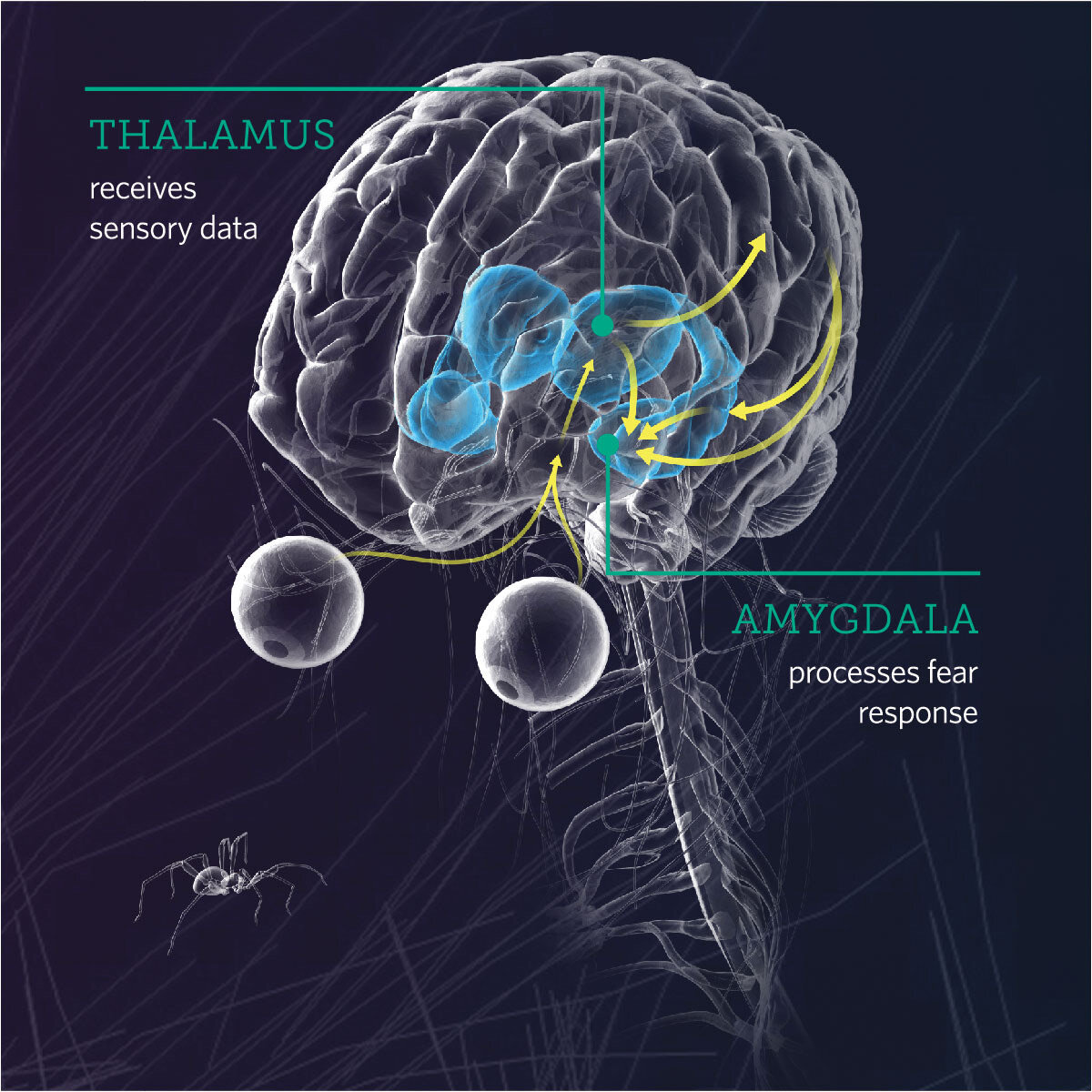
One of the primary directives of the brain is to protect us. It protects us from heights, guns, and the prospect of encountering large, man-eating animals through chemical compounds that induce fear. When we fear, we learn to employ various defensive measures, including creating distance from the temptation, to prevent what the brain suspects could cause bodily harm. Over the years, we learn what to eat and drink, and what we do and think to prevent bodily harm. The brain instinctively knows, and learns, what can cause death. What isn’t so obvious are the irrational fears we develop for the dark, ladybugs, and inanimate objects.
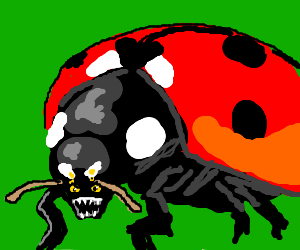
Why are we so afraid of insects, even relatively harmless insects such as the ladybug, at a young age? We don’t know what a ladybug is when we’re young, or if we do on some rudimentary level, we don’t know the extent of their abilities. This is the fear of the unknown. As we age, we learn that most animals and insects have an instinctual fear of humans, and it  provides us a level of comfort when we’re walking down the sidewalk, and they clear the way for us. Some of the times, insects occasionally land on us in their confusion, and our young, fantastical mind can interpret that as purposeful, especially when the ladybug begins to crawl up our leg in a manner we could further interpret as a purposeful violation of the parameters we thought we had with insects. We convince ourselves that they’re not afraid of us anymore. They’re crawling up our legs with a specific purpose in mind that we don’t even want to imagine, and that leaves us paralyzed with fear.  

At some point in our maturation, our brain learns the parameters of threats against the body. There’s nothing to fear from ladybugs, even those that appear to violate the parameters of the relationship we have with insects. We’re quite sure that there are some anecdotal tales of a ladybug causing human deaths, but they’re so few that we know there’s little to fear from them. There are, however, a number of tales told of spiders causing death, but not as many as those from the mosquito archive. Yet, the number of people who fear spiders far outweighs those who fear mosquito. The whole world of fearing spiders involves their creepy nature, their physical appearance, and the techniques they use to poison their fellow insects and eat them.     

At some point in our search of what to fear and what we learn is relatively harmless, the brain plays tricks on us. We fear the relatively harmless, clowns and cotton, yet we don’t fear some of the things that can actually harm us, and kill us, like driving ninety miles an hour down the interstate. 

“I like to tease my fears,” a friend told me. “I prefer to live dangerously. It’s a rush to put your life on the line by skydiving from a plane, or bungee jumping, and bungee jumping is actually a lot more dangerous than people know.”

“So, you consider jumping from 50 to 500 feet with nothing but a cord tied to your ankle dangerous?” I asked sarcastically. The fact that she felt the need to tell me that bungee jumping was dangerous suggested to me that most people she knows have tried to argue against her position, and if that ain’t the brain messing with people, I don’t know what is. 
Patrick’s brain has obviously spent a lot of time messing with him in this manner, trying to convince him that nothing is as dangerous as they say, and his brain has obviously done this so often that Patrick just doesn’t trust it anymore. We’ve all heard that those working a police beat believe half of what they see and none of what they hear, but I’ve always assumed that was intended to illustrate their trust of what others do and say. Others can deceive us into accepting what we know is not true, but can we do this to ourselves? Are we at war with our own brain in relatively benign situations such as our approach to a sinkhole? There’s knowing and not knowing, of course, but as Patrick said he’s seen sinkholes before, so he presumably knows how to approach it. He just doesn’t trust his instincts, and he’s skeptical of what he might do. 

We all engage in self-deprecating humor, and we all enjoy the fruits of a person showing that he doesn’t take himself too seriously. As I’ve written many times and many ways, be careful with this comedic tool, because your audience might begin to believe it. Patrick’s use of self-deprecating humor seemingly adds another layer of caution, be careful how often you use it, because you might start to believe it.   

Patrick is not a dumb man, and if we are ever tempted to join him in the belief that he is, all we have to do is talk to the man for about forty-five minutes to learn how knowledgeable he is on so many different and diverse topics. Somewhere along the line, Patrick heard someone say that they were “so dumb” that they might not be smart enough to prolong their health and well-being. Patrick obviously considered that so funny that he began using it, and he saw how this exaggeration of the typical self-deprecating joke comforted his audience. It obviously comforted him too, to a degree, to think that he wasn’t all that. At some point, he began to fear that he might actually be “so dumb” that he could find a way to convince himself that he might cross that yellow, police tape to end up in a bottom of a sinkhole without knowing how it happened or why he did it, because his brain is now so deficient that it might lead him to him harming himself in some life-altering manner. Faced with such internal strife, Patrick decided that it was just safer for him to walk away, enter his home, and lock the door to try to prevent his kids from being fatherless children. “Trust me, I will fall in,” he warns us, and presumably himself, “because I’m just that dumb.”  
My Proustian Moments


“Scent, emotion, and memory are intertwined,” experts say. 

“Smell and emotion are stored as one memory.” —Dawn Goldworm, co-founder of “olfactive branding company” 12.29

There was nothing extra ordinary about the ham sandwich I ate, but I thought it was extraordinary! Every ingredient was store bought from leading brands, and it was one thin slice of ham, with a thin layer of mayo on it, between two slices of ordinary bread. When I say I enjoyed that sandwich, I’m not talking about a “This tastes good” reaction. I’m talking about “Holy crap, this is so good that I forgot how great the ham sandwich can be.” If I said all that aloud, I probably would’ve received some looks, some long hard looks that measured my seriousness against my sanity. Years later, I had a similar experience with a piece of KFC chicken. Prior to that experience, I denigrated the unhealthy food from that chain for years, perhaps decades. That piece of chicken led me to rethink everything I thought about their original recipe. I tried them both again, days after those moments, and I realized I probably just had a moment, but it was quite a moment, a moment some call a Proustian moment.

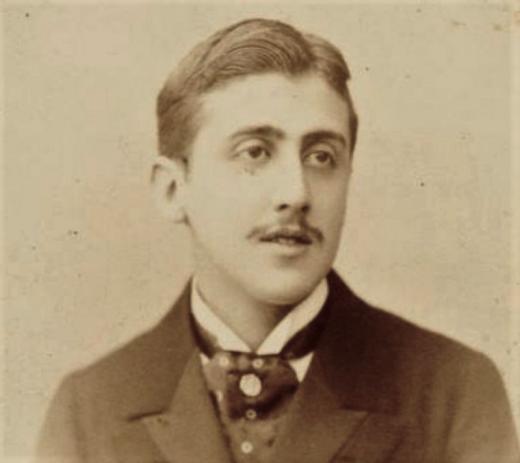
A Proustian moment, based on the writings of author Marcel Proust, occurs “when a sensory experience triggers a rush of memories often long past, or even seemingly forgotten”. The nature of Proustian moments suggest that we do not seek these moments so much as they find us. We cannot create Proustian moments, in other words, they just happen. They are similar to the tool a writer uses to set a joke up. The writer foreshadows the payoff with a subtle, unusual moment that has no conclusion. The writer then moves the narrative to a seemingly unrelated matter and combines it with that subtle unusual moment to form a rewarding payoff for the audience.  

If someone told me about the concept of the Proustian moment, I probably would’ve considered it so obvious that it was hardly worth discussing. If they defined it for me to further its alleged profundity, I would’ve said, “So, you see, hear or taste something that sparks a memory of something else? And someone developed a literary term for it to make it seem more profound? It’s called a flashback, and I probably have about one a month.” As a writer, I may have considered it a fascinating idea to use a ham sandwich to spark a distant, fond memory for one of my characters, but I would’ve dismissed it as a real-life profundity. The whole concept sounds like something overly complicated people do to add complicated intrigue to their otherwise simplistic lives. 

The Proustian moment in Marcel Proust’s novel Remembrance of Things Past involves the character experiencing a moment with a soupçon of cake in tea: 

“… I carried to my lips a spoonful of the tea in which I had let soften a bit of madeleine. But at the very instant when the mouthful of tea mixed with cake crumbs touched my palate, I quivered, attentive to the extraordinary thing that was happening inside me.”

Yeah, that ain’t me. I enjoy the sensory experiences involved in eating and drinking as much as the next fella, and I appreciate what they have done to help me sustain life for all these years, but if a ham sandwich caused me to “quiver, attentive to the extraordinary thing that was happening inside me,” I probably would’ve considered it a sign of gastro-intestinal turmoil. 

Those who seek literary terms to define their quivers are often complicated, dramatic types seeking spiritual connections, and they often define their creativity by doing so. To the rest of us:

“It’s a ham sandwich,” Gil Burkett said. “Let’s not over-complicate this.” Gil Burkett often said things like this to rein me in when I attempted to assign literary value to the mundane, and minds like mine need Gil Burketts to remind us that some ham sandwiches just taste better than others for real world reasons. A slice of ham of higher quality than we’re accustomed to make the sandwiches taste better, for example, an expert sandwich maker can perform their magic on the ingredients, and there are time and place situations that can influence the taste of anything. We might be hungrier than we were the last time we had a ham sandwich, and everything tastes better after a rigorous workout. I could’ve ended this debate by letting Gil try my sandwich, but that would’ve been such a violation of my constitution that I was willing to be wrong and allow his “It’s a ham sandwich” to be the final word. 

Ham is an overly salted meat, and salt makes everything taste better, but it is really unhealthy. I spent most of my life railing against the purveyors of what’s healthy, and I based my personal definition on how it affected me. For most of my life, I could eat and drink whatever I wanted, and the incredible machine that is my body helped me overcome most of what I put into it. As we age, that incredible machine begins to lose some of its superpowers, and the unhealthy nature of food or drink becomes more obvious. My body began reacting very poorly to these unhealthy foods, and I responded by not consuming them.

Thus, when I tried my first bite of a KFC chicken leg after years of abstaining, it was glorious. Why was it so glorious? Did I consider that KFC chicken leg, and that ham sandwich so delicious, because absence makes the palette grow fonder? Did I need more salt in my body to counter all the gallons of water I now pour into it now to try to stay in alliance with modern health edicts, or did their taste and smell remind me of something so long since passed that I didn’t even know that memory existed? After these experiences, I tried eating them both a couple more times before the unhealthy effects of eating them outweighed whatever caused me to enjoy them in those moments, and I realized, there was nothing special about them. I still don’t know why they tasted especially good on those occasions, but I didn’t try to make any connections, until my cousin threw out an offhand comment:

“Do you remember when your dad used to buy a bucket of KFC and take you and your mom to the city park, before they married,” she said. “He did that all the time. He did it in an attempt to win your heart.” (She was referring to my step-dad.) 

I was so young that I don’t remember the particulars of those days in the park, but I’ve always felt some kind of weird connection to the red and white stripes that KFC has on their buckets and signs. I initially thought it might have something to do with my fascination, bordering on obsession, with the colors, red, white, and black. This near-obsession goes so far back that I just assumed that it had something to do with the colors of my favorite college football team, the Nebraska Cornhuskers. (Side note: Psychologists suggest that our favorite colors can have a relationship with our favorite teams, as green cars sell better in Wisconsin than anywhere else in the nation, purple cars sell better in Manhattan, Kansas, and red, white, and black cars sell better in Nebraska.) My favorite album covers, my other favorite football team, and every car I’ve purchased are red, white, and black. I have always assumed that my affinity for these colors developed in the years I spent cheering on the Huskers, and I still think that, but I now consider it a possibility that some part of my associations with these colors developed much earlier, because they may have reminded me, on some subconscious level, of the time my step-dad stepped in to rescue me from a fatherless maturation. If you posed this notion to me as a possibility, before my cousin said that, I probably would’ve been laughing louder than anyone else in the room

I was so young when catastrophe struck that I can’t remember the catastrophic circumstances firsthand, but I wonder if those red and white stripes signaled some sort of salvation, or hope, in some way that a two-year-old couldn’t recognize at the time, articulate, or appreciate as a seminal moment. I think I just knew, on some level, that I was being saved by a generous man, and the strong, very distinctive smell of KFC chicken might have reminded me of a moment buried so deep in the recesses of my psyche that it took a period of abstinence to rekindle it.

When all that happened, and I dug through my psyche to try to connect the associations I made to the red and white stripes, I remembered that extraordinary ham sandwich.

When my step-dad eventually became my only parent, I grew to despise the ham sandwich. The ham sandwich was his answer to all my needs. When I was hungry, and I was always hungry as a teen, my step-dad said, “Make a sandwich.” The sandwich became a symbol for my dad’s insistence that I was going to have to learn to resolve every problem myself. In a rational world, that makes sense. We all raise our children to help them become self-serving adults. I was a teenager at the time, however, an irrational and emotional teen trying to make sense of the world, and in my world a parent not leaping to their feet to feed a child was a crime against humanity, and his desire to help me help myself sounded like an excuse for him to avoid doing anything. The ham sandwich, the bologna sandwich, and sandwiches in general became a symbol for my dad’s refusal to do anything to satisfy my greater needs. I was being unfair to my step-dad, but isn’t that the nature of being a teenager?

Toward the end of his life, my dad and I managed to bridge the many gaps that divided us, and I stopped negatively associating the ham sandwich with him by the time I ate the extraordinary one. Those connections are admittedly loose, but I wouldn’t have made them were it not for my cousin telling me about the through line I had with my step dad and KFC, and this idea I must’ve had that everything was actually going to be ok in my life. 

My recognition that I might have had a Proustian moment involved a series of click backs that occurred over years, perhaps five-to-ten-years. I’m a skeptic who is generally skeptical of all who play this game of connect the dots, and I reserve some skepticism for my own experience with this concept. I am intrigued with it as a writer, but I reject it as some sort of real-world explanation of something that might have happened to me. My primary influencers instilled in me the instinct to reject the idea that occurrences in life can be commingled with complicated and dramatic literary references, and they convinced me that it’s my creative mind that assigns that level of significance to coincidences. They taught me that most of us live such relatively boring lives that we seek complication and drama, but there are moments when we have small but significant flashbacks that are almost impossible to define in the moment.

“Wait a second, what did you say a Proustian moment was again?” I asked those who introduced me to the term, clicking back. “Now that I think about it, I might have had one of those.” That click was preceded by my cousin’s offhand comment, which clicked me back to my KFC experience that ended up clicking me back to my unusually enjoyable ham sandwich. I knew there was something noteworthy about that ham sandwich, but I didn’t go around telling anyone about it. It wasn’t that special, but when my cousin unlocked the KFC question, I remembered that ham sandwich. I write that to illustrate that I’m not the type who seeks connections to physiological memories. I am usually satisfied with ordinary explanations that align with the term coincidences. There is a reason, however, that smells and scents have an unusual effect on our brain, and it has everything to do with the nose and the olfactory senses proximity to the brain. Scents and smells affect taste, of course, but when we smell something it washes over the brain. As quoted at the beginning of this article, “Scent, emotion, and memory are intertwined,” and “Smell and emotion are stored as one memory,” as Ms. Dawn Goldworm asserts. They can trigger a memory of a situation in our lives, so completely, that we’re there in every way but physical. We might not know where we are, or where we were if we never clicked back, but there is a confusing, almost palpable feeling that for one fleeting moment we’re somewhere else in time. If you’ve ever seen the incredible movie Somewhere in Time, you’ve seen a man convince himself that he was back in time. Was it nothing more than a powerful and surreal dream he had as the film alludes, or was he really there? I’m not saying physical time travel is possible, but I’ve now had two Proustian moments that lead me to think that when a particularly distinctive smell washes over our brain it can take us back in time in a way that seems, and feels, so real that it can provide a “sensory experience triggers a rush of memories often long past, or even seemingly forgotten” that leads us to believe that we are there in all ways but physical, if only for one brief and very pleasant moment in time.

The Patient Predator


Those of us from an an agricultural area have all heard the tales about a parent, usually a mother, preparing a chicken for dinner. When we city-dwellers think of the preparations necessary for a chicken dinner, we think of the five-minute drive to the local supermarket, the time it takes to select the best frozen chicken, and choosing a batter (if it’s not pre-battered). We then sit down for our chicken dinner about a half hour later. That’s been the process for so long that most generations have never heard that for farming families, past and present, there are other steps involved that they’ve never heard about when mothers prepare a chicken dinner.

Disclaimer: Some might deem the following Not Safe for the Workplace, and if you are in anyway squeamish, I suggest you locate the ‘X’ in the upper righthand corner of this screen and exit stage right. Some might deem ‘the other steps’ violent and brutal, but they are a way of life on a farm. “It was just the way we did it,” they say. They way they did it, involved a mother entering a chicken coop to retrieve a chicken or rooster for that day’s meal. Once she catches it, she chops its head off and releases it to allow it to run around, headless, until the life runs out of the body, and it unceremoniously falls to the ground. It usually runs around, crashing and smashing into whatever is around it for about ten seconds without a head, until whatever nerves or final vestiges of their muscles finally run out of power. Some find this funny, others consider it sad, and still others find it so funny that it is kind of sad. Whatever the case is, the next time your mother says that you were “Running around like a chicken with its head cut off” you now know the origin of that phrase.

These chicken/rooster post-mortem displays prompt the question, do all animals do this? Do human bodies run around, crashing and smashing into things for ten seconds after the head gets chopped off, until the lifeforce drains out? There is no evidence that suggests human bodies run around in this manner, but there is some dubious evidence that suggests some consciousness remains in the head. The scientific data is about as far from conclusive as possible, but a researching physician in the French Revolution claimed, based on his observations, that a severed head could retain consciousness for 25 to 30 seconds.

As many times as I’ve heard these chicken preparation stories, over the decades, Ken’s version of this practice involved a twist I’ve never heard before. In his retelling, he remembers his mom stalking roosters in the coop. She would enter the chicken coop with a rooster in mind for their meal before she entered. We could write, “At one point, she caught the rooster,” but this does a disservice to the art of catching rooters, as they are notoriously difficult to catch. We could put them in the smallest of pens and coops, and they will still find ways to elude capture with exceptionally quick movements, tricky maneuvers, and some flying involved in their quest to escape. We could also write, right here, that they’re unusually crafty or surprisingly smart when it comes to eluding capture, but they’re not. They just have what athletes call quick-twitch muscles. As usual with animals at the bottom of the food chain, like the rabbit, roosters have quick-twitch muscles that allow them that first-step quickness and that quick change-of-direction speed and agility that athletes prize. These animals obviously need these abilities to avoid faster predators to sustain the species.

Ken’s mother knew this all of this course, and she knew she wasn’t fleet of foot. She knew she wasn’t quick enough to catch a rooster, because no one is. She knew her only path to success involved a patient pursuit. She could have a rooster cornered several times, in corner after corner, and she knew he would continue to successfully escape until eventually he tired out. “She never grew frustrated by her inability to catch the rooster,” Ken said. “It’s very difficult to catch a rooster, and she knew that.”

It would prove a difficult chore even if it were just she and the rooster in the coop, but what makes it even harder are all of the other eight to ten chickens in the coop running around and flying in short bursts to try to avoid their own capture. As such, Ken’s mother would have to watch her step in pursuit, to avoid stepping on any chickens. We can also imagine that with the effort she put into the pursuit, combined with the heat outside, she would sweat profusely throughout her chase, which would lead to all of the feathers flying around the coop to stick to her face. We have to imagine that this would only add to the frustration and anger of even the most seasoned rooster stalker, but she never showed it. “She never grew frustrated or overly impatient,” Ken said. “She knew all that was just part of it.” There were probably occasions when she caught the rooster fairly quickly, but for the most part she had to engage in this patient pursuit, until the rooster eventually tired out, stood in place and fell asleep. At that point, she grabbed it and twisted its neck.

This is the “Wait a second, what?” twist in story. When someone tells a story that is consistent with everything we’ve heard before, we tend to drift a little. We don’t mean to be rude, but we’ve heard this story so many times, and we all know how it ends. Every time I’d heard this story, it ended with an ax, a knife, or some other sharp instrument applied to the member of the fowl family. The entertaining part, if that’s what you want to call it, usually involves the portion of the tale that describes the rooster running around with its head cut off. So, when Ken added the following, the glaze over our eyes lifted, and we said, “Wait a second, what did you say?” to help the rest of our senses catch up. 

“She would hold the rooster over her head, by the neck, and spin it, until she felt its neck snap,” Ken said. “She then released it and allowed it to run around the coop until the life drained out of it. Then she picked it up, stripped it of its feathers, put it in water, and took it inside to continue preparing it for our meal.” 

“Wait a second, what did you say about spinning?” his open-mouthed audience asked. Ken repeated the bullet points of it. “Did she do that to be … theatrical?”

“My mom didn’t do anything to be theatrical. That was just the way she did it.” When asked if he considered her method in any way inhumane, violent, or brutal, Ken added, “Again, that was just the way she did it. My guess is that that’s probably the way her mother and her grandmother taught her to do it. If you asked her if she considered it theatrical, violent or brutal, she wouldn’t understand why you do. It was just the way it was done as far as she was concerned.

“All you need to do is give the neck a quick jerk,” Ken clarified. “Something to snap the bone. It’s really not as difficult or as violent as you might think.”

***

Flash forward, a couple years, and Ken is a teenager. Ken admits that he was a particularly naughty kid, in his youth, and he met the back of his parents’ hands “More times than I can count. My parents were never ones to spare the rod.” As a teenager, it had been a number of years since any of his punishments were physical, but he upped the ante on one particular occasion. “I can’t remember what I did, but it was above and beyond the typical teenage tests of parental patience.”

“I’m going to have to give you the switch for this one,” his mother informed him. “You have to learn your lesson.”

“That’s all well and good,” Ken said, “but I’m a teenager now mom, and I’m a lot faster than you now.”

“You do what you have to do, and I’m going to do what I have to do,” she said, “but we both know how this ends.”

“We’ll see,” Ken said, as he eluded her and sped out of the house. Out on the farm, we can imagine that Ken found so many hiding places that he had a few favorites that he couldn’t wait to use on this day. He probably heard her calling out to him from his favorite hiding place on the farm, and he probably giggled when he heard the frustration in her voice, but she eventually found him. When she did, he managed to elude capture again, and he hid in another one of his time-tested hiding spots. When she found him again, he ran away and hid again. “I don’t know how long this lasted, but it lasted a pretty long time, hours I think, until I eventually got tired of running.  

“I had it coming, and we both knew it. I didn’t fall asleep, like the rooster, but at some point, I just tired out. To be honest with you, I didn’t see the correlations between her patient pursuits of the roosters and me until much later in life, and when I did, I realized it was pretty funny. She never gave up, she was like a patient predator, and I saw it with the chickens and the roosters. She just never gave up. It was just her way.” Ken’s mother did not further Ken’s punishment by lifting him over her head and spinning him, but Ken never forgot that day with the switch. “It hurt like hell. I still remember how bad that hurt to this day, which was kind of the point. She only swatted me a couple of times, and she was done when she thought I learned my lesson.”