Ozzy Osbourne is “That Thing at the Door”


“There’s this thing at the door asking for you?” the brother of Terence Michael Joseph “Geezer” Butler informed him.  

“What do you mean this thing?” Geezer asked. 

“You’ll see.”  

Geezer didn’t get the joke, until he answered the door, and he saw a rain-drenched man with no hair on his head standing on his family’s doorstop. The man at the door had no shoes or socks on his feet, and he was wearing a gown that Geezer assumed was a pair of overalls that the man’s dad probably wore at a factory job. The man also had a chimney brush over his shoulder and a single sneaker on a dog leash. “I’m Ozzy,” the man at the door said. Geezer would later say he thought the man “was not the full shilling. (AKA off his rocker/crazy)” Yet he invited him in anyway — and changed rock history forever.

We can only guess how this interaction proceeded from there, as the two men tried to feel each other out, but Geezer was intrigued enough to invite this disheveled man into his rock band Rare Breed. The thing standing at Geezer’s door posted an ad in the Birmingham musical instruments store that read “Ozzy Zig Needs a Gig.” Geezer saw the ad, went to Ozzy’s house, Ozzy wasn’t home, so Geezer left his home address — and John “Ozzy Zig” Osbourne, or as we now know him Ozzy Osbourne, showed up later as that thing at Geezer’s door. 
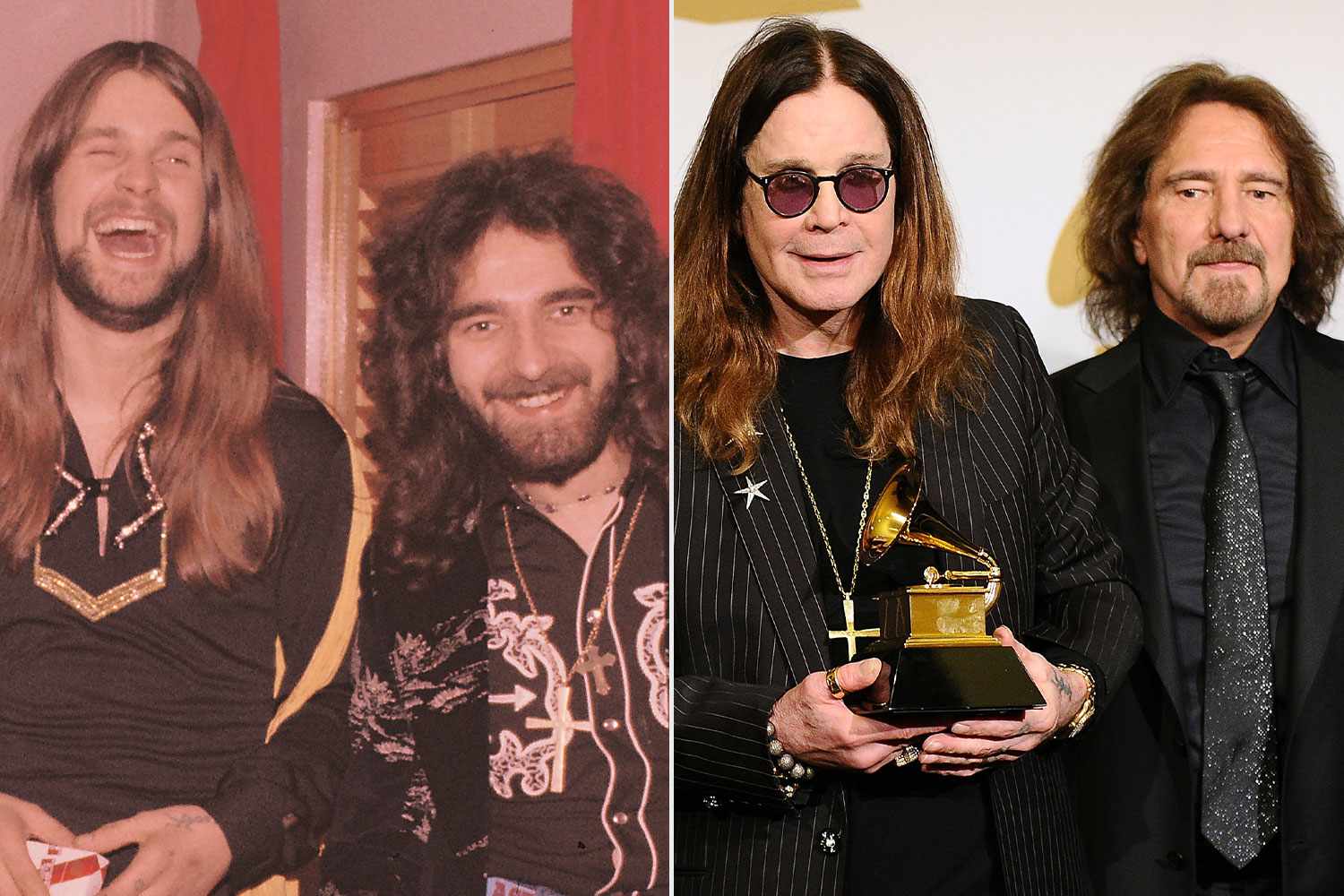
Geezer, like Ozzy, grew up in a low income, working class neighborhood, and they both had six siblings, but the Butlers did not experience the level of poverty the Osbourne’s had. Those of us who grew up in similar neighborhoods know that we don’t meet many who are lower on the socioeconomic totem pole, and when we did, we looked down on them. Geezer and the Butlers were poor, but Ozzy grew up without basic comforts like indoor plumbing, and he and his siblings often used coats for bedding. As Geezer’s brother alluded, the Butlers probably viewed Ozzy as a lower life form. His appearance suggested he couldn’t even afford a decent pair of shoes.

When Geezer met Ozzy, he had a predicament. He had always been an avid reader with a strong background in English literature, especially Shakespeare, so writing song lyrics came easily for him, but he was not a strong, confident singer. He needed someone to deliver his lyrics to an audience. He had a message, in other words, but he needed a messenger to sell it properly. When Geezer imagined his messenger, he probably dreamt up a Robert Plant, Rod Stewart rock-god type who could seduce listeners into falling in love with Geezer’s lyrics. Every songwriter who cant sing, dreams up bullet points for the singer of their songs, and we have to imagine that an overwhelming majority of them would’ve rejected “that thing at the door” on appearance alone. Is that what intrigued Geezer? As we now know, Geezer was not what we call a conventional songwriter, so Geezer may have thought that this thing at the door might have been able to attract an audience in the manner the lobster boy and the bearded lady attract an audience to the county fair? 

We could say that Geezer was desperate, but by historical accounts, Geezer only had one other lead singer prior to Ozzy, and that man quit Rare Breed once he heard how bad the band was. So, Geezer didn’t exactly exhaust all possibilities before meeting Ozzy. Geezer dresses this decision up by saying he was blown away by Ozzy’s audition, and that might be a fact, but it’s more likely that Geezer didn’t think he’d find a better lead singer in Birmingham, and his aspirations likely didn’t extend beyond the city at the time. He probably enjoyed seeing Ozzy’s unfiltered confidence and he suspected that Ozzy’s economic limitations and resultant gratitude meant that Ozzy would show up and help Geezer build and grow, regardless how bad the rest of the band was. Geezer’s suggestion that he could see Ozzy’s talent from the very beginning not only compliments his lifelong friend, but it suggests Geezer was gifted at spotting talent. My guess is Geezer wasn’t lying, but he’s rewritten this memory in his mind so thoroughly that this is how he genuinely remembers it. We can speculate further, but at the end of that debate we’d be forced to acknowledge that Geezer obviously made the right choice, as the two of them joined forces to create something no one else tried before, and it worked so well that we still talk about them almost sixty years later. 

Within two years of meeting the “thing at the door”, Geezer and Ozzy would be joined by two members of a band called Mythology, a guitarist missing the tips of his middle and ring fingers, named Tony Iommi, and an anatomically complete and relatively well groomed drummer named Bill Ward. They would change the band name from Rare Breed to Polka Tulk Blues Band, Polka Tulk, then Earth, and then Black Sabbath.  
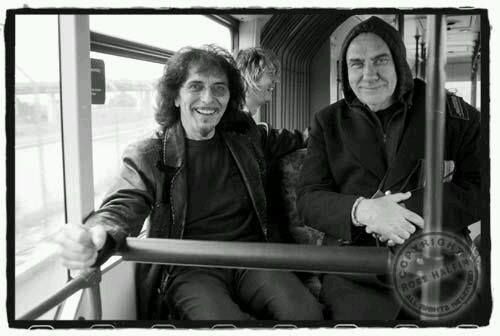
In case you don’t know the four of them would go on to sell roughly 60–68 million albums (including pure sales, streams, etc.) when they were all in Black Sabbath together. The music of Black Sabbath would also influence the creation of heavy metal and later the heavy, sludge side of the Seattle sound sometimes called grunge. They’ve also been called one of the influential rock bands of all time, and it all started with Geezer meeting “this thing” at the door. 

“So, this Geezer Butler fella got lucky,” you might say. “He had one of the most influential front men in rock music history just show up at his door one day. That’s luck.” It’s true, undeniably true, that luck and/or chance played a role, but how often do these chance meetings happen in music? We could also say that it wasn’t exactly a chance meeting, as Ozzy posted an ad, and they both met before as fanatical fans of The Beatles. Still, it can be frustrating to learn that luck, and right place/right time elements play a role in defining history, but it happens. The counterpoint to this argument is that we have to be good to get lucky.
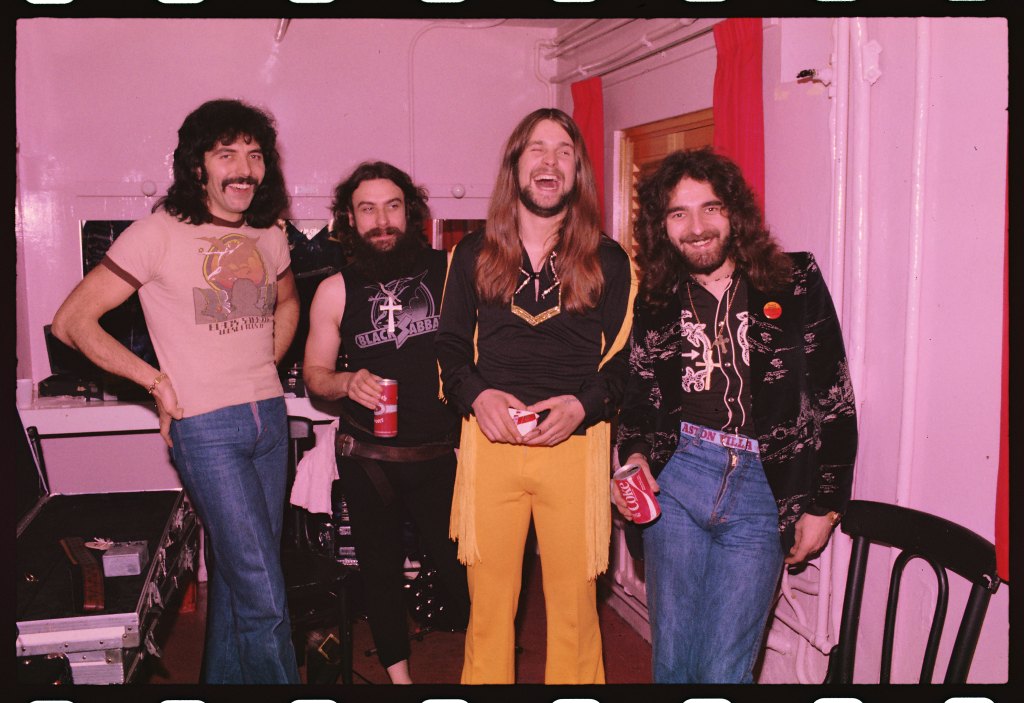
They, Ozzy and Geezer, also got lucky that their band, Rare Breed, broke up when it did, because another band named Mythology broke up at around the same time. The guitarist and the drummer, of that band, Tony Iommi and Bill Ward, were looking for another band to join at the same time that Ozzy and Geezer were looking for a guitarist and a drummer. (Geezer switched to bass when he saw how talented Iommi was.) Ozzy and Geezer just happened to find a guitarist who is now considered a master of riff‑craft, creating heavy, memorable guitar lines that became the blueprint for metal, and they happened to land a drummer who was a jazz‑trained, gig‑tested drummer whose unique style became a core part of the band’s identity. 

For all of the talent that existed in Black Sabbath, Geezer Butler was the conceptual architect and the primary lyricist behind the dark themes that defined early heavy metal. His style was heavy and melodic at the same time, and he was considered unusually expressive for the era. His bass lines often acted as a second lead instrument, weaving around Tony Iommi’s riffs rather than simply following them. Geezer also developed a rhythmic partnership with drummer Bill Ward to create the distinctive “swing” that underpinned many of the early Sabbath classics.

As Geezer described the relationship that would develop between he and Ozzy, Ozzy created vocal melodies during the band’s jam‑based writing sessions, and Geezer would write the lyrics to those vocal melodies. So, they used their talents, gifts, and creative energy to land in the right place and right time of music history.

If we examine Black Sabbath on an historical timeline, we could also say they got lucky to land in a right time/right place hole in time where no one had ever tried to make gloomy and depressing, as opposed to sad, music before. Yet, when we read the quotes from the members, they didn’t seek out a different form of music to carve out their own niche in the industry, and they didn’t plan on being pioneers, it was just who they were, where they came from, and what they knew. (All of the members of Black Sabbath grew up in the aftermath of WWII, and the war-torn, devastation influenced the gloomy themes of their sound and music that just happened to appeal to a large contingent in war-torn Brits of that era.)

In the era of upbeat harmonies, sunny melodies, and that breezy optimism sunshine pop, sunny melodies, and harmony‑rich 60s pop of The Beach Boys, The Monkees, and The Mamas & The Papas, Black Sabbath was viewed as a dumb idea by the fourteen labels who rejected them. The market is so stratified that we usually accept the idea that there’s no such thing as a dumb idea, but those labels all agreed that the gloomy, bleak, slow, and depressing music of Black Sabbath was a stretch too far. The basic sales pitch behind Geezer Butler’s presentation was that in a world that wants to listen to music that makes them smile, we have created a form of music that is so depressing we might lose a percentage of our fanbase to manic depression. In a world of feel-good music, we’ve created feel-bad. So, whaddya think?

For all of the luck, the right time/right place elements, and everything else that defined them, Black Sabbath shouldn’t have worked, not to the degree that some relatively anonymous writer would be writing about them nearly sixty years later. Even a qualified, quality writer would have trouble properly capturing how unlikely their success was. These were four kids who grew up in various levels of poverty who believed that the pinnacle of success would involve them playing in local pubs that would hopefully pay them enough for them to be able to afford a decent meal and a couple of beers to follow. These guys had no formal musical training, absolutely no industry connections, and they decided to play a style of music that didn’t exist yet — slow, heavy, ominous, and socially bleak and depressing.

We can imagine that their immediate success shocked the 14 major labels who rejected Black Sabbath before their first album was recorded and everyone else who worked with Sabbath before their first album was completed, but no one more surprised than the four members of the group. They knew they worked well together, and they gelled to create the type of sound they were seeking, but the idea that it clicked and/or appealed to listeners to the point that it reached #8 on 13 on the UK Albums Chart and #23 on the US Billboard Top LPs shortly after its US release stunned the four fellas. They didn’t really have to “pay their dues” in a relative sense. They compiled a selection of five songs for their first album Black Sabbath, recorded them in one 12-hour session, and they released it. They were just happy that a label signed them, and they were actually able to record an album. That, to that point, was beyond their expectations. The idea that it would chart with no radio play, combined with the critics dismissing it as a crude, simplistic, or derivative effort was beyond their comprehension. Another source notes that Black Sabbath remained on the charts for over a year and sold one million copies in its first run (US + UK combined).
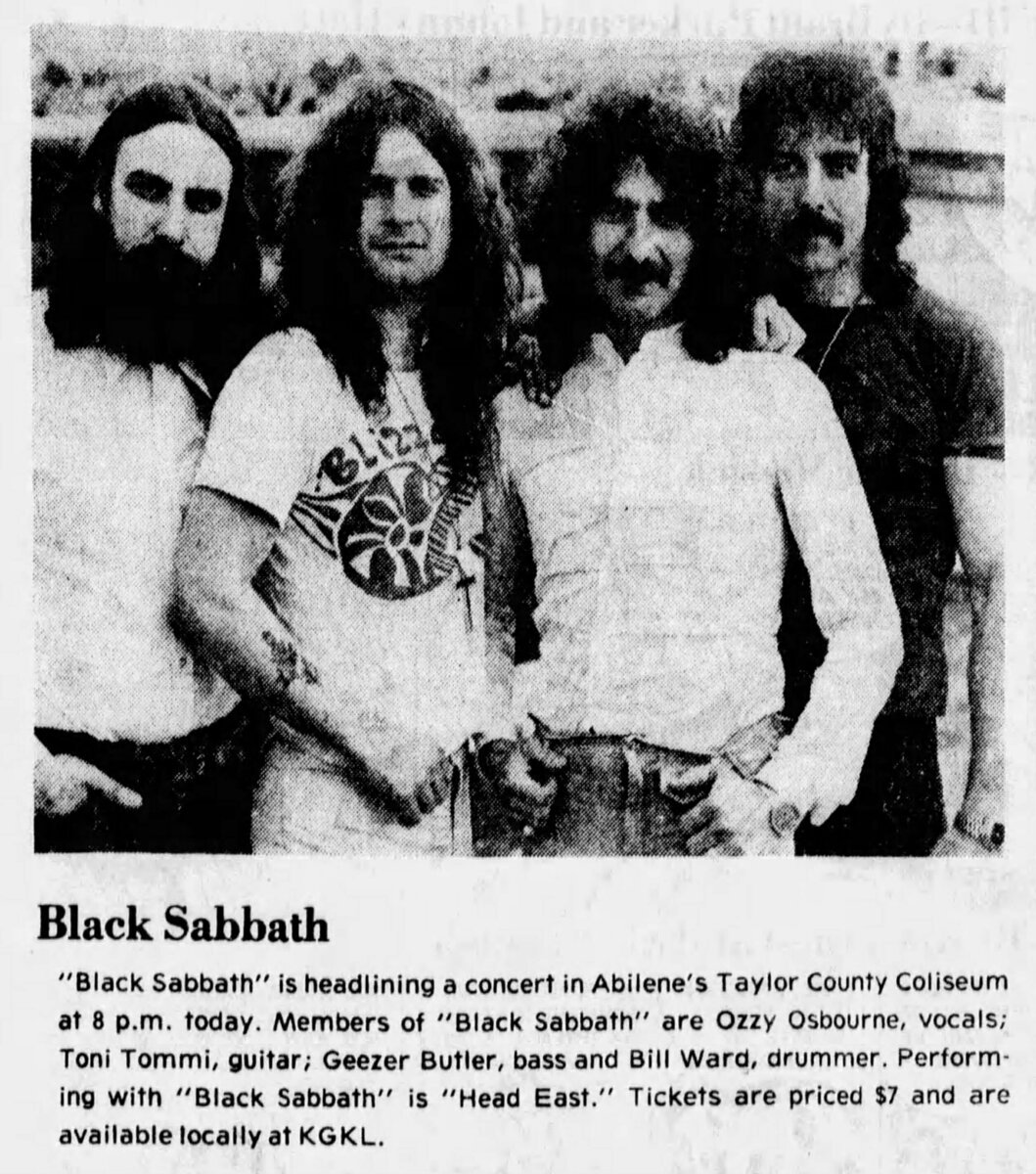
All four members have said, in various ways, that they couldn’t believe it when some people initially started treating them like a real band, then when their album charted it scared them a little, because they didn’t know what to do with that. When they were asked to tour the United States of America, it wasn’t mild surprise, as none of them knew enough to know logical progressions of this sort. They were genuinely stunned. Ozzy described his genuine reaction to this insanity by saying he was constantly waiting for someone to tap him on the shoulder and say “There’s been a mistake, a huge mistake.” Tony Iommi said, “We never thought it would go anywhere. Our goal was to avoid factory work, and we thought we could do so with a few gigs here and there.” Ozzy said that their goal was to eventually get in pubs, so that the pubs would pay them enough to drink their beer. We never thought we’d get out of Birmingham,” Ozzy added. Bill Ward said, “We didn’t know what we were doing — and suddenly it worked.” Geezer said, “We were just four poor kids. We didn’t think it would last.” All four members were from lower class to absolute poverty, as Geezer said, and that probably led to the level of desperation necessary to make whatever they did work.

Anyone who has ever read anything about the recording industry of this era, knows how this chapter of the Black Sabbath saga ends. As poor and uneducated as the four fellas who comprised this band were, in general, they probably knew less about the recording industry, recording industry contracts, and the manner in which their management team should be handling their financial matters. They wanted to focus on creating the music and let management take care of the financial matters, and their creations 4.9 million copies of the first album, and the second album, Paranoid, sold between 10-12 million copies, by global sales estimates, they were almost as broke as they were before they recorded their first album. They signed a horrible contract, because they were so elated that someone wanted them to sign them that they probably thought if they haggled over the details of the contract, the management team might not sign them.

“We were one of the biggest bands in the world,” Geezer said, “and we were penniless.” One example cited stated that Black Sabbath were paid $250,000 to play at a 1974 California Jam festival, and each member ended up receiving $1,000. As stated, management teams and recording labels ripped off most of the artists of the era, including the Rolling Stones and The Beatles, but music historians suggest that Black Sabbath’s management disputes were some of the ugliest and most damaging in rock history. When the fog cleared, the members discovered that not only were they almost as broke as they were when they started, but their cars, homes, and other personal possessions weren’t theirs. In the most crushing blow, they then discovered that their music, that which they worked their tails off to create, hone, and perfect wasn’t even theirs. After years of litigation and lawsuits, it is suspected that the four members may have recovered 10-20% of the money their manager stole.
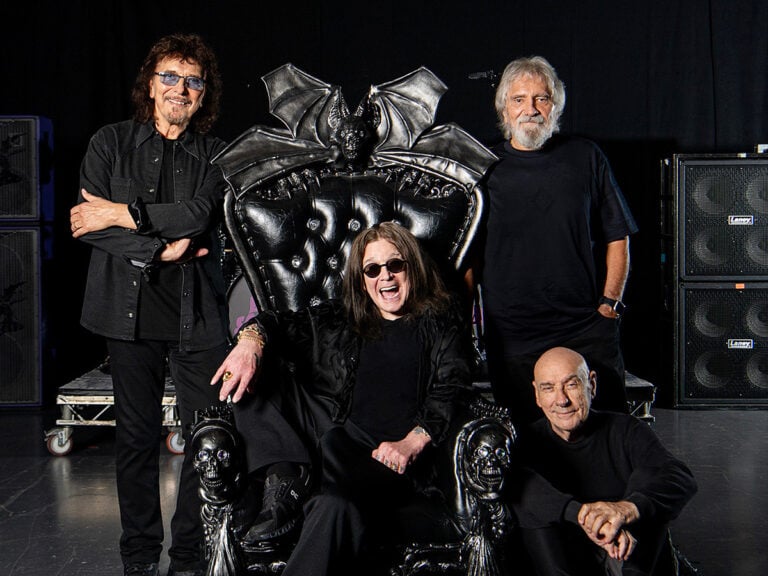
Black Sabbath worked for a whole host of reasons, of course, but they were dumb enough and desperate enough to make it work on a certain level. They had a Beatles-obsessed lead singer, who learned the art of melody from his beloved mop tops, a Shakespeare-obsessed lyricist, a guitarist who was missing the most important finger tips required to play guitar, and a jazz drummer who helped develop a new form of musical expression. Their eventual success suggest that some ideas are such a load of crap that if it’s gathered together, it could be used as fertilizer. The four members didn’t know enough about the system to know how to succeed in it, and they got lucky. The fact that they got so lucky that they’re unicorns, should not be discounted here. Most of us should spend most of our young life trying to figure out the system works to see how we can succeed in it, but some of us weren’t built like that, and some of the ideas we have might appear like “that thing at the door” to others, but the question that we should ask ourselves, is a question I’m sure Geezer Butler asked himself on the day he met Ozzy Osbourne, ‘what would happen if I invited this man in?’ What would happen if we invited that weird, strange, and just plain different idea in and explored the possibilities? If we drop an adamant no to all of that, we’ll never know. The story of Black Sabbath teaches us that some of the times it’s better to say no, unless...
Mike Patton: Maestro del Differente


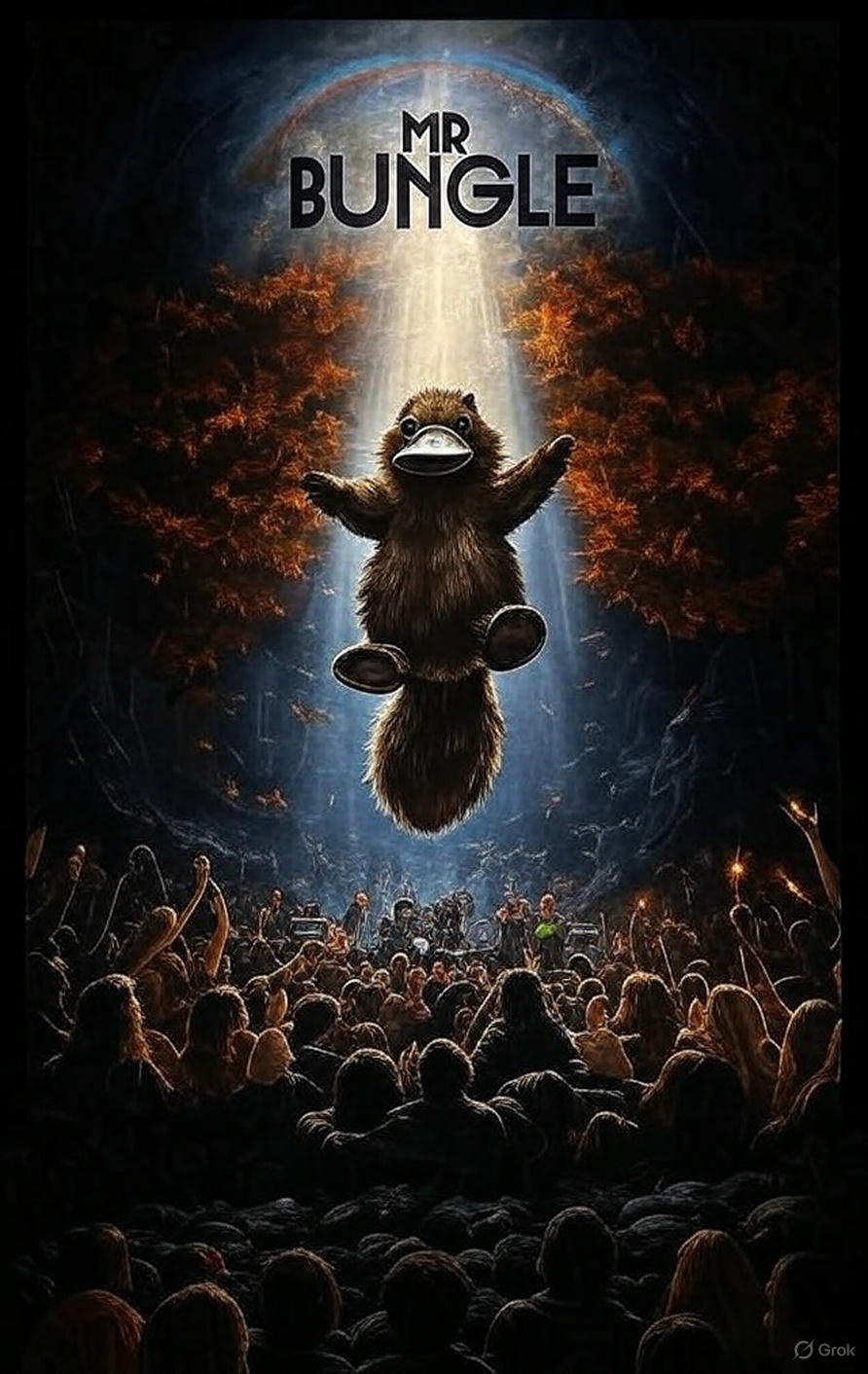
You want to get weird? I’m not talking about the weird music our aunts and uncles might chuckle at or say, “Hey, that’s kinda neat-o.” I’m talking about a strain so close to normal that they might be a little concerned about our mental health when they hear it. “If you think that’s quality music, then I’m probably going to have to edit my perception of you.” I’m talking about a definition of different carved out in a band called Mr. Bungle, then chiseled into with Fantômas, and ultimately destroyed and reconstructed in a project called Moonchild. If you don’t know who I’m talking about, let me introduce you to the outlandish innovations of a bizarre brainchild named Mike Patton.  “Isn’t he a one-hit wonder?” a friend of mine asked, decades after Mike Patton became Mike Patton. “Isn’t he the “It’s it what is it?” guy?” I was so stunned that I couldn’t think up an appropriate term for cluelessness. Then, VH1 went ahead and confirmed his uninformed characterization, by listing the band Patton fronted, Faith No More as one of their one-hit wonders of the 80s. I knew most didn’t follow the career of Mike Patton as much as I had, but I was stunned to learn how even those with purported knowledge in the industry could dismiss him in such a manner. I had to adjust my idealistic vision of the world to reconcile it with the reality that if Billboard is your primary resource, Mike Patton and Faith No More were one-hit wonders. To those of us who live in the outer layer, seeking the sometimes freakishly different, “It’s it what is it?” or the single Epic, was only the beginning.  Mike Patton discovered he had a talent at a young age, he could mimic bird calls. He found that he could also perform some odd vocal exercises on a flexi disc that his parents gave him. The idea that he could do that probably didn’t separate him much from the four-to-five billion on the planet at the time, and I only include that note to suggest that Mike Patton probably didn’t even know how talented he was at the time either.  Yet, the young Mike Patton knew he loved music. He loved it so much that he and his buddies in school, including Trey Spruance and Trevor Dunn, decided to form a band they called Mr. Bungle. They were all around fifteen at the time, and anyone who listens to their early self-produced demos, Bowel of Chiley (1987) and The Raging Wrath of the Easter Bunny(1986) can hear how young and inexperienced they were. These demos were a chaotic blend of metal, funk, and juvenile humor. It’s so chaotic that it’s as difficult to categorize as it is to listen to, but suffice it to say whatever general definition we might have of traditional music, the music found on those demos is likely the opposite.   While devoting himself to Mr. Bungle, and studying English literature at Humboldt State University, Patton worked at a local record store, immersing himself in everything from punk to classical. He obviously kept himself busy during this period, and we can only guess that he was probably as surprised as anyone else when, in 1988, a man named Jim Martin invited Patton to audition for the role of lead singer in Martin’s band Faith No More, after seeing Patton perform in a local gig as the lead singer of Mr. Bungle. Patton won the job after displaying his raw energy and his vocal range for the band.  If this were one of those always disappointing biodocs, the moviemakers would depict Martin and the other members of Faith No More as being blown away by Patton’s audition, and they would say something like, “This is obviously the man to lead us into the 90s.” I understand that these movies are often constrained by formulas and time constraints, and they often take shortcuts just to get a point across. I was all prepared to dispel that movie trope by writing that while the members of the band, their management, and the execs thought his audition was great, they heard the demos, and they didn’t think his talent would translate to Faith No More’s furthered success. It turns out, they were so blown away by the talent he displayed in that audition that they did consider him the man to lead them into the 90s. After hearing Mr. Bungle’s early demos, firsthand, all I can say is that must’ve been one hell of an audition. 
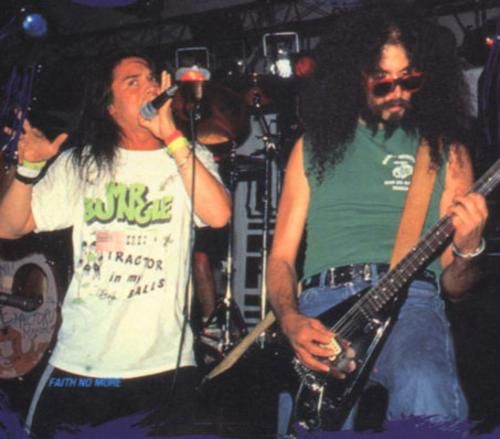
Mike Patton and Jim Martin
When he first “discovered” Patton, I imagine Martin returned to his FNM bandmates and said, “I found the guy!” and he handed them the demos. As musicians themselves, I imagine they heard Patton’s talent, but they couldn’t reconcile it with Faith No More’s sound and image, until he auditioned for them. Again, that must’ve been one hell of an audition to blow them away like that.   When Patton joined FNM, the music for The Real Thing (1989) was 80-90% written, primarily by keyboardist Roddy Bottum, guitarist Jim Martin, bassist Billy Gould, and drummer Mike Bordin, but Patton wrote all of the lyrics for the original tracks on what happened to be Faith No More’s third album, often crafting those lyrics quickly to fit pre-existing music. Patton contributed vocal melodies and arrangements, that ended up shaping the songs’ final sound. Patton’s contributions transformed the album, and some suggest his input proved instrumental in this album’s eventual success.  As popular as FNM’s The Real Thing proved, there’s evidence to suggest that at least some of Patton’s motivations for joining this Epic band was to expand and amplify his beloved Bungle’s reach. If we stop right here, we all have to thank Jim Martin for taking a chance on this nineteen-to-twenty-year-old singer, because at the time, Mr. Bungle was nothing more than a local act in Eureka, California. They had a couple of almost unlistenable self-produced demos to their name, but how many starving artists had that in late-80s California? How many of those same starving artists dreamed of Billboard Top 100 hits, stardom, and vast amounts of money to follow? Anyone who says this is what motivated Mike Patton doesn’t know his ethos or his outlook, yet he was quite proud of what he and his Bungle bros created, and he wanted us all to hear it. In a 1992 Kerrang! interview, Patton admitted he initially viewed Faith No More as a “means to an end,” hoping their success would open doors for Mr. Bungle. As evidence of that, Patton wore a Mr. Bungle T-shirt in the video for Epic, and he handed a Bungle demo to Faith No More’s label, which led to Warner Bros signing Mr. Bungle to a deal in 1989. Again, those of us who heard those demos, in their raw form, would have a tough time believing Warner Brothers would’ve signed Mr. Bungle if Patton didn’t have some standing as the frontman for Faith No More.  This isn’t to suggest that Mike Patton didn’t devote himself to Faith No More, as he devoted an overwhelming amount of his time and energy to the band during their recording and touring of The Real Thing and Angel Dust (1992). He wrote the lyrics and melodies for both albums, toured extensively (over 200 shows for The Real Thing alone), and handled media duties. Mr. Bungle, meanwhile, was more of a side project during this period. Their self-titled debut (1991) was recorded in gaps between Faith No More’s schedule, with Patton contributing vocals, lyrics, and some production alongside bandmates Trey Spruance and Trevor Dunn.  In 1995, Mike Patton basically proved that a man could toggle between two bands and produce two great albums for each outfit. He played a pivotal role in both Faith No More’s King for a Day and Mr. Bungle’s Disco Volante. Patton wasn’t the first to play in two bands at once, by any means, but it wasn’t commonly done in this era. He stated that his daily routine consisted of recording King for a Day at Bearsville Studios, during the day, then driving down to record Disco Volante late into the night and repeating the same process the next day. “It was insane,” he told the Alternative Press in a 1996 interview. He admitted he barely slept while juggling both bands’ demands.  Patton never claimed to be a trailblazer in this regard, but he’s acknowledged the strain. In a 2001 Kerrang! interview, he called 1995 “a blur,” saying Mr. Bungle was his “heart” while Faith No More paid the bills. If you haven’t heard him interviewed, this is Mike Patton. He is a humble man who often downplays moments the rest of us consider groundbreaking. King for a Day was another great FNM album, not as good as Angel Dust, but better than The Real Thing, in my humble estimation. Disco Volante was, and is, an incredible album that any serious artist would consider a career achievement, better than the self-titled disc but not as great as California. Most Bungle fans disagree on the latter. After spreading himself so thin in 1995, Patton went and got bored after Faith No More’s 1998 breakup, which the band “officially” stated was due to the fact that Faith No More had run its course creatively. Anyone who thinks that Patton would devote himself entirely to Mr. Bungle at this point just isn’t following along. He gets so bored that he ventures out and creates other artistic enterprises that take that definition of weird out to “Here, there be Dragons” locations on the map. He takes it to the ‘if you think Faith No More was outlandish in places, you should check out Mr. Bungle, and if you think Mr. Bungle stretches the boundaries of genre, you should check out a band he created called Fantômas.’ Fantômas became Patton’s new passion project while devoting an overwhelming amount of his time to what I consider the Mr. Bungle masterpiece 1999’s California. We write all of this, and we don’t even get to Patton’s role as the lead vocalist in the five albums of Tomahawk, and then there’s his varying roles in the bands Peeping Tom, Dead Cross, Lovage, and the killer role he played in one of The Dillinger Escape Plan’s albums. He has two proper solo albums, two works with Kaada, various film scores, and over 60 collaborative efforts, various ensembles, and guest appearances on other artists’ albums, including John Zorn and Björk. The overall brilliant catalog this “one-hit wonder” has amassed can be so overwhelming to the uninitiated that they may not even know where to start. 1989’s The Real Thing might, in fact, be the place to start, but I am so far past that starting point that I can’t even see it any more. That’s the problem with true fans of artists, they’ve listened to the artist for so long that they don’t know where to tell you where to start.  Those who like Mike Patton, but don’t have an unusual, almost concerning adoration of him, tell me that Faith No More’s Angel Dust is probably the best starting point, as they say it’s probably the best, most mainstream album he took part in. If that’s the case, I would add Mr. Bungle’s California, Tomahawk Mit Gas, and Patton’s work with the X-Ecutioners as the second class of the Mike Patton beginner’s course. If you make it past that point, and you might not, I would submit Tomahawk’s Anonymous, Fantômas’s Suspended Animation, and Disco Volante as great second-level albums. A trend in Patton’s music I’ve noted, is the 2nd album trend. The first albums are great, but they seem to set a template from which to explore the dynamic further, and Patton and his various crews seem to peak with the ideas germinating around in their heads concerning what more can be done with this band. He helps build on the base idea of that first album, and they usually create something of a creative peak with those second albums. Don’t get me wrong, I love the third albums, as in King for a Day, Suspended Animation and Anonymous, and as I wrote I think California is better than Disco Volante, but the second album peak seems to be a standard for most of Patton’s ventures. (Most true Bungle fans would say Disco Volante is superior to California.)  I imagine those with some authority in the conventional music world might begrudgingly admit that they once considered Mike Patton one of the most talented singers in rock music. They probably all acknowledged that he possessed one of the most versatile and dynamic voices in modern music, characterized by an extraordinary vocal range, stylistic adaptability, and emotive depth. His voice spans six octaves, reportedly from E1 to E7, though some sources conservatively estimate around five octaves (approximately C2 to C7). This range allows him to seamlessly shift from guttural growls and primal screams to operatic falsettos and silky crooning, often within a single song. The experts who admitted all that might also add, “At some point, it didn’t matter how talented he was, because he wasted that incredible voice on music so abrasive that he basically alienated so many of us. In 1995, we all loved the underappreciated King for a Day, but when he hit us with Disco Volante, we shook our heads trying to figure out what he was doing. Most of us dismissed the initial Bungle album a one-off side project, then he doubled down with an even weirder album, and he topped it all off with an album we considered career suicide with the vocal experiments on Adult Themes for Voice (1996). That led us to dismiss him, because we realized he had no interest in becoming a marketable talent.”  If you’ve read the writings of mainstream rock critics for as long as I have, you know that they have a difficult time understanding why someone would pick up a pencil and musical instrument and not try to do everything they could to sound like Springsteen, Dylan, or Joey Ramone. They don’t understand why someone would use vocal effects, as opposed to writing meaningful and important social commentary to help us reshape our world. We could excuse this with the idea that musical tastes are relative, but their blanket dismissal of anything different led me to start reading periodicals like Alternative Press and Decibel, who recognized what artists like Patton were trying to do. They praised Patton for his risk-taking, and they hailed his fearless innovation. As for the “marketable talent” comments we’ve heard, some fans and critics note that while he abandoned whatever mainstream potential awaited him, Mike Patton did develop a substantial cult following with each progression into the weird, strange, and just plain different.    The next question any gifted artist must ask themselves soon after they discover they have a talent for something is what do I do with this? Patton, and Faith No More, could’ve followed up 1989’s The Real Thing with some version of The Real Thing Part Deux, and they could’ve gone onto develop a template, or a formula, in the ZZ Top, AC/DC vein. The mainstream music critics often eat up commodification of a brand as a cash grab. Mike Patton, and all of the musicians he chose to surround himself with in his numerous ventures, could’ve made a whole lot of money, enjoyed all the trappings of fame as rock stars. We can saw all we want about artistic integrity and all that, but it can’t be easy to turn away from the prospect of making truckloads of money. Contrary to what detractors say, money and fame can bring a us whole lot of happiness … if we love what we’re doing. If Mike Patton, and all of the musicians he chose to surround himself with in his numerous ventures, followed the formula of “building trust” with listeners, they would’ve been so bored and unsatisfied artistically. Patton obviously chose to use whatever gifts and talent he had to confound us and obliterate our boundaries in his pursuit of his version of artistic purity, and he chose projects and players who shared his philosophy. If the young Patton had a career path, or a place he “wanted to be in twenty years,” he obviously grew so bored with the “current” direction of his career so many times that he needed to do something decidedly different and out of his comfort zone so often that I don’t think he has any comfort zones left to destroy.

KISS: Keep it Simple, and Silly!


“If you listen to KISS, you’re stupid!” said an anonymous poster on a message board.

I’ve been through my Michael Jackson phases, KISS phases, Radiohead phases, King Crimson, Frank Zappa, Beatles, and too many others to list here. “Did you say you went through a KISS phase? You like KISS?” Sure, back when I was young, and all I wanted to hear were fun, silly, and artists who kept it simple. I grew out of them, to some degree, but I still listen to them every once in a while. And what’s wrong with that? What’s wrong with keeping it simple and silly, anyway? It’s fun.  

There are no reported connections between the band members choosing the name, KISS, and the acronym, the latter of which many state stands for Keep It Simple, Stupid, but has any rock band ever embodied that acronym better than KISS? 

The brief history of the acronym KISS is that it was developed by a lead naval engineer who instructed his team of engineers to design aircraft to keep the designs so simple that they could be repaired quickly on the battlefield. 

A Brief History of KISS 

Wicked Lester was the band Gene Simmons and Paul Stanley belonged in shortly before they decided to form their own band. Wicked Lester, according to Stanley and Simmons, was all over the map. I’ve never heard the music on Wicked Lester’s lone album, but those songs apparently involved keyboards and a flute. The two of them confessed that they didn’t know who they were back then, and they didn’t know what they wanted to do. They didn’t say that the music of Wicked Lester was too complicated and complex, but that was my takeaway. My takeaway is that they wanted to create a masterpiece in the manner all young artists want to create the next Dark Side of the MoonZoso, Sgt. Peppers, Exile on Main Street, or Aqualung. Whatever they were trying to do, they realized that it wasn’t them. They decided to tear it all down and create KISS (the acronym) tunes that young kids could enjoy and their grandparents wouldn’t find too offensive. They decided to play big songs that could be played in arenas.  

KISS ended up being the perfect band for “stupid” young, pre-teen boys who didn’t care about sophisticated complications of deep, moving music that could be defined and redefined with repeated listens. The KISS demographic, for most of my youth, was almost exclusively young and male. Some girls liked the song Beth, but they couldn’t believe the song came from KISS. (When I was young, I considered Beth a betrayal, as I considered KISS the only band that I could trust to avoid going soft. I never heard of AC/DC at that point.) KISS was fun, theatrical, arena rock that lifted you up on your feet, with a fist held high while you sang the lyrics with them. 

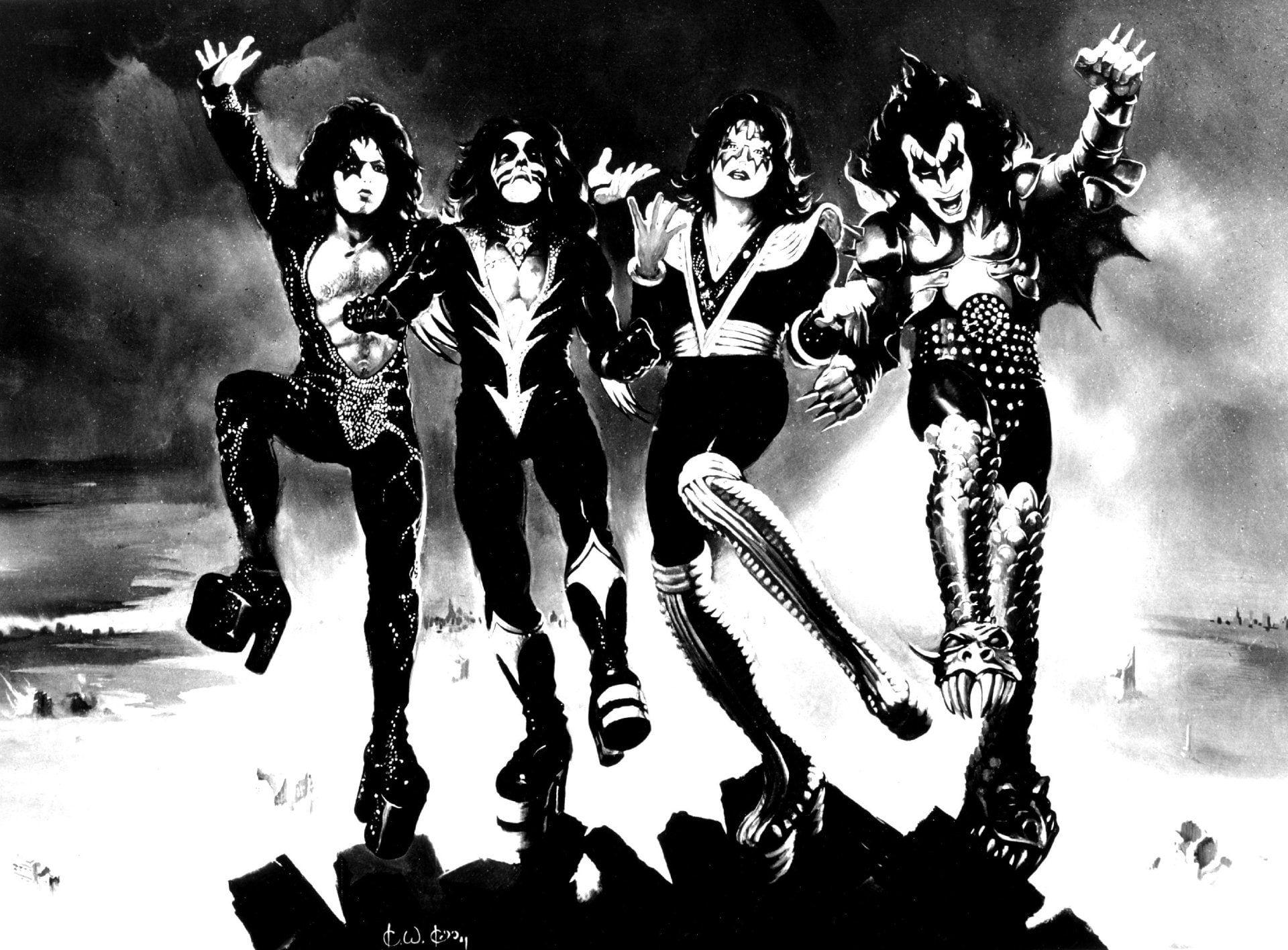
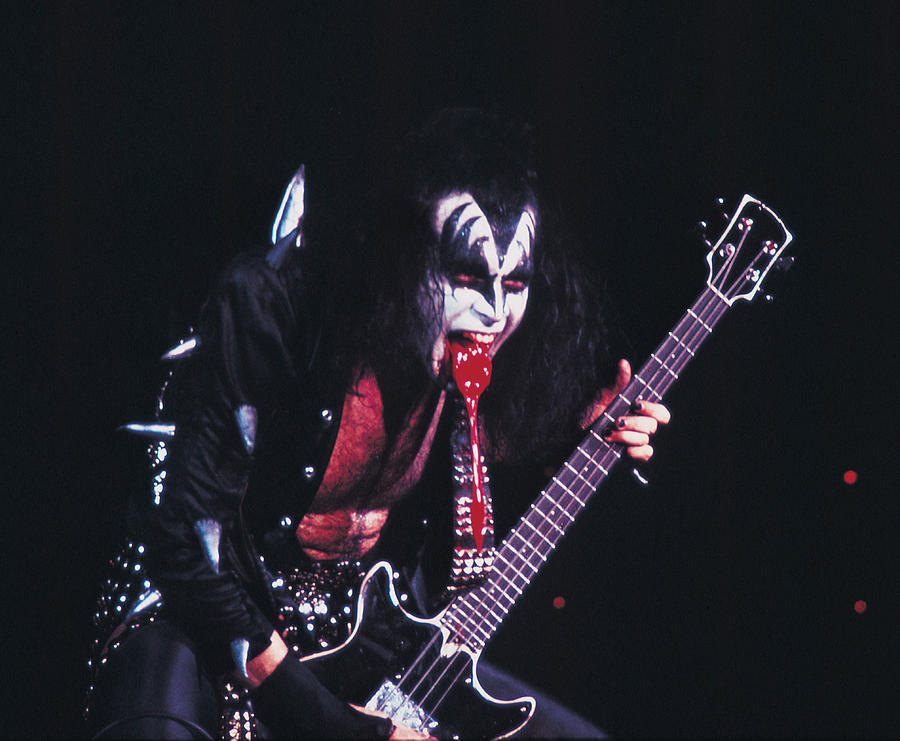
My neighborhood friends and I used to pretend that we were KISS-in-concert. I was The Spaceman, my best friend was The Demon, and his little brother was Catman. (Nobody wanted to be Starchild.) We would play air guitar and air drums in an area they called the basement. I would arch back like Ace did when he played his solos, because I thought that was one of the coolest things ever, and my friend waggled his tongue, spat blood, and pretended to blow fire with Gene. So, while the rest of you were listening to the important and vital music, we were having fun. 

KISS didn’t invent the terms arena rock, pomp rock, corporate rock, or anthemic songs, and the terms weren’t invented to describe them, but KISS is now one of the first bands that come to mind when we hear such terms. 

Who you Is?

KISS albums were chock full of silly, simple songs that won’t move you spiritually or cause anyone to think of the philosophy of Epicurus, but as the aphorism that some attribute to Leonardo da Vinci says, “Simplicity is the ultimate sophistication.” If you consider it a stretch to attach anything KISS did to the term sophistication, I feel you, but how much effort goes into achieving complex sophistication, and how much restraint does it require to keep it as simple as possible?

Who is the better writer William Faulkner or Ernest Hemingway? Those who love Faulkner often talk about the beautiful language he used to paint an images in the mind. “It was powerful and provocative,” they say. Few would argue that Faulkner doesn’t deserve to be considered one of our greatest writers, but there was a feeling of “could we get to the point here” when reading him. Hemingway sought to paint with an economy of words, seeking picture perfect sentences to describe and characterize in the most succinct manner possible. One, it could be said, could not wait to show us what a great writer he was, and the other restrained such impulses to make his stories more readable to a wider audience. Both might suggest the other insults his audience in relative ways, and both might say theirs is the finer artform. Both audiences would claim sophistication in their own right and the sophistry of the other.  

The point is we all know who KISS were. All we have to do is look at them to know that subtlety and sophistication were not their driving force. The point is not to denigrate KISS, but to say they put together a package far different from the one employed by a Bob Dylan or a Radiohead. The point is we know who KISS are, yet message board contributors continue to take time out of their day to remind us how awful they were. “…But I like them.” “That’s because you have such poor taste in music.”   

Why does anyone feel the need to go to a message board to inform the world how awful YOU thought KISS were? “I can’t help it, I’m just so durn sophisticated.” That’s fantastic Papa Smurf 124, but you do realize that your precious anonymity means that no one really cares what you think?  

I used to denigrate people who listened to Whitney Houston and Celine Dion, in the manner people now denigrate the average KISS fan, but I realized the market is wide enough and divergent enough to welcome all. You can be a KISS fan, a Radiohead fan, or a Mariah Carey fan and know that no one is superior or inferior. They just enjoy listening to different types of music, and why do you care so much that they do? I choose Radiohead as an example of the complete opposite of KISS, on the musical spectrum, among mainstream acts. Radiohead writes complicated structures, with deep, provocative lyrics, and I am a huge fan. The question is do they write sophisticated material for the purpose of being sophisticated, so all their fans can prove their sophistication by saying that they enjoy listening to more sophisticated music? They get it, you don’t, because you’re a KISS fan, and they’ll spit the latter in the most condescending tone possible. KISS wrote simple, party music. Everyone knows who they are. Everyone knows they were a toe-tapping, foot stomping band who rarely tried to be something they weren’t (The Elder and Carnival of Souls excepted). 

Music is the tie that binds. It can be the only thing that you and your brothers share, the reason you fall in love, and the thing that helps you make friends from such divergent backgrounds. It, more than any other artistic medium, brings us all together. There’s a little something out there for everyone. For others, and they are in the minority, it can be the great divide.