In one specific retelling, Joe (Martin) Cook, recounts a sit down he had with Frank after Annie brutally whipped him with a stick “Why is Annie the way she is?” stepson Joe (Martin) Cook asked Frank after Joe endured one of Annie’s brutal beatings.
“I don’t know,” Frank said after a long pause. “When we were first married, she was a good wife. She worked hard and was never mean. Then she got sick and went down to Omaha to see a doctor. She was gone quite a while, and when she came back, she was –different. She went back to Omaha a few more times when she didn’t feel well, and every time she came home more –spiteful, meaner.

“You see,” Frank explained. “Annie isn’t happy, hasn’t been for a long time, and she doesn’t want anybody around her to be happy. All she’s thought of, or cared for, for years, Joe, is money. Money and the power over people to make them do what she wants them to do. It’s a sickness, boy, a sickness of the mind. I guess we should feel sorry for her, Joe. It is a terrible thing to be sick in your mind.”
There’s no question that Annie Cook had some sort of mental illness, but what drove that? In Evil Obsession, author Nellie Snyder Yost provides some informed speculation, based on Frank’s characterization, but she abides by Frank’s characterization that it was all about greed, lust for power, and blind ambition. I don’t question that that was Annie Cook’s primary driver, but it does seem a little too surface. It doesn’t explain why she enjoyed hurting members of her own family so much. It doesn’t provide answers for why she progressed from someone who worked hard, to a micromanaging superintendent that could be a little mean at times, to a woman who could be cruel, sadistic, and have no regard for the sanctity of human life.
If the reader suggests that Annie may have done so to manipulate her workers and family members, and keep them submissive, I understand that, but a controlling, micromanager could’ve accomplished that. Even a mean person could’ve found numerous other ways to achieve that. Only an unusually awful would do such things, the way she did them, because she clearly enjoyed humiliating and hurting those she considered her possessions. This, in my opinion, requires a deeper answer to Joe’s question, beyond the “greed and lust for power” answer.

Ms. Yost might say that it’s not the job of a nonfiction writer to provide answers through psychoanalysis and speculation. The quality nonfiction writer provides the evidence to allow their readers to draw their own conclusions. We all respect that answer, and most of us will agree, but there’s nothing wrong with providing some insight based on research.
If we take some of the bullet points of Annie Cook’s life and draw lines from her past to her present, we could speculate that spending an overwhelming amount of her life on farms may have influenced Annie’s views on the animals vital to a productive and profitable farm. That insight could lead an author to suggest that Annie Cook may have regarded the guests of her Cook Poor Farm as nothing more than another type of animal working on her farm.
Before we continue, I think it’s important to note that an overwhelming majority of farmers and their family and friends, are upstanding members of their community. I was going to write that the percentage of good people versus bad in farming communities is equal to members of every other demographic, but I knew some farm kids growing up, and I know some adults who spent their entire lives on farms. In my experience, most farming families don’t just turn out quality individuals on par with other families. They often turn out better people than most. There are numerous reasons why farm kids turn out to be better adults, but the first and most obvious reason is that most farmers work such long hours that most of them don’t have the free time the rest of us do, and as the old proverb states, “Idle hands are the devil’s workshop.”
 As with most farm kids, Annie started out with a child’s innocent love of animals, but the harsh realities of farm life—harsh to an innocent, naive child anyway—hardened her. She probably fed and tended to the farm’s chickens, pigs, and other livestock so often that she developed a fondness for some of them. Their eventual deaths probably hit her hard, but she learned, as all farm kids do, that livestock not only provides food for the family but financial gain when they’re sold to the local butcher. It’s a way of life on a farm, that farm kids learn, but we can imagine that they had a tough time adjusting to that early on.
Everything that lives dies, and farm kids learn that earlier than most kids but they must also come to grips with the harsh reality that some animals live so long that they overstay their usefulness. Farmers must measure their livestock with a Feed Conversion Ratio (FCR). The FCR is a measure that farmers use to determine how much it costs to feed an animal versus their level of productivity and overall sense of usefulness. Thus, if Annie’s favorite chicken, pig, or whatever livestock she loved most on a farm failed to produce enough to outweigh what it cost to feed them, she knew they were not for long.
Most farm kids also have more pets than most kids, as farms need cats to keep the rodent population manageable, and they need dogs to protect their territory in other ways. They learn, as all kids do, that very few animals live as long as humans. Farm kids experience so much death on a farm that, for lack of a better term, they just get used to it.
After spending a lifetime on farms, experiencing and learning everything it takes to run a profitable farm, how much of a reach is it to ask if an unusually awful person, with a twisted perspective that could be the result of a mental illness, could view human beings as nothing more than a cog in the machine of farm production? How much of a reach is it to suggest that Annie viewed the humans on her property as her property, or something she owned in the same manner we own cats and dogs, goldfish and parakeets, and livestock. Every state now has their own variation of cruelty to animal laws now, but the laws of the 1930s were relatively limited in scope compared to modern standards. The 1930s citizen could do whatever they wanted to their pet parakeet back then, because they were the owner. How much of a reach would it be for an unusually awful person to suggest they own the guests of the Cook Poor Farm in the same manner, and they can do what they want to them using the Feed Conversion Ratio (FCR) to determine how much it costs to feed them versus their level of productivity, or if they’ve overstayed their usefulness in harsh, stark, and unusually awful determinations of the profitability of the farm.
Humans are easier to train but harder to maintain. Humans are able to do the more complex work animals can’t, and most of them can outwork other animals, but unlike other animals, humans tend to stubbornly seek freedom, fun, and trying to get the most out of life. They also have a way of overstaying their usefulness that just doesn’t make sense financially. The first inclination we might have is to fire the personnel who don’t help turn the farm profitable, but Annie wasn’t paying her farm hands. They were either poor or indigent wards of the state, or family members working for free. The next logical next step, for the farm owner is to find a way to encourage them to work harder, and fear can be a great motivator. Annie believed that mental and physical torture helped keep her staff productive. If that failed to produce results, how hard is it to convince an unusually awful person that those farm hands are overstaying their usefulness?
Anytime we read a true crime book, like Evil Obsession, our goal is to derive motive and motivation of its monsters. As hard as it is for us to imagine how someone could be so callous, malicious and sadistic, it has to be much more difficult for them. “Well, I don’t think a monster like Annie spent one second reflecting on what she did,” you might say. I wouldn’t dispute that, except to say that you might be talking about moral justification. I don’t think Annie Cook spent a second trying to morally justify her actions, but she surely had some “I’m not a monster” moments before a mirror. I base that on my experiences with Beryl Carnelia, who she never tried to morally justify her actions, but she did try to square it in a way that made sense to her and those she respected.
Beryl Carnelia
 I never met Annie Cook, or anyone who knew her personally, but I knew Beryl Carnelia, a woman so similar to Annie that reading Evil Obsession felt intimately and eerily familiar. Beryl ran a prostitution ring from her bar, and she exclusively hired less fortunate workers to do the manual labor chores that needed to be done at the bar and in and around her home. The less than fortunate workers didn’t require much money for their services, or respect, and she didn’t give them either. She beat them down mentally as opposed to the physical torture Annie would with her less than fortunate staff, but Beryl’s staff feared her in a manner somewhat similar to the manner in which the staff at the Cook Poor Farm feared Annie. No one feared Beryl ever putting them in an abandoned wagon box to fry in the sun and eventually starve to death, I should clarify, but they feared her abusive tongue. The portrait of Annie Cook that Ms. Yost paints reminds me of Beryl Carnelia most in the sense that they were colorless individuals who were fundamentally unhappy.
Those who had the opportunity to talk to Beryl learned that this woman had a rock solid personal constitution built on a foundation of solid moral values. Beryl followed the golden rule of treating others the way she wanted to be treated, as long as they were as respectable as she was. She knew the difference between right and wrong, in a philosophical sense, and she would drop the great declaration of human equity and universal rights that “all men and women are created equal.” Watching how Beryl treated the less fortunate, led some of us to think that if she ever read anything, she really would’ve enjoyed author George Orwell’s “but some are more equal than others” asterisk to that great declaration.
She would say things like, “Yeah, but I did that to John Wissam,” when we called her out on the inconsistencies of her philosophy when it came to the way she treated the less fortunate. “He’s an idiot.” She said that as if we should join her in recognizing the clear distinction between an upstanding man, one who may have experienced some rough times, and a total idiot like John Wissam. Anyone reading the characterizations Ms. Yost gathered of Annie Cook can see that she drew the same distinctions.
Beryl, like Annie, could not stand to see certain people happy. It just rubbed them the wrong way to see select people laughing, enjoying life, and acting the fool. As Annie’s husband Frank said, “Annie isn’t happy, hasn’t been for a long time, and she doesn’t want anybody around her to be happy [either].” Those who are miserable in their own skin are just like this, and they don’t even know they’re doing it. If we were to call them out on it, in the moment, they would deny it, or they would drop the line, “It’s John Wissam. He’s an idiot.” And we let it go, because John Wissam has adapted to this part of his existence, and we know it’s just a part of their relationship. When she does it to us, however, we realize that Beryl Carnelia just can’t stand seeing other people laughing, acting the fool, and enjoying life.
There’s a tale told in Evil Obsession of Annie’s daughter Clara purchasing a brand new paid of overalls for Joe (Martin) Cook. The two of them enjoyed the new overalls for what they signified and symbolized for a spell, until Annie ordered Joe to remove the overalls. She took the overalls and destroyed them. Another tale speaks of Mary proudly displaying a certificate of achievement from school, Annie took it from her and destroyed it. Another incident involving Mary, spoke of how Annie criticized her for spending too much time in front of a mirror. She cut the girl’s hair off at the ponytail.
“That’s too much,” her daughter Clara complained. ‘That’s too much?’ the reader asks. ‘Annie scarred Mary for life with a hot poker to the face, nearly burned her feet to frostbite when she was a five-year-old, and physically beat Mary with a buggy whip almost every say for sixteen years, and she mentally abused the young girl for sixteen years to essentially damage-to-ruin her entire life, and cutting her hair off at the ponytail is too much for Clara?
To despise others’ happiness that much, it has to be ingrained, right? The dark, colorless nature has to come from somewhere, and our first suspect is the family. Evil Obsession does not provide a thorough analysis of Annie Cook’s family, but we assume that they had to be a dark and colorless family, and Annie absorbed that darkness. As Frank characterized Annie, Beryl appeared to be a good person at one time. We never knew that to be fact, but we often caught glimpses of a kind, loving character, who was full of fun and frivolity. We knew that Beryl Carnelia was spared, or saved, in the past, but we never knew the specifics of what she endured in her youth, because she never talked about her past. Thus, we could only guess that she had whatever color she had taken from her, or stolen from her, through circumstances she couldn’t control.
 What is a colorful character? We all define that term differently, depending on the character, but I have my own definition of a colorful character by way of contrasting it to the Annie Cooks and Beryl Carnelias of the world. Beryl laughed at times, we saw it, but it made us feel uneasy when she did, because we knew she wanted our jokes dark. “I have a very dark sense of humor,” she confessed, but we all say that. We all enjoy hearing stories about human foibles, but some like Beryl, and presumably Annie, need something more if they are going to be entertained. There are simple stories of degradations and humiliations, and we’ve all heard those so often that they’re just not as impactful or personal. Beryl types, Annie types, and the type of person we could call unusually awful consider those stories equivalent to cute and clever knock-knock jokes that might not even get a smile out of them. They want stories about human degradation and humiliation. They want pain, be it emotional or physical, in their punchlines. They want to hear a story that if repeated to the subject might cause a tear in their eye.
Beryl saw the world in black and white so often, and in so many situations that when we talk to her, we can see that she’s had the color drained out of her. She became black and white, colorless, vague, unmemorable and miserable. She became so consumed by bitterness that we can feel it shortly after we say, “Hey, how you doing?” and she responds with some witty, dark retort that she’s learned along the way. Again, we all do this to some degree, but something about the dark trail that followed Beryl’s response told us that somewhere along the way, darkness consumed her.
Final Days
“Evil always get theirs, in the end,” social commentators tell us. “It might take a while, but it always comes back, one way or another.” And it does …in the movies, and other fictional tales that are built to satisfy our need for substantial forms of retribution. We could say that the darkness so consumes souls, like Beryl and Annie, that we say, “Imagine having to live with them. Imagine being them.” That is its own form of intangible justice, but it’s not enough for us. We want real, tangible justice for the victims who suffered at their hands, and that does not always “come back, one way or another.” Sometimes, evil doers get away with it all, and they never pay a price.
 When we immerse ourselves in the tale of an unusually awful person like Annie Cook, the reason it makes us feel so uncomfortable is based on the idea that they disrupt the moral architecture of our world, and we seek some form of retribution to provide a scaffolding that repairs it. We crave resolution not just for the victim, but for the symbolic universe their tormentors fractured. Annie never did time, she was never subjected to an official investigation of any sort during her life, and she never suffered in anyway that would satisfy those seeking some form of karmic justice.
As she laid on her deathbed, however, Mrs. Cook had very few visitors, the only documented one being Joe (Martin) Cook. The officials who befriended her in life were surely relieved that their secrets died with her, and they probably didn’t want their name associated with her legacy in a way that a hospital visit might invite. Her family and various other associates may have been just as glad to see her go for their own reasons. That latter line might straddle the line of speculation, but it’s based, in part, on those witnesses of Annie Cook’s life that Nellie Snyder Yost interviewed after Ms. Cook’s death. Thus, the only form of subtle retribution her victims and other observers felt at the end was that Annie Cook managed to estrange so many she spent her final days on her deathbed, friendless, alone, and unloved.
If we, somehow, found out that we would die alone and unloved, it might reshape how we live our lives going forward. Would it affect someone like Annie Cook? I can tell you that it didn’t affect Beryl Carnelia. What affected Annie, the woman who killed her daughter, and estranged the husband who once loved her with a malicious, unfounded charge of incest was the idea that she might lose her money. “Oh gawd, help me take care of my money, Oh Gawd help me take care of my money, Oh gawd…” Annie bawled over and over in an irrational state.
When Joe (Martin) Cook, her foster son, and her only documented visitor, heard her shout this, he probably thought about what Frank had said about Annie, “All she’s thought of, cared for, for years, Joe, is money. Money and the power over people to make them do what she wants them to do. It’s a sickness, boy, a sickness of the mind. I guess we should feel sorry for her, Joe. It is a terrible thing to be sick in your mind.” Poor old woman, he thought after leaving what they assumed her deathbed, all she had to show for eighty years of living was her farm, a little money, and the questionable loyalty of a dozen people she “bought”. Not a friend in the lot. Not a friend anywhere.
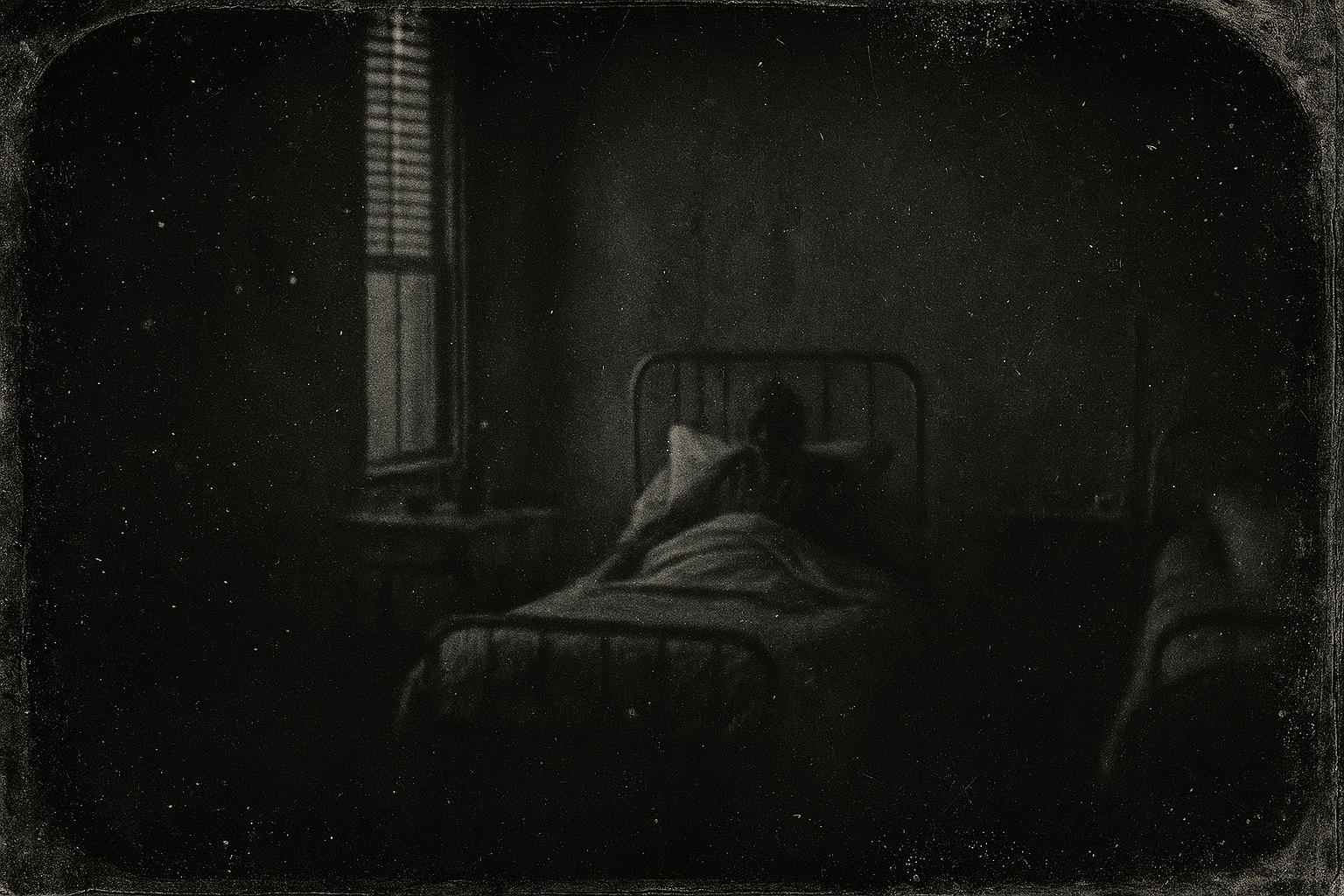 Dying without a loved one crying at your bedside, or even a friend visiting her in her final days is probably not what readers would call a very satisfying form of retribution, but when her final tears were cast for her money, the only thing that provided her life meaning and comfort, it does feel fitting and emblematic of her empty and meaningless existence.
“Evil always get theirs, in the end,” social commentators tell us. “It might take a while, but it always comes back, one way or another.”
The last vestige of hope readers cling to when we hear that “Evil always get theirs, in the end,” was did Annie Cook have a deathbed revelation? Did she find some way, even in an Annie Cook way, to seek some sort of redemption of some kind or ask us for forgiveness in a spiritual or more general way?
One of the former North Platters telling me this story knew a deathbed nurse who tended to Annie Cook at the end, and the nurse informed her that Annie Cook was unreasonably awful to and demanding of those who tried to offer her some relief from whatever pain she experienced in her final days. (Ms. Yost also alluded to this on page 255 of Evil Obsession.) We can also be sure that Annie did not link the pain she experienced with the physical and mental torture she inflicted on others. To her, it was probably just pain, black and white, and colorless pain, and all she had to do was call the nurse for more pain reliever. If the reader of Evil Obsession read furiously to the end to find her comeuppance, some form of retribution of any kind, they either have never known someone even close to Annie Cook, or they didn’t read carefully enough. Annie Cook, like Beryl, died quietly, unceremoniously, and without any hint of regret or remorse, because she never thought she did anything wrong.






 Rilaly