Guy no Logical Gibberish II


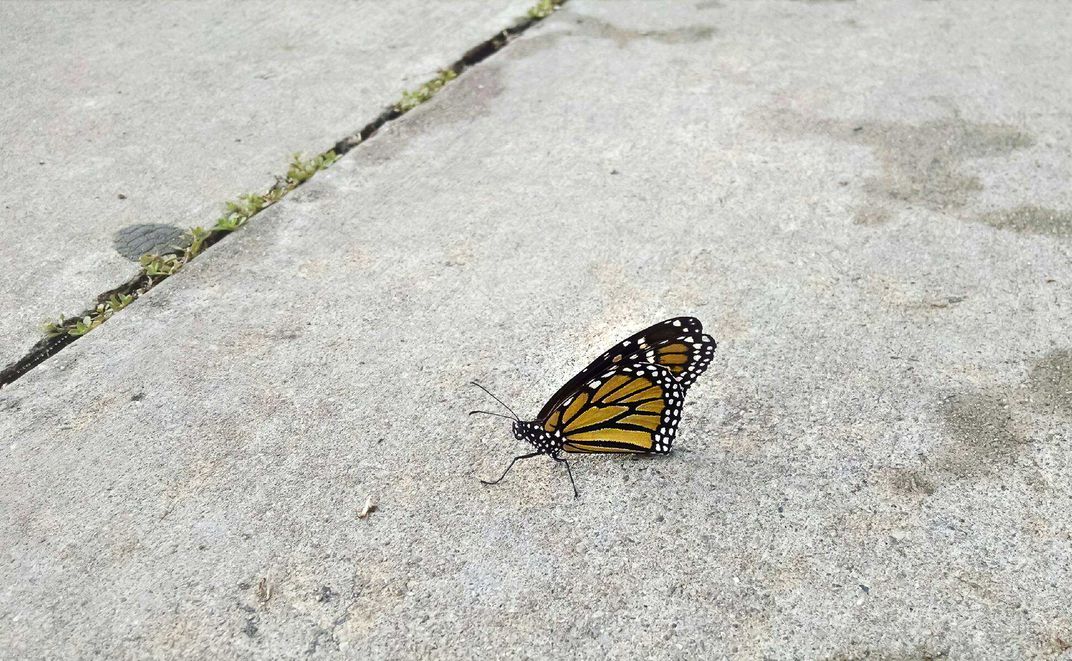
1) “If you can’t create, you perform; if you cannot perform, you teach.” Those who have no talent to create, perform, or teach, critique those who can. Those not knowledgeable enough to critique in a constructive manner, make it their lifelong goal to crush all of the above. They kill the butterfly, because they cannot fly. They knock it down, smash it into the sidewalk, and twist their foot on it for good measure. Their favorite shows run clips of the errors, mistakes, and bloopers of the accomplished, for the enjoyment of who could never create or perform. When the successful fall, it makes them feel more comfortable in their quiet, sad corner of the world. They never tried to accomplish anything outside their comfort zone, and anyone who does should know they’re subject to scorn and ridicule. Creators know that any time they create, they invite these types to treat them like a piñata, but we move on from our failed or subpar creations with the knowledge that they still have to live with the idea that they can’t create anything worthwhile. They’re stuck in that, and they laugh at those who struggle to achieve flight. They don’t remember how it started, and they don’t know why they enjoy it so much. When they started pointing out the errors creators committed, and ridiculing them for those errors, it just felt right.
2) How many us spend most of our time trying to justify our existence? When an employer hires us to find errors in another employee’s work, we find them. Some errors require notation, constructive criticism, and possible retraining, but most of the errors we find are trivial, and we know it, but finding them justifies our employment.

When someone suggested that I was “brutally honest” I tried to live up to my billing. I enjoyed this characterization so much that I eventually worked my way to “You’ll say anything”. I loved it. Others loved it too, and they wanted to be around me on a “You never know what he is going to say next” basis. I lived by the credo, “It’s not funny, not truly funny, unless someone gets hurt.”

Two consequences of this pursuit soon emerged. People stepped out of their woodwork to get me back. Otherwise, sweet people made it their goal to get savage with me. They capitalized on my every mistake and they searched for my vulnerabilities. I considered myself a victim without reflecting on how I brought this house of cards down around me. I also hurt some peoples’ feelings. Some people seek offense at every corner, but there are others. The others are innocent victims leading otherwise inoffensive lives. They have vulnerabilities. We have vulnerabilities, but the “brutally honest” who “will say anything” don’t have any regard for feelings. We might have been joking when we said something brutal about someone, because no one else would, but how many of those who are brutally honest with us are only joking? 

“When you think you’re the toughest kid on the block, someone is going to come along and beat the tar out of you,” my dad said when I told him the story about how one of my best friends beat up one of the toughest guys in school. I told him that my friend was now the talk of the school. In some strange way, I thought my dad might be proud that one of my best friends, someone with whom the two of us dined, was now considered one of the toughest kids in school. He wasn’t proud. “Tell your friend that his worries aren’t over now. They’re just beginning. Kids are going to come out of the woodwork to challenge him now, and your friend will learn that there’s always someone tougher.” When I argued that point a little he added, “There are no Queen’s rules of order when it comes to fighting. There’s always someone nastier, meaner, and dirtier. They might even pull out weaponry. There are no rules of war, and some kids will do whatever it takes to win.”

Due to the fact that I never tried to prove I was the toughest kid in the school, I didn’t think that advice applied to me. It didn’t apply in this way it was provided, but when my good friends started dropping all these characterizations at my feet, I discovered that there’s always someone smarter, funnier, quicker, and meaner and nastier. I also learned that people came out of the woodwork to take me down. They capitalized on my every mistake, and they searched for my vulnerabilities to hit me where it hurt. My fighting friend never learned the lesson my dad thought he would, but I did.    

After I learned my lesson, one of the vulnerable teed me up by telling me “Where it hurts.” I didn’t know the guy that well, and he’s telling me where he’s most vulnerable. If I didn’t know better, I would’ve thought it was a test. It wasn’t. I held my fire, and left comedy gold at that lunch table. I could’ve had a moment at the his expense, and people lived for the moments I created, but I let my people down by letting the moment float by without comment.  

3) “Never tell them where it hurts.” We make this mistake all the time. We’re with friends, and we get to talking. Somewhere along the line, we reveal a vulnerability. We also reveal our vulnerabilities to those with whom we feel most comfortable, and we also “get vulnerable to ourselves to potential friends. When they use this information to crack a harmless joke, we get defensive.

“Ah, come on, I was just joking,” Marvin says. “Don’t be so sensitive.”

“Okay, but I just told you that I am very sensitive about that.”

Marvin is not a bad guy. He’s not overly insensitive or mean, and we did not make a mistake when we chose to befriend him. Marvin is simply a victim of the “don’t think pink” paradox. The paradox suggests that the moment after we say, “don’t think pink”, pink will be the only thing on the mind of everyone we warn.

Marvin probably didn’t even know why he cracked that joke, but when we revealed our sensitivity to him, he saw pink. He never noticed how large and glaring our flaw was, until we told him about it. Every time he sees us now, he sees pink, and we’re all pink on the inside. 

If you want to debate how prevalent this predilection is, try telling someone how sensitive you are about the size and shape of our left eyetooth? If you have no such sensitivities, tell a trusted friend that you are extremely sensitive about it. They might not say anything about immediately, but they will eventually crack a harmless joke about it. They will eventually see pink. Should we think less of them in the aftermath, or should we view it as a challenge similar to the don’t think pink challenge, or the challenge we experience when we have a sore in our mouth. We know touching the sore with our tongue will only irritate it and make it worse, but we’re obsessed with it. When we see all of this for what it truly is, it shouldn’t concern us as much as how often we forget to cover our wounds when we meet new people. Never tell them where it hurts.  

4) “How many times do I have to forget these lessons before I finally learn them?” we might ask ourselves the next time someone exploits our weaknesses. “If someone taught me such principles, I might not make them so often.” Were our parents this incompetent? Are we incompetent parents? How do we prepare our kids? Should we? Do they have to learn such lessons on their own, or can I prepare them better to help them avoid the lessons I keep forgetting?  

“I gave birth to you, what more do you want?” was the philosophical answer provided by the Rosanne Barr School of Parenting. It was a line she delivered on her hit show Rosanne. It was a joke. We don’t know if she believed it or not, or if it was just something she said to be funny. Students of comedy tell us that clever humor can hit the laugh-or-meter, but if the purveyor of comedy wants to hit that rarefied air of hilarious, the joke needs an element of truth that the audience can relate to their life. It was a joke, but it obviously resonated with some of us.

When our kid was born, it was the most glorious moment in our lives. The kid was life, and no matter how anonymously some of us live, this kid will provide proof that we were here. Then it happened. Parenting got all hard and stuff. The kid didn’t appreciate us as much as they should have. The kid talked back, the kid wanted things they couldn’t have, and we weren’t always right. A line like, “I gave birth to you, what more do you want?” let us off the hook. We did our job. It’s their job now to do something with it.

“If you have to ask,” Adam Carolla once said on his podcast, “then you’re probably doing it right.” If you feel the need to call into a show or read a book for answers, and ask other parents for advice, you’re probably what they call a good parent, because it shows you’re trying. We’ve all heard the phrase parenthood is the hardest job in the world, and we often put parents on pedestals, but parents aren’t good people just because they become parents. Some parents know this, and they struggle to find the best way to raise their child. “The very idea that you just called into a national call-in show to ask that question probably means you’re a good parent,” Carolla added, “because it shows that you care.” Carolla then went onto answer the caller’s question for the benefit of all of the “I gave birth to you, what more do you want?” parents who might be listening in.

Turn and Face the Strange


“Don’t bendStay strange.” –David Bowie

“All children are born artists, the problem is to remain artists as we grow up.” –Pablo Picasso.

“We don’t grow into creativity, we grow out of it.” –Ken Robinson said to further the Picasso quote.

“Don’t bend. Stay Strange,” is such a simplistic and beautiful quote that if we heard it earlier in life, some of us might have stitched it out on oven mitts, T-shirts, and flags.

“What’s it mean though?” we ask,

David Bowie answered in an appearance on a 70’s show called The Midnight Special. It’s difficult to capture the effect that weird, strange, and just plain different appearance had on me all those decades ago. I was floored. I was flabbergasted. I craved the weird, even when I was young. Even before I knew the totality of what embracing meant. When Bowie walked out, I thought it was shtick. I waited for him to break out some Steve Martin-ish routine, and then he started singing. Bowie’s commanding voice informed me this was not an affectation. It was a full-on embrace of the weird. It made me uncomfortable, but it also confused me. I was so young, and so confused, that I considered his appearance unsettling, and I needed help dealing with it.

“He’s just weird,” she said. She was trying to comfort me. Her message was he’s so weird that he’s probably being weird for the sake of being weird, and that we should dismiss him on that basis. I argued that I didn’t think so. “If that’s the case,” she said, “we probably don’t want to peel that onion.” I didn’t want anyone to consider me weird, so I tried to dismiss him. I couldn’t look away though. I never saw anyone embraced the weird before. I thought weird was what we whispered when we saw it walking down the street, and we walked a lower case (‘b’) around it.

If Bowie dropped this quote on me, as a kid, it might have helped me through the swamp, but I don’t think Bowie would’ve dropped such a line on a kid. Rock stars are generally impetuous creatures, but I would hope that David Bowie wouldn’t be so reckless as to advise a child to embrace the weird. I think he reserved such notions for relatively stable, confident adults. If he followed that impulse, I think he knew it might cost that kid some happiness, for the world is so confusing to a kid that they need to embrace normalcy until their minds are strong enough to embrace the weird. I also think such a quote might mess with that young person’s artistic cocoon. I think Bowie knew, from firsthand experience, that the struggle to maintain the weird defines the artist in constructive, creative ways. To paraphrase the Picasso quote above, the problem isn’t how to become weird, strange, and just plain different. The problem is to maintain it as we work our way through the mire and maze of childhood.

The chore of the artist is to maintain the element of weird, while melding it with the normalcy of adulthood. Those of us who were weird had some weird ideas that were weird for the sake of being weird. We were passionately weird, and learning how to form an identity. We’re now glad there are no records of our strange thoughts. We needed seasoning. We needed to understand norms better if we were ever going to constructively mock, ridicule, or upend their conventions. This perspective is particularly vital to writers, as it gives them an outside perspective from which to report on those who followed their passion throughout life and embrace the weird, strange, and just plain different.

***

Some scholars, like Sir Ken Robinson, want us to violate this theory by changing school curriculum to accommodate the weird, strange, and just plain different. In his popular Ted Talk speech, Robinson cites anecdotal evidence to suggest that we should change the curriculum to recognize the unique and special qualities of weird, strange, and just plain different students.

Shouldn’t they learn the rules first? Most writers were wildly imaginative kids, and when our kids flash their unique fantastical worldview before us, we remember how weird we used to be. We fondly remember how imaginative and creative we used to be. Our kids reignite that internal, eternal flame in us. We remember how special it was to be imaginative without borders, but we also remember how unstable and confusing that time was. We were impulsively and instinctively imaginative without borders, and we smashed through whatever borders they put in our way, but most of the results of our beautiful and wonderful childish creativity was gobbedly gook.

We didn’t know what we were talking about because we were kids. We didn’t do anything worthwhile, even when we were wildly creative, because we didn’t know what we were doing. We were kids. When we think of the rules, we often think of some humorless school master enforcing discipline at the end of a ruler, but we often forget how many little, seemingly inconsequential matters we learned along the way to help form our thoughts into mature creativity, and how a stew of those little, relatively inconsequential matters and our wild creativity made us who we are today.

There will always be prodigies, but what percentage of the population do we consider prodigies? For the rest of us, there is a special formula to achieving final form. This painfully methodical process involves rebelling against our establishment, succumbing to it, recognizing its inherent flaws, and returning to our rebellion with an informed mind. As I wrote in the Platypus People blog, “one of our first jobs of a future rebel is to learn the rules of order better than those who choose to follow them.” The idea that the manner in which school curriculum deprives, stilts and discourages creativity is a strong one, but do these scholars remember how confusing the adolescent years could be for the kids who weren’t prodigies? Lost in this discussion is our need to understand that which we now deem unreasonable, irrational, and in need of change. Why does this work, how does that work, and how and why should we change this to that? 

“I welcome your complaints, but if you’re going to complain, you better have a solution,” our teachers told us. The crux of that line is the difference between weird for the sake of being weird and constructive oddities. How can we form a solution to the artistic complaints we have, if we don’t first understand the problem better than those who are just fine with it?

The perfect formula, as I see it for the creative artist, as Pablo Picasso said, is to remain weird after learning the curriculum and surviving the need to conform. When we learn how to read, write, and arithmetic, we use them to fertilize the science of creativity. If an artist can maintain their fantastical thoughts after learning, they might be able to employ the disciplines they need to enhance their creative and innovative mind to artistic maturity.

We don’t know many specifics of Sir Ken’s dream school, but one of the fundamental elements he theoretically employs is the need to play. The creative mind, he says, needs time and space to play. Throw them a block and let them play with it, and we’ll see their ingenious minds at work. He dots his speech with humorous anecdotes that serve to further his thesis. We know that Wayne Gretzky spent much of his youth playing with a stick and a hockey puck in every way he could dream up, and we learn that other kids develop their own relatively ingenious little theories by playing. We cannot forget to let them play. It is a well-thought out, provocative theory, but it neglects to mention how important discipline is in this equation. The discipline necessary to figure out complicated mathematical equations and formulas might seem frivolous to a dance prodigy, for example, but Geometry works the mind in many ways it otherwise wouldn’t.

“Why do I have to learn this?” we all asked in Geometry class. “What are the chances that I’ll ever use this knowledge? If I become the vice-president of a bank, what are the chances that knowledge of the Alexandrian Greek mathematician Euclid’s theories will come into play?” One answer to the question arrives when we meet a fellow banker who knows nothing but banking. For whatever reason our fellow banker knew she wanted to be a bank vice-president at a very young age. Her focus was such that she had the tunnel vision necessary to succeed in the banking world, but everyone who knows her knows the minute she clocks out for the day, she’s lost. She might be successful by most measures, but she knows nothing about the world outside of banking, because she never needed any knowledge beyond that which exists in banking.  

“How can you report on the world, if you know nothing about it?” is a question I would ask everyone from David Bowie to the twelve-year-old prodigy who wrote a fantasy novel. The kid’s story fascinated me, because writing a 200 page novel is so foreign to my concept of what it means to be twelve-years-old. I was trying to make friends and be happy at twelve-years-old. I read the news article about this kid with great interest, and if I ever ran into him, I would encourage him to see his talent to its extent, and I would applaud him for what he did, but I would never read his novel. I don’t think a twelve-year-old’s vision of the world would do anything for me.

Sir Ken Robinson doesn’t say that he wants to do away with the core curriculum directly, but in his idyllic world, we need to cater it to the talents of people like this twelve-year-old prodigy, the dance prodigies, and all the other as of yet unrecognized prodigies around the world.

We’ve all heard tales of these uniquely talented creative people and prodigies with tunnel vision. We marvel at their tales, but we’ve also heard tales of how former prodigies don’t know how to fit in the world properly. They’ve reached their goal by producing a relatively prodigious output, but they’re now unhappy. 

How could they be unhappy when people pay them to do something we’d pay someone to do? If the word unhappy doesn’t do it for you, how about unfulfilled? Their weird thoughts of the world are not an artistic affectation. 

Something fundamental is missing in them that they’ll never square properly. Being on the proverbial stage is the only thing that gives them joy, and they understand this as little as we do. It might have something to do with being in the spotlight their whole lives, but it might go deeper than that. It might have something to do with the fact that their authority figures never forced them to be normal, and they never had to learn the basic, core answers the rest of us learned by working through all of the pointless exercises that our core curriculum required. “So, if I take a Geometry class, I’m going to be less confused about the world?” No, but if you learn how to learn how to use your brain to figure out the tiny, relatively meaningless facets of life, it might help you arrive at answers that help you cope with the otherwise random world a little better.

Robinson might be onto something when he suggests that if we feed into a prodigy’s creative instincts, we might have more of them, and they might be happier people as a result. His thesis suggests that most people are unhappy because they have untapped talent that we neglect to foster. Let them play, he says. Fine, I say, but why can’t we let them play at a dance school, in art class, or in a school band? Why can’t we just throw a block at them in their free time? Do we have to devote our entire curriculum to helping them recognize their talent? A strong, confident adult is so difficult to raise that as much as I would’ve loved some devotion to recognizing my weird talent, I think I would’ve ended up deficient in so many other areas that I would’ve been miserable. Devotion to recognizing my weird talents would’ve made me happier in the short term, as I think I was always heading down a certain road I didn’t recognize for some time, but I think I’d probably would’ve ended up more confused than I already am.

“Don’t bend. Stay strange,” is the great advice David Bowie passed on, but I think it should only be used by those who manage to maintain some of the creativity they had in youth and managed to remain artists. Most artists think they could’ve been prodigies if someone came along, recognized their talents, and coached them up, and many think they wasted so much time in school learning things that didn’t matter? Robinson feeds into these fantasies with some anecdotal evidence that suggests if we would’ve just danced more, we might have discovered that we were dance prodigies. He suggests that if we, as parents, learn how to feed our child’s talent, they might be happier. If the child’s interests are satisfied, they might be more satisfied. Possibly, but if we devote our entire curriculum to dance, creative writing, painting, or one of the other art forms, how many failed upstarts might we have? Students mature at different rates, and while developing schools devoted to encourage more creativity, it will likely result in unequal amounts of misery among those we consider prodigies based on their wild imaginations, but they were actually engaged in nothing more than child-like gibberish.

Big Guys vs. Little Guys in the Creative Process


“So, tell me about your process,” might be the most ill-advised conversation starter for a fact-based, left-brain type to put to right-brain, artistic types. If the non-artist, with a tendency for left-brain thinking, unwittingly enters into such a conversation, they’ll know the mistake they’ve about halfway through the artist’s answer. The smart ones walk away. Would that be rude? Yes, but it might end the self-mutilation fantasies.

Failure is a fundamental part of the right-brain’s artistic and creative process, but it’s not a dead end sign. It’s an obstacle, a lane closure sign, or a road flare that’s been placed there by others as a result of their failure. Elite, professional athletes experience failure more often than they succeed, 90% of startup businesses fail in ten years, and financial risk takers fail more often than they succeed. One of the primary differences between failure in art, and these other areas, is that most people will never see the artists’ failures, and they won’t want to see them. Artistic failure often occurs on a flea-ridden couch inside a dilapidated trailer park, never to leave. The artistic process involves failed starts, bad ideas, and love, that no one, other than the other artist, can see, appreciate, or understand.

“How do I create a great works of art?” a left-brained, fact-oriented individual might ask. You create. Every artist is different of course, but in my experience, nothing beats experience. The true artist should spend significant time in the corner of their trailer park home creating.

Are right-brain, creative types creating great works of art? Yes we are, every single time we create. Our friends and family might try to convince us that the piece we’re currently working on is a pile of dung, but we won’t know that for some time, if ever. We suffer from delusional myopia. We might eventually be able to see that one piece is better than another one is, but that doesn’t decrease the love we have for the other pieces that no one will ever want to read. The trick to evolving from a writer to an artist involves knowing when to move on.   

Harsh critiques hurt. Every time a reader tells us the project we’ve spent months on (at the very least) is not what we thought it was, it damages our interior organs. We pour our heart and soul into these pieces, and most of them aren’t very good. The dividing line between writers and artists rises here. Writers who cannot handle harsh critiques should probably quit the current job they applied for, because it gave them more time to write, and choose a career. (A poor Quality Review report is much easier to fix than trying to fix the ones we love.) If, however, that stinging critique feeds the competitive juices to create more dung, better dung, and so much dung that they eventually have enough material to mix it with the other necessary ingredients required to make fertilizer, they might be able to one day create a flower.  

When a left-brain, non-artist asks an artist about their process, they only want to talk about the flowers. If they unwittingly pushes the conversation deeper, don’t feel sorry for them when they start screaming for someone to help them out of that deep, dark cavern lined with the artist’s failures. They asked the question.

“If we want to know the fundamental elements of a serial killer,” criminal psychologists suggest, “we study their initial crimes.” The same holds true for writers. If the conversation starter really wants to know the road map of the artistic path, they’ll let the artist talk about the initial, unpopular particulars of the process.   

In that deep dark cavern, we’ll find some pieces that might have some appeal, but we’ll find that the artist stubbornly sought some angle they considered original. The other angle involves a tired theme on historical figures that serves to further a reader’s adoration of the subject. When we decide to tackle an article on an historical figure, however, we search for a unique angle that we feel analyzes them in a manner few have before. Originality is almost impossible to achieve, but it should always be the goal. Even if we adore the figures, we prefer to analyze them in a critical manner. The theme of this critique is that if we criticize an accomplished individual, there is an inherent compliment in there that we considered them worthy of critique.

The difference between writers and artists is a subjective one, of course, and it is a complex argument, but it might be as simple writers report on Big Guys and artists find little guys doing little things more appealing. Most of the characters on this sight are so niche, that they have trouble finding a niche. When the brilliant Seinfeld hit the airwaves, numerous friends recommended the show to us. “You have got to watch this show. This show is so you that you might be ticked off that they stole your whole mindset.” When we finally broke down and watched the show, the effect was everything our friends thought it would be. We were almost depressed a couple of episodes in. The observations that Jerry Seinfeld, Larry David, and all of the other writers of Seinfeld made felt so familiar they almost felt familial. We enjoyed the material they displayed on Seinfeld and Curb your Enthusiasm so much that it almost felt like they beat us to the punch. They were funnier than we are, of course, but their acute focus on the minutiae of life depressed us, because we thought that if we learned how to channel that affliction properly that could be us up there.

Writers capture Big Subjects of national and worldwide interest, but the focus of this site is on the little things that a little guy did on his way to the apothecary. When we’re watching one of the Big Guys, on one of the Big Network shows, interview a Big Subject who fascinates the world, for example, we obsess over the “staged walk” the production staff put together before the interview started. In the course of the interview, the production crew will cue the shot of the subject at work. We have no problem with that, as it displays the subject doing what they do. Yet, every interview segment interrupts their broadcast again with a shot of the man or woman of interest exiting their office and walking down the sidewalk. Why do we have to see this subject of interest walk away from his office, down a sidewalk? Who was the first producer to introduce this shot? What value does it bring to the broadcast? We can’t get past these quirks, and they distract us so much that we miss much of what the subject says following the staged walk, and in most cases, we’re not that interested in what the celebrity/news figure’s script says anyway.

We’re obsessed with these otherwise irrelevant forms of manipulation. Does the production crew believe that these staged walks might develop some sort of familiarity with the subject? “There he is walking out of his office on an otherwise average day, just like I do, and look Donna, he walks just like I do when I don’t know anyone is watching.”   

The eye-catching pieces on something familiar generate clicks, but most of the subjects that intrigue us are difficult to headline. Of the few eye-catching subjects we’ve covered, we’ve often found a less than traditional angle. Our M.O. for doing this abides by the rationale that it’s almost impossible to write anything new, different, or original. “Everything that you want to say has already been said, and that’s been said before too.”  

We analyze the other side, the less popular side, of what drives our ‘so niche they can’t find a niche’ characters to be so different. We prefer a critical view that attempts to analyze a subject from a more objective (some might say cynical) angle that scrutinizes the subject in a more comprehensive manner.

This guy that we’re talking to in our employer’s cafeteria obviously knows how to present us with his most photogenic side, we think while he jibber jabbers, but what’s in the other side? Is there another side? Is there a side that might surprise him if we dig deep enough? When we present this other side, we want to avoid being critical for the sole purpose of being critical. We all have less attractive sides, and some of us accidentally slip into the notion that the only noteworthy angle to cover is the negative. Quality coverage of the negative can be so exciting and provocative. It also has the feel of being more artistic, poignant, and meaningful. Yet, being negative for the sake of being negative can feel as tedious as focusing too much on the positives. If we do it right, the positive and negative characteristics of their other side, the less than photogenic side, should leak out in the course of the narrative. The presentation should feel comprehensive and organic.   

The characters we write about aren’t weird for the sake of being weird either. They’re not in visible pain, and they’re not manic-depressive. They’re just a little off. If we were to calculate them by degrees, with 90 degrees being the perfect angle, they might fall between 80 and 85 degrees. They’ve spent their lives a couple of degrees away from being normal, and we can see it when they accidentally flash their less than photogenic side. We consider it our job to capture that side, be it positive or negative.

If we met them on the street, we might consider them the most normal joe we’ve ever met. They have normal haircuts, a wage that permits them to purchase the latest fashionable clothing, and their company’s dental plan allows them to appear upper middle class with 2.5 kids in a two-bathroom house. They don’t say the wrong things either, for they’ve watched as much TV as we have. They know the bullet points we’ve established for identifying abnormal people, in other words, and they know how to assimilate. Those of us in the middle of the pack seek the fringe. Those on the fringe seek the middle of the pack, so no one considers us on the fringe looking in on the normal world. We want in, and an overwhelming percentage of us are not comfortable with exposing the eccentricities that have kept us on the outside looking in.

To find the insecure and overcompensating weird, we need to talk to them. We need to find a way to spend long hours with them, usually in an office space, sitting next to them, talking about our wives, our lives, and our lawn. Affectations of weird don’t comfort them. It sets off their spidey senses. So, we have to be weird too, and we are weird. We all have eccentricities, and when we share our eccentricities, they feel more comfortable sharing theirs. We take an “I give you me, so you’ll give me you” approach to our discussion.   

They’re guarded. They don’t know we’re writers patching together a quilt, because we don’t know that yet. We’re just talking to them. They’ve been mocked before, however, and if we are are going to have an enriching conversation with them, we are going to have to help them over their hurdles and through the multi-tiered mazes they’ve created for rubber neckers wanting to witness their eccentricities for comedy. This isn’t a Herculean task, however, because they love to talk about themselves. Most of us do. Most of us enjoy it so much that those in our familiar nucleus are no longer interested in our story. They’ve heard our stories so many times that we fear we might not be as interesting as we are. When fate puts us next to a curious person who is so interested in what we have to say, it’s exciting. We find ourselves saying things we wouldn’t even say in the comfort of our bedroom. Our spouses might cringe when we say such things, but we’ve had these thoughts bottled up for so long, and we’ve never had a person this interested before, and we don’t want to disappoint them for that would be disappointing.

Our subject might not know it, but we are carving them up, removing the extraneous fat from their testimonial, deleting the painstaking details involved in proving a point, deleting their tired repetition, and even deleting them from their story. It surprises them when we do that, for as embarrassing and revealing as their details were, at least they were their details, and they didn’t expect to see themselves deleted. They thought it was all about them. The talker has no problem laughing at themselves, of course, but to see their moment of crisis turned into a danceable number is just beyond the pale.

The difficulty involved in selling such strange, unconnected, and relatively unimportant pieces to the masses arrives soon after completion. “What do we do with this?” we ask after we’ve completed the numerous edits necessary. There’s no unifying theme or connection between the pieces. “What do we do with this?” ends up personifying the beauty of each standalone piece and resulting in their ultimate and final condemnation.  

While we’re in the midst of writing one of these pieces, we feel this might be the reason we ended up on this planet. We feel complete in a way we never have before. We think we’ve finally realized our purpose in life, and the extent of our talent, and we live on that artistic high for days. The bizarre experiences we’ve had with the subjects covered in these pieces have been so unique, and in some cases so profound, that we couldn’t believe that no one covered the subject before. After people laugh at the observations, they say one of two things, “I never thought of that before,” and “I don’t find the subject near as interesting as you do.”

They also ask, “What are you going to do with this?” We know, even before they ask that, that there is no book-length dissertation available. These are short pieces. There’s not nearly enough information or material for a book, and there’s no unifying theme or connection between the pieces. This ultimate “What do I do with this?” realization that our purpose in life, our raison d’etre, is nothing more than a (“B”) word prove quite painful.

The realization that we can be a (“B”) word, a blogger, is quite thrilling at first, until it becomes a condemnation. Over the course of a decade, and over 1,000 blogs, we might figure out how to master the art form that used to be called an essay, that others call narrative non-fiction, and most now call the blog. (The reader should not assume that I consider myself a master of this domain when I use the word, but that I’ve figured out how to communicate my thoughts in this form properly.) Once we achieve some level of satisfaction with the form, however, some of us start to think bigger. We assemble a greatest hits package of our best, most read blogs and send them over to a publisher. “What do you want me to do with this?” will be the theme of the door slamming shut in our faces, and don’t bother trying to fit your foot in that door, for it’s reinforced by the “No one wants to read a book of blogs!” sentiment that arose after its limitations were exposed by the path to losing 85 pounds and the funny things my cat did on Tuesday blogs. I’ve read reviewers on Goodreads and Amazon critique other authors of some of my favorite books condemn them by saying, “This reads like a blog.” They write that in the most negative way possible, and it feels like a tiny nail being driven into my spine.

***

I don’t know if it’s obvious by now, but I love writing these relatively inconsequential and irrelevant articles, and the fact that anyone (including you) might read one word I write sends warm and fuzzy messages to a very specific part of my brain that can lead to what they call a smile.

As proof of my unrequited passion, I now have an archive of over 1,000 blogs (some published, most shifted to the draft designation). As you read, go ahead and assume that I have obsessed over just about every word you read. I’ve spent an unhealthy amount of time trying to figure out if ‘a’ or ‘the’ works best in a sentence, I’ve restructured some difficult passages numerous times, and I’ve completely overhauled most of the articles that I’ve published on this site. Some professional writers footnote an article with a note “Edited on [the date].” Are we supposed to do that? I wondered. If I were required to do that, just about every article on this site would have this notation.

Some writers believe we can over-edit an article. “Guilty!” I say with a raised hand. Some writers think that if we over-edit, we strip the spontaneous fun right out of an article. “Perhaps,” I say, “but I would rather strip the fun out of an article than have some fuzzy funny that the reader doesn’t understand because they’re not able to link the setup to the point, because they don’t know what is going on in my head.”  

I obsess over what I consider the fascinating and unique qualities of each piece. I love little more than tying such thoughts into a tight, cohesive, 1,500-2,000 word narrative, but most of these pieces are self-embodied dissertations. They’re blogs. So, enjoy them for what they are, as I apparently am not going to make one thin dime off them. Also, know, as you read this crass piece of self-promotion that I never wanted to write this. You forced it upon me with your stubborn refusal to read them. This post is on you!