“There are no words that can tell the hidden spirit of the wilderness, that can reveal its mystery, its melancholy, and its charm.” –Theodore Roosevelt African Game Trails, 1910
I came up with a word: boring.
When we say something like that, adventure-seekers and wildlife enthusiasts have two words to describe us: city slickers. That’s not good-natured ribbing either. It’s a harsh condemnation as far as they’re concerned, and we can feel their intent soon after they say it. We could try to defend ourselves, but what’s the point? It’s true. We are city slickers who prefer the creature comforts of city-life and technology, and we know it has probably made us all soft and gooey from the inside and out, but we can’t admit that. We have to pretend we’re strong, rugged individualists who could survive in the wild with nothing but a blade and a canteen, because we feel guilty for living the easy life, and we’re a little jealous of the experiences that hardened these outdoorsmen. Are they true survivalists though? Do they know enough to know what they’re supposed to know, or are they just making it up as they go along? Could they compete with a Theodore Roosevelt in the wild, in the harsh conditions he probably experienced, or are they a hybrid between those who are accustomed to modern conveniences and technology combined with our modern definition of the rustic, rugged life? Are they experienced campers or vampers?
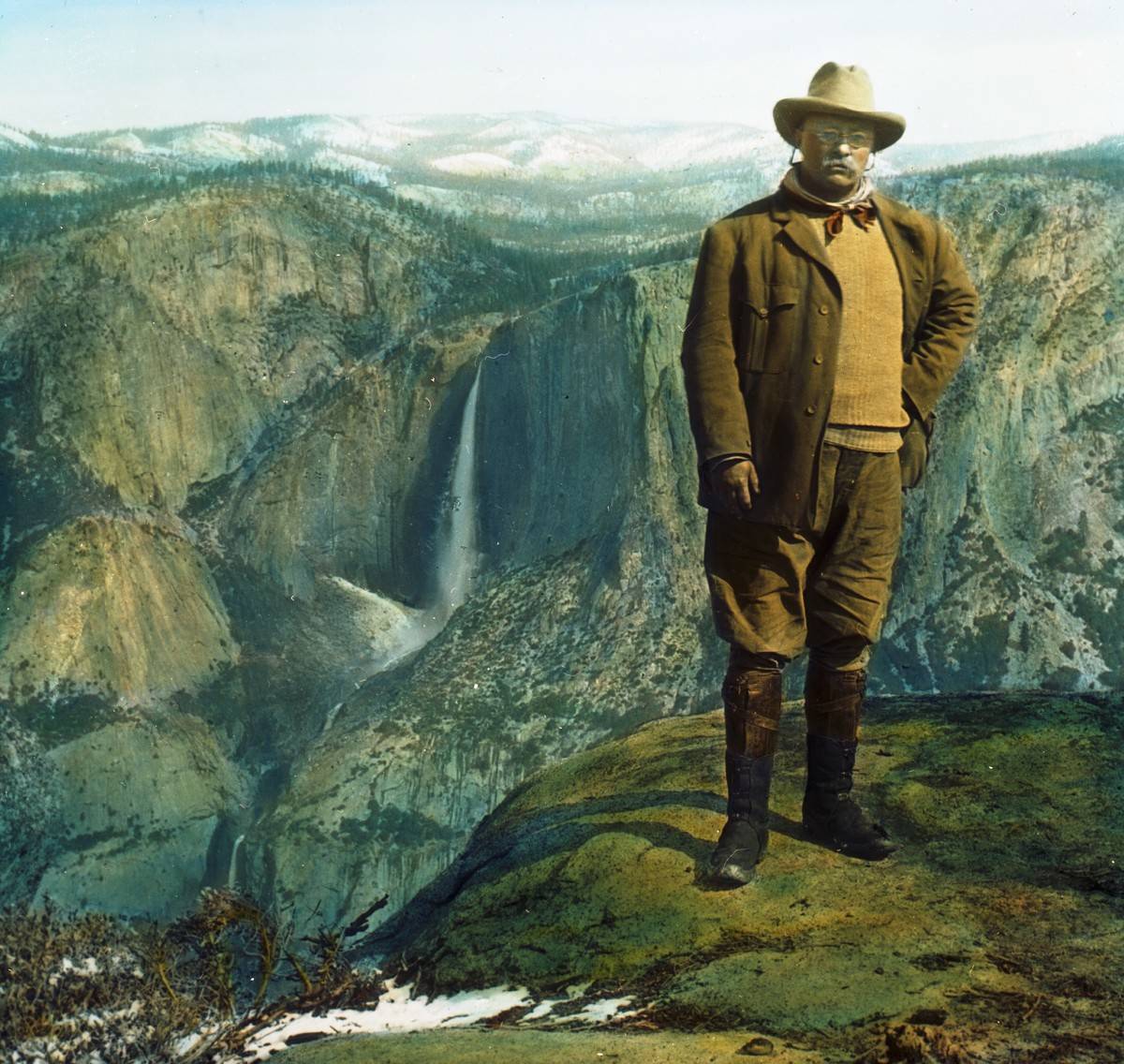 We all heed the call of the wild, and the need to step away from convenience and comfort to escape civilization and embrace our untamed/wild instincts to let our primal nature hang out for all to see. We know it’s just good for the soul to have experiences that teach us more about ourselves. “You’ll never know who you are, who you truly are, until you’re backed into a corner.” And that sounds so romantic that if we brought it up in front of a group, almost all hands would go flying up from those who want to join us on our planned expedition. Some hands will even turn into fists, as they shout, “Yeah, gimme some a that!” But the minute we start darkening spots on a calendar, those hands, smiles, and eyebrows all go down. “Something tells me I’m going to be busy.”
The concepts behind achieving a true Theodore Roosevelt spirit, seeking adventure and meaning in nature is such a romantic notion that city-slickers can’t but help but want some of that for themselves for at least one weekend, but we always fail. “It doesn’t matter that you fail, because everyone fails at something or another in life. It’s what you do after failure that defines you.” We love that, all of it, but if we’re going to be honest with ourselves, our failure to become this generation’s Theodore Roosevelt will never bother us so much that we’re going to do whatever it takes to make it happen.
Da Mudder Humper
We know mudder nature offers great solitude and beauty to the unsuspecting and suspecting, but how long how long we’re supposed to stand at the bottom of a mountain before it happens? How long does one quietly stand at the bottom of a mountain before we make a connection to its height and vastness—not just physically, but emotionally and spiritually? I’ve tried to experience it, but someone always interrupts me with, “Ok, are you ready?”
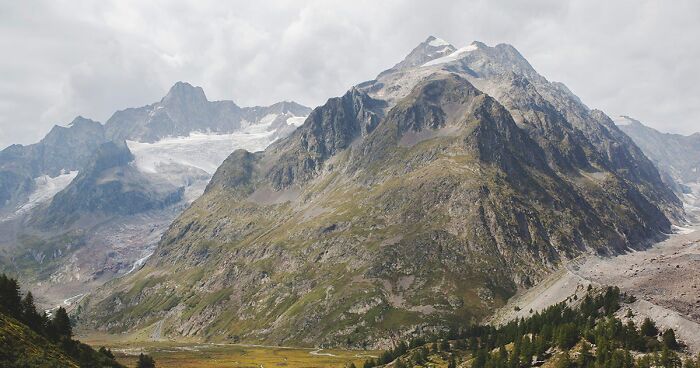 “No, I’m not ready.” I say with indignation. “Hold on for a second.” This interrupter wanted to checkout prematurely, or what we considered a premature checkout, and we weren’t even halfway done, because we thought were close. “We drove all this way to see this mudder humper. Why don’t you go ahead and give me a second to appreciate her.” And we said that with solid conviction, but we didn’t really know how long we needed to convince them, or ourselves, that the very large mound of dirt and rocks inspired feelings of grandeur and timelessness within us to the point that we made that connection.
We don’t want to be a modern who looks at a mountain of breath-taking glory for twenty-two seconds and checks out and moved on. We want to feel, just for a moment, what our forebears must have experienced when they looked upon this mountain. We all think that the man of yesteryear was more in touch with nature than we are, because we’ve been too modernized. There is truth to that, of course, but did they appreciate the wonder of natural landmarks as much or more than we did? My guess is they didn’t view a mountain range as a breathtaking wonder in the manner we do, but as a pain in the ass that they were either going to cross or navigate around on foot or by horse-drawn carriage.
***
Spotting nature’s finest critters in their environment, doing what they do, can also be awe-inspiring, but how often do we actually see them in the wild? “The one thing we know about nature with absolute certainty is that it’s unpredictable and unreliable,” a tour guide informed us when we didn’t see a single creature on our tour. If we’re lucky enough to actually see a wild animal in their environs, doing what they do, how many of those moments are inspiring or exciting. Most creatures of wild seem to spend about 75% of their time sleeping, 10% hiding from predators, and the rest of their time actively searching for food, eating that food, and sitting on their can doing nothing. If you’re lucky enough to see them during the percentage of the 15% of their time actively searching then you’re one of the lucky few. I’ve never been that lucky.
When we see these incredible beasts in a zoo, we immediately think about how awful it is that they have to spend their existence in a caged environment, but if you’ve ever actually seen one of them in the wild, you know caged animals really aren’t missing that much. The wild ones live lives a lot more boring than most of us know. Their whole lives are about eating whatever they can find, sleeping about 15-20 hours a day, and occasionally finding someone to procreate with to extend the species. The caged animal not only sleeps the same amount of time, but they get free, non-taxing delivery of food, and they also have procreation partners delivered to them. The two things zoo patrons might characterize as the primary deprivations of the wild animal is mental engagement and physical exercise, which I think most wild animals would characterize as overrated. Our tour guide basically bolstered my characterizations when she informed us that one of the only ways they can get the wild animals out of their homes is by providing them salt licks, and they conveniently put them in areas where tourists can spot them. Yet, this only increases the chance that an animal will leave their home. It guarantees nothing.
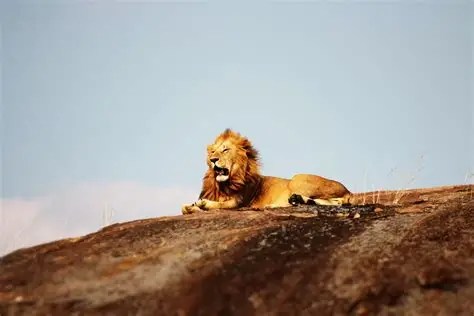 As a person who is more accustomed to seeing wild animals in action, it’s disappointing to see them do nothing but pant in bask of a sunrise. It’s a pretty decent picture, don’t get me wrong, but at some point you wouldn’t mind seeing what happens after a park ranger sets a mechanical rabbit loose, like they do at the dog tracks to set them in motion. If we got lucky enough to see them hunt or a fight LIVE! and IN ACTION!, and we see them ripping each other apart, we probably wouldn’t want to stick around long enough to see the unsanitary ways they rip entrails out of the loser’s anatomy. We prefer the packages our nature shows put together with their motion-sensitive cameras in the wild, and most of us can’t even last a full show, so we go to YouTube to watch the highlight reels. “It’s not the same,” the nature enthusiast will counter.
“It’s not,” we admit, “but I’ve spent some time in the wild, and I’ve seen these creatures in their habitat, doing what they do, and they’re so boring for such long stretches of time that my embarrassing reflex is to reach for the remote.”
***
I don’t know if I loved camping in the outdoors (on a protected reserve) when I was a kid, or if I just remember my own highlight package, but I had a love/hate relationship with the wild. Back then, I feared, hated, and loved her dark, wooded regions. The creatures I imagined therein were not all earthly either. I had a vivid imagination, and I imagined that everything outside the campfire light was mysterious, had hidden spirits, and its own relative charm. Now that my imagination has lost some of its vividness, I know I likely would’ve found nothing if I dared venture beyond the campfire light into those dark, foreboding regions. And if I ever had the misfortune of running into one of the most fearsome beasts imaginable in that darkness, my guess is that they’d probably be more scared of me than I am of them, or asleep. I would never tell younger me any of that though, because I know those fears added to the charm of those camping trips, and I still feel that every time I smell burning wood.
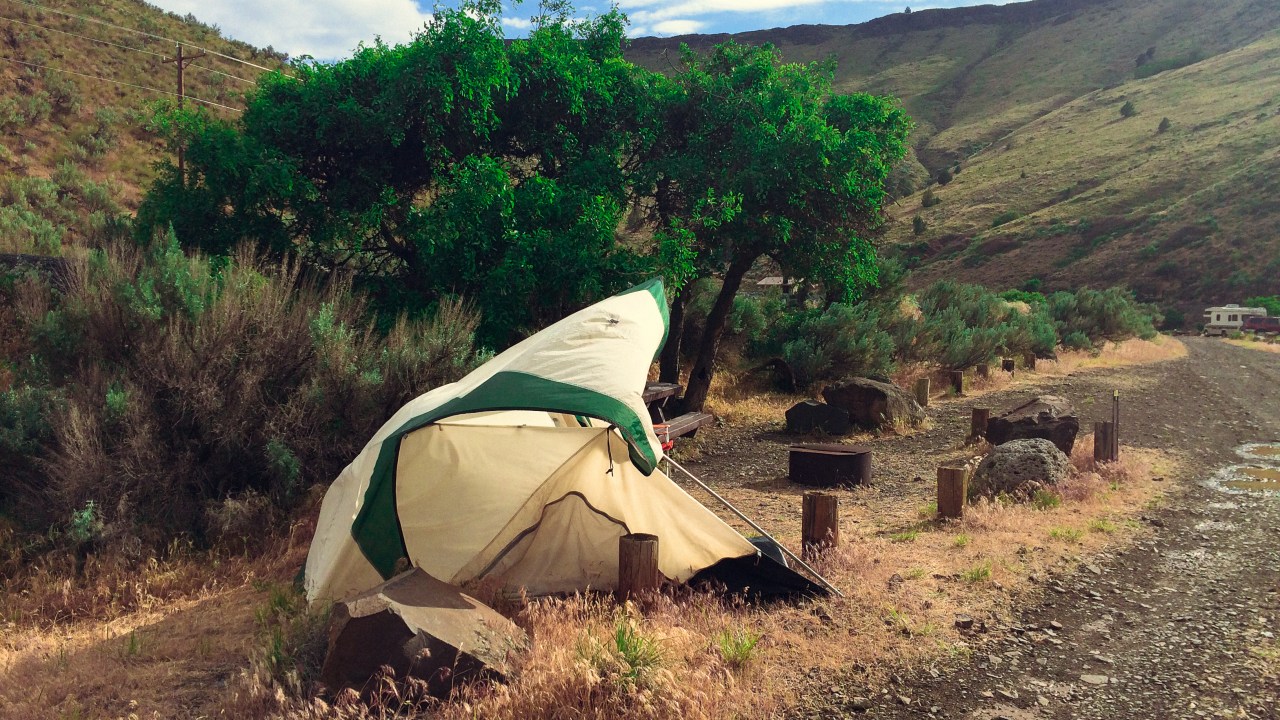
When we get older, but not so old that we lose our imagination, we try to recapture the magical charm camping once held for us. The problem is that our parents handled most of the particulars of camping when we were very young, so we needed to find a friend who was a more experienced camper. We searched for that fella or female who knew how to help us, and when we finally found him, we found that the biggest difference between an experienced camper and an inexperienced one is mostly about the tent. Our experienced camper put up quite a few tents in his day, but he wouldn’t put our tent up for us. He didn’t want to deprive us of the sacred rite of passage involved in putting up a first tent, which was the whole reason we invited him to our camping expedition. When we were done, he laughed at us, and he pulled the stakes out another half-inch. “That’s it,” we asked ourselves. “That’s the difference between an experienced camper and an inexperienced one?”
No, that’s not it, he brought a flashlight. “You forgot a flashlight?” he asked with disgust. “You, my friends, are inexperienced campers,” he said. We felt insecure about our lack of knowledge, and we felt some shame for being so unprepared. Feelings of shame are usually followed by some form of rebellion, and we felt that bubbling to the surface, but our experienced camper was not very attractive, he was out of shape, and he was a subpar employee in our company who didn’t have many friends, so we let him wallow in his camping superiorities.
 Once we managed to get past the tent and supplies portion of the camping routine, we all decided to go fish. Our experienced camper was also an experienced fisherman, and he did not appreciate us doing the only thing inexperienced fisherman love about fishing: casting. We were casting for distance, and we were casting to break up the boredom of fishing. We also reasoned that because the lake was full of moss and weedy, frequent casting kept it more debris-free. Plus, we didn’t want the fish nibbling our nightcrawler off the line. “What are you doing?” he whispered at us in disgust. “You should be recasting 5-7 minutes apart at the very least.” When we asked him why, our question was a respectful one that ceded to his authority. He explained his rationale, and it was a rather generic answer that involved the frequency of the recast depending on the bait type, water conditions, and target species. When we attempted to explore with more specifics, he tried to answer, but his answers didn’t satisfy us, so we kept asking. “Stop talking,” he spat in whisper, “you’re scaring the fish away.” We respectfully waited beyond reason to speak again, and when we did, he repeated: “Stop talking, you’re scaring the fish away.” We tried to display respect, through more silence, but when we got too bored and tried whispering things to him, he moved to the other side of the lake. Our takeaway was that while camping is boring, but fishing is mind-numbing.
When we extinguished our campfire at the end of the night, our experienced camper brought out an inflatable mattress, which we considered a cardinal sin of the camping world, until he followed that with a Flextailgear Max Pump Three that promised to “inflate the standard inflatable mattress in under two minutes with a 5,000 Pascal pressure rating and a built-in camping light.” We read that off the box to our experienced camper and asked him what his patron saint of outdoorsiness, Theodore Roosevelt, would think of an inflatable mattress with a Flextailgear Max Pump Three.
“I don’t care,” he said. “There’s no way I’m sleeping on that cold hard ground.”
It’s not for me, but I respect anyone and everyone who tries to “ruff it” in the wild, but what does “ruffing it” mean? It’s relative to the person of course, but we all know that minor level of sensory deprivation nature provides can yield a certain sense of peacefulness, as we attempt to connect with nature and ourselves. It’s a momentary escape from the distractions we so enjoy. Once we’re done with that relatively quiet walk through a trail in a wooded region, we ask ourselves what’s the difference between a true outdoorsman, an adventure seeker, an experienced camper, and someone who never travels outside the city? Our guide, teacher, experienced camper or vamper, knew his stuff, but how much stuff is there to know when we go out camping? He improved the taughtness of our tent by moving it about a half-inch, he remembered a flashlight, and he knew enough not to talk while fishing, but he also brought modern conveniences that would’ve made the experienced outdoorsman of yesteryear groan. He didn’t help us renew our appreciation of anything, unless we’re talking about our renewed appreciation for the controlled climate an HVAC can provide, the appliances that provide convenience and comfort, and our devices. When we’re nestled back in our comfortable homes, we appreciate not being smashed into by bugs, as when they see a campfire light, they think it’s a moon, they fly kamikaze-style into it. The june bugs, in particular, don’t seem to care that something as big as a human face stands between them and the light. When we’re in the comfy confines of our home, we also know that nothing is going to stick its disgusting, grimy little proboscis in us to suck blood out of our system. More than anything else, our camping trip gave us a renewed appreciation of our sense of home. Theodore Roosevelt would not have approved of any of this, but the only word we could find to describe “hidden spirit of the wilderness, that can reveal its mystery, its melancholy, and its charm” was boring, and hot and sticky, oh! and the two words ‘never again,’ sorry, Teddy.








 Rilaly