Are You Superior? II


“Hey, how you doing?” a couple of bandannas, beneath hats turned backwards, and sunglasses asked after pulling their truck over in a neighborhood to talk to me. 

I’d love to tell you that when I braced for the worst, it had nothing to do with their appearance, but that would be a lie. When a couple of young fellas, who were my age at the time, if not slightly older, approached my van with their hats turned backwards, over bandanas, I imagined the encounter a modern-day equivalent of bandits pulling over a stagecoach. I tried to put that over-informed stereotype behind me, and I tried to maintain the belief that they were just customers.

“I’m great,” I said as genuinely as I could. “How can I help you?” I was the ice cream man, the ding ding man, the good humor man, or whatever you call the ice cream van driver in your locale, and they were presumably customers. 

“Do you have a screwball?” one of them asked. I said we did and pointed to the display on the side of the truck for their verification and pricing needs. “I used to love the screwball, with not one but two gum balls at the bottom,” he added

“Not one of my best sellers,” I said to stoke conversation, “but I agree with you. I used to love them too.”

“The Choco Taco,” the other said, as if that’s all he needed to say, and they both swooned with sarcastically romantic smiles.

This brief conversation evolved into other, casual conversations about the business end of selling ice cream products in a van, my compensation, and other such nonsense that lowered my guard. The moment after I felt my initial suspicions subside, I reinforced them, thinking that the only reason they stopped me “just to talk” was to allow their stickup man enough time to sneak around the back of my ice cream truck to complete the heist. I divided my attention between them and my mirrors as a result, watching for any movement behind the van. This hyper-vigilance was the product of the cynical, conspiracy theory guys who lived on the opposite side of street of my sheltered existence. They coached me in the belief that most people are not good until we discover otherwise. “It’s quite the opposite,” my cynical friends informed me, “Quite the opposite.”  

“You guys don’t believe in anything,” I said. “You don’t see anything wrong with that?”

“There might be,” those cynics conceded, “but I will tell you this, two seconds after you lower your defense shield, we gotcha!” They got to me, over time, and in numerous discussions of scenarios and real-life, told-you-so instances, they inched my inches until I saw these two hats turned backwards, over bandanas, as sharks circling, studying my strengths and weaknesses, waiting to see if they could get hurt, seeking points of vulnerability, until they spotted a gotcha moment.    

When I saw no movement around my van, I began to wonder if they were feeling me out, to gauge if I was an easy roll for a future heist. All of this may have been unfair, based almost solely on superficial appearance, but I could find no reason why they would want to stop their truck in the middle of a neighborhood street “just to talk” to someone like me.

I never understood the subtle differences and wide divides between the worlds of cool and nerddom, “And you probably never will,” more than one observer has informed me. In the company of these two bandit looking fellas, it was pretty obvious that I was on the outside looking in. They wore it so well too. They were so calm. Everything they did was so calm. They appeared so comfortable with who they were that I thought of the term radiating self-possession that students who paid far more attention in literature class knew and used. Those two also spoke in an ethereal tone that suggested they were probably potheads, and as one attuned to pop culture references, and pop culture characterizations, I knew that meant that they were way cooler than me. If all of this was true, I thought, and they were thieves, and I was the modern day equivalent to the aproned shopkeeper of the ice cream van, their comparative cool points were through the roof.

We view the world from the inside looking out, of course, but according to my metrics, I should’ve been their superior. I wore better clothes, and I figured I had a better education, but these guys had intangibles that I couldn’t even imagine attaining. They had a look about them, a strong sense of cool, and an aura that suggested that they were just fun loving, party-going types. Such characteristics threw my metrics right out the window. They weren’t stupid, however, and that fact was evident minutes into our conversation.

They asked me questions about how I was compensated. That, in and of itself, is not an informed question of course, but it was the way they asked those questions. It was a feel that cannot be explained that suggested their leading questions were such that they knew more about the business side of life than the average bandanna, beneath hats turned backwards, and sunglasses dude. I gauged their questions appropriately, but I maintained that there was no way their education was as expensive as mine. Plus, I thought, If they were potheads, they probably spent a lot of time equivocating moral issues, and those who equivocate –my Catholic school educators informed me– have fundamental flaws about them that they spend an inordinate amount of time trying to overcome and hide. In my world of proper metrics, I thought I was, check, check, check, superior.

Except for one tiny, little nugget, I conveniently neglected to input into the equation: on this particular day I was also wearing sunglasses and a bandanna beneath my backwards facing hat. The only difference between the three of us was that I didn’t wear this ensemble on a day-to-day basis. I wore it for the sole purpose of concealing my true identity. I was so embarrassed to be a ding ding man that short of wearing a fake beard and a Groucho Marx nose and eyeglasses, I had every inch of my identity concealed from the public.

They didn’t know any of that of course. They probably thought I was a bandanna, beneath a backwards facing hat brutha, and that may have been the primary reason they decided to stop and chat with me in the first place. It may have been the reason they were so relaxed about their status, and my status, and the superior versus inferior dynamic influencing our approach to one another. Within the internal struggle I experienced in this interaction, was a ray of sunshine. I felt superior, because this was a get up for me. This was not my every day apparel. That moment was fleeting even while I basked in it, for I realized that if I was superior I wasn’t doing anything with it, and that fact led me to be embarrassed that I was now wearing a bandanna, beneath a backwards facing hat, and sunglasses. I wondered if I input that variable into the equation if it might actually make me inferior to them.

“Who is your primary customer?” the one who spoke most often asked.

“Kids of course,” I said. I then relayed a number of stories about how my trainer taught me to take advantage of the naïveté of children. “I told him that I was not going to conduct business that way, and he said, ‘You have to. That’s how you make money for your business.’ I reiterated that that wouldn’t be how I conducted business.”

They were fascinated by my stories, hanging on every word, and reacting accordingly. Fellas who feel insecure and inferior, generally tend to try to prove their intelligence by speaking so often that we don’t search for their weaknesses. These guys listened, and they listened so well that it was obvious how comfortable they were in their own skin. I watched them react, and I couldn’t believe it. I realized that when we tally points for determining who is superior and inferior, we often fail to account for how comfortable people are with themselves, regardless the relative circumstances. We input data every day and in every way, calculating our strengths and weaknesses, and some of us find ways of achieving happiness within our dynamic. We’ve been led to believe that achieving vast amounts of money, power, and the resultant prestige are an endgame, and the ultimate goal, and anyone who says otherwise is lying. Very few would deny wanting such things, of course, but some don’t need them for that sense of spiritual completion in the manner others do. Some of us just want enough disposable income to do something with the family on weekends, and what we do on weekends can be as fulfilling, if not more so, than that which the most successful business man achieves during the week.

These two were probably a little bit older than me, but they were still young, and as such, the opportunities for them in the future were as wide open for them as for me, but they were still much more comfortable in their current situation than I was. They learned to live with their limitations, until they were so comfortable with who they were that they were radiating self-possession. I realized that in my bandanna, beneath a backwards facing hat, and sunglasses disguise, I lost so many points in this category that it would be impossible for me to recover in time.

The bandanas, with hats on backwards, and sunglasses did not wear shirts, and they were riding in a beat up, old International truck, that rattled in idle. They were construction workers with deep, dark tans that made their teeth appear whiter then they were when they smiled and laughed. My guess, watching these two twentysomethings speak, was that even though they appeared inferior, they had no trouble landing women. My guess was that among those women who knew them well, there was a whole lot of adulation going on. I didn’t know that to be a fact, of course, but guys like me –who were always on the lookout for what we missed in life– were always looking to guys like these for ideas.

They laughed a genuine laugh at some of the things I said. The matters I discussed had something to do with the business side of being a ding ding man, and how I loathed my current station in life, but I can’t remember specifics. I remember their laughter, however, and I remember wondering if they were laughing with me or at me. At this point in my life, I just escaped a high school that contained a large swath of fellas who were laughing at me. This casual conversation reminded me of those fellas I just escaped, and it revealed the shield that I erected whenever I thought one of them neared.

That takeaway didn’t strike me as a profundity in the moment. It crossed my mind, but I didn’t grasp the totality of what happened between us until they told me they had to leave.

“All right, we have to go grab some lunch,” the one who did most of the talking said, finally ceding to the one who had been attempting to draw the proceedings to a close at the tail end of our conversation.

“Oh, of course,” I said. “We’ll see you later then.” I tried to remain casual, but I actually wanted to keep talking to them. In the beginning, most of my participation was clipped to end the casual conversation as quick as possible to thwart their ability to find an angle on me. By the time they suggested they had to leave, I flirted with trying to come up with a conversation topic that might convince them to stay. I obviously dropped all suspicions at that point, and I actually missed them before they drove away.

As I watched them drive away, it dawned on me that the preconceived notions I had about them were based on my experiences in high school, and I thought about all of the hang-ups and insecurities that plagued me. I realized that these two were just a couple of good guys, and they appeared to think I was a pretty good guy too. I didn’t expect them to want to talk to me, but when they did, I expected them to lose interest quickly. When they didn’t, I realized I liked being the guy they thought I was. Other than appearing to be a bandanna, beneath a backwards facing hat brutha, I wasn’t sure what it was they thought they saw when they sidled up next to me to chat, but I liked it, and while I watched them drive away, I realized I wanted to do a retake of the whole encounter. The next time I saw them, I decided, I would enjoy our conversation from beginning to end, without any hang-ups or preconceived notions, but I never saw them again.

The idea that most people speak in superlatives was not lost on me, but most people who knew me well, at the time, said that I might have been one of the most uptight, frustrated, and angst-ridden individuals they’ve ever met, and the costume I wore that day supported that characterization more than I cared to admit. Very few of those who knew me well have ever accused me of being too relaxed.

It wasn’t until these two were long gone that I realized that my inability to put high school behind me prevented me from enjoying simple, casual conversations with some decent guys who just want to chat. I wondered how many other casual conversations I ruined on that basis. Thanks to my cynical friends teaching me the ways of the world, I learned how to play a proverbial king of the mountain game, a game I often lost in high school, and I was so locked into that defensive position that it ruined my life for years.

Is it true that we’re all searching for a point of superiority, or inferiority, in even the most casual conversations? I don’t know, and some would say no, and others would say hell no! “I’m just asking you what you think about the latest wheat and grain prices on the commodity markets.” So, why do we loathe speaking to some people? Why do we try to avoid them as often as we can, and when we can’t, our goal is to end those conversations as quick as possible. Do they make us feel incomplete and inferior? Why do we enjoy casual conversations with others we deem inferior so much more? The tricky, sticky element of this argument is that we think that in some way, shape, or form the elements of superiority and inferiority manipulate just about every conversation we have, and when we’re proven wrong in some instances, we wish we never discovered it. Now that our mind’s eye is open to this idea, we wish we could turn it off, and enjoy the fruits of casual conversations again.

If it is true that every single conversation has these elements in some form, where was I in this casual conversation with two guys who wore a bandanna, beneath a backwards facing hat and sunglasses? That was never established in a substantial manner, but my takeaway from this particular encounter was that for a very brief moment in my life, I didn’t care, and that might be why I enjoyed our conversation so much that I missed them as I watched them drive away.

Deserve vs. Earn


“You just received a raise? Well, congratulations! I think you deserved it.” A co-worker, named Dawn, said after I stepped out of a one-on-one with my boss. I was so proud that I almost missed her tripping on my pet peeve.

“Well, thank you for those kind words,” I said with all sincerity, “but I didn’t deserve that raise. I earned it.” 

I don’t know if I offended Helen, but she obviously felt the need to correct my correction, “If you earned a raise, then we all did,” she said, emphasizing the word earned in the exact same way I did, in a subtle form of mockery.

“We all got a raise,” she clarified, “but it wasn’t a raise in the way you think it was. It was a bump in pay. Yeah, the feds just upped the minimum wage, so we all received a commensurate bump in pay.”

I read about the raise in the minimum wage, but I made more than the minimum wage, so I didn’t think those stories concerned me. I knew the cost of everything would rise accordingly, and I knew every dollar I had in my pocket would mean less as a result of the minimum wage hike, but I didn’t think it would affect me in any other way. I didn’t know anything about the general practice companies have of raising wages to help their employees’ keep pace with the inflation that results from raising the minimum wage.

In our one-on-one, my boss led me to believe my raise was based on merit. He never said the word raise, I realized in the aftermath of Helen’s clarification, but he said enough to allow me to fill in the blank. I was so proud of that raise that I couldn’t wait to tell my dad. It turned out this bump in pay wasn’t an amount of money I earned, but money I deserved for working in a country that decided to mandate that employers pay their employees more money.

“Why do you care whether you earned or deserved more money?” another co-worker, named Natalie later asked, “as long as you have more of it in the bank.”

Other co-workers told me to shut up in various other ways, and that I should be grateful to have a job. I tried to be that guy, as I knew the pain of being laid off, fired and unemployed. I don’t know if my state of mind had something to do with my boss delivering the news of my bump in pay under what I considered false pretenses, but I thought it had something to do with the overwhelming sense of pride I felt when I thought the company was finally recognizing all of my hard work, and how that all came crashing down when I realized I deserved it.

Earn It!

In a post-game interview, following his first 1994-1995 national championship, former Nebraska Cornhuskers head coach Tom Osborne was asked if he felt he deserved the title. Tom Osborne began head coaching duties in 1974. What followed was a level of consistency almost unheard of in college football, with numerous near-misses in national championship games. No college coach, at the time, could be said to be more deserving of a national championship. No college coach worked harder, or was more effective in building a system that produced a consistent winner, at the time, than Coach Tom Osborne. Yet when he finally won his first championship, and someone asked him if he felt he deserved it, he said, “No one deserves a national championship,” I write paraphrasing Coach Osborne. “You win one in that particular season.” Without going into too much detail, every loss to the Oklahoma Sooners, every bowl game loss, and every near-miss informed Tom Osborne that he needed to adapt and change. The adaptations and changes Osborne and the Cornhusker hierarchy introduced have been listed by others, but one of the primary ones was a change in the type of players he needed to recruit to compete with the elite teams in college football. He knew no one was going to give him a National Championship because they felt sorry for him after so many near-misses. He knew he wasn’t any more deserving of a National Championship than any of the other head coaches in college football. He knew that he was going to have to change, adapt, and outwork his opponents, and he did to finish his career with three national championships and a 60-3 record over his last five seasons as Nebraska’s head coach. 

What’s the difference between the words earn and deserve? If a reader sorts through various periodicals they will find the two words used in an almost interchangeable manner. We conflate these two words so often that some of us consider them synonyms, and some thesauruses and dictionaries even list them as such.

This casual, but curious, observer of language would not go so far to write that those reference books are incorrect, but in a purely philosophical sense, I consider these words so far apart as to be antonyms. When the office worker speaks of deserving a raise she has not yet received, even those fellow employees who know the standardized measurements of the company would not bring up the word earn, fearing that doing so might taint the relationship they have with her. When a sports fan speaks of his favorite team deserving a championship, only his antagonists will mention the fact that their team hasn’t earned it yet, and when the lovelorn and politicians speak of the word deserving, it is an emotional appeal that their audience dare not counter.

Most define deserve as something for which they are entitled, as if by birthright, and earn has a more meritorious quality. They think they deserve to have something, as a result of a natural course of events. If another has, they should have. In this context, deserve takes on the definition of an adjective to describe those who should attain, and earn is more a verb to describe the justifiable reward for the hard work put into attaining a goal. Deserve is also a term used by those who feel they are owed something by being a good person, a human being who is alive, and they don’t bother defining the difference between the two as it applies to them.

All philosophical differences aside, this causal, but curious, observer can’t help but think that those who invest emotions in the idea that they are deserving, at the expense of working to earn, set themselves up for failure, heartache, and even diminished mental health when the reality of their circumstances continue to dispel such notions. One would think that, at some point, the confused would take a step back and reexamine their algorithm, but for most of us that’s easier said than done, as it could lead us to the conclusion that we’re a lot less deserving than we once believed.

LOVE

Love is difficult to calculate by standardized measurements of course, as past behaviors do not dictate future success. As such, no rational person should ever say that they deserve to be loved in a conditional manner by a prospective lover, but love is not something one can earn entirely by merit in this manner either. Conditional love, between adults, is a complicated algorithm fraught with failure that begins with simple, intangible superficialities. These superficialities can be as simple as the way a person combs their hair, their scent, the clothes they wear, the way they smile when they see you coming down the aisle at Cracker Barrel, and all of the other, otherwise meaningless intangibles that form superficial attraction.

Some could argue that the superficial nature of the early stages of love are nothing more than a crush, but a crush forms the crucial, fundamental layer of all that will arise from it. At some point, and every relationship is different, a crossover occurs. The initial spark that drove the relationship from point A to point B progresses into shared values, individualistic ideas, and some modifications on long held beliefs and philosophies, until it eventuates from that initial, superficial attraction into the ultimate, comprehensive, and conditional decisions we make about another person we call love. In this sense, we earn love every day thereafter by maintaining and managing the conditions that the other party lays out for us in overt and implicit ways to form adult, conditional love.

“Do you think you should receive love simply by being?” I would ask those who claim to deserve love. “Do you think that you should be able to walk up to a total stranger on the street and inform them that you are a good person, and therefore deserving of love, and that they should do their civic duty, as a good citizen of the world, and love you? If that’s what you believe, you’ll probably end up with the type of love you deserve.” 

The point is that those who claim they’ve achieved the quality of deserving open up a whole can of why, for those who are asked to believe it. ‘Why do I deserve,’ should be the first question we ask ourselves, and ‘why am I more deserving than another?’ should be the next, and all of the answers should culminate in self-evident facts and figures that result in the definitions of the words ‘merit’ and ‘earn’.

High-minded types who tend to overthink matters are often the first to warn the rest of us that we overthink matters. One such person told his audience that love is nothing more than a complex mixture of chemicals in the brain, and he did so under a theoretical umbrella that suggests that a human being is no more complex than a penguin. This person added that other animals, like some penguins, maintain long-term, monogamous relationships based on some decision-making. The rest of us would not say that this is outright false, but we would add that the definition of love can vary with the complex and simple variables we add to it. If we want the love we deserve to be no more complex than the penguin’s, and our drive to be loved, and love, is nothing more than a natural and primal need to procreate, then humans deserve to be loved by the primal, prospective mate who senses when we’re in heat. If our senses are inferior to the penguin’s, in the sense that we can’t tell when a prospective mate is in heat, we may want to develop a mating call that informs prospective mates when we feel ‘deserving’ of love to see what comes running down the alley to us.

Most of us prefer to believe that we earn the love we receive on a perpetual basis, a love that is much more complex than the penguins, and that the love we receive is reciprocated by the love we give. This, in financial circles, is called ROI (return on investment). Before we decide to invest our emotions in another, we try to make an informed decision of whether that person shares our values. We might make a snap decision, based on their superficialities, but this often occurs in the swoon stage. If they are going earn our love however, they are going to have to live up to our conditions long-term. If we settle on this primal, penguin definition of love, and we choose to believe that we deserve a form of love that should be nonjudgmental, and lacking in morals and values, and that which is nothing more than a stick that stirs the chemicals in our brain, the love we receive will be as meaningless as the penguins’, and what we deserve.

The Unfunny, Influential Comedy of Andy Kaufman


On the timeline of comedy, the subversive nature of it became so comprehensive that it became uniform, conventional, and in need of total destruction. Although the late, great Andy Kaufman may never have intended to undermine and, thus, destroy the top talent of his generation, his act revealed his contemporaries for what they were: conventional comedians operating under a like-minded banner. In doing so, Andy Kaufman created a new art form.

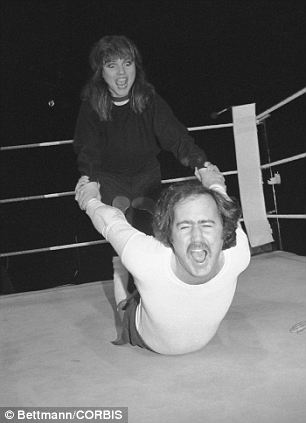
Some say they enjoyed Andy Kaufman’s character on Taxi, and they enjoyed some of his other performances in tightly scripted roles as a comedic actor, but his solo stage performances weren’t funny. They weren’t funny. They were unfunny, and they were so unfunny they were hilarious.  If you saw his act, and I did on tape, you knew he wasnt going for funny. He stood on stage in the manner a typical standup comedian would, and the audience sat in their seats as a typical audience will. The lines began to blur almost immediately after Kaufman took the stage. What is the joke here? Is he telling jokes? Am I in on it? They didn’t get it, but Andy Kaufman didn’t want us to get it. After he became famous, more people started to get it, so his act evolved, naturally, to wrestling women.

After reading every book written about him, watching every YouTube video on him, and watching every VHS tape ever made with him in it, I gained some objectivity. My guess is that he wasn’t talented enough to succeed as a conventional artist”. He didn’t have oodles of material to fall back on, and he wasn’t a prolific writer. He wasn’t a one-trick pony, but he wasn’t a thoroughbred who could have a long, multi-faceted career either. Whatever it was that he did, it was something we had to see, and he did it better than anyone else ever has. If you dont get it, and few do, then you never will. Thats not intended as a slam on the reader, because he didnt want us to get it. Andy Kaufmans M.O. was a little bit childish and narcissistic, but in many ways his overly simplistic acts somehow ended up redefining and revolutionizing comedy. If you saw it back then, you see it now all over comedy. 

Those of us who had an unnatural attraction to Kaufman’s game-changing brand of unfunny comedy now know the man was oblivious to greater concerns, but we used whatever it was he created to subvert conventional subversions, until they lost their subversive quality for us.

Those “in the know” drew up very distinct, sociopolitical definitions of subversion long before Andy Kaufman. They may consider Kaufman comedic genius now, but they had no idea what he was doing while he was doing it. I can only guess that most of those who saw Kaufman’s act in its gestational period cautioned him against going overdoing it. 

I see what you’re trying to do. I do,” I imagine them saying, “but I don’t think this will play well in Kansas. They’ll just think you’re weird, and weird doesn’t play well on the national stage, unless you’re funny-weird.”

Many of them regarded being weird, in the manner embodied by his definition of that beautiful adjective as just plain weird, even idiotic. They didn’t understand what he was doing.

Before Andy Kaufman became Andy Kaufman, and his definition of weird defined it as a transcendent art form, being weird meant going so far over-the-top that the audience felt comfortable with the notion of a comedian being weird. It required the comedic player to find a way to communicate a simple message to the audience: “I’m not really weird. I’m just acting weird.” Before Kaufman, and those influenced by his brilliance, broke the mold on weird, comedians relied on visual cues, in the form of weird facial expressions, vocal inflections, and tones so weird that the so-called less sophisticated audiences in Kansas could understand the notion of a comedic actor just being weird. Before Kaufman, comedic actors had no interest in taking audiences to uncomfortable places. They just wanted the laugh. 

One can be sure that before Andy Kaufman took to the national stage on Saturday Night Live, he heard the warnings from many corners, but for whatever reason he didn’t heed them. It’s possible that Kaufman was just that weird, and that he thought his only path to success was to let his freak flag fly. It’s also possible that this is just who Andy Kaufman was. Those who haven’t read the many books about him, watched the VHS tapes, the YouTube videos, and the podcasts had no idea what he was doing, but he had enough confidence in his act to ignore the advice from those in the know. We admirers must also concede that it’s possible Kaufman might not have been talented enough to be funny in a more conventional sense. Whatever the case, Kaufman maintained his unconventional, unfunny, idiotic characters and bits until those “in the know” declared him one of the funniest men who ever lived.

The cutting-edge, comedic intelligentsia now discuss the deceased Kaufman in a frame that suggests they were onto his act the whole time. They weren’t. They didn’t get it. I didn’t get it, but I was young, and I needed the assistance of repetition to lead me to the genius of being an authentic idiot, until I busied myself trying to carve out my own path to true idiocy, in my own little world.

Andy Kaufman may not have been the first true idiot in the pantheon of comedy, but for those of us who witnessed his hilariously unfunny, idiotic behavior, it opened us up to a completely new world. We knew how to be idiots, but we didn’t understand the finer points of the elusive art of persuading another of our inferiority until Kaufman came along, broke that door down, and showed us all his furniture.

For those who’ve never watched Andy Kaufman at work, his claim to fame did not involve jokes. His modus operandi involved situational humor. The situations he manufactured weren’t funny either, not in the traditionally conventional, subversive sense. Some of the situations he created were so unfunny and so unnerving that viewers deemed them idiotic. Kaufman was so idiotic that many believed his shows were nothing more than a series of improvised situations in which he reacted on the fly to a bunch of idiotic stuff, but what most of those in the know could not comprehend at the time was that everything he did was methodical, meticulous, and choreographed.

Being Unfunny and Idiotic in Real-life Situations

This might involve some speculative interpretation, but I think Andy Kaufman was one of the first purveyors of the knuckleball in comedy. Like the knuckleball, the manner in which situational humor evolves can grow better or worse as the game goes on, but eventual success requires unshakeable devotion to the pitch. The knuckleballer will give up a lot of walks, and home runs, and they will knock the occasional mascot down with a wild pitch, but for situational jokes to be effective, they can’t just be another pitch in our arsenal. This pitch requires a level of commitment that will become a level that eventuates into a lifestyle that even those closest to us will have a difficult time understanding.

“Why would you try to confuse people?” they will ask. “Why do you continue to say jokes that aren’t funny?” 

“I would like someone, somewhere to one day consider me an idiot,” the devoted will respond. “Any idiot can fall down a flight of stairs, trip over a heat register, and engage in the fine art of slapstick comedy, but I want to achieve a form of idiocy that leads others to believe I am a total idiot who doesn’t know any better.”

For those less confident in their modus operandi, high-minded responses might answer the question in a way that the recipient considers us more intelligent, but those responses obfuscate the truth regarding why we enjoy doing it. The truth may be that we know the path to achieving laughter from our audience through the various pitches and rhythms made available to us in movies and primetime sitcoms, but some of us reach a point when that master template begins to bore us. Others may recognize, at some point in their lives, that they don’t have the wherewithal to match the delivery that their funny friends employ, particularly those friends with gameshow host personalities. For these people, the raison d’être of Kaufman’s idiotology may offer an end run around to traditional modes of comedy. Some employ these tactics as a means of standing out and above the fray, while others enjoy the superiority-through-inferiority psychological base this mindset procures. The one certain truth is that most find themselves unable to identify the exact reason why they do what they do. They just know they enjoy it, and they will continue to pursue it no matter how many poison-tipped arrows come their way.

An acquaintance of mine learned of my devotion to this pitch when she overheard me contrast it in a conversation I had with a third party in her proximity. I did not want to have that conversation with the third party so close to her, but my devotion to the pitch was not so great that I was willing to be rude to that other person. What she overheard was a brief display of intellectual prowess that crushed her previous characterizations of me. When I turned back to her to continue the discussion she and I were having prior to the interruption, her mouth was hanging open, and her eyes were wide. The remark she made in that moment was one she repeated throughout our friendship.

“I am onto you now,” she said. “You are not as dumb as you pretend to be.”

The delicious moment of confusion occurred seconds later, when it dawned on her that what she thought she figured out made no sense in conventional constructs. 99% of conversationalists pretend to be smart, and the traditional gauge of the listener involves them defining the speaker’s perceived intelligence downward, as they continue to speak and leak their weaknesses in this regard. What I did was not reveal some jaw-dropping level intellect but a degree of knowledge that served to upend her traditional study of those around her to define their level of intelligence. 

She looked at me with pride after she figured me out, but that look faded when she digested what she thought she figured out. Who pretends to be dumb and inferior? was a thought I could see in the fade.

What are you up to? was the look she gave me every time I attempted to perpetuate ignorance thereafter. The looks she gave me led me to believe that everything she thought she figured out only brought more questions to the fore. I imagined that something of a flowchart developed in her mind to explain everything I did and said to that point, and that each flowchart ended in a rabbit hole that once entered into would place her in a variety of vulnerable positions, including the beginning. She pursued me after that, just to inform me that she was onto what I was doing, until it became obvious that she was the primary audience of her own pleas.

I’ve never thrown an actual knuckleball with any success, but watching her flail at the gradual progression of my situational joke, trying to convince me that she was now above the fray, cemented my lifelong theory: Jokes can be funny, but reactions are hilarious.

The point is that if you devote yourself to this mindset, and you try your hardest not to let your opponents see the stitches, you can convince some of the people, some of the times, that you are an idiot.

The Idiotology

Some idiots purchased every VHS tape and book we could find on Andy Kaufman, and we read every internet article that carried his name to try to unlock the mystery of what he was trying to do. We wanted those who knew him best to tell us why he chose to go against the advice of those in the know and if it was possible for us to follow his indefinable passion to some end. We followed his examples and teachings in the manner of disciples, until it became a lifestyle. Andy Kaufman led us to believe that if we could confuse the sensibilities of serious world just enough that it could lead to some seminal moments in our pursuit of the idiotic life.

If our goals were to be funny, we would’ve attempted to follow the trail laid by Jerry Seinfeld. If our aim was only to be weird-funny, we would’ve adopted the weird-funny voice Steve Martin used in The Jerk. If we wanted to be sardonic or satirical, we would have looked to George Carlin for guidance. We knew we weren’t as funny as any of those men were, but we reached a point when that didn’t matter to us. When we discovered the unfunny, subversive idiocy of Andy Kaufman, however, it filled us like water rushing down the gullet of a dehydrated man.

“How did the unfunny idiot reach the point where it no longer mattered that others considered them funny?” the reader might ask. “How did you reach the point where that bored you?” The natural inclination most might have is that we think were so funny for so long that we sought something more. This was not the case for us, as most people, especially women, never thought we were funny. The answer, if there is one, is that, like Andy Kaufman, we might not be as funny or as talented as our friends, but we choose not to see it that way of course. The unfunny idiot is just thrilled as anyone else when others find them funny, even by conventional means, but there’s something different and unusually thrilling to us when we deliver a crushing haymaker that no one finds funny, per se, and most people consider idiotic. “Okay, right there, you said it, you said it,” an especially perspicacious individual might say, “You find it unusually thrilling. Why?” When pressed to the mat, and if we do it long enough someone will call us out on it and interrogate, until they help us arrive at an answer, such as, we don’t know, but we were probably just wired a little different. 

Most of our friends considered us weird for the sake of being weird, but they don’t recognize the depth charges until they’re detonated. If we do it just right, and knuckleball slides under the bat perfectly, they’ll see it for what it is. They might not understand it, but they’ll get it. They won’t feel foolish for not getting it, because you were the idiot in that scenario, but they’ll eventually see that you weren’t being weird just for the sake of being weird.  

The Disclaimer

If the goal of the reader is to have their friends and co-workers consider them funny, adding Kaufman’s knuckleball to your repertoire will only lead to heartache and headaches. What we advise, instead, is for the reader to focus on adding more traditional beats and rhythm to their delivery, and they should learn how to incorporate them, on a situational basis, into conversations. This gets easier with practice and time. Quality humor, like quality music, must offer pleasing beats and rhythms that find a familiar home within the audience’s mind. (Some suggest that the best beats and rhythm of humor come in threes. Two is not as funny as three, and four is too much more.) To achieve familiarity, there are few resources more familiar than that which comes from sitcoms and standup comedians that everyone knows and loves. We should also copy the template our friends lay out for a definition of what’s funny. There’s nothing an audience loves more than repeating their jokes, rhythms and beats, right back at them. If the joke teller leads into the punchline with a familiar rhythm and lands on the line in a familiar beat, the audience’s reward for figuring out that beat will be a shot of dopamine, and the joke teller’s reward is the resulting laughter. To keep things fresh, the joke teller might want to consider providing their audience a slight, yet still pleasing, twist at the end. The latter can be funny as long as the punchline is a slight slide away from expectations.

If, however, the goal is to be an unfunny idiot who receives no immediate laughter, the joke teller still needs to adhere to the standardized rules of comedic beats and rhythms, and they need to know them even better than students of traditional humor do. As any gifted practitioner of the art of idiocy will tell those willing to listen, it is far more difficult to find a way to distort and destroy the perception of conventional humor than it is to abide by it. This takes practice and practice in the art of practice, as Andy Kaufman displayed.

The rewards for being a total idiot are few and far between. If we achieve total destruction or distortion of what others know to be the beats and rhythm of humor, a sympathetic soul might consider us such an idiot that they take us aside to advise us about our beats and the rhythm of our delivery. For the most part, however, the rewards idiots receive are damage to their reputations as potentially funny people. Most will dismiss us as weird, and others might even categorically dismiss us as strange. Still others will dismiss us as idiots who know nothing about making people laugh. Most will want to have little to nothing to do with us. Women, in particular, might claim they don’t want to date us, declaring, “I prefer nice, funny guys. You? I’m sorry to say this, but you’ve said so many weird things over the years that … I kind of consider you an idiot.”