“Never had a Drink. NEVER Will!”


“I don’t drink,” non-drinkers say proudly. “Never have. NEVER will!” They add that theyve never experimented with drugs, taken a drag off a cigarette, and they don’t even drink coffee or soda now. Then, just when you think they’re done, they add, “AND I won’t put anything with high fructose corn syrup in my body either!” This is all important to them, but they’ll punctuate their rant with, “I’ve never taken a drink of alcohol.”

My guess is that their message starts out as a noble, humble “If I can do this anyone can” gesture that they hope inspires us to think its not necessary to drink to have a good time. They also want to send the message that alcohol does not fill the voids, salve the wounds, or anything else we might attach to alcohol, and they want us to view them as a shining beacon of that message.

The idea that anyone can graduate from college without ever taking a drink astounds some of us, and we’re generous with our praise. We do this because sobriety is a laudable goal, but we know we couldn’t have done it. The message of the sober-for-life crowd is that they were strong enough to avoid the temptation, and that is large part of the equation, but for those of us who caved to peer pressure, it was also about that Fear of Missing Out (FOMO) element.

Sobriety is, was, and always will be a laudable goal, don’t get me wrong, but some of the sober-for-life crowd repeat their message so often that rest of us view the messenger as obnoxious, smug, and so repetitive that the message gets lost in the perceived pursuits of the messenger. My guess is that those who chose sobriety for life have put up with so much over the years/decades that now that many are turning their backs on alcohol, this is their time to shine. I also think they enjoy the praise and the shock so much that they repeat their message as often as they can.

I’m not one of those who say, “C’mon, you know you have. How about at church? did you drink the wine?” I’m not one of those who hunts for hypocrisy or calls people out in any way I can. I accept their testimonial at face value, applaud it, and move on. They can’t. They cannot help but go so over the top that we get sick of hearing about it. They cannot talk about a vacation they took with a group of people, without saying, “Of course, I don’t drink. Never have. NEVER will! But they didn’t know that.” I might admire them, if they could say that without appearing smug, obnoxious, and superior, and I might be in awe of them if they could talk about their lifelong sobriety responsibly.  

The awe I express is a result of me picturing them in my high school, my college years, and my early years in the workforce. “How did you escape high school and college without drinking one alcoholic drink? How did you make friends?” I realize that writing that reveals something about the people I hung around and me, but I consider defeating peer pressure by maintaining sobriety during those years so implausible as to be impossible. We even frowned on responsible drinking when I was a teen. “Responsible drinking? Isn’t that for people in their sixties?” We thought that was such a great line, so hilarious and all that, because we thought it was true. Some were strong, they accepted the requisite beer, and they milked it for hours. It was admirable, but they still broke down. No one I know was forceful enough to defeat the dark side.

I might be wrong, but I think it’s easier to avoid drinking now than it was in my youth. Sobriety is just more acceptable now, and I think the current generation has our generation to thank for that, because they didn’t have to grow up in bars, they weren’t subjected to their dad’s drunken behavior, and they didn’t grow up thinking you had to have a drink in your hand to have a good time. I’m sure young people still have some peer pressure to drink, smoke, and consume high fructose corn syrup, but when I hear someone my age managed to maintain a life of sobriety, I’m doubly impressed, because I know what I went through. If we didn’t have a drink in hand in those years, not only would the party’s host view it as an insult, but we’d get that look from our peers. “C’mon, I thought you were all about fun?”

I feel sorry for people who don’t drink, because when they wake up in the morning, that’s as good as they’re going to feel all day. –Frank Sinatra.  

“I don’t drink,” a friend of mine said. “Never have. NEVER will!”   

“That’s great,” we say, “but I was just asking you if you’ve ever been to a Piggly Wiggly. It’s a supermarket.” 

“I don’t drink.” 

“It has nothing to do with drinking,” we say. “I just thought it was an unusual name for a supermarket, and I wondered if you’ve ever been to one.” 

We could be talking about cracks in the sidewalk, and this guy would find a way to slip a note into the conversation about his lifelong sobriety. Again, “Bravo!” and all that, but after so many repeated reminders, it does start to lose its luster. If you’ve ever met this guy, you know you’ll walk away without knowing his last name, his politics, his religion, or his ethnic heritage, but you’ll know he doesn’t drink, and he NEVER will! They say it so often that on those occasions when they don’t bring it up, it feels odd and creates a void that you’re waiting for them to fill. 

“It’s all about my mama,” he said. “I know how ashamed she would be if I showed up to her home loaded or recovering from a hangover.” He says that on Monday, but on Tuesday, it’s all about brain cells. “I’ll bet I could hold my own against anyone, one-on-one in a debate, because you’ve all killed so many brain cells over the years that I just have a natural advantage over you.”  

If he was a former alcoholic (I know, no one is a former alcoholic), we could understand him bragging about his sobriety all the time. Sobriety is an achievement for someone who was so addicted that alcohol wrecked their life for a chunk of time. We also know that most alcoholics don’t drink to excess because they like the taste. It satisfies some inner need, it fills a void, it defeats an internal demon, and it keeps the forces narrowing in on them at bay. They’re losing those fights so badly that the only, temporary relief they find comes from the contents of a bottle. If, however, you claim that you’ve “Never drank, and they NEVER will!” I guess we could claim that you won by not succumbing to the idea that alcohol is an answer, but you didn’t defeat the temptation of alcohol, because you never really played.

So, if you are a former alcoholic, I’ll sing your praises, applaud, or do whatever I can to encourage your fight. If I’m your party host, and you claim that you’ve never had it, NEVER will, I’ll just say, “Okay, what would you prefer to drink then?” Who cares, in other words. You’re not fighting demons or anything else. You’ve made a laudable lifelong decision and bravo for doing it. At some point, however, it just becomes a preference. If you’re still in your teens-to-twenties and in what I consider the heat of the battle, I might applaud you, because I know the peer pressure to maintain sobriety is intense. If you’ve never had a drink your entire life, and you’re 40+ years in, it’s just kind of who you are at this point, why do you still feel the need to talk about it so often?  

If you’ve never had chocolate and never will, it’s a preference, but I’ve never met someone who brags about never eating chocolate. If you’ve never had pie your whole life, you don’t bring it up at parties, in casual conversations, or in other social situations. You just don’t like pie. If you’ve never worn a T-shirt in public, “Never have. NEVER will!” most people don’t trumpet that. It just is, but people who have never had a drink of alcohol and brag about it so often make me think they are either on the verge of taking a sip, or they use it to feel superior to the rest of us who do drink.

“I don’t drink,” non-drinkers say proudly. “Never have. NEVER will!” Some say this in a manner that suggests they are on offense, and that my reflexive reaction should be a defensive one. It creates an odd magnetic repulsive force (similar to the force of the other side of the magnet) between us that I end by saying, “Well good for you,” I say, which defuses the tension and creates a different, weird tension of deflated expectations. I think they expect me to mount some sort of defense of alcohol, but I don’t know anyone who would defend alcohol, unless they said, “I don’t see anything wrong with drinking responsibly.”

I’m sure former, (lapsed, or however they identify themselves) alcoholics would say I used to be an alcoholic, if they read my story. I would say, at worst, I used to be a binge-alcoholic. I could go an entire week, even a month, without drinking, but when those high school, college, or co-worker, Friday night parties arrived, I got slaughtered. I don’t view that as a brag, or anything admirable, but I never craved alcohol. I didn’t like the taste of beer, wine, or anything harder. After years of sobriety, I tried craft beer and discovered that beer could actually tasted good, but at most I drank maybe two of them a night. In my younger years, alcohol was a social lubricant, and it was a way to drop my social inhibitions. Some said I was more fun and funnier when I had a few beers in me, and I thought I was too, but I admittedly did not know the limits social advocates talk about when they define responsible drinking. I’m quite sure a psychiatrist or psychologist could find a whole host of ghosts and demons that were chasing after me back then, but I didn’t see it. I thought I was drinking to excess for excessive fun. Now that it’s all over, and I don’t drink to get a buzz, drunk, or slaughtered anymore, I still don’t see the any harm in what I did back then. I now down the occasional craft beer, and while the newsfeed articles talk about “What drinking just one glass of alcohol does to your body,” I don’t see the need to stop. 

Getting Older, Older, Old!


“Now that you’ve seen the whole package,” standup comedian Eddie Pepitone said shortly after walking on stage, “I want to answer the question that you’re all thinking, and the answer is yes, I have had a lot of work done. I’ve had my hair removed and my belly let out, because I was too pretty.” –Eddie Pepitone.  

“Age is a relative concept,” is a phrase we’ve all heard, but what’s the difference between old and old. Ruth was seventy-eight years young, and I don’t describe her age that way to sound culturally sensitive. Ruth was happy, and she loved being alive every day in every way. Most seventy-eight-year-olds, like Jack, don’t. Jack was just tired by the time he reached seventy-eight. I don’t know what he was like before, but the guy I knew would’ve been much happier if he died sooner. Ruth had an infectious smile, and watching her work her way through her day could leave one feeling exhausted. Jack lingered long after he stopped mattering, or caring about matters. Age is a relative concept.

***

We don’t know where we’ll be at age seventy-eight, but we experience indicators along the way. We don’t think about age now, but Jack might say that’s because we’re not seventy-eight, broken down, and just tired. I’ve never tried to act or look younger than I am, and I’ve never lied about my age. I just am who I am, a little older and wiser, but I never really thought about age, until my long-time friend walked into the bar and grille wearing a pair of Crocs. 

Tony Mancuso was all about girls when he was young. He loved them big, tall, short, and small. He was so girl crazy that everything he did in life was to get more girls looking at him. We all did that to some degree, but Tony went further than anyone I knew at the time. Another girl crazy friend, an Aaron, started Tony down this road when he said, “You have it all, great hair, a great personality, and a decent fashion sense. The only thing holding you back,” Aaron said, “is your skin.”  

“What’s a fella supposed to do about their skin?” I asked. “We can grow our hair out, cut it short, buy new clothes, all that, but we can’t do anything about our skin.” I said that with empathy, because I, like Tony, had bad skin. We both had acne pockmarks and scars, holdovers from the severe case we had as teens. 

“Some of the times a fella needs to hear what he needs to hear,” Tony replied.  

“That’s true,” I said, “but what can you do about it?” He shrugged, I shrugged, and the matter sort of devolved into nothingness.  

About a week later, Aaron and Tony found an answer to what I considered an unnecessarily harsh insult, and Tony was willing to sacrifice his good standing in our ultra-male community by applying a little bit of Aaron’s Max Factor Pan-Cake foundation makeup to help cover those unsightly pockmarks and scars. Then, when a little dab didn’t do him, he overdid it. He had a line under his chin he didn’t blend, because he didn’t know he was supposed to blend, so his little sister had to teach him. It didn’t embarrass Tony, because he thought it would all be worth it in the end. Aaron and Tony then began turning their collars up, they stopped wearing hats, and Tony began shaving more often and brushing his teeth on a daily basis, because he knew girls liked that. He was all about marketability and increasing his market share in our teenage dating market. Tony eventually escaped the raging insecurities that drove him to do such things, but seeing him again, after years of separation, in a pair of Crocs, led me to the inescapable notion that we were both old now.

We have an idealized image of ourselves that we see when we’re talking to others, and mirrors don’t reveal the incremental progressions from those delusions. We’re in front of a mirror every day, so we don’t see the aging process, how much weight we’re putting on, or how much hair we’re losing in them. Pictures used to tell those tales, as we could compare them to pictures of us from our past. When we started using our cell phones to take selfies every day, they failed to tell the tale of monthly and yearly progressions. In the age of technological advances, we can live in total denial, until we run into big, glaring signposts that reveal irrefutable facts to us. 

Tony didn’t show up for our reunion dressed in one of those Hawaiian shirts that appear to be issued at the Florida state border, and he wasn’t wearing khaki shorts. No, the man who almost appeared to have a fashion consultant in our previous life together, rocked my whole world by walking up to the table of the bar and grill in a pair of Crocs. 

“Are those Crocs?” I asked him with a level of disdain that I didn’t conceal very well. 

“They’re comfortable,” Tony said.  

‘Holy Crud, we’re old!’ I thought when I realized Tony Mancuso was now choosing comfort over fashion. It had been probably ten years since I last saw him, maybe more, and the transformation between the man I basically grew up around and the man standing before me now were nearly 180 degrees different. If I wore something for comfort, back in the day, he would’ve said, “That’s fine, but you look like an idiot.” If we saw a grown man in a pair of sandals, he would’ve dropped his pat response on the man, “The last man to look cool in a pair of sandals was Jesus of Nazareth.” Now, that man, was basically wearing a pair of them.  

When we’re happily married for as long as Tony and I were, the idea of dating someone else is as far from our purview as free-solo rock climbing. When we’re happily married, we usually hang around other happily married people who haven’t talked about dating for over a decade, and when we don’t talk about such matters, we don’t see those windows closing. We know it in the larger sense, but it feels like those windows are closing, in the present tense, as opposed to closed or slammed shut forevermore. 

When we’re happily married, the idea that our waitress, barista, or whatever service industry employee stands behind the counter, is cute, beautiful, or incredibly attractive, catches our eye. “That never leaves a fella,” my eightysomething uncle once told me. “I don’t care how old you are, or how married you are, it never leaves.” Yet, there is a huge difference between someone catching our eye and rocking our world.  

I now choose to think that the act of admiring a beautiful young woman as equivalent to admiring an artistic masterpiece, the only difference is God and/or mother nature is her Creator and/or creator. My examination of her features is an appreciation of the result of features that have emerged from thousands of genetic variants interacting with each other and the environment. If I walk through an art gallery, and I see a beautiful work of art, I’m going to stop and look, and I might admire it for a spell, but that doesn’t mean I’m going to make any commitments to buying it.  

I don’t know if the waitress who stepped up to take our drink orders that day was that artistic masterpiece, or if I had the effects of Tony’s Crocs swimming around in my head, coupled with the idea that those shoes meant our dating lives were “so over” that the whole situation enhanced her beauty to me. Whatever the case was, I accidentally, incidentally, or situationally leered at her.  

And she didn’t care. She didn’t appear the least bit complimented or disgusted by my faux pas. She appeared so unmoved by it that I felt smaller and more insignificant than I would have if she called me out on it. This has led me to advise beautiful, young women that if you can effectively ignore a leer, as effectively as this waitress did to me, you might make this guy feel so irrelevant that he never leers at another woman again.  

Yet, that leer wasn’t the desperate cry from a lonely well it was when I was younger. When this young, beautiful, and muscularly athletic woman whose features emerged from thousands of genetic variants interacting with each other and the environment generated an almost automatic hedonic and motivational response in me, I think I just wanted to drown out the whispers I was hearing from Tony’s Crocs.   

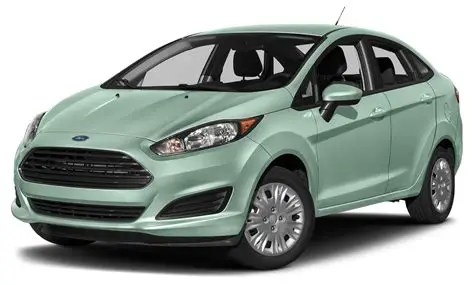
When we left the bar and grille that night, Tony stood, key in hand, near a 2019 Ford Fiesta, while we talked. He almost acted as if he was going to get in the Fiesta, and I grew distracted by the joke I saw coming as he stood there. The joke involved him nearing the car, as we spoke of other matters, and at the last second, just before we parted, he would pull that key back and say “Gotcha!” He’d then walk over to his 1970 Plymouth Hemi ‘Cuda. I still had that expectant smile on my face when he said, “All right, I gotta get going,” and he fobbed his Fiesta.   

“Is that yours?” I asked. He said it was. “Is it a rental?” I wondered, thinking maybe he got into a car accident or something.  

“No, it’s mine,” he said. Again, Tony’s whole life, or the life I knew him in, was all about ‘what will the ladies think?’ Now, he’s pitching a car to me based on the idea that “It gets excellent gas mileage” and “The 2019 Ford Fiesta was deemed one of the most reliable and durable cars of the year, with excellent points in terms of drivability.” I didn’t question his research, because my yeah-buts were all about how a man who used to drive late 70s gas hogs that fired up and appeared to run on testosterone and sensitive androgen receptors could now be driving a sensible sedan that all but puttered when he turned the key in the ignition. 

***

Seeing pictures of myself told me some undeniable truths, playing sports against teenagers told me something else, but that day at the bar and grill was so illustrative that I found it slightly and temporarily depressing. Tony Mancuso was my fella for so many years that he felt like my brother from another mother, and seeing him age gracefully and accept the facts of the aging process was so shocking that I didn’t want to talk about it. I expected to suffix his age with years young, as opposed to years old. I expected him to dress like a man on the make, even though he was a happily married man who no longer needed to appear attractive. Seeing that this man who is six months younger than me, either give up entirely or display how comfortable and happy he was in life, caused me a couple sleepless nights.  

‘Nobody is looking at us anymore,’ was my takeaway, ‘and Tony realized this before I did.’ When we were teens, Tony would ask me if his hair looked right, and “What do you think of this shirt?” My pat response to him was to tell him that fewer people were looking than he imagined. Seeing him in a pair of Crocs while driving off in a Ford Fiesta led me to the depressing conclusion that he finally accepted the fact that I was right.   

I never expected to write anything about age insecurity, because I’m more at peace with myself than I’ve ever been. I answer that age old question, “Would you like to go back and do it all over again?” with an asterisk, “If I could go back with my current mindset and everything else as is, I’d love to go back and edit and totally rewrite elements of my life, but I wouldn’t want to go through everything that accompanies youth again. I wouldn’t want to undo all of the psychological and philosophical progress I’ve made just to physically relive my past.  

I’ve also found most of the elements of aging quite pleasing. We’re all insecure to some degree, but insecurities were such an insurmountable obstacle when I was younger that I’m glad most of that is over. I love being a husband, father, and family man so much that I rarely, if ever, think about other things, until they smack me in the face like a signpost.

Silly Super Sports Fans Saying Stupid Stuff 


“Sorry fellas, I’m just sooo competitive,” Mark said after yelling as loud as he could in a public bar. He yelled because the other team just made a basket to clinch a victory over our team in game we were watching on the television set. His yell temporarily silenced the bar, so I assume his apology was partly genuine and partly based on embarrassment.

Men are biologically predisposed to respect other extremely competitive men, so when he said he yelled because he was “sooo competitive” we felt biologically required to understand. The sticking point for me is that Mark is old. He is a couple generations removed from being so loaded with testosterone that it occasionally boils over the top into the public. He’s so old that employees at Arby’s give him the senior citizen discount without even asking, yet he’s still “sooo competitive” that he can’t control his impulsive need to scream indecipherables at images on a television set.

‘Is that odd, or is it just me?’ I asked myself after Mark screamed. I didn’t care that everyone else acted like Mark just asked for extra cheese on his mashed potatoes, it was odd. I couldn’t accept this as a natural reaction to our favorite team losing. I couldn’t accept it as something we’ve all seen fans do, things I’ve done, so often that it’s become socially acceptable. I’m sure those who dismissed as an extra cheese considered it part of the package we all buy into when we decide to watch a game in public at a bar: We chose your bar to watch our game, we paid your cover charge, and we spent all this money on your alcohol, so if our team loses we reserve the right to scream like a lunatic in your establishment if we lose, because we’re “sooo competitive”. 

Not only is Mark old, he’s so well put together. The women I know report that he is a good looking man who knows how to wear a shirt. He’s also well-spoken, successful, and he displays an otherwise healthy, happy demeanor. If we asked long time bar employees to bullet point the typical indecipherable screamer, there would probably be a lengthy, inconclusive list, but we can guess that Mark wouldn’t fit of any of them. Watching Mark do that, opened my mind’s eye to how foolish I must’ve appeared after screaming like an idiot the minute the fellas wearing my favorite laundry, fail to make as many baskets as the fellas in the other laundry.  

At this point in my description, Gary, the line cook, would cut me off in a way he often cut me off to suggest I’m taking too long to get to the point: “It’s funny when someone makes an ass out of themselves in public.” It is still funny, and I don’t care how much societal and cultural pressure they apply, we’re still going to laugh when someone acts like that. It’s the ‘it’s funny, get over yourself’ level of comedy that will probably never be entirely vanquished. When Mark screamed like that, he silenced the entire bar of patrons momentarily, as they probably assumed it was a cry for help from someone having a heart attack. If Mark laughed after doing that, comedically implying that he was imitating a twenty-something reacting to a loss on TV, it probably would’ve been humorous. The fact that Mark genuinely had such trouble controlling his impulses that he felt the need to apologize for it, felt like another level of comedy. It felt like a level that unintentionally commented on itself with a sprinkling of irony and cleverness on top. 

It is funny when people do foolish things, but when someone does something that informs us what we look like when we do foolish things, its a level of comedy that is so funny we don’t laugh or even smile in the moment. It’s a level of comedy that if a professional standup comedian properly deconstructed it and simplified into a three-beat punchline, it could change the manner in which all super sports fans react to soul-crushing losses by their team. The rest of us are better off trying to pretend it never happened, or ignoring it.

So, I wondered if I accidentally silenced a bar with a loud, obnoxious scream, and they thought I was so old that I might be having a heart attack, would I say something like, “I’m sorry I’m just sooo competitive” as an apology for my over-the-top reaction.

The reaction I did not give voice to was, “Who cares if you’re sooo competitive? You’re not playing, and you don’t have kids playing in this game. No one cares if you’re watching this game with a sense of competitiveness attached to it, or if you’re just watching it passively.” What would I do if someone said that to me following a similar outburst? I would probably consider the idea that I need to seriously reevaluate how I react to watching my teams on TV.

The funny thing is when Mark and I watch our sons play baseball, Mark cautions me about going overboard when I react to my son’s errors. “They’re just kids,” he says. And he’s right, but the young men playing on our favorite basketball team are young enough to be his grandsons.

Any criticism I direct at mark should be asterisked with the notion that he and I are far too similar for my tastes. As I wrote, seeing someone act foolish is funny, but seeing someone mirror the manner in which we’ve acted foolish silences us because we don’t know if our laughter is self-referential, ironic, or a meta moment that circumvents our definition of humorous in a manner that makes fun of us. 

I, like Mark, considered it a testament to my character that I refuse to accept mediocrity from the players on my favorite teams. “It says a lot about you that you’re willing to accept just being in a championship game. You should refuse to accept anything less than that ring.” Those are the type of things we super sports fans say to one another, and when I say we, I’m talking about everyone from my inner circle to talking heads on sports shows, to commentators on message boards. We all preach such platitudes so often that they became gospel to those of us watching sports on TV. 

You do understand that I was not playing in that game, right?” is a reply I learned too late in life to use against those who badger me about my team’s failures. I don’t know where I heard that, but I wish I learned it earlier. It would’ve saved me from the emotional turmoil I experience when someone calls me out. Anytime I watch a game, I want my team to win, but I also don’t want to face those who love to badger me when my team loses. I use this line now when some idiot confronts me with the fact that my team “WE” just lost a crucial game, and Ive just recently added, “And I realized, with about two minutes left in the game, there was nothing I could do.”

Of course I want my team to win that championship game, I want my team to win every single game, but what are we supposed to do when they don’t? What do I do if they do? It turns out, I’m not playing in that game, so it really doesn’t matter what I do, it doesn’t matter what I think, and it doesn’t matter what I punch, who I insult, or what I scream in the aftermath. That score will not change. If you need this therapy as much as I did, repeat after me, “If my team is in a championship game, it’s the team I chose to support that is in there. It’s not me.” Some of us need to create some distance from the “WE” mind meld we’ve created with our favorite teams that nearly exceeds beyond the vicarious enjoyment and misery we experience watching sports. We need to mentally rewrite what we super sports fans say to one another when we’re watching sports on TV. “It says a lot about you that you’re willing to accept that your favorite team is in the championship game. You should want your favorite team to win that championship game.” If you’re on the outside looking in, and you see this article as so obvious that it’s kind of funny that it took us so long to see it, we applaud you for your happy, healthy outlook on watching sports. Some of us take far too long to get there.

I was already about 70% of the way there when Mark screamed indecipherables at the bar, but that episode absolutely clinched in for me that when we’re on the cusp of the senior citizen demographic, we should start to distance ourselves from the “WE” mind meld we have with our team. When the players on our favorite team are all young enough to be our grandchildren, it’s probably time to cut the frayed tendrils of the leash we have on the idea that we’re still a part of the team. “WE” can’t help it, because we’re “sooo competitive.” “WE” love our team so much that when we watch them on the screen “WE” know when we need to run the ball more often, “WE” know when we need to put the ball in the paint more, and “WE” know what everyone else knows … we really need a hit here.” As hard as it is to accept the realities of age, it’s probably time we stop wanting our team to win so badly that we scream gibberish, hundreds of miles away from the players, in a bar of unsuspecting customers after “WE” make a horrible mistake. It’s probably time we accept the fact that it doesn’t really matter how competitive we are while watching sports on TV? We don’t have to accept the idea that second place is good enough, or that our team had a “good” season, a “good” game, but if we have good kids and grandkids, and we’ve lived a great life, the idea that that some kid dropped a ball is no longer going to cause me to scream something in a bar. I honestly don’t remember doing that, but if I did that part of my life should probably be over now. 

I did get that “NUTSO!” when one of my fellas “WE” dropped the ball, but I did it in the privacy of my home, and I now see that I did it in conjunction with how satisfied I was with the direction of my life. When things weren’t going as I planned, I was a rager. I never harmed myself or my appliances when watching the methodical destruction of my team, or when playing video games, but I was probably pretty miserable to be around. I scared my dog, and my wife no longer enjoyed watching sports with me. Now that I’m more satisfied with the general direction of my life, I’m finally starting to see how foolish it was that I got SO UPSET!!! over a group of guys young enough to be my grandchildren wearing my favorite laundry, losing a game on a television program. I love sports, always have, always will, but I don’t know if I ever really enjoyed watching sports.

“Ok, but if we’re going that deep into underlying psychology, we could say that screaming about a team losing a game is actually quite healthy,” this sports fan once said when called out for my unreasonable displays of frustration and anger. “As you said, we could probably draw hysterical reactions to matters we cannot control with the dissatisfaction he have with the life we lead that we ostensibly have more control over, but those reactions usually manifest in one way or another. Couldn’t we say that yelling at anonymous figures on a screen, be they characters in a video game or in an athletic contest, is actually a no harm no foul way to vent frustrations in life? It’s better than yelling at the wife, the kids, or the dog. If you think the universe is against you, and your favorite teams, beating the furniture, throwing the remote control across the room, or screaming out in public bars are examples of healthier ways to deal with our frustrations in life, at least when we compare them to the alternatives. If we do it right, it can be quite cathartic to be a silly, stupid sports fan.”

“If you do it alone,” I concede. The cathartic effect is all internal, so you might want to create a man cave, tell your family you don’t want to be bothered for three hours, pour your favorite drink, eat your favorite snack, and surround yourself with inexpensive fixtures to undergo your therapy. Or, you might want to consider a more nontraditional, modern method of watching sports: tape it. I know this violates a number of the commandments of the super sports fans bible, but if you have some issues dealing with your team losing that your wife characterizes as unhealthy at times, tape the game, wait until it’s over, find the final score before watching, and just enjoy watching the victories. This might defeat the whole purpose of pursuing therapy through hysterical tirades, but seeing final scores on a phone amounts to seeing numbers as opposed to the vicarious condemnations of character we experience when witnessing our team’s slow progression to failure. Mistakes and miscues during a game are also a lot easier to deal with when we know our fellas will eventually overcome them and prove victorious.  

Needless to say, the reason Mark’s over-the-top reaction affected me so deeply is that if we dismiss the time and place argument, Mark and I are lot more like-minded than I’d care to admit, I admit. We are silly super sports fans who say and do some incredibly stupid things watching sports on TV. The man did give me perspective though, as I now see how foolish I used to be. I thought about some of my bizarre reactions, my hysterical tirades, and about the nonclinical periods of depression I’d go through in the aftermath of a disastrous defeat of my teams on television. The old talk show host Phil Donahue once asked how sports fans do it, “Isn’t it enough to have women break your heart? Why would you welcome more pain into your life?” That probably sounds hyperbolic to non sports fans, but I’ve had sports teams cause me far more pain than women have. Then, after one of my teams finally FINALLY won a championship, I remained purposefully and stubbornly unsatisfied, because I immediately began to focus on next year. If you know a true super sports fan, you know that “Next year” is their refrain. Win or lose, it’s all about next year. We might raise our fist high, scream indecipherables, and maybe cry a little when “WE” win a championship, but if you’ve ever been at a championship-winning table at a bar of screamers, you’ve seen those screams stop and talk about the natural attrition of losing talent, and how “WE” were going to replace them, if “WE” hope to have a chance at a repeat. Then, when “WE” repeated, “WE” wanted a three-peat, and “WE” were miserable when it didn’t happen. Being a super sports fan should be fun and enjoyable, but it’s not if you’re purposefully and steadfastly never satisfied, and you take it as seriously as I did, it can actually make you a little miserable. The only antidote is to understand that you’re not playing in the game, and in sports, no one can hear you scream…if you’re in a public bar that is 897 miles away.