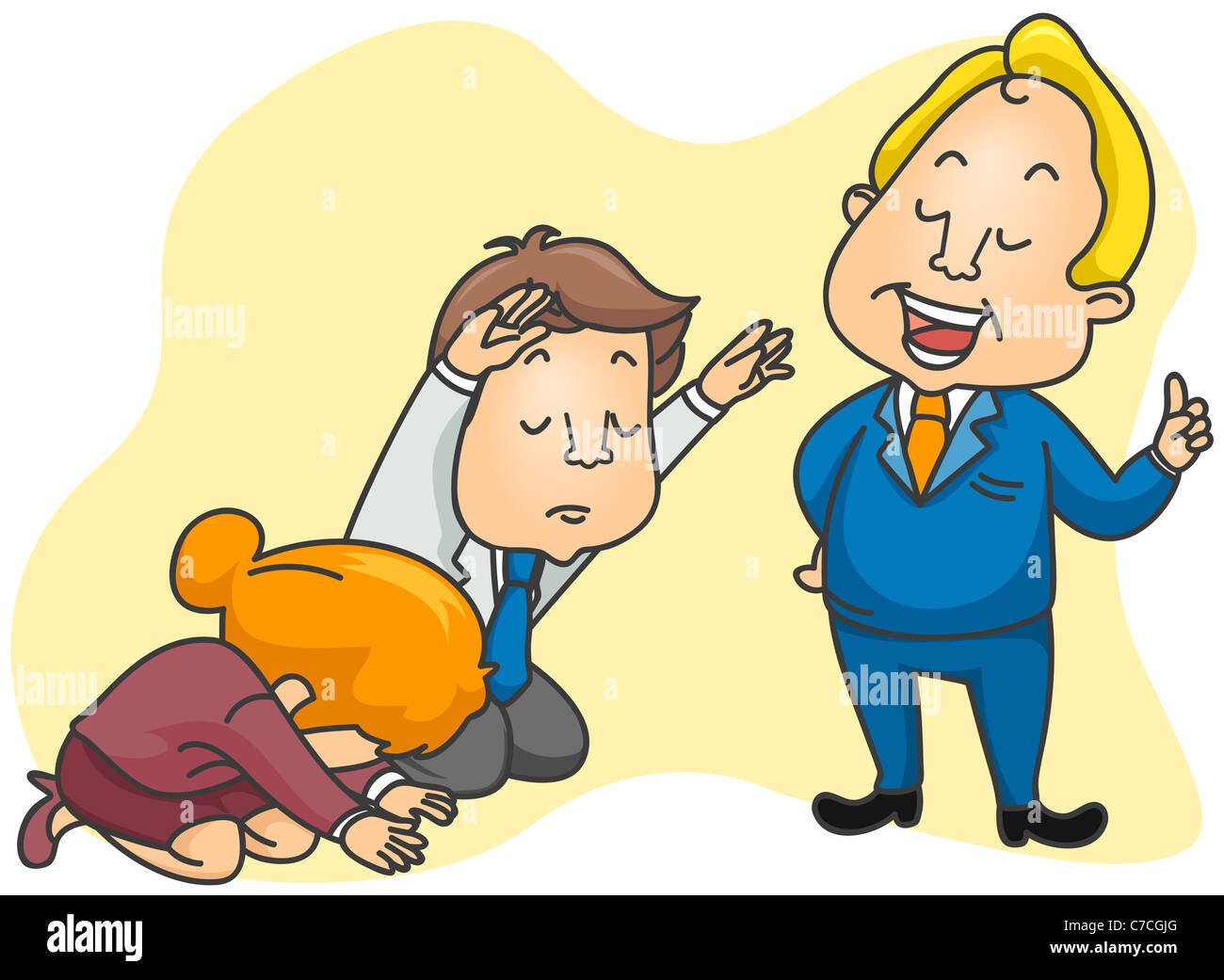
Self-Deprecating vs. Self-Defecating


“… And he did that irregardless of the consequences,” I said. Yes, I said that, Mr. Student of Language and Mr. Word Lover said the word irregardless, and to my lifelong shame, I thought it was a pretty big deal that I was using a multi-syllabic in context, and I was using it in the company of a big-time erudite fella with whom I shared a love of language. And no, I was not as young as I want you to think I was at the time. Mr. Big Time, Erudite fella gave me a momentary flash of shock before he could conceal it with discretion, and in my convoluted brain, I thought that flash meant he was impressed with my ability to adroitly use a four-syllable word. 

“You know that’s not a word, right?” a person informed me later, much later. “You can say irrespective or regardless, but irregardless is not a word. It’s considered redundant.” We called this woman an obnoxious intellect, and the one thing we all know about obnoxious intellects is that they’re not afraid to show the world how much more intelligent they are. They’re also not embarrassed to correct us one-on-one, in groups, or in front of the whole class. They revel in it as a matter of fact. She wasn’t embarrassed to correct struggling intellects, authoritative intellects, or anyone else temporarily trapped into being in her company. In the aftermath of her smug correction, I decided that her correction should merit nothing more than a couple more obnoxious points on her lengthy ledger, until I found out … she was right. The pain of that realization informed me that the path from humility to humiliation is but a matter of clicks. 

How many word dudes spent a portion of their young lives saying “eckspecially?”, until someone came along and said, “Could you stop saying that, that way? It’s my personal pet peeve.” When we find ourselves in such a position, we probably say, “Saying what, what way?” If you’ve committed such a transgression, you know that some mispronunciations are just so ingrained that if no one ever corrects us, we won’t even know we’re doing it. We’re so oblivious that we might even laugh when we hear someone correct another. Yet, we hear that said that way so often, from friends and family that “That’s just kind of how we talk,” but we still wonder how long we’ve made that particular error. Now that our mind’s eye is open to this faux pas, we hear our bosses say it that way, our parents, and even some big-time, long-time broadcasters, who are paid to speak, and presumably critiqued off camera daily, still say eckspecially on a regular basis.

If you’re as fascinated with language as I am, only because you’ve screwed it up so often, you’ve no doubt focused on (see obsessed) the way your neighbor expresses himself with language. His word choices, examples, and metaphors are so unique that we wonder if he’s from a different culture or country, until he informs us that he’s from a different state that it turns out that state isn’t that far away. Then, he drops an ‘intensive purposes’ eggcorn on us, and we know it’s not just him, it’s everywhere. We hear those who influenced our maturation, and commanded our respect, say, “I could care less,” and we hear our friends say, “I consider the point mute.” Depending on how intimate our relationship is, we might correct them, but even if don’t, we’ll have a conclusion to our confusion: ‘That must be where I got it.’
We all go down different lanes on different days with different people. One guy messes up his tenses with one group, and he shows that he knows what he’s doing with them in another. Another fella abandons all modifiers outside work, then when he’s mixed in with his co-workers, he’s dropping them all over the place. When we work for large corporations, we can learn a lot about your language and our language, by listening to accents, regional dialects, and all of the shortcuts various generations use to express themselves in hip, cool jargon we call colloqualisms. It’s what we hear, what we say, and “That’s just kind of how we talk.”

“I took English as a second language,” a friend of mine said after I corrected her, “and I passed with flying colors. Seriously, I got the best grade in the class. But talking to you, Cindy, or anyone else, on a casual level, is so different that it can prove mind-boggling. There are so many rules, laws, bylaws, and customs that dictate how you speak formally versus informal and casually, and a whole bunch of laws and rules that govern all the different groups and cultures. I’m not sure if I’ll ever be able to speak with you guys on a conversational level, much less a professional level, and counting English, I now speak seven different languages fluently.”

Our language says a lot about our point of origin, our heritage, our education levels, our social status, and whether we’re cool or not. “No one says, ‘Aiden and I went to the store,’ my niece informed me after I corrected her. ‘We say, me and Aiden went to the store, and that’s just the way it is, whether correct or not, it’s the way we talk.’” We wouldn’t even try to say ‘and I’ among our friends, because we don’t want them to think, ‘She thinks she’s all that.’ We want people to like us, so we alter our programming to serve the group-approved vernacular. We speak different around our former-English teacher-Grandma, “because she’s always ragging on us,” than we do our more relaxed parents, and it takes time and numerous corrections for us to learn the vernacular and colloquialisms our co-workers require if we want to fit in with them. 

Moving in and out of groups, we might fall prey to colloquialisms such as the ‘fianto contraction that is so popular in certain regions of the country we don’t even know we’re saying it, until some national comedian points it out. Even then, even when the comedian points it out, it doesn’t even get that a big laugh, because no one thinks they say it. Some don’t laugh, because they’ve never heard anyone say ‘fianto before, until they do that night, the next day week, or week when their mom says, “We’re going to go to the store. You can go too, ‘fianto.” The national comedian’s joke proved to be a depth charge joke that travelled the nation, with recipients catching each other committing the offense. It then morphed into ‘fianta, which isn’t a feminine classification of the contraction, but a further colloquialism that incorporates the ‘ta as opposed to the to, in I used ‘ta do it. The colloquialisms also extend to ‘ya as opposed to you, and ‘ferya, as in I’ll do that ‘ferya, ‘fudoitfermi. That’s just the way we talk, and if you don’t, you’re probably too young, too old, or too stuffy, and you don’t understand my demo, my group, or my culture.

We learn how to read the room, in other words, and we know we have to be careful, judicious, and very selective about the words we use. If we use language properly, we can accomplish the perception of the dignified, well-educated and erudite. Some of us strive for those impressions, and we try to use big words before we’re ready, to leap frog our way to greater impressions. “Be careful!” I want to shout out to those attempting to take the big leap to shortcuts that they hope garner impressions that are out of their lane. I don’t shout these warnings from afar, as the intro of this article makes clear. I’ve stepped into the multi-syllabic, malapropism minefield so often that I’ve experienced the, D) all of the above, answer when it comes to the difference between humility and humiliation, and I want to caution them to stay in their lane.

***

“I found out just yesterday that the term is scot-free,” a friend of mine said. I’ve been saying scotch-free my whole life. Why didn’t anyone correct me before?” We don’t correct each other because we don’t want to be that guy, because nobody likes that guy, and I’m only that guy with immediate family members, because I have a ‘better they hear it from me than that guy who will mock them’ motto when it comes to family. It’s also possible that we don’t hear the difference between scotch-free and scot-free, because it’s often so close that it flows so quick and smooth. If we catch it, we say, “Who cares, it was close enough,” which leads to their, “Why didn’t anyone tell me I’ve been saying it wrong for decades” complaint.

***

I didn’t have time to shout, “Be careful!” to Jarvis “the co-worker” when he casually stepped into the big word, multi-syllabic malapropism minefield by attempting to display a learned lexicon. Jarvis “the co-worker” was a big gob-a-goo who may have been dating material 80lbs ago, and he was a little greazy, but that only led us to believe he was smarter than the rest of us. Our equation for that solution was based on the process of elimination. What does an unattractive man with little-to-no charisma focus on? He must been so focused on developing his intellect that he forgot to develop a personality, or keep himself trim, and well-groomed. For all of his flaws, Jarvis “the co-worker” could charm us with his ability to poke fun at himself. Throughout the short time we worked together, the man told a number of jokes regarding his inability to adhere to the hygienic standard, his poor work ethic, and his weight problem.  

“You send that problem over to Jarvis the Hutt,” Jarvis said to a co-worker who was asking the group for help regarding a particular case she was working on, “and I’ll make sure it gets screwed up for good.” We all went quiet for a beat, gathering up what he just said, and then someone giggled, Jarvis joined them, and we all joined in. That comment balled up just about everything we thought of his workplace abilities in a tight, brief joke, and it crushed. Even the little, old lady, who never said anything to anyone, was laughing.

Anytime we hit that hard, we feel compelled to add a cherry atop the joke, and I didn’t have time to warn Jarvis “the co-worker” to “Be careful!” about stepping into the big word, multi-syllabic malapropism minefield, because I didn’t know was coming. “You know me,” he said “I’m very self-defecating.” I don’t know if people didn’t hear it, because he missed it by just a smidge, or if they thought he was close enough, but when we take the ‘P’ and the ‘R’ out of the sentence and replace them with an ‘F’, we craft an entirely different image in the mind’s eye. My first thought was that Jarvis just committed a slip of the tongue, but that ‘slip of the tongue’ thought generated a conjunctive image in my mind, more disturbing than Jarvis’s error. He was so close that I can only assume that whoever used the term in his company either didn’t enunciate the word self-deprecating very well, or Jarvis wasn’t using his listening skills, because he accidentally entered into my Personal Word Usage Hall of Fame by proudly declaring that he didn’t need assistance removing waste from his body.

“Well, that probably explains why your jokes stink so much,” I said.

“What?” he asked.

“You said self-defecating, and I think you meant to say self-deprecating,” I said. He gave me one of those looks that suggested he struggling to understand, but he didn’t want to admit to it, so I explained the difference to him.

“No wonder you gave me such a odd look.”

“Yeah, I was going to say, you probably don’t want to practice that in public.”

“Why didn’t anyone correct me before?” Jeremy wondered aloud. Then, he added, “I wonder how often I’ve made that error, over the years?”

Our personal hall of shame slips probably don’t match Jarvis’s Hall of Fame malapropism, but we’ve all heard things incorrectly and repeated them so often that when obnoxious intellects call us out on them, they introduce us to the fine line between that humility and humiliation. Humility is a statement we make, by choice, that we’re no better than anyone else, and humiliation is something inflicted upon us by others attempting to say that we’re worse than everybody. They’re so closely linked that they’re both rooted in the same Latin term humilis. Yet, if humility is a self-imposed choice we make to think of ourselves less, how come the humiliation thrust upon us by others makes us think of ourselves so much more? 

Know-Nothings vs. Mr. Know-It-Alls


“You’re such a Mr. Know-it-all,” she said, he said, they all said.

“A know-it-all? Me? Are you serious? I’ll have to check my ledger, but I’m pretty sure I’m about seven I.Q. points away from a know-nothing.”

The first time someone accused me of being a Mr. Know-it-all, I did not know what to do. What defense are we supposed to mount? “Actually, Sandy, when you get to know me, you’ll realize I’m actually quite the dullard.” Prior to that charge, I was pretty sure my plight in life would consist of various insults regarding my lack of intelligence, so Sandy’s charge left me speechless. I thought it was absurdist humor on her part. You know that joke. The jokester holds the tongue-in-cheek preposterousness of their joke in, and they hold, hold, until ultimate seriousness is established, and then they break, “I’m just kidding.” I waited for that break, and not only did it never arrive, she turned to someone else to engage in an entirely different conversation, confident that her point hit home. The idea that she was serious only made the charge seem so absurd, ridiculous, and hilarious.

“She just called me a Mr. Know-it-all,” I whispered to the guy to my right, who knew me better, but he decided not to join in on the laughter.  

We all know a Mr. Know-it-all. They usually wear silk, magenta robes while smoking imported cigars, saying, “You’re just so unsophisticated” and “I don’t agree with you, because I choose to think deeper.” I knew I was not one of those, because I knew to be sophisticated, you had to have “a great deal of worldly experience and knowledge of fashion and culture.” To qualify for Mr. Know-it-all status, I also thought you had to be complicated, and when someone questioned the veracity of your claims, you said things like, “It’s complicated.”

I don’t care how you break down your definition of a Mr. Know-it-all, if you tried to tell my good friends and family that I was one of them, they’d laugh harder than I would, and they wouldn’t have been kind to me in their assessment. In an effort to appear objective, I must admit that if a number of people level such a charge there might be something to it, and I might be substituting an exaggeration of the term Mr. Know-it-all to clear myself of all charges.

***

In his BBC Science Focus Magazine article, titled The Hidden Psychology of ‘Know-It-Alls’: Why They Think They Know Everything, with a You don’t want to do it like that, you want to do it like this subtitle, writer Dean Burnett attempts to tackle the psychology of the Mr. Know-it-all phenomenon from the “Don’t you just hate them” perspective. He also tackles the issue from a “It turns out know-it-alls are always wrong for a variety of psychological reasons” perspective.

He concludes his article with the note: “It could be that to become a know-it-all, you have to know far too little.” It’s a nice, theatrical summary of his thematic “Don’t you just hate know-it-alls” piece, but if you “know far too little” aren’t you a know-nothing?

For those of us who make it a habit of reading articles from the other perspective, as some of us are inclined to do, we think Mr. Burnett loathes people who are right most of the time. We can only guess that he has been corrected, correctly, so often that he was probably pounding his keys when he wrote this article. We can all empathize, because it is annoying when we start in on a heart-felt discussion, only to have someone step in on our story and correct us on some seemingly insignificant fact. When it happens often enough, it can build a level of resentment that leads us to write an article on it.

We could be wrong, and since we’ve never heard of Mr. Burnett prior to this article, we must assume we probably are. Yet, we have to think that Mr. Burnett wouldn’t build such resentment for a know-nothing who is easily checked and always wrong. We have to assume that if Mr. Burnett decided to write an article on this subject after running into a lot of people who know more than he does, and his reservoir of patience for people who call him out dried up long before he sat behind a computer.

I write this as a former know-nothing who supposedly became a “Mr. Know-It-All” to some, but I learned. I learned to avoid the bullet points of a Mr. Know-it-all, because I learned that everyone loathes a Mr. Know-it-all.

If I were commissioned to write an article on know-it-alls, I would avoid Mr. Burnett’s populist, “Don’t you just hate them” clapter angle and try to focus on the gestation cycle of the know-it-all, as I know it.

Who are the know-it-alls that we’ve all come to loathe, and how did they come into being? My guess is they followed a path similar to mine. For all of the conscious and subconscious reasons listed in Mr. Burnett’s article, the know-it-alls I know are uncomfortable, insecure types who seek to prove their newfound knowledge. We, like presumably Mr. Burnett, grew tired of them correcting us, and when we did our research to call these people out on their corrections, we found out that … we were wrong. It is so embarrassing that it can prove humbling to the point of that thin line that separates humble from humiliating, and we never wanted it to happen again, so we went out and gathered ourselves some information.  

We sought information outlets, and we found good, great, and no-so-great outlets. We gobbled up all that information up like the nutrient-deprived individuals we were. Were we right, no, but we were learning, and the learning proved intoxicating. Did we lord this newfound information over others? We might have, but it wasn’t about that for us. We wanted to prove ourselves to ourselves that we were no longer dim-wit bulbs. We were never those gifted intellects who have known nothing but certitude and confidence in our intellectual abilities. Those types rarely need to prove themselves in these arenas. We did, because we just got sick of being run over. 

We learned everything from the “important” to the silly and inconsequential to try to avoid being called a know-nothing ever again. We wanted answers to the five Ws on the ways in which the world worked. Our motivations were not altruistic of course, as we wanted to prove ourselves, but when we saw our friends wrestle with their own know-nothing stigmas, we thought we might be able to help them out. We were eager to share all of the information we were gleaning. 

“[Know-it-alls are] individuals who will enthusiastically lecture you about any topic or area,” Mr. Burnett writes, “despite blatantly having little to no expertise in what they’re talking about. And often, even though you do.”

We’ve all been in those conversations with a group of let’s say four-to-five people, and we’ve heard them drop all the typical platitudes and takes. We stand in the middle of all that, politely listening and waiting for people to finish. “Hey, have you ever heard this [different perspective on a topic we all thought we knew so well]?” we ask when they are done. 

“Okay, Mr. Know-it-all,” they say with exasperated fatigue.  

“No, I’m not saying you’re right or wrong,” we say. “I just thought you may have never heard that perspective before.” The other perspective is the cookie they were supposed to chew on, and they’re supposed to say, I don’t think that’s right, but what an interesting perspective. Let me chew on that for a bit. 

We love it when others open up other avenues of thought, and sometimes we make the mistake of thinking others love it as much as we do. We think it might ignite another thought process in their head and stimulate further conversation. It doesn’t, because those who loathe Mr. Know-it-alls loathe different perspectives, because it challenges their worldview. Mr. Know-it-alls learned the hard way that some of the times it’s just easier to go along to get along.

Mr. Burnett argues that Mr. Know-it-alls base their assumption of superior knowledge of a subject on a psychological quirk we call the ‘naïve realism’ phenomenon, “[Naïve realism] describes how people instinctively assume that their perception of the world reflects objective reality. In actuality, everything we perceive and ‘know’ about the world has been filtered through a complex mesh of cognitive biases, sensory shortcuts, shifting emotion-infused memories, and more.”

This is undoubtedly true, but isn’t that what we call a quality conversation? If you bring your subjective insight into a conversation, and I bring mine, it might be possible for the two of us to arrive at an interesting conclusion that leaves us both stimulated and satisfied. Even if we don’t, different perspectives can result in different perspectives that might act as a linchpin for greater insight. It might also lead to an interesting conversation. No? I’m the Mr. Know-it-all here? 

If you’ve ever reached a point where you thought you knew-it-all, you encountered another know-it-all who may have been a know-nothing, but they dropped that one, tiny little “What was that again?” nugget on you that shifted your perspective on the matter just enough to make you think they were not such a know-nothing after all. I love that. I love when someone manages to disprove all of my preconceived notions about them.

As an alleged Mr. Know-it-all, I appreciate my species in one respect. When I meet a different genus of my species, I see it as my intellectual duty to defeat their thesis to bolster mine, and in the process, I gain greater understanding of my philosophy on an issue.

Some of you might read this and think, I’m not a Mr. Know-it-all, or a know-nothing. I follow a fundamental understanding of the way the world works, I just don’t lord it over my friends, family, or co-workers. I’m just Larry.

“Ok, Larry,” we say almost instinctively dismissing the ‘D) none of the aboves’ who strive to achieve the hallowed nothingness status to avoid the ridicule of believing in something. Larry strives to avoid being a know-it-all, and it’s pretty obvious that he’s not a know-nothing, but as we watch him drive away, we realize he’s probably a Mr. Bumper-sticker-guy. Mr. Bumper-sticker-guy covers every inch of his bumper with stickers, because he has no outlet. He doesn’t correct anyone, because he fears someone perceiving him as a know-it-all, but it eats at him in a way that could lead some to believe that he might be a know-nothing, so he wears T-shirts that say important stuff, and he informs those driving behind him that he is kind of a big deal. I’ve learned to avoid Mr. Bumper-sticker-guy more than Mr. Know-it-all, because Mr. Bumper-sticker-guy often walks into a conversation packaged in a pressurized swimsuit.  

On those rare occasions when a Larry cannot maintain his silence, we see him transform from mild-mannered Larry into Qualifier Man. Qualifier Man’s powers are cased in efforts to appeal to everyone all of the time. He can’t talk about the temperature of the water in the cooler at work without prefacing his comments with at least three qualifiers. His qualifiers please us, because he’ll openly admit that he doesn’t know enough to know what he’s talking about, but after about three or four displays of his prowess, his qualifiers become tedious. “Just say it!” we mentally scream at him. By the time Qualifier Man finally begins his “it’s just my opinion and feel free to disagree” characterization of the temperature of the water, he’s too late. We’ve already summarily dismissed his opinion in the manner his qualifiers require.

Larry makes sure that we know that he knows that others’ opinions differ from his, and he concludes that buildup by offering up a milquetoast opinion that tries to appeal to all of the people all of the time. “Just put your stuff on the line,” we mentally scream when he’s done, and while we’re all thinking that, his advocates, his opponents, and probably even a Mr. Dean Burnett dismiss him. The important note here is that we do not seek to dismiss Larry, but it’s a natural reaction to his “I could be right, or I could be wrong,” and “I’m not agreeing or disagreeing with what you’re saying,” qualifiers that take so long that we don’t like him or dislike him. We dismiss him. Say what you want about all of the Mr. Know-it-alls, but you respect them for taking a stand, believing what they believe, and being unafraid to say it amid the “Don’t you just hate them?” crowd. When you’re debating how Latin American grain prices affect American farmers, is Larry your go-to-fella? No, you go to that blowhard, Mr. Know-it-all, because you almost accidentally respect his opinions more, even when you disagree with them. 

“If you’re going to be wrong,” my 8th grade teacher taught me, “be wrong with conviction!” She said that after I wrote an assigned opinion piece in which I carefully considered all opinions all of the time in that paper. Mr. Burnett alludes to the idea that a Mr. Know-it-all strives for respect, and we can see that, but respect is a nebulous result. In a world of Dean Burnetts, hating those who correct him, I would suggest that the art of gaining respect has less to do with being correct (though a lengthy track record of being wrong will lead to a Mr. Hot-Air characterization) and far more to do with a confident presentation, or “going after it with gusto” than being a pleasant, nice Qualifier Man, who fears being a Mr. Know-it-all, ever will.

Getting the “REACTION!”


Why did I wiggle and shake the book rack of my fellow high school student in front of me, because it was annoying. I didn’t just want to be annoying I didn’t just want to annoy them either, I wanted to hit something deep in their psyche to find that deposit of anger they had buried for so long that it gushed out of them like a pressurized oil deposit being struck for the first time. There was something wrong with me back then, but here’s the concerning thing, I still consider those shimmy shakes hilarious. Except my enjoyment now comes from the idea that most people think I should feel bad, apologetic, or some level of guilt for doing all that. I don’t. I still think it’s hilarious.

*** 

“I need to pay attention in this class, I need the grade,” Willie said when I ignored his initial, very polite pleas to stop shaking his book rack. “I’m trying to get into Georgetown.” He was trying to get into Georgetown by paying attention, and presumably getting an ‘A’ in an elective class that Georgetown probably would’ve dismissed either way. Yet, he did it. He got into that prestigious school with a full-ride scholarship. He did it by paying attention to the little details that I didn’t, and he probably went on to lead a prosperous, happy life, but I got the giggles watching the otherwise placid expression he wore on his face 24-7 turn from pleas, to frustration, and then anger. My peers were shocked. Not only had they never heard Willie speak, they didn’t even know who he was. When they found out who he was, and that I drove him so crazy that he eventually started screaming at me, they were astounded. It was my biggest accomplishment in life at that point, and I considered it on par with his full ride to Georgetown. 

*** 

“You might want to stop doing that to Max,” a kid named Joe warned me in a different year. “I know him, and he’s nuts. I’m not talking a little off. I’m saying, I went over to his house a couple months ago, and he had what looked like a science exhibit in his room. He had this cord laid out on his bedroom floor, a cord that he cut open on one of those little, oscillating fans in his bedroom, and he pinned that cord back to expose the wires within, and then he plugged it in. ‘What is that?’ I asked him. “My sister keeps coming in my room when I’m not here,” he said. “I want to give her the shock of her life.” That’s what he said, the shock of her life.”

“That’s funny,” I said, “but what does it mean to me?”

“Well, I find it hilarious when you wiggle his chair,” Joe said, “but you might want to be careful doing it to him, because if he’s going to do that to his own sister, what is he going to do to you?”

In my twisted sense of reality, I considered this a challenge to continue, until I saw how much Joe enjoyed it. “Do it again!” Joe whispered between giggles. That whisper ruined the whole aesthetic value this act had for me. I didn’t do it to entertain others, as your garden variety bully might. I did this for my own personal amusement. 

In my non-scientific studies to understand the fragility of the human psyche, my subjects pleaded with me to stop. When that didn’t work, they would resort to some display of frustration that would often evolve to uncontrollable rage. “Stop wiggling my chair!” one fella shouted loud enough for the teacher to hear. After the teacher admonished me, I stopped … for the day. The next day, I was at it again with a vengeance. Another guy tried punching me in the chest. I laughed, but I stopped … for the day. The next day he shouted, “You might be the most annoying person I’ve ever met,” between clenched teeth, and I stopped wiggling his chair or anyone else’s for that matter. His level of rage was one I’ve never seen without a physical followup. We both stared at each other in silence, waiting for a progression, and when it didn’t happen, we went on with our day. Seeing that level of rage gave me an unusual feeling of satisfaction, coupled with this idea that he basically handed me a crown of being the best/worst there ever was at something satisfied a number of needs I never considered before.

Every subject is one great teacher away from being interesting

As I scour my brain to understand who I was, and why I did all that, the best answer I can come up with is that I considered it an antidote to boredom. The structured learning they employ in school wasn’t just boring to me, it was a violation of my constitution. We were all bored in school, of course, but my boredom went beyond an itch to do something, anything else to something that bordered on a hostile rebellion. I considered forcing me, a bubbling cauldron of energy and testosterone, to sit and learn for eight hours a day a violation of nature. It’s okay to do that on a blah day, when you’re not feeling it, but there are days when we’re just on. When you’re having one of those glorious days, it almost feels like a waste to spend them sitting in a classroom, listening to a lecture from a teacher who doesn’t want to be there any more than we did. 

I considered school a prison of the mind that I needed to escape, even if just for a moment. I didn’t have an alternative, of course, but I didn’t want to do that. The prison guards held my aimless aspirations in check with attendance records, “Fail to attend and there will be consequences!” I attended class, but one revelation led to another. The first revelation I had was that I was a poor student, but that didn’t move anything, as my grades proved that. The earth-shattering revelation that changed everything for me occurred when someone said, “Did you ever consider the idea that we just didn’t have quality teachers!” This didn’t nullify the idea that I was a poor student, because I could’ve and should’ve found a way to overcome that, but it did relieve me of some of the guilt and embarrassment I felt for getting such poor grades in school. It wasn’t all my fault, in other words, that I was so bored, easily distracted, and anxious that I ended up wiggling the bookracks in front of me.    

I know we’re supposed to praise teachers for the sacrifices they make to teach young minds how to be well-informed, responsible adults, but most teachers, like most people, lack the energy, passion, and charisma necessary to reach students. School administrators know this, of course, so they try to make their teacher’s job easier by providing them a lesson plan and a structure for their lectures. Even with that, most of them cannot avoid speaking in monotone. Most teachers, like most people, also cannot take a step outside the box to provide a brief, interesting vignette from their lives, or the stories they’ve heard, to prove a point or make a lesson plan more interesting. 

I feel for teachers in one respect, I cannot imagine teaching the exact same thing over the course of five to thirty years. I also understand now that part of their job is to teach to the slowest learners in the class. If I was fresh out of college, and someone hired me to teach something as boring as Economics or Anthropology, I have to imagine that I would struggle to come up with an interesting presentation. I would also find it difficult to muster up some passion for the topic. If I did it, it might take me a year or two to develop a level of confidence that could lead to a passionate presentation of the facts. If I were able to accomplish all that, and I understand that’s a big if, I have to imagine that my passion would begin to wane by about year five or six. “You’ve been teaching the same subject for thirty-five years? Congratulations, and I feel sorry for your students.” 

The Glorious Mr. Schenk

When Mr. Schenk entered the classroom, he did not excite that passion. He was not a person who anyone would confuse with an imposing character. He was short, soft-spoken, and mousy. He wore stereotypical school teacher sweaters, and he wasn’t one to look people in the eye. Mr. Schenk was also not a passionate, charismatic speaker, but the difference between Mr. Schenk and all of the other teachers we had prior to Mr. Schenk, was he knew it. He appeared to know that he couldn’t keep students awake during lectures, so he decided to forego the traditional lecture format. 

“Just write!” he said that first day. “Write, write, write!” Just write became his mantra throughout the semester, and just write we did. Anytime we hit a brick wall, he instructed us to “Write your way through it. I’ll correct it, then we’ll correct, and you’ll learn from it.” I can’t remember how many different pieces we wrote, but there were a plethora of them. Mr. Schenk’s modus operandi was that you can’t teach writing. It’s just what you do. It involves something we call kinesthetic learning, or doing it so often that you learn. 

“You should learn how to spell, how to conjugate a verb properly, and you should know the fundamental rules of grammar,” Mr. Schenk said on day one, “but that’s something for other teachers in other classes. For us, it will be about learning everything you can outside this classroom, learning from our mistakes, and learning from others. We’ll spend a majority of our classes dissecting and critiquing what we’ve all written in the prior week.” 

Creative writing was not a subject I found particularly thrilling when I walked into Mr. Schenk’s class, but I might’ve tried to run through walls for him at the end, without questioning why we consider this such a great analogy for loyalty. Mr. Schenk encouraged us to seek out alternative sources for knowledge on the subjects we would cover. He provided a list of suggestions, but “These are just suggestions. As you work your way through our ‘just write’ format, I think you’ll find that the more alternative, the better. We’re seeking creativity here.”

I excelled in that class. The method of seeking alternative sources for knowledge fit into my wheelhouse. I learned more from those dynamics than I did any other class I ever took. Mr. Schenk’s class is one of the primary reasons I’m writing this article today. Mr. Schenk assigned one paper exclusively focused on storytelling, another on style, and one specifically devoted to pace. There were so many more themes that I can’t remember most of them, but Mr. Schenk encouraged us to seek outside sources to understand these disciplines better. The day after would involve a “What did we learn from our studies?” intro. “Drop the hads!” one student who had understood the assignment would say. “No more you-yous,” you might add, and “You must try to avoid using the word that too often,” and that student would continue to try to avoid that which avoided referring to that too often.  

I wanted Mr. Schenk’s undisciplined, chaotic style of teaching to succeed so much that I chose to succeed within it. I understand that this teacher was a community college teacher, teaching an elective, but I wanted him to trumpet this idea that one of the laziest, most ADHD students who ever sat behind a desk actually excelled in his idea of a lesson plan. I wanted him to spread the word among his colleagues that this might be the key to unlocking the minds of poor students and prevent them from being so bored that they distracted their fellow students by wiggling their book racks.

It probably wouldn’t work, seeing as how lazy and undisciplined young people are, myself included of course, but I thought his teaching style of offering a subject and then allowing the students to learn it on their own, from alternative sources, could succeed in the internet world of charismatic influencers on YouTube. Teachers have some performance reviews, especially in college, but how many teachers are actually fired based on the idea that their lectures are boring and tedious? In the capitalistic struggle for hits and subscriptions, a YouTube influencer needs to find unique ways to maintain an audience, and their struggle involves spending money on graphics and clips that make their presentations interesting and fun. The teacher could say, “This week’s assignment is King Henry VII, go learn everything you can about him, and we’ll discuss it next Tuesday.”  

It’s too late for me now, of course, but this idea goes out to poor students who think different. We all know how individualistic the human brain is. I’m not informed on the science behind it, but for some reason we all learn in different ways. Some are audio learners, visual, and kinesthetic. Minds like mine will never succeed under the current format, but I don’t write that to suggest that I was a misunderstood genius or a prodigy. I may have been such an anxious kid with so much nervous energy that I may not have succeeded regardless the format, but I had teachers who hit me where I lived. Mr. Schenk, Mr. Reardon, and that one woman who interpreted and defined Hamlet for me. So, some teachers woke me up, and they reached me on a level that should’ve defined for me sooner that I wasn’t the horrible student I thought I was. Were they more energetic, I don’t consider that debatable. Were they more passionate and informed, again, not debatable, but they reached me on a level that I still remember with a large asterisk in my life.

To escape what I considered the life-draining minutes of structured learning, I wiggled and shook the book racks of the students in front of me to get some kind of “REACTION!” from them. That was really what it was all about for me, the reaction. The more frustrated and angrier, the better. I thought it was funny most of the times, but I did it so often that it began to lose its edge. I continued to do it, because that’s just the type of (fill in the blank with your favorite invective) I was, am, and forever will be. The difference between then and now is that I’ve learned how to channel all that nervous energy.