The Loud and the Quiet


Are you loud or quiet? Tough question, right? You don’t think it is? You think you know? You probably think you’re in the middle somewhere, somewhere a couple clicks south of loud. Lets me ask someone else, someone who knows you well, but not too well. Someone who’s close to you but not so close that they share your perspective on you. What do you think they’d say? 

I don’t know how anyone else approaches their matters, but when it comes to finding answers to deeply personal questions, my mind goes to children’s programming. Some cite thought-provoking authors like Shakespeare, Dickens, and others use The Bible. I find myself in Looney Tunes, Scooby Doo, and of course Sesame Street

In one of their most famous sketches, the Sesame Street team provided a psychological think piece that explored the differences between loud and quiet people. As anyone who knows Sesame Street can guess, the Muppets displayed exaggerated characteristics for comedic effect. After introducing the families, Gordon scrambles the family members together and asks us to determine which individuals belong to which family. Everything the individuals from the loud family did was loud, of course, and everything the quiet family did was quiet. The traits they displayed were comically obvious to the viewers at home, but the individuals in the experiment were surprised when we considered our choice easy. The families knew, because they were members of the loud family and the quiet family, but the individual members of the family probably didn’t think they were as loud or quiet as the rest of their family. Message received: we think we know how we are perceived, but we’re often wrong. 

I was just as shocked as those Muppets to learn that those who knew me well considered it just as obvious that I belonged to a quiet family. I never thought of myself as loud, but quiet, no. My guess is no one, especially children, considers themselves quiet. “Well, I’m not like Johnston over there, who never knows when to shut the hell up, but I’m not a quiet person.”   

Most of us don’t consider ourselves quiet people, but we concede we’re not loud either. If we were to chart our characteristics on a loud v. quiet graph, comparing ourselves to the people we know, we’d probably dot ourselves somewhere north of the point of origin, on the louder side. How shocked would we be to learn that our own friends and family members dotted us on the south side of the point, as generally quiet people? I knew loud people when I was young, and I knew I wasn’t that, but I was shocked to learn that those who know me best dropped my dot on the quieter side, and they were shocked that I was shocked. It still shocks me that I’m generally considered quieter than most, until I see a member of the loud family.

Have you ever met, or witnessed, such an exaggeration of the opposite that it changed how you thought of yourself? “I never thought of myself as a slob, until I met Darrin. He’s a couple clicks north of OCD.” “I thought I was something of an unemotional robot, until I met Adam.” I dotted myself somewhere on the loud side of the graph, until I witnessed a “so obvious, it was hilarious” member of the loud family in a restaurant I was seated in. I didn’t see her grab a napkin from the dispenser, but from everything I heard from her, in such a short time, I have to imagine that it would’ve been the loudest napkin retrieval I’ve ever heard.

Everything this woman did was loud. Her laughter drew our attention. Then, once she appeared on our radar, we realized how loud she spoke. The words that followed her laugh were part of her laughter, and we could excuse that as a natural flow from the laughter, but when she returned to normal conversation, we could hear everything she said. Her normal conversation volume was a whole bunch of decibel levels higher than any of the other patrons in restaurant.

Have you ever heard a laugh so loud that it could silence an entire restaurant? It wasn’t an “I’ll have what she’s having” laugh. It was a short, polite laugh that she unveiled to respond to a joke someone at her table told, as opposed to the raucous laughter that leads everyone to want to know the joke. It was more of a “What the hell was that?” laugh that can be a little unsettling for a couple of seconds, until we all go back to eat our food and engage in our own private conversations. 

Anytime we talk about loud people, we naturally flow into rude, sloppy, or obnoxious characterizations, but this woman didn’t appear to be any of the above. Some people go loud in an unnatural, over-the-top manner to dominate a room, but for others it just appears to be a more organic characteristic. This woman just had one of those voices, and laughs, that all but echoes throughout a sparsely populated diner.

I’ve sat with some naturally and unusually loud people. When they speak, I just assume everyone in the restaurant can hear every word they’re saying. I assume they can hear our small, personal and private conversations, and I imagine that they don’t want to hear it, but this person is so loud that they can’t help it. I was sure that that quiet couple, over in that quiet corner over there, was trying to block us out and enjoy a quiet meal together, but this guy was so loud that they can’t help but eavesdrop. We could be discussing the differences inherent in the Norwegian versus the German styles of knitting, and the rest of the restaurant hears everything he says, whether they want to or not.

When the person at my table is that loud, my shoulders instinctively cinch inwards as I attempt to camouflage myself with my chair to avoid associations with them, and I instinctually avoid dropping additions to any jokes to try to avoid making them laugh harder. Some part of me knows the patrons aren’t paying near as much attention as I fear, but I can’t help but think that it’s almost impossible for them to avoid listening in.

When I hear loud people, up close and from afar, I know I could never be with them romantically, no matter how loving, caring, or attractive they may be, because I am a private person who doesn’t enjoy drawing unwanted attention to myself. And I never thought I would be this guy. When I was younger, I thought they were the life of the party, and as far as I was concerned it was the louder the better. I don’t know if it was a crush, or a temporary romantic fling I had with the notion that louder is better, or if I was just having more fun in life when I was younger, because I thought louder people were more fun. 

Yet, nestled deep inside this comparative analysis is the idea that I’m not as quiet as some suggest. Loud people, generally speaking, have been loud their whole lives. They were probably loud babies, attention seeking children, and they never had to put much effort into it. It was just who they were, are, and always will be, and I have to think they don’t care for it. I suspect that when they grow up they find that they cannot stand loud people. Most of us, on subconscious levels, abhor what we regard as our most annoying traits. “I hate complainers,” the biggest complainers we’ve ever met say. “Whiners just annoy me,” they whine, and they’re not trying to be ironic or funny when they say it. If two loud people get together romantically, I have to think it won’t last long, because they will find it exhausting on some level that they can’t quite put their finger on. They might be attracted to one another for reasons they can’t explain, and the breakup might be just as inexplicable to them. “I don’t know why we didn’t work,” is something they might say. “Some people just don’t mesh.”

The only person they could see themselves with, long term, would be a quiet person who gives them the space to be who they are. Yet, if we pointed any of this out out to them, they would be so shocked that they’d refute it, “You think I’m loud? What about Billy?” It’s the whataboutism defense, but it’s not a ruse. They genuinely believe that they’re not loud, because they can always find someone louder. If we concede that they’re not as loud as Billy, we might add that they’re still louder than most. “Why do you say that?” they might ask, and we will have to be careful how we answer, because whenever we point out a trait generally perceived to be negative, most people will exaggerate it into an insult.

I didn’t think any less of the loud patron at the restaurant, as I’m able to block out most distractions around my table, but she did draw my attention away from the conversations I was having, and she did so on at least three different occasions. I don’t view it as a negative characteristic, or even a flaw, to be louder or quieter than the average person, but it’s all those other attachments we make, loud equals obnoxious and obnoxious equals rude, and quiet equals shy, insecure, and personality-free that leads us all to fight labels.   

The Sesame Street sketch was done with colorful Muppets characterizing with exaggeration, but if it were done with real people, individuals from both parties would be insulted to learn that we consider them so obvious and simple for us to decide which family they belong in. Most of us will concede that our dot on the graph sits somewhere around the point of origin, but we’re shocked when someone suggests we’re closer to an exaggeration than we know. We might never know, until we hear a humorous exaggeration. Even then, we might hold onto that exaggeration as an example we use to inform people that we’re not as loud, or quiet, as all those Muppets out there.

Dream Crushers


“I have so many ideas rolling around in my head, some really great ones,” a man named Kelley told me. “I just need some money to make them work, and I’ve never had any money.” Some might laugh at such a foolish notion, and some of us might say, ‘If your ideas are so great, why haven’t you done anything about them?’ 

Kelley wouldn’t tell me what his ideas were. He avoided answering me when I asked for specifics, and he quickly changed the subject when he saw that I wasn’t going to let it go. He enjoyed my general level of intrigue, because most idea guys don’t even receive that, but my guess is he didn’t want to risk damaging that interest by telling me what his ideas were. I knew why Kelley did that, because I was Kelley on so many occasions, and I saw my listeners’ faces turn to ‘that’s kind of dumb’ disappointment when I actually told them what my ideas were. I knew the vulnerability, bordering on fragility, and I also knew what happened when we accidentally gave a cynical, once-bitten hyena one of our ideas. I knew what it felt like when they took a chunk of flesh. What Kelley didn’t know, because he couldn’t, was that I was so into the plight of the idea man that I often waited for them to finish to offer them blind encouragement. Since Kelley didn’t know me, he just assumed that I was one of those who consider it their responsibility to crush idea men at the gate.

“I don’t see it as mean,” former talent judge from the show American Idol, Simon Cowell, once said regarding crushing other peoples’ dreams. “I see it as freeing them from their lifelong dream of being a singer. No one ever told them that they couldn’t sing before. When I tell them, it frees them up to pursue all these other avenues in life.” This isn’t an exact quote, but it is so close that it gives us some idea what Cowell probably dreamed up one night to presumably free himself of the guilt that caused his chronic bouts of insomnia.

All these years later, we learn that that wasn’t the real Simon Cowell. Simon Cowell, we learn, wasn’t a mean man. He had to learn how to be one. A TV executive, named Mike Darnell, states that “In all the other shows before him, everyone was polite and nice, and I knew [crushing people’s dreams in the meanest way possible] was going to be [his] thing. Simon, to his credit, was willing to do anything.” Simon Cowell had to learn how to be a mean character if he wanted American Idol to succeed, and “He was willing to do anything”, including absolutely crush the dreams of the participants on the show to achieve his own fame and fortune. Is this supposed to vindicate the guy? Not only could I not be that guy, no matter what rewards awaited me, I couldn’t even watch his show. I watched it once, because everyone told me it was so fantastic, but I couldn’t bear to watch the glimmer of hope fall out of the eyes of my fellow dreamers when Simon Cowell’s mean-spirited character laid them out.   

I don’t know if I’m the opposite of Simon Cowell, when it comes to idea men floating their dreams to me, but I approach their pitch from an ‘I don’t know what the hell I’m talking about’ mindset. This mindset was born the day Beanie Babies hit our store shelves. The idea that we had a line that stretched from our hotel entrance to the gift shop, where they were sold, set my beliefs about the American consumer back by about ten years. If I were a toy executive, listening to the Beanie Baby pitch from the idea men who brought it to me, I probably would’ve said something along the line of, “I like them, they’re well done, cute, and all that, but if we buy your product, we’re not going to devote much of our resources to their manufacturing, and we’re not going to devote much to their marketing either. We already have a certain percentage of our budget devoted to the teddy bear market, and I don’t see how these products demand anything beyond our typical financial devotion to a product.” As we all know, this is but one bit of evidence that ‘I don’t know what the hell I’m talking about’ when it comes to the desires of the typical consumer, or ideas in general.  

Simon Cowell, I suspect, also “Learned how to be mean” to establish his bona fides as man who did know what he was talking about. To establish his status as an authoritative expert, the show’s organizers front-loaded it with talent that couldn’t sing. I could see that, you could see that, and Simon Cowell could see it too, and he was so frank in his assessments that some could mistake it as cruel. “Hey, he needs to hear that, because he is bad,” audience members said while they were laughing. Simon Cowell, his handlers, and the corporate execs obviously did their research on how to create a character that fed into the American definition of an authoritative expert who knew what he was talking about. If they were correct, and the ratings show that they were, the American definition of the man who holds the keys to the kingdom is a mean man. We see this in our movies and cartoons, and it’s become an affixed image in our brains. If the American public were going to take Simon Cowell seriously, he was going to have to be theatrical when informing those who lost in first round, and he would have to remain unconcerned with their feelings, because being nice and polite is boring, and it doesn’t feed into the American definition of an authoritative expert. 

We might think that an idea man, listening to the ideas of another man, would want to avoid every trait of the Simon Cowell character. We might think that after getting ripped apart by their own hyenas and jackals that they would be more sympathetic and empathetic than the average man to the tumultuous path of the idea. We might think they would want to be the confidant, the facilitator, or the one person that the idea man can count on to be supportive. We might even think that an idea men would strive to create mutual appreciation relationships to treat the ideas of idea men the way they want theirs to be treated. In my relatively limited experience, they do the opposite. They skeptically diminish, deride, and dismiss all others’ ideas to essentially clear the deck of ideas, so theirs is the only one left standing. It’s a “My idea might be flawed, but it’s not as flawed as yours” methodology of propping their ideas up by pushing everyone else’s down.    

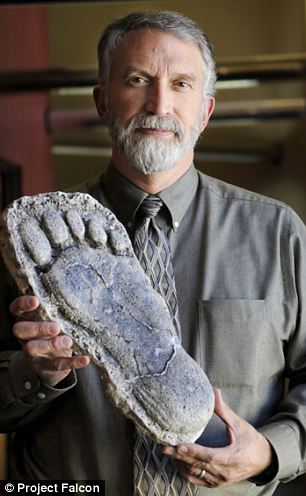
These clear-the-decks idea men share many characteristics with the Bigfoot experts. If you’ve ever watched an exploration of the Bigfoot universe, you’ve been inundated with the experts in this field of cryptozoology. As with idea men, the breadth of the various pitches they offer to establish their authoritative expertise on the subject often devolves to tearing down the competition. One expert, we’ll call him Tom, claims to be the Big Foot expert. Tom claims to have had numerous harrowing encounters. He provides details of those encounters (cue the actor in the hairy suit for the reenactment), and he shows us evidence of those encounters, such as the plaster cast footprint, a ripped tent, or a damaged car to show the wrath of the Bigfoot. Based on his numerous experiences, the evidence, and his particularly charismatic and convincing presentation, Tom is widely regarded as the Big Foot expert. This bothers Dick, the lesser-known but up-and-coming expert in this field. We might think Dick might try to rival Tom’s experiences with his own, but he chooses to try to poke holes in Toms’ stories, until it’s fairly obvious that he’s trying to destroy Tom’s legacy in the field. Dick claims that true cryptozoologists, with a Bigfoot focus, know Tom’s claims are “dubious to say the least.” Dick tries to establish his bona fides in the Big Foot community by scrutinizing Tom’s claims, as if they’re not rooted in the scientific method. Dick then lists some of his own credentials, his theories, and his firsthand experiences, but the breadth of his presentation focuses on bringing Tom, the widely-recognized expert in the field, down. Harry refutes Tom and Dick’s claims with a “If this is true then that would have to be true too” prosecutorial breakdown that leads the audience to believe that Tom and Dick’s presentations are basically nonsense. Thus, Harry claims to be the “real expert” by a last man standing process of elimination. In the end, no parties produce irrefutable information, because there isn’t any, and as a result the experts, like the idea men, end up dueling over the circumstantial evidence they gathered. 

Our ideas might be flawed. We might not be as funny as we think, we might not know how to sing, or we might not be able to write good(emoji), but our dreams and ideas secretly make us feel special. They’re what we think separates us from the pack. I could see this in the aforementioned Kelley’s eyes. He thought his very general pitch was a declaration that he wasn’t a low-level, blue-collar worker like me. He was (trumpet’s blare) an idea man, and the only reason he wasn’t there yet was he didn’t have any money. We all think if we just had a few thousand dollars, or the right connection to that person in the know, or that big break that the man had, everyone would know that we’re not just idea men. We’re the real deal, not like Anthony over there, who’s just a dreamer. “You have to know someone to get somewhere,” we frustrated types say when we don’t get where we need to be. “It’s all a game, and you have to know how to play it to get there.”

The idea that none of us are who you think we are, “a common blue-collar worker like you,” and we’re actually a lot more special than anyone knows, was brilliantly captured on the classic show Taxi. No one in the blue-collar dispatch area, on that show, was just a cab driver: one driver was also boxer who drove a taxi for the money, another an actor, a receptionist in an art gallery, and the last was a guy just working there to put himself through college. After each character went through their real roles in life, the character Alex Rieger declared, “It looks like I’m the only taxi driver here.” Their dreams, our dreams, are our way of getting through the rigamarole of the daily life of the worker, and the general tedium of life. They are our reason to wake up in the morning, and the reason we keep going through the routines of life, but some of the times our ideas aren’t as great as we think they are, and we’re afraid of meeting that Simon Cowell-type who will not only tell us the truth, but humiliate and emasculate us for ever dreaming in the first place. Simon Cowell-types can say that their goal is to free us from unreasonable ideas, aspirations, and dreams, but we all know that they enjoy laying out the harsh realities of life.

***

Did you ever have a dream? We all did, when we were all dumb and stupid in our twenties. Our dreams may have been delusional and a “total waste of time”, but they were all ours. Did someone come along and deliver a harsh dose of reality to you? Have you ever passed this knowledge on? Did it feel good? Okay, maybe not good in the literal sense, but how about justified? Some people, and we all know who they are, love to crush dreamers with a reality hammer, because they’re more than happy to help someone else in this regard. 

The trick is to hold onto your young dreams.” –George Meredith

Dreams are largely a refuge of the young. Talk to any kid, and you’ll hear about their dreams, all of them. If you fear that your kid might be headed down a delusional and a “total waste of time” path that you hate to see them spend one second pursuing it, wait a second, don’t say a word, wait, and be patient. They’ll have another, totally different dream tomorrow. Until someone comes along to effectively crush our dreams, we’re still in this dream-like state in our twenties. The only problem is we don’t have any money, no connections, and absolutely no path to seeing our ideas and dreams to fruition. 

If it’s true that our brains don’t fully formulate until we’re twenty-six-years-old, the twenties are our last vestiges of youth, but we’re old enough and mature enough to start seeking concrete paths for our youthful dreams. The thirties are a rough time for dreams, as the faint light at the end of the tunnel begins to fade in the decade we spend in the workplace, but we’re also not so old, yet, that we consider those dreams foolish notions. That usually happens in our forties, as we begin to whittle away at the idea pool to sort out the outlandish, never-gonna-happen dreams, and we become more realistic. Few of our dreams last into our sixties, as we begin to realize that we should’ve either focused our mind more on the more realistic dreams we had or given up on all of it sooner and focused on something that mattered so much more.

This general, and relative lifecycle of dreamers can be artificially altered and disrupted by dream crushers, and as I write, they think they’re doing a service to their fellow man. They don’t consider the idea that we all think different, and some of us can walk and chew bubble gum at the same time. When I hear a dream crusher brag about injecting a dose of reality in another’s head, and they always do with some measure of pride, I ask them, “Why would you do something like that?” When I ask that in an emotionally charged manner, I can see, in the manner in which they answer, that that was the last question they expected from us, or anyone else for that matter. You can also see that they failed to consider the other side of their advice, or that that person might just be different than them.    

“You heard their idea. It was ludicrous, and a total waste of time. Someone had to say something. I think it was for their own good that they hear that,” they say. They also add some variation of, “Better they hear it from me than someone who doesn’t care about them.”

“Okay,” I said, “but did it actually benefit them? I think we can both agree that he’s an upstanding man, good father, good husband, quality friend and employee.”

“From what we know, yeah.”

“And most of the time he “wastes” pursuing a dream “that was never going to happen,” was done with whatever free time he had left. If all that was true, and as you say from what we know it was, how did your dose of reality benefit him?”

“He was just wasting so much time and energy on it. I couldn’t bear to watch it anymore. Someone had to tell him the truth before he got his heart broken.”

“So, you broke his heart to prevent him from getting his heart broken? While you were smashing, did you ever consider the idea that some portion of the happy-go-lucky, unflappable personality that you and I know and love was based on those outlandish dreams and unrealistic goals? What if he believed you, or you made some kind of dent? What if he stops pursuing his lifelong dream, based on what you said? How would you feel if he come back to us as hopeless and cynical as you are? Would you feel vindicated, or would you realize that he’s probably not going to tell you, or anyone else, what his dreams are anymore, if he continues to pursue them. And what if he doesnt? What if he admires and respects your opinion so much that he realizes that pursuing his dream was a waste of time and energy, and he just gives up on them? It’s possible that he might come back to us a little more unhappy than he was yesterday.”  


Expecting the Expected


“Comedy is the imitation of the worst kind of men,” –Aristotle

“Dark humor is like food—not everybody gets it!” Josef Stalin

I was waiting on a friend who would never show when Marilyn Dartman sat down next to me. I spent the last half-hour looking back at the door whenever someone entered, when she sidled up next to me in an aged sports bar that the owner hadn’t renovated in twenty years. It happened so many times before, that I had the old ‘shame on me’ dunce cap on for expecting that this time would be different.

I don’t care how angry, bitter, resentful and just plain fed up I get here, the friend who wouldn’t show wasn’t an awful person. Was he inconsiderate, sure. Did he abandon me the second a hint of something better, more enjoyable, and just plain fun arose. He did, I’ll admit that, but he wasn’t rude. He was inconsiderate, unless the considerations involved himself. What’s the difference? I wondered sipping slow on a dark, stout beer. The difference is that he’s one of the expected, and I am the type that is always left expecting him to show up. I play the Charlie Brown character in this production, always running up to the football, expecting Lucy to continue to hold it, every single time, until you can’t bear to read any further. 

While sipping on that delicious brew, I thought about the few times in my life where I was expected to show up. They made plans, and those plans involved others, but they made it clear that they expected me to be one of the ones who showed up.

“Are you going to be there?” they asked with a small amount of plea in their voice. It felt odd being on the other side of this paradigm, and I assured them that I would be there. Throughout the course of that day, some double-checked, some even triple-check. Even though those triple-checks sounded cringey desperate, I understood. I’ve been there.

“I want to assure you that I would never do that to another person,” I said when they double-checked me, “because I’ve been on the other side of this so often that I could write an article on it.”

I’ve been the pre-teen soccer player expecting that the set of headlights that washed over me were from my father’s car, bringing a merciful end to me sitting there in the dark all by myself for nearly an hour. I’ve worn that expectant smile when the sounds of the bar or restaurant’s swinging door cue another’s entrance, only to see a foreign shape fill that space. I know how that expectant smile dissipates when the laughing, fun shapes fill that entrance. I know the sense of vulnerability that drives another to the proactive measure of triple-checking, and I know what it feels to sit there so long that I vow, once again, to never put myself in such a vulnerable position of counting on anyone for anything ever again. As deeply entrenched as those feelings of resentment are, I would never reveal them by triple-checking.

“I’d never do that to another,” I say to try to put an end to what I considered the painful revelations inherent in their triple-checking. “I’d never damage the expecting the way they’ve damaged me.”

How does a friend blowing off another at a bar do so much damage? I consider the general practice of no-showing abhorrent regardless the circumstances, but if I were to dig deep, I’m sure we’d find some pre-existing conditions that lead me to such straits, and my guess is that it’s this congealed ball of so many flavors that it’s impossible to nail one. It’s probably so deep-seated that it would take deep, intrusive therapy to fully define, but most of us are not so damaged by such matters that we seek therapy.   

“Sorry, I forgot,” is what the expected say the day after pulling a no-show, when they’re not lying or providing an excuse. The excuse I heard most often from this friend who would never show was that needed to spend time with his son. Who can argue against that, and how do we verify it? Years later, I found out he reversed this lie to his kid, telling him that he was hanging out with me on the nights in question. (On an illustrative side note, his kid, now a grown adult, still resents me for taking so much quality time away from he and his dad.)

“That’s fine,” we say after they apologize. It’s not fine but it feels odd, petty, and even a little dramatic for a grown man to say something like, ‘No, you know what, it’s actually not fine. You left me sitting there by myself, feeling like a fool, staring back at that ever-swinging door, thinking it might be you.’ We also know that it won’t prevent future incidents, and we know that holding onto that anger and resentment won’t do anything either, so we just say, “It’s fine.” If anyone else can call them out like that, I applaud them for being honest to the point of revealing how vulnerable they felt, but I just don’t do vulnerable well. I’ve also learned how skilled, and some might say artful, others can be when diminishing and dismissing another’s pain.

 It was in that void that a woman named Marilyn Dartman stepped.

“I’ll buy the next round for you for … your soul,” Marilyn Dartman said, stepping into this tangled web. She said it over my shoulder, with as much baritone as she could muster. She then extended a hand. “Marilyn Dartman,” she said. “May I sit next to you.”

I was in no mood for humor, but Marilyn sold that line so well, and she was so serious, that I burst out laughing. “Has that ever worked before, Marilyn Dartman?” I asked shaking her hand and inviting her to sit.

“Actually it did, yeah, it did sort of … on me,” she admitted, sliding into the seat diagonally. “I sold my soul to the devil a decade ago.” She stopped to mentally count, “Yeah, it was almost a decade anyway. I was all young and stupid, and I thought Beelzebub might be able to make me the greatest writer who ever lived. I’ll take the ‘L’ for it, my bad, but I thought I was so close to becoming the greatest writer who ever lived that I thought if anyone could put me over the top, it was Beelzebub. I now chalk it up to youthful exuberance, or naïveté, but if you’d ever read anything I’ve written since, I think you’d agree I got screwed.”

“I’m sure you’re not that bad,” I said.

“Well, I’m not that great either,” she said, “which is kind of the point.”

I enjoyed this beyond it being such a wonderful distraction from all my sulking, so I bit, “I’ve seen the movies and read the literature, but what are the procedures, or the process you have to go through to get Satan to grant you your wishes?”

“I did research on the best way to do it, but I don’t even remember where I read that to do it right you need to fly down to the corner of highway 61 and highway 49, in Clarksdale, Mississippi, but that’s what I did.”

“Robert Johnson,” I said. “Old blues singer, allegedly sold his soul on that corner.”

“That’s it. That’s the name everyone dropped on Reddit,” she said. “It’s so plain that it’s almost hard to remember some of the times. Other people, in line, mentioned the group Led Zeppelin, and some other guys named Niccolo Paganini, and Bill Murray who sold their souls, and we thought if he could do it for them, he might be able to spin some of his black magic on us.” 

“You said we,” I said. “There were other people selling their souls?”

“Oh my gosh, how about lines were around the block,” Marilyn said. “Had I not flown on such a limited round-trip and paid for a one-night stay, I would’ve turned around and come back another day when the lines weren’t so long. It was so ridiculous that Satan’s minions eventually installed a self-checkout aisle.”

“C’mon,” I said. “You had me till that. I can’t believe that they addressed customer complaints-”

“Believe what you want,” Marilyn said. “Someone in line said, and I quote, ‘it’s just good business, and they received a ton of complaints.’ Believe what you want though.”

“After standing in line for so long, I’ve since found that if you know what you’re doing, you can sell your soul to the devil from the comfort of your own bedroom, or you can find local chapters, or whatever, but I didn’t know any of that back then, and I was so dying to be a great writer that I would’ve done whatever it took, and I would’ve flown wherever just to get it done.”

“Did you get out of it?”

“Out of Satan owning my soul?” she said. “I did eventually. I told one of his minions, in his customer relations department that if Satan didn’t release me from my contractual obligations, I would accept the Lord Jesus Christ as my savior, and I’d go about saving all kinds of souls with my story of redemption. His minion says, but you don’t believe, and I said, and you’re going to love this, I said, ‘Does the car salesman really believe that the Smart Fortwo is the best car on his lot?’ I was so proud of that comeback, which I thought of on the spur of the moment, that I don’t remember much of what he said after that, but a week later one of his minions calls me back and says, ‘Satan says fine, he knows you’re coming to him anyway.’”

“That is such a bunch of …” I said, “You’re joking, right?”

“I’m not, unfortunately,” Marilyn said. “I wish I was. It was pretty dumb.”

“Because from what I’ve heard you can never get it back, or, at the very least, that it’s harder than you’re making it sound.”

I’m condensing bit time, here,” Marilyn said. “After I submitted my request to his council, I had to go through all of the displays of the powers he uses to scare people. He put on a big show of letting me know his presence, with the theatrical opening and closings of doors, rocking chairs moving, and he even possessed my favorite aunt for a time. I wasn’t buying any of it. I knew he was just trying to scare me, but I didn’t fall for it. I laughed at it as a matter of fact, until he released me.”

“That is quite a tale Miss Marilyn Dartman,” I said. “Quite a tale.”   

“And it happened,” she said in closing story mode. “It all happened. So, what are you doing here all by yourself anyway? I’ve never seen you here before.”

“It’s a long story, but suffice it to say that I don’t pick my friends very well,” I told her. I proceeded to tell her some of my tale, leaving out the vulnerable elements of course. I also told her the theories I developed, while sitting there for a half-hour, about the differences between the expected and the expecting.

And then, as if to prove to me that she was not one of the vulnerable, expecting types, Marilyn told me how she ghosted one of her friends, a woman named Andi, at a restaurant.

“She called me and asked if I wanted to meet for lunch at this place she really wanted to try,” Marilyn said. “I was hesitant, but I eventually said yes. She broke me down, made me feel guilty, and all that. I wasn’t into it then, and I really wasn’t into it when that afternoon rolled around. I just wasn’t in restaurant mode, if you follow.”

It wasn’t a test, and I looked for it. I scoured her face to see if she was somehow testing me, but it wasn’t there. It was impossible to know for sure, it still is, but I wondered if this was a simple case of me bringing up a subject that reminded her of a story from her life. I still wonder, to this day, if it was equivalent to the almost impulsive reaction some have to our warning not to touch that one very specific subject that bothers us most. If we tell people that we’re sensitive about lions, just to randomly pick a subject to set a premise, and we tell them that we’ll entertain stories about any animal in the animal kingdom, except lions, what do you think their first joke will be about? Lions, of course. It’s just what some types do, and I’ve met such a wide variety of those types. It’s almost equivalent to that wound you have in your mouth that you can’t stop licking, even though you know it will only make it worse. Except this is another person’s wound, and they can’t help but lick it with their infected tongues.

Even though Marilyn, and all her stories, proved a more than sufficient distraction from my feelings of anger and resentment, I was still in a particularly vulnerable mode, but I don’t get squishy and sad when I’m vulnerable. I grow resentful and even angry.

“When did you decide you wouldn’t be going to this restaurant with Andi?” I asked. I interrupted Marilyn after she started in on another subject. Her no-show at a restaurant tale was so meaningless to her that she tossed it out as if it were nothing more than another tale from her life, and she started in on another subject before I would bring her back. Her reaction was equivalent to ‘Hey, I’ve done that whole no-show thing to someone too, but what do you think of this weather, huh?’

“As I said, I wasn’t really into her whole luncheon plans to begin with,” Marilyn said with an almost playful smile, “but Andi sounded so needy that I just couldnt say no. It was one of those moments we all have. When that afternoon rolled around, it was a weekend afternoon that followed such a rough week at work, and I just wanted to veg. I was so far away from restaurant mode that I just said nah.” 

“The point I’m trying to get here is did you tell her, this Andi, any of your feelings of nah at the time, at any time, before the fact?” She said she didn’t. “Did you, at any point, text her to let her know that you wouldn’t be there?” The answers to all of the above were no, followed by detailed explanations of the rough week she had at work, which led me to ask, “So, you just decided to leave your good friend sitting all alone in the restaurant?” Yes. Marilyn didn’t actually say the word yes, but it was pretty obvious, at this point, that a lack of no was tantamount to a confession.

At this point, it is safe to say that Marilyn and I were no longer hitting it off. She was giving me that scrunched up, “Move on!” look. Her no-show was so meaningless to her that she was trying to convince me that it should be just as meaningless to me. I mentally said, ‘Nah!’ My three progressive questions led to some silent tension between us. I didn’t care. I didn’t seek more information to make her feel bad, I wanted the mentality of the expected explained, framed, and enshrined in my head to help me try to see another side to it.

Marilyn said a whole lot of things to plead her case. She brought up things Andi did to her in the past, and those things were so meaningless and unrelated that it was pretty obvious that she was searching for circumstantial evidence to prove her case. She was no longer interested in me in anyway at this point, but she felt a need to clear her name. Marilyn was no different than any of us, and our need to prove that we are the good guys in our scenarios in life. Marilyn Dartman wanted her ‘good guy’ crown back.

“So, these things she did to you,” I said. “What you did, by ghosting her at a restaurant, leaving her to tell the wait staff to wait another couple of minutes, until she felt so foolish she either left or ate alone? This was your retribution?”

“Yes,” she said without conviction. “I mean, no, but she’s no angel. Let me tell you that much. If you’re trying to say that she never did anything to me you’re wrong.” She then went on a rant, continuing to talk about Andi, and all of her faults. 

Our conversation did not progress beyond this point. It was the contextual equivalent of yes huh and nuh uh that often concluded with me saying, “I still think it was wrong.” The only notable element of this part of the conversation was our tone, as it progressed from conversational to the two of us trying to speak over one another to the point of almost yelling.  

“I don’t need this,” she said to put an end to it. “What is wrong with you anyway? I sat down here to have a drink, and a decent conversation, and you’re all like … uh.” She made some kind of expression here to suggest I was badgering her, and making her feel bad about herself.

I knew this was the point of no return, and I knew she would be leaving in seconds, so I just launched: “I just don’t know why you people don’t just say no. That’s really the part I just don’t get. Would you like to hang out with me tonight? No. Now I might ask why, but all you have to say is I think you’re kind of boring, or you’re so boring that I cannot bear spending another hour with you. Or, I want to hang out with Steve, because he’s so much more fun. You know what I say? I say fine and dandy, because no is better than a no show. No leaves me wondering why, but I get over it just as quick. No-show leaves me in a bar, by myself, looking back at the door, like a damned fool. What’s wrong with me, you ask. I ask, what’s wrong with you? Why would you do that to another person, anyone, much less a friend, or a best friend?

“If your plans change, or you fall out of restaurant mode,” I continued, speaking over her. “Why don’t you pick up the phone and push a couple buttons that say, ‘I’ve decided I don’t want to go.’ Why, who cares, thanks for telling me bud, because I’d rather you text me that you’ve decided you don’t want to hang out with me, because I’m boring, that someone else is more fun, my breath smells like European cheese, or you’ve decided not be friends with me anymore, because you’re starting to consider me an unpleasant and smelly orifice on the human body. Would it hurt, sure, but it’s all better than leaving me sitting in a bar or restaurant, all by myself, looking at the door, feeling like an absolute fool for believing, once again, that you’re a good friend.”

“There is something wrong with this guy,” Marilyn said to the few patrons in the bar, to try to drive some kind of dagger home. “There is something so wrong with you that I don’t want to know anything more about,” she added picking up her drink and her drink napkin. She appeared all ready to march away, but she turned back, “I’m a good person, and you don’t know me. There’s something so deeply wrong with you that you’d say such things to a complete stranger. You don’t know me, and how dare you?”

Marilyn Dartman did not appear tears. It was all anger, disgust, or righteous indignation that drove her to sit in the opposite corner of the bar. The fella she sat next to in that dark corner gave me a look, nothing on it, just a look. I turned back to my beer, took a drink, and began watching the hockey match on the television set.

I’ve since told this tale to a wide range of people, and the reactions were mixed. Mixed. I didn’t bother keeping a ledger on their reactions, but they were about 50/50. I did everything I could to tell this interaction as objectively as possible to try to get true reactions. I included the stories Marilyn told me about Andi, and any information I could to support Marilyn’s cause, because I wanted an objective answer for what I considered a bullet proof case. Even though I didn’t think much of what she added, I tried hard to remove any tones to her story to seduce my listeners to my side. The 50/50 reactions shocked me. How could anyone agree with Marilyn? Some agreed agreed with me, but the others shocked me by saying, in various ways, that I was wrong. Some said I was harsh, and I admit that there were some time and place emotions that drove my spirit. Others said I was just wrong for calling out a complete stranger without knowing all the facts, and they admitted that aggressively saying such things to a woman prejudiced their opinions. “A man should never say such things to a woman,” they said, “and if you were near-yelling that’s just beyond the pale, and it’s just not something a man should ever do to a woman.” Still others said it was none of my business how anyone chooses to conduct their personal affairs. If her friend was upset by the matter that’s between Marilyn and Andi, and I had no business subjecting my views on her.

“Ok, fair enough,” I said, “but isn’t it about respect, or even basic human decency? If I say I’m going to meet someone at 7:00, I usually show up at about 6:50. That’s me. I understand not everyone abides by my self-imposed edicts, but a complete no-show? If you’re fifteen minutes late, I consider that a subtle show of disrespect, but it’s so negligible that I won’t remember it two minutes later. Thirty minutes doubles the disrespect, but a complete no-show, that’s when we move into the uncharted waters of basic human decency.

Did I lay it on a bit thick? Probably, especially to a woman. As for all the other arguments, I just think I value friendship far more than most, and I now know how that puts me on the weak end of those relationships. There is this sense they must have that because I’ve always been there, I’ll always be there, and that leads them to value our friendship less. They don’t expect more, because they’ve never put that much thought into it. You’re a friend not a lover, so why should they bend over backwards to make it work? Then, after you’ve finally had enough, and you unceremoniously end that friendship, because you know they won’t show up, and you get back together with them, after ten years apart, you might expect some sort of nostalgic apology for all the violations of the conditional tenets of your friendship, but you find yourself left expecting, because they aren’t really that big on nostalgia.