I Love to Drink!


“Do you love to drink?” Barry told a Pocatello, Idaho audience. “Of course you do. Everyone does. We’re not talking about Kool aid, or anything that hydrates you either. We’re talking alkie hall, girls and boys. The National Food and Nutrition Board recommends that we drink eight glasses of alcohol a day, and I think that’s a bit excessive, but I … what? Oh, they were talking about water, eight glasses of water a day. Water. Thank you for the correction.  “Eight glasses a day,” they say. “It cures what ails you.” All that. We know it, we’ve heard it, we got it. We should drink more water, we know we should, but it’s just so blah.

Now, I have had some incredible, absolutely unforgettable glasses of water, and they came out of the tap. How could a glass of tap water be so incredible that I’m still talking about twenty years later? You ever drink alcohol to excess? You ever drink so much the night before that that morning glass of water teaches you what euphoria means? You ever dehydrate your body so thoroughly that when you finally drink that glass of water, it’s … it arouses you a little? I’ve put those eight glasses down in the space of about ten minutes before, but that first glass? That first glass makes you happy you survived the night before. It’s like a reward for damaging your body. If you do it right, you can feel that first glass soothing your throat, hydrating and healing whatever ball of hell we threw into it the night before. We can feel it circumnavigating the stomach putting a cool coat on all the wounds our violent, projectile vomiting caused. Do you love to drink? Let me hear you knock one back. Let me hear that after-the-drink sigh.   
“Very few people applaud that line wildly, especially on a date. We might love to drink, but we don’t love telling people that, especially on a first date. It’s not a good look. ‘You like what you’re hearing here? I’m pretty charming, right? Enjoy it while you can, because in about a half an hour, I’m going to have trouble remembering your name, Jennniferr?’ 

“I’m not an alcoholic anymore, but I used to be (pause here) I used to be (add menacing soft chuckle that lasts a little too long). I am probably going to hit on some other girl on our way out, just so you’re prepared, and let’s see here, oh, oh and I almost forgot I’ll probably fall on someone on the way out too. I do that silly stuff like that all the time. I just fell on someone last weekend. I almost forgot about that. Yeah, he was on a date with a certain  someone he considered special, and he threatened to have me prosecuted, because he said (stifle laughter here) he said that he thought I fell on him on purpose.” Barry looked over both shoulders and leaned in to whisper to the audience, “And, just between you and me, I kind of did. That’s right, I picked out some fella who appeared to be having a very pleasant date with a polite, young woman, and I fell on him for no reason. Just to see what he’d do. It’s not funny, I know, but I wanted to hear this little feller scream a muffled scream under my shoulder as I writhed around like a turtle on its back trying to regain its footing.” Barry reenacted the effort of a turtle with its arms flailing. “I was almost blackout drunk, so that might be why I did it, but I was also so bored with everyone filing out of the comedy club single-file, like fourth graders. I wanted to see how it would affect his date’s impressions of him when she heard him scream his muffled scream. So, just to let you know, I probably have a trial date in my near future, but they got nothing on me. It was an … accident,” Barry said to the audience with an exaggerate wink. 

“That was me. I was what you would call a happy, fun drunk when I was about … your age,” Barry said, picking a random member of the audience, “but I hate the ‘I was so drunk the other night, that I …’ tales now. Are you with me here? I loved them when I was your age. Hell, I was probably telling them most of the them, because I was a sloppy, pathetic drunk, but I had a big old smile on my face when I was falling all over your tables, and I was usually the only one laughing when all your drinks crashed around me. Why were people so disgusted with me, because sloppy drunks aren’t funny in the present tense. They’re kind of sad and pathetic in the present. I didn’t care about any of that at the time. I was having a blast, and I was feeling good. He knows what I’m talking about. High five? Air high five? No? First date? Ok, well, he knows alcohol makes us feel better, even if he doesn’t want to shout loud and proud … stupid, yeah, but better. We love to hear about alcohol stories from the past, because we love to hear about stupid people doing stupid things … if it’s from the past. Some of us are old and boring now, because we’ve learned our lessons, but our stories, the one’s we try to frame in a serious way to teach lessons, they’re knee-slapping-hilarious. If we’ve learned our lesson, it sort of gives us all a pass to laugh, because the guy telling the story is all clean and sober now. What if I told you I’m still quite the drunk? What if I told you I’m tanked right now, as a matter of fact, and I’m working on my tolerance level, so I can drink you under the table? Not funny?

“How did that start? How did that almost universal ‘drink you under the table’ challenge catch on?” Barry asked the audience. “I think the modern incarnation in the United States tradition started in the Old West. We romanticize the Old West now, but if you’ve ever studied it to any degree, one word comes to mind: boring. Boring and grueling. The primary jobs in the Old West were either farming or mining. You could also be a blacksmith, a lawman, a teacher, a prostitute, or a bar owner or banker. All of those jobs, except maybe the teacher, involved consuming massive amounts of alcohol either because it was part of your job, or because it was so boring or grueling that you needed alcohol at the end of the day just to convince yourself that you should go back to your miserable existence tomorrow. They didn’t have the internet, TV, or even books. Books, their sole source of entertainment, were so scarce that most families had the book. The book was called the family book, and everyone had to share the family book, or read it aloud, and they usually had enormous families so that the children could help out on the farm. The book was often some compilation of Shakespeare’s greatest plays or The Bible. They also had little in the way of transportation. If you were wealthy enough to own a horse, you were usually limited to traveling to and from town, and that could take hours depending on your location. So, when the twelve hour day of farming was over, and you couldn’t travel, and you couldn’t read the book, because one of your thirteen brothers or sisters had it, you drank and played cards. And anyone who has played cards, a serious game of cards, knows the rule. You can’t just play cards for an hour or so, especially if you’re lucky enough to win a couple hands. It’s an insult to everyone at the table. You have to give the other guys a chance to win their money back, and that can take hours, five to six hours. So, what do you do in those five to six hours, you drink, and if you drink enough for long enough, even that can get boring, and when your sole source of entertainment gets boring, what do you do? Anyone? Anyone? Drinking games and contests. And contests. That’s right. The act of consuming more alcohol defines your character, and the starting gun for these contests is, “I can put your ass under the table.” 

“I was really clicking with this woman in that manner that men and women sometimes click. We all know that moment when a conversation with the opposite sex clicks just past harmonious enjoyment to hormonal. Nothing we say is half as intelligent or as funny as we think it is when this happens, but we’re both in the zone. While she and I were in this meticulously balanced aphrodisiacal, nearly anatomical, part of the conversation, she drops it on me, ‘I might be a ninety-pound woman, but I can put your ass under the table.’ Why? Where the hell did that come from? I should’ve given her a: ‘I don’t give a crap. I’m sure that you can drink more alcohol than me, and I don’t give a crap.’ We can’t say that though, because we’ve trained one another to accept that these moments define our character, and we can’t give up the dream that we’re the Clint Eastwood, John Wayne character in this production. We’re not the supporting actors who revere the main character. We’re the confident, she-doesn’t-know-who-she’s-messing-with Clint Eastwood character.    

“I was tempted to play this stupid game with more than just this one woman. I’d have to check my ledger, but I’m pretty sure women have challenged me as often, if not more than men. They think that just because I’m staggering and slurring my words after three beers, they can take me, and you know what they’re right. I have always had the tolerance of a sixteen-year-old girl who hasn’t tried alcohol before. No matter how often I drank, it never translated to a greater tolerance. If a guy challenges me to a drinking contest, I say no thank you fine gentleman. That’s usually not enough, because I’ve usually done something to make this guy challenge me. It’s so stupid. For some reason, they need you in a supine position with unconditional surrender in your heart. You’re going to put me under the table, you’re superior, and … and what else you want? You’re the better man, how about that? Is that enough? Whatever I have to say to avoid drinking whatever the hell a man challenges me to drink, I’m going to say. I truly don’t care what some guy, I’m never going to see again, thinks of my drinking tolerance. It’s different when a woman challenges you though, it’s tough. Even if you’re not attracted to the woman, it’s tough. It’s tough, in general, for any guy to say no to a woman. 

“And then there’s Bob. Bob. I got along with Bob. He was a nice guy, deferential, and all that. Bob showed us all the roadmap to becoming Clint Eastwood. It involved drinking massive amounts of alcohol, massive, my-brain-is-probably-half-gone amounts of alcohol to increase the tolerance level. Everyone knew a Bob, back in the day. The Bob I knew was the man when it came to drinking. Someone said he put beer in his Cheerios. Did anyone ever actually do this? I can’t count how many times I heard that such and such was such an alcoholic that he put beer in his Cheerios. I don’t know if anyone ever did this, or if Bob did it, but Bob was our king of the hill, top of the heap, an ‘A’ number one drinker. It didn’t matter what the drink was, Bob could put you under the table. When we spoke of Bob, we did so with reverence. We townspeople whispered tales of the legend of Bob in the hopes that Bob would not hear us and become so enraged that he might challenge us to a drinking game, because Bob could, repeat it with me now, drink twenty beers without even getting a buzz. I will now allow for an obligatory moment of silence to allow you to gasp. I think it’s a rule or something that we’re supposed to gasp here and consider all the ways in which Bob is one of our betters.

“Every culture had a Bob. In Ancient Greece, Bob was the smartest philosopher in the cave; Bob was the greatest gladiator known to man in Rome; and the Spanish Bob was the greatest matador in the ring. When we all came here, we decided to give up on all that junk, because they’re all so hard and time-consuming. We’d much rather commit our lives to destroying as many brain cells as we can. We’d much rather celebrate and venerate a Bob who can drink people under tables. If someone vouches for us and says, “Don’t challenge Bob, he’ll put you under the table,” that’s probably one of the top 100 compliments we Americans can say about another. 
“If the bar is our arena, Bob taught me one crucial element to defeating an opponent in drinking contests, stats. What’s more satisfying than actually defeating an opponent in drinking contests, or any contest, drinking or not? Anybody? Anybody??” Barry asked the audience. “Intimidating an opponent from even daring to challenge us. Bob had his twenty beers-without-a-buzz stat line, and everyone knew it. If you didn’t know it, we told you, warned you. Don’t mess with Bob. He’ll put you under the table. But I don’t have stats, you say, I have the tolerance level of a sixteen-year-old who’s never drank a beer before. How do we normal people, who don’t put beer in our Cheerios, intimidate someone from challenging us? Get some stats and make them up if you have to, because very very few will call you out on it. My encounter with Bob taught me that stats silence the mob. I never challenged Bob’s reign, because Bob’s twenty beers without even getting a buzz stat line intimidated me, because anyone can say I’ll put you under the table, but stats prove that you are so capable of it that no one will dare challenge you. 

“I used to have a 150 I.Q.,” I told this ninety-pound woman, “but I’ve dropped down to a ninety-seven.” Then I gave her one of these intimidating looks,” Barry said glaring at the audience with raised eyebrows. “It was one of those Clint Eastwood, quietly confident raised eyebrows. The raised eyebrow asks us to ask ourself, ‘Do you who you’re messing with here?’ She asked how an I.Q. score mattered, and I said, “I’ve destroyed more brain cells than everyone in this whole bar put together, and if you think you can put me under the table, sweet mama, you got another thing coming.” I thought of dropping my improvised I.Q. score to the mildly impaired or delayed levels, but I realized that that would probably do more harm than good, so I decided to go from some gifted or very advanced level to just a tad below average, and it worked. Now, she didn’t want to date me after that revelation, but she didn’t go anywhere near trying to drink me under the table either. She was intimidated by my stats.  

“I never had Bob stats, or any other kind of stats, but I did my darndest to work on a tolerance level. I didn’t drink the massive amounts of alcohol I did for the expressed purpose of increasing my tolerance level, but it would’ve been a nice byproduct. It never happened for me though, and this aspect of my life comes with a big old asterisk. At the bottom of that page, is a short paragraph that reads, “I don’t care. I have a number of character deficiencies, missed opportunities, and things I wished I did sooner and better. If I had a time machine I would go back and try to fix all of them, except for my ability to consume massive amounts of alcohol.”

“Whatever problems I may have had with alcohol, I had my high school buddy to thank. I don’t blame him, don’t get me wrong. I didn’t have to drink, I could’ve made other friends, but Lou was so well-schooled, and so gifted in the art of persuasion that I fell in line. He and I didn’t drink all the time. We played sports every chance we could. We watched sports, read about sports, and talked about sports when we weren’t playing it or watching it. Sports is so compelling, because it’s a natural, adrenaline high. Competing against your fellow man, and defeating them in what they practice at as hard as you do is an adrenaline rush to adrenaline junkies. The one negative element to sports is that you can’t play them all the time, so what do adrenaline junkies do when they can’t play? They do drugs, they drink, they gamble, or whatever they can find to try to replicate that high. 

“When Lou and I drank, we put that stuff away! We didn’t consider ourselves alcoholics, of course, because we only drank on weekends, at parties. Alcoholics, to our mind, were people who drank alone, because they either enjoyed the taste, the high, or the combination thereof. We didn’t drink, because we liked the taste. We drank alcohol as a social lubricant to unlock those incredibly fun personalities that only come out at night. We drank what we could afford, and the stuff we could afford was the kind of alcohol that we had to force down until we couldn’t taste it anymore.

“I don’t know if the term binge-drinking was invented in those years, but if it was, we never heard about it. When we did, and we went through the bullet points, we were like check, check, check. Woops! We were party fellas. 

“Where Lou and I parted ways was his desire to see to it that others got hammered too. I didn’t really care if others drank, and I didn’t understand his obsession with it. Don’t get me wrong, I didn’t want to drink alone, and I never did, but I didn’t really care too much if you knew when to say when. Lou did, and he was so skilled at his trademarked brand of peer-pressure that he should’ve probably considered putting a college course together. He could’ve called it Killing Them Softly 101. He didn’t mush us in the manner mushers will in the Iditarod with those kissy sounds. Lou’s mush words were, “Drink!” and “Drink gawdamnit!” and he considered me the international pace car of his parties. If Barry doesn’t get hammered quick, no one else will, or so he feared, and Lou feared that if we didn’t all get hammered quickly, we could, could end up talking about deep thoughts and feelings. To further prevent this, he refused any requests to play Pink Floyd at his parties. He liked Pink Floyd, in casual moments, and in his car? But Parties? Drinking parties? “Nope, Pink Floyd leads to thinking. It causes deep conversations.” 

“Don’t think! Drink!” would be the first thing Lou wrote on that college chalkboard, and, I know, they don’t have chalkboards anymore, but he would probably have those words displayed behind him in some manner, for his Killing Them Softly 101 lectures. “Don’t think! Drink!” He’d say pounding each word with his professorial pointing stick. “It’s what you say loud and proud, if you want your party to be considered a success.” 

“If you’re a proper host, you’ll work the room, asking them, ‘How much have you had to drink so far?’ And don’t believe what they say, check. Ask to see their bottle in a polite, interrogatory manner. Tell them you’re just curious. “Let me see your bottle, Barry?” Then, when they show you, you not only condemn him, but his mother for ever giving birth to him, and whatever the hell he drove in on. “What are we doing here tonight, Barry? Drink. Drink gawdamnit!” We’re to say that as if we’re disgusted by their pace, and we’re always disgusted by their pace. Never satisfied. That’s vital. Focus your condemnation on someone who can take it, and the weaker ones will fall in line to avoid your condemnations.

“Your drink of choice should be whatever drink gets your party goers get so hammered that the fun portion of your party only lasts about a half an hour. If you do it right, that half hour will be the only thing anyone remembers anyway. You might want to refrain from confrontationally shouting “Drink!” in their faces when they’re drinking the hard liquor that you two fifteen-year-olds found in old, aged decanters in his parent’s basement. We grew up hearing that alcohol gets better with age. They vintage right? It turns out that that depends on how they’re stored. Yeah, so that bourbon your parents housed in decanters, in some dark, dank closet in the corner of a basement no one has opened for thirty years might not be vintage. They might’ve been fermenting, and some fermenting processes can kill you. “Rock on!” the fifteen-year-old says when they’re downing eleven shots of fermented bourbon in a little over two hours. The proper host should know that if that happens, their party goers will probably learn less about hooking up and fighting, and more about creating interesting murals on your walls with projectile vomit.”  

“Who loves to drink!” Barry asked the audience. “Let me hear you!”

I Love to Eat: Part Deux


“You don’t know how to eat,” a friend of mine said. She wasn’t talking about health and nutrition, or the staples necessary for informed eating. She was talking about the method I used to eat food. I chopped up my spaghetti strands, and this offended her Sicilian spaghetti sensibilities. 

“You’re supposed to fork twirl the strands on a spoon! Like so,” she said, showing me. “It’s so much more elegant.”

When I said, “Nah!” she hit me with another:

“You don’t know how to eat.”

“Have you heard this line? People love it. It’s sweeping the country. They have this method of eating that if you just followed it, or tried it out, it would unlock the floodgates to the glory of eating. My dad used to tell me to combine roast beef and mashed potatoes on the same fork. He considered it divine. I disagreed.

“You don’t know how to eat.”

When a friend told me about his ingenious method of combining marshmallow and chocolate on a graham cracker, that we would all later call a s’more, I said, “Nah!” Boom:

“You don’t know how to eat.”

“I don’t know if they say this to humiliate us or just break us down, but I rebelled against the whole notion of it. I kept eating the way I enjoyed eating my whole life. My dad was the exception. He was so constant, and so insistent, that it’s basically his fault that I eat the way I do,” Barry said, “and it’s his fault that I place such value on food and eating too. My mom shares some of the blame. She was a pretty decent cook, and she made some decent choices for our meals, but she decided to die, so we were stuck with my dad’s definition of a meal.

My dad was an old man when he took the reins. He lived through The Depression, he was a military man, and he spent the next twenty years a hard-working bachelor. My dad spent the majority of his life eating whatever was placed before him, and he was grateful, so grateful that he’d eat just about anything. 

“Dad didn’t understand this notion of preferences. Finicky was the ‘F’ word to him. We displayed some preferences, but in the grand scheme I’d argue that we weren’t finicky. We just preferred to avoid eating crap whenever we could. “You’d eat that,” he’d say over his schlop, “if you were starving in The Depression, or all you had to eat were C-Rations.” 

“So, if you were to put two plates before us, one with this piece of crap on it, another plate of worse crap, and nothing at all, we’d choose your plate?” we would ask. “You’re right, we’d probably choose yours, but that’s not what I’d call a brilliant marketing strategy.”  

“This isn’t to say that my dad didn’t enjoy a well-prepared and flavorful meal. He enjoyed it as much as the next guy, but in his mind, any man could eat a meal that tastes delicious. What separated the men from the boys, in my dad’s worldview, was what that man did to a meal that was less than flavorful. Based upon his internal sliding scale of characterization, eating a foul-tasting, poorly prepared meal was a tribute to his ancestors.  

“You ever see those Old West movies with characters eating pork and beans on a slice of buttered bread? That was my dad’s definition of nirvana. We all know this image of a bunch of carriages surrounding a cook, usually named Schmitty, who cooked up some beans and put it on bread. I’m not saying it didn’t happen, but I have to believe the traveling cowboys would’ve loved it if Schmitty dropped some fried chicken in their lap.

“The pièce de résistance of my dad’s personal campaign to pay homage to those who came before him, arrived in the form of a flavorless, bare bones sandwich. This hallowed sandwich consisted of one slice of the cheapest bologna mankind has been able to produce, between two slices of bread so flavorless that I doubt any competitors in the bread industry even knew this manufacturer’s name. Did he enjoy a condiment or two, well sure, but he didn’t need one. The notion of needing condiments was my dad’s definition of inherent privilege. “You mean to tell me that you can’t eat a roast beef sandwich without barbecue sauce?” 

“No, dad, but we prefer to eat it with a little barbecue sauce on it,” we said. “That makes the sandwich taste better.” He tried to break us down on the differences between need and want, and we conceded that it was all about want. He backed off a little, but he was disgusted by our preferences, because we never could’ve survived on World War II’s battlefields with our preferences.  

“Even with all that, though, it was obvious that if he had his choice, he wouldn’t eat his own schlop, and he made that apparent when an aunt informed him that she wanted to come over to our house to prepare a meal for us. 

“Your aunt has agreed to prepare a meal for us,” he mentioned to prepare us for the moment of her arrival. Nothing wrong with that, right? Like just everything else my dad did, he overdid it, “and it might just be the last decent meal we ever eat.” His intention was not to scare us, of course, but to instill in us a sense of gratitude for all of her efforts. He scared the hell out of us. I considered it possible that I might never eat another quality meal for the rest of my life after we finished The Last Supper of any quality.

“Comparing this meal to The Last Supper might sound like hyperbole, but that was my dad. He had us so amped up for the arrival of that meal that when it was placed before us, my brother leaned over to whisper something to me, I shushed him. “Shh, for God’s sake, eat. This could be the last decent meal we ever eat.” And, boy, did we laugh. My aunt laughed, my dad laughed, and we all had a whale of a time analyzing my admonition. I wasn’t laughing. I didn’t even smile. I didn’t get it. I thought it was almost a guarantee that I would end up eating schlop for the rest of my life after this meal, and I wanted to silently enjoy every last bite, as if it might be my last.

I didn’t care about the quality of the food but what kid does? If we drill a kid down to their basics, it’s all about Burger King, McDonald’s and Taco Bell for them. They’re forced to eat just about everything else. A nice, home-cooked meal is little more than a mandatory break from playtime. “Kids, it is now time to eat!” Aw, crap. You have to eat when you’re a kid. You have to take a break when it’s time to eat. You don’t care about quality. You just eat to shut your parents up, unless those who know the definition of quality food insinuate that it’s possible you never will. 

“My dad’s war on food, namely eating, and the proper procedures therein, might lead one to believe that he was a strict father. He was anything but. In every other area of life, my brother and I had total freedom, perhaps too much. By the definition of our friends, we lived an almost parent-free existence, but they didn’t have to abide by my dad’s near-militaristic meal time rules that would’ve been welcome in most penitentiaries throughout the world. 

“Much later in life, decades later, I found out my dad was actually quite proud of my eating habits. He didn’t say anything about the emotional or financial stability I achieved as an adult, and he never mentioned my ability to attain consistent employment through the years. For him, it was all about eating. “You’d eat anything,” he said to begin the greatest compliment he ever gave me. “I never had a problem with you, but I had to constantly be on your brother at the dinner table, or he’d drift off into la-la land.” My brother would chat at the table, he’d pause for a brief period of time that drove my dad crazy, and he’d drift off, or space out, as we called. My dad called it going off into la-la land. My brother didn’t do this to rebel, or to be naughty. He’d just forget to eat in the systematic keep-your-utensils-locked-and-loaded procedures my dad required. If he slipped into la-la-land, my dad would pounce, “Eat Arnie!” My brother would shake out of whatever daydream he was in and resume eating. My dad tried everything to keep my brother on task. He tried patient reminders, and he tried heavy-handed scolding. Nothing worked. His frustrations eventually drove him to develop a little ditty that we now call the Eat Arnie Eat song, and it went a little something like a this,” Barry said clearing his throat and humming out a couple chords, until he could find the right one. “Eat Arnie eat, eat Arnie eat. Eat Arnie eat, Oh, eat Arnie eat.” 

“Anyone eavesdropping on this one-off performance might have mistaken my dad’s brilliant “Oh” crescendo with a pleasing and creative bridge to the fourth stanza, but aesthetics did not motivate this tool man. Creating tools was his profession, and it defined him, outside-in and inside-out. He created tools to fill a need. His whole world was about need, not want, need, and he created that song to fulfill a need. He composed no other lyrics for the song, and once it served its purpose and my brother began eating, dad had no further use of it. He never sang the song again. He didn’t create this brilliantly simplistic song to be humorous. If you laughed, or thought it was funny in any way, that was your preference, but that wasn’t why he created his incredible Eat Arnie Eat single. If humor, or the looming threat of it, got my brother to eat then his brief foray into the world of art was worth it. Once that tool fulfilled its utilitarian purpose, my favorite single of all time could whither on the vine for all he cared. When we called for an encore at get-togethers and company functions, he shot them all down. He was not one to perform on demand, even with a couple of beers in him. 

“I wish that I could look you all in the eye tonight and say that all these exaggerated concepts and rules of food appreciation are complete nonsense. I wish I could say that I considered them such nonsense, and the minute I became an adult I laughed them all off as so over-the-top foolish that is nothing more than halfway decent material for a joke.

“I mean, who cares if we chit-chat when a meal is before us? Who cares if we look around the room when we should be eating? The big difference between my dad and I is I don’t talk about this nonsense, because I know it’s nonsense, but that super-secret part of me that no one will ever see or hear is absolutely disgusted by signs of a lack of appreciation for the food before you. I cannot stand it when you chit-chat with a perfectly good meal before you. When you take a break, I have to swallow my disgust if I want to have friends, or I want to avoid having others consider me a special freak. “Your entrée is getting cold!” I want to scream. The idea that you can’t, or won’t eat food without condiments absolutely disgusts me. I’ll talk about the need, need, that you have for mayonnaise on a ham sandwich for years. Want is fine, but need? C’mon, isn’t mayonnaise a first-world preference? Then if you dare to commit the cardinal violation of food appreciation, according to my dad, of leaving a restaurant with some food on your plate, and you don’t ask for a doggie bag? I will secretly decide, without noting it for you in any way, that I might never be able to dine with you again. Seeing it once will forever affect our relationship, but putting myself in a position to view it twice is a shame on me, in my book.”

“I still don’t understand why my dad was willing to go to war over food appreciation and eating, and I’m sure if some psychiatrist asked him why he did all that, he’d say, “Hey, I don’t get them all either.” The question I have for myself now, standing before you tonight, is why did I start doing it, why do I still do it? Why, after I spent my teens and twenties trying to do everything 180 degrees different from my dad for the expressed purpose of doing it different from him, do I now mimic all of his quirks and eccentricities? The only thing I can come up with is his great-granddad probably did it to his dad, and his dad did it to him, and he did it to us, and I now do it to you. I would love to be that fella who broke the chain and allow my friends and family to eat normally without some form of internal, critical analysis, but it’s too late for me now. It’s ingrained the way propaganda ministers once taught us that if you repeat the same line often enough, it becomes true to you. And if you insist on eating the way rational, well-adjusted people eat, I’m eventually going to implode in such a way that a “You don’t know how to eat” comment is going to rain down on you in the fallout.  

[Standup comedian Barry Becker is The Unfunny comedian, and this is one of his sets. If you enjoy this style of comedy, there’s more available at The Unfunny.] 


The Familiar Fiber


The Exorcist is the scariest movie of all time,” Gary said. 

“Really?” I said. “I didn’t think it was that scary.”

WHAT?!”

“It just didn’t reach me on that level,” I told him. “It was a really good movie. The acting, the plot believability, all that, but when it evolved to the scary scenes, I just wasn’t frightened. I expected it to scare the beans out of me, because everyone said it would, and maybe that was it. Maybe I sat there waiting for it to scare me in a way I’ve never been scared before.” 

Horror and comedy, more than any other genres, are about time and place, state of mind, and expectation. Expectations can ruin the best of the best, and if it were possible for me to watch The Exorcist without expectation, it might have terrified me. The same holds true with all genres to some extent, but expectation seems to affect comedy and horror more. 

If the author of a story, be it movie or book, is able to bring us in slowly, progressively, and strategically, they might bring us to that place, but it’s touch-and-go. Everyone from the writers to the director, to the editor, and everyone else involved might think they have a hit, but no one knows how an audience will react. 

Some audience members stubbornly resist. “This isn’t real,” they say with their arms folded, “and I’m not buying it.” Of course, it’s not real, but it’s your job as an audience member, if you want to have any fun, is to suspend your disbelief for just a moment to get in to the movie. I did not stubbornly resist The Exorcist. I wanted it to scare me. I tried to invest everything I had into that movie, but it just didn’t reach me on that level.

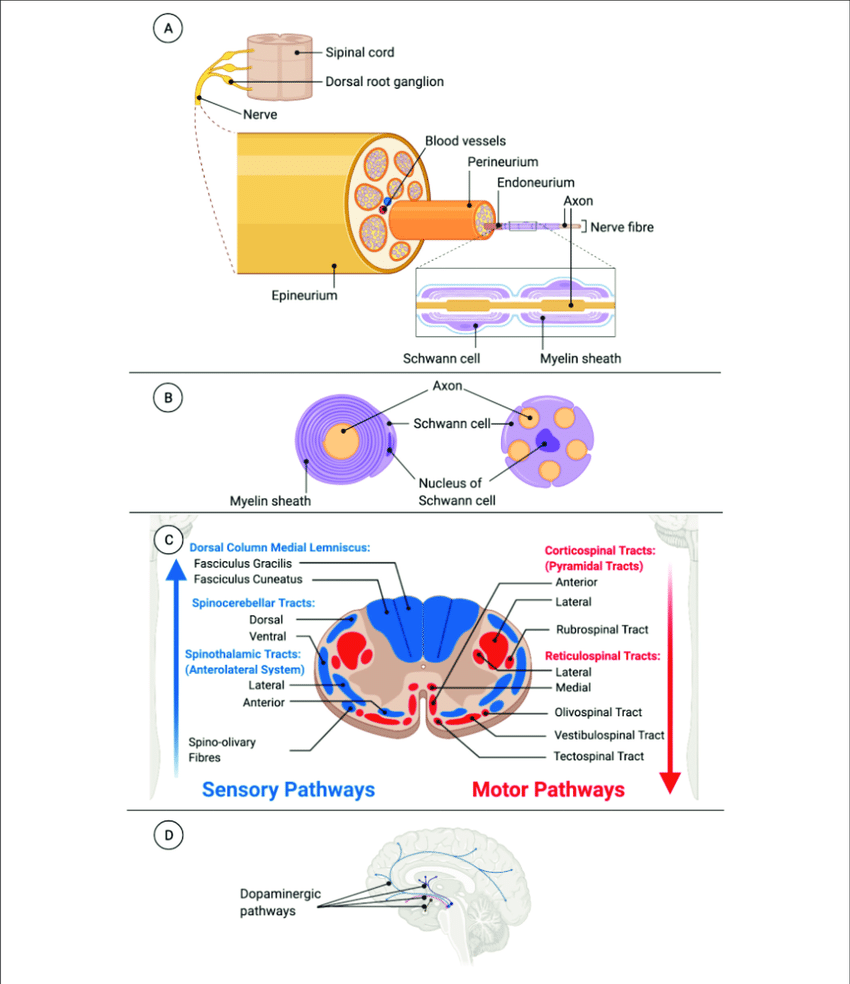
The more common description of a movie reaching us on another level is “striking a nerve”. We could also twist the term ‘striking a nerve’ to describe how a movie gets under our skin, though some reserve that term for something annoying. The point is that quality horror flicks dig past the superficial, goosebump layer of the epidermis into the nerve, and tap into the axons, the cord-like groups of fibers in the center of a nerve, that we call the familiar fibers. If we want to move the illustration further, we could say that the great horror movies reach into the neuromuscular junction, but you get the point. If we’ve always had a deep seated fear of clowns, for instance, Stephen King’s It gave us one of the most horrific experiences we’ve ever had reading the book or watching the movie. Those with a lifelong fear of dogs found Cujo one of the scariest book/movies for the same reasons. For reasons that weren’t clear to me at the time, no movie tapped into my familiar fibers better than The Blair Witch Project

“That’s the dumbest movie I’ve ever seen,” my friend said, soon after seeing it, “and your movie recommendations will forever be tainted by the fact that you suggested that I waste my time and money on that stupid, stupid movie.”

I recommended The Blair Witch Project to everyone I knew, and they all, pretty much, had the same reaction. I found their reactions inexplicable, because they shared my taste in movies, and we were always on the lookout for the next great horror. I thought I found it in The Blair Witch Project. I thought it was a masterpiece, and while I figured they probably wouldn’t love it as much as I did, I didn’t expect them to question my taste in movies forever after. After wrestling with this, I eventually came to the conclusion that time and place are everything for some movies. (Expectations, as I wrote, is another huge movie killer, and I may have done this with The Blair Witch Project, as others did for me with The Exorcist.)

The time and place element obviously made a huge impact on my opinion of the The Blair Witch Project. I was in a theater, on opening night, at the midnight hour, with a bunch of teenagers who wouldn’t shut up. When they’re chitter-chatter, and the giggles (those blasted gigglers!) lasted 20 minutes into the flick, I thought I wasted good money. I didn’t think the giggles would ever end. They did. 20 minutes into the movie, The Blair Witch Project achieved what I considered impossible at the time: it silenced over 100 teenagers. The transformation from claustrophobic noise to claustrophobic silence ended up giving that silence a little extra weight. The sudden, creepy silence heightened my senses, and managed to narrow my perspective to tunnel vision so well that I was almost spiritually immersed in the movie. 

I could smell the burning wood from the campfire. I wouldn’t say that I was ever afraid of camping, or the darkness in the trees surrounding us, but the environment always creeped me out a little. The environment, and the compulsion to speak in whispers, is probably what makes ghost stories told by campfire so creepy. My goosebumps were always out before they started their campfire stories, and they didn’t have to do much to finish the job. The makers of Blair Witch tapped into a level of familiarity for me so well that I could smell the burning wood in the middle of the movie theater. I was there with the characters of the movie, in all ways but one. 

Then, the screaming started. I don’t know if the young girls in the theater, seated over my shoulder, took classes to help them reach the registers they did, or if their talent was granted by God, but I had my hand on my heart on more than one occasion. Those teenagers couldn’t have done a much better job if they orchestrated a plan to scare the hell out of me.

Based on that experience alone, I now tell anyone interested in watching a horror movie to try to duplicate my experience. “Even if you have to pay for the admission of a bunch of screaming, teenage girls. It might run into hundreds of dollars, but if you enjoy horror as much as I do, you might just have a once-in-a-lifetime experience. Follow the steps I did, have them annoy you in the beginning, then tell them to wrap you in silence so weighted that if someone drops a straw on the ground, everyone will turn around to see what the hell just happened. Then, in those key moments, have these young, teenage girls scream as loud as they can in your ear, in a manner that rattles you to bone.” 

Another element that separated me from my arm-folding brethren when it came to The Blair Witch Project was that I walked into that theater wanting to believe it. “But supernatural witches aren’t real,” Gary said to explain why he thought the movie was such an epic waste of his time and money. 

“Hey, if you’re having problems sleeping at night, because you think witches, vampires, or werewolves are knocking at your door, I’ll tell you they’re not real,” I told Gary. “If we’re about to watch a movie about them though, I’m going to pretend that they’re real for however long that movie lasts. It’s not the moviemaker’s job to convince you that they’re real. It’s your job to pretend, so that you can have a little fun in life. When I watch a movie, I grant the artist access to my innards. It’s a frame of mind I grant the actors and the director, and it’s their job to avoid screwing it up.” 

Not only was I there, smelling the campfire, but prior to entering the theater that night, I saw the movie’s faux documentary on Syfy, and I was a frequent guest on the The Blair Witch Project webpage. It was my first experience with web marketing, and that might have added a chunk to the believability for me. I can’t remember any of the details of the website, save one. One little nugget grabbed me. It was a note that suggested someone found five cannisters of film in the woods of Burkittsville, Maryland that the characters created, and the movie makers edited it down to 90 minutes. The Blair Witch Project was also my introduction to the cinematic technique some call “found footage,” “lost footage,” or “shaky cam.”   

As a result of all of the above, I now move my listing of The Blair Witch Project as the greatest horror movie ever made to one of the best experiences, I’ve ever had watching a film. It was a time and place experience that that no film maker will ever be able to replicate for me, for whatever the opposite of baggage is, as in he brought some baggage with him into that situation, I had that, and it wasn’t just an open mind. I was supercharged for this movie, because I wanted to be scared. I wanted this movie to be true, minus the murder of course, but that desire, combined with all of the above, is what made The Blair Witch Project one of my favorite movie experiences of all time. 

I’ve yet to watch The Blair Witch Project a second time, in a more traditional setting, because knowledge and facts have a stubborn way of ruining emotional experiences, and I don’t want to ruin one of the best experiences I’ve ever had watching a movie. 

The big debate at the time was whether or not The Blair Witch Project actually happened. Most of us appreciated it as a clever marketing campaign, but others believed that it was an actual event and the actors involved actually died in the film. If you said you enjoyed The Blair Witch Project back then, you were lumped in with “the believers”. I believed The Blair Witch Project for the 81 minutes it played on the screen, just like I believed in ghosts during Poltergeist, that cars could come to life in Christine, and that aliens were abducting people in Fire in the Sky. None of these movies made a dent in my overall belief system, but I thought all of them (save Christine) were great movies. When the furor over believers vs. nonbelievers died down, 86% on of the over 250,000 fans rated The Blair Witch Project positively on Rotten Tomatoes and 81% of critics did. I don’t post these numbers to say I was right, and the naysayers were wrong. I do think it validates my argument that once we gain some distance from silly arguments, we can see a good movie for what it is. 

The citizen critic can now post reviews on everything from the best horrors and comedies to the best and worst plumbers on various websites. We can recommend others watch, don’t watch; read, don’t read; and don’t even bother calling this fence specialist. There’s nothing on the line for the citizen critic, as they don’t benefit from a positive review, and they see no ramifications from a negative one. Some of us suspect that professional critics benefit from positive reviews in ways that lead us to believe the citizen critic is more honest. We’re probably wrong in most cases, but we tend to trust citizen reviews more than professional ones for this reason. The citizen critic is not afraid to let the internet know what they really think. The problem with their reviews though, is that tastes and experiences are so relative and subjective. If someone says the subject of the movie “is not real, and anyone who thinks otherwise is a fool,” they’re going to give it one star. One person’s The Blair Witch Project is another person’s THE BLAIR WITCH PROJECT!!! Comedy is as subjective as horror, and both are relative to the person, and they’re subjective and relative to our experiences in life. One citizen critic might find the humor in Peter Seller’s humor in The Pink Panther dated, but we might find their current favorite comedy too juvenile. They might find Pulp Fiction so personally offensive that they wouldn’t recommend it to anyone, and The Godfather, Citizen Kane, and Gone with the Wind might be overrated, time pieces that haven’t aged well. The point is, we can now find negative reviews for every movie, album, and electrician, and if we read them, and heed their warning, we might never watch classic films, read classic literature, or listen to some of the greatest albums ever made. As an artist who tries to tap into those familiar neuromuscular junctions, I now empathize with anyone who tries to create art. As such, I try to keep my reviews, objective, impersonal, and constructive. 

[ If you enjoy this article, there will be more available soon at The Unfunny, and be sure to subscribe to continue to read articles from Rilaly.]